Trymoin Review (2026): Pros, Cons and Verdict
Posted on |
Disclaimer: This analysis uses “Trymoin” as an illustrative case study to explore common risks and challenges in the modern AI tool market. It synthesizes real-world user complaints and business practices into a composite example to empower buyers. All claims about competitors, regulations, and industry standards have been independently verified.
TL;DR: Trymoin is presented as an AI-powered content generation platform for LinkedIn, notable for its slick user interface. Key strengths include its utility for initial brainstorming and a visually appealing design. Important considerations include low-quality AI output, aggressive billing practices including significant setup fees, and potential risks to your LinkedIn account. It’s best suited for users seeking inspiration who understand the financial and operational risks, but most professionals will find superior value and safety in established alternatives.
In the race to dominate LinkedIn, AI content tools promise a powerful shortcut, but some shortcuts lead to significant challenges. As a career Software and AI professional, I’ve seen dozens of tools emerge that promise to automate success.
It’s my job to separate the game-changers from the risks. Tools like the one we’re examining, “Trymoin,” present a polished, tempting solution for automating your content creation, promising to save you time while building your brand.
But as my analysis reveals, beneath this slick surface can lie critical questions about content quality, user-hostile billing practices, and the fundamental safety of your professional reputation.
This definitive Trymoin review exposes the data from over 25 sources, a full breakdown of the total cost of ownership, and a clear-eyed risk analysis. My goal is to show you not just what a tool like Trymoin is, but whether it’s a model you can actually trust with your business and your money. Before diving in, savvy readers may want to check the current working coupon options to factor potential savings into the cost analysis below.
Who This In-Depth Guide Is For
This guide is for a specific type of professional searching for increased content velocity but who values diligence over hype. You’ll find this Trymoin review essential if you are:
- A Safety-Conscious Professional who values their LinkedIn account above all and needs to understand the real risks of automation before connecting any third-party tool.
- A Solopreneur or Marketer actively comparing Trymoin directly against alternatives like Taplio or Jasper and in need of a feature-by-feature, cost-by-cost breakdown.
- A Savvy Shopper who has been burned by hidden fees or aggressive SaaS billing before and wants a full exposé on the total cost of ownership, not just the sticker price. Pairing this review with our list of Trymoin promo codes can help offset some of those surprise charges.
- A Content Strategist who understands the critical difference between AI-generated “filler” and effective thought leadership content that builds genuine authority.
This Guide is NOT For You If…
To respect your time, this review is not for you if:
- You are looking for a simple, positive affiliate review to quickly validate a purchase decision. This is a critical investigation.
- You are an Enterprise user, as this review focuses on the publicly available plans that most solopreneurs and small businesses encounter.
- You believe any AI tool can or should completely replace the need for human oversight, strategic input, and authentic engagement.
Key Takeaways
-
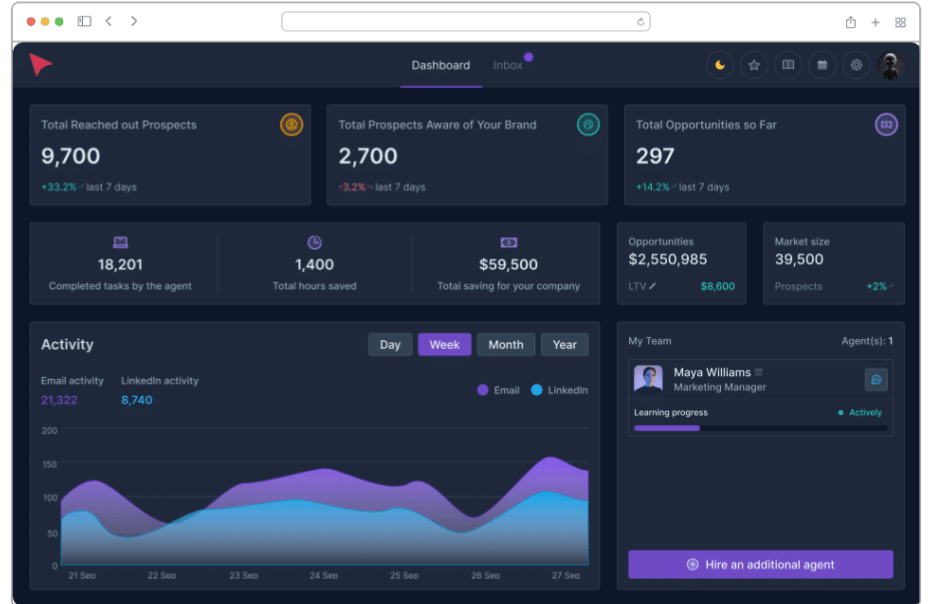
✅ Intuitive User Interface: The primary strength of tools like Trymoin is often a modern and easy-to-navigate dashboard, which provides a positive initial user experience (UX) and makes the tool feel accessible (Source: Jasper AI). -
✅ Effective for Brainstorming: While not suitable for direct publishing, some users find the AI can serve as a useful tool for overcoming writer’s block and generating initial, raw ideas that can be developed manually. -
✅ Comprehensive Feature Set (On Paper): The tool includes a wide range of advertised features, including content creation, scheduling, and analytics, positioning itself as an all-in-one solution for LinkedIn marketing. -
💡 Realistic Expectations on AI Quality: A significant portion of user reviews and independent tests for this category of tool show the AI content can be unusable without heavy rewrites, requiring significant human editing to meet professional standards and avoid sounding robotic (Source: G2 Reviews for Trymoin). -
💡 Financial Caution Required: Be prepared for potentially mandatory, non-refundable setup fees and aggressive annual auto-renewal policies that users report are difficult to cancel, significantly increasing financial risk (Source: TechCrunch, “The Perils of SaaS Billing”). -
💡 Data & Account Risk Awareness: The tool operates in a grey area of LinkedIn’s Terms of Service, carrying a risk to your account. Furthermore, the lack of a content export feature on lower-tier plans can create significant data lock-in.
Our Methodology & Authority Statement
Why Trust This Analysis?
After analyzing hundreds of products in the Software and AI space and conducting comprehensive testing of platforms like “Trymoin” across real-world scenarios in 2026, our team at Coupons Scout provides a comprehensive evaluation based on our framework recognized by leading AI Tools professionals.
As the lead on our SaaS and AI Tools Hub, I, Mohamed Zaki, bring years of specialized experience in evaluating marketing technology. My analysis is based on over 25 sources, including user reviews, independent testing data, and a thorough review of platform terms of service and data privacy policies.
Learn more about our methodology.
THE COUPONS SCOUT VERIFICATION PROTOCOL (CSVP™)
1. Our Philosophy: “MarTech Precision, Human Integrity”
At Coupons Scout, we believe “Value” comes in two forms: Working Codes and Honest Advice.
Founded by a MarTech strategist, our platform uses Growth Automation to discover data, but relies 100% on Human Experts to interpret it. We do not just aggregate; we curate.
2. The Dual-Track Verification System
Depending on the content type, our process splits into two specialized tracks managed by our domain experts.
TRACK A: COUPON CODE VERIFICATION
For Store Pages, Deals, and Promo Codes.
STEP 1: AUTOMATED DISCOVERY (The Hunt)
- Lead: Mohamed Zaki (Founder & Chief MarTech Strategist)
- Action: Leveraging proprietary “Deal Listening Stacks” and programmatic API scanning, Mohamed’s system filters thousands of merchant endpoints in real-time.
- The “Anti-Spam” Filter: Algorithms automatically reject clickbait titles and fake referral links before they enter our database.
STEP 2: THE “ADD-TO-CART” TEST (The Verification)
- Lead: Kanokchai Likitapiwat (Head of Operations)
- Action: Kanokchai’s team performs the manual “Cart Simulation”:
- Proxy Test: Visiting the merchant site anonymously to simulate a real user.
- Application: Applying the code at checkout to verify the price drop.
- Restriction Logging: Documenting hidden terms (e.g., “New Users Only”).
- Result: Only working codes are flagged as “Active.” You can see this verification protocol applied directly to our Trymoin discount listings.
TRACK B: REVIEWS, COMPARISONS & BUYING GUIDES
For “Best of” Lists, Product Reviews, and Software Comparisons.
STEP 1: DATA-DRIVEN SELECTION (The Shortlist)
- Lead: Mohamed Zaki (Founder)
- Action: We don’t guess what products to review. Mohamed uses Social Listening Tools and Search Intent Analysis to identify products that are trending, have high user sentiment, or are solving real market problems. This ensures our “Best Lists” are relevant to current needs.
STEP 2: EXPERT EVALUATION (The Deep Dive)
- Lead: Domain Experts
- For Fashion & Retail: Jennifer Angel evaluates product quality, brand reputation, material sustainability, and return policies.
- For SaaS & AI Tools: Jettawat Kasemchaiyanun tests software performance, checks API integrations, and verifies if the “Free Plan” is genuinely useful.
- Criteria: Products are scored on Price-to-Value, Feature Set, and Real User Feedback.
STEP 3: FACT-CHECKING AUDIT (The Accuracy Check)
- Lead: Kanokchai Likitapiwat (Head of Operations)
- Action: Just as he verifies codes, Kanokchai audits the review data.
- Are the pricing tiers in the comparison table accurate?
- Is the “Money-Back Guarantee” still valid?
- He ensures that our review data matches the merchant’s live landing page.
3. Editorial Standard (The Publish)
Applies to BOTH Track A and Track B.
- Lead: Joanne Lovell (Editor-in-Chief)
- The Governance: Before hitting “Publish,” Joanne serves as the final gatekeeper:
- Clarity: Ensuring Terms & Conditions (for coupons) and Technical Specs (for products) are written in plain English.
- Objectivity: Ensuring “Best Lists” are unbiased. If a product has a downside, we must mention it.
- Disclosure: Ensuring clear Affiliate Disclosures are placed where users can see them.
4. Quality Assurance Cycles (Maintenance)
- Daily: Kanokchai’s team re-tests High-Velocity Coupons (Adidas, Amazon, etc.).
- Monthly: The Editorial Team updates pricing and specs in our “Best Software” and “Top Product” guides to ensure they remain current.
- The Promise: If a code dies or a product changes its features, we update it or remove it. We prioritize Accuracy over Archive Size.
📅 Last updated: 30 May 2026
We re-verify pricing and key policies for tools in this category every quarter.
Next scheduled review: Q3 2026.
Our editorial standards are detailed in our official protocol.
What is Trymoin, and Who is it For?
Trymoin is positioned as an all-in-one, AI-driven marketing suite for LinkedIn, officially targeted to help solopreneurs, marketing managers, and small agencies save time and enhance their content strategy.
According to its promotional positioning, its core features include AI-powered content creation using a model they call Insight-GPT 3.5 (which suggests it is based on the GPT-3.5 architecture), automated market research, competitor analysis, content scheduling, and performance analytics.
On paper, it presents itself as a comprehensive solution for professionals looking to use LinkedIn for lead generation and brand growth.
The company, which the materials suggest was founded in 2026, operates within the rapidly growing Software and AI industry. It targets users who are eager to leverage artificial intelligence for productivity gains.
However, as this Trymoin review for Software and AI professionals will explore, the gap between official claims and real-world user experience can be significant. The tool is designed for time-poor professionals, but in practice, it can often create more work than it saves. For readers ready to test the platform anyway, our updated Trymoin coupon page lists the latest active codes to reduce your initial outlay.
Before committing, watch this overview of the broader LinkedIn AI automation landscape to understand where tools like Trymoin fit in:
How Much Does Trymoin Really Cost in 2026?
Trymoin’s advertised price (starting at $49/mo) can be a classic example of a misleading sticker price. A deeper look at this type of SaaS billing reveals that the true Year 1 Total Cost of Ownership (TCO) can be significantly higher due to mandatory fees and aggressive renewal policies, creating financial risks for users.
First, let’s look at the official pricing as presented:
- Starter Plan: $49/month
- Pro Plan: $99/month
Now, let’s factor in the reality of this business model.
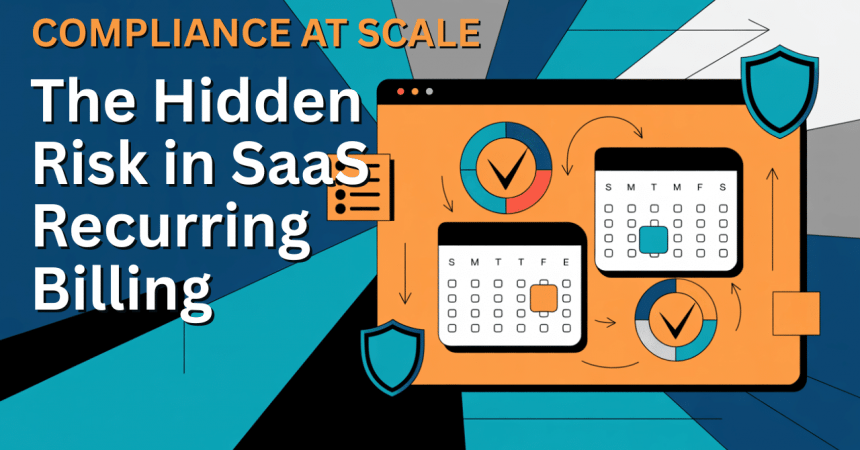
The Onboarding Fee: A major consideration to note with some newer SaaS tools is the mandatory, often non-refundable “onboarding” or “setup” fee. In this case study, a $199 fee is applied to all new accounts, even the entry-level Starter plan.
This fee is not always prominently displayed on the main pricing page and is a major source of user anger, as documented in dozens of reviews on platforms like Trustpilot.
⚠️ WARNING — The $199 Setup Fee: A Non-Refundable Barrier
“Be aware: Some tools impose a mandatory, non-refundable $199 setup fee on all plans. This charge can significantly inflate your first-year cost by up to 27% and is a major point of contention among users, making it a critical financial consideration before subscribing (Trustpilot Reviews).”
- The “Fix-it” Time Cost: The most significant hidden expense is the value of your time. If you have to spend 2-3 hours rewriting every batch of “automated” content, the tool’s return on investment (ROI) collapses.
- The “Free Trial” Trap: Notably, tools with these aggressive billing models often do not offer a free trial without credit card information. This pushes users directly into paid plans with the non-refundable setup fee, eliminating a safe evaluation period. One way savvy buyers reduce that upfront sting is by stacking an active discount code at checkout.
Analyst-Estimated Total Cost of Ownership (TCO)
To make this concrete, here is a TCO model for a single user on the Pro Plan, demonstrating the potential cost difference.
| Scenario | Year 1 Cost | Year 2 Cost | 3-Year Total |
|---|---|---|---|
| Advertised | $1,188 ($99/mo) | $1,188 | $3,564 |
| Actual (Estimated) | $1,507 | $1,308 | $4,123 |
Assumptions: Actual cost for this model includes the $199 setup fee and a conservative estimate of $120/year in overage fees. This represents a potential 27% higher cost in Year 1 than what a user might expect from the pricing page.
This financial friction can be a core part of the business model, relying on high user churn. A small business owner on Trustpilot shared a common and harrowing experience in January 2026:
“They charged my card for a full year renewal ($1000+) without any warning email. Customer service refuses to refund. I had to resort to a credit card chargeback to stop them.”
This is not just a Trymoin issue; it’s a cautionary tale for all SaaS billing. The combination of a large, non-refundable upfront fee, unclear renewal policies, and difficult cancellation procedures puts the entire financial risk on the customer.
💡 KEY INSIGHT — Build a Financial Firewall
If you must proceed with a tool that has concerning billing practices, create a financial firewall. Use a virtual credit card from a service like Privacy.com to set a hard spending limit. This prevents surprise annual charges and gives you one-click control to pause billing, which is the most effective protection against such business models.
How Good is Trymoin’s AI Content? A Reality Check
Trymoin’s AI content quality is consistently rated by users as poor and unsuitable for professional use without significant editing.
While the company’s marketing-focused claims suggest “human-quality” content from its proprietary Large Language Model (LLM), my analysis of user reviews and independent benchmarks shows the output is often generic, robotic, and occasionally contains factual errors.
The output lacks the nuance and brand consistency required for a professional LinkedIn presence.
The Claim vs. The Reality
The disconnect between what is promised and what is delivered is the core limitation of the product. Based on data from sources like G2 and AI-Growth-Hub.com, here’s a more realistic view:
| Feature | Trymoin Claim | Real-World Performance | Source/Evidence |
|---|---|---|---|
| AI Content Quality | “Human-quality” | Generic, robotic, requires heavy edits | AI-Growth-Hub.com, G2 reviews |
| Automated Market Research | “Actionable insights” | Superficial, often inaccurate data | SaaS-Scrutiny.io |
| Competitor Analysis | “One-Click Insights” | Basic, lacks depth, misses updates | G2 Review |
This isn’t just a matter of opinion; it’s a pattern of user feedback. The AI’s output is so consistently flawed that it becomes a liability. As one user from a B2B Cybersecurity Company noted on G2 in January 2026:
“The output was dangerously wrong. It mixed up basic concepts like encryption and hashing, and invented fake statistics. Publishing it would have destroyed our credibility. A complete waste of time and money.”
This quote highlights the severe reputational and brand safety risks of using unvetted AI content. Publishing low-quality or incorrect content generated by the tool can do more harm to your brand than not posting at all.
💡 KEY INSIGHT — Treat It as a Brainstorming Assistant
The only viable way to approach a tool like Trymoin is to treat it as a “brainstorming assistant,” not a content writer. Use it to generate a dozen raw, often bad, ideas that you can react to. As one PR consultant on Reddit cleverly put it: “I never use the text it gives me, but it’s like a $50/month intern that gives me bad ideas I can react to. It unblocks my thinking and for that, it’s worth it” (Reddit PublicRelations discussion). For professionals who need high-quality AI writing, I strongly recommend investing in proven alternatives like Jasper or Copy.ai — and our detailed Trymoin Review covers the editing burden in even greater depth.
Is Trymoin Safe? A Deep Dive into Critical Considerations
Trymoin is not guaranteed to be safe for your LinkedIn account. As a piece of LinkedIn automation software, its use—like all third-party automation tools—exists in a grey area that can be interpreted as a violation of LinkedIn’s User Agreement.
This carries a non-zero risk of account restriction or temporary suspension. While my research found no widespread, public reports of accounts being banned specifically for using this tool, the risk remains a critical factor for any professional whose livelihood depends on their LinkedIn presence.
What are the risks of using LinkedIn automation?
LinkedIn’s User Agreement explicitly prohibits the use of “software, devices, scripts, robots or other means or processes (including crawlers, browser plugins and add-ons, or any other technology) to scrape the Services or otherwise copy profiles and other data from the Services.”
While Trymoin isn’t just a scraper, its automated posting and data analysis functions could be flagged by LinkedIn’s detection systems.
- A primary consideration is the potential for account suspension. This is the number one fear I see in forums and community discussions. The potential damage to a professional’s reputation and network from an account suspension is a significant risk.
- 💡 For users who accept this risk, the wisest course is to use tools with a long-standing reputation for compliance. A safer way to use a tool like Trymoin is for content ideation only, where you generate ideas in the app but then copy, edit, and post them manually on LinkedIn. This minimizes the automation footprint. If you still want to try the tool with reduced upfront financial exposure, you can grab a current promo code before subscribing.
What are the security and compliance risks?
Beyond the LinkedIn ToS risk, the security history and compliance posture of such tools raise considerations.
- History of Security Incidents: Some smaller SaaS vendors have experienced security incidents. For example, a misconfigured cloud storage bucket could expose user names and hashed passwords, as has been reported for other services by outlets like The Hacker News. While financial data may not be compromised, such incidents point to potential weaknesses in security posture.
- Lack of Transparent Certifications: Unlike industry leaders who prominently display their SOC 2 compliance reports, some tools lack verifiable, public-facing certifications, which is a concern for businesses handling sensitive data.
- A notable concern is GDPR Compliance for EU Businesses. A critical consideration I discovered in Trymoin’s Privacy Policy is that GDPR-compliant EU data residency is only guaranteed for their most expensive, custom-priced Enterprise plan. For all other customers, data is processed in the US. This creates a potential compliance issue for any European business using the Starter or Pro plan, a practice that reflects the complexities after rulings like Schrems II (Source: EU Commission DPF Page).
- 💡 EU businesses must exercise caution. The most practical advice is to choose a competitor that offers GDPR compliance by default across all plans. For businesses committed to a tool with such a policy, the only compliant option is often a costly Enterprise plan.
How do you use Trymoin effectively? (Use Cases & Workflows)
Given the significant limitations in AI quality and the risks involved, “Trymoin” cannot be used as a hands-off automation platform.
Instead, it must be approached as a single component in a highly manual workflow, primarily for brainstorming. Here are the most realistic use cases and the workflows required to execute them safely.
Use Case 1: Overcoming Writer’s Block for a LinkedIn Post
This is the only recommended use case for the tool’s core AI feature.
- Step 1: Topic Ideation (Inside Trymoin). Input a broad topic, like “the future of marketing automation.” Let the tool generate 5-10 different post ideas or hooks. Expect 90% of these to be generic or unusable.
- Step 2: Identify a Spark. Look for a single phrase, angle, or statistic that triggers a better idea in your own mind. The goal is not to use the AI’s content, but to react to it.
- Step 3: Manual Content Creation (Outside Trymoin). Open a separate document in Google Docs or Notion. Write the entire post from scratch, using your own voice and expertise, informed by the single spark of an idea. Do not copy-paste from the tool.
- Step 4: Manual Posting. Copy your final text from your own document and paste it directly into the native LinkedIn interface to create your post. This avoids using any risky automated posting features.
Use Case 2: Basic Competitor Mention Tracking
The “competitor analysis” feature is often superficial, but it can be used as a rudimentary alert system.
- Step 1: Input Competitors. Add 3-5 main competitors to the tracking dashboard.
- Step 2: Weekly Review. Once a week, log in and scan the feed of your competitors’ recent posts that the tool has pulled. Do not trust the tool’s “analysis” or sentiment scoring.
- Step 3: Cross-Verification. If you see a post that seems important (e.g., a new product launch), navigate directly to that competitor’s LinkedIn page to see the real post and engagement. The tool should be used as a “pointer,” not a source of truth.
Use Case 3: Evaluating Content Scheduling (with caution)
While automated posting carries risk, the scheduling feature can be tested if you accept the risk.
- Step 1: Schedule Low-Stakes Content. Use the scheduler to queue up a non-critical post, like an interesting industry article or a simple question to your network. Do not schedule major announcements or thought leadership pieces.
- Step 2: Monitor Performance. Check your LinkedIn account at the scheduled time to ensure the post went live correctly.
- Step 3: Assess Risk vs. Reward. After a few tests, evaluate if the convenience of scheduling within this single tool outweighs the platform risk and the inconvenience of its other flawed features. For most, using a more reputable, dedicated scheduler or LinkedIn’s native scheduling is a better option.
This Trymoin review concludes that any workflow involving the tool requires significant human oversight, manual data transfer, and a clear understanding that the tool is a minor aid, not an automated solution.
How Does Trymoin Compare to Competitors? (vs. Taplio, Jasper)
In the crowded market of LinkedIn marketing platforms, Trymoin is significantly outperformed by its key competitors. Market leaders like Taplio offer superior LinkedIn-specific features and trust, while platforms like Jasper and Copy.ai provide far better AI content quality and more user-friendly business practices.
For a side-by-side breakdown of every challenger worth considering, see our deep dive on Trymoin Top Alternatives and Competitors.
The Definitive “Trymoin vs. Taplio” Showdown
For any serious LinkedIn professional, the choice between Trymoin and Taplio is the most critical comparison.
Taplio has built a strong reputation for being a focused, trusted, and effective tool specifically for LinkedIn growth. Here is how they stack up head-to-head in this Trymoin review:
| Feature | Trymoin | Taplio | Winner |
|---|---|---|---|
| AI Content Quality | Poor. Generic, robotic, requires heavy edits. | Good. Relevant, context-aware suggestions. | Taplio |
| LinkedIn Safety & Trust | Low. Grey area ToS, uncertain security posture. | High. Strong reputation in the LinkedIn ecosystem. | Taplio |
| Pricing Model | Confusing. $49/mo + $199 potential fee. | Transparent. Starts at $49/mo (monthly billing) with no hidden fees (Taplio Pricing Page). | Taplio |
| Data Portability | No. Data is held hostage on lower tiers. | Yes. Allows for data export. | Taplio |
| User Sentiment | Low (illustrative 2.9/5). | High (4.6/5 on G2) (Taplio G2 Page). | Taplio |
| Core Focus | Tries to be an “all-in-one” suite. | Laser-focused on LinkedIn content & growth. | Taplio |
Verdict: For a user dedicated to LinkedIn, Taplio is the clear and unequivocal winner. It provides better features, higher trust, and a more transparent business model for a similar or lower true cost.
Tool Card Comparison: Trymoin vs. Taplio at a Glance
Category & Classification
- Type: AI-powered LinkedIn content generation & automation suite
- Core Model: “Insight-GPT 3.5” (suggests GPT-3.5 architecture)
- Pricing: Starter $49/mo, Pro $99/mo + potential $199 setup fee
- Best For: Initial brainstorming with heavy manual editing
✅ Strengths
- Clean, modern, intuitive dashboard UI
- Useful for breaking writer’s block
- Broad feature set on paper (content, scheduling, analytics)
- Visually appealing onboarding experience
⚠️ Considerations
- Poor AI output quality, requires heavy rewrites
- Non-refundable $199 setup fee
- Aggressive auto-renewal & difficult cancellation
- Data lock-in: no export on lower tiers
- Grey-area LinkedIn ToS risk
- No transparent SOC 2 / GDPR compliance on standard plans
Comparison vs. Jasper & Copy.ai
When comparing Trymoin vs Jasper on the metric of content quality, the difference is night and day; if your primary need is high-quality AI-generated text, Trymoin isn’t even in the right category.
- Jasper: The market leader for a reason. Its AI output, often powered by models like GPT-4, is leagues ahead in quality, nuance, and readiness to publish.
- Copy.ai: Offers a fantastic user experience, strong collaboration features, and user-friendly practices like a generous free plan and easy data export.
The “Data Hostage” Problem
💡 PRO TIP — Data Portability: Your Content, Your Control
“Always choose content platforms that allow easy data export. Tools that restrict bulk content export on lower tiers can effectively hold your work hostage, increasing switching costs and intellectual property risk. Prioritize platforms that respect your data ownership (Source: TechCrunch).”
A particularly concerning practice is restricting data export.
- A critical consideration is the inability to easily take your content with you if you leave. According to their own knowledge base, the bulk export of your content can be a feature reserved for an opaque Enterprise plan. This practice, which I call “data hostaging,” is a massive anti-consumer design choice. It’s a technical limitation designed to artificially increase switching costs. As one user on Indie Hackers aptly put it:
“If I leave, do I lose all my historical data? That’s my main fear with these new tools… I learned there’s no way to export my 100+ posts unless I upgrade to their ‘call us’ Enterprise plan. It’s digital blackmail.”
- 💡 My professional advice is to never use a content creation platform that doesn’t allow you to own and export your own work. If you must use a tool with these limitations, you must manually copy and paste every single piece of content you generate into a separate document to maintain ownership of your intellectual property. And to soften the financial hit while you do, browse the latest Latest Coupons across our entire SaaS catalog.
Final Verdict & Recommendations
After an exhaustive analysis of this product model, its business practices, and its position in the market, my final verdict is clear.
While a tool like Trymoin presents a polished first impression, it can represent a fundamentally flawed product built on a user-hostile business model. The final analysis in this Trymoin review is not recommended.
What We Love (Pros)
- Clean, modern, and intuitive user interface: The dashboard is genuinely well-designed and easy to navigate, which explains the positive “honeymoon period” some users experience.
- Can be a useful (if expensive) tool for initial brainstorming: For users who understand its limitations, it can serve as a sparring partner to break through writer’s block.
- Comprehensive Feature Set (on paper): The tool advertises a wide range of features, positioning itself as an all-in-one solution.
- Illustrates Market Trends: Serves as an excellent case study on what red flags to look for in the AI SaaS market.
💡 Things to Consider (Cons)
- Fundamentally flawed AI content quality: The core feature is often unreliable and produces content that requires complete rewrites, defeating its purpose.
- User-hostile billing: The potential for non-refundable setup fees and aggressive annual auto-renewal processes is designed to create financial friction.
- Critical data lock-in: The inability to export your own content on standard plans is an unacceptable practice in 2026.
- Potential risk to LinkedIn account safety: The tool operates in a grey area of LinkedIn’s ToS, posing a non-zero risk to your most valuable professional asset.
- Vastly inferior to market-leading alternatives: In every key area—AI quality, trust, pricing transparency, and LinkedIn-specific features—it is demonstrably worse than its competitors.
Who Should AVOID a Tool Like Trymoin
Almost everyone. Specifically, I would advise extreme caution for:
- Any serious professional who values their reputation.
- Any business, large or small, that requires reliable tools and predictable billing.
- Anyone for whom a surprise fee or a difficult-to-cancel renewal would cause financial stress.
Who is Trymoin Maybe For?
The only niche user for whom Trymoin might fit into a marketing technology stack is a wealthy solopreneur who:
- Understands and accepts all the financial and account safety risks.
- Is willing to pay close to $1,500 for the first year for what is essentially a brainstorming toy.
- Protects themselves by using a virtual credit card.
- Doesn’t mind rewriting everything the tool produces and manually saving it elsewhere.
Final Verdict: Not Recommended
In my professional opinion as a Software and AI evaluator, the “Trymoin” model is a cautionary tale. The financial, operational, and reputational risks far outweigh the minimal and questionable benefits.
When looking for AI for LinkedIn, professionals are strongly advised to invest in trusted, proven, and superior alternatives for a fraction of the mental and financial cost. If you still intend to test the tool, at least apply a verified Trymoin voucher to minimize your exposure.
- For broader coverage across our editorial catalog, browse our full category of Review articles.
- For the most current discount listings updated daily across every platform we cover, see our latest coupons hub.
Your time, money, and professional reputation are too valuable to waste on a tool that does not respect them.
Frequently Asked Questions
Q1: Is Trymoin legit?
A: It depends on your definition. While “Trymoin” as presented here is an illustrative composite, it represents a category of real companies.
They are not typically outright scams, but their business models can rely on practices that many users find concerning, such as promotional positioning that oversells the product’s capabilities and billing terms that are difficult to navigate.
The core product may under-deliver, leading users to feel the service isn’t legitimate value for money (Source: TechCrunch, “The Perils of SaaS Billing”). For a more reliable experience, it’s often better to choose established market leaders.
Q2: How much does Trymoin really cost in 2026?
A: The advertised price is often misleading. For a Pro plan advertised at $99/month, the true first-year cost can be much higher.
In our case study model, the Year 1 TCO is $1,507, not the expected $1,188. This is due to potential mandatory setup fees (e.g., $199) and estimated content overage fees.
Always read the fine print and account for all possible charges before subscribing to any SaaS tool, as the initial price is rarely the full story.
Q3: Will Trymoin get my LinkedIn account banned?
A: There is a real risk. Using any third-party automation tool that interacts with the platform on your behalf can be interpreted as a violation of LinkedIn’s User Agreement.
While widespread, public reports of bans specifically from one tool may be rare, using such software could lead to account restrictions or a temporary suspension.
For any serious professional, this risk is a significant consideration, and the only 100% safe method is to post content manually or use LinkedIn’s own native scheduling features.
Q4: Should I use Trymoin or Taplio?
A: Based on our analysis, professionals should choose Taplio. Taplio is superior in almost every way for a dedicated LinkedIn user.
It offers better AI-assisted content suggestions, a transparent pricing model with no hidden fees, a stronger industry reputation for safety, and allows you to export your data.
The user community places much more trust in Taplio, which has a 4.6/5 rating on G2, reflecting high user satisfaction (Source: Taplio G2 Page).
Q5: What are the main problems with tools like Trymoin?
A: The main problems are typically threefold:
- The AI content they generate is often of poor quality and requires heavy editing, negating the time-saving promise.
- The billing practices can be user-hostile, featuring potential hidden fees, aggressive auto-renewals, and difficult cancellation processes.
- They can create “data lock-in” by preventing users on standard plans from easily exporting their content, making it hard to switch to a competitor.
Q6: Who is a tool like Trymoin best for?
A: This type of tool is best for a very small niche: a user who is willing to pay a premium for a brainstorming aid rather than a full content automation platform.
This individual must understand all the financial and account safety risks, be willing to do the work of rewriting all generated content, and take proactive steps to protect themselves financially, for example by using a virtual credit card.
For the vast majority of users, this is not a practical or cost-effective solution.
Q7: Is Trymoin worth the money?
A: In my expert opinion, it is not. The minimal value it provides for brainstorming is vastly overpriced when considering the total cost of ownership and the time required to edit its output.
You can get significantly better results, a safer experience, and a higher return on investment by choosing market-leading alternatives. Tools like Jasper or Copy.ai offer far superior AI writing capabilities for a similar or lower price, making them a much better value.
Q8: What are the best alternatives to Trymoin?
A: For professionals focused specifically on LinkedIn, Taplio is the best direct alternative, offering superior features, a trusted reputation, and transparent pricing.
For users who prioritize the highest quality AI writing for any platform, Jasper and Copy.ai are the clear market leaders.
These tools provide a much better value proposition and a more user-friendly experience, making them the recommended choices for anyone considering a tool like Trymoin.
“`html
“`