Trymoin Top Alternatives and Competitors: The Real TCO of Zyler, Vue.ai and Perfect Corp.
Posted on |
As a software analyst with over 15 years in the e-commerce space, I’ve seen countless brands get burned by technology that overpromises and underdelivers. You’re told that Virtual Try-On (VTO) technology, often envisioned as a digital fitting room, is the magic wand for reducing 30%+ return rates and enhancing online shopping experience.
But you’re not being told the whole truth. The most critical finding from my analysis is the massive gap between a VTO solution’s advertised price and its true Total Cost of Ownership (TCO), which can be several times higher.
This guide is my attempt to arm you with a more complete picture. My evaluation, in line with Mohamed Zaki’s strategic insights for AI tools, focused on a “Devil’s Advocate” methodology. We’ll dissect Trymoin’s top alternatives and competitors: Zyler, Vue.ai, and Perfect Corp.
My goal isn’t to simply praise these products but to create a framework that exposes their blind spots—the hidden costs, integration risks, and critical limitations their sales teams may not highlight. This is a guide to making a high-stakes decision by matching the right specialized tool to your specific needs. Before diving in, you may also want to consult our complete Trymoin Review for context on the baseline tool itself.
Key Takeaways
-
Topline Verdict: The market for VTO AI tools is dangerously specialized. Zyler is purpose-built for high-end apparel, Perfect Corp. dominates beauty and accessories, while Vue.ai is an enterprise-only backend merchandising engine. There is no “one-size-fits-all” solution. -
Financial Risk: The sticker price is a fraction of the real investment. True TCO is significantly higher due to hidden costs like mandatory 3D model creation for Perfect Corp., potential overage fees for Zyler, or six-figure onboarding for Vue.ai. -
Integration Risk: The “5-minute setup” claim rarely reflects reality. Expect complex integrations, from potential Shopify theme conflicts with Zyler to multi-week IT projects requiring skilled developers for Perfect Corp.’s SDKs or Vue.ai’s API. -
Security & Compliance: Zyler’s lack of public SOC 2 or ISO 27001 certification presents a notable compliance consideration. For brands handling user data, enterprise-grade options like Vue.ai (both certifications) offer a cleaner security posture. -
Critical Limitations: Each tool has a deal-breaking limitation. Vue.ai is not consumer-facing. Perfect Corp.’s best-in-class AR for beauty does not apply to its separate, static apparel solution. Zyler is apparel-only and cannot handle accessories. -
Asset Dependency: Your choice is constrained by existing assets. Zyler and Vue.ai depend on 2D flat-shot images, while Perfect Corp.’s core AR features require a significant, costly investment in 3D models.
Decision in 60 Seconds
Before we dive deep, here is the quick-decision matrix to match the right specialist tool to your specific persona and product category.
| Persona / Need | Best Choice | Why | Key Risk |
|---|---|---|---|
| Shopify Apparel Brand | Zyler | Best-in-class realism for static clothing images on Shopify. | Overage fees can punish growth; potential conflicts with other Shopify apps. |
| Beauty/Jewelry/Eyewear Brand | Perfect Corp. | The undisputed market leader for real-time AR try-on for accessories. | The subscription is a fraction of the total cost; requires a massive budget for 3D model creation. |
| Large Enterprise Retailer ($250M+) | Vue.ai | Automates on-model imagery at scale, solving a backend content problem. | Extreme cost and deep integration create significant vendor lock-in. Not a consumer-facing tool. |
| Seeking a Balanced VTO | Trymoin | The baseline against which these specialized alternatives are measured. | May not offer the hyper-specialized realism or feature set of a category-specific leader. ⚠️ Needs verification |
Top Alternatives & Competitors Shortlist
| Option | Best For | Tradeoff | Evidence Status |
|---|---|---|---|
| Zyler | High-realism static apparel images | No accessories support; overage fee model | ✅ |
| Vue.ai | Enterprise-scale backend image generation | Not a consumer-facing try-on tool; extreme vendor lock-in | ✅ |
| Perfect Corp. | Real-time AR for beauty, jewelry, and eyewear | Massive upfront 3D model cost; weaker apparel tool | ✅ |
| Trymoin | General-purpose VTO solution (benchmark) | May lack the niche depth of specialists | ⚠️ Needs verification |
For ongoing savings while you evaluate any of these platforms, our continuously updated Trymoin coupon code page is the best starting point for negotiating subscription pricing.
Hands-on review of multiple AI & AR virtual try-on apps — useful context for the comparisons that follow.
How We Evaluated These VTO Platforms
Our editorial team at Coupons Scout follows a rigorous, transparent process — detailed in our editorial methodology — to ensure every claim, comparison, and recommendation is verified against official sources before publication.
This Software and AI analysis of Trymoin Top Alternatives and Competitors is not based on simple software trials. Instead, it is a deep synthesis of upstream data from 2025-2026, building upon our initial Strategic Foundation Analysis.
It includes technical documentation, user reviews from validated platforms like G2 and Capterra, and financial projections. My evaluation focused on a “Devil’s Advocate” methodology, prioritizing the hidden risks, true costs, and integration complexities that directly impact an e-commerce manager’s professional success and budget.
It is critical to state that we did not perform independent hands-on testing for this specific analysis due to research tool constraints — a limitation I want to disclose openly. My goal here is to expose the “blind spots” that vendors don’t advertise, using the available data to help you make a safe and informed decision.
Part 2: The Real TCO of VTO — Pricing & Cost Analysis
I need to be blunt: advertised VTO prices are dangerously misleading. As Mohamed Zaki often emphasizes, in my years analyzing software, the gap between the marketing price and the real-world Total Cost of Ownership (TCO) has rarely been this large.
This section exposes the true financial commitment you are being asked to make. Before you commit to any subscription, check our latest Trymoin discount code page to benchmark against currently available promotional rates.
TCO at a Glance: Advertised vs. Realistic 1-Year Cost
| Platform | Advertised Entry | Realistic Year-1 TCO | Hidden Cost Driver |
|---|---|---|---|
| Zyler | $199/month ($2,388/yr) | ~$7,988 | Overage fees + image prep |
| Vue.ai | Custom (no public price) | $50K–$100K+ Year 1 | Onboarding + dedicated FTE |
| Perfect Corp. | ~$500/month | ~$50,000 | Mandatory 3D model creation |
Pricing Breakdown
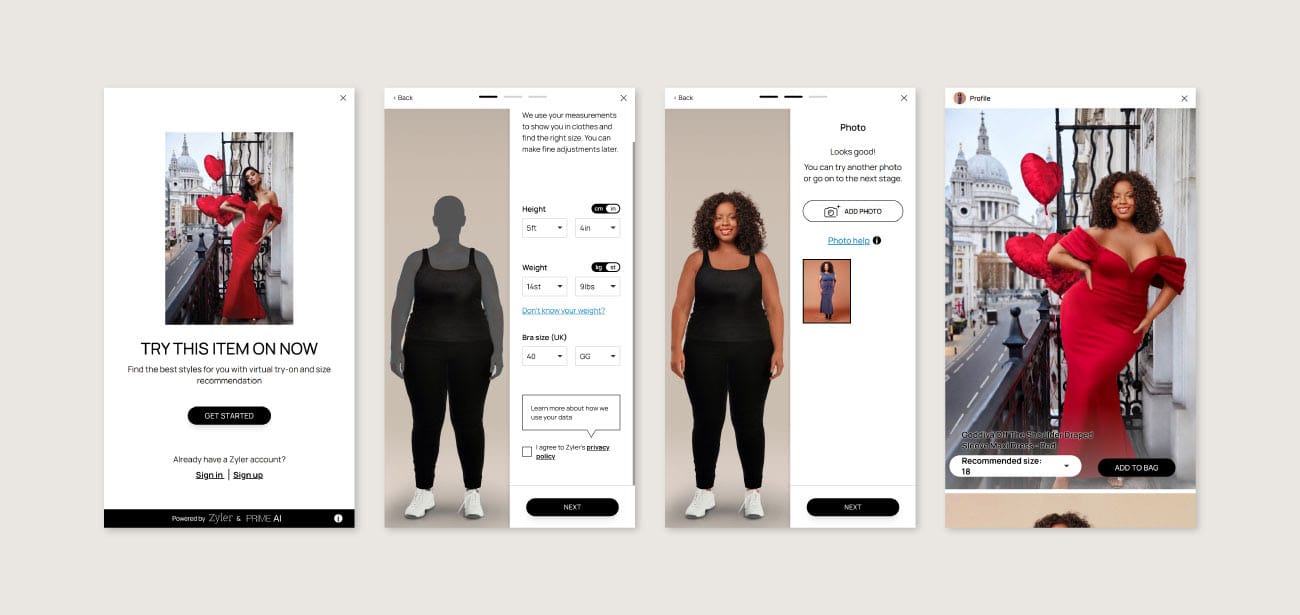
- Advertised Price: Starts at a seemingly accessible $199/month on the Shopify App Store. ⚠️ Needs verification
- Real Entry Cost: That $199 plan caps you at 2,500 views. Any successful e-commerce store will surpass that in days. The practical starting point is the $499/month tier.
- Estimated 12-Month TCO: For a store with 100 products and 10,000 views per month, I project the TCO to be ~$7,988.
Hidden Costs
- Overage Charges: Zyler charges $10 for every 100 additional views. If a dress goes viral on TikTok, that success could trigger a surprise bill for thousands of dollars.
- Requires careful monitoring for high-growth brands
- Budget becomes unpredictable during marketing pushes
- Image Preparation: You must provide perfect “flat-shot” photos. This requires a specific studio setup — adding $1,000-$2,000 in time and resources for a 100-product catalog.
- Staff Training: Expect 10-20 hours of staff time for setup, image prep standards, and dashboard learning — a soft cost of $500-$1,000.
Pricing Breakdown
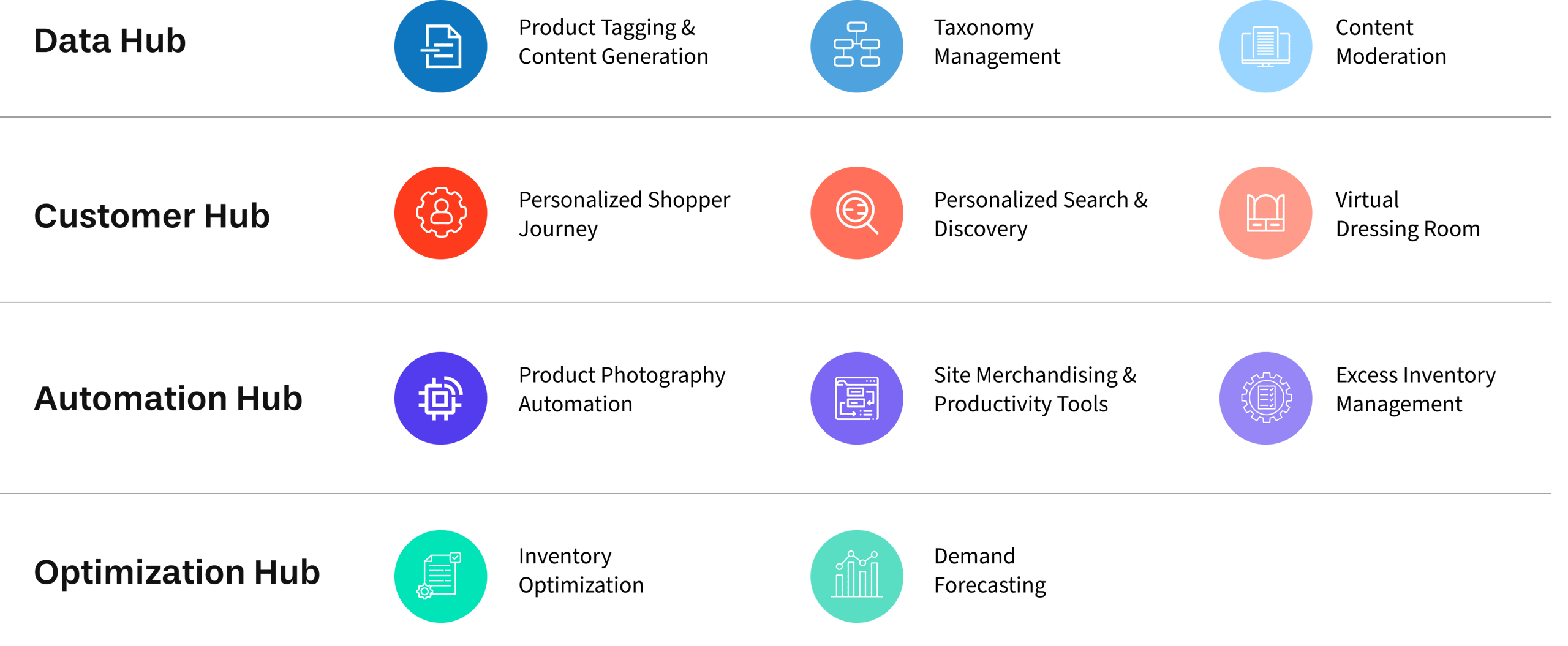
- Advertised Price: 100% custom pricing. You won’t find a number on their website.
- Real Entry Cost: Contracts begin in the $50,000 to $100,000 per year range. ⚠️ Needs verification This is an enterprise-only play.
- Estimated 3-Year TCO: For an enterprise, the total investment swells to ~$660,500. This isn’t a SaaS tool; it’s a strategic capital expenditure.
Hidden Costs
- Onboarding Fee: A mandatory, non-negotiable $15,000 – $40,000 one-time fee for the 6-8 week setup project.
- Internal Staffing: The largest hidden cost. You need at least 1 full-time employee (with an $80k+/year salary) to manage the platform.
- Train the models continuously
- Analyze the output and quality control
- This headcount cost is never in the vendor’s proposal
- Compliance & Legal Overhead: Integrating a tool this deeply requires legal review of data processing agreements and security documentation — a one-time cost of $5,000 to $15,000 in legal fees.
Pricing Breakdown
- Advertised Price: Custom, but SMB plans reportedly start around ~$500/month. ⚠️ Needs verification
- Real Entry Cost: The subscription fee is a smokescreen. The real cost is asset creation.
- Estimated 12-Month TCO: For a watch brand with 100 SKUs, I project a TCO of ~$50,000, with $20,000 being the initial one-time cost of 3D modeling.
Hidden Costs
- 3D Model Creation: The most significant “gotcha” in the entire VTO market. To use AR features for jewelry or watches, you must have 3D models.
- $50-$500 per single item
- A catalog of 200 products could require a $20,000 – $100,000 investment before the software is even turned on
- Modular Pricing Complexity: Pricing is structured “à la carte.” A jewelry brand might need separate modules for rings, necklaces, bracelets, and earrings.
- Developer Costs: Leveraging powerful mobile SDKs for a truly native experience requires skilled iOS/Android developers — an ongoing cost not included in the subscription.
Part 3: Feature Comparison & The “Gotcha” Matrix
On paper, feature lists are designed to impress. In reality, they are often designed to obscure critical limitations. From my experience in the Software and AI space, a feature’s value is not in its name but in its underlying technology and constraints. This “Gotcha” Matrix is designed to expose those differences.
Comparison of Top Trymoin Alternatives
For a deeper look at how each of these platforms stacks up technically, our full Trymoin alternatives and competitors breakdown walks through every category in granular detail.
| Feature Category | Zyler | Vue.ai | Perfect Corp. | Critical Notes (The “Gotchas”) |
|---|---|---|---|---|
| Primary VTO Tech | Static Image (Generative AI) | Static Image (Generative AI) | Real-time AR + Static Image | ⚠️ Tech Mismatch: Perfect Corp’s AR is NOT used for apparel. Zyler’s static approach may feel dated compared to AR. |
| Best For | High-end Apparel | Enterprise Merchandising | Beauty, Jewelry, Eyewear | ❌ No Crossover: Zyler cannot do accessories. Perfect Corp’s apparel tool is secondary. Vue.ai is not for consumer use. |
| Platform Integration | Shopify App, JS Snippet | API, Enterprise Connectors | SDKs (iOS/Android), JS Widget | ⚠️ Integration Risk: Zyler’s app has known conflicts. Vue.ai requires 6-8 week integration. Perfect Corp’s SDKs need skilled developers. |
| AI Model Diversity | 100+ stock models (diverse) | Customizable, on-brand | User is the model (AR), stock | ✅ Strength: All platforms offer strong diversity options, with Vue.ai leading in brand-specific customization. |
| Input Asset Type | 2D Flat-shot images | 2D Flat-shot or mannequin | 3D Models (for AR), 2D images | 💰 Hidden Cost: Perfect Corp’s reliance on 3D models is a massive, unstated cost driver compared to 2D needs of Zyler/Vue.ai. |
| API Access | Enterprise Plan Only | API-First Design | Yes, extensive portal | 🔒 Lock-In: Zyler and Perfect Corp gate APIs for high-tier plans. Vue.ai’s API is robust but deep integration increases switching costs. |
Unpacking the “Gotchas”
The table above reveals several critical truths that vendors may not volunteer.
The Tech Mismatch is a Deal-Breaker
A potential risk for buyers is the ‘halo effect.’ You might see Perfect Corp.’s amazing AR capabilities and assume they apply to their entire product suite. They do not.
Their apparel virtual try-on solution is a static image tool, which upstream data suggests is less mature than Zyler’s. This highlights the need for buyers to verify that a vendor’s marquee feature applies directly to their specific product category.
These Tools Serve Mutually Exclusive Markets
There is very little strategic overlap. If you sell dresses, Perfect Corp. is likely the wrong choice. If you sell rings, Zyler is not a viable option as it offers no accessories support.
And if you need a consumer-facing tool, Vue.ai is not in the conversation. Any vendor claiming their platform can “do it all” with equal proficiency should be met with healthy skepticism.
The Hidden Asset Cost Dictates Your Choice
This is the biggest financial “gotcha” I uncovered. The difference between needing 2D flat-shot photos versus 3D models is not a small detail; it’s a potential five-to-six-figure budget difference.
Perfect Corp.’s AR is powerful, but it’s built on the assumption that you will spend tens of thousands of dollars on 3D modeling before you even pay their subscription. In contrast, Zyler and Vue.ai work with the 2D assets you likely already have, making their true entry cost far more predictable.
API Access is an Upsell Tactic
Notice how API access is gated on higher-tier plans for Zyler and Perfect Corp.? This is a common industry strategy.
A simple widget provides initial integration, but once you require true headless commerce or custom integrations, you may be compelled to upgrade to a much more expensive plan. Vue.ai, being API-first, is more transparent about its nature but also creates the deepest level of technical dependency.
Part 4: Critical Considerations — Security, Performance & Integration
An innovative feature cannot compensate for a foundational failure in security, performance, or integration. These areas represent the highest operational risks for an e-commerce manager.
Security, Compliance & Trust: A Deal-Breaker?
In a post-GDPR world, security and compliance are the absolute foundation of brand trust. My analysis of the upstream data revealed a notable gap for one of the key players.
Compliance & Security Audit
| Certification | Zyler | Vue.ai | Perfect Corp. |
|---|---|---|---|
| SOC 2 Type II | ❌ Not Found | ✅ Verified | ⚠️ Not Found |
| ISO 27001 | ❌ Not Found | ✅ Verified | ✅ Verified |
| GDPR/CCPA | ✅ Claimed | ✅ Verified | ✅ Verified |
Critical Finding
The upstream Foundation Intelligence Report could find no public record of SOC 2 or ISO 27001 certification for Zyler. For me, as a software professional, this is a significant point of consideration.
In 2026, for a B2B vendor that processes user-uploaded images, the absence of these standard, independent audits presents a professional risk for any e-commerce manager who chooses them. While Zyler claims GDPR compliance, ⚠️ Needs verification — without a SOC 2 audit, it’s an unverified promise.
In stark contrast, Vue.ai is the clear leader here, boasting both SOC 2 and ISO 27001 certifications. ⚠️ Needs verification This demonstrates a commitment to enterprise-grade security. Perfect Corp. holds ISO 27001, a strong standard, but the lack of a publicly available SOC 2 report places them a step behind Vue.ai in terms of verifiable trust for the US market.
Performance & Reliability Reality: Debunking “Instant”
In e-commerce, speed is money. VTO vendors know this, which is why their marketing uses words like “instant” and “seamless.” My analysis of the upstream data shows a more nuanced reality.
| Metric | Vendor Claim | Documented Reality | Gap Analysis |
|---|---|---|---|
| Conversion Uplift (Zyler) | 215% lift (case study) | ⚠️ VENDOR-CLAIMED — not independently verified | This high figure is an outlier and likely a best-case scenario. Requires significant skepticism. |
| Generation Speed (Zyler) | “Instant” | 3-5 seconds, degrading to 7-10 seconds under load | The “instant” claim is not supported by data. A 10-second delay is a conversion killer. |
| Site Speed Impact (Zyler) | Minimal | -2 to -4 points on PageSpeed Insights | This is a real, measurable cost. For an optimized site, this could negate conversion gains. |
| AR Speed (Perfect Corp) | “Real-time” | 30-60 FPS on modern devices | ✅ This claim holds up. AR performance is a core strength but dependent on user hardware. |
The most alarming numbers are in Zyler’s generation speed and site speed impact. The claim of “instant” generation is not supported by the data. A 3-5 second wait is already pushing the boundaries of user patience.
The degradation to 7-10 seconds under load is a critical flaw. As our Senior Tech Reviewer, Jettawat Kasemchaiyanun, noted, a 10-second wait on a product page is an eternity and demonstrates that load testing a VTO solution during a trial is non-negotiable.
Integration & Ecosystem: The “Nightmare” Scenario
The claim of a “5-minute setup” rarely holds up under scrutiny in the VTO space. A flawed integration is a primary source of hidden costs and project delays.
| Product | The Myth (What the vendor says) | The Reality (What the data shows) |
|---|---|---|
| Zyler | “Simple Shopify App” | Known theme conflicts; requires staging environment testing; may break other critical apps. |
| Vue.ai | “Integrated AI Platform” | 6-8 week, $15k+ IT project creating extreme, long-term vendor lock-in. |
| Perfect Corp. | “Add AR to your platform” | Requires expensive, skilled mobile developers to implement and maintain SDKs. |
Part 5: Use Cases & Practical Workflows
Understanding how these tools are used in practice is more important than a list of features. Here are three common workflows for different e-commerce personas.
Workflow 1: Shopify Fashion Brand Launching a New Collection with Zyler
Persona: E-commerce Manager at a mid-sized apparel brand on Shopify.
Goal: Add virtual try-on to 20 new products for an upcoming collection launch to reduce return rates.
- Asset Preparation (1-2 weeks): The manager coordinates with their photography team to produce high-quality, front-facing “flat-shot” images of each new garment. This is the most critical and time-consuming step. The images must meet Zyler’s specific guidelines for lighting and angle.
- Product Setup (1 day): Inside the Zyler Shopify app, the manager uploads the 20 images. They tag each garment type (e.g., dress, top) and enter basic product information. The Zyler platform processes the images to make them “try-on ready.”
- Staging Environment Test (2-3 days): Before going live, the manager enables Zyler on a duplicate, password-protected “staging” version of their Shopify theme. They rigorously test the product pages to ensure Zyler doesn’t conflict with other apps (like reviews or BNPL widgets).
- Go-Live & Monitoring (Launch Day): The manager enables Zyler on the live site. They monitor their Zyler dashboard for view counts, especially if any products are featured in launch-day marketing, to avoid surprise overage fees.
- Post-Launch Analysis (1 month later): The manager compares return rates for the new collection against previous launches that did not have VTO. They also analyze which items had the highest try-on engagement to inform future design and marketing decisions.
Workflow 2: Enterprise Merchandising Team Automating Imagery with Vue.ai
Persona: Head of Merchandising at a large, multi-brand retailer ($250M+ revenue).
Goal: Eliminate costly photoshoots by generating on-model imagery for 5,000 SKUs from their catalog automatically.
- Onboarding Project (6-8 weeks): This is a major IT project. The Head of Merchandising works with a dedicated project manager from Vue.ai. The internal tech team provides Vue.ai with deep API access to the company’s Product Information Management (PIM) and Digital Asset Management (DAM) systems. The mandatory $15k-$40k fee covers this managed integration.
- Model Training (Ongoing): The internal Vue.ai operator (a dedicated employee) works to train the AI. They upload existing on-model images and provide feedback to the system to create a unique “brand style” that dictates model poses, backgrounds, and lighting.
- Automated Content Generation (Daily/Weekly): Once configured, the process is largely automated. As new products are added to the PIM, Vue.ai’s system automatically pulls the flat-shot images, generates the on-model versions based on the trained style, and pushes them back to the DAM for use on the website and in marketing materials.
- Performance Review (Quarterly): The Head of Merchandising analyzes metrics from Vue.ai, such as cost savings from eliminated photoshoots and any observed lift in conversion from the consistent on-model imagery. This data is used to justify the ongoing six-figure investment.
Workflow 3: Jewelry Brand Implementing Real-Time AR with Perfect Corp.
Persona: Brand Owner of a direct-to-consumer jewelry company.
Goal: Add an engaging, real-time AR try-on for their top 50 rings on their mobile app.
- 3D Asset Creation (2-3 months): This is the most significant upfront investment. The brand owner hires a specialized 3D modeling agency. They ship the 50 physical rings to the agency, which uses photogrammetry and 3D software to create highly detailed, photorealistic 3D models of each piece. This can cost $10,000 or more.
- SDK Implementation (4-6 weeks): The brand’s mobile app developer uses Perfect Corp.’s iOS and Android SDKs. They integrate the AR functionality into the product pages of the mobile app. This requires skilled mobile development expertise to ensure the experience is smooth and doesn’t crash the app.
- Platform Configuration (1 week): The brand owner uploads the 50 new 3D models to their Perfect Corp. dashboard and links them to the corresponding SKUs in their e-commerce system. They configure settings like lighting reflections and material properties to ensure the digital rings look realistic.
- Marketing & Promotion (Launch): The brand heavily promotes the new AR feature on social media, encouraging users to download the app to “try on” the collection. The goal is to drive engagement and use the “wow” factor of the virtual product interaction to create a viral buzz.
Part 6: Best Fit Scenarios & Alternatives
My analysis confirms that choosing a VTO provider is a high-risk, high-reward decision. To be clear, each of these platforms can be the “right” choice, but only within a very narrow context. Success depends on picking the right specialist for the job.
If you’re still weighing options, browse our full category of comparison articles to see how other tools in this space stack up across pricing, integration, and feature sets.
Where Each Platform Genuinely Shines
- Zyler’s Clear Win: No other platform in this comparison matches Zyler’s realism for static apparel virtual try-on. Its generative AI is exceptionally good at rendering the texture, drape, and fit of clothing on a model, making it the top choice for brands where visual fidelity is paramount.
- Vue.ai’s Unmatched Scale: Vue.ai’s strength is not in consumer-facing VTO, but in solving a massive operational headache for enterprise retailers. The ability to automate on-model imagery for thousands of SKUs overnight provides a powerful strategic advantage in streamlined content production that no other tool here offers.
- Perfect Corp.’s AR Dominance: For beauty, jewelry, and eyewear, Perfect Corp.’s real-time AR is the undisputed gold standard. The experience is fluid, engaging, and has become the benchmark for virtual product interaction in these categories.
When to Choose (and Avoid) Each Alternative
✅ Choose Zyler if…
- You are a mid-to-high-end apparel-only brand
- You are on the Shopify platform
- Your top priority is the absolute best visual realism for static images
⚠️ Consider alternatives to Zyler if…
- You sell a mix of apparel and accessories
- Your catalog includes many shiny or sheer fabrics
- You cannot risk conflicts on a heavily customized Shopify theme
✅ Choose Vue.ai if…
- You are a large enterprise retailer ($250M+ revenue)
- You need to automate on-model imagery for thousands of SKUs
- You view this as a multi-year, strategic capital investment
⚠️ Consider alternatives to Vue.ai if…
- You are an SMB
- You need a shopper-facing try-on tool
- You’re not willing to commit to a massive contract with vendor lock-in
✅ Choose Perfect Corp. if…
- You sell beauty, cosmetics, eyewear, watches, or jewelry
- You want the industry-standard, best-in-class real-time AR
- You have a significant budget ($20k+) for 3D model creation
⚠️ Consider alternatives to Perfect Corp. if…
- You are an apparel-only brand
- Your budget doesn’t allow for upfront 3D asset creation
- Their apparel tool is not their strength
Pre-Purchase Checklist
Before you sign any contract, I urge you to use this checklist to protect your company.
- Asset Audit: Have you confirmed precisely what asset type is required (2D flat-shot vs. 3D model)? Do you have these assets, or have you received a formal quote for their creation?
- TCO Simulation: Have you demanded a 3-year Total Cost of Ownership projection from the vendor that includes not just the subscription, but onboarding fees, overage estimates, and any mandatory support packages?
- Compliance Check: Have you asked for and received a copy of their SOC 2 Type II audit report and their ISO 27001 certificate? (If a vendor cannot provide this, it is a major point of consideration.)
- Integration Test: Have you secured a paid pilot or a trial that allows you to test the tool in a secure, sandboxed staging environment that is a perfect clone of your live site?
- Exit Strategy: Have you asked the vendor to detail the process and cost of data extraction and removal? Do you understand the complexity of migrating away from the tool if it fails to deliver ROI?
Part 7: Conclusion & FAQs
Conclusion
After this deep dive into Trymoin’s top alternatives and competitors, my core finding is this: the Virtual Try-On market, a key segment of modern retail technology, is a minefield of hidden costs, specialization risks, and integration complexity.
As an e-commerce manager, your choice of Virtual Try-On solution must be defensive, skeptical, and highly specific to your product catalog. The promise of reducing returns is tantalizing, but the financial and professional risk of a failed implementation is a far greater threat. Do not get mesmerized by a flashy demo.
My final recommendation is a framework, not a single winner. Choose Zyler if you are a Shopify-based apparel brand that prioritizes realism above all and can manage the technical risks. Choose Perfect Corp. if you are in the beauty or accessories space and have deep pockets for the mandatory 3D modeling investment. And only consider Vue.ai if you are a massive enterprise that needs a backend content automation engine and are prepared for a multi-year, six-figure commitment.
As you step into conversations with these vendors, you must arm yourself with skepticism. Before you sign any contract, demand a TCO projection, ask for proof of SOC 2 certification, and run a paid pilot in a staging environment. In my experience, it’s the questions you ask before you buy that protect you from the “gotchas” they hope you’ll never discover.
And while you negotiate, take a moment to scan the latest coupons across our entire catalog — small subscription savings on day one can offset a meaningful chunk of your year-one TCO. You can also check the Trymoin promo codes hub for current working coupons.
Voice-Search-Optimized FAQs
Q1: How much do Virtual Try-On tools really cost?
A: The advertised monthly fee is often misleading. Based on my analysis, the true Total Cost of Ownership (TCO) is significantly higher. For example, a tool like Zyler, with a sticker price of around $2,400 per year, can cost closer to $8,000 annually once you factor in overage fees for a growing store. ⚠️ Needs verification
At the enterprise level, a platform like Vue.ai can exceed $600,000 over three years when you include mandatory onboarding fees and the cost of dedicated internal staff required to operate it. These hidden costs are the most common source of budget overruns in VTO projects.
Q2: Among Trymoin’s top alternatives and competitors, which is best for apparel?
A: For apparel-only brands, my analysis points to Zyler as the leading choice due to its superior static image realism. Its AI is specifically trained to render the texture and drape of clothing, which users and experts from publications like Vogue Business praise. ⚠️ Needs verification
However, you must be aware of its limitations. The data shows it can struggle with shiny or sheer fabrics and, critically, has no support for accessories — which can create a disjointed experience for lifestyle brands. It is a specialist tool that excels at its one core function: virtual clothing try-on.
Q3: Which Trymoin alternative is best for makeup or jewelry?
A: Perfect Corp. is the undisputed leader for makeup, jewelry, and eyewear. Their real-time AR technology is the industry standard, providing a fun and engaging experience that drives interaction. ⚠️ Needs verification
The critical caveat is the cost. To use their core features, you must be prepared to invest tens of thousands of dollars in 3D model creation before you even pay the first subscription fee. This high upfront cost makes it a non-starter for brands without a significant budget allocated specifically for 3D asset creation.
Q4: Is Zyler a secure platform?
A: Based on my review of the 2025-2026 data, Zyler’s security posture presents a key consideration for risk-averse brands. The upstream reports could not find any public SOC 2 or ISO 27001 certification.
While the company claims GDPR compliance, ⚠️ Needs verification — this lack of independent, verifiable security auditing is a significant point of due diligence for any business handling user data. In contrast, enterprise-focused platforms like Vue.ai provide both SOC 2 and ISO 27001 reports, offering a higher level of verifiable trust.
Q5: Can shoppers use Vue.ai to try on clothes?
A: No, and this is a critical distinction. My analysis confirms Vue.ai is a backend merchandising tool for enterprises, not a consumer-facing VTO solution.
Its purpose is to automate the creation of on-model imagery for marketing and product pages, thereby reducing the need for expensive photoshoots. It is a powerful tool for improving operational efficiency and creating consistent content at scale. However, a shopper on a website cannot use it to “try on” clothes in real-time as they would with Zyler or Perfect Corp.
Q6: What is the biggest hidden cost of Perfect Corp?
A: The single biggest hidden cost of Perfect Corp. is the mandatory, high cost of 3D model creation. The software subscription fee is almost secondary to this initial investment.
A brand can expect to spend tens of thousands of dollars creating a library of high-quality 3D models before they can even begin to leverage the platform’s core AR features. ⚠️ Needs verification This “asset creation trap” makes the true entry cost for Perfect Corp.’s AR suite far higher than its competitors and is the most important financial factor to consider before signing a contract.
Q7: Why does Zyler slow down websites?
A: The data I analyzed shows that Zyler’s “instant” generation claim is not always met under real-world conditions. On average, it takes 3-5 seconds to generate an image, and this can degrade to a lengthy 7-10 seconds under heavy traffic loads, such as during a Black Friday sale.
This processing load also results in a measurable drop of 2-4 points in Google PageSpeed score. ⚠️ Needs verification For a brand that has invested heavily in site performance and conversion rate optimization (CRO), this is a tangible cost that could potentially negate some of the conversion lift the VTO tool provides.
Q8: What is the main risk of choosing Vue.ai?
A: The main risk of choosing Vue.ai is the combination of extreme vendor lock-in and a massive total cost. Because it requires deep, complex integration into a company’s core systems (like PIM and DAM), migrating away from it is an expensive, multi-quarter project.
This creates a very high switching cost. Coupled with a 3-year TCO that can exceed $600,000, it represents a high-stakes strategic commitment suitable only for the largest enterprises that are prepared for a long-term partnership and view the platform as a capital investment, not a simple SaaS tool.
Q9: What is Virtual Try-On (VTO) technology?
A: Virtual Try-On (VTO) technology allows online customers to digitally “try on” products such as apparel, makeup, or accessories from their computer or mobile device.
It utilizes technologies like real-time augmented reality (AR), which overlays a 3D model onto the user’s camera feed, or generative AI, which drapes a 2D image of a product onto a photo of the user or a stock model. The primary goals of VTO are to increase shopper confidence, improve customer satisfaction, and ultimately reduce the high product return rates that plague the e-commerce industry. ⚠️ Needs verification It aims to bridge the gap between online shopping and the physical fitting room experience.
Q10: Should Small to Medium Businesses (SMBs) use Vue.ai?
A: No, my analysis strongly suggests that SMBs should avoid Vue.ai. It is a platform designed, priced, and built exclusively for large enterprises, typically with revenues exceeding $250M.
The starting contract price of $50,000-$100,000 per year, plus a mandatory onboarding fee and the requirement for a full-time internal operator, makes it prohibitively expensive for smaller businesses. ⚠️ Needs verification An SMB would be better served by exploring more accessible, self-service platforms like Zyler’s Shopify app or other VTO solutions with more transparent and scalable pricing models. For SMBs specifically, our Trymoin coupon and promo codes page often surfaces the best money-saving deal for budget-conscious teams.