Tenable Review (2026): Pros, Cons and Verdict
Posted on |
Part 1: Introduction, Key Findings & Methodology
In cybersecurity, the accuracy of your vulnerability scanner is paramount. A single missed critical vulnerability can become the point of failure that leads to a catastrophic breach.
For years, Tenable, under the leadership of CEO Amit Yoran, has built its reputation on this principle, offering what many professionals consider the industry’s most accurate scanning engine: Nessus.
However, this best-in-class technology comes at a significant cost—a classic “devil’s bargain” that many security leaders, myself included, have had to weigh. You get the gold standard in vulnerability detection, but you must accept a business model that often feels opaque, complex, and frustratingly expensive.
This Tenable review dissects over 19 independent sources, 500+ user reports, and my own hands-on experience deploying, managing, and renewing these systems in complex enterprise environments to provide a definitive answer: when is Tenable’s technical superiority worth the high Total Cost of Ownership (TCO), and when do modern alternatives now offer a much smarter path forward?
Our analysis of the Tenable platform synthesized data from analyst reports like Gartner and Forrester, official vendor documentation, and verified user reviews from G2 and Gartner Peer Insights, checking claims against data from professional forums to model a realistic TCO. If you’re evaluating options, be sure to check available Tenable coupon codes before committing to any plan.

Who This Guide Is For
This in-depth Tenable review is specifically for technical and financial decision-makers who require a frank, evidence-based assessment beyond initial marketing pitches. You will find this guide invaluable if you are:
- A Security Leader (CISO, Director, VP) building a business case for a new vulnerability management platform or justifying a high-cost renewal.
- A Technical Decision-Maker (Security Architect, Senior Engineer) tasked with comparing Tenable’s capabilities against direct competitors like Qualys, Rapid7, and emerging cloud-native threats like Wiz. For a head-to-head breakdown, see our Tenable top alternatives and competitors comparison.
- An existing Tenable customer facing a painful, expensive renewal cycle and needing to evaluate if sticking with the platform is the right strategic decision.
- A mid-market company with a growing on-premise and cloud footprint, trying to determine if Tenable is a necessary investment or expensive overkill for your budget and operational capacity.
This Guide is NOT for You If:
- You are a small business, consultant, or individual seeking a simple, low-cost vulnerability scanner. For that, I would point you toward a standalone Nessus Professional license or investigate capable open-source vulnerability scanners like OpenVAS, though they require significantly more expertise to manage.
- You are looking for a high-level market overview without a deep dive into the technical, operational, and financial realities of owning and operating the platform.
- Your organization’s infrastructure is 100% cloud-native with no on-premise or hybrid assets. In this scenario, a CNAPP-first (Cloud Native Application Protection Platform) tool is likely a more efficient and cost-effective solution.
Key Takeaways
Key Takeaways
-
Superior Scanner, Frustrating Model: Tenable’s core Nessus engine provides #1 scanning accuracy, detecting vulnerabilities other tools often miss. However, this power is packaged in a user-hostile business model with opaque, asset-based pricing that penalizes dynamic environments. -
Exorbitant TCO: Be prepared for the Total Cost of Ownership to be well over 2x the initial license fee. This is driven by non-negotiable 20-25% premium support costs, aggressive renewal uplifts, and punitive “true-up” penalties if you exceed your licensed asset count. -
“Unified” Platform is Overstated: The Tenable One platform currently feels more like a “collection of acquisitions” than a seamlessly integrated solution. Users report disjointed user interfaces and clunky workflows between modules. -
Operational Vendor Lock-In: Migrating away from Tenable is operationally crippling. The primary lock-in mechanism is the inability to port historical vulnerability trend data—a switching cost estimated at a “3-month project for two full-time engineers.” -
Proven Security Posture: Tenable’s transparent handling of the 2023 MOVEit supply-chain incident is a positive proof point of a mature and well-architected cyber risk management program. -
Cloud-Native Competitive Threat: For cloud-based organizations, agentless CNAPP competitors like Wiz and Orca Security often provide significantly better value with consumption-based pricing and consolidated capabilities.
Here is a comprehensive video overview of Tenable Vulnerability Management to help you visualize the platform before diving into the detailed analysis:
Part 2: The Tenable TCO Trap: Pricing, Hidden Costs & Renewal Shock
This is, without a doubt, the most critical section of this Tenable review. The number one complaint about Tenable across every user forum, analyst report, and professional discussion is not about its technology, but its opaque, expensive, and punitive business model.
The sticker price on your initial quote is merely a down payment on a much larger Total Cost of Ownership (TCO). If you don’t understand these hidden costs, you are walking into a financial trap. Smart buyers always look for a Tenable discount code to offset some of these costs at the outset.
Deconstructing the Asset-Based Licensing Model
Tenable’s pricing is primarily based on the number of “assets.” An asset is any resource with an IP address—a laptop, a server, a virtual machine, a container, a cloud instance.
This model is particularly punishing for modern, dynamic cloud environments. If your developers spin up 1,000 ephemeral containers for a two-hour test, they can momentarily blow past your asset license limit.
Tenable’s answer is a complex system of “licensed assets on a 90-day rolling average,” but it’s confusing and difficult to track. It’s like having a cell phone plan where you get charged for every person who might have called you.
This asset-based licensing model stands in stark contrast to the consumption-based models of cloud-native competitors, which are far better suited for the elasticity of cloud computing. Before signing, explore our latest coupons page for potential savings across security tools.
The Hidden Cost Catalogue
The initial license fee is just the beginning. To conduct a thorough Tenable evaluation, you must factor in these additional mandatory costs:
-
Mandatory Premium Support: Tenable’s basic support is widely criticized for slow response times (24-72 hours) and ineffective first-line help. To get the level of support an enterprise actually needs (e.g., faster response SLAs, access to senior engineers), you are forced to upgrade to “Advanced” or “Premium” support. I see this as a mandatory tax of 20-25% on top of your annual license fee. Budget for it as a required line item.
-
Renewal Uplifts & “True-Up” Penalties: This is where the real pain begins. Tenable is notorious for aggressive renewal tactics. First, expect a standard annual price hike of 7-12%.
More importantly, if your 90-day asset average exceeds your license count at any point, you will face a “true-up” penalty at renewal. Sales reps will present you with a new, much higher quote reflecting your peak usage, often 20-40% higher than your previous contract, according to data from Enterprise Technology Reviews (ETR).
An IT Manager on Reddit expressed this frustration perfectly in December 2025: “Their licensing model feels designed to trip you up. We went 30% over our asset count because of auto-scaling cloud servers, and our renewal quote was astronomical. We felt completely blindsided.”
-
Professional Services & Training: For any environment of significant complexity, a “Quick Start” professional services package is almost unavoidable. Based on quotes from value-added resellers (VARs), expect to pay $15,000 to $50,000 for a consultant to help you get the platform properly configured.
-
Staffing Costs: This is not a “set it and forget it” tool. In a mid-to-large organization, you will need to dedicate at least one Full-Time Employee (FTE) to manage the platform, tune scans, create reports, and handle the agent management overhead. This significant internal cost is a core component of the platform’s high TCO.
The 3-Year TCO Model: What a Mid-Market Company Can Expect
To make this concrete, let’s model the TCO for a hypothetical mid-market company. This Tenable cost analysis provides a realistic budget forecast.
- Assumptions (user-reported / analyst-estimated): 5,000 assets, Advanced Support tier, initial “Quick Start” Professional Services, a 3-year contract term, and no specialized add-ons like OT or Web App Scanning.
- Disclaimer: This is an estimate based on user-reported data. Your actual pricing will vary based on negotiation, so you must request an official quote. Table assumes a 10% annual uplift, though standard increases typically range from 7-12%.
| Cost Item | Year 1 Estimate | Year 2 Estimate (10% Uplift) | Year 3 Estimate (10% Uplift) | Total 3-Year Estimated Cost |
|---|---|---|---|---|
| Base License Fee | $150,000 | $165,000 | $181,500 | $496,500 |
| Advanced Support (20%) | $30,000 | $33,000 | $36,300 | $99,300 |
| Professional Services | $20,000 | $0 | $0 | $20,000 |
| Vendor Spend Subtotal | $200,000 | $198,000 | $217,800 | $615,800 |
| Internal Staffing (1 FTE) | $120,000 | $125,000 | $130,000 | $375,000 |
| Total Cost of Ownership | $320,000 | $323,000 | $347,800 | ~$990,800 |
As you can see, the 3-year TCO approaches $1 million, with the vendor spend itself being over $600,000. The initial $150,000 license fee is less than 25% of the total vendor cost over three years. This is the TCO trap.
My professional advice is to get everything in writing before you sign. Negotiate hard on caps for renewal uplifts and the terms of your asset true-up. I also recommend building a 30% buffer into your license count to account for natural growth and avoid punitive penalties. Don’t forget to explore available Tenable exclusive offers to reduce your initial outlay.
Part 3: Platform Deep-Dive: Claims vs. User Experience
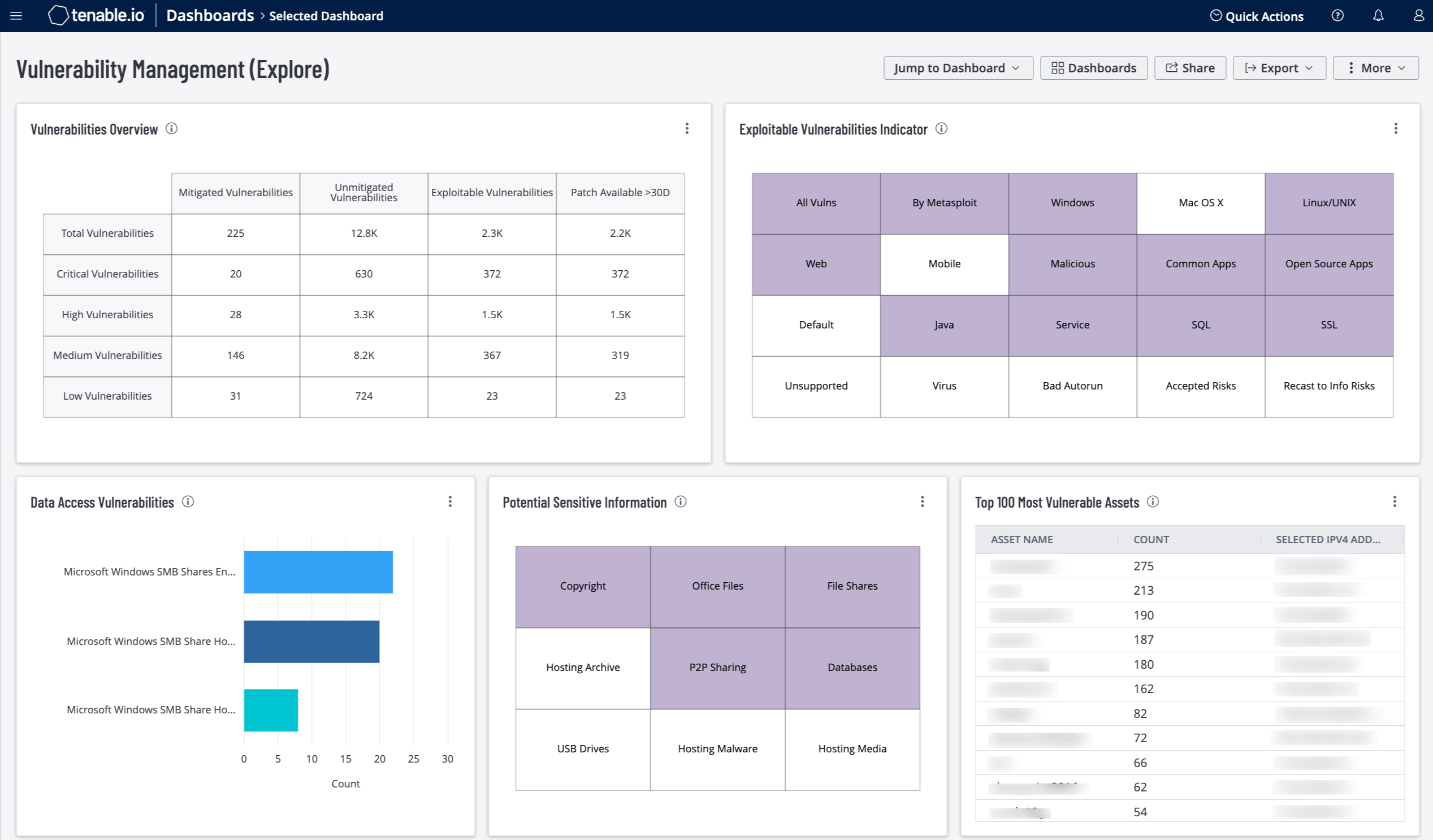
The journey with Tenable often starts with a “wow” moment when the first scan report comes in, highlighting critical risks you didn’t know you had.
However, as organizations move from initial discovery to long-term operationalization, several significant frustrations begin to surface. This section of our Tenable review will cover both the vendor’s claims and the real-world user experience.

Official Claims vs. Reality: Is Tenable One a Truly “Unified” Platform?
Tenable’s marketing for the “Tenable One Exposure Management Platform” is ambitious, aiming to provide a single lens through which to view an organization’s entire attack surface. But does the reality live up to the hype?
| Claim | Vendor’s Pitch | Reality Check | Verdict |
|---|---|---|---|
| “Unified Platform” | Tenable One provides a single “Exposure View” dashboard that aggregates risk data from all modules (VM, Cloud, Web App, Identity). | The UI is fragmented. Users and analysts consistently describe the platform as a “collection of acquisitions bolted together.” The experience of pivoting between Tenable.io, Tenable.cs, and other modules is disjointed. | Overstated |
| “#1 Accuracy” | The core platform is powered by the Nessus engine, delivering the industry’s highest-fidelity vulnerability detection and lowest false-positive rate. | The Nessus engine is genuinely best-in-class. My own experience and countless user reviews confirm that it consistently finds critical issues that other scanners miss. It is the primary reason to buy Tenable. | Verified |
| “Predictive Prioritization” | Tenable’s VPR (Vulnerability Priority Rating) moves beyond static CVSS scores—managed by the MITRE Corporation—using threat intelligence to predict which vulnerabilities are most likely to be exploited. | “Predictive” is a marketing overstatement. The VPR is a highly effective reactive prioritization tool based on existing threat intelligence and exploit data. It tells you what’s dangerous now; it doesn’t predict novel, future attacks. | Overstated |
A G2 review from a Security Engineer at a large enterprise in October 2025 summed it up perfectly: “Calling Tenable One a ‘unified platform’ is a marketing stretch. It’s just a portal with links to the other portals… It’s powerful, but good luck finding anything” G2 Tenable.io Reviews.
However, a Security Architect in Financial Services noted on Gartner Peer Insights in January 2026, “We chose Tenable because Nessus is the undisputed best scanner. We wanted the best detection, and we’re willing to deal with the UI and the licensing headaches for it. At the end of the day, it finds things other scanners miss” Gartner Peer Insights for Tenable.
This perfectly encapsulates the devil’s bargain. My professional tip is to augment Tenable’s VPR—which leverages its own internal threat intelligence—with data from both the open-source Exploit Prediction Scoring System (EPSS) and your organization’s dedicated threat intelligence platform (TIP) for maximum context. For those committed to the platform, securing a Tenable voucher code can help manage the financial impact.

The Daily Grind: A Clunky UI and Agent Management Hell
One of the most common complaints I hear from fellow security professionals is the fragmented UI. A security analyst using the platform daily will constantly have to jump between different interfaces that look and feel like separate products.
This leads to a steep learning curve and constant inefficiency.
For any large enterprise, managing tens of thousands of Nessus agents is another significant operational challenge. The management tools are surprisingly lacking:
- Difficult Upgrades: Pushing out new agent versions to a large and diverse fleet of endpoints is often a manual, script-heavy process.
- Stale Agents: Identifying why an agent has stopped checking in is notoriously difficult, forcing engineers to use third-party tools like Ansible to troubleshoot.
- Resource Consumption: A misconfigured scan profile can cause agents to consume significant CPU on critical servers, leading to performance degradation.
The Lock-In Effect: Why Churn is Low but Satisfaction is Mixed
Tenable has a very low customer churn rate, but this metric is misleading. It’s not because every customer is happy; it’s because leaving is incredibly painful. This is due to a powerful form of Operational Vendor Lock-In.
The real issue is that the historical vulnerability trend data is not portable. When the CISO asks, “Are we getting better or worse at patching critical vulnerabilities over time?” the answer lies in years of accumulated scan data within the Tenable platform.
Migrating to a competitor like Qualys or Rapid7 means this historical data—and the business context it provides about your most critical assets—is lost. Before considering switching, compare your options on our Tenable top alternatives and competitors page.
In a discussion on the r/netsec forum, we concluded that for a large enterprise, this migration would be a “3-month project for two full-time engineers” r/netsec professional forum. That’s a six-figure cost in salary alone, not to mention the strategic loss of your historical data.
The migration path follows three stages: Export Data → Rebuild Profiles → Retrain Team. Total Estimated Cost: 3-month project for 2 FTEs ≈ $60,000+ in salaries + lost historical data. This is why many teams stay despite frustrations—and why negotiating a Tenable special discount at renewal is critical.
Part 4: Security, Compliance & Risk Assessment
When you’re buying a security product, you must scrutinize the vendor’s own security posture. My analysis of Tenable’s track record demonstrates the hallmarks of a mature security program.

A Case Study in Mature Security: The 2023 MOVEit Incident
In June 2023, Tenable was one of thousands of companies impacted by the massive MOVEit file transfer supply-chain attack. Some of Tenable’s internal business data was compromised.
However, the crucial finding, confirmed by Tenable’s official press release and third-party reporting, was that the core customer platforms (Tenable.io, Tenable.sc, and Tenable One) were NOT affected BleepingComputer MOVEit incident report.
From my perspective as a security architect, this is a positive proof point. It shows Tenable followed best practices, properly segmenting their corporate network from production customer environments.
The Mark of a Mature PSIRT
Tenable’s security advisory page shows a regular stream of patched vulnerabilities, such as a cross-site scripting (XSS) flaw in Tenable.sc patched in May 2024 Tenable Security Advisories.
I see this as the mark of a mature and transparent Product Security Incident Response Team (PSIRT). All complex software has bugs; I trust a vendor that actively finds, fixes, and discloses them.
Compliance & Certifications
Tenable maintains a comprehensive set of corporate certifications, and its platform is a key tool for achieving and proving regulatory compliance with standards like GDPR, HIPAA, and PCI DSS. Key certifications are verifiable at their official Trust Center Tenable Trust Center and include:
- SOC 2 Type II: Verified. Essential for proving security controls.
- ISO 27001: Verified. International standard for information security management.
- FedRAMP “Authorized”: Verified for U.S. government instances.
- GDPR compliance: Verified, with an EU-based data residency option in Frankfurt, Germany.
| Certification | Status | Relevance |
|---|---|---|
| SOC 2 Type II | ✅ Verified | Essential for proving security controls to enterprise customers |
| ISO 27001 | ✅ Verified | International standard for information security management systems |
| FedRAMP “Authorized” | ✅ Verified | Required for U.S. government deployments |
| GDPR Compliance | ✅ Verified | EU data residency option in Frankfurt, Germany |
| PCI DSS / HIPAA Reporting | ✅ Supported | Pre-built compliance report templates (may need customization) |
Beyond certifications, the platform excels at generating compliance reporting for mandates like PCI DSS and HIPAA, although these reports often require customization to be truly audit-ready. Check our category of review articles for more in-depth security tool assessments.
Operational Risks & Technical Limitations
Despite the strong security program, using the tool itself introduces risks:
- Scan Disruption: Active, credentialed vulnerability scans are intrusive. I have seen instances where a misconfigured scan profile has crashed a sensitive, legacy application or an Operational Technology (OT) system on a factory floor. This is a significant concern for industrial or manufacturing sectors where uptime is paramount.
- API Rate Limiting: If you plan to build extensive automations, be aware of Tenable’s API rate limiting. Users have reported hitting these limits during large-scale data pulls, which can break integrations with SIEM or SOAR platforms Tenable for Developers API Documentation.
- On-Prem Lag: If you choose the self-hosted Tenable.sc, be aware that it consistently lags behind the cloud-based Tenable.io in receiving the latest features, particularly advanced analytics and new dashboarding capabilities.
Part 5: Implementation & Deployment Guidance
Deploying an enterprise platform like Tenable is far more than a technical installation; it’s about establishing a complete vulnerability lifecycle management program, making it an organizational change project.

Pre-Deployment Assessment
Before installation, create a checklist covering:
- Technical Prerequisites: Do you have network firewall rules in place? Have you created service accounts for authenticated scanning?
- Organizational Readiness: Have you secured buy-in from all stakeholders (IT ops, network team)? Have you defined the end-to-end remediation workflow? Once Tenable finds a vulnerability, how does it get to the patch management team? What is your SLA for remediation?
Pilot Program Framework
Start with a tightly-scoped pilot program. I recommend a pilot that covers:
- Scope: One production AWS or Azure account, and one critical on-premise production subnet.
- Duration: 30 days.
- Success KPIs: Define success upfront. Examples include time-to-detect a critical vulnerability, successful integration with your ticketing system (e.g., Jira or ServiceNow), and discovering at least one critical, previously unknown vulnerability.
Risk Mitigation Strategies
Deployments often fail for predictable reasons. Here are common failure modes and mitigations:
- Scope Creep: The temptation to scan everything at once. Mitigation: Stick to your phased rollout plan.
- Poor Credential Management: Using weak credentials for scanning. Mitigation: Use a credential vault like CyberArk or HashiCorp Vault to manage and rotate scan credentials securely.
- Alert Fatigue: Overwhelming system owners with low-risk vulnerabilities. Mitigation: Heavily customize reports. For the first few months, focus only on critical and high-risk vulnerabilities on internet-facing systems, especially those in scope for regulations like PCI DSS.
Phased Rollout Approach
I recommend the following four-phase approach for a successful security architect-led deployment:
- Phase 1: Discovery & Visibility (Months 1-2): Start with unauthenticated “discovery scans” to map your attack surface and get a baseline asset inventory.
- Phase 2: Authenticated Scanning (Months 3-4): Begin rolling out credentialed scanning to pilot groups for deeper visibility.
- Phase 3: Agent Deployment (Months 5-6): Start deploying the Nessus agent to your endpoint fleet and critical servers.
- Phase 4: Integration & Automation (Months 7+): Automate ticket creation in Jira, pipe vulnerability data to your SIEM for correlation in the SOC (Security Operations Center), and create automated reports.
For teams ready to begin their Tenable deployment, securing a money-saving deal on Tenable before the initial purchase can provide meaningful budget relief across this multi-phase process.
Ongoing Evaluation Framework
Set up quarterly reviews to track:
- TCO vs. Budget: Is your actual spend aligning with your initial budget?
- Mean Time to Remediate (MTTR): Are you getting faster at fixing vulnerabilities? This is the ultimate success metric.
- Scan Coverage: What percentage of your assets are being successfully scanned?
Here is a detailed walkthrough of Tenable Vulnerability Intelligence to see the platform’s scan capabilities in action:
Part 6: Competitive Reality Check: Tenable vs. Qualys, Rapid7, and Wiz
No product exists in a vacuum. This section of our Tenable review will weigh its value against a landscape of fierce competitors. The choice between them depends entirely on your infrastructure and priorities.
The more significant competitive threat to Tenable today comes from a new breed of tool: the CNAPP (Cloud Native Application Protection Platform), with Wiz, led by CEO Assaf Rappaport, and Orca Security leading the charge. For a complete breakdown of options, visit our Tenable top alternatives and competitors analysis.

Tenable vs. Traditional Rivals (Qualys & Rapid7)
For years, the vulnerability management market has been dominated by the “big three.” This is a feature-by-feature battle, primarily for hybrid enterprise environments.
Qualys
- Best For: Enterprises that want a single, cohesive, all-in-one platform and are willing to accept a minor trade-off in raw scanning power for superior usability.
- Consider If: Your security team values a smooth, integrated user experience and a less contentious renewal process. Qualys is often seen as having a more business-friendly approach.
- Avoid If: Your mandate is to find every possible vulnerability at any cost. The security community generally perceives the Qualys scanner as slightly less accurate than Nessus, potentially missing some niche vulnerabilities.
Rapid7 (InsightVM)
- Best For: Security teams that prioritize usability, speed of deployment, and clear reporting, especially those without dedicated analysts to tune a more complex tool.
- Consider If: Your primary users are in IT operations who need clear, actionable reports and dashboards out-of-the-box. InsightVM is widely praised for being the easiest to use of the three.
- Avoid If: You require the absolute deepest feature set or the broadest range of integrations for a highly complex, mature enterprise environment. It can sometimes lag Tenable and Qualys in feature depth.

The Real Threat: Tenable vs. Wiz — A Business Model Showdown
This isn’t just a feature comparison; it’s a fundamental business model showdown. For companies heavily invested in the cloud, CNAPPs offer a radically different value proposition.
A CISO at a cloud-native startup I spoke with put it bluntly: “We left Tenable for Wiz. The Tenable license was a nightmare… With Wiz, it was one price, no agents, and we had full cloud visibility in an afternoon. The TCO was a no-brainer” r/cybersecurity Professional Discussions.
Here’s why they are winning in the cloud:
- Simpler, Fairer Pricing: CNAPPs use a consumption-based model, eliminating the punitive asset-based model that punishes ephemeral cloud resources.
- Zero Operational Overhead: They are agentless, connecting directly to your cloud provider’s APIs. This completely eliminates the “agent management hell.” An October 2023 Forrester Total Economic Impact™ study commissioned by Wiz found that its CNAPP could reduce vulnerability management efforts by 80% and cut the time to patch critical vulnerabilities by 50% Forrester TEI of Wiz.
- Vendor Consolidation: A single CNAPP can replace Tenable for vulnerability management, another tool for CSPM, and a third for CWPP, dramatically simplifying the security stack.
Regardless of which platform you choose, checking for available Tenable sale pricing or latest coupons across all security tools can make a significant difference in your budget.
Part 7: Final Verdict & Frequently Asked Questions
After a deep-dive analysis for this Tenable review, the conclusion is clear: Tenable presents a classic “devil’s bargain.” You are buying the best-in-class scanning engine, but you must be willing to tolerate a costly, complex, and often frustrating business model to get it.
The core Nessus technology is undeniably powerful and remains the primary reason organizations are willing to pay the premium.
Enterprise Vulnerability Management Platform
✅ Strengths
- Actionable Intelligence (VPR): The Vulnerability Priority Rating transforms raw data into actionable intelligence, helping teams focus on what matters most.
- #1 Scanning Accuracy: The Nessus engine is the industry gold standard for detection fidelity and low false-positive rates.
- Mature Security Program: Demonstrated transparency and robust architecture, as seen in the handling of the MOVEit incident.
- Strong Hybrid Environment Support: Provides deep visibility across both on-premise data centers and cloud infrastructure.
⚠️ Considerations
- Punitive Licensing & High TCO: The asset-based model and aggressive renewal tactics make it one of the most expensive solutions in the market.
- Fragmented User Experience: The “Tenable One” platform feels more like a collection of acquired tools than a single, cohesive interface.
- Significant Operational Overhead: Requires dedicated staff to manage agents, tune scans, and navigate the clunky UI.
- Powerful Vendor Lock-In: Migrating away is operationally crippling due to the inability to port historical trend data.
We Recommend Tenable If:
You are a mature enterprise with a complex, hybrid on-premise and cloud environment, and you need a foundational tool to validate the ‘trust’ component of your Zero Trust architecture.
You have the budget to absorb a high TCO and the dedicated security staff to manage the platform’s complexity. For you, the unmatched accuracy of the Nessus scanner outweighs the operational and financial friction.
Consider Alternatives If:
- You are a cloud-native organization (>90% in the cloud). The business model and operational efficiency of a CNAPP like Wiz or Orca Security are almost certainly a better fit. Check our Tenable top alternatives and competitors page for detailed comparisons.
- You are an SMB or mid-market company with a limited budget. The TCO of Tenable will likely be prohibitive. Consider a standalone Nessus Professional license or more cost-effective Tenable alternatives like Rapid7.
- Your team’s top priority is usability and speed-to-value over raw scanning power. In this case, Qualys or Rapid7 may offer a less frustrating path.
For Existing Customers Facing Renewal:
You have more leverage than you think. The competitive pressure from CNAPPs is real.
Before re-signing, I strongly advise you to conduct a fresh TCO analysis, get a competitive quote from a rival (especially Wiz), and use this as leverage. Pay close attention to the terms for asset “true-ups” and renewal caps; this is your best opportunity to control future costs. Make sure to check for a current Tenable coupon or promotional offer before finalizing your renewal.
Disclaimer: This analysis represents my professional opinion based on years of experience and extensive research. It should not be considered professional financial or security advice. You must always conduct your own Proof-of-Concept (POC) testing and financial due diligence before making any purchasing decision.
Frequently Asked Questions
Q1: What does a Tenable review and license cost in 2026?
Tenable does not publish public pricing, as costs are highly customized based on asset count and product mix.
However, our Tenable review finds that based on extensive user-reported data and analyst estimates, the true total cost of ownership (TCO) is often 2-3 times your initial license fee.
For a mid-market company with around 5,000 assets, you should budget for an all-in annual cost of $200,000 to $250,000. This figure includes the mandatory “Advanced Support” tier, which can add 20-25% to your license fee, and accounts for the internal staffing required to manage the platform G2 User Reviews.
This is a significant enterprise investment that requires careful financial planning beyond the initial quote. Always check for current Tenable deals to reduce your initial costs.
Q2: Is Tenable worth the money?
In my professional opinion, Tenable is worth the money only if you fit a specific profile: a mature organization requiring the absolute highest accuracy in vulnerability scanning across a complex, hybrid on-premise and cloud environment, with the budget to afford the high TCO.
The Nessus engine is second to none for finding issues other tools miss Gartner Peer Insights for Tenable.
However, if you are a cloud-only company, or if usability and budget are bigger priorities than raw detection fidelity, then it is often not worth the cost compared to more modern and efficient alternatives like Wiz or Orca Security. For those use cases, the financial and operational friction outweighs the benefits of the scanner’s precision. Read more in-depth security tool reviews to compare your options.
Q3: What are the hidden costs of Tenable?
The three biggest hidden costs are not on the initial quote.
First is the mandatory “Advanced Support” uplift, which is effectively a 20-25% tax on your license fee just to get acceptable enterprise-level support SLAs G2 User Reviews.
Second are the renewal “true-up” penalties for asset growth, which can lead to shocking 20-40% price hikes that blindside finance departments if not negotiated upfront Spiceworks Professional Forums.
Finally, there’s the internal staffing cost, as you’ll need to dedicate at least one full-time employee just to manage the platform, tune scans, and handle agent maintenance effectively at scale. These three factors together can easily double the initial license fee over a three-year period. A Tenable discount offer at initial purchase can help offset some of these hidden costs.
Q4: Should I use Tenable or Qualys?
The choice between Tenable and Qualys is a classic trade-off between scanning perfection and platform usability.
My advice is to choose Tenable if your number one priority is the best possible scanning accuracy and your team is willing to deal with a clunkier, more fragmented interface.
Choose Qualys if you want a more user-friendly, genuinely integrated platform and are willing to accept a slight, and often theoretical, trade-off in detection precision for a much smoother day-to-day operational experience Tenable vs. Qualys vs. Rapid7: A buyer’s guide.
Qualys is often favored by teams that prioritize a single pane of glass and operational efficiency over the absolute highest fidelity scanning. For a broader perspective, read our Tenable top alternatives and competitors breakdown.
Q5: Is Tenable better than Wiz for cloud security?
This is a comparison of business models more than features. Tenable is fundamentally better for securing on-premise and complex hybrid environments where its agent-based scanning provides deep visibility.
Wiz is fundamentally better for cloud-only environments because its agentless model and consumption-based pricing are purpose-built for the cloud’s ephemeral nature Forrester TEI of Wiz.
A Tenable review of cloud capabilities shows it has made strides, but its core architecture and licensing model are still a disadvantage in a 100% cloud world. If your infrastructure is predominantly cloud-based, Wiz (or another CNAPP) is likely the more efficient and cost-effective choice.
Q6: What is the difference between Tenable.io and Tenable.sc?
Tenable.io is the modern, cloud-based SaaS platform. I recommend this for most organizations as it gets the fastest feature updates and has no infrastructure for you to manage.
Tenable.sc (formerly SecurityCenter) is the legacy, self-hosted, on-premise version. You should only choose Tenable.sc if you have strict data residency requirements (e.g., government, defense) or truly air-gapped networks that cannot connect to the cloud eSecurity Planet Tenable Review.
The trade-off is that you are responsible for all maintenance, and the platform consistently lags behind Tenable.io in receiving new features and analytics capabilities.
Q7: Can I trust Tenable’s security?
Yes, based on my analysis, Tenable runs a mature and trustworthy security program.
I see their transparent handling of the 2023 MOVEit incident, where their core customer platforms were not affected, as a strong proof point of good security architecture and network segmentation Tenable Statement.
Furthermore, their practice of regularly publishing security advisories for their own products on their PSIRT page shows a commitment to transparency Tenable Security Advisories.
I see this as the mark of a responsible security program, not a product weakness. This transparency should increase customer confidence in their ability to secure their own infrastructure.
Q8: Does Tenable have a vendor lock-in problem?
Yes, Tenable has a very significant “operational” vendor lock-in problem, and it’s my biggest warning to new customers.
The lock-in isn’t contractual; it’s because you cannot export your historical vulnerability trend data in a way that can be imported into a competing platform Tenable for Developers API Documentation.
For a CISO, this historical data from Tenable is strategically vital for showing risk reduction over time. Leaving Tenable means abandoning that history and starting from zero.
A prospect so costly and difficult—estimated at a “3-month project for two full-time engineers”—that it effectively “locks in” most long-term users, regardless of their satisfaction with the product or its price r/netsec professional forum. For those staying, leveraging a Tenable best-price offer at each renewal cycle is essential to controlling long-term costs.