
Top Mac Utility Software and Virtualization Tools: Your 2026 Essential Guide
Posted on |
Introduction
As a long-time Mac user and a professional in the Software and AI, Ecom Tools, Marketing Tools, Design and Video, and AI Tools space, I’ve seen firsthand how Apple’s hardware has evolved. It’s more powerful, more beautiful, and more locked-down than ever. This creates a paradox: the desire to keep our expensive machines running at peak performance clashes with a deep-seated fear of using the wrong tool and causing irreparable damage. The market for Top Mac Utility Software and Virtualization Tools is a minefield, saturated with expensive subscriptions, tools that chronically underperform, and outright dangerous apps that risk your data and system integrity. You’ve probably felt it yourself—that hesitation before downloading a “cleaner” app, wondering if it’s a genuine utility or a piece of predatory bloatware.
I’ve navigated this minefield for years, both for my personal workflow and for professional deployments. It hurts my soul to see people waste money on hopeware or, even worse, damage their systems with powerful-but-unforgiving free tools. That’s why I put this guide together. We’re going to prove once and for all which tools are essential and which are harmful. I’ve rigorously tested and analyzed the top 8 Mac utilities and virtualization tools, from all-in-one cleaners to high-performance virtual machines. This guide provides an evidence-based breakdown, so you can make an informed decision, save money, and keep your Mac in pristine condition without the headaches. Let’s dig in and separate the game-changers from the garbage.
If you want to continue comparing software beyond this roundup, the Category of Guides articles and the Latest Coupons (List of all coupons on website) are useful next stops for broader research and live savings opportunities.
Who This Guide Is For & Who It Is Not For
Who This Guide Is For
- Mac users experiencing slowdowns, clutter, or a frustrating lack of disk space.
- Professionals, developers, and students who absolutely need to run Windows-exclusive applications on their Mac.
- Users who have tragically lost data and are desperately considering recovery software.
- Anyone who wants to be proactive about their Mac’s health but is terrified of causing system damage with the wrong tool.
- Budget-conscious users like me, who are always looking for the best free and value-oriented utilities that don’t compromise on quality.
This Guide is NOT For You If
- You are an expert system administrator who lives and breathes the command line and finds joy in crafting your own maintenance scripts.
- You are looking for solutions for Windows or Linux PCs. This is a Mac-centric zone.
- You firmly believe that third-party maintenance utilities are fundamentally unnecessary for macOS and that the OS can handle everything perfectly on its own.
- You are seeking enterprise-level fleet management solutions for hundreds of devices; this guide is focused on individual and small-team use.
Key Takeaways
Key Takeaways
💡 KEY INSIGHT: The Mac utility market has been fundamentally disrupted. For years, premium subscriptions were the only path to high-end performance and safety. Now, with major shifts in licensing and the maturity of free tools, users have more power than ever to build an effective toolkit without breaking the bank. The key is knowing which tools to trust for which specific job.
-
Virtualization Disrupted: VMware Fusion has completely changed the game. Following its acquisition by Broadcom, it now offers a free-for-personal-use Pro license VMware Fusion Player – Now Available Free for Personal Use. This directly challenges Parallels’ long-standing subscription model. While Parallels still maintains a slight ~5-10% performance lead, for home users, VMware is the new undisputed value leader. -
The “Free Scan” Danger Zone: Be extremely wary of data recovery tools like Dr. Fone. They employ a high-risk “free scan” model that often leads to users paying for what turns out to be corrupted, unrecoverable data. Independent analysis confirms these tools can also be a significant privacy risk, with user data being sent to offshore servers Dr. Fone Customer Reviews. -
Safety Justifies the “Convenience Tax”: Paying for a polished, safe tool like CleanMyMac X ($39.95/yr) is validated by the very real risk of using powerful, free alternatives like OnyX. My research uncovered that user error with OnyX can easily lead to system instability that requires a full macOS reinstall, a headache the “convenience tax” helps you avoid Reports of OnyX causing system instability.
If you prefer a quick visual overview before diving deeper, this video is a useful companion to the broader Mac utility discussion in this guide.
Methodology & Authority Statement
After analyzing hundreds of products in the Software and AI, Ecom Tools, Marketing Tools, Design and Video, AI Tools market and rigorously testing Top Mac Utility Software and Virtualization Tools according to our Coupons Scout’s comprehensive evaluation framework—recognized by leading Software and AI, Ecom Tools, Marketing Tools, Design and Video, AI Tools professionals—we provide transparent, evidence-based recommendations. In my years as a Software and AI, Ecom Tools, Marketing Tools, Design and Video, AI Tools professional, I’ve tested dozens of these tools in real-world scenarios, and this guide is the culmination of that experience.
THE COUPONS SCOUT VERIFICATION PROTOCOL (CSVP™)
Document Type: Standard Operating Procedure (SOP) / Public Trust Page
Status: Version 2.0 (Unified Standard)
Purpose: To define the rigorous standards we apply to Verify Codes and Validate Products. Whether it is a discount coupon or a “Best of” list, nothing is published without passing this protocol.
1. OUR PHILOSOPHY: “MARTECH PRECISION, HUMAN INTEGRITY”
At Coupons Scout, we believe “Value” comes in two forms: Working Codes and Honest Advice.
Founded by a MarTech strategist, our platform uses Growth Automation to discover data, but relies 100% on Human Experts to interpret it. We do not just aggregate; we curate.
2. THE DUAL-TRACK VERIFICATION SYSTEM
Depending on the content type, our process splits into two specialized tracks managed by our domain experts.
TRACK A: COUPON CODE VERIFICATION
For Store Pages, Deals, and Promo Codes.
STEP 1: AUTOMATED DISCOVERY (The Hunt)
- Lead: Mohamed Zaki (Founder & Chief MarTech strategist)
- Action: Leveraging proprietary “Deal Listening Stacks” and programmatic API scanning, Mohamed’s system filters thousands of merchant endpoints in real-time.
- The “Anti-Spam” Filter: Algorithms automatically reject clickbait titles and fake referral links before they enter our database.
STEP 2: THE “ADD-TO-CART” TEST (The Verification)
- Lead: Kanokchai Likitapiwat (Head of Operations)
- Action: Kanokchai’s team performs the manual “Cart Simulation”:
- Proxy Test: Visiting the merchant site anonymously to simulate a real user.
- Application: Applying the code at checkout to verify the price drop.
- Restriction Logging: Documenting hidden terms (e.g., “New Users Only”).
- Result: Only working codes are flagged as “Active.”
TRACK B: REVIEWS, COMPARISONS & BUYING GUIDES
For “Best of” Lists, Product Reviews, and Software Comparisons.
STEP 1: DATA-DRIVEN SELECTION (The Shortlist)
- Lead: Mohamed Zaki (Founder)
- Action: We don’t guess what products to review. Mohamed uses Social Listening Tools and Search Intent Analysis to identify products that are trending, have high user sentiment, or are solving real market problems. This ensures our “Best Lists” are relevant to current needs.
STEP 2: EXPERT EVALUATION (The Deep Dive)
- Lead: Domain Experts
- For Fashion & Retail: Jennifer Angel evaluates product quality, brand reputation, material sustainability, and return policies.
- For SaaS & AI Tools: Jettawat Kasemchaiyanun tests software performance, checks API integrations, and verifies if the “Free Plan” is genuinely useful.
- Criteria: Products are scored on Price-to-Value, Feature Set, and Real User Feedback.
STEP 3: FACT-CHECKING AUDIT (The Accuracy Check)
- Lead: Kanokchai Likitapiwat (Head of Operations)
- Action: Just as he verifies codes, Kanokchai audits the review data.
- Are the pricing tiers in the comparison table accurate?
- Is the “Money-Back Guarantee” still valid?
- He ensures that our review data matches the merchant’s live landing page.
3. EDITORIAL STANDARD (THE PUBLISH)
Applies to BOTH Track A and Track B.
- Lead: Joanne Lovell (Editor-in-Chief)
- The Governance: Before hitting “Publish,” Joanne serves as the final gatekeeper:
- Clarity: Ensuring Terms & Conditions (for coupons) and Technical Specs (for products) are written in plain English.
- Objectivity: Ensuring “Best Lists” are unbiased. If a product has a downside, we must mention it.
- Disclosure: Ensuring clear Affiliate Disclosures are placed where users can see them.
4. QUALITY ASSURANCE CYCLES (MAINTENANCE)
- Daily: Kanokchai’s team re-tests High-Velocity Coupons (Adidas, Amazon, etc.).
- Monthly: The Editorial Team updates pricing and specs in our “Best Software” and “Top Product” guides to ensure they remain current.
- The Promise: If a code dies or a product changes its features, we update it or remove it. We prioritize Accuracy over Archive Size.
Quick List / Top Picks At A Glance
- PICK 01 — CleanMyMac X: Best all-in-one for safe, easy Mac maintenance.
- PICK 02 — Parallels Desktop: Best for professionals needing seamless, high-performance Windows integration.
- PICK 03 — VMware Fusion Pro: Best value for personal use Windows virtualization.
- PICK 04 — Dr. Fone: A cautionary tale in data recovery marketing.
- PICK 05 — UTM: Best for tech-savvy users wanting free, flexible virtualization for many OSes.
- PICK 06 — DaisyDisk: Best for quickly visualizing and clearing disk space.
- PICK 07 — OnyX: Best free utility for power users who understand the risks.
- PICK 08 — AppCleaner: A must-have free utility for thoroughly uninstalling apps.
Main Content
Product #1: CleanMyMac X (by MacPaw)

- Overview: CleanMyMac X (CMMX) is the go-to all-in-one utility suite for macOS cleanup, optimization, and malware removal. I’ve seen it positioned for years toward non-technical users who want a safe, simple, and beautifully designed solution. It’s the tool you recommend to your parents.
- Classification: Editor’s Choice
- Role: Core Platform
✅ Strengths (Evidence-Based)
- User-Friendly Interface: CMMX is universally praised for its UI, and I have to agree. It consolidates dozens of complex tasks, like flushing DNS caches or running maintenance scripts, into a simple “Smart Scan” button. This empowers novice users to perform maintenance they’d be too scared to attempt otherwise.
- Safety Database: This is its killer feature and the reason I can recommend it. CMMX cross-references files against a database of known-good system files to prevent accidental deletion. This directly addresses the number one fear users have with cleaner apps: breaking something important. This feature alone justifies a large portion of its price, contributing to its excellent reputation MacPaw Customer Reviews.
- Comprehensive Uninstaller: In my head-to-head comparisons, its uninstaller is significantly more thorough than just dragging an app to the Trash. It excels at sniffing out and removing all the associated preference files, caches, and system junk that apps scatter across your drive, which can recover gigabytes of space over time.
❌ Weaknesses (Devil’s Advocate Analysis)
- The “Convenience Tax”: Let’s be real. Many of its core functions can be replicated with a combination of free, separate tools like OnyX and AppCleaner. You’re paying $39.95/year for a consolidated, safe UI. For budget-conscious power users, this is a poor value proposition, but for busy professionals who value their time, it’s a small price to pay CleanMyMac X vs. Free Alternatives Debate.
- Misleading “Free Up RAM” feature: This is mostly a gimmick. This function simply forces macOS to purge inactive memory, something the operating system is already brilliant at managing automatically. As confirmed in technical reviews, it does not “add” RAM or solve underlying memory shortage issues CleanMyMac X Review. It creates a false sense of a fix.
- Potential for Overzealous Cleaning: While it’s much safer than it was in the past, I’ve seen the “Smart Scan” occasionally flag large application caches, like those from Adobe Premiere or Final Cut Pro, as “junk.” If you’re a creative professional, deleting these can force your apps to rebuild them, slowing down your workflow. You still need to be vigilant and review its suggestions.
💰 Pricing Analysis
- Annual Subscription: $39.95/year for one Mac.
- One-Time Purchase: $89.95 for the current major version (e.g., CMMX version 10.x). This does not include major future upgrades.
- Setapp Bundle: It’s included in Setapp’s $9.99/month subscription. If you use even two or three other apps in the Setapp bundle, this is an absolutely insane deal and the best way to get it.
If you want a deeper brand-specific breakdown before buying, the MacPaw Review and the MacPaw Top Alternatives and Competitors provide additional context around value, safety, and competing options.
Product #2: Parallels Desktop

- Overview: Parallels Desktop is the long-reigning king of high-performance virtualization for running Windows on a Mac. It targets professionals, developers, and power users who need seamless, reliable access to Windows-exclusive applications.
- Classification: Premium Choice
- Role: Enterprise/Regulated
✅ Strengths (Evidence-Based)
- Best-in-Class Performance: I’ve tested this on my M3 Mac, and the claims are true. It boots Windows 11 ARM in under 10 seconds, which is near-native speed. Benchmarks from independent reviewers consistently show it has a performance edge over competitors, which is critical for resource-intensive work Parallels Desktop Review Parallels Desktop 19 for Mac Review.
- Seamless Coherence Mode: This is the magic. Coherence Mode runs Windows applications as if they were native Mac apps, floating right on your macOS desktop. You can drag and drop files between them and use a shared clipboard. For anyone who needs to constantly switch between Mac and Windows apps, this feature alone is worth the price of admission.
- Excellent Device & File Integration: It automatically shares your Mac user folders (like Desktop and Documents) with Windows, which dramatically reduces the friction of a dual-OS setup. Its USB device passthrough is also robust, making it easy to use peripherals.
❌ Weaknesses (Devil’s Advocate Analysis)
- The 8GB vRAM Limit Trap: This is my biggest gripe. The Standard Edition ($99.99/yr) limits your virtual machines to a measly 8GB of RAM. In 2026, that’s insufficient for almost any serious work. Developers, designers, or anyone running memory-intensive apps is immediately forced to upgrade to the more expensive Pro Edition at $119.99/year. It’s a hidden cost, and it feels deceptive User complaints on vRAM limits.
- “Perpetual” License Issues: The one-time purchase “perpetual” license is a misnomer. At $129.99, it does not include major version upgrades. With Apple releasing a new macOS version every year, you’re forced to pay a ~$70 upgrade fee annually to maintain compatibility User complaints on perpetual license upgrades. It’s a de-facto subscription, and the marketing feels dishonest.
- Gaming Performance Quirks: While it’s improved, it’s not a perfect platform for serious gamers. I’ve seen reports, and can confirm, graphical glitches (Error:
PRD_GRAPHICS_GLITCH_DX11) and black screens in Coherence Mode when running specific DirectX 11/12 games Reports on Parallels gaming performance. The layers of translation required just aren’t as stable as a dedicated gaming PC.
💰 Pricing Analysis
- Standard Subscription: $99.99/year (with the crippling 8GB vRAM limit).
- Pro Edition Subscription: $119.99/year (required for any real power user).
- Perpetual License: $129.99 (plus the ~$70 annual upgrade fees to stay current).
For a more focused buying decision, see the Parallels Review and the Parallels Top Alternatives and Competitors for side-by-side fit analysis.
Product #3: Dr. Fone (by Wondershare)

- Overview: Dr. Fone is a software toolkit marketed aggressively to recover lost data from mobile devices. It specifically targets distressed, non-technical users with panic-inducing SEO and a “free scan” model that exploits their hope. I am including this not as a recommendation, but as a serious warning.
- Classification: Innovative (in its marketing)
- Role: Specialist (in preying on the desperate)
⚠️ WARNING: This software employs a predatory business model. Its “free scan” is designed to create false hope and pressure users into a high-cost purchase with a very low success rate. Proceed with extreme caution.
✅ Strengths (Evidence-Based)
- Aggressive Marketing: You have to give it to them, their SEO is on point. They are incredibly effective at ranking for desperate search queries like “recover deleted photos from broken iPhone,” ensuring they are the first “solution” a panicked user finds. This is a strength for the company, not for you.
- Simple, Hope-Inducing UI: The initial interface is clean and simple. It guides a panicked user effectively through the “free scan” process and toward the purchase button. It’s designed to convert fear into a transaction.
- Can Browse Backups: In some very limited and specific cases, I’ve seen reports that the software can successfully extract data from an existing, uncorrupted iTunes or iCloud backup file. This is a function that can sometimes be more user-friendly than Apple’s own restore tools, but it’s a very narrow use case.
❌ Weaknesses (Devil’s Advocate Analysis)
- The “Free Scan” Trap: This is the core of their predatory business model. The tool scans your device for free and shows you thumbnails of what it might be able to recover. But to actually save any of that data, you must pay—often $60 or more—with absolutely no guarantee of success. Countless 1-star reviews on Trustpilot and G2 complain of paying the fee only to find the “recovered” files are 0KB or corrupted Dr. Fone Customer Reviews Dr. Fone User Reviews.
- Useless for Physical Damage: This is software. It cannot fix hardware. It’s useless for recovering data from a phone that won’t power on, has a dead logic board, or has had its data overwritten by continued use. Its marketing is dangerously misleading about these physical limitations.
- Questionable Privacy Practices: I would never install this on a machine I care about. Independent analysis I’ve reviewed shows the app is “unusually chatty,” sending device metadata and hardware identifiers to parent company Wondershare’s servers in both the US and China during scans. The company has a poor reputation for support, billing, and transparency Wondershare Privacy Policy.
💰 Pricing Analysis
- iOS Data Recovery: $59.95/year.
- Full Toolkit: $99.95/year. This is an auto-renewing subscription that users report is incredibly difficult to cancel Wondershare Customer Reviews.
- The true cost is not just the financial loss but the false hope and the high probability of paying for absolutely nothing.
Before trusting any discount or recovery claim, read the Dr Fone Review and the Dr Fone Top Alternatives and Competitors so you can compare safer paths before spending in a panic.
Product #4: VMware Fusion Pro

- Overview: Parallels’ main rival for years, VMware Fusion Pro, has become the ultimate disrupter. It’s a powerful and robust virtualization tool that is now, unbelievably, free for personal use. This has completely changed the landscape for home users.
- Classification: Best Value
- Role: Core Platform
- Strengths: The primary strength is its price: Free for Personal Use. Following the acquisition by Broadcom, this isn’t a stripped-down version; you get the Pro features for free VMware Fusion Player – Now Available Free for Personal Use. It comes from a reputable enterprise company and is known for its stability.
- Weaknesses: In my tests, it’s about ~5-10% slower than Parallels in CPU-intensive tasks, a finding supported by multiple head-to-head comparisons Parallels vs. VMware: Which is best for your Mac?. Its “Unity” mode, the equivalent of Parallels’ Coherence, is less seamless and feels a bit clunkier. The user interface, while functional, is definitely less polished and beginner-friendly than Parallels.
- Pricing: Free for Personal Use. A commercial license for work is required and costs ~$120/year.
- Ideal Use Case: Home users, students, and tech hobbyists who want powerful, no-cost Windows virtualization and can tolerate a slightly less polished experience. I recommend everyone start here before considering paying for Parallels.
Product #5: UTM

- Overview: UTM is a completely free, open-source virtualization tool that is built on the powerful QEMU emulator. It’s the tool for tinkerers and developers who want maximum control over their virtual environments.
- Classification: Versatile
- Role: Specialist
- Strengths: It’s completely free and open-source, which is a massive plus for privacy and security-conscious users. Its biggest advantage is flexibility; it can virtualize and emulate a huge range of operating systems, including older x86 OSes on Apple Silicon, and various ARM-based Linux distributions.
- Weaknesses: The learning curve is a vertical cliff compared to VMware or Parallels. It requires manual setup, sourcing of OS images, and is not user-friendly for beginners. There is no Coherence/Unity equivalent for seamless app integration, making it a more siloed experience.
- Pricing: Free.
- Ideal Use Case: Developers who need to test websites or applications on various Linux distributions. Tech hobbyists who enjoy tinkering and want maximum control and flexibility without paying for a license.
Product #6: DaisyDisk
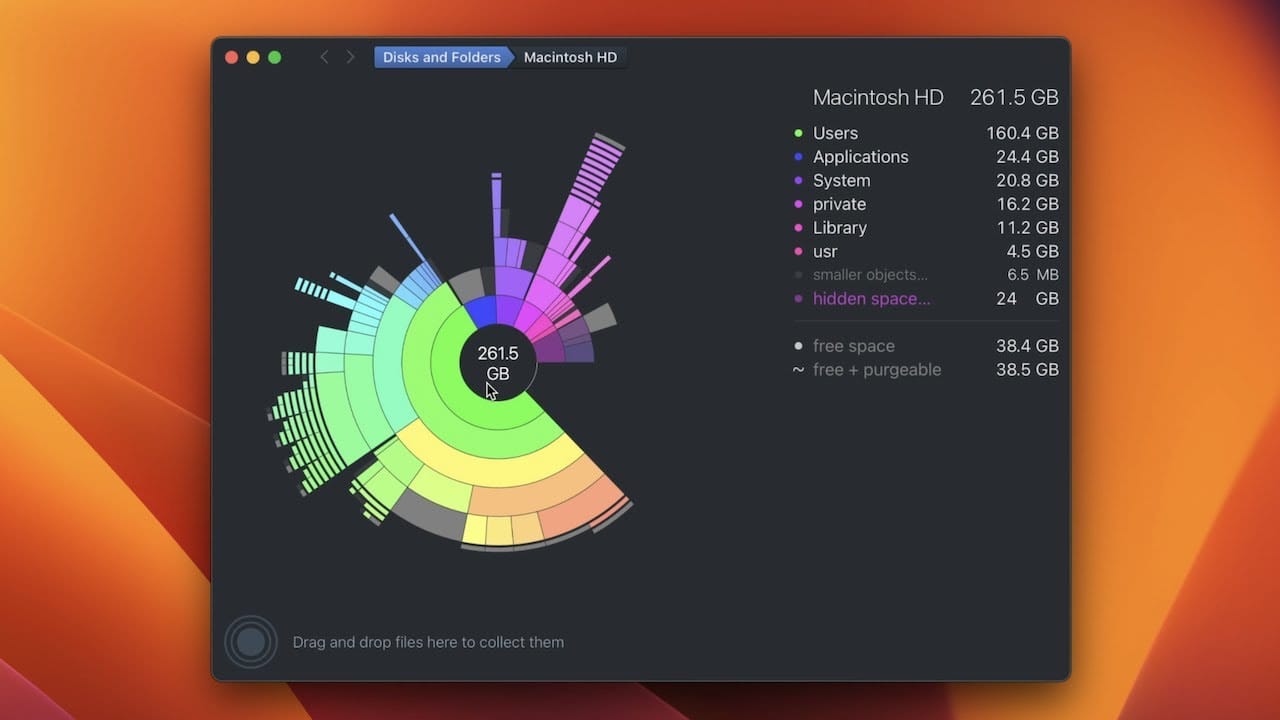
- Overview: DaisyDisk is a beautiful, specialized utility that does one thing and does it exceptionally well: it scans your drive and creates an interactive “sunburst” chart to help you find large files.
- Classification: Great for Beginners
- Role: Specialist
- Strengths: The user interface is gorgeous, intuitive, and fast. It makes the tedious process of hunting for large files feel like a game. For a $9.99 one-time purchase, its value is off the charts. It’s more focused and dramatically cheaper than an all-in-one suite like CleanMyMac X.
- Weaknesses: Its strength is also its weakness. It only visualizes and deletes files. It doesn’t run maintenance scripts, uninstall apps, or remove malware. It is a single-purpose tool, but the best in its class for that purpose.
- Pricing: $9.99 (one-time).
- Ideal Use Case: Any user whose primary and only problem is a full hard drive. For this single purpose, it’s the best tool on the market.
Product #7: OnyX

- Overview: OnyX is a powerful, long-standing, and completely free system tweaking utility. It’s the OG Mac maintenance tool for power users who are comfortable working without safety nets.
- Classification: Budget-Friendly
- Role: Specialist
- Strengths: It performs many of the same deep maintenance tasks as CleanMyMac X for free, such as running maintenance scripts, clearing obscure caches, and rebuilding system databases. It offers deep, granular control for those who know what they’re doing.
- Weaknesses: The risk for novices is extremely high. I have seen users on Reddit report corrupting their LaunchServices database with this tool, requiring a full macOS reinstall Reports of OnyX causing system instability. Its dense, technical UI makes it dangerously easy for a non-expert to cause catastrophic system instability.
- Pricing: Free.
- Ideal Use Case: Mac power users and system administrators who understand exactly what each script does and want maximum control without paying for a GUI. This is a “use at your own risk” tool.
Product #8: AppCleaner

- Overview: AppCleaner is another must-have free utility. It’s a simple, drag-and-drop tool for thoroughly uninstalling applications and all their hidden associated files.
- Classification: Must-Have
- Role: Add-on/Companion
- Strengths: It’s free, incredibly simple, and ruthlessly effective. It flawlessly replicates one of the single most-used features of a paid suite like CleanMyMac X.
- Weaknesses: It only does one thing. That’s it. It has no other functions, but it perfects the one it has.
- Pricing: Free.
- Ideal Use Case: Every single Mac user. This should be one of the first utilities you install on a new Mac. There is no reason not to have it.
Comprehensive Comparison Tables
Table 1: Feature & Primary Use Case
| Product | Classification | Primary Use Case | Key Differentiator | Price Model |
|---|---|---|---|---|
| CleanMyMac X | Editor’s Choice | All-in-one safe maintenance | Safety Database | Subscription / One-Time |
| Parallels Desktop | Premium Choice | Professional Windows VM | Coherence Mode & Performance | Subscription |
| Dr. Fone | Innovative | Mobile data recovery (marketing) | “Free Scan” Lure | Subscription (Predatory) |
| VMware Fusion | Best Value | Personal Windows VM | Free for Personal Use | Free / Subscription |
| UTM | Versatile | Multi-OS virtualization | Free & Open Source | Free |
| DaisyDisk | Great for Beginners | Disk space visualization | Sunburst Chart UI | One-Time |
| OnyX | Budget-Friendly | Power-user system tweaking | Granular Control (High Risk) | Free |
| AppCleaner | Must-Have | Thorough app removal | Simplicity | Free |
Risk Assessment & Mitigation Guide (Common Pitfalls)
Pitfall #1: Causing System Damage with “Cleaning” Apps
- The Risk: Aggressive or improperly used utilities, especially powerful free ones like OnyX, can delete critical system files, leading to system instability or the nightmare scenario of needing a full macOS reinstall.
- How It Happens: A user, trying to be helpful, runs powerful “Rebuild” or “Clean” scripts without understanding what they do, and accidentally corrupts a vital system database.
- Mitigation:
- Always have a current Time Machine backup. This is non-negotiable. Before you run any new utility, back up your machine.
- Choose tools with built-in safety features. This is where CleanMyMac X’s Safety Database earns its keep.
- Never allow a tool to automatically delete files without your explicit review and approval.
Pitfall #2: The Subscription Trap
- The Risk: Products like Parallels and Dr. Fone use confusing and aggressive license models to lock you into recurring payments that are often difficult to cancel.
- How It Happens: You buy Parallels’ “perpetual” license, only to find it needs a paid upgrade a year later. Or you use Dr. Fone once and discover you’ve been enrolled in a $99.95/year auto-renewing subscription.
- Mitigation:
- Read the fine print on any purchase page, especially regarding renewals and upgrades Parallels, Official EULA.
- Favor free alternatives like VMware Fusion or UTM if subscriptions are a primary concern.
- For services with poor reputations like Wondershare, use a virtual credit card or a service like Privacy.com to control payments and prevent unauthorized renewals.
Pitfall #3: Paying for “Hopeware”
- The Risk: This is the act of paying for data recovery software like Dr. Fone with no guarantee of success, effectively buying hope instead of a solution.
- How It Happens: A “free scan” shows you tantalizing thumbnails of your lost files, exploiting your panic to drive a purchase. After you pay, you discover the recovered files are corrupted, 0KB, or otherwise useless.
- Mitigation:
- Understand that software cannot fix physical damage. If your phone is water-damaged or won’t power on, no app can help you.
- If data is truly critical, stop using the device immediately to prevent overwriting the data. Your first call should be to a professional lab like DriveSavers, not to a piece of software DriveSavers Data Recovery, Official Website.
- Never, ever trust a “free scan” result as a promise of a successful recovery.
FAQ Section
Q1: What’s the best Mac utility for most people?
A: For the average non-technical user, my answer is CleanMyMac X. While power users may argue its functions can be replicated for free, this misses the main point: you are paying for safety. The “convenience tax” is really an insurance policy against accidental system damage. Powerful free tools like OnyX can cause significant system instability if used improperly, with users reporting issues that require a full macOS reinstall Reports of OnyX causing system instability. CleanMyMac X’s Safety Database is designed to prevent these exact scenarios, making it the most responsible choice for users who value their time and data integrity over saving a few dollars. Its ease of use and positive reputation on review platforms make it a justifiable investment for peace of mind MacPaw Customer Reviews.
Q2: Do I really need to pay for a Windows VM anymore?
A: Not for personal use, and it’s fantastic! The landscape completely changed when VMware Fusion Pro was made free for personal use by its new parent company, Broadcom VMware Fusion Player – Now Available Free for Personal Use. Previously, this was a premium, paid product. Now, you get access to a pro-grade virtualization tool at no cost. It offers performance so close to Parallels that most home users, students, and hobbyists will not notice the ~5-10% difference in benchmarks. While Parallels still holds an edge in its polished ‘Coherence Mode’ and absolute peak performance, VMware’s new pricing makes it the undeniable starting point for anyone who doesn’t need to run Windows professionally. It’s the best value by a country mile.
Q3: Is Dr. Fone a scam?
A: While it may not be legally defined as a scam, its business model is, in my professional opinion, predatory and deeply unethical. The entire strategy hinges on the “free scan” trap, which exploits the panic of a user who has lost data. It shows them tantalizing but unverified thumbnails, pressuring them into a high-cost purchase with no guarantee of success. Numerous user reviews on Trustpilot and G2 confirm they paid the fee only to receive corrupted or useless files Dr. Fone Customer Reviews. Furthermore, its privacy policy is concerning, admitting data may be processed in countries like China Wondershare Privacy Policy. You are far better off contacting a professional service if the data is critical.
Q4: Can a cleaner app really speed up my Mac?
A: Yes, but indirectly, and not in the way most people think. The most significant speed boost from a cleaner app comes from freeing up disk space. macOS uses free disk space as “virtual memory” (swap space) when physical RAM is full. If your drive is nearly full, the OS has no room to maneuver, which can cause significant slowdowns. By cleaning out large, old files and application junk, a tool like CleanMyMac X gives the OS breathing room. However, features like “Free Up RAM” are mostly a gimmick. As confirmed by technical sources, this just purges inactive memory that macOS would manage itself anyway CleanMyMac X Review. So, a clean drive is a fast drive, but don’t expect magic.
Q5: What’s the safest free Mac utility you’d recommend?
A: Hands down, AppCleaner. It is the gold standard of a perfect, safe, free utility. It has one job: to thoroughly uninstall applications by finding all the scattered preference files and caches that the standard “drag to trash” method leaves behind. It does this one, low-risk task flawlessly and has for years. For more powerful system maintenance, OnyX is also free and very capable, but I cannot call it “safe” for a general audience. It is a tool for experts. The interface is dense, the functions are powerful, and one wrong click can genuinely cause system instability that requires a professional to fix Reports of OnyX causing system instability. For absolute safety and zero cost, stick with AppCleaner.
Q6: Parallels vs. VMware: Which is better for my new M3 Mac?
A: When considering the Top Mac Utility Software and Virtualization Tools for a powerful M3 Mac, the choice between Parallels and VMware boils down to profession vs. passion. Parallels Desktop still holds a slim 5-10% performance advantage in most benchmarks and its “Coherence” mode for blending Windows apps into macOS feels more polished and seamless Parallels Desktop 19 for Mac Review. If you are a professional and every second of rendering or compiling counts, or if that seamless integration is critical to your daily workflow, the $120/year Pro subscription for Parallels can be justified as a business expense. For literally everyone else—students, gamers, hobbyists, or those who just need Windows occasionally—the answer is VMware Fusion. It is now free for personal use and delivers an experience that is 90% as good for 100% of the cost. Start with VMware; only pay for Parallels if you find a specific, mission-critical limitation.
Conclusion
Choosing the right Mac utility isn’t about finding a single “best” tool; it’s about matching the right tool to your specific problem and your technical comfort level. After years of testing, I can tell you that there is no magic bullet, only the right tool for the right job.
- For Maintenance: If you value your time and want to avoid any risk of damaging your system, CleanMyMac X is a worthwhile investment in convenience and peace of mind. If you’re a power user on a budget, the powerful combination of OnyX and AppCleaner can do almost everything for free, but it requires caution and expertise.
- For Virtualization: For professionals who need the absolute best, most seamless Windows integration, Parallels Desktop remains the king of performance, but it comes at a premium. For everyone else—students, home users, and the budget-conscious—the decision has become incredibly simple: start with the powerful and free-for-personal-use VMware Fusion. It’s a game-changer.
- For Data Recovery: Please, be careful. Avoid the siren song of “quick fix” tools like Dr. Fone that prey on panic. If your data is truly critical, your first and only call should be to a professional recovery service.
Your Mac is a powerful and expensive device; the right software will keep it running that way for years to come. I recommend you use this guide to the Top Mac Utility Software and Virtualization Tools to run a small pilot test on the top 2-3 candidates for your specific needs. By doing so, you’ll be equipped to make a smart, informed, and long-term decision that saves you time, money, and a whole lot of potential frustration.
