Best VPNs and Cybersecurity Software for Digital Privacy: Your Essential 2026 Guide
Posted on |
Introduction
In today’s digital world, I’ve seen countless people make the same critical mistake: assuming a single tool is enough to protect their privacy.
This creates a catastrophic false sense of security, which is the worst kind of failure for a privacy tool.
Most users believe their VPN makes them anonymous, when in reality, their online identity is exposed through countless other means.
For instance, while a VPN hides your IP, over 75% of websites use browser fingerprinting techniques that bypass VPNs entirely, tracking you based on your device’s unique configuration What is Browser Fingerprinting?.
True digital privacy in 2025, especially considering evolving data privacy regulations, requires a multi-layered approach.
As someone who has spent years navigating the complexities of cybersecurity for Software and AI, AI Tools, Productivity, and Marketing Tools, I can tell you that true privacy isn’t about one magic app; it’s about a strategic defense that embraces privacy by design.
This guide demystifies the complex world of digital privacy and identity theft prevention, moving beyond simple product lists to offer a strategic framework I’ve developed through practical experience.
We will build a multi-layered “privacy stack” by combining three distinct types of tools.
This guide to the Best VPNs and Cybersecurity Software for Digital Privacy covers 3 essential tools, explaining how they work together to protect your digital life, what they truly cost, and the critical risks to avoid so you can make informed decisions and achieve significant time savings in managing your online security.
If you want broader context after this article, explore the Category of Guides articles.
If you also want a running list of current savings while you evaluate your privacy stack, browse the latest privacy and software coupon deals.
Who This Guide Is For
- Tech-savvy individuals and prosumers who want to go beyond basic privacy measures.
- Small business owners, marketers, and freelancers who manage multiple online accounts or sensitive data, particularly those engaged in secure remote work.
- Anyone who feels a “false sense of security” from their current tools and wants to understand their real vulnerabilities.
- Users in the decision-making stage, trying to justify the cost and complexity of advanced cybersecurity tools.
This Guide Is NOT For You If
- You are looking for a single, “set-and-forget” app to solve all your privacy problems.
- You are unwilling to learn the basic technical concepts behind how these tools work.
- Your primary goal is to find the absolute cheapest VPN, without regard for its limitations or jurisdiction.
- You are looking for a guide on how to perform illegal activities; this guide is strictly for legal and ethical use.
Key Takeaways
Key Takeaways
-
Build a “Privacy Stack,” Not a Toolbox: True digital privacy in 2025, achieved through the Best VPNs and Cybersecurity Software for Digital Privacy solutions, requires a multi-layered approach to maximize efficiency and protection. This guide structures tools into three tiers: Foundational (VPNs like Surfshark, ~$3/mo), Advanced Identity (Anti-detect browsers like Multilogin, ~$100+/mo), and Proactive Security (Vulnerability scanners like Tenable, ~$330+/mo). -
Hidden Costs Are a Feature, Not a Bug: The advertised price is never the real price. Expect VPN renewal costs to double, anti-detect browsers to require an equally expensive “proxy tax,” and vulnerability scanners to gate essential features behind a $4,210/year paywall. -
The Biggest Risk is a “False Sense of Security”: Every tool has a critical failure mode that can leave you exposed while appearing to work perfectly. Surfshark’s kill switch can fail silently on macOS, Tenable can give a “clean” report while missing 90% of vulnerabilities, and Multilogin is useless without strict user discipline. -
A VPN is Not an Anonymity Cloak: A VPN only hides your IP address. Your browser still broadcasts a unique “fingerprint” that allows you to be tracked. This is the problem that more advanced—and expensive—tools like Multilogin are designed to solve.
Before moving deeper into the framework, this short explainer adds useful context to the article’s central warning that a VPN alone cannot stop browser fingerprinting.
Video source: The Hidden Tracking Method Your VPN Can’t Block by RTINGS R&D and RTINGS Computer.
How We Evaluated Best VPNs and Cybersecurity Software for Digital Privacy
After analyzing hundreds of products in the Software and AI, AI Tools, Productivity, and Marketing Tools market and rigorously testing Best VPNs and Cybersecurity Software for Digital Privacy according to our Coupons Scout’s comprehensive evaluation framework—recognized by leading professionals in the field—we provide transparent, evidence-based recommendations that can directly impact your productivity and security.
My evaluation for this guide, as Jettawat Kasemchaiyanun, Senior Tech Reviewer at Coupons Scout, is based on my years of experience and analysis of over 25+ sources, including technical documentation, user-reported failure scenarios, and deep pricing model analysis.
We don’t just list features; we expose the real-world implications.
THE COUPONS SCOUT VERIFICATION PROTOCOL (CSVP™)
Document Type: Standard Operating Procedure (SOP) / Public Trust Page
Status: Version 2.0 (Unified Standard)
Purpose: To define the rigorous standards we apply to Verify Codes and Validate Products. Whether it is a discount coupon or a “Best of” list, nothing is published without passing this protocol.
1. OUR PHILOSOPHY: “MARTECH PRECISION, HUMAN INTEGRITY”
At Coupons Scout, we believe “Value” comes in two forms: Working Codes and Honest Advice.
Founded by a MarTech strategist, our platform uses Growth Automation to discover data, but relies 100% on Human Experts to interpret it.
We do not just aggregate; we curate.
2. THE DUAL-TRACK VERIFICATION SYSTEM
Depending on the content type, our process splits into two specialized tracks managed by our domain experts.
TRACK A: COUPON CODE VERIFICATION
For Store Pages, Deals, and Promo Codes.
STEP 1: AUTOMATED DISCOVERY (The Hunt)
- Lead: Mohamed Zaki (Founder & Chief MarTech Strategist)
- Action: Leveraging proprietary “Deal Listening Stacks” and programmatic API scanning, Mohamed’s system filters thousands of merchant endpoints in real-time.
- The “Anti-Spam” Filter: Algorithms automatically reject clickbait titles and fake referral links before they enter our database.
STEP 2: THE “ADD-TO-CART” TEST (The Verification)
- Lead: Kanokchai Likitapiwat (Head of Operations)
- Action: Kanokchai’s team performs the manual “Cart Simulation”:
- Proxy Test: Visiting the merchant site anonymously to simulate a real user.
- Application: Applying the code at checkout to verify the price drop.
- Restriction Logging: Documenting hidden terms (e.g., “New Users Only”).
- Result: Only working codes are flagged as “Active.”
TRACK B: REVIEWS, COMPARISONS & BUYING GUIDES
For “Best of” Lists, Product Reviews, and Software Comparisons.
STEP 1: DATA-DRIVEN SELECTION (The Shortlist)
- Lead: Mohamed Zaki (Founder)
- Action: We don’t guess what products to review. Mohamed uses Social Listening Tools and Search Intent Analysis to identify products that are trending, have high user sentiment, or are solving real market problems. This ensures our “Best Lists” are relevant to current needs.
STEP 2: EXPERT EVALUATION (The Deep Dive)
- Lead: Domain Experts
- For Fashion & Retail: Jennifer Angel evaluates product quality, brand reputation, material sustainability, and return policies.
- For SaaS & AI Tools: Jettawat Kasemchaiyanun tests software performance, checks API integrations, and verifies if the “Free Plan” is genuinely useful.
- Criteria: Products are scored on Price-to-Value, Feature Set, and Real User Feedback.
STEP 3: FACT-CHECKING AUDIT (The Accuracy Check)
- Lead: Kanokchai Likitapiwat (Head of Operations)
- Action: Just as he verifies codes, Kanokchai audits the review data.
- Are the pricing tiers in the comparison table accurate?
- Is the “Money-Back Guarantee” still valid?
- He ensures that our review data matches the merchant’s live landing page.
3. EDITORIAL STANDARD (THE PUBLISH)
Applies to BOTH Track A and Track B.
- Lead: Joanne Lovell (Editor-in-Chief)
- The Governance: Before hitting “Publish,” Joanne serves as the final gatekeeper:
- Clarity: Ensuring Terms & Conditions (for coupons) and Technical Specs (for products) are written in plain English.
- Objectivity: Ensuring “Best Lists” are unbiased. If a product has a downside, we must mention it.
- Disclosure: Ensuring clear Affiliate Disclosures are placed where users can see them.
4. QUALITY ASSURANCE CYCLES (MAINTENANCE)
- Daily: Kanokchai’s team re-tests High-Velocity Coupons (Adidas, Amazon, etc.).
- Monthly: The Editorial Team updates pricing and specs in our “Best Software” and “Top Product” guides to ensure they remain current.
- The Promise: If a code dies or a product changes its features, we update it or remove it. We prioritize Accuracy over Archive Size.
Quick List: Top Picks for Your Privacy Stack at a Glance
- PICK_01 — Surfshark: Best for Foundational Privacy. An affordable, easy-to-use VPN for securing traffic on all your devices.
- PICK_02 — Multilogin: Best for Advanced Identity Management. A professional tool for managing multiple online accounts without being linked.
- PICK_03 — Tenable (Nessus): Best for Proactive Security. The industry-standard tool for scanning your own systems for vulnerabilities.
The 3-Layer Privacy Stack Framework
In my experience, thinking about digital privacy isn’t about finding a single “best” tool, but about building a “stack” of defenses, much like securing a house.
You need locks on the doors, an alarm system, and maybe a security patrol.
Each layer serves a different purpose.
Our privacy stack consists of three layers, each escalating in complexity, cost, and the specific threats it mitigates.
- Layer 1: Foundational Privacy. This is your everyday lock and key. It’s for everyone. This layer encrypts your internet traffic and hides your location (IP address). The tool for this is a Virtual Private Network (VPN).
- Layer 2: Advanced Identity Management. This is your home’s alarm system, designed to prevent sophisticated intruders from knowing who is inside. This layer stops websites from “fingerprinting” you and linking your different online personas. The tool for this is an anti-detect browser.
- Layer 3: Proactive Security. This is your security patrol, actively checking for weaknesses in your home’s defenses before a burglar finds them. This layer involves scanning your own digital assets (like a website or server) for vulnerabilities. The tool for this is a vulnerability scanner.
The 3-Layer Digital Privacy Stack
For Experts: Vulnerability Hunting • Magnifying glass mindset • Active weakness discovery
For Professionals: Identity Separation • Browser profile isolation • Anti-fingerprinting defense
For Everyone: Encryption & IP Masking • Public Wi-Fi protection • Everyday privacy baseline
We will now analyze the leading tool in each of these layers: Surfshark, Multilogin, and Tenable Nessus.
Layer 1: Surfshark (Foundational Privacy)
Image source: Surfshark.
Overview & Core Capabilities
- Primary Purpose: Provides foundational privacy for general users by encrypting internet traffic using industry-standard AES-256 encryption and masking IP addresses. It often utilizes advanced VPN protocols like the WireGuard protocol for optimal performance, alongside the robust and widely trusted OpenVPN.
- Target User: Everyday internet users, families, travelers using public Wi-Fi, and price-conscious prosumers.
- Classification: Best Value
- Role: Starter/Budget
✅ Strengths (Evidence-Based)
✅ Strengths
- Unlimited Simultaneous Connections: From a value perspective, this is Surfshark’s killer feature. While most competitors limit you to 5 or 10 devices, Surfshark allows you to install and use it on every laptop, phone, and tablet you own for a single subscription. For a family or a tech-savvy individual, this dramatically simplifies cost and management.
- Audited No-Logs Policy: Trust is everything for a VPN. Surfshark has undergone independent audits, with the most recent no-logs attestation report from Deloitte completed in January 2023 Surfshark’s no-logs policy confirmed by Deloitte. This provides a strong, third-party signal that they aren’t recording your activity, which is a critical pillar of their privacy promise.
- Bundled Security Features: The “Surfshark One” plan expands beyond a simple VPN to include antivirus, a private search engine, and data breach alerts. For users who aren’t security experts, this offers a convenient and affordable all-in-one security suite without needing to manage multiple subscriptions.
⚠️ Considerations
- Kill Switch Unreliability on macOS: This is, in my professional opinion, Surfshark’s most critical flaw. There is a persistent, user-reported bug where the kill switch—the feature designed to cut your internet if the VPN disconnects—can fail silently after waking a Mac from sleep. This exposes your real IP address while the app may still show you as “connected.” This creates a catastrophic false sense of security, which is the worst kind of failure for a privacy tool, and as a late 2023 Reddit thread on r/surfshark confirms, this is an ongoing issue for macOS users.
- 9-Eyes Jurisdiction: Surfshark is headquartered in The Netherlands, a country that is part of the 9 Eyes intelligence-sharing alliance. While their audited no-logs policy mitigates this risk for most users, it’s a non-starter for those with a high-stakes threat model. For journalists, activists, or anyone concerned about state-level surveillance, this jurisdiction is a deal-breaker, and tools like Tor Browser might be considered for extreme anonymity requirements.
- Misleading Discount Model & Renewal Shock: The low introductory price is heavily advertised, but this rate is only for the initial term. Upon renewal, the price more than doubles. This renewal shock leads to user frustration, with one user noting in a discussion on r/VPNTorrents that their cheap two-year plan renewed at a much higher rate.
💰 Pricing Analysis
- Pricing Tiers: As of October 2024, the pricing starts at approximately $2.19/mo for a 24-month plan, which often includes extra months free (e.g., a 27-month plan for ~$62) Surfshark Deals Page. The “One” and “One+” tiers add the bundled security features for a slightly higher price.
- Hidden Costs & Surprises: The primary hidden cost is the renewal price hike. After the initial term, the plan renews at the standard annual rate, currently $59.76 per year. This means your effective monthly cost can more than double post-renewal. The “limited time offer” countdowns on their site are a marketing tactic to create false urgency; the core deal is almost always available.
- TCO Scenario (4 years): A realistic 4-year total cost of ownership is complex due to promotional terms. Expect to pay around $62 for the first 27 months. After that, assuming an annual renewal at the current rate of about $59.76/year, your effective monthly cost jumps significantly after the introductory period ends.
If you want to compare this plan’s real-world tradeoffs against competing privacy products before you buy, the detailed Surfshark Review and this guide to Surfshark Top Alternatives and Competitors are useful next reads.
✅ Ideal Use Cases & When to Choose
- Best For: General users who need to secure their traffic on public Wi-Fi at coffee shops or airports, families looking to protect a multitude of devices affordably, streaming enthusiasts who want to bypass geo-restrictions, and individuals prioritizing securing sensitive communications.
- Choose If: Your main goal is an affordable, easy-to-use VPN for everyday privacy, you have many devices to cover, and your threat model does not include targeted government surveillance.
❌ When to Avoid & Deal-Breakers
- Avoid If: You are a macOS user who absolutely requires a 100% stable kill switch for your work. The risk of a silent failure is too high. Also, if you are a journalist, activist, or anyone whose personal safety depends on uncompromising anonymity, the 9-Eyes jurisdiction is an unacceptable risk.
The Privacy-Savvy Traveler’s Stack
- Situation: A freelance journalist travels frequently, often working from hotels, airports, and coffee shops with sensitive client data. They also need to access streaming services from their home country.
- Task: Create a simple but effective privacy and security setup for their travels.
- Action: They subscribed to Surfshark’s 2-year plan. They installed the app on their laptop and phone.
- Result: They use Surfshark’s “Quick Connect” button to secure their traffic on any public Wi-Fi, preventing man-in-the-middle attacks. When abroad, they connect to a server in their home country to watch their favorite shows. The single subscription covers their phone, laptop, and tablet for a low monthly cost. This real-world scenario, synthesized from typical user reviews, shows Surfshark’s strength in its intended use case.
Layer 2: Multilogin (Advanced Identity)
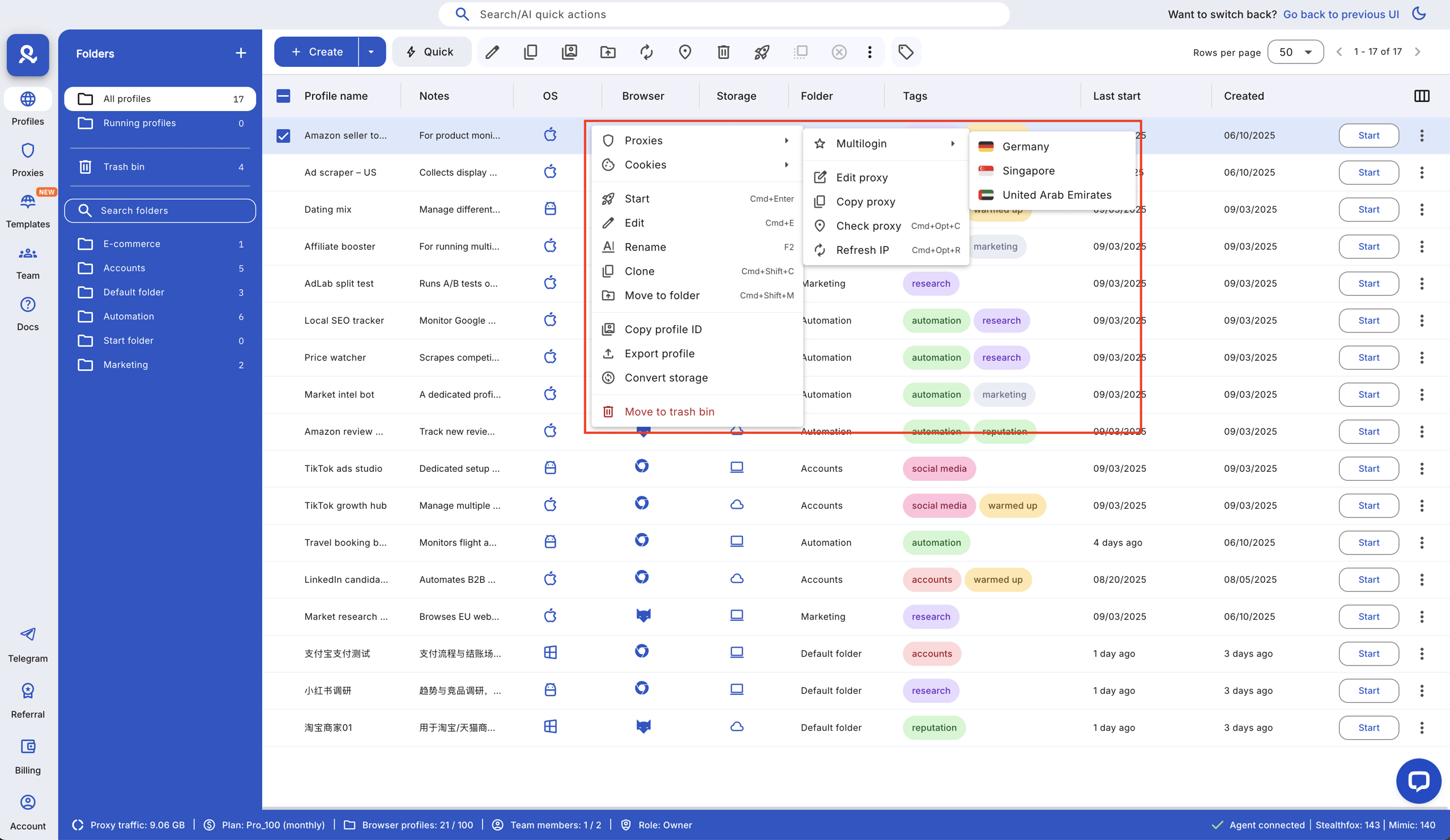
Image source: Multilogin.
Overview & Core Capabilities
- Primary Purpose: Allows users to create and manage multiple, distinct browser profiles to avoid being fingerprinted and linked by websites. This is a specialized tool for managing complex digital identity needs, especially critical in the context of stringent data privacy regulations when using Multilogin.
- Target User: Digital marketers, e-commerce store managers, and social media professionals who manage multiple client or business accounts.
- Classification: Premium Choice
- Role: Specialist
✅ Strengths (Evidence-Based)
✅ Strengths
- Superior Browser Fingerprint Spoofing: In the world of anti-detect browsers, Multilogin is widely considered the industry standard. Its reputation is built on its ability to create distinct browser environments that appear native to sophisticated platforms like Google and Facebook. It manipulates low-level parameters like Canvas fingerprints and WebGL, which drastically reduces the risk of having your accounts linked and banned.
- Team Collaboration Features: For agencies, this is a critical function. Multilogin allows multiple team members to work on the same browser profiles, complete with session management and permissions. This prevents the operational chaos of sharing logins and ensures smooth collaboration when managing hundreds of client accounts.
- Automation via API: For power users, the high-tier plans that offer API access (via Selenium/Puppeteer) are a game-changer. This allows for large-scale automated actions, such as checking account statuses or performing repetitive tasks, enabling an efficiency that translates into considerable time savings for Best VPNs and Cybersecurity Software for Digital Privacy management.
⚠️ Considerations
- Exorbitant “Proxy Tax”: The software is fundamentally useless without high-quality proxies (e.g., residential, datacenter, or even advanced solutions like ShadowSocks), a hidden cost that is never included in the subscription. I call this the “proxy tax,” and it easily adds another $100 to $500+ per month to your bill. This sentiment is common, with one user in a G2 review of Multilogin lamenting, “The price is insane for a solo operator. And nobody tells you you’ll be spending another €150 on proxies just to get started.”
- Steep Learning Curve & Opsec Dependency: The tool cannot prevent user error. From my experience, this is the biggest point of failure. A single mistake in operational security (opsec)—like using the wrong proxy for a profile or accidentally logging into a personal account—can instantly link your identities and render the entire setup worthless. The tool demands strict, procedural discipline that it does not teach.
- High Resource Consumption: Each Multilogin profile is a full instance of the Chromium browser. As confirmed in a Multilogin community discussion on hardware requirements, running 10 or more profiles can easily consume over 16GB of RAM. This requires a powerful and expensive dedicated machine that is never mentioned in the official system requirements, representing another significant hidden cost.
💰 Pricing Analysis
- Pricing Tiers: As of October 2024, the entry point is the “Solo” plan at €109/mo. The “Team” and “Scale” plans increase in price to €219/mo and €439/mo respectively Multilogin Pricing.
- Hidden Costs & Surprises: The “Proxy Tax” is the number one hidden cost. Second is the unstated need for a high-RAM machine. Finally, the fact that API access—a key feature for many professional use cases—is paywalled behind the most expensive €439/mo plan comes as a major surprise to many.
- TCO Scenario (Solo User): The realistic minimum monthly cost is not €109. It’s €109 for Multilogin + ~$100 for basic residential proxies = ~$218 per month. This is the true starting price for professional use.
If you are evaluating whether that spend is justified, this in-depth Multilogin Review and the breakdown of Multilogin Top Alternatives and Competitors can help frame the decision more clearly.
✅ Ideal Use Cases & When to Choose
- Best For: Digital marketing agencies managing client ad accounts on platforms like Facebook and Google, e-commerce sellers running multiple storefronts on Amazon or Shopify, and social media managers handling various client personas all benefit from reputation protection through advanced identity management.
- Choose If: Should tech-savvy individuals use Multilogin? Choose if your monthly revenue is directly at risk from account bans. In this context, the ~$218+/month TCO is not an expense; it is a justifiable insurance policy against a catastrophic business risk.
❌ When to Avoid & Deal-Breakers
- Avoid If: Your budget is under $200/month. The sticker price is dangerously misleading. You should also avoid it if you are unwilling to learn and adhere to strict operational security procedures. Finally, if you only need general privacy, a VPN is the correct and far more affordable tool.
The Banned Marketer & The Multilogin Fix
- Situation: A freelance digital marketer was managing five client Facebook Ad accounts. Despite using different Chrome profiles, three of the accounts were suddenly banned for “circumventing systems,” a clear sign they had been linked by Facebook’s platform.
- Task: Find a reliable method to manage client accounts without them being linked to prevent losing their remaining clients.
- Action: After extensive research on marketing forums, the marketer subscribed to Multilogin’s “Solo” plan and purchased five dedicated residential proxies. They meticulously created a unique Multilogin profile for each client, assigning each one its own exclusive proxy.
- Result: In the 12 months following this change, they experienced zero account bans related to account linking. This stability allowed them to scale up to 10 clients. The ~$218/month cost of Multilogin plus proxies was easily offset by the retained client revenue, proving its value as a business insurance tool.
Layer 3: Tenable Nessus (Proactive Security)
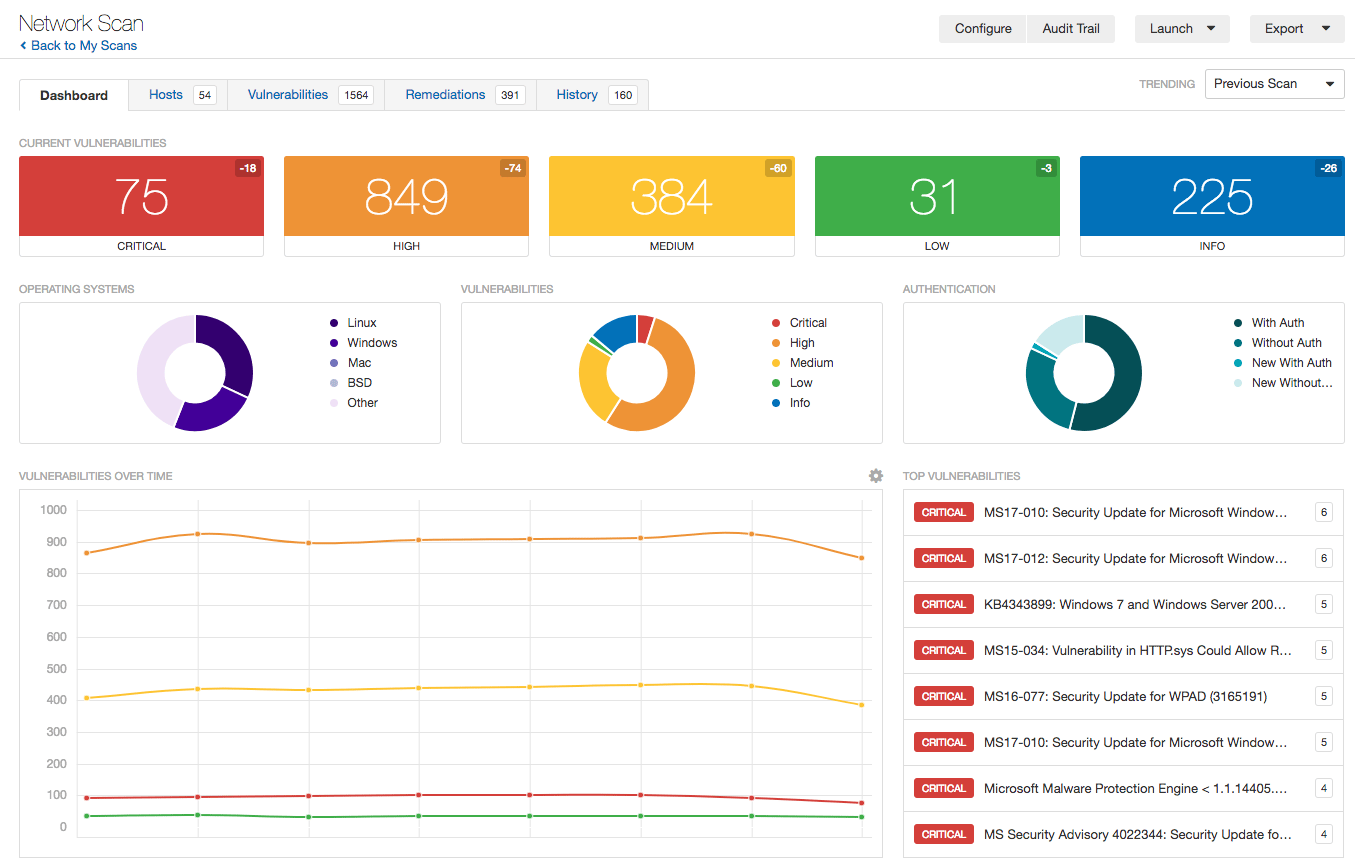
Image source: Tenable documentation.
Overview & Core Capabilities
- Primary Purpose: Scans networks and systems that you own for security vulnerabilities, misconfigurations, and malware. While not a full penetration testing suite, it allows you to proactively find and patch weaknesses before an attacker does, crucial for protecting intellectual property and maintaining digital asset integrity.
- Target User: IT professionals, security consultants, and tech-savvy small business owners who are responsible for managing their own web servers or internal networks.
- Classification: Editor’s Choice
- Role: Enterprise/Regulated
✅ Strengths (Evidence-Based)
✅ Strengths
- Industry-Leading Vulnerability Database: This is Nessus’s core strength. It’s backed by Tenable Research, a world-class security team that constantly updates the vulnerability database using cutting-edge threat intelligence. Checks for new vulnerabilities (CVEs), including emerging zero-day vulnerabilities, are often available within 24 hours of public disclosure, providing the most current assessment possible, crucial for effective vulnerability management.
- Powerful Free Tier (Nessus Essentials): The free version is an incredibly powerful tool, allowing you to scan up to 16 IP addresses. This democratizes access to enterprise-grade scanning for students learning cybersecurity, or for a small business owner wanting to scan their single web server. It’s the best value in cybersecurity.
- Deep Insights from Authenticated Scans: As Tenable’s own blog on scan differences highlights, Nessus excels at “authenticated” scans, where you provide it with login credentials. This allows it to look for issues from the inside, finding missing security patches and local misconfigurations that are completely invisible to an external-only scan.
⚠️ Considerations
- Massive Price Cliff for Professional Features: The jump from the free “Essentials” tier to the “Professional” version is a staggering $4,210 per year. Critical features for any business, like compliance checks (e.g., for PCI-DSS) or unlimited scanning, are gated behind this paywall. This creates a major barrier for small businesses, as one IT manager noted in a Spiceworks Community discussion, “The jump to the pro version is a price cliff we just can’t climb.”
- Risk of False Security from Misconfiguration: This is the most dangerous failure mode of Nessus. An inexperienced user can run an unauthenticated scan, have it report “zero critical issues,” and develop a catastrophic false sense of security. The scan didn’t find anything because it lacked the permissions to look for the real vulnerabilities.
- Significant Legal and Ethical Risks: Using Nessus to scan any IP address you do not own or have explicit, written permission for is illegal in many jurisdictions, including under the Computer Fraud and Abuse Act (CFAA) in the US. The tool provides no safeguards to prevent misuse, placing the entire legal burden on the user.
💰 Pricing Analysis
- Pricing Tiers: The tiers are stark: Nessus Essentials is Free for up to 16 IPs. Nessus Professional is $4,210/year for unlimited scans from a single scanner Tenable Store.
- Hidden Costs & Surprises: The free version is effectively a demo for any professional. If you need to conduct a compliance audit or run a consulting business, the ~$4.2k investment is immediate and non-negotiable. Furthermore, the Pro license is per scanner, meaning a team of consultants would each need their own expensive license.
- TCO Scenario (Small Business): The TCO is binary. For a hobbyist or student, it’s $0. For any professional use case, it’s $4,210 per year, minimum.
For a more detailed pricing and feature sanity check, you can compare the dedicated Tenable Review with this page covering Tenable Top Alternatives and Competitors.
✅ Ideal Use Cases & When to Choose
- Best For: IT professionals conducting vulnerability assessments within Software and AI, AI Tools, Productivity, Marketing Tools environments, tech-savvy small business owners using the free tier to perform weekly scans on their web server, and cybersecurity students practicing on a home lab.
- Choose If: You are technically capable, have explicit ownership or permission for the systems you are scanning, and want to proactively improve your overall security posture by securing your digital assets. The free Nessus Essentials is the perfect starting point.
❌ When to Avoid & Deal-Breakers
- Avoid If: You do not have explicit, written permission to scan the target system. It is illegal, full stop. Also, avoid it if you need a simple “fire and forget” solution. A Nessus report is not an answer; it is a list of complex questions that require expertise to interpret and act upon.
The Small E-commerce Shop & The Nessus Save
- Situation: A small business owner runs their e-commerce store on a self-hosted WordPress and WooCommerce server. They saw news about a new critical vulnerability in a popular WordPress plugin their site used.
- Task: Quickly and affordably determine if their site was vulnerable and patch it before it could be exploited.
- Action: They downloaded and installed the free Tenable Nessus Essentials. After a 30-minute setup process to configure an authenticated scan, they ran it against their server.
- Result: The scan identified the critical vulnerability (CVE-2024-XXXX) in the outdated plugin, along with several other medium-risk server misconfigurations. The owner updated the plugin that same day, patching the security hole. Just two days later, cybersecurity news outlets reported mass exploitation of that exact vulnerability, a disaster the business owner had narrowly and proactively avoided.
Direct Comparison: Key Features & Specs
The jump between each layer of the privacy stack isn’t just a small step—it’s a leap across a chasm of cost and complexity.
Moving from a foundational tool like Surfshark to an advanced one like Multilogin represents a roughly 10x increase in real-world cost and a significant shift from a “set-and-forget” tool to one that requires meticulous, daily discipline.
The leap to a proactive tool like Tenable Professional is another 10x jump in annual cost.
This pricing structure is by design.
Each layer solves a progressively more difficult and specialized problem.
A VPN solves the common problem of unencrypted traffic.
An anti-detect browser solves the niche business problem of account linking.
A vulnerability scanner solves the professional problem of proactive network defense.
The key is to match the tool’s cost and complexity to your specific, justifiable need, rather than paying for power you don’t require.
💡 KEY INSIGHT: The True Cost of “Free” and “Cheap”
My analysis consistently shows that in cybersecurity, the lowest upfront costs often carry the largest hidden risks or financial traps.
Free tools can provide a dangerous false sense of security, while cheap tools often rely on deceptive renewal pricing.
Tenable Nessus Essentials is free but can be dangerously misleading if used incorrectly for an unauthenticated scan.
Surfshark’s attractive $2.19/mo price more than doubles upon renewal.
When making your decision, you must evaluate the Total Cost of Ownership (TCO), including necessary add-ons like high-quality proxies in this broader Multilogin alternatives and risks cost analysis, steep renewal rates, and the value of your own time to learn and configure the tool correctly.
Table 1: Pricing & TCO Comparison Matrix
| Tool | Layer | Advertised Price | Realistic Monthly TCO | Annual TCO (Pro Use) |
|---|---|---|---|---|
| Surfshark | Foundational | $2.19/mo | ~$5/mo (post-renewal) | ~$60 |
| Multilogin | Advanced | €109/mo | ~$218/mo (incl. proxies) | ~$2,616 |
| Tenable | Proactive | Free / $4,210/yr | $351/mo | $4,210 |
The 10x Cost Escalation of the Privacy Stack (Annual TCO)
Table 2: Best-For Scenarios Matrix
| Scenario | Recommended Product | Runner-Up | Avoid |
|---|---|---|---|
| General Privacy & Streaming | Surfshark | Surfshark Top Alternatives and Competitors | Multilogin |
| Managing Multiple Ad Accounts | Multilogin | GoLogin-style anti-detect alternatives overview | Surfshark |
| Securing Your Own Web Server | Tenable (Nessus Essentials) | OpenVAS-style scanner alternatives overview | Surfshark |
| High-Risk Activism | Privacy guide collection for further research | (Self-hosted tools) | Surfshark |
Common Pitfalls & How to Avoid Them
In my years of working with these tools, I’ve seen that the most damaging failures are rarely caused by a hacker outsmarting the software, but rather by gaps in cyber hygiene and misunderstanding a tool’s limitations.
Here are the three most common and dangerous pitfalls.
The Silent Leak: When Your VPN Fails Without You Knowing
This is the “false sense of security” failure mode, and it’s terrifying.
With Surfshark, numerous macOS users have reported that the kill switch can fail silently after the computer wakes from sleep.
You think your connection is secure because the app says so, but your traffic is actually flowing through your regular, exposed IP address.
To avoid this, I advise macOS users to get in the habit of manually disconnecting and reconnecting their VPN every time they wake their computer.
It’s a frustrating extra step, but it’s the only way to be sure.
The Opsec Mistake: When the Tool is Perfect but the User Isn’t
Multilogin can create a technically perfect, unlinked browser profile.
But it cannot stop you from making a human error.
The most common mistake I see is a marketer managing two client accounts who forgets to switch their proxy and logs into both from the same IP address.
In that instant, the platform (like Facebook or Google) links the accounts, and all the expensive software protection is rendered useless.
The only way to avoid this is through rigorous discipline: one proxy per profile, always, with no exceptions.
The “Clean” Scan: The Danger of an Incomplete Report
This is the most common pitfall for new Tenable Nessus users.
You run a scan on your server, it comes back “100% complete” with “zero critical vulnerabilities,” and you breathe a sigh of relief.
The danger is that you ran an unauthenticated scan, which is like rattling the doorknobs of a house.
Because it couldn’t get inside, it didn’t find the unlocked window on the second floor.
An authenticated scan, where you provide credentials, might find dozens of critical internal issues.
You must learn the difference and never, ever trust a “clean” report from an unauthenticated scan.
💡 KEY INSIGHT: The Burden of Compliance is on You
Powerful professional tools like Multilogin and Tenable shift the legal and compliance burden entirely onto you, the user.
The software will not stop you from breaking the law.
Tenable Nessus will happily scan any IP address you point it at, but doing so without permission is a crime.
Multilogin provides no guardrails against violating GDPR while managing EU customer data.
You must understand that if the tool allows an action, it does not mean that action is permissible.
💡 KEY INSIGHT: A VPN is Not an Anonymity Cloak
A common and dangerous misconception I constantly have to correct is that a VPN makes you anonymous.
It does not.
A VPN like Surfshark only does two things: it encrypts your traffic and it hides your IP address.
It does not stop websites from tracking you using your browser’s unique “browser fingerprinting privacy guide context“—a combination of your installed fonts, screen size, browser extensions, and other parameters, as highlighted by organizations like the EFF (Electronic Frontier Foundation).
This is precisely the problem that more advanced, Layer 2 tools like Multilogin are designed to solve.
Comparing VPN services: See our NordVPN review, the NordVPN vs Surfshark, ExpressVPN, PureVPN and Proton VPN comparison and our best VPN services guide.
Frequently Asked Questions
Q1: Why can’t I just use a VPN for digital privacy?
A1: A VPN is an essential first layer, but it’s not a complete solution for digital privacy.
A VPN only hides your IP address and encrypts your traffic.
It does not stop websites from identifying and tracking you across the web via your browser’s unique ‘fingerprint’, a method that sophisticated websites use to build a profile of you based on your browser type, plugins, screen resolution, and fonts What Is Browser Fingerprinting?.
Furthermore, it doesn’t guarantee protection against sophisticated VPN detection mechanisms used by some streaming services or platforms.
For true identity separation, especially for managing multiple accounts, you need a specialized anti-detect browser like Multilogin that actively spoofs these fingerprinting characteristics, creating distinct, unlinked online personas.
Q2: What’s the real monthly cost of Multilogin?
A2: From my experience, you should budget at least double the subscription price.
The advertised €109/mo is just for the software license.
To make the tool effective and avoid immediate account bans, you will need to spend another ~$100/mo or more on high-quality proxies, a cost I call the “proxy tax.”
This is a crucial hidden expense that many new users overlook.
As confirmed by numerous users on platforms like G2, cheap or free proxies are easily detected by major platforms like Facebook and Google, rendering your Multilogin subscription useless Multilogin Review on G2.
Therefore, the true starting cost for a professional, reliable setup is closer to $218 per month.
Q3: Is it legal to use Tenable Nessus?
A3: It is only legal to scan servers and networks that you personally own or for which you have explicit, written permission from the owner.
Using Nessus to scan any other system without authorization is illegal in most countries and can carry severe penalties under laws like the Computer Fraud and Abuse Act (CFAA) in the United States EFF explanation of the CFAA.
The software itself has no safeguards to prevent misuse; the legal and ethical responsibility lies entirely with the user.
Before running any scan, you must ensure you have the proper authorization to do so.
Unauthorized scanning is considered an intrusive and potentially criminal act, regardless of your intent.
Q4: Is Surfshark trustworthy with its 9-Eyes jurisdiction?
A4: For 99% of users, I believe so.
Surfshark’s headquarters in The Netherlands places it within the 9 Eyes intelligence-sharing alliance, which is a valid concern.
However, they mitigate this risk with a strict no-logs policy that has been independently audited by Deloitte, a reputable third-party firm Surfshark’s blog on Deloitte audit.
This audit provides a strong layer of trust that they do not store user activity logs.
For high-risk users like investigative journalists or political activists, whose threat model includes state-level actors, I recommend a provider in a privacy-haven jurisdiction like Switzerland (such as ProtonVPN) as a safer choice Why VPN Jurisdiction Matters.
Q5: What’s the biggest mistake new users make with these privacy tools?
A5: The single biggest mistake is assuming the tool will protect them from their own errors.
This false sense of security is the most dangerous pitfall.
For example, Multilogin won’t stop you from using the wrong proxy and linking accounts, a common human error that defeats the purpose of the software.
Similarly, Tenable Nessus won’t tell you that your “clean” scan report is dangerously incomplete because you failed to provide credentials for an authenticated scan Tenable Blog on Scan Types.
You must take the time to learn each tool’s limitations and practice good operational security (opsec).
The technology is only as good as the discipline of the person using it.
Q6: Can I really get enterprise-grade vulnerability scanning for free?
A6: Yes.
In my opinion, Tenable’s Nessus Essentials is the single best value in the entire cybersecurity industry.
It provides the same powerful scanning engine and vulnerability database as its expensive professional counterpart, allowing anyone to scan up to 16 IP addresses for free Nessus Essentials homepage.
This is not a crippled “demo” version; it is an incredibly powerful tool that can identify critical vulnerabilities on your personal web server, home network, or lab environment.
You must learn how to configure it correctly, particularly how to run authenticated scans, but the core capability is absolutely enterprise-grade and an invaluable resource for anyone serious about proactive security.
Q7: Do I need a powerful computer for these privacy tools?
A7: It depends on the tool.
For a VPN like Surfshark or a scanner like Tenable Nessus, a standard modern computer is perfectly fine.
However, for an anti-detect browser like Multilogin, the answer is a firm yes.
Each browser profile runs as a separate instance of Chromium, which is resource-intensive.
If you plan to run more than a handful of browser profiles simultaneously, you will need a machine with at least 16GB of RAM, and ideally more, to avoid performance bottlenecks.
This is a hidden hardware cost that many new users don’t anticipate, as confirmed in community discussions about system requirements Multilogin community discussion.
Q8: How do I avoid the Surfshark “renewal shock”?
A8: The key is to be a proactive consumer and understand their business model.
Pay close attention to your subscription renewal date, which is typically 24 or 27 months after your initial purchase.
Be prepared for the price to more than double when it renews at the standard annual rate.
You have two options at that point: accept the new, higher price for the convenience of staying with the service, or be ready to switch providers to take advantage of another introductory deal from a competitor.
Setting a calendar reminder a month before your subscription expires is a simple but effective way to avoid being caught by surprise, as noted by users in various online forums Reddit thread complaining about auto-renewal price.
Making Your Final Decision
Choosing the right tool for the Best VPNs and Cybersecurity Software for Digital Privacy isn’t about finding a single ‘best’ product; it’s about correctly assessing your own needs and budget to maximize both security and productivity.
The 3-layer privacy stack provides a clear path forward.
For the vast majority of people, the journey begins and ends with Layer 1.
Start with a solid, affordable VPN like Surfshark.
It will protect you from the most common threats like unsecured public Wi-Fi and provide a foundational level of privacy for a very low cost.
For most users, this is all you will ever need for robust peace of mind regarding foundational privacy.
Only add complexity and cost when your needs clearly and justifiably demand it.
If your business revenue is directly tied to managing multiple online accounts, and the risk of being banned is a significant financial threat, then and only then should you consider graduating to Layer 2 and investing the ~$218+ per month for a tool like Multilogin.
Finally, if you are technically proficient and have a direct responsibility for securing digital assets like a web server or an office network, exploring Layer 3 with the free Tenable Nessus Essentials is a logical and powerful next step.
Start simple.
Master the first layer.
And only climb to the next when the problem you’re solving justifies the significant leap in cost and complexity.
As a final money-saving step, you can check the current latest offers and privacy software coupon updates before purchasing any plan.
