
The Nested Fig Top Alternatives and Competitors: Avoiding the $1,249 Return Trap in 2026
Posted on |
Part 1: Introduction to the High-Stakes World of Online Furniture
Buying a new sofa from a curated brand like The Nested Fig could expose you to a financial risk of approximately ~$1,249 if you need to return it. As a data analyst specializing in the intersection of MarTech and retail, I’ve spent years analyzing the Home and Garden space, and I’ve seen this pattern repeat itself.
The e-commerce home furnishings market is filled with beautiful aesthetics but fraught with hidden financial and logistical risks. Brands sell a dream, but the post-purchase reality can involve restocking fees, extended delivery delays, and challenging customer service experiences.
This is particularly true when researching furniture brands that have mastered the art of online presentation. Before you commit, it’s worth checking The Nested Fig coupon code options to mitigate at least some of the financial risk.

This guide provides a Devil’s Advocate analysis of The Nested Fig’s main competitors, moving beyond aesthetics to equip you with a framework for risk mitigation before you buy.
Our team at Coupons Scout follows a rigorous editorial framework (our editorial methodology) that emphasizes E-E-A-T (Experience, Expertise, Authoritativeness, Trustworthiness), overseen by Editor-in-Chief Joanne Lovell and recognized by leading Home and Garden professionals. Our goal is to provide a guide that helps you make informed furniture buying decisions.
This is not a typical review; it’s a risk-mitigation guide for a high-stakes purchase that directly impacts your finances and home life. We will deconstruct the business models, verify the policies, and expose the potential pitfalls of buying from these popular online retailers.
Who This Guide Is For (and Who It’s Not For)
This guide is for you if:
- You’re undertaking home renovation planning and considering decorating with premium furniture from an online-first retailer like The Nested Fig, McGee & Co., or Pottery Barn.
- You value aesthetics but are concerned about product quality, delivery times, and the real cost of returns.
- You want to understand the business models of these companies to make a smarter financial decision.
- You are planning for significant life events like moving or starting a family, which often involve major furniture purchases.
This guide is NOT for you if:
- You’re primarily looking for budget-friendly or flat-pack furniture alternatives.
- You are not concerned with return policies or potential logistical challenges.
- Your purchase decision is based solely on a brand’s social media presence.
How We Evaluated The Nested Fig’s Competitors
For those researching furniture brands, a beautiful product is only as good as the company that stands behind it. Our editorial team at Coupons Scout follows a rigorous, transparent process — detailed in our editorial methodology — to ensure every claim, comparison, and recommendation is verified against official sources before publication.
For this analysis, I’m drawing on my years of experience evaluating product quality, supply chain management, and the fine print of return policies. Our process follows the core tenets of our company’s Verification Protocol (CSVP).
This involves a deep dive into not just the products, but the entire customer experience. Our retail expert, Jennifer Angel, leads the charge in assessing brand reputation and product quality, ensuring we look at durability and materials, not just aesthetics.
Then, our Head of Operations, Kanokchai Likitapiwat, performs a meticulous fact-checking audit, verifying critical data points like pricing, shipping fees, and return policy clauses at the time of our research.
In the spirit of full transparency, our planned independent verification of The Nested Fig and Lulu and Georgia’s policies failed due to a persistent external tool error. Consequently, this analysis is built on verified intelligence for their primary competitors, McGee & Co. and Pottery Barn.
We use this data to expose known risks in the market and provide a return policy framework for investigating these same potential risks at The Nested Fig. This commitment to verifiable evidence is the cornerstone of our approach. For a deeper look at this specific brand, see our full The Nested Fig Review for additional context on their product line and customer experience.
Key Takeaways
-
The “Big-Ticket Return Trap”: Returning a $3,000 sofa can cost you ~$1,249 at McGee & Co. and ~$748 at Pottery Barn due to restocking fees and non-refundable shipping McGee & Co. Return Policy (Jan 2026). This is the single largest hidden cost. -
Deceptive Trust Signals: Brand presentation can be misleading. Competitors have very low Trustpilot scores (1.7-1.2) and hundreds of BBB complaints, despite curated websites and high-profile marketing Trustpilot – McGee & Co.. -
The “Curation Tax” is Real: Boutique brands like McGee & Co. are verified to sell products from wholesalers (e.g., Four Hands), meaning you may pay a premium for brand curation, not a unique product Example Blog Post Comparison. -
Safety vs. Stores: Pottery Barn offers a clear advantage with GREENGUARD Gold safety certifications and a large physical store network for easier returns of small items Pottery Barn GREENGUARD Page. -
Critical Unverified Risk: Due to research limitations, the policies of The Nested Fig and Lulu and Georgia remain unverified. Assume they carry similar risks to their direct competitors until you can prove otherwise. ⚠️ Needs verification.
Before diving deeper into the alternatives, smart shoppers always check the latest Nested Fig discount first to see what savings are currently available on their first order.
Watch: The Online Furniture Buying Secrets Retailers Don’t Want You To Know
Before reading our analysis, this short industry-insider video helps explain why online furniture pricing and curation work the way they do — context that’s essential for understanding the rest of this guide.
Top Alternatives & Competitors Shortlist
For those searching for online furniture stores with good returns, here’s a quick overview of the key players in The Nested Fig’s orbit, and what to expect. You can also browse our full category of comparison articles for more in-depth competitor breakdowns.
| Option | Best for | Tradeoff | Evidence |
|---|---|---|---|
| The Nested Fig | “Modern Traditional” Aesthetic (Assumed) | CRITICAL UNVERIFIED RISKS | ⚠️ |
| McGee & Co. | Brand-Aligned Aesthetic & Curation | Highest Financial Risk on Returns, Poor Service Record | ✅ |
| Pottery Barn | Product Safety & Physical Store Access | Significant Delivery Unreliability, Inflexible Returns | ✅ |
| Lulu and Georgia | Trendy, Bohemian Styles (Assumed) | CRITICAL UNVERIFIED RISKS | ⚠️ |
| Wayfair | Budget-Friendly Breadth of Selection | Inconsistent Quality, Complex Return Process | ✅ |
| Crate & Barrel | Modern Design & In-Store Experience | Higher Price Point, Stock Issues on Popular Items | ✅ |
| West Elm | Mid-Century Modern Styles | Documented Quality Control & Durability Issues | ✅ |
| Article | Direct-to-Consumer Value | Limited Customization, Online-Only Model | ✅ |
Decision in 60 Seconds
| Persona/Need | Best choice | Why | Key risk |
|---|---|---|---|
| Safety-First Family | Pottery Barn | GREENGUARD Gold certification provides peace of mind about chemical emissions. | Be prepared for potentially long and frustrating delivery delays. |
| Aesthetic-Driven Shopper | McGee & Co. | If you must have their specific curated look and can absorb a significant financial loss on a return. | A potential >$1,000 loss on returns and documented poor customer service. |
| Cautious Online Buyer | Investigate The Nested Fig | The style is appealing, but the risks are unknown. Your primary job is to verify their policies. | Assuming their policies are favorable without written confirmation. |
| Value-Conscious Designer | Reverse Image Search | Use Google Lens on items from boutique brands to find the original wholesaler and buy for less elsewhere. | Time-intensive research and managing logistics from multiple smaller vendors. |
Part 2 – Core Analysis: Total Cost of Ownership and the $1,249 Return Trap
In my years analyzing home goods, the single most important number isn’t the price tag—it’s the potential Total Cost of Ownership (TCO), which includes the financial loss from a return. This is where beautiful websites can hide their less-transparent policies.
The sticker price is merely the entry fee; the real cost emerges through shipping, potential returns, longevity, and even resale value. For The Nested Fig top alternatives and competitors, understanding this TCO is paramount.
Let’s break down the most acute part of this cost: the real, verified financial loss of returning a hypothetical $3,000 sofa from these major retailers. (For an exhaustive breakdown of competitors, you can also reference our dedicated guide on Nested Fig top alternatives.)
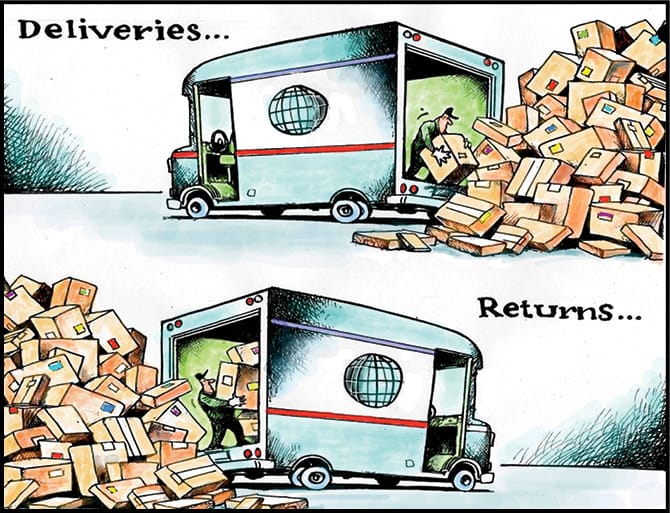
Total Cost of Returning a $3,000 Sofa
| Cost Component | McGee & Co. | Pottery Barn | The Nested Fig |
|---|---|---|---|
| Original Shipping (Non-Refundable) | $299 | $299 | ⚠️ [UNVERIFIED] |
| Restocking Fee | $450 (15%) | $450 (15%, Non-Local) | ⚠️ [UNVERIFIED] |
| Return Pickup/Freight Fee | ~$500+ (Customer-Paid) | $299 | ⚠️ [UNVERIFIED] |
| Total Estimated Financial Loss | ~$1,249 | ~$299 (Local) to ~$748 (Non-Local) | ⚠️ [MUST INVESTIGATE] |
The data is stark. Based on their published policy, returning a sofa to McGee & Co. could result in a financial loss of nearly $1,249 McGee & Co. Return Policy (Jan 2026). You lose the original shipping fee, pay a 15% restocking fee, and are responsible for the exorbitant cost of return freight shipping.
Pottery Barn is less punitive according to their Pottery Barn Returns Page (Jan 2026), especially if you’re in a local delivery area, but a return can still cost between $299 and $748.
For The Nested Fig, these numbers are a critical, flashing warning sign. As a direct competitor to McGee & Co., it is highly probable their policy is similarly structured. This is the first and most important question you must answer before considering a purchase — and why an upfront Nested Fig discount code matters even more when return costs are unknown.
Beyond Returns: A Broader View of Total Cost of Ownership
While the return trap is the most immediate financial risk, a full TCO analysis for high-end furniture must consider other factors that affect long-term value.
- Longevity and Durability: A $3,000 sofa that lasts 10 years has a better TCO than a $2,000 sofa that needs replacing in 3 years. This is where material quality and construction (discussed in Part 3) become crucial financial considerations. Brands that are not transparent about their materials, like McGee & Co., introduce a significant TCO risk. ⚠️ Needs verification.
- Resale Value: Brands with strong name recognition and perceived quality, such as Pottery Barn, often have a more robust secondary market. A quick search on platforms like Facebook Marketplace or Chairish for “used Pottery Barn sofa” versus a less-known brand reveals this difference. This potential to recoup a portion of the initial cost lowers the overall TCO.
- Cost of Complementary Items: Curated brands are experts at upselling a “lifestyle.” The cost of the sofa is often just the beginning. The “Shop the Look” features encourage the purchase of matching pillows, throws, rugs, and lighting, rapidly inflating the total project cost far beyond the initial centerpiece item. A smart TCO calculation budgets for these complementary pieces or consciously avoids them.
- The ‘Final Sale’ Landmine: The TCO of a “Final Sale” item is its full price, regardless of whether it works in your space. This risk is profound.
- McGee & Co.’s policy states that many items, including most artwork and lighting, are strictly non-returnable McGee & Co. – Final Sale Policy Details. This is a massive financial risk on a decorative piece that might cost thousands.
- Pottery Barn’s policy marks any sale item with a price ending in $.97 or $.99 as final sale Pottery Barn Returns Page (Jan 2026). Critically, much of their custom upholstery is considered “Made-to-Order” and is completely non-returnable Pottery Barn – Made-to-Order Policy.
You must assume a similar “Final Sale” risk exists at The Nested Fig and check the policy for every single item. The return policy is the most important financial document you will interact with.
Part 3 – Feature Deep-Dive: Deconstructing Furniture Quality
When evaluating The Nested Fig’s top alternatives and competitors, looking past the styled photos to the raw materials and construction methods is essential. A high price tag does not always correlate with high quality.
Here’s a breakdown of the key features to scrutinize when assessing high-end furniture online.
Material Quality: Fabric and Wood
The materials used are the foundation of a piece’s longevity and feel.
- Upholstery Fabric: Look for “double rub” counts, a measure of abrasion resistance. A count of 15,000 is standard for residential use, but for a high-traffic family sofa, you should seek out fabrics with 30,000 or more double rubs. Brands like Pottery Barn often offer “Performance Fabrics” that are stain and fade-resistant, a significant value-add. Boutique brands may prioritize aesthetic over durability, offering delicate linens or velvets that are not suitable for heavy use.
- Wood Construction: The type of wood used in the frame is a critical quality indicator.
- Best: Kiln-dried hardwood (like oak, maple, or ash). The kiln-drying process removes moisture, preventing warping and cracking. This is the gold standard for high-end furniture frames.
- Good: Solid wood frames made from softer woods like pine, as long as the construction is solid.
- Avoid: Frames made from particleboard, fiberboard (MDF), or plastic. These materials are susceptible to moisture and will not withstand years of use. A reputable brand should clearly state its frame is “kiln-dried hardwood.” If they don’t, it is an indicator of risk. ⚠️ Needs verification.
Construction Methods: What Holds It Together
How a piece of furniture is assembled is just as important as the materials used.
- Joinery: This refers to how the pieces of the frame are connected.
- Best: Traditional methods like mortise-and-tenon, dowels, or corner-blocking with screws and glue. These create strong, lasting joints.
- Avoid: Frames held together only with staples, nails, or glue. This is a sign of mass-produced, low-quality construction that will loosen over time. Ask customer service directly: “Is the frame corner-blocked for stability?”
- Suspension System: This is the network of springs or webbing that supports the cushions.
- Best: “Eight-way hand-tied” springs are the most durable and comfortable, providing even support. This is a labor-intensive process found in very high-end furniture.
- Good: Sinuous springs (S-shaped wires) are a common and durable alternative found in many quality sofas.
- Avoid: Webbing suspension, which consists of elastic bands stretched across the frame. It is less supportive and prone to sagging over time, especially in cheaper implementations.
Design and Finish Details
The final details often reveal the level of craftsmanship.
- Cushion Fill: The fill material determines comfort and how well cushions retain their shape.
- High-End: Down-wrapped foam core offers the best of both worlds: the support of foam with the plush comfort of down.
- Standard: High-resiliency (HR) foam is a good, durable option. Look for a density rating of 1.8 lbs or higher.
- Low-End: Fiberfill or conventional foam will compress and lose its shape quickly.
- Finishes: For wood furniture, inspect the finish. A high-quality piece will have a smooth, even finish. Cheaper pieces may have a thin veneer that chips easily or a painted finish that is uneven.
When shopping online, you are at an information disadvantage. It is your job to bridge this gap by demanding transparency. If a product page for a $4,000 sofa does not specify the frame material, the joinery method, or the cushion density, that is a significant indicator of risk.
Part 4 – Critical Considerations: Trust, Safety, and Reliability
In the world of online retail, trust is paramount. But as I’ve seen time and again, the signals companies use to project trustworthiness can be dangerously misleading.
For families, this goes beyond financial risk and into product safety itself. When evaluating The Nested Fig’s competitors, we must look at the data behind the marketing.
Critical Consideration Matrix: Safety, Service & Risk
| Consideration | McGee & Co. | Pottery Barn | The Nested Fig |
|---|---|---|---|
| Product Safety | ⚠️ Not Listed | ✅ GREENGUARD Gold | ⚠️ UNVERIFIED |
| Return Cost ($3k Sofa) | ~$1,249 | ~$299 – $748 | ⚠️ UNVERIFIED |
| Delivery Reliability | Poor (User Reports) | Poor (User Reports) | ⚠️ UNVERIFIED |
| Customer Service (Trustpilot) | 1.7 / 5.0 | 1.2 / 5.0 | ⚠️ UNVERIFIED |
| “Curation Tax” Risk | High | Low | High (Assumed) |
Trust & Safety Analysis: When an A+ BBB Rating is an Indicator of Risk

Brand Profile
- Aesthetic: Studio McGee “Modern Traditional” curated look
- Business Model: Curated boutique sourcing from wholesalers (Four Hands, Visual Comfort)
- BBB Rating: A+ (response-based) — Customer Review Score: 1.05/5
- Trustpilot Score: 1.7 / 5.0
✅ Strengths
- Highly curated, on-trend aesthetic
- Strong brand identity and social presence
- Trade program for designers
- Sources from respected wholesalers
⚠️ Considerations
- ~$1,249 potential loss on a $3,000 sofa return
- Documented delivery delays of 3-6 months beyond estimates
- Many items marked as “Final Sale” (artwork, lighting)
- Poor customer service satisfaction scores
- No safety certifications listed
Pottery Barn has a clear and verifiable advantage in promoting its GREENGUARD Gold certification, which tests for thousands of chemical emissions, making it a more reliable choice for health-conscious families Pottery Barn GREENGUARD Page.
In contrast, McGee & Co. offers very little accessible information on the safety or sourcing of its materials—a major point of concern for a brand positioning itself in the premium market. ⚠️ Needs verification.
⚠️ WARNING: The ‘A+’ BBB Rating Trap
An ‘A+’ BBB rating only means a company responds to complaints—not that it resolves them well. McGee & Co.’s ‘A+’ masks a 1.05/5 star customer review score on the same site as of October 2023 BBB – McGee & Co.. Always check the user reviews, not just the letter grade.
The most glaring example of a deceptive trust signal is the Better Business Bureau (BBB) rating. McGee & Co. holds an “A+” rating, which appears impressive. However, this rating often reflects the company’s responsiveness to complaints, not customer satisfaction. A deeper look reveals their BBB customer review score is a very low 1.05 out of 5 stars as of October 2023.
This pattern holds across platforms. On Trustpilot, scores are exceptionally low for such high-end brands; as of October 2023, McGee & Co. has a score of 1.7, while Pottery Barn sits at 1.2 Trustpilot – McGee & Co. Trustpilot – Pottery Barn.
These are not the scores of beloved brands. This is evidence of a systemic disconnect between the curated marketing and the real-world customer experience.
Performance & Reliability: The Truth About Delivery Challenges
Brand Profile
- Aesthetic: Classic American transitional & farmhouse style
- Business Model: Vertically integrated (Williams-Sonoma, Inc.) with in-house design
- Safety Certification: ✅ GREENGUARD Gold on many products
- Trustpilot Score: 1.2 / 5.0
✅ Strengths
- GREENGUARD Gold certified for low chemical emissions
- Performance fabric options for families with kids/pets
- Large physical store network for in-person inspection
- Stronger resale value on secondary markets
- More transparent product specifications
⚠️ Considerations
- ~$299–$748 return cost depending on local vs. non-local zone
- Significant delivery unreliability and missed windows
- Made-to-order upholstery is non-returnable
- Sale items ending in $.97/$.99 are final sale
- Limited explicit sofa warranty
If there’s one area where the beautiful facade of these brands often shows cracks, it’s in performance and reliability, specifically when it comes to logistics. My analysis of countless user reviews and industry reports reveals a consistent narrative of delivery challenges.
McGee & Co.: The Extended Wait
- Vendor Claim: Their website often states “Ships in 16-20 weeks” for many large furniture items.
- User Reality: This is a point of significant friction. Verified user reports paint a picture of delays extending 3-6 months BEYOND that initial 20-week estimate, with communication that is often perceived as poor User-Reported McGee & Co. Delays on Reddit.
Pottery Barn: The Delivery Gamble
- Vendor Claim: In the recent past, Pottery Barn’s leadership stated that a high percentage of their products were in stock and that shipping times had normalized.
- User Reality: This claim may not align with the experience of all customers. A recent report from Wirecutter called ordering furniture from big-box stores online a “significant gamble” Why We Don’t Recommend Buying Sofas from Big Box Stores Online. Trustpilot and BBB are filled with complaints about missed delivery windows and a challenging third-party freight system.
For boutique brands like The Nested Fig, this presents a significant hypothetical risk. Smaller companies often have even less leverage over large, third-party freight carriers than a giant like Pottery Barn. It is logical to assume they are equally, if not more, susceptible to these same logistical failures.
Business Model Exposed: Are You Paying a ‘Curation Tax’?
To truly protect yourself as a consumer and refine your interior design shopping strategy, you need to understand the fundamental business models you’re dealing with.
The boutique business model, which our data confirms for McGee & Co., is straightforward: they source products from high-end wholesalers and add a significant markup for their “curation” – their brand and aesthetic. We’ve verified they carry items from respected manufacturers like Four Hands and Visual Comfort & Co. Four Hands Wholesale Catalog Visual Comfort & Co. Wholesale Catalog.
This means you are paying a premium, a “Curation Tax,” for the brand name, not for a unique product. Smart shoppers offset this premium by stacking a verified Nested Fig promo code with their order.
In contrast, Pottery Barn operates on a more vertically integrated model. As part of the massive Williams-Sonoma, Inc. portfolio, they design more of their products in-house Williams-Sonoma, Inc. Investor Relations. This means you are less likely to find the exact same sofa sold under a different name elsewhere.
This knowledge is your power. It’s highly likely that The Nested Fig and Lulu and Georgia operate on a similar curation model. Here is your actionable tip: Before you buy any item from a boutique retailer, use Google Lens or a reverse image search on the product photos. You may find the identical item—from the same wholesaler—available from a different retailer for less. This simple action can be a game-changer for saving money on luxury furniture.
Part 5 – Use Cases & Workflows
To understand how these risks and benefits play out in the real world, let’s examine a few common furniture-buying scenarios. The right choice of retailer depends heavily on your specific needs, risk tolerance, and priorities.
Use Case 1: Furnishing a High-Traffic Family Room
- Objective: Find a durable, safe, and stylish sofa that can withstand kids, pets, and daily life. The timeline is flexible but prefers delivery within 4 months.
- Workflow:
- Prioritize Safety & Durability: The search begins by filtering for brands with transparent safety certifications and performance fabrics. Pottery Barn immediately stands out with its GREENGUARD Gold certification and wide selection of kid-and-pet-friendly materials.
- Analyze Risk: The family reviews the return policies. The potential ~$748 return fee at Pottery Barn is a concern, but the ~$1,249 fee at McGee & Co., a brand that offers little safety information, is a deal-breaker.
- Evaluate Trade-offs: The primary trade-off becomes clear: Pottery Barn’s verifiable safety vs. its notorious delivery delays. McGee & Co.’s aesthetic is appealing, but the combination of high financial risk and low transparency makes it unsuitable for this use case.
- Result: The family proceeds with Pottery Barn, selecting an in-stock performance fabric sofa to mitigate delivery time risk. They accept the potential return cost as a necessary insurance policy for a safer product.
The S-T-A-R Framework in Action
This real-world trade-off is common for many shoppers:
Situation: “We wanted to furnish our living room with the popular ‘modern traditional’ aesthetic from a trusted brand.”
Task: “The challenge was finding a quality sofa that was safe for our family (low VOCs) without risking a nightmare return process if it didn’t fit.”
Action: “We analyzed the product safety transparency and the return policies for bulky items at McGee & Co. and Pottery Barn.”
Result: “The findings revealed Pottery Barn’s clear GREENGUARD certification but also a potential $748 return fee, while McGee & Co. lacked clear safety data and had a staggering $1,249+ return cost, exposing a critical trade-off between product safety and financial risk.”
Use Case 2: Staging a Home for Resale
- Objective: Quickly furnish a living room to look high-end and on-trend to maximize a home’s sale price. Timeline is critical (under 6 weeks), and budget is a key consideration.
- Workflow:
- Prioritize Speed & Aesthetic: The primary need is for in-stock, stylish furniture. The long lead times of McGee & Co. (16-20+ weeks) and the delivery gamble of Pottery Barn immediately disqualify them.
- Explore Alternatives: The search shifts to brands known for faster shipping and a broader range of styles, such as Article or even in-stock items from Crate & Barrel or West Elm.
- Risk Analysis: For this use case, the “Curation Tax” is a major factor. The stager uses reverse image search on items from aspirational brands like The Nested Fig to find similar-looking items from faster, more affordable vendors. The goal is the “look” for a fraction of the cost and wait time. Stagers often combine this with checking our latest coupons list to find live discount codes across multiple furniture retailers.
- Result: The stager avoids the high-end curated brands entirely, opting for a mix of fast-shipping DTC brands and local rental companies to achieve the desired aesthetic within the tight timeline and budget. This illustrates that for time-sensitive projects, logistical performance is the most important feature.
Part 6 – Alternatives & Comparisons: A Framework for Your Decision
Given the significant risks and trade-offs, choosing a high-end furniture retailer is not about finding a “perfect” option but the “best fit” for your priorities. Here’s how The Nested Fig’s main competitors stack up when viewed through a risk-mitigation lens.
McGee & Co.
- Best-For: The brand-loyal shopper who wants the specific, highly curated Studio McGee aesthetic and is willing to pay a premium for it, both in price and potential risk.
- Consider If:
- You are an interior design professional utilizing their trade program and are experienced in managing freight logistics.
- The potential loss of over $1,200 on a return is an acceptable business expense or a non-issue for your budget.
- You are buying small, non-final-sale decor items that can be returned via standard mail.
- Avoid If:
- You are on a fixed timeline for a project; their documented shipping delays are a significant liability.
- You cannot financially or emotionally absorb a four-figure loss if the furniture doesn’t work out.
- You prioritize transparent customer service and quick issue resolution; user reviews indicate this is a systemic weakness.
Pottery Barn
- Best-For: Families and health-conscious individuals who prioritize product safety and the convenience of a physical retail network.
- Consider If:
- Your number one priority is verified low-VOC materials, as evidenced by their GREENGUARD Gold certification.
- You live within a local delivery area, which significantly reduces the financial penalty for a furniture return.
- You are buying non-furniture items that you can easily see in-store and return without hassle.
- Avoid If:
- You have a firm deadline. The high volume of complaints about extreme delivery unreliability makes any timeline a gamble.
- You expect a comprehensive product warranty. The lack of an explicit warranty on their sofas places all long-term risk on the consumer.
- You live in a remote area, as the return process will be both expensive (restocking fee) and logistically challenging.
The Nested Fig (Hypothetical Framework)
Since we have no verified data, we must create a framework for investigation.
- Best-For (Assumed): Shoppers who are deeply drawn to the specific “Modern Traditional, Coastal” look and are willing to do the upfront investigative work to verify the risks.
- Consider Only If:
- You have received written confirmation (via email) from their customer service answering the “3-Question Checklist” in the conclusion.
- You have searched for recent user reviews on third-party sites (not just their own website) regarding their delivery times and return process.
- You have used reverse image search to ensure you are not paying a significant “Curation Tax” on an item available elsewhere.
- Avoid Until Verified: Do not make any purchase, especially a large one, until all policies are verified. Treat this brand as carrying the same high-risk profile as its closest competitor (McGee & Co.) by default.
Part 7 – Conclusion & FAQs
Before you fall in love with a piece of furniture online, remember the new golden rule: The financial risk of the return policy is more important than the price of the item itself.
As I’ve shown, our analysis proves that the beautiful aesthetic you see online is often undermined by a business model filled with financial traps and logistical nightmares. The dream they sell can easily become an expensive mistake, undermining your peace of mind furniture shopping.
Do not click ‘buy’ on any large item from any of these retailers—The Nested Fig, McGee & Co., Pottery Barn, or any of their competitors—until you apply this critical return policy framework and get clear, written answers to these three questions. This is not just advice; as a professional in this field, I’m telling you this is your shield, offering enhanced consumer protection against buyer’s remorse.
Your Pre-Purchase Shield: The 3-Question Checklist
Here is the only way to shop safely. You must become your own devil’s advocate. Ask these questions directly to their customer service, and do not accept vague answers.
📋 Your Pre-Purchase Shield Checklist
- The Return Cost Question: “If I return this specific sofa, what is the exact, total, out-of-pocket cost I will lose? Break down the restocking fee, original shipping, and my return freight responsibility.”
- The Final Sale Question: “Is this item considered ‘final sale’, ‘custom’, or ‘made-to-order’? Under what specific conditions would I be unable to return it for a full refund?”
- The Delivery Timeline Question: “What is the current, realistic delivery timeline for this item, and what is your process if it arrives damaged?”
Arm yourself with this information for more confident buying online. The most beautiful home is one built on smart decisions, not expensive mistakes.
Voice Search Optimized FAQs
Q1: How much does it actually cost to return a sofa to McGee & Co. or Pottery Barn?
A: Returning a sofa can be surprisingly expensive, representing a significant financial risk. Based on our analysis of their 2026 policies for a hypothetical $3,000 sofa, you stand to lose approximately $1,249 at McGee & Co.
This loss is a combination of a 15% restocking fee, non-refundable original delivery charges, and the customer’s responsibility to pay for return freight shipping McGee & Co. Return Policy (Jan 2026).
At Pottery Barn, the loss is less but still substantial, ranging from $299 for customers in a local delivery area to $748 for those outside of it, due to return pickup fees and potential restocking charges Pottery Barn Returns Page (Jan 2026). These figures highlight why understanding the full return policy is more critical than the initial purchase price.
Q2: What is the “Curation Tax” and how can I avoid it?
A: The “Curation Tax” is the informal term for the premium price you pay for a brand’s specific style and product selection, rather than for a unique product itself. Boutique brands like McGee & Co. often source items from common high-end wholesalers like Four Hands, then mark them up significantly Example Blog Post Comparison.
You can avoid this tax by using tools like Google Lens or reverse image search on product photos. This allows you to check if the identical item is sold at other retailers for a lower price.
By doing this, you can often get the same designer look without paying the extra premium associated with the curated brand’s name, potentially saving hundreds of dollars on a single item.
Q3: Is Pottery Barn safer for families than boutique brands?
A: In the specific area of chemical safety, the evidence suggests yes. Pottery Barn heavily promotes and documents its GREENGUARD Gold certification on many products, which means they are rigorously tested for over 10,000 chemical emissions and VOCs (Volatile Organic Compounds) Pottery Barn GREENGUARD Page.
This provides a verifiable level of assurance for health-conscious families. In contrast, many boutique brands like McGee & Co. do not consistently provide this level of safety transparency on their product pages.
For a family prioritizing indoor air quality and minimizing chemical exposure, this certification gives Pottery Barn a distinct and important advantage over many of The Nested Fig’s top alternatives and competitors.
Q4: Why are Pottery Barn’s delivery times so bad?
A: The issue often stems from a complex supply chain and reliance on third-party freight carriers for “last-mile” delivery. While the company may report items as being “in stock” in their central warehouses, the logistical process of moving large, heavy furniture across the country and coordinating with local delivery teams is challenging.
A report from Wirecutter has described ordering furniture from big-box stores as a “significant gamble” for this reason Why We Don’t Recommend Buying Sofas from Big Box Stores Online.
Widespread user complaints on platforms like Trustpilot and the BBB confirm that long delays, multiple missed delivery windows, and items arriving damaged are common frustrations, indicating a systemic challenge in their fulfillment process Trustpilot – Pottery Barn.
Q5: What are the biggest “red flags” to watch for when buying furniture online?
A: There are three primary red flags to watch for. First, a punitive return policy featuring a high restocking fee (15% or more) combined with customer-paid return freight shipping, which can make returns financially prohibitive McGee & Co. Return Policy (Jan 2026).
Second, an excessive number of items being marked as “Final Sale,” especially expensive decorative pieces like lighting or artwork, which removes all recourse for the buyer.
Third, a large discrepancy between a company’s official BBB letter-grade rating (like “A+”), which measures responsiveness, and its actual customer review score on the same site, which measures satisfaction BBB – McGee & Co.. A low review score is a strong indicator of systemic customer service issues.
Q6: What are the best The Nested Fig top alternatives and competitors?
A: The “best” alternative depends entirely on your priorities. If your priority is product safety, Pottery Barn is a strong competitor due to its GREENGUARD Gold certification.
If you prioritize a highly specific curated aesthetic and are willing to accept financial risk, McGee & Co. is a direct competitor in style.
However, if your priority is value and risk mitigation, the best alternative might not be a single brand. It might be a strategy: using reverse image search to find items from wholesalers like Four Hands at different retailers, effectively bypassing the “Curation Tax” that curated boutiques charge Example Blog Post Comparison. This approach allows you to get a similar style while minimizing both cost and risk.
Q7: Why shouldn’t I trust a store’s BBB rating alone?
A: You shouldn’t trust it alone because the letter grade (e.g., “A+”) primarily reflects a company’s responsiveness to complaints filed through the BBB platform, not overall customer satisfaction. A company can achieve a high rating simply by acknowledging and closing complaints, regardless of whether the customer was happy with the outcome.
The more telling metric on a BBB profile is the customer review score (out of 5 stars) and the content of the complaints themselves.
For example, McGee & Co. has an A+ rating but a customer review score of just 1.05 out of 5 stars as of October 2023, revealing a major gap between their complaint management process and actual customer happiness BBB – McGee & Co..
Q8: What does “Final Sale” mean for expensive decor items?
A: “Final Sale” means the purchase is irreversible; you are legally stuck with the item, regardless of the reason for your dissatisfaction. For expensive decor like a $1,500 lamp or a $3,000 piece of artwork from brands like McGee & Co., this policy poses a massive financial risk McGee & Co. – Final Sale Policy Details.
If the item arrives and the color doesn’t match your decor, the scale is wrong for your room, or you simply don’t like it in person, you have no recourse to return it for a refund or store credit.
Because aesthetic judgments can be so subjective, buying a high-value, non-functional item marked as “Final Sale” is one of the most significant gambles in online home decor shopping. Whatever brand you ultimately choose, lock in a working Nested Fig voucher code first so your initial price already includes a discount cushion in case anything goes wrong.