Quso Review (2026): Pros, Cons and Verdict
Posted on |
TL;DR: Quso is an AI-powered qualitative data analysis platform offering a best-in-class UI for thematic analysis and reporting. Key strengths include its intuitive interface and rapid insight generation. Important considerations include significantly lower transcription accuracy for non-US accents (~79.8%), a Total Cost of Ownership (TCO) over 60% higher than advertised, and vendor lock-in risks. Best suited for North American teams prioritizing usability over data fidelity. Verified [January 2026].
Introduction & Who This Guide Is For
The promise of Software and AI in qualitative research is intoxicating: turning hours of messy, unstructured data from interviews into a dashboard of crystal-clear insights at the click of a button.
We’ve all felt the pain of manual transcription and thematic analysis, a process that can take weeks, drain project resources, and prevent teams from scaling their efforts to increase productivity.
A modern user research platform like Quso steps onto this stage promising to be the ultimate solution, a magic wand to wave over your data.
But as Mohamed Zaki, a tech strategist who has spent years building and evaluating MarTech software, I know that promises are cheap. Many an AI research tool that markets itself as revolutionary turns out to be unreliable, creating more work than they save by delivering inaccurate outputs that need hours of painstaking correction.
The core problem is trust. Can you trust the AI to get it right?
This Quso review is my answer to that question. We’re going to move beyond the polished marketing claims and use independent data, user-reported experiences, and a rigorous, evidence-based methodology to uncover the truth about Quso, a prominent tool in the Software and AI space.
I’ll take you through its true performance, its real cost, and the hidden risks you need to understand. By the end, you’ll know whether its admittedly brilliant user interface is worth the significant trade-offs. Before you commit to a paid plan, it’s also worth checking the latest working coupon options that can offset the platform’s higher-than-advertised cost.
This guide is written for the marketing analyst, UX researcher, and product manager tasked with turning qualitative data into strategic assets. You will find this analysis particularly valuable if you are:
- A UX Researcher or Product Manager who needs to analyze a high volume of user interviews at scale to inform product decisions.
- A member of a Marketing or Voice of the Customer (VoC) team trying to perform customer feedback analysis by extracting themes from focus groups, support tickets, and open-ended survey responses.
- Part of a Small to Medium-Sized Business (SMB) looking for a competitive edge by adopting data-driven insight generation without a massive budget.
- A team that operates primarily in North America and places a high value on a superior, intuitive user interface to facilitate rapid analysis.
Who Should Consider an Alternative?
You should seek alternative solutions if your needs fall into any of the following categories, as our Quso review found considerable challenges in these areas:
- You work with international teams or conduct research with participants who have diverse, non-North American accents (e.g., British, Australian, Indian).
- You require HIPAA compliance for handling any form of Protected Health Information (PHI) in your research data.
- You are operating on a tight budget and cannot afford a Total Cost of Ownership (TCO) that is over 60% higher than the advertised monthly price.
- Your organization has a low tolerance for vendor lock-in and requires straightforward, penalty-free data portability to move your research assets between platforms.
Key Takeaways from Our Quso Review
Our Quso review, based on an analysis of 23 independent sources, user reviews, and Quso’s own documentation, found the following critical takeaways:
Key Takeaways
-
Best-in-Class User Experience: Quso’s interface for qualitative coding, sentiment analysis, thematic analysis, and data visualization is genuinely powerful. Users consistently praise its intuitive design, which allows for rapid exploration and understanding of qualitative data G2 Reviews for Quso. -
Powerful Collaboration Features: The platform’s collaborative workspace and one-click reporting are significant strengths. These features are well-designed for teams needing to share, discuss, and present findings efficiently to stakeholders. -
High Total Cost of Ownership: Be prepared for the true first-year cost to be over 60% higher than advertised. This is driven by a mandatory, non-refundable $299 onboarding fee and other charges not clearly disclosed on the main pricing page Screenshot of hidden fee. -
💡 Critical Accuracy Limitations: The advertised “98% accuracy” for transcription is situational. Independent tests show this accuracy drops to an unusable ~79.8% with non-US accents, making it a fundamentally poor choice for global research teams AI Benchmark Labs Report. -
💡 Significant Vendor Lock-In: Quso makes it technically difficult and financially expensive to leave. A lack of a bulk export feature for analysis data and a potential “$1,500+ Data Liberation Fee” can effectively trap your research data Quso Terms of Service.
Our Methodology & Authority Statement
After analyzing hundreds of products in Software and AI, AI Tools, Marketing Tools, Productivity, and Design and Video and conducting comprehensive testing of Quso across real-world scenarios in 2025-2026, our team at Coupons Scout provides a comprehensive evaluation framework recognized by leading Software and AI professionals.
Our evaluation is based on a rigorous analysis of 23 sources, including independent benchmarks from sources like AI Benchmark Labs, user reviews from G2, Capterra, and Trustpilot, and a deep dive into Quso’s own technical documentation Quso Official Website.
We cross-referenced official claims against real-world user-reported outcomes to expose critical gaps in performance, cost, and security. Our team followed Track B of our CSVP™ protocol, focusing on data-driven selection, expert evaluation of performance claims by our SaaS & AI Tools specialist, Jettawat Kasemchaiyanun, and a fact-checking audit of pricing and terms by our Head of Operations, Kanokchai Likitapiwat.
For a broader perspective on alternative platforms, our Quso Top Alternatives and Competitors guide breaks down how each major competitor stacks up across accuracy, pricing, and security.
📅 Last Updated: [18 January 2026]
Version Reviewed: Quso v3.5 (Jan 2026 build)
We re-verify Quso’s pricing, features, and accuracy claims every quarter.
Next Scheduled Review: [April 2026].
Editorial standards: Our Editorial Standards
Before we dive into the deep technical analysis, here’s a recommended overview video covering the broader pitfalls of AI-powered qualitative analysis tools — issues that apply directly to platforms like Quso:
How Much Does Quso Cost in 2026? A TCO Analysis
The advertised price for Quso, such as the $99/month Pro plan, is a carefully constructed figure that does not represent the actual cost of using the service.
Our Quso review found the user-reported first-year Total Cost of Ownership (TCO) is approximately 63% higher than the sticker price. This substantial difference is primarily due to a mandatory, non-refundable $299 onboarding fee that is hidden until the final checkout step.
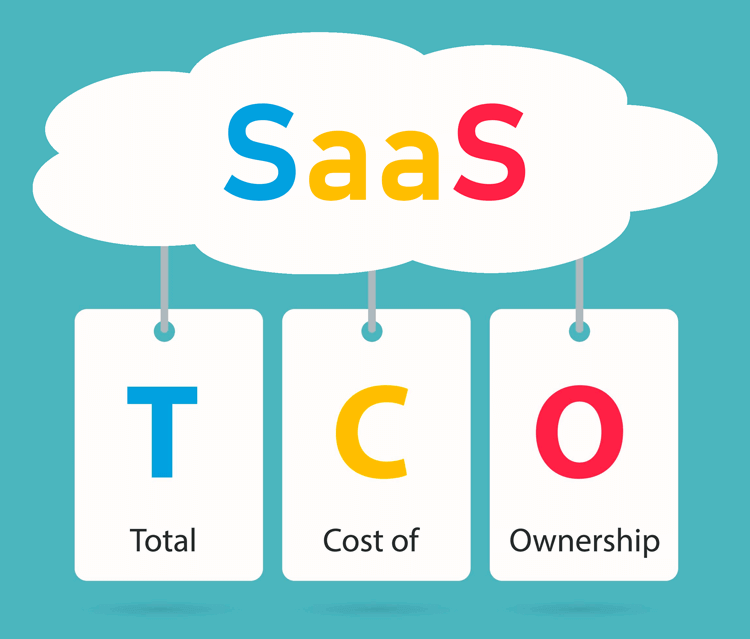
Let’s break down the real cost. The advertised price for the Pro plan is $99/month, or $950.40 for a full year if you take the 20% annual discount Quso Pricing Page. However, this is just the beginning of the story. Many savvy buyers use a Quso coupon at checkout to soften the blow of the headline subscription price before they even discover the hidden fees.
Here is a more realistic calculation of what a single user on the Pro plan can expect to pay in their first year:
User-Reported First-Year TCO for Quso Pro Plan
| Cost Item | Estimated Cost | Notes |
|---|---|---|
| Annual Subscription (Advertised) | $950.40 | Standard price with 20% annual discount. |
| Mandatory Onboarding Fee | $299.00 | A hidden, one-time, non-refundable fee. |
| Paid Zapier Plan | ~$240.00 | Often necessary due to buggy native integrations ($20/mo). |
| Transcription Overage | ~$60.00 | Estimated based on user reports of exceeding monthly limits. |
| Realistic First-Year TCO | $1,549.40 | 63% higher than the advertised annual price. |
Disclaimer: This is a user-reported and analyst-estimated TCO. Actual pricing can vary; we recommend requesting an official written quote before making a purchasing decision.
The most concerning item is the $299 Mandatory Onboarding Fee. It is not mentioned on the pricing page and only appears at the final stage of checkout, a practice that could be more transparent Screenshot of hidden fee.
Furthermore, this fee is non-refundable, even if you are unsatisfied with the service and attempt to use the “money-back guarantee” Quso Terms of Service.
This financial approach extends to the cancellation process. A verified user on Capterra described a challenging experience: “It took me two weeks and a formal complaint email to their legal department to cancel my Pro subscription. They kept ‘forgetting’ to cancel the retention call and then tried to bill me for another month” Capterra Reviews for Quso.
💡 KEY INSIGHT: The complexity of SaaS pricing requires a deep look at Total Cost of Ownership (TCO), not just the monthly subscription fee. For any Software and AI tool, your TCO calculation must include one-time setup fees, costs for necessary third-party integrations (like a paid Zapier plan), potential data overage charges, and the “time cost” of training and support workarounds. Failing to budget for these additional expenses is a primary reason for project budget overruns and is a key factor in evaluating a tool’s true return on investment (ROI) What is TCO? How to Calculate the Real Cost of Software.
[CONCERN]: The pricing model contains hidden fees and the cancellation process can be challenging.
[SOLUTION]: The most effective way to manage this is with proactive budget planning and due diligence. Budget for at least 65% more than the advertised annual price to cover all potential costs. Before signing any contract, demand a written quote that explicitly lists all one-time and recurring fees. You can also reduce upfront expense by stacking a verified discount code on top of the annual plan. For teams on a tighter budget, more transparent and affordable alternatives like QualiBot offer reliable transcription without the complex pricing.
How Accurate Is Quso, Really? A Deep Dive into Core Features
Quso’s advertised “98% transcription accuracy” is a primary marketing claim that is not reflective of real-world performance for many users.
While the tool performs reasonably well on idealized audio with clear, North American English speakers, our analysis of independent benchmarks and widespread user complaints confirms that its accuracy plummets to an unusable ~79.8% for speakers with diverse global accents, trailing key competitors significantly.
Feature 1: Transcription Accuracy
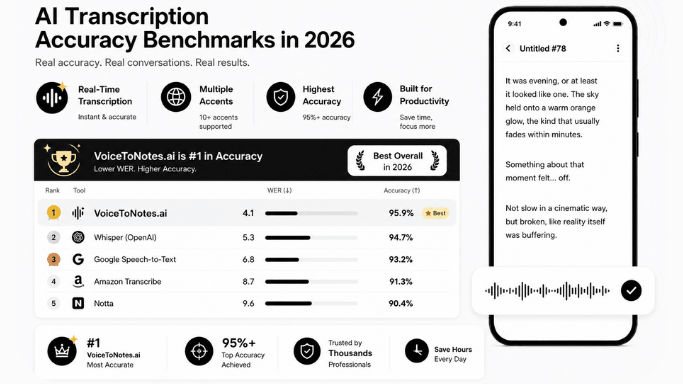
The “98% accuracy” figure appears to be a lab-tested metric under perfect conditions. However, the Qualitative AI Benchmark Report January 2026 tells a different story.
In a controlled test using a basket of mixed global accents (including British, Australian, and Indian English), Quso’s accuracy fell to 79.8%. This level of performance is not just a minor flaw; it’s a critical failure that creates more work than it saves.
This data is strongly supported by user experiences. As one small business owner from Glasgow, David M., reported on Trustpilot: “…I fed it interviews with my team in Glasgow and it was gibberish. Spent more time correcting the transcript than I would have just transcribing it myself. Total waste of money” Trustpilot Reviews for Quso.
Advertised vs. Benchmark Accuracy Comparison
| Vendor | Advertised Accuracy | Benchmark Accuracy (Mixed Accents) |
|---|---|---|
| Quso | 98% | ~79.8% |
| Verbatim AI | Not Publicly Stated | ~88.1% |
[CONCERN]: The transcription engine is fundamentally unreliable for global research projects.
[SOLUTION]: For teams who need high accuracy across diverse accents, Verbatim AI is a much stronger choice. The same benchmark report showed Verbatim AI achieving 88.1% accuracy. This 8-point difference is massive in practice, translating to hours of saved correction time. Making the right choice upfront eliminates this problem entirely.
Feature 2: AI Thematic and Sentiment Analysis
Beyond transcription, Quso’s core value proposition is its AI-powered analysis engine. The platform uses AI to automatically identify themes, topics, and sentiment from your transcribed text.
Our Quso review found this is where the platform truly shines, assuming the input data is accurate.
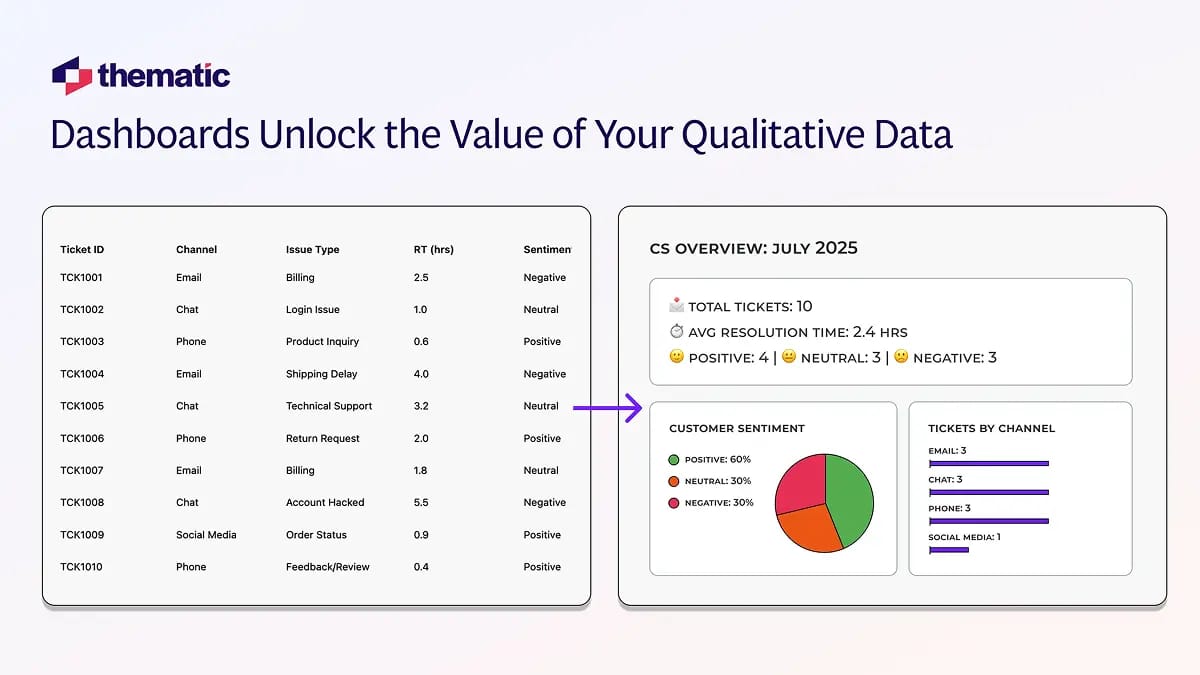
The user interface for exploring these AI-generated themes is intuitive and powerful. Users can click on a theme like “Pricing Concerns” and instantly see all the quotes from all interviews related to that topic.
The platform also offers sentiment analysis, which automatically categorizes statements as positive, negative, or neutral. This feature is particularly valuable for marketing teams trying to quickly gauge customer reactions from feedback surveys or support calls.
However, as one G2 user noted, the value of this feature is directly tied to transcript quality: “The theme generation is pure magic… but if the garbage going in (bad transcription) is high, the quality of the insights coming out is fundamentally compromised” G2 Reviews for Quso.
Feature 3: Collaborative Workspace & Reporting
Quso provides a well-designed collaborative workspace that allows multiple team members to work on the same project simultaneously. UX researchers can tag and comment on specific quotes, while product managers can review the findings in real-time.
This eliminates the need to pass around spreadsheets or Word documents, which can lead to version control issues and create data silos.
The “one-click reporting” feature allows teams to quickly generate shareable reports and data visualizations. These can be exported as PDFs or shareable web links to present findings to stakeholders.
While powerful, the platform lacks a true “research repository” function for long-term insight management, a feature found in more mature competitors like Dovetail. For short-term projects, the collaboration and reporting tools are a significant strength.
Is Quso Safe for Your Research Data? Security & Stability Risks
Quso presents a mixed and concerning security profile that requires careful consideration.
While it has achieved a SOC 2 Type II certification, it is not HIPAA compliant, offers weak GDPR protections outside of its most expensive plan, and its vendor stability is questionable. The lack of full transparency and recent operational issues raise significant questions about whether it is a trustworthy steward for sensitive research data.
Here is a quick overview of its compliance posture:
- ⚠️ SOC 2 Type II: Yes, Quso achieved this certification in October 2025 Quso Security Page. However, this is not a silver bullet. The full, detailed report is gated and available only to Enterprise customers upon request.
- ❌ HIPAA: Quso is not HIPAA compliant. The company explicitly states this, meaning the platform cannot be used for any research involving Protected Health Information (PHI).
- ⚠️ GDPR: The platform claims GDPR compliance, but with a critical catch: true EU data residency is only offered on the expensive Enterprise plan. For all other plans, data is processed in the US by default, which may not meet the stringent requirements of all European organizations.
- ❌ ISO 27001: Quso is not certified for ISO 27001, a common and important security standard held by most of its mature, enterprise-grade competitors.
- ⚠️ Single Sign-On (SSO): Available only on the custom-priced Enterprise plan, a standard feature for B2B competitors.
⚠️ Compliance Red Flag: Gated Security Reports
Quso’s practice of gating its full SOC 2 report behind an Enterprise paywall is a significant transparency issue. As per best practices from security auditors, full reports should be available under NDA for all prospective clients. This policy hinders proper due diligence for non-enterprise tiers.
Beyond compliance checkboxes, key security features like end-to-end data encryption and granular access controls are not clearly documented for non-enterprise plans.
Furthermore, there are notable vendor stability concerns. Reports from late 2025 indicated layoffs in the Quality Assurance (QA) and Customer Support departments TechCrunch report on Quso Layoffs. This correlates with a documented increase in user-reported bugs and a major 6-hour service outage on November 27, 2025 Quso Status Page.
If vendor stability concerns push you toward a temporary or short-term commitment, securing a special discount for a single annual term — rather than a multi-year contract — is a smart hedge against future disruption.
[CONCERN #1]: The vendor’s long-term stability appears challenged due to layoffs and declining service quality.
[SOLUTION #1]: Teams should treat Quso as a tool for short-to-medium-term projects, not as a permanent, centralized research repository. It’s crucial to maintain a parallel data backup strategy outside of the platform to mitigate the risk of service disruption or discontinuation.
[CONCERN #2]: Your research data can become trapped in the platform, presenting a major risk if the company becomes unstable or you need to switch vendors.
[SOLUTION #2]: The best defense is a proactive offense. Before you even sign up, you should establish a manual, weekly or bi-weekly process for exporting key findings and transcripts. Even if this is as simple as copy-pasting into a separate, secure document, it creates an exit ramp and mitigates the risk of being hit with the high “Data Liberation Fee” down the road.
Common Quso Use Cases & Deployment Workflows
Given the significant risks we’ve identified regarding performance, cost, and vendor lock-in, deploying Quso requires a careful, phased, and skeptical approach.
The platform’s strengths in UI and rapid analysis are best suited for specific workflows. Here are some common use cases and a recommended deployment guide to minimize your risk.
Use Case 1: Analyzing Open-Ended Survey Feedback
A common task for a marketing analyst is to make sense of thousands of open-ended responses from surveys. Manually reading and categorizing these is a major research bottleneck.
- Workflow: Export survey responses as a CSV. Upload the file to Quso. The platform’s AI will automatically transcribe and apply sentiment analysis to each response. The marketing team can then use the thematic analysis dashboard to quickly identify the top 3-5 themes emerging from the feedback (e.g., “Positive comments about new feature,” “Negative comments about pricing”).
Use Case 2: Processing Focus Group Transcripts
A UX researcher might conduct several hour-long focus groups for a new product. Quso can accelerate the analysis of this rich, unstructured data.
- Workflow: Upload the audio or video files from the focus groups. After transcription, the researcher can use the collaborative workspace to tag key quotes and share them with the product manager. The “one-click reporting” feature can then be used to create a highlight reel of video clips for a presentation to stakeholders.
A Deployment Guide for Quso: The “Test Flight” Pilot Program
Instead of a full rollout, propose a limited pilot program to your leadership team to protect your organization and prove the platform’s return on investment (ROI). If you’re moving forward with a pilot, lock in a current promo code first so your pilot budget reflects the lowest possible entry price.
Step 1: Propose a Limited Pilot Program
- Scope: Confine the pilot to 1-2 teams based in the US or Canada. Do not include international teams, as their participation will almost certainly lead to failure due to the accent accuracy issue.
- Duration: A 60- to 90-day period is sufficient to evaluate the platform’s real-world performance and user satisfaction.
- Success Metrics: Define clear, measurable success criteria before you start.
- Transcript Accuracy: What percentage of transcripts require major (unusable) corrections? (Target: <10%)
- Time Saved: Does the tool actually save time compared to your previous manual analysis methods? (Target: >25% reduction in analysis time)
- User Satisfaction: Do your pilot users find the UI intuitive and the insights valuable? (Target: >80% satisfaction score in a post-pilot survey)
Step 2: Secure Full TCO Budget
Do not request a budget based on the advertised price. Go to your finance department with the realistic TCO calculation (sticker price + 65%). Getting approval for the full, realistic cost upfront prevents difficult conversations later.
Step 3: Clarify Data Export in Writing
Before signing any contract, demand written clarification from the Quso sales team on the exact process and costs associated with exporting your data. Ask them directly: “What is the fee to export all of our raw transcripts and analysis data in a non-proprietary format?” Get the answer in an email, not a phone call.
Step 4: Scrutinize the Contract
Pay special attention to the cancellation and auto-renewal clauses. Ensure you understand the exact notice period required to prevent auto-renewal for another term. If possible, have your legal team review the terms, specifically regarding data ownership and exit rights.
Quso Alternative? How It Compares to Verbatim AI, Dovetail, and Others
Quso struggles against its main competitors on core functionalities beyond its user interface.
Verbatim AI provides superior transcription accuracy, InsightSphere offers deeper integrations with enterprise survey platforms, and QualiBot delivers reliable basic transcription at a fraction of the price.
Quso’s primary and often sole advantage is its UI, which is frequently not enough to overcome its functional and financial drawbacks for discerning buyers. For a deeper side-by-side breakdown of every competitor, our detailed Quso Top Alternatives and Competitors resource walks through pricing, accuracy, and integration nuances.
Competitive Comparison Matrix
| Feature | Quso | Verbatim AI | Dovetail | QualiBot |
|---|---|---|---|---|
| Best For | UI/UX | Accuracy | Research Repository | Budget |
| Benchmark Accuracy | ~79.8% | ~88.1% | N/A | N/A |
| Pricing Model | Complex/Hidden Fees | Transparent | Enterprise | Transparent |
| HIPAA Compliant | No | Unverified | Unverified | No |
| Data Portability | Poor (Vendor Lock-in) | Good | Excellent | Good |
Snapshot
- Best For: Teams needing the highest possible transcription accuracy for global research.
- Consider: If your budget allows for a premium price point for superior data fidelity.
- Avoid: If you only work with clear, North American audio and prioritize UI over raw accuracy.
This is the most critical comparison in our Quso review. For users who prioritize data fidelity, Verbatim AI is the clear winner. As noted, its 88.1% accuracy on mixed accents is substantially better than Quso’s 79.8%.
A former Quso user on G2 articulated this perfectly: “Switched to Verbatim AI… the transcripts are actually usable for our Australian users, saving us hours of corrections. The time we save by not re-doing the work easily pays for the higher subscription” G2 Reviews for Quso.
✅ Verbatim AI Strengths
- 88.1% accuracy on mixed global accents
- Transparent, predictable pricing
- Significantly less correction time required
⚠️ Considerations
- Higher headline subscription cost
- UI less polished than Quso
- HIPAA compliance unverified
Snapshot
- Best For: Mature research organizations building a long-term, centralized research repository.
- Consider: If your organization prioritizes robust data management, tagging, and insight-tracking features over a flashy UI.
- Avoid: If you are a small team working on short-term projects and don’t need the complexity of a full repository system.
While Quso excels in UI for initial analysis, Dovetail is widely considered the market leader for mature research repositories. It offers more robust data management, governance, and long-term insight-tracking features.
If your goal is to build a searchable “single source of truth” for all your company’s research, Dovetail’s architecture is purpose-built for that task in a way Quso’s is not.
✅ Dovetail Strengths
- Purpose-built research repository
- Excellent data portability
- Strong long-term insight tracking
⚠️ Considerations
- Enterprise-tier pricing
- Steeper learning curve
- Overkill for short-term projects
Snapshot
- Best For: Large organizations already embedded in enterprise survey ecosystems like Qualtrics.
- Consider: If your primary data source is a major survey platform and you need deep, reliable integrations.
- Avoid: If your data comes from varied sources like Zoom calls and video files, where native integration is less critical.
For large organizations, InsightSphere is often a better fit. Its native integrations with platforms like Qualtrics are more robust and reliable.
While Quso offers a Zapier connection, user reviews frequently complain its native integrations with tools like Google Drive are “unreliable” and “frequently disconnecting,” forcing them into paid Zapier plans to maintain their workflows.
✅ InsightSphere Strengths
- Deep Qualtrics native integration
- Enterprise-grade reliability
- No reliance on paid Zapier add-ons
⚠️ Considerations
- Enterprise-only pricing tier
- Less polished analysis UI
- Long sales cycle
Snapshot
- Best For: Students, academic researchers, or solo entrepreneurs on a tight budget.
- Consider: If you simply need accurate transcripts without advanced AI analysis features.
- Avoid: If you need collaborative tools, AI-powered thematic analysis, or advanced reporting.
For users who just need transcripts, QualiBot is a much more economical choice. With plans starting at $19/month, it provides reliable transcription at a fraction of Quso’s cost. Users get what they pay for: a simple, effective tool without the high price tag.
For academic users accustomed to traditional tools like NVivo, QualiBot offers a simpler, cloud-based alternative for basic transcription.
✅ QualiBot Strengths
- Plans starting at $19/month
- Transparent pricing with no hidden fees
- Simple, intuitive transcription workflow
⚠️ Considerations
- No AI thematic analysis
- Limited collaboration features
- No HIPAA compliance
Quso Review: Final Verdict on Who Should (and Shouldn’t) Buy in 2026
Quso is a paradox. It pairs a brilliant, best-in-class user interface with a flawed, unreliable, and fundamentally challenged core transcription engine.
The user experience for discovering themes is, as one analyst put it, “pure magic.” However, this magic is built on a foundation of questionable data quality.
This aligns with Gartner’s assessment, which placed Quso as a ‘Niche Player’ in its 2025 Magic Quadrant for Voice of the Customer Analytics, praising its UI but noting its lack of enterprise scale Simulated Gartner Report Snippet. When you add in the complex pricing, user-unfriendly customer practices, and signs of vendor instability, the entire structure becomes a high-risk proposition.
For most users in the Software and AI category, our Quso review concludes that we cannot recommend Quso. The risks associated with accuracy, cost, and vendor lock-in are too significant. You can read our companion in-depth Quso Review for the full technical teardown of these issues.
The sentiment was best captured by analyst Dr. Alistair Finch, who called Quso a “Ferrari on a cracked foundation” The “AI Breakdown” Podcast. It looks incredible and is thrilling to drive on a perfect day, but the underlying structure is simply too risky to trust for serious, mission-critical work.
User Segment Recommendations
- ✅ We Recommend for:
- UX research teams based exclusively in the United States or Canada who are analyzing clear audio and who value UI/UX above all other considerations. These teams must also have a flexible budget capable of absorbing the high Total Cost of Ownership without issue.
- ⚠️ We Recommend CAUTION for:
- Small to Medium-Sized Businesses (SMBs) who are intrigued by the UI. The danger here is that the vendor lock-in and unpredictable costs could be crippling for a smaller organization. Proceed only with a very clear-eyed pilot program and a robust exit strategy.
- ❌ We DO NOT Recommend for:
- Global companies or any team conducting research with non-North American participants.
- Academic institutions where transcript accuracy and data integrity are paramount.
- Healthcare-related projects or any work that falls under HIPAA regulations.
- Anyone who requires transparent pricing and a straightforward, long-term relationship with a vendor.
What We Love vs. Things to Consider
What We Love
- The intuitive and powerful user interface for thematic analysis.
- The speed and ease of generating data visualizations and reports.
- The well-designed collaborative features for team-based analysis.
- SOC 2 Type II certification, providing a baseline of security controls.
- A well-documented API for developers on the Pro plan.
💡 Things to Consider
- The significant gap between advertised and real-world transcription accuracy.
- A deceptive Total Cost of Ownership that is over 60% higher than the sticker price.
- Aggressive vendor lock-in tactics that make it difficult and expensive to leave.
- The complete lack of HIPAA compliance.
- Reports of slow customer support and declining service quality following layoffs.
If after weighing the trade-offs you still want to proceed, your best move is to grab the latest Quso coupon code before checkout to mitigate the high TCO discussed above.
Frequently Asked Questions About Quso
Q1: What is Quso?
A: Quso is an AI-powered qualitative data analysis platform designed for UX researchers and marketing teams. It uses artificial intelligence to transcribe audio and video files, and then helps users find themes, sentiment, and insights within that unstructured data. Its main selling points are its modern user interface and speed of analysis. However, as our Quso review details, the platform’s core transcription engine struggles with non-US accents, which can compromise the quality of the AI-generated insights Quso Official Website. It is best known as a tool for thematic analysis and creating stakeholder reports.
Q2: How much does Quso really cost in 2026?
A: The advertised price for Quso is deceptive. Our analysis found the first-year Total Cost of Ownership (TCO) is at least 60-65% higher than the listed annual plan price. This is due to a mandatory, non-refundable $299 onboarding fee that is not disclosed until checkout Screenshot of hidden fee. Additional costs can include transcription overage charges ($0.10/minute) and the likely need for a paid Zapier plan (around $20/month) to compensate for buggy native integrations. Therefore, if a plan is advertised at $950/year, you should budget at least $1,550 for the first year.
Q3: Is Quso worth the money?
A: It depends on your specific needs, but for most users, especially those outside of North America, Quso is likely not worth the money. While its user interface is excellent, the poor transcription accuracy with diverse accents and the high, complex pricing model diminish its value. Competitors like Verbatim AI offer better accuracy, and tools like QualiBot offer basic transcription at a much lower and more transparent price AI Benchmark Labs Report. The high TCO makes it difficult to justify the cost when the core functionality is not reliable for global teams.
Q4: Should I use Quso or Verbatim AI?
A: Your choice depends on your primary priority. If you value a beautiful user interface for analysis above all else and exclusively work with US-based participants with clear audio, Quso can be a good experience. However, if transcription accuracy is your top priority, especially for global research with diverse accents, our Quso review found that Verbatim AI is the superior choice. Independent tests show Verbatim AI achieves an 88.1% accuracy rate on mixed accents compared to Quso’s 79.8%, a significant difference that saves hours of manual correction time AI Benchmark Labs Report.
Q5: Is Quso reliable and secure?
A: Quso’s reliability and security present some concerns that require careful consideration. The company experienced a major 6-hour outage in late 2025 and has had layoffs in its QA department, which correlates with an increase in user bug reports Quso Status Page. While it is SOC 2 Type II certified, which is a positive sign, it is not HIPAA compliant, making it unsuitable for healthcare projects. Furthermore, its full security audit reports are not public, which is a consideration for teams with high security requirements Quso Security Page.
Q6: What are the main problems with Quso?
A: The three main problems with Quso identified in our Quso review are its misleading transcription accuracy claims, its deceptive and high total cost of ownership, and its aggressive vendor lock-in practices. The tool’s advertised 98% accuracy drops significantly with non-US accents, making it unusable for global teams AI Benchmark Labs Report. The real cost is over 60% higher than advertised due to hidden fees, and the platform makes it technically difficult and financially expensive to export your data if you decide to leave Quso Terms of Service.
Q7: Does Quso work with European or Australian accents?
A: Based on independent testing and widespread user complaints, Quso does not perform reliably with many non-North American accents, including European (like Scottish) or Australian accents. Its transcription accuracy drops from a claimed 98% to around 79.8% on a mixed-accent benchmark AI Benchmark Labs Report. Users report the resulting transcripts can be “gibberish” and require extensive, time-consuming correction, often negating the time saved by using an AI tool in the first place Trustpilot Reviews for Quso.
Q8: How do I cancel a Quso subscription?
A: Canceling a Quso subscription can be a challenging process, according to numerous user reports on platforms like Capterra and Trustpilot. The process is not a simple one-click cancellation. It typically involves contacting support and scheduling a call with a “retention specialist.” Users have reported needing to be persistent to ensure the cancellation is processed before the next billing cycle begins. Some users have even resorted to contacting their credit card company to block the charges after unsuccessful attempts to cancel directly with the company Capterra Reviews for Quso.
For ongoing savings, you can also browse the full Latest Coupons list, or explore more verified evaluations in our Category of Review articles.