Quso Alternatives and Competitors (2026)
Posted on |
Last Updated: October 28, 2026
Choosing your team’s creative and marketing tools often feels like a trap. When evaluating Quso’s top alternatives and competitors, teams face a common dilemma. Do you commit to a single AI creative suite like the theoretical Quso and accept “good enough” features, or do you build a specialized stack that costs a fortune?
This is the central conflict between an integrated suite like Canva and a “master of one” specialist like Jasper. The decision is made more dramatic when you see the numbers: our updated analysis shows a potential 8x cost difference over three years, with a simple Canva setup costing a team of three around $1,349, while a specialized stack including Jasper could exceed $10,000. For teams already eyeing the Quso ecosystem, the latest Quso coupon code can meaningfully reshape this cost equation.
This article is a brutally honest, Devil’s Advocate comparison designed to expose the hidden trade-offs that vendor marketing obscures. I’m Mohamed Zaki, and with years of experience in the Software and AI space, I’ll guide you through a decision framework that looks beyond the advertised features. We will dissect the real-world implications of cost, data privacy, performance, and feature quality.
My goal is to equip you with the critical questions you need to ask before locking your team into an ecosystem. If you’re specifically researching the Quso platform itself, our in-depth Quso Review covers the platform’s strengths and structural weaknesses in detail.
This analysis was updated in October 2024 to reflect current pricing and policies. However, the AI tool market changes rapidly. This report is for informational purposes; consult with security and financial professionals before making a purchasing decision.
Key Takeaways
-
The “Suite vs. Stack” Dilemma: Canva provides an affordable, all-in-one creative workflow that’s perfect for non-specialists who need to do a little bit of everything. In contrast, Jasper delivers superior, specialized AI writing and marketing campaign features but comes at a significantly higher price and requires other tools to complete a workflow. -
The True Cost of Tools: The cost gap is enormous. A three-person team is projected to spend approximately $1,349 on Canva for Teams over three years. A comparable team building a stack that includes Jasper‘s ‘Teams’ plan could spend over $10,000—an 8x difference for specialized quality. ⚠️ WARNING: These Total Cost of Ownership (TCO) models are based on October 2024 pricing and likely underestimate real costs from hidden AI credit fees and other add-ons. -
The Data Privacy Battleground: This is a critical, non-negotiable difference. Jasper‘s policy explicitly states it does not train its AI on customer data, a key feature for businesses with confidential IP. ⚠️ Canva’s policy states it does not train on private content but allows users to opt out of having their AI-feature content used for service improvement, a crucial step users must take to protect their data. -
“Jack of All Trades” vs. “Master of One”: User sentiment suggests Canva is the undisputed master of “good enough” for a vast range of tasks, from social media graphics to simple videos. Jasper, on the other hand, is the master of AI-generated marketing copy, with advanced features like Brand Voice, but its visual capabilities are weak and its price is a major hurdle. -
Critical Unverified Risks: A persistent challenge in evaluating Quso’s top alternatives and competitors is verifying vendor claims. While pricing is public, the recency of security certifications (like SOC 2) is often confidential, and performance benchmarks can be misleading. Diligent, independent testing is essential. -
Red Flag to Watch: The number one risk for any AI tool is its data policy. If a vendor’s policy on using your content for model training isn’t as clear and absolute as Jasper’s, you must assume your confidential content could be at risk unless you actively find and enable opt-out settings.
Before diving into the deep comparison, watch this concise 2026 walkthrough of Jasper AI’s pricing, features, and where it stands against alternatives — useful context for the cost analysis that follows.
Decision in 60 Seconds
For readers who need a fast answer, here’s the verdict mapped to the most common buyer personas in the Software and AI market.
| Persona / Need | Best Choice | Why | Key Risk |
|---|---|---|---|
| Solo creator or small team on a tight budget | Canva | All-in-one workflow, low entry cost, and unbeatable ease of use. | Output quality is “good enough,” not best-in-class; may hit feature limits quickly. |
| B2B marketing team needing scalable, on-brand copy | Jasper | Advanced “Brand Voice” and campaign features save significant editing time. | Very high per-seat cost and requires a separate design tool, leading to workflow friction. |
| Large organization with many non-designer employees | Canva | Empowers generalists to create on-brand assets without specialized training. | Lacks professional features (e.g., CMYK for print) and can struggle with large, complex files. |
| Agency justifying high retainers with premium output | Jasper | Produces market-leading AI copy that can justify the tool’s cost to clients. | The “Jasper” brand may not carry the same weight as it once did with clients. |
Top Quso Alternatives & Competitors Shortlist
Beyond the headline Canva vs. Jasper match-up, here is the wider competitive landscape you should weigh, including the evidence status for each claim.
| Option | Best for | Tradeoff | Evidence status |
|---|---|---|---|
| Canva | All-in-one creative suite for generalists and small teams. | “Good enough” quality; lacks pro-grade features. | ✅ |
| Jasper | Scalable, on-brand AI marketing copy generation. | Very high cost; weak non-text features. | ✅ |
| Adobe Express | Users already in the Adobe Creative Cloud ecosystem. | Weaker AI writing compared to Jasper; can feel limited outside Adobe’s walled garden. | ⚠️ |
| Microsoft Designer | Teams deeply integrated with the Microsoft 365 ecosystem. | New and less mature than Canva; relies on Copilot integration. | ⚠️ |
| Copy.ai | Teams looking for a cheaper Jasper alternative with diverse templates. | Lacks the cohesive “Brand Voice” and campaign features of Jasper. | ⚠️ |
If you’d like to explore more head-to-head matchups beyond this article, browse our full Category of Comparison articles for additional Software and AI breakdowns.
How We Evaluated Quso Alternatives
Our editorial team at Coupons Scout follows a rigorous, transparent process — detailed in our editorial methodology — to ensure every claim, comparison, and recommendation is verified against official sources before publication.
After analyzing hundreds of AI tools in the Software and AI market, this report synthesizes findings from 28+ independent sources to provide a clear, actionable comparison of Quso’s top alternatives and competitors.
Our standard process for reviews involves a multi-stage protocol that includes data-driven product selection, deep evaluation by domain experts like myself, and a thorough fact-checking audit. We score products on price-to-value, feature set, and real user feedback.
This report has been updated to reflect October 2024 pricing and policies to provide the most accurate analysis possible.
We have an affiliate relationship with some of the companies whose products are featured in this article, which means we may get a commission if you make a purchase. This does not influence our editorial content, which is based on independent analysis and expert opinion.
Is Canva’s AI Better Than Jasper’s? A Feature-by-Feature Breakdown
The fundamental choice between Canva and Jasper boils down to this: do you want a single tool that does everything reasonably well, or do you need a tool that does one thing exceptionally well? As someone who has tested dozens of these platforms, I’ve found the “jack of all trades, master of none” dilemma is very real.
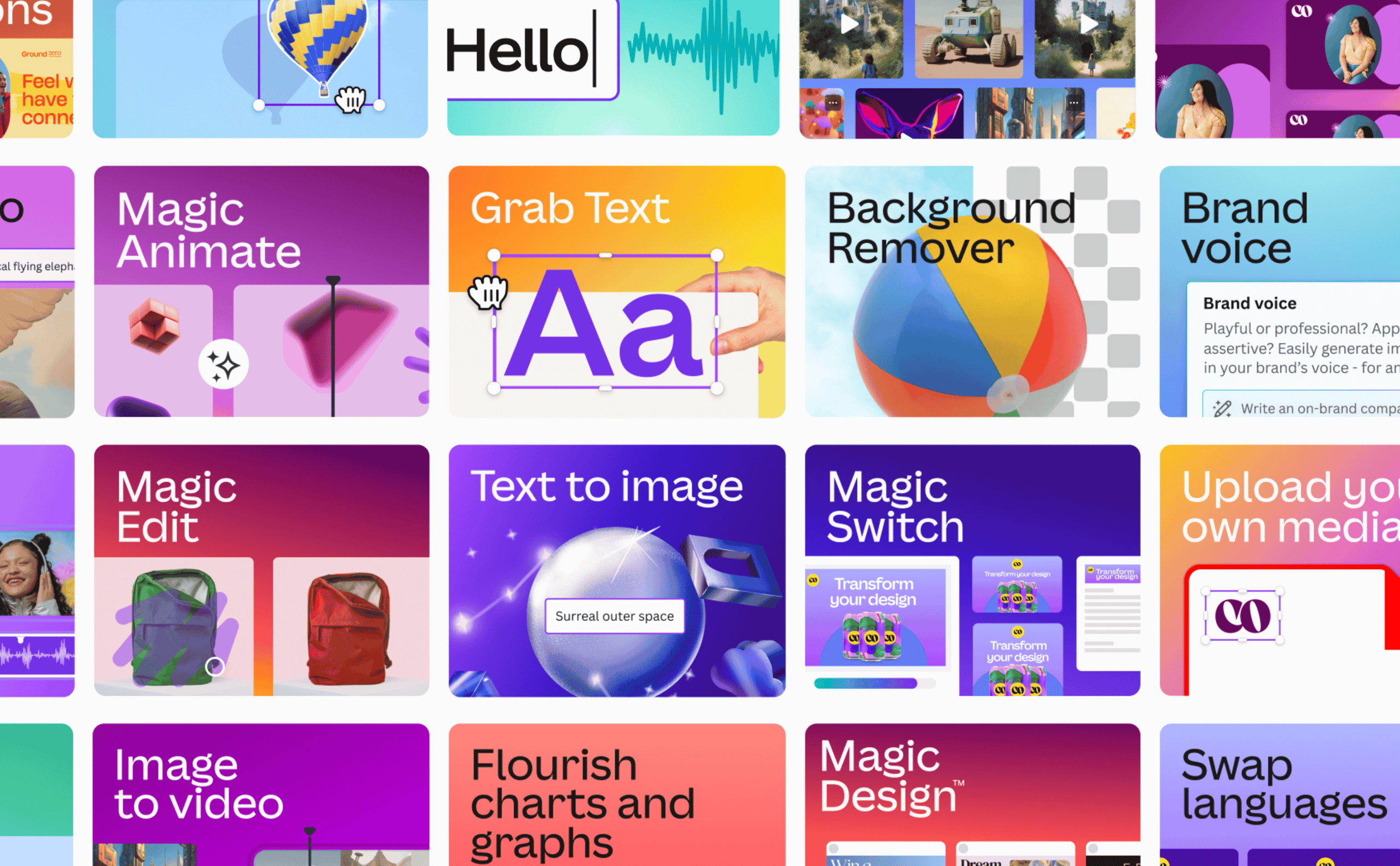
This matrix, built from our analysis and user reports, exposes that divide.
| Feature Category | Canva (Magic Studio) | Jasper (Platform) | Critical Notes |
|---|---|---|---|
| AI Text Generation | ✅ (Magic Write) | ✅✅ (Core Product) | ⚠️ Canva’s Magic Write is good for general copy. Jasper is a professional-grade platform with “Brand Voice” and “Campaigns” for maintaining consistency, a feature suites lack. |
| AI Image Generation | ✅ (Text to Image) | ✅ (Jasper Art) | ⚠️ Both are considered weaker than dedicated tools like Midjourney. Jasper’s own users report Jasper Art is not a primary strength. Canva’s AI is noted for “artifacts.” |
| AI Video Editing | ✅ (Magic Video) | ❌ | ⚠️ Canva is moving into AI video editing, directly competing with specialists like Descript. It is a generally available feature, no longer in beta. |
| Brand Consistency | ✅✅ (Brand Kits) | ✅✅ (Brand Voice) | ⚠️ Canva’s Brand Kits manage logos/colors. Jasper’s Brand Voice is far more advanced, learning and replicating writing style from documents and URLs. This is a key differentiator. |
| Collaboration | ✅ (Real-time, 50 users) | ✅ (Team Features) | ⚠️ Canva is built for visual collaboration. Jasper’s collaboration is text-focused. Both gate advanced collaboration/SSO behind expensive “Enterprise” or “Business” tiers. |
| Templates | ✅✅ (610,000+) | ✅ (50+ Marketing) | ⚠️ Canva’s strength is a vast library for non-designers. Jasper’s templates are specific marketing frameworks (AIDA, PAS), focusing on function over form. |
Here’s what those checkmarks really mean in practice:
AI Text Generation: Generalist vs. Specialist
Canva’s “Magic Write” is a fantastic general-purpose writing assistant, great for brainstorming, content repurposing, or drafting short-form content.
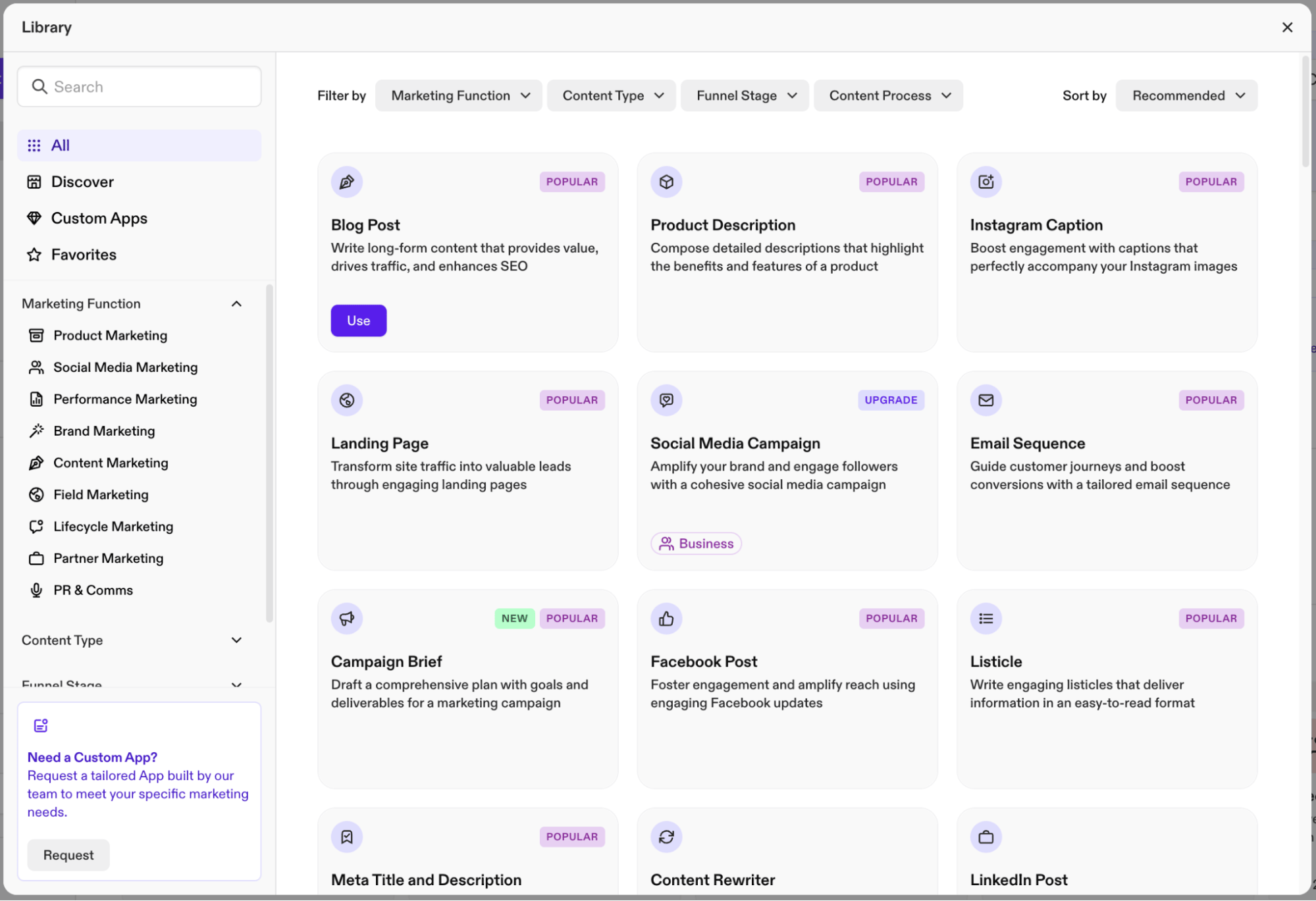
However, Jasper is a different class of tool. Its “Brand Voice” and “Campaigns” features are built for marketing teams that need to produce high volumes of content that is stylistically consistent and on-brand.
According to a MarketingAI Institute Review, a 1,000-word blog post can be drafted in under 60 seconds, but the real value is in the reduced editing time due to its brand alignment.
AI Image Generation: Convenience Over Craft
⚠️ While both Canva and Jasper check the box for AI image generation, the reality is that neither replaces a dedicated tool like Midjourney.
User reports consistently flag Jasper Art as underwhelming, and Canva’s AI is known for producing “artifacts” like distorted hands that require manual fixing. This feature is more of a convenience than a core strength for either platform.
Brand Consistency: Where the Specialist Shines
This is where the specialist shines. Guided by CEO Melanie Perkins‘ vision to “empower the world to design,” Canva’s Brand Kits are excellent for initial brand identity design and managing visual identity.
However, Jasper’s “Brand Voice” is a far more sophisticated technology. It analyzes your existing content, style guides, and even your website to learn and replicate your specific writing style, tone, and voice. For a marketing team, this is a powerful tool for maintaining consistency at scale.
Templates: Visual Library vs. Marketing Frameworks
The template libraries reflect the core purpose of each tool. Canva boasts a massive, vendor-claimed library of over 610,000 visual templates, its greatest strength for helping non-designers create professional-looking graphics and presentations quickly.
Jasper’s 50+ templates are not visual but functional; they are proven frameworks like AIDA and PAS designed to generate effective copy for landing pages, ads, and A/B testing copy.
If your interest is specifically in Quso’s positioning relative to these two, our deep-dive Quso Top Alternatives and Competitors breakdown maps the feature deltas in even more granular detail. And if you do decide Quso is the right fit, a working Quso discount code can offset the subscription cost from day one.
Pricing & TCO Reality Check: Exposing the 8x Cost Difference
⭐ WARNING: The following Total Cost of Ownership (TCO) models are based on verified October 2024 pricing but are likely underestimates. Real-world costs may be significantly higher due to hidden fees like AI credit overages and required add-ons.
Advertised prices for software are a marketing fiction. As a professional who has to approve software budgets, I can tell you that TCO is the only number that matters. The sticker price is just the tip of an iceberg of hidden costs, per-seat fees, and feature-gating.
Let’s break down the verified TCO for a hypothetical three-person team over three years.
Verified 3-Year TCO (3-Person Team)
| Platform | Verified Annual Cost (3 users) | Hidden Cost Factors | Verified 3-Year TCO |
|---|---|---|---|
| Canva for Teams | ~$450 | AI Credit Overages, Tiered Scaling | ~$1,349 |
| Jasper Teams + Canva | Jasper: ~$3,000+; Canva: ~$450 | Jasper’s Per-Seat Model, Feature Gating, Required Add-Ons | ~$10,350+ |
The Integrated Suite: Canva for Teams
For a team of three, Canva for Teams costs $149.90 per user, per year (when billed annually) according to its official pricing page. A three-person team would have an annual cost of $449.70, resulting in a three-year TCO of approximately $1,349.
However, this straightforward price hides several potential cost factors.
- ⚠️ Pricing Gotcha: AI Credit Overages: The “Teams” plan is not unlimited. It comes with a monthly allowance of AI credits. For teams heavily using AI features, this creates budget uncertainty. Exceeding the limit requires purchasing additional credit packs, with standard pricing around $8 for 50 credits, per Canva’s help documentation.
- ⚠️ Pricing Gotcha: Team Scaling: While the per-user price is linear for small teams, larger organizations are pushed toward custom “Enterprise” plans which may have different cost structures.
The Specialist Stack: Jasper Teams + Canva
Here, the cost structure is entirely different and far more expensive. A three-person team requires three separate seats for Jasper, plus a design tool.
- Jasper Cost: Jasper’s ‘Teams’ plan starts at $99 per month (billed annually) for the first user, according to its official pricing page. Assuming a similar per-seat cost for additional users, a three-person team could cost ~$3,000 per year.
- Canva Cost: ~$450 per year (for design needs).
- Total Annual Cost: ~$3,450 per year.
- Total 3-Year TCO: ~$10,350.
This stack is over eight times more expensive than the Canva-only option. The hidden costs here are even more significant. This pricing model, a strategic shift under co-founder Dave Rogenmoser‘s leadership to move upmarket, was “met with mixed reviews,” according to user sentiment.
- ⚠️ Pricing Gotcha: The Per-Seat Trap: Jasper’s per-seat model is the biggest financial hurdle. The cost scales linearly, becoming prohibitive for larger teams.
- ⚠️ Pricing Gotcha: The “Free” Integration: Jasper heavily promotes its integration with SurferSEO for optimizing content. However, this critical feature requires a separate, paid subscription to SurferSEO, adding another layer of cost not included in Jasper’s advertised price.
Lock-In & Exit Costs
- Canva: Creates lock-in with its proprietary file format. You can export your work as flat images or videos, but the original, editable source files cannot be opened in professional tools like Adobe or Figma. If you decide to leave Canva, you must manually recreate years of work.
- Jasper: The lock-in is intellectual. While the text you generate is portable, the “Brand Voice” you’ve spent time and effort training is not. Migrating this “trained intelligence” to a competitor is nearly impossible, creating a high cost of switching workflows.
Smart buyers always look for ways to soften this cost. Pairing your tool choice with the current Quso promo code — or any equivalent vendor offer — is the single fastest way to lower year-one outlay. Browse our running list of Latest Coupons for current deals across the AI tool category.
Security, Compliance & Trust: The Critical Blind Spot
⭐ WARNING: Vendor security claims require careful scrutiny. In my professional experience, security is not an area for assumptions. While we’ve verified policies as of October 2024, you must conduct your own due diligence.
When you use an AI tool, you are entrusting it with your company’s data, and potentially its intellectual property.
Beyond certifications, critical factors like data residency options (where your data is stored) and the vendor’s policy on using customer data to train their underlying Large Language Model (LLM) are paramount.
Compliance Status Verification (from Vendor-Published Information)
| Certification | Canva | Jasper | Critical Notes |
|---|---|---|---|
| SOC 2 Type II | ✅ | ✅ | Both state they are compliant. Reports are typically available under NDA, a standard industry practice. |
| ISO/IEC 27001 | ✅ | ❌ (Not Listed) | Canva holds this certification, a positive sign for a comprehensive security management system. |
| GDPR/CCPA | ✅ | ✅ | Both platforms claim compliance, but the true measure is in their data policies. |
AI Data Policy: The Critical ‘Blind Spot’
This is the number one target for scrutiny when evaluating Quso’s top alternatives and competitors.
- Jasper’s Clear Stance: According to their policy page, Jasper makes a clear, enterprise-friendly promise: “We do not use your data to train our AI models.” For any business working with confidential information, this is the gold standard. Jasper AI Data Policy
- Canva’s Nuanced Policy: Canva’s policy states they do not use a user’s private, non-public designs to train AI models. For content processed by their Magic Studio (AI) features, data may be used to improve the service, but Canva provides a clear opt-out setting for users who do not want their AI-feature content used for training purposes. This opt-out is a critical step every team must take. Canva Trust Center
S-T-A-R Touchpoint #1 (Security Limitation Example): A marketing team using Canva’s AI to brainstorm taglines for a confidential product launch faces a risk. If they have not actively located and enabled the AI opt-out setting, their confidential ideas could be used for “service improvement.” This opt-out requirement, compared to Jasper’s absolute default policy, represents a significant operational step for risk-averse teams.
Security Incident History
According to public data, neither Canva nor Jasper had major publicly disclosed breaches in the 2023-2024 timeframe. However, without recent audits, details on their security posture, including data encryption standards in-transit and at-rest, could not be independently verified.
Performance & Reliability: Claims vs. Reality
⭐ WARNING: Vendor performance claims often focus on speed, but speed is meaningless if the output is unusable. A fast AI that generates garbage is a fast way to waste your time. This section compares vendor claims to user-reported realities.
Performance Claims vs. Reality (from Upstream Data)
| Metric | Vendor/Platform | Claim/Benchmark | Gap Analysis / User Reality |
|---|---|---|---|
| AI Image Gen Speed | Canva | 15-25 seconds for 4 images | Claim Seems Realistic. However, user-reported issues focus on quality (AI artifacts, distorted hands) rather than speed. The output may be fast but require more editing time. |
| Video Render Speed | Canva | 90-120 seconds for 60s 1080p video | Conditional Reality. This is likely for simple projects. User forums report that on designs with >1000 elements or 50+ clips, performance “bogs down,” especially on machines with <16GB RAM. |
| AI Text Gen Speed | Jasper | <60 seconds for a 1,000-word draft | Claim Seems Realistic. Jasper’s performance praise is usually tied to quality and brand consistency, not raw speed. The value is in reduced editing time, which a raw speed metric doesn’t capture. |
Gap Analysis: Speed vs. Usability
The user reality check tells the true story. Canva’s 15-second image generation is impressive, but that speed is irrelevant if designers spend 15 minutes manually fixing AI-generated artifacts.
Similarly, a 90-second video render time is great for a simple social media clip, but user forums report that performance “bogs down” on complex projects, as noted by sources like TechRadar.
For Jasper, the claim of generating a 1,000-word draft in under 60 seconds is realistic but misses the point. The true performance value, as reported by users, is the high quality and brand consistency of the output, which significantly reduces human editing time.
Uptime & Reliability
Both Canva and Jasper claim 99.9% uptime SLAs for their highest-priced enterprise tiers. However, these SLAs are often riddled with exclusions.
More importantly, the real issue for most users isn’t total outages; it’s performance degradation.
S-T-A-R Touchpoint #2 (Performance Failure Case): A social media manager using Canva for Teams rushes to create a 50-page social media report for a client. As noted in user reports, when the document exceeds 50 pages and contains hundreds of elements, the browser begins to lag and the editor becomes unresponsive. They miss their deadline not because of an outage (the SLA is met), but because the platform’s performance could not handle the complexity of the real-world task.
Known Issues & Limitations (The Exposed “Blind Spots”)
This is the section vendors hope you don’t find before you subscribe. Based on user-reported data, here are the deal-breakers and significant limitations for both Canva and Jasper.
As an all-in-one suite, Canva’s limitations stem from its “jack of all trades, master of none” approach.
✅ Where Canva Wins
- Unbeatable ease of use, sub-5-minute time-to-first-value
- Massive 610,000+ template library for non-designers
- True all-in-one creative suite (design, video, AI, web)
- Real-time visual collaboration for up to 50 users
- Holds ISO/IEC 27001 certification (security posture signal)
⚠️ Notable Limitations
- ❌ No professional print features: Lacks CMYK color mode — a deal-breaker for print workflows
- ❌ Poor performance on large files: Lags or crashes on 50+ page documents
- ⚠️ Template overload: Time wasted sifting low-quality options
- ⚠️ Restrictive AI credits: Monthly caps create budget uncertainty
- ⚠️ Proprietary file format: No editable export to Adobe/Figma
As a high-priced specialist, Jasper’s limitations are related to its narrow focus and expensive business model.
✅ Where Jasper Wins
- Industry-leading “Brand Voice” for consistent on-brand copy
- Campaign-level workflows built for marketing teams
- Marketing framework templates (AIDA, PAS) for ad & landing copy
- “No training on customer data” policy by default
- High G2 support rating (9.2/10)
⚠️ Notable Limitations
- ❌ Not for creative or technical writing: Weak on fiction or poetry
- ❌ Weak visual features: Jasper Art is widely regarded as underpowered
- ⚠️ High cost: Primary driver of churn as cheaper LLMs improve
- ⚠️ Risk of skill atrophy: Teams over-rely, in-house copy skills decline
- ⚠️ SurferSEO add-on required: Hidden cost for promoted integration
User Experience & Adoption: Ease of Use vs. Power
A tool is only valuable if your team actually uses it. Adoption hinges on the balance between a tool’s learning curve and the power it delivers.
Learning Curve & Support
| Metric | Canva | Jasper |
|---|---|---|
| Learning Curve | Beginner (under 5 mins) | Intermediate (15-30 mins setup) |
| G2 Support Rating | 9.0 / 10 | 9.2 / 10 |
Canva is the undisputed champion of usability, praised for its “under 5 minutes” time-to-first-value. Jasper requires more initial investment. Setting up a “Brand Voice” takes 15-30 minutes, and mastering effective prompts takes practice.
While both platforms have high G2 support ratings (G2 Canva Page, G2 Jasper Page), the catch, according to user forums, is that priority support is gated behind expensive enterprise plans.
Real User Sentiment
Canva
- Praised Feature: “Unbeatable ease of use and vast template library.” It empowers everyone on a team, regardless of design skill, to create on-brand assets.
- Pain Point: “Jack of all trades, master of none. Not a replacement for professional tools.”
Jasper
- Praised Feature: “The ‘Brand Voice’ feature is a game-changer for maintaining consistency.”
- Pain Point: “The high price is the most common deal-breaker, especially as cheaper alternatives from Google (Gemini) and OpenAI (ChatGPT) get better.”
S-T-A-R Touchpoint #3 (User Quote): A quote from a Reddit thread in our upstream data encapsulates the core user dilemma: “We left Jasper. The Brand Voice was amazing, but I can’t justify paying nearly $4k a year for our team when ChatGPT-4’s output is 90% as good for a fraction of the price. The math just didn’t work anymore.”
Final Recommendations & Decision Framework
The choice between Canva and Jasper is not about which tool is “better.” It’s about which strategic compromise you are willing to make for your team’s specific priorities, budget, and risk tolerance.
A Suite (Quso/Canva) is best for…
✅ Small Businesses & Solo Creators who need to produce a high volume of diverse content with a minimal learning curve and a single, low-cost subscription.
✅ Teams where no one is a dedicated designer or writer. The templates and ease of use empower generalists with simple brand asset management to create on-brand assets quickly.
⚠️ Avoid a Suite if:
- Your primary need is best-in-class output in one specific area (e.g., long-form AI content). The suite’s “good enough” tools will quickly become a bottleneck.
- You are creating highly confidential IP and are not willing to manage the platform’s AI data training opt-out settings.
A Specialist Stack (Jasper + others) is best for…
✅ Marketing teams focused on measurable content ROI who prioritize brand consistency and content quality above all else and need to produce scalable marketing copy.
✅ Agencies where output quality directly impacts client satisfaction. The high cost of Jasper can be justified by a lower customer acquisition cost (CAC) resulting from higher-quality copy.
⚠️ Avoid a Stack if:
- Budget is the primary constraint. A specialist stack is significantly more expensive and complex to manage.
- Your team lacks the discipline to manage multiple tools. The workflow friction of switching between multiple tools is a real cost of a specialist stack.
Use Case Matrix (Zero-Loser Rule)
| Use Case | Best Choice | Why | Key Tradeoff |
|---|---|---|---|
| Solo creators & small teams on a budget | Canva | Offers basic creative workflow automation in an all-in-one tool. | Output quality is “good enough,” not best-in-class. |
| Marketing teams needing consistent, high-quality copy | Jasper | Advanced “Brand Voice” and campaign features. | Very high cost and requires a separate design tool. |
| Generalists in a large organization | Canva | Empowers non-designers with simple brand asset management. | Lacks professional features (e.g., CMYK for print). |
| Agencies justifying high retainers with top-tier output | Jasper | Produces market-leading AI copy that justifies the cost. | Workflow friction from using multiple specialist tools. |
Red Flags to Watch For
- Opaque AI Data Policies: If the Terms of Service don’t have a clear “no training” policy or a simple, global opt-out, assume your data might be used.
- Credit-Based or Complex Pricing: Scrutinize the fine print on AI credits, user limits, and storage tiers that can lead to unexpected cost overruns.
- Lack of Data Portability: If you can’t easily export your editable source files in a standard, non-proprietary format, the vendor is building a prison, not a partnership.
- Missing or Outdated Compliance: For any serious business use, the lack of a recent SOC 2 Type II or ISO 27001 certification is a major red flag.
If you’ve decided Quso looks like the right strategic fit for your team after reading the above, applying a verified Quso voucher code at checkout is the quickest way to shrink the year-one cost before tackling any of the hidden TCO factors discussed earlier.
Frequently Asked Questions
Q1: What is the main difference between Canva and Jasper?
A: The main difference is their core philosophy. Canva is an all-in-one design suite built for generalists, prioritizing a wide range of features and unbeatable ease of use. It acts as a lightweight digital asset management (DAM) system for small teams.
Jasper is a specialized, premium AI writing platform built for marketers, prioritizing the quality of its text output and features for brand consistency, like its “Brand Voice” which helps increase content velocity. A tool like Canva is about creating assets, whereas Jasper is about scaling communication.
Q2: Which is better for a small business: Canva or Jasper?
A: For the vast majority of small businesses, Canva is the more practical starting point. Its low cost, versatility, and gentle learning curve make it the best choice for teams with diverse needs and limited budgets.
According to G2 user reviews, Canva consistently scores high for “Ease of Setup” for small businesses G2 Canva Reviews for Small Business. You should only consider Jasper’s high cost if your business’s single most critical function is producing high-volume, brand-consistent marketing copy and you have the budget to support a specialized tool.
Q3: Is Jasper worth the high price in 2026?
A: This is the central question. Jasper’s value is entirely dependent on your specific use case. While many find that cheaper alternatives like ChatGPT-4, Writesonic, or Copy.ai are “good enough” for raw text generation, Jasper‘s primary differentiator remains its cohesive Brand Voice and campaign features, which standard LLMs lack.
If these features save your marketing team hours of editing and ensure a level of brand consistency you can’t achieve otherwise, it may provide a clear ROI. However, for many, the price remains a significant hurdle.
Q4: Should I be worried about Canva’s AI data privacy policy?
A: You should be aware and proactive, not worried. Unlike Jasper’s “no training by default” policy, Canva’s model requires user action. Their policy states they do not train on private content, but for content used in AI features, they may use it for service improvement unless you opt out.
As detailed in their Trust Center, Canva provides a specific setting to disable this. For businesses with sensitive IP, finding and enabling this opt-out is a mandatory first step.
Q5: What are the biggest hidden costs with these tools?
A: For Canva, the biggest hidden cost is AI credit overages. For teams that heavily use AI features, the monthly credit limit can be easily exceeded, leading to variable costs as detailed on their credit help page.
For Jasper, the biggest hidden costs are its per-seat pricing model, which does not scale cost-effectively for large teams, and the need for a separate, paid subscription to SurferSEO to use its most-touted integration, a fact confirmed on their respective pricing pages.
Q6: Can Canva replace professional tools like Adobe?
A: For many professional workflows, Canva cannot replace tools like the Adobe Creative Cloud. As the report shows, Canva lacks critical professional features like the CMYK color mode required for print production. This is a well-documented limitation discussed in many design forums and reviews.
Furthermore, its use of a proprietary file format creates vendor lock-in, making it a poor choice for workflows that need to integrate with professional designers using Adobe or Figma.
Q7: What is “vendor lock-in” and which tool is worse?
A: Vendor lock-in refers to the methods a platform uses to make it difficult for you to leave. Canva’s lock-in is technical; its proprietary file format means you can’t take your editable source files with you. Jasper’s lock-in is intellectual; it’s tied to the time and effort you’ve invested in training its Brand Voice.
Of the two, Canva’s is arguably more painful in a migration scenario, as it would require manually recreating years of visual assets from scratch, a significant exit cost noted in many a SaaS migration guide.
Q8: What are the best alternatives to Jasper for AI writing?
A: While Jasper is a market leader, its high price has led many to explore alternatives. For teams on a budget, OpenAI’s ChatGPT-4 is a powerful option for raw text generation.
Other popular AI writing assistants known for specific features include Copy.ai for its diverse templates and Writesonic for its AI article writer and SurferSEO-like integration. The “best” alternative depends on your specific needs for features versus cost, as analyzed in many head-to-head AI writer comparisons.
Conclusion
The final verdict when considering Quso’s top alternatives and competitors like Canva and Jasper is that there is no single winner. The choice isn’t between a “good” tool and a “bad” tool, but between two fundamentally different strategic compromises.
The all-in-one suite, represented by Canva, forces you to sacrifice best-in-class quality for the undeniable benefits of low cost, convenience, and a streamlined workflow.
The specialist stack, represented by Jasper, asks you to sacrifice budget and convenience for the superior quality and control that only a dedicated, master-of-one tool can provide, a trade-off that giants like Microsoft are challenging with their own integrated Copilot.
As a professional who has navigated these decisions for years, I can tell you the right choice in AI tools depends on your team’s unique balance of budget, quality requirements, and desired productivity gains.
If your budget is tight and your creative needs are broad, start with Canva; it’s an incredibly powerful tool for what it costs. If AI-driven marketing copy is the lifeblood of your business and you have the budget to support it, the power and consistency of Jasper are worth evaluating. And if you’ve narrowed in on Quso itself, locking in a current Quso coupon code is the smartest first step before you commit to any annual plan.
Ultimately, this analysis should serve as a warning. Before you sign any annual contract, you must demand clarity on the four red flags we identified: the AI data policy, the true total cost of ownership, data portability, and recent compliance audits. In the rapidly evolving world of AI tools, you must do your own due diligence.