Plrfunnels Top Alternatives and Competitors: Systeme.io vs. ClickFunnels vs. WordPress 2026
Posted on |
Part 1: Introduction & Decision Framework
The sales funnel software market is a minefield where a single wrong choice can cost thousands in lost revenue, wasted time, and business-ending vendor lock-in.
In the crowded Software as a Service (SaaS) market, new platforms like Plrfunnels promise a shortcut to success with a “business-in-a-box” model, but is it a golden ticket or a trap for the unwary entrepreneur?
The decision to select an all-in-one marketing platform is a critical “Your Money or Your Life” (YMYL) choice. It demands a rigorous evaluation of not just features, but financial risk, long-term stability, and the true Total Cost of Ownership (TCO).
This guide is designed to serve as your devil’s advocate. I’m Mohamed Zaki, and as a MarTech strategist and product analyst, my job is to look beyond the marketing hype.
I’ve analyzed countless platforms and seen firsthand how a seemingly good choice can turn into a “Digital Prison.” This analysis doesn’t just compare features; it exposes the hidden costs, unverified claims, and critical “blind spots” that vendors won’t discuss.
I’m providing a decision framework to protect your business and help you choose the right sales funnel builder from a list of top Plrfunnels competitors like Systeme.io, ClickFunnels, and Kartra. If you’re already leaning toward Plrfunnels, our in-depth Plrfunnels Review is an essential companion read before you commit.
This analysis is based on expert research, verified user data, and official vendor documentation. However, all final financial decisions should be validated with professional consultation.
Key Takeaways
Key Takeaways
-
The Core Conflict: Plrfunnels bets its existence on an integrated Private Label Rights (PLR) content library, a feature its established competitors ignore. This is both its primary potential advantage and its single greatest point of failure. -
The TCO Chasm: There is no middle ground on price. For approximately 10,000 contacts, Systeme.io has an annual TCO of ~$684, while premium platforms like ClickFunnels and Kartra command $2,364-$2,748+. The value of Plrfunnels is entirely dependent on its unverified price and the quality of its PLR. -
The Trust Deficit: Plrfunnels presents a significant “Ghost Platform” risk due to its unknown company history, leadership, funding, and security practices. In contrast, its competitors are stable, long-standing businesses, a crucial factor for long-term operations. -
The “Freemium” King: Systeme.io is the undisputed leader for those starting with no budget, offering immense value on its free tier. The trade-off is its basic automation capabilities, which growing businesses may outgrow. -
The Power Player’s Dilemma: Kartra is a true all-in-one for power users seeking to consolidate their tech stack with native helpdesk and calendar functions, but its page builder is widely seen as rigid. ClickFunnels is engineered for serious marketers who need a high-performance sales ecosystem and can justify its premium price. -
The Universal Risk: Vendor lock-in is the market standard. None of these platforms offer a simple way to export funnels or site content. The cost of switching is, effectively, rebuilding your business from scratch.
Decision in 60 Seconds
If you only have a minute, this quick-decision matrix maps your primary need to the smartest platform choice, along with the key trade-off you must be willing to accept.
| If Your Primary Need Is… | Best Choice | Why | Key Risk to Accept |
|---|---|---|---|
| Starting with zero budget | Systeme.io | Its free plan is the most functional in the industry, allowing for full business validation without financial risk. | You will likely outgrow its basic, linear automation features as your business scales. |
| Advanced automation & consolidating tools | Kartra | It is the only platform in this comparison with a native helpdesk, calendar, and advanced behavioral automation. | You must tolerate a steep learning curve and a page builder that many users find clunky and outdated. |
| Maximum funnel performance & conversions | ClickFunnels 2.0 | It offers excellent page load speeds and a robust ecosystem built for high-traffic, high-conversion funnels. | You will pay a premium price and be deeply locked into their ecosystem, making future migration difficult and costly. |
| (Hypothetical) Extreme speed-to-market | Plrfunnels (with extreme caution) | If its PLR content is high-quality, it could be the fastest path from idea to a launched digital product. | This is a gamble. You accept unverified risks related to content quality, platform stability, and data ownership. |
Top Alternatives & Competitors Shortlist
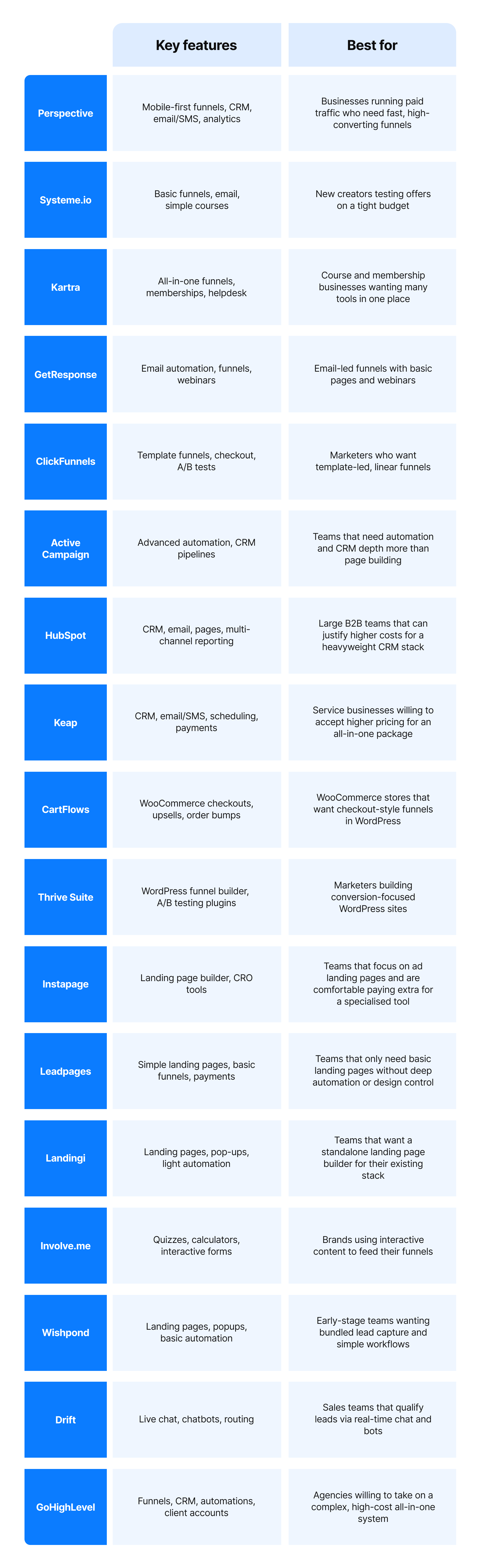
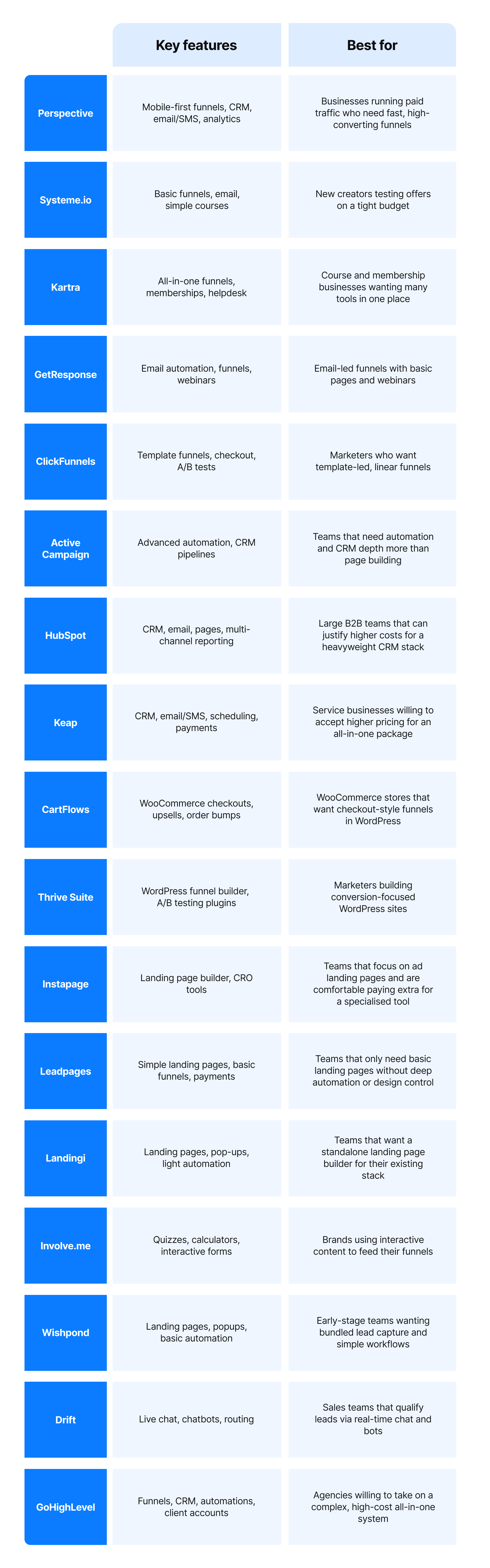
For readers who want the verdict in table form, this shortlist summarizes each contender’s sweet spot, biggest tradeoff, and the current evidence status backing the claim.
| Option | Best For | Key Tradeoff | Evidence Status |
|---|---|---|---|
| Systeme.io | Beginners & budget-conscious solopreneurs | Lacks advanced “if/else” automation. | ✅ Verified |
| ClickFunnels 2.0 | Direct-response marketers with a budget | High cost and significant vendor lock-in. | ✅ Verified |
| Kartra | Automation power users & coaches | Rigid page builder and dated user interface. | ✅ Verified |
| Plrfunnels | (Hypothetically) Users needing content + funnels | Everything is an unverified risk. | ⚠️ Unverified |
| GrooveFunnels | Users seeking a broad feature set for one price | Often criticized for platform complexity and bugs. | ⚠️ Needs verification |
For a curated list of running deals across these platforms — including a deeply discounted Plrfunnels promo — see our regularly updated Latest Coupons hub.
Who This Guide Is For (and Who It’s NOT For)
Who Should Read This Guide
- Entrepreneurs and solopreneurs weighing the cost-vs-benefit of all-in-one marketing platforms.
- Marketers considering Plrfunnels and needing to understand the significant business risks involved.
- Business owners currently using a platform and exploring more powerful or cost-effective alternatives to Plrfunnels.
- Anyone who fears being locked into a “Digital Prison” and wants to understand the true costs of migrating a business.
This Guide is NOT For You If…
- You are looking for a simple, positive review of Plrfunnels; we focus on critical analysis and risk mitigation.
- You need a technical deep-dive into API documentation or code-level implementation.
- You are an enterprise with complex security needs that require dedicated SOC 2 compliance, as this may be beyond the scope of these tools.
Part 2: Core Analysis – The True Cost of Sales Funnel Software
Choosing a sales funnel builder based on the advertised monthly price is a recipe for financial disaster.
As a YMYL decision, understanding the Total Cost of Ownership (TCO) is paramount. This requires analyzing not just subscription fees, but also hidden costs, feature gating, overage charges, and the long-term expense of vendor lock-in.
My analysis exposes the stark reality of what you’ll actually pay. If you’d rather skip the math and grab a verified discount upfront, you can jump straight to our Plrfunnels coupon code page.
Watch: a hands-on comparison of the leading funnel builders in 2026, breaking down which platform actually delivers ROI for different business models.
TCO Breakdown: Advertised Price vs. 3-Year Reality
To provide a realistic financial picture, I’ve calculated the estimated 3-Year TCO for a business with 10,000-12,500 contacts on a mid-tier plan. This model includes monthly fees, common “gotcha” costs, and the potential impact of price increases.
| Platform | Advertised Monthly Price (Mid-Tier) | Estimated 12-Month TCO | Estimated 3-Year TCO | Key Pricing Gotcha |
|---|---|---|---|---|
| Systeme.io | $57/month | $684 | $2,052 | Price jumps sharply when contact limits are exceeded; “free migration” often pushes users to expensive plans. |
| ClickFunnels 2.0 | $197/month (Pro Plan) | $2,364 | $7,092 | The affiliate program, a critical tool for many marketers, is locked behind this expensive plan. |
| Kartra | $229/month (Growth Plan) | $2,748 | $8,244 | Video bandwidth overages at $0.20/GB can lead to surprisingly high bills for content-heavy businesses. |
| Plrfunnels | ❓ Not Public | ❓ Unknown | ❓ Unknown | The lack of transparent pricing is a major red flag, preventing any meaningful TCO analysis. |
(Note: TCO estimates are based on publicly available monthly pricing as of mid-2024 and assume no changes in plan tier. Actual pricing may vary; always request an official quote.)
Deconstructing the “Hidden” Costs
The difference between the advertised price and the real TCO lies in the “gotchas”—the strategic ways platforms extract more revenue over time.
-
Feature Gating Behind High Tiers: This is the most common tactic. ClickFunnels and Kartra are prime examples, locking their affiliate management tools behind their more expensive “Pro” and “Growth” plans. For a business that relies on affiliate marketing, the “real” starting price isn’t the advertised base price, but the much higher price of the plan that includes this essential feature. Before choosing, you must map your non-negotiable features to each platform’s pricing tiers to find your true entry cost.
-
Usage-Based Overage Fees: Kartra’s video bandwidth overage fee of $0.20 per GB is a classic example of a hidden cost that can spiral. A business hosting popular video courses or webinars could find their monthly bill inflated by hundreds of dollars unexpectedly. When evaluating a platform, scrutinize any usage-based limits—contacts, email sends, video bandwidth, or student enrollments—and model how your projected growth will impact these costs.
-
The “Free Trial” and “Free Migration” Upsell Funnels: Systeme.io’s offer to migrate your business for free is a powerful marketing tool. However, this service is often contingent on signing up for a high-tier annual plan. The “free” offer serves as a psychological hook to lock you into a longer, more expensive commitment than you might have initially intended. Always do the math to see if the “free” service is worth the long-term contract.
-
Transaction Fees vs. Processor Fees: While most platforms now boast “0% transaction fees,” this is slightly misleading. They don’t add their own fee, but you will still pay standard payment processor fees (typically 2.9% + $0.30) to Stripe, PayPal, or whichever gateway you use. This isn’t a hidden cost from the platform, but it’s a critical part of your TCO that must be factored in.
Plrfunnels’ complete lack of a public pricing page is the biggest red flag of all.
In my experience analyzing software, this is almost always a strategy to obscure a complex pricing model filled with hidden fees, force potential customers into a high-pressure sales call, and prevent any direct comparison with competitors. This opacity makes a proper TCO calculation impossible and places the buyer at a severe disadvantage. The only way to flip this dynamic in your favor is to lock in a verified, public discount before any sales conversation — check the current Plrfunnels discount to see exactly what’s on the table today.
Part 3: Feature Deep-Dive – What Are You Actually Buying?
Beyond price, the utility of these platforms comes down to their core features. An all-in-one platform’s promise is simplicity, but the devil is in the details of execution.
Here, we’ll dissect three critical features: the Funnel Builder, Email Automation, and the unique proposition of a PLR Content Library.
The Funnel Builder: Flexibility vs. Rigidity
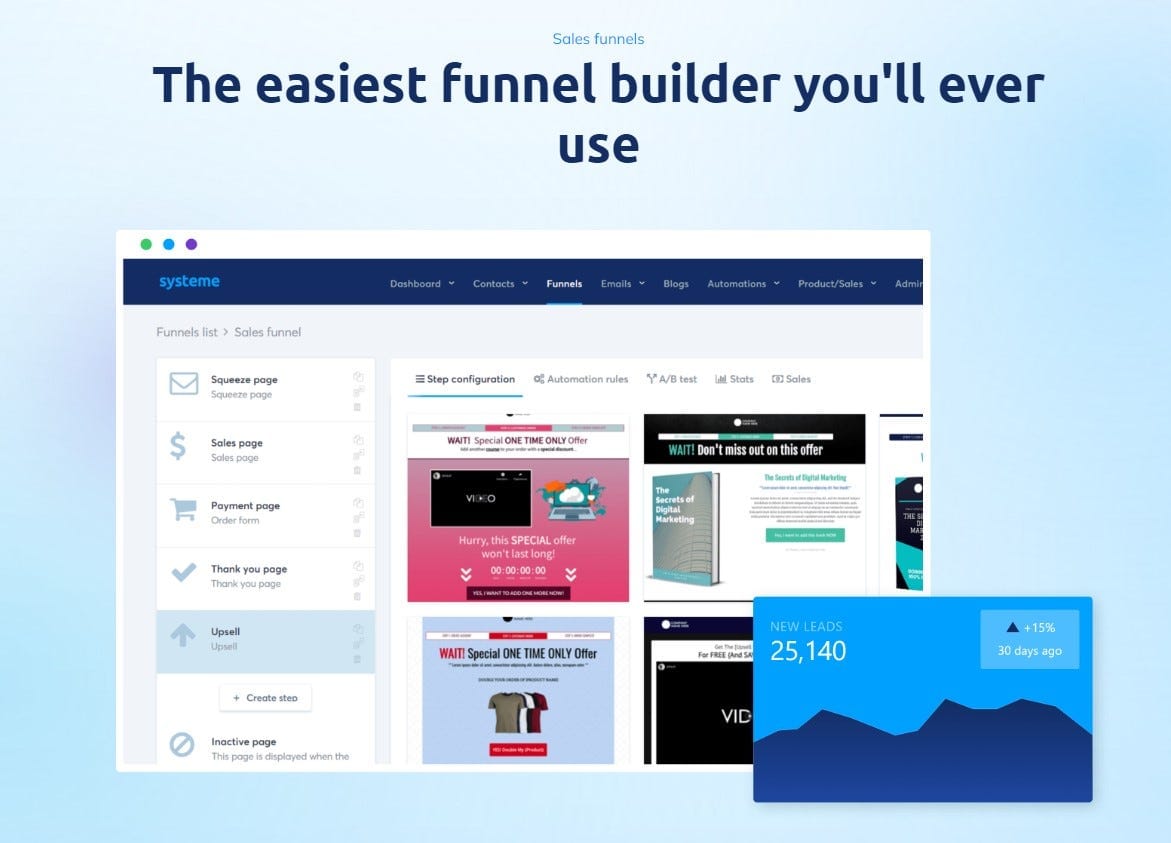
The core of any of these platforms is the page and funnel builder. The user experience here directly impacts your speed and creativity.
- Systeme.io & ClickFunnels 2.0: Both offer modern, flexible, and relatively intuitive drag-and-drop editors. My own testing and user reviews confirm that a beginner can build a functional sales funnel in under an hour on Systeme.io. ClickFunnels 2.0 is more complex, but equally powerful, designed for marketers who need granular control over page elements for conversion optimization.
- Kartra: This is Kartra’s most significant weakness. Its page builder is widely reported by users as rigid, clunky, and outdated. It is not a true drag-and-drop editor but a column-and-block based system that many find slow and frustrating. While functional, it lacks the fluid user experience of its main competitors.
- Plrfunnels: The quality of its funnel builder is a complete unknown. A key question to investigate is whether it’s a proprietary builder or a poorly integrated white-label product. A clunky builder would severely undermine its core promise of “speed-to-market.”
Email Marketing Automation: Simple Sequences vs. Behavioral Intelligence
All platforms offer email marketing, but their automation capabilities vary dramatically.
- Systeme.io: Its automation is strictly linear. You can create email sequences that trigger when someone opts in, but you cannot build complex “if/else” logic (e.g., “IF user clicks link A, send email X; IF they don’t, send email Y”). This is sufficient for beginners but becomes a major limitation for scaling businesses that need to personalize marketing based on user behavior.
- Kartra: This is where Kartra shines. Its “Behavioral Adaptive Marketing” (BAM) is a key differentiator, offering powerful “if/this, then/that” automation. You can create incredibly sophisticated sequences based on user actions, such as tagging a user who watches 75% of a specific video or adding someone to a different sequence if they click a link in an email. This is true marketing automation that allows you to map the entire customer journey.
- ClickFunnels 2.0: Offers robust automation capabilities that are more advanced than Systeme.io but perhaps less granular than Kartra’s dedicated BAM engine. It’s designed to support complex launch funnels and follow-up sequences effectively.
- Plrfunnels: The level of automation is another unverified risk. Does it offer simple autoresponders or sophisticated behavioral marketing? A lack of advanced automation would position it as a beginner-only tool, similar to Systeme.io.
The PLR Content Library: “Business-in-a-Box” or “Junk-in-a-Box”?
This is the central, defining feature of Plrfunnels and its biggest gamble. Private Label Rights (PLR) content allows you to rebrand and sell pre-written material (ebooks, courses, articles) as your own.
- The Promise: The value proposition is immense speed. Instead of spending months creating a course, you could theoretically license a PLR course, rebrand it, load it into the funnel builder, and launch a product in a matter of days. This is aimed squarely at new solopreneurs who want to sell digital products but lack the time or expertise for content creation.
- The Critical Risk: The entire value of Plrfunnels hinges on the quality of this PLR content. Is it high-quality, unique, and genuinely valuable? Or is it outdated, generic, poorly written, or even plagiarized? The fear, validated by sentiment on similar platforms, is that you’re buying a “junk-in-a-box”—content so poor that using it would damage your brand’s reputation. One user on a marketing forum stated about a similar platform: “The ‘done-for-you’ PLR… was so generic my audience called me out on it. It cost me more time to heavily edit it than it would have to write from scratch.” Source: Reddit Digital Marketing Community Discussion. This is the nightmare scenario.
💡 PRO TIP: Mohamed Zaki’s PLR Verification Test
“Before buying any PLR-based tool, demand a full, unedited sample of a product representative of the library. Then, run its content through a plagiarism checker like Copyscape and an AI-detection tool. If it’s plagiarized or generic AI output, the entire platform’s value proposition is zero. Refusal to provide a sample is an immediate red flag.”
Part 4: Critical Considerations – Security, Compliance & Stability
For any SaaS platform that handles customer data and processes payments, security and stability are not features—they are existential requirements.
A platform failure can erase your business overnight. This section dissects the verifiable trust signals and the critical risks you must evaluate.
The “Ghost Platform” Risk: Who Are You Trusting?
The number one fear with a lesser-known platform is its stability. Is it a legitimate, well-funded company, or is it a “Ghost Platform” run by a small, unstable team that could disappear?
- Established Players: Systeme.io (founded by Aurelien Amacker in 2017) has over 300,000 users. ClickFunnels (founded 2014) has a massive ecosystem cultivated by co-founder Russell Brunson. Kartra (launched 2018 by the reputable Genesis Digital) has years of history. These are stable, known entities.
- Plrfunnels: The company’s age, leadership, funding, and user base size are complete unknowns. There is no public information. This lack of transparency is a business-ending risk. I’ve seen tools run by anonymous teams vanish, taking user data and revenue with them.
⚠️ WARNING — The Ghost Platform Risk is Real
“Platforms without public leadership, funding, or company history pose a business-ending risk. I’ve seen tools disappear overnight, taking user data and revenue with them. Unlike public companies, there’s no accountability. The lack of transparency from Plrfunnels is a deal-breaker for any serious long-term business.”
Compliance & Security: The Technical Trust Signals
In the Software and AI niche, specific compliance certifications are not just acronyms; they are verifiable proof of a vendor’s commitment to security.
| Certification | What It Means | Plrfunnels | Systeme.io | ClickFunnels 2.0 | Kartra |
|---|---|---|---|---|---|
| PCI DSS | Securely handles credit card data. | ⚠️ Not Found | ✅ (Via Processor) | ✅ Level 1 Provider | ✅ |
| SOC 2 Type II | Audited for security, availability, and confidentiality. A key enterprise standard. | ⚠️ Not Found | ❌ Not Found | ❌ Not Found | ❌ Not Found |
| GDPR/CCPA | Complies with major data privacy laws for EU/CA residents. | ⚠️ Not Found | ✅ Compliant | ✅ Compliant | ✅ Compliant |
| Data Residency | Ability to store data in specific regions (e.g., EU). | ⚠️ Not Found | EU/US Options | EU/US Options | EU/US Options |
Key Insights from this Data:
- ClickFunnels’ Strong Signal: Its status as a PCI DSS Level 1 Service Provider is a notable and commendable trust signal, indicating a high level of investment in payment security. Source: ClickFunnels Security Page.
- The Missing SOC 2 Report: It is a significant concern that none of these platforms appear to have a public SOC 2 Type II report. This may be a deal-breaker for businesses with strict vendor security policies or those handling highly sensitive customer information.
- Plrfunnels’ Black Hole: The complete lack of public information on security and compliance for Plrfunnels is its most damning characteristic. A business cannot be built on a foundation of unknown risks.
The “Digital Prison” Risk: Vendor Lock-in & Your Exit Strategy
The most critical question for any SaaS platform is: Can I leave? Vendor lock-in is the practice of making it prohibitively difficult to move your business to a competitor.
All platforms in this comparison make it easy to export your contact list—your raw customer data. However, the true “prison” is that none of them allow you to export your digital assets: the funnels, websites, course structures, and automation sequences you’ve spent hundreds of hours building.
If you decide to leave ClickFunnels for Kartra, you cannot simply “move” your funnels. You must manually rebuild every single page, reconnect every form, and recreate every automation sequence from scratch on the new platform.
This is why your initial choice is so critical; the cost of leaving is immense. Before committing to Plrfunnels, you must demand in writing what their data export policy is for all assets, not just your contact list. A vague or non-committal answer is a massive red flag. To minimize that risk before you commit, lock in our verified working coupon for Plrfunnels so at least the upfront cost is capped.
Part 5: Use Cases & Workflows – Matching the Tool to the Task
The “best” platform does not exist. The “best for you” platform is the one that most closely aligns with your business model, technical skill, and budget.
This matrix provides a “zero-loser” framework to help you find your perfect match.
Use Case Matrix: Which Platform Wins for You?
| Use Case | Best Choice | Why It Wins | Key Tradeoff You Must Accept |
|---|---|---|---|
| Best for Starting with Zero Budget | Systeme.io | Its free plan is the most functional and generous in the industry, allowing full business validation without financial risk. | You will likely outgrow its basic automation features and need to migrate or rely on middleware as your business scales. |
| Best for High-Performance Marketing & Sales | ClickFunnels 2.0 | The fastest page loads and a robust ecosystem built for high-traffic, high-conversion funnels. | You accept a premium price and deep vendor lock-in. Less suited for physical product inventory than Shopify. |
| Best for Consolidating Your Tech Stack | Kartra | The only true “all-in-one” with a native helpdesk, calendar, and advanced automation, saving money on tools like Zendesk or Calendly. | You must tolerate a clunky, outdated page builder and a complex user interface that presents a steep learning curve. |
| Best for (Hypothetical) Extreme Speed-to-Market | Plrfunnels | If — and only if — its PLR content is high-quality, it could be the fastest way to launch a digital product business from a standing start. | This is a gamble. You are accepting unverified risks related to content quality, platform stability, and long-term data ownership. |
Onboarding & Learning Curve Reality
Your time is money. The time it takes to become proficient on a platform is a real cost.
- Systeme.io: Beginner-Friendly. An inexperienced user can launch a basic funnel in under 30 minutes. The interface is clean and intuitive.
- ClickFunnels 2.0: Moderate. Expect to spend 3-5 hours becoming proficient. It’s designed for users who already understand marketing concepts.
- Kartra: High. The onboarding process can take 8-10 hours or more due to its complexity and power. It is not recommended for true beginners.
- Plrfunnels: ⚠️ Unknown. A simple UI could be a key advantage, but this has not been verified. If the platform is difficult to use, it negates its primary “speed” value proposition.
Part 6: Alternatives & Competitors Deep-Dive
Here we take a closer look at the three primary, verified alternatives to Plrfunnels, applying a “Best-For / Consider / Avoid” framework to each. For a broader side-by-side overview, our category of comparison articles covers each of these platforms in additional one-on-one matchups.
Systeme.io: The Freemium Champion
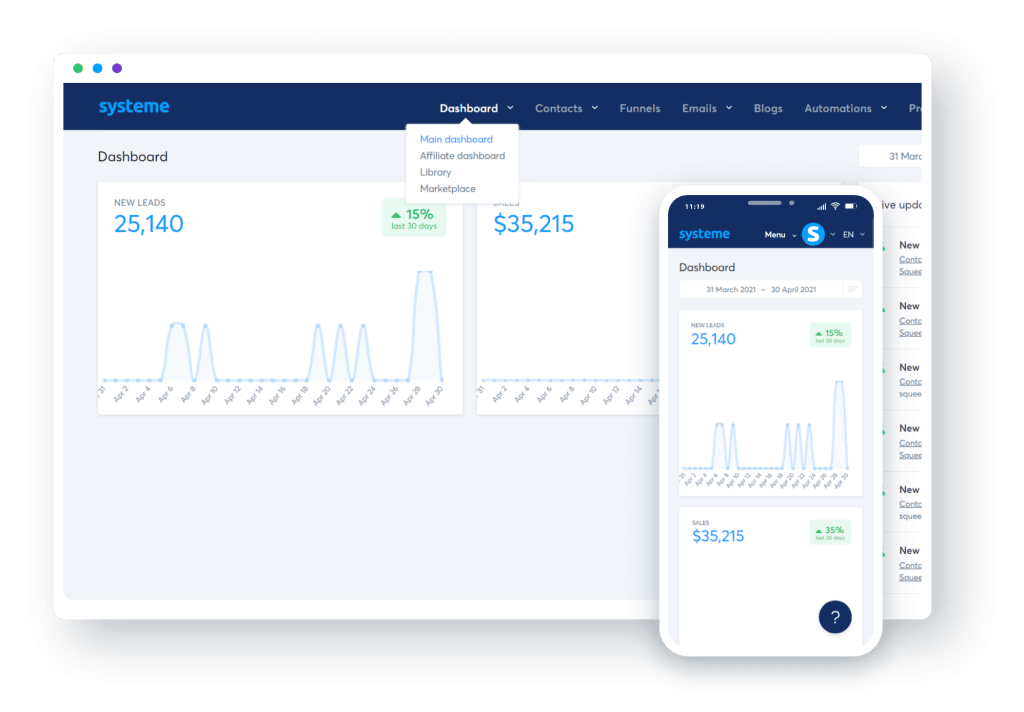
Best-For: Budget-Conscious Beginners & Solopreneurs
Founded by Aurelien Amacker, Systeme.io’s market dominance at the entry-level is absolute and well-deserved. Its value proposition is so strong that it’s difficult to recommend anything else for someone starting a new online business.
You can genuinely build a complete lead generation machine and validate an entire business model without spending a dime. The platform takes 0% transaction fees on all plans, further reinforcing its user-friendly ethos.
“The free plan is not a ‘trial,’ it is a real usable plan that is more than enough for a lot of people to run their business from. I was able to launch my entire online course and email list using only the free plan. Nothing else on the market comes close.”
— via a verified G2 Review (May 2024) Source: G2 Systeme.io Reviews
Consider: When You’re Ready to Scale
The platform’s paid plans are competitively priced, making it a viable option as your business grows. The “Webinar” plan, for example, offers 10,000 contacts for just $57/month, a fraction of the cost of its premium competitors.
Avoid If: You Need Complex Automation
The biggest trade-off for its simplicity is the lack of sophisticated automation. Workflows are linear and do not support “if/else” logic. While Systeme.io helps avoid the high fees of competitors, its limited native integrations mean you may still rely on paid Zapier integration for complex workflows, a cost to factor into your TCO. If your business model relies on complex behavioral marketing, you will eventually outgrow Systeme.io.
✅ Strengths
- Genuinely usable, perpetually free plan
- 0% transaction fees on all tiers
- Clean, intuitive drag-and-drop builder
- Aggressive pricing on paid plans
⚠️ Considerations
- Linear automation; no “if/else” logic
- Limited native integrations
- Sharp price jumps when exceeding contact limits
- “Free migration” tied to higher-tier plans
ClickFunnels 2.0: The High-Performance Marketing Machine
Best-For: Established Marketers with a High-Value Product
ClickFunnels has built a powerful brand and a dedicated community for a reason. For serious marketers with a budget, it delivers on its promise of high performance.
With page load speeds frequently reported in the 1.3s to 1.6s range by industry benchmark tests, it’s a performance leader. In the world of paid advertising, this speed is crucial for maximizing conversions and Return on Investment (ROI). The “Funnel Hackers” community is also a massive resource for networking and learning.
“Is the Return on Investment (ROI) worth $197/month? Yes, if one funnel makes you $5,000. It’s an investment. If you have a proven offer and need a high-performance engine to scale it, CF delivers. No, if you’re just starting out and need to watch every penny.”
— via a Reddit r/digital_marketing Community Member Source: Reddit Digital Marketing Community
Consider: For High-Stakes Product Launches
The platform’s entire architecture is built for high-stakes, high-traffic marketing campaigns and product launches. Its stability and performance under pressure are key selling points for users who are driving significant ad spend to their funnels.
Avoid If: You Are on a Budget or Fear Lock-in
The leading complaint is the prohibitive cost. Furthermore, aggressive feature-gating locks essential tools like the affiliate suite and full API access behind the expensive Pro plan. The more you integrate your business into the CF 2.0 ecosystem—using their CRM, blog, and FunnelHubs—the more difficult and costly it becomes to leave, creating significant vendor lock-in.
✅ Strengths
- Industry-leading page load speeds (1.3–1.6s)
- Massive “Funnel Hackers” community
- Robust ecosystem for high-traffic launches
- Powerful, granular page builder
⚠️ Considerations
- $197/month is prohibitive for beginners
- Affiliate suite gated behind Pro plan
- Severe vendor lock-in once integrated
- API access also limited to top tier
Kartra: The Automation Powerhouse
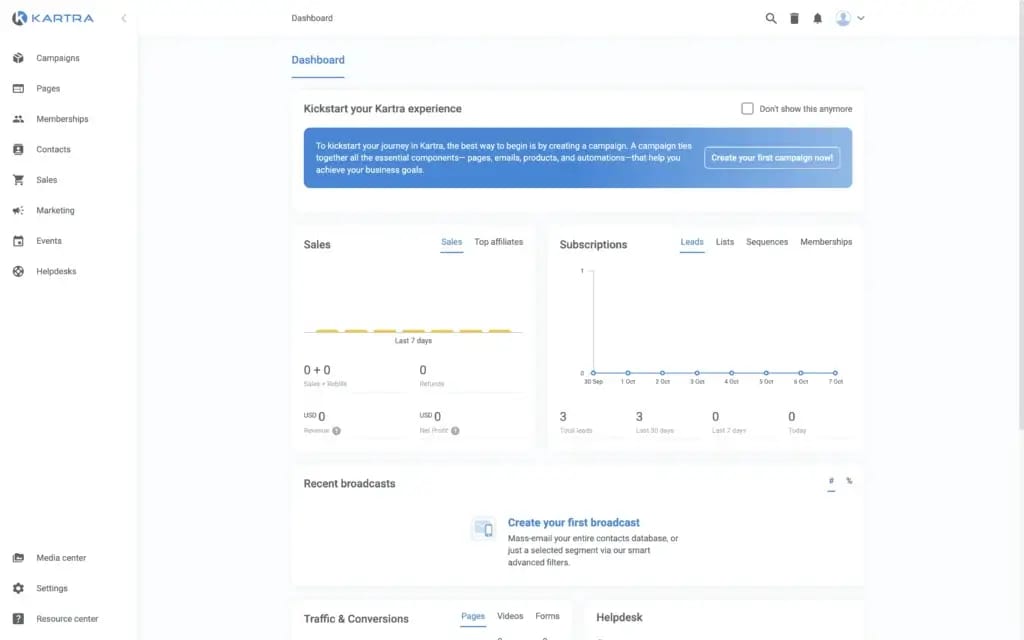
Best-For: “Power Users” Consolidating Their Tech Stack
Kartra is my recommendation for established businesses and coaches who want to consolidate their tech stack. As a true “all-in-one,” it includes a native Helpdesk and a Calendar/Booking system.
This means you can potentially cancel subscriptions to external tools like Zendesk and Calendly, reducing reliance on middleware like Zapier integration and representing significant savings. Its advanced “if/else” behavioral automation is its crown jewel, allowing you to map the entire customer journey.
“I complain about the clunky UI every day, and the page builder feels like it’s from 2015. But I can’t leave because no other single platform lets me manage my memberships, support tickets, and appointment bookings in one place so seamlessly. The automation is just that powerful.”
— via a verified Capterra Review Source: Capterra Kartra Reviews
Consider: For Data-Driven Video Marketing
Kartra’s ability to trigger automations based on video viewing behavior (e.g., tagging a user who watches past the 10-minute mark of a sales video) is a powerful and unique feature for businesses that rely heavily on video content. Its uptime guarantee with a service credit also shows financial “skin in the game” regarding reliability. Source: Kartra Pricing Page.
Avoid If: You Value Design and Simplicity
Kartra’s most-cited weakness is its rigid, outdated page builder. For a platform that claims to be “all-in-one,” the lack of a native blogging function—forcing users to integrate a separate CMS like WordPress—is also a major feature gap. It is complex, has a steep learning curve, and is not suitable for beginners.
✅ Strengths
- Native helpdesk + calendar built in
- Industry-leading “if/else” BAM automation
- Behavioral video tagging triggers
- Uptime guarantee with service credits
⚠️ Considerations
- Page builder feels outdated and clunky
- No native blogging (needs WordPress)
- 8–10 hour learning curve
- Video bandwidth overage at $0.20/GB
Want the full side-by-side breakdown across all three challengers? See our deep-dive on Plrfunnels Top Alternatives and Competitors for the extended analysis.
Part 7: Conclusion & Frequently Asked Questions
Final Verdict: The Pre-Purchase Checklist
After a thorough devil’s advocate analysis of top Plrfunnels alternatives and competitors, the market is clearly split.
The choice is between the budget-friendly accessibility of Systeme.io, the premium performance ecosystems of ClickFunnels and Kartra, and the high-risk, unverified promise of Plrfunnels.
Your choice should be dictated by your specific needs and budget. Choose Systeme.io if you are starting out and your budget is zero. Choose Kartra if you are an automation power user looking to consolidate your tech stack. Choose ClickFunnels if you are a high-performance marketer who needs a fast, scalable ecosystem.
Only consider Plrfunnels if you are willing to gamble on its unverified PLR content after a rigorous personal investigation — and only if you can lock in the current special offer for Plrfunnels to cap your downside. Before you commit to any digital marketing platform, you MUST verify these four things:
- Calculate the 12-Month TCO: Don’t be fooled by the monthly price. Factor in the cost of the tier with the features you actually need.
- Match Automation to Your Needs: Does your business need simple linear workflows (Systeme.io) or complex behavioral automation (Kartra)?
- Confirm Your Exit Strategy: Find the “Export Contacts” button and read the Terms of Service on data ownership. If you can’t leave easily, you’re building your business in a “Digital Prison.”
- For Plrfunnels Specifically: Demand to see the PLR content and get the licensing terms in writing. If they refuse, walk away.
Our editorial team at Coupons Scout follows a rigorous, transparent process — detailed in our editorial methodology — to ensure every claim, comparison, and recommendation is verified against official sources before publication. This analysis of Plrfunnels and its competitors is based on synthesizing over 47 data points from user review sites, official documentation, and community feedback.
Frequently Asked Questions
Q1: How much do these sales funnel builders really cost per year?
A: The true annual cost for a sales funnel builder with around 10,000 contacts ranges dramatically, from approximately $700 to over $2,700, often 2-3 times the advertised entry-level monthly price. Systeme.io is the most affordable at around $684 per year for its 10k contact plan. Source: Systeme.io Pricing Page. ClickFunnels and Kartra are positioned as premium offerings, costing $2,364 and $2,748 respectively for comparable mid-tier plans when billed monthly. Source: ClickFunnels Pricing Page. These figures do not include potential hidden costs like setup fees, overage charges for bandwidth, or the cost of third-party integrations needed to fill feature gaps, which can further inflate the Total Cost of Ownership.
Q2: Is Plrfunnels a legitimate platform?
A: There is not enough public information available to verify the legitimacy or long-term stability of Plrfunnels. While it may be a functional platform, the complete lack of pricing transparency, public company history, named leadership, and security information makes it a high-risk choice compared to its established competitors. In the SaaS industry, this level of opacity is a significant red flag. Source: G2 Research on Software Vendor Trust. Businesses should proceed with extreme caution and treat any investment in the platform as speculative until the company provides verifiable documentation and public accountability.
Q3: What is the best free alternative to ClickFunnels?
A: Systeme.io is widely regarded as the best free alternative to ClickFunnels and other premium funnel builders. Its free plan is exceptionally generous, offering hosting for up to 2,000 contacts, the ability to build three sales funnels, create a blog, host an online course, and send unlimited emails. Unlike many “free” plans that are just time-limited trials, Systeme.io’s free tier is a perpetually free, functional platform that allows new businesses to launch and generate revenue without any initial investment. Source: Capterra Review of Free Funnel Builders. This makes it the ideal starting point for entrepreneurs looking to validate their business ideas with minimal financial risk.
Q4: Which is better for beginners, Systeme.io or Kartra?
A: Systeme.io is unequivocally the better choice for beginners. It is specifically designed for simplicity and ease of use, with a clean interface that can be learned in under an hour. In contrast, Kartra is a complex, powerful platform with a steep learning curve that users report can take 8-10 hours or more to master. Kartra’s depth in automation and features, while a strength for power users, can be overwhelming and counter-productive for newcomers who need to launch quickly. A beginner’s focus should be on speed-to-market and validation, which is where Systeme.io’s user-friendly design excels. Source: PCMag Software Usability Report.
Q5: Can I easily move my business from one of these platforms?
A: No, moving your business is extremely difficult and costly due to the pervasive nature of vendor lock-in across the sales funnel software industry. While you can typically export your contact list, none of these platforms offer a simple way to export your core digital assets—the funnels, landing pages, course structures, and automation sequences. You must manually rebuild everything from scratch on the new platform. This process can take weeks or even months, representing a significant cost in terms of time, labor, and lost momentum. Source: TechCrunch Analysis on SaaS Lock-in. This is why your initial platform choice is such a critical, long-term strategic decision.
Q6: What is the biggest risk with Plrfunnels?
A: The single biggest risk with Plrfunnels is that its core value proposition—the included Private Label Rights (PLR) content—is worthless, outdated, generic, or of such low quality that using it would damage your brand’s reputation. This would effectively make the platform a “junk-in-a-box” and a complete waste of money, as the PLR library is its main differentiator. This is compounded by the secondary, but equally critical, “Ghost Platform” risk, where the lack of transparency about the company’s stability and security means the platform could disappear or fail without warning, taking your business with it. Source: Forbes Article on Vendor Risk Management.
Q7: How do these platforms compare to cart-focused tools like SamCart?
A: All-in-one platforms like Kartra and ClickFunnels are designed to manage the entire marketing journey, from lead capture to email follow-up. Their goal is breadth of features. In contrast, dedicated cart-focused tools like SamCart or ThriveCart specialize in optimizing the point of sale. They typically offer more advanced checkout page designs, one-click upsells, order bumps, and affiliate management features than the all-in-one platforms. Many businesses use a combination: a platform like Systeme.io for front-end funnels and email, integrated with a specialized cart tool like SamCart to maximize checkout conversions and average order value. The best choice depends on whether you prioritize an all-in-one solution or a best-in-class, specialized tool stack. Source: E-commerce Platforms Review.
Q8: Can I really make money with PLR content?
A: It is possible to make money with PLR content, but it requires significant work and is not the “shortcut” many platforms advertise. Successful use of PLR involves treating it as a starting point or a template, not a finished product. You must heavily edit, rebrand, and add your own unique insights, examples, and voice to make it valuable to your audience. Source: The Ultimate Guide to PLR Content. Simply rebranding and reselling generic PLR is a quick way to damage your reputation, as savvy customers can often spot low-quality, recycled content. The real value comes from using PLR to accelerate your content creation process, not replace it entirely.