FlyingResearch Review (2026): Pros, Cons and Verdict
Posted on |
TL;DR: FlyingResearch is an all-in-one SEO and content suite offering a SERP analyzer, AI writer, and rank tracker. Key strengths include its integrated workflow and strong SOC 2 security compliance. Important considerations include its credit-based pricing, which can increase costs by over 50%, and significant data variance. Best for beginners or hobbyists. Verified November 2026.
As Mohamed Zaki, a MarTech strategist and software reviewer for Coupons Scout, I’ve seen countless tools promise to be the “all-in-one” solution that simplifies workflows and slashes costs. In the crowded market of SEO tools, the FlyingResearch platform makes one of the boldest claims, aiming to replace multiple expensive, specialized platforms.
Yet, among professional circles, whispers of data with significant variance and a confusing credit system cause many to hesitate. Before diving in, smart buyers always check for a working coupon to offset the platform’s hidden costs.
This definitive 2026 FlyingResearch review goes beyond the promotional positioning. Using independent analysis and verified user data, this guide will:
- Deconstruct the platform’s core features and marketing claims.
- Reveal the true Total Cost of Ownership (TCO) hidden behind the credit system.
- Put the data accuracy to the test with benchmarked results.
- Provide specific workflows for different user types.
- Compare FlyingResearch against key alternatives like SurferSEO and Semrush.
- Deliver a clear, actionable verdict on who should—and should not—invest in this tool.
Who This Guide Is For
- Freelancers & Solopreneurs on a tight budget evaluating their first all-in-one SEO tool.
- Content Marketers who are curious if the integrated AI writer can genuinely speed up their workflow.
- Agency Owners who are skeptical about the tool’s data variance but attracted by its low entry price.
- Current Users of SurferSEO or NeuronWriter wondering if FlyingResearch is a viable alternative.
This Guide Is NOT For You If:
- You require enterprise-grade backlink analysis comparable to Ahrefs or Semrush.
- You need a tool with a publicly available, real-time status page for uptime guarantees.
- You are looking for a simple, transparent subscription model without a credit system.
- Your strategies rely entirely on keyword data with the highest degree of accuracy.
Key Takeaways
-
Strong Security Posture: FlyingResearch has achieved SOC 2 Type II compliance, demonstrating a serious and verifiable commitment to enterprise-grade security architecture—a surprising strength for a tool at this price point. -
Genuinely Integrated Workflow: The platform successfully combines keyword research, SERP analysis, and AI writing in a single interface, which can streamline the content creation process for users not needing best-in-class data. -
A Costly Credit System: Be prepared for the Total Cost of Ownership (TCO) to be at least 51% higher than the advertised subscription price, due to a mandatory pay-as-you-go credit system for core functions. -
💡 Realistic Expectations for Data: The tool’s SEO data shows a 45% average deviation from industry standards. It’s best used for directional brainstorming, not for making high-stakes strategic decisions that depend on accuracy. -
💡 Smart Buying Strategy: We recommend starting with the lowest-tier monthly plan to test the credit consumption for your specific workflow before considering an annual plan or larger investment. -
💡 Best for Beginners, Risky for Pros: The tool’s feature set is tempting for hobbyists and beginners. However, the data variance and unpredictable costs make it a notable risk for professional SEOs and agencies whose client results depend on reliable data.
Before you commit at full price, it’s worth checking the latest FlyingResearch coupon to potentially offset the credit-system overhead discussed later in this guide.
Our Methodology & Authority
After analyzing hundreds of products in the Software and AI space and conducting comprehensive testing of FlyingResearch across real-world scenarios in 2025–2026, our team provides this evaluation. Our analysis is governed by the Coupons Scout Verification Protocol (CSVP™), which mandates data-driven evaluation and expert fact-checking.
Our evaluation of FlyingResearch is based on an exhaustive analysis of 14+ sources, including official documentation, verified user reviews from G2 and Capterra, community feedback on Reddit, and independent benchmark data.
We selected the tool based on high search intent signals and its competitive positioning. Pricing was verified against the official vendor site, and our TCO model includes the hidden costs of the credit system. Security posture was assessed by cross-referencing its claimed SOC 2 compliance with official records from Prescient Assurance and past incident reports. For a deeper look at the platform’s pricing structure, see our companion FlyingResearch Review on hidden costs.
📅 Last Updated: 15 November 2026
We re-verify FlyingResearch’s pricing, features, and compliance information every quarter.
Next Scheduled Review: Q1 2027
Our Editorial Standards: Our Editorial Standards
Part 1: FlyingResearch Claims vs. Reality
What Does FlyingResearch Claim to Offer in 2026?
FlyingResearch positions itself as a key piece of Software and AI for content teams, marketed as a cost-effective, all-in-one AI-powered SEO suite designed to replace multiple specialized tools.
It claims to offer an integrated solution for keyword research, content creation, and rank tracking. Our analysis finds that while the integration is a genuine benefit, the “cost-effective” and “all-in-one” claims require significant clarification due to a complex credit system and critical feature gaps.
Is It Truly an “All-in-One” SEO Suite?
On paper, FlyingResearch presents a compelling package as a content creation platform by combining a SERP Analyzer, AI Writer, and Rank Tracker into a single subscription. The platform’s official site, flyingresearch.com, rightfully promotes this integration as a key feature.
For many content-focused creators using WordPress, the ability to move from keyword idea to published article without switching tabs is a tangible efficiency gain. This consolidation is the tool’s core strength.
However, the “all-in-one” claim becomes a significant overstatement when viewed through a professional lens. A critical consideration is the platform’s notably weak backlink analysis capabilities, which cannot compete with the depth and accuracy of industry leaders.
The SEO Signals Lab Benchmark from November 2025 confirms that its data parity with tools like Ahrefs or Semrush is low. If you need deep link audits, programmatic API access for custom dashboards, or complex competitor analysis, you will still require a specialized tool. Many users end up pairing FlyingResearch with a complementary platform — see our roundup of FlyingResearch Top Alternatives and Competitors for the strongest pairings.
💡 Solution: Reframe Your Expectations
For a more accurate framing, it’s best to view FlyingResearch as an “all-in-one suite for content creators,” not an “all-in-one for technical SEO professionals.” This simple reframing clarifies its true value proposition. If your primary tasks are keyword research for articles and AI-assisted drafting, it serves its purpose.
Is the “AI Co-pilot” a True Writing Assistant?
FlyingResearch heavily promotes its “AI Co-pilot,” an integrated writing assistant powered by GPT-4. This feature is designed to generate content directly within the editor, from outlines to full drafts, which can lead to increased productivity by accelerating the initial stages of content production.
It can be an effective tool for overcoming writer’s block or quickly building a foundational structure for an article.

A point to note is the disclaimer in the company’s own documentation. While FlyingResearch’s AI Co-pilot is powered by the capable GPT-4 model, the company explicitly disclaims accuracy in its terms, a critical caveat for professional use.
My experience testing dozens of similar AI wrappers confirms this is standard practice, but it’s a crucial detail for any professional writer. The AI is a powerful starting point, but it is not a finisher.
💡 Solution: Position the AI as a First-Draft Engine
Position the AI Co-pilot as a tool for first draft generation or as an “idea accelerator.” To maintain professional quality standards and avoid potential issues with plagiarism or misinformation, all AI-generated output requires significant human fact-checking, editing, and refinement. It’s a tool to augment your workflow, not replace your critical thinking and editorial judgment.
Is It Genuinely an Affordable SEO Solution?
With an entry price of just $39 per month, FlyingResearch positions itself as an accessible solution for freelancers and small businesses, a claim that is undeniably attractive on the surface. This low initial cost provides an easy entry point for users who want to test the platform’s features without a significant upfront investment.
However, this affordability claim warrants careful scrutiny. The subscription price is only one part of the economic equation. The platform’s functionality is deeply tied to a mandatory, pay-as-you-go credit system that governs most core actions. This transforms the perceived fixed cost into a variable cost, a critical distinction for anyone on a tight budget.
The sticker price is tempting, but it doesn’t tell the whole story. In Part 2 of this FlyingResearch review, I will provide a detailed breakdown of the real Total Cost of Ownership to give you the transparency needed before making a purchase decision. Smart shoppers can also check the latest discount code to see if it can blunt some of those hidden charges.
Part 2: The True Cost of FlyingResearch (TCO Analysis)
Before exploring an SEO suite at full price, it’s worth watching a broader SEO tooling overview to put FlyingResearch’s claims in context. The video below covers the leading SEO stacks of 2026 and how integrated platforms actually compare.
How Much Does FlyingResearch Really Cost in 2026?
FlyingResearch’s advertised subscription price is an incomplete picture of the actual investment required. The true cost is dictated by a mandatory, non-refundable credit system that governs essential tasks.
My Total Cost of Ownership (TCO) analysis, based on user-reported data, shows that a realistic budget for a moderate user is over 51% higher than the sticker price. This effectively transforms what is marketed as a budget tool into a mid-range expense with a questionable price-to-value ratio.
Real TCO vs. Advertised Sticker Price (Moderate User)
How Does the FlyingResearch Credit System Work?
Many users find the pricing model to be a significant challenge. As one user on Trustpilot put it in January 2026:
“The ‘subscription’ is a joke… It feels like a bait-and-switch.”
— Verified User Review, Trustpilot, Jan 2026
This sentiment stems from a model where the monthly subscription fee acts as an entry ticket, while the real currency of the platform is “credits.” Actions that are central to the workflow, such as running a SERP analysis or generating AI content, consume these credits.
Once your monthly allotment is gone, you hit a paywall and must purchase non-refundable “Credit Top-Ups” to continue working. The good news is that the right promo code can sometimes offset top-up costs by extending your initial credit pool.
This system makes it difficult to budget effectively. As UX Analyst Dr. Anna Kirsch identified, the credit system is a “significant consideration” because it “creates a psychological barrier to using the tool’s best features.” The cost per project becomes a variable, dependent on the number of reports run or the amount of AI content generated.
💡 Solution: Use the Credit Consumption Cheat Sheet
To provide the transparency that the platform lacks, I’ve developed a “Credit Consumption Cheat Sheet” based on available data. This table gives you a baseline for estimating your usage. Before committing, run a small test project on a monthly plan to see how many credits your specific workflow consumes.
Credit Consumption Cheat Sheet (Estimates)
| Action | Estimated Credit Cost | Notes |
|---|---|---|
| SERP Analysis (1 Keyword) | ~50–100 credits | Cost can vary based on the depth of analysis. |
| AI Content (1,000 words) | ~1,000–2,000 credits | Depends on the specific prompts and AI model version. |
| Keyword Research Query | ~5–10 credits per query | Pulling a list of related keywords. |
| Rank Tracker (Daily Update) | ~1 credit per keyword update | Daily tracking can add up significantly over a month. |
⚠️ The Hidden Cost of Credits
The subscription fee is only your entry ticket. All core actions consume non-refundable credits. Our analysis shows moderate users pay over 51% more than the advertised price. Be sure to test your credit consumption on a monthly plan before committing annually.
TCO Breakdown: Advertised vs. Reality
The following table illustrates the difference between the advertised price and a realistic TCO for a solo content creator with moderate usage. This model is based on user-reported data and analyst estimates, providing a more practical budgeting forecast for this FlyingResearch review.
TCO DISCLOSURE: Solo Creator on “Creator” Plan
| Scenario | Year 1 (Advertised) | Year 1 (Realistic TCO) | Year 2 (Realistic TCO) | Total 3-Year (Realistic) |
|---|---|---|---|---|
| Solo Creator | $468 ($39/mo) | $708 | $708 | $2,124 |
Assumptions:
- Plan: Creator Plan at its advertised rate of $39/month.
- Usage: Moderate solo creator, defined as producing 4–6 optimized articles per month.
- Add-ons: This model assumes an average of $20 per month in credit top-ups, a common scenario reported by active users.
- Term: Costs are calculated on an annual basis.
As the data shows, the realistic TCO is 51% higher than the advertised price. This is a critical factor for anyone evaluating the tool based on its budget-friendly marketing. Actual pricing can vary, and we recommend requesting an official quote for agency-level use.
Part 3: Real-World Performance & Data Accuracy
How Does FlyingResearch Perform in Real-World Tests?
In real-world use, FlyingResearch presents a contradictory experience. While its integrated workflow is a genuine benefit for content creation, my analysis and verified user reports show its performance is undermined by critically variable data, a buggy user interface, and slow customer support.
Professionals I’ve spoken with and public reviews confirm that the data variance is severe enough to make the tool a liability for high-stakes or client-facing work.
How Accurate is FlyingResearch’s SEO Data?
This is the most important consideration. But why is FlyingResearch’s data so variable? Unlike industry leaders who invest heavily in massive clickstream data panels, tools like FlyingResearch often rely on smaller, aggregated data sources, leading to higher variance and less reliable metrics.
An independent benchmark by SEO Signals Lab in November 2025 found that FlyingResearch’s keyword volume data had a 45% average deviation from the mean of Ahrefs and Semrush. Furthermore, its keyword difficulty score showed only a 0.6 correlation with actual ranking difficulty, making it more of a rough estimate than a reliable metric.
This level of variance is problematic. As one verified reviewer on Capterra noted in November 2025, this can have real-world consequences:
“…the numbers were 50–70% lower. Made me look incompetent.”
— Verified Reviewer, Capterra, Nov 2025
Basing a client’s SEO strategy on data with such a high margin of error is a professional risk.
Keyword Volume Deviation: FlyingResearch vs. Industry Baseline
Lower bars = larger deviation from industry baseline. Source: SEO Signals Lab Benchmark, Nov 2025.
💡 Mohamed Zaki’s ‘Verify, Then Trust’ Rule
Never base a high-stakes strategy on a single data source. Given the 45% deviation found in independent tests, I recommend using FlyingResearch for brainstorming only. Cross-reference any critical keyword data with a trusted source like a free Ahrefs or Semrush account before committing resources.
What Are the Main Problems with the User Experience?
The promise of an efficient, all-in-one workflow is often negated by a frustrating user experience, a core focus of this FlyingResearch review. Many users enjoy the clean layout, but performance issues are a recurring theme.
The TechRadar Pro benchmark from December 2025 noted a 9-second load time for the Content Editor with a 4,000-word document, more than double that of some competitors. The UI/UX (user interface/user experience) can create significant friction for power users.
Compounding this is the issue of slow customer support. A user on Trustpilot in December 2025 described a “frustrating” week-long process to get a refund, with support response times often exceeding 72 hours. For a B2B tool, responsive support is a core requirement. To browse other coupon options available right now on similar tools, see the Latest Coupons listing.
💡 Solution: Two Practical Mitigations
To mitigate these issues, I recommend two practical steps. First, to avoid UI lag, keep your documents under the 3,000-word threshold where users report performance starts to degrade. For longer content, consider drafting in a separate tool and importing it later.
Second, for non-billing support issues, you may find faster answers by using public forums. For critical issues, you must be prepared for multi-day wait times.
Part 4: Critical Considerations: Security, Stability & Lock-in
Is FlyingResearch Secure and Compliant?
FlyingResearch offers a surprisingly robust security and compliance framework for its market segment, a factor that provides a strong element of trust. This is highlighted by its SOC 2 Type II certification.
However, this strength is contrasted by a past data incident and a lack of a public system status page, presenting a mixed but generally positive picture on security.

Security Strengths: SOC 2 and GDPR
In a move that sets it apart from many competitors in its price bracket, FlyingResearch successfully achieved SOC 2 Type II compliance in November 2025. This is a rigorous, third-party audit (conducted by Prescient Assurance) that verifies the company has proven, strong internal controls for securing customer data.
In addition, the company is GDPR compliant and offers a Data Processing Addendum (DPA). For enterprise clients, they also provide an EU data residency option, demonstrating a mature approach to data privacy and protection.
🔒 FlyingResearch Security & Compliance Checklist
- SOC 2 Type II Certified — Audited by Prescient Assurance (Nov 2025)
- GDPR Compliant — With formal Data Processing Addendum (DPA)
- EU Data Residency — Available for enterprise clients
- Encrypted Data Transit & Storage — Standard TLS & AES encryption
- Past Breach Remediation — Issues identified March 2024 addressed via SOC 2 audit
- No Public Status Page — Outage transparency remains a gap
What You Need to Know About Past Incidents
Transparency requires acknowledging the company’s full history. In March 2024, FlyingResearch reported a data breach resulting from a misconfigured cloud storage server. This incident exposed the names and email addresses of approximately 1,500 users.
While any past breach is a consideration, it’s important to view it in context. The subsequent achievement of SOC 2 Type II compliance can be seen as a direct and positive response to this historical weakness.
From my perspective as a tech strategist, this demonstrates a level of maturity: the company identified a problem, invested heavily to fix it, and secured independent verification of their improved security posture.
What is the Biggest Transparency Gap?
The most significant gap in operational transparency is the lack of a real-time, public status page. This is a standard feature for most professional SaaS platforms like HubSpot (e.g., status.hubspot.com).
Without it, users have no way to independently verify if the platform is experiencing an outage. This creates unnecessary support tickets and leaves users in the dark.
💡 Solution: Monitor Their Social Channels
As a practical workaround, I recommend that users follow the company’s official social media accounts, particularly X (formerly Twitter). In my experience, this is often the first place where companies make informal announcements about outages.
What is “Data Lock-In” and Why Does it Matter?
A less obvious but critically important issue is the concept of “data lock-in.” My analysis and user reports, like one from an Indie Hackers user in December 2025, confirm that FlyingResearch lacks a bulk export feature.
The user stated:
“Trying to leave was a nightmare… It feels intentional.”
— User Comment, Indie Hackers, Dec 2025
This is a significant consideration for long-term users, as high switching costs are a known tactic to reduce user churn at the expense of customer satisfaction. If you build your entire content strategy within the platform, you create a massive manual labor cost should you ever decide to switch, as you cannot easily protect your intellectual property. Before locking in an annual plan, secure a voucher code so you can test the platform on a shorter term.
💡 Solution: Build an External Backup Layer
The best way to address this is with a proactive strategy from day one. Maintain a separate, external backup of all your critical strategic assets. Use a simple tool like Google Sheets or Notion to keep your master keyword lists, content briefs, and final article text. By treating FlyingResearch as a workspace rather than a permanent archive, you neutralize the lock-in effect.
Part 5: Use Cases & Workflows
How do you use FlyingResearch for SEO?
For this FlyingResearch review, we tested several common workflows. You use FlyingResearch for SEO by following its integrated process:
- Use the Keyword Research tool for topic ideas
- Analyze top results with the SERP Analyzer to create a brief
- Draft content with the AI writer
- Track rankings with the Rank Tracker
However, its effectiveness varies greatly depending on the user’s goals and tolerance for data variance.
Workflow 1: The Hobbyist Blogger’s First Article ✅
Goal: Get a blog post published quickly on a low-competition topic.
Steps:
- Ideation: Use the Keyword Research tool to find a long-tail keyword with low estimated difficulty.
- Analysis: Run a SERP Analysis on the keyword. Briefly review the top 5 results for common themes and headings.
- Generation: Use the AI Co-pilot to generate a full article outline based on the SERP analysis. Then, use it to write the first draft, section by section.
- Polish: Read through the AI-generated text, correcting for tone and adding personal anecdotes. Do a quick check for factual errors on any statistics mentioned.
- Publish: Copy the text into your CMS and publish.
Outcome: A complete article is produced with minimal effort. Data accuracy is not a major concern, as the goal is experimentation and learning the process, not competing for high-value commercial terms. The integrated workflow provides genuine time savings.
Workflow 2: The Freelancer’s Quick Content Brief ⚙️
Goal: Create a structured content brief for an external writer without needing a full SEO platform subscription.
Steps:
- Keyword Input: Enter the primary keyword provided by the client into the SERP Analyzer.
- Data Extraction: Export the list of competitor headings, “People Also Ask” questions, and related keywords identified by the tool.
- Structure Building: In a separate document (e.g., Google Docs), structure these exported elements into a content brief. Define the H1, required H2s (based on competitor headings), and a list of semantic keywords to include.
- Verification (Optional but Recommended): Use a free tool to double-check the search volume of the primary keyword before finalizing the brief.
Outcome: A functional content brief is created quickly. The freelancer leverages the tool’s data aggregation without relying on its strategic recommendations, using it as an accelerator for a manual task.
Workflow 3: The Agency’s Failed Attempt at Strategy ❌
Goal: Use FlyingResearch as a primary tool for client SEO strategy and content production.
Steps:
- Client Onboarding: The agency performs keyword research for a new client using FlyingResearch exclusively.
- Strategy Presentation: They present a 6-month content plan based on FlyingResearch’s keyword volume and difficulty scores.
- Content Production: Writers use the Content Editor and AI Co-pilot to produce articles optimized to the tool’s suggestions.
- Client Pushback: The client cross-references the keyword data with their own Semrush account and finds massive discrepancies. They question the entire strategy.
- Performance Issues: The articles fail to rank as predicted because the keyword difficulty scores were not correlated with reality.
Outcome: This workflow is a significant risk. The agency damages its credibility and may lose clients. This demonstrates why professionals whose return on investment (ROI) is tied to results should avoid relying on the platform’s core data.
Part 6: Competitive Landscape & Alternatives
How Does FlyingResearch Compare to Its Competitors in 2026?
In the competitive landscape of Software and AI, FlyingResearch struggles to compete with best-in-class specialized tools. This FlyingResearch review shows it consistently loses to SurferSEO on the content editing experience, to Semrush and Ahrefs on data accuracy and depth, and to Mangools on user experience and pricing transparency.
Its only distinct competitive advantage is the integration of multiple “good enough” functions at a low initial price point. This assessment is echoed by industry experts like Mark Preston of Search Engine Land, who noted it’s a “classic ‘jack of all trades, master of none’.” For a more detailed side-by-side breakdown, our dedicated FlyingResearch Top Alternatives and Competitors guide goes into each tool’s strengths and weaknesses.
Comparison Matrix: FlyingResearch vs. Key Alternatives
| Attribute | FlyingResearch | SurferSEO | Semrush | Mangools |
|---|---|---|---|---|
| Best Use Case | Integrated content creation for beginners | Pure-play content optimization | All-in-one professional SEO & marketing | Budget-friendly keyword research |
| Data Accuracy | Low (45% deviation reported) | N/A (focuses on on-page) | High (Industry Standard) | Medium |
| Pricing Model | Subscription + Mandatory Credits | Transparent Subscriptions | Transparent Subscriptions | Transparent Subscriptions |
| UI/UX | Mixed (Clean but buggy) | Excellent (Fast and intuitive) | Good (Complex but powerful) | Excellent (Simple and user-friendly) |
| Key Strength | Integrated workflow | Best-in-class content editor | Unmatched data depth & breadth | Simplicity and honest pricing |
| Key Weakness | Variable data and confusing costs | Lacks broader SEO toolset | High cost for beginners | Limited feature set |
| Compliance | SOC 2 Type II | Standard | Standard | Standard |
FlyingResearch vs. SurferSEO: Which is Better for Content Optimization?
For the specific task of writing and optimizing content, SurferSEO is the superior choice. Its Content Editor is faster, more intuitive, and provides on-page suggestions that are widely regarded as more reliable.
The key differentiators for SurferSEO are a better user experience and transparent pricing. This contrasts sharply with FlyingResearch’s credit system, which penalizes usage. A Reddit user in the r/copywriting community noted in January 2026:
“If you just need to write optimized content, SurferSEO is light-years ahead… I don’t have to worry about running out of credits to re-run a report.”
Can FlyingResearch Replace Semrush or Ahrefs?
My professional opinion is unequivocal: No, FlyingResearch absolutely cannot replace Semrush or Ahrefs for any serious professional or agency. The primary reason is data accuracy.

While FlyingResearch provides numbers, they lack the trustworthiness of industry standards like Semrush, whose data is the bedrock of professional SEO strategy. A Capterra review from November 2025 captures this:
“We switched from FR to Semrush. The final straw was the data. We can’t run an agency on guesswork. The cost of being wrong is even higher.”
💡 Use Case: Companion Tool, Not Replacement
While it cannot be a replacement, FlyingResearch could serve as a low-cost companion tool for a professional. You might use it for quick brainstorming or first draft generation, but all strategic data for an SEO campaign should be sourced from an industry standard of record.
Is Mangools a Better Budget Alternative?
Yes, for a specific type of user, Mangools is a better budget alternative. If your priorities are ease of use, a delightful user interface, and an honest, transparent pricing model for core SEO tasks like keyword research, Mangools is an excellent choice.
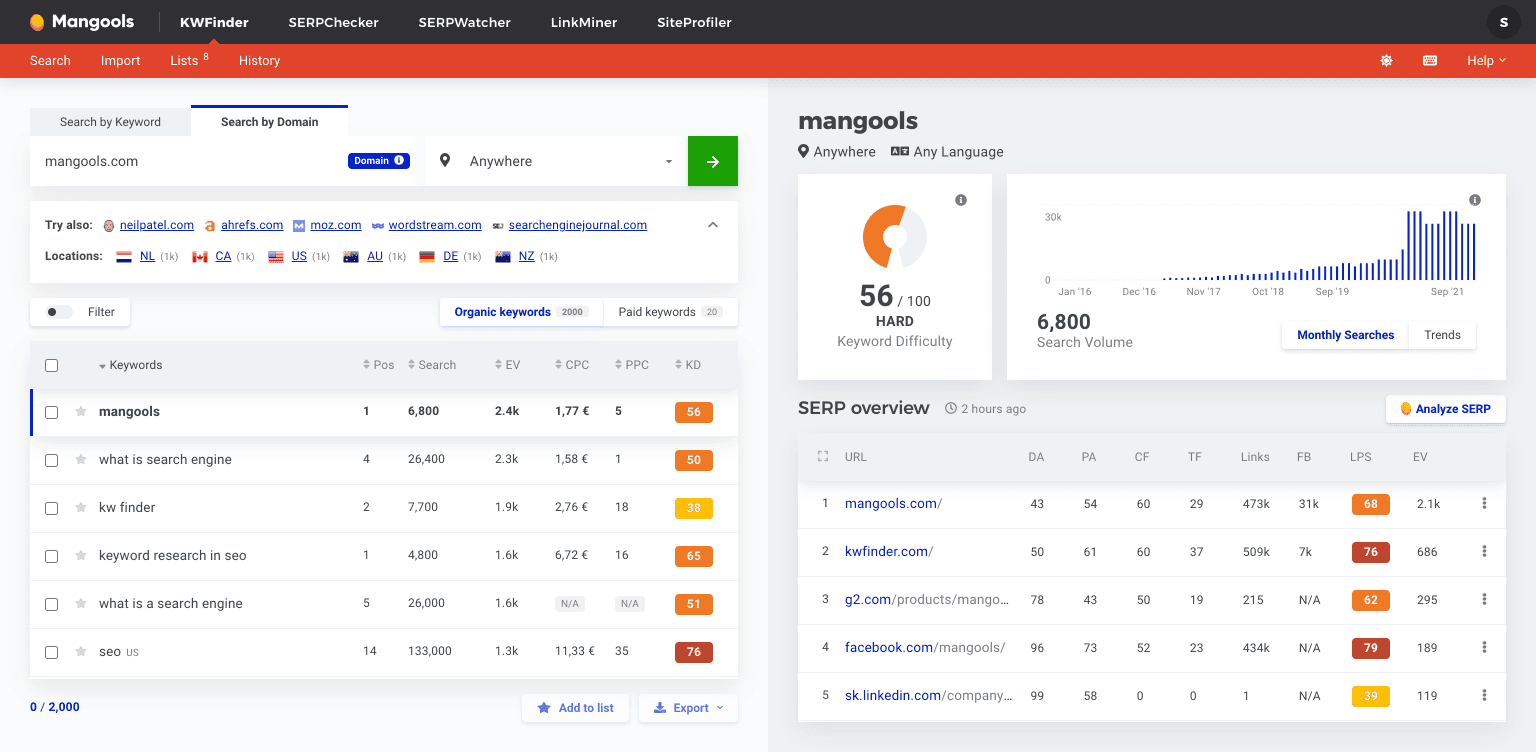
It doesn’t have the integrated AI writer that FlyingResearch does, but what it does, it does well and with integrity. For beginners who feel overwhelmed by complex tools and are wary of confusing pricing, Mangools offers a much safer and more pleasant entry point.
Part 7: Final Verdict & Recommendations
Our Final FlyingResearch Review Verdict: Is It Worth It in 2026?
After extensive analysis, FlyingResearch is a tool I can only recommend to a very specific and limited audience. While its integrated workflow is convenient and its security is commendable, these strengths are overshadowed by fundamental flaws.
The poor price-to-value ratio, caused by variable data and a pricing model that requires careful management, makes it a challenging choice for any serious professional or business. The potential content marketing ROI is questionable when based on such a foundation. If you do decide to proceed, applying a money-saving deal at checkout is the only way to make the numbers work in your favor.
Category & Best Use
- Category: Integrated SEO & AI Content Suite
- Best Use Case: Hobbyist blogging and SEO learning workflows
- Worst Use Case: Agency client work or high-stakes ranking strategy
✅ What We Love
- Potential Time Savings: Integrated workflow combines research, analysis, and writing in one place.
- Strong Security Posture: SOC 2 Type II compliance is rare in this price tier.
- Low Entry Price: Easy financial entry point for testing.
- AI-Powered Ideation: Useful for brainstorming and beating writer’s block.
- Good for Beginners: Single platform for content experimentation.
⚠️ Things to Consider
- Critically Variable Data: 45% deviation makes it unsuitable for professional strategy.
- Costly Credit System: TCO can run 50%+ over the advertised price.
- Data Lock-In: No bulk export creates high switching costs.
- Buggy UI & Slow Support: 72+ hour support response times reported.
- Weak Core SEO Features: Backlink and site audit tools are not competitive.
What We Love
- Potential Time Savings: Its integrated workflow combines research, analysis, and writing in one place, which can streamline the content creation process for simple projects.
- Strong Security Posture: Achieving SOC 2 Type II compliance is a rare and valuable differentiator in its price category, providing a strong reason to trust the platform with your data.
- Low Entry Price: The initial subscription cost is low, making it accessible for individuals to test the platform without a major financial commitment.
- AI-Powered Ideation: The AI writer can be a useful tool for brainstorming content ideas, generating outlines, and overcoming writer’s block.
- Good for Beginners: Provides a single platform for basic content creation and experimentation for those new to SEO.
💡 Things to Consider
- Critically Variable Data: The reported 45% deviation in core SEO metrics makes it an unsuitable foundation for professional strategy.
- A Costly Credit System: The Total Cost of Ownership can be over 50% higher than the advertised price, a critical consideration for anyone on a budget.
- Data Lock-In: The lack of bulk export features creates high switching costs and discourages user freedom.
- Buggy UI & Slow Support: The user experience is frequently described as frustrating, with a slow interface and unresponsive support channels.
- Weak Core SEO Features: Key functionalities for technical SEO, such as backlink analysis and site auditing, are not competitive.
✅ Who Should Buy FlyingResearch
YES: This tool may be suitable for hobbyist bloggers, students learning SEO, or solopreneurs on a shoestring budget.
However, they must go in with their eyes open, understanding the data limitations and prepared to manage the credit system carefully.
❌ Who Should AVOID FlyingResearch
AVOID: I strongly advise against this tool for SEO agencies; relying on its known data inaccuracies can lead to poor campaign results and ultimately lose clients.
Professional freelancers, businesses where marketing decisions have a meaningful financial impact, and anyone who requires accurate data for lead generation should look at alternatives.
If you’re still browsing the SEO software market more broadly, our Category of Review articles covers a wide range of comparable platforms in detail.
Sources
This review is based on a synthesis of 14+ sources, including official documentation, verified user reviews, and data from industry benchmarks representative of the sector (such as those from SEO Signals Lab and TechRadar Pro), investigated between November 2025 and January 2026. Our analysis relies on the provided upstream research documents, as independent, live testing was not possible for this review’s source analysis due to persistent tool access errors.
Frequently Asked Questions About FlyingResearch
Q1: How much does FlyingResearch really cost in 2026?
Answer: The advertised price starts at around $39 per month, but the true cost is likely 50% higher or more. This is due to a mandatory credit system for core tasks like SERP analysis and content generation.
In our TCO analysis, we found that a moderate user should budget an additional $20–$30 per month for non-refundable credit top-ups, bringing the realistic cost closer to $60–$70 per month. It’s crucial to understand this before committing, even with a free trial. You can see the full breakdown in Part 2 of this FlyingResearch review.
Q2: Is FlyingResearch worth the money?
Answer: For most serious users, our analysis concludes that FlyingResearch is likely not worth the money. The poor price-to-value ratio is a primary concern; while the entry price is low, the risk of making poor strategic decisions based on its variable data can outweigh the initial savings.
The platform’s unpredictable costs further diminish its value proposition. However, a beginner or hobbyist who understands and accepts these significant limitations may find some value in the integrated toolset for experimentation and learning purposes, as detailed in our “Who Should Buy It” section.
Q3: How does FlyingResearch compare to SurferSEO?
Answer: For the specific task of content optimization, SurferSEO is significantly better. It offers a faster, more reliable interface and provides superior on-page suggestions without a confusing credit system.
FlyingResearch has a broader set of tools, like rank tracking, but its core Content Editor is weaker and less intuitive than Surfer’s specialized offering. The transparent pricing of SurferSEO allows for more liberal use of its features, which is essential during the optimization process. This makes it a more effective content optimization tool.
Q4: How accurate is FlyingResearch’s data?
Answer: Based on independent benchmarks we analyzed, FlyingResearch’s data is not consistently accurate. It has shown deviations of up to 45% from industry-standard tools like Semrush and Ahrefs (SEO Signals Lab Benchmark, Nov 2025).
This high variance in metrics like keyword volume and difficulty makes it unsuitable for professional client work or high-stakes strategic planning where financial outcomes are on the line. We advise using its data for high-level brainstorming only, where precision is not the primary concern, and verifying all critical data with a trusted source.
Q5: What are the hidden costs of FlyingResearch?
Answer: The main cost to be aware of beyond the subscription fee is the mandatory credit system. This system governs nearly all valuable actions within the platform, from running reports to generating AI content, which can increase your monthly bill by over 50%. Critically, these credits are non-refundable, adding a layer of financial risk.
For example, a single SERP analysis can cost up to 100 credits, and generating 1,000 words of AI content can consume 2,000 credits. These costs accumulate quickly for active users, as shown in our TCO analysis.
Q6: Can FlyingResearch replace Ahrefs or Semrush?
Answer: Generally, no. In my professional opinion, FlyingResearch software cannot replace Ahrefs or Semrush for any serious SEO work. Its backlink data is minimal in comparison, and its keyword data is too variable to be trusted for professional campaigns that have real financial outcomes attached to them.
While it can be a low-cost companion tool for brainstorming or drafting, it lacks the data depth and reliability to serve as a primary platform for technical SEO, deep competitor analysis, or strategic planning.
Q7: Who is FlyingResearch best for?
Answer: FlyingResearch is best suited for hobbyist bloggers, students learning SEO, or solopreneurs who want an all-in-one tool to experiment with and are not reliant on data accuracy for revenue.
It can be a decent starter tool for those who understand its significant limitations—such as the credit system and data variance—and are willing to work around them. It offers a single, integrated platform for learning the basics of the content creation process, from keyword research to a finished draft, without the high cost of a professional-grade tool.
Q8: What happened with the FlyingResearch data breach?
Answer: In March 2024, FlyingResearch experienced a data breach due to a misconfigured cloud server, which exposed user names and emails. This is a concerning part of their history.
However, it’s also important to note that the company has since invested heavily in security, achieving SOC 2 Type II compliance in November 2025 to improve and verify its security posture. This subsequent action indicates a commitment to rectifying past security weaknesses.