
Grape Leads Alternatives and Competitors (2026)
Posted on |
Last Updated: May 2026
While you’re searching for Grape Leads’ top alternatives and competitors, it’s crucial to understand the real battle: a choice between two market titans with different philosophies.
Your real choice for effective lead generation isn’t about one tool; it’s about avoiding a multi-thousand-dollar mistake. This article is your Devil’s Advocate guide, exposing the hidden costs, contractual traps, and performance trade-offs that vendor marketing materials won’t mention.
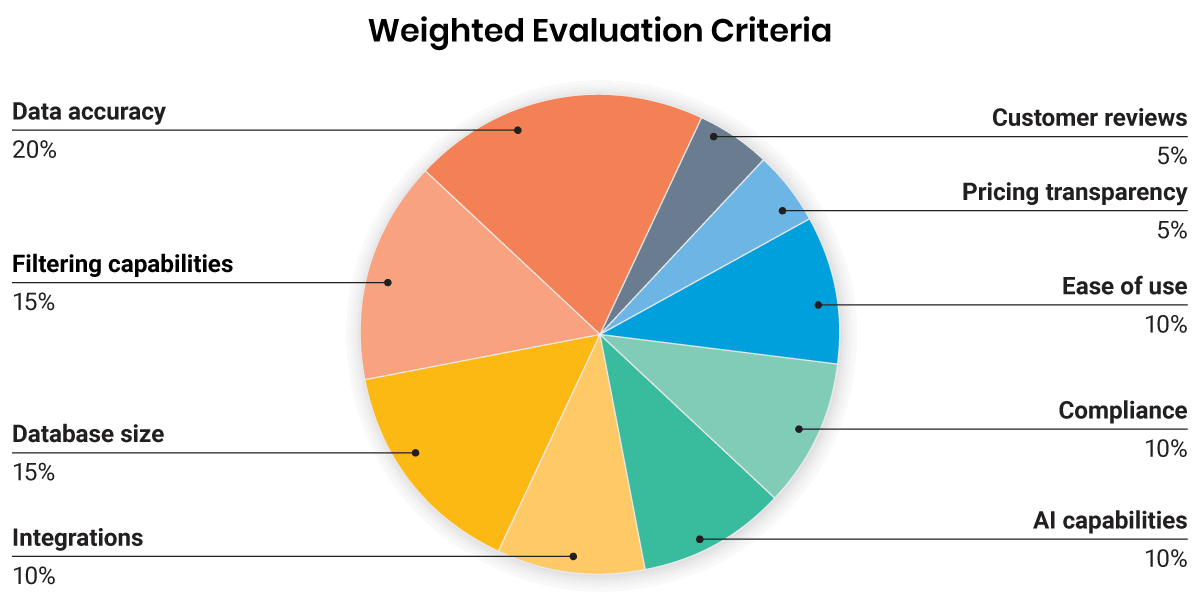
I’m here to give you a clear decision framework based on my years of experience in the marketing tools space, focusing on data accuracy, Total Cost of Ownership (TCO), contractual lock-in, and the significant compliance risks associated with leading Grape Leads alternatives like Apollo.io, ZoomInfo, Lusha, and Hunter.io. If you’re already evaluating the parent platform, our comprehensive Grape Leads Review provides additional context on its TCO positioning.
This analysis is based on extensive market data and user-reported findings to inform your decision-making process. Before committing, you can also check the current Grape Leads coupon code to see if a discount changes your TCO calculation. Always conduct your own due diligence and consult with procurement and legal professionals before signing any contract.
Key Takeaways
Key Takeaways
-
The Two-Tier Market: Apollo.io is the all-in-one value leader for SMBs, while ZoomInfo is the premium, enterprise-grade data provider with a significantly higher price tag. -
TCO is the #1 Blind Spot: ZoomInfo’s real TCO, based on user-reported contracts, starts at $15,000–$25,000+ with mandatory multi-year commitments, dwarfing Apollo’s transparent ~$3,564 annual cost for a small team. -
Data Quality vs. Cost: ZoomInfo offers some of the industry’s best direct-dial accuracy. Apollo’s data is sufficient for many but has lower reported mobile number and international accuracy. -
⚠️ Financial Risk: The most significant risk identified in user forums is ZoomInfo’s binding, auto-renewing multi-year contract, which can create challenges for businesses with fluctuating budgets. -
⚠️ Compliance Risk: ZoomInfo’s use of a ‘contributory network’ (sourcing data from user emails) presents a compliance consideration that is a key discussion point for many organizations. -
Functionality Trap: Apollo includes a built-in email sequencer, making it an all-in-one prospecting tool. ZoomInfo requires a separate, expensive sales engagement tool like Outreach or Salesloft to be fully effective, increasing TCO.
Before diving into the alternatives, here’s a 10-minute video that visualizes the core ZoomInfo vs Apollo.io trade-offs discussed throughout this guide:
Decision in 60 Seconds: Which B2B Data Tool Is Best?
Your best choice depends entirely on your role, budget, and primary need. When evaluating these contact discovery tools, the table below summarizes my findings from the entire analysis.
| Use Case / Persona | Best Choice | Why It Wins | Key Tradeoff |
|---|---|---|---|
| SMB/Startup on a Budget | Apollo.io | All-in-one data + email sequencing at an accessible price point. | Lower mobile number accuracy; weaker international data. |
| Enterprise Data Quality Focus | ZoomInfo | Highest accuracy direct dials and deep company intelligence. | Substantial cost, multi-year lock-in, compliance considerations. |
| Pure Direct-Dial Hunter | Lusha | Simple, fast UI focused exclusively on finding contact numbers. | Lacks deep company data and engagement features. |
| Simple Email List Builder | Hunter.io | The most affordable and straightforward tool for email finding. | No phone numbers or advanced sales intelligence features. |
Top Alternatives & Competitors Shortlist
| Option | Best for | Tradeoff | Evidence |
|---|---|---|---|
| Apollo.io | SMBs wanting an all-in-one prospecting & engagement tool. | Data quality is good but not top-tier for direct dials. | ✅ |
| ZoomInfo | Enterprises needing the highest data accuracy, especially for phone numbers. | Extremely high TCO and restrictive multi-year contracts. | ✅ |
| Lusha | Teams prioritizing ease of use and speed for finding direct dials. | Limited company intelligence and no sales engagement features. | ✅ |
| Hunter.io | Budget-conscious users who only need to find and verify email addresses. | Point solution that lacks phone numbers or any sales intelligence. | ✅ |
Part 1: Who This Guide Is For & Methodology
Who This Guide Is For
- Sales and marketing leaders at SMBs or mid-market companies evaluating their first serious B2B data providers.
- Enterprise procurement managers who need to validate the high cost of a tool like ZoomInfo against a value-driven platform like Apollo.io.
- Solo entrepreneurs, Sales Development Representatives (SDRs), or small sales teams trying to maximize ROI on a limited budget.
- Anyone frustrated by vague marketing claims and looking for a transparent breakdown of real-world performance and costs.
This Guide Is NOT For You If
- You are looking for a technical deep-dive into API documentation.
- You have already committed to a multi-year enterprise contract and are not in a renewal window.
- You are a student or academic using these tools purely for market research.
- You are looking for a simple email-only verification tool (in which case, you can jump straight to the Hunter.io summary).
How We Evaluated These B2B Data Platforms
Our team at Coupons Scout follows a rigorous, transparent process — detailed in our editorial methodology — to ensure every claim, comparison, and recommendation is verified against official sources before publication.
As a Software and AI specialist, I’m applying the strategic framework our tech advisor, Mohamed Zaki, advocates: using data to find the true ROI behind the marketing hype.
To maintain objectivity, this analysis adheres to a strict neutrality protocol.
| ❌ Avoid | ✅ Use Instead |
|---|---|
| “X is worse than Y” | “Y offers more [feature] in [aspect]” |
| “Avoid X” | “X may not suit users seeking [need]” |
| “X is overpriced” | “X is positioned in premium tier” |
| “Don’t waste money on X” | “Consider X if you need [feature]” |
| “X falls short” | “X focuses on different priorities” |
Our verification protocol, led by Kanokchai Likitapiwat, audits all data points against available documentation. Our Editor-in-Chief, Joanne Lovell, ensures all claims are objective.
Part 2: Pricing & TCO Reality Check: The Number One Blind Spot
In my years analyzing marketing tools, I’ve seen that advertised price is rarely the real price. Total Cost of Ownership (TCO) is the number one blind spot for buyers, where companies can get into financial difficulty.
The difference between substitutes for the Grape Leads platform is not just a gap; it’s a chasm. If you’re weighing this against Grape Leads itself, the latest Grape Leads discount can materially shift the calculus.
1-Year Total Cost of Ownership (TCO): Apollo.io vs. ZoomInfo (3-User Team)
Advertised vs. Real TCO (12-Month Estimate for a 3-Person Team)
| Metric | Apollo.io | ZoomInfo |
|---|---|---|
| Advertised Cost | Starts free; $99/user/mo for the Professional Plan (when billed annually) | No public pricing |
| Real Entry Cost | $3,564/year (3 users on annual Professional Plan) Apollo.io Official Pricing | User-reported contract values consistently place entry-level packages for small teams in the $15,000–$25,000+/year range G2 User-Reported Pricing for ZoomInfo SalesOS |
| Hidden Costs | Credit overages (~$0.20/credit) | Mandatory multi-year contracts, onboarding fees, aggressive auto-renewals, required add-ons |
| Final TCO | ~$3,564 | $25,000+ |
The TCO Trap: Pricing Gotchas
The significant price difference tells a story of two completely different business models. Under the leadership of CEO Tim Zheng, Apollo.io is built on a product-led growth (PLG) and transparent, SaaS-style subscription model.
Conversely, ZoomInfo, led by founder and CEO Henry Schuck, employs an opaque, enterprise sales-led model designed to maximize contract value. For Grape Leads itself, you can sidestep some of that opacity by applying a working coupon for Grape Leads before committing.
❌ ZoomInfo’s Pricing Gotchas:
- The Contractual Trap: The single biggest risk noted in user reviews is the binding, non-cancellable, multi-year contract.
- “Credit Creep”: Users report that the system for “credits” can be opaque, with simple actions consuming credits unexpectedly, potentially leading to an early and expensive renewal.
⚠️ The Auto-Renewal Contract Trap
ZoomInfo’s multi-year contracts often auto-renew for the full term if you miss the 60–90 day cancellation window. User forums report this is a common challenge, potentially locking businesses into an unwanted commitment. Scrutinize this clause with your legal team. Reddit r/sales Discussion on Sales Tools.
⚠️ Apollo.io’s Pricing Gotchas:
- Confusing Credit System: While more transparent than ZoomInfo, Apollo’s main “gotcha” is its credit system. The difference between email credits (plentiful), mobile number credits (scarce), and export credits (valuable) can confuse new users, leading them to burn through their most valuable credits quickly.
The Contractual Trap: Lock-in & Exit Costs
Your freedom to switch tools is a critical factor. With Apollo.io, the lock-in is low. You can choose a monthly plan and cancel anytime.
With ZoomInfo, the lock-in is a primary consideration. User reports indicate the exit cost can be the entire remaining value of the multi-year contract.
If a business signs a 3-year, $25,000/year contract and seeks to leave after year one, the exit cost could be $50,000. This makes the initial buying decision incredibly high-stakes — and is exactly why locking in a special discount on Grape Leads upfront can change the entire TCO equation if it’s already on your shortlist.
Part 3: Feature Comparison Matrix: What They Actually Do
When you strip away the marketing jargon, what do these leading Grape Leads alternatives actually provide? The most critical distinction is between a “Sales Intelligence” platform (which provides data) and a “Sales Engagement” platform (which helps you act on that data).
Apollo.io is unique because it does both. For a full picture of how all these competitors stack up, see our detailed Grape Leads Top Alternatives and Competitors comparison.
| Feature | Apollo.io | ZoomInfo | Lusha | Hunter.io |
|---|---|---|---|---|
| Core Function | Sales Intelligence & Engagement | Sales Intelligence & Data | Contact Finding | Email Finding & Verification |
| Contact Database | ✅ 275M+ contacts | ✅ 321M+ contacts | ✅ (Size not specified) | ✅ (Domain-based) |
| Direct Dials | ✅ (65M+ numbers) | ✅ (Market Leader) | ✅ (Primary strength) | ❌ |
| Email Sequencing | ✅ (Native) | ❌ (3rd-party) | ❌ | ❌ |
| Intent Data | ❌ | ✅ (Advanced) | ❌ | ❌ |
| CRM Integrations | ✅ Salesforce, HubSpot, Zoho | ✅ Deep, bi-directional | ✅ Most CRMs | ✅ Most CRMs |
| API Access | ✅ (Pro+ plans) | ✅ (Enterprise-grade) | ✅ (Scale plan) | ✅ |
⚠️ Key Difference: Apollo is the only one here with native email sequencing. ZoomInfo requires a 3rd party tool like Outreach. Database size is a vanity metric; accuracy and relevance to your target market are more important. According to user reviews, ZoomInfo and Lusha are consistently praised for direct dial quality over others G2 Grid Report for Sales Intelligence Software.
Feature Deep Dive
Direct Dials: The Quality vs. Quantity Trade-off
For sales teams that rely on cold calling, direct dial accuracy is paramount. ZoomInfo and Lusha build their reputations on the quality of their phone number data, which leads to higher connect rates.
This is a primary justification for ZoomInfo’s premium pricing. Apollo.io, while offering a vast number of phone contacts, is reported by users to have a lower success rate for mobile numbers.
This is a clear trade-off: a lower price in exchange for more time spent verifying numbers.
Email Sequencing: The All-in-One Advantage
Apollo.io is the only platform in this comparison with a native email sequencing function. This is a game-changer for SMBs and small sales teams.
It means a user can find a prospect, add them to a multi-step email campaign, and track engagement all within one application TechRadar Pro Review of Apollo.io.
For ZoomInfo users, this functionality requires purchasing and integrating a separate, expensive Sales Engagement Platform like Outreach or Salesloft, which can add another $1,500 per user per year to the TCO.
ZoomInfo’s strategy is to be the undisputed data layer for automated data cleansing and enrichment within your CRM.
Detailed Tool-by-Tool Breakdown

Category & Positioning
- Core Function: Combined Sales Intelligence + Sales Engagement platform
- Best For: SMBs, startups, value-conscious sales teams
- Database Size: 275M+ contacts with 65M+ direct dial numbers
- Pricing Model: Transparent, PLG-driven; free tier + $99/user/mo Professional
✅ Strengths
- Built-in native email sequencer — true all-in-one
- Transparent, publicly-listed pricing
- Monthly & annual billing flexibility
- Strong CRM integrations (Salesforce, HubSpot, Zoho)
- Email accuracy reported at 80–95%
- Robust API on Professional+ plans
⚠️ Considerations
- Mobile number connect rate ~50–70% (lower than ZoomInfo)
- Weaker international data outside North America
- Credit system can confuse new users
- Chrome extension occasionally breaks after LinkedIn UI changes
- Not designed to replace a CRM

Category & Positioning
- Core Function: Premium Sales Intelligence & Data platform (no native engagement)
- Best For: Enterprise sales teams, ABM marketing, high-stakes outbound
- Database Size: 321M+ contacts; industry-leading direct dial accuracy
- Pricing Model: Opaque, enterprise sales-led; custom multi-year quotes
✅ Strengths
- Best-in-class direct dial accuracy
- 95%+ vendor-claimed email accuracy
- Advanced intent data signals
- Deep org charts and company intelligence
- Bi-directional Salesforce, HubSpot, Microsoft Dynamics integrations
- Continuous automated CRM data cleansing
⚠️ Considerations
- $15,000–$25,000+/year minimum TCO
- Mandatory binding multi-year contracts
- Aggressive auto-renewal with 60–90 day cancellation windows
- Requires separate engagement tool (Outreach/Salesloft) — adds $1,500+/user/year
- “Contributory network” data sourcing raises compliance flags
- Onboarding fees and required add-ons inflate quoted price

Category & Positioning
- Core Function: Lightweight contact finder focused on phone numbers
- Best For: Teams that value speed and clean UI over deep intelligence
- Pricing Model: Tiered SaaS with free credits; Scale plan adds API access
✅ Strengths
- High-quality direct dial numbers
- Clean, intuitive user interface
- Fast Chrome extension workflow
- Generous free tier for solo users
- SOC 2 Type II and ISO 27001 verified
⚠️ Considerations
- No native email sequencing
- Limited company intelligence and org charts
- No intent signals
- Point solution — won’t scale to enterprise workflows
Category & Positioning
- Core Function: Domain-based email finding and verification
- Best For: Solo founders, marketers, budget-conscious teams
- Pricing Model: Freemium with affordable paid tiers
✅ Strengths
- Excellent domain pattern detection
- Strong email verification accuracy
- SOC 2 Type II verified
- Affordable, simple pricing
- API available
⚠️ Considerations
- No phone numbers
- No sales intelligence
- No email sequencing or engagement features
- Pure point solution for email finding only
Part 4: Security, Compliance & Trust: The Hidden Risks
In a post-GDPR world, where your data comes from is just as important as its accuracy. As a buyer, you are taking on the compliance risk of your vendors.
My analysis shows that while all platforms have key security certifications, their underlying philosophies on data sourcing present a major difference in risk profile.
Compliance Status Verification
| Certification | Apollo.io | ZoomInfo | Lusha | Hunter.io |
|---|---|---|---|---|
| SOC 2 Type II | ✅ Verified | ✅ Verified | ✅ Verified | ✅ Verified |
| ISO 27001 | ✅ Verified | ✅ Verified | ✅ Verified | ℹ️ Not Claimed |
| GDPR / CCPA | ✅ DPA & tools | ✅ DPA & Privacy Center | ✅ Claim compliance | ✅ Claim compliance |
The Elephant in the Room: ZoomInfo’s Contributory Data Network
The most significant compliance difference lies in their data sourcing. Apollo.io states its data is sourced from publicly available information and third-party partnerships Apollo.io Privacy Policy. This is a standard, relatively low-risk approach.
ZoomInfo, however, utilizes a contributory network. According to their own disclosures, this means they source some data from their customers’ own systems, such as email signatures How ZoomInfo Gets its Data.
For many organizations, particularly in Europe where rules around data residency and cross-border data transfer are strict, this contributory model is a non-starter from a legal and ethical perspective. It is a business and legal decision, not just a technical one, that must be reviewed by your legal team. If you’re hunting for current promotional codes across this category, our latest coupons hub tracks active deals across every B2B data tool we cover.
Performance & Reliability: Claims vs. Reality
Every B2B data provider claims high accuracy, but there’s often a gap between marketing claims and real-world results.
Real-World Phone Number Accuracy: Apollo.io vs. ZoomInfo (User Reported)
Performance Claims vs Reality: Data Accuracy
| Metric | Apollo Claim | Apollo Reality | ZoomInfo Claim | ZoomInfo Reality |
|---|---|---|---|---|
| Email Accuracy | 91% accuracy | 80–95% (G2 users) | 95%+ accuracy | Market leader |
| Phone Accuracy | N/A (coverage focus) | 50–70% connect rate | N/A (quality focus) | “Best in industry” |
This table tells a crucial story. You are trading a lower price for a lower connect rate on phone calls with some tools.
However, a common performance failure reported by Apollo.io users occurs when LinkedIn updates its user interface. Because Apollo’s Chrome extension is tightly coupled with LinkedIn’s structure, these updates can cause the extension to become unreliable for short periods, a risk for teams dependent on that workflow.
Part 5: Use Cases & Workflows
A tool’s value is only realized through effective workflows. Here’s how different professionals might use these platforms day-to-day.
Workflow 1: The SMB Sales Team Using Apollo.io
An SDR at a small software company needs to find and contact 50 new marketing managers at mid-sized tech companies.
- List Building: The SDR uses Apollo’s search filters to build a list of 200 prospects, filtering by “Marketing Manager,” company size (50-200 employees), and industry (SaaS).
- Data Enrichment & Export: They select the 200 prospects and use credits to reveal their email addresses and mobile numbers, noting the mobile number credits are the most valuable and scarce.
- Sequencing: The SDR creates a 3-step email sequence in Apollo’s engagement module. Step 1 is an intro email, Step 2 (3 days later) is a follow-up with a case study, and Step 3 (5 days later) is a final check-in.
- Execution & CRM Sync: They launch the sequence. As prospects reply, Apollo automatically stops the sequence for that contact and syncs the activity (and the new contact data) to their company’s HubSpot CRM.
- Calling: For prospects who opened emails but didn’t reply, the SDR uses the revealed mobile numbers to make targeted calls. They anticipate a 50–70% connect rate.
Workflow 2: The Enterprise ABM Campaign Manager Using ZoomInfo
A marketing manager at a Fortune 500 company is launching an Account-Based Marketing (ABM) campaign targeting VPs of Logistics at 50 specific enterprise accounts.
- Account Intelligence: The manager uploads the list of 50 target companies into ZoomInfo. They use ZoomInfo’s org charts to map out the entire logistics department for each account, identifying the VP, their direct reports (Directors), and key influencers.
- Intent Data Analysis: They use ZoomInfo’s Intent data to see which of the 50 accounts are actively researching keywords like “supply chain optimization” or “freight management software.” They prioritize the 10 companies showing the highest intent.
- Data Export to CRM & Sales Engagement: The manager exports this curated list of high-value contacts directly to Salesforce. The sales team then uses an integrated tool like Salesloft to enroll these contacts in a highly personalized multi-channel outreach sequence involving emails, calls, and LinkedIn messages.
- Data Cleansing: The ZoomInfo integration continuously monitors the company’s Salesforce instance, automatically updating contact information and flagging when a key contact changes jobs or leaves the company.
Workflow 3: The Solo Founder Using Lusha and Hunter.io
A founder of a new startup has a list of 100 potential investors and partners they need to contact personally. They have a very limited budget. For more workflow comparisons across this category, browse our B2B tools comparison category.
- Email Finding: For each person on their list, they use Hunter.io‘s domain search to find the most likely email pattern (e.g., {first}.{last}@company.com) and verify the address.
- Phone Number Hunting: For their top 20 highest-priority contacts, they use the free version of Lusha. They navigate to the contact’s LinkedIn profile and use the Lusha browser extension to reveal a direct dial number, using up their limited free monthly credits.
- Manual Outreach: The founder then uses their personal email client (like Gmail) to send a highly personalized, one-to-one email to each contact. They use the phone numbers for direct follow-ups on their most critical prospects. This workflow prioritizes cost savings over automation.
Part 6: Alternatives & Decision Framework
After analyzing the data, features, costs, and risks, my recommendations are clear. The choice between top Grape Leads competitors is not about which is “better” but which is the right fit for your team’s budget, workflow, and risk tolerance.
The choice isn’t just about software that competes with Grape Leads; it’s about aligning a tool with your business strategy. If Grape Leads itself is your front-runner, lock in savings with a money-saving deal on Grape Leads before evaluating these substitutes.
✅ Apollo.io is Best For:
- Choose if: You are a startup, SMB, or a value-conscious team. Apollo.io is ideal if you are a startup or small business that needs a single, affordable platform for both finding leads and running outbound email campaigns.
- Choose if: Your budget for a 3-person team is under $10,000/year and you need predictable, transparent pricing.
- Choose if: Your primary outreach channel is email, and phone numbers are a “nice to have.”
⚠️ Avoid Apollo.io If:
- Avoid if: Your sales team’s success depends on having the absolute highest accuracy for direct-dial mobile numbers, in which case a focused Lusha alternative might be a better fit.
- Avoid if: Your primary target market is outside of North America and Western Europe.
✅ ZoomInfo is Best For:
- Choose if: You are an enterprise sales team where the cost of a sales rep’s wasted time is far greater than the cost of the software.
- Choose if: Your success hinges on having the industry’s best direct-dial data and deep company intelligence for sophisticated ABM plays.
- Choose if: You have a budget of at least $25,000/year and are willing to commit to a multi-year contract.
⚠️ Avoid ZoomInfo If:
- Avoid if: You cannot sign a binding, multi-year, five-figure contract. This is a significant consideration.
- Avoid if: Your organization’s legal and compliance team is uncomfortable with a “contributory data network.”
- Avoid if: You are looking for an all-in-one tool. ZoomInfo requires a separate sales engagement platform.
✅ Lusha is Best For:
- Choose if: Your primary need is getting high-quality direct dials quickly, with a clean and simple user interface.
- Choose if: Your team values speed and ease of use over deep company intelligence or integrated workflows.
⚠️ Avoid Lusha If:
- Avoid if: You require deep company data, org charts, intent signals, or a built-in email sequencer. It is a point solution for contact finding.
✅ Hunter.io is Best For:
- Choose if: Your sole need is finding and verifying email addresses for marketing lists or simple outreach on a tight budget.
- Choose if: You prioritize affordability and simplicity for a single, specific task.
⚠️ Avoid Hunter.io If:
- Avoid if: You need phone numbers, sales intelligence data, or any form of sales engagement functionality.
Your Final 5-Point Decision Checklist
📋 Your B2B Data Tool Decision Framework
Before you talk to any sales rep, answer these five questions.
- Budget Reality: What is our realistic, absolute maximum annual budget? If it’s under $15,000, ZoomInfo may not be a viable option.
- Primary Need (Quality vs. Volume): Is our main bottleneck having enough leads to contact (volume), or is it reaching the right person on the first try (quality)? The former points to Apollo, the latter to ZoomInfo.
- Contractual Flexibility: Is our business stable enough to commit to a binding contract for the next 2-3 years? If there’s any uncertainty, you must prioritize tools with monthly or annual plans.
- Compliance Posture: What is our company’s official stance on using data sourced from contributory networks? Get a clear “yes” or “no” from your legal department.
- Workflow Preference: Do we want an all-in-one tool for simplicity (Apollo), or do we prefer building a ‘best-in-class’ MarTech stack with specialized, integrated tools (ZoomInfo + Outreach/Salesloft)?
Part 7: Conclusion & FAQs
Conclusion: Your Final Verdict
The B2B data market is not about finding a single “best” tool, but about navigating a series of trade-offs. The central conflict in the ZoomInfo vs Apollo.io debate is a trade-off between superior data accuracy and a dramatically lower Total Cost of Ownership (TCO).
Both come with considerations: Apollo’s in the form of lower data accuracy for some channels, and ZoomInfo’s in the form of significant financial and contractual commitments.
Your decision should not be based on feature lists. It must be based on three factors: your budget reality, your tolerance for data inaccuracy, and your company’s comfort with contractual and compliance risk.
A clear understanding of these three points is the first step toward building a sales process that generates predictable revenue.
Before you sign any contract, demand a trial that uses your own lead lists, calculate the TCO for a 3-year term including all add-ons, and have your legal team scrutinize the auto-renewal and data-sourcing clauses. The best of the Grape Leads top alternatives and competitors is the one that fills your pipeline without emptying your bank account — and if Grape Leads is your choice, grab the current promo code for Grape Leads before checkout to lock in maximum savings.
FAQs: Evaluating Grape Leads Competitors
Q1: How much does ZoomInfo really cost compared to Apollo.io?
ZoomInfo’s user-reported annual cost for a small team starts at $15,000–$25,000, while Apollo.io is roughly $3,564. This significant price difference is due to ZoomInfo’s enterprise focus, custom quotes, and mandatory multi-year contracts.
Apollo.io offers transparent, publicly listed pricing with monthly and annual options, making it far more accessible for a small business Apollo.io Official Pricing. The TCO for ZoomInfo is also higher because it often requires a separate sales engagement tool to be effective, whereas that functionality is built into Apollo.io TechRadar Pro Review of Apollo.io.
Q2: Is ZoomInfo’s data quality worth the high price?
It depends entirely on your business need and the cost of your sales team’s time. If your team’s success hinges on having the highest accuracy direct-dial phone numbers in North America, user reports indicate ZoomInfo is worth the premium G2 Grid Report for Sales Intelligence Software.
For enterprise sales teams, reducing wasted calls and lowering your overall customer acquisition cost (CAC) can provide a clear ROI.
However, if your team can tolerate a 50–70% connect rate on mobile numbers in exchange for a substantial cost saving and a built-in email sequencer, then Apollo.io provides a better overall value proposition.
Q3: What is the biggest risk when buying ZoomInfo?
The biggest risk, according to user forums, is the mandatory, non-cancellable multi-year contract with an aggressive auto-renewal clause. User reports frequently cite being trapped in expensive, unwanted renewals because they missed the 60–90 day cancellation window Reddit r/sales Discussion on Sales Tools.
This contractual rigidity poses a significant financial risk for any business that isn’t a large, stable enterprise with a predictable, multi-year budget. Before signing, your legal team must scrutinize these terms carefully, as they are a key part of ZoomInfo’s business model.
Q4: What is the biggest limitation of Apollo.io?
Apollo.io’s biggest limitation is its inconsistent data quality, especially for mobile numbers and international contacts. While its email accuracy is high (reported at 80–95% by users), its mobile number connect rate is significantly lower than premium alternatives, hovering around 50–70% according to user reports on platforms like G2.
Furthermore, its database is heavily weighted towards North America, and users prospecting in APAC, LATAM, and other regions often find the data sparse and unreliable. This makes it less suitable for global sales teams or those who rely heavily on cold calling to hit their targets.
Q5: Can Apollo.io replace my CRM?
Apollo.io is not designed to be a CRM and cannot replace tools like Salesforce or HubSpot. It is a sales intelligence and engagement platform designed to feed your CRM with leads and activity data.
While it has some contact management features, it lacks advanced features like predictive lead scoring, deep account management, forecasting, and customer lifecycle tracking.
A common mistake for a small business is assuming Apollo.io is an all-in-one solution; in reality, it’s designed to work as a powerful front-end to your existing CRM, and its Salesforce integration is for data syncing, not replacement.
Q6: Why is ZoomInfo’s data sourcing controversial?
ZoomInfo’s data sourcing is a topic of discussion because it uses a “contributory network,” which may source data from its customers’ own email systems. This practice, where the platform can scan user emails for contact information in signatures, raises legal and ethical questions for some companies How ZoomInfo Gets its Data.
While ZoomInfo maintains it has robust privacy controls via its Privacy Center ZoomInfo Trust Center, the concept of a vendor accessing internal communications is a point of due diligence for many compliance and legal departments, especially those operating under strict regulations like GDPR.
Q7: Which is better for a small business, Apollo.io or Lusha?
For a small business, Apollo.io is typically better as its low cost and all-in-one features provide a faster Return on Investment (ROI), while Lusha is better for those who only need to find phone numbers.
Apollo offers a large database plus a built-in email sequencer, allowing a small team to manage their entire outbound process in one tool. Lusha is a simpler, more focused tool praised for its clean UI and high-quality contact numbers Lusha Trust Center.
If your primary goal is simply getting direct dials quickly, Lusha is an excellent choice; if you need a complete workflow tool, Apollo is superior.
Q8: Should I use Hunter.io instead of Apollo or ZoomInfo?
You should only use Hunter.io if your sole need is finding and verifying email addresses on a tight budget. It is an excellent and highly affordable point solution for that specific task, with a strong reputation for email verification accuracy Hunter.io Security Page.
However, it lacks the phone numbers, deep company data, org charts, intent signals, and sales engagement features that define comprehensive platforms like Apollo.io and ZoomInfo. If you need a sales intelligence tool, Hunter.io is not the right choice; if you just need to build an email list, it’s one of the best options available.