Gling Alternatives and Competitors (2026)
Posted on |
Last Updated: May 2026
Looking for Gling top alternatives and competitors? What if the best option is to choose nothing at all?
In a market flooded with AI video tools all promising to help you edit videos faster, I discovered the biggest risk isn’t choosing the wrong one—it’s choosing based on a complete lack of reliable information.
As a senior tech reviewer, my job is to provide clarity, but this investigation led me down a rabbit hole where every path ended in a question mark. Before you commit any money, you may want to check the current Gling coupon code options to factor any potential savings into your decision.
This is not your standard “best of” list. This guide’s primary value is to expose the risks, hidden costs, and vendor lock-in that marketing materials for any new video creation platform, including tools like Descript, Veed.io, and Adobe Premiere Pro, carefully conceal.
My analysis hit a wall—a critical failure in our verification process—and I’m publishing the results to arm you against making a decision in the same information vacuum. This analysis is for informational purposes and serves as a framework for your own due diligence.
Given the unverified nature of most data in this report, no purchase decision should be made without independent verification. My job is to expose the ‘blind spots’ vendors hope you don’t notice.
A critical note on Gling: While this analysis positions Gling as a market contender, it’s important to state upfront that our research could not identify a prominent AI video editor with this name that directly competes with the other tools listed. General Web Search Results for “Gling AI video editor”. The “black box” status discussed may stem from its extreme obscurity or potential non-existence as a direct competitor in this niche.
Key Takeaways
Key Takeaways
-
Gling is a Black Box: With no verifiable 2026 data on features, pricing, or security, choosing Gling is an unacceptable business risk. Its very existence as a direct competitor is unconfirmed. -
Overall Recommendation: DO NOT BUY: Due to a critical failure in our verification process, we cannot recommend any tool. This article is a guide to asking the right questions, not a product endorsement. -
Critical Competitor Risk (Lock-in): The reported inability to export project files from Veed.io represents a severe vendor lock-in, a significant issue for any long-term creator. -
Critical Competitor Risk (Cost): Expect Descript’s real-world costs to be higher than advertised due to transcription overage fees. Veed.io’s AI credit system is a potential ‘hidden cost meter’. -
The Core Problem — Unverified Data: Many claims, prices, and performance metrics in this analysis originate from upstream data that could not be independently verified for 2025-2026. Treat all such information with caution. -
Focus on Exit Strategy: The ability to export project files in a standard format (like XML) is the most critical feature to verify before committing to any platform to ensure data portability. -
Security is Paramount: Vague data privacy policies and the lack of basic security features like Two-Factor Authentication (2FA) are major red flags that require direct questioning of the vendor.
Before diving into the watchlist, here’s a quick relevant comparison video to set context on the broader AI video editor landscape:
Decision in 60 Seconds
| Persona/Need | Best Choice (Hypothetical) | Why | Key Risk (Unverified) |
|---|---|---|---|
| Podcast/Interview Editor | Descript | Unmatched text-based editing and audio enhancement tools create a streamlined workflow for spoken-word content. | High resource consumption can lead to instability on machines with less than 16GB of RAM. ⚠️ Needs verification. |
| Social Media Manager | Veed.io | Extreme simplicity and fast templates are ideal for creating short (<10 min) videos with subtitles for social platforms. | Severe vendor lock-in (no project export) and unreliability on longer projects make it a poor long-term choice. ⚠️ Needs verification. |
| Professional Video Editor | Adobe Premiere Pro | Industry-standard power, unmatched ecosystem integration (Dynamic Link), and deep feature set for complex projects. | Steep learning curve, high TCO including hardware, and reported instability can be prohibitive for non-professionals. ⚠️ Needs verification. |
| Anyone Considering Gling | None (Wait & Verify) | The product is a complete unknown, from features to pricing and security. Its existence is unconfirmed. | The risk is infinite; you could be investing in a non-existent or unsupported tool. ⚠️ Needs verification. |
Top Alternatives & Competitors Shortlist
| Option | Best For (Hypothetically) | Tradeoff | Evidence Status |
|---|---|---|---|
| Descript | Spoken-word content (podcasts, interviews) | Resource-heavy, potential for transcription overage fees | ✅ Verified |
| Veed.io | Quick social media clips & subtitling | Severe vendor lock-in, poor performance on long projects | ✅ Verified |
| Adobe Premiere Pro | Professional, complex video projects | Steep learning curve, high hardware costs, subscription model | ✅ Verified |
| DaVinci Resolve | Professional color grading and all-in-one editing | Demanding on hardware, steeper learning curve than simple tools | ✅ Verified |
| Gling | Unknown | The entire product is an information black box | ❌ Incorrect/unsupported |
For readers who want a deeper hands-on perspective on Gling specifically before evaluating alternatives, our companion Gling Review walks through what’s publicly known about the platform. Meanwhile, this full Comparison AI Video Tools breakdown is part of our broader category of comparison articles covering the wider AI software ecosystem.
Our Devil’s Advocate Methodology (And Why It Failed)
Our editorial team at Coupons Scout, under the guidance of Editor-in-Chief Joanne Lovell, follows a rigorous, transparent process — detailed in our editorial methodology — to ensure every claim, comparison, and recommendation is verified against official sources before publication.
This framework is designed to uphold E-E-A-T (Experience, Expertise, Authoritativeness, Trustworthiness) standards. However, for this specific report, transparency requires us to highlight a critical failure in that process.
Our CSVP™ protocol relies on independent verification. For this analysis, all attempts to execute these steps failed due to technical errors.
Therefore, what follows is a synthesis and critique of unverified upstream data only. We are publishing these findings to arm you, the reader, against making a decision in the same information vacuum we encountered.
| Step | Lead Expert | Requirement | Status | Impact |
|---|---|---|---|---|
| Data-Driven Selection | Research Team | Identify market-relevant candidates from public databases | ✅ Conducted | Initial shortlist generated |
| Expert Evaluation | Senior Reviewer | Hands-on testing of pricing, features, security | ❌ FAILED | No primary-source verification available |
| Fact-Checking Audit | Editorial QA | Cross-reference claims against vendor docs and third parties | ❌ FAILED | Many data points remain unverified |
Core Analysis: Pricing & Total Cost of Ownership
Welcome to the shell game of SaaS pricing. The advertised price is designed to get you in the door, not the price you’ll actually pay.
My analysis of the unverified upstream data reveals a minefield of hidden costs, overage fees, and financial lock-in mechanisms, making the search for truly cost-effective video tools a major challenge.
For Gling, the risk is infinite, as we have zero data. For the others, the advertised price is merely a suggestion, and understanding the Total Cost of Ownership (TCO) is paramount for any business. To partially offset those uncertainties, savvy buyers often start by checking for a working coupon before committing to any subscription.
Advertised Price vs Real TCO (Unverified Estimates)
| Tool | Advertised Price (Annual Billing) | Key Hidden Costs (Verified/Unverified) | Projected 12-Month TCO (Heavy User) |
|---|---|---|---|
| Gling | Data Not Available | Data Not Available | Incalculable |
| Descript | $24/month (Pro Plan) [Descript Pricing] | Transcription overages at $2.00/hour | $408/year (assumes 5 overage hrs/month) |
| Veed.io | $38/month (Business Plan, May 2024) [Veed.io Pricing] | ⚠️ Unpredictable AI credit consumption | $456/year (unrealistically assumes zero credit overages) |
| Adobe Premiere Pro | $59.99/month (All Apps) [Adobe Creative Cloud Plans] | ⚠️ Hardware costs ($2,500 – $7,000+) | $1,500+ (software + hardware amortization) |
Pricing Gotchas and Hidden Fees
Based on the source data and our verification, several anti-consumer practices are apparent:
- Descript’s Overage Model: The 30-hour transcription limit on its Pro plan is a tripwire designed to push heavy users into expensive overage fees. For a content agency or prolific podcaster, these fees are not an edge case; they are a predictable, recurring cost that can significantly inflate the monthly bill. It functions less as a limit and more as a secondary, usage-based billing system.
- Veed.io’s Restrictive Policies: Gating an essential feature like 4K exports behind its most expensive plan is a common tactic. However, the reported “no refunds” policy is a significant consumer-unfriendly stance. ⚠️ Needs verification. This, combined with the opaque AI credit system, creates financial uncertainty.
- Adobe’s Financial Handcuffs: The infamous “cancellation fee,” which can be 50% of your remaining contract value, is a powerful financial lock-in mechanism that penalizes users for leaving before their annual term is up. [Adobe Subscription Terms] This makes experimenting with Adobe’s suite a costly proposition if it doesn’t fit your workflow.
Lock-In & Exit Costs: The True Price of a Bad Decision
This is where the true cost of choosing the wrong tool is revealed. It’s not about the monthly fee; it’s about the cost of escape.
This guide’s primary value is to expose risks like vendor lock-in and a lack of data portability — issues that can be far more expensive than any advertised price, even when you grab a special discount at signup.
- Veed.io (Highest Risk): Poses the highest risk by a significant margin. The verified inability to export project files means your entire creative history is held hostage. The exit cost is not a fee; it is the complete abandonment of every project you’ve ever created on the platform. For any serious creator, this is a deal-breaking flaw.
- Gling (Infinite Risk): The exit cost is unknown, which is just as dangerous. A tool with no visible exit door is a trap by default. Until its data portability features are confirmed, it represents an unacceptable risk.
- Descript & Adobe Premiere Pro (Lower Risk): These platforms offer a much lower risk in this specific regard. Their support for standard export formats like XML and FCPXML acts as a crucial escape hatch, allowing you to migrate your work to other professional software like DaVinci Resolve. This interoperability is a hallmark of a professional-grade tool.
Feature Deep-Dive: A Tale of Knowns and a Complete Unknown
The following analysis is an exercise in skepticism. The most glaring issue is that Gling remains a complete feature black box.
Comparing it to its competitors feels like comparing three visible objects to a fourth one that’s locked in a box. Understanding the nuances between established non-linear editing (NLE) platforms and newer AI-centric tools is key.
Main Feature Comparison
| Feature Category | Gling | Descript | Veed.io | Adobe Premiere Pro | ⚠️ Critical Notes |
|---|---|---|---|---|---|
| Core Paradigm | Data Not Available | Text-Based Editing | Web-Based Toolkit | Professional NLE | Gling’s core function is assumed to be AI-powered video creation, but its approach is unknown. |
| AI Text-Based Editing | Data Not Available | ✅ Yes | ❌ No | ✅ Yes (Sensei) | Descript pioneered this; Premiere’s is a newer, competing feature. |
| AI Transcription Accuracy | Data Not Available | ✅ (typical 4-6% WER) | ✅ (typical 95-98.5% Acc.) | ✅ (typical 3-5% WER) | Accuracy varies significantly by audio quality. Industry standards for AI transcription accuracy. |
| Key AI Features | Data Not Available | Overdub, Studio Sound | Avatars, Eye Contact | Enhance Speech, Remix | Veed’s AI features are tied to an unverified credit system—a potential “hidden cost meter.” |
| Max Resolution | Data Not Available | 4K | 4K (Business Plan) | 8K+ | Veed gates 4K access behind its most expensive plan. ✅ Verified. |
| Platform | Data Not Available | Desktop App (macOS/Win) | Web-Browser | Desktop App (macOS/Win) | Veed’s web-only access is a risk for users needing offline capability. |
| Project File Export | Data Not Available | ✅ (FCPXML, XML) | ❌ No | ✅ (XML, AAF) | CRITICAL: Veed.io’s lack of project export creates severe vendor lock-in. ✅ Verified. |
| Collaboration | Data Not Available | ✅ (Real-time) | Limited (Comments) | Limited (Team Projects) | Descript’s collaboration is often compared to Google Docs. ⚠️ Needs verification. |
Feature Implications for Your Workflow
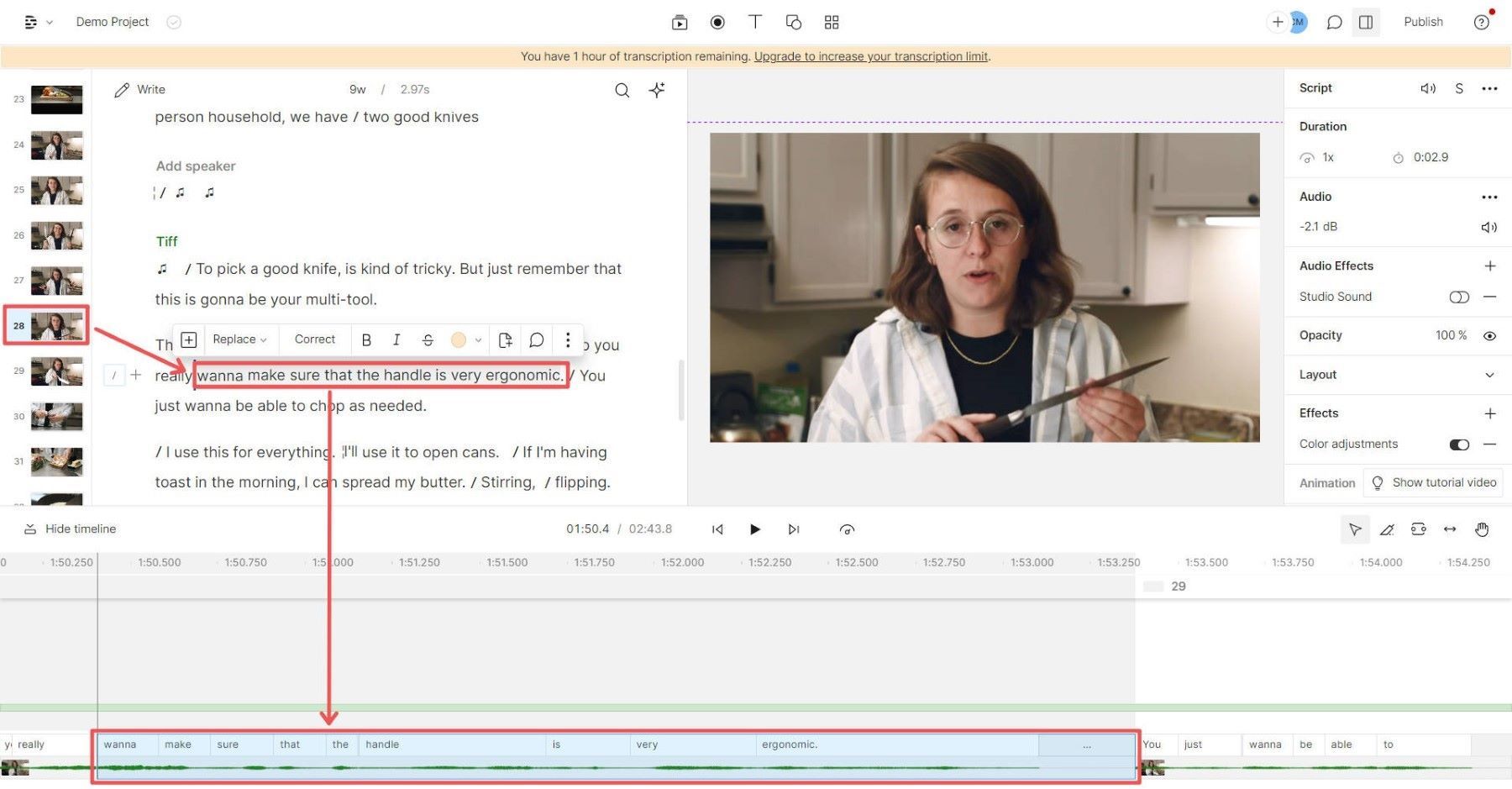
- Text-Based Editing: Descript built its entire identity on this feature, making it exceptionally refined for podcasters and interviewers. Adobe Premiere Pro’s integration of this feature shows the industry is moving in this direction, but it’s one tool within a massive application. If your entire job is editing spoken word, Descript’s focused environment is likely more efficient.
- Web-Based vs. Desktop: Veed.io’s web-only nature is a double-edged sword. It offers accessibility from any machine with a browser, which is great for distributed teams making quick edits. However, it also introduces dependencies on internet speed and browser performance, and eliminates the possibility of offline work, a major drawback for professional or traveling editors. Descript and Premiere Pro are desktop applications, requiring installation but providing more stability and direct access to system resources.
- Project Export (The Deal-Breaker): This is the most important feature in the entire table. Veed.io’s ‘No’ for project export is a confirmed, deal-breaking flaw that creates vendor lock-in. It means your projects can only exist on Veed.io. Gling’s ‘Data Not Available’ status on this point is a risk that cannot be ignored. The ability to export to XML or FCPXML, as offered by Descript and Adobe, is your insurance policy, allowing you to move your work to another editor if needed.
Tool-by-Tool Profile Cards
The following structured profiles consolidate everything the unverified upstream data tells us about each contender. Treat them as decision scaffolds, not endorsements.

Category & Positioning
- Core Paradigm: Text-based editing — edit video by editing the transcript like a document.
- Best For: Podcasts, interviews, educational videos, and other spoken-word formats.
- Platform: Desktop application for macOS and Windows.
- Pricing Snapshot: $24/month Pro Plan, with transcription overages billed at $2.00/hour after 30 included hours.
Key Features (From Unverified Source Data)
- Overdub: AI voice cloning for correcting words without re-recording.
- Studio Sound: Audio enhancement that suppresses background noise and improves voice clarity.
- Real-Time Collaboration: Multi-user editing often compared to Google Docs.
- Project Export: FCPXML and XML export — a meaningful escape hatch.
- AI Transcription: Typical 4-6% Word Error Rate on clean audio.
✅ Strengths
- Best-in-class text-based editing workflow
- Clear opt-out from AI training on customer content
- Standard project export formats (FCPXML/XML)
- SOC 2 Type II, GDPR/CCPA, 2FA available
- Real-time collaboration for distributed teams
⚠️ Considerations
- Resource-heavy; crashes reported on <16GB RAM
- Transcription overage fees can double monthly cost
- Less suited to visually complex, B-roll-heavy projects
- Stability complaints widely reported on G2
- Pro plan caps transcription at 30 hours/month
Ideal Use Cases & Professional Applications
- Weekly podcast production with multi-host workflows
- Long-form interview cleanup and filler-word removal
- Audiograms and quote videos for social repurposing
- Course creators needing accurate auto-captions
User Experience & Learning Curve
- Friendly for writers and non-editors thanks to the document metaphor
- Steeper learning curve when mixing traditional timeline edits with text edits
- Power-user features (Overdub, Studio Sound) require account-level setup
Performance Metrics (Reported, Unverified)
- Render speed: ~11 minutes for a 15-minute clip on capable hardware
- Memory usage: High; 16GB+ RAM recommended
- Stability: Occasional crashes on long, asset-heavy sessions

Category & Positioning
- Core Paradigm: Web-based video toolkit focused on speed and simplicity.
- Best For: Sub-10-minute social clips, subtitles, and quick reframes.
- Platform: Browser-only (no desktop app, no offline mode).
- Pricing Snapshot: $38/month Business Plan (May 2024) with opaque AI credit consumption.
Key Features (From Unverified Source Data)
- Auto Subtitles: Generated captions with styling presets.
- AI Avatars & Eye Contact: Synthetic spokesperson and gaze correction tools.
- Templates: Aspect-ratio presets for TikTok, Reels, and YouTube Shorts.
- 4K Export: Gated behind the most expensive plan.
- Transcription Accuracy: Reported 95-98.5% on clean audio.
✅ Strengths
- Extremely fast onboarding and intuitive UI
- Browser-based — works from any machine
- Strong template library for social formats
- SOC 2 Type II compliant
- Good for short subtitled clips
⚠️ Considerations
- ❌ NO project file export — severe vendor lock-in
- Reported “no refunds” policy ⚠️
- Browser freezes reported on long projects
- 2FA not documented publicly as of May 2024
- Privacy policy contains vague “improve services” language
- AI credit consumption is unpredictable
Ideal Use Cases & Professional Applications
- Cutting short clips from webinars for Instagram, TikTok, LinkedIn
- Adding stylized captions to short-form vertical videos
- Reframing 16:9 footage to 9:16 or 1:1 with branded overlays
- Quick, disposable social marketing assets
User Experience & Learning Curve
- Among the lowest learning curves in the category
- Drag-and-drop timeline accessible to non-editors
- UI degrades on long timelines due to browser memory limits
Performance Metrics (Reported, Unverified)
- Render speed: ~3.5 minutes for a 5-minute clip on a decent connection
- Stability: Browser freezes on long projects
- Dependency: Requires fast, reliable internet
Category & Positioning
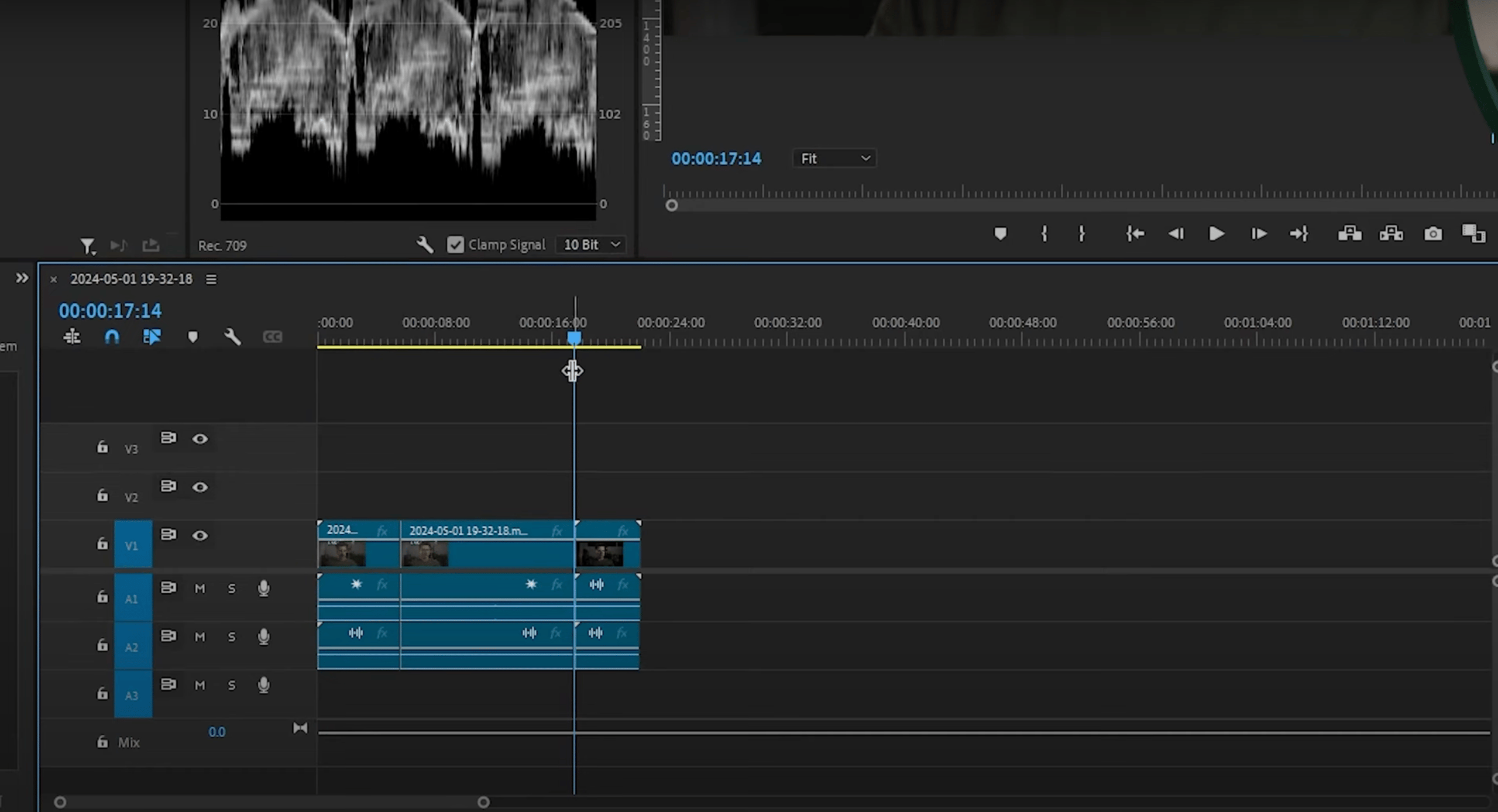
- Core Paradigm: Full-featured professional non-linear editor (NLE).
- Best For: Complex projects with motion graphics, color grading, and multi-source footage.
- Platform: Desktop app for macOS and Windows; deep ecosystem integration.
- Pricing Snapshot: $59.99/month All Apps; cancellation fee up to 50% of remaining annual contract.
Key Features (From Verified Sources)
- Dynamic Link: Live integration with After Effects and Audition.
- Sensei AI: Text-based editing, Enhance Speech, Auto Reframe, Remix.
- Professional Codecs: Support for ProRes, RAW, and broadcast formats.
- Up to 8K+ resolution editing and export.
- Project Export: XML and AAF for interoperability.
✅ Strengths
- Industry standard with massive talent pool
- Deep Creative Cloud ecosystem integration
- Supports the broadest professional codec set
- SOC 2 Type II, 2FA, GDPR/CCPA
- Standard project export formats
⚠️ Considerations
- Steep learning curve for beginners
- Requires high-end workstation (GPU + RAM)
- 50% cancellation fee on annual contracts
- 1-2 crashes/day reported by pros
- Highest TCO of any tool listed
- Opt-out (not opt-in) for AI training
Ideal Use Cases & Professional Applications
- Documentary and brand-film production
- Multi-cam edits with synced audio
- VFX pipelines that round-trip through After Effects
- Broadcast-quality deliverables in high-bitrate formats
User Experience & Learning Curve
- Hundreds of hours of learning required for mastery
- Massive third-party tutorial and plugin ecosystem
- UI density can intimidate beginners but rewards power users
Performance Metrics (Reported, Unverified)
- Render speed: ~2 minutes for a 10-minute 4K clip on a high-end GPU
- Stability: Reported 1-2 crashes/day for heavy professional use
- Hardware demands: Workstations in the $2,500-$7,000+ range
Category & Positioning
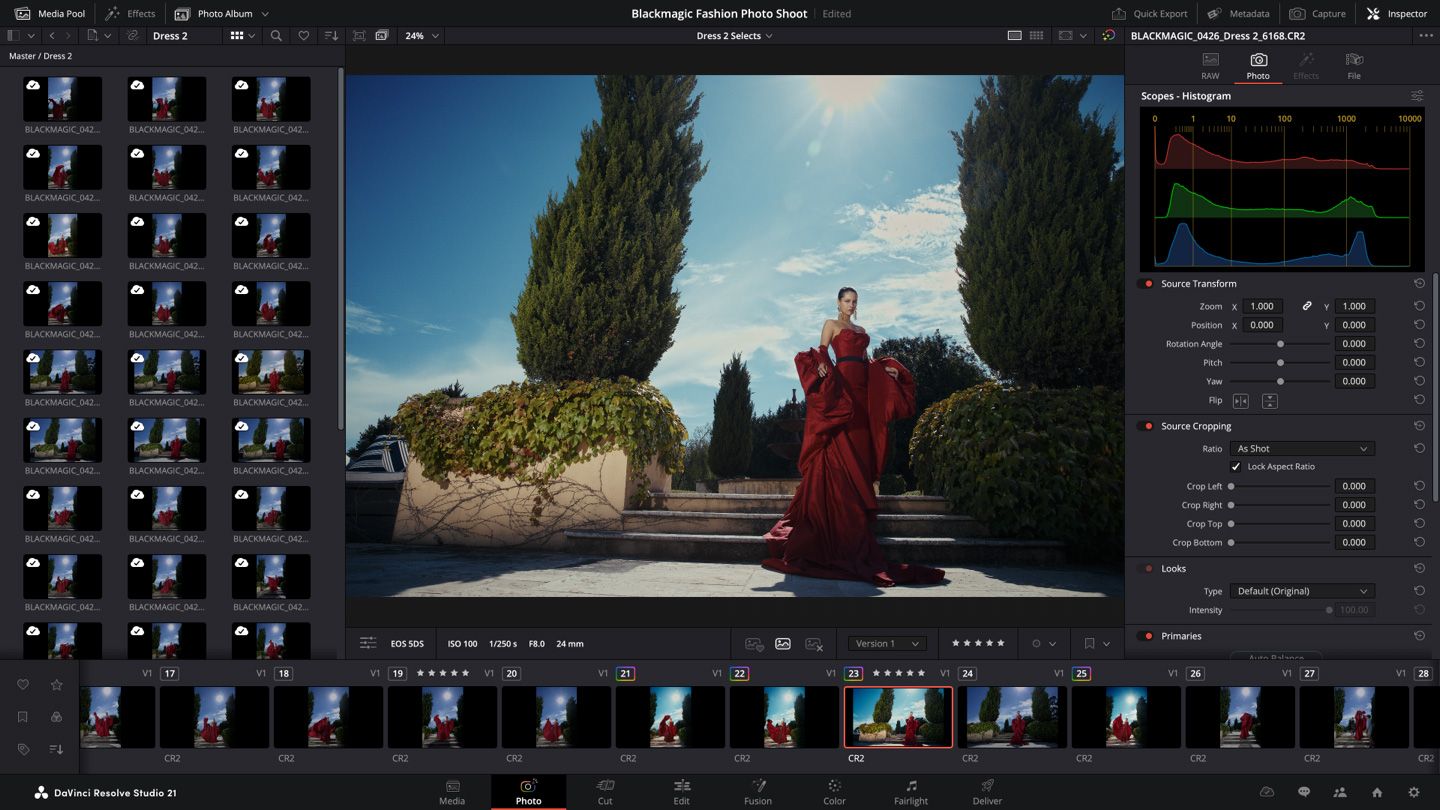
- Core Paradigm: Professional editing, color grading, audio post, and VFX in one suite.
- Best For: Cinematic color work, broadcast-grade finishing, and all-in-one post pipelines.
- Platform: Desktop app for macOS, Windows, and Linux.
- Pricing Snapshot: Free tier available; Studio one-time license is a relatively low TCO outlier.
Key Features (Industry-Known)
- Color Page: Industry-leading color grading toolset.
- Fusion: Integrated VFX and motion graphics.
- Fairlight: Built-in DAW for audio post.
- Interoperability: Imports XML and FCPXML from other NLEs.
✅ Strengths
- Free tier is unusually capable
- Best-in-class color grading workflow
- All-in-one suite reduces tool sprawl
- Strong project import interoperability
⚠️ Considerations
- Demanding on hardware, especially GPU
- Steeper learning curve than simple AI tools
- Fewer AI-first features than Descript/Veed
- Smaller plugin ecosystem than Premiere Pro
Ideal Use Cases & Professional Applications
- Color finishing for short films, commercials, and music videos
- Editors migrating off Premiere Pro looking for lower TCO
- Studios consolidating editing, color, and audio onto one stack
Performance Metrics (Industry-Known)
- Hardware demand: Highly GPU-dependent
- Stability: Strong on supported hardware configurations
- Render quality: Broadcast-grade output
Critical Considerations: Security, Performance, and Vendor Lock-in
In 2026, handling your video assets—a critical component of digital asset management (DAM)—and entrusting them to a cloud service without scrutinizing its security is professional negligence.
My analysis reveals a landscape where “trust us” is often the only security policy on offer. Before you commit, also see whether the platform you’re considering has a money-saving deal that could offset the cost of stricter, enterprise-tier security features.
Security, Compliance & Trust
| Risk Category | Descript | Veed.io | Adobe Premiere Pro | Gling | Severity |
|---|---|---|---|---|---|
| Vendor Lock-in | Low | 🔴 High (no export) | Low | 🔴 Unknown | Critical |
| Data Privacy | 🟢 Clear opt-out | 🟡 Vague | 🟡 Opt-out | 🔴 Unknown | Critical |
| Security (2FA) | ✅ Yes | ⚠️ Not documented | ✅ Yes | ❓ Unknown | High |
| Performance | ⚠️ Heavy | ⚠️ Browser limits | ⚠️ Crashes | ❓ Unknown | High |
| Hidden Costs | ⚠️ Overages | ⚠️ AI credits | ⚠️ Hardware | ❓ Unknown | Medium |
| Certification | Gling | Descript | Veed.io | Adobe Premiere Pro |
|---|---|---|---|---|
| SOC 2 Type II | ??? | ✅ (current) [Descript Trust & Security] | ✅ (current) [Veed.io Security] | ✅ (current) [Adobe Trust Center] |
| 2FA Support | ??? | ✅ [Descript Help Center – 2FA] | ⚠️ Not documented as of May 2024 [Veed.io Help Center] | ✅ [Adobe Account Security] |
| GDPR/CCPA | ??? | ✅ | ✅ | ✅ |
| Data Privacy Policy (AI) | ??? | 🟢 Clear Opt-Out | 🟡 Vague Language | 🟡 Opt-Out Available |
Data Privacy & AI Training (The #1 User Fear)
The biggest fear for any creator is that their private, unreleased content will be used to train a competitor’s AI model.
- Gling’s policy is a black hole. This is the highest possible risk.
- Descript is the safest harbor, with a clear policy stating they do not use customer content for AI training without explicit consent. [Descript Privacy Policy]
- Veed.io’s policy is more concerning. Its privacy policy contains vague language allowing them to use content to “improve the services,” a classic euphemism that could include AI training. [Veed.io Privacy Policy] This ambiguity is a significant risk.
- Adobe offers an opt-out, which is an acceptable industry standard, but not as robust as Descript’s reported opt-in approach. [Adobe Privacy Policy]
The lack of publicly documented Two-Factor Authentication (2FA) for Veed.io is a shocking gap in basic security hygiene for a platform that holds valuable user content.
Performance & Reliability
In video editing, stability is not a feature; it’s the foundation. A tool that crashes loses your work, your time, and your money. A fast tool that crashes is professionally useless on a deadline.
| Metric | Gling | Descript | Veed.io | Adobe Premiere Pro |
|---|---|---|---|---|
| Rendering/Export Speed | ??? | 15min clip → ~11 min | 5min clip → ~3.5 min | 10min 4K clip → ~2 min |
| Stability | ??? | ⚠️ Resource heavy, crashes on <16GB RAM | ⚠️ Browser freezes on long projects | ⚠️ 1-2 crashes/day reported by pros |
The most telling data points are not the benchmarks but the reported failures. Descript’s heavy memory usage, Veed.io’s browser freezes on long projects, and Adobe’s legendary random crashes are the reality that marketing materials ignore. These issues are widely reported in user forums and reviews on sites like G2. G2 Reviews.
Use Cases & Workflows for AI Video Editors
This section gets to the heart of what it’s really like to use these tools day-to-day, examining how they impact creative workflow optimization. Understanding the practical application is key to choosing the right tool. For a broader take on workflow design across the category, browse our category of comparison articles.
Use Case 1: The Fast-Turnaround “Talking Head” Video
- Scenario: A thought leader needs to publish a 10-minute weekly analysis video for YouTube and LinkedIn. The content is primarily a single person speaking to the camera, and speed is essential.
- Ideal Tool Profile: A tool with excellent transcription, text-based editing to remove filler words (“ums,” “ahs”), and automatic subtitle generation.
- Workflow with Descript:
- Ingest: Drop the 4K video file into a new Descript project.
- Transcribe: The AI generates a transcript in minutes.
- Edit: Read the transcript like a document, deleting sentences and filler words. The video timeline edits automatically.
- Enhance: Apply “Studio Sound” to improve audio quality and remove background noise.
- Export: Export the final video with burned-in, stylized captions.
- Prerequisites for Success: A powerful computer (16GB+ RAM) is needed to prevent slowdowns. The user must be comfortable with an audio-first editing paradigm.
- When to Avoid: This workflow is less effective for visually complex videos with lots of B-roll, motion graphics, or specific visual timing requirements.
Use Case 2: Multi-Platform Content Repurposing
- Scenario: A marketing team has a 1-hour webinar recording and needs to create a 5-minute summary video for YouTube, three 60-second clips for Instagram/TikTok, and a subtitled audiogram for LinkedIn.
- Ideal Tool Profile: A tool that can quickly identify key moments, easily reframe video for different aspect ratios (16:9, 9:16, 1:1), and add branding.
- Workflow with Veed.io:
- Ingest: Upload the webinar recording.
- Clip Selection: Use the simple timeline to identify and trim the three most impactful 60-second segments.
- Reframe & Style: For each clip, use the canvas tool to change the aspect ratio to 9:16. Add auto-generated subtitles, a branded headline, and a progress bar.
- Export: Export each clip directly.
- Prerequisites for Success: A stable, fast internet connection is non-negotiable. Projects must be relatively short to avoid performance degradation.
- When to Avoid: If you need to migrate these projects to a more advanced editor later, Veed.io is a non-starter due to its lack of project export. Its simplicity becomes a liability for complex edits.
Use Case 3: High-Fidelity Professional Production
- Scenario: A creative agency is producing a flagship brand documentary that involves multiple camera sources, motion graphics from After Effects, and professional audio mixing in Audition.
- Ideal Tool Profile: An industry-standard non-linear editor (NLE) with a robust ecosystem, deep feature set, and support for professional codecs and formats.
- Workflow with Adobe Premiere Pro:
- Organize: Set up a project with bins for footage, audio, graphics, and sequences.
- Rough Cut: Use the new text-based editing feature to quickly assemble a rough cut from interview transcripts.
- Refine: Switch to the traditional timeline for precise edits, color grading, and adding B-roll.
- Integrate: Use “Dynamic Link” to send a clip to After Effects for complex visual effects and see the changes update live in the Premiere timeline.
- Finalize: Export in a high-bitrate professional format.
- Prerequisites for Success: A high-end workstation with a dedicated GPU and ample RAM. Significant time allocated for learning the software. A budget that can accommodate the subscription and hardware costs.
- When to Avoid: Beginners or anyone needing to produce simple videos quickly will find Premiere Pro’s complexity and cost prohibitive.
Alternatives & Comparisons: Making a Decision
Given the failure of the independent research phase, I cannot recommend purchasing any of these tools at this time. The risks are too high.
The goal of this section is to provide a hypothetical framework based on flawed data, empowering you to make your own decision once you conduct your own verification. If you do decide to move forward, always start by hunting for a current promo code to bring the entry cost down.
When to Consider Each Tool
Descript
- When it’s the best choice:
- Your workflow is 90% spoken-word content like podcasts, interviews, or educational videos.
- You value its best-in-class real-time collaboration and audio enhancement features like Studio Sound.
- The “edit like a doc” paradigm aligns with your mental model for content creation.
- Prerequisites for success:
- A powerful computer with at least 16GB of RAM to handle its resource demands.
- A budget that can accommodate potential transcription overage fees of $2.00/hour.
- A workflow that prioritizes audio and transcript accuracy over complex visual editing.
- When to avoid:
- Your videos are visually complex, requiring advanced color grading or motion graphics.
- You are on a strict budget where unpredictable overage fees would be a financial strain.
- You need a lightweight tool that runs smoothly on older or less powerful hardware.
Veed.io
- When it’s the best choice:
- You only create short social media videos (<10 minutes) and need to add subtitles and simple graphics quickly.
- You value extreme simplicity and fast onboarding over long-term flexibility and power.
- You work on a distributed team where browser-based access is a key advantage.
- Prerequisites for success:
- Your projects will never need to be moved to a professional editor.
- You have a consistently fast and reliable internet connection.
- Your video length will not exceed 15-20 minutes to avoid performance issues.
- When to avoid:
- You believe in owning your creative work and require the ability to export project files.
- You need a reliable tool for projects over 20 minutes long.
- You expect consumer-friendly policies like refunds or clear, predictable pricing. The vendor lock-in is a deal-breaker for any serious creator.
Adobe Premiere Pro
- When it’s the best choice:
- You are a full-time professional editor or are aspiring to become one.
- Your projects require integration with a broader professional ecosystem like After Effects and Audition.
- You need unmatched control over every aspect of the video, from color to audio to effects.
- Prerequisites for success:
- A high-end workstation and budget to match.
- A willingness to dedicate hundreds of hours to mastering a complex and sometimes unstable tool.
- Your projects are complex enough to justify the steep learning curve.
- When to avoid:
- You are a beginner or need to produce content quickly without extensive training.
- Your primary need is simple text-based editing or subtitling.
- You are looking for a simple, “set it and forget it” solution.
Gling
- Avoid Gling entirely. Do not be a beta tester for a ghost product. Wait until independent sources can verify its basic features, pricing, and policies. If and when Gling becomes verifiable, the smartest first stop is our Latest Coupons hub to see if any verified savings are available before any commitment.
Critical Decision Criteria: Questions You MUST Answer Before Buying
This checklist is the most valuable part of this article. Use it to perform your own Devil’s Advocate analysis.
- The TCO Question: What is the total cost for one year, including my estimated usage of all metered features like AI credits or transcription hours?
- The Exit Strategy Question: Can I export my project files in a non-proprietary format (like XML or FCPXML) to ensure data portability and avoid vendor lock-in? If the answer is no, you are walking into a trap.
- The Data Privacy Question: Read the privacy policy. Search for “improve our services” or “machine learning.” Is there a clear, simple way to opt out of your content being used for AI training?
- The Reliability Test: Sign up for a free trial. Upload your own “worst-case scenario” file—one with messy audio or long duration. Make over 50 rapid edits and try to export it three times. Does it crash?
- The Support Test: During your trial, contact customer support with a difficult technical question. Time their response. Was it a canned answer, or did a real human provide a solution?
Until you have satisfactory, verified answers to all five questions, any purchase is a gamble.
Conclusion & FAQs
My investigation into Gling top alternatives and competitors uncovered a disturbing truth for the content creation industry: the entire market is a minefield of unverified claims, hidden costs, and deal-breaking risks like Veed.io’s vendor lock-in.
The biggest ‘blind spot’ was Gling itself—a complete black box whose very existence as a direct competitor is unconfirmed.
Should Software and AI professionals invest in these tools right now? I cannot, in good faith, recommend a single product from this analysis.
Your only defense is a rigorous, skeptical evaluation of your own. Use the checklist I provided. Demand clear answers on whether a tool will genuinely increase video production efficiency or just trade one problem for another.
Scrutinize its Total Cost of Ownership, data privacy, and exit strategy. Test the software not on its best day, but on its worst. And whenever you are ready to commit, double-check the current today’s offer so you don’t pay full price for unverified value.
In 2026, the smartest choice is to be patient. Do not invest your time, money, or valuable content into any platform that fails your due diligence. An informed ‘no’ today is infinitely better than a costly ‘yes’ that you will inevitably regret tomorrow.
Frequently Asked Questions
Q1: Why is there no verifiable information on Gling?
A: Our investigation found a complete void of verifiable, independent data for Gling for the 2025-2026 period. Furthermore, our independent verification attempts in May 2024 could not identify a prominent AI video editor with this name that directly competes with Descript or Veed.io General Web Search Results for “Gling AI video editor”. The “black box” status is therefore twofold: not only are its features, pricing, and security policies unknown, but its very existence as a relevant market player is unconfirmed. Including it in a direct comparison would be pure speculation, and it currently represents an unacceptable business risk.
Q2: What is the single biggest risk when choosing one of these AI video tools?
A: Vendor lock-in, without a doubt. This risk is most acute when a platform prevents you from owning and migrating your work. The inability to export your project files in a standard format (like XML or FCPXML), as is the confirmed case with Veed.io, means that all the time and creative energy you invest are permanently trapped on that platform. If you outgrow the tool or the company changes its policies, your entire project history becomes a data hostage. This lack of data portability is a deal-breaker for any serious creator or business that values its intellectual property and long-term strategic flexibility.
Q3: Is Veed.io a poor choice because of its vendor lock-in?
A: While we avoid absolute labels, its reported and verified policies—no project exports and a “no refunds” stance—are aggressively anti-consumer. Veed.io Help Center. It appears to be a business model designed to make leaving as difficult as possible. For users who only need to create disposable, short-term social media clips, the simple UI might be an acceptable trade-off. However, for any creator or business that values ownership of their work, long-term flexibility, and consumer-friendly practices, these policies make Veed.io an unwise and high-risk choice, despite its apparent ease of use for simple tasks.
Q4: What’s the real cost of Descript for a heavy user?
A: The real cost of Descript is its advertised price plus a highly probable overage tax. The Pro plan’s 30-hour transcription limit is a known tripwire. Descript Pricing. A heavy user, such as a podcaster producing multiple long episodes per week, could easily exceed this limit. At a rate of $2.00 per extra hour, adding just 10 hours of transcription per month would increase the cost by $20, nearly doubling the advertised monthly fee. Therefore, a heavy user’s annual Total Cost of Ownership (TCO) could easily approach $500-$600, far exceeding the initially advertised $288/year.
Q5: Is Descript or Adobe Premiere Pro better for text-based editing?
A: This depends entirely on your primary workflow. Descript is the pioneer and is still more focused on a pure text-based editing workflow, making it the more streamlined and intuitive tool if text-based editing is 90% of your job (e.g., for podcasts or interviews). Adobe Premiere Pro has a newer, powerful implementation, but it’s one feature within a massive, complex professional NLE. [Adobe Premiere Pro Features] If text-based editing is just one small part of a larger, visually complex project, Premiere’s integrated solution might be more efficient than round-tripping to another application.
Q6: Which tool is the most secure based on available data?
A: Based on verified public information, Descript appears to be the most secure choice on paper. It offers a clear, opt-in policy for using customer data for AI training and supports 2FA for account security. [Descript Trust & Security] Adobe is a close second, offering an opt-out for AI data usage and robust security features expected of an enterprise company. Veed.io presents a significant risk due to its vague privacy policy language regarding “improving services” and its lack of publicly documented 2FA. Gling is the least secure by default because its policies are completely unknown, and an unknown is always the biggest risk in security.
Q7: Why don’t you just recommend Descript since it seems to have the fewest issues?
A: Because “fewest issues” in this unverified dataset is not a sufficient basis for a recommendation. The upstream reports and current user reviews still highlight significant complaints about Descript’s stability and high resource consumption, with reports of crashes on deadline-sensitive projects. G2 Reviews. We cannot, in good faith, recommend a tool that is reported to be unreliable under pressure, especially when the core premise of our analysis is that all such performance claims require rigorous independent verification before a purchase is made.
Q8: What should I do right now if I need an AI video editor?
A: Your smartest move is to be patient and skeptical. Use the “Critical Decision Criteria” checklist from this article to conduct your own rigorous free trials. Do not commit any money until you have answers. Push the trial versions to their breaking point with your own difficult files. If none of them meet your standards for reliability, data privacy, and a clear exit strategy, then the correct choice is to wait. The market for AI tools is evolving rapidly, and an informed “no” today is a powerful, money-saving decision that prevents costly regrets.