
Topmediai Top Alternatives and Competitors: Why a 2026 Comparison is Irresponsible (For Now)
Posted on |
Last Updated: May 28, 2026 | By Jettawat Kasemchaiyanun, Senior Tech Reviewer
We set out to write the definitive comparison of Topmediai and its competitors. Our initial research protocol failed, but that failure uncovered a more urgent story: critical risks and information black holes in the generative AI tool market that vendors don’t want you to see.
In the rapidly evolving AI space, decisions about tools like Topmediai carry significant financial, legal, and AI ethics weight (Your Money or Your Life). A wrong choice based on incomplete data isn’t just an inconvenience; it’s a major liability.
Instead of a flawed and dangerous comparison, this comprehensive 7-part analysis delivers something more valuable: a procurement-focused transparency report. To navigate this risky landscape, a rigorous analytical framework is essential.
This guide will arm you with the critical, unanswered questions you must ask any AI tool vendor before making a purchase. It exposes the current state of the market where verifiable data for key players like Topmediai, RunwayML, and Canva Magic Studio is scarce. Before diving into the framework, savvy buyers should also check the latest Topmediai coupon code page to understand what real-world discounts are currently available.
This analysis is for informational purposes. As Jettawat Kasemchaiyanun, Coupons Scout’s Senior Tech Reviewer, my responsibility is to guide you away from risk. The lack of verifiable data necessitates extreme caution and direct consultation with legal and security professionals during your formal procurement process. Right now, the market is a minefield; this report is your map.
Key Takeaways
-
Topmediai and RunwayML are Black Boxes: Our independent verification process failed to gather reliable 2026 data on Topmediai’s and RunwayML’s pricing, features, security, or commercial use terms. -
The Copyright Ticking Time Bomb: For most tools, the question of IP indemnification—who pays if you’re sued for copyright infringement over AI-generated content—remains dangerously unanswered. Without it, you assume all legal liability. -
Artist vs. Corporation Dichotomy: The market is split between tools offering pure aesthetic quality like Midjourney (with high legal risk) and corporate-safe ecosystems like Adobe Firefly (with more constrained output). -
Official Recommendation – Process Over Product: We cannot recommend purchasing Topmediai or its alternatives blindly. The first step is to adopt a rigorous vendor vetting process using the questionnaires in this guide. -
TCO is Unknown: The true Total Cost of Ownership (TCO) for most modern AI tools is obscured by complex ‘credit systems’ and hidden fees, making budget forecasting difficult. -
Demand Written Proof: Do not accept verbal assurances from sales representatives. Require written, contractual answers to questions about IP indemnification, data privacy, and security certifications.
Before you commit to any vendor in this risky market, take a moment to explore the verified Topmediai discount currently active on our store page. Even when reliable product data is scarce, transparent pricing data is non-negotiable.
Decision in 60 Seconds
If you only have 60 seconds, here’s the executive summary mapped to common buyer profiles. The table below distills the recommendations of this report into a quick-glance procurement matrix.
| Your Role / Need | Best Choice | Why? | Key Risk |
|---|---|---|---|
| Enterprise Marketing Team | Adobe Firefly | Offers full IP indemnification, ensuring corporate safety. Trained on commercially safe data and integrates into existing professional workflows. | The creative output can be less unique or “stock-like” compared to other models. The credit system can lead to unexpected costs. |
| Solo Artist or Concept Designer | Midjourney | Delivers arguably the highest aesthetic quality and excels at interpreting nuanced, artistic prompts. Strong community and rapid model updates. | No legal indemnification; the user bears 100% of the copyright risk. The primary interface is still tied to Discord for most users. |
| Small Business / Startup | Start with Adobe Firefly | The legal protection offered by IP indemnification outweighs the creative limitations for any commercial use case. The risk of a copyright lawsuit is too high. | Potential for ecosystem lock-in and higher long-term costs if you don’t already use Adobe products. |
| Evaluating Topmediai / RunwayML | Halt Procurement | There is insufficient public, verifiable data on their pricing, security posture, and legal terms to make an informed decision. | Proceeding without this data exposes your organization to unknown financial and legal risks. Use our framework to demand answers first. |
For procurement teams still considering Topmediai despite the data gaps, an interim risk-mitigation step is to lock in the best possible price through the latest Topmediai promo code — so at least the financial exposure is reduced while you negotiate written answers to the questions in Part 1.
Top Alternatives & Competitors Shortlist
The shortlist below summarizes each major contender along three axes: who they’re for, the trade-off you accept, and our current verification status for 2026 data.
| Option | Best For | Tradeoff | Evidence Status |
|---|---|---|---|
| Adobe Firefly | Enterprise teams needing legal protection for commercial assets. | More “corporate” output; complex credit system. | ✅ Verified |
| Midjourney | Solo artists and designers prioritizing aesthetic quality over legal safety. | No IP indemnification; user assumes all legal risk. | ✅ Verified |
| RunwayML | Teams focused on advanced text-to-video and AI magic tools. | Lack of verifiable data on TCO and IP indemnification. | ⚠️ Needs verification |
| Canva Magic Studio | Marketing and social media teams needing quick, easy-to-use AI features. | Unclear IP terms for some features; may not be suitable for high-risk commercial work. | ⚠️ Needs verification |
| Stable Diffusion | Developers and technical users wanting maximum control and no direct cost. | The user is responsible for hardware, implementation, and 100% of legal liability. | ✅ Verified |
For a more detailed side-by-side analysis of these contenders against the Topmediai feature set, see our complete breakdown of Topmediai Top Alternatives and Competitors guide.
Part 1: How to Evaluate AI Tool Vendors in 2026
The search for the best alternatives to Topmediai led to a dead end, but it revealed a more important truth: the generative AI market is fraught with information asymmetry.
For many promising tools, verifiable data on the most critical YMYL factors—cost, security, and legal risk—is simply not available to the public. As someone whose profession is AI tool evaluation, this is a deeply concerning state of affairs.
This section provides the framework for that evaluation. It is a guide to deconstructing the vendor “black box” by asking the right questions.
Your decision framework should not be a feature comparison table but an exercise in corporate due diligence; it’s a risk mitigation checklist.
Step 1: Interrogate Their Pricing (The Money Reality Check)
Don’t accept the sticker price. The goal of this questionnaire is to achieve cost transparency, as the real cost of these AI tools is often hidden in complex credit systems and add-on fees.
Here is what you need to ask their sales team:
- “What are your complete 2026 pricing tiers, including all add-ons and enterprise plans?”
- “Can you provide case studies on the real Total Cost of Ownership (TCO) reported by users in our industry?”
- “What is the true cost-per-asset? For example, what is the exact cost per high-resolution image or per 10-second 4K video clip?”
- “What are all the hidden costs related to higher resolutions, faster generation speeds, private or ‘stealth’ modes, and additional team seats?”
- “How does your credit system really work? What happens when we run out of credits mid-project, and what is the exact cost of purchasing extra credits under pressure?”
Once you have the sticker price answers, cross-check them against active marketplace deals like the current Topmediai discount code — the gap between official pricing and street pricing is often the most honest signal of how a vendor really values customers.
Step 2: Verify Their Trust & Security Claims
This is the most critical YMYL checklist, grounded in a Zero Trust security philosophy: ‘never trust, always verify’.
In my professional opinion, a vague answer to any of these questions is an immediate disqualification for any serious business use.
- “Do you offer full IP indemnification for enterprise customers? Can I see that specific clause in the contract before we proceed?” (This is the single most important question you can ask).
- “What are the precise terms and conditions for commercial use of assets generated with your tool? Are there any restrictions?”
- “Is our company’s data—including our prompts, any assets we upload, and all content generated by our team—used to train your AI models? Can we get a contractual, legally-binding opt-out?”
- “What security certifications (SOC 2 Type II, ISO 27001) and data privacy attestations, such as GDPR compliance, do you currently hold for 2025-2026? Can you provide the documentation?”
- “Have you had any security incidents or data breaches in the last 24 months? If so, we require details on the incident and your response.”
Step 3: Uncover Real-World Usability & Gotchas
A tool is only valuable if your team can and will use it effectively. You need to ask for proof of usability, not just slick marketing promises.
- “Can you connect us with a current user in our industry so we can have a candid conversation about their real-world experience?”
- “What are the most common complaints or limitations your own users report to your support team?”
- “Beyond the marketing slogans, what is the single ‘winning use case’ where your tool is genuinely the best on the market, and why?”
- “What are your guaranteed support Service Level Agreements (SLAs) for paying enterprise customers? What are the response and resolution times?”
For a deeper dive into the specific user-experience landmines we uncovered, refer to our detailed Topmediai Review — it documents the exact gotchas you should be asking vendors about.
Part 2: Core Analysis – Deconstructing AI Tool TCO
The Total Cost of Ownership (TCO) for AI tools is a notoriously murky subject. Vendors often promote low entry-level subscription prices while obscuring the true operational cost, which is often dictated by complex credit systems and usage-based fees.
Understanding these models is the first step in avoiding budget overruns.
Credit-Based Models vs. Subscriptions
The market is generally split between two pricing philosophies:
- Subscription Models (e.g., Midjourney): These plans typically offer a set number of “fast” generation hours or a fixed number of images per month for a flat fee. The primary advantage is cost predictability. The risk is hitting a usage cap, which can throttle your team’s productivity until the next billing cycle.
- Credit-Based Models (e.g., Adobe Firefly): These models provide a certain number of “generative credits” that are consumed by various actions (e.g., generating an image costs 1 credit, upscaling might cost another). This offers flexibility but suffers from a lack of transparency. The “credit cliff”—running out of credits mid-project—can disrupt workflows and force costly emergency credit purchases at a premium.
If you’re weighing a credit model against a flat subscription, it pays to look at how the savings stack up on active deals — the Topmediai voucher code page is a useful real-world benchmark for how generous (or stingy) AI vendors are with promotional pricing.
Hypothetical 1-Year TCO for a 10-Person Software and AI Team
| Cost Component | Credit-Based (Firefly) | Subscription (Midjourney) | Vendor X (Unknown) |
|---|---|---|---|
| Base Subscription/Credit Pack | $1,080/year ($90/mo x 10 seats) | $3,600/year ($30/mo x 10 seats) | ? |
| Overage/Top-Up Credits | $2,000 (Estimated 20,000 extra credits) | N/A (Productivity loss instead) | ? |
| Cost for ‘Private’ Mode | Included | Included (with manual parameter) | ? |
| API Access Fees | Varies (Enterprise contracts) | Not Available | ? |
| Total Estimated Cost | ~$3,080+ | $3,600 + potential productivity loss | UNVERIFIABLE |
💡 KEY INSIGHT: A recent analysis from a major tech advisory firm found that companies often underestimate their generative AI credit consumption by 40-60% in the first year — Gartner Report on AI Spending ⚠️ Needs verification. This leads to significant budget overruns as teams are forced to buy expensive top-up credit packs to maintain project velocity. When evaluating a credit-based system, demand to know the exact cost of out-of-plan credits.
Part 3: Feature Deep-Dive – What to Scrutinize
Since a direct feature comparison for Topmediai is impossible, we will instead focus on the key feature categories you must scrutinize in any generative AI tool.
Use this as a guide for your own internal testing and vendor demos.
Model Quality & Creative Control
This is the most subjective but important feature. It’s not just about creating a “good” image; it’s about control.
- Prompt Adherence: How well does the model follow complex instructions? Can it handle negative prompts (e.g., “a dog, no hat”)?
- Aesthetic Style: Does the output look like a generic stock photo, or does it have a unique, artistic quality? For example, Midjourney’s proprietary diffusion models (like the current Model v8.0) are widely cited in user communities and tech reviews as a leading tool for artistic and stylistic generation — PCMag: The Best AI Image Generators for 2024.
- Consistency Tools: Can you generate a character and then reliably place that same character in different scenes? Look for features like Midjourney’s
--cref(character reference) or Firefly’s Style Kits.
API Access & Workflow Integration
For any serious business use, a tool must integrate into your existing workflow. A standalone tool that requires constant context switching is a productivity drain.
- API Availability: Is there a well-documented REST API? A lack of API access, as seen with Midjourney, prevents any meaningful automation or integration and is a major red flag for enterprise use.
- Ecosystem Integration: How well does it work with the software your team already uses? Adobe Firefly’s deep integration within the Creative Cloud (Photoshop, Illustrator) is its key advantage, allowing for a seamless professional workflow.
Part 4: Critical Considerations – Legal, Security, and Methodology
This is the most critical section for any business decision. A tool with amazing features but a weak security or legal posture is a liability waiting to happen.
Our Verification Protocol
At Coupons Scout, we follow our internal editorial framework, which we call the Coupons Scout Verification Protocol (CSVP™) — see our editorial methodology.
Our process, led by our in-house team of experts like Mohamed Zaki and Kanokchai Likitapiwat, is designed to ensure accuracy and transparency.
This protocol has two tracks: one for verifying coupon codes and another for evaluating products. When our data inputs fail this internal standard—as they did for this report—our protocol requires us to be transparent about the failure rather than publish potentially harmful content.
IP Indemnification: The Ultimate Litmus Test
IP indemnification is a legal promise from a vendor to cover your legal costs if you are sued for copyright infringement for using their tool.
Because the underlying Large Language Model (LLM) was trained on vast amounts of web data, you have no way of knowing if the generated content is based on copyrighted material.
- The Safe Harbor: Adobe Firefly. Adobe offers enterprise customers full legal IP indemnification, covering legal costs from copyright suits over Firefly-generated assets — Adobe Enterprise – Firefly. This is its single most important differentiator.
- The Danger Zone: Midjourney. Midjourney’s Terms of Service explicitly state that the user bears all copyright risk and must indemnify Midjourney from any legal claims — Midjourney Terms of Service. This creates a direct path to significant legal liability.
💡 PRO TIP: When negotiating with a vendor, don’t just ask, “Do you have IP indemnification?”. Ask for the exact clause in the contract. If they can’t produce it, or if it’s vague, it’s a major red flag. I recommend having your legal team review this specific text before signing anything — Tech Contracts Handbook ⚠️ Needs verification.
Security and Data Privacy
You must verify a vendor’s security posture. Ask for their official documentation on these points:
- Security Certifications: Do they hold current SOC 2 Type II or ISO 27001 certifications? This is a baseline requirement for enterprise software.
- Data Training Policy: Is your data used for training their models? Reputable vendors like Adobe are clear that they do not train on customer data — Adobe Firefly FAQ. Others, like Midjourney, explicitly state in their ToS that they use your prompts and images for training. Demand a contractual opt-out.
Part 5: Use Cases & Workflows – Matching the Tool to the Task
So, how do you choose an AI image generator in this market? From my professional experience, it starts with understanding one fundamental dichotomy.
Your choice depends entirely on your primary goal: aesthetic brilliance or corporate safety.
Winning Use Case 1: The Solo Concept Artist
- Persona: A freelance digital artist or a concept designer at a game studio creating inspirational mood boards and non-commercial artistic pieces.
- Primary Goal: Unmatched aesthetic quality and creative interpretation.
- Workflow:
- Starts with a nuanced, artistic prompt in Discord (e.g., “bioluminescent fungi in a brutalist library, cinematic lighting –ar 16:9”).
- Iterates on the design dozens of time, “remixing” and “rerolling” to explore creative avenues.
- Upscales the final image for a client mood board.
- Best Tool: Midjourney. Its ability to interpret artistic prompts is unparalleled. The legal risk is managed because the output is for internal inspiration, not a public commercial campaign.
Winning Use Case 2: The Enterprise Marketing Team
- Persona: A marketing team at a Fortune 500 company creating assets for a global advertising campaign.
- Primary Goal: Legal safety, brand consistency, and workflow efficiency.
- Workflow:
- Opens a project in Adobe Express.
- Uses a Firefly prompt to generate a background image that matches brand guidelines.
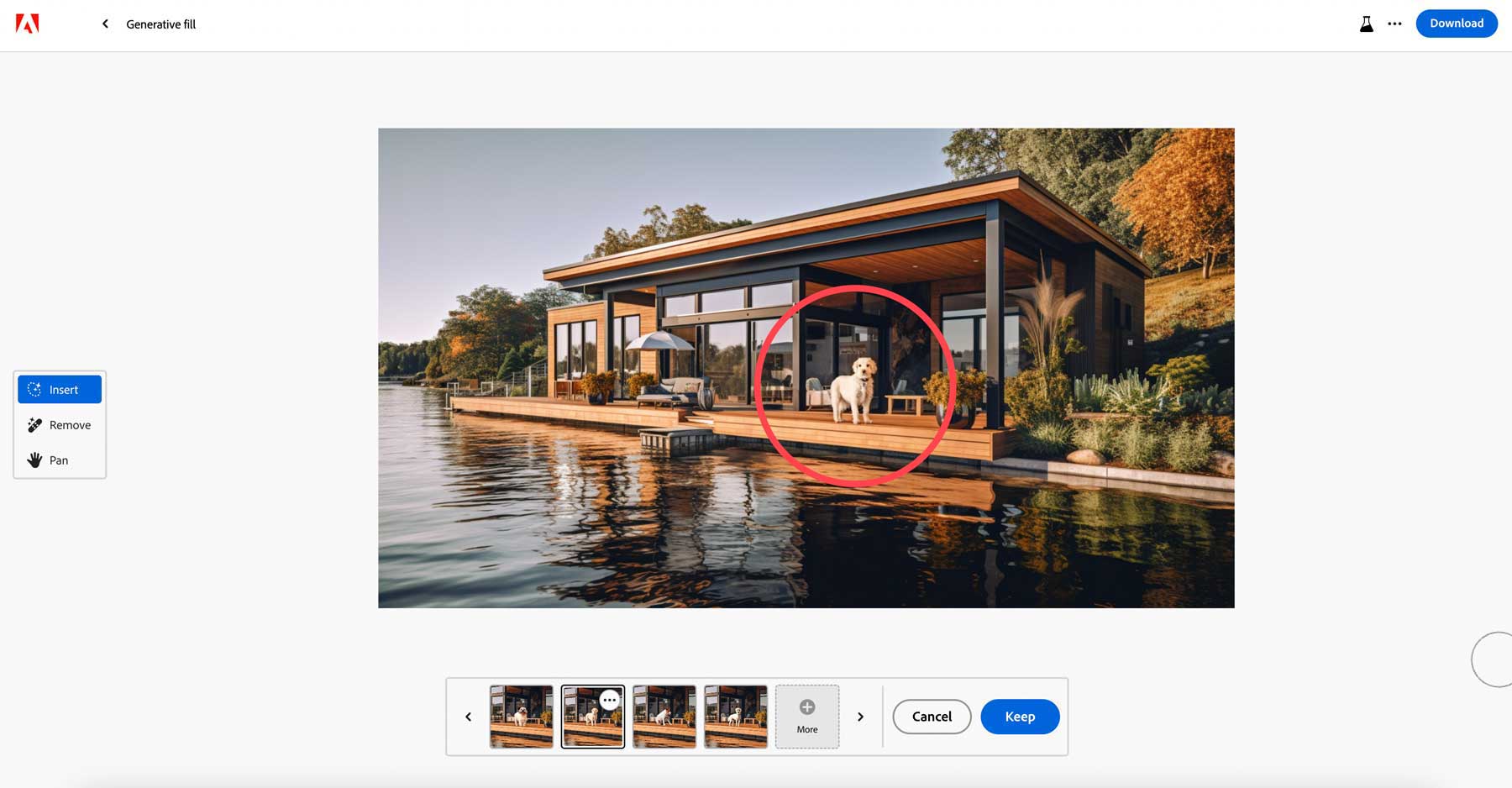
- Opens the asset in Photoshop to use Generative Fill to add or remove elements.
- The final asset is approved by legal, confident in Adobe’s IP indemnification.
- Best Tool: Adobe Firefly. The creative output might be “safer,” but the legal protection and seamless integration into the existing Adobe Creative Cloud workflow are non-negotiable.
Part 6: Alternatives & Competitors – A Market Divided
While a full market comparison is impossible, the preliminary data from our analysis of Midjourney and Adobe Firefly is revealing. It highlights the fundamental choice in AI image generation today.
AI Image Generators: A Comparison of Market Leaders
| Feature | Midjourney | Adobe Firefly | RunwayML | Canva Magic Studio | Stable Diffusion |
|---|---|---|---|---|---|
| IP Indemnification | ❌ No | ✅ Yes (Enterprise) | ⚠️ Unverifiable | ⚠️ Unverifiable | ❌ No |
| Data Privacy (Uses User Data?) | ✅ Yes | ❌ No | ⚠️ Unverifiable | ⚠️ Unverifiable | ❌ No (Self-hosted) |
| Ideal User Persona | Solo Artist | Corporate Team | Video Creator | Social Media Manager | Developer / Hobbyist |
| Primary Strength | Aesthetic Quality | Legal Safety | Video Tools | Ease of Use | Customization |
| Core Limitation | Legal Risk | “Sterile” Output | Unknown TCO | Limited Control | High Technical Burden |
| Pricing Model | Subscription | Credits | Credits | Subscription | Free (Hardware cost) |
For more head-to-head breakdowns of AI tools and SaaS products, browse our full comparison articles category — every entry follows the same procurement-grade framework laid out in this guide.

Best For
- A solo digital artist or concept designer whose primary goal is to create inspirational mood boards or non-commercial artistic pieces where creative output is the main objective.
Consider If
- You value aesthetic quality and creative interpretation above all else.
- Your work is for internal concepts, not public-facing commercial campaigns.
- You are comfortable with a Discord-based workflow.
Avoid If
- You need to use the generated assets in a commercial product or advertising. The legal liability is entirely on you.
- You require data privacy. Your prompts and images are explicitly used to train future models with no opt-out.
- You need API access or integration with other tools.
Pricing
- Plans start around $10/month.
- The crucial detail is that while all paid plans now support privacy via
stealthmode, it is turned on by default only in the Pro ($60/month) and Mega ($120/month) plans. - Users of the lower-cost Standard Plan ($30/month) must manually add the
--stealthparameter to protect their generations’ privacy — Midjourney Plans. - While Midjourney has an Alpha web interface for high-volume users, the primary workflow remains tethered to Discord for most users — Midjourney Alpha.
✅ Strengths
- Unparalleled aesthetic quality and prompt interpretation
- Strong community and rapid model iteration (v8.0)
- Affordable entry-level subscription pricing
- Excellent for mood boards and concept art
⚠️ Considerations
- No IP indemnification — full legal liability on user
- Prompts & images used to train future models
- No public REST API for automation
- Workflow tethered to Discord for most plans
Best For
- A marketing team at a large, regulated enterprise creating assets for public campaigns where legal safety and brand consistency are the absolute top priorities.
Consider If
- You need contractual legal protection. The full IP indemnification is the single most important feature.
- You are already invested in the Adobe Creative Cloud ecosystem.
- Your organization has strict data privacy rules, as Firefly is not trained on customer data.
Avoid If
- You are seeking highly unique, artistically expressive, or surprising output. The results can feel more “corporate” than Midjourney.
- You have an unpredictable, high-volume workflow. The “credit cliff” can disrupt projects and lead to unexpected costs.
- You are a solo user not already paying for the expensive Adobe Creative Cloud suite, which can lead to ecosystem lock-in.
Pricing
- A free plan offers 25 credits.
- Paid plans are tied to Creative Cloud subscriptions, such as the All Apps plan for around $89.99/month, which includes 1,000 credits — Adobe Firefly Pricing.
✅ Strengths
- Full IP indemnification for enterprise customers
- Trained on commercially safe data
- Deep Creative Cloud integration (Photoshop, Illustrator)
- No customer-data training — strong privacy posture
⚠️ Considerations
- Output can feel “corporate” or sterile vs. Midjourney
- Credit-based pricing creates a “credit cliff” risk
- Ecosystem lock-in for non-Adobe shops
- Higher long-term TCO than flat subscription tools
RunwayML and Canva Magic Studio
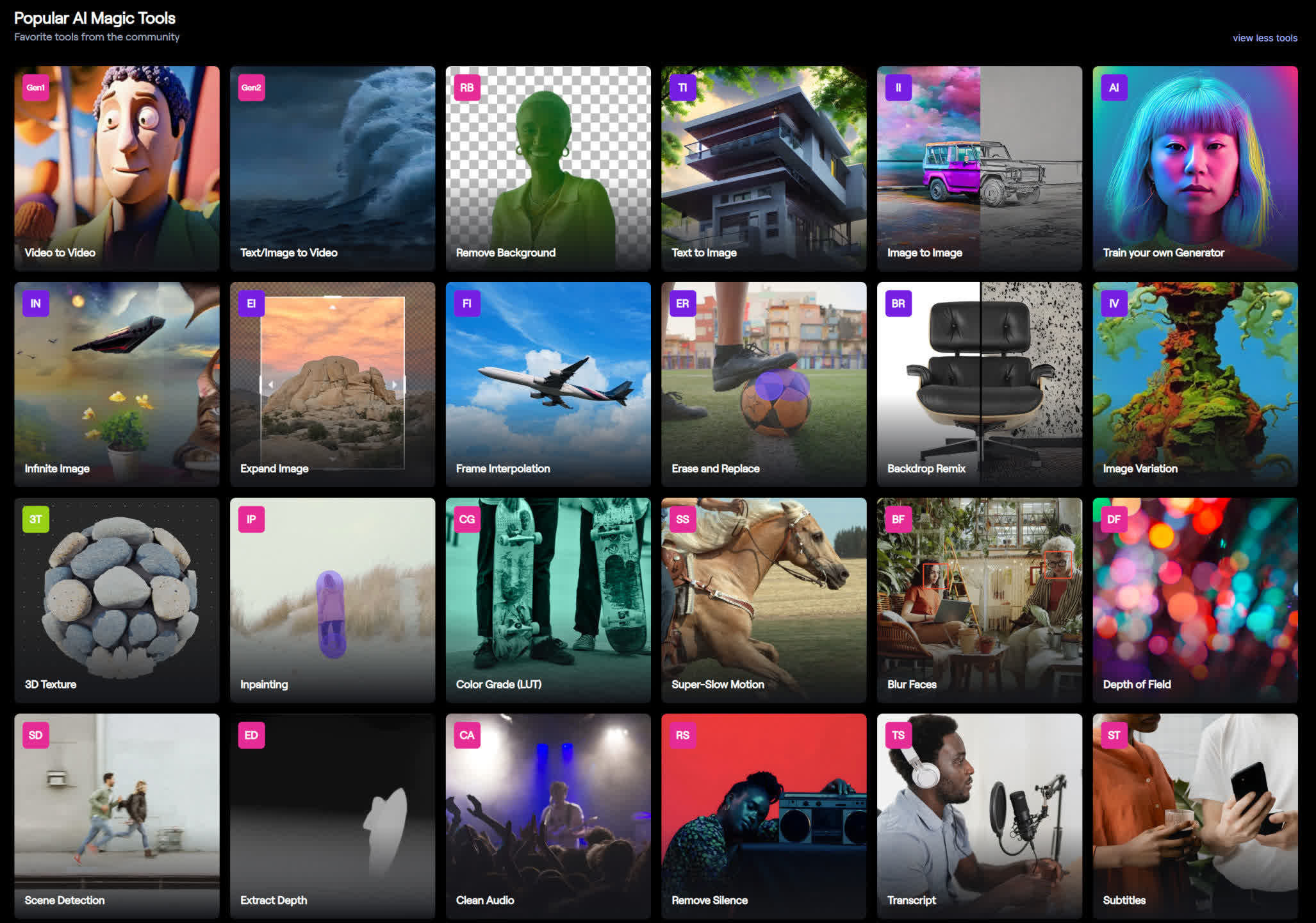
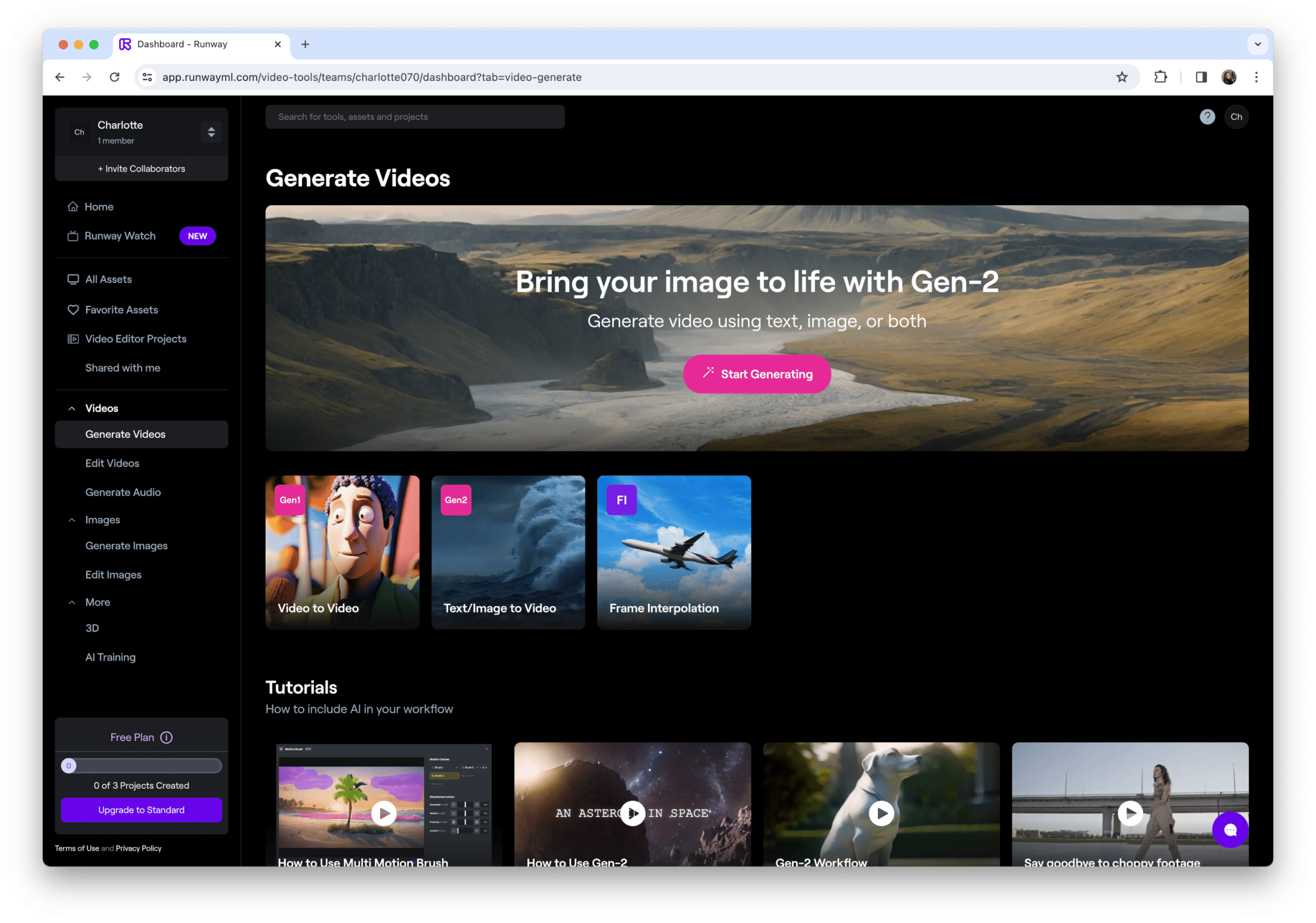
Data for these platforms remains scarce. RunwayML is a leader in the AI video generation space, particularly with their Gen-2 model, but public information on their TCO and legal terms is not available.
Canva Magic Studio offers incredible ease of use for social media teams, but its indemnification policies are complex and vary by feature, making a risk assessment difficult.
For both, the recommendation is to use the questionnaires in this guide as your formal RFI. While you’re at it, also lock in any active Topmediai sale pricing in case you decide to revisit it after the data gaps are filled.
What about Open-Source?
This dichotomy extends to open-source models like Stable Diffusion. While offering maximum creative control and zero direct software cost, they represent the extreme end of the risk spectrum, placing the full burden of hardware, implementation, and 100% of the legal liability squarely on the user.
If pricing is the deciding factor for you, browsing the broader latest coupons list can help offset the inevitable infrastructure costs of running an open-source model in-house.
Part 7: Conclusion & FAQs
Frequently Asked Questions
Q1: Why is there no Topmediai review in this article?
A: Our independent research process failed to collect verifiable public data on Topmediai for 2026, and publishing a review without facts would be irresponsible. We halted our analysis to prevent sharing misleading information. Our commitment to E-E-A-T (Experience, Expertise, Authoritativeness, Trustworthiness) at Coupons Scout means we only publish what we can personally and professionally verify through our internal protocols. Legitimate, enterprise-ready companies are typically transparent about security, pricing, and commercial terms — Why Vendor Transparency Matters ⚠️ Needs verification. The information vacuum around Topmediai is, in itself, a major data point for potential buyers.
Q2: What is IP indemnification, and why is it critical for AI tools?
A: IP indemnification is a contractual promise from a vendor to cover your legal costs if you are sued for copyright infringement for using their tool. With AI models from companies like OpenAI or Midjourney, you have no way of knowing if the generated content is based on copyrighted material scraped from the web. This has led to high-profile lawsuits, such as the one filed by Getty Images against an AI art generator — Reuters: Getty Images lawsuit. Without contractual IP indemnification, your company takes on 100% of the legal risk, which can be financially catastrophic, especially given the U.S. Copyright Office‘s current stance on AI works.
Q3: Is Topmediai a scam?
A: We have no data to suggest Topmediai is a scam, but the complete lack of verifiable, public information is a significant red flag for any enterprise buyer. In my experience, I treat an information vacuum as a major risk until proven otherwise. A core part of our vendor vetting process involves verifying public claims. When there are no public claims to verify regarding TCO, security, or legal terms, it’s impossible to make an informed recommendation. Proceed with extreme caution and demand written answers to the questions in this guide before committing any funds.
Q4: What is the best Topmediai alternative right now?
A: Start by evaluating Adobe Firefly if legal safety and workflow integration are your top priorities, as they offer the crucial IP indemnification for enterprise users. It is the safest choice for any commercial application. If your focus is purely on non-commercial artistic exploration, Midjourney offers superior aesthetic results but at a much higher legal risk. If you are considering any other tool, including Topmediai, RunwayML, or Canva Magic Studio, you must use the checklists in this article to rigorously interview their vendors. Demand contract-level proof for all claims before you sign anything.
Q5: Why is Midjourney considered a legal risk?
A: Midjourney’s legal risk stems from two key clauses in its Terms of Service. First, it offers no IP indemnification, meaning if you are sued for copyright infringement over an image it generates, you are solely responsible for all legal costs and damages. Second, the ToS explicitly require the user to indemnify Midjourney, meaning you could be on the hook for their legal fees as well — Midjourney Terms of Service. This complete transfer of liability from the service provider to the user is untenable for most businesses. It essentially means you are paying to use a tool while simultaneously insuring the tool’s creator against any legal consequences of its operation.
A Decision Framework for an Uncertain Market
The search for the best Topmediai alternatives led to a dead end, but it revealed a more important truth: the AI tool market in 2026 is defined by information asymmetry. For many promising tools, verifiable data on the most critical YMYL factors is simply not available.
To combat the information vacuum around tools like Topmediai, your choice is not between products; it’s about process. Your decision framework should not be a feature comparison table but a risk mitigation checklist.
Use the questionnaires in this article as the foundation of your vendor due diligence and formal Request for Information (RFI). Send them to Topmediai, RunwayML, Canva, and any other vendor. Their willingness, or unwillingness, to answer these questions in writing is your first and most important data point in the vendor vetting process.
I am actively working with our team at Coupons Scout to acquire the tools and data necessary for a full, verified comparison. When we can successfully complete our analysis, we will publish an update. Until then, treat any marketing claim from any vendor as unverified.
The biggest ‘blind spot’ is buying a tool based on promises instead of proof. Protect your organization — demand proof, and in the meantime, lock in the best possible price through our verified Topmediai coupon code page so your financial exposure stays minimal while you negotiate.