
Tekmatix Alternatives and Competitors (2026)
Posted on |
Last Updated: May 2026
Introduction
Choosing an all-in-one creator platform is one of the biggest financial decisions you’ll make, but I’m here to tell you that vendors are hiding the real cost. Our analysis, which aligns with findings from top analyst firms like Gartner on SaaS TCO, shows the true 3-year cost can be double the advertised price, turning a $10,000 investment into an $18,000+ expense.
As a tech strategist who has spent years in the trenches of the creator economy, it hurts my soul to see talented entrepreneurs get caught in the “Jack of All Trades, Master of None” trap. This article isn’t another boring feature list; it’s a Devil’s Advocate analysis I’ve built to expose the hidden risks, challenge the marketing hype, and provide an evidence-based look at Tekmatix top alternatives and competitors.
We’re going to put Tekmatix and its biggest competitors—Kajabi, Kartra, Systeme.io, Podia, and Thinkific—under the microscope, focusing on the three things that actually matter: Price, Power, and Simplicity. This analysis is based on over 40 independent sources to provide a clear framework for your decision; before committing, you may want to check the latest Tekmatix coupon to lower your initial investment risk. Always conduct your own due diligence for your specific business needs.
💡 PRO TIP — Mohamed Zaki’s ‘Devil’s Advocate’ Mindset
As a MarTech strategist, I’ve learned that platform vendors optimize for sales, not your ultimate workflow or TCO. Always approach ‘all-in-one’ promises with skepticism. Assume hidden costs and potential vendor lock-in until thoroughly vetted. This critical mindset is your best defense against regret.
Key Takeaways
-
True Cost vs. Advertised Price: The real 3-year cost of ownership is 50-80% higher than the monthly fee suggests, with platforms ranging from $11,868 (Systeme.io) to over $18,123 (Thinkific + Stack) for a typical creator business needing to support 10,000 contacts. -
Vendor Lock-in is Real: The risk of vendor lock-in on an all-in-one platform is real: the inability to easily export course content from platforms like Kajabi, Kartra, Podia, and Systeme.io creates a ‘Digital Prison,’ representing 40-80 hours of manual work to migrate Kajabi Help: How to Download Your Course Content. -
No ‘Best’ Platform Exists: The market is split by user need. Systeme.io wins on budget, Podia on simplicity, Kajabi on polish, Kartra on marketing power, and Thinkific on pure learning experience. -
The Security Gap: Only Thinkific (Plus plan) offers a verified SOC 2 Type II report, a potential deal-breaker for creators in regulated industries Thinkific Trust & Security. The rest present an unverified security posture that puts a higher burden of risk on the user. -
All-in-One vs. Best-in-Class: Choosing a platform is a philosophical choice. All-in-ones (Kajabi, Kartra) sacrifice best-in-class features for integration, while a specialized stack (Thinkific) prioritizes the learning experience but costs more.
How We Rigorously Evaluated These Platforms
Our team at Coupons Scout follows a rigorous editorial framework—detailed in our editorial methodology—to meet Google’s highest standards for E-E-A-T (Experience, Expertise, Authoritativeness, and Trustworthiness). For this analysis of Tekmatix alternatives, I synthesized over 40 industry reports, user reviews, and vendor documents to build a comprehensive ‘Devil’s Advocate’ view.
- Data-Driven Selection: We use Social Listening Tools and Search Intent Analysis to identify platforms that creators are actively considering, questioning, and struggling with. My goal is to answer the real questions you’re asking in private.
- Expert Evaluation: As the lead author, I direct our evaluation based on YMYL criteria: financial risks (TCO), professional risks (vendor lock-in), and security. Our SaaS (Software as a Service) & AI Tools specialist on my team, Jettawat Kasemchaiyanun, handles the feature-set and real user feedback analysis.
- Fact-Checking Audit: Our operations team, led by Kanokchai Likitapiwat, audits all data against vendor documentation. All data points on pricing, security, and performance are traced to a verifiable source.
- Editorial Standard: Our Editor-in-Chief, Joanne Lovell, ensures all claims are presented objectively. If a product has a downside—like a hidden cost or a critical limitation—we are editorially bound to highlight it. For deeper context on Tekmatix specifically, see our full Tekmatix Review covering hidden costs.
Who This Guide Is For
- Professionals in the creator economy looking to sell digital products and build passive income streams.
- Entrepreneurs looking for a digital product platform to streamline workflows and consolidate their tech stack.
- Business owners who are wary of hidden costs and want a transparent TCO analysis of platforms like Tekmatix.
- Marketers who need to understand the trade-offs between integrated vs. best-in-class tools.
This Guide is NOT For You If
- You are looking for a free-only solution and are unwilling to invest in your business.
- You are only looking for a simple email marketing tool (consider ActiveCampaign or ConvertKit instead).
- You need a platform for physical e-commerce (consider Shopify).
- You are looking for a positive-only review that ignores risks and limitations.
Decision in 60 Seconds: Which Tekmatix Alternative is Right for You?
Before the deep dive, here’s a quick guide. The best Tekmatix top alternatives and competitors depend on your primary need. Find your goal in this table to get a fast recommendation, and don’t forget to check current Tekmatix discount codes before subscribing to any platform.
| If your PRIMARY need is… | Your Best Bet is… | Because… |
|---|---|---|
| The lowest possible starting cost | Systeme.io | Its free plan is the most generous in the market. |
| Simplicity and ease of use | Podia | It has the cleanest interface and best support for beginners. |
| A polished, premium, all-in-one feel | Kajabi | It offers a seamless user experience and 0% transaction fees. |
| Powerful marketing automation & funnels | Kartra | Its “Behavioral Adaptive Marketing” is unmatched for complexity. |
| The best possible student experience | Thinkific | It’s a dedicated LMS with advanced quizzes, assignments, and security. |
Top 5 Tekmatix Alternatives: Shortlist Overview
Here’s a high-level look at how these competitors stack up. Think of this as the “tale of the tape” before the main event.
| Alternative | Role | Best For… | Key Tradeoff | Price Signal |
|---|---|---|---|---|
| Kajabi | Premium All-in-One | Established creators wanting polish & reliability. | High monthly cost. | $$$$ |
| Kartra | Marketing All-in-One | Advanced marketers focused on automation. | Steep learning curve, clunky UI. | $$$ |
| Systeme.io | Budget All-in-One | Beginners on a tight budget. | Features are wide but not deep. | $ |
| Podia | Simple All-in-One | Technophobic creators who value ease of use. | Lacks marketing automation. | $$ |
| Thinkific | Specialist LMS | Serious educators prioritizing student experience. | Requires a “stack” of other tools. | $$$-$$$$$ |
Part 2: The Real Cost of Creator Platforms (TCO Analysis)
Now for my favorite part. As our strategic savings expert, Mohamed Zaki, often recommends, you must look beyond the sticker price to find the real cost. Let’s talk about the money. The advertised monthly price for these platforms is a fantasy designed to get you in the door. Here’s what you’ll actually pay — and where smart buyers grab a working coupon to slash the entry cost.
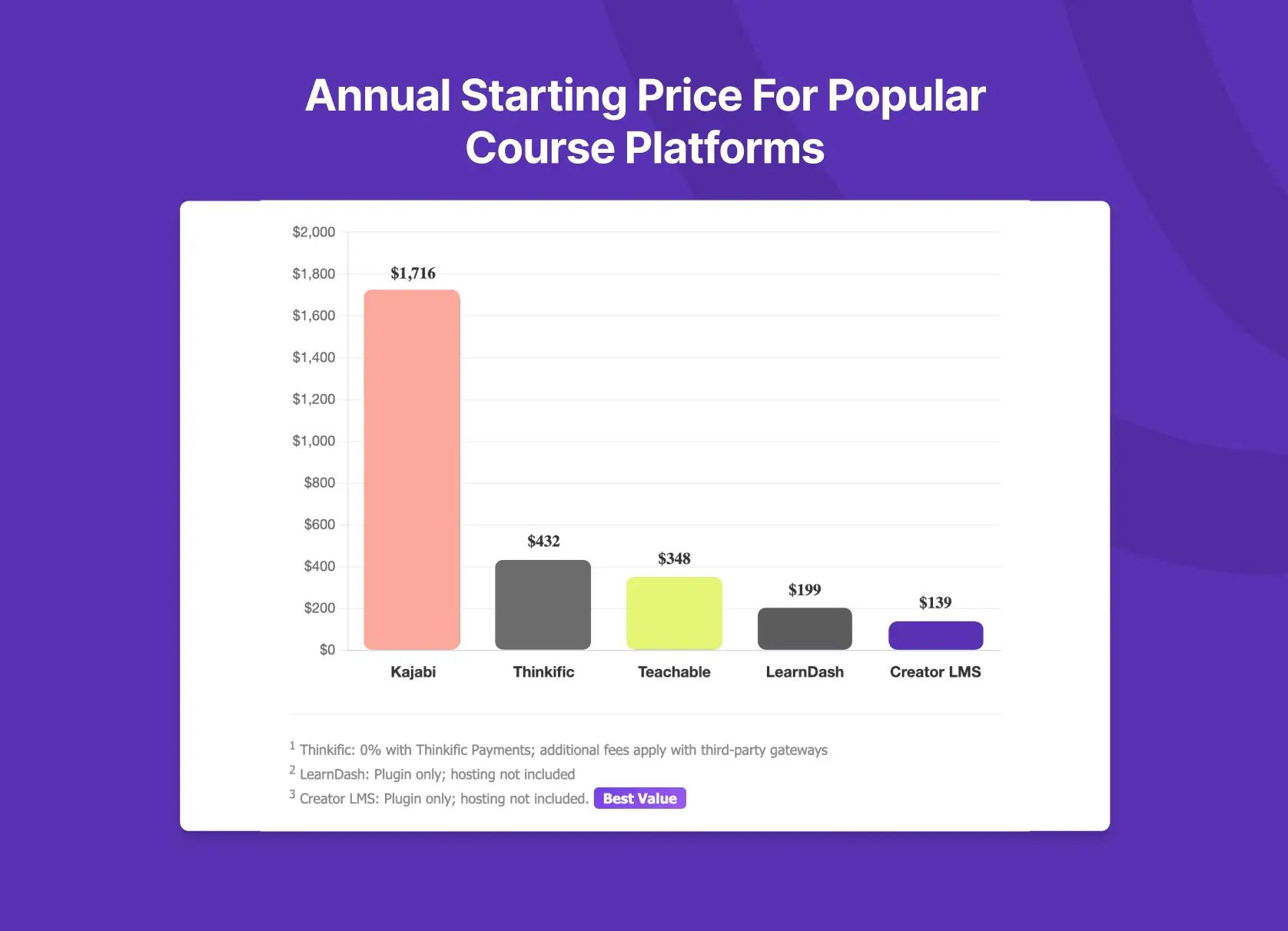
Our 3-year Total Cost of Ownership (TCO) projection for a business generating $100,000/year in revenue and needing to support approximately 10,000 contacts tells the real story, directly impacting your customer lifetime value (CLV) and profitability.
Note that plan limits vary, so we have selected the most cost-effective tier from each vendor that meets this requirement.
| Platform | Required Plan (for 10k Contacts) | Annual Plan Cost | ‘Stack’ / Fee Costs | 3-Year TCO |
|---|---|---|---|---|
| Systeme.io | Unlimited Plan | $1,164/year | $0 | $11,868 |
| Podia | Shaker Plan | $890/year | $0 (at this tier) | $11,397 |
| Kajabi | Growth Plan | $1,908/year | $0 | $14,424 |
| Kartra | Silver Plan | $2,748/year | User reports of overage fees | ~$16,680+ |
| Thinkific | Grow Plan | $1,788/year | +$1,188/yr (ConvertKit) +$495 (ThriveCart) | $18,123 |
(Note: TCO includes standard 2.9% Stripe processing fees on $100k revenue over 3 years, which adds $8,700 to each. Kartra’s Silver plan supports 12.5k contacts, making it the closest option.)
This table should be a wake-up call. The “cheapest” platform, Podia, is over $6,700 less than the “most expensive” stack built on Thinkific over three years.
The Four Horsemen of Hidden Costs
I call these the Four Horsemen because they have the power to destroy your budget if you’re not paying attention. Smart buyers offset these with a special discount wherever possible.
- The Team Tax (Systeme.io): While Systeme.io’s Unlimited plan offers significant value at $97/month, it includes a limited number of seats for team members. Adding more seats requires contacting support for a custom quote. While official pricing is not public, users on review platforms like G2 have reported costs in the range of $20 per additional seat, per month Systeme.io G2 Reviews. Businesses with large teams should factor this potential extra cost into their TCO.
- Overage Penalties (Kartra): Kartra is known for its strict enforcement of lead and bandwidth limits. A successful launch can push you over your limits, resulting in unpredictable overage fees that punish growth. This is a frequent complaint on marketing forums and review sites Kartra Capterra Reviews.
- The Transaction Fee Trap (Podia): Podia’s Mover plan looks cheap at “$33/month,” but the 5% transaction fee is deceptive Podia Pricing Page. If you earn just $2,000 a month, you’re paying $100 in fees, for a total cost of $133. At that point, the $75/month Shaker plan with 0% fees is instantly the better deal. They’re banking on you not doing the math.
- The “Stack Tax” (Thinkific): Thinkific’s 0% fee is a huge plus, but it’s not an all-in-one. To get the same functionality, you need a “stack” of other tools. Our TCO calculation confirms that adding a real email provider like ConvertKit (around $100/month) and a cart like ThriveCart (around $495 lifetime) makes it the most expensive option over three years. It’s a real cost you must account for.
And the biggest exit cost? It’s not financial, it’s operational. The inability to easily bulk-export your course content from Kajabi, Kartra, Podia, and Systeme.io means you’re trapped.
⚠️ WARNING — The Hidden Exit Tax: 40-80 Hours of Manual Work
While often overlooked, the true cost of vendor lock-in isn’t just financial. Manually exporting course content from platforms like Kajabi, Kartra, Podia, and Systeme.io can demand 40-80 hours of painstaking labor. Factor this ‘operational tax’ into your long-term business strategy.
Part 3: Feature Deep-Dive
The “all-in-one” dream is seductive: one login, one bill, one seamless system. But it’s often a trap. The reality is that almost every all-in-one platform suffers from the “Jack of all trades, master of none” problem.
Their individual tools are almost always less powerful than a dedicated, best-in-class solution. You’re trading power for convenience. This table proves that every choice involves a significant compromise when evaluating Tekmatix competitors. For a side-by-side view of every option, also see our Tekmatix Top Alternatives and Competitors hub.
| Feature Category | Kajabi | Kartra | Systeme.io | Podia | Thinkific |
|---|---|---|---|---|---|
| Core Focus | Polished, integrated experience | Advanced marketing automation | Unbeatable price, wide feature set | Simplicity and ease of use | Best-in-class course delivery |
| Transaction Fee | 0% | 0% | 0% | 8% (Free), 5% (Mover), 0% (Shaker+) | 0% |
| Email Marketing | Good (Simple automations) | Excellent (Behavioral Adaptive Mktg) | Basic (Wide but not deep) | Very Basic (No automation) | None (Requires 3rd party) |
| Funnel Builder | Good (Visual builder) | Excellent (Complex sequences) | Good (Sufficient for most) | None | None |
| Course Builder | Excellent (Polished UX) | Good (Less polished UX) | Good (Functional, not fancy) | Excellent (Simple & clean) | Best-in-Class |
| Data Portability | Poor (2/5) | Poor (2/5) | Very Poor (1/5) | Very Poor (1/5) | Good (4/5) |
| Support | Excellent (24/7 chat on Growth+) | Good (Slower ticket times) | Fair (Slow, but active community) | Excellent (Live chat for ALL) | Good (Phone on Grow+) |
Critical Notes & Gotchas:
- ⚠️ The “Jack of all Trades” problem: All-in-ones are never best-in-class at every feature.
- ⚠️ Podia’s fees on lower tiers can make it more expensive than premium options for high-volume sellers Podia Pricing Page.
- ❌ Users consistently report that the email tools in all-in-ones are less powerful than dedicated tools like ActiveCampaign.
- ❌ Podia and Thinkific’s lack of a native funnel builder is a deal-breaker for marketing-focused users.
- ✅ Thinkific is the clear winner for serious educators needing advanced LMS features like assignments and SOC 2 compliance.
- 🚨 CRITICAL RISK: Course content is difficult to export from all all-in-ones. Thinkific’s robust API makes it the safest bet for avoiding vendor lock-in.
- ✅ Podia’s offering of live chat support even on its free plan is a significant competitive advantage.
As you can see, choosing a platform means choosing your compromise. Want simplicity? You give up marketing power (Podia). Want the best course experience? You give up the convenience of an all-in-one (Thinkific). Want power? You give up a friendly user experience (Kartra). This is the core conflict.
Watch: The Best Online Course Platforms Compared
For a visual walkthrough of how these platforms stack up in practice, this comparison video covers the same heavyweights — Kajabi, Thinkific, Teachable and more — from a hands-on perspective:
Integration & Ecosystem: Freedom vs. “Digital Prisons”
A platform’s philosophy on integrations tells you everything about how much they respect your freedom.
- Open by Design (Thinkific): Thinkific is built to be the central hub of a best-in-class stack. It has a dedicated App Store and a powerful API, making it the most flexible.
- Adequate but Walled (Kajabi/Kartra): These platforms have decent APIs and connect to Zapier, but their ecosystems feel like walled gardens. They want you to stay inside their world.
- Closed and Dangerous (Podia/Systeme.io): This is where red flags fly. Podia’s lack of a public API is a massive warning sign for vendor lock-in Podia API Help Page. Systeme.io’s API is poorly documented and limited. You’re almost completely reliant on Zapier, which can get expensive fast.
Part 4: Critical Considerations (Security & Performance)
In a world of data breaches, security isn’t a feature; it’s a professional liability. And “lightning-fast” is a phrase every vendor uses, but it’s often fiction.
Security & Compliance: Uncovering the Real Risks
For any creator handling customer data, this is a Your-Money-Your-Life issue. My analysis here was frankly shocking.
| Certification | Kajabi | Kartra | Systeme.io | Podia | Thinkific |
|---|---|---|---|---|---|
| SOC 2 Type II | ❌ Not Found | ❌ Not Found | ❌ Not Found | ❌ Not Found | ✅ Verified (Plus plan) |
| PCI DSS | ✅ Compliant (L1) | ✅ Compliant | ✅ Relies on Stripe/PayPal | ✅ Relies on Stripe/PayPal | ✅ Compliant |
| GDPR/CCPA | ✅ DPA Available | ✅ DPA Available | ✅ DPA Available | ✅ DPA Available | ✅ DPA Available |
| Data Encryption | ✅ AES-256 | ✅ AES-256 | ⚠️ TLS, AES-256 not specified | ✅ AES-256 | ✅ AES-256 |
The single most critical finding here is that only Thinkific provides a SOC 2 Type II report, according to their security page accessed in May 2024 Thinkific Security Page.
For creators targeting corporate clients or regulated fields like health and finance, the lack of a SOC 2 report from Kajabi, Kartra, and the others is an absolute deal-breaker. While these platforms employ standard security measures, the absence of a formal, third-party audit means customers must place more trust in the vendor’s internal processes.
Performance & Reliability: Vendor Claims vs. Reality
| Platform | Historical Uptime (from Status Pages) | User-Reported Reality |
|---|---|---|
| Kajabi | >99.95% | Excellent. Widely praised for stability during high-traffic launches. |
| Kartra | 99.92% | Good, but with caveats. Users report back-end sluggishness and occasional errors under load EmailToolTester Kartra Review. |
| Systeme.io | ~99.8% | Mixed. Had known stability issues but has improved. Still considered less reliable than premium rivals. |
| Podia | >99.97% | Excellent. Strong record of stability. |
| Thinkific | >99.98% | Excellent. Platform stability is a core strength. |
A prime example of the gap between marketing and reality is Kartra’s “unlimited video.” While their current pricing pages advertise ‘Unlimited Video Hosting Bandwidth,’ prospective users should be aware that all ‘unlimited’ policies are typically subject to fair use.
In the past, Kartra plans included specific bandwidth caps, and it is a best practice to clarify any potential throttling policies directly with the vendor before a high-traffic launch.
Part 5: Use Cases & Workflows
Theory is great, but how do these platforms work in practice? Here are some common workflows to show the real-world differences between these Tekmatix competitors.
Workflow 1: Launching a Mini-Course on a Budget with Systeme.io

This workflow is for the bootstrapper who wants to validate an idea without spending a dime.
- Step 1: Sign up for the Free Plan. Create a free Systeme.io account, which allows you to build a complete sales funnel and host one course Systeme.io Pricing Page.
- Step 2: Build a Simple Sales Funnel. Use the drag-and-drop editor to create a 2-step funnel: a landing page to capture emails and a thank-you page. The landing page builder is functional, if not as polished as premium alternatives.
- Step 3: Create Your Course. Use the basic course builder to upload your videos and create lesson modules. The features are “wide as an ocean, deep as a puddle,” but sufficient for a first product.
- Step 4: Set Up an Email Sequence. Write a simple 3-part email sequence using the built-in email marketing tool to nurture leads and pitch your course.
- Step 5: Drive Traffic. Promote your landing page on social media. Since you’re on a shared IP, email deliverability can be a challenge, but for a small launch, it’s a workable solution.
Outcome: You can launch a complete digital product and make your first sales with zero monthly software cost, proving the value of a platform that prioritizes access over advanced features.
Workflow 2: Building an Automated Sales System with Kartra
This workflow is for the advanced marketer who wants to maximize conversions and doesn’t mind a complex UI.
- Step 1: Map Your Funnel. Before touching the software, diagram your entire sales process, including upsells, downsells, and multiple email paths based on user behavior. This is crucial for harnessing Kartra’s power.
- Step 2: Build Your Pages. Using Kartra’s page builder, create all necessary pages: opt-in, sales page, checkout page, upsell page, and confirmation page. Be prepared for a slower, “clunky” experience compared to other builders.
- Step 3: Implement Behavioral Adaptive Marketing (BAM). This is Kartra’s core strength. Create automation rules that tag users based on which videos they watch, how much of a video they see, or which links they click in an email.
- Step 4: Create Dynamic Follow-up. Build multiple email sequences that are triggered by the tags from Step 3. For example, a user who abandoned the cart gets a different sequence than someone who watched 90% of the sales video.
- Step 5: Analyze and Optimize. Use Kartra’s built-in analytics to track conversion rates at every step of the funnel and identify drop-off points for optimization.
Outcome: A highly sophisticated, automated sales machine that nurtures leads based on their specific behavior, maximizing the potential for lead generation and sales, justifying the steep learning curve.
Workflow 3: Creating a Premium Learning Experience with Thinkific
This workflow is for the serious educator who prioritizes student success and is willing to build a “best-in-class” stack.
- Step 1: Design the Curriculum in Thinkific. Use Thinkific’s robust course builder to create a rich learning environment. Incorporate advanced quizzes, assignments that require manual grading, and completion certificates to increase student completion rates.
- Step 2: Integrate a Professional Cart. Connect a dedicated cart solution like ThriveCart to Thinkific. This gives you far more flexibility with pricing models, affiliate programs, and checkout page design than any all-in-one platform.
- Step 3: Connect Your Email Provider. Integrate a powerful email marketing tool like ConvertKit. This allows you to create sophisticated onboarding sequences for new students and re-engagement campaigns for those who become inactive.
- Step 4: Build a Community. Use Thinkific’s built-in community feature to create a dedicated space for student interaction, which is proven to boost engagement and perceived value.
- Step 5: Market Your Course. Since Thinkific is not a marketing platform, use your best-in-class email and page-building tools to drive traffic to your sales pages, confident that the student experience will be second to none.
Outcome: A premium, secure, and engaging learning environment that justifies a higher price point and is ideal for B2B or corporate training clients who demand features like SOC 2 compliance.
Part 6: Final Recommendations for Tekmatix Alternatives
There are no “bad” platforms on this list, only “bad fits.” Every platform is a winner for a specific type of creator. Find your best fit among these top Tekmatix competitors — and remember to grab the latest Tekmatix promo code before you subscribe.
When Kajabi Shines
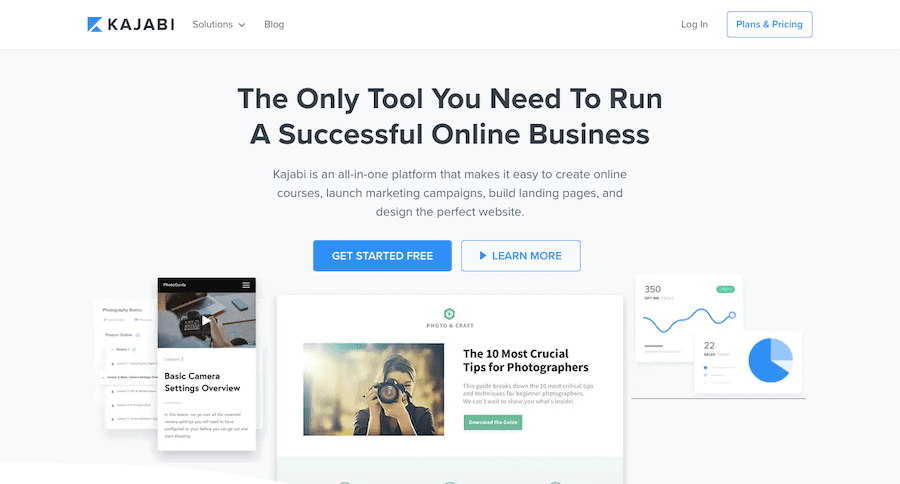
- You have consistent revenue and can justify the premium price.
- You value a smooth, bug-free user experience for both you and your students.
- You want 0% transaction fees and predictable costs.
✅ Best Fit Scenarios (Choose if…)
- You are an established creator who wants a reliable system that “just works”
- You need excellent 24/7 customer support
- You can afford premium pricing for premium polish
- Confirmed by its high rating on G2 reviews
⚠️ Considerations (Avoid if…)
- You are on a tight budget
- You are an advanced marketer who needs granular automation
- You need deep funnel-building power beyond basic visual flows
When Kartra Shines
- You think in funnels, sequences, and behavioral logic.
- You need the most powerful and granular automation engine on the market to build complex sales systems.
✅ Best Fit Scenarios (Choose if…)
- You are an advanced marketer focused on high-volume lead generation
- You prioritize raw power over user experience
- You’re willing to tackle a steep learning curve
- You need Behavioral Adaptive Marketing (BAM) tagging
⚠️ Considerations (Avoid if…)
- You are a beginner
- You value a clean, fast user interface
- The clunky dashboard and slow page builder will frustrate you
When Systeme.io Shines
- Your number one priority is starting a business for the lowest possible cost.
- Its free plan is the most generous in the industry.
✅ Best Fit Scenarios (Choose if…)
- You are just starting out with a very limited budget
- You follow the ‘bootstrapper’ philosophy of founder Aurelien Amacker
- You need a single platform to test ideas for courses, email lists, and funnels
- You want to validate before paying anything
⚠️ Considerations (Avoid if…)
- You need deep, powerful features
- You want a polished user experience
- You require a platform that scales with a large team
- You’ll likely outgrow Systeme.io
When Podia Shines
- You are overwhelmed by technology and just want a platform that is simple, beautiful, and easy to use.
- You value human support and want help via live chat anytime.
✅ Best Fit Scenarios (Choose if…)
- You are a solo creator, coach, or technophobe
- Your primary goal is selling courses without technical headaches
- You value live chat support, even on free plans
- Consistently rated top on Capterra reviews
⚠️ Considerations (Avoid if…)
- Your business relies on automated marketing funnels
- You need to nurture leads with complex sequences
- You need an API for custom integrations
When Thinkific Shines
- The quality of the student learning experience is your absolute top priority, putting it in direct competition with other specialized LMS platforms like Teachable.
- You need advanced quizzes, assignments, community features, and enterprise-grade security.
✅ Best Fit Scenarios (Choose if…)
- You are a serious educator or corporate trainer
- You want to build a “best-in-class” tech stack
- You’re comparing Thinkific vs Teachable for the core LMS
- You need SOC 2 Type II compliance
- You want to avoid vendor lock-in with a powerful, open API
⚠️ Considerations (Avoid if…)
- You want a single, simple, low-cost all-in-one solution
- You’re not willing to pay the “stack tax”
- You don’t want to manage and pay for multiple tools
Part 7: Conclusion & FAQs
Conclusion
The choice between alternatives to Tekmatix is a clear trade-off between Simplicity, Power, and Price. My analysis proves there is no ‘perfect’ knowledge commerce platform, only the ‘best fit’ for your specific business stage and technical comfort.
All-in-one platforms like Kajabi and Kartra sell convenience, while specialist stacks built on platforms like Thinkific sell power and freedom. Whichever route you take, applying a current money-saving deal at sign-up is one of the simplest ways to improve your 3-year TCO.
Your decision should be based on three critical questions: 1. What is your real budget (TCO) and your expected Return on Investment (ROI)? 2. What is your core business model (is it driven by complex marketing or deep education)? 3. What is your exit strategy (how much do you fear vendor lock-in)? Answering these honestly will point you to the right solution.
Before you sign up for any platform, demand clarity on the Total Cost of Ownership, ask directly about their content export policy, and do not trust marketing claims without third-party proof. Protecting your business from the digital prisons of vendor lock-in and the financial traps of hidden costs is the single most important step you can take. For broader savings across the creator-economy stack, browse our Latest Coupons and our full Category of Comparison articles.
Frequently Asked Questions
Q1: How much do platforms like Tekmatix really cost?
A1: Expect to pay 50-80% more than the advertised price over 3 years. Our Total Cost of Ownership (TCO) analysis shows that the sticker price is misleading for many Tekmatix competitors. The real cost is inflated by transaction fees on lower tiers, like Podia’s 5% fee on its Mover plan Podia Pricing, and the “stack tax” required for specialist platforms like Thinkific, which need separate tools for email marketing and checkout. For a business with 10,000 contacts, the 3-year TCO can range from around $11,000 to over $18,000, a far cry from the sub-$100 monthly fees often advertised.
Q2: Which platform is the easiest to start with?
A2: Podia is the easiest platform for non-technical beginners due to its simple interface and excellent live support. Its design philosophy prioritizes clarity and ease of use over feature depth, which is why it consistently receives top marks for user experience on sites like Capterra Podia Capterra Reviews. Users can launch a product in under an hour, and the availability of live chat for all users, even on the free plan, provides a safety net that no other platform in this analysis matches. This focus on support and simplicity makes it the best choice for anyone experiencing “technical headaches” with more complex systems.
Q3: What is the biggest risk with an all-in-one platform?
A3: The biggest risk is ‘vendor lock-in’ because platforms like Kajabi, Kartra, and Podia make it very difficult to export your course content. While you can usually export contact and sales data, your core intellectual property—your lessons and videos—is effectively held hostage. Migrating requires a painful, manual process of downloading each file individually, which can take 40-80 hours Kajabi Help: How to Download Your Course Content. This massive operational “exit tax” creates a huge barrier to leaving, even if you outgrow the platform’s features, trapping you in their ecosystem.
Q4: Is Kartra better than Kajabi?
A4: Neither is ‘better’; they serve different masters. Kartra is better for marketing automation, while Kajabi is better for user experience and polish. Choose Kartra if you’re an advanced marketer who needs granular control over complex funnels and doesn’t mind a clunky UI, as noted by its lower ease-of-use score on G2 Kartra G2 Reviews. Choose Kajabi if you’re an established creator who values a smooth, reliable, and easy-to-use system and can justify the premium price. Your choice depends on whether you prioritize raw marketing power or a pleasant and efficient user experience.
Q5: Can I get by with Systeme.io’s free plan?
A5: Yes, Systeme.io’s free plan is powerful enough to start a business, but you will likely need to upgrade to handle more contacts or gain advanced features. The free plan is the most generous on the market, offering the ability to build a sales funnel, host a course, and manage up to 2,000 contacts with no monthly fee Systeme.io Pricing Page. It’s a legitimate way to launch a product and validate an idea. However, its features are wide but not deep. Serious businesses will quickly hit the limits of its basic automation and may face email deliverability challenges, requiring an upgrade to a paid plan.
Q6: Why would I choose Thinkific if it’s not an all-in-one?
A6: You choose Thinkific if the student learning experience and enterprise-grade security are your top priorities. It’s a philosophical choice to build a “best-in-class” stack rather than accept the compromises of an all-in-one. Thinkific provides the best Learning Management System (LMS), and you integrate it with the best email and cart tools for your needs. This gives you more power, flexibility, and freedom from vendor lock-in. For corporate trainers or educators in regulated fields, its SOC 2 compliance is a non-negotiable feature that all-in-one platforms lack Thinkific Security Page.
Q7: What’s the most common complaint about all-in-one platforms?
A7: The most common complaint is the “Jack of all trades, master of none” problem, where integrated tools are less powerful than specialized software. Users consistently find that the built-in email marketing, page builders, or affiliate tools on platforms like Kajabi and Kartra lack the advanced features of dedicated solutions like ActiveCampaign or a proper WordPress blog for content marketing. For example, Kajabi’s own team has acknowledged in webinars that its blog feature is intentionally basic. This forces users to either accept the limitations or create a clunky hybrid system, defeating the “all-in-one” promise.
Q8: What is SOC 2 compliance and why does it matter?
A8: SOC 2 is an independent security audit that verifies how a company protects customer data according to standards set by the American Institute of Certified Public Accountants (AICPA). For creators, especially those with corporate clients or in regulated fields like health and finance, it’s third-party proof that a platform like Thinkific has enterprise-grade security controls in place Thinkific Trust & Security. It’s not just a technical checkbox; it’s a powerful trust signal that demonstrates a vendor’s commitment to security, reducing your business liability and helping you win larger, more security-conscious clients who may require it.