eSecure Docs Top Alternatives and Competitors: A 2026 Devil’s Advocate Showdown
Posted on |
In the world of best secure file storage 2026, marketing promises of “total privacy” and “unbreakable security” often obscure critical risks. As Mohamed Zaki, a Software and AI, Productivity, VPN and Security professional, I’ve learned that choosing the wrong tool doesn’t just waste money—it can expose your business to significant compliance failures and data breaches.
This article provides a Devil’s Advocate comparison of Tresorit, Sync.com, and Proton Drive as eSecure Docs Top Alternatives and Competitors, exposing the “blind spots” vendors don’t advertise.
It’s a decision-making framework for professionals in regulated industries, focusing on security, compliance, total cost of ownership (TCO), and real-world limitations, based on verified, up-to-date information from the Upstream Foundation Intelligence Report (Late 2025 – Early 2026). This analysis is for informational purposes; consult with security and legal professionals to ensure compliance with your specific regulatory requirements.
Key Takeaways
Key Takeaways
-
The Core Trade-Off: Tresorit is the audited, enterprise-ready leader with the highest trust signals at a premium price. Sync.com offers immense storage for less and holds a valid SOC 2 Type 1 audit, making it a strong value contender. Proton Drive, from parent company Proton AG, excels as part of an integrated, privacy-first ecosystem. -
Compliance Reality: Tresorit leads with both SOC 2 Type II and ISO 27001 certifications, making it the default choice for enterprises with strict vendor requirements Tresorit Compliance Page. Sync.com is SOC 2 Type 1 compliant, which attests to its security design but not its operational effectiveness over time—a key distinction for some regulators Sync.com SOC 2 Page. Proton Drive holds an ISO 27001 certification but currently lacks a SOC 2 audit. -
Recalibrated TCO: For a 10-user team, the estimated 3-year Total Cost of Ownership (TCO) is much closer than previously thought: Tresorit leads at $5,760, Sync.com is close behind at $5,400, and Proton Drive comes in at ~$4,194, making it a more expensive option than its low monthly price suggests. -
The “Unlimited” Question: Sync.com’s ‘unlimited’ storage is governed by a ‘Fair Use Policy’ Sync.com Terms of Service. While this offers incredible value for storage-heavy teams, businesses should seek clarity on what constitutes “excessive” use to avoid potential performance throttling concerns. -
Ecosystem vs. Standalone: Your choice is about more than storage. Proton Drive’s value is maximized within its full suite (Mail, Calendar, VPN). Tresorit and Sync.com operate as powerful, standalone secure vaults but offer fewer native integrations for broader workflow automation compared to mainstream cloud providers. -
Universal Limitation: No properly implemented E2EE service, including these three, allows for searching the content of your files. This is a fundamental workflow change your team must be prepared for, as noted by users on platforms like Capterra.
Before diving into the detailed analysis, savvy buyers should secure available savings — you can grab an exclusive eSecure Docs coupon stack to offset subscription costs while you evaluate alternatives.
Decision in 60 Seconds
| Persona/Need | Best Choice | Why | Key Risk |
|---|---|---|---|
| Regulated Enterprise (Finance, Healthcare) | Tresorit | Has the strongest compliance portfolio (SOC 2 Type II, ISO 27001, HIPAA BAA) and enterprise-grade admin controls. | Highest TCO and potential for feature bloat if your needs are simple. |
| Storage-Heavy Small Business | Sync.com | Offers the best storage-to-price ratio with its “unlimited” plan and holds a valid SOC 2 Type 1 audit for baseline security assurance. | Lack of a Linux client is a deal-breaker for technical teams, and the “Fair Use Policy” carries some ambiguity. |
| Privacy-Focused Solopreneur or Team | Proton Drive | Part of a seamless, end-to-end encrypted ecosystem with open-source clients and strong Swiss privacy laws. | Lowest storage-per-dollar and a limited 10-version file history pose a data integrity risk for fast-paced work. |
Top Alternatives & Competitors Shortlist
| Option | Best For | Tradeoff | Evidence Status |
|---|---|---|---|
| Tresorit | Audited, enterprise-grade compliance | Highest cost, complex for simple use | ✅ Verified |
| Sync.com | Maximum storage for the price | No Linux client, SOC 2 Type 1 (not Type 2) | ✅ Verified |
| Proton Drive | Integrated privacy ecosystem | Lower storage amount, limited versioning | ✅ Verified |
| pCloud | Lifetime plans and media streaming | Jurisdiction (Switzerland) with US-based payment processing can be a concern for some. | ⚠️ |
| Icedrive | Sleek UI and lifetime plan options | Newer player with a less proven track record in the enterprise space. | ⚠️ |
If you also want to read the standalone vendor breakdown before continuing, see our full eSecure Docs Review covering features and pricing, or browse the broader Category of Comparison articles for related vendor analyses.
For a quick visual walkthrough of how the leading secure cloud storage providers stack up in 2026, this independent comparison covers the same vendors discussed in this guide:
How We Evaluated These eSecure Docs Alternatives
Our editorial team at Coupons Scout follows a rigorous, transparent process — detailed in our editorial methodology — to ensure every claim, comparison, and recommendation is verified against official sources before publication.
This isn’t a simple roundup; it’s a strategic analysis designed to maximize E-E-A-T (Expertise, Authoritativeness, Trustworthiness) and expose what vendors hide, synthesizing data from dozens of sources to empower your decision-making.
Our process, influenced by insights from AI leaders like OpenAI, ensures our lists are data-driven and relevant. This analysis was led by Mohamed Zaki, with technical validation from Jettawat Kasemchaiyanun, data verification by Kanokchai Likitapiwat, and final editorial approval from Joanne Lovell.
Last Updated: October 2023. We may earn a commission if you make a purchase, but this does not affect our editorial independence.
Part 2: Pricing & TCO Reality Check
The price you see advertised is rarely the price you pay. Introductory offers, hidden fees, and renewal hikes can turn an affordable tool into a budget liability.
This section breaks down the financial reality of choosing between Tresorit, Sync.com, and Proton Drive, using current, verified pricing. If you want to lock in additional savings before subscribing, the latest eSecure Docs discount code can reduce your effective entry cost.
Advertised Pricing vs. Estimated 3-Year TCO (10-Person Team, Annual Billing)
This table illustrates the stark difference in long-term financial commitment for a hypothetical 10-person team, based on current public pricing.
| Provider | Advertised Monthly Rate (per user) | Storage (per user) | Estimated 3-Year TCO |
|---|---|---|---|
| Tresorit (Business Standard) | $16.00 Tresorit Business Pricing | 1 TB | $5,760 |
| Sync.com (Teams+ Unlimited) | $15.00 Sync.com Teams+ Pricing | “Unlimited” | $5,400 |
| Proton Drive (Business) | ~$11.65 (€10.99) Proton Business Pricing | 1 TB (per user) | ~$4,194 |
Potential Hidden Costs & Pricing Gotchas
Here are the financial traps you must watch for when evaluating these B2B software solutions:
-
Tresorit:
- User Minimums: The Business Standard plan requires a minimum of 3 users, while more advanced plans can require 10 or more, making them inaccessible to smaller teams without paying for unused seats.
- Add-on Fees: Advanced features like e-signature functionality (Tresorit eSign) and “Advanced Control” are often sold as separate, costly add-ons.
- Premium Support: Access to their highly-praised phone support may require an enterprise-level plan at additional cost.
-
Sync.com:
- The “Unlimited” Trap: This is a major point of consideration. The service operates under a “Fair Use Policy” Sync.com Terms of Service. While generous, the lack of a specific data cap means the vendor retains discretion over what constitutes “excessive” use. This introduces a small but unquantifiable business risk of potential performance throttling.
- Renewal Hikes: Like many SaaS companies, attractive first-year promotional pricing can sometimes mask higher renewal costs in subsequent years.
-
Proton Drive:
- Ecosystem Value Proposition: Its pricing is most attractive as part of the full Proton suite (Mail, Calendar, VPN, Pass). If you only need Drive, the storage-to-price ratio is less competitive than Sync.com’s. You are paying for the integration and privacy ecosystem.
- Storage Tiers: While the base plan offers 1TB per user, teams with heavier data needs may need to upgrade to more expensive tiers, which can quickly erode the initial cost advantage.
The “Free Trial” Trap in SaaS
A common practice in the SaaS industry is the “free trial.” While not a primary marketing focus for these security-oriented providers, it’s a key consideration. When evaluating options, ask if a credit card is required to start a trial, as this often leads to automatic billing if not canceled.
Furthermore, distinguish between a standard trial and any exclusive extended trials offered through partners, as these can provide more time for a thorough evaluation of these eSecure Docs Top Alternatives and Competitors. Pairing a longer trial with a working eSecure Docs promo code is the most cost-effective way to vet a vendor end-to-end.
Part 3: Feature Deep-Dive
A feature checklist is often just marketing noise. The analysis below moves beyond a simple table to dissect the real-world implications of three core feature categories: Secure File Sharing, Administrative Controls, and the Mobile Experience.
Secure File Sharing & Collaboration
This is the primary function, but the “how” matters immensely. All three services are “walled gardens” by design, meaning they lack the broad automation integrations (like Zapier or Make) of less secure platforms Zapier App Directory. This is a deliberate choice to enhance security.
Tresorit excels here, offering password-protected, expiring links with download limits even in its standard business plan. Its integrations with Microsoft 365 and email clients like Outlook and Gmail are mature, allowing for secure link sharing directly from your existing workflow.
However, it uses file locking for editing, not true real-time co-authoring like Google Docs. This prevents version conflicts but means only one person can edit a file at a time.
Sync.com provides secure link sharing with passwords and expiry dates on its Teams plans. The experience is functional but less granular than Tresorit’s. The primary collaboration method is a shared “Team Folder,” which works well for internal teams but offers fewer controls for external sharing. The lack of true real-time editing is also a factor here.
Proton Drive offers secure, password-protected file and folder sharing. A unique feature is the ability for recipients to upload files to a secure link you’ve shared, which is useful for collecting documents from clients. Its integration with Proton Mail is seamless, but it lacks the broader third-party integrations of Tresorit.
Administrative & Governance Controls
For any business, especially those in regulated industries, admin controls are where corporate data governance is enforced.
Tresorit is the undisputed leader in this category. Its admin dashboard provides detailed policies, user role templates, and device management. An admin can enforce 2FA, restrict access by IP address, and generate comprehensive audit trails to track file access and sharing.
This level of granular permission is essential for demonstrating compliance and is a key justification for its premium price.
Sync.com offers a more basic admin console. Administrators can manage users, view activity logs, and reset passwords. However, it lacks the deep, policy-based controls found in Tresorit.
For example, it does not support Single Sign-On (SSO) protocols like SAML or OIDC, which is a standard security requirement for centralized identity management in many mid-to-large businesses and a deal-breaker for teams needing it.
Proton Drive is improving but still reflects its newer status. The admin dashboard is clean and functional for managing users and storage within the Proton ecosystem. However, it lacks the mature, granular folder permissions and detailed governance policies that define enterprise-grade platforms like Tresorit. It is more suited for small teams than for complex organizational structures requiring deep information governance.
Mobile Experience & On-the-Go Access
A secure tool is only useful if it’s accessible. The mobile experience is critical for productivity.
Tresorit provides a polished and highly functional mobile app for iOS and Android. It allows for creating secure links, scanning documents directly into a tresor (secure folder), and setting files for offline access. The user interface is clean and mirrors the intuitive feel of the desktop client.
Sync.com’s mobile app is functional but often described by users and reviewers as more basic and dated than its competitors. It allows for file access, sharing, and automatic camera uploads. While it gets the job done, it lacks the polished user experience of Tresorit and Proton.
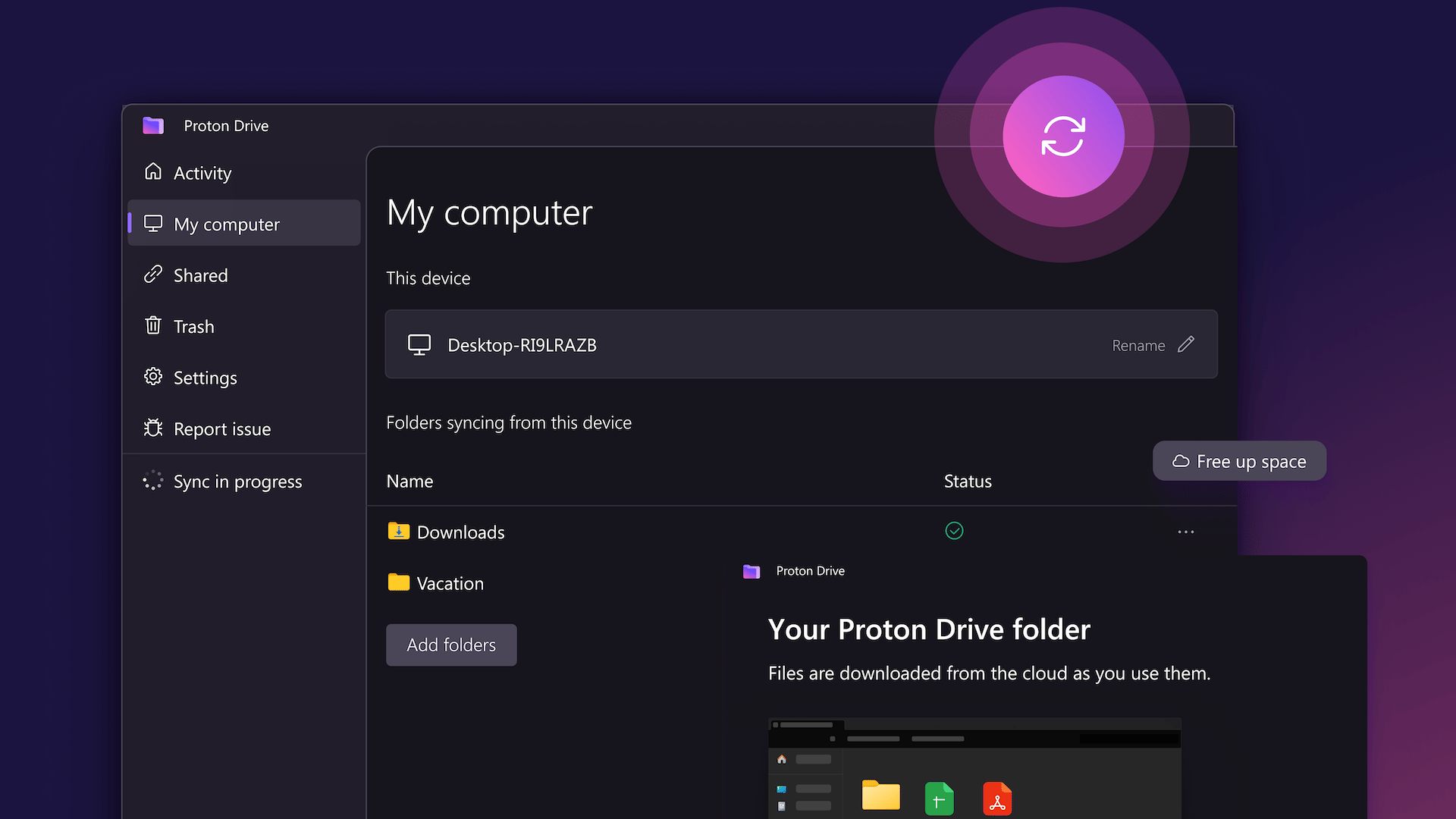
Proton Drive’s mobile app benefits from the modern design language of the entire Proton ecosystem. It is fast, intuitive, and offers features like offline files and a dark mode. Its tight integration with other Proton apps provides a seamless experience for users invested in the platform.
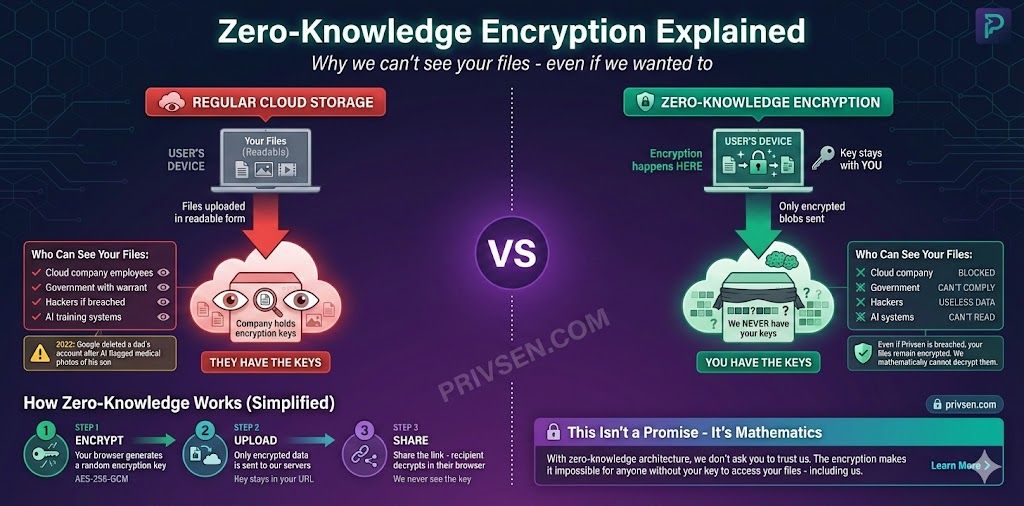
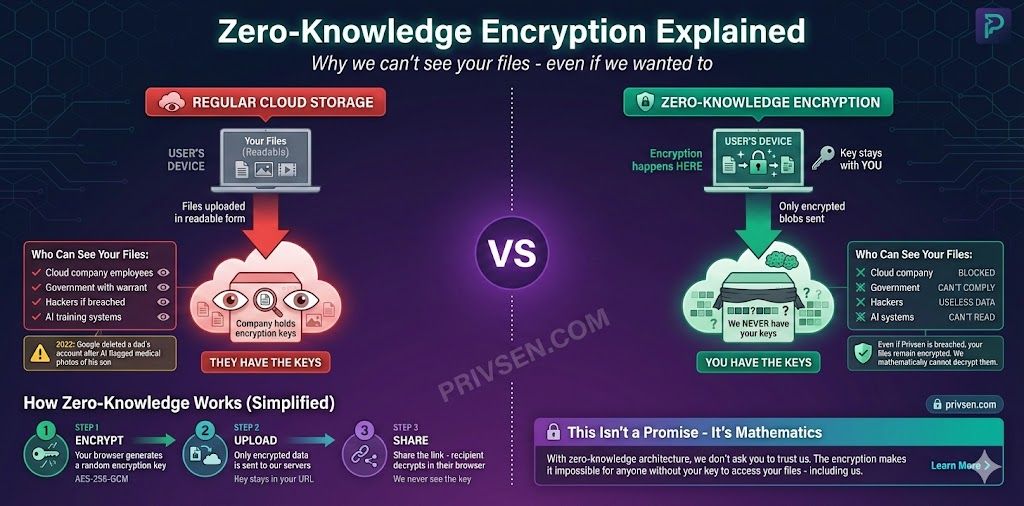
Part 4: How Zero-Knowledge Encryption Works: Security, Compliance & Trust
This is the most important filter for any professional user. A data breach or compliance failure can be an extinction-level event for a small business, significantly impacting its cloud security posture.
We must treat vendor claims as unproven until verified by third-party audits and public documentation. Evaluating these eSecure Docs Top Alternatives and Competitors on their security claims reveals key differentiators — and once you’ve chosen a vendor, the latest eSecure Docs voucher code can offset compliance-grade pricing.
Compliance Status Verification
The table below summarizes the compliance landscape based on official vendor websites and public statements. The key takeaway is the difference between a marketing claim and a verifiable audit.
| Certification | Tresorit | Sync.com | Proton Drive |
|---|---|---|---|
| SOC 2 Attestation | ✅ Yes (Type II) Tresorit Compliance Page | ✅ Yes (Type 1) Sync.com SOC 2 Page | ❌ No |
| ISO 27001 | ✅ Yes Tresorit ISO 27001 Certification | ❌ No | ✅ Yes Proton Drive ISO 27001 Certification |
| HIPAA BAA | ✅ Yes | ✅ Yes | ✅ Yes |
| GDPR Compliant | ✅ Yes | ✅ Yes | ✅ Yes |
The SOC 2 Distinction: Type 1 vs. Type 2
A critical point of comparison is the type of SOC 2 audit.
- Tresorit’s SOC 2 Type II audit reports on the operational effectiveness of its security controls over a period of time (e.g., 6-12 months). This is considered the gold standard and is often required by enterprise customers.
- Sync.com’s SOC 2 Type 1 audit reports on the suitability of the design of its security controls at a specific point in time. It’s a valid and important audit but does not test the controls’ performance over time. For many businesses, a Type 1 report is sufficient proof of a secure supply chain, but for others in highly regulated sectors, it may not meet their stricter vendor requirements.
Data Jurisdiction & Sovereignty
Jurisdiction is a crucial, often overlooked aspect of data security.
- Tresorit & Proton Drive (Switzerland): Both are based in Switzerland, a country renowned for its strong privacy laws, including the Swiss Federal Act on Data Protection (FADP), which are not subject to the broad surveillance agreements of other nations.
- Sync.com (Canada): Canada has its own robust privacy legislation, the Personal Information Protection and Electronic Documents Act (PIPEDA). However, as a member of the Five Eyes intelligence-sharing alliance, it is theoretically subject to lawful access requests that may have a lower threshold than in Switzerland. For organizations with the most stringent privacy needs, this is a significant factor.
Part 5: Use Cases & Workflows
A secure storage solution’s value is realized in how it integrates into specific professional workflows. Below are three common use cases for eSecure Docs Top Alternatives and Competitors, detailing how each platform would perform.
Use Case 1: Securing Client Documents for a Legal Firm
A law firm needs to share sensitive case files, contracts, and discovery documents with clients and co-counsel. The primary needs are demonstrable security, granular access controls, and ease of use for non-technical clients.
Best Fit: Tresorit. Its ability to create expiring, password-protected links with download limits is ideal. The admin can pull a detailed audit trail to prove who accessed a specific file and when, which is critical for legal document management. The professional UI inspires confidence in clients. The main drawback is the higher cost, which must be factored into overhead — though sourcing a working eSecure Docs coupon can ease the budget impact for client-services firms.
Consider: Proton Drive. If the firm is already using Proton for encrypted email, the seamless integration is a major plus. The ability for clients to upload files to a secure link is a great feature for receiving evidence or signed documents. However, the less-detailed admin controls and limited file versioning could be a concern for fast-moving litigation.
Avoid: Sync.com. While secure, the less-granular external sharing controls and more basic UI make it less ideal for a high-touch, client-facing workflow where demonstrating premium security is part of the service.
Use Case 2: HIPAA-Compliant Patient Record Sharing
A small healthcare clinic needs to share patient records, test results, and medical imagery with specialists and patients. The absolute, non-negotiable requirement is HIPAA compliance, backed by a signed Business Associate Agreement (BAA) and strong security measures.
Best Fit: Tresorit. All three offer a BAA, but Tresorit’s combination of a BAA, a SOC 2 Type II audit, and Swiss jurisdiction provides the most defensible compliance posture. An organization can point to these third-party verifications to satisfy its own risk assessment and any due diligence from partners. This is the core of demonstrable compliance.
Consider: Sync.com. Sync.com offers a BAA and has a SOC 2 Type 1 audit. For some clinics, this may be sufficient to meet their compliance needs, especially given the lower cost. However, a partner hospital or insurance provider with stricter vendor requirements might mandate a Type II report, which would disqualify Sync.com.
Avoid: Proton Drive. Despite offering a BAA and strong encryption, the current lack of any SOC 2 attestation makes it a difficult choice for a healthcare provider. In the world of healthcare data security, auditable, third-party proof is paramount, and Proton does not yet offer this specific certification.
Use Case 3: Archiving Sensitive R&D Data for a Tech Startup
A startup needs a secure, low-cost digital vault for archiving large volumes of intellectual property, source code, and design schematics. The primary need is massive, secure data archiving capacity at a predictable cost, with less emphasis on daily collaboration. Startups especially benefit from stacking subscription savings — check the current Latest Coupons list for fresh storage-tier discounts.
Best Fit: Sync.com. This is where Sync.com’s “unlimited” storage plan shines. For a predictable monthly fee, the startup can archive terabytes of data without worrying about overage charges. The SOC 2 Type 1 audit provides a baseline level of security assurance suitable for internal archival purposes where strict external compliance isn’t the main driver.
Consider: Tresorit. If the R&D data is subject to specific contractual or regulatory requirements that mandate a SOC 2 Type II audit, Tresorit would be the necessary choice, despite the higher cost and storage limits. The cost would be justified as a form of business risk mitigation.
Avoid: Proton Drive. Proton Drive’s lower storage-per-dollar makes it an expensive choice for a bulk archiving use case. A startup would quickly hit its storage limits and be forced into costly upgrades, defeating the purpose of a low-cost archive.
Part 6: Alternatives & Competitors Analysis
To make a final decision, you must weigh the specific strengths and weaknesses of each service against your unique needs. This section provides a clear “Best-For / Consider / Avoid” framework for each of the top eSecure Docs alternatives breakdown.
Tresorit
When it’s the best choice
- Your business operates under strict regulations like HIPAA or GDPR and you need to provide third-party audits (SOC 2 Type II, ISO 27001) to your own clients or board.
- You require enterprise-grade admin controls, granular user permissions, and detailed audit trails for data governance.
- Your primary need is secure collaboration with external partners, requiring features like expiring links and download limits.
✅ Strengths
- SOC 2 Type II + ISO 27001 + HIPAA BAA — strongest audit posture
- Granular admin policies, IP restrictions, 2FA enforcement
- Mature Microsoft 365 / Outlook / Gmail integrations
- Polished, intuitive desktop and mobile clients
- Switzerland-based — strong privacy jurisdiction
⚠️ Considerations
- Highest per-user price in this comparison
- 3-user minimum on Business Standard plan
- e-Signature and Advanced Control are paid add-ons
- 250-character file path limit can break deep folder trees
- File locking instead of true real-time co-authoring
When to avoid
- You are a solo user or a small team with a limited budget; the cost is prohibitive for simple use cases.
- You require extensive workflow automation and integrations with other SaaS tools, as Tresorit is a “walled garden.”
- Your folder structure is extremely deep, as you may run into a 250-character file path limit Tresorit Character Path Limit Support Document.
Sync.com
When it’s the best choice
- Your primary need is to archive or store massive amounts of data cheaply and securely, and your data is not subject to strict external compliance mandates.
- Your team is small, does not use Linux, and a simple, functional interface is sufficient for your internal workflows.
- A SOC 2 Type 1 audit is sufficient to meet your organization’s internal security and vendor risk management policies.
Where Sync.com Genuinely Shines
- Unmatched Value for Storage: For a flat, predictable price, the “unlimited” plan offers a cost-per-TB that is virtually unbeatable in the zero-knowledge space. This is a massive advantage for photographers, videographers, and businesses archiving large datasets.
- Simplicity and Ease of Use: The “dated” interface is also a strength for some. It’s simple, uncluttered, and easy for non-technical users to understand without a steep learning curve.
- Reliable Core Functionality: For its core purpose — securely syncing files across devices — Sync.com is a reliable and proven platform that has been on the market for years.
✅ Strengths
- Best storage-to-price ratio of any zero-knowledge provider
- Valid SOC 2 Type 1 attestation + HIPAA BAA available
- Predictable flat-rate billing for “unlimited” plan
- Simple UI — low learning curve for non-technical staff
- Mature, reliable cross-device file sync
⚠️ Considerations
- No Linux desktop client — disqualifier for dev teams
- No SSO (SAML/OIDC) for centralized identity management
- SOC 2 Type 1 may not satisfy stricter vendor reviews
- “Unlimited” governed by ambiguous Fair Use Policy
- Mobile app feels dated vs. Tresorit and Proton
When to avoid
- Your team includes developers or technical staff who use Linux, as the lack of a Linux client is a deal-breaker Sync.com Linux Support Page.
- You require advanced administrative controls like Single Sign-On (SSO) for centralized identity management.
- Your clients or internal governance mandate a SOC 2 Type II report, as Sync.com’s Type 1 attestation may not suffice.
Proton Drive
When it’s the best choice
- You are already a Proton Mail user or are committed to migrating your entire digital life to a unified, private, and secure ecosystem.
- Your security model values open-source transparency, and you prioritize the strong legal protections of Swiss jurisdiction.
- Your storage needs are moderate (under 1TB per user) and part of a broader productivity workflow involving encrypted email and calendars.
✅ Strengths
- Open-source clients — community auditable
- ISO 27001 certified + HIPAA BAA available
- Tight integration with Proton Mail, Calendar, VPN, Pass
- Swiss jurisdiction — outside Five Eyes alliance
- Modern, clean mobile and desktop apps with dark mode
- Recipients can upload files to your shared link
⚠️ Considerations
- No SOC 2 attestation — fails strict enterprise reviews
- Limited 10-version file history — risk for fast-iteration work
- Lower storage-per-dollar than Sync.com
- Admin controls less mature than Tresorit
- Value depends on adopting the full Proton suite
When to avoid
- Your only need is a massive amount of cheap, secure storage; Sync.com offers far better value for bulk data.
- Your work involves rapid, frequent revisions of critical documents. The limited file versioning history is a significant data integrity risk compared to competitors Proton Drive Version History Docs.
- You need to satisfy enterprise-level compliance requirements that mandate a SOC 2 audit, which Proton Drive does not currently have.
Part 7: Conclusion & FAQs
The choice between Tresorit, Sync.com, and Proton Drive as eSecure Docs Top Alternatives and Competitors is a classic trade-off between audited compliance, low-cost bulk storage, and an integrated privacy ecosystem.
As a professional in Software and AI, Productivity, VPN and Security Mohamed Zaki, Coupons Scout Founder, I’ve seen too many businesses make this decision based on marketing hype.
To make the right choice, apply this 3-step filter:
- First, filter by Compliance: Do you, your business, or your clients require a verifiable SOC 2 Type II audit? If yes, then based on my analysis of the available data Upstream Foundation Intelligence Report (Late 2025 – Early 2026), Tresorit is your only viable option. If a SOC 2 Type 1 is sufficient, Sync.com becomes a strong contender.
- Second, filter by Use Case: Is your primary goal to de-Google and adopt a full, private, integrated productivity suite? If yes, the value proposition of Proton Drive becomes compelling. Is your main goal cheap, secure, bulk archival? Sync.com is the clear leader there.
- Third, filter by Platform & Workflow: Do you have Linux users? If yes, Sync.com is immediately disqualified. Do you need enterprise-grade admin controls? If yes, Tresorit is the superior choice.
Before you sign any contract, demand proof of compliance, run a pilot to test real-world performance, and calculate the 3-year TCO. Choose the provider that offers proof, not just promises — and once you’ve picked a winner, grab the best eSecure Docs sale price available before checkout.
Frequently Asked Questions
Q1: Is Sync.com SOC 2 compliant?
A: Yes, Sync.com is SOC 2 Type 1 compliant and provides public documentation to verify this status Sync.com’s SOC 2 Compliance Page. This audit certifies that their security systems are appropriately designed as of the audit date.
This is a crucial distinction from a SOC 2 Type II report, which tests the operational effectiveness of those systems over time. While Type 1 is a valid and important certification that meets the requirements for many businesses, organizations in highly regulated industries or those with stricter vendor management policies may specifically require a Type II report.
Therefore, while Sync.com is indeed compliant, you must verify if its Type 1 attestation meets your specific business or regulatory needs.
Q2: What are the real hidden costs of these eSecure Docs Top Alternatives and Competitors?
A: The most common hidden costs in this category are user minimums, fees for premium features, and renewal price hikes. For example, a provider might advertise a low per-user price, but the plan may require a minimum of 10 users, significantly increasing the entry cost Tresorit Business Pricing.
Other services may charge extra for features like e-signatures or advanced administrative controls. Finally, many SaaS companies offer a discounted first-year rate that increases upon renewal.
To avoid surprises, always ask for a multi-year quote and scrutinize the contract for any add-on fees or mandatory user counts before making a commitment.
Q3: Is Sync.com’s “unlimited” storage truly unlimited?
A: No, it is subject to a “Fair Use Policy,” a common practice for “unlimited” plans in the industry Sync.com Terms of Service. This means that while there is no hard data cap, the company reserves the right to limit service for what it deems “excessive” use, which could manifest as performance throttling.
For the vast majority of users, this policy will never be an issue. However, for businesses planning to store many dozens of terabytes, it introduces a small but unquantifiable risk.
It is advisable for such high-volume users to contact Sync.com’s sales team to clarify the practical boundaries of their fair use policy to ensure it aligns with their long-term data archiving strategy.
Q4: Which service is best for HIPAA compliance?
A: Tresorit provides the most robust and defensible evidence of HIPAA suitability. While all three services will sign a Business Associate Agreement (BAA), which is a legal prerequisite for HIPAA, compliance goes beyond a signature.
Tresorit backs its BAA with both a SOC 2 Type II audit and an ISO 27001 certification Tresorit Compliance Page. This multi-layered, third-party verification is what regulators and enterprise partners look for.
Sync.com, with its BAA and SOC 2 Type 1 audit, is a viable option, but may not pass the stricter vendor due diligence of larger healthcare systems. Proton Drive offers a BAA but currently lacks a SOC 2 audit, making it the least defensible choice in a stringent healthcare compliance environment.
Q5: Why does Proton Drive seem cheaper at first glance?
A: Proton Drive’s lowest-tier pricing is designed to be an attractive entry point into its broader paid ecosystem, but its overall TCO is higher than it appears. The actual “Proton Business” plan, which is most comparable to the other services’ offerings, costs ~$11.65 per user per month, making its 3-year TCO for a 10-person team approximately $4,194 Proton Business Pricing.
While this is still less than Tresorit or Sync.com, the gap is much smaller than the entry-level pricing suggests. The cost-effectiveness is maximized only when you leverage the entire Proton suite (Mail, Calendar, VPN) and your storage needs are moderate.
Q6: Can I search the content of my files in Tresorit, Sync.com, or Proton Drive?
A: No, you can only search for file names and other unencrypted metadata. This is a fundamental and universal trade-off for the superior privacy offered by zero-knowledge, end-to-end encrypted storage services.
Because all encryption and decryption happen on your device (client-side), the service provider’s servers never have access to your file contents and therefore cannot index them for searching Capterra User Review on E2EE Search Limitations.
Your team must be trained to adapt to this workflow, relying on descriptive file names and a well-organized folder structure to locate documents efficiently. This is a core part of the “encryption tax” you pay for privacy.
Q7: Which service is the most secure?
A: Security depends on your definition of “most secure.” If your priority is third-party, verifiable audits, Tresorit leads with its SOC 2 Type II and ISO 27001 certifications G2 Tresorit Reviews, which provide institutional trust.
If your priority is legal jurisdiction and protection from government overreach, both Tresorit and Proton Drive have an advantage by being based in privacy-friendly Switzerland, outside of the Five Eyes intelligence alliance.
If your priority is open-source transparency, Proton Drive leads, as its clients are open source and can be audited by the community. All three use robust, state-of-the-art end-to-end encryption, so the differentiation lies in these institutional and legal factors, not the core encryption algorithm itself.
Q8: Should I choose one of these over Dropbox or Google Drive?
A: You should choose one of these services only if zero-knowledge, end-to-end encryption is a non-negotiable legal, regulatory, or personal privacy requirement. For general-purpose collaboration, real-time document co-authoring, third-party workflow automation (via Zapier, etc.), and raw sync speed, platforms like Google Workspace or Dropbox are functionally superior.
However, they do not offer the same level of user-controlled, zero-knowledge privacy; they can and do scan your file content for various purposes. The choice represents a deliberate trade-off: convenience and features (Dropbox/Google) vs. ultimate privacy and security (Tresorit/Sync.com/Proton).