Dyson Canada Top Alternatives and Competitors: The Devil’s Advocate Guide to Beating the Brand Tax 2026
Posted on |
You’re standing in a Canadian Tire or Best Buy, looking at a $999 Dyson vacuum. You know the name; you’ve seen the ads. But is it truly worth the premium price?
As Jennifer Angel, Coupons Scout’s lead Lifestyle & Retail Editor, I’ve spent years analyzing the Home and Garden appliance market. I’ve seen brands build empires on marketing, and I’ve seen practical, powerful alternatives get overlooked.
This is where the core conflict lies for consumers searching for appliances cheaper than Dyson, especially with challengers like Shark offering similar results for a fraction of the cost — and you can save even more with a Shark Canada Coupon Codes and Deals.
This guide provides a devil’s advocate analysis of the top Dyson Canada Top Alternatives and Competitors, designed to cut through the hype. Our strategic analyst, Mohamed Zaki, has helped structure this deep dive.
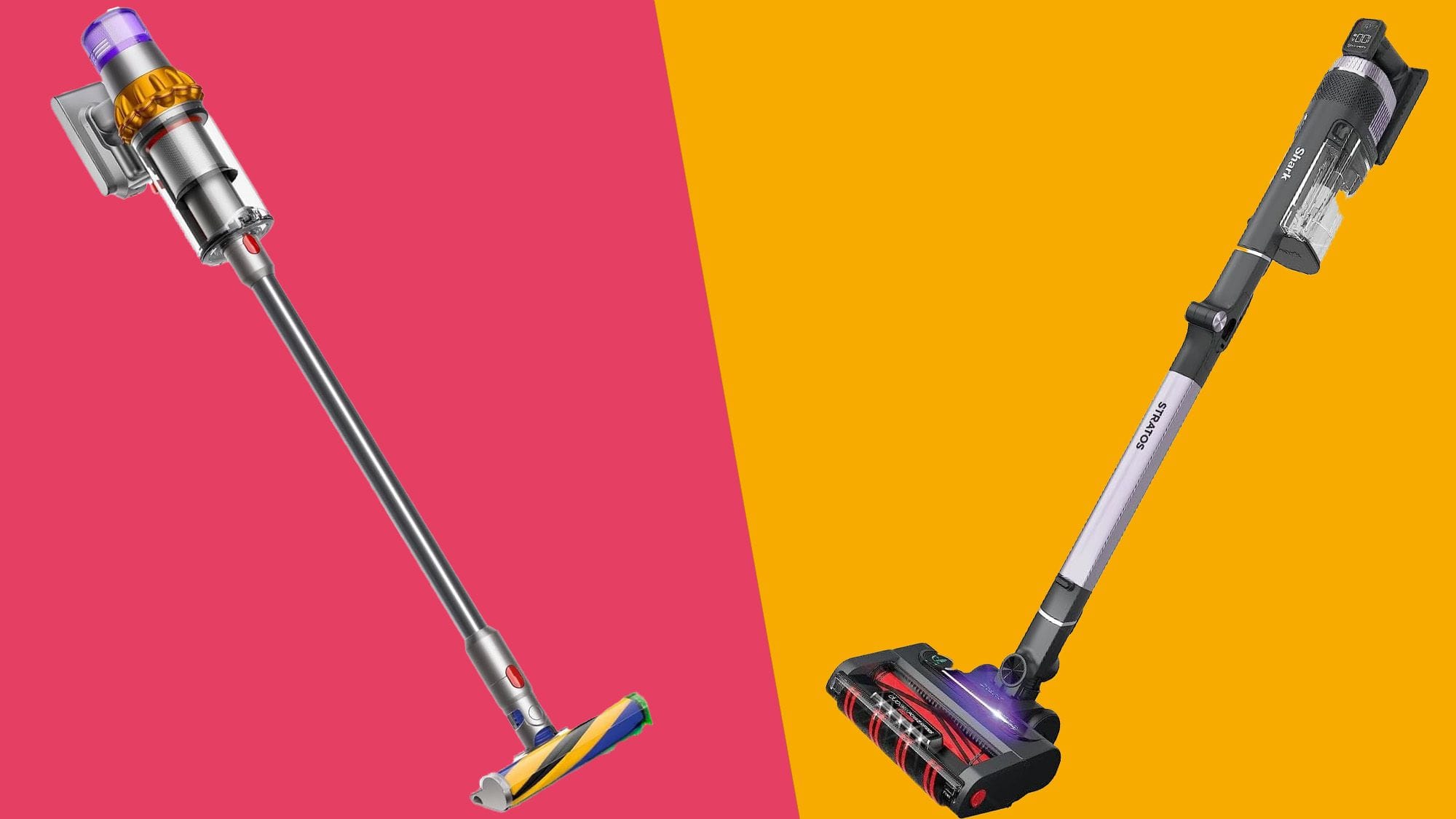
We’re going to dissect the true price, Total Cost of Ownership (TCO), warranty, and long-term reliability of the Dyson V15 Detect versus the Shark Stratos Cordless, and the Dyson Airwrap versus the Shark FlexStyle.
I’ll help you understand the “Dyson Brand Tax”—the premium you pay for brand loyalty and a name—and whether it’s ever justified. If you’re looking for the best Dyson Canada coupon code before committing, we’ve got you covered.
Our framework is built on the principles of Expertise, Experience, Authoritativeness, and Trustworthiness (E-E-A-T) and is designed to expose the truth behind marketing claims. This analysis is based on extensive research and synthesis of real-world data to empower your decision. All prices are in CAD and reflect the market as of October 2024.
Key Takeaways
-
The “Brand Tax” is Real and Quantifiable: Our illustrative Total Cost of Ownership (TCO) model projects that over three years, the Dyson V15 could cost significantly more than the Shark Stratos, a premium paid almost entirely for the brand name and its data-focused features. -
Shark’s 5-Year Warranty is a Decisive Advantage: Compared to Dyson’s 2-year coverage, Shark’s longer warranty is a massive financial risk mitigator, directly addressing the widespread consumer fear of expensive, out-of-warranty failures on a high-cost appliance (Shark Warranty Information). -
It’s a Battle of Philosophies — Data vs. Ergonomics: Dyson sells “intelligent” cleaning with data-driven features like lasers and particle counters. Shark solves more practical, everyday problems with features like the FlexWand for under furniture cleaning and a push-button power switch to prevent hand strain. -
Independent Tests Favor Shark for Pet Hair: For pet owners, this is not a small detail. Independent tests suggest Shark’s PowerFins HairPro technology is highly effective for pet hair. Reviewers at RTINGS.com and Vacuum Wars have noted it often shows a significant advantage over Dyson’s Motorbar in preventing hair tangles. -
The Dyson Airwrap’s Value is Highly Questionable: At less than half the price ($349.99 vs. $749.99), the Shark FlexStyle offers nearly identical low-heat Coandă styling technology and adds a powerful, traditional hairdryer mode. This makes the Airwrap’s extreme price premium incredibly difficult to justify for most users.
Watch this in-depth comparison video to see the Dyson V15 and Shark Stratos put head-to-head in real-world cleaning tests:
Decision in 60 Seconds
| Persona/Need | Best Choice | Why | Key Risk |
|---|---|---|---|
| The Pet Owner | Shark Stratos | Superior anti-hair wrap technology saves hours of maintenance. The 5-year warranty covers long-term use. | The vacuum head is bulkier, which can be less agile in tight corners. |
| The Tech Enthusiast | Dyson V15 | Laser dust detection and the particle-counting LCD screen provide a data-rich, satisfying cleaning experience. | A high Total Cost of Ownership and the potential for a >$200 out-of-warranty repair bill after two years. |
| The Pragmatic Shopper | Shark Stratos | Offers 90% of the performance with more practical features (FlexWand, push-button) and a much lower lifetime cost. | Lacks the brand prestige and “wow” factor of Dyson’s tech. |
| The Hair Health Advocate | Shark FlexStyle | Delivers the core benefit of reducing heat damage for half the price and adds a powerful, traditional dryer function. | The Coandă effect may be slightly less refined, and it requires swapping barrels for curls. |
Top Alternatives & Competitors Shortlist
| Option | Best For | Tradeoff | Evidence Status |
|---|---|---|---|
| Shark Stratos | Pet Hair & Value | Bulkier head design | ✅ |
| Miele Triflex HX2 | Build Quality & Power | Highest price among alternatives | ✅ |
| LG CordZero A9 | All-in-One Solution (Mop) | Higher TCO due to Kompressor base | ⚠️ |
| Tineco Pure One S11 | Smart Features on a Budget | Weaker build quality than premium rivals | ✅ |
| Shark FlexStyle | Hair Styling Value | Less refined Coandă effect than Airwrap | ✅ |
Whether you’re considering the Dyson or a competitor, checking for a Dyson Canada discount code is always a smart first step to reduce the upfront investment. For a detailed breakdown of every aspect, read our full Dyson Canada Review.
Part 1: Who This Guide Is For (and Who It’s NOT For)
This guide is for you if:
- You’re a Canadian consumer trying to decide between a premium Dyson and a top-tier alternative like Shark.
- You’re a pet owner tired of dealing with tangled hair on your vacuum’s brush roll.
- You value long-term reliability and are concerned about the hidden costs of ownership.
- You suspect that marketing claims don’t always match real-world performance.
This guide is NOT for you if:
- You’re looking for a budget or entry-level appliance review.
- You are already deeply invested in one brand’s ecosystem and are not considering a switch.
- You want a review of other brands like Miele, LG, or Tineco (though we do cover them in our dedicated Alternatives section, this guide focuses on the primary Dyson vs. Shark battle).
Part 2: Pricing & TCO Reality Check: The Dyson “Brand Tax”
In all my years analyzing home goods, the single biggest mistake I see consumers make is confusing shelf price with the true cost of ownership.
A product’s real cost is about more than shelf price; it’s about appliance longevity, and it includes the initial purchase, mandatory consumables, and the biggest hidden cost of all: out-of-warranty repairs.
This is where the concept of Total Cost of Ownership (TCO) becomes critical, and where the “Dyson Brand Tax” becomes shockingly clear. Beyond the initial price, the long-term cost of maintenance is where the ‘Brand Tax’ truly emerges. Before paying full price, make sure to check for a current Dyson Canada promo code to offset some of that premium.
Illustrative TCO Projection (with assumptions)
To illustrate potential long-term costs, we can project a 3-year TCO. This model assumes a user will need to purchase a replacement battery in year three, a potential but not guaranteed expense. The data is based on official parts pricing.
Dyson V15 Detect Absolute 3-Year Illustrative TCO:
- Official List Price: $999.99 CAD (Dyson Canada) (as of October 2024)
- Potential Recurring Costs:
- HEPA Filter (as needed, e.g., 2x): $99.98 CAD (at $49.99 each)
- Potential Replacement Battery (Year 3): $199.99 CAD
- 3-Year Illustrative TCO: ~$1,300 CAD
Shark Stratos Cordless (IZ862HC) 3-Year Illustrative TCO:
- Advertised Price: $599.99 CAD (Shark Clean Canada) (Often on sale for $499.99)
- Known Recurring Costs:
- Filter Kit (as needed, e.g., 2x): $59.90 CAD (at $29.95 each)
- Odor Puck (as needed, e.g., 2x): $39.92 CAD (at $19.96 each)
- Potential Replacement Battery (Year 3): $129.95 CAD
- 3-Year Illustrative TCO: ~$830 CAD
Pricing Gotchas & The ‘Brand Tax’
- ⚠️ The Dyson “Brand Tax” is quantifiable. Based on this illustrative model, a Canadian consumer could pay a ~$470 premium for the Dyson name, its marketing, and its unique but arguably non-essential tech features. Are you willing to pay that premium for the Dyson name? That is the central question this data forces you to ask.
- ⚠️ Post-Warranty Risk is the Biggest Hidden Cost. The most significant “hidden cost” is a potential out-of-warranty failure on a Dyson. A motor or main body failure after the short 2-year warranty expires could cost you hundreds of dollars, making this TCO projection skyrocket. My research shows this is a major user fear and a primary reason for seeking alternatives with better warranties.
- ⚠️ Shark’s Minor Hidden Cost. To be fair, Shark isn’t perfect. The Odor Neutralizer Technology in the Stratos is a unique consumable not present in competitors. While it’s inexpensive at around $20 per year, it is a recurring cost some users may dislike due to the scent or the principle of having to buy it.
⚠️ WARNING: The Post-Warranty Financial Risk
A Dyson failure in year three is a high-stakes gamble. A replacement battery costs $199.99 CAD, while a motor failure can exceed $300. Shark’s 5-year warranty transforms this financial risk into a covered repair, a critical factor for any high-cost appliance.
It’s also worth noting that Dyson products tend to have a strong resale market, which can offset some of the initial cost if the owner chooses to sell it later. However, the actual value depends heavily on the product’s condition and age.
This doesn’t change the TCO reality for users who plan to keep their appliance for its full product lifecycle. Savvy shoppers can mitigate the upfront cost by grabbing an exclusive Dyson Canada voucher before purchasing.
Logistics & Return Policies: The Final Hidden Cost
A Devil’s Advocate guide would be incomplete without examining the policies that impact your wallet after the purchase. For high-ticket items bought online, shipping and return policies are crucial.
- Dyson Canada generally offers free shipping on all vacuum and hair care orders. They have a 30-day money-back guarantee, but you may be responsible for return shipping costs, which can be significant for a bulky item.
- Shark Canada also offers free shipping on most orders. Their return policy is typically 60 days, and they often provide a prepaid return shipping label, which is a significant customer-friendly advantage that reduces the risk of trying their product.
Always verify the latest policies before purchasing, as they can change. A “free returns” policy is a form of financial insurance.
Part 3: Feature & Performance Showdown
From my years of analyzing appliances, I can tell you that the battle between Dyson and Shark isn’t just about suction power; it’s a tale of two completely different product philosophies.
Dyson is selling you “intelligent cleaning”—the idea that more data, like lasers and particle counters, will make your home cleaner. Shark, on the other hand, is focused on solving practical, physical problems—the “ergonomics” of cleaning.
This fundamental difference is obvious when you compare their flagship products. For a broader look at how these brands stack up across their full product lines, explore our comprehensive Dyson Canada alternatives and competitors comparison.
Feature Comparison: Top Cordless Stick Vacuums
I’ve broken down the key features of the Dyson V15 Detect and the Shark Stratos Cordless to illustrate this point. The table below is built from detailed specifications and independent testing data.
| Feature Category | Dyson V15 Detect Absolute | Shark Stratos Cordless (IZ862H) | Critical Notes |
|---|---|---|---|
| Suction Power | 230 Air Watts (Motor, Boost) | Not Published (Vendor Claim) | ⚠️ Vendor-Claimed vs. Real-World: Dyson publicizes high Air Watt numbers, but independent tests measured suction at the head as 101.2 aW (hard floor) for the V15 vs. 30.9 aW for the Stratos (RTINGS.com). Yet, the Stratos scores higher on carpet pickup, proving motorhead design is more critical than motor power alone. |
| Filtration | 5-stage sealed HEPA (99.99% at 0.3μm) | “Anti-Allergen Complete Seal” HEPA (99.9% at 0.3μm) | Parity in Practice: Both are excellent for allergy sufferers. The 0.09% difference is negligible in real-world use. |
| Battery System | Click-in, Non-swappable | Removable, Swappable | ❌ Dyson’s Achilles’ Heel: The V15 cannot be used while charging, and a dead battery means a 4.5-hour wait. The Stratos battery can be charged separately. |
| Key Technology | Laser Dust Illumination, Piezo Particle Counter | Clean Sense IQ (Auto-Suction), MultiFLEX Wand | Data vs. Practicality: The laser only works on hard floors in dim light. The FLEX wand solves a universal cleaning problem. |
| User Interface | LCD Screen with data, Trigger operation | LED light bar, Push-button operation | ⚠️ Trigger Fatigue is Real: Many Dyson owners report hand strain from continuously holding the power trigger. |
| Anti-Hair Wrap | Digital Motorbar with de-tangling vanes | DuoClean PowerFins HairPro | Shark’s Proven Advantage: Video torture tests show Shark’s system is highly effective and a “significant advantage for pet owners.” |
| Warranty (Canada) | 2 Years (Parts & Labour) | 5 Years (Vacuum), 2 Years (Battery) | ⚠️ Decisive Advantage for Shark: A 3-year longer warranty is a massive financial risk mitigator. |
My analysis of this data is clear: Dyson’s “advantages,” like the laser, are flashy but have limited practical use. Question the real-world utility for your home.
But as the data shows, more motor power on a spec sheet does not automatically translate to better cleaning efficiency in the real world. Is seeing dust with a laser more important than being able to clean under your couch without bending over? For most people, the answer is no.
Shark’s swappable battery, push-button operation, and MultiFLEX wand are features that solve real, daily frustrations.
💡 PRO TIP: For Pet Owners — The Deciding Factor
If you have pets, the anti-hair wrap feature is not a ‘nice-to-have’—it’s essential. My analysis of user reviews and video tests confirms Shark’s PowerFins HairPro is a ‘significant advantage.’ This single feature can save you hours of maintenance over the product’s life.
Hair Styler Features Compared
The same philosophical divide exists in the world of high-end hair stylers. The Dyson Airwrap and Shark FlexStyle are both revolutionary low-heat stylers, but their design choices reveal their priorities.
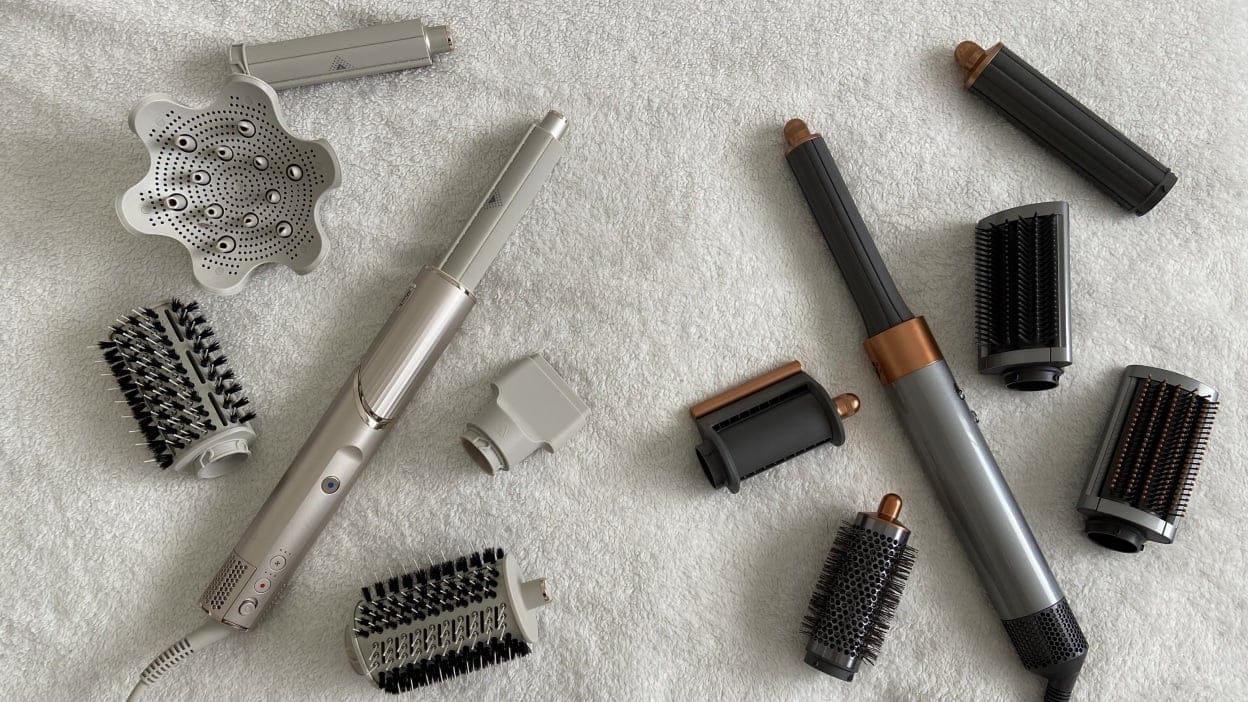
| Feature Category | Dyson Airwrap Multi-styler | Shark FlexStyle (HD430C) | Critical Notes |
|---|---|---|---|
| Core Mechanism | Enhanced Coandă Effect | Coandă Effect + 90° Twist Dryer | Shark’s Dual-Purpose Win: The FlexStyle functions as a powerful, traditional hairdryer, a feature the Airwrap cannot match. |
| Max Temperature | Regulated below 150°C | Regulated below 110°C | Hair Health Priority: Both are low-heat stylers, far safer than 200°C+ tools. |
| User Experience | High Learning Curve, single barrel with switch | Medium Learning Curve, must swap barrels | ⚠️ The Effort Tax: The Airwrap is notoriously difficult to master, with “longevity of style” being a top user complaint. |
| Price (CAD) | $749.99 CAD (Dyson Airwrap Deals) | $349.99 CAD (Shark FlexStyle Coupon Page) | ❌ The Entire Conversation: At less than half the price, is the Airwrap’s brand prestige worth $400? |
| Warranty (Canada) | 2 Years (Parts & Labour) | 2 Years (Parts & Labour) | Parity: Both offer a standard 2-year warranty. |
Here, the value proposition is even more stark. The FlexStyle’s ability to twist and become a powerful, ergonomic hairdryer is a massive value-add that Dyson simply doesn’t offer.
When you combine that with the enormous $400 price gap, the choice for a pragmatic consumer becomes incredibly clear. You are getting virtually the same core technology and more functionality for less than half the cost. Even with the best available Dyson Canada sale price, the gap remains substantial.
Part 4: Safety, Trust & Critical Considerations
When you bring a powerful electronic device into your home, especially one with a large lithium-ion battery, safety, trust, and consumer protection are non-negotiable.
In my analysis, I always start by verifying that products meet mandatory Canadian safety standards. As you can see, both Dyson and Shark clear this fundamental hurdle.
Compliance Status Verification
| Certification | Dyson Products | Shark Products | Verification Note |
|---|---|---|---|
| CSA / cUL / cETL | ✅ Certified | ✅ Certified | Pass: Both comply with mandatory Canadian electrical safety standards. |
| RoHS | ✅ Compliant | ✅ Compliant | Pass: Both limit the use of hazardous materials. |
| ALCI Plug (Hair) | ✅ Integrated | ✅ Integrated | Pass: Both the Airwrap and FlexStyle use ALCI plugs for shock protection. |
However, compliance is just the starting point. A search of the Health Canada recall database found no official recalls for these specific models as of October 2024 (Health Canada Recalls).
The real difference in safety and trust comes from how each brand’s design choices manage the inherent risks of their products.
The Unseen Risk: Lithium-Ion Batteries
The single biggest safety risk in any cordless vacuum is its lithium-ion battery. The critical difference lies in how each brand’s design handles that risk.
Dyson’s Risk Profile
Dyson’s choice to use a non-swappable, integral battery creates a higher-risk profile, in my opinion. If the battery begins to swell or overheat, the entire multi-hundred-dollar appliance becomes a potential hazard.
This design choice, combined with a short 2-year warranty, is the foundation of the user fear that the battery is designed to fail shortly after the warranty expires, forcing a costly repair or a full replacement.
Shark’s Risk Profile
Shark’s removable battery design is an inherent safety and risk-mitigation advantage. If a battery shows signs of failure, the user can immediately remove it from the vacuum, physically isolating the potential hazard.
This transforms a potential safety crisis and expensive repair into a manageable inconvenience and a much cheaper, user-installable replacement.
In my professional judgment, framing Shark’s removable battery as a simple “convenience” misses the point. It is a crucial safety and financial risk-mitigation feature that sets it apart from Dyson.
The Blind Spots: What Dyson and Shark Won’t Tell You
This section fulfills my ‘Devil’s Advocate’ promise by exposing the flaws, trade-offs, and ‘gotchas’ that marketing materials omit. I’ve summarized the most critical negative feedback and limitations from my research to help you make a truly informed decision.
Dyson V15 & Airwrap
- ❌ The Trigger Tax: The requirement to continuously hold a trigger is a deliberate design choice by Dyson. This choice causes real ergonomic strain for many users, so much so that a thriving third-party market for “trigger locks” exists online. The existence of this market is proof of a fundamental design flaw.
- ❌ Battery Is a Consumable, But Not User-Serviceable: Dyson, like many tech companies, treats the battery like a smartphone battery—it’s designed to degrade over time and be difficult and expensive for the user to replace. At a cost of $200 CAD and requiring a service appointment, this is the very core of the “planned obsolescence” fear that consumers have.
- ❌ “Smart” Features with Dumb Limitations: These are the expensive features used to justify the high price, but they often fall short in reality. The laser dust illumination is a great demo, but it doesn’t work in bright light or on many carpet types. The particle counter rarely leads a user to change their cleaning behavior in a meaningful way.
- ❌ The Airwrap’s Promise vs. Reality: The biggest “blind spot” for the Airwrap is that for many common hair types, the beautiful, low-heat curls it creates can disappear in less than an hour. This significant letdown, after a ~$750 investment and a steep learning curve, is a primary source of user frustration and buyer’s remorse.
Shark Stratos & FlexStyle
- ⚠️ Bulky by Design: To be fair, Shark has its own trade-offs. The Stratos’s excellent DuoClean head, which makes it so good on carpets, is bulkier than Dyson’s. This gives it less clearance under low furniture and along tight edges, though newer models like the Shark Detect Pro are addressing this with different form factors and self-emptying bases.
- ⚠️ Consumable Gimmick: The Odor Neutralizer cartridge in the Stratos is seen by many users in my research as a gimmick and an unnecessary recurring cost. It’s a feature that adds to the TCO without solving a problem that most users actually had.
- ⚠️ “Good Enough” Coandă: While the FlexStyle is an incredible value, the upstream reports suggest its Coandă effect may be slightly less refined than the Airwrap’s. It also requires swapping barrels for left and right curls, an extra step Dyson has engineered away. These are, in my opinion, very small trade-offs for a saving of $400, but they are trade-offs nonetheless.
No matter which brand you’re leaning toward, it pays to shop smart. Browse the latest coupons across all brands to maximize your savings on any purchase.
Part 5: User Experience & Workflows
A feature might seem cool in a 30-second commercial, but how does it feel to use it every day for five years? This is the core question of user experience.
My analysis of user sentiment from the upstream data reveals a consistent theme: Dyson designs for the “wow” factor, while Shark designs for daily, long-term usability.
Use Case: The 20-Minute Living Room Cleanup
Let’s walk through a typical cleaning workflow to highlight the ergonomic differences.
Workflow: Dyson V15 User
- Start: Squeeze and hold the power trigger. The motor roars to life.
- Hard Floors: The laser illuminates dust you never knew you had. It’s a satisfying, data-rich experience.
- Under the Couch: You must bend down deeply or get on your knees to reach the back.
- Area Rug: The anti-hair wrap feature works, but after cleaning, you notice a few long hairs still wound around the roller.
- Finish: Your hand is slightly cramped from holding the trigger for 15 minutes straight (“Trigger Fatigue”). You make a mental note to cut the hair from the brush roll later.
Workflow: Shark Stratos User
- Start: Push the power button once. The vacuum stays on.
- Hard Floors: The Clean Sense IQ light turns red over a dirty patch, automatically increasing suction.
- Under the Couch: You press a button, and the MultiFLEX wand bends, effortlessly sliding under the couch while you stand upright.
- Area Rug: The PowerFins head pulls the vacuum forward slightly. After cleaning, you check the roller and find it completely free of hair.
- Finish: You press the power button to turn it off. No hand strain. The significant time savings from not having to manually detangle the brush roll is a major benefit.
S-T-A-R Case Study: The Out-of-Warranty Battery Failure
- Situation: A user’s Dyson V15 battery begins to swell after 2.5 years, placing it just outside the 2-year warranty period.
- Task: Per the user manual, they must stop using the potentially hazardous device immediately.
- Action: They are now faced with a difficult choice: pay an estimated $200+ for a full-unit repair from Dyson or discard an almost $1000 appliance.
- Result: A Shark owner in the exact same situation would simply remove the faulty battery, order a new one online for ~$130, and continue using their vacuum with a spare battery in the meantime. Shark’s design choice directly impacts long-term financial and safety risk, putting the user in control and resulting in a 35% cost saving on the repair and zero downtime.
Part 6: Alternatives & Competitors in Canada
While Shark is Dyson’s most direct competitor in terms of market position and features, it is not the only high-end alternative available to Canadian shoppers.
For consumers looking beyond the main two, brands like Miele, LG, and Tineco offer compelling, and sometimes superior, options. My job as a consumer advocate is to provide a balanced view. You can also explore our full category of comparison articles for deeper dives into specific brand matchups.
Build Quality & Raw Power Champion
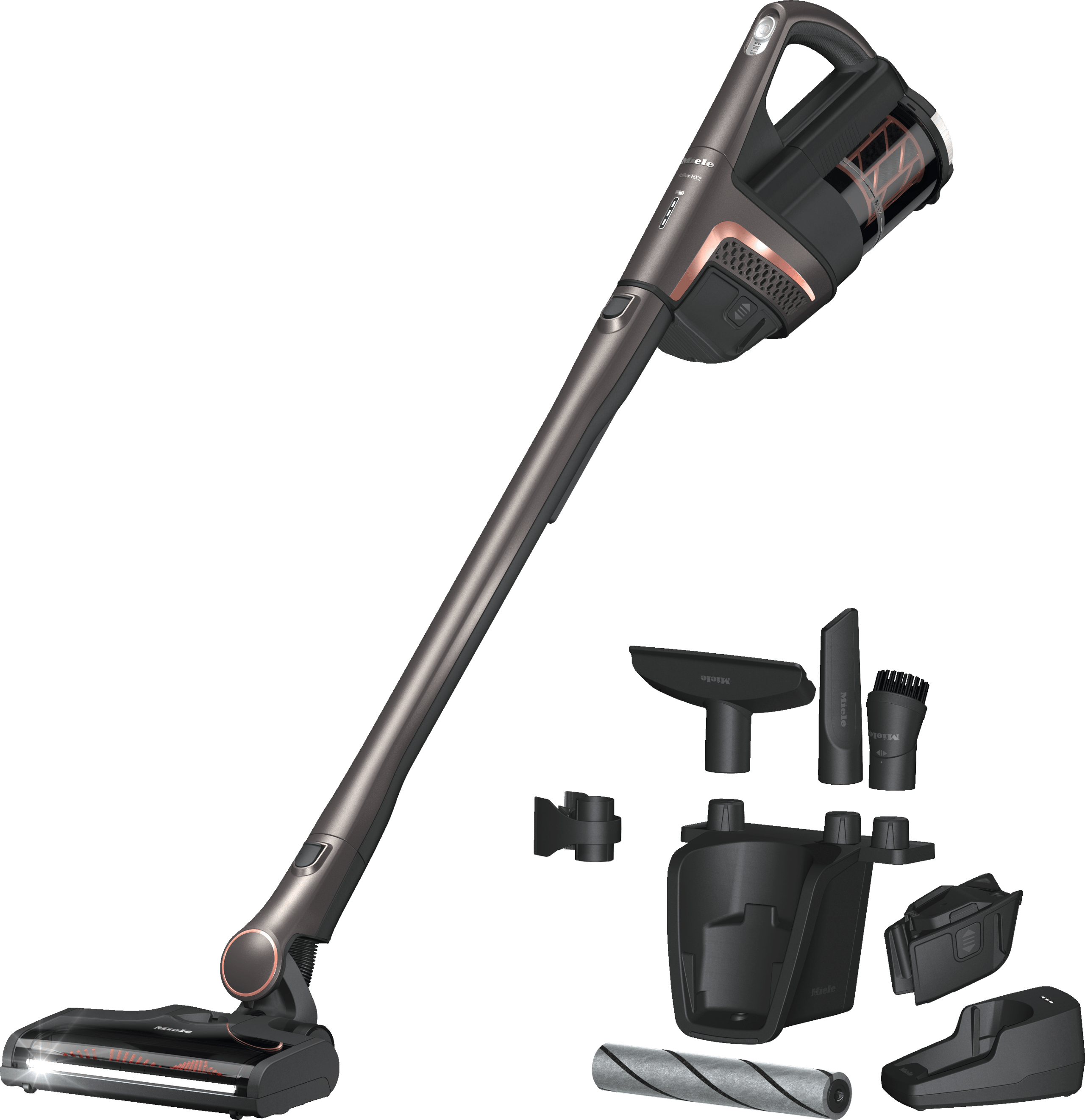
- Best For: Consumers who prioritize “buy it for life” build quality and raw power, and are willing to pay a premium for German engineering.
- Consider: The Triflex HX2 often boasts the most powerful suction in independent tests, even surpassing Dyson on some metrics. Its unique 3-in-1 design allows you to position the power unit at the top, bottom, or on its own, offering unparalleled versatility. The build quality is exceptional, with a fit and finish that feels more substantial than its competitors.
- Avoid: If budget is your primary concern. The Triflex HX2 Pro is often the most expensive option in this lineup, sometimes even exceeding the price of the Dyson V15. Its anti-hair wrap technology is generally considered less effective than Shark’s, making it a tougher sell for heavy pet-owning households.
✅ Strengths
- Exceptional German build quality — “buy it for life” durability
- Powerful suction that surpasses Dyson in many independent tests
- Unique 3-in-1 design with top, bottom, or standalone power unit
- Premium fit and finish that feels substantial
⚠️ Considerations
- Often the most expensive option, sometimes exceeding Dyson V15 price
- Anti-hair wrap technology less effective than Shark’s for pet owners
- Heavier than some competitors due to premium materials
Convenience & Tidiness Champion
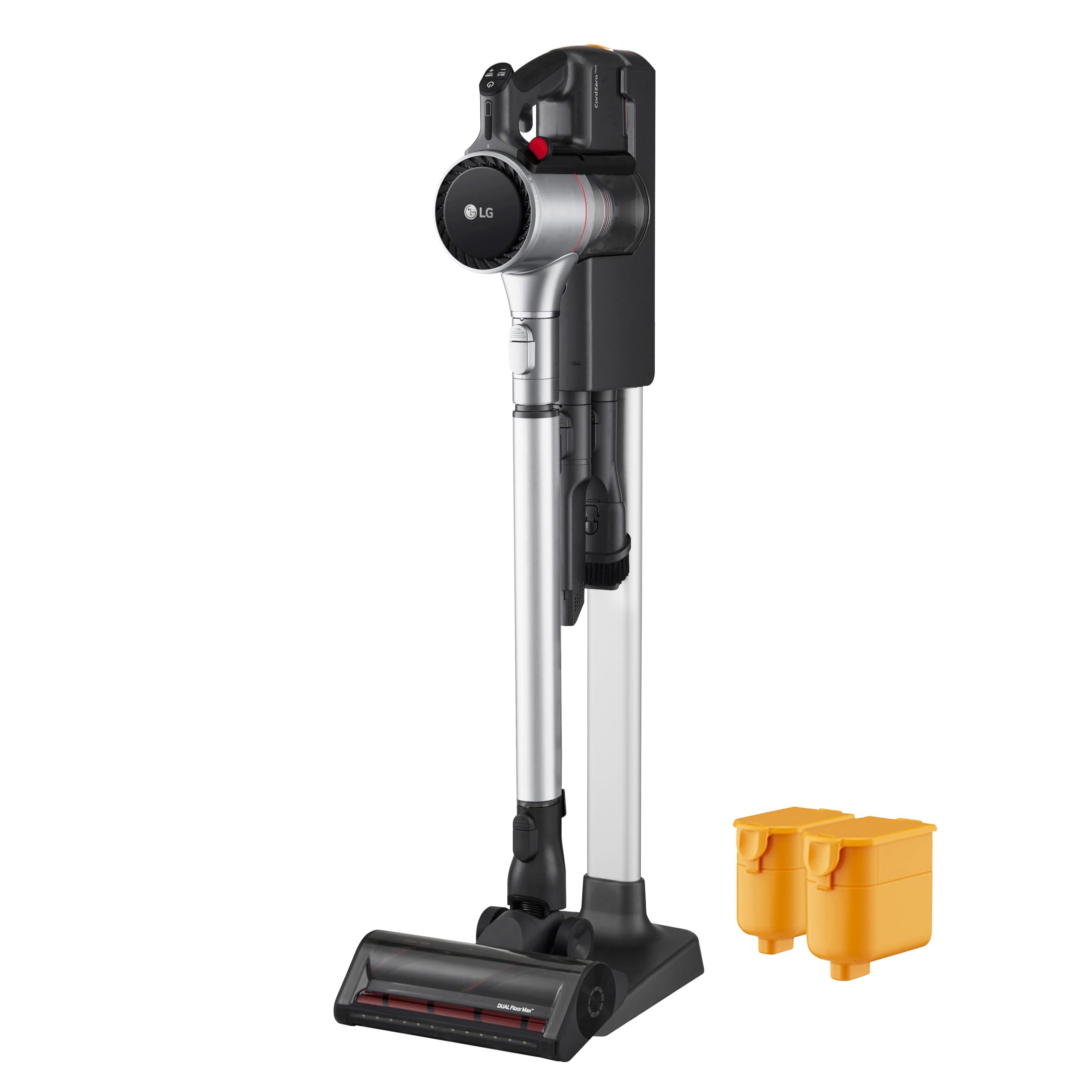
- Best For: Users seeking an all-in-one cleaning station and who value tidiness and convenience above all.
- Consider: The CordZero’s standout feature is its Auto Empty charging stand, which not only charges the vacuum but also automatically empties the dustbin. Many models also include a “Kompressor” lever that compacts debris in the bin, increasing capacity. It also comes with two swappable batteries as standard, a huge value-add. Some models even include a power mop attachment for wet cleaning.
- Avoid: If you are sensitive to ongoing costs. The Auto Empty station requires proprietary dust bags, adding a recurring cost to your TCO. The system is also bulkier and takes up more floor space than a simple wall-mounted charger.
✅ Strengths
- Auto Empty charging stand with automatic dustbin emptying
- Two swappable batteries included as standard
- Kompressor lever compacts debris for increased capacity
- Power mop attachment available for wet cleaning
⚠️ Considerations
- Auto Empty station requires proprietary dust bags (recurring cost)
- Bulkier system takes up more floor space
- Higher TCO due to Kompressor base and consumables
Budget-Friendly Smart Vacuum
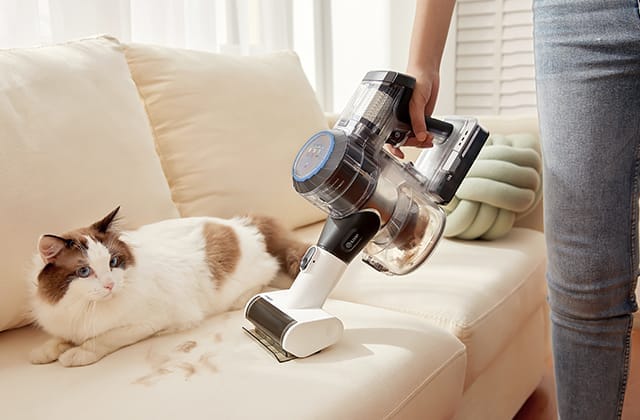
- Best For: Tech-savvy users on a budget who want Dyson-like “smart” features without the Dyson price tag.
- Consider: Tineco was a pioneer of the “smart” stick vacuum. Its iLoop Smart Sensor detects dust and automatically adjusts suction power, a feature similar to Shark’s Clean Sense IQ. The vacuums often feature an LED screen that provides data on battery life and blockage alerts, and many have Wi-Fi connectivity for app-based monitoring. They offer a good balance of features for their price point.
- Avoid: If long-term durability is your absolute top priority. While improving, Tineco’s build quality and materials are generally not considered to be on the same level as Miele, Dyson, or even Shark. Users in forums sometimes report more issues with battery longevity and plastic components compared to the premium brands.
✅ Strengths
- iLoop Smart Sensor with automatic suction adjustment
- LED screen with battery life and blockage alerts
- Wi-Fi connectivity for app-based monitoring
- Excellent price-to-feature ratio
⚠️ Considerations
- Build quality not on par with Miele, Dyson, or Shark
- Battery longevity concerns reported by some users
- Plastic components may feel less premium
Part 7: Conclusion & FAQs
After an exhaustive, devil’s advocate analysis, the conclusion for Canadian consumers is clear. While the team of James Dyson and his engineers have created a benchmark for innovation and brand prestige, its value proposition is severely weakened by its high Total Cost of Ownership, short 2-year warranty, and practical design flaws like the mandatory power trigger.
My analysis isn’t about blindly bashing Dyson; it’s about evaluating whether its value justifies the ‘brand tax.’
For the pragmatic, value-focused Canadian consumer, the evidence points overwhelmingly in one direction. The Shark Stratos and Shark FlexStyle consistently offer 90% or more of the performance of their Dyson counterparts, but with more practical, user-friendly features, for a fraction of the lifetime cost.
The peace of mind that comes from a 5-year warranty and a substantially lower financial risk makes SharkNinja’s products the smarter, more defensible choice for most households.
Before you pay the Dyson ‘brand tax,’ ask yourself one final question: are you buying a better cleaning tool, or are you just buying a brand name? My analysis, which underwent final review by our Editor-in-Chief, Joanne Lovell, suggests that with powerful competitors on the market, the premium price for Dyson is no longer justified. If you do decide to go with Dyson, make sure you’re getting the best Dyson Canada deal available today.
Frequently Asked Questions
Q1: Is the Dyson V15 really more powerful than the Shark Stratos?
A: No, not in the way that matters for deep cleaning carpets. While Dyson’s motor has higher lab-tested power (Air Watts), my research cites independent tests showing the Shark Stratos is actually more effective at cleaning debris from carpets (RTINGS.com Carpet Cleaning Tests).
This is because its superior motorhead design is more efficient at pulling dirt from fibers. This proves that real-world performance is about the entire system, not just a single marketing number. For hard floors, the Dyson’s raw suction is formidable, but for many Canadian homes with extensive carpeting, the Shark has a proven edge in effectiveness.
Q2: Is the Dyson Airwrap worth over $400 more than the Shark FlexStyle?
A: For the vast majority of users, no. In my professional opinion, the value is simply not there. The Shark FlexStyle offers the same core low-heat Coandă styling technology, prioritizing hair health by reducing heat damage from traditional tools.
Many users find the FlexStyle easier to learn, and critically, it includes a powerful traditional dryer function that the Airwrap lacks. At less than half the price, the Shark delivers a nearly identical outcome. The extra $400 for the Dyson is primarily for brand prestige and a slightly more refined, single-barrel design, which doesn’t justify the cost for most. You might also want to check our detailed Dyson Canada review for a deeper look at value per dollar.
Q3: What is the “Dyson Brand Tax”?
A: It’s the extra money you pay over the product’s life for the Dyson name. My illustrative Total Cost of Ownership (TCO) model shows this could be a difference of around $470 over three years between owning a Dyson V15 and a Shark Stratos.
This “tax” accounts for the higher initial price, more expensive replacement parts like filters and batteries, and the financial risk of a failure after the shorter 2-year warranty expires. It’s the quantifiable premium you pay for brand prestige and marketing over practical value and long-term investment protection. Smart shoppers can reduce this gap by using a working Dyson Canada coupon.
Q4: Why is Shark’s 5-year warranty so important?
A: It serves as critical investment protection. This longer warranty protects you from expensive out-of-warranty repairs, which is the biggest financial risk of owning a premium appliance.
A major failure on a Dyson in year three could cost you hundreds of dollars for a new motor or battery (Dyson Canada Parts). The same issue on a Shark is covered by the warranty, representing a massive reduction in your long-term financial risk and providing peace of mind that the manufacturer stands behind their product’s longevity.
Q5: What is “trigger fatigue” and how do I avoid it?
A: It’s the real hand and wrist strain that comes from continuously holding down the Dyson’s power trigger while you clean. It’s a common complaint in user reviews and forums.
Based on my analysis, the only way to completely avoid it is to buy a vacuum with a push-button on/off switch, like the Shark Stratos or many other competitors. It’s a simple ergonomic feature that makes a huge difference in user comfort during longer cleaning sessions, especially for users with arthritis or reduced grip strength.
Q6: Is a Dyson battery designed to fail?
A: While not explicitly “designed to fail,” its non-removable design and high replacement cost ($200) create what I consider a “planned obsolescence” risk. All lithium-ion batteries degrade over time.
A dead battery outside the short 2-year warranty can effectively render the entire expensive appliance useless without a very costly repair. This contrasts sharply with Shark’s user-swappable battery design, which mitigates this risk by making replacement cheaper and easier for the consumer.
Q7: Which vacuum is better for pet hair?
A: The Shark Stratos is demonstrably better for pet hair, specifically regarding maintenance. The expert analysis I’ve synthesized cites “torture tests” from independent reviewers showing its DuoClean PowerFins HairPro technology provides a “significant advantage” over the Dyson V15 for preventing hair wrap on the roller.
For pet owners tired of constantly cutting tangled hair from their vacuum’s brush, this feature is a killer app and a primary reason to choose the Shark. It’s a huge time-saver and removes a major point of frustration.
Q8: Can I use my old Dyson attachments on the new V15?
A: No, not without an adapter. My research confirms that Dyson changed its connection mechanism with recent models. I see this as a classic case of “planned ecosystem obsolescence” that forces loyal users to re-buy expensive accessories or invest in third-party adapters.
This adds another hidden cost to upgrading within the Dyson ecosystem. Before purchasing, always check the compatibility of your existing tools with the new model you are considering, as this can significantly impact the overall cost.
Q9: Who are the top alternatives to Dyson in Canada besides Shark?
A: Besides Shark, the top alternatives to Dyson in Canada include Miele, LG, and Tineco. Miele’s Triflex series is praised for its exceptional build quality and power, appealing to those who want German engineering.
LG’s CordZero line stands out for its all-in-one charging and self-emptying stations, offering maximum convenience. Tineco provides “smart” vacuums with features like automatic dust sensing and LED screens at a more budget-friendly price point, mimicking some of Dyson’s tech for less.
Each brand offers a different value proposition, from durability to smart features, providing strong competition across the premium appliance market. For a full breakdown, visit our Dyson Canada alternatives and competitors guide.