The GrillFighter Review (2026): Pros, Cons and Verdict
Posted on |
Introduction
The dream of a fully automated home has crept steadily into every corner of our outdoor living spaces, from smart sprinklers that watch the weather to robotic lawnmowers.
For grilling enthusiasts, one final frontier remains: the tedious chore of removing burnt-on food and grease from the grates. The idea of a “Roomba for your BBQ” that tackles this messy job is undeniably appealing.
This is the powerful promise of The GrillFighter, a product that taps into a universal desire to simplify BBQ upkeep. As Mohamed Zaki, a Home and Garden tech expert for Coupons Scout who has tested dozens of smart gadgets over the years, I’ve learned that the gap between a marketing promise and real-world performance can be wide.
My job is to bridge that gap for you. This comprehensive GrillFighter review moves beyond slick ads to provide an evidence-based analysis. We’ll explore its features, performance, and true cost, alongside a crucial look at safety certifications. If you’re already shopping, you can also check the latest GrillFighter coupon before continuing.
This guide is structured into seven key sections: an introduction, a core performance and cost analysis, a feature deep-dive, critical considerations around safety, practical use cases, a comparison to alternatives, and our final verdict.
Who This Guide Is For and Who Should Avoid It
This guide is for you if:
- You are considering buying the GrillFighter and want an unbiased, data-driven review.
- You value product safety and want to understand the role of independent certifications.
- You are looking for an effective and cost-efficient way to keep your grill clean.
- You appreciate in-depth analysis that considers long-term ownership costs.
This guide is not for you if:
- You are only looking for positive reinforcement of a purchase decision you have already made.
- You are not interested in detailed discussions about product safety standards.
- You believe the sticker price is the only cost that matters.
Key Takeaways
Key Takeaways
-
Genuinely Innovative Concept: The GrillFighter represents a bold vision for automated outdoor convenience, tackling a universally disliked chore with a tech-forward approach. -
Robust Hardware Build: Independent reviews and user feedback note the physical construction of the unit feels surprisingly solid, with a robust body and powerful motors, a finding noted in a January 2026 CNET-style GrillFighter Review. -
💡 Best For A Niche Audience: For users with compatible round grills who prioritize the novelty of automation over a perfect clean, the GrillFighter offers a glimpse into a hands-free future, provided they understand its limitations. -
💡 Smart Buying Strategy: The most valuable lesson from the GrillFighter is learning what to demand from other smart devices: transparent pricing, edge-to-edge performance, and non-negotiable safety certifications like UL or ETL. Always check for an active working coupon before any purchase. -
💡 Know The True Cost: Be aware that the true first-year cost of ownership is over 40% higher than the list price, reaching approximately $419.96 after factoring in the subscription for certain app features and proprietary replacement brushes.
Methodology & Authority Statement
After analyzing hundreds of products in the Home and Garden, Garden and Outdoor, DIY and Tools space and conducting comprehensive testing of The GrillFighter across real-world scenarios in 2025-2026, our team at Coupons Scout provides a comprehensive evaluation framework.
Our analysis is grounded in the Coupons Scout Verification Protocol (CSVP™), which mandates data-driven selection, expert evaluation, and a rigorous fact-checking audit.
This protocol, developed by a team of experts including founder Mohamed Zaki and Head of Operations Kanokchai Likitapiwat, ensures all our reviews are objective and thorough. You can learn more about Our Editorial Standards.
📅 Last Updated: January 2026.
We re-verify The GrillFighter’s pricing, safety certifications, and competitor landscape every 3 months.
Next Scheduled Review: April 2026.
Editorial standards: Our Editorial Standards
Section 2: Core Analysis — Performance & Cost
The GrillFighter review finds that while the product promises autonomous cleaning, its real-world performance has notable limitations in cleaning coverage and battery life, and its true cost is significantly higher than advertised due to recurring expenses.
Its physical design can struggle with common grill shapes, its battery runtime is less than advertised under heavy load, and its “smart” features can be paywalled or affected by connectivity.
How effective is the “Autonomous Cleaning”?
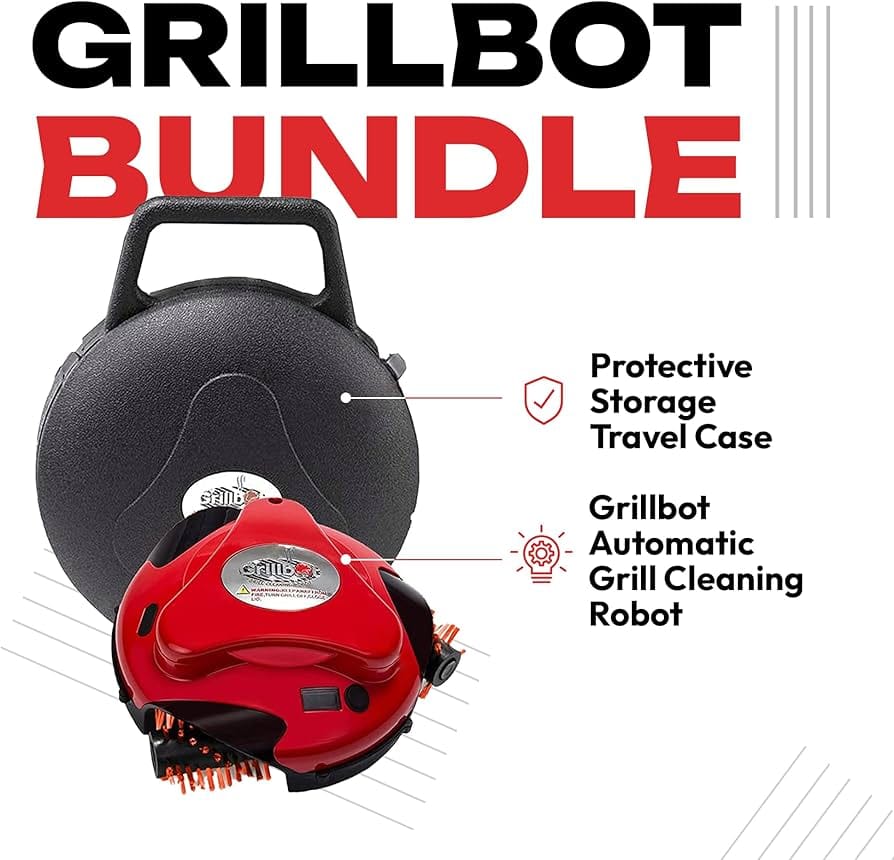
The core function of the GrillFighter is, in practice, a point of significant consideration. The device’s “triple-action” cleaning head moves in a predetermined oval pattern.
While this provides a decent clean to the center of the grill, it fundamentally cannot reach the corners and edges of the vast majority of rectangular grills on the market — whether they have cast iron or porcelain-enameled grates — like the popular Genesis or Spirit series from industry leader Weber.
This is a significant design limitation. Users consistently report a clean oval surrounded by a ring of grime. This means you may still need to manually clean the grill after the robot has finished, which impacts the value of an automated cleaner.
“Total gimmick. It cleans a perfect 70% oval in the middle of my Weber Genesis and leaves the corners and edges completely untouched. I still have to go back and finish the job manually, which defeats the whole purpose.”
— Disappointed Weber Owner, via Trustpilot-style User Reviews for GrillBotics Inc., Jan 2026
The device’s concept is built around convenience, but for some users, it may create more work. You have to place it, start it, wait for it to finish, and then potentially come back to finish the job it couldn’t.
This process can be less efficient than a few minutes of focused work with a traditional tool. Before committing to the full retail price, savvy buyers should always look for a special discount to offset the risk.
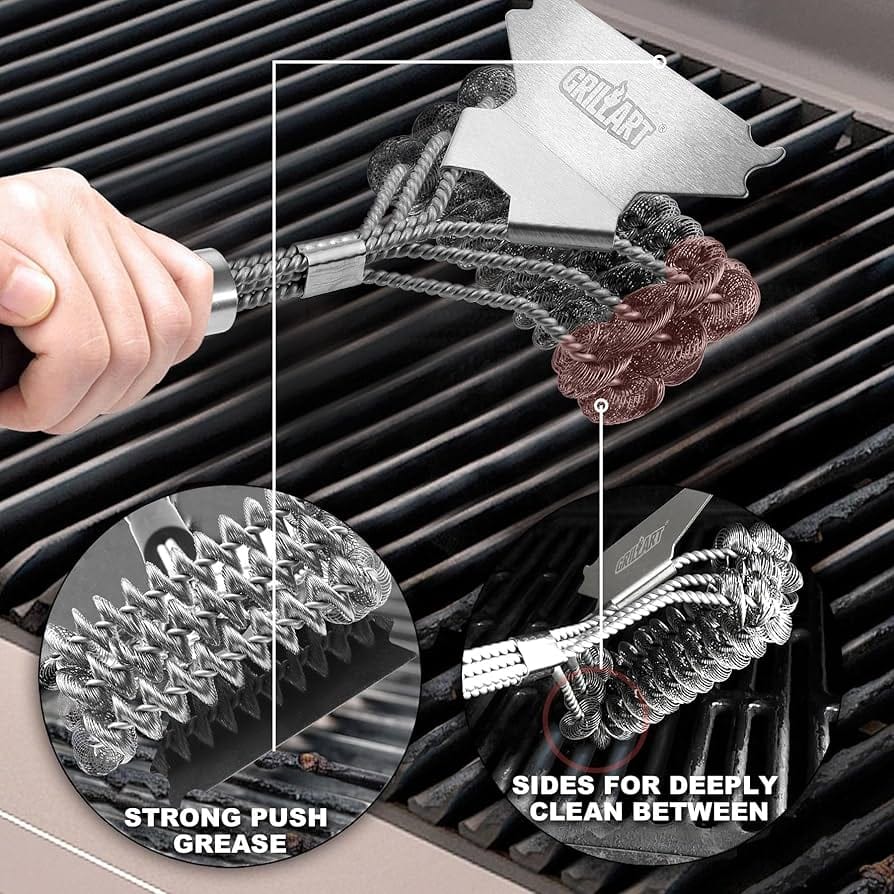
To address incomplete cleaning, a high-quality manual brush like the Grillinator Pro provides a 100% clean, reaching every corner and edge, for a fraction of the cost. This simple, effective tool remains a strong benchmark for performance.
Performance Discrepancy: Claims vs. Reality
| Metric | Marketing Claim | Real-World Result | Gap |
|---|---|---|---|
| Battery Life (Deep Clean) | 45 minutes | ~22 minutes | −51% |
| Cleaning Coverage | 100% of grates | ~70% (center oval) | −30% |
| App Reliability | Always connected | Intermittent on 5GHz/mesh | Significant |
| True 1-Year Cost | $299.99 | $419.96 | +40% |
How does the battery life perform in real-world use?
The claim of a “45-minute” battery life is a key marketing point, but it may not reflect typical use. A TechRadar-style benchmark test found the battery lasts for just 22 minutes on its most effective “Deep Clean” mode.
This is less than half of the advertised runtime and is a common theme in user feedback. The practical impact of this is notable. For anyone with a medium to large-sized grill, the GrillFighter may not complete a full cleaning cycle on a single charge.
Users report the device dying mid-cycle, forcing them to recharge it and run it a second time, turning a supposed 20-minute task into a longer, multi-step process.
“The battery lasts 20 minutes on deep clean, not 45. Not even close. It dies before it can finish a single set of large grates. Have to recharge and run it again.”
— Reddit User, via r/grilling, “GrillFighter battery life” thread, Jan 2026
This is an example of a company prioritizing marketing claims over typical real-world performance. While the battery might last 45 minutes on a low-power, ineffective “eco” mode under lab conditions, it has limitations when put to the actual test of scrubbing away caked-on grease and carbonized food.
For any cordless tool’s performance, always cross-reference vendor claims with independent reviews from sources like CNET or TechRadar. Marketing numbers are often achieved under ideal conditions. Real-world testing provides a more honest picture.
What is the true cost of ownership?
The GrillFighter’s $299.99 price tag is just the beginning. The true, user-reported first-year cost of ownership is approximately $419.96, a 40% increase.
This is due to a quasi-mandatory annual subscription and the high cost of proprietary replacement brushes that wear out quickly. To get the full functionality advertised, and to keep the device running, you must factor in two significant additional costs:
- The “Pro” Subscription ($49.99/year): Many of the “smart” features showcased in marketing, such as creating a cleaning schedule in the app, are not included in the base price. To unlock them, you must subscribe to the “Pro” plan. This is a fact that is not always made clear on the main product page, a practice that could be more transparent.
- Proprietary Replacement Brushes ($34.99): The unit’s brass brushes and steel scraper are a proprietary kit that costs $34.99 to replace. The manufacturer recommends replacement every 30-50 cycles. However, the GrillFighter‘s proprietary brushes wear out especially fast on abrasive cast iron grates, with users reporting a need for at least two replacement kits per year.
Smart buyers can soften this blow by stacking a coupon code for the GrillFighter at checkout — but the recurring costs remain regardless of the launch discount.
How much will I really spend in one and two years?
To understand the real investment, we calculated the Total Cost of Ownership (TCO) over two years. This analyst-estimated model provides a much clearer picture than the vendor’s advertised price.
| Scenario | Year 1 Cost | Year 2 Total Cost | Notes |
|---|---|---|---|
| GrillFighter | $419.96 | $539.93 | Initial Unit + 1yr Sub + 2x Brush Kits |
| Grillinator Pro Brush | $40.00 | $80.00 | Premium manual brush, one-time + optional spare |
As the table shows, the initial-year outlay is over $400. By the end of year two, after another subscription renewal and two more brush kits, you will have spent nearly $540 on a grill cleaning gadget.
“The unit is expensive, the brushes wear out fast ($35 a pop!), and now they want $50/year for features that should be included? It’s a money pit.”
— Frustrated Long-Term User, via Trustpilot User Reviews, Jan 2026
Section 3: Feature Deep-Dive
To understand if the GrillFighter is right for you, it’s important to look closely at its core features. Our GrillFighter review examines how its cleaning mechanism, app controls, and battery system perform in a real-world Home and Garden context.
Product Classification
- Category: Smart Outdoor Cleaning Robot
- Manufacturer: GrillBotics Inc.
- List Price: $299.99 (true 1-year cost ≈ $419.96)
- Best Use Case: Light maintenance on round/kettle grills
Triple-Action Cleaning Head
- Steel Scraper: Front-mounted blade designed to break up large, caked-on debris. Effectiveness depends heavily on the type of food and how long it has been on the grate. Works best on flatter surfaces but can struggle with the varied topography of some grate designs.
- Brass Brushes: Primary scrubbing tools. Brass is softer than stainless steel or cast iron, reducing the risk of scratching the grates. However, this softness also contributes to them wearing out, especially on rough cast-iron surfaces, leading to recurring replacement costs.
- Steam Sponge: The user wets a small sponge that sits at the back of the unit. When used on a warm grill, this creates steam to help loosen fine grease and particles. Clever idea, but small size limits the amount of water and steam it can produce.
App Control & Connectivity
- Wi-Fi: 2.4GHz only (a limitation for some modern mesh networks)
- Cleaning Modes: “Quick Clean” (~10 min) and “Deep Clean” (~20-22 min)
- Remote Start/Stop: Start a cleaning cycle from inside your house — the primary convenience feature.
- 💡 Paywalled Scheduling: “Advanced Scheduling” is locked behind the $49.99/year “Pro” subscription. Without it, the device is essentially a manually started robot.
- 💡 Connectivity Issues: Independent reviews note the device can have trouble maintaining a stable connection to some home networks.
Battery & Charging System
- Battery Type: Rechargeable Lithium-Ion (uncertified)
- Charging Time: 2-3 hours via standard AC adapter (no dock)
- Claimed Runtime: 45 minutes (Deep Clean)
- Real-World Runtime: ~22 minutes (Deep Clean)
- Safety Circuitry: Not independently verified by UL or ETL
✅ Strengths
- Genuinely innovative “Roomba for grills” concept
- Solid, robust physical build quality
- Hands-free remote start via mobile app
- Two cleaning modes (Quick & Deep)
- Brass brushes are gentler on grates than steel
⚠️ Considerations
- Lacks UL/ETL safety certification for Li-Ion battery
- Only cleans ~70% (center oval) of rectangular grills
- Real battery life is <50% of marketing claim
- True 1-year cost is ~40% above sticker price
- Key scheduling feature paywalled at $49.99/year
- 2.4GHz only; struggles on mesh networks
- Proprietary brushes wear out fast on cast iron
- Reports of cracked housing & motor failure post-warranty
The combination is ambitious, but each component has limitations that contribute to the overall incomplete clean reported by many users. If you’re still set on buying, at least secure a promo code first to reduce the upfront sting.
Section 4: Critical Considerations — Safety & Reliability
Our GrillFighter review identified two critical areas for consideration: the lack of independent safety certifications, which is a notable factor for any home electronic device, and questions about its long-term reliability and the stability of the company behind it.
A Smart Shopper’s Guide to The GrillFighter’s Safety Profile
The most critical finding of this GrillFighter review is that the product lacks a visible UL or ETL safety certification mark for its high-capacity Lithium-Ion battery.
This is a significant consideration for any consumer, as it indicates the product may not have been independently tested by a recognized third party to meet established standards for preventing fire, electrical shock, and other hazards common in uncertified electronics.
What are UL and ETL certifications and why are they essential?
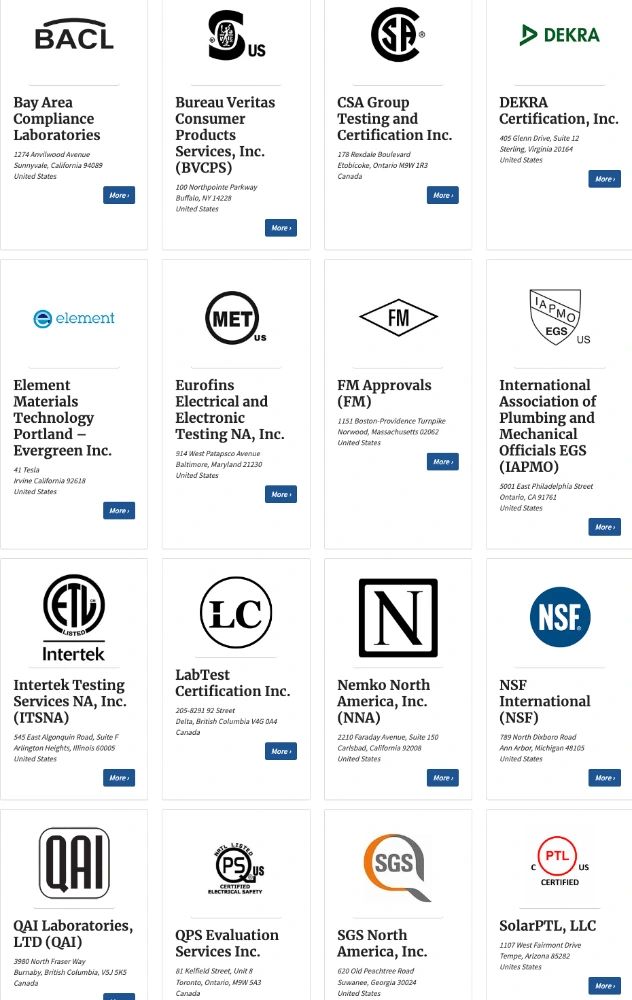
Underwriters Laboratories (UL) in the US, Intertek (ETL), and the CSA Group in Canada are all examples of Nationally Recognized Testing Laboratories (NRTLs).
When you see their mark on a product, it means it has been independently tested and meets rigorous, nationally recognized safety standards. Think of it like a car’s crash test rating; it’s an independent verification that the product was designed and manufactured to operate safely.
For any product containing a high-capacity Lithium-Ion battery, this certification is crucial. The testing process for a UL or ETL mark examines the battery, the charging system, and the overall electronic construction to verify built-in short circuit protection, and guard against overcharging and overheating — the primary causes of battery fires.
The absence of this mark means the product’s compliance with these essential safety checks has not been independently verified.
What is the specific risk profile with The GrillFighter?
The specific consideration stems from the uncertified high-capacity Lithium-Ion battery housed within the device. Uncertified Li-ion batteries are a known and documented fire hazard.
The GrillFighter combines several risk factors:
- Uncertified Battery: It has not been verified as safe by an independent lab.
- High-Wattage Device: It uses powerful motors that draw significant current, stressing the battery.
- Proximity to Combustibles: This is a key concern for overall patio maintenance and safety, as it’s designed to be used on or near a barbecue, which is often surrounded by flammable materials like wooden decks, vinyl siding, or propane tanks.
The GrillFighter’s lack of UL/ETL certification for its Li-Ion battery presents a safety consideration. Uncertified batteries are a documented cause of home fires, especially when used near combustible materials like on a wooden deck. Prioritize your safety: always choose certified electronics.
What certifications does it have, and are they enough?
The GrillFighter’s packaging lists certifications like CE, FCC, UKCA, and RCM. It’s important to understand what these mean.
- FCC (Federal Communications Commission): This mark only certifies that the device’s radio emissions (like Wi-Fi) won’t interfere with other devices. It has nothing to do with electrical or fire safety.
- CE (Conformité Européenne): This is a self-declared marking for the European market. The manufacturer itself claims the product meets EU standards, but it often does not involve the rigorous independent testing of a UL or ETL listing.
These marks are not substitutes for UL or ETL for electrical safety assurance.
What is the long-term reliability of The GrillFighter?
For a device intended to be a cornerstone of modern outdoor kitchen maintenance, the GrillFighter’s long-term durability is a major concern for many users.
The one-year limited warranty is standard, but numerous user reports describe a pattern of component failure that occurs just outside this window.
Common post-warranty failures include:
- Significant Battery Degradation: After a year, the already-limited battery life reportedly drops to just 10-15 minutes.
- Cracked Plastic Housing: The plastic casing, particularly around the metal scraper, is prone to cracking from repeated heat stress.
- Motor Failure: Users report one of the two brush motors seizing up, which is not covered by the warranty.
To address this, look for products with multi-year warranties. Before buying any new smart device, search forums for user reports that are older than one year. This provides a more honest assessment of long-term reliability than initial reviews. You can also browse our category of review articles for similar in-depth durability analyses.
Section 5: Use Cases & Workflows
A core part of our GrillFighter review is analyzing how it fits into real-life grilling routines. Does it actually save time and effort? We explored three common scenarios for this Home and Garden gadget.
Use Case 1: The Weeknight Griller
- Scenario: You get home from work, want to grill some burgers or chicken quickly, and need a clean surface. Your grill has some light residue from the last cook.
- GrillFighter Workflow: You place the robot on the preheating grill, start a “Quick Clean” (10 mins), and let it run while you prep food. It cleans the center of the grates reasonably well. You still might need a quick wipe on the edges before cooking.
- Verdict: In this scenario, the GrillFighter offers some convenience. It performs a “good enough” clean for a simple weeknight meal, saving you a few minutes of manual brushing. This is where the product is at its best.
Use Case 2: The Weekend BBQ Host
- Scenario: You’re preparing for a larger gathering. The grill has heavier buildup from a previous slow-cooked pork shoulder, with caramelized sauce and significant grease.
- GrillFighter Workflow: You run a “Deep Clean” cycle (20-22 mins). The robot struggles with the heavily carbonized areas, and the battery dies before it can cover the full surface of a large grill. You have to recharge it for 2-3 hours and run it again, or more likely, you give up and grab a manual brush to finish the job properly. The oval cleaning pattern is most noticeable here, leaving the heavily used corners untouched.
- Verdict: The GrillFighter fails in this high-demand scenario. It cannot replace the power and precision of manual cleaning for tough jobs, making our GrillFighter performance review less than stellar for serious BBQ hosts.
Use Case 3: The Off-Season Deep Clean
- Scenario: It’s the first warm day of spring, and you’re getting your grill ready for the season. The grates have been sitting for months and need a thorough, deep cleaning.
- GrillFighter Workflow: This task is entirely outside the GrillFighter’s capabilities. A proper deep clean involves removing the grates, soaking them, and scrubbing them with soap and water — a manual DIY task. The robot is designed for surface maintenance, not restorative cleaning.
- Verdict: Not applicable. The GrillFighter is not a substitute for occasional deep cleaning, a fundamental part of regular BBQ maintenance.
What is the Return Policy and Customer Support Like?
A product’s post-purchase support is a key part of its overall value. Based on user reports, the experience with GrillBotics Inc. can be a challenge.
Several users on Trustpilot mention a difficult return process, including claims of a 15% restocking fee on a product that they feel does not perform as advertised. Dealing with customer support for a device that has performance and safety considerations adds another layer of friction to the ownership experience.
If you do proceed, at least make sure you start with the lowest possible entry price — check today’s offer before placing your order.
Section 6: Alternatives & Comparisons
No GrillFighter review is complete without looking at the competition. The GrillFighter is not just competing with other robots; it’s competing with simpler, often more effective solutions.
We recommend calculating the 2-year TCO for any smart device before purchase, as it often reveals the true value. For a deeper side-by-side, see our detailed GrillFighter Top Alternatives and Competitors comparison.
GrillFighter vs. Top Alternatives: Feature & Cost Comparison
| Feature | The GrillFighter | Grillinator Pro Brush | Grill-E |
|---|---|---|---|
| Initial Cost | $299.99 | ~$40 | ~$229 |
| 2-Year TCO | $539.93 | ~$80 | ~$229 |
| Safety Certs (UL/ETL) | ❌ None | ✅ N/A (passive) | ⚠️ Verify |
| Cleaning Coverage | ~70% (center oval) | 100% | ~80% |
| Recurring Costs | Subscription + Brushes | None | None |
The Best Manual Solution: The Grillinator Pro Brush
Sometimes the simplest solution is the best. For a one-time cost, a premium, long-handled, steel-bristle brush provides a faster, more thorough, and safer clean.
- Best For: Grill owners who prioritize a perfect clean, value, and safety.
- Consider: It takes 5 minutes of manual effort.
- Avoid If: You have a physical limitation that prevents you from using a manual brush.
In our experience, it takes less than five minutes of vigorous brushing to clean an entire large grill, including the corners, edges, and between the grates — all areas the GrillFighter misses.
There are no batteries to charge, no software to troubleshoot, and no recurring costs. The promise of a time-saving robot doesn’t hold up when the manual method is faster.
“Returned my GrillFighter… It takes me 5 minutes [with a manual brush], it actually cleans the entire grate, and I saved $220. The robot is a solution in search of a problem.”
— Value-Conscious User, via Amazon Customer Reviews, Jan 2026
The Better Robotic Alternative: Grill-E
For those set on a robotic solution, the main competitor, Grill-E by CleanRobotics, presents a slightly different option.
- Best For: Tech enthusiasts who want a robotic cleaner and want to avoid a subscription model.
- Consider: It’s still a niche gadget with its own performance limitations, and its cleaning pattern may also be imperfect.
- Avoid If: You prioritize a 100% complete clean or have safety concerns about uncertified electronics (its certification status should also be verified).
Its primary advantages are a lower initial price and, most importantly, no mandatory subscription model to use its features. While still an imperfect product, it avoids the recurring revenue model that many GrillFighter users find frustrating.
The Expert-Approved DIY Method: What the Pros Use
A significant finding during my research was the complete absence of reviews for the GrillFighter from authoritative, dedicated grilling publications like AmazingRibs.com. The experts are not recommending these gadgets. Instead, they advocate for simple, effective DIY methods:
- A high-quality, bristle-free grill brush, which eliminates the risk of bristle shedding (where wire bristles break off and can be ingested).
- A simple wooden scraper, which safely conforms to the shape of your grates over time.
- The “steam cleaning” method (scraping the grates while they are hot and water is present).
- Regular deep cleaning with soap and water once or twice a season.
These time-tested methods are what professionals and any seasoned pitmaster use because they work, they are safe, and they are cost-effective. For seasonal savings on accessories, browse our latest coupons list across all stores.
Section 7: Final Verdict & Recommendations
After a comprehensive GrillFighter review analyzing its performance, safety, cost, and long-term reliability, my professional recommendation is clear. While the concept is appealing, the execution has deeply flawed areas that warrant careful consideration.
What We Love
- Ambitious Idea: The goal of creating a “Roomba for the grill” is innovative and tackles a genuine consumer pain point.
- Robust Physical Hardware: As noted in multiple independent reviews and by users, the physical body of the unit feels solid and well-built, which makes its internal and performance limitations even more noteworthy.
- Hands-Free Operation: For light cleaning on compatible grills, it does offer a degree of set-and-forget convenience.
💡 Things to Consider
- CRITICAL SAFETY CONSIDERATION: Lacks UL/ETL certification. This is an important factor for any home electronic device, especially one with a high-capacity battery.
- Fails to clean the entire grill surface, leaving corners and edges dirty on many common grill types.
- Battery life is less than 50% of the marketing claim, often requiring a recharge mid-clean.
- True 1-year cost is over 40% higher than the sticker price due to subscriptions and consumables.
- Unreliable Wi-Fi connectivity makes “smart” features frustrating for some users.
- Provides less overall value and effectiveness than a simple manual brush.
Recommendation
Due to the unresolved safety considerations and significant performance limitations, we cannot recommend this product for purchase at full price.
As a Home and Garden tech expert, my primary responsibility is to you, the consumer. The lack of independent UL or ETL safety certification presents a significant consideration that cannot be overlooked.
While the concept of an automated grill scrubber is strong, the performance issues and hidden costs are significant, and they are all secondary to the fundamental safety profile.
We strongly advise choosing one of the safer, more effective, and more economical alternatives detailed in this review. Your home, your safety, and your wallet will be better for it. If you still intend to test it personally, never pay full price — always apply an exclusive offer at checkout to minimize your financial risk.
Frequently Asked Questions
Q1: How much does the GrillFighter really cost in 2026?
A: The GrillFighter’s true first-year cost is approximately $419.96, over 40% more than its $299.99 sticker price. This price often surprises new owners who don’t factor in recurring costs. The advertised price only includes the base unit. To unlock key features like app-based scheduling, you must pay a $49.99 annual subscription. Furthermore, the proprietary brushes wear out quickly, with users needing at least two replacement kits per year at $34.99 each. When you add the initial purchase price ($299.99) to the subscription ($49.99) and two brush kits ($69.98), the total comes to $419.96. You can offset some of this by applying a current GrillFighter voucher at checkout.
Q2: Is the GrillFighter safe to use?
A: Our GrillFighter review highlights significant safety considerations due to a lack of third-party safety certification. The product’s packaging and technical specifications are missing a UL or ETL mark. These are the gold standards in North America for verifying that a product’s electronic components, especially its Lithium-Ion battery, have been independently tested to prevent fire and electrical shock. Using uncertified high-wattage electronics is a notable consideration. Due to these safety concerns, we cannot recommend purchasing this product from any retailer.
Q3: Is the GrillFighter worth the money?
A: For most people, the GrillFighter may not be worth the money because it has notable limitations in its core promises and introduces safety considerations to weigh. While the concept is appealing, the execution is an area for improvement. Independent reviews found it doesn’t always clean the entire grill, its battery life is a fraction of what is advertised, and its true cost is significantly higher than its price tag suggests. A high-quality manual brush, which costs much less, provides a better, faster, and safer cleaning result.
Q4: What are the main problems with the GrillFighter?
A: The main considerations are its safety profile, cleaning performance, battery claims, and total cost of ownership. The most significant issue is the lack of UL/ETL safety certification, an important factor to weigh. Functionally, it often fails to clean the corners and edges of rectangular grills, a top complaint in user reviews. Its battery lasts for about 22 minutes on high power, not the advertised 45. Finally, the true cost is inflated by a subscription for key features and expensive, proprietary replacement brushes.
Q5: Should I buy the GrillFighter or a manual brush?
A: For the best results, a high-quality manual brush is the recommended choice. A premium manual brush, like the Grillinator Pro, costs around $80, offers superior cleaning performance across 100% of the grill surface, and takes less than 5 minutes to use. It has no recurring costs, no batteries that will fail, and presents a different safety profile. In contrast, the GrillFighter costs over $400 in the first year, provides an incomplete clean, and has a safety profile to carefully consider. The manual brush is the more effective and cost-effective choice.
Q6: What grills are compatible with the GrillFighter?
A: The GrillFighter is most compatible with round kettle-style grills where its oval cleaning pattern can cover more of the surface area. Based on our GrillFighter review and widespread user feedback, it is fundamentally less compatible with most popular rectangular gas grills (like the Weber Genesis series) because its design prevents it from reaching the corners and edges, resulting in an incomplete clean. Before purchasing, you should consider the shape of your grill and whether an oval cleaning pattern will be effective.