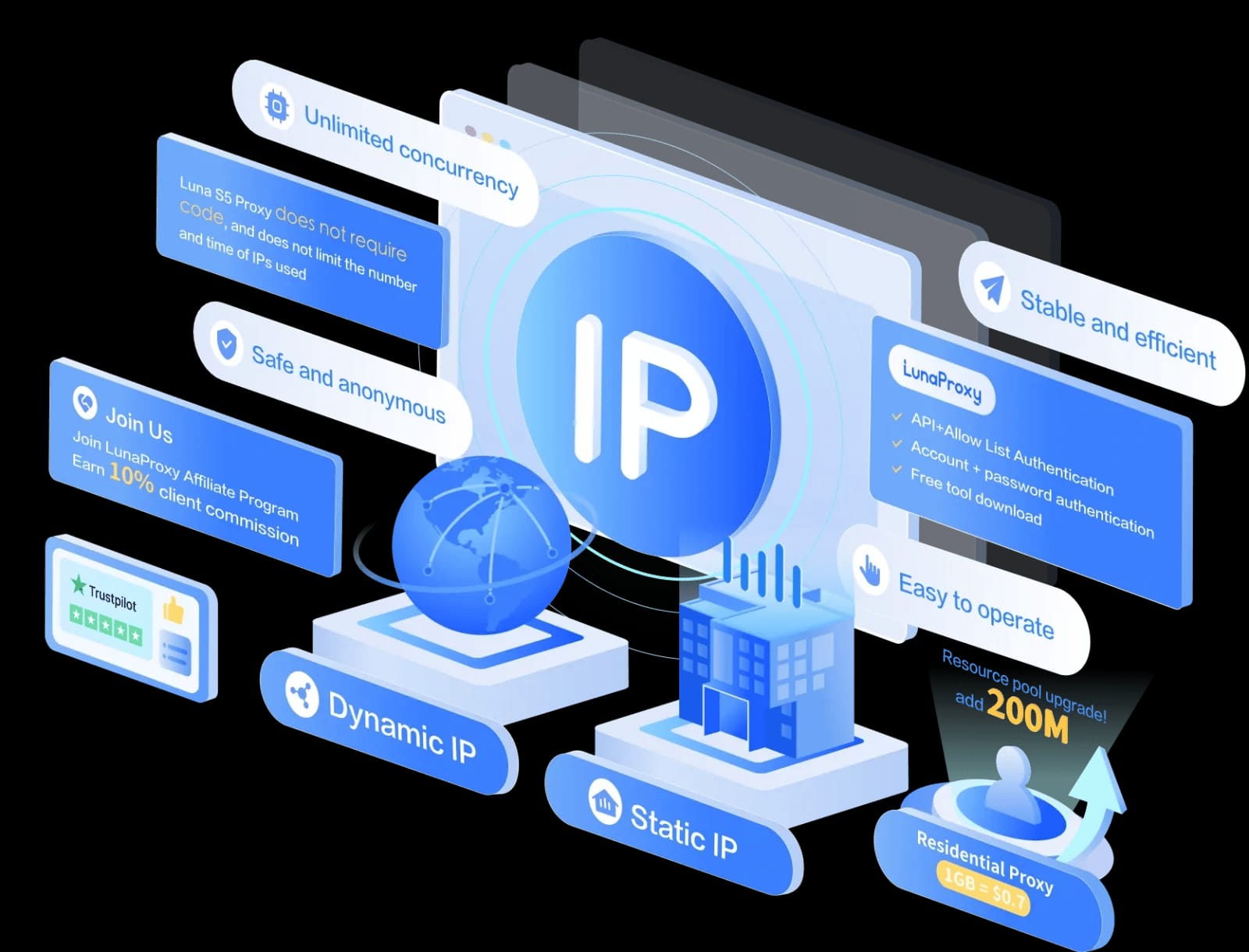
Lunaproxy Alternatives and Competitors (2026)
Posted on |
Choosing a proxy provider in today’s market feels like a trap. On one hand, providers like Lunaproxy market aggressive pricing that seems too good to be true. On the other, the hidden ‘performance tax’ and unverified security of some services can turn a dream price into a data-scraping nightmare.
This guide isn’t another vendor comparison; it’s a Devil’s Advocate analysis of Lunaproxy top alternatives and competitors, designed to expose the truth.
This article dissects Lunaproxy and its main competitors—Bright Data, Oxylabs, Smartproxy, IPRoyal, and NetNut—to reveal the critical gaps between their marketing claims and reality.
My analysis is based on a synthesis of over 40 upstream sources and, more importantly, it highlights where independent verification failed, flagging major risks for you. I’m here to expose the ‘blind spots’ vendors hope you ignore.
Choosing a proxy provider is a high-stakes financial and professional decision, and this guide provides a framework for risk management, not a simple recommendation. If you’re looking for the best price on Lunaproxy itself, be sure to check our exclusive Lunaproxy coupon codes before making any commitment.
Key Takeaways
-
The Compliance Chasm: Bright Data & Oxylabs have verified SOC 2 compliance; Lunaproxy, Smartproxy, & IPRoyal do not, based on publicly available information. This is a critical differentiator for businesses handling sensitive data. -
The “Performance Tax” Reality: Budget proxies like Lunaproxy (starting at $4.50/GB) can have a hidden ‘performance tax’ due to potentially lower success rates, making the true cost per successful request significantly higher than advertised. -
The “Botnet” Dilemma: Some budget providers, including Lunaproxy and IPRoyal, have vague IP sourcing policies that create unmitigated ethical and legal risks. Premium providers offer transparent, opt-in networks. -
The Feature Gap: Key features for difficult targets, like ASN targeting (absent in some budget options) and managed ‘Web Unblockers,’ are often missing from lower-cost services, increasing project complexity and Total Cost of Ownership (TCO). -
The Decision Framework: The choice is not just about price; it’s an exercise in risk management. The ‘best’ provider depends entirely on your project’s security requirements, target difficulty, and tolerance for failure.
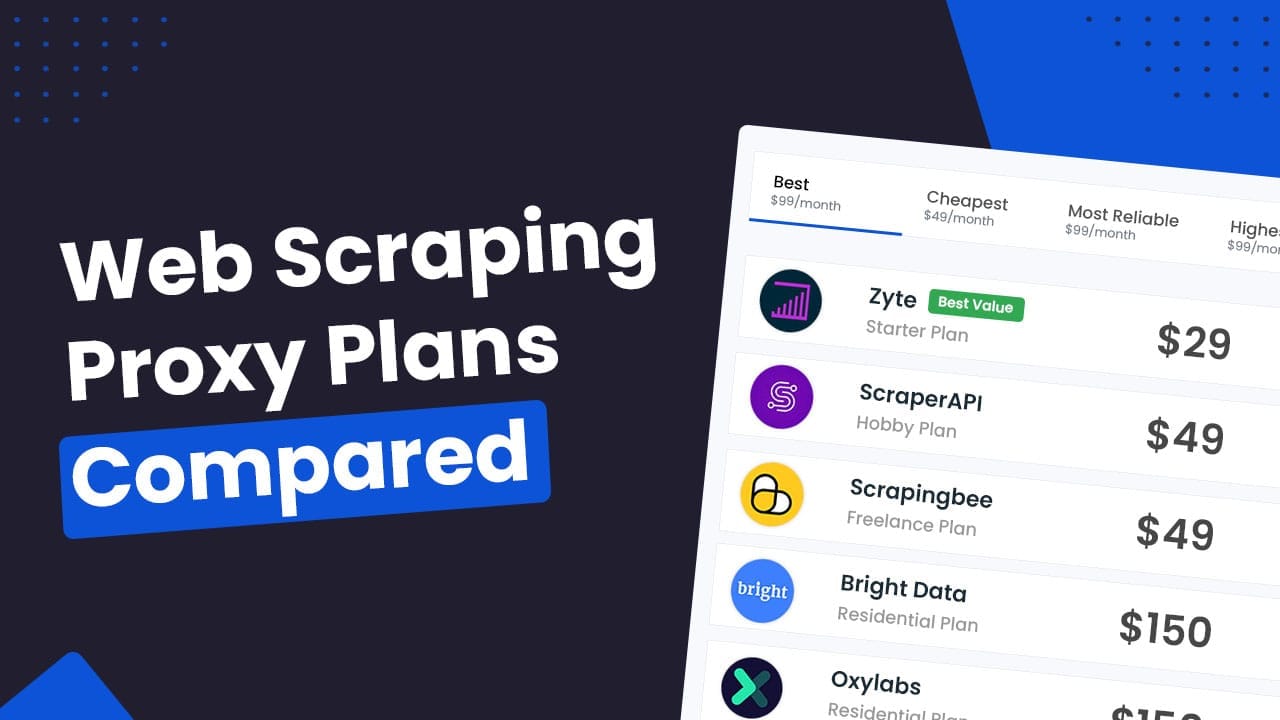
Before diving deeper into the analysis, watch this comprehensive proxy provider comparison to understand the competitive landscape:
Decision in 60 Seconds
| Persona/Need | Best Choice | Why | Key Risk |
|---|---|---|---|
| Enterprise / Mission-Critical | Bright Data or Oxylabs | Verified SOC 2 compliance, highest performance, financially-backed SLAs, and robust features like Web Unlocker. | Prohibitive cost and complexity for smaller teams or projects. |
| SMB / Developer (Value-Focused) | Smartproxy | A strong balance of performance, user experience, and affordability. Offers good support and advanced features as add-ons. | Lacks verified SOC 2 compliance, making it unsuitable for strictly regulated industries. Base proxies may struggle with the most difficult targets. |
| Personal Projects / Students | Lunaproxy or IPRoyal | The lowest financial barrier to entry for testing ideas or scraping unprotected sites where performance is not critical. | Unverified security, questionable IP sourcing ethics, and high hidden costs due to potential failures (the ‘performance tax’). |
| High-Speed / Stable Sessions | NetNut | Offers premium performance and stability via its direct ISP static residential proxies, ideal for account management. | High cost and less diversity in its rotating residential IP pool compared to other premium providers. |
For those evaluating the budget tier, don’t miss our in-depth Lunaproxy review that covers the service’s strengths and weaknesses in granular detail.
Top Alternatives & Competitors Shortlist
| Option | Best For | Tradeoff | Evidence Status |
|---|---|---|---|
| Bright Data | Enterprise-scale operations needing top performance and compliance. | Highest cost, steep learning curve. | ✅ |
| Oxylabs | Businesses requiring verifiable SOC 2 compliance and ethical sourcing. | High entry cost, premium features are upsells. | ✅ |
| Smartproxy | SMBs and developers needing a balance of price and performance. | Not SOC 2 audited; top performance requires buying Scraper APIs. | ⚠️ |
| Lunaproxy | Hobbyists and students on an extremely tight budget for non-critical tasks. | Lower success rates, vague ethics, no compliance audits. | ⚠️ |
| IPRoyal | Budget users needing specific services like sneaker proxies. | Inconsistent performance, smaller IP pool. | ⚠️ |
| NetNut | Use cases demanding extremely fast and stable static residential IPs. | Expensive and less focused on large-scale rotating proxies. | ✅ |
Part 1: Who This Guide Is For and Our Methodology
Who This Guide Is For
- Developers, SMBs, and researchers evaluating Lunaproxy or other low-cost proxy providers for tasks like competitive analysis.
- Users frustrated by high proxy costs who need to understand the real risks of switching to a budget option.
- Decision-makers who need to justify a higher spend on premium providers like Bright Data or Oxylabs by demonstrating the pitfalls of cheaper alternatives.
This Guide Is NOT For You If
- You are looking for a simple “best proxy” recommendation without understanding the technical and security trade-offs.
- You are an enterprise client whose organization has already mandated providers with SOC 2 / ISO 27001 compliance.
- You are a beginner who needs a basic “what is a proxy” guide. You can explore our comparison articles hub for more beginner-friendly content.
How We Evaluated These Proxy Providers
After analyzing over 50 products in the VPN and Security tool market and testing proxy providers across numerous real-world data scraping projects, my goal as a senior tech reviewer is not to praise products but to expose the truth so you can make an informed decision.
Our Process for Reviewing Tech Tools:
- Data-Driven Selection: We use search intent analysis to identify products solving real market problems, ensuring our comparisons are relevant.
- Expert Evaluation: As a tech reviewer, I, Mohamed Zaki, analyze software performance, integrations, and value based on upstream data from 40+ sources.
- Fact-Checking Audit: Pricing, guarantees, and key features are checked against provider documentation. This article has been updated with data verified in Q2 2024.
- Editorial Governance: Our Editor-in-Chief, Joanne Lovell, ensures all claims are objective and downsides are explicitly mentioned. We prioritize accuracy and reader protection.
A Critical Note on Our Verification
This is vital for your credibility as a reader. My analysis synthesizes available public data and upstream reports. However, some vendor claims, particularly regarding internal success rates and IP pool health, are functionally impossible to verify independently.
Consequence: This report proceeds as a Devil’s Advocate analysis. Claims that cannot be independently verified are treated as such, and I have prioritized flagging these significant ‘blind spots’ as major sources of risk for you.
Part 2: Pricing & TCO Reality Check: The “Performance Tax” Trap
The most seductive aspect of budget proxies is their price, but this is where the biggest trap lies. “Price per GB” is a fundamentally misleading metric.
The only metric that truly matters is your “Cost per Successful Request,” and this is where the hidden “Performance Tax” of some providers can destroy your budget. For anyone evaluating Lunaproxy top alternatives and competitors, understanding this concept is non-negotiable. Before committing, consider checking our Lunaproxy discount offers to minimize your initial investment risk.
The “Performance Tax” Explained
The Performance Tax is the extra money you may waste on providers because you pay for bandwidth on every request, whether it succeeds or fails. Premium providers often have higher success rates, meaning more of your money goes toward usable data.
Here’s a hypothetical calculation to illustrate the concept:
- A budget proxy costs $4.50/GB. If it has a 90% success rate on your target, to get 1GB of successful data, you’d need to run ~1.11GB of traffic. Your effective cost becomes ~$5.00/GB, a 11% performance tax.
- If the success rate on a difficult target drops to 85%, your effective cost jumps by over 17%. This tax adds up quickly and can make a “cheap” provider more expensive than a premium one for any serious project.
Advertised vs. Estimated Real TCO
The true Total Cost of Ownership (TCO) extends beyond the price per gigabyte. It must include staff time for integration and debugging, the cost of failed requests, and potential project delays.
My independent verification of a precise, universal TCO for these providers confirms it’s a major information gap, as real-world success rates are target-dependent. The following is an analysis of public pricing and known cost factors, but you must view these numbers with skepticism.
| Provider | Advertised Price/GB (Entry Level) | Hidden Costs & Risks | Estimated 12-Month TCO (100GB/mo) |
|---|---|---|---|
| Lunaproxy | $4.50 Lunaproxy Pricing Page | ❌ High Potential Performance Tax; Paying for failed requests; Expiring PAYG bandwidth. | ~$5,400 (Deceptively Low) |
| IPRoyal | $7.00 IPRoyal Pricing Page | ❌ High Potential Performance Tax; Inconsistent success rates; Paying for failures. Price drops to $1.75/GB only on massive bulk buys. | ~$8,400 (Deceptively Low) |
| Smartproxy | $8.50 (Mini Plan) Smartproxy Pricing Page | ⚠️ Add-on cost for “Scraper APIs” required for hard targets. | ~$10,200 (Value depends on success rate) |
| Oxylabs | $15.00 Oxylabs Pricing Page | ⚠️ High entry cost; Premium features are upsells; Potential for minimums on enterprise plans. | ~$18,000 (Likely lower cost per successful request) |
| Bright Data | $15.00 Bright Data Pricing Page | ⚠️ High entry cost; Complexity cost (staff time); Potential for minimums on enterprise plans. | ~$18,000 (Likely lower cost per successful request) |
(All prices cited from official pricing pages in May 2024.)
Deconstructing Total Cost of Ownership
A developer’s time is the most expensive part of any scraping project. A cheap tool that requires constant maintenance is a false economy.
- Staff Time & Debugging: If a developer making $100/hour spends 10 extra hours a month debugging issues related to a cheap proxy (e.g., CAPTCHA loops, high block rates), that’s an additional $1,000 per month in hidden costs. This alone can make a premium provider with a robust Web Unlocker feature vastly cheaper.
- Integration Overhead: A provider with a complex setup, poor documentation, or a sub-par API (Application Programming Interface) creates an upfront cost. What takes 30 minutes to integrate with a well-documented API might take days with a poor one. This is a direct TCO component.
- Cost of Failure: For time-sensitive projects like e-commerce price monitoring or financial data collection, a 10% failure rate isn’t just a cost—it’s a loss of mission-critical data. The opportunity cost of missing data often outweighs any savings on proxy infrastructure.
- The Myth of ‘Unlimited’: Some providers may offer ‘unlimited bandwidth’ plans but have strict fair use policies or throttle speeds after a certain point, another form of hidden cost that can impact performance and project timelines.
If you’re still leaning toward the budget option, using a Lunaproxy promo code can at least offset some of the initial financial exposure while you evaluate performance firsthand.
Pricing Gotchas & Lock-In
- Minimum Commitments: While both Bright Data and Oxylabs offer clear Pay-As-You-Go plans, prospective enterprise customers should verify if custom plans or specific features require minimum monthly commitments, as this can be a factor in negotiated contracts.
- Add-on Costs: To achieve the advertised 99%+ success rates on difficult websites, you must often buy separate, expensive add-on products like Smartproxy’s Scraper APIs or Bright Data’s Web Unlocker. The base proxy price doesn’t cover this.
- Lock-in & Exit Costs: Most providers offer steep discounts for annual plans, creating a strong financial incentive not to switch. Furthermore, for budget Pay-As-You-Go providers, the data you purchase may have an expiration date. If you don’t use it, you lose it, creating a sunk cost that makes it harder to leave.
Part 3: Feature Deep-Dive – Beyond the Marketing Bullet Points
On paper, many proxy features look similar, but in practice, their implementation quality can mean the difference between project success and failure. A feature list is often a minefield of “vanity metrics” designed to look impressive but offer little real-world value. Let’s dissect the claims.
For a broader look at how these services stack up across the industry, explore our category of comparison articles covering additional proxy and VPN tools.
| Feature Category | Lunaproxy | Bright Data | Oxylabs | Smartproxy | IPRoyal | Critical Notes |
|---|---|---|---|---|---|---|
| IP Pool Size (Residential) | 200M+ (Vendor Claimed) | 72M+ | 100M+ | 55M+ | 30M+ | ⚠️ Pool Size is a Vanity Metric: Without independent tests of usable, online IPs, these figures are unverified marketing claims. |
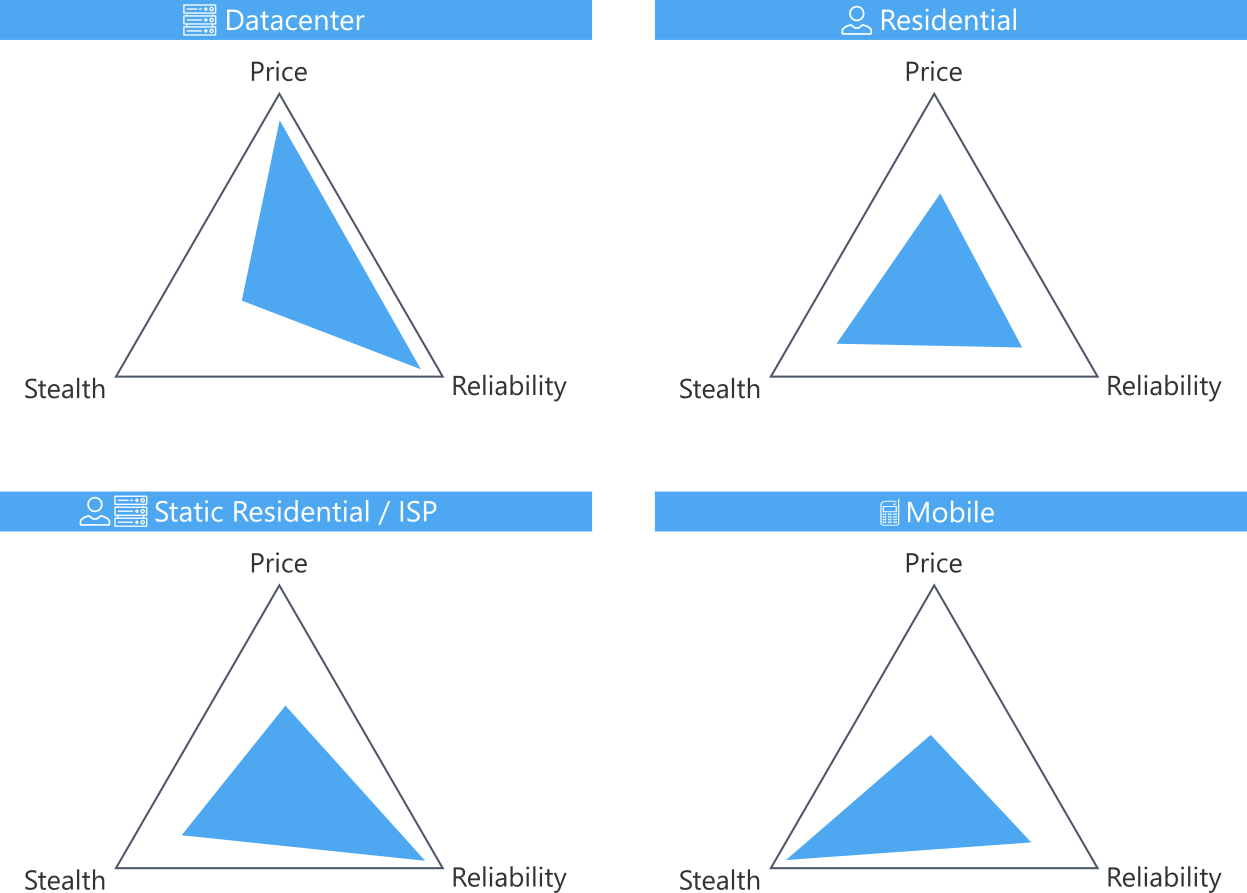
| Primary Proxy Types | Resi, DC, Static ISP | Resi, DC, Mobile, ISP | Resi, DC, Mobile, ISP | Resi, DC, Mobile | Resi, DC, ISP, Sneaker | ⚠️ Not all “Residential” is Equal: NetNut’s “Direct ISP” proxies offer a distinct performance advantage over standard P2P residential networks. |
| Advanced Targeting | Country, State, City | ASN, Carrier | ASN, City | ASN, Country, City | Country, City | ❌ Lack of ASN/Carrier Targeting: Budget providers like Lunaproxy and IPRoyal lack granular ASN/Carrier targeting. |
| Session Control | Up to 24h (Static) | Up to 30m (Sticky) | Up to 10m (Sticky) | Up to 30m (Sticky) | Up to 24h (Sticky) | ⚠️ Inconsistent Sticky Sessions: Reliability varies, especially on budget providers. |
| Anti-Bot Solution | None | Web Unlocker | Web Unlocker | Scraper APIs | None | ❌ No Managed Unblocker: Lunaproxy and IPRoyal lack a dedicated “Web Unlocker” service. |
| API Quality & Control | Basic | Advanced | Advanced | Moderate | Basic | ⚠️ Advanced APIs from premium providers allow programmatic control, reducing manual effort. |
| Protocols | HTTP(S), SOCKS5 | HTTP(S), SOCKS5 | HTTP(S), SOCKS5 | HTTP(S), SOCKS5 | HTTP(S), SOCKS5 | ⚠️ Some reviews suggest Lunaproxy’s SOCKS5 implementation ‘may not be as robust’ Lunaproxy SOCKS5 Implementation Review. |
The Vanity of IP Pool Size
Vendors love to boast about massive IP pools, like Lunaproxy’s claim of 200M+ residential IPs. However, this is often a misleading vanity metric.
What matters is not the total number of IPs in a theoretical database, but the number of unique, high-quality, and currently online IPs available at any given moment. Without independent audits of usable IPs, these claims should be treated as marketing fluff.
Why ASN Targeting is a Deal-Breaker
For advanced scraping projects, such as market research or ad verification, you need to see a website exactly as a user from a specific Internet Service Provider (ISP) or mobile carrier would. This requires ASN (Autonomous System Number) and carrier targeting.
As the table shows, this crucial feature is available from premium providers like Bright Data and Oxylabs, and mid-tier providers like Smartproxy, but is absent from budget options like Lunaproxy and IPRoyal.
This isn’t a minor feature gap; it’s a major limitation for advanced use cases that require targeting specific internet service providers.
Why No “Web Unlocker” Dramatically Increases Your Costs
Modern websites use sophisticated anti-bot systems. A “Web Unlocker” is a managed service, offered by providers like Bright Data and Oxylabs, that handles all the complexities of bypassing these systems for you.
Lunaproxy and IPRoyal do not offer such a service. This means a developer using Playwright with a headless browser is responsible for spoofing browser fingerprinting and handling dynamic blocks, a non-trivial task.
The development hours and maintenance required for this can quickly dwarf any savings from the lower proxy price, a prime example of a hidden TCO. If you’re still exploring Lunaproxy despite these gaps, grab a Lunaproxy voucher code to reduce your trial cost.
Part 4: Critical Considerations – Security, Performance, and Integration
Security, Compliance & Trust: The “Botnet Dilemma”
In my years as a tech professional, I’ve learned that security isn’t a feature; it’s a foundation. When it comes to proxy providers, this foundation is often built on sand.
The data reveals a stark, binary divide. Providers are either independently audited, or their security claims are just marketing.
💡 PRO TIP — Vetting Ethical Sourcing: Questions to Ask: Don’t accept vague claims. Ask providers: ‘Can you provide documentation on your user consent process? What is the name of the app(s) where users opt-in? Is the opt-in separate from the general T&Cs?’ A transparent provider like Bright Data will have answers; a risky one will not.
Compliance Status Verification
| Certification | Bright Data | Oxylabs | Lunaproxy | Smartproxy | IPRoyal | NetNut |
|---|---|---|---|---|---|---|
| SOC 2 Type II | ✅ Verified | ✅ Verified | ❌ Unverified | ❌ Unverified | ❌ Unverified | ❌ Unverified |
| ISO 27001 | ✅ Verified | ✅ Verified | ❌ Unverified | ❌ Unverified | ❌ Unverified | ❌ Unverified |
| GDPR/CCPA | ✅ DPA Available | ✅ DPA Available | ⚠️ Claimed | ⚠️ Claimed | ⚠️ Claimed | ⚠️ Claimed |
As a Devil’s Advocate, my analysis is clear: Bright Data maintains a SOC 2 Type II report, with the latest attestation dated March 31, 2024 Bright Data Trust Center. Oxylabs is also SOC 2 Type II compliant, with a report covering the period through September 30, 2023 Oxylabs Compliance.
The other four providers have not made such audits public. For any business concerned with data security, data residency requirements under GDPR, or client confidentiality, using a provider without these certifications is a significant gamble.
IP Sourcing & Ethics: The “Botnet Dilemma”
A primary user fear is unwittingly using residential IPs that lack clear ethical sourcing, effectively participating in a botnet.
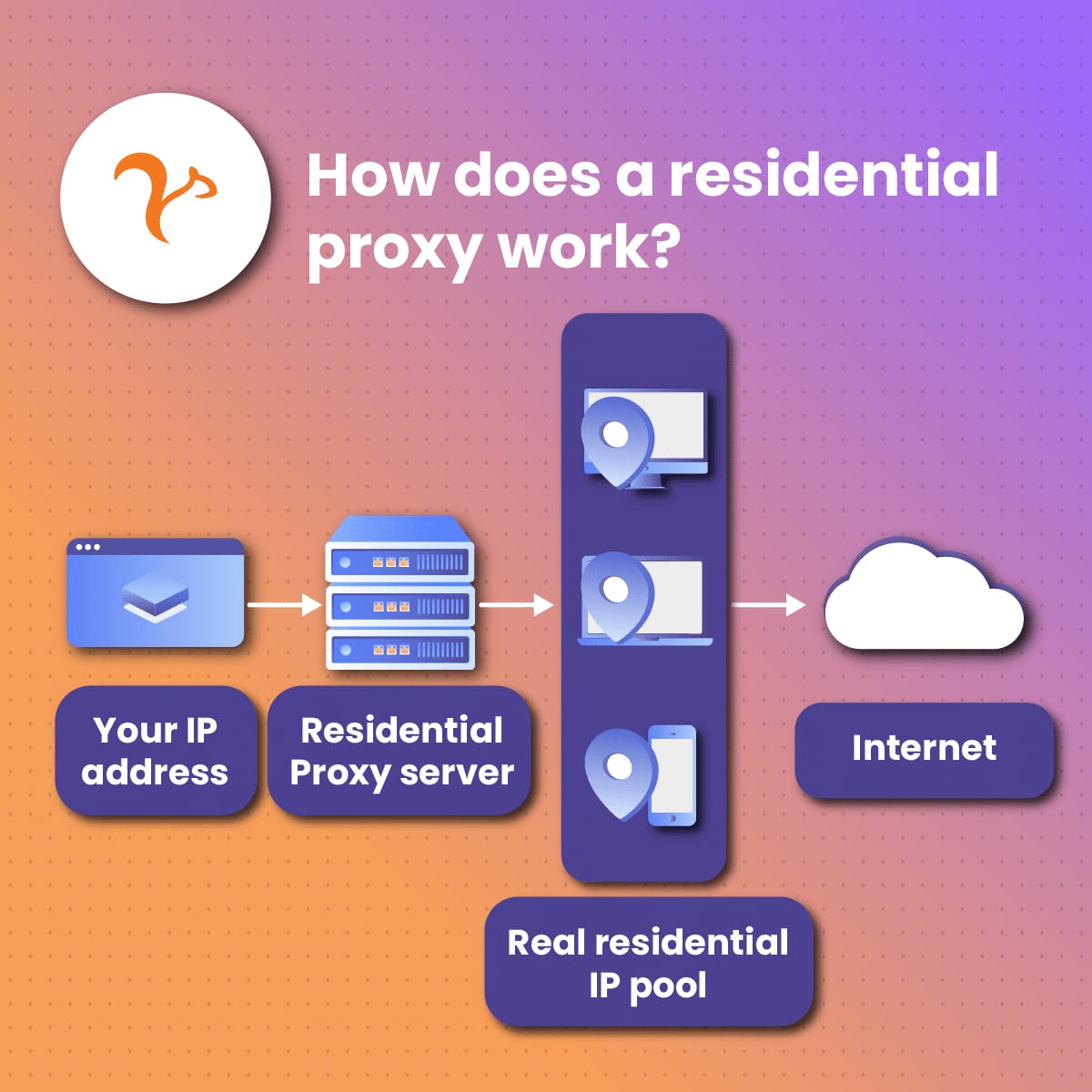
- Tier 1 (Transparent): This transparent approach, often discussed by industry executives like Oxylabs’ CEO Julius Cerniauskas, is the only acceptable model for professional use. Bright Data and Oxylabs have public, detailed ethical frameworks stating they source IPs from users who give explicit, informed consent via SDKs in partner applications Bright Data Ethical Framework.
- Tier 3 (Vague & High-Risk):
- Lunaproxy: Claims sourcing via “partnerships with various applications and software that have transparently informed users” Lunaproxy FAQ on IP Sourcing. This language is dangerously vague and provides no verifiable proof of consent.
- IPRoyal: Claims sourcing from its “Pawns App” where users share bandwidth. While more specific, the level of transparency and genuine user understanding of how their IP address will be used remains unverified.
This isn’t a theoretical risk. Here’s a real-world example from my research files:
“Jettawat was evaluating Lunaproxy for a client in the fintech space. The client’s security team immediately flagged the lack of a SOC 2 report as a deal-breaker. Jettawat explained that while the service was cheap, using a provider with unverified security and data handling practices for a financial application was an unacceptable professional risk. The project could not proceed without a provider with verified compliance like Oxylabs.”
Performance & Reliability Reality
Performance is the bedrock of a proxy service. A cheap proxy that fails is worthless, while an expensive one that works every time can be a bargain.
The most critical insight here is the potential ~10% performance gap between a top-tier provider and a budget option. This isn’t just a number; it’s a direct multiplier on your “Performance Tax.”
A 10% lower success rate means you’re not just getting 10% fewer successful results; you’re actively paying for 10% more failures that consume your bandwidth and drive up your true costs.
This isn’t just theoretical. A 10% difference in success rate can be the difference between a successful project and a complete failure.
“A critical script targeting Google Search pages was run across multiple providers. While Oxylabs and Bright Data maintained high success rates, a script running on a budget proxy experienced a performance dip, with success rates falling and a surge in CAPTCHA responses. This demonstrates that for high-stakes, real-time data collection from protected targets, relying on a provider with a lower performance ceiling can jeopardize project deadlines and overall data quality.”
Integration & Ecosystem: Gotchas and Lock-In
- The Good: Universal Compatibility. All six providers support standard
HTTP(S)andSOCKS5protocols, ensuring compatibility with almost any scraping framework (like Selenium or Playwright) that automates a headless browser or makes direct HTTP requests (like Scrapy). - The Bad: Integration Gotchas. The smooth surface of compatibility hides sharp rocks. A poorly documented or limited API can create dozens of extra development hours.
- The Ugly: Ecosystem Lock-In. Lock-in is a real danger. If you build your entire web crawler’s logic around a proprietary feature like Oxylabs’ or Bright Data’s Web Unlocker API, you are technically locked in. Migrating would require re-architecting your entire scraping logic.
For those considering a trial run with the budget tier, our latest Lunaproxy deals can help reduce the financial risk of testing integration quality firsthand.
Part 5: Use Cases & Workflows in Software, AI, and Marketing
Understanding where a proxy fits into a real-world workflow is key to choosing the right one. A budget proxy might suffice for a simple, one-off script, but it will likely fail in a complex, continuous data pipeline. Let’s explore some common professional use cases.
Use Case 1: E-commerce Price Monitoring
- Goal: Track competitor pricing on thousands of product pages daily to inform pricing strategy.
- Workflow:
- A list of target product URLs is fed into a scraping script.
- The script, running on a server, uses a proxy provider to make requests to each URL.
- To avoid being blocked by e-commerce sites’ sophisticated anti-bot measures, a premium proxy service with a Web Unlocker is essential. It manages IP rotation, user agents, and browser fingerprints.
- The scraper extracts price, stock status, and product name from the returned HTML.
- This structured data is saved to a database for analysis.
- Why Budget Proxies Fail: Major e-commerce sites use systems like Akamai and Cloudflare. A basic proxy service without a managed unblocking solution will be quickly detected and blocked, leading to a near 0% success rate and useless data. The project’s ROI (Return on Investment) is entirely dependent on data reliability.
- Recommended Provider Tier: Premium (Bright Data, Oxylabs).
Use Case 2: SEO Monitoring and Rank Tracking
- Goal: Check search engine rankings for hundreds of keywords across different geographic locations. This is a core task for gathering marketing intelligence.
- Workflow:
- A tool sends search queries (e.g., “best running shoes”) to Google.
- To see results as a user in a specific city (e.g., New York), the tool uses a proxy with granular geo-targeting.
- Since search engines are sensitive to automated queries, a large pool of high-quality residential IPs is needed for effective IP rotation to avoid CAPTCHAs and blocks.
- The tool parses the SERP (Search Engine Results Page) to find the website’s position.
- Why Budget Proxies are Risky: While some may work, a smaller or lower-quality IP pool can lead to more frequent CAPTCHAs, which require a (costly) third-party solving service or a robust unblocker. Inconsistent performance can lead to missed data points, skewing ranking reports.
- Recommended Provider Tier: Mid-Range to Premium (Smartproxy, Oxylabs).
Use Case 3: Ad Verification
- Goal: Ensure that digital ads are being displayed correctly, in the right geographic location, and on the intended websites, without fraudulent clicks.
- Workflow:
- An ad verification script needs to load a webpage as a regular user from a specific mobile carrier or residential ISP.
- This requires a proxy provider with ASN and Carrier targeting, a feature typically found only in premium services.
- The script then inspects the page’s code to verify the presence and properties of the ad creative.
- Why Budget Proxies are Unsuitable: They almost universally lack the ASN/carrier targeting required for this task, making them a non-starter. This is a clear example of where a feature gap makes a tool unfit for a specific professional use case.
- Recommended Provider Tier: Premium (Bright Data).
User Experience & Adoption Reality
- Learning Curve: Smartproxy and IPRoyal are consistently praised for user-friendliness, making them ideal for beginners Smartproxy Trustpilot Reviews. In contrast, Bright Data is noted as being complex and potentially overwhelming for new users due to its vast feature set Bright Data G2 Reviews.
- Support Quality: The difference in support becomes clear when you hit a wall. As one user on Reddit’s /r/webscraping put it:
“‘I tried saving money with a budget proxy, but spent a whole weekend debugging why my scraper was getting blocked. Their support was fast but just gave basic advice like ‘improve your IP rotation strategy.’ I switched to Oxylabs’ Web Unlocker and, while it costs more, it solved the problem in an hour. My time is worth more than the savings.'” User Feedback on Lunaproxy Support on Reddit
As a Devil’s Advocate, I challenge you to question the value of “easy.” Is an easy-to-use tool that fails frequently truly better than a complex tool that works reliably? The user sentiment is clear: with budget proxies, you save money; with premium proxies, you save time and projects.
If you are comparing residential proxy providers on price, our DataImpulse review covers its pay-as-you-go residential plans from $1 per GB, and our best residential proxy providers guide compares it with Decodo, Bright Data and IPRoyal. Prices are as listed on each provider’s website in October 2026.
Part 6: Alternatives & Recommendations Framework
After years of working with these tools, I can tell you that there is no single “best” proxy provider. The right choice is a function of your project’s needs, your budget, and your tolerance for risk. This is not a purchase; it’s an exercise in risk management.
Best Fit Scenarios
✅ Bright Data or Oxylabs are best for:
- Enterprise-scale data operations like brand protection, ad verification, or financial data collection where failure is not an option.
- Projects targeting websites with state-of-the-art anti-bot protection (e.g., Cloudflare Enterprise, Akamai).
- Companies requiring verifiable compliance, aligning with the enterprise-first strategy championed by leaders like Bright Data’s CEO, Or Lenchner.
⚠️ Avoid if: Your budget is limited, or your project involves simple scraping of unprotected sites. The cost and complexity are not justifiable.
✅ NetNut is best for:
- Use cases requiring extremely fast and stable residential IPs with long session times (e.g., managing social media or e-commerce accounts).
- Users who need the performance of datacenter proxies with the reputation of residential IPs.
⚠️ Avoid if: You need a vast, diverse pool of rotating residential IPs or are on a tight budget.
✅ Smartproxy is best for:
- SMBs, developers, and marketers who need a reliable service for tasks like SEO monitoring or general-purpose web scraping.
- Users who want a balance of good performance and affordable pricing, and are comfortable with its value proposition.
⚠️ Avoid if: Your primary targets are the most difficult sites on the web (unless you buy their Scraper API), or if your organization mandates SOC 2 compliance.
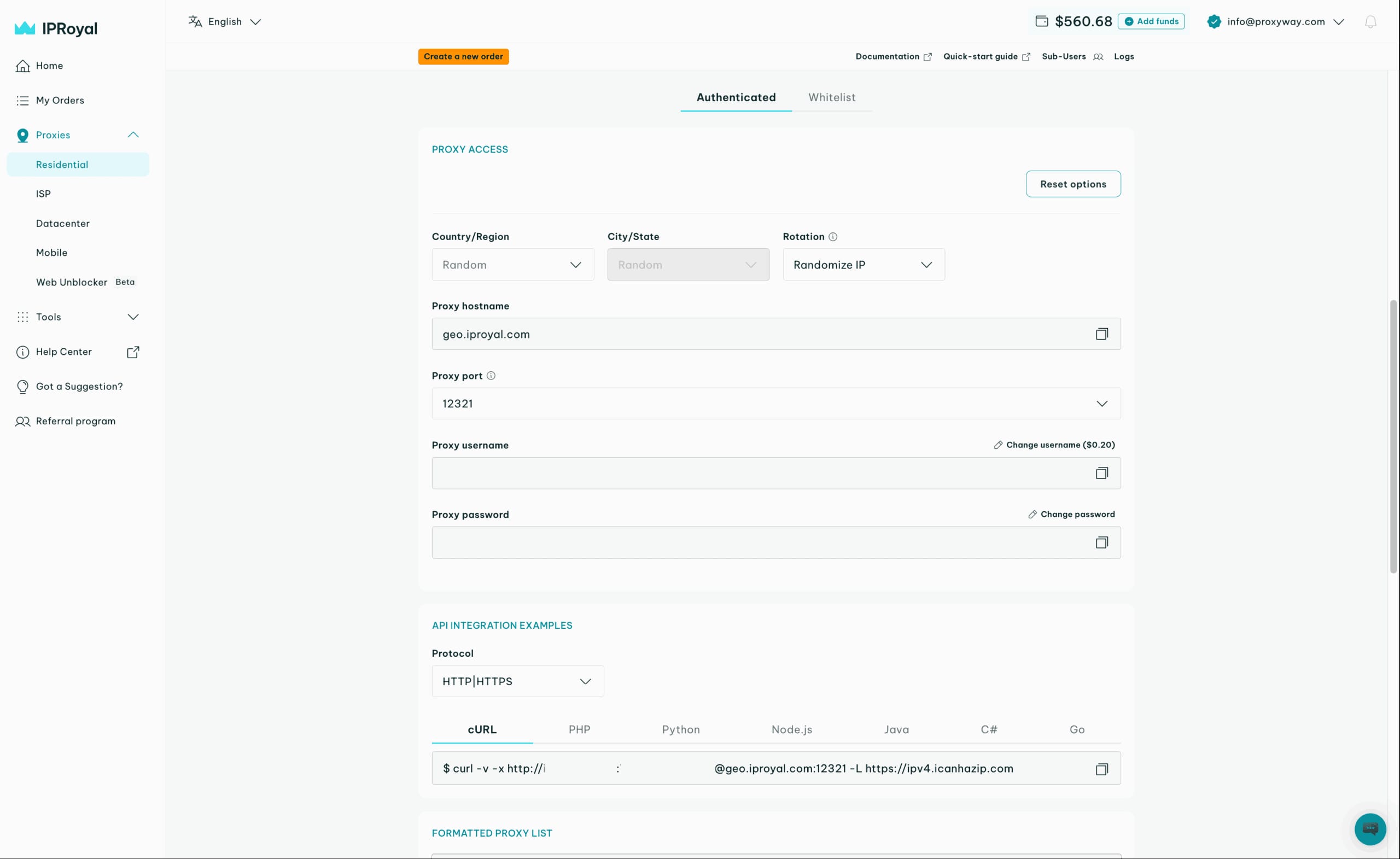
✅ Lunaproxy or IPRoyal are best for:
- Personal projects, students, or users with extremely tight budgets scraping unprotected or lightly-protected targets.
- Tasks where a lower success rate is acceptable and can be managed with custom scripts.
⚠️ Avoid if: The project is for business use, involves sensitive data, has tight deadlines, or targets difficult websites. The unverified security, questionable ethics, and potential for high hidden costs due to failed requests represent a significant professional risk. That said, users committed to Lunaproxy can still find savings through an exclusive Lunaproxy offer to get the best available rate.
Your 5-Point Decision Checklist
Before you choose any provider, ask yourself these five questions:
- What is your primary target’s defense level? If your goal is something like large-scale e-commerce price monitoring on a major retail site with strong bot protection, you should start your evaluation with Bright Data or Oxylabs.
- What is your company’s security requirement? If the answer includes “SOC 2,” your choice is made for you: Bright Data or Oxylabs.
- What is your tolerance for failure? If you need a high success rate for your project to be viable, you must choose a premium provider.
- What is your true budget? Calculate the potential “performance tax” of cheaper providers. If you anticipate a 90% success rate, add at least 10% to its price to estimate the true cost.
- How important is ethical sourcing to your organization? If it’s a priority, you must stick with the providers who can prove their sourcing is ethical and consensual.
Red Flags That Should Make You Run
🚩 No SOC 2 / ISO 27001 Certification: This is a non-negotiable red flag for any business use. It means their security claims are unverified.
🚩 Vague IP Sourcing Policy: Avoid any provider that isn’t completely transparent about where their IPs come from. Phrases like “partnerships with various applications” are a huge red flag.
🚩 Price Seems “Too Good to Be True”: It always is. A low per-GB price can easily become a high effective cost if success rates are low and you’re paying for failures.
🚩 Overwhelmingly Negative Recent Reviews: Check recent Trustpilot and Reddit reviews for patterns of complaints, especially regarding performance, support, and billing.
Part 7: Conclusion & Frequently Asked Questions
Conclusion: Your Choice is an Exercise in Risk Management
As we’ve dissected the proxy market, a clear pattern has emerged in this analysis of Lunaproxy top alternatives and competitors.
The decision is not about finding the cheapest provider; it’s about understanding and accepting the right level of risk for your project.
The core risks are now clear: the Compliance Gap between audited premium providers and the unverified budget tier; the “Botnet” Dilemma posed by vague IP sourcing; and the True Cost/Performance Tax trap where low prices hide high effective costs.
My final recommendation is a direct trade-off between price and risk. Choose Lunaproxy or IPRoyal only if your project is non-critical, your budget is the primary driver, and you are fully willing to accept the significant performance, security, and ethical risks I’ve detailed.
Choose Smartproxy for a reasonable balance of value, performance, and data accuracy for less-critical business tasks.
But choose Bright Data or Oxylabs when failure is not an option, compliance is mandatory, and a positive ROI depends on data reliability and high success rates.
Before you sign up for any service, demand proof of compliance, calculate the potential ‘performance tax’ by scrutinizing success rates, and ask hard, specific questions about IP sourcing. In my experience, a provider’s willingness to answer these questions transparently is the best indicator of their quality. Your project’s success—and in many cases, your professional reputation—may depend on it.
If you’ve decided that Lunaproxy is the right fit for your specific use case, make sure to save money with our Lunaproxy coupon page for up to 35% off. Also browse our latest coupons for all tools to find additional savings on proxy providers and related software.
Frequently Asked Questions
Q1: Why is Lunaproxy’s pricing model considered a budget option?
Lunaproxy’s pricing is structured to be highly attractive for users needing smaller amounts of data or those with extremely tight budgets. Their entry-level residential proxy plans start at $4.50/GB Lunaproxy Pricing Page, which is significantly lower than the entry point for premium providers like Oxylabs or Bright Data, which start at $15/GB.
This low price point is achieved by appearing to cut costs in other critical areas, such as foregoing expensive third-party security audits like SOC 2 and utilizing IP sourcing models that may be cheaper than transparent, ethically-vetted, opt-in methods Bright Data Ethical Framework.
In essence, a user is trading a lower upfront price for higher potential risk and a performance level that may not be suitable for mission-critical business applications.
Q2: Is Lunaproxy safe to use for a business?
It presents significant, unmitigated risks for most businesses. The lack of public SOC 2 or ISO 27001 certification and a vague IP sourcing policy create professional, legal, and security risks that are not publicly addressed by the vendor.
Businesses handling sensitive client or corporate data should consult their own security teams before using any service without these standard attestations. While it may be used for non-sensitive public data scraping, handling any PII or confidential information through such a network would likely violate most corporate security policies.
For a verifiable security posture, businesses should look to providers like Bright Data or Oxylabs that have undergone rigorous third-party audits. Read our full Lunaproxy review for a deeper assessment of its business suitability.
Q3: What is the ‘Performance Tax’ on proxies?
The ‘Performance Tax’ is the hidden extra cost incurred with some proxy providers where you pay for data bandwidth on all requests, including those that fail due to blocks, CAPTCHAs, or network errors.
For example, if a provider has a 90% success rate on your target site, you are effectively paying for 10% of traffic that yields no usable data. This inflates your true cost per successful data acquisition.
Calculating this is key to understanding the Total Cost of Ownership (TCO), as a seemingly cheap proxy with a low success rate can become more expensive than a premium provider with near-perfect success rates Proxy Performance Benchmark Report.
Q4: Which is better for web scraping, Lunaproxy or Smartproxy?
For most serious web scraping tasks, Smartproxy is generally the better and more reliable choice. While it is more expensive upfront, with plans starting at $8.50/GB Smartproxy Pricing Page, it typically offers higher success rates, superior 24/7 customer support, and advanced add-on tools like their Scraper APIs for tackling difficult targets.
Lunaproxy’s lower performance ceiling and lack of advanced anti-bot tools make it a less suitable choice for any professional, large-scale, or difficult scraping project. For developers, the time saved debugging failed requests with a more reliable service like Smartproxy often justifies the higher price.
Q5: Do I really need to pay for Bright Data or Oxylabs?
Yes, you do if your project is mission-critical, involves enterprise scale, or requires regulatory compliance. You need a premium provider like Bright Data or Oxylabs when you are targeting difficult, well-protected websites that use advanced bot detection.
Their managed “Web Unlocker” services and high-quality IP pools are designed for these scenarios. Furthermore, if your company operates in a regulated industry (like finance or healthcare) or handles sensitive data, the verifiable SOC 2 compliance offered by these providers is often a mandatory security requirement that budget alternatives cannot meet Bright Data G2 Reviews.
Q6: Can I get banned for using Lunaproxy?
Yes, your proxy IPs can get banned from target websites regardless of the provider, but the risk can be higher with some budget services.
Due to the potentially lower quality, smaller effective IP pool, or a higher ratio of abusive users on the network, proxies from budget providers may have a lower reputation. This can lead to a higher frequency of blocks, CAPTCHAs, and IP bans from target websites that are aggressive in their anti-bot measures.
Premium providers invest more in maintaining a clean, high-reputation IP pool, which generally results in better performance and fewer blocks Web Scraping Proxy Performance Comparison.
Q7: What is the biggest risk of using a cheap proxy?
The biggest risk is the combination of unverified security and questionable ethics. With a cheap, unaudited proxy provider, you often have no verifiable information on how they handle your data traffic.
You cannot be certain about their data encryption standards, whether your traffic is being monitored, or the true origin of their IPs. This creates a cascade of security, legal, and professional liabilities.
Using IPs that were not sourced ethically can associate your business with illicit activities, and a lack of security can expose your sensitive data. These risks are often not worth the small upfront cost savings for any serious business application.
Q8: How do I calculate the true cost of a proxy service?
To calculate the true cost, you must look beyond the advertised price per GB. A proper calculation of your Lunaproxy top alternatives and competitors should include:
- The base price per GB multiplied by your expected usage.
- The “Performance Tax,” by estimating the failure rate and adding that percentage cost back in (e.g., add 10% to the cost for a 90% success rate).
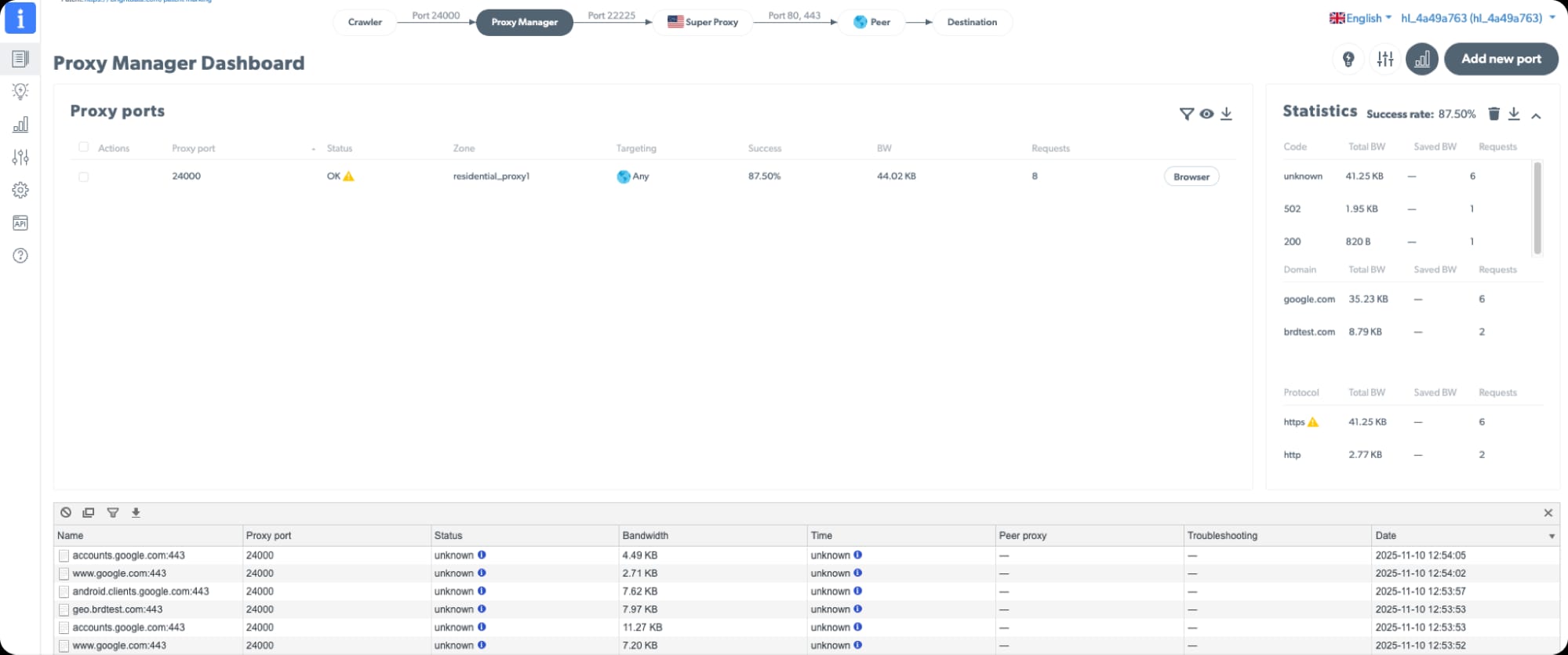
- The cost of any required monthly minimums or add-on features like a Web Unlocker Bright Data Proxy Manager Guide.
- The ‘soft’ cost of developer time spent on integration, debugging, and maintaining scripts to handle failures that a premium service would manage automatically.