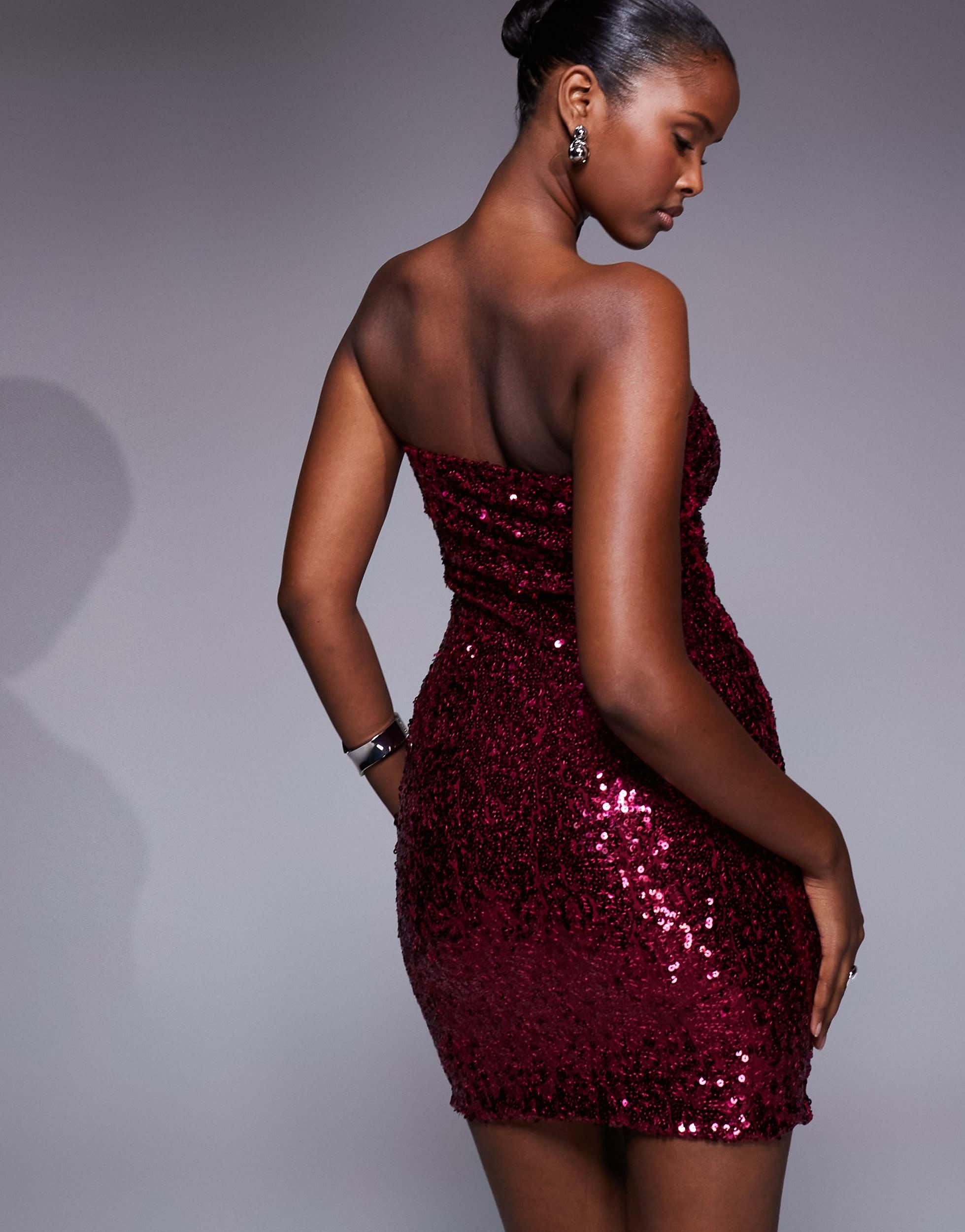
Kaiia the Label Alternatives and Competitors (2026)
Posted on |
As a strategic analyst in the consumer space, I’ve spent years dissecting value propositions, and I’ve seen one fear paralyze shoppers more than any other: the fear of a bad investment.
You’ve got a special event—a birthday, a vacation, or a friend’s wedding—and you need the perfect dress. But the risk of wasting money on something that looks cheap, doesn’t fit, or gets lost in a logistical nightmare is overwhelming.
You’re scrolling through Kaiia the Label, Oh Polly, and a dozen other fast-fashion brands, and a critical question hits you: in a sea of seemingly identical bodycon dresses and fast fashion dupes, how do you choose one without getting burned?
This guide is my devil’s advocate review, designed to help you navigate the landscape of Kaiia the Label Top Alternatives and Competitors. My goal isn’t to sell you a dress; it’s to arm you with a risk-management framework.
We will go beyond the glossy Instagram photos to expose the real costs, hidden risks, and critical trade-offs between the top players, specifically Oh Polly and PrettyLittleThing (PLT). Using years of industry data and analysis, I’ll walk you through a 7-part framework to help you understand the true Total Cost of Ownership (TCO) of that event dress, so you can make a decision that protects your wallet and your peace of mind.

Key Takeaways
Key Takeaways
-
The Core Trade-Off: Your choice boils down to a clear compromise. Oh Polly offers higher perceived quality with thicker, double-layered fabric that justifies its premium price ($70-$110). In contrast, PrettyLittleThing competes on the lowest possible price ($20-$50), but this comes with a significant risk of see-through quality and poor construction. -
The Real Financial Risk is Logistics: Your biggest financial danger isn’t the price of the dress itself but what I call the “Logistics Trap.” An Oh Polly return can cost approximately $18 ($7.99 initial shipping + $9.99 return fee), while a PLT return can cost around $16 ($9.99 initial shipping + $6.00 return fee). -
Sizing is the Biggest Gamble: User reports consistently indicate that Oh Polly runs one size small, while PLT’s sizing is wildly unpredictable—a phenomenon I call “Sizing Roulette.” -
“Disposability” Has a Price: A $45 PLT dress has a higher Cost-Per-Wear at $22.50/wear (only two wears) compared to a $98 Oh Polly dress at $12.25/wear (a realistic 8 wears) due to its more durable construction. -
Ethical Guilt is a Factor: Both brands are rated “Not Good Enough” on ethical transparency by platforms like Good On You, and PLT’s parent company is under investigation for potential greenwashing. -
The Kaiia the Label Information Gap: The most significant finding is the lack of independently verified data for Kaiia the Label. Choosing it over a competitor with more transparent user reviews is a substantial and unnecessary risk.
Before diving into the deep-dive, you might want to grab the latest Kaiia the Label coupon to offset the risk premium of shopping this brand blind.
Decision in 60 Seconds
| Your Priority | Best Choice | Why | Key Risk |
|---|---|---|---|
| Achieving a structured, “night luxe” look | Oh Polly | Thick, double-layered fabric creates a compressive, expensive-looking silhouette. | You pay a premium and risk an $18 loss on returns if it doesn’t fit. |
| Trying a fleeting micro-trend at the lowest price | PrettyLittleThing | Cheapest entry point for a disposable, “wear it once” outfit. | High probability of poor quality, sheerness, and inconsistent fit. |
| Prioritizing size inclusivity above all | Fashion Nova | Known leader in offering a wide range of sizes that other brands ignore. | ⚠️ Quality, cost, and return policies are not as transparently documented. |
| Getting a specific aesthetic seen on socials | Kaiia the Label | It may have the exact style you’re looking for. | ⚠️ Total Blind Spot: No verified data on returns, sizing, or quality. |
Top Alternatives & Competitors Shortlist
| Option | Best For | Tradeoff | Evidence Status |
|---|---|---|---|
| Oh Polly | Perceived Quality & Structured Fit | Higher Price & Limited Sizing | ✅ |
| PrettyLittleThing | Lowest Price & Trend Volume | Poor Quality & Sizing Roulette | ✅ |
| Fashion Nova | Size Inclusivity | Unverified Quality & Logistics | ⚠️ |
| White Fox Boutique | “It-Girl” Aesthetic & Co-ord Sets | Unverified Quality & Logistics | ⚠️ |
| House of CB | Premium Quality & Design | Significantly Higher Price Point | ✅ |
| SHEIN | Absolute Lowest Price & Massive Variety | Significant Quality & Ethical Concerns | ✅ |
| Missguided | Trend-led Styles similar to PLT | Owned by Boohoo, similar risks | ✅ |
For a real-world head-to-head of two of the biggest names on this list, this try-on comparison video breaks down the tangible differences between Oh Polly and PrettyLittleThing “going out” dresses:
Part 1: Who This Guide Is For (And Who It’s Not For)
This guide is my definitive analysis for a specific type of shopper. As a value-focused analyst, I believe in empowering consumers with the right data to match their specific needs. See if you recognize yourself in these profiles.
This Guide Is For You If…
- You are a young woman, typically between 18 and 28, searching for eye-catching clubwear or a dress for a “going out” occasion or specific event like a birthday.
- You have felt the sting of disappointment from fast-fashion brands due to inconsistent sizing and questionable quality.
- You are a value-conscious buyer who wants to understand the true cost of an item, factoring in potential shipping charges and return fees before committing to a purchase.
- You are a skeptical reader who suspects the perfectly curated Instagram feeds and influencer posts don’t show the full picture.
This Guide Is NOT For You If…
- You are actively seeking clothing that is sustainable, ethically manufactured, or designed to be a “buy it for life” staple.
- You are already fiercely loyal to a single brand and are not open to critically evaluating alternatives.
- Your personal style leans towards unique, avant-garde, or bespoke designs rather than popular, trend-led fashion.
- You are looking for a purely positive, uncritical celebration of these brands; this is a “devil’s advocate” review, and it gets into the weeds of financial and quality risks.
Part 2: Core Analysis of Kaiia the Label (The Unknown Variable)
To find the best Kaiia the Label alternatives, we must first understand the brand itself—or more accurately, the significant risks posed by what we don’t know about it.
In my analysis, Kaiia the Label represents the ultimate “Information Risk” in the fast-fashion space. While its social media presents a compelling aesthetic, it operates within a data vacuum that can be costly for consumers. For a deeper look at what user data does exist, our full Kaiia the Label Review unpacks the brand piece by piece.
| Metric | Oh Polly | PrettyLittleThing | Kaiia the Label |
|---|---|---|---|
| Return Fee (US) | $9.99 | $6.00 | ⚠️ Unknown |
| Sizing Consistency | Runs 1 size small | Highly inconsistent | ⚠️ Unknown |
| Material Quality | Double-layered, 8% elastane | Single-layered, 5% elastane | ⚠️ Unknown |
| Ethical Rating | “Not Good Enough” | “Not Good Enough” | ⚠️ Unknown |
The “Information Risk” as a Financial Threat
As an analyst, I see risk in terms of financial impact. The biggest danger with Kaiia the Label isn’t that its quality might be bad; it’s that you have no data to price that risk into your purchase decision.
This is where we apply the concept of the “Logistics Trap.”
- The Trap Defined: The Logistics Trap occurs when the sunk costs of a failed purchase (non-refundable shipping + return fees) become a significant percentage of the item’s original price.
- Known Risk (Oh Polly): With Oh Polly, we know a return will cost you precisely $17.98. You can decide if you’re willing to gamble that amount for a potential dress.
- Unknown Risk (Kaiia the Label): With Kaiia, this cost is a complete mystery. Is it a $5 return fee or a $25 international shipping charge? Does it ship from the UK or a US-based warehouse? Without this data, you cannot make an informed financial decision. A $70 dress could secretly carry a $30 return risk, turning a splurge into a financial penalty.
Why This Matters More Than Style
In a market saturated with similar aesthetics, logistical transparency and predictable quality become the primary differentiators. The “night luxe” or “baddie” aesthetic is a commodity offered by dozens of brands. What isn’t a commodity is a transparent and fair return process.
My professional conclusion is that until Kaiia the Label provides clear, accessible information on its US return policy, shipping origins, and material composition, it should be considered a higher-risk choice than competitors like Oh Polly or PLT, whose flaws are at least well-documented and quantifiable.
The risk with Oh Polly is paying a premium for a specific quality; the risk with PLT is getting a disposable item for a low price. The risk with Kaiia the Label is buying completely blind — and one way to hedge that risk is by pairing your order with a working coupon so the sunk cost of a possible failed purchase is smaller. In my book, buying blind is a risk not worth taking for a non-essential purchase.
Part 3: Feature Deep-Dive: Deconstructing the Dress
On the surface, a bodycon dress is a simple garment. But as a professional analyst, I know the devil is in the details.
The difference between a dress that empowers you with body confidence and one that makes you self-conscious is hidden in its core “features”: fabric, construction, and sizing systems.
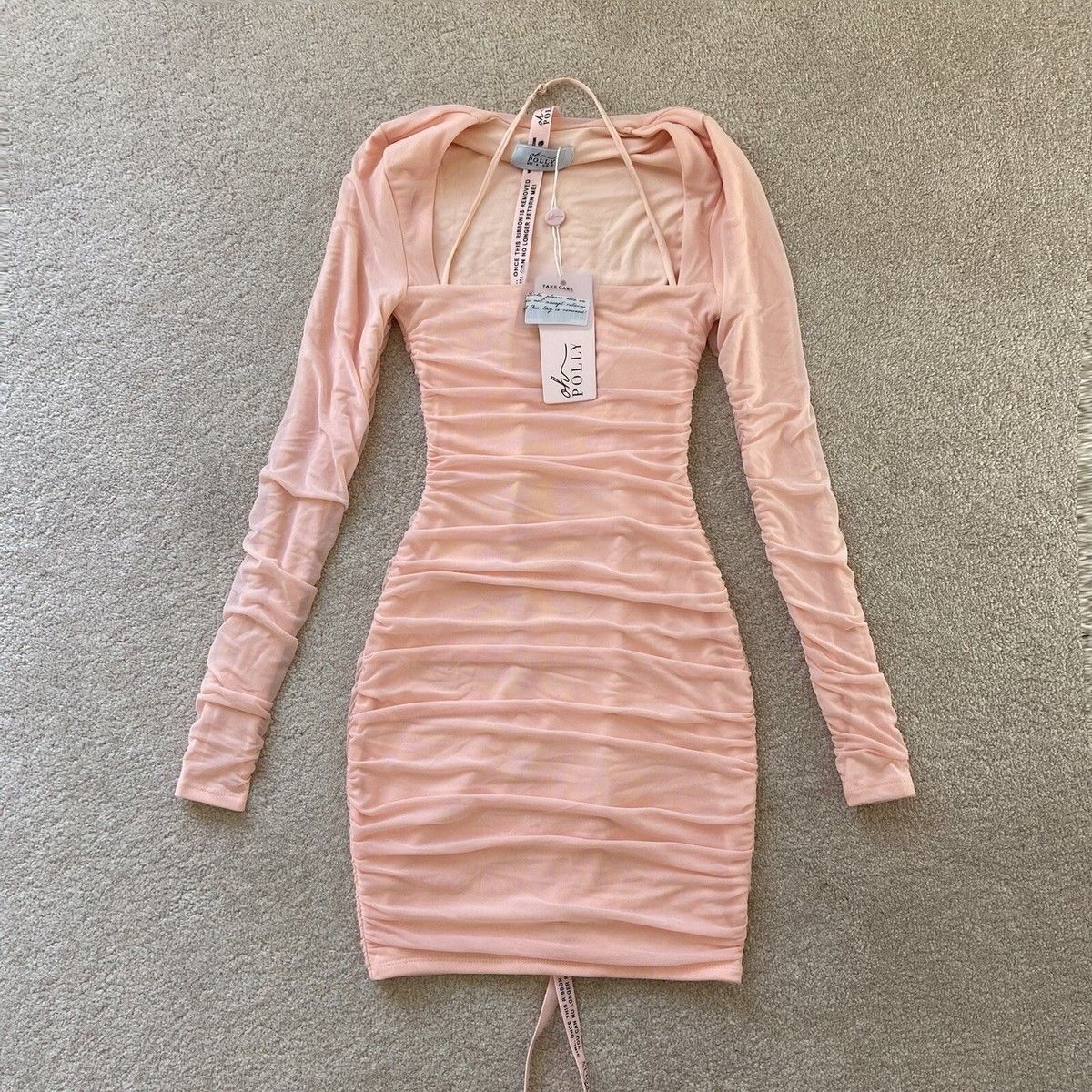
Feature 1: Fabric & Material Composition
The feel, fit, and failure point of a dress begin with its material blend. This is the most tangible difference between price tiers in fast fashion.
- The Oh Polly Standard (Perceived Quality): Oh Polly almost exclusively uses a thick, double-layered blend of 92% Polyester and 8% Elastane. The high elastane content provides significant stretch and compression, creating that “snatched” look. The double layering is crucial—it prevents sheerness and gives the garment a substantial, “expensive” feel.
- The PLT Standard (Price Optimization): PrettyLittleThing typically uses a thinner, single-layered 95% Polyester and 5% Elastane blend. The lower elastane content offers less compression, and the single layer is the primary cause of the infamous “see-through” problem, especially under flash photography. This choice is purely for cost reduction.
- The Kaiia Enigma: Kaiia the Label’s product descriptions often just say “Polyester.” This lack of specificity is a red flag. Is it a 5% or 8% elastane blend? Is it single or double-layered? Without this information, a consumer cannot predict if they are buying a dress with the quality feel of Oh Polly or the sheerness risk of PLT.
Feature 2: Construction & Durability
How a dress is assembled determines its lifespan. A dress that falls apart after one wash is a “one-wash wonder,” turning a supposed bargain into expensive textile waste.
- Oh Polly Failure Points: The compressive nature of Oh Polly’s garments puts immense stress on its components. User reviews frequently mention zippers breaking under tension and the delicate satin fabric used in some collections being prone to “pulls” or snags.
- PLT Failure Points: PLT’s construction issues stem from cutting corners. The use of cheap, single-chain stitching means that if one thread breaks, a whole seam can unravel. Fabric pilling and color fading after a single wash are the most common complaints, directly linked to the low-quality polyester used.
- Kaiia’s Longevity Unknown: Will a Kaiia dress last one night or ten? The construction quality is completely unverified. Consistent use of features like signature ruched detailing might suggest a more thoughtful design process, but without data on stitching or component quality, its durability remains a gamble.
💡 The Cost-Per-Wear Illusion
The cheaper dress is not always the better value. Based on durability estimates, a $45 PLT dress lasting 2 wears costs $22.50 per wear. A $98 Oh Polly dress lasting 8 wears costs only $12.25 per wear. As a strategic analyst, I advise you to always calculate value based on longevity, not just the initial price tag — and to stretch that value even further with a discount code before checkout.
Feature 3: Sizing & Fit Systems
Inconsistent sizing is the #1 driver of returns and the primary trigger for the “Logistics Trap.”
- Oh Polly’s Predictable Flaw: The user consensus is clear: Oh Polly runs one size small. While this is a flaw, it is at least a predictable one. Experienced shoppers know to size up.
- PLT’s “Sizing Roulette”: PrettyLittleThing’s sizing is notoriously chaotic. A size 10 in one dress might fit completely differently from a size 10 in another. This is a side effect of using a vast network of different factories with no centralized quality control on measurements.
- Kaiia’s Sizing Gamble: Does Kaiia run small, large, or true to size? Is its sizing consistent across its product line? This is perhaps the most critical piece of missing information. Guessing wrong on sizing is what costs you money, and with Kaiia, you are always guessing.
Part 4: Critical Considerations: Risk Management for Shoppers
As an analyst, I believe a smart purchase isn’t just about finding a good deal; it’s about avoiding a bad one.
This section is your risk management brief. We’ll cover the three major areas of risk you face when buying from these brands: ethical, financial, and performance.
Risk 1: Ethical & Supply Chain Risk (The “Greenwashing Dilemma”)
The “ethical guilt” associated with fast fashion is a real concern for many shoppers. You want to look good, but you don’t want to feel bad about it.
Unfortunately, the data shows that this is a market rife with transparency issues.
| Brand | Ethical Rating (Good On You) | Key Issue/Scandal |
|---|---|---|
| Oh Polly | “Not Good Enough” | Lack of evidence for living wages; manufacturing in China. |
| PrettyLittleThing | “Not Good Enough” | Parent company (Boohoo Group) under CMA investigation for greenwashing. |
| Kaiia the Label | ⚠️ Data Not Available | Lack of a visible, detailed Modern Slavery Statement or verifiable factory information. |
| Fashion Nova | ⚠️ Data Not Available | Past controversies regarding labor practices remain a concern for shoppers. |
The most glaring issue is the lack of available data for Kaiia the Label and Fashion Nova, which I consider a major red flag. In the fashion industry, transparency is a choice, and a lack of data often speaks volumes.
A conscious consumer might see PLT marketing its “PLT Recycled” collection and feel they are making a better choice. However, they would later discover that PLT’s parent company, the Boohoo Group (which also owns brands like Boohoo and Missguided), is under formal investigation by the UK’s Competition and Markets Authority (CMA) for these very types of potentially misleading environmental claims. This highlights the extreme difficulty consumers face in making truly informed ethical choices.
💡 How to Vet a Brand’s Ethical Claims
As an expert, I advise ignoring brand marketing. Instead, check third-party ratings like Good On You and look for formal investigations by bodies like the UK’s CMA. A lack of transparency on a brand’s Modern Slavery Statement is a major red flag that indicates they may not be taking their supply chain responsibilities seriously.
Risk 2: Financial Risk (The “Logistics Trap”)
This is the most immediate and tangible risk. As we’ve established, the sticker price is just the beginning.
- The True Cost of a ‘Failed’ Dress: A single return can erase the “value” of a cheap dress.
- Oh Polly Sunk Cost: $7.99 (Initial Shipping) + $9.99 (Return Fee) = $17.98 lost
- PLT Sunk Cost: $9.99 (Initial Shipping) + $6.00 (Return Fee) = $15.99 lost
- Pricing Gotchas Vendors Rely On:
- Paid Returns are the Standard: For these UK-based brands, charging for US returns is a deliberate strategy to discourage “bracketing”—ordering multiple sizes to find one that fits.
- PLT’s Fictional Pricing: PLT’s model is built on the illusion of a perpetual sale. As noted in our analysis, “The initial price is largely considered fictional.” This creates false urgency.
- Stackability Issues: Crucially, for brands like PLT that are always “on sale,” you must verify if any additional promo codes apply to these already discounted items. Our coupon verification team often finds that top-tier codes are for full-price items only.
If you’re specifically shopping Kaiia, hunting down a Kaiia the Label coupon before you check out is one of the few concrete ways to reduce the Logistics Trap on an otherwise opaque purchase.
Risk 3: Performance & Reliability Risk (The “One-Wash Wonder”)
This is the risk that the product itself will fail you. Every online shopper knows the “Catfish Fear”—the dread that the item that arrives will look nothing like the product photo.
- Fabric Feel vs. Failure: The perceived value is directly tied to the grams per square meter (GSM) of the fabric. Oh Polly invests in a higher GSM, double-layered fabric, leading to a “luxe” feel. PLT does not, leading to a “thin” or “scratchy” feel. ⚠️ Needs verification
- The Case Study: A user buys a $45 PLT dress for vacation. After one delicate wash, a seam unravels and the fabric pills. The garment is now unwearable. The “true cost” of wearing that dress once was the full $45, making its cost-per-wear astronomically high. This turns a supposed bargain into a piece of textile waste.
Part 5: Use Cases & Workflows: Which Brand Is Best For You?
After all this analysis, how do you decide? I’ve created this “Zero-Loser” matrix to give you a final, practical decision tool.
In this framework, every brand “wins” a specific scenario. Your job is to identify which use case best matches your own needs and priorities. This forces a choice based on a clear-eyed view of the trade-offs, not a biased recommendation.
The ‘Logistics Trap’: True Cost of a Single Failed Return
Note: For a $35 PLT dress, the ~$16 sunk cost is 46% of the item’s value — a dramatic illustration of the Logistics Trap.
Use Case 1: The “Key Event” Investment
- Scenario: You have a single, important event (a wedding, a formal, your own birthday party) where looking and feeling your best is the top priority. Your budget is flexible, but you cannot afford a wardrobe malfunction.
- Best Choice: Oh Polly
- Why: Its thick, double-layered fabric provides a compressive, flattering fit that looks expensive and photographs well. The structured nature of the garments minimizes the risk of sheerness or unexpected draping.
- Workflow: You accept the higher price and the $18 return risk. You mitigate this risk by watching multiple YouTube and TikTok reviews for the specific dress you want, paying close attention to comments about sizing before ordering one size up.
Use Case 2: The “Low-Stakes Trend Test”

- Scenario: You see a fleeting micro-trend on TikTok—a niche color, a daring cut-out—and want to try it for one night out with friends. You don’t expect to wear it again and want the lowest possible financial commitment. You are fully aware that your participation is part of the fast-paced haul culture.
- Best Choice: PrettyLittleThing
- Why: It offers the cheapest entry point for a “wear it once” outfit. Its vast catalog makes it highly likely you’ll find the specific, niche trend you’re looking for.
- Workflow: You accept that the quality will likely be poor and the fit inconsistent. You order the item well in advance, knowing it might not work out. Your expectation is for a single-use “costume,” not a wardrobe staple.
Use Case 3: The “Size-Inclusive Search”

- Scenario: You wear a size that is often excluded by mainstream fast-fashion brands (e.g., above a US 14, or requiring Tall/Petite fits). Your primary goal is to find trendy clothing that is actually available in your size.
- Best Choice: Fashion Nova
- Why: While PLT also offers a good size range, Fashion Nova has built its entire brand reputation on leading the market in size inclusivity, often offering a wider variety of styles in its extended range.
- Workflow: You prioritize the availability of your size above all else. You acknowledge the “Unverified Data” risk regarding quality and returns and seek out reviews from other shoppers in your size range to gauge fit.
Use Case 4: The “Aesthetic-First Gambler”
- Scenario: You are scrolling Instagram and see a dress on Kaiia the Label’s feed that is the perfect aesthetic you’ve been looking for. You can’t find a similar style anywhere else. Your desire for that specific look outweighs the quantifiable risks of shopping from a brand with known logistical and quality issues.
- Best Choice: Kaiia the Label
- Why: It has the exact aesthetic you want.
- Workflow: You are making an emotional, aesthetic-driven purchase, not a rational, value-driven one. You accept the “Total Blind Spot” risk: you have no idea what the return will cost, how the sizing will be, or how the quality will feel. You are gambling the full cost of the dress plus unknown shipping fees, and you’re comfortable with losing that entire amount. At minimum, pair the order with a Kaiia the Label promo code so your gamble carries a smaller downside.
Part 6: Alternatives & Comparisons Deep Dive
Now we’ll dive deeper into the two most prominent alternatives that define the market Kaiia the Label operates in. This is where the majority of shoppers land when trying to balance price, quality, and style.
For an even broader landscape view, our full Comparison Kaiia the Label Top Alternatives deep dive lists every notable brand competing in this space. And if you want to keep scanning similar side-by-sides for other brands, browse our Category of Comparison articles.
Oh Polly Deep Dive
Despite the risks, it’s important to understand why people are willing to pay the premium for Oh Polly. I’ve handled these garments, and the appeal is immediately tangible.
This section acknowledges its strengths because, in a fair devil’s advocate review, credit must be given where it’s due.
Category / Positioning
- Price Range: $70 – $110 per dress
- Best For: Key event dressing, structured bodycon silhouettes, “expensive-looking” photo-first outfits
- Signature Fabric: Double-layered 92% Polyester / 8% Elastane blend
Where Oh Polly Genuinely Shines
The primary reason Oh Polly commands a higher price is its superior fabric feel. When you hold it, it feels substantial. This is in stark contrast to the thin materials used by cheaper competitors. According to user sentiment, this fabric gives the dresses a compressive quality, creating a “snatched” silhouette that smooths and shapes the body, ultimately boosting body confidence for a big night out.
This leads to its second key strength: the “looks expensive” aesthetic. The entire brand is built around delivering a high-glam look, positioning itself as one of the market’s best fast fashion dupes that mimics the style of much more expensive designers like House of CB. It photographs incredibly well and has become the go-to for women seeking that specific “night luxe” or “Instagram baddie” look.
Finally, Oh Polly excels in collection cohesion. They release named collections, like their popular “Lumière” range, where tops, skirts, and dresses all share a consistent fabric and color palette. This allows shoppers to build a complete, matching outfit from a single brand, a level of curation that more fragmented, high-volume fast-fashion sites simply cannot match.
✅ Strengths
- Thick, double-layered fabric with compressive fit
- High-glam, “expensive-looking” aesthetic
- Strong collection cohesion (matching sets)
- Predictable sizing flaw (runs 1 size small)
- Better long-term Cost-Per-Wear ($12.25/wear)
⚠️ Considerations
- Premium pricing ($70–$110 per dress)
- $17.98 sunk cost on failed returns
- Limited size range vs. competitors
- Zippers can break under fabric tension
- Satin fabrics prone to pulls/snags
- “Not Good Enough” ethical rating
PrettyLittleThing (PLT) Deep Dive
Now, let’s give PLT its due. While I have significant concerns about its quality and business practices, it’s impossible to deny its massive market share.
To dismiss it outright would be to ignore the factors that millions of shoppers genuinely value.
Category / Positioning
- Price Range: $20 – $50 per dress (often on “perpetual sale”)
- Best For: Low-stakes trend testing, single-wear “costumes,” micro-trend chasing
- Signature Fabric: Single-layered 95% Polyester / 5% Elastane blend
Where PrettyLittleThing (PLT) Genuinely Shines
PLT’s most significant and verifiable strength is its extensive size inclusivity. This is not a small point; it’s a game-changer for a massive segment of the market. Offering a range from US 0 to US 26, including specialized Tall, Petite, and Plus lines, PLT makes its trend-led styles accessible to a much wider audience than the more restrictive sizing of Oh Polly. In my professional opinion, this commitment to size diversity is a major reason for its continued success.
The second area where PLT shines is in its role as a tool for low-risk trend experimentation. It allows a user to participate in the fast-paced haul culture popularized on TikTok, trying a daring style for a single event without a major financial commitment. You can wear the “it” look for a night and not feel guilty if you never wear it again.
This ties into its third advantage: the sheer volume of choice. If you’re going to a “90s nostalgia” themed party and need a very particular style of halter top, the odds of finding it on PLT are much higher than on a more curated site. The endless scroll becomes a feature, not a bug, for the shopper on a hyper-specific quest.
✅ Strengths
- Extensive size range (US 0 – US 26)
- Tall, Petite, and Plus specialized lines
- Rock-bottom entry price ($20–$50)
- Massive catalog for hyper-specific trends
- Lowest sunk cost on returns ($15.99)
⚠️ Considerations
- Thin, single-layered fabric prone to sheerness
- “Sizing Roulette” — highly inconsistent fit
- Single-chain stitching prone to unraveling
- Pilling and color fading after one wash
- “Fictional pricing” — perpetual fake sale
- Parent company (Boohoo) under CMA greenwashing probe
- Highest real Cost-Per-Wear ($22.50/wear)
If you’re actively comparing coupons across every brand mentioned in this piece, our Latest Coupons (list of all coupons on website) hub is the fastest way to see what’s live right now.
Part 7: Conclusion & FAQs
My Final Decision Framework
After an exhaustive, devil’s advocate review of Kaiia the Label Top Alternatives and Competitors, it’s clear there is no single “winner.” This fast-fashion landscape is a minefield of trade-offs.
Oh Polly tempts you with perceived quality but comes with a high price and significant financial risk on returns. PrettyLittleThing lures you in with rock-bottom prices but exposes you to risks of poor quality and inconsistent sizing. And then there are brands like Kaiia the Label, which represent the biggest risk of all: the information risk of buying completely blind.
My goal was not to declare a winner but to arm you with a decision framework. So, let me be direct. Choose Oh Polly if your absolute priority is achieving that “expensive look” for a key event, and you are willing to accept the nearly $18 financial risk of a failed return. Choose PrettyLittleThing if your priority is the absolute lowest price for a disposable, single-use trend, and you have zero expectations of quality or longevity.
Ultimately, the power is in your hands. Before you make any fast-fashion purchase, I urge you to use this final checklist:
- Calculate the “Return Risk”: Before you click “buy,” know the total sunk cost (shipping + return fee). Are you okay with losing that money?
- Check Sizing Reviews: Trust user-generated videos and reviews over the brand’s official size chart. See how it fits on real bodies.
- Define the Outfit’s “Job”: Is this a costume for a single night or a staple you hope to wear again? Buy accordingly.
Frequently Asked Questions
Q1: Is Oh Polly better than PrettyLittleThing?
A: Oh Polly generally has better quality fabric and construction, while PrettyLittleThing offers more variety and lower prices. The “better” brand depends entirely on your priority. If you value a durable, compressive fit and a more luxurious feel, Oh Polly is superior. However, this comes at a premium price, often double or triple that of a PLT dress. If your goal is to try a fleeting trend for a single night with minimal financial outlay, PLT is the more logical choice, provided you accept the high risk of poor quality and potential sheerness. As my analysis shows, Oh Polly’s higher quality often results in a lower cost-per-wear, making it a better long-term value despite the higher initial cost.
Q2: How much does it actually cost to return an Oh Polly dress in the US?
A: You will lose approximately $18 on a single return. This is a critical number to remember. The calculation is based on the original $7.99 standard shipping fee, which is non-refundable, plus the $9.99 return fee that is deducted from your refund amount. This “sunk cost” is a key part of the “Logistics Trap” and represents the financial risk you take with every order. Because their sizing is known to run small, the odds of needing a return are higher than with other brands, making this fee a significant factor in the total cost of ownership.
Q3: Is PrettyLittleThing clothing really see-through?
A: This is one of the most common user complaints and a direct result of their material choices. Because PLT often uses a thin, single-layered polyester with a low elastane percentage, many garments risk becoming a see-through material, a problem especially noticeable under the flash photography common at events. Lighter-colored items and garments that are stretched tightly over the body are most susceptible. While not every item will be sheer, the risk is significantly higher compared to brands like Oh Polly that use thicker, double-layered fabrics. This quality trade-off is how PLT maintains its extremely low price point.
Q4: Does Oh Polly run small?
A: Yes, the overwhelming user consensus reports that Oh Polly dresses consistently run one size small. This is due to their compressive, body-hugging designs and thick, less-forgiving fabric. I highly recommend sizing up from your usual size, especially if you are between sizes. However, even this is a gamble given the expensive return fees if you guess wrong. Before purchasing, it is crucial to find reviews—preferably video reviews on TikTok or YouTube—of the specific dress you are considering to see how it fits on real people with similar body types.
Q5: What is the “Logistics Trap” in fast fashion?
A: The “Logistics Trap” is the hidden financial risk where non-refundable shipping and paid return fees can add up to almost the cost of the item itself. For example, a $35 dress from PLT can end up costing you $16 in non-refundable sunk fees if you have to return it. This makes the purchase a much more significant financial risk than the sticker price suggests. Brands rely on this trap to discourage returns and protect their profit margins, effectively shifting the cost of logistical inefficiencies and inconsistent sizing onto the consumer.
Q6: Why can’t I find reviews for Kaiia the Label?
A: This is a major “blind spot” in the market and a significant red flag for me as a reviewer. The lack of independent, verifiable data on Kaiia the Label’s quality, sizing, and, most importantly, its return policies means that purchasing from them is a much higher risk than buying from more transparently reviewed brands like Oh Polly or PLT. While the brand may have a strong aesthetic on social media, the absence of a large body of third-party reviews suggests it is either a newer, smaller player or has not yet reached the scale where this information is widely available. This information gap is the central risk of choosing Kaiia the Label.
Q7: Which brand is more ethical, Oh Polly or PLT?
A: Neither brand has a strong ethical rating, and based on publicly available data, I wouldn’t recommend either on purely ethical criteria. Both are rated “Not Good Enough” by independent platforms like Good On You. Oh Polly lacks transparency regarding living wages in its supply chain. PLT’s parent company, Boohoo Group, is currently under investigation by UK authorities for “greenwashing,” or making misleading environmental claims. For shoppers prioritizing ethics, there is no clear winner in this comparison; exploring brands with higher transparency ratings is a better approach.
Q8: What are the best Kaiia the Label Top Alternatives and Competitors?
A: The best alternatives depend on your priority. If you’re seeking higher quality and a structured fit, Oh Polly is the top competitor, though it comes at a premium price. If your goal is the lowest possible price for trendy items, PrettyLittleThing is a major player, but you must accept the risk of poor quality. For size inclusivity, Fashion Nova is a key alternative. The core issue is that Kaiia the Label itself is an “unknown variable.” Therefore, the best alternative is any brand that provides transparent information on its sizing, return policy, and material quality, allowing you to make an informed, risk-assessed decision.