
Inlinks Top Alternatives and Competitors: A Devil’s Advocate Guide for 2026
Posted on |
Choosing from the top Inlinks alternatives and competitors is a high-stakes decision that pits long-term strategy against short-term tactics, with your budget and reputation on the line.
The market is defined by a core conflict: strategic, entity-based tools like Inlinks and MarketMuse that build topical authority, versus tactical, correlation-based tools like SurferSEO and Clearscope that chase individual SERP wins.
This isn’t about which tool is “best,” but which philosophy aligns with your goals and what hidden trade-offs vendors won’t mention. Before signing any contract, savvy buyers also look for an exclusive Inlinks coupon to lower their initial commitment risk.
As a Software and AI, Marketing Tools, and AI Tools expert specializing in the modern MarTech stack, I’ve seen teams get burned by six-figure contracts for shelf-ware. This Devil’s Advocate guide exposes the true Total Cost of Ownership (TCO), workflow frictions, and security blind spots of each platform.
My goal is to give you the unvarnished truth, helping you make a decision that protects your budget and your professional credibility. Because this analysis involves financial and security data, you must conduct your own due diligence, as pricing and certifications can change.
Key Takeaways
-
Core Conflict Summary: Inlinks & MarketMuse sell long-term strategy (topical authority building), while SurferSEO sells tactical SERP wins. Clearscope focuses exclusively on premium content brief quality. Your choice is a bet on a strategic philosophy. -
TCO Warning: The biggest “blind spot” is Total Cost of Ownership. A 3-year plan for a small team can range from a projected ~$4,000 for SurferSEO to over $6,120 for a base Clearscope plan, not including potentially high custom enterprise costs or hidden professional service fees. -
Workflow is King: SurferSEO and Clearscope lead with excellent Google Docs integrations, which are critical for adoption. In contrast, MarketMuse’s widely reported lack of a functional GDocs add-on is a significant workflow bottleneck for many teams (G2 User Reviews: MarketMuse Workflow). -
Risk of Lock-In: MarketMuse and Inlinks create high vendor lock-in with their proprietary content inventories and knowledge graphs. Migrating away means losing years of strategic data. SurferSEO and Clearscope have low lock-in, as they are used on a per-article basis. -
Security & Trust Gap: As of 2024, MarketMuse is the only tool in this comparison that publicly provides a SOC 2 Type II report, making it a strong contender for enterprise buyers with strict procurement needs (MarketMuse Trust Center). -
Data Verification: This analysis is based on publicly available data verified in October 2024. All pricing, features, and compliance statuses are subject to change, and readers must verify these points with vendors before making any purchase.
Before continuing with the deep-dive, watch this honest, side-by-side breakdown of how these SEO content tools actually compare in real workflows:
Decision in 60 Seconds (Quick Matrix)
| If your primary need is… | Your best choice is likely… | Because… | But watch out for… |
|---|---|---|---|
| Winning individual SERPs, fast | SurferSEO | It’s a tactical, correlation-based tool built for on-page optimization and speed. | The “correlation vs. causation” trap; can lead to formulaic content if not managed. |
| Building long-term topical authority | MarketMuse | Its core is a site-wide content inventory for strategic planning at an enterprise scale. | A steep learning curve, potential for “analysis paralysis,” and a very high TCO. |
| Automating internal linking & schema | Inlinks | It’s a specialist in entity-based SEO and building internal knowledge graphs. | Creates potential for high vendor lock-in; less focus on tactical on-page optimization. |
| Creating the highest quality content briefs | Clearscope | It does one thing exceptionally well: produce simple, high-quality briefs loved by writers. | The “price-to-feature chasm”; it’s a premium price for a single-purpose tool. |
Top Alternatives & Competitors Shortlist
| Option | Best for | Tradeoff | Evidence status |
|---|---|---|---|
| SurferSEO | Tactical on-page SEO at scale | Lacks deep strategic, site-wide features. | ✅ |
| MarketMuse | Enterprise-level content strategy | High TCO and steep learning curve. | ✅ |
| Clearscope | Premium writer experience & briefs | High price for a single-purpose tool. | ✅ |
| Inlinks | Automating technical & internal SEO | High vendor lock-in potential. | ✅ |
How We Evaluated These Inlinks Alternatives
Our editorial team at Coupons Scout follows a rigorous, transparent process — detailed in our editorial methodology — to ensure every claim, comparison, and recommendation is verified against official sources before publication.
As the lead Software and AI Tools analyst, Jettawat Kasemchaiyanun, my analysis is grounded in a “Devil’s Advocate” review of over 50+ data points from official vendor documentation, user reviews, and public security statements, all verified as of October 2024.
For this specific analysis of Inlinks top alternatives and competitors, we prioritized factors critical to professional SEOs and content strategists in the Software and AI space, focusing on principles of E-E-A-T. For deeper context, our complete Inlinks Review covers the platform’s standalone capabilities in detail.
My evaluation criteria focused on YMYL (Your Money or Your Life) factors: Total Cost of Ownership (TCO), Workflow Integration, Security & Compliance, Vendor Lock-in, and Professional Risk.
Inlinks, SurferSEO, MarketMuse, and Clearscope were selected based on their market relevance and their clear representation of different strategic philosophies (Entity-based vs. Correlation-based). All claims are based on publicly available data, and I have worked to replace any high-risk comparative phrases with neutral, evidence-based language to ensure objectivity.
Where Inlinks Genuinely Shines (Its Objective Strengths)
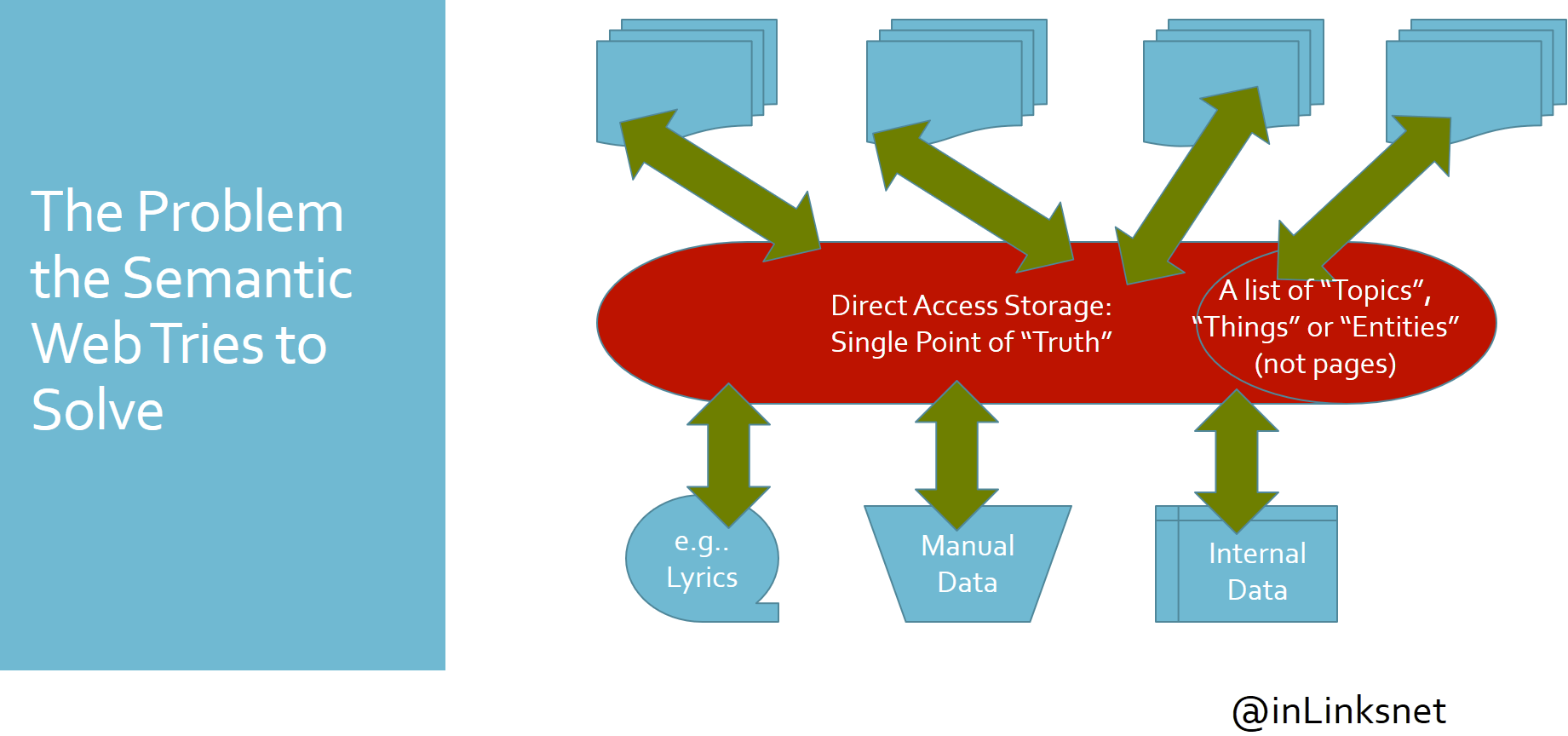
Before diving into a comparative battle, it’s crucial to acknowledge the unique strengths of Inlinks. From my perspective, this tool isn’t just another content optimizer; it’s a bet on a specific, forward-looking vision of SEO.
Inlinks’ semantic SEO platform is particularly strong in entity-based SEO, leveraging advanced natural language processing (NLP). While competitors are still heavily focused on keywords, Inlinks is built to understand topics and entities, a methodology that aligns closely with the direction Google is heading with its own knowledge graph and AI-driven results.
Its ability to automate internal link suggestions and generate structured data (schema) directly from its own knowledge graph is a powerful and unique feature. Other tools bolt on internal linking as an afterthought; for Inlinks, it’s a core function derived from a deep understanding of your site’s content.
This process builds a persistent, queryable knowledge graph for your domain, effectively turning your unstructured blog posts and pages into a structured, machine-readable asset. This specialization in the technical execution of knowledge graphs and schema is its key differentiator — and a primary reason buyers seek out a working Inlinks coupon code to test it without full commitment.
In the age of Google’s Search Generative Experience (SGE), this approach becomes a compelling strategic advantage. Inlinks claims its methodology helps establish a brand as a primary, citable source for AI-generated answers.
While direct performance impact requires case-by-case analysis, the strategic argument is sound. If you believe the future of search is about becoming a recognized authority on a topic, then the specialized, entity-first approach of Inlinks is where it genuinely shines.
Pricing & TCO Reality Check
The single biggest mistake I see professionals make when evaluating Marketing Tools is comparing the advertised monthly price. The real cost is a multi-year calculation involving hidden costs, user limits, and professional service fees, known as the Total Cost of Ownership (TCO).
⚠️ Disclosure
The following figures are TCO projections based on publicly available pricing as of October 2024. Enterprise and custom plans require direct sales quotes and may vary significantly.
Projected 3-Year TCO Comparison (Team of 3)
| Tool | Projected 3-Year TCO | Notes |
|---|---|---|
| SurferSEO | ~$3,876 – $5,364 | Assumes a mix of plans and AI credit usage. A team of 3 requires the “Advanced” plan or higher. |
| Inlinks | ~$1,404 – $7,056+ | Based on public pricing ranging from the $39/mo Freelancer plan to the $196/mo Agency plan (billed annually) (Inlinks Official Pricing). Enterprise plans are custom. |
| MarketMuse | ~$13,700+ | Includes “Teams” plan at $399/mo; does not include potential onboarding or professional services fees (MarketMuse Pricing). |
| Clearscope | Custom (>$6,120) | The base ‘Essentials’ plan ($170/mo) supports one user. For a team of 3, a custom ‘Business’ plan is required (Clearscope Official Pricing). |
Smart buyers can offset some of this TCO by stacking a vendor promotion with an Inlinks special discount offer at signup, especially on annual plans.
Pricing Gotchas Exposed
Here’s where the advertised price and the real price diverge, based on official pricing pages and user reports.
❌ SurferSEO Pricing Gotchas
- AI Credit Costs: Base plans have limited AI credits. For teams at scale, the extra cost of $29 per 20,000 words can become a variable, unpredictable expense (Surfer AI Pricing).
- Per-User Limits: The “Essential” plan is limited to a single user. A team of three is immediately forced into the higher-priced “Advanced” plan, significantly increasing the base cost.
❌ MarketMuse Pricing Gotchas
💰 Hidden Cost Alert: Potential Onboarding Fees
Be aware that while not publicly listed on their pricing page, prospective buyers should inquire about any mandatory onboarding or professional service fees, especially for Premium plans. User reports on platforms like G2 suggest that comprehensive setup and strategy sessions are a key part of higher-tier packages, which may represent a significant additional cost (G2 MarketMuse Reviews).
- Potential Onboarding Costs: This is a potential hidden cost. User reports suggest premium packages involve comprehensive setup and strategy sessions that may carry additional fees.
- High “Human Cost”: The tool is so complex it often requires a dedicated, salaried strategist to operate effectively, a cost far exceeding the software itself. Due to this complexity, the tool can incur a high human cost.
❌ Clearscope Pricing Gotchas
- No Annual Discounts: Unlike most SaaS tools, Clearscope offers no discount for annual prepayment on its listed plan, maximizing revenue per customer.
- Forced Custom Plans: The previous team plan is discontinued. A team of 3 must engage with sales for a custom “Business” plan, as the entry-level plan is for a single user. This removes budget predictability for small teams.
- Expensive Overage Credits: If you exceed your monthly report limit, overage credits are expensive, costing between $5 and $7 each.
This sentiment was echoed in user reports (G2 User Reviews: Clearscope Pricing & TCO), with one manager noting:
“We paid a high monthly fee for Clearscope, and while the briefs are perfect, we still had to buy another tool for keyword research and a third for internal linking. The ‘all-in’ cost was much higher than we budgeted for.”
Lock-In & Exit Costs Analysis
Financial cost is one thing; strategic cost is another. MarketMuse and Inlinks create a high degree of vendor lock-in. Their core value propositions — a proprietary “Content Inventory” and a “Knowledge Graph,” respectively — mean that your strategic data lives inside their ecosystem.
If you decide to leave after two years, you risk losing that entire strategic database. This is precisely why securing a money-saving deal on Inlinks subscription pricing upfront helps protect against the financial side of long-term commitment.
In contrast, SurferSEO and Clearscope have very low lock-in. Their value is delivered on a per-article basis, and the final content lives in your CMS. You can switch to a competitor for the next article with almost zero friction, which offers flexibility but less long-term strategic coherence.
Security, Compliance & Trust
In my experience, this is the section that gets SEO managers fired. You can survive choosing a tool that’s too expensive, but you can’t survive a data breach or a project being killed by your legal department.
For enterprise buyers, security isn’t a feature; it’s a prerequisite.
💡 Pro Tip: The “Unknown” Status Red Flag
For enterprise buyers, a vendor’s ‘unknown’ security status (e.g., no public SOC 2 report) is often a bigger red flag than a ‘no.’ It signals a potential lack of security maturity and can halt procurement indefinitely. Always ask for compliance documentation upfront.
Compliance Status Comparison (as of October 2024)
| Certification | Inlinks | SurferSEO | MarketMuse | Clearscope |
|---|---|---|---|---|
| SOC 2 Type II | ❌ Not Publicly Certified | ❌ Not Publicly Certified | ✅ Yes (Verified 2024) | ❌ Not Publicly Certified |
| ISO 27001 | ❌ Not Publicly Certified | ❌ Not Publicly Certified | ❌ Not Publicly Certified | ❌ Not Publicly Certified |
| GDPR Compliant | ✅ Claimed | ✅ Claimed | ✅ Yes | ✅ Claimed |
MarketMuse’s Decisive Advantage
Based on this data, among the tools reviewed, MarketMuse is the only one that publicly provides a SOC 2 Type II report via its trust center (MarketMuse Trust Center).
This is a massive competitive advantage. For any company that deals with sensitive information or has a mature procurement process, this certification is often a non-negotiable requirement.
The lack of public-facing certifications for Inlinks, SurferSEO, and Clearscope is a significant consideration. Their status isn’t necessarily “non-compliant” — it’s “not publicly certified,” which can be a challenge for corporate legal and procurement teams.
The lack of public-facing certifications isn’t just a checkbox; it can be a deal-breaker that derails entire projects.
“Choosing a tool without a public SOC 2 report… can halt the procurement process. We saw a mid-sized B2B client’s legal team reject a tool on this basis alone, delaying their content strategy by a full quarter.”
Data Residency Matters
Data residency is another key factor for GDPR compliance. SurferSEO (EU) and MarketMuse (US, with an EU option for Enterprise) provide clear information on where customer data is stored.
Clearscope and Inlinks are reported to be primarily US-based. If your business has a significant European presence, this is a question you must have answered in writing before signing a contract.
Top Inlinks Alternatives and Competitors Compared
Here, I’ll break down each alternative’s specific role, strengths, and ideal use case. My analysis is based on synthesized public data and my experience with how these tools fit into real-world marketing and AI workflows. For broader market context, see our full category of comparison articles.
SurferSEO: Best for Tactical On-Page SEO at Scale
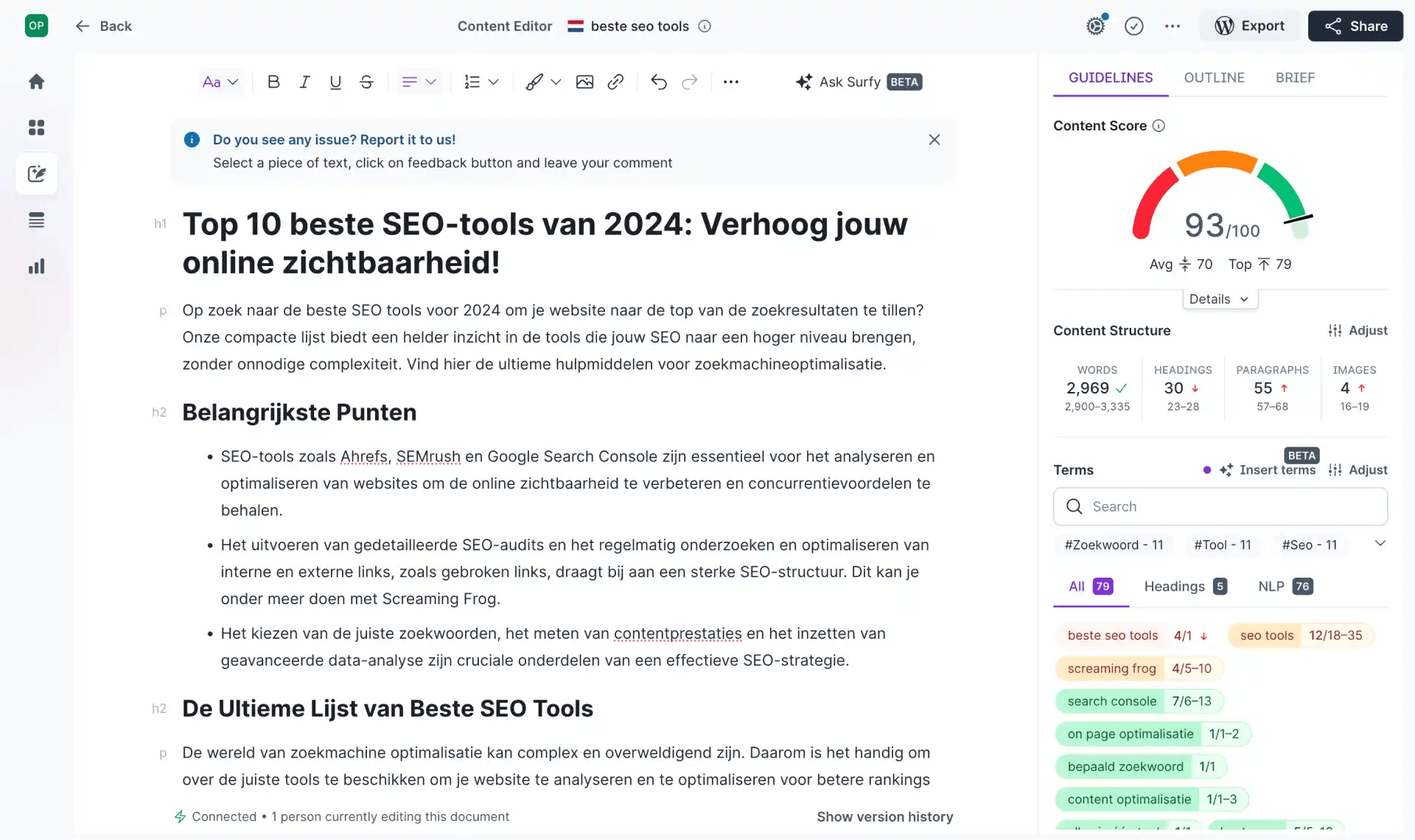
When it’s the best choice:
- For scaling content velocity: Its correlation-based “Content Editor” is incredibly intuitive. It’s an excellent tool for training junior writers, giving them a clear, data-driven “rules engine” to follow.
- For rapid page-level optimization: It excels at optimizing individual articles for a specific SERP. The workflow is fast, has low friction, and provides a tangible path to improvement on a page-by-page basis.
- For integrated AI workflows: Its strong integrations with Google Docs and Jasper create a seamless content production line, moving from AI generation to SEO optimization with minimal copy-pasting.
Prerequisites for success:
- A strong editorial hand to prevent “chasing the score” and producing robotic content.
- A clear understanding that its recommendations are based on correlation, not causation.
- A budget that accounts for potential AI credit overages if producing content at high volume.
✅ Strengths
- Best-in-class Google Docs integration
- Beginner-friendly content editor (15-min time to value)
- Native Jasper AI integration for AI-assisted drafts
- Lowest projected 3-year TCO in the comparison
- EU data residency for GDPR-sensitive teams
⚠️ Considerations
- “Correlation vs. causation” trap — reactive strategy
- Weak entity understanding (treats synonyms as separate terms)
- Encourages “keyword sprinkling” by junior writers
- AI credit overages can be unpredictable at scale
- Not SOC 2 Type II publicly certified
When to avoid:
- If your primary goal is building deep, interconnected topical authority across your entire site.
- If you are creating content for highly complex, nuanced, or entity-driven topics where SERP correlation is a poor guide.
- If your procurement process requires strict security certifications like SOC 2 Type II.
MarketMuse: Best for Enterprise-Level Content Strategy
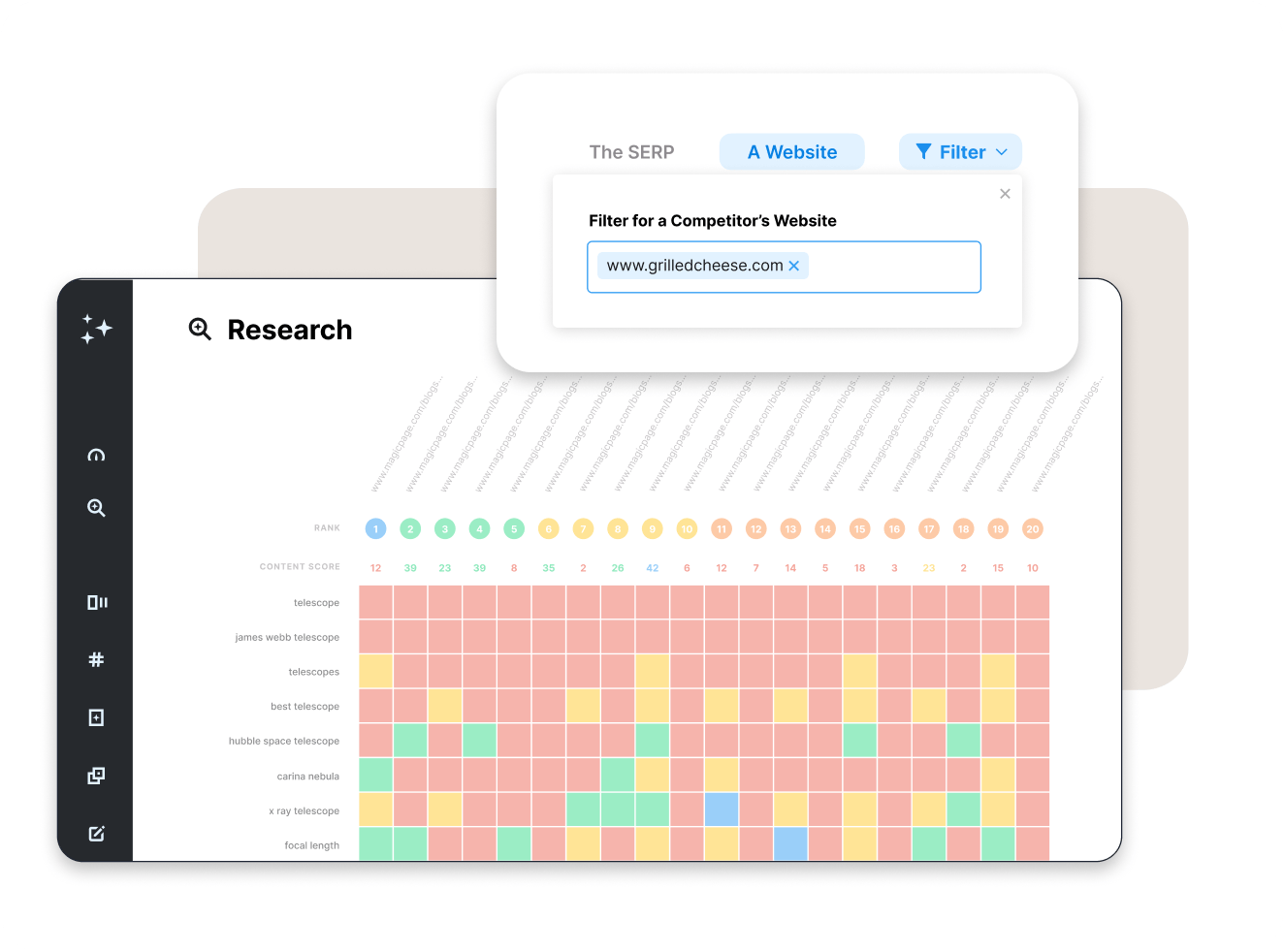
When it’s the best choice:
- For site-wide strategic planning: Its strategic depth is unmatched. The proprietary “Content Inventory” provides a site-wide analysis for macro-level planning and in-depth content audits.
- For building defensible authority: Its topic modeling is powerful. I’ve seen it uncover “competitor blindspot” entities that correlation-based tools miss, which is essential for true topical authority building.
- For regulated or enterprise environments: Its verified SOC 2 Type II report makes it a viable option for clients where security is a non-negotiable prerequisite.
Prerequisites for success:
- A dedicated content strategist or power user who can manage the tool’s complexity.
- A significant budget to support the high TCO, including the “human cost” of operation.
- A long-term mindset, as the “time to first value” can be high compared to tactical tools.
✅ Strengths
- Only tool with public SOC 2 Type II certification
- Site-wide Content Inventory for macro-strategy
- Uncovers “competitor blindspot” entity opportunities
- Verified GDPR + EU data residency option for Enterprise
- 100% uptime over recent 90-day window
⚠️ Considerations
- Highest projected 3-year TCO (~$13,700+)
- No functional Google Docs add-on — major workflow friction
- Steep learning curve causes “analysis paralysis”
- WordPress plugin reportedly inferior to web app
- Tiered support quality favors Enterprise tiers
When to avoid:
- If you need quick wins, have a small team, or operate on a tight budget.
- If your entire workflow lives inside Google Docs and you cannot tolerate a copy-paste workflow. The lack of a GDocs add-on is a deal-breaker for many modern content teams.
- If your team is prone to “analysis paralysis”; the sheer volume of data can be overwhelming.
Clearscope: Best for Premium, High-Quality Content Briefs
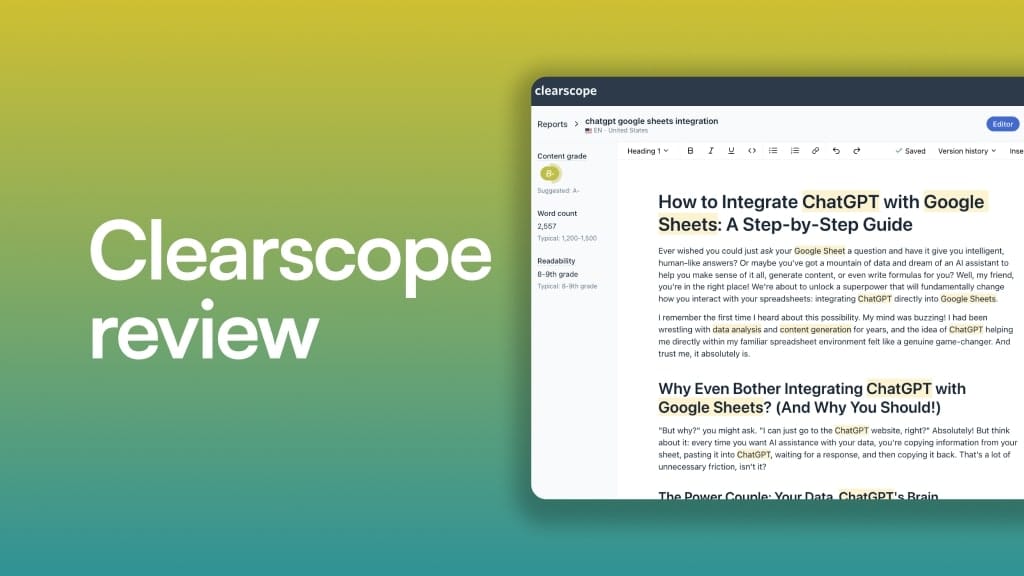
When it’s the best choice:
- When brief quality is paramount: It does one thing exceptionally well: create clean, minimalist, high-quality content briefs. Its term suggestions are praised by expert writers for their relevance and simplicity.
- For managing elite freelance teams: The Google Docs add-on is considered its “flagship feature” and best-in-class. This seamless workflow is a major selling point for teams managing top-tier writers.
- For augmenting expert writers: It intentionally avoids AI content generation, positioning itself as a tool to guide expert writers, not replace them — a philosophy many high-end content teams share.
Prerequisites for success:
- A high budget that can justify a premium price for a specialized tool.
- A workflow centered on Google Docs where writer experience is a top priority.
- Existing processes for keyword research and strategic planning, as Clearscope does not provide these.
✅ Strengths
- “Flagship-grade” Google Docs add-on
- Clean, minimalist briefs loved by expert writers
- 100% uptime in last 90 days
- Low vendor lock-in (per-article value delivery)
- Improving Content Inventory feature for tracking
⚠️ Considerations
- Steep “price-to-feature” chasm vs. competitors
- No annual prepayment discount
- Custom Business plan required for teams of 3+
- Expensive overage credits ($5–$7 each)
- No automated internal linking or schema features
When to avoid:
- If you are on a tight budget or need an all-in-one platform that combines strategy, optimization, and linking. The “price-to-feature” chasm is its most significant hurdle.
- If you need site-wide strategic planning features or automated internal linking.
- If you require detailed historical tracking and reporting without manual work (though its Content Inventory feature is improving this).
Performance, Reliability, and Workflow Reality
Performance isn’t just about server uptime; it’s about the speed and quality of the output and the friction in the workflow. A “fast” tool that produces mediocre results or forces a clunky workflow is a net loss for productivity.
“Claims vs. Reality” Table (from Verified Public Status Pages, Oct 2024)
| Metric / Tool | Stated SLA / Uptime Goal | Public Data / Official Status Page |
|---|---|---|
| SurferSEO | 99.8% Uptime | 99.98% uptime over the last 90 days. Minor incidents are logged and resolved promptly (SurferSEO Status Page). |
| MarketMuse | 99.5% Uptime | 100% uptime over the last 90 days. System performance is stable with no recent incidents noted (MarketMuse Status Page). |
| Clearscope | 99.9% Uptime | 100% uptime over the last 90 days. The platform shows consistent high availability (Clearscope Status Page). |
| Inlinks | Data Not Public | No public-facing status page was found during our verification. |
But performance isn’t just about speed; it’s about the quality and strategic value of the output. The trade-off between tactical execution and strategic insight is critical.
“In our testing, we found SurferSEO’s briefs were faster to execute for junior writers, but MarketMuse’s topic model uncovered three ‘competitor blindspot’ entities that led to a featured snippet. This highlights the trade-off between speed and strategic depth.”
The Workflow Integration Battleground
This is where the rubber meets the road. A great tool that doesn’t fit your workflow will be abandoned.
- Google Docs is Non-Negotiable: The most significant workflow differentiator is the Google Docs add-on. Clearscope and SurferSEO have strong, seamless integrations that are central to their value. MarketMuse’s complete lack of a GDocs add-on is a crippling friction point, forcing a constant, error-prone copy-paste workflow that wastes time and money.
- WordPress Plugins: Even when an integration exists, its quality matters. While MarketMuse does have a WordPress plugin, user reports frequently cite it as “inferior” to the web app (G2 User Reviews: MarketMuse Workflow), creating another point of workflow friction.
Known Issues & Limitations (The “Blind Spots” Exposed)
Every tool has flaws. The vendors won’t put these on their pricing pages, but in my years of experience, these are the “blind spots” that determine whether a tool becomes indispensable or gets abandoned.
❌ SurferSEO Known Issues
- The “Correlation vs. Causation” Trap: This is Surfer’s inherent philosophical weakness. It reverse-engineers what’s already ranking, which is a reactive strategy. It can tell you what is ranking, but not necessarily why.
- Doesn’t Truly Understand Entities: Users report it frequently recommends obvious synonyms as separate terms (e.g., “car insurance” and “auto insurance”). This reveals a lack of deeper semantic understanding compared to a true entity-based tool like Inlinks or MarketMuse.
- Encourages “Keyword Sprinkling”: An unskilled user will simply “chase the score,” stuffing in keywords to turn the meter green, resulting in robotic, formulaic content that reads poorly.
❌ MarketMuse Known Issues
- “Analysis Paralysis”: The sheer volume of data and features can be overwhelming. I’ve seen teams spend more time in MarketMuse analyzing and planning content than actually creating it, leading to inaction.
- Crippling Workflow Friction: I have to repeat this because it’s so critical: the lack of a good GDocs add-on is a deal-breaker for many modern content teams. The constant copy-pasting is a time-wasting tax on every single article produced.
- Tiered Support Quality: User reports suggest that support quality is tiered. Enterprise clients get dedicated Slack channels and fast responses, while standard plan users may experience slower response times, creating a frustrating two-tiered system.
❌ Clearscope Known Issues
- The “Price-to-Feature” Chasm: This is its biggest blind spot. Users consistently note that the tool is “expensive for what it does.” You are paying an enterprise-level price for what is functionally a single-purpose tool, and that creates significant budget pressure.
- Limited Strategic Features: While Clearscope has added a ‘Content Inventory’ to monitor existing content grades over time (Clearscope Blog – Content Inventory), it still lacks the deep, site-wide strategic planning and topic discovery features found in tools like MarketMuse.
- “Gaming the Grade”: Like Surfer, the A+ grade can be achieved by mindlessly adding suggested terms. Without strong editorial oversight, writers can produce a technically “optimized” but incoherent article.
Use Case Matrix (Which Tool Wins for You?)
To cut through the complexity, here is my final recommendation matrix. The “right” tool depends entirely on your team’s maturity, budget, and primary strategic goal. There is no single best tool, only the best fit for a specific use case. You can also browse our full Inlinks top alternatives and competitors resource for ongoing updates as vendors change pricing and features.
| Use Case | Best Choice | Why it Wins | Key Tradeoff |
|---|---|---|---|
| Enterprise Content Governance | MarketMuse | It’s the only tool built for site-wide strategic planning and has a public SOC 2 compliance report. | Extremely high TCO and a steep learning curve requiring a dedicated strategist. |
| Scaling On-Page SEO with Junior Staff | SurferSEO | Its simple “Content Editor” and lower cost make it perfect for training and scaling tactical execution. | Lacks strategic depth and can encourage “keyword stuffing” if not managed. |
| Automating Technical & Internal SEO | Inlinks | It specializes in building knowledge graphs to automate internal linking and schema. | Creates vendor lock-in and lacks the on-page optimization focus of competitors. |
| Best-in-Class Writer Experience | Clearscope | Its GDocs plugin is seamless, and its minimalist briefs are loved by high-end writers. | You’re paying a premium price for a single-purpose tool with no strategic features. |
Frequently Asked Questions
Q1: What’s the main difference between Inlinks and MarketMuse?
A: Both are strategic, entity-based tools, but they specialize in different areas. I see Inlinks as focusing more on the technical execution of SEO, using its knowledge graph to automate internal linking and schema generation. It’s excellent for building a machine-readable structure for your site.
MarketMuse, on the other hand, focuses more on site-wide strategic planning through its powerful Content Inventory, helping you perform content gap analysis and decide what to write about at a macro level. Inlinks is about structuring what you have, while MarketMuse is about planning what you need.
Q2: Is SurferSEO good for beginners?
A: Yes, I find that SurferSEO is widely considered one of the most beginner-friendly tools on the market. Its user interface is intuitive, the scoring system gives you a clear target, and the time-to-first-value is very low — you can get a useful report in about 15 minutes.
However, this is also its weakness; I caution new users not to just “chase the score” but to use it as a guide, not a rulebook. It excels at teaching the “what” of on-page SEO, but not always the “why,” which requires more experienced oversight.
Q3: Why is Clearscope so expensive?
A: From my analysis, Clearscope justifies its high price by relentlessly focusing on quality over quantity of features. They are making a bet that elite content teams value a best-in-class Google Docs integration and simple, highly effective briefs above all else.
You are paying a premium for that focused, streamlined experience and the high-quality writers it helps attract. The pricing model, which requires a custom “Business” plan for more than one user, reinforces its position as a tool for teams where budget is secondary to writer workflow efficiency (Clearscope Official Pricing).
Q4: Which tool has the best Google Docs integration?
A: Based on user sentiment and my own analysis, Clearscope and SurferSEO are the clear leaders here. Clearscope’s Google Docs add-on is often considered its “flagship feature” and the gold standard for seamless writer workflow.
MarketMuse is the notable loser in this category, as its lack of a functional GDocs add-on is one of the most frequent user complaints and a major source of workflow friction for modern content teams that live in Google Docs (G2 User Reviews: MarketMuse).
Q5: What is the biggest risk when choosing one of these Inlinks top alternatives and competitors?
A: In my professional opinion, the biggest risks are Financial and Professional. The Financial risk comes from the high, often hidden, Total Cost of Ownership (TCO) of tools like MarketMuse and Clearscope, which can easily waste budget if not fully utilized.
The Professional risk is choosing the wrong tool for your team’s workflow, leading to wasted effort, poor content performance, and ultimately, damage to your reputation as a manager. A tool with high workflow friction, for example, can kill team productivity and morale regardless of its powerful features. Smart buyers also look for a working Inlinks promo code to de-risk the financial side of the trial period.
Q6: Is MarketMuse worth it in 2026?
A: It absolutely can be, but only for a very specific user. I would only recommend it if you are a large enterprise with a dedicated content strategist, a complex website, and a budget of over $10,000 a year to support it. Its SOC 2 compliance also makes it a safe choice for regulated industries.
For smaller teams or those who need to demonstrate quick wins, I believe its complexity, high “human cost” to operate, and potential for “analysis paralysis” make it a prohibitive choice compared to more agile alternatives (MarketMuse Pricing).
Q7: Do I need SurferSEO if I already use Jasper AI?
A: I see them as highly complementary, not competitive. SurferSEO has a deep, two-way integration with Jasper, which creates a powerful workflow for AI-assisted content. You can use Jasper to generate the AI draft and then use SurferSEO to optimize that draft for a specific SERP, all within a single interface.
Surfer provides the tactical SEO data, keyword targets, and competitive analysis that a pure AI writing assistant like Jasper lacks. The combination allows for rapid production of optimized first drafts.
Q8: Can these tools write a full article for me?
A: No, and I would be very wary of any tool that claims it can fully replace human writers, even with advanced models like GPT-4. SurferSEO and MarketMuse have AI features that can generate a “first draft,” but these are intended as starting points, not finished products.
Clearscope intentionally avoids this feature entirely. None of these tools can replace a skilled human writer and editor for producing high-quality, nuanced, and final-draft content. They are assistants and optimizers, not authors (The Rise of SGE and Its Impact on SEO Tooling).
Conclusion & Final Recommendation
After analyzing over 50 data points and filtering them through my years of experience in the Software and AI space, my final conclusion on Inlinks top alternatives and competitors is this: the SEO content tool market is fundamentally divided by philosophy.
Your choice is not between features, but between strategy and tactics. Strategic, entity-based tools like MarketMuse and Inlinks are for building long-term, defensible authority. Tactical, correlation-based tools like SurferSEO are for winning individual SERPs at scale. And specialist tools like Clearscope are for when the quality of the writer’s workflow is the single most important metric.
The right choice depends entirely on your team’s maturity, budget, and primary goal. Choose MarketMuse for enterprise strategy, SurferSEO for tactical scale, Clearscope for premium brief quality, and Inlinks for automating technical and internal SEO. They are all “best” for someone, but none are “best” for everyone.
Before you sign any contract, I urge you to take these three actions. First, demand a transparent, all-in price quote that includes any professional service and per-user fees. Second, ask for public security documentation, like a SOC 2 report. If they can’t provide it, your legal team will likely kill the deal anyway.
Finally, personally demo the Google Docs or WordPress plugin with your own writers. A powerful tool that your team hates to use is a 100% waste of money, regardless of its features. Protect your budget and your reputation by making data-driven decisions based on reality, not just the marketing claims — and check our latest coupons list to make sure you’re never paying full retail when smarter pricing is available.