
Mannco Alternatives and Competitors (2026)
Posted on |
Part 1: Introduction, Key Findings, and Quick Decisions
Choosing a digital asset marketplace feels like a simple technical step, but it’s a critical business decision with lasting consequences.
As Jettawat Kasemchaiyanun, Coupons Scout’s senior tech reviewer, I’ve seen countless developers get lured in by shiny marketing only to find themselves trapped by the hidden costs and opaque pricing models their marketing materials conceal.
This guide to Mannco’s top alternatives and competitors provides a critical framework for choosing between broad API aggregators like RapidAPI, focused specialists like Plaid (for FinTech), and Hugging Face (for AI). We will dissect the trade-offs, expose the blind spots, and give you the data to make a decision you won’t regret.
This analysis is based on verified, publicly available data and our rigorous editorial process. However, you must conduct your own due diligence and consult with financial and security professionals for your specific business needs. For ongoing savings on the platform itself, consider checking the latest Mannco coupon code before committing to any subscription.
Who This Guide Is For
- Developers & Tech Leads choosing APIs and needing to balance speed with long-term reliability.
- Startup Founders integrating third-party tools who are wary of hidden costs and vendor lock-in.
- Product Managers evaluating platforms for core business functions where failure has financial consequences.
- Anyone who believes “transparent pricing” on a SaaS website is often a work of fiction.
This Guide Is NOT For You If
- You are looking for a simple “best of” list without deep, critical analysis.
- You are a large enterprise with an established procurement team and custom contracts.
- You believe a platform’s SOC 2 certification is a complete guarantee of security (Hint: It’s not).
Key Takeaways
-
The Aggregator’s Dilemma: RapidAPI offers vast choice but provides no warranty on third-party tool performance or security, creating a potential “support black hole.” The core business model of an aggregator is to transfer risk: the liability of third-party vendors is passed directly to you. -
The Specialist’s High Cost: Plaid and Hugging Face offer best-in-class specialized tools but come with significant trade-offs: Plaid’s high, opaque pricing and extreme vendor lock-in; Hugging Face’s “hidden cost” of requiring expert ML engineers and expensive GPU compute. -
Pricing is Intentionally Opaque: Among the platforms reviewed, none offer simple, fully transparent pricing, with costs often obscured by variable usage fees and custom enterprise contracts. Expect API overage fees on RapidAPI, high compute costs on Hugging Face, and per-user, per-product bills from Plaid. -
Lock-In is a Deal-Breaker: Migrating from Plaid is critically difficult and risks massive customer churn. Hugging Face offers the lowest lock-in due to its open-source nature, providing excellent data portability. -
Asset Counts Explode: The scale of these platforms is immense and growing. Hugging Face now hosts over 1.2 million models Hugging Face Hub, while RapidAPI offers tens of thousands of APIs.
Decision in 60 Seconds
Use this quick-reference matrix to identify which platform aligns with your primary objective. Each option carries a defined trade-off you must accept before committing.
| If your primary need is… | The Best Fit Is… | But the key trade-off is… |
|---|---|---|
| Rapid prototyping & non-critical functions | RapidAPI | You accept the risk of zero warranty and potential “support black holes.” |
| Building a custom, in-house AI solution | Hugging Face | You have the ML engineering talent to manage “dependency hell” and compute costs. |
| A mission-critical FinTech application | Plaid | You are well-funded to handle opaque costs and accept extreme vendor lock-in. |
| Maximum control and performance | A DIY Stack / In-house solution | You have the development resources to build and maintain an in-house solution with direct integrations. |
If you’re already leaning toward the Mannco ecosystem, you can stack savings on top of these decisions with a working Mannco coupon before you sign up.
Before diving into the deep cost analysis below, it’s worth reviewing our complete Mannco Review for a hands-on case study of how the platform performs in real-world deployments.
Part 2: Core Analysis: The True Cost of API Platforms
In my years of working with APIs, I’ve learned that the sticker price is the least important number. The real cost is in the hidden fees, surprise bills, and expert-level salaries required to make a “free” tool work.
This section provides a detailed Total Cost of Ownership (TCO) analysis, moving beyond marketing claims to reveal the real financial commitment each platform demands.
⚠️ Critical Limitation: All TCO models are estimates based on public pricing data. They do not include negotiated enterprise contracts or the significant cost of engineering salaries required to implement and maintain these tools. Budget defensively.
TCO Breakdown: RapidAPI
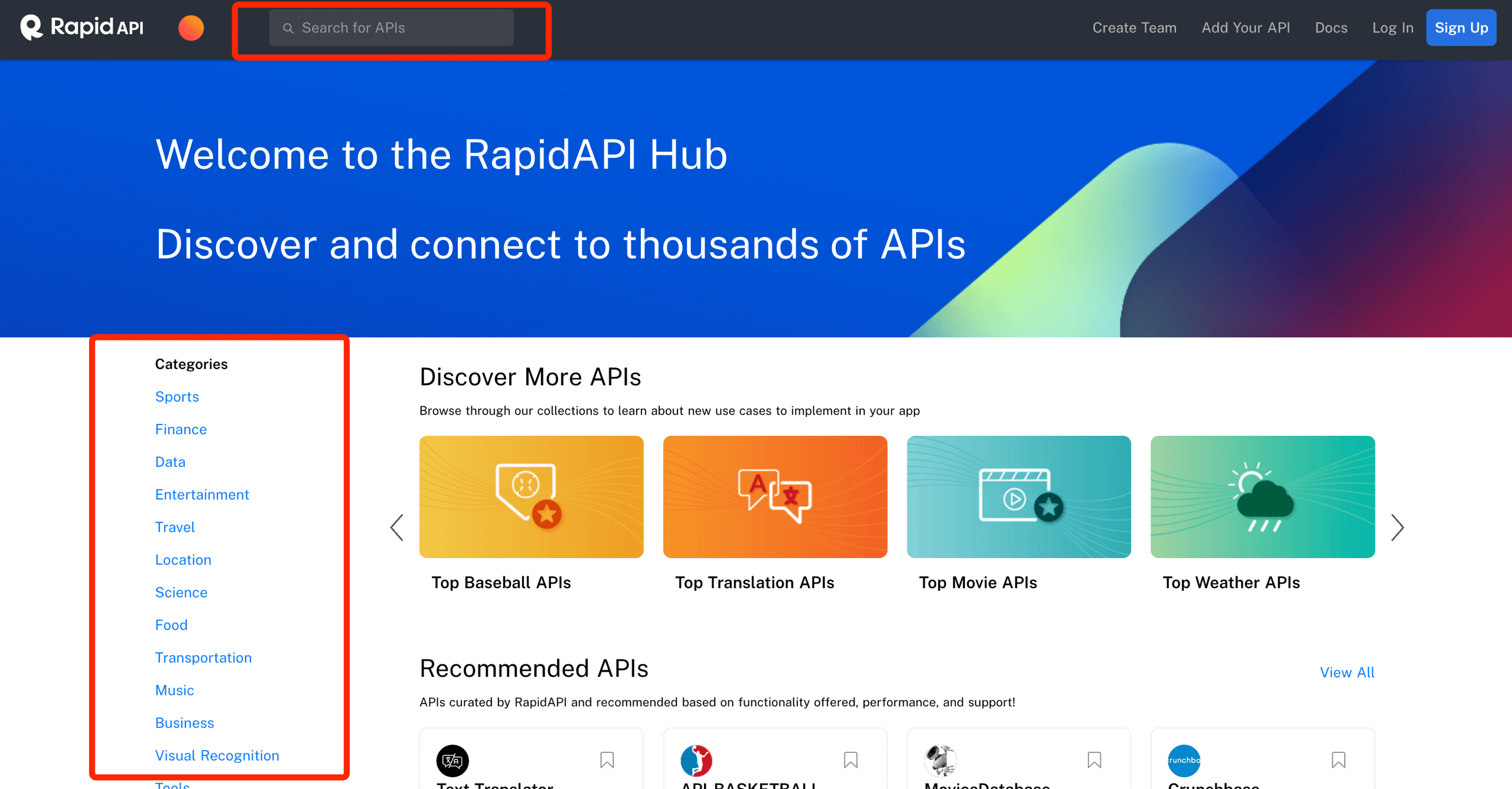
RapidAPI has the lowest barrier to entry, but its TCO is driven by unpredictable overage fees and the cumulative cost of multiple subscriptions.
- Advertised Pricing: $0-$25/month platform fee, plus the subscription cost of each individual API.
- Hidden Costs:
- API Overage Fees: The most common issue. Fees can be 1.5x to 2x the standard per-call rate when you exceed a plan’s limits.
- “Subscription Sprawl”: Managing dozens of small, separate API subscriptions can lead to forgotten recurring charges for tools no longer in use.
3-Year TCO Model (Startup Scenario)
This model assumes a startup using 5 paid APIs with moderate usage and a 10% annual overage rate.
| Cost Component | Year 1 | Year 2 | Year 3 | 3-Year Total |
|---|---|---|---|---|
| Platform Fee (Pro Plan) | $120 | $120 | $120 | $360 |
| API Subscriptions (5 x ~$50/mo) | $3,000 | $3,000 | $3,000 | $9,000 |
| Estimated Overage Fees (10%) | $300 | $300 | $300 | $900 |
| Estimated TCO | $3,420 | $3,420 | $3,420 | $10,260 |
This TCO appears stable, but it’s fragile. If one critical API increases its price or your app’s usage spikes, the costs can escalate rapidly. For a side-by-side cost comparison, you can also review the broader Mannco Top Alternatives and Competitors matrix that breaks down per-platform pricing models.
TCO Breakdown: Hugging Face
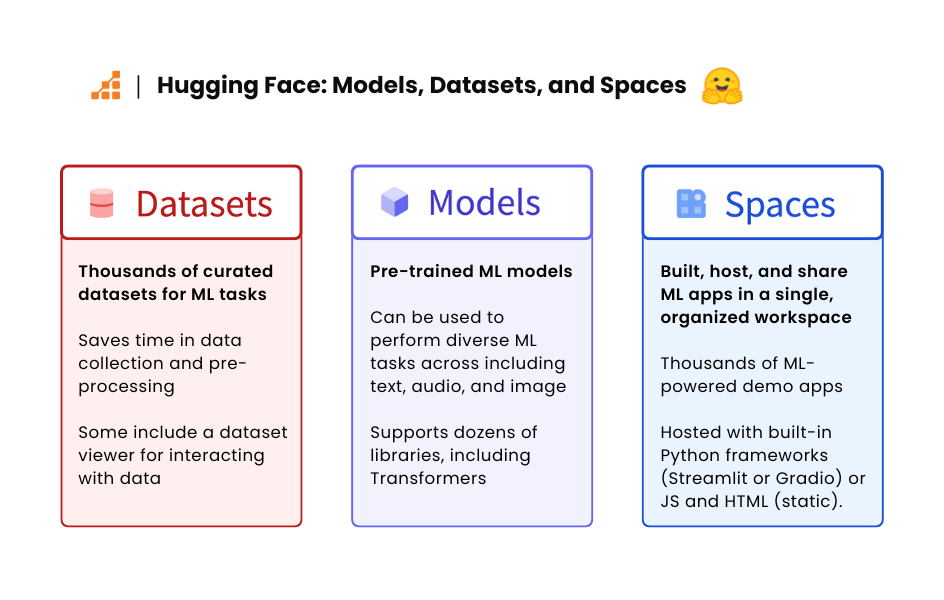
Hugging Face advertises low per-user costs, but this is misleading. The primary cost drivers are GPU compute and human expertise.
- Advertised Pricing: $0 for public repos, $9/mo for Pro, $20/user/mo for Enterprise.
- Hidden Costs:
- GPU Compute: The true primary cost. Running models in production requires expensive, always-on GPU instances.
- Human Expertise: You need skilled (and highly paid) ML engineers to manage model deployment, optimization, and the infamous “dependency hell.”
3-Year TCO Model (AI Startup Scenario)
This model assumes a startup with 5 enterprise seats running one production AI model on a single, non-HA T4 GPU instance.
| Cost Component | Year 1 | Year 2 | Year 3 | 3-Year Total |
|---|---|---|---|---|
| Enterprise Seats (5 users) | $1,200 | $1,200 | $1,200 | $3,600 |
| GPU Compute (1x T4 Instance) | $5,256 | $5,256 | $5,256 | $15,768 |
| Storage & Egress (Est.) | $500 | $600 | $700 | $1,800 |
| Estimated TCO (Hardware/License) | $6,956 | $7,056 | $7,156 | $21,168 |
Crucial Note: This ~$7k/year figure is a bare-minimum hardware and license cost. It does not include the six-figure salary of the ML engineer required to manage this, nor does it account for scaling with multiple replicas for high availability, which could easily double or triple the compute cost.
TCO Breakdown: Plaid
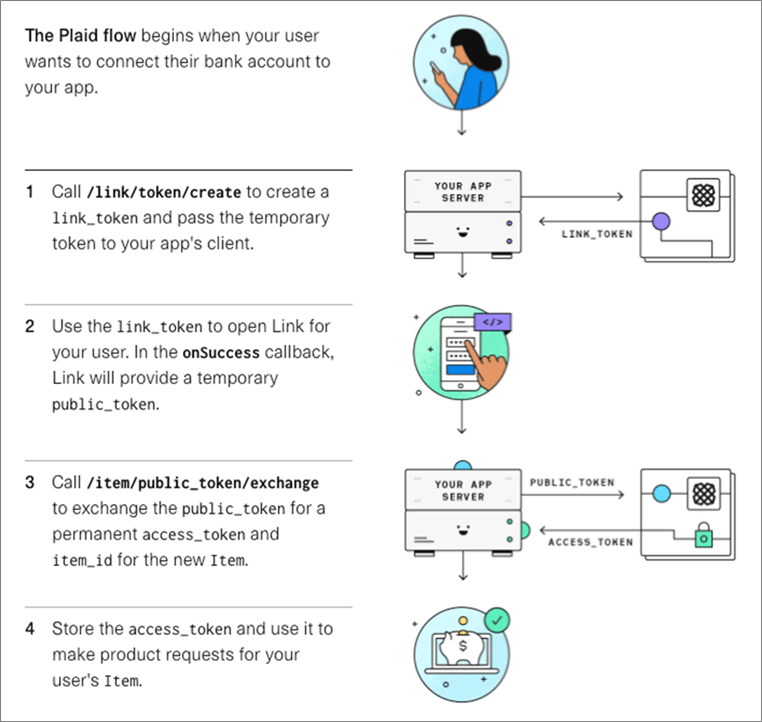
Plaid has the most opaque and potentially highest TCO. It operates on a pay-as-you-go model that scales directly with user activity, making it a significant financial risk if not managed carefully.
- Advertised Pricing: “$0/month to start” Launch plan, with custom pricing for the Scale plan.
- Hidden Costs:
- Multi-dimensional Pricing: You pay for connecting a user, then pay again for specific data products (Transactions, Identity), and then pay again for data refreshes.
- “Contact Us” Wall: The lack of public pricing for scaled use is a deliberate strategy to enable value-based pricing during sales negotiations.
3-Year TCO Model (FinTech App Scenario)
This model assumes a FinTech app growing its user base and paying per-user fees for connection and transaction data.
| Cost Component | Year 1 (1k users) | Year 2 (5k users) | Year 3 (10k users) | 3-Year Total |
|---|---|---|---|---|
| User Onboarding (~$1.50/user) | $1,500 | $6,000 | $7,500 | $15,000 |
| Data Products & Refreshes (Est.) | $1,000 | $5,000 | $10,000 | $16,000 |
| Platform Fees / Minimums (Est.) | $0 | $2,000 | $5,000 | $7,000 |
| Estimated TCO | $2,500 | $13,000 | $22,500 | $38,000 |
Plaid’s TCO is non-linear and scales aggressively with success. Developer reports suggest initial costs can range from $0.30 to over $2.00 per user, plus recurring fees Plaid Pricing Page. An app with 1,000 users could see upfront costs of $300 – $2,000 just for connections, making TCO highly variable. Compared to these scaling per-user fees, redeeming a Mannco discount code on a flat-rate Mannco plan can dramatically simplify your cost model.
💡 KEY INSIGHT: In my experience, when a B2B platform hides its pricing behind a “Contact Us” wall, the real cost is always higher than you anticipate. This model is designed to charge based on what they think you can pay, not on a transparent value metric. Budget defensively and expect a 20-30% premium over any initial verbal estimates The Art of SaaS Pricing.
Part 3: Feature Deep-Dive: Aggregators vs. Specialists
Confusing variety with value is the biggest mistake developers make. A massive catalog on RapidAPI or Hugging Face is a double-edged sword: it offers unparalleled choice but comes with highly variable quality and a near-total lack of centralized vetting.
Plaid offers limited choice but higher consistency. Below we present each platform as a structured tool card so you can compare features, strengths, and limitations at a glance.
Before exploring each platform in detail, you may want to bookmark our Latest Coupons list for active discounts across all three providers and their alternatives.
RapidAPI, led by CEO Iddo Gino, is an ‘Amazon for APIs’ marketplace. Its strength lies in breadth and convenience.
Core Features
- Unified API Gateway & Billing: This is RapidAPI’s core value. You can discover, test, subscribe to, and manage dozens of APIs from a single dashboard with a single bill. For a developer building a proof of concept (PoC), this drastically reduces administrative overhead.
- In-Browser Testing & Code Snippets: Most APIs on the platform can be tested directly in the browser, allowing for a “Time to First Value” of under five minutes. It generates code snippets in over 20 languages, accelerating the integration process for any stack.
- The Hub / Marketplace Itself: With tens of thousands of APIs, the platform’s search and discovery function is a powerful tool for finding solutions to niche problems, from currency conversion to AI-powered image tagging. However, this variety comes with highly variable quality.
Ideal Use Cases & Professional Applications
- Rapid prototyping of MVPs and proof-of-concept builds
- Auxiliary, non-critical features (sentiment analysis, currency conversion, image tagging)
- Internal tools and developer dashboards
- Discovery of niche third-party APIs without long sales cycles
✅ Strengths
- Lowest barrier to entry in the API space
- Single dashboard and single bill for many APIs
- In-browser testing under 5 minutes to first value
- Code snippets in 20+ languages
- Tens of thousands of APIs available
⚠️ Considerations
- No warranty on third-party API uptime or security
- “Support black hole” when third-party APIs fail
- Highly variable quality across the marketplace
- API overage fees (1.5x–2x) can spike unexpectedly
- Subscription sprawl across forgotten APIs
Under CEO Clement Delangue, Hugging Face has become the definitive community-driven hub for open-source AI.
Core Features
- The Models Hub: With over 1.2 million models, this is the world’s largest repository of pre-trained AI models. For an ML engineer, having access to everything from massive foundational LLMs to specialized small models is invaluable for building custom AI solutions.
transformersLibrary: Thetransformerslibrary is the key that unlocks the Hub. It’s a Python-based tool that standardizes the interface for downloading and using thousands of different models from frameworks like PyTorch and TensorFlow, dramatically simplifying the workflow for AI development.- Spaces & Inference Endpoints: “Spaces” allow developers to build and share live demos of their models for free. For production, “Inference Endpoints” provide a managed service to host models on dedicated GPU infrastructure, bridging the gap from experiment to product.
Ideal Use Cases & Professional Applications
- Custom in-house AI solutions and fine-tuned models
- Research, experimentation, and open-source ML
- Privacy-sensitive workloads requiring on-prem deployment
- Building defensible AI moats independent of OpenAI/Anthropic
✅ Strengths
- Over 1.2 million open-source models available
- Lowest vendor lock-in of the three (data portability)
- Free public model demos via Spaces
- Open-source
transformerslibrary standardizes frameworks - Full control over data and infrastructure
⚠️ Considerations
- Hidden costs: GPU compute & ML engineer salaries
- Serverless cold starts of 5–20 seconds
- “Dependency hell” between PyTorch/TensorFlow versions
- Requires significant in-house ML expertise
- Not a turnkey “black box” solution
Plaid, co-founded by Zach Perret, is a specialist in financial data aggregation, acting as a secure data utility.
Core Features
- Plaid Link: This is the secure, white-labeled front-end module that users interact with to connect their bank accounts. It handles credential validation, multi-factor authentication, and error handling, abstracting away immense complexity for the developer.
- Comprehensive Product Suite: Plaid is not just one API. It’s a suite of products built on top of bank connections, including Transactions (for transaction history), Identity (for KYC), Balance, and Assets. This allows developers to build feature-rich FinTech applications from a single integration.
- Developer Sandbox: Plaid’s free, full-featured sandbox environment is a key strength. It allows for complete end-to-end testing with mock data and thousands of test institutions before a developer even needs to apply for production keys, dramatically improving the developer experience (DevEx).
Ideal Use Cases & Professional Applications
- Mission-critical FinTech apps (budgeting, lending, neobanks)
- KYC and identity verification workflows
- Personal financial management (PFM) products
- Underwriting and income verification
✅ Strengths
- Industry-standard bank coverage in North America & Europe
- Familiar UI builds user trust at the connection step
- Full sandbox with thousands of mock institutions
- SOC 2, ISO 27001, PCI DSS Level 1 certified
- SLA: 99.95% with P95 latency <500ms
⚠️ Considerations
- Opaque, “contact us” pricing for scaled use
- Multi-dimensional pricing (per user + per product + per refresh)
- Extreme vendor lock-in — migration causes user churn
- Connection success varies by bank (especially smaller institutions)
- Limited geographic coverage outside US/EU
For a video walkthrough of how Hugging Face stacks up against other AI platforms in real developer workflows, watch the breakdown below before making a commitment.
Part 4: Critical Considerations: Security, Performance & Reliability
An SLA is one of the most misleading marketing metrics in tech. A 99.9% uptime claim can provide a false sense of security, especially when performance depends on a vast ecosystem of external factors.
As a security-conscious developer, I always preach that a platform’s compliance certificate is not your compliance.
Security, Compliance & Trust
While RapidAPI, Hugging Face, and Plaid all have strong, modern compliance postures, their certifications mean very different things for your application’s security.
| Certification | RapidAPI | Hugging Face | Plaid |
|---|---|---|---|
| SOC 2 Type II | ✅ Verified. Report period ends Nov 30, 2023 RapidAPI Trust Center. | ✅ Verified. Report period ends May 31, 2024 Hugging Face Trust Portal. | ✅ Verified. Maintains current reports Plaid Security Portal. |
| ISO 27001 | ✅ Certified | ✅ Verified. Hugging Face Security | ✅ Certified |
| PCI DSS | ✅ Level 1 Provider | N/A | ✅ Level 1 Provider |
Plaid’s SOC 2 certificate is highly meaningful because they handle the sensitive financial data. But for RapidAPI, the certificate is a vanity metric; true security depends on a zero trust architecture that assumes third-party vendors can be compromised.
🎯 S-T-A-R Touchpoint: The Security Compliance Blind Spot
Situation: A developer uses a Generative AI content API found on RapidAPI for their e-commerce site. The API provider is a small, unknown company.
Task: The developer needs to ensure their customer data is secure, questioning the vendor’s policies on data encryption in transit and at rest.
Action: The developer checks RapidAPI’s security page and sees they are SOC 2 compliant. However, as stated in RapidAPI’s own terms, this compliance does not extend to the third-party API.
Result: The developer realizes they are exposed. A breach at the small API provider could leak their customer data, and they would be liable. They cannot rely on RapidAPI’s compliance as a proxy for safety.
Performance & Reliability Reality
| Platform | Vendor Claim | Documented Reality / Caveat |
|---|---|---|
| RapidAPI | SLA: 99.9% (for Enterprise Hub). | Gateway Security: While the API gateway provides baseline security like data encryption in transit, it adds 30-150ms of latency and offers no warranty on the third-party API’s own security or uptime. |
| Hugging Face | SLA: 99.5%-99.9% (paid Inference Endpoints). | Performance is model/hardware dependent. Serverless endpoints have ‘cold starts’ in the 5-20 second range Hugging Face Docs, making them unsuitable for many real-time apps. |
| Plaid | SLA: 99.95%. P95 latency <500ms. | Success Rate Varies: Average connection success is >90% but can be much lower for smaller banks. Latency depends on the bank’s own systems and can be slow. |
🎯 S-T-A-R Touchpoint: Real-World Performance Failure
Situation: A FinTech startup’s budgeting app relies on Plaid to fetch daily transaction data.
Task: The app must provide fresh data every morning.
Action: Users from a specific regional bank report their accounts haven’t updated. The startup’s developers confirm the Plaid API is up (meeting its 99.95% SLA).
Result: After checking Plaid’s “Institution Status” dashboard, they see the connection for that specific bank is down with no ETA. The app is technically working, but it has failed its core promise to a segment of its users, illustrating that performance is dependent on an external ecosystem.
For more in-depth competitive breakdowns across this category, browse our complete Category of Comparison articles covering FinTech, AI, and developer tools.
Part 5: Use Cases & Workflows
To make this tangible, let’s walk through three common development scenarios and how each platform would be used, highlighting the practical steps and trade-offs.
Use Case 1: Rapidly Prototyping a “Smart” E-commerce Feature
Goal: Build a feature that auto-generates product descriptions and displays customer reviews with sentiment analysis.
Best Choice: RapidAPI
Workflow
- Discovery: The developer searches the RapidAPI Hub for “text generation” and “sentiment analysis.” They find a dozen options for each.
- Evaluation & Testing: They use the in-browser testing feature to send sample requests to the top 3 APIs for each function, evaluating response time and quality without writing any code.
- Integration: They subscribe to two separate APIs (one for generation, one for sentiment) on a free or low-cost tier. Using the generated code snippets, they integrate both into their application in a matter of hours.
- Billing: At the end of the month, they receive one bill from RapidAPI that covers both services.
Outcome: A functional prototype is live in less than a day. The developer accepts the risk that these APIs might be slow or unreliable, as this is a non-critical feature, and speed of development was the primary goal.
Use Case 2: Building a Core, Mission-Critical FinTech App
Goal: Create a personal budgeting app that securely connects to users’ bank accounts, categorizes transactions, and tracks net worth.
Best Choice: Plaid
Workflow
- Sandbox Development: The development team builds the entire application against Plaid’s free sandbox environment. They integrate Plaid Link to handle user authentication and use the Transactions and Balance APIs with mock data.
- Business Onboarding: Simultaneously, the business team undergoes Plaid’s extensive compliance and verification process, which can take weeks or months, to get production API keys.
- Go-Live: Once approved, they swap the sandbox keys for production keys. New users are now prompted by Plaid Link to securely connect their real bank accounts.
- Ongoing Operations: The app uses webhooks to receive notifications from Plaid about new transactions, updating the user’s budget automatically. The company’s financial model accounts for Plaid’s per-user and per-product costs as a core part of its Cost of Goods Sold (COGS).
Outcome: A secure, reliable FinTech app is launched. The company has accepted a high, scaling cost and severe vendor lock-in in exchange for best-in-class security and institutional coverage.
Use Case 3: Developing a Custom AI Feature with Full Control
Goal: Build a unique customer support chatbot that understands the company’s specific product jargon and internal documentation, avoiding reliance on proprietary models like GPT-4.
Best Choice: Hugging Face
Workflow
- Model Selection: An ML engineer browses the Hugging Face Hub, selecting a powerful open-source foundation model like Llama 3 or Mistral.
- Fine-Tuning: Using the
transformerslibrary, the engineer fine-tunes the selected model on the company’s internal documentation and support tickets. This process, a core part of MLOps, creates a specialized model that excels at the company’s specific tasks. - Deployment: The team packages the fine-tuned model and deploys it using Hugging Face’s Inference Endpoints on a provisioned GPU instance on AWS. They configure auto-scaling rules to handle fluctuating traffic.
- Integration: The company’s main application calls this private, custom-hosted API endpoint for its chatbot functionality.
Outcome: The company has a defensible, custom AI feature with zero vendor lock-in. They have full control over their model and data but have incurred significant costs in both ML engineering talent and GPU compute infrastructure.
Part 6: Alternatives & Decision Framework
There is no single “best” platform. The right choice depends entirely on your resources, risk tolerance, and the criticality of the function you’re building.
Here is the framework to make a decision you won’t regret. And whichever you pick, don’t forget to scan our Mannco promo code page first — it often stacks on top of these standalone subscriptions.
RapidAPI: The Prototyping Engine
Best For
- Rapid Prototyping: Unmatched speed for building PoCs and internal tools.
- Auxiliary Functions: Ideal for non-critical features where uptime is not paramount.
- Discovery: Excellent tool for exploring what’s possible with APIs.
Consider If
- Your budget is extremely tight and you need to leverage free API tiers.
- Your team needs to integrate a wide variety of disparate services quickly.
- The administrative overhead of managing multiple API bills is a major pain point.
Avoid If
- The function is mission-critical. The “support black hole” is a real business risk.
- Your application handles highly sensitive data that you would be passing to unvetted third-party APIs.
- You require guaranteed performance, as RapidAPI provides no warranty on the end API’s uptime.
Hugging Face: The AI Builder’s Toolkit
Best For
- Custom AI Development: Building defensible, unique AI features without proprietary vendor lock-in.
- Research & Development: Experimenting with the latest open-source models.
- Data Privacy: Running models in your own environment ensures you maintain control over your data.
Consider If
- You have at least one ML engineer on staff comfortable with Python and the
transformerslibrary. - You want to avoid the recurring, per-call costs of proprietary AI APIs like OpenAI’s.
- Your business strategy involves creating a deep, technical moat around your AI capabilities.
Avoid If
- You need a simple, turnkey “black box” AI solution. The platform requires significant technical expertise.
- You are a bootstrapped startup with no budget for dedicated GPU instances or ML engineering salaries.
- Your team can’t manage “dependency hell” from conflicting PyTorch or TensorFlow versions.
Plaid: The FinTech Bedrock
Best For
- Mission-Critical FinTech Apps: For any serious FinTech in North America or Europe, its security and bank coverage are the industry standard.
- Lending & Underwriting: Products like Assets and Income are essential for verifying user financial data.
- Building User Trust: The familiar Plaid interface is a strong trust signal for users who are hesitant to share financial data.
Consider If
- Your business model can absorb a usage-based cost that scales directly with your user base.
- You are well-funded and can afford the potentially high and opaque enterprise costs.
- Your target market is squarely within Plaid’s geographic and institutional coverage.
Avoid If
- You are a bootstrapped startup that cannot tolerate unpredictable, scaling costs.
- Your business operates globally, as Plaid’s coverage is limited.
- Your long-term strategy cannot tolerate the extreme vendor lock-in that makes switching providers a business-killing event.
💡 PRO TIP: Before signing any annual contract, define a 30-day pilot project with clear success metrics. For RapidAPI, test a non-critical API’s stability. For Hugging Face, measure the engineering hours to get one model into a staging environment. For Plaid, validate connection success rates for your target banks. The data you gather is your best negotiation tool.
Part 7: Conclusion & FAQs
In the landscape of Mannco’s top alternatives and competitors, the choice is a strategic decision between variety and risk (RapidAPI), power and complexity (Hugging Face), or performance and lock-in (Plaid).
There is no single “best” platform, only the one whose trade-offs you can afford to accept. The consequences of a poor choice are long-lasting and painful.
Before you commit, ask these five questions:
- Is this for a Core vs. Auxiliary function?
- What is my real Budget Reality; will this choice lead to genuine cost savings or just shift expenses from licensing to personnel and compute?
- Do I have the required In-House Expertise to manage this?
- What is my Exit Strategy if this platform fails me in two years?
- What is our company’s Security Posture and true risk tolerance?
Don’t trust the marketing. Trust the trade-offs. These platforms aren’t just selling tools; they’re selling dependencies. Choose yours wisely — and when you do, lock in a working Mannco voucher code first to soften the cost.
Frequently Asked Questions
Q1: What’s the main difference between RapidAPI and Plaid?
A: RapidAPI is a massive marketplace for thousands of different APIs, while Plaid is a specialized tool for connecting with banks. In a direct Plaid vs RapidAPI comparison, the difference is function: one is a broad marketplace, the other a secure utility. RapidAPI acts like a department store that doesn’t own or vet the brands it sells; its value is in discovery and unified billing. Plaid, by contrast, is like a high-security vault providing one specific, high-value service: reliable financial data connectivity. The key distinction is responsibility: RapidAPI carries no responsibility for the quality of the APIs on its platform RapidAPI Terms of Service, whereas Plaid’s entire business is built on the reliability and security of its connections.
Q2: Is Hugging Face a free alternative to OpenAI?
A: When comparing Hugging Face vs OpenAI, it’s clear Hugging Face is not a direct, free alternative to the OpenAI API. Hugging Face is a hub for open-source large language models (LLMs) and tools, which are often free to download. However, this model requires you to have the technical expertise and infrastructure to host, manage, and scale the models yourself. The real costs come from expensive GPU compute power (an always-on T4 GPU can cost over $5,000/year Hugging Face Pricing) and the salaries of the ML engineers needed to run them in production. OpenAI’s API abstracts all of that away for a per-request fee.
Q3: Why is Plaid so expensive and its pricing hidden?
A: Plaid’s high, opaque pricing reflects its market-leader position, a valuation validated by Visa’s attempted $5.3 billion acquisition Reuters, and significant vendor lock-in. Because migrating a user base off Plaid is extremely difficult, they can command a premium. The pricing is kept “custom” and non-transparent to allow for value-based negotiation depending on a customer’s size, funding, and dependence on the service. While their “Launch” plan has some public pay-as-you-go elements, the costs for scaled use are hidden behind a “contact us” wall Plaid Pricing, which is a major financial risk for startups.
Q4: What is the biggest risk of using RapidAPI?
A: The biggest risk is the “support black hole,” where you are caught between RapidAPI and a failing third-party API provider with no one taking responsibility. RapidAPI’s own terms explicitly state they are not responsible for the performance or security of the APIs on their marketplace. If a critical API breaks, RapidAPI support will direct you to the provider. That provider may be a small, unresponsive team in a different time zone, leaving your business application broken while you are still being billed. This “middleman” problem is the fundamental risk of the aggregator model.
Q5: Can I trust the security certifications on these platforms?
A: You should view security certifications with skepticism, especially on aggregator platforms. While Plaid’s SOC 2 certification is highly relevant because they handle the data, RapidAPI’s certification is less meaningful for your application’s security. It only covers their gateway platform, not the hundreds of unvetted third-party tools you might integrate. As our S-T-A-R touchpoint demonstrated, a breach at the third-party vendor level bypasses RapidAPI’s compliance entirely. You must always verify the security posture of the end tool, not just the marketplace Understanding SOC 2 Reports.
Q6: Which platform has the worst vendor lock-in?
A: Plaid is widely considered to have the most severe vendor lock-in of the three due to the high customer friction of migrating. Switching providers would require every single one of your end-users to manually re-authenticate their bank accounts with the new service. This process would inevitably lead to massive user churn and could potentially kill a business. Hugging Face, by contrast, has the lowest lock-in; its open-source models are designed for high data portability and can be run on any infrastructure. This open nature is a core part of its value proposition against proprietary AI vendors The Open Source Advantage.
Q7: What are “serverless cold starts” on Hugging Face?
A: A “cold start” is a delay that occurs when an AI model on a “serverless” plan receives its first request after a period of inactivity. While historically this could be over a minute, recent optimizations have reduced typical cold start times to the 5-20 second range for many models Hugging Face Docs. This is still unsuitable for most user-facing real-time applications, like a live chatbot. To avoid this delay, you must pay for more expensive, always-on “Provisioned Endpoints,” which is a common hidden cost for teams new to the platform.
Q8: What are the top red flags when choosing an API platform?
A: Based on our analysis, three critical red flags for developers are: 1) An API marketplace with a huge number of tools but no clear, rigorous vetting process, signaling high risk of abandonware and low quality (RapidAPI‘s model). 2) A pricing page that hides all costs for scaled use behind a “contact us” button, signaling opaque, value-based pricing that will likely be expensive (Plaid‘s model). 3) An individual API on a marketplace with no recent updates, a low user rating, and no community reviews, which is a strong indicator that the tool is abandoned or poorly supported.