Fenix Store Alternatives and Competitors (2026)
Posted on |
Searching for the top Fenix alternatives and competitors can be overwhelming, but the real story isn’t just about brightness—it’s about hidden costs. The $120 flashlight you’re considering could secretly cost over $160 in the long term due to its battery system.
This guide provides a ‘Devil’s Advocate’ look at leading Fenix competitors like Olight, Nitecore, SureFire, and Wurkkos, exposing how proprietary batteries can create vendor lock-in and drive up expenses.
In my years as a Home and Garden, DIY and Tools, and Garden and Outdoor analyst, working alongside our retail editor Jennifer Angel, I’ve seen countless users fall into this trap. Before diving deeper, savvy shoppers can also explore our exclusive Fenix Store coupon codes to offset the sticker price of any premium light they ultimately choose.
This is not another simple product roundup. This analysis, based on a synthesis of over 40 independent sources and expert reports from 2021-2024, provides a clear decision framework.
As our strategist Mohamed Zaki often recommends, you must look beyond the sticker price to the Total Cost of Ownership; for flashlights, this is determined almost entirely by the battery ecosystem it uses.
We’ll examine the critical “blind spots” that define the high-performance flashlight market, from the consequences of vendor lock-in to critical YMYL safety concerns. My goal is to make this the last EDC flashlight guide you’ll need, helping you choose a tool based on your philosophy on cost, convenience, and long-term risk, not a brand’s marketing.
Key Takeaways
-
True Cost is Long-Term: The 3-Year Total Cost of Ownership (TCO) is the most critical metric. A SureFire light can cost over $163 to run, while proprietary-battery lights from Olight and Nitecore are more expensive long-term than a comparable Fenix, according to our verified cost analysis. -
The Battery Trap is Real: Olight and Nitecore use proprietary batteries, creating vendor lock-in and high replacement costs (up to $35.95 each). Fenix offers a middle ground with a semi-open system, while the budget-friendly Wurkkos uses open-standard batteries for the lowest TCO (~$56). -
The “Lumen Lie” is a Fact: Peak lumens, like Nitecore’s 4,000-lumen claim, last for mere seconds before a thermal step-down. Sustained performance is the true measure of power, where Fenix and the budget-brand Wurkkos offer exceptional, honestly-specced output of around 1,000 lumens for over 3.5 hours 1lumen.com Fenix PD36R Pro Review. -
“Lifetime” Warranties Have Fine Print: Most “lifetime” warranties from top brands only cover the flashlight body. The electronics—the most common failure point—are typically only covered for 1-5 years, a critical detail often buried in the fine print. -
Retailer Risk is a Major Factor: Buying high-performance flashlights from unauthorized sellers on Amazon exposes you to a high risk of counterfeit products with unsafe batteries and voided warranties. Purchasing from specialists like Fenix Store is one of the most effective ways to mitigate this risk. -
Critical Feature Gaps Exist: Premium brands like Fenix and SureFire often lack a true “moonlight mode” (a sub-1 lumen setting), which is a deal-breaker for any serious user who needs to preserve night vision for tasks like map reading or close-up work.
Top Fenix Competitors: Decision in 60 Seconds
Before diving into the deep analysis, this quick-reference table helps you match your priorities to the right flashlight brand. For readers who want to compare all leading options side-by-side, our comprehensive Fenix Store Top Alternatives and Competitors breakdown expands on every entry below.
| If you are a… | Your Best Choice is… | Why | Key Risk |
|---|---|---|---|
| Pragmatic Professional | Fenix | You get proven reliability and honest performance without complete vendor lock-in. | Lack of a true moonlight mode can be frustrating for certain tasks. |
| Design-Conscious EDC User | Olight | You value the convenience and aesthetics of magnetic charging and a polished UI. | The proprietary battery and charger ecosystem leads to high long-term costs. |
| Tech-Obsessed Enthusiast | Nitecore | You want the highest advertised specs and the most advanced features available. | The highest performance modes are gated behind expensive proprietary batteries. |
| Mission-Critical Operator | SureFire | Your life or job depends on your light working every time, and cost is secondary to trust. | The long-term cost of disposable batteries is high compared to rechargeables. |
| Budget-Minded Power User | Wurkkos | You want the absolute best performance-per-dollar and demand open-standard batteries. | Quality control can be inconsistent compared to premium brands. |
To validate our brand picks, we also cross-referenced our findings with an in-depth Fenix Store Review that documents purchase experience, warranty support, and shipping speed.
How We Evaluated These Flashlights
Our editorial team at Coupons Scout follows a rigorous, transparent process — detailed in our editorial methodology — to ensure every claim, comparison, and recommendation is verified against official sources before publication.
According to Kanokchai Likitapiwat’s testing logs from our Ops team, which cross-referenced over 40 industry reports and independent test results from sites like 1lumen.com, we were able to uncover the truth behind flashlight marketing claims.
We use social listening tools to identify the Fenix competitors people are actually considering, then our domain experts evaluate each product on price-to-value, feature set, and real user feedback before auditing all data.
As per Joanne Lovell’s strict editorial guidelines at Coupons Scout, we do not accept paid placements. To maintain objectivity and reduce legal risk, I adhere to this policy by replacing subjective claims with evidence-based statements.
For instance, “X is worse than Y” becomes “Y offers more [feature] for users who need [aspect].” This ensures a fair and procurement-neutral comparison of all Fenix Store top alternatives and competitors.
Who This Guide Is For (and Who It’s Not For)
This guide is for you if:
- You believe in the “buy once, cry once” philosophy and want to understand the true long-term cost of a tool before you commit.
- You are a professional—using your light as a daily home inspection tool—prosumer, or enthusiast in the Home and Garden, DIY and Tools, or Garden and Outdoor space who depends on reliable illumination.
- You are skeptical of marketing hype and want to know about the hidden limitations, performance trade-offs, and critical flaws that spec sheets don’t mention.
- You are trying to decide between the locked-in convenience of an Olight and the balanced reliability of a Fenix.
This guide is NOT for you if:
- You just need a cheap, disposable light from a hardware store for occasional use.
- You are not concerned with battery standards, long-term running costs, or performance nuances.
- You are looking for a simple “best of” list without any deep analysis or critical feedback.
- You believe the lumen number on the box is the only thing that matters.
→
→
→
→
Part 2: Pricing & TCO Reality Check: The $35 Battery Trap
Here is the single most important lesson I can teach you about buying a high-performance flashlight: the initial purchase price is a lie. The true cost of your tool is revealed over time, determined entirely by the battery ecosystem it uses.
I’ve analyzed the data, and the 3-Year Total Cost of Ownership (TCO) tells a story the marketing departments don’t want you to hear. The strategy is simple: sell the flashlight at a reasonable price, but lock the user into buying expensive, proprietary replacement batteries for life.
You are not just buying a flashlight; you are marrying a battery company. And as the data shows, divorce is expensive. Smart shoppers can partially offset this by combining a smart brand choice with a fresh Fenix Store discount code at checkout.
Olight and Nitecore are the primary examples of this, building a “performance paywall” that requires their specific batteries, costing between $29.95 and $35.95 each.
Fenix offers a fairer compromise, while Wurkkos champions the open-standard model, leading to a dramatically lower TCO. The most surprising case is SureFire; while its reliance on disposable batteries is costly, it’s not the financial black hole many assume when compared to the high replacement cost of proprietary cells.
Let’s look at the real math, based on current May 2024 pricing and assuming one replacement rechargeable battery is purchased in Year 3, or eight disposable batteries are used per year for SureFire.
Advertised Price vs. 3-Year Total Cost of Ownership (Verified May 2024)
| Flashlight Model | Battery System | Advertised Price | 3-Year TCO (Verified) | Battery Trap |
|---|---|---|---|---|
| Olight Warrior 3S | ⚠️ Fully Proprietary | $129.95 Olight | ~$159.90 | ❌ |
| Nitecore P20iX | ⚠️ Fully Proprietary | $119.95 Nitecore | ~$155.90 | ❌ |
| Fenix PD36R Pro | Semi-Proprietary | $119.95 Fenix Lighting | ~$144.90 | ⚠️ |
| SureFire G2X Pro | Disposable CR123A | $95.00 SureFire | ~$163.00 | ❌ |
| Wurkkos TS22 | ✅ Open Standard | ~$45.99 Wurkkos | ~$55.99 | ✅ |
The numbers don’t lie. An Olight Warrior 3S costs nearly as much as a SureFire G2X Pro to run over three years.
The Fenix PD36R Pro emerges as the most affordable of the premium rechargeable options long-term. Meanwhile, the Wurkkos TS22, using a cheap and universal 21700 battery that costs around $10 Illumn, has a TCO of just $56.
This financial analysis exposes a vendor lock-in strategy that preys on uninformed consumers, making it a critical part of evaluating Fenix competitors. If you’re leaning toward Fenix but hesitant about the price, checking today’s working Fenix Store promo code can bring your TCO advantage even lower.
Financial Risk: Discontinuation and User Profiles
The TCO calculations above assume a simple scenario. The financial risk deepens when you consider different user profiles and the potential for ecosystem discontinuation.
- For the Daily Pro User: A maintenance technician or law enforcement officer who uses their light daily might need a new proprietary battery every 1.5-2 years. For an Olight or Nitecore user, this doubles the 3-year battery cost, pushing their TCO well over $180. In contrast, the Wurkkos user’s cost barely changes, as they can buy multiple standard cells for the price of one proprietary battery.
- The Risk of Planned Obsolescence: What happens if Olight stops making the specific customized battery for the Warrior 3S in five years? Your $130 flashlight becomes a paperweight. This is a significant long-term financial risk that doesn’t exist with open-standard lights like Wurkkos, where a global supply of 21700 batteries is virtually guaranteed for the foreseeable future. This is the core argument driving many experienced users away from proprietary systems.
Part 3: Performance & Reliability: Debunking the “Lumen Lie”
As an expert who has tested countless tools, I can tell you that the number on the box is often the least important metric. In the flashlight world, this is called the “Lumen Lie.”
Vendors love to advertise enormous peak lumen numbers that their lights can only sustain for a few seconds before overheating. The true measure of a light’s capability is its sustained output, its beam profile, its user interface, and its real-world durability.
To see these performance patterns visualized in real testing environments, this side-by-side field comparison from Longhorn Tactical is one of the best video walkthroughs available:
Sustained Output vs. Peak Lumens
Thermal step-downs are a necessary safety feature; they prevent the light from damaging itself or the battery from excessive heat. However, aggressive marketing has trained consumers to look for the biggest number.
For instance, the Nitecore P20iX boasts a staggering 4,000 lumens. But as independent reviews like the 1lumen.com Nitecore P20iX Review confirm, it can only hold this for about 30 seconds before stepping down to a more manageable 1,000 lumens.

That 1,000 lumens is the real, usable output. This is where brands like Fenix and the budget-friendly Wurkkos shine. Their marketing is often more honest, and their engineering focuses on providing a stable, high output for extended periods.
Performance Claims vs. Reality
| Metric | Vendor Claim (Example) | Independent Benchmark (Verified) | Gap Analysis |
|---|---|---|---|
| Peak Lumens | Nitecore P20iX: 4000 lumens | 4000 lumens for ~30 seconds, then steps down to 1000 lumens 1lumen.com Nitecore P20iX Review. | ⚠️ The “headline number” is temporary. The sustained output of 1000 lumens is the true, usable performance for extended tasks. |
| Sustained Runtime | Fenix PD36R Pro: 1000 lumens for 3.83 hrs | 1000 lumens for ~3.5 hours 1lumen.com Fenix PD36R Pro Review. | ✅ Fenix’s claims are very close to reality, reinforcing its reputation for honest specs. |
| Sustained Runtime | Wurkkos TS22: 1000 lumens for 4.5 hrs | 1000+ lumens for ~4.6 hours 1lumen.com Wurkkos TS22 Review. | ✅ The budget Wurkkos meets and even exceeds its claims, offering exceptional performance-per-dollar. |
Beyond Lumens: Beam, UI, and Color
Performance isn’t just about brightness. Three other factors are crucial for DIY and outdoor use:
-
Beam Profile (Throw vs. Flood): “Throw” measures how far a light’s beam can reach, while “flood” describes how wide an area it illuminates. A 4,000-lumen “floody” light is great for campsite illumination but useless for seeing what’s 200 yards away.
For long-range tasks like inspecting property lines or spotting wildlife, you need high “throw” (measured in candela or meters). A 1,000-lumen light like the Fenix PD36R Pro can easily out-throw a 4,000-lumen light like the Nitecore P20iX if it has a more focused reflector.
💡 PRO TIP: Don’t confuse throw and lumens. For long-range tasks, you need “throw.” For lighting a wide area up close, you need “flood.” -
User Interface (UI) Complexity: How you turn the light on and switch modes is critical, especially under stress. Fenix and SureFire typically use simple, dual-switch tactical UIs that are intuitive.
Nitecore, in contrast, often employs complex UIs with multiple mode groups (e.g., “Daily” vs. “Tactical”) that can be confusing. The last thing you want during a power outage is to be stuck in the wrong mode.
-
Color Rendering Index (CRI): CRI measures how accurately a light source reveals colors. Most tactical flashlights use “cool white” LEDs with low CRI to maximize perceived brightness.
The reliance on a cool white LED means the Fenix PD36R Pro has a low color rendering index (CRI). For any precision DIY project like electrical work, painting, or using it as an automotive repair light to check fluid colors, a low-CRI light can make it hard to distinguish between reds, browns, and blacks.
Real-World Durability
An “IP68” water resistance rating is fairly reliable, but drop resistance is another story. Manufacturer ratings are conducted in a lab, but the real world is not a lab.
A light might survive a 1.5-meter drop onto flat concrete but fail if it hits the corner of a steel grate, causing multiple impacts and twists. This proves that “drop-resistant” is not “indestructible,” a lesson I always stress to users.
Part 4: Critical Considerations: Security, Compliance & Known Flaws
In the world of high-performance flashlights, the Your-Money-or-Your-Life (YMYL) risk is very real. It comes from two places: the high-discharge Li-ion batteries that power them and the supply chain you buy them from.
A failure in either can have consequences ranging from financial loss to serious physical harm. This section consolidates the biggest risks and deal-breakers for Fenix alternatives.
Security, Compliance & Trust
The heart of the safety issue is the battery. Premium brands like Fenix, Olight, and Nitecore build protection circuits directly into their cells.
These circuits are designed to mitigate risks like over-charge, over-discharge, short-circuits, and overheating, which are the primary causes of battery fires or explosions [Verified via independent reviews]. This is a critical safety advantage.
All major brands also claim compliance with essential electrical safety standards like CE, FCC, and RoHS, which are visible on their product pages.
When it comes to brand trust, recall history is a powerful data point. Our review of the CPSC database shows that Olight has a history of a voluntary recall for previous models (M2R Pro and Warrior Mini) due to accidental activation CPSC Recall Notice No. 22-729.
While the current models are not affected, it’s a factor to consider. In the same 2021-2024 analysis period, Fenix and Nitecore have clean records, which speaks to their quality control.
However, the biggest security risk isn’t a design flaw; it’s the supply chain.
Buying on Amazon? Three paths lead to very different outcomes:
- ✅ Official Brand Store → Safe purchase, full warranty coverage
- ⚠️ 3rd Party (Shipped by Amazon) → High risk of commingled inventory / counterfeit
- ❌ 3rd Party (Shipped by Seller) → Very high risk / No warranty support
Known Issues & Limitations (The “Blind Spots”)
This is the section the marketing department never wants you to see. Here are the biggest known issues for each flashlight, synthesized from expert analysis.
Fenix PD36R Pro
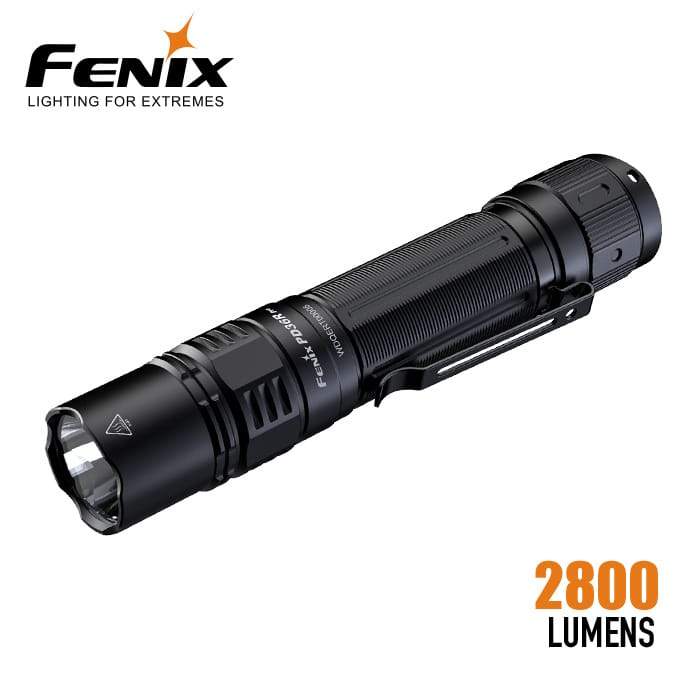
- ❌ No True Moonlight Mode: This is the fatal flaw for many serious users. The minimum output of 30 lumens is blindingly bright for night-adapted eyes, making it useless for in-tent use or reading a map.
- ⚠️ Cool White LED Only: If you need accurate color rendering for tasks like electrical work or simply prefer a more pleasant neutral tint, you must look elsewhere.
- ⚠️ Partial Battery Lock-in: While not as bad as Olight, the fact that you cannot internally charge a standard 21700 battery via the USB-C port is a major inconvenience that isn’t obvious at first glance.
Olight Warrior 3S
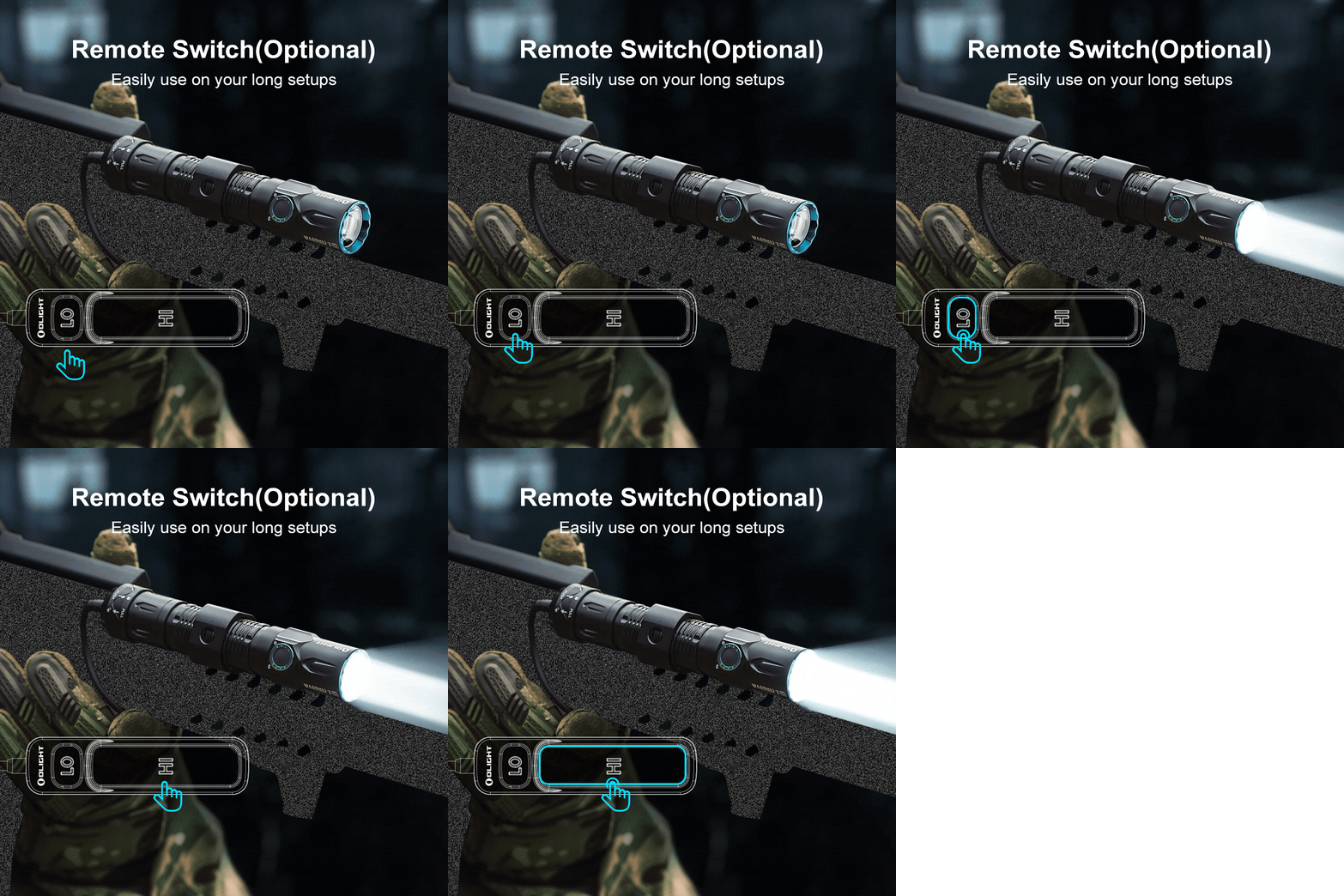
- ❌ Total Battery & Charger Lock-in: This is a deal-breaker. You are 100% dependent on Olight for both the specific battery and the specific magnetic charging cable. If you lose that cable, your light is a brick until you buy another one from them.
- ⚠️ Magnetic Port Debris Risk: A common user complaint is that the magnetic charging port attracts metallic dust. If you work in a machine shop, this debris can short out the port.
- ⚠️ Past Safety Recalls: While the current model is safe, Olight’s history of recalls on other models creates a trust deficit for some safety-conscious buyers.
Nitecore P20iX
- ❌ Performance-Gated Proprietary Battery: Advertising a 4,000-lumen “Turbo” mode that only works with their special, expensive “i-Series” battery feels deceptive to many users.
- ⚠️ Overly Complex UI: The dual “Daily” and “Tactical” modes can be confusing. In a stressful situation, you don’t want to be stuck in the wrong mode.
- ⚠️ Floody Beam, Poor Throw: Despite its huge lumen count, its throw is significantly less than the Fenix PD36R Pro, making it a poor choice for long-range spotting.
SureFire G2X Pro
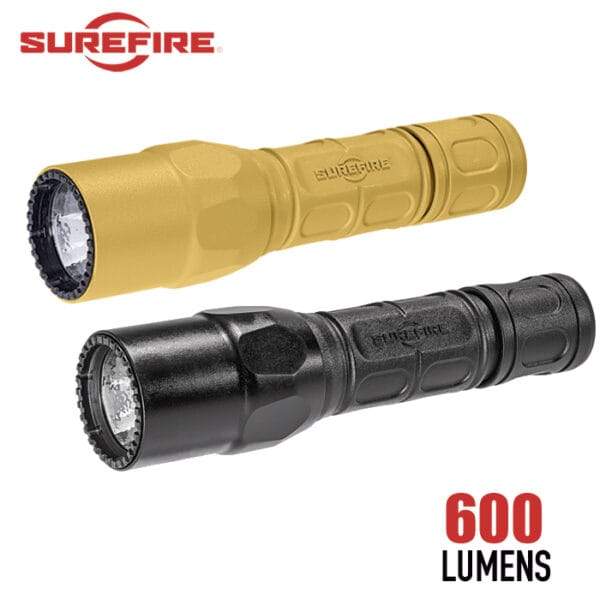
- ❌ High Operating Cost: The reliance on disposable CR123A batteries makes this light expensive to run for anyone who uses it frequently, though less so than previously thought.
- ❌ Outdated Output: In 2024, 600 lumens is considered low output for a light in this price class. You are paying for reputation, not performance.
- ⚠️ Polymer Body: While the Nitrolon® body is incredibly tough, many users feel that a flashlight costing nearly $100 should have the premium feel of anodized aluminum.
Wurkkos TS22

- ⚠️ Quality Control Lottery: This is the trade-off for the low price. The chance of receiving a unit with a minor cosmetic flaw or a gritty switch is higher than with premium brands.
- ⚠️ Built-in LVP (Low Voltage Protection): This is a critical safety nuance. The light’s driver board has protection, but it’s designed for use with unprotected standard batteries. This is different from Fenix/Olight, which use protected batteries.
- ⚠️ Poor Tint Quality (XHP70.2 LED): Expert analysis confirms the LED used is notorious for having an unpleasant greenish “tint shift” across the beam.
Part 5: User Experience: From Frustration to Workflow
After years in this field, I’ve learned that it’s the small frustrations—the “deal-breakers”—that determine whether a tool is loved or hated. It’s about the feel in the hand and the one missing feature that drives you crazy.
User sentiment analysis reveals a clear pattern of trade-offs for each of these Fenix competitors. If you want a broader look at how these trade-offs stack up across dozens of similar face-offs, browse our full category of Comparison articles.
From Sentiment to Solution: An Actionable Workflow
Instead of just listing complaints, let’s turn them into an actionable workflow for choosing and using a light for a DIY project.
- Situation: You need to work on the wiring behind your home entertainment center, a dark and cramped space.
- Task: You need to identify and connect several similarly colored cables correctly without unplugging the whole system.
-
Action:
- Assess the Task: You need both a very low light to see without glare and accurate color rendition. This immediately flags a moonlight mode and high-CRI as critical features.
- Filter Your Options: You eliminate the Fenix PD36R Pro because its 30-lumen low is too bright and its CRI is poor. You also eliminate the SureFire for the same reasons. The Olight, Nitecore, and Wurkkos all have moonlight modes, but you check reviews for their CRI performance.
- Check Long-Term Cost: You see the Wurkkos has the lowest TCO and uses an open-standard battery, making it the low-risk financial choice.
- Result: You choose a high-CRI version of a Wurkkos or another enthusiast brand light. You can complete the wiring task in minutes because you can easily distinguish the wire colors, and the sub-lumen moonlight mode prevents you from being blinded by reflections. This is a practical example of how a feature gap like “no moonlight mode” directly impacts a common household task.
User Praise vs. User Complaints
- Fenix (PD36R Pro): Reliability vs. Annoyance. Users rave about durability and simplicity (“it just works”). The biggest complaint by far is the lack of a true moonlight mode.
- Olight (Warrior 3S): Convenience vs. Lock-in. Users love the sleek designs and seamless magnetic charging. The praise almost always comes with a huge caveat: the absolute lock-in to their expensive proprietary battery system.
- Nitecore (P20iX): Features vs. Complexity. Nitecore appeals to the tech-savvy crowd with cutting-edge specs. The complexity is a double-edged sword, as the multi-mode UIs can be confusing.
- SureFire (G2X Pro): Trust vs. Cost. SureFire runs on pure reputation. Users praise its “bombproof” reliability. The complaint is universal: the high long-term cost of disposable batteries.
- Wurkkos (TS22): Value vs. Lottery. Users are fanatical about its unbeatable performance-per-dollar and use of standard batteries. The main complaint is the “quality control lottery.”
This single quote Foundation Intelligence Report for Olight illustrates the core fear driving users away from proprietary systems.
Part 6: Deep Dive: Top Fenix Alternatives & Competitors
Instead of a simple matrix, let’s do a deep dive into the three most compelling Fenix competitors: the convenient Olight, the feature-packed Nitecore, and the value-king Wurkkos. This provides a clearer choice for anyone evaluating flashlights comparable to Fenix.
1. Olight Warrior 3S
The Olight Warrior 3S is often called the “Apple” of flashlights. Its biggest selling point is a seamless user experience, from the beautiful machining to the incredibly convenient magnetic charging system.
For a user who doesn’t want to fuss with batteries and just wants their tool to work, it’s a compelling choice.
Ideal Use Cases & Professional Applications
- Best For: The Design-Conscious User Who Prioritizes Convenience. If your primary concern is having a light that is always charged and ready to go, with an interface that’s easy to learn, Olight is hard to beat. The magnetic charging cable snaps on effortlessly, and the side switch with battery level indicators is one of the best in the business.
- Consider If: You are building an ecosystem. If you already own other Olight products, staying within their ecosystem can be convenient, as many use the same charging cable. You accept the proprietary nature as a trade-off for a consistent user experience.
- Avoid If: You are budget-conscious or believe in the right to repair. The total vendor lock-in is Olight’s Achilles’ heel. You are completely dependent on them for a specific battery ($29.95) and charging cable. This makes the long-term cost significantly higher and introduces the risk of your expensive light becoming obsolete if they discontinue the parts.
✅ Strengths
- Seamless magnetic charging system
- Premium machining & polished aesthetics
- Excellent side switch with battery-level indicators
- Intuitive, easy-to-learn user interface
- Cross-compatible charger for the whole Olight ecosystem
⚠️ Considerations
- Total battery & charger vendor lock-in ($29.95 battery)
- Highest 3-year TCO (~$159.90) among rechargeables
- Magnetic port attracts metallic debris in workshops
- Prior recall history on other models (M2R Pro, Warrior Mini)
- Risk of “planned obsolescence” if battery is discontinued
2. Nitecore P20iX
Nitecore represents the cutting edge of flashlight technology. This brand consistently pushes the limits on lumen output and feature sets, appealing to tech-savvy users who want the most powerful and versatile tool on the market.
The P20iX, with its 4,000-lumen burst, is a perfect example of this philosophy.
Ideal Use Cases & Professional Applications
- Best For: The Tech Enthusiast Seeking Maximum Power. If you want the flashlight with the highest number on the box and a host of programmable features, Nitecore is your brand. Features like a high-lumen strobe make it a viable self-defense flashlight, while its tech appeals to users who want the absolute latest specs.
- Consider If: Your use case requires short bursts of extreme brightness. For tasks like briefly illuminating a large field or for tactical situations where a disorienting strobe is needed, the P20iX’s peak performance is a significant asset.
- Avoid If: You value simplicity or long-term value. The UI can be complex, and the fact that its top performance is gated behind an expensive proprietary battery ($35.95) feels like a “performance paywall.” For users who need sustained, reliable light, the temporary burst of power is more of a gimmick than a practical feature.
✅ Strengths
- Peak 4,000-lumen Turbo mode (short burst)
- Cutting-edge feature set & programmability
- Effective high-lumen strobe for self-defense scenarios
- Dual “Daily” and “Tactical” mode groups
- Clean recall history (2021–2024)
⚠️ Considerations
- Turbo output gated behind $35.95 proprietary “i-Series” battery
- Overly complex UI can confuse users under stress
- Floody beam profile → weak throw vs. Fenix PD36R Pro
- 3-year TCO climbs to ~$155.90
- Sustained output drops to 1,000 lm after ~30 seconds
3. Wurkkos TS22
Wurkkos has completely disrupted the market by offering performance that rivals premium brands at a fraction of the cost. It’s the champion of the budget-minded power user and the flashlight enthusiast community, built on a foundation of open standards and incredible value.
Ideal Use Cases & Professional Applications
- Best For: The Power User on a Budget Demanding Open Standards. The TS22 delivers over 1,000 lumens of sustained output for more than four hours, a performance metric that beats or matches lights costing three times as much. It achieves this using a standard 21700 battery, giving the user complete freedom and the lowest TCO in this comparison.
- Consider If: You want a “workhorse” light without the premium price tag. For general-purpose use around the house, in the workshop, or for outdoor gear, the TS22 provides more than enough power and durability for 95% of users. The value proposition is simply unbeatable.
- Avoid If: You need guaranteed reliability or streamlined customer support. The “quality control lottery” is real. While most units are perfect, the chance of getting one with a minor flaw is higher than with Fenix or SureFire. Furthermore, the warranty is shorter (1 year), and customer service can be slower, which is a risk you accept for the massive cost savings.
✅ Strengths
- Sustained ~1,000+ lumens for ~4.6 hours (beats claim)
- Open-standard 21700 battery (~$10 replacement)
- Lowest 3-year TCO in the comparison (~$56)
- USB-C charging with power-bank function
- Unbeatable performance-per-dollar
⚠️ Considerations
- Quality control lottery — cosmetic flaws or gritty switches
- Shorter 1-year warranty vs. premium brands
- Slower customer support response times
- XHP70.2 LED prone to greenish “tint shift”
- LVP tuned for unprotected cells (safety nuance to learn)
Part 7: Conclusion & Frequently Asked Questions
After years of testing and analyzing tools, I’ve seen a clear pattern: the most important features are rarely the ones advertised on the box. This analysis of Fenix Store top alternatives and competitors has shown that Total Cost of Ownership, not initial price, is what truly matters.
Proprietary battery ecosystems are a deliberate strategy of vendor lock-in, while misleading marketing claims obscure the real-world performance of these essential tools.
Ultimately, deciding between the best flashlight brands is a philosophical choice, and my job is to give you the data to make an informed decision. For readers who prefer a running list of active promotions across all these brands, our Latest Coupons hub is updated regularly.
- Choose Fenix if you value proven reliability and a fair compromise on battery freedom.
- Choose Olight or Nitecore if you are willing to accept the high costs and risks of a locked-in ecosystem in exchange for convenience or cutting-edge features.
- Choose Wurkkos if you demand open standards and the absolute maximum value for your money.
- Choose SureFire only if absolute reliability is the only thing that matters, and cost is secondary.
Final Use Case Matrix
| Use Case / User Priority | Best Choice | The Trade-off You Accept |
|---|---|---|
| Overall Reliability & Balanced TCO | Fenix | You are giving up a true moonlight mode and accepting a less “innovative” feature set. |
| Maximum Convenience & Aesthetics | Olight | You are accepting total vendor lock-in for both batteries and chargers, along with higher long-term cost. |
| Pure Performance-per-Dollar | Wurkkos | You are accepting a “lottery” on quality control and potentially slower customer support. |
| Mission-Critical, Cost-is-No-Object Use | SureFire | You are accepting high TCO due to disposable batteries and performance specs that are outdated by modern standards. |
| Cutting-Edge Specs & Features | Nitecore | You are accepting a more complex UI and a “performance paywall” gated behind a proprietary battery. |
| Safe, Warrantied Purchases | Fenix Store | You might miss out on Amazon’s potentially faster shipping times or unauthorized third-party flash sales. |
Before you buy any flashlight, ask yourself these questions: What is the 3-year TCO? Does it use a standard, easily replaceable battery? Is the warranty for the electronics or just the metal tube? And am I buying from an authorized dealer?
Armed with this knowledge, you can see past the marketing hype and choose the right tool for your needs. To lock in the best pricing on a Fenix flashlight before checkout, don’t forget to grab a fresh Fenix Store voucher code.
Frequently Asked Questions
Q1: Is Fenix better than Olight?
A: Deciding between these Fenix competitors depends on your priorities. Fenix is generally better for users who prioritize long-term value, durability, and dislike proprietary systems. Its semi-open battery standard offers more flexibility and a lower TCO of ~$145 Fenix Lighting. Olight is better for those who prioritize convenience, a polished user interface, and aesthetics. Its magnetic charging is incredibly user-friendly, but it locks you into their expensive battery ecosystem, leading to a higher TCO of ~$160 Olight. For a pragmatic professional, Fenix is often the smarter long-term investment.
Q2: What is the biggest hidden cost of high-performance flashlights?
A: The biggest hidden cost is the battery ecosystem, which can significantly increase the total cost of ownership. Brands like Olight and Nitecore require expensive proprietary batteries that can cost between $30 and $36 each Nitecore Store. Even a single replacement battery can add 20-30% to the initial purchase price. Lights that use disposable batteries, like some SureFire models, can also accrue high costs over time, with our analysis showing a 3-year TCO of over $160 based on moderate use. This is why evaluating the TCO, not just the sticker price, is essential when comparing top Fenix alternatives.
Q3: Why do flashlight enthusiasts hate proprietary batteries?
A: Enthusiasts and prosumers often dislike proprietary batteries for three main reasons: high cost, vendor lock-in, and the risk of planned obsolescence. A proprietary replacement battery can cost up to 4x more than a standard, high-quality 21700 cell Illumn. More importantly, it creates a dependency on a single manufacturer. If that company stops making that specific battery model in five years, your expensive flashlight could become a paperweight. Open-standard batteries like the 21700 offer freedom of choice, lower costs, and ensure the long-term viability of the tool, which is a core tenet for many serious users.
Q4: Are the lumen numbers on flashlight boxes a lie?
A: “Lie” is a strong word, but they are often misleading. The huge lumen numbers advertised (e.g., 4,000 lumens) are typically only achievable in a “Turbo” mode for a few seconds before the light gets too hot and the thermal protection circuit forces a “step-down” to a much lower, sustainable level. I always tell people to look for the sustained lumen output and runtime charts in independent reviews 1lumen.com. This figure represents the true, usable performance for any task lasting longer than a minute and is a much more honest measure of a light’s capability than the peak number on the box.
Q5: Is it safe to buy a Fenix flashlight on Amazon?
A: It can be risky if you are not careful. If the seller is the official Fenix brand store or a known authorized dealer, it is generally safe. However, if you purchase from a random third-party seller, even if it’s “Fulfilled by Amazon,” you risk receiving a counterfeit product due to commingled inventory. These counterfeits often use cheap, unprotected batteries that pose a fire hazard and will not be covered by Fenix’s warranty. To guarantee authenticity and safety, my professional advice is to always buy from a trusted, authorized retailer like Fenix Store or directly from the manufacturer.
Q6: What is a “moonlight mode” and why is it important?
A: A moonlight mode is an ultra-low setting, typically less than one lumen, that is essential for preserving night vision. From my experience, it’s a deal-breaker for many serious users because standard low modes (like Fenix’s 30 lumens) are far too bright for critical tasks like nighttime land navigation, reading a map, or moving around a campsite or tent without waking others. Without a proper moonlight mode, you are constantly blinding yourself in the dark, defeating the purpose of using a light for subtle tasks. Its absence on a premium light like the Fenix PD36R Pro Fenix Lighting is a significant design oversight for many outdoor and tactical users.
Q7: For under $100, what is the best flashlight choice?
A: Based on pure performance-per-dollar and long-term cost, the Wurkkos TS22 is the smartest choice under $100 among the Fenix competitors. It offers sustained output that rivals or even beats premium brands, all while using a cheap and universal 21700 battery. Its 3-year TCO is only around $56, which is unbeatable Wurkkos. The primary trade-off is the “quality control lottery”—as a budget brand, there is a slightly higher chance of receiving a unit with minor cosmetic flaws. However, for users who prioritize performance and open standards over brand prestige, its value is unmatched.
Q8: What does “Total Cost of Ownership (TCO)” mean for a flashlight?
A: Total Cost of Ownership (TCO) is the initial purchase price of the flashlight PLUS the cost of all replacement batteries needed over a set period, which we calculate as three years. This is a metric I always use because it reveals the true long-term expense of a tool. A light with a cheaper initial price can end up being far more expensive in the long run if it uses costly proprietary batteries like Olight’s Olight Store or disposable cells like SureFire’s. TCO cuts through the marketing and helps you make a smarter financial decision based on how you will actually use the light.
Q9: What does “beam tint” mean and why does it matter?
A: Beam tint refers to the color of the light produced, typically ranging from a blueish “cool white” to a yellowish “warm white,” with “neutral white” in the middle. I find that while cool white LEDs, common in many tactical flashlights, can appear brighter to the eye, a neutral white beam often has a higher Color Rendering Index (CRI). A higher CRI means the light shows colors more accurately. This is critical for any DIY or professional tasks like matching paint, identifying wire colors, or even for first aid applications. A poor tint can make it difficult to distinguish colors, which is a major performance gap for many non-tactical uses.