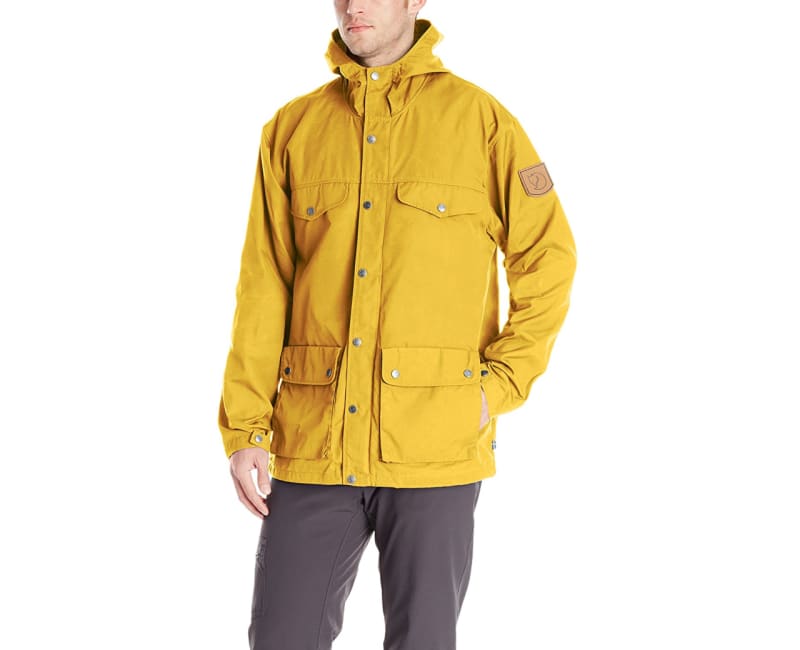
Fjallraven Top Alternatives and Competitors: Exposing 2026 Trade-Offs in Style, Ethics, and Durability
Posted on |
You’ve seen the jackets everywhere. The iconic arctic fox logo, the sturdy-looking fabric, the timeless, rugged aesthetic. The “gorpcore” trend has turned outdoor gear into high fashion, but it leaves us with a critical question: Is your stylish outdoor jacket a genuine tool or just a fashion statement?
As a Fashion and Sportswear professional with over 15 years of experience analyzing what makes gear truly work, I’ve seen countless brands promise the world. This guide is my attempt to cut through the marketing hype and provide a clear look at Fjallraven’s top alternatives and competitors, exposing the real-world trade-offs between the beloved Fjallraven and its top rivals: Patagonia, Arc’teryx, and Filson.
This comprehensive analysis moves beyond the tag price to dig into the details brands don’t always advertise, comparing Style vs. Waterproofing, Ethics vs. Greenwashing, and Durability vs. Weight. We will explore which “green” claims are actually verifiable, which jacket offers the best long-term value, and when paying a premium for performance is a smart investment versus an unnecessary expense.
Your choice of gear can have safety implications, so you need to evaluate your specific needs carefully. Before diving in, if you’re already leaning toward the Swedish heritage brand, take a moment to check the latest Fjallraven coupon savings — they can meaningfully change the total cost equation we’ll explore below.

Key Takeaways
Key Takeaways
-
The Core Conflict: Fjallraven excels in timeless style and dry-weather durability with its signature G-1000 fabric, but it is not waterproof. This is the single most critical factor when comparing it to truly waterproof alternatives like the technical shells from Patagonia and Arc’teryx. -
The Ethical Leader: For buyers prioritizing verifiable ethics, Patagonia is the clear standout. Its B-Corp certification and commitment to using Fair Trade Certified™ factories for 94% of its products make its claims transparent and accountable. -
The Performance King: Arc’teryx offers unrivaled weather protection with Gore-Tex Pro, but its high price (upwards of $600) is often overkill for daily use. For most users, this represents a poor value proposition. -
The Durability Champion: Filson represents “buy-it-for-life” durability with its rugged Tin Cloth, but this comes at the cost of extreme weight and poor breathability, making it unsuitable for active pursuits. -
The Waterproofing Safety Consideration: A key concern is mistaking Fjallraven’s water resistance for genuine waterproofing, which can be a safety issue in serious rain. This is a feature of the fabric’s design, not a flaw, but it is the top point of user confusion. -
Total Cost of Ownership Matters: The sticker price is misleading. When factoring in maintenance (waxing vs. DWR renewal) and resale value, a $179 Patagonia jacket can offer better long-term value than a more expensive alternative that requires more upkeep.
Decision in 60 Seconds
If you only have a minute, this quick-reference table matches each buyer persona to the best-fit jacket brand along with the key trade-off you’d need to accept.
| Persona / Need | Best Choice | Why | Key Risk |
|---|---|---|---|
| The Style-Conscious Urbanite | Fjallraven | Unbeatable heritage aesthetic and durable fabric for daily wear in fair weather. | You get caught in a downpour and realize its water resistance has firm limits. |
| The Ethical, Value-Focused Buyer | Patagonia | Excellent waterproofing, a lifetime guarantee, and industry-leading ethical commitments at a competitive price. | The fabric feels less “premium” than top-tier shells, and breathability is good, not elite. |
| The Serious Outdoor Athlete | Arc’teryx | The absolute best weather protection and technical performance money can buy. | You pay a massive premium for performance you may only use 5% of the time. |
| The “Buy It For Life” Traditionalist | Filson | Bombproof durability and a rugged workwear look that will likely outlive you. | It’s extremely heavy and not breathable, making it unsuitable for any aerobic activity. |
To see the visual comparison in action from independent gear reviewers, check out this head-to-head breakdown covering the three heavy hitters in the technical shell space:
Top Alternatives & Competitors Shortlist
Choosing the right jacket isn’t about finding the “best” one; it’s about picking the right set of compromises. As a professional, I think of it as a menu of trade-offs. You can have world-class durability or world-class waterproofing, but it’s tough to get both in the same package.
Here is a scannable overview of your choices before we dive deep. If you’re already narrowing your shortlist, you may also want to review this detailed Fjallraven Top Alternatives and Competitors breakdown for supporting analysis.
| Option | Best for | Tradeoff | Evidence status |
|---|---|---|---|
| Fjallraven Greenland Jacket | Style, Durability, Light Weather | Not Waterproof, requires maintenance | ✅ |
| Patagonia Torrentshell 3L | Ethical Daily Waterproofing, Value | “Good Enough” Performance | ✅ |
| Arc’teryx Beta AR Jacket | Extreme Weather, Technical Performance | Price & Overkill for most users | ✅ |
| Filson Tin Cloth Cruiser | “Buy It For Life” Durability, Workwear | Weight & Poor Breathability | ✅ |
How We Evaluated These Brands
Our editorial team at Coupons Scout follows a rigorous, transparent process — detailed in our editorial methodology — to ensure every claim, comparison, and recommendation is verified against official sources before publication.
For this analysis of jackets like Fjallraven, our evaluation focused on four core pillars: Performance & Materials, Total Cost of Ownership, Ethical & Corporate Responsibility, and Real-World Use Cases.
As a 15-year veteran of the sportswear industry, I synthesized data from official brand specifications, third-party certifications like B Lab, and hundreds of user reviews from outdoor forums. Our methodology prioritizes verifiable facts (like B-Corp scores and material composition) over marketing claims.
Where data is an industry estimate (like hydrostatic head ratings not published by the manufacturer), we clearly attribute it. This guide reflects our commitment to providing expert, data-driven advice to help you make an informed purchase. For readers who want an even deeper dive into the brand itself, our full Fjallraven Review covers hands-on testing details.
Where Fjallraven Genuinely Shines
Before we get into critical comparisons of Fjallraven’s top alternatives and competitors, let’s be clear: Fjallraven is a fantastic brand with a loyal following for very good reasons. I’ve handled their gear for years, and where it shines, it truly excels.
The first thing to talk about is their signature G-1000 fabric. This blend of 65% polyester and 35% cotton is exceptionally durable. Its excellent abrasion resistance comes from a tough, canvas-like feel that resists snags far better than the lightweight nylon shells from more technical brands.
It’s also incredibly wind-resistant, and its excellent breathability in dry conditions makes Fjallraven’s jackets a great outer shell in a flexible layering system. Combined with a working Fjallraven discount code, you can lock in serious value on a piece that will realistically last a decade in your closet.
The real genius of G-1000 is its adaptability. You can customize its water resistance using Greenland Wax. A thick layer gives you solid protection in a light drizzle, while no wax at all makes it incredibly breathable for fair-weather hiking. This customizability gives the G-1000 fabric a unique versatility, and the hands-on approach is part of the brand’s charm.
💡 PRO TIP: How to Wax G-1000 for Your Climate
For wet climates (e.g., PNW), apply a thick, even layer of Greenland Wax to shoulders and the hood. For dry, hot climates (e.g., Arizona), use little to no wax to maximize breathability. The fabric’s performance is in your hands — see the official Fjallraven Care Guide for step-by-step instructions.
And let’s be honest, the other major factor is its timeless aesthetic. The Scandinavian design of pieces like the Greenland Jacket or the iconic Kanken backpack is undeniable. Fjallraven has earned its spot in the “gorpcore” trend because its products look just as good in the city as they do in the woods.
This is heritage gear that feels authentic. Their sustainability cred is also solid in specific areas; their PFC-free water resistance treatments and their “Down Promise,” a comprehensive animal welfare policy for ethically sourced down, are verifiable strengths, as documented in the Fjallraven Down Promise. This is why people love this brand, and they’re not wrong.
Top Alternatives Compared: A Head-to-Head Breakdown
This is where the real analysis begins. If Fjallraven is the stylish benchmark, how do the alternatives stack up? I’ve spent my career evaluating these kinds of trade-offs, and it almost always comes down to what you, the user, are willing to sacrifice.
Patagonia: Best for Ethical Value & All-Around Performance

When it’s the best choice:
- You prioritize verifiable ethical commitments and want to support a B-Corporation.
- You need reliable, everyday waterproof performance without paying for expedition-grade features.
- You value long-term support, including a lifetime warranty and accessible repair programs.
Prerequisites for success:
- You are comfortable with a jacket that has a standard, less-athletic fit.
- Your primary need is waterproofing for rain, not maximum breathability for high-output sports.
- You accept that the feel of the 100% recycled fabric may be slightly “crinkly” compared to more expensive materials.
When to consider alternatives:
- You are a serious athlete who regularly pushes gear to its breathability limits.
- You prefer the feel and silence of premium, laminated fabrics.
- The brand’s outspoken political and environmental activism does not align with your personal views.
✅ Strengths
- Truly waterproof H2No® 3-layer shell (~20,000mm est.)
- 100% recycled nylon face fabric
- B-Corp certified — legally binding ethics
- 94% Fair Trade Certified™ manufacturing
- Ironclad Guarantee + Worn Wear repair program
- Excellent $179 price point
⚠️ Considerations
- Fabric feel is less premium than laminated Gore-Tex
- Breathability good but not elite for aerobic sport
- Standard fit — less athletic than Arc’teryx
- Slight fabric crinkle when new
- Requires insulation layer for deep winter
So, why choose Patagonia over the others? I have to hand it to them; they have built an incredible machine for producing high-value, ethical gear. Their clear standout in this category is the Torrentshell 3L jacket. For a retail price of just $179 (Patagonia Torrentshell 3L Jacket), you get a truly waterproof, windproof, and breathable jacket that holds its own against more expensive competitors.
Their proprietary H2No® Performance Shell is a 3-layer fabric made from 100% recycled nylon, and its waterproofing is widely estimated by independent gear testers to be around 20,000mm hydrostatic head, though Patagonia does not officially publish this specification.
But where Patagonia, under the lifelong philosophy of founder Yvon Chouinard, truly runs away with it is in their unmatched ethical transparency. They are the only B-Corp certified brand in this comparison, a legal designation that holds them accountable to high standards of social and environmental performance (B-Corporation Score Report).
As of Fall 2023, 94% of their products are made in a Fair Trade Certified™ factory, ensuring better worker compensation. To top it off, their Ironclad Guarantee and their Worn Wear program for repairs and resale—a key part of the Circular Economy—drastically reduce the long-term financial risk and environmental impact.
The main trade-off is in the refined details. The H2No fabric, while effective, is sometimes described by users as feeling less premium than the Gore-Tex used by Arc’teryx. Its breathability is excellent for the price but is a known step-down from the ultra-high-end shells. It’s a workhorse, not a show pony.
From a logistics perspective, Patagonia offers excellent free shipping options and a straightforward return process. Seasonally, the Torrentshell 3L is a true three-season jacket, ideal for Spring, Summer, and Fall rain, but would require significant insulation for use in deep winter. If Fjallraven is still on your shortlist, don’t miss the current Fjallraven promo code options as they can shift the pricing math significantly.
Arc’teryx: Best for Extreme Weather & Technical Dominance

When it’s the best choice:
- Your personal safety or professional success depends on having the absolute best weather protection available.
- You live in a climate with frequent, heavy precipitation (like the Pacific Northwest or Scotland).
- You subscribe to a “buy once, cry once” philosophy and are willing to pay a premium for top-tier craftsmanship.
Prerequisites for success:
- You have a budget that can accommodate a $600+ price tag without compromising other essential gear.
- Your activities (e.g., mountaineering, ice climbing, backcountry skiing) are intense enough to justify the jacket’s technical features.
- You understand and appreciate the nuances of technical features like micro-seam allowances and articulated patterning.
When to consider alternatives:
- Your primary use is daily commuting, dog walking, or casual weekend hikes.
- You are a budget-conscious buyer looking for the best value proposition.
- You dislike the brand’s minimalist, highly technical aesthetic.
✅ Strengths
- Gore-Tex Pro fabric (~28,000mm hydrostatic head)
- Best-in-class waterproof / breathable performance
- Meticulous seam sealing & micro-seam allowances
- Articulated fit moves naturally with body
- Industry-standard YKK zippers throughout
- Four-season capable technical shell
⚠️ Considerations
- Premium tier pricing at $600+
- Performance often exceeds daily-user needs
- No insulation — needs layering
- Return policies less generous than Patagonia
- Minimalist aesthetic isn’t for everyone
In my professional opinion, there is Arc’teryx, and then there is everyone else when it comes to sheer technical performance. Their use of top-tier Gore-Tex Pro fabric, developed by W. L. Gore & Associates, in jackets like the Beta AR provides the absolute gold standard in waterproof and breathable performance, with a hydrostatic head rating of over 28,000mm. This isn’t just “staying dry”; this is “standing under a waterfall and staying dry.”
The construction is where the $600 price tag starts to make sense (Arc’teryx Beta AR Jacket). They are famous for meticulous details like precise seam sealing, micro-seam allowances (which reduce weight and bulk), and articulated fits that move with your body. Details like using industry-standard YKK zippers throughout contribute to a bombproof construction that has earned them their reputation.
The glaring limitation here is the “Price vs. Need” Chasm. To counter Arc’teryx’s overkill performance, Patagonia offers a compelling value proposition: ‘good enough’ technical waterproofing that meets the needs of 95% of users at a fraction of the cost. For most people, the Beta AR is an unjustifiable expense.
Logistics are standard for a premium brand, with reliable shipping but less generous return policies than Patagonia. Seasonally, its performance makes it a four-season shell, though it provides no insulation on its own.
Filson: Best for “Buy It For Life” Ruggedness

When it’s the best choice:
- Your primary need is extreme toughness and abrasion resistance for work, field use, hunting, or ranching.
- You value products that are built to last a lifetime and develop a unique character or patina over time.
- You prefer a classic, American heritage aesthetic over modern, technical styles.
Prerequisites for success:
- You are willing to accept a significant weight penalty in exchange for durability.
- You understand that the waxed cotton material requires periodic re-waxing to maintain water resistance.
- Your activities are low-output; you will not be hiking or engaging in strenuous aerobic exercise while wearing it.
When to consider alternatives:
- You need a lightweight jacket for travel or backpacking.
- You require a high degree of breathability for any activity that makes you sweat.
- You live in a hot or humid climate where a heavy, waxed canvas jacket would be impractical.
✅ Strengths
- Legendary 14oz oil-finish Tin Cloth
- Workwear-grade abrasion resistance
- Full lifetime guarantee
- Classic American heritage aesthetic
- Excellent resale value on secondary market
- Ages beautifully with unique patina
⚠️ Considerations
- Extremely heavy and stiff feel
- Very poor breathability for active use
- Requires periodic oil-wax reapplication
- Unsuitable for hot or humid climates
- Return shipping cost is high due to weight
Filson operates on a completely different philosophical plane. While other brands chase lighter materials, Filson doubles down on unrivaled durability. Made from materials like their famous 14oz oil-finish Tin Cloth, these jackets are built to withstand workwear-level abuse. This is the kind of gear that people pass down to their kids; a true investment piece for those who value heritage and longevity.
Like Patagonia, they stand behind their products with a robust lifetime guarantee (Filson Guarantee), which has fostered an incredibly loyal community. The aesthetic is pure heritage fashion—a rugged, traditional American look that gets better with age. For the r/BuyItForLife crowd, a Filson jacket is the ultimate prize.
The “Heritage Penalty,” however, is severe. The Tin Cloth Cruiser jacket, priced at $495 (Filson Tin Cloth Cruiser Jacket), is extremely heavy and has very poor breathability. It is fundamentally unsuited for any kind of aerobic activity. This isn’t modern sportswear; it’s classic, rugged outerwear.
Shipping and returns are standard, but the product’s sheer weight can make returns costly. Seasonally, it’s an excellent jacket for cool to cold weather in fall and winter but is far too heavy and warm for spring or summer.
Use Case Matrix: Your Decision in 60 Seconds
I always tell people to match the tool to the job. Don’t buy a sledgehammer to hang a picture frame. This matrix is my attempt to apply that logic and make the final decision as simple as possible.
Every one of these brands is a “winner” for a specific, clearly defined use case. Find your use case, and you’ll find your jacket.
| Use Case | Best Choice | Why It Wins | Key Tradeoff You Accept |
|---|---|---|---|
| Daily Style & Light Weather | Fjallraven | The unbeatable heritage style comes from its durable fabric and timeless aesthetic. | You don’t get true waterproofing. |
| Best All-Around Value & Ethics | Patagonia | Excellent waterproofing and a B-Corp guarantee at a great price. | You accept a “good enough” fabric feel and breathability. |
| Hardcore Rain & Technical Pursuits | Arc’teryx | The best weather protection money can buy, period. | You pay a massive premium for performance you may not always need. |
| Extreme Durability & Workwear | Filson | It will likely outlive you. Built like a tank. | You sacrifice light weight and all modern notions of breathability. |
Pricing & Total Cost of Ownership (TCO) Reality Check
The sticker price is just the beginning of the cost story. To understand the true financial commitment, we need to analyze the Total Cost of Ownership over a hypothetical 5-year period.
This includes the initial purchase, necessary maintenance, and potential resale value.
Our analysis of TCO reveals the hidden costs. A Fjallraven jacket at $250 needs Greenland Wax (~$10 a bar) and the time it takes you to apply it. Applying a working Fjallraven coupon code at checkout can offset that annual wax cost several times over.
A Patagonia Torrentshell at $179 might need a bottle of Nikwax DWR renewal (~$13) every couple of years. An Arc’teryx at $600 has a much higher initial hit, and a Filson at $495 needs its own special oil finish wax (~$12 a can). The truth is that the $250 jacket might end up costing you more in time and materials over its life than the $179 one.
Another critical factor is resale value. My experience suggests that brands with strong guarantees and cult followings, like Patagonia and Filson, have very strong secondary markets on sites like eBay. This significantly reduces the “exit cost” if you decide to sell the jacket later.
So, when you look at the price, remember to consider the long-term value and ask: what’s the real cost over five years? For the full snapshot of active markdowns across outdoor brands, browse the Latest Coupons list before committing to any purchase.
5-Year Total Cost of Ownership (TCO) Model
| Brand | Initial Price | 5-Yr Maint. Cost | Resale Value | 5-Year TCO |
|---|---|---|---|---|
| Fjallraven Greenland | $250 | $30 (3 bars of wax) | ~$100 (40%) | ~$180 |
| Patagonia Torrentshell | $179 | $26 (2 bottles DWR) | ~$90 (50%) | ~$115 |
| Arc’teryx Beta AR | $600 | $26 (2 bottles DWR) | ~$300 (50%) | ~$326 |
| Filson Tin Cloth Cruiser | $495 | $24 (2 cans of wax) | ~$297 (60%) | ~$222 |
💡 KEY INSIGHT: Despite having the lowest initial price, Patagonia also projects the lowest 5-year Total Cost of Ownership due to its strong resale value and minimal maintenance costs. This makes it the strongest value proposition for budget-conscious consumers seeking a technical jacket. The high resale value of premium brands like Filson and Arc’teryx also significantly mitigates their high entry price over the long term.
Ethical Scorecard: Compliance & Trust
In today’s market, you’re not just buying a product; you’re buying into a company’s values. But greenwashing is rampant. The key to seeing through it is verifiability, which is where third-party standards like B-Corp certification become essential.
Patagonia is the undisputed leader here. Their status as a B-Corporation, certified by the non-profit B Lab, is not a marketing slogan; it is a legally binding commitment to balance profit and purpose, with a public score of 158.1.
Their extensive use of factories certified by organizations like Fair Trade USA (covering 94% of their line) is a cornerstone of their commitment to ethical manufacturing, ensuring workers are treated fairly. These are rigorous, third-party certifications that demand a high degree of supply chain transparency, something much harder to verify from marketing claims alone (Patagonia Fair Trade).
Patagonia’s Ethical Flywheel
Other brands make positive claims. Fjallraven’s PFC-free initiative and Down Promise are excellent. Arc’teryx uses Bluesign® approved materials, a good standard for environmental safety. But these are features, not a comprehensive, legally-binding business philosophy.
As lifestyle editor Jennifer Angel notes, “I was impressed by the verifiable ethics of Patagonia. While other brands make vague ‘eco-friendly’ claims, Patagonia’s B-Corp certification is a legally binding commitment. It’s the difference between a promise and a contract.”
Compliance Status Verification
| Certification / Policy | Fjallraven | Patagonia | Arc’teryx | Filson |
|---|---|---|---|---|
| B-Corporation | ❌ No | ✅ Yes (158.1) | ❌ No | ❌ No |
| Fair Trade Certified | Some products | ✅ 94% of products | Some products | ❌ No |
| PFC-Free DWR | ✅ Yes | ✅ Yes | Transitioning | N/A (Waxed) |
| Warranty | Limited Lifetime | Ironclad Guarantee | Limited Lifetime | Lifetime Guarantee |
Known Issues & Limitations Exposed
This is the ultimate Devil’s Advocate section. Every brand has a “gotcha,” a blind spot that the marketing department hopes you’ll overlook. My job is to make sure you don’t.
⚠️ WARNING: The G-1000 Performance Myth
Be aware: Fjallraven’s iconic G-1000 fabric is not waterproof and will fail in persistent rain. Its strength is durability and breathability in dry conditions. Misunderstanding this limitation is the #1 cause of user dissatisfaction. Read more via The Truth About G-1000 – Outdoor Gear Lab.
❌ Fjallraven: The G-1000 Performance Myth
Let me be crystal clear: its most famous material, G-1000, is not waterproof. It is highly water-resistant when waxed, durable, and breathable, but it will fail in a downpour. This is a feature, not a bug, but you must know this limitation.
⚠️ Patagonia: The “Good Enough” Ceiling
The Torrentshell is an incredible value, but it has its limits. This is the key differentiation between Patagonia and Arc’teryx: while H2No has good breathability, you will overwhelm it during high-output activities like trail running or backcountry skiing where a premium Gore-Tex shell excels at venting moisture.
It’s a fantastic standalone shell, but for high-output pursuits, its breathability can be a weak point in a technical layering system where moisture management is key.
❌ Arc’teryx: The “Price vs. Need” Chasm
The biggest issue with Arc’teryx is that its performance is so far beyond the needs of most users that the price tag becomes a poor value proposition. It’s like buying a Formula 1 car to drive to the grocery store.
You are paying a massive “brand tax” for capability you will never use, and the cost may not be justifiable for non-specialists.
⚠️ Filson: The “Heritage” Penalty
The incredible durability of Filson’s Tin Cloth comes with deal-breaking penalties. The material is heavy, stiff, and has almost zero breathability. This makes it completely unsuitable for any modern performance expectation.
It’s a jacket for working or standing, not for moving. This trade-off is often captured by users in online forums, with a common sentiment being: “My Filson Tin Cloth jacket has survived 10 years of work and will probably outlive me. But I’m not wearing it for a summer hike – it weighs a ton and breathes like a plastic bag.” (Reddit User Review on r/BuyItForLife)
Before making your final call, it also helps to browse related side-by-side breakdowns in our Category of Comparison articles to make sure you’ve weighed every angle.
Frequently Asked Questions
Q1: Is a Fjallraven jacket waterproof?
A: No, it is not. Fjallraven’s G-1000 fabric, used in iconic jackets like the Greenland Jacket, is highly water-resistant when treated with Greenland Wax, but it is not inherently waterproof and will become saturated in persistent rain.
This design prioritizes durability and breathability over complete water protection. For activities in heavy, sustained downpours, you should consider jackets from brands like Patagonia or Arc’teryx that use technical waterproof membranes like H2No or Gore-Tex (Fjallraven G-1000 Care & Repair). If you need true waterproofing, these are better alternatives to Fjallraven.
Q2: Which brand is the most ethical?
A: Based on verifiable, third-party certifications, Patagonia is the clear leader in ethics. It is a certified B-Corporation, which legally requires it to consider the impact of its decisions on workers, customers, suppliers, community, and the environment (B Lab Global).
Furthermore, with 94% of its products made in a Fair Trade Certified™ factory, it demonstrates a deep commitment to worker welfare across its supply chain. While other brands have positive initiatives, like Fjallraven’s Down Promise, Patagonia’s commitments are broader, more deeply integrated into its business model, and more transparently reported.
Q3: Is Arc’teryx worth the money?
A: It depends entirely on your needs. For most casual users, the cost is hard to justify as its performance exceeds typical requirements. Arc’teryx makes professional-grade gear designed for extreme conditions where equipment failure is not an option.
If you are a mountaineer, ice climber, or live in a region with relentless, severe weather, the investment can be worth it for the superior performance, durability, and articulated fit (Arc’teryx Design Philosophy). For daily commuting or weekend hiking, the cost represents a poor value proposition, as brands like Patagonia offer more than sufficient performance for a fraction of the price.
Q4: Why is Filson so heavy?
A: Filson jackets are heavy because they are built for extreme durability using traditional, robust materials. The signature 14oz Tin Cloth is a densely woven cotton canvas impregnated with wax, designed to withstand the rigors of outdoor work like logging and ranching (Filson Tin Cloth History).
This focus on “buy-it-for-life” toughness prioritizes abrasion resistance and longevity over modern standards of light weight and breathability. The weight is a direct trade-off for its legendary ruggedness; you are essentially wearing a flexible suit of armor against brush, thorns, and wear.
Q5: What’s the main difference between Fjallraven and Patagonia?
A: The primary differences are waterproofing and verifiable ethics. Most Patagonia jackets, like the Torrentshell, are fully waterproof using a technical membrane. Most iconic Fjallraven jackets are water-resistant using waxed canvas, prioritizing durability and breathability in dry conditions.
Ethically, while both brands have sustainability programs, Patagonia’s commitments are more comprehensive and legally binding through its B-Corp status and extensive Fair Trade certifications. In short, choose Patagonia for reliable rain protection and transparent ethics; choose Fjallraven for heritage style and dry-weather durability.
Q6: Do I need to wax my Fjallraven jacket?
A: Yes, to maintain and customize its water resistance, you must periodically wax a Fjallraven G-1000 jacket with Greenland Wax. The fabric is delivered pre-waxed, but this wears off with use and washing.
Re-waxing allows you to add extra protection to high-exposure areas like the shoulders and hood or to leave the wax off entirely for maximum breathability in warm, dry weather. This adds a maintenance cost and effort not required by technical shells from brands like Patagonia or Arc’teryx, whose waterproof performance comes from a built-in membrane (Fjallraven Waxing Guide).
Q7: Can I use a Filson jacket for hiking?
A: It is not recommended. Filson jackets made from materials like Tin Cloth or Mackinaw Wool are too heavy and not breathable enough for aerobic activities like hiking. During a hike, your body generates significant heat and moisture.
A non-breathable jacket will trap this moisture, causing you to feel clammy and potentially leading to dangerous heat loss when you stop moving (a process called convective heat loss). These jackets are designed for lower-output activities like work, hunting from a blind, or casual walking in cold weather. For hiking, a lighter, more breathable jacket is a much safer and more comfortable choice.
Q8: What does “Gorpcore” mean?
A: “Gorpcore” is a fashion trend centered on wearing functional, outdoor-inspired apparel in urban, everyday settings. The name is a playful take on “G.O.R.P,” an acronym for “Good Ol’ Raisins and Peanuts,” a classic trail mix snack for hikers.
The trend embraces the aesthetic of utility, featuring items like fleece jackets, puffers, hiking boots, and technical shells from brands like Fjallraven, Patagonia, and Arc’teryx (What is Gorpcore? – Vogue). This article helps you decide if you want true function for the outdoors or just the “gorpcore” look for the city.
Conclusion: Matching the Jacket to Your Life
After breaking down the data, the choice between these brands crystallizes into a series of conscious decisions about what you value most. It’s a clear choice between Fjallraven’s undeniable style, the verifiable ethics of Patagonia, Arc’teryx’s uncompromising performance, or Filson’s immortal durability.
There is no single “best,” only what is best for you.
Here is my final, actionable advice. Choose Patagonia if you want the safest all-around blend of performance, value, and verifiable ethics; it is the most logical choice for the majority of people. Choose Fjallraven only if style is your absolute priority and you fully understand and accept its severe weather limitations.
Choose Arc’teryx only if your life or profession genuinely depends on best-in-class technical performance. Choose Filson if you prioritize “buy-it-for-life” toughness above all else.
In the end, choosing from durable fast fashion alternatives like these requires you to be honest with yourself. Consider these factors before purchase: mistaking water-resistant for waterproof, paying a premium for overkill performance, and evaluating “green” claims without verification.
As a professional in this space for years, my final word is this: buy the jacket for the life you have, not the one you see in the marketing photos. And if Fjallraven is the pick that matches your lifestyle, lock in the best price now with an active Fjallraven coupon before it expires.