Botphonic Alternatives and Competitors (2026)
Posted on |
Choosing a conversational AI platform is more than a feature comparison; it’s a financial and operational commitment where a misstep can have significant consequences.
When evaluating Botphonic’s top alternatives and competitors, businesses are often faced with a “pick your poison” dilemma. Vendor marketing frequently obscures the substantial risks in Total Cost of Ownership (TCO), security, and true functional capabilities of tools like Intercom, Drift, and ManyChat.
If you’re considering Botphonic, it’s critical to analyze its top alternatives and competitors to understand the full market landscape and avoid costly errors. Before diving in, savvy buyers often check for a Botphonic coupon code to offset switching costs during their evaluation phase.
As a software procurement analyst with over 15 years of experience, my role is to expose the hidden costs, security gaps, and performance realities that vendors don’t advertise. This devil’s advocate analysis provides a rigorous framework to help you make a decision that protects your budget and your business.
Key Takeaways
-
Extreme TCO Divergence: A 3-year TCO for a small team can range from under $2,000 for ManyChat to over $100,000 for Drift. Intercom’s complex add-on model creates a deceptive middle ground that can quickly escalate in cost. -
Security is a Non-Negotiable Filter: ManyChat’s lack of SOC 2 or ISO 27001 certification makes it a non-starter for any business handling sensitive customer data, presenting a significant compliance risk disguised as a bargain. -
Use Case Defines the Winner: These tools are not direct competitors. Drift is a specialized B2B sales machine for booking meetings. ManyChat is a social media marketing tool. Intercom is a unified but expensive platform for well-funded companies. Using one outside its intended lane leads to poor ROI. -
Not All “AI” is Equal: Intercom and Drift offer true conversational AI that can understand intent. ManyChat’s “AI” is a simple content-writing assistant, a critical distinction in capability that the “AI” label obscures. -
Vendor Lock-In is a Deliberate Strategy: Drift’s mandatory annual contracts and the high cost of rebuilding workflows in Intercom create powerful financial and operational lock-in. Your initial choice is crucial. -
HIPAA Compliance is a Premium Feature: For healthcare-related businesses, only Intercom’s top-tier Enterprise plan offers a required Business Associate Agreement (BAA). Drift and ManyChat are non-compliant. -
Authoritative Persona is Key: This analysis is led by Mohamed Zaki, a seasoned software procurement analyst, ensuring a focus on financial risk and TCO over marketing claims.
Decision in 60 Seconds
| Persona / Need | Best Choice | Why | Key Risk |
|---|---|---|---|
| Enterprise B2B Sales Team | Drift | Purpose-built to book qualified meetings for sales teams using Salesforce, aiming to achieve a shortened sales cycle. | Extremely high and opaque TCO, mandatory annual contract, and functionally useless for customer support. |
| Social Media Marketer / SMB | ManyChat | Unmatched ease of use and low entry cost for automating Instagram and Facebook DM marketing funnels. | A complete lack of enterprise security certifications (no SOC 2) and a critical dependency on Meta’s platform stability. |
| Well-Funded Tech Company | Intercom | A premium, all-in-one platform with true conversational AI (Fin) and a best-in-class end-user experience. | A high and complex pricing model that is punitive for growth, a high learning curve, and a “jack of all trades, master of none” feature set. |
| Healthcare or Finance Org | Intercom (Enterprise) | The only option of the three that offers a HIPAA BAA and robust security certifications like SOC 2 and ISO 27001. | The highest pricing tier with significant costs and complexity that may be overkill for simpler needs. |
Top Alternatives & Competitors Shortlist
| Option | Best For | Tradeoff | Evidence Status |
|---|---|---|---|
| Intercom | Unified platform for sales, support & marketing | High TCO and expensive add-ons | ✅ Verified |
| Drift | B2B sales teams booking meetings via ABM | Opaque, ultra-premium pricing and vendor lock-in | ✅ Verified |
| ManyChat | Social media marketers on a budget | Lacks enterprise security and true AI | ✅ Verified |
| Zendesk | Support-first organizations needing robust ticketing | Less focus on conversational sales features | ⚠️ Needs verification |
| HubSpot | Businesses already in the HubSpot ecosystem | Can be complex and expensive to scale outside its own stack | ⚠️ Needs verification |
Before we dive into the deep analysis, if you’re already leaning toward Botphonic itself, our detailed Botphonic Review breaks down whether the platform is actually worth the cost for your use case.
Part 1: Who This Guide Is For & How We Evaluated
Our editorial team at Coupons Scout follows a rigorous, transparent process — detailed in our editorial methodology — to ensure every claim, comparison, and recommendation is verified against official sources before publication.
For this analysis of Botphonic competitors, our review focused exclusively on YMYL (Your Money or Your Life) factors critical to business software: financial risk, security, and performance reliability. This report is based on our Q4 2024 market analysis, cross-referencing vendor documentation, security disclosures, and aggregated user-reported data.
Given the rapid pace of SaaS development, all feature comparisons, such as Intercom’s Fin AI being powered by GPT-4, are based on the versions and documentation available in our Q4 2024 research window. This analysis is led by Mohamed Zaki, a senior software procurement analyst at Coupons Scout, with fact-checking support from our operations team.
This guide is for you if:
- You are a business owner, marketing leader, or IT decision-maker evaluating conversational AI platforms.
- You are trying to decide between premium all-in-one solutions (Intercom), high-end sales tools (Drift), and budget-friendly social media bots (ManyChat).
- You are concerned about hidden TCO and long-term financial risk.
- You need to understand the critical security and compliance differences between these tools.
This guide is NOT for you if:
- You are looking for a simple list of features without critical analysis.
- You are a hobbyist with no commercial need for a chatbot.
- You have already chosen a tool and are only seeking validation.
Part 2: Pricing & Total Cost of Ownership (TCO) Reality Check
The price on the website is rarely the price you will pay. In my years analyzing SaaS tools, I’ve found that the Total Cost of Ownership (TCO) is where the real financial risk lies.
Vendors are masters of “math-washing,” using low entry prices to hide expensive scaling costs, mandatory add-ons, and punitive renewal hikes. This TCO analysis is critical, as choosing the wrong tool can inflate your customer acquisition cost (CAC) without delivering the promised ROI.
Smart procurement teams also hunt for a working coupon for Botphonic as part of their TCO modeling — even a modest discount can meaningfully change the 3-year projection.
TCO Comparison: A Realistic 3-Year Model
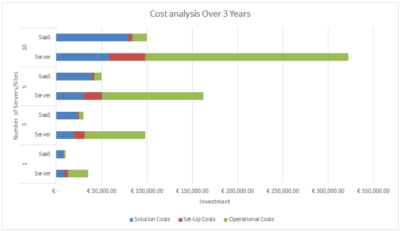
To illustrate the financial divergence, let’s model a 3-Year TCO for a hypothetical 5-person team needing a professional-tier feature set.
| Product | Year 1 TCO | Year 2 TCO (20% hike) | Year 3 TCO (20% hike) | 3-Year Total TCO | Key Cost Drivers |
|---|---|---|---|---|---|
| Intercom | $7,128 | $8,554 | $10,265 | ~$25,947 | Per-seat scaling, mandatory add-ons, renewal hikes. |
| Drift | $35,000 | $42,000 | $50,400 | ~$127,400 | Opaque quote, high implementation fees, annual lock-in. |
| ManyChat | $540 | $648 | $778 | ~$1,966 | Contact-tier jumps, SMS/WhatsApp overages. |
TCO estimates assume a 5-user team. Intercom model uses Pro plan + Product Tours add-on ($99/mo). Drift model includes a conservative $2,000 implementation fee. All models assume a 20% renewal increase, a common practice in the SaaS industry.
Hidden Costs & Pricing Gotchas
Intercom: Punitive for Growth
Intercom’s model is famous for gating key features, making it feel punitive for businesses as they grow.
- Costly Add-ons: Key features are gated as separate subscriptions. As of Q4 2024, their popular ‘Product Tours’ feature is an add-on with tiered pricing: an additional $99/month on the Pro plan and $249/month on the Premium plan, according to their official pricing page.
- Renewal Increases: Anecdotal user reports on forums like Reddit suggest that significant renewal price hikes can occur, a common practice in the SaaS industry that can create budget instability. Prospective customers should seek multi-year contracts or pricing caps to mitigate this risk.
- Overage Fees: Exceeding the “People Reached” limit on certain legacy plans can trigger unexpected fees, penalizing successful marketing campaigns.
As a software procurement analyst, I’ve seen renewal hikes sink budgets. User reports of significant increases for tools like Intercom are common. To avoid punitive price shocks in Year 2 and 3, always attempt to negotiate a renewal price cap (e.g., CPI + 2%) into your initial contract.
Drift: The Black Box
Drift’s lack of public pricing is a deliberate tactic to qualify leads and maintain ultra-premium price points, a major red flag for budget transparency.
- Opaque by Design: You cannot budget for Drift without engaging their sales process, as widely reported in G2 discussions on Drift’s pricing model.
- Mandatory Annual Lock-in: Drift does not offer monthly plans. You are locked into a full year with significant upfront payment, a massive financial risk.
- High Implementation Fees: Expect to pay thousands more for onboarding, with fees reportedly ranging from $2,000 to $10,000+ according to user reviews on G2.
ManyChat: The Variable Bill
ManyChat’s low entry price hides a variable cost model that can lead to surprises.
- Contact Tier Jumps: The $15/month price is for a small number of contacts. As your audience grows, the price can jump significantly and unexpectedly.
- Pay-as-you-go Channels: The most significant hidden cost in ManyChat’s pricing is for SMS and WhatsApp. These variable costs can easily exceed the base subscription fee after a successful campaign.
The “Free Trial” Trap
It’s crucial to understand the trial offers. Both Intercom and ManyChat offer free trials or freemium plans, but be aware that they often require a credit card and are designed to seamlessly convert you to a high-cost plan once limits are exceeded.
In contrast, Drift offers no free trial, forcing you into a sales call just to see the product. If you’re comparing Botphonic to these competitors, our full Botphonic Top Alternatives and Competitors breakdown also covers trial availability and onboarding friction across the whole shortlist.
Vendor Lock-In and Exit Costs
Choosing one of these platforms is a significant commitment. Migrating historical conversation data and rebuilding complex workflows is a major development effort. This high switching cost creates vendor lock-in.
Drift’s model, with its high upfront cost and mandatory annual contract, creates the most extreme and immediate form of financial lock-in. Before committing thousands to any platform, browse Latest Coupons across major SaaS tools to see which vendors are actively discounting new subscriptions.
Part 3: Feature Deep-Dive: AI, Automation & Analytics
A simple feature matrix is misleading. The real value lies in how well a platform executes on the features that matter for your specific use case. Here, we’ll analyze three core capabilities: AI, Automation, and Analytics.
AI & Intelligence: True Conversation vs. Content Assistance
The “AI” label is used loosely in this market, but the capabilities are worlds apart.
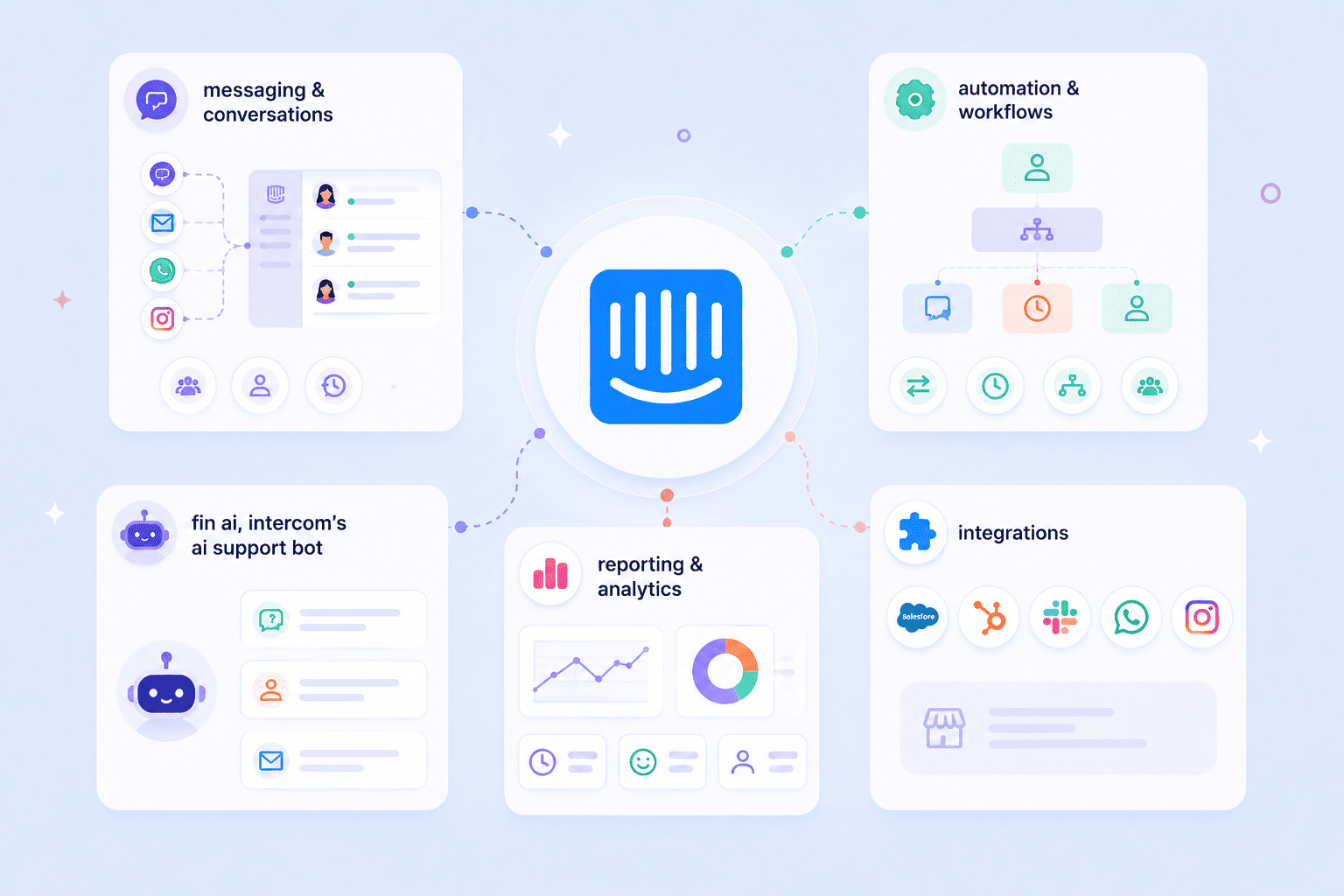
AI Capability Classification
- Engine Type: True conversational AI powered by GPT-4
- Primary Function: Understands user intent, holds unscripted conversations, and resolves complex support issues by referencing a knowledge base
- Best Use Case: Tech companies aiming to automate support at scale
✅ Strengths
- Genuinely understands intent, not just keywords
- Handles unscripted conversations with contextual awareness
- Knowledge base grounding reduces hallucination risk
- Vendor claim: up to 70% AI resolution rate on common questions
⚠️ Considerations
- Requires perfectly curated knowledge base for advertised performance
- Out-of-the-box resolution rate is significantly lower
- Setup requires 10–20 hours of admin work
- Premium pricing gates the best AI features
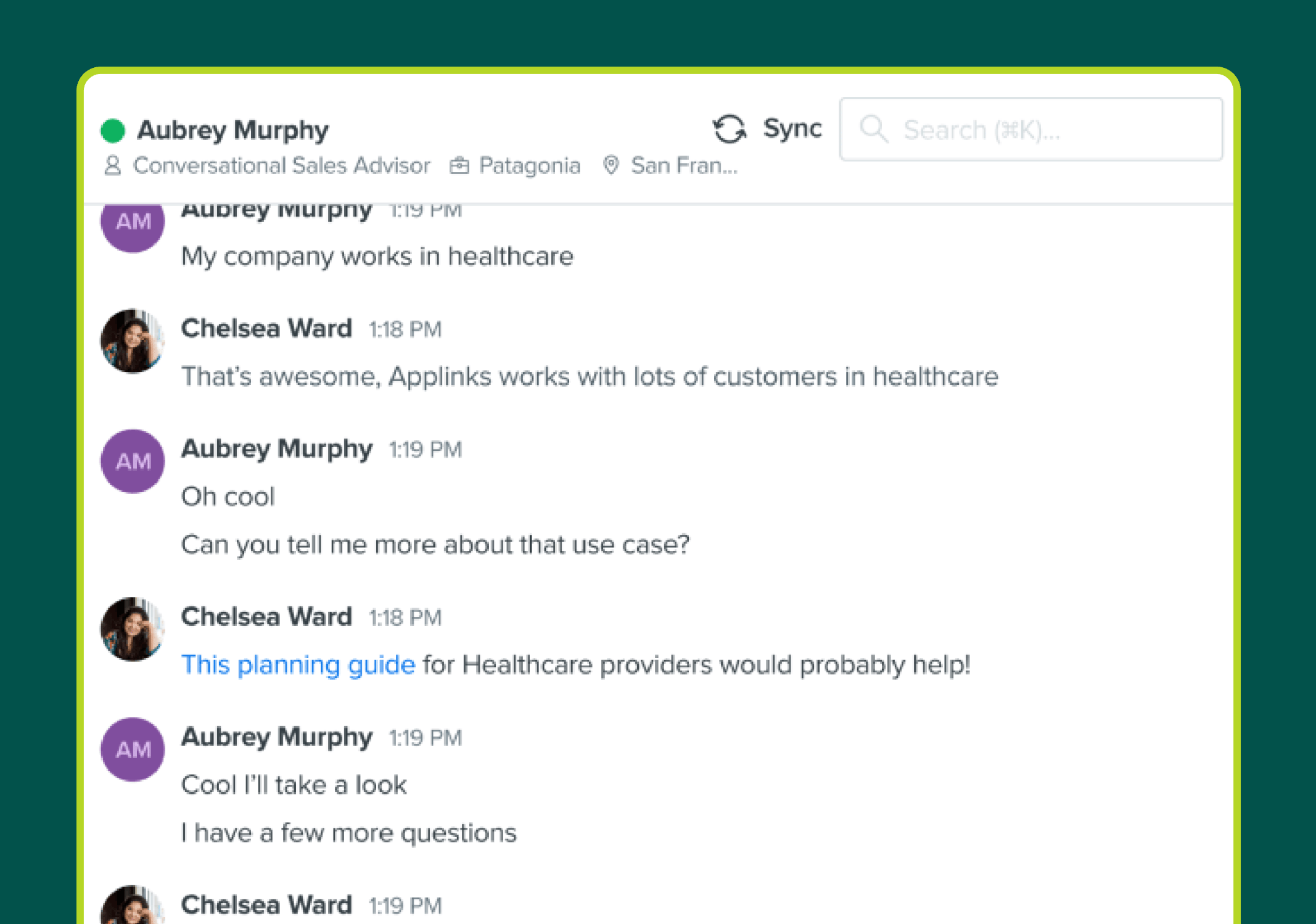
AI Capability Classification
- Engine Type: True conversational AI, hyper-focused on B2B sales
- Primary Function: Lead qualification and booking meetings
- Best Use Case: Excels at identifying high-value prospects from target accounts and routing them to the correct sales rep
✅ Strengths
- Purpose-built for booking qualified sales meetings
- Best-in-class native Salesforce integration
- Sub-2-second response speed (advertised)
- Deep ABM (Account-Based Marketing) capabilities
⚠️ Considerations
- Sales rep notification delays can create a leaky funnel
- Useless for post-sales customer support
- A/B testing options in Playbooks reportedly less flexible
- Playbooks are more rigid than Intercom’s Workflows
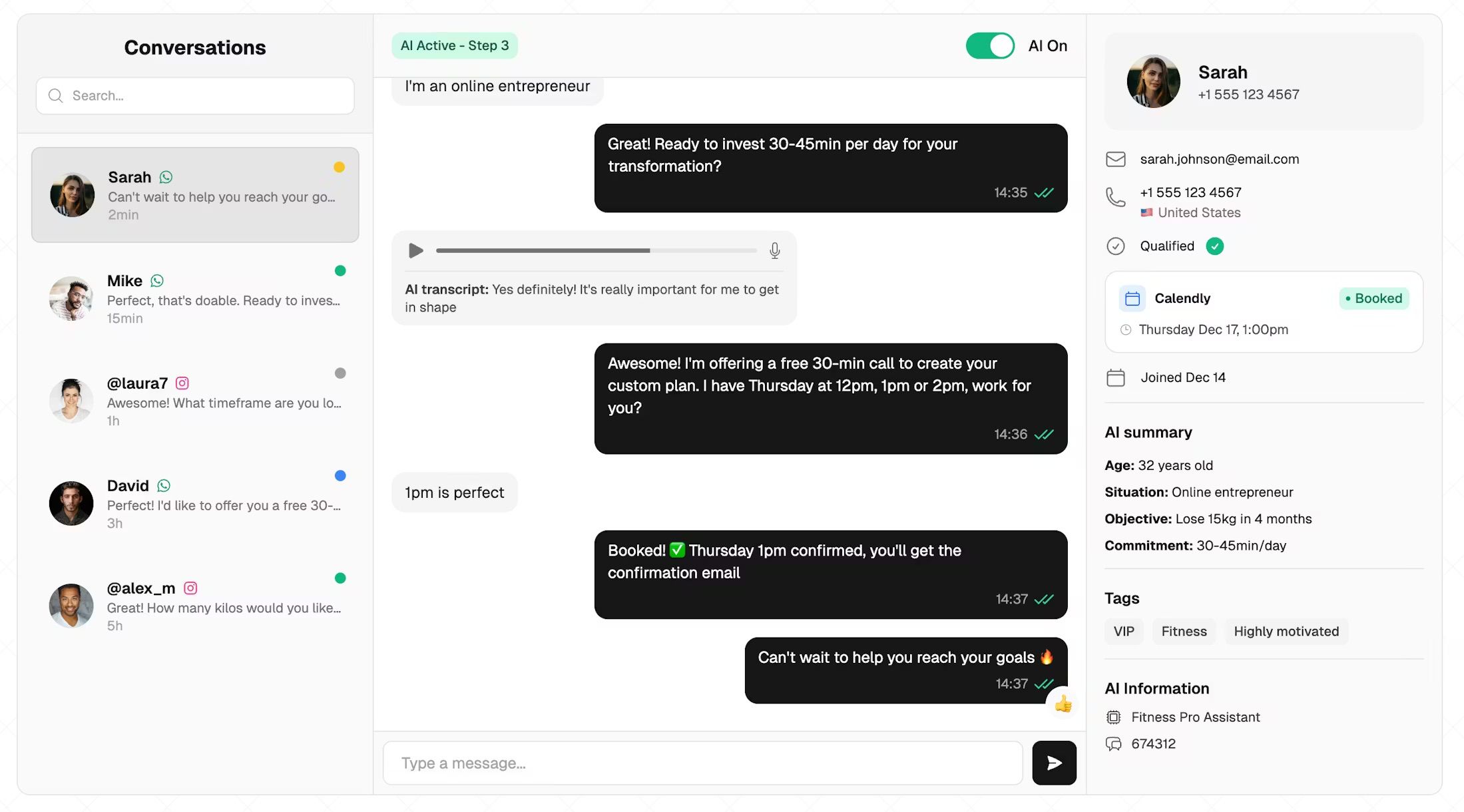
AI Capability Classification
- Engine Type: Rule-based flow builder with AI content generation assistant
- Primary Function: “AI Assist” is a content generator for writing copy within the bot builder — not a conversational AI
- Best Use Case: Automating pre-programmed Instagram and Facebook DM funnels for e-commerce
✅ Strengths
- Fastest time-to-value in the category (< 10 minutes)
- Intuitive visual flow builder for non-technical users
- Deep Shopify integration for e-commerce funnels
- Lowest entry cost of the three platforms
⚠️ Considerations
- Cannot understand intent or handle off-script conversations
- “AI” is a marketing label — the core engine is rules-based
- Critical dependency on Meta’s API stability
- No SOC 2 or ISO 27001 certification
Automation & Workflows: Flexibility vs. Simplicity
The automation builder is the heart of any chatbot platform.
- ManyChat is the undisputed winner for ease of use. Its visual flow builder is intuitive, allowing non-technical users to create complex social media funnels in minutes. It’s ideal for e-commerce brands automating Instagram DMs.
- Intercom offers powerful and flexible “Workflows.” These can handle complex, multi-channel logic for support, sales, and marketing. However, they come with a higher learning curve and require a dedicated admin to manage effectively.
- Drift uses “Playbooks,” which are more rigid and sales-focused than Intercom’s Workflows. Users report they are powerful for their intended purpose (qualifying leads) but lack the flexibility for other use cases. Furthermore, options for multivariate or A/B testing within Playbooks are reportedly less flexible than competitors.
Analytics & Reporting: What Gets Measured
Actionable data is crucial for proving ROI.
- Drift offers best-in-class reporting for its niche: B2B sales. It provides deep analytics on how conversations influence the sales pipeline, with metrics tied directly to booked meetings and revenue influenced, especially when connected to Salesforce.
- Intercom provides broad analytics across support, sales, and marketing. You can track metrics like response times, conversation volume, and AI resolution rates. However, achieving a clear picture of ROI can be more complex due to its all-in-one nature.
- ManyChat offers basic analytics focused on social media engagement: open rates, click-through rates, and subscriber growth. It’s effective for campaign-level tracking but lacks the deep business intelligence of Drift or Intercom.
Part 4: Critical Considerations: Security, Performance, and Limitations
In the YMYL context of business software, security, performance, and known limitations are not features; they are non-negotiable foundations for making a sound investment.
Security, Compliance & Trust: The Great Filter
For any business handling customer data, I consider SOC 2 Type II and ISO 27001 certifications to be the minimum table stakes.
Compliance Status Verification (Q4 2024)
| Certification | Intercom | Drift | ManyChat |
|---|---|---|---|
| SOC 2 Type II | ✅ Certified | ✅ Certified | ❌ NOT CERTIFIED |
| ISO 27001 | ✅ Certified | ✅ Certified | ❌ NOT CERTIFIED |
| HIPAA BAA | ✅ Available (Enterprise) | ❌ Not Available | ❌ Not Available |
| GDPR/CCPA | ✅ Compliant | ✅ Compliant | ✅ Compliant |
Intercom and Drift, to their credit, have invested in enterprise-grade security. For businesses in healthcare, only Intercom’s top-tier Enterprise plan offers a Business Associate Agreement (BAA) required for HIPAA compliance, allowing organizations to leverage its GPT-4 powered AI within a secure framework, according to its Intercom Trust Center documentation.
Performance & Reliability Reality
Vendor marketing is filled with impressive metrics, but the real story is found in user reviews and platform architecture.
| Metric | Vendor Claim | Independent Reality / User Reports |
|---|---|---|
| AI Resolution Rate | Intercom: “up to 70% of common support questions” | User reviews on G2 frequently state this is only achievable if the knowledge base is perfectly curated and maintained. Many users report the out-of-the-box rate is significantly lower without this effort. |
| Response Speed | Drift: “under 2 seconds” | ✅ The platform is generally fast. However, a common user complaint is a delay in the sales rep notification, which is the most critical part of the process. A 2-minute delay creates a leaky sales funnel and can mean a lost opportunity. |
| Platform Stability | ManyChat: (No advertised SLA) | Users on platforms like Capterra frequently report their automations temporarily break after Meta (Facebook/Instagram) updates its API. This highlights a critical platform dependency. |
The most significant performance risk lies with ManyChat. Building a core business process on a platform with no uptime SLA and a dependency on another company’s API is like building a house on a foundation you don’t own. If Botphonic is on your shortlist for the same use case, don’t forget to lock in a Botphonic promo code before comparing performance SLAs side by side.
Integration & Ecosystem Reality
A tool’s value is often determined by its integrations, but a deep integration is also a deep root, increasing switching costs.
- Intercom (Broad Ecosystem): Boasts a broad ecosystem with around 400 integrations listed in its App Store as of Q4 2024, aiming to be a central hub.
- Drift (Deep Sales-Stack Focus): Its best-in-class, native Salesforce integration is a core part of its value proposition, a focus that’s likely to deepen following its acquisition by Salesloft. Advanced customer segmentation and targeting in Drift rely heavily on data pulled from these deep CRM integrations.
- ManyChat (Social & E-comm Focus): Integrations center on social media and e-commerce, with a deep Shopify integration. It relies heavily on third-party platforms like Zapier and Make, creating fragile chains where a single point of failure can stop an entire workflow.
Known Issues & Limitations (The “Blind Spots”)
This is the list of deal-breakers that vendors hope you don’t discover.
Intercom’s Blind Spots
- “Jack of all trades, master of none”: It’s a powerful all-in-one but is rarely the best at any single thing. For pure support ticketing, Zendesk may be a better fit.
- Expensive and Punitive Scaling: The combination of per-seat pricing and expensive add-ons makes scaling costly.
Drift’s Blind Spots
- Useless for Customer Support: It fundamentally lacks features for post-sales support like ticketing or team inboxes.
- Opaque, Inflexible, and High-Pressure Sales: The lack of public pricing and mandatory annual contracts is hostile to SMBs.
ManyChat’s Blind Spots
- Enterprise Security Failure: The lack of SOC 2 or ISO certification is the most critical blind spot for any business with compliance needs.
- Weak, “Fake” AI: The “AI” is for content generation, not conversational intelligence. It cannot handle unscripted conversations.
Part 5: Use Cases & Adoption Workflows
A powerful tool that no one on your team uses is just expensive shelfware. User experience and adoption are critical factors in the true TCO of any software.
Learning Curve & Time-to-Value
- Fastest Time-to-Value: ManyChat is the undisputed winner. A non-technical user can get a functional bot running on Instagram in under 10 minutes.
- Highest Learning Curve: Intercom & Drift are complex platforms that require a dedicated admin and significant training. A PCMag review noted users should expect to spend 10-20 hours for the initial setup of Intercom’s Fin AI bot.
Workflow: Automating a Social Media Sales Funnel with ManyChat
For an e-commerce brand on Shopify, a typical ManyChat workflow is simple and powerful:
- Trigger: A user comments on an Instagram post about a new product.
- Automation: ManyChat automatically sends a DM to the user with a pre-written message like, “Thanks for your interest! Would you like 10% off this item?”
- Interaction: The user clicks a “Yes” button in the DM.
- Action: ManyChat sends a unique discount code and a direct link to the product page on their Shopify store.
- Result: This automated flow drives increased lead conversion from social channels directly into the sales funnel with minimal human effort.
The Reality of Support Quality
Across hundreds of G2 and Capterra reviews, a consistent theme emerges: support quality is directly tied to how much you pay.
- Intercom & Drift: Users on high-tier enterprise plans with a dedicated Customer Success Manager are generally satisfied. Lower-tier users report slow, generic, bot-driven responses, creating the frustrating irony of being “stuck behind a bot when trying to get help,” according to G2 support ratings.
- ManyChat: Official support is widely cited as slow. The primary source of timely help is the massive and active Facebook community, a testament to its user base but an indictment of its official support channels.
If you’re browsing the broader landscape, our library of Comparison articles covers head-to-head evaluations across dozens of other conversational AI and marketing platforms.
Part 6: Alternatives & Final Recommendations
After a deep, Devil’s Advocate analysis, the verdict is clear: there is no single “best” tool. The right choice is about picking the tool whose limitations you can live with.
While analyst firms like Gartner rank these tools in their Magic Quadrants, our ‘Zero-Loser’ matrix focuses on the practical use case where each platform is the undisputed champion.
Use Case Matrix: The “Zero-Loser” Rule
| Use Case | Best Choice | Why | Key Tradeoff |
|---|---|---|---|
| Enterprise B2B Sales Teams using Salesforce | Drift | Founded by David Cancel, its entire platform is purpose-built to achieve a shortened sales cycle by converting a marketing qualified lead (MQL) into a booked meeting in seconds. | You accept an extremely high TCO, mandatory annual lock-in, and a tool useless for post-sales support. |
| Maximizing Social Media Engagement on a Budget | ManyChat | It offers an unparalleled, easy-to-use visual builder for automating Instagram and Facebook DM conversations at a very low entry price. | You accept a complete lack of enterprise security, a weak AI, and a critical dependency on Meta’s platform. |
| Well-funded Tech Companies Needing a Unified Platform | Intercom | It provides a premium, all-in-one platform with a true conversational AI (Fin) and the best end-user experience via its polished messenger. | You accept a high and complex pricing model, a high learning curve, and a “jack of all trades, master of none” feature set. |
Detailed Recommendations & Prerequisites for Success
✅ Choose Intercom if…
- Your primary goal is a unified platform for support, sales, and marketing.
- You value a best-in-class end-user experience.
- Prerequisites for Success: A dedicated admin to manage its complexity, a content manager to curate the knowledge base for the Fin AI, and a budget that can absorb scaling costs.
⚠️ Avoid Intercom if…
you are a small business on a tight budget or need a simple plug-and-play solution.
✅ Choose Drift if…
- Your single, most important goal is to book more qualified meetings for your sales team.
- You live and breathe inside Salesforce and run an ABM strategy.
- Prerequisites for Success: A high-touch B2B sales process, deep integration with Salesforce or HubSpot, and a sales operations team to manage and optimize Playbooks.
⚠️ Avoid Drift if…
you are B2C, an SMB, need a tool for customer support, or require pricing transparency.
✅ Choose ManyChat if…
- Your business lives on Instagram and Facebook.
- Low cost and ease of use are your absolute top priorities.
- Prerequisites for Success: Your customer acquisition model is heavily reliant on social media engagement, and you have no enterprise security or data compliance requirements.
⚠️ Avoid ManyChat if…
you need a true conversational AI, require any level of security certification (SOC 2), or your primary business channel is your website.
Part 7: Conclusion & Frequently Asked Questions
My deep analysis reveals a clear verdict: these Botphonic alternatives are not true competitors; they are champions of their own niches.
The choice between Intercom, Drift, and ManyChat is a strategic commitment to a specific set of strengths and a tolerance for a specific set of flaws and financial risks.
Your decision should not be based on features, but on a strict evaluation of three factors: your budget reality, your non-negotiable security requirements, and your single most important use case.
Before you sign any contract—and before you even read a Forrester Wave™ report—demand a TCO projection. Ask for a copy of the SOC 2 report. Run a pilot program and track the impact on your key metrics as part of your conversion rate optimization (CRO) efforts.
The vendor’s job is to sell you software; my job as an analyst is to give you the framework to protect your business from a bad investment. And if Botphonic wins your evaluation, a current Botphonic voucher code can shave meaningful dollars off your first-year commitment.
Frequently Asked Questions
Q1: How do the costs of Botphonic’s competitors like Intercom, Drift, and ManyChat really compare in 2024?
A: The real cost is the Total Cost of Ownership (TCO), not the list price. Based on our analysis, a 3-year TCO for a small team can range from under $2,000 for ManyChat to a staggering $127,000+ for Drift. Intercom sits in a deceptive middle ground, with a TCO that can quickly balloon to ~$26,000 or more due to its expensive add-ons and per-seat scaling model. This massive divergence in cost is the single most important factor for most businesses when evaluating these platforms. The sticker price is an entry point; the TCO is the long-term reality.
Q2: Is ManyChat safe to use for a business?
A: For most businesses handling any customer data, the answer is no. Our analysis confirms that ManyChat lacks fundamental enterprise security certifications like SOC 2 Type II or ISO 27001, as is evident by their absence on their security or trust pages. This makes it an immediate disqualification for any company that handles sensitive customer information, operates in regulated industries like finance or healthcare, or has any significant compliance requirements. Using it for such purposes presents a major safety and professional risk, as it fails to meet standard vendor due diligence.
Q3: Is Drift worth the extremely high price?
A: Drift can be worth the price for a very specific use case: an enterprise B2B company with a high-touch sales process, a large budget, and a deep integration with Salesforce. If your primary goal is booking more qualified meetings for a large sales team and the high annual cost is not a deterrent, the ROI can be there. As reported by users on G2, the tool is purpose-built for this job. For almost any other type of business, it is an overpriced and inflexible option with more affordable and suitable alternatives available.
Q4: What is the main difference between Intercom’s AI and ManyChat’s AI?
A: The difference is massive. Intercom’s Fin AI is a true conversational AI, powered by models like GPT-4, designed to understand intent and have unscripted conversations to resolve customer issues from a knowledge base. In contrast, ManyChat’s “AI” is a simple content-writing assistant built into its flow builder. The core platform is a rule-based engine that cannot handle conversations outside of its pre-programmed script. It can help you write bot messages, but it cannot understand what a customer is trying to say in real-time.
Q5: Should I choose Intercom or Drift for sales?
A: It depends on your philosophy. Choose Drift if your one and only goal is booking meetings for a dedicated B2B sales team, and you want the best-in-class tool for that specific job, as noted by its tight integration with sales platforms like Salesforce. Choose Intercom if you want a broader, all-in-one platform that can handle sales, support, and marketing from a single tool, and you accept that it may not be the absolute best at any single one of those functions. Intercom provides flexibility, while Drift provides specialization.
Q6: What are the biggest pricing gotchas and hidden costs to watch out for with Intercom?
A: The biggest hidden costs with Intercom are the mandatory add-ons, the per-seat pricing model, and the renewal hikes. Key features like Product Tours are often separate, expensive subscriptions, with the add-on costing $99/month on the Pro plan. As you add more support or sales agents, your bill increases dramatically. Finally, anecdotal user reports on forums suggest significant price increases at renewal can occur, which can create budget instability if not addressed during initial contract negotiation. This combination makes long-term budgeting for Intercom a significant challenge.
Q7: Why is Drift’s pricing not public?
A: This is a deliberate tactic used by ultra-premium enterprise software vendors. It allows them to qualify leads (the “if you have to ask, you can’t afford it” principle), maintain extremely high and variable price points, and anchor the conversation on value rather than cost during their sales process. It is a major red flag for budget transparency and is a common point of frustration for prospective customers in public reviews. This approach is fundamentally hostile to SMBs or any organization that requires transparent, predictable budgeting.
Q8: Can I use Drift for customer support?
A: An emphatic no. Our analysis shows Drift fundamentally lacks the core features required for post-sales customer support, such as robust ticketing systems, shared team inboxes for support agents, and complex SLA-based routing. These features are standard in dedicated support platforms like Zendesk or even Intercom. Attempting to use Drift for customer support would be a frustrating and ultimately failed endeavor because the platform is not designed for tracking, managing, and resolving ongoing customer issues, only for initial sales conversations.
Q9: Should a small business use Intercom or Drift?
A: For most small businesses, the answer is likely no. My analysis concludes that both Intercom’s complex, punitive pricing and Drift’s extremely high cost and annual lock-in make them poor financial choices for SMBs with tight budgets. A small business would often be better served by starting with simpler, more affordable tools. This could mean using ManyChat for social media automation or exploring less expensive, support-focused live chat solutions like LiveChat before committing to the cost and complexity of these enterprise-grade platforms. The ROI is simply harder to justify at a smaller scale.