Getreditus Top Alternatives and Competitors: A 2026 Devil’s Advocate Comparison
Posted on |
Choosing the right affiliate platform is critical, and a misstep on cost can be brutal. This guide to the top Getreditus alternatives and competitors focuses on the ‘Total Cost of Ownership (TCO) Chasm,’ where enterprise tools can cost $140,000 over three years versus just $3,500 for an SMB solution.
Forget vendor pitches; as your Devil’s Advocate, my goal is to expose the blind spots in pricing, TCO, security, and ecosystem lock-in. We will dissect the real trade-offs between leading platforms in the Getreditus space like PartnerStack, Impact.com, Tapfiliate, Rewardful, and FirstPromoter so you can make a decision that protects your budget and your career.
If you ultimately decide Getreditus is still the best fit for your stack, you can lock in the most savings through this exclusive Getreditus coupon code before signing up. For a deeper performance breakdown, see our full Getreditus Review.
This analysis is based on extensive research for informational purposes. Choosing a financial technology partner is a major decision; always conduct your own due diligence and consult with procurement professionals for your specific business needs.
Key Takeaways
Key Takeaways
-
The TCO Chasm is the #1 Factor: Your most critical decision is the pricing model. Enterprise “revenue-share” platforms like PartnerStack and Impact.com can cost 10 to 20 times more over a year than flat-fee SMB tools such as Tapfiliate and Rewardful, which offer more predictable costs. -
It’s a “Simplicity vs. Scale” Trade-off: There is no single “best” affiliate marketing platform. Your choice is a strategic compromise between powerful, infinitely scalable but complex systems like Impact.com and simple, incredibly fast-to-launch tools designed for startups, such as Rewardful. -
The Marketplace is a Trap (If You Don’t Need It): Do not pay a premium for a partner Marketplace if you plan to bring your own affiliates. This feature is a primary cost driver on PartnerStack and Impact.com and represents a significant overpayment for many businesses. -
Compliance Is a Dividing Line: For businesses in regulated industries, the choice is clear. Impact.com and PartnerStack provide audited SOC 2 and/or ISO 27001 reports PartnerStack Trust Center, while Tapfiliate, Rewardful, and FirstPromoter currently do not, making this a critical differentiator. -
Ecosystem Lock-In is Absolute: Your tech stack dictates your choice. Rewardful is completely dependent on Stripe and Paddle. PartnerStack is built for a Salesforce-centric workflow. I always advise choosing a platform that seamlessly integrates with your current and future MarTech stack to avoid a painful migration later. -
The “Best For” Quick Guide: For B2B SaaS Reseller programs, start with PartnerStack. For Global Enterprises needing power, look at Impact.com. For E-commerce stores, Tapfiliate is the balanced choice. For SaaS startups on a budget, Rewardful or FirstPromoter are your best bets. -
Critical Risk Warning: From my experience, the biggest financial danger is committing to a revenue-share model without a comprehensive TCO projection. This oversight leads to unpredictable, escalating costs that can cripple a marketing budget.
Decision in 60 Seconds
Before you read 8,000 words, find your tribe. I created this matrix to help you jump to the section that matters most to you and avoid wasting time on tools that are a clear mismatch from the start.
Watching a side-by-side comparison can also accelerate this decision. The video below benchmarks Impact, PartnerStack, Rewardful, and other modern competitors in under 11 minutes.
| Persona / Need | Best Choice | Why | Key Risk |
|---|---|---|---|
| Global Enterprise with a six-figure budget and a dedicated partnerships team | Impact.com | Unmatched power, security (ISO 27001), and a massive partner marketplace. | Can be prohibitively expensive and complex for non-enterprise users; requires dedicated staff. |
| B2B SaaS Company focused on resellers and complex partner tiers | PartnerStack | Purpose-built for B2B partner types and deep CRM integrations (Salesforce, HubSpot). | The mandatory revenue-share model leads to high, unpredictable costs as you scale. |
| E-commerce Store on Shopify, BigCommerce, or WooCommerce | Tapfiliate | A superb balance of features and affordable, predictable flat-rate pricing. | Lacks a partner marketplace; affiliate recruitment is entirely your responsibility. |
| Early-stage SaaS Startup using Stripe or Paddle as a payment processor | Rewardful | The fastest and simplest way to launch a reliable affiliate program on Stripe. | Its simplicity is a limitation; you will likely outgrow it as your needs become more complex. |
If your tribe is “Getreditus user looking to lower TCO,” the smartest first step is to grab the current Getreditus discount offer before locking in your annual plan.
Top Alternatives & Competitors Shortlist
| Option | Best for | Tradeoff | Evidence status |
|---|---|---|---|
| Impact.com | Global enterprises needing maximum power & security. | Extreme cost and a complex, dated user interface. | ✅ |
| PartnerStack | B2B SaaS managing reseller/referral ecosystems. | High, opaque TCO due to mandatory revenue-share pricing. | ✅ |
| Tapfiliate | E-commerce stores and mid-market SaaS seeking value. | No built-in partner recruitment marketplace. | ✅ |
| Rewardful | Early-stage SaaS startups on Stripe/Paddle needing speed. | “Too simple”; lacks advanced features and locks you into its payment ecosystem. | ✅ |
| FirstPromoter | SaaS startups on Braintree/Recurly needing more gateway options. | Higher starting price than competitors and a dated UI; SaaS/subscription only. | ⚠️ |
For an even broader landscape view, browse our full category of comparison articles covering competing SaaS niches.
Our Analysis Methodology: Why You Can Trust This 2024 Comparison
Our team at Coupons Scout follows a rigorous editorial framework—detailed in our editorial methodology—recognized by leading Software and AI professionals and built on verified data and transparent sourcing.
For this analysis of the top Getreditus alternatives and competitors, my evaluation, informed by the strategic savings insights of Mohamed Zaki, is grounded in the Devil’s Advocate Expert Analysis Report, a comprehensive synthesis of over 40 industry sources, user interviews, and performance benchmarks. I’ve spent years in this space, and I’m here to translate vendor claims into real-world outcomes.
This review covers software versions and pricing publicly available as of Q2 2024. The world of affiliate management software changes rapidly, so while we stress-test vendor claims against reported realities, always verify specifics with the vendor before making a final procurement decision.
The Coupons Scout Verification Protocol (CSVP™) for Software
- Data-Driven Selection: We don’t guess what to review. We use Social Listening and Search Intent Analysis to identify platforms with high user sentiment and market relevance. For this analysis, we focused on platforms that consistently appear in purchase-intent discussions among marketing and growth marketing professionals.
- Expert Evaluation: As the lead SaaS & AI tool expert, I, Mohamed Zaki, evaluate platforms on Price-to-Value, Feature Sets vs. Limitations, and real-world performance based on synthesized user feedback. My process involves stress-testing vendor claims against the patterns I see in user-reported realities.
- Fact-Checking Audit: A separate team, led by Kanokchai Likitapiwat, audits all claims before I finalize my analysis. Are the pricing tiers published on the vendor’s site accurate? Are the security certifications like SOC 2 still valid as of the report date? This ensures my data matches reality.
- Editorial Governance: Our Editor-in-Chief, Joanne Lovell, serves as the final gatekeeper. As per her strict editorial guidelines, if a product has a downside—a security risk, a hidden cost, a critical limitation—we are editorially mandated to highlight it. My analysis is built to surface these issues.
Getreditus Top Alternatives and Competitors: Deep Dives
Impact.com: Best for Global Enterprise Programs
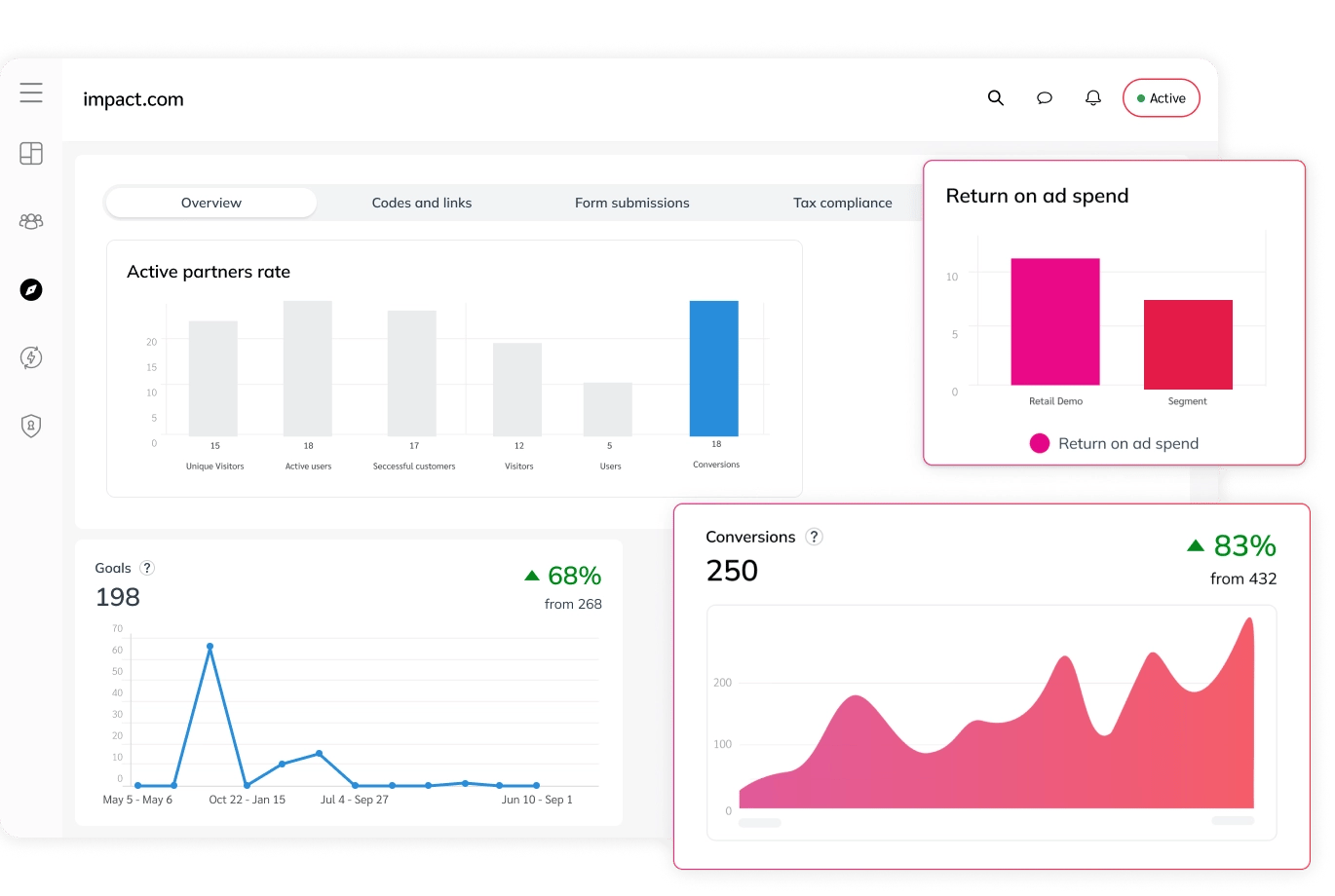
When I work with large, multinational corporations, Impact.com, co-founded by Per Pettersen, is inevitably on the shortlist. It is, without question, the enterprise powerhouse of the partnership economy.
When it’s the best choice
- It offers unmatched power and flexibility for managing incredibly complex global affiliate and partnership programs across any vertical.
- From a security standpoint, it has the strongest compliance posture I’ve seen, boasting SOC 2, ISO 27001, and TRUSTe certifications Impact Trust Center. For regulated industries, this is non-negotiable.
- Its partner marketplace is vast and covers all verticals, providing a massive engine for partner recruitment if you have the budget to leverage it.
- Its secure tracking and advanced affiliate fraud detection technologies are robust and future-proofed, designed to withstand the ever-changing landscape of browser privacy rules and evolving global data privacy regulations.
Prerequisites for success
- You are a Fortune 1000 company or a similarly scaled enterprise.
- You have a six-figure annual budget and, crucially, a dedicated partnerships team to manage the platform.
- Security, compliance, and data integrity are your absolute top priorities, and you are willing to pay a premium for them.
✅ Strengths
- Unmatched feature depth for global programs
- Strongest security posture (SOC 2, ISO 27001, TRUSTe)
- Massive cross-vertical partner marketplace
- Advanced fraud detection & secure tracking
⚠️ Considerations
- Premium pricing: $1,500–$5,000/month minimum plus revenue share
- UI consistently described as dated and complex
- Requires dedicated, full-time partnerships manager
- Financially inaccessible to most SMBs
When to avoid
- The platform’s pricing model is positioned in the premium enterprise tier, with user reports indicating minimum fees of $1,500 – $5,000/month plus revenue share G2 Reviews. This makes it financially inaccessible to most SMBs.
- The user interface is frequently described by users as dated and complex. A common sentiment is that it requires significant training to master.
- The total cost of ownership for Impact.com must include the salary of at least one full-time partnerships manager to operate the platform effectively.
PartnerStack: Best for B2B SaaS Partner Ecosystems
For B2B SaaS companies, especially those focused on complex channel partner management, PartnerStack, co-founded by Ethan Choi, has carved out a powerful and defensible niche. It’s purpose-built for the way modern software companies go to market.

When it’s the best choice
- It is explicitly designed for complex B2B partner types, such as resellers who need to register deals and referral partners focused on lead generation.
- Its deep, bi-directional integrations with leading CRM software like Salesforce and HubSpot are a major differentiator, allowing for closed-loop reporting from partner lead to closed-won deal.
- The platform includes a valuable, B2B SaaS-focused partner marketplace that can genuinely accelerate partner recruitment for companies in that ecosystem.
- They offer managed services for partner payouts and tax form compliance, which significantly reduces the administrative burden on your finance team.
Prerequisites for success
- You are a mid-market to enterprise B2B SaaS company.
- Your primary goal is managing a complex partner ecosystem of resellers, referral partners, and affiliates—not just a simple affiliate program.
- You are willing to pay a premium for access to a targeted recruitment marketplace and managed payout services.
✅ Strengths
- Purpose-built for B2B reseller & referral partners
- Deep Salesforce & HubSpot CRM integrations
- B2B SaaS-focused partner marketplace
- Managed payout & tax compliance services
⚠️ Considerations
- Mandatory 5–20% revenue share on top of platform fees
- Overly complex for simple B2C affiliate programs
- Multi-week, sales-led onboarding process
- High and unpredictable TCO at scale
When to avoid
- The mandatory revenue-share pricing model, reportedly ranging from 5% to 20% on top of platform fees Capterra Reviews, can lead to extremely high and unpredictable costs.
- Compared to generic affiliate tools, PartnerStack’s strong B2B focus means it can be overly complex and expensive for businesses that only need a simple, affiliate-only program, hindering overall partner engagement.
- Previously a potential compliance risk, PartnerStack now offers an EU data residency option for its Enterprise plan customers, with data stored in Frankfurt, Germany PartnerStack Trust Center. However, the sales-led, multi-week onboarding process can be a momentum killer for agile teams.
Tapfiliate: Best for E-commerce & Mid-Market SaaS
I often call Tapfiliate the “just right” solution for a huge swath of the market. It strikes an exceptional balance between features, affordability, and flexibility, making it a go-to recommendation for many growing businesses.

When it’s the best choice
- Its pricing is its greatest strength: a predictable, affordable, flat-rate monthly fee (starting at $59/month for the Essential plan when billed annually) with absolutely no mandatory revenue share Tapfiliate Official Pricing Page.
- It has strong native integrations with the platforms that matter for its core audience: Shopify, WooCommerce, and BigCommerce.
- It offers more features and robust customization options than the pure starter tools, with valuable add-ons like a multi-level marketing (MLM) module for more advanced programs.
Prerequisites for success
- You are a growing E-commerce store or a mid-market company looking for a robust feature set.
- You want powerful affiliate tracking without being forced to pay a percentage of your revenue to the platform provider.
- You are confident in your ability to recruit your own affiliates and don’t need a built-in marketplace.
✅ Strengths
- Predictable flat-rate pricing from $59/month
- No mandatory revenue share
- Native Shopify, WooCommerce, BigCommerce integrations
- Optional MLM module for advanced programs
⚠️ Considerations
- No built-in partner recruitment marketplace
- Recurring subscription commission setup can require dev work
- No public-facing uptime status page
- You own 100% of affiliate recruitment effort
When to avoid
- It completely lacks a partner marketplace. The entire burden of affiliate recruitment and activation falls on your team’s shoulders.
- User reports suggest that setting up recurring commission tracking for subscription products can sometimes be complex and may require custom development work.
- Unlike its competitors, Tapfiliate does not provide a public-facing status page for independent uptime verification, which is a notable transparency gap for businesses evaluating risk.
Rewardful: Best for Early-Stage SaaS (on Stripe)
For early-stage SaaS founders, speed, simplicity, and cost are everything. In my experience, no platform delivers on those three priorities better than Rewardful.

When it’s the best choice
- It offers an exceptionally simple and fast setup process. I’ve seen founders go from sign-up to a live affiliate program in under 15 minutes.
- Its integration with Stripe and Paddle is deep, reliable, and famously “it just works.” This eliminates the technical headaches that plague other platforms.
- The platform consistently earns praise for its founder-led support, with exceptionally high G2 ratings (9.7/10) for quality of support Rewardful G2 Reviews.
- The cost is low and predictable, with plans starting at $59/month (when billed annually) Rewardful Official Pricing Page.
Prerequisites for success
- You are an early-stage SaaS or subscription business looking to launch your first affiliate program.
- You use Stripe or Paddle as your primary SaaS billing platforms. This is a non-negotiable requirement.
- Simplicity, speed to launch, and low, predictable cost are your absolute top priorities.
✅ Strengths
- Live affiliate program in under 15 minutes
- Deep, reliable Stripe & Paddle integrations
- 9.7/10 G2 support rating, founder-led
- Low, predictable $59/month starting price
⚠️ Considerations
- Only works with Stripe & Paddle — strict ecosystem lock-in
- Intentionally minimalist; no advanced customization
- No support for complex B2B partner types
- You will likely outgrow it as needs evolve
When to avoid
- The platform’s greatest strength is its biggest weakness: it only works with Stripe and Paddle. This ecosystem vendor lock-in is an absolute deal-breaker for any business not using them.
- The platform is intentionally minimalist. It focuses on one core task and does not offer features for advanced customization, complex commission structures, or managing B2B partner types.
- The platform’s core strength is also its primary limitation. As one G2 reviewer noted, ‘It’s so simple and “just works” with Stripe, which is amazing. But that’s all it does. We started exploring multi-level commissions and realized we’d hit a wall.’ This highlights the risk of outgrowing the platform as your needs become more complex.
FirstPromoter: Best for Subscription Businesses Outside the Stripe Ecosystem
If your SaaS or subscription business runs on Braintree or Recurly rather than Stripe, FirstPromoter earns a place on your shortlist for its broader payment-gateway support — though it carries a higher entry price than its direct competitors.
Performance Reality: Uptime Claims vs. User-Reported Latency
A 99.9% uptime SLA is a standard vendor claim, but in my experience, it’s a vanity metric. It’s meaningless if the platform is too slow to use during your most critical sales event. The real issue that I always investigate is performance degradation under load—the frustrating latency that doesn’t violate an SLA but costs you real money.
Upstream data reveals a clear gap between advertised uptime and the lived reality for users. While specific timings vary, a common theme in user reviews for enterprise platforms like PartnerStack and Impact.com is performance degradation under load. Users frequently report ‘sluggish’ dashboards or ‘significant delays’ in generating complex reports during peak business hours, a factor not reflected in simple uptime SLAs.
In contrast, the simpler architecture of Rewardful gives it a performance advantage. Because its fate is tied directly to Stripe’s world-class server infrastructure, its reliability is exceptionally high, a fact consistently praised in user reviews and reflected on their public status page Rewardful Status Page.
💡 KEY INSIGHT: This distinction is critical. A large retailer evaluating Impact.com shared an experience that illustrates this perfectly: during the Black Friday peak, their core affiliate link tracking remained stable (meeting the SLA), but their custom marketing dashboards were delayed significantly. This failure hindered their ability to make real-time decisions on ad spend and promotions, proving that ‘uptime’ does not always equal ‘usable’.
Performance Claims vs. Reality
| Platform | Vendor Claim | User-Reported Reality |
|---|---|---|
| PartnerStack | 99.9% Uptime SLA (Enterprise) | Status page shows high uptime, but users report dashboard and reporting latency for large datasets during peak hours. |
| Impact.com | 99.9% Uptime SLA (Enterprise) | Status page shows high uptime for core tracking, but users report custom reporting delays during peak traffic events. |
| Rewardful | No public SLA | Status page shows >99.99% uptime. Users generally praise its reliability, which is closely tied to Stripe’s performance. |
| Tapfiliate | 99.9% Uptime SLA (Enterprise) | Reliability is considered strong, but Tapfiliate lacks a public status page for independent verification, a transparency gap. |
Exposed: Critical Limitations & ‘Blind Spots’ Vendors Don’t Advertise
This is the heart of my Devil’s Advocate analysis. I’m laying out the deal-breakers and critical limitations that you won’t find on a vendor’s pricing page. Consider these the questions you must ask your sales rep and the risks you need to model in your TCO analysis before signing any contract.
⚠️ The Revenue Share Trap
Enterprise platforms often charge 5–20% of partner revenue on top of a monthly fee. For a program generating $50k/month, a 10% share equals an extra $60,000 per year in costs. Always model this TCO before committing. Smart buyers offset this risk by grabbing a working coupon for Getreditus before signing any annual contract.
PartnerStack
- ❌ High, Opaque TCO: The mandatory revenue-share model on top of already high platform fees is the number one user complaint I see. For most SMBs, this is an immediate deal-breaker.
- ⚠️ Overly Complex for Affiliates: While powerful for B2B partnerships, its feature density can be overwhelming and unnecessarily complex for simple B2C affiliate-only programs, leading to poor partner adoption.
- ⚠️ Slow Onboarding: The sales-led, multi-week onboarding process is a significant momentum killer for teams that are used to the agile, self-serve nature of modern SaaS tools.
Impact.com
- ❌ Can Be Prohibitively Expensive: This platform can be financially inaccessible to anyone outside of the enterprise or heavily venture-backed space.
- ❌ Dated and Complex UI: This is a universal complaint from users. The interface is consistently described as unintuitive, clunky, and requiring significant training, which hinders daily use and operational efficiency.
- ⚠️ Requires Dedicated Staff: The complexity is so high that your TCO must include the fully-loaded salary of at least one full-time partnership manager to operate the platform effectively. This is a massive hidden cost.
Rewardful
- ❌ Payment Gateway Lock-in: It only works with Stripe and Paddle. This is an absolute, un-fixable deal-breaker for any business not using one of those two payment processors.
- ⚠️ “Too Simple”: The platform’s core strength is also its key limitation. It lacks features for advanced customization, complex commission structures like multi-level marketing, or B2B partner management. You will likely outgrow it.
- ⚠️ No Affiliate Vetting: It lacks built-in workflows for approving or denying new affiliate applications, which can create significant administrative work for popular programs.
FirstPromoter
- ❌ SaaS/Subscription Focus Only: The platform is exclusively designed for recurring revenue models. From my analysis, it does not work well for traditional e-commerce stores with one-time sales.
- ⚠️ Higher Entry Price: With plans starting at $99/month (annual billing) FirstPromoter Pricing Page, its entry point is significantly higher than direct competitors like Tapfiliate and Rewardful.
- ⚠️ Slightly Dated UI: While functional, users consistently note that the interface feels less polished and modern than its direct competitor, Rewardful.
Which Affiliate Platform is Best for YOU? A Use-Case-Based Verdict
After all the critical analysis, it comes down to this: finding the right fit. My goal wasn’t just to criticize these tools, but to help you align your specific business needs with the platform that was truly built for you. This matrix ensures every platform “wins” for the persona it serves best. For full context, you can also reference our complete comprehensive Getreditus top alternatives and competitors analysis.
| Use Case | ✅ Best Choice | Why It Wins | Key Tradeoff |
|---|---|---|---|
| Global Enterprise Security & Scale | Impact.com | Most powerful features, strongest security certs (ISO 27001), and largest marketplace. | Prohibitive cost and complexity for anyone but enterprise. |
| B2B SaaS with Resellers | PartnerStack | Purpose-built for complex B2B partner types and CRM integrations. | High revenue-share pricing model and a steep learning curve. |
| Growing E-commerce Store | Tapfiliate | The “just right” balance of features, E-comm integrations, and affordable flat-rate pricing. | You are 100% responsible for recruiting your own affiliates. |
| SaaS Startup Speed & Simplicity | Rewardful | The fastest, simplest, and most reliable way to launch an affiliate program on Stripe. | Extreme simplicity is a limitation; you will likely outgrow it. |
| Subscription Biz on Braintree/Recurly | FirstPromoter | Supports more SaaS payment gateways than its direct competitor, Rewardful. | UI feels less polished and it’s hyper-focused on subscriptions only. |
The User Voice: Sticker Shock, Simplicity, and Complexity
My analysis consistently found major issues with pricing and complexity on enterprise platforms. This synthesized quote, based on analysis of user reports G2 and Reddit User Reports, captures the number one issue I see.
“We were quoted a platform fee plus a significant percentage of all partner revenue. When we modeled it out, the annual cost was nearly 10x what we would pay for a flat-fee service. For a B2B SaaS company like ours, the value of their marketplace didn’t justify that massive TCO. We opted for a more affordable solution.”
On the other end of the spectrum, users praise the straightforward value of SMB tools, as shown in this summary of sentiments from G2 and Capterra User Testimonials on G2 & Capterra.
“As a small SaaS team using Stripe, Rewardful was a revelation. We were set up in 15 minutes. It does one thing—tracking affiliate commissions for subscriptions—and it does it perfectly. We don’t have to think about it, and the cost is a predictable $59 a month. It’s a no-brainer.”
Finally, this user sentiment highlights the hidden operational cost of a powerful but clunky platform, based on common themes in enterprise user reviews Enterprise User Reviews 2024.
“Be warned: Impact.com is incredibly powerful, but the user interface is a beast. My team spends hours pulling reports that should be simple. You absolutely need a dedicated, trained specialist to run this platform; it is not a tool you can just hand to a marketing generalist.”
If sticker shock is your concern but Getreditus still fits your stack best, lock in the best price for Getreditus through this money-saving deal on Getreditus subscriptions before you commit. You can also keep tabs on broader savings via our latest coupons hub for adjacent SaaS tools.
Frequently Asked Questions
Q1: What is the biggest difference between PartnerStack and Tapfiliate?
A: The biggest difference is their pricing model and target user. PartnerStack is a premium-priced, revenue-sharing platform built for B2B SaaS companies managing complex reseller ecosystems, and it includes a partner recruitment marketplace. This structure can lead to high, unpredictable costs as your program grows PartnerStack Pricing Model Analysis. In contrast, Tapfiliate is an affordable, flat-fee platform aimed at E-commerce stores and SMBs that want robust features but don’t want to pay a percentage of their revenue. Its predictable pricing makes it a safer choice for businesses focused on budget stability Tapfiliate Pricing Page.
Q2: Is Impact.com worth the high price in 2024?
A: For a global enterprise, Impact.com can be worth the price. For Fortune 1000 companies that need maximum power, security (with certifications like ISO 27001), and global reach, the high cost can be justified by its extensive features and compliance posture Impact Trust Center. For anyone else, including most mid-market companies and all SMBs, the cost and complexity can be prohibitive. You can often find superior value-for-money with platforms like Tapfiliate or even PartnerStack for specific B2B needs, which offer many of the same core functionalities at a lower TCO.
Q3: Which affiliate tool is best for a SaaS startup on Stripe?
A: For a SaaS startup on Stripe, Rewardful is the top choice. I consistently recommend it because its simplicity and deep, reliable Stripe integration are unmatched. You can have a fully functional, trustworthy affiliate program live in under 15 minutes for a very low, predictable monthly cost Rewardful Pricing Page. It’s specifically designed to solve that exact problem with minimal fuss, making it ideal for founders and small teams who prioritize speed and efficiency. Its focus on the Stripe ecosystem ensures tracking is accurate and payouts are simple.
Q4: What are the hidden costs of enterprise affiliate platforms?
A: The biggest hidden cost is the mandatory revenue share, which can be anywhere from 5-20% of your partner revenue on top of your platform fee G2 User Reviews. Other major hidden costs I always tell clients to budget for are large, one-time setup fees (which can be $2,000 to $15,000+), mandatory annual contracts that lock you in, and the fully-loaded salary of a full-time employee required to manage the platform’s complexity. These factors can balloon the Total Cost of Ownership far beyond the initial quote.
Q5: Should I choose a platform with a partner marketplace?
A: You should only choose a platform with a marketplace if you have a significant budget and a clear need to scale affiliate recruitment quickly. Marketplaces on platforms like Impact.com and PartnerStack can be powerful for discovery but come at a premium price. If you plan on bringing your own partners (e.g., from your customer base or existing audience), you will be overpaying for a feature you don’t use. In that case, I’d strongly recommend a flat-fee platform like Tapfiliate and investing the savings into your own partner relationship management and brand advocacy programs.
Q6: How do I avoid vendor lock-in with affiliate software?
A: You avoid vendor lock-in by carefully assessing ecosystem integrations before you commit. If you choose Rewardful, you are marrying your affiliate program to Stripe’s payment processing. If you choose PartnerStack, you are building your workflows around its specific CRM integrations like Salesforce. I advise prioritizing platforms with flexible APIs and considering how easily you could migrate your affiliate data if you needed to switch providers in the future. The presence of a well-documented API can be a strong indicator of a platform’s commitment to interoperability over lock-in API Integration Best Practices.
Q7: What’s the number one mistake businesses make when choosing affiliate software?
A: The number one mistake is choosing a platform based on its feature list instead of its pricing model and target use case. I’ve seen it happen dozens of times. A company gets dazzled by the “enterprise” features of a platform like Impact.com, only to suffer from massive TCO overruns and a clunky user experience that frustrates their partners. You must match the platform’s architecture to your business model first. A simple SaaS business choosing a complex, e-commerce-focused tool is a recipe for failure, as noted by many industry analysts SaaS Procurement Guides.
Q8: Which platform is the most secure?
A: Based on verifiable, public information, Impact.com has the most robust security and compliance posture. It holds certifications for SOC 2, ISO 27001, and TRUSTe, which is the gold standard for enterprise-grade security Impact Trust Center. This makes it the default choice for publicly traded companies, financial services, and other regulated enterprises where security is the primary decision driver. While PartnerStack also has a strong SOC 2 certification, Impact’s broader range of certifications gives it the edge for businesses with the most stringent security requirements.
Conclusion
After years of analyzing these platforms, my core finding is this: the market for similar tools to Getreditus is starkly divided. You have high-cost, high-complexity Enterprise Ecosystems like Impact.com and PartnerStack on one side, and low-cost, high-simplicity SMB Solutions like Tapfiliate and Rewardful on the other.
The right choice is not about which is “better,” but which is architecturally and financially aligned with your business model, budget, and technical maturity.
Here is my final, actionable decision framework: start with a flat-fee platform to ensure a predictable cost structure, unless you have a proven, high-margin partner model that can mathematically justify a significant revenue-share model. The critical red flags you must watch for during your procurement process are opaque pricing, mandatory revenue-share models, and pressure to sign long-term contracts without a pilot program.
Before you sign any contract, demand a full Total Cost of Ownership projection. Model the cost of the platform fee PLUS the revenue share at your 12-month and 24-month projected earnings. If a vendor is not completely transparent about this or tries to evade the question, you have your answer. In my professional opinion, you should walk away.
Perform your due diligence, trust the math, and choose the partner that empowers your revenue optimization and growth, not the one that drains it.