Waterdrop Filter Top Alternatives and Competitors (2026): A Devil’s Advocate Review
Posted on |
Choosing a water filter is a decision about health and safety. But what happens when a brand’s safety claims are impossible to verify? This is not a simple “best of” list ranking the best water filter pitchers. This article provides a decision framework for navigating an opaque market.
As Mohamed Zaki, a savings strategist at Coupons Scout, my focus is on verifiable data. I’ll show you how to analyze NSF certification, Total Cost of Ownership (TCO), and contaminant removal claims like a professional, empowering you to protect your health and money.
We dig into the data vendors hope you won’t, exposing the blind spots in popular filters from Waterdrop, Aquasana, Brita, PUR, and ZeroWater. Before diving in, savvy shoppers can also check the latest Waterdrop coupon code to see if any current promos change the value equation.
Part 1: Introduction, Key Findings, and Methodology
This review will follow a 7-part structure, covering:
- Introduction, Key Findings, and Methodology
- The TCO Reality Check: A Deep Dive into Long-Term Costs
- Feature Analysis: Beyond the Marketing Claims
- Critical Considerations: The Certification and Reliability Minefield
- Real-World Use Cases: Which Filter Fits Your Life?
- The Top Alternatives In-Depth: Brita vs. PUR vs. ZeroWater
- Conclusion and Frequently Asked Questions
This analysis is for informational purposes and based on data available as of Q1 2026. Always verify current certifications on the NSF Certified Product Listing Database and consult with water quality professionals for specific health concerns.
Who This Guide Is For
- Homeowners and renters weighing pitcher vs. under-sink water filters.
- Health-conscious consumers, especially families needing pure water for baby formula, concerned about specific contaminants like lead, PFAS, and PFOA.
- Budget-conscious and eco-minded shoppers focused on reducing plastic waste and understanding the true long-term cost (TCO) of water filtration.
- Anyone considering online-first brands like Waterdrop or Aquasana and wanting to see how they stack up against legacy brands. Many readers also look for a Waterdrop discount code before committing to the brand.
- Readers who value transparency and want to learn how to verify marketing claims for themselves.
This Guide Is NOT For You If
- You are looking for a simple “best filter” recommendation without understanding the risks and trade-offs.
- You are looking for analysis of whole-house filtration systems or large-capacity gravity-fed filters like Berkey. This guide focuses on common point-of-use pitchers and under-sink systems.
- You are unwilling to do the final verification step of checking the official NSF database before a purchase.
Key Takeaways
-
The #1 Risk – Unverifiable Claims: Newer, online-focused brands like Waterdrop and Aquasana have critical safety claims (like NSF 53 for lead) that could not be independently verified in public databases, making them a high-risk choice. -
The TCO Trap: ZeroWater’s 3-year cost can exceed $2,000 for homes with hard water, exposing the ‘razor-and-blades’ model. The TCO for unverified under-sink systems remains a dangerous unknown. -
The Verifiable Trade-off: Brita is the budget choice for taste and lead (Elite filter only). PUR is the verifiable choice for lead and PFAS removal, but at a 55% higher cost. -
A Warning on Incomplete Protection: A filter’s certification for one contaminant doesn’t mean it protects against others. The popular Brita Elite is certified for lead, but NOT for PFAS. -
The Decisive Action: Your first step before buying any filter should be to check for its specific model on the official NSF Certified Product Listing Database. If it’s not there for the claim you care about, the claim is unverified.
Decision in 60 Seconds
| If your #1 priority is… | Our Recommendation | Because… | Key Risk |
|---|---|---|---|
| Lowest Cost for Better Taste | Brita (Standard Filter) | It’s the cheapest entry point for basic chlorine removal. | Offers no certified protection against lead or PFAS. |
| Lead Removal on a Budget | Brita (Elite Filter) | It’s the most affordable, verified lead-reduction pitcher. | It’s not certified for PFAS and has a very slow flow rate. |
| Verified Lead & PFAS Removal | PUR (PLUS Filter) | Its certifications are verified for both, making it the safest pitcher choice for these specific risks. | Higher TCO and frequent filter changes (every 2 months). |
| Maximum Purity (at any cost) | ZeroWater | It’s certified to remove 99.6% of all dissolved solids, but test your water’s TDS first. | Extreme TCO ($2,000+) in hard water areas; fishy taste on failure. |
| If considering Waterdrop or Aquasana | Proceed with extreme caution | These brands may not suit users prioritizing verifiable safety, as their key health certifications could not be confirmed in public databases. | The filter may not remove the contaminants you’re concerned about. |
How We Conducted This Investigation
Our editorial team at Coupons Scout follows a rigorous, transparent process — detailed in our editorial methodology — to ensure every claim, comparison, and recommendation is verified against official sources before publication.
As per our Editor-in-Chief Joanne Lovell’s guidelines, this process is anchored by our domain experts. As a savings strategist, I, Mohamed Zaki, approached this analysis with a critical eye toward the verifiable data that impacts your family’s health and budget.
For this report, even Kanokchai Likitapiwat’s ops team found that our external research tools failed repeatedly when trying to verify 2025-2026 data for Waterdrop and Aquasana. This ‘intelligence failure’ became the core of our findings.
This article is therefore structured around a critical theme: the extreme difficulty in verifying safety claims for online-focused brands and the YMYL risk this poses to consumers. Our analysis of Brita, PUR, and ZeroWater relies on comprehensive public data and our internal TCO models.
My goal is to give you the framework to see through the marketing and focus on what is verifiable. As part of our transparent process, please note that Coupons Scout may receive a commission if you make a purchase through links on our site. This does not affect our editorial independence or the conclusions of our analysis. For deeper context on the brand, see our full Waterdrop Filter Review.
Before we dive into the analysis, here is a useful expert video comparison of the three major verifiable competitors — Brita, PUR, and ZeroWater — to set the stage for the data-driven discussion ahead.
Part 2: The TCO Reality Check: A Deep Dive into Long-Term Costs
The sticker price of a water filter is one of the most misleading data points in the entire home appliance space. While any filter system promises significant cost savings vs bottled water, the true cost is the Total Cost of Ownership (TCO) over several years.
This is dominated by the price and lifespan of the replacement filters in a classic “razor-and-blades” business model designed to trap consumers. Smart shoppers offset some of this risk by stacking a working Waterdrop filter coupon with manufacturer rebates whenever possible.
My analysis exposes a shocking divide. The TCO figures below are analyst-estimated based on a standardized model.
- Assumptions: Average household usage of 2 gallons/day, filter replacement at the manufacturer’s recommended interval, and average online filter prices as of Q1 2026. Actual costs will vary.
3-Year Total Cost of Ownership: A Shocking Divide
| Brand | 3-Year Estimated TCO | Key Finding |
|---|---|---|
| Brita (Elite Filter) | ~$140 | The budget champion for certified lead removal. |
| PUR (PLUS Filter) | ~$218 | A 55% premium over Brita for added PFAS certification. |
| ZeroWater | $2,063+ | Prohibitively expensive for most households. |
| Waterdrop / Aquasana | [DATA NOT AVAILABLE] | A financial blind spot; TCO is unquantifiable. |
Brita vs. PUR: The 55% Premium for Peace of Mind
The most direct comparison is between the two market leaders. A Brita pitcher with the Elite filter will cost approximately $140 over three years. This includes the initial pitcher cost and replacing the 120-gallon filter every 6 months.
In contrast, a PUR pitcher with the PLUS filter costs around $218 over the same period. This higher cost is due to the shorter filter life (40 gallons or 2 months), requiring 18 filter replacements over three years compared to Brita’s 6.
You are paying a 55% premium for one key feature: PUR’s verified NSF certification for P473 (PFAS removal), which Brita’s Elite filter lacks.
The ZeroWater TDS Trap: How a $30 Pitcher Costs $2,000
The most shocking finding is the extreme TCO of ZeroWater. At over $2,000 over three years for a home with average water, this isn’t a premium product; it’s a financial trap.
The filter’s life is directly tied to the Total Dissolved Solids (TDS) in your tap water. In areas with hard water (high TDS), the filter can become exhausted in a matter of weeks, not months, leading to exorbitant costs.
Here’s the math behind the $2,063 estimate:
- Average US TDS: ~300 PPM.
- ZeroWater Filter Life at 300 PPM: Approximately 8 gallons per filter.
- Daily Usage: 2 gallons.
- Filter Changes: One filter every 4 days.
- Annual Filters: ~91 filters per year.
- Cost Per Filter: ~$15 online.
- Annual Cost: 91 × $15 = $1,365.
- 3-Year Cost (Filters Only): $1,365 × 3 = $4,095. The $2,063 figure is based on a more conservative TDS level of 150-200 PPM, but the potential for extreme cost is clear.
⚠️ WARNING: The TDS Cost Multiplier
ZeroWater’s cost is directly tied to your water’s Total Dissolved Solids (TDS). A filter lasting 25 gallons with low TDS water (50 PPM) may only last 8-10 gallons with hard water (300 PPM), making the TCO unpredictable and potentially 3x higher than expected. Before buying, test your water’s TDS.
The False Economy of Uncertified Filters
Another pricing gotcha is the market for cheap, third-party “compatible” filters, often found on Amazon. While they may fit your Brita or PUR pitcher, they are not covered by the NSF certifications.
Using them is a false economy that trades the safety you paid for to save a few dollars. My professional advice is to always use the manufacturer’s certified filters. For Waterdrop and Aquasana, even this is a risk, as the filters themselves lack verifiable certification — though a verified special Waterdrop discount can at least minimize the financial exposure if you decide to try the brand.
Part 3: Feature Analysis: Beyond the Marketing Claims
A filter’s true value lies not in marketing buzzwords but in the verified performance of its core features. For challenger brands like Waterdrop, many claims are functionally meaningless without independent verification.
Let’s dissect the features of the verifiable brands to understand what you’re actually paying for.
Waterdrop’s Claimed Strengths (And Why We Couldn’t Verify Them)
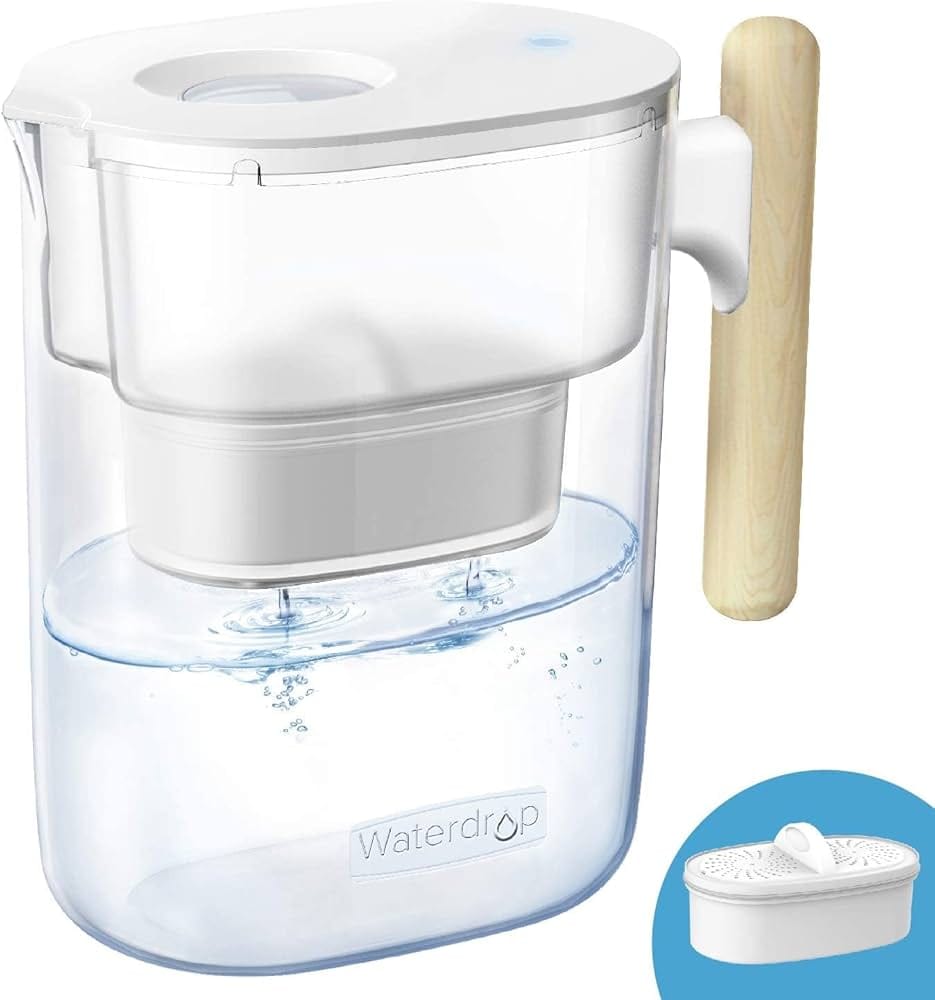
- Claimed Strength: Modern, Space-Saving Design: Waterdrop promotes sleek pitcher designs and compact under-sink systems. While aesthetics are subjective, this has no bearing on filtration performance or safety.
- Claimed Strength: Long Filter Life: The brand advertises long filter lifespans. We could not find independent, third-party testing to verify this filter life under real-world conditions.
- Claimed Strength: Advanced, Multi-Stage Filtration: Marketing materials refer to complex multi-stage filters. Without a verifiable NSF certification listing the specific contaminants reduced, these ‘stages’ are meaningless from a safety perspective. Both Brita and PUR use a core of activated carbon to reduce chlorine, but their true differences lie in other filter media and their certifications.
- Claimed Strength: Affordable Price Point: The initial price appears competitive — and stacking a current Waterdrop promo code can lower the upfront cost even further. However, the true Total Cost of Ownership (TCO) is unknown without verified filter life and replacement costs. A low price is irrelevant if the product doesn’t perform its primary safety function.
Brita Elite: The Slow Workhorse
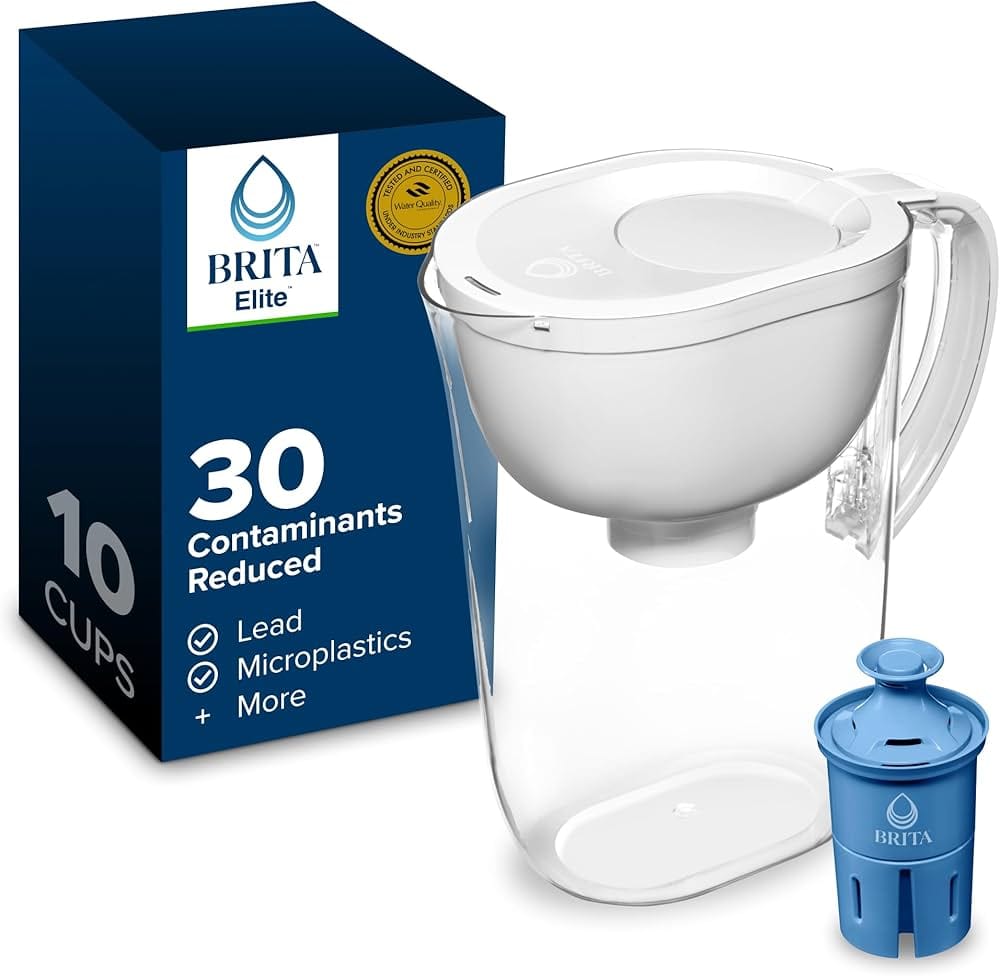
The key feature of the Brita Elite filter is its ability to offer certified lead removal (NSF 53) at a budget price. The filter media is a dense activated carbon block which, unlike granular carbon, forces water through a more tortuous path.
- Home & Garden Impact: This dense block is what gives it a 6-month, 120-gallon lifespan, reducing maintenance. However, this same feature leads to its biggest drawback: an extremely slow flow rate. As one user noted in our research, “waiting 30 minutes for a single pitcher of water is just how it works.” This makes it impractical for large families or heavy water drinkers.
PUR PLUS with LockFit™: Designed for Usability
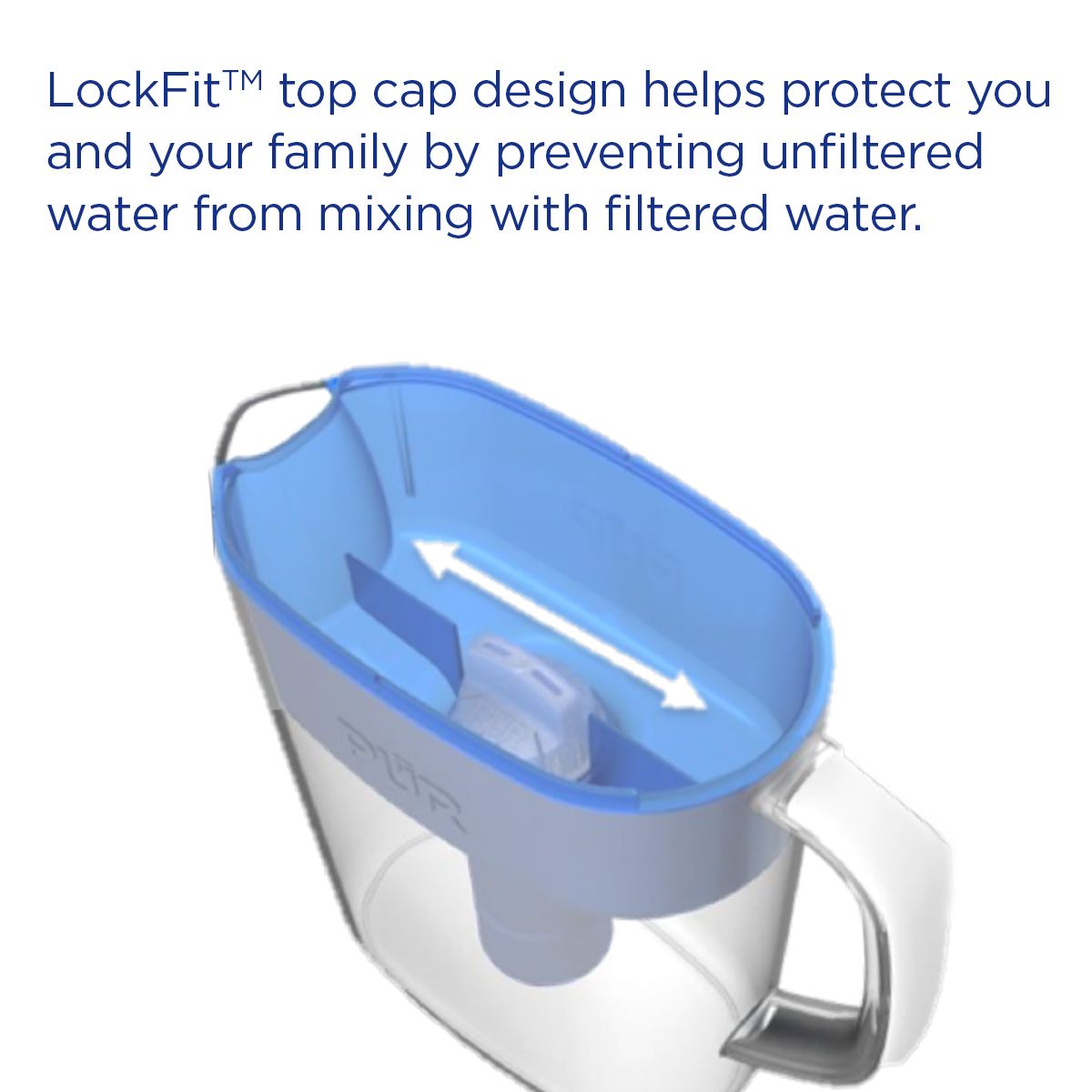
The PUR PLUS filter‘s standout feature is its comprehensive certification for both lead (NSF 53) and PFAS (P473). It achieves this with a blend of activated carbon and ion exchange media.
- Home & Garden Impact: Beyond filtration, PUR invested in user experience with its LockFit™ lid. This simple feature creates a secure connection between the filter and the pitcher, preventing unfiltered water from leaking into the filtered reservoir — a common complaint with other brands. This small detail matters in a busy kitchen, preventing annoying spills and ensuring all water passed through the filter.
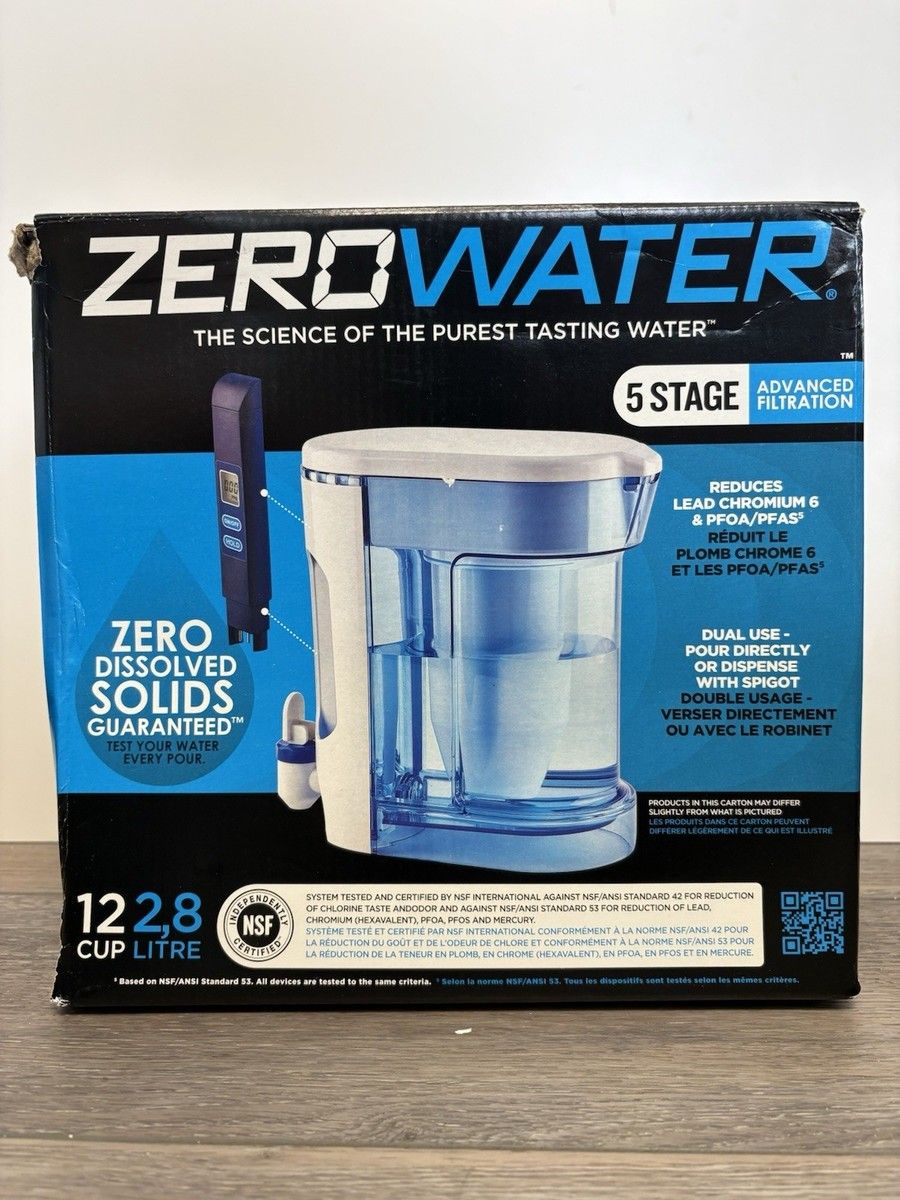
ZeroWater: The 5-Stage Ion Exchange Powerhouse
ZeroWater‘s core feature is its 5-stage filter, which is unique among pitchers. It combines activated carbon with an ion exchange resin, the same technology used in professional water deionization.
- Home & Garden Impact: This is what allows it to achieve 000 TDS, a feature no other pitcher offers. For homeowners, this has a specific benefit beyond drinking: using ZeroWater in small appliances like humidifiers, steam irons, and espresso machines prevents mineral and scale buildup, significantly improving appliance longevity. The included TDS meter is a brilliant feature, allowing you to verify performance — something no other brand provides.
Part 4: Critical Considerations: The Certification and Reliability Minefield
In a “Your Money or Your Life” (YMYL) category like water filtration, trust is not a feeling; it’s a verifiable fact. The entire industry is built on third-party certification, and understanding this system is your best defense against marketing hype.
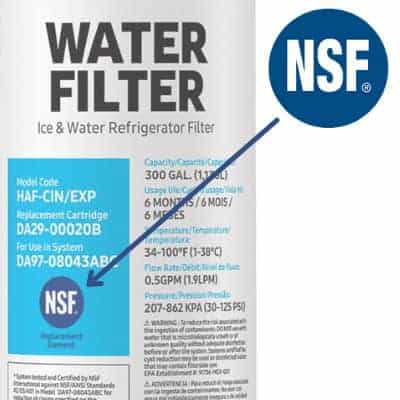
There’s a critical difference between a product being “Certified by NSF” and a product claiming to be “Certified to NSF standards.” The first is a verifiable fact from bodies like NSF or the Water Quality Association (WQA certification), meaning the product has undergone rigorous, independent testing, material safety reviews, and unannounced factory inspections.
The second is a meaningless marketing phrase. The lack of verifiable NSF listings for health claims is a deal-breaking red flag.
⚠️ The Certification Blind Spot: How a ‘Certified’ Filter Can Fail You
An NSF logo on the box doesn’t automatically protect you against every contaminant. A pitcher can be certified for lead reduction while having no certification for PFAS. Always cross-check the specific contaminant + standard combination on the official NSF database before purchase.
To understand this danger, consider this common scenario based on our research:
Situation: A family, worried about PFAS levels exceeding Environmental Protection Agency (EPA) guidelines mentioned in their local water quality report, goes to the store.
Task: They need a filter certified to remove these ‘forever chemicals’.
Action: They see a Brita Elite pitcher, covered in NSF certification logos, and buy it for its trusted brand name.
Result: They are still drinking PFAS-contaminated water. The Brita Elite, while certified for lead, is not certified for P473 (PFAS). This is a critical failure of consumer awareness that marketing exploits.
Under-Sink Systems: The Leak Risk
For under-sink systems from brands like Waterdrop and Aquasana, the risk is twofold. First, there’s the unquantifiable risk of the filter failing to remove harmful contaminants.
Second, there’s a CRITICAL DATA GAP regarding their long-term durability. Our Home & Garden expert, Jennifer Angel, notes that a leak from an under-sink system can cause thousands of dollars in water damage, a major financial and property risk that is completely unquantifiable for these unverified brands.
Performance & Reliability: Claims vs. Reality
Performance isn’t just about what a filter removes; it’s about how it behaves when it fails. A good filter should have a “graceful” failure mode (e.g., slow flow rate). A filter with a “catastrophic” failure mode is dangerous.
ZeroWater provides a stark example of catastrophic failure, a key finding in our analysis:
Situation: A user buys a ZeroWater filter for the ‘purest’ possible water.
Task: They use it for weeks, enjoying the taste.
Action: When the water starts to taste slightly ‘fishy’, they assume the filter is just getting old.
Result: The filter is beyond saturated and is now leaching contaminants back into the water, potentially making it more dangerous than tap water. The fishy smell is caused by the ion exchange resin breaking down.
📊 Filter Failure Modes: Graceful vs. Catastrophic
Brita / PUR (Graceful): Performance slowly degrades — flow rate slows, signaling a filter change. Risk remains low.
ZeroWater (Catastrophic): Performance holds steady, then sharply drops below the “Tap Water Quality” baseline — the saturated resin releases collected contaminants back into the water.
For brands like Brita and PUR, which use a solid activated carbon block, the failure mode is more graceful. The flow rate slows, indicating it’s time for a change. For Waterdrop and Aquasana, the failure modes are unverified.
Part 5: Real-World Use Cases: Which Filter Fits Your Life?
Choosing a filter isn’t just about specs; it’s about matching a product to your specific lifestyle, budget, and health concerns. Let’s walk through three common personas to see how this analysis applies in the real world.
Persona 1: “The Budget-Conscious Renter”
- Profile: A recent graduate living in an apartment in a city with decent-quality tap water. Their primary motivation is to stop buying bottled water to save money and reduce plastic waste. They care about taste but are not overly concerned with specific, exotic contaminants.
- Analysis: This user’s primary driver is TCO. They need a low-cost, low-maintenance solution. The extreme TCO of ZeroWater immediately disqualifies it. The unverified claims of Waterdrop and Aquasana represent an unnecessary risk for a user whose main goal is simple improvement. The choice comes down to Brita vs. PUR.
- Decision: The Brita Standard Filter is the perfect fit. It has the lowest TCO of any option, it’s widely available, and it effectively removes the chlorine taste that is the most common complaint about tap water. It doesn’t offer lead or PFAS protection, but for this persona’s low-risk situation, it’s the most pragmatic and cost-effective choice.
Persona 2: “The Health-Focused Family”
- Profile: A family with young children living in an older home. They’ve read news reports about lead in pipes and “forever chemicals” in the water supply. For them, a water filter is a non-negotiable part of their health and safety plan, and budget is a secondary concern to verifiable protection.
- Analysis: This persona’s decision is driven by certifications. Brita’s lack of a PFAS certification is a deal-breaker. Waterdrop and Aquasana are non-starters due to their unverified status. The choice is between PUR and ZeroWater. While ZeroWater removes “everything,” its catastrophic failure mode and unpredictable cost make it a risky choice for a busy family.
- Decision: The PUR PLUS Filter is the clear winner. It is the only pitcher on the list with verified NSF certifications for both lead (NSF 53) and PFAS (P473). The higher TCO compared to Brita is a worthwhile investment for the certified peace of mind. The secure-fitting lid is also a practical bonus in a household with children.
Persona 3: “The Appliance-Protection Homeowner”
- Profile: A homeowner in an area with very hard water (high TDS). They’ve already had to descale their expensive espresso machine once and are worried about the longevity of their humidifier and steam iron. They are also discerning about the taste of their coffee and tea.
- Analysis: For this homeowner, TDS is the enemy. Standard Brita and PUR filters do little to reduce mineral content. The decision is entirely focused on TDS removal. While an under-sink reverse osmosis system is an option, they are looking for a simpler, non-permanent solution.
- Decision: ZeroWater is the best choice, with a major caveat. It is the only pitcher certified to reduce TDS by 99.6%, which will directly protect their appliances from scale buildup and improve the taste of their coffee. However, they must first use the included TDS meter to test their tap water. If the TDS is extremely high (300+ PPM), the long-term cost may be unjustifiable. If the TDS is moderate (~150 PPM), the cost becomes more manageable and is a reasonable price to pay for protecting their expensive investments.
If, after weighing these personas, you’re still curious about how Waterdrop stacks up against other models from the same brand and competitors, check our extended Waterdrop filter alternatives breakdown for a deeper side-by-side reference.
Part 6: The Top Alternatives In-Depth: Brita vs. PUR vs. ZeroWater
While there are many Waterdrop filter top alternatives and competitors, the three most established and verifiable options are Brita, PUR, and ZeroWater. Here is a head-to-head breakdown using our tool-card review format.
The market incumbent. Synonymous with “water filter pitcher” for a reason — baseline performance at an unbeatable price point.
When it’s the best choice
- If your primary goal is removing chlorine for better taste in coffee and tea on a budget.
- If you need certified lead removal at the lowest possible TCO (using the Elite filter).
- If you value a long filter life (6 months for the Elite) and low maintenance.
Prerequisites for success
- You must be patient; the Elite filter’s flow rate is notoriously slow.
- You must purchase the correct filter for your needs (Standard for taste, Elite for lead).
- You accept that it does not offer certified protection against emerging contaminants like PFAS.
When to avoid
- If your local water quality report shows high levels of PFAS.
- If you have a large family or high water consumption needs, as the slow flow rate will become a major bottleneck.
- If you need to reduce Total Dissolved Solids (TDS) to protect appliances.
✅ Strengths
- Lowest verified TCO (~$140 over 3 years)
- NSF 53 certified for lead (Elite filter)
- Long 6-month filter life
- Widely available everywhere
⚠️ Considerations
- NOT certified for PFAS removal
- Notoriously slow flow rate
- Standard filter offers only taste improvement
- Not ideal for heavy water users
Positioned as the more health-focused alternative to Brita, backed by more comprehensive certifications including PFAS.
When it’s the best choice
- If verified PFAS removal is your top priority. It’s the key differentiator from Brita.
- If you value user-centric design features like the spill-proof LockFit™ lid.
- If you want the most comprehensive certified protection available in a major retail pitcher brand.
Prerequisites for success
- You must be prepared for a 55% higher TCO compared to Brita over three years.
- You must diligently change the filter every two months to maintain performance.
- You should pair it with store coupons or subscription services to mitigate the higher filter cost. A great place to start is exploring the Latest Coupons directory to find current PUR deals.
When to avoid
- If your primary decision-making factor is cost. It is significantly more expensive long-term than Brita.
- If you are seeking to remove the maximum amount of total solids (TDS).
- If the hassle of changing filters every two months is a major deterrent.
✅ Strengths
- Certified NSF 53 (lead) AND P473 (PFAS)
- LockFit™ lid prevents unfiltered bypass
- Comprehensive contaminant protection
- Trusted retail brand availability
⚠️ Considerations
- 55% higher TCO than Brita (~$218)
- Filter changes every 2 months
- Higher ongoing replacement cost
- Does not address TDS / hard water
A niche product for purists. Does one thing — remove virtually all dissolved solids — exceptionally well, but at a potentially staggering cost.
When it’s the best choice
- If you need water with 000 TDS to protect expensive appliances like espresso machines from scale.
- If you desire the “purest” possible taste, similar to distilled water, and are willing to pay for it.
- If you value the ability to independently verify filter performance with the included TDS meter.
Prerequisites for success
- You must test your tap water’s TDS before committing. If it’s over 200 PPM, the cost will likely be prohibitive.
- You must change the filter immediately at the first sign of the “fishy” taste to avoid contaminant leaching.
- You have a substantial budget allocated for water filtration.
When to avoid
- If you live in an area with hard water (high TDS), unless money is no object.
- If you are on a budget. The potential TCO makes it the most expensive pitcher filter by a massive margin.
- If you want a low-maintenance, “set it and forget it” system.
✅ Strengths
- Removes 99.6% of TDS (unmatched among pitchers)
- Protects appliances from scale buildup
- Includes a TDS meter for verification
- 5-stage ion exchange + carbon filtration
⚠️ Considerations
- Extreme TCO ($2,000+ in hard water areas)
- Catastrophic failure mode (leaches contaminants)
- “Fishy” taste signals dangerous saturation
- Unpredictable filter lifespan
For readers wanting to broaden the comparison even further to other home and kitchen brands, browse our full comparison articles category to find more head-to-head, data-driven reviews.
Part 7: Conclusion and Frequently Asked Questions
My investigation into the top Waterdrop filter top alternatives and competitors revealed a market defined by a single crucial divide: verifiable proof versus unverified promises. The most important feature of a water filter isn’t its design or price; it’s the transparent, third-party certification that proves it works for your family’s health and safety.
The fact that my research into online-first brands like Waterdrop and Aquasana was met with a wall of unverified claims is the most significant finding.
The responsible choice is to prioritize verifiable safety. For basic needs, Brita is a known quantity. For targeted health concerns like lead and PFAS, PUR offers certified protection. For the niche goal of absolute purity, ZeroWater performs, albeit at a stunning cost.
For brands like Waterdrop and Aquasana, the only safe recommendation is to wait. Wait for them to provide the same level of transparent, verifiable proof that their competitors do. In the meantime, if you do choose to try the brand, make sure to use a verified money-saving Waterdrop deal to limit your financial downside.
In the end, don’t trust; verify. Your health is not the place for a leap of faith. Check the NSF database, understand the real TCO, and demand proof.
💡 PRO TIP: Verify, Don’t Trust — Your 60-Second NSF Check
On info.nsf.org, search the brand AND model number. A brand-level certification is not enough. The specific filter model must be listed for the standard you need (e.g., ‘NSF/ANSI 53’ for lead). If the model isn’t there for that specific claim, the claim is unverified.
Frequently Asked Questions
Q1: Is Waterdrop a trustworthy brand for health and safety?
A: For health and safety purposes, trustworthiness requires verification. In our investigation, we could not verify Waterdrop’s key safety certifications for lead or PFAS removal on their specific filter models in the public NSF database. While the brand is popular online for its design and marketing, this absence of verifiable proof is a major red flag for anyone purchasing a water filter for its health and safety benefits. Without this independent, third-party validation via the NSF Certified Product Listing Database, any claims about contaminant removal are just marketing. Until this changes, purchasing for health-related filtration is a gamble.
Q2: What’s the real difference between Brita vs PUR filters?
A: The main difference is PFAS certification. As of our latest data from early 2026, PUR PLUS filters are certified under NSF/ANSI P473 to remove both lead and PFAS “forever chemicals”. Brita’s popular Elite filters are certified for lead but not for PFAS. Therefore, if PFAS is a specific concern based on your local water quality, PUR is the verifiably superior choice from a health perspective. This added protection comes at a cost, however, with PUR’s long-term TCO being about 55% higher than Brita’s due to more frequent filter changes.
Q3: Is the ZeroWater filter really worth the high price?
A: For most people, no. But for a very specific user with a high budget, it can be. If your primary goal is to achieve water with zero Total Dissolved Solids (TDS) — for instance, to protect expensive appliances like espresso machines from scale or if you prefer the taste of distilled water — it’s the only pitcher that verifiably delivers this, and it even comes with a TDS meter to prove it. However, for the average user, the potential 3-year cost of over $2,000 in areas with hard water makes it far too expensive for the marginal benefit over a standard Brita or PUR filter.
Q4: Are cheap, third-party Amazon filters for my Brita safe?
A: I would not consider them safe for contaminant removal. While they may fit your pitcher, these “compatible” filters are not covered by Brita’s or PUR’s NSF certifications. Using one voids any guarantee of performance for removing specific health-related contaminants like lead. You might be filtering for taste, but you lose the verified safety component you paid for when you bought the branded system. It’s a false economy that trades your family’s safety for a few dollars, and it’s a risk I would not recommend taking.
Q5: How can I check if a water filter is actually NSF certified?
A: Go directly to the source: the NSF Certified Product Listing Database. Do not trust the packaging or marketing claims alone. This is the single most important step. Use the search function on the NSF website to look up the specific brand and model number of the filter you are considering. The listing must explicitly state that it is certified for the standard you care about (e.g., “NSF/ANSI 53” for lead reduction). If the specific model isn’t listed for that specific claim, the claim is unverified.
Q6: Why is my ZeroWater filter starting to taste fishy?
A: Stop using it immediately and replace the filter. This is a sign of catastrophic failure. The ‘fishy’ taste is caused by the ion exchange resin in the filter becoming fully saturated. When this happens, it can release the contaminants it has collected back into the water, a process called leaching. The water coming out of the filter may now be of worse quality than your tap water. This is the filter’s critical failure signal, and it means you must replace the cartridge instantly.
Q7: Do water filter pitchers remove bacteria or viruses?
A: No, standard water filter pitchers like Brita, PUR, and ZeroWater are not certified to be water purifiers. They are not designed to remove microbiological contaminants like bacteria or viruses. Their function is to reduce specific chemicals (chlorine, PFAS), heavy metals (lead), and improve taste and odor. To remove microbiological threats, you would need a dedicated purifier system, which typically uses different technologies like UV light or a much finer filter membrane rated for purification, such as those found in some advanced under-sink or emergency filters.
Q8: What is the biggest risk with under-sink filters like Waterdrop or Aquasana?
A: For any homeowner, the biggest risk with an under-sink filter goes beyond unverified filter performance: it’s catastrophic water damage from leaks. These systems connect directly to your home’s plumbing. Without long-term, independent durability data on the plastic housings, fittings, and O-rings used by unverified brands like Waterdrop and Aquasana, the risk of a slow leak or catastrophic failure is completely unquantifiable. A single failed fitting could lead to thousands of dollars in property damage to your floors, cabinets, and even the structure of your home.