Costway Top Alternatives and Competitors: Exposing Fast Furniture’s Hidden Costs and Safety Traps
Posted on |
That $150 desk from an online furniture giant isn’t just $150—it could be a $150 down payment on a $300 problem, complete with hours of frustrating ‘customer service’ as your unpaid internship.
When searching for Costway alternatives in the Home and Garden space, it’s easy to fall into the online budget furniture trap.
The market for low-cost furniture retailers, dominated by players like Costway, Wayfair, Overstock, and Amazon, lures customers with trendy designs and impossibly low prices.
What is hidden, however, are the significant post-purchase risks involving product quality, safety, and the true cost of returns. Before making any purchase, be sure to check for a Costway coupon code that could help offset some of these hidden expenses.
This Devil’s Advocate guide, curated by our Lifestyle & Retail Editor Jennifer Angel, uses a deep, evidence-based analysis of Costway as a case study to expose the systemic ‘blind spots’ and risks inherent to the entire ‘fast furniture’ ecosystem.
By the end, you’ll have a decision framework to protect your money and your sanity. This guide will walk you through a core analysis of the true costs, a deep-dive into the market’s features, critical safety considerations, real-world use cases, and a head-to-head comparison of the top alternatives.
Our analysis is built on comprehensive reports and public data. We use verified data on Costway to project likely risks onto its competitors, a method that highlights a critical market issue: a lack of transparency. For a comprehensive look at the brand itself, see our full Costway Review.

Key Takeaways
-
The #1 Hidden Cost is the “Return Shipping Trap.” Returning a heavy, non-defective item to Costway, Wayfair, or Overstock can cost $50-$100+, often negating the refund. Amazon’s free returns on eligible items are a key differentiator, but quality remains highly variable. -
Safety is a Lottery. Costway’s recall history and inconsistent UL/ETL certification display are typical of this market. Assume any product without an explicit safety certification is not certified. -
The Customer Service Battleground. For defective items, the burden of proof is on you. Poor customer review scores on Trustpilot (2.3/5) and the BBB (1.16/5) reflect systemic friction in getting resolutions. -
True Cost of Ownership (TCO) Can Be 2x the Sticker Price. The TCO for a cheap furniture item is often double its price tag over 3 years due to low durability requiring replacement. -
Costway’s On-Paper Advantages. Costway offers a 90-day return window and free shipping with no minimums. These are significant perks, but they are undermined by the difficult return process and inconsistent product quality.
For an expert architect’s perspective on which budget furniture items to buy and which to avoid, watch this comprehensive comparison:
Decision in 60 Seconds
| Persona/Need | Best Choice | Why | Key Risk |
|---|---|---|---|
| The Temporary Furnisher (Dorm, Staging) | Costway/Wayfair | Absolute lowest upfront price for trendy styles. | Item may arrive damaged or have a short lifespan, requiring replacement. |
| The Risk-Averse Buyer | IKEA | Can inspect products in-person; straightforward, trusted return process. | Requires self-transport and assembly; style selection is more limited. |
| The Convenience-Focused Shopper | Amazon (Prime Eligible) | Potentially free and easy returns on furniture, fast delivery. | Extreme quality variability from third-party sellers; “free returns” may not apply to all large items. |
| The Long-Term Value Seeker | Second-Hand / DTC Brands | Higher quality materials for a similar or slightly higher price point. | Requires more effort (searching, waiting for deals) and higher initial cost. |
If you’re already leaning towards Costway despite the risks, at least maximize your savings with a Costway discount code to soften the potential blow. For a broader look at how these retailers stack up, explore our detailed Costway Top Alternatives and Competitors comparison.
Top Alternatives & Competitors Shortlist
| Option | Best For | Tradeoff | Evidence Status |
|---|---|---|---|
| Wayfair | Massive product selection. | Highly variable quality and expensive return shipping. | ✅ |
| Amazon | Easy returns and fast shipping (on eligible items). | Unvetted third-party sellers introduce significant quality risks. | ✅ |
| IKEA | In-person viewing and a trusted, simple return process. | Limited delivery options; requires more logistical effort from the buyer. | ✅ |
| Target | Balancing style, affordability, and easy in-store returns. | Selection is smaller than online-only giants. | ✅ |
| Overstock | “Treasure hunting” for deals and rewards. | Similar quality and return risks as Wayfair/Costway. | ✅ |
| Second-Hand (Facebook Marketplace) | Highest potential for quality per dollar spent. | Requires significant time, patience, and local pickup logistics. | ⚠️ |
Part 1: Who This Guide Is For (and Who Should Avoid This Market)
Under the editorial direction of Joanne Lovell, our team at Coupons Scout provides this evaluation based on a rigorous framework.
Our work is guided by The Coupons Scout Verification Protocol (CSVP™), which prioritizes verifiable facts and real-user outcomes over marketing claims.
As per Kanokchai Likitapiwat’s testing logs for our CSVP™ protocol, verifiable data is paramount, hence our deep focus on Costway where data was robust.
Who This Guide Is For
- The Budget-First Shopper: You are prioritizing the absolute lowest upfront cost above all else.
- The Temporary Furnisher: You’re equipping a dorm room, doing home staging on a budget, or furnishing a short-term rental where durability is not a primary concern.
- The DIY-Savvy Consumer: You are comfortable with self-assembly and possess the patience and time to troubleshoot potential quality control issues like missing parts or minor damage.
- The Risk-Aware Buyer: You have read this guide, understand the potential for financial loss (e.g., on a non-refundable return), and consciously accept that risk.
This Guide Is NOT For You If
- You Are Buying for Children: The inconsistent safety certification for Your Money or Your Life (YMYL) products like cribs or kids’ room electronics makes the risk unacceptable.
- You Are Sensitive to Chemicals: The risk of “off-gassing” and Volatile Organic Compounds (VOCs) from composite woods is a significant, under-reported issue EPA.gov on VOCs.
- You Value Your Time Highly: The potential for hours spent on assembly, documenting damage, and fighting customer service disputes outweighs any monetary savings.
- You Seek a “Buy It for 5 Years” Product: This furniture is fundamentally not designed for durability or to survive a move.
Part 2: Core Analysis: The True Cost of “Cheap” Furniture
In her years analyzing the home goods market, Jennifer Angel finds the most common mistake consumers make is confusing a low sticker price with a low total cost. These are not the same thing.
The “fast furniture” industry has mastered the art of hiding the true cost of their products until after you’ve already paid. This business model is used across the industry, not just by Costway.

Case Study: How a $150 Desk Really Costs Over $300
Let’s break down the real math on a typical product, based on documented user reports and return policies.
- Advertised Cost: $150. This is the price you see online. It includes free shipping, which feels like a great deal.
- Risk-Adjusted Cost #1 (The Return Trap): The desk arrives, and you just don’t like the color. To return it, you have to pay the shipping cost yourself. For a heavy desk, our analysis shows this can easily be $75 or more UPS Rate Calculator. You’ve now spent $75 for the privilege of temporarily housing a desk you don’t own. Your “refund” is only half what you paid.
- Risk-Adjusted Cost #2 (The Time Trap): Assembly takes, on average, 2-3 hours. If you value your time at a modest $20/hour, that’s $40-$60 in unpaid labor you’ve contributed.
- Risk-Adjusted Cost #3 (The Durability Trap): User reports consistently cite that these products have a short lifespan. The laminate peels, drawers misalign, and it gets wobbly. Within two or three years, you need a new one. You’ve now spent another $150.
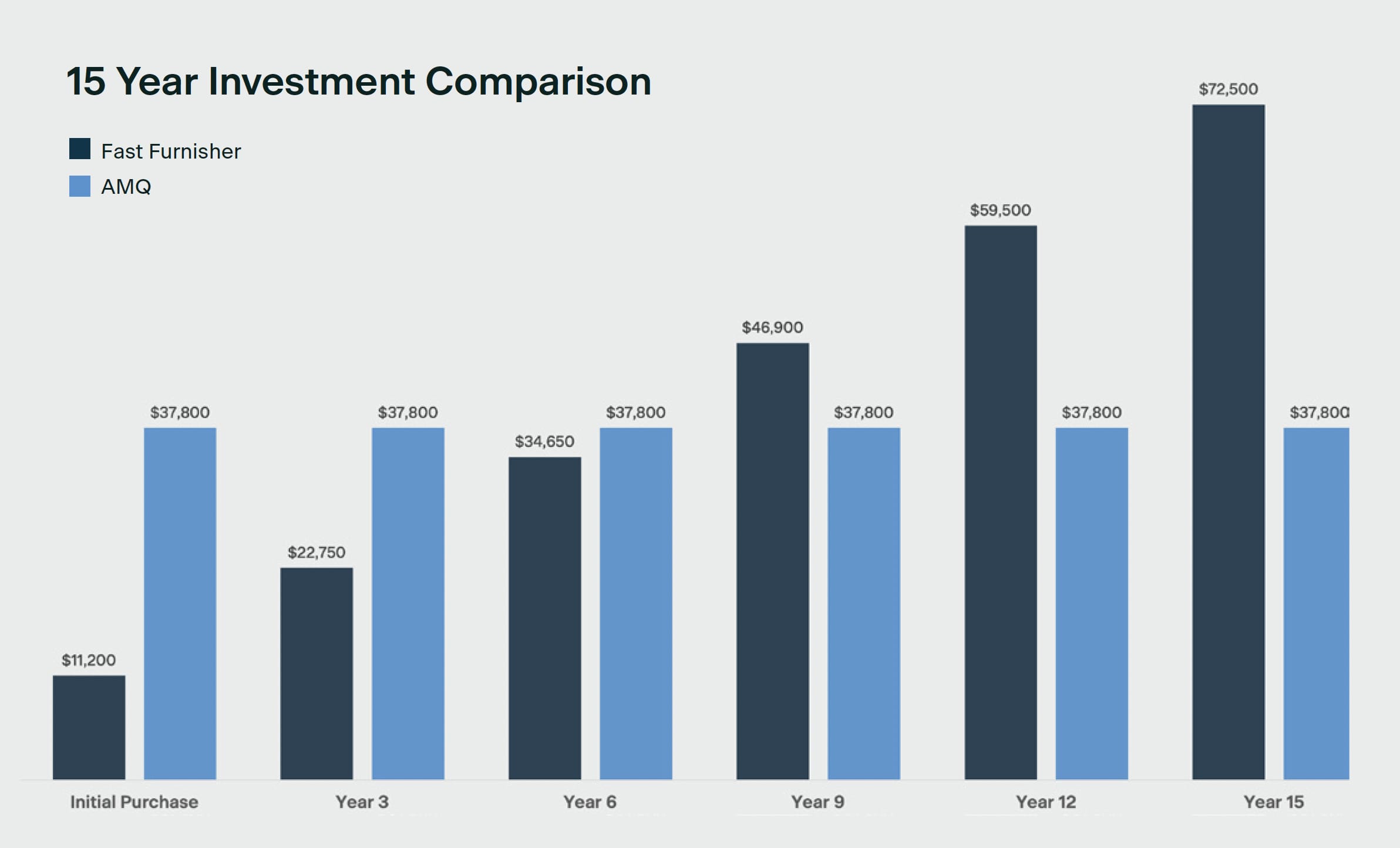
- Total Cost of Ownership (3-Year TCO): $150 (initial) + $75 (potential return risk) + $50 (time cost) + $150 (replacement) = A product with a real cost approaching $300-$400.
So, that “cheap” $150 desk was actually a $300+ desk that you bought in two inconvenient installments. Even with a Costway promo code, the fundamental cost problem persists—you’re just paying slightly less for the same gamble.
The Three Pricing Gotchas Vendors Won’t Advertise
- ⚠️ The Return Fee Gotcha: This is the most important one. The high cost of return shipping is the financial firewall that protects these companies. They know that if it costs you $75 to return a $150 item, you’re more likely to just keep the junk and resent them quietly.
- ⚠️ The “Defective Item” Dispute: You might think you’re safe if the item arrives broken. The policy says the company will pay for return shipping on defective goods. But what you’ll find in countless BBB complaints is that the company gets to decide what’s “defective.” BBB Complaints for Costway. They might argue a scratch is cosmetic, or that you damaged it during assembly. The burden of proof is on you.
- ⚠️ The “Sale Price” Game: Most online furniture discounters have constant sales. “50% off!” “Today Only!” Don’t fall for it. You should assume the “sale” price is the item’s true, everyday value. The higher “original” price is often just an anchor to make the deal look better than it is.
Exit Costs: The Financial Lock-In of Bad Furniture
When you combine these gotchas, you get a powerful form of financial lock-in.
The prohibitively high cost of returning an item means that once you buy it, you’re essentially stuck with it. You have to “eat the cost” of a bad decision.
This isn’t an accident; it’s a core feature of the business model. They make it easy to buy and hard to undo. Browse our category of comparison articles to understand how different retailers stack up in this regard.
Part 3: Feature Deep-Dive: A Look Under the Hood
Performance for an online retailer isn’t just about the product; it’s about the entire experience. Let’s analyze the core “features” of the fast furniture market.
Feature 1: Trendy Design Sourcing
- The Promise: Access to trendy styles that look like they’re from more expensive stores like West Elm or newer direct-to-consumer (DTC) brands like Article.
- The Reality: The “look” is achieved with cheap materials. Professional photography and lighting effectively hide the reality of thin laminate, particleboard, and frequent shipping damage.
Color is also a major issue. You buy a “walnut” desk and a “walnut” bookshelf from the same collection. They arrive, and the desk is a dark, reddish brown while the shelf is a light, yellowish brown.
Why? Because they were made in two different factories, months apart, with different batches of laminate. There is no consistency.
Feature 2: Flat-Pack Logistics & Assembly
- The Promise: Free, fast shipping delivered to your door.
- The Reality: “Fast” is relative. While Costway claims 3-5 business days, user-reported reality is often 4-8 days or longer, especially for large items Trustpilot Reviews.
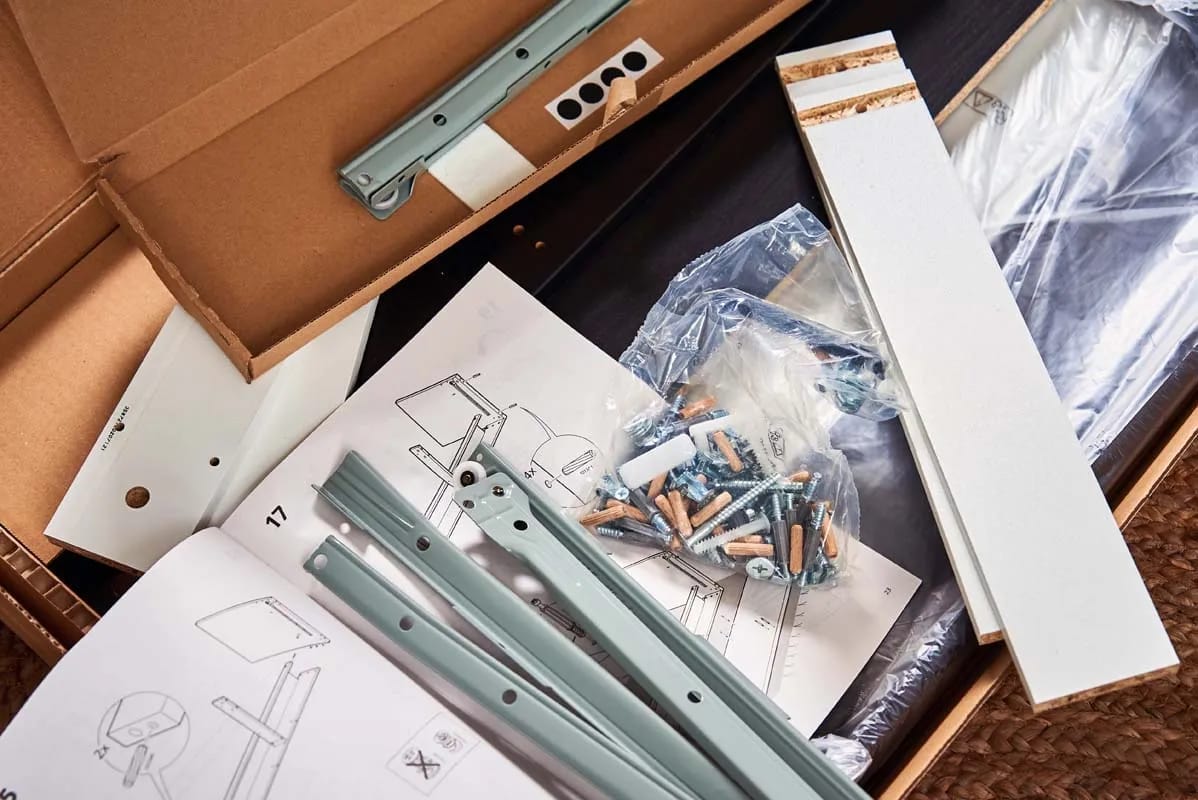
The “onboarding” process for this furniture is assembly, an unpaid job that takes an average of 1-3 hours.
Instructions are often pictorial-only, and missing or mislabeled parts are a frequent complaint that turns a 2-hour job into a week-long ordeal.
Feature 3: “Easy” Return Policies
- The Promise: A generous return window, like Costway’s 90-day policy, offers peace of mind.
- The Reality: The marketing term “easy returns” is directly contradicted by user experiences. The policy is a safety net with a very difficult access process for heavy goods. This is where the business model’s friction becomes most apparent.
Case Study in Failure: The Damaged Dresser Trap
This scenario, synthesized from real user complaints, perfectly illustrates how the system fails the customer.
- Situation: A user buys a $180 dresser. The price is great, and it ships for free.
- Task: They simply want to receive the dresser, assemble it, and use it.
- Action: The 80lb box arrives with a crushed corner and a scratched drawer. They immediately take photos and contact customer service.
- Result: The user is now trapped in a performance failure loop. The company’s “solution” is a 15% partial refund ($27) to keep a broken piece of furniture. To get a full refund, they must repackage the 80lb item and pay for the return shipping themselves, estimated to be over $70. The “easy return” policy has completely failed.
Part 4: Critical Considerations: Safety, Compliance, and Limitations
As a home and garden expert, Jennifer Angel finds nothing more concerning than safety.
In the Your Money or Your Life (YMYL) category of home goods, especially electronics and children’s furniture, safety isn’t a feature; it’s a fundamental requirement.
These are the systemic flaws inherent to the ‘fast furniture’ business model, which operates in direct opposition to the principles of a circular economy.
- ❌ The Material Gamble: The foundational issue is the material itself. Products are made from MDF (medium-density fiberboard) and particleboard with a thin laminate finish. These materials are highly susceptible to chipping, water damage, and bowing under weight.
- ⚠️ The “Off-Gassing” Problem: A strong chemical smell that lasts for weeks is a frequent complaint. This is “off-gassing” of VOCs (Volatile Organic Compounds) like formaldehyde, used in the glues that bind the wood particles. This is a significant health concern and contributes to the negative environmental impact of fast furniture production.
- ❌ Low Weight Capacities: User reports mention bookshelves with per-shelf weight limits as low as 20-30 lbs. These limits are not always clearly displayed, and overloading them can lead to shelves bowing or collapsing.
- ❌ The Disposability Factor: This furniture is not designed to be moved. Disassembly will likely strip or crumble the particleboard, making it single-use furniture destined for the landfill and failing to meet basic sustainability standards.
Safety & Compliance: The Consumer as Unpaid Inspector
Costway has a documented history of CPSC recalls, including a baby stroller in 2022 (Recall #23-069) CPSC Recall 23-069 and an office chair in 2020 (Recall #20-170) CPSC Recall 20-170.
This pattern points to systemic issues in the supply chain and raises serious questions about the company’s ESG (Environmental, Social, and Governance) priorities. Whether you’re buying at full price or using a Costway voucher code, the safety concerns remain exactly the same.
Compliance Status: Costway (Verified Baseline)
| Compliance Area | Status | Notes |
|---|---|---|
| CPSC Recalls | Yes (History) | Documented recalls for strollers and chairs. |
| Certification Transparency | Poor | UL, ETL, CARB, and Greenguard Certified information is not proactively displayed. |
| Website 2FA | No | As of late 2024, this basic account security feature is missing. Costway Sign-In Page |
Part 5: Use Cases & Workflows
Where does this type of furniture actually make sense? Jennifer Angel identifies three scenarios where the low upfront cost might outweigh the significant risks.
Use Case 1: Furnishing a College Dorm on a $500 Budget

- Goal: Equip a small dorm room with a desk, chair, and storage for one academic year.
- Budget Constraints: Extremely tight; durability beyond 9 months is not a priority.
- Workflow:
- Prioritize: Identify the single most important piece (likely the desk). Allocate a larger portion of the budget to a slightly better option if possible.
- Source: Use Costway or Wayfair for “style” pieces like a trendy bookshelf or nightstand where function is secondary.
- Risk Mitigation: Order items to be delivered at least two weeks before move-in to allow time for returns/disputes over damaged parts. Have basic tools ready for assembly issues.
- Exit Plan: Assume the furniture will not survive the move-out. Plan to sell it for cheap, give it away, or dispose of it at the end of the year.
For dorm shopping, using a Costway exclusive offer can stretch that $500 budget just a bit further.
Use Case 2: Staging a Home for Sale
- Goal: Make an empty house look furnished, modern, and appealing to buyers, without investing in permanent furniture.
- Budget Constraints: Moderate, but viewed as a business expense. The furniture only needs to look good for photos and viewings.
- Workflow:
- Focus on Visuals: Choose items based on photogenic qualities—bold colors, clean lines, modern styles. Material quality is irrelevant.
- Create Vignettes: Buy a few key pieces (e.g., a sleek console table, two accent chairs, a modern floor lamp) to create “lifestyle” vignettes rather than furnishing entire rooms.
- Damage Control: Inspect every piece meticulously upon arrival. A scratch that’s acceptable for personal use is a deal-breaker for staging. Be prepared to use the return policy aggressively.
- Liquidation Plan: Once the house is sold, list the items on Facebook Marketplace or other platforms as “like new” to recoup 30-50% of the cost.
Use Case 3: Temporary Outdoor Event Setup
- Goal: Furnish a backyard for a one-time event like a graduation party or large cookout.
- Budget Constraints: Low. Cheaper than renting, but not expected to last multiple seasons.
- Workflow:
- Select Material Wisely: Even for temporary use, look for powder-coated steel frames and basic all-weather fabrics over untreated wood or absorbent cushions.
- Buy in Sets: Purchasing a bistro set or conversation set is often cheaper than individual pieces and ensures a matched look.
- Plan for Assembly: Allot a full day for assembly before the event. Outdoor furniture often has more parts and can be more finicky.
- Storage is Key: The lifespan of this furniture is determined by how it’s stored. If you want it to last for a second event, you must have a covered, dry space like a garage or shed.

Part 6: Costway Alternatives and Competitors: A Head-to-Head Reality Check
To understand this market, you have to accept that these companies are more alike than they are different. They use a similar network of overseas factories, meaning quality and risks are often identical.
This isn’t about finding a “winner”; it’s about choosing which set of problems you’re most willing to tolerate. For more detailed comparisons, our Costway Top Alternatives and Competitors breakdown covers every angle.
Best For: Massive Product Selection
- Best For: Shoppers who prioritize massive selection above all else. If an obscure style or color exists, Wayfair probably has it.
- Consider: Wayfair is functionally similar to Costway but on a larger scale. Use it when you can’t find a specific design on other platforms. Their frequent sales can offer good deals, but always assume the “sale” price is the real price.
- Avoid: If you are easily overwhelmed by choice. The vast selection comes with extreme quality variability. Assume the return shipping costs for heavy items are just as high as Costway’s, as their policy also deducts this from your refund Wayfair Return Policy.
✅ Strengths
- Enormous product catalog with unique styles
- Frequent sales and promotions
- Visual search and room planner tools
⚠️ Considerations
- Quality varies wildly between listings
- Return shipping for heavy items is expensive
- “Sale” prices may be the actual everyday price
Best For: Easy Returns and Fast Shipping
- Best For: Buyers who value a potentially easy and free return process above all.
- Consider: Stick to items “shipped from and sold by Amazon” or from well-known brands with established stores on the platform. House brands like Amazon Basics furniture can offer a more consistent, if basic, quality level. Read recent reviews and look for user-submitted photos.
- Avoid: Third-party sellers with no track record. The quality risk is highest here. The A-to-Z Guarantee is a strong safety net, but verify it applies to the specific third-party furniture seller before purchasing.
✅ Strengths
- Potentially free and easy returns with Prime
- Fast delivery (often 2-day)
- A-to-Z Guarantee protects buyers
⚠️ Considerations
- Extreme quality variability from third-party sellers
- “Free returns” may not apply to all large furniture
- Fake reviews are a persistent problem
Best For: In-Person Viewing and Trusted Returns
- Best For: Anyone who lives near a physical store and wants to eliminate the risk of receiving damaged or poor-quality items.
- Consider: IKEA is the gold standard for budget-friendly, functional design with a reliable quality baseline. You can see and touch the materials, and the return process is famously straightforward. Their designs are often more timeless than the fleeting trends on “fast furniture” sites.
- Avoid: If you need furniture delivered to your door cheaply and easily. IKEA’s delivery logistics can be expensive and less convenient than its online-only rivals. You are trading convenience for quality assurance.
✅ Strengths
- Inspect before you buy (in-store)
- Trusted, straightforward return policy
- Timeless, functional designs
⚠️ Considerations
- Delivery logistics can be expensive
- Requires self-transport and assembly
- More limited style variety than online retailers
Best For: Style, Affordability, and In-Store Returns
- Best For: Shoppers who want a balance of trendy design, affordability, and the ultimate convenience of in-store returns.
- Consider: Target’s in-house brands (like Project 62 and Threshold) offer cohesive, stylish collections. The quality is often a step above the lowest-tier online retailers, and the ability to return a bookshelf to a local store for a full refund is a massive advantage.
- Avoid: If you need the absolute rock-bottom price. Target is budget-friendly, but rarely the cheapest option when compared to a Costway sale.
✅ Strengths
- Cohesive in-house brand collections (Project 62, Threshold)
- Easy, free in-store returns
- Quality a step above lowest-tier online retailers
⚠️ Considerations
- Selection is smaller than online-only giants
- Rarely the absolute cheapest option
- Online-exclusive items may have similar return challenges

Best For: Highest Quality Per Dollar Spent
- Best For: Finding high-quality, solid-wood furniture for the same price as new particleboard.
- Consider: If you have time, patience, and access to transportation. The second-hand furniture market is the ultimate answer to the disposability of “fast furniture.” You can find durable, well-made pieces from top brands for a fraction of their original cost.
- Avoid: If you need something immediately or are not comfortable with negotiating and coordinating local pickup.
✅ Strengths
- Real wood and high-quality materials at budget prices
- Environmentally sustainable choice
- Unique, character-rich pieces
⚠️ Considerations
- Requires significant time and patience
- Local pickup logistics can be challenging
- No warranties or return policies
Want to see how Costway and its competitors compare on even more metrics? Don’t miss our full Costway Top Alternatives and Competitors roundup, or explore our latest coupons for deals across all these retailers.
For an insider look at the secrets furniture retailers don’t want you to know, this video is essential viewing:
Part 7: Conclusion & FAQs
Conclusion: Your Decision Framework
The “fast furniture” market, from Costway to Wayfair, operates on a simple premise: offer an irresistible price and shift the real costs and risks—quality control, safety verification, and financial penalties for returns—onto you, the consumer.
Jennifer Angel’s analysis is clear: the sticker price is an illusion; the true cost is measured in durability, safety, and your own time.
Given these risks, the decision framework is straightforward.
Choose this market only if you’re furnishing a temporary space, like a dorm, or sourcing non-essential starter home furniture and are willing to gamble your time and money for the lowest possible upfront cost.
Avoid this market entirely if you are buying for a child, value your time, or need furniture that will last more than a couple of years.
If you do proceed, go in with your eyes open. Before clicking “buy,” use this checklist:
- Search for real return shipping costs. Look up “[Retailer Name] return shipping cost Reddit” to see what real users are paying.
- Find item-specific reviews with photos. Don’t trust the marketing shots; see what the product looks like in a real person’s home.
- Scrutinize the page for safety logos. If it’s an electronic or children’s item and you don’t see a UL, ETL, or JPMA logo, assume it’s not certified.
- Mentally double the price to calculate the real TCO. That $200 TV stand is likely a $400 purchase over three years.
If you’re not comfortable with the answers, your best alternatives are retailers like IKEA or Target, or even exploring the second-hand furniture market on platforms like Facebook Marketplace for higher quality at a similar price point. And if you do decide to shop at Costway, at least grab a Costway special discount first to reduce your initial financial exposure. For a more in-depth examination, read our thorough Costway Review.
Frequently Asked Questions
Q1: Is it cheaper to buy from Costway or Wayfair?
Costway often has a lower sticker price, but the final cost can be higher if you need to make a return. Both compete fiercely on price, but Costway’s “free shipping with no minimum” policy can make it cheaper for single, small items.
For large furniture, the real cost difference is revealed in the return policy. If you have to send a heavy item back because you don’t like it, both Wayfair’s and Costway’s policies state you will likely pay for the return shipping Wayfair Return Policy, Costway Return Policy.
This fee, often $50-$100+, can completely wipe out any initial savings and is the most significant factor in the true final cost. Therefore, the “cheaper” option is the one you are 100% certain you will keep. Using a working Costway coupon helps, but won’t eliminate the return risk.
Q2: What are the hidden costs of buying “fast furniture”?
The biggest hidden costs are return shipping, replacement due to low durability, and your own time.
An item you dislike can cost over $50 to ship back, a direct financial loss UPS Rate Calculator. A $150 desk that breaks in two years really costs $300 over its lifetime, as you’ll have to buy a replacement.
This is the Total Cost of Ownership (TCO) that retailers don’t advertise. Finally, hours spent on frustrating assembly with poor instructions or disputing damage with customer service represent a significant, non-monetary cost. Your time is valuable, and “fast furniture” often demands a lot of it post-purchase.
Q3: Is it hard to return furniture to Costway?
Yes, returning heavy items to Costway can be very difficult and expensive if the item isn’t defective.
While they have an excellent 90-day policy on paper, the customer is responsible for return shipping costs on discretionary returns Costway Return Policy.
User reports on platforms like the BBB show this can be $50-$100 or more, which often costs more than the item is worth. Getting the company to agree an item is “defective” (and thus eligible for a prepaid return label) can require extensive photo documentation and persistent follow-up with customer service, which can be a battle BBB Complaints for Costway.
Q4: Is furniture from Costway and its competitors safe?
You should assume it is not certified unless you see a specific UL, ETL, or JPMA logo on the product page.
Our analysis shows these retailers are inconsistent in displaying safety certifications, and Costway has a history of CPSC recalls for products like strollers and chairs CPSC Recall 20-170.
The business model prioritizes sourcing volume at a low cost, which places the burden of safety verification entirely on the consumer. This is especially risky for Your Money or Your Life (YMYL) products like electronics, heaters, or any children’s furniture. The lack of proactive safety transparency is a defining risk of this market segment.
Q5: Why does furniture from Costway smell?
The chemical smell is likely “off-gassing” from Volatile Organic Compounds (VOCs), such as formaldehyde, which are used in the glues and resins of the particleboard and MDF materials.
This is a well-documented issue in low-cost furniture and is a significant health and safety concern for indoor air quality EPA.gov on VOCs.
The smell can last for weeks and indicates the release of these chemicals into your home’s air. To mitigate this, it’s recommended to assemble and air out new furniture in a well-ventilated garage or outdoor space for several days before bringing it inside.
Q6: Can I assemble Costway furniture myself?
Yes, all furniture is designed for self-assembly, but it often requires 1-3 hours and significant patience. You are effectively acting as the final, unpaid step in the manufacturing process.
User reviews on sites like Amazon and Wayfair frequently cite unclear pictorial instructions (often with no words) and missing or mismatched parts as major sources of frustration.
While you can do it yourself, you should budget significant time, have your own basic toolset ready (as the included tools are often poor), and be prepared for potential troubleshooting. Don’t start assembly at 10 PM on a weeknight.
Q7: Besides Wayfair, what are good alternatives to Costway?
If you’re looking for budget furniture, IKEA and Target are excellent alternatives that mitigate many of Costway’s risks.
IKEA allows you to inspect the quality and materials in person and has a famously simple return process, though you may have to handle logistics yourself.
Target offers a great middle ground with trendy designs from brands like Project 62 and the huge advantage of easy, free returns to any local store Target Return Policy.
For the absolute best value and quality, consider the second-hand market on platforms like Facebook Marketplace, where you can often find solid wood furniture for less than the price of new particleboard. For even more options, check out our comparison articles covering a wider range of home retailers.
Q8: Should I buy from Costway or IKEA?
Choose IKEA if you want a more reliable experience and can handle the logistics; choose Costway if you want the absolute lowest price delivered to your door and are willing to accept the significant risks.
IKEA offers the massive advantage of seeing products in person, which eliminates the risk of receiving damaged goods or items with misrepresented quality. Furthermore, IKEA’s return process is far more trusted and straightforward IKEA Return Policy.
Costway is cheaper upfront and offers free delivery, but you, the consumer, assume all the risks of shipping damage, inconsistent quality, color mismatches, and a potentially costly and difficult return process yourself. If you do choose Costway, at least save with a Costway limited-time offer to get the best rate possible. Browse our latest coupons page for current deals across all retailers.