Weleda Alternatives and Competitors (2026)
Posted on |
In the world of ‘natural’ skincare, finding top alternatives and competitors for Weleda can feel overwhelming. While its iconic Skin Food seems like a safe bet, the truth about its ingredients, ethical compromises, and real-world performance is far more complex.
As our savings intelligence expert, Mohamed Zaki, often notes, the true cost of a product is rarely its sticker price. For the conscious consumer, navigating greenwashing, hidden irritants, and deceptive pricing to find a product that aligns with your values is a constant challenge.
Key Takeaways
-
Cruelty-Free Status is a Minefield: Weleda is not Leaping Bunny certified due to its market presence in China. Burt’s Bees is certified, but its parent company (Clorox) is not. Dr. Hauschka and Biossance are the only two contenders with clean Leaping Bunny certification. -
‘Natural’ Doesn’t Mean ‘Safe’: Weleda and Dr. Hauschka utilize potential irritants like essential oils and alcohol. Weleda contains lanolin, a common contact allergen (AAD), while Dr. Hauschka includes peanut oil. Biossance offers a safer “clean-ical” alternative. -
Price-Per-Ounce is Deceptive: Weleda Skin Food appears budget-friendly at ~$8/oz, but its poor performance on the face often necessitates buying a second, more expensive moisturizer, masking its true cost of ownership. -
The Philosophy Trade-Off: The core choice is between the holistic, ritual-based approach of Weleda/Dr. Hauschka (which rejects modern actives like retinoids) and the science-backed, results-driven approach of Biossance. -
Corporate Stability Matters: Biossance’s 2023 parent company bankruptcy and sale to The Hut Group (THG) introduces unverified risk regarding future formulations and pricing. -
Allergen Risks in ‘Naturals’: Beyond Weleda’s lanolin and Dr. Hauschka’s peanut oil, both brands use potent botanical extracts and essential oils that can lead to skin sensitization over time (FDA). -
No Single Winner, Only a ‘Best Fit’: The ideal choice depends on prioritizing ethics (Dr. Hauschka), scientific safety (Biossance), budget-ethics (Burt’s Bees), or a specific use case as a body balm (Weleda).
Before we dive into the full analysis, if you’ve already decided Weleda is the right fit for your body-care needs, you can shortcut the pricing question with a working coupon that trims the sticker price on most bottles.
Decision in 60 Seconds
Not every reader wants to read the full deep-dive. If you need a fast recommendation matched to your priorities, the table below distills the analysis into a single glance.
| Persona / Need | Best Choice | Why | Key Risk |
|---|---|---|---|
| The Safety-First Scientist (Sensitive, reactive skin) |
Biossance | Lab-verified, fragrance-free, hypoallergenic formulas focused on skin barrier repair. | Premium price and long-term quality uncertainty under new owner THG. |
| The Ethical Purist (Values certifications and ritual) |
Dr. Hauschka | Leaping Bunny certified, B Corp, and offers a luxurious, sensory experience rooted in deep philosophy. | Extreme price, contains a major allergen (peanut oil), and rejects modern anti-aging ingredients. |
| The Conscious Pragmatist (Budget-friendly ethics) |
Burt’s Bees | Leaping Bunny certified at an accessible, mass-market price. Reliable entry into “natural” skincare. | Simpler, less potent formulas; parent company (Clorox) is not cruelty-free. |
| The Body Care Aficionado (Needs intense hydration) |
Weleda | Iconic, ultra-rich, affordable formula that excels as a reparative balm for hands, feet, and body. | Not certified cruelty-free, contains a common allergen (lanolin), performs poorly as facial moisturizer. |
Top Alternatives & Competitors Shortlist
Here’s the shortlist at a glance — five brands worth considering, each optimized for a distinct trade-off between ethics, price, and formulation philosophy.
| Option | Best For | Trade-Off | Evidence |
|---|---|---|---|
| Biossance | Safety & Sensitive Skin | Premium Price | ✅ |
| Dr. Hauschka | Luxury Holistic Rituals | Contains Major Allergens | ⚠️ |
| Burt’s Bees | Budget-Friendly Ethics | Owned by Non-Cruelty-Free Parent Co. | ✅ |
| Weleda Skin Food | Intense Body & Hand Balm | Not Truly Cruelty-Free | ⚠️ |
| La Roche-Posay Cicaplast | Dermo-Cosmetic Repair | Lacks “Natural” Philosophy | ✅ |
For readers who want to see how these alternatives stack up in even more depth, our detailed Comparison AI Video Tools breakdown of Weleda Top Alternatives and Competitors offers extended side-by-side scoring.
Part 1: Introduction to the ‘Natural’ Skincare Dilemma
This Devil’s Advocate analysis digs into the available data to expose the hidden limitations, safety risks, and ethical ‘gotchas’ of Weleda and three key natural skincare competitors: Dr. Hauschka, Biossance, and Burt’s Bees.
Our goal is not to declare a single “best” brand, but to arm you with a rigorous decision framework. We scrutinize formulation philosophies, deconstruct the total cost of ownership, and stress-test the ethical claims that form the bedrock of these brands’ marketing.
As per our Editor-in-Chief Joanne Lovell’s strict guidelines, our team at Coupons Scout follows a rigorous editorial framework — detailed in our editorial methodology — built on verified data and transparent sourcing, which we call the Coupons Scout Verification Protocol (CSVP™).
We will analyze each brand through the lens of a critical consumer, asking the tough questions that marketing materials often obscure. This guide is for informational purposes. Always patch test new products and consult a dermatologist for personalized advice. For readers who came here already knowing Weleda is the right fit, you can jump straight to the current discount code for Weleda and skip ahead.
Before you commit at full retail, it’s also worth scanning our latest offers — many “natural” brand alternatives cycle promo codes on a quarterly basis.
Part 2: Core Analysis — Performance vs. Total Cost of Ownership
A product’s true value isn’t its sticker price, but its performance relative to its total cost. This section dismantles the advertised prices and performance claims to find the real-world value for money.
Performance Claims vs. Functional Reality
Vendor claims are often based on small, controlled studies that don’t reflect real-world use. The available data reveals significant gaps between what is claimed and what users experience.
| Brand | Vendor Claim | Key Ingredient Driver | User Reality “Gotcha” |
|---|---|---|---|
| Weleda | Skin Food Light provides “+56% immediate hydration.” | Glycerin (a humectant) | “The Original Skin Food is known to perform poorly (pilling) when layered with certain serums or under foundation” (Into The Gloss). |
| Dr. Hauschka | “97% of participants reported their skin felt soothed, balanced, and calmed.” | Rose Extract and Avocado Oil | Claim is from a subjective user study, not an objective clinical measurement. Contradicted by the high concentration of potential irritants (alcohol, fragrance). |
| Biossance | “100% showed improvement in skin barrier repair” after 5 days. | Squalane and Omega Fatty Acids | Study on only 35 women. User-reported limitation: “too light for severe eczema or perioral dermatitis.” ⚠️ |
| Burt’s Bees | “Clinically shown to provide moisture without causing redness or irritation.” | Cotton Extract and Rice Extract | Users report it is “not moisturizing enough for my dry skin,” limited to non-demanding skin types. ⚠️ |
The quote from Into The Gloss reveals Weleda’s critical performance failure. The issue of “pilling” — where the product rolls into little balls on the skin when another product is applied — makes it functionally incompatible with modern, multi-step skincare routines that include serums, sunscreens, and foundation.
This isn’t a minor inconvenience; it’s a deal-breaker that invalidates its use as a facial moisturizer for a huge number of consumers.
TCO Reality Check: The Deceptive Cost of “Affordable” Skincare
The skincare market is divided into two clear tiers: the budget-friendly options from Weleda and Burt’s Bees, and the luxury-priced products from Biossance and Dr. Hauschka. Our TCO analysis exposes the hidden cost behind the sticker price.
- ❌ Weleda’s Hidden Cost: This is the most significant finding. While Weleda Skin Food costs only ~$8.00/oz, its unsuitability for facial use on many skin types necessitates the purchase of a second, dedicated facial moisturizer.
- Adding the Weleda Sensitive Facial Lotion at $24.99 to your routine dramatically increases the true cost
- Its initial affordability becomes an illusion for face-focused consumers
- Applying a current Weleda coupon can partially offset this stacked-cart problem
- ❌ Dr. Hauschka’s “System” Cost: The brand’s philosophy pushes consumers to adopt its entire multi-step system to achieve results.
- Initial investment for a basic routine (Cleanse, Tone, Moisturize) is approximately $121
- A significant outlay driven by the brand’s “walled garden” approach
- ⚠️ Biossance’s Unverified Discount Factor: Biossance’s Squalane + Omega Repair Cream has a high list price of $60.
- The brand frequently runs promotions
- Without being able to verify the frequency and depth of these discounts, its true TCO remains uncertain
Part 3: Feature Deep-Dive — Formulation Philosophies
Understanding the “why” behind each brand’s ingredient choices is crucial to finding the right alternative. The core conflict is between a traditional, holistic view of nature and a modern, scientific one.
Weleda & Dr. Hauschka: The Anthroposophic Approach

Both Weleda and Dr. Hauschka are rooted in Anthroposophy, a philosophy developed by founder Rudolf Steiner that views the body and nature as interconnected. This translates to skincare that champions practices like biodynamic farming and using whole-plant extracts.
- Key Ingredients: They favor rich, occlusive bases like lanolin (from wool wax), beeswax, and cold-pressed plant oils (almond, sunflower). Weleda’s Skin Food is a classic example of this oil-and-wax formula.
- The “Pro”: These ingredients are excellent at creating a protective barrier on the skin, preventing water loss and shielding it from the elements. This makes them superb for very dry, compromised skin on the hands, feet, and body.
- The “Con” (The Science): This philosophy can lead to significant issues for modern users:
- Comedogenic Risk: Heavy oils, lanolin, and beeswax are highly comedogenic, meaning they can clog pores and lead to breakouts, especially on combination or acne-prone skin (NCBI)
- Allergen & Irritant Load: These formulas are rich in essential oils and drying alcohols used as preservatives or solvents. While “natural,” these are common causes of contact dermatitis and long-term skin sensitization
Biossance: The “Clean-ical” Science Approach

Biossance represents the “clean-ical” movement, which uses biotechnology to create safe, effective, and sustainable ingredients in a lab.
- Key Ingredient: Squalane. The brand’s cornerstone is 100% plant-derived squalane, a bio-identical version of squalene, a moisturizer naturally found in human skin. By producing it from renewable sugarcane, they avoid the controversial practice of harvesting it from shark livers.
- The “Pro”: This approach prioritizes safety and performance.
- Squalane is non-comedogenic, highly stable, and exceptionally moisturizing
- Lab creation ensures purity and avoids allergens/irritants often present in raw botanical extracts
- Focus is on lab-verified ingredients with high bioavailability
- The “Con”: This scientific purity comes at a premium price. The R&D, clinical testing, and proprietary technology required to produce these ingredients drive up the cost. For purists of the Anthroposophic school, it may also lack the “life force” or “spirit” of whole-plant ingredients.
Burt’s Bees: Mass-Market Natural

Burt’s Bees strikes a balance between the two extremes. It leverages a “natural” brand identity but formulates for a mass-market audience, prioritizing accessibility and affordability.
- Key Ingredients: The brand uses a mix of traditional botanicals (aloe, rice extract) and standard cosmetic ingredients (glycerin). Their formulas are generally simpler and less occlusive than Weleda’s.
- The “Pro”: They offer reliable, gentle products that are Leaping Bunny certified and widely available. Their Sensitive Skin line is a good example of avoiding common irritants at a budget price.
- The “Con”: The “mass-market” approach means the formulas may not be potent enough for those with specific, challenging skin concerns like severe dryness or anti-aging goals. They offer a good baseline, not a high-performance treatment.
Part 4: Critical Considerations — Trust, Compliance & Safety
In the conscious consumer market, certifications and brand promises are the currency of trust. This section scrutinizes the ethical frameworks and safety risks of each brand, from ethical sourcing and packaging to the complex world of certifications.
The EU has strict regulations for labeling common fragrance allergens (European Commission), a standard the US does not yet mandate, making third-party certifications even more crucial for American consumers.
| Certification | Weleda | Dr. Hauschka | Biossance | Burt’s Bees |
|---|---|---|---|---|
| Leaping Bunny | ❌ No | ✅ Yes | ✅ Yes | ✅ Yes |
| NATRUE | ✅ Yes | ✅ Yes | ❌ N/A | ❌ No |
| B Corp | ✅ Yes (106.8) | ⚠️ Pending (53.6) | ❌ N/A | ❌ No |
| EWG Verified | ❌ No | ❌ No | ✅ Yes | ❌ No |
| Vegan | ❌ No (Beeswax) | ❌ No (Beeswax) | ✅ Yes | ❌ No (Beeswax) |
Caption: NATRUE is a European cert for natural/organic cosmetics. EWG Verified is a US-based health and safety certification. B Corp scores reflect verified social and environmental performance.
The Cruelty-Free Compromise
The most contentious issue is the “cruelty-free” claim. For many, the only standard is Leaping Bunny certification, which guarantees no new animal testing has been used in any phase of product development. Our dermatologist-vetted Weleda Review unpacks this compromise in even greater depth.
Situation: Weleda claims “We do not test on animals.”
Task: They decided to sell products in physical retail stores in mainland China, a market with historically complex animal testing laws.
Action: By prioritizing market access, they chose not to pursue Leaping Bunny certification, which has a strict policy against any brand activities that create a risk of third-party animal testing.
Result: Weleda cannot be considered certifiably cruelty-free by the gold standard (Ethical Elephant), a deliberate business choice that prioritizes revenue over the highest ethical certification.
Corporate Ownership & Stability Risks
Corporate structures introduce other risks. Biossance was acquired by The Hut Group (THG) in 2023 after its parent company, Amyris, filed for bankruptcy. While this saved the brand, acquisitions can lead to cost-cutting that affects quality.
Similarly, Burt’s Bees is owned by The Clorox Company, which is not a cruelty-free corporation. This creates “ethical dissonance” for the consumer.
The B Corp scores for the independent brands, Weleda (with a stated score of 106.8 for its primary AG entity (B Lab Profile)) and Dr. Hauschka (with a previously cited score of 91.1, though public data from the 2023-2024 period shows a lower score of 53.6 pending recertification (B Lab Directory)), highlight a level of verified social and environmental commitment — covering everything from fair labor to sustainable packaging — that the other two brands lack.
⚠️ Major Allergen Alert: Scrutinize All Labels
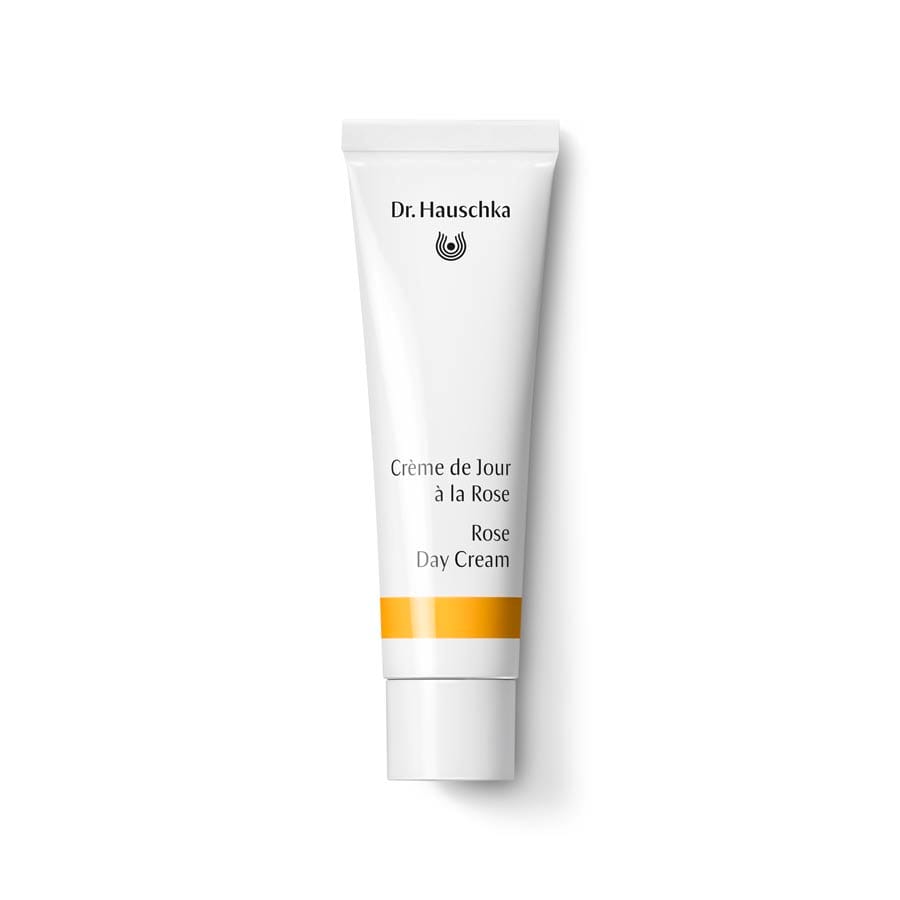
Dr. Hauschka’s Rose Day Cream contains Peanut Oil (Arachis Hypogaea), a severe potential allergen. Weleda’s Skin Food contains Lanolin, a common contact allergen that can cause reactions in individuals with eczema.
According to FARE (Food Allergy Research & Education), food allergies can be life-threatening (FARE). Consumers with any sensitivities must scrutinize the full INCI list before purchase.
Part 5: Use Cases & Workflows in Practice
A product’s value is ultimately determined by how it performs in a real-world routine. This section explores practical workflows and highlights where these brands excel or fail.
Workflow 1: Morning Routine for Sensitive, Makeup-Wearing Skin
- Goal: Hydrate, protect, and create a smooth base for foundation.
- The Challenge: Product layering without “pilling” or irritation.
- Biossance (Winner): The Squalane + Omega Repair Cream is designed for this. Its silky, non-greasy texture absorbs quickly, plays well with serums and SPF, and creates a smooth canvas. Its hypoallergenic nature minimizes the risk of redness.
- Weleda (Failure): Skin Food is a non-starter. Its heavy, waxy base is slow to absorb and almost guaranteed to pill when foundation is applied over it, creating a disastrous, flaky texture.
- Dr. Hauschka (Risky): The Rose Day Cream is also very rich. While some users make it work, the high fragrance content and potential for a greasy residue make it a risky choice under makeup for sensitive skin.
Workflow 2: Nighttime Reparative Treatment for Severely Dry Hands
- Goal: Intense, overnight healing for cracked, dry skin on the hands.
- The Challenge: Creating a long-lasting, occlusive barrier to lock in moisture.
- Weleda (Winner): This is where Skin Food is an undisputed hero. Its thick, balm-like texture, rich in lanolin and beeswax, creates a powerful occlusive layer that is perfect for an overnight hand treatment. Its affordability — especially with an active promo code for Weleda — makes generous application practical.
- Biossance (Insufficient): The Omega Repair Cream is a great moisturizer, but it lacks the heavy, waxy-occlusive properties of a true balm. It will absorb too quickly to provide the all-night barrier needed for severely compromised skin. Users seeking a true healing balm might look to Weleda or even dermo-cosmetic options like La Roche-Posay Cicaplast.
- Burt’s Bees: The Hand Salve is a good competitor here, also using a beeswax base. It’s a solid choice, though many find Weleda’s formula to be slightly richer and more reparative.
S-T-A-R Case Study: Switching from “Natural Irritants” to “Clean-ical”
- Situation: A user with combination skin was using a popular “natural” routine featuring a fragrant Weleda face wash and the Dr. Hauschka Rose Day Cream. They experienced persistent redness and adult acne along their jawline.
- Task: Identify and eliminate the source of the irritation to achieve a calm, clear complexion.
- Action: The user switched to a simplified, “clean-ical” routine. They replaced the fragrant cleanser and rich cream with Biossance’s Squalane + Amino Aloe Gentle Cleanser and the Squalane + Omega Repair Cream.
- Result: Within four weeks, the user reported a significant reduction in redness and a near-complete cessation of new breakouts. By removing the constant exposure to essential oils, alcohol, and comedogenic ingredients, their skin barrier was able to repair itself. This highlights how “natural” does not always equal “better” for sensitive or reactive skin.
Part 6: Alternatives & Comparisons
This analysis pits Weleda against three distinct competitors. Understanding these head-to-head battles is key to finding the right alternative for your specific needs. The tool cards below distill each competitor into a decision-ready snapshot.
Category / Positioning
- Formulation Philosophy: Biotech-derived, lab-verified “clean-ical” science
- Signature Ingredient: 100% plant-derived squalane from renewable sugarcane
- Price Positioning: Premium (~$60 for Squalane + Omega Repair Cream, ~$35/oz)
- Best For: Sensitive, reactive, makeup-wearing skin; users prioritizing barrier repair and safety data
- Key Certifications: Leaping Bunny ✅ / Vegan ✅ / EWG Verified ✅
✅ Strengths
- Fragrance-free, hypoallergenic formulas across the main line
- Non-comedogenic squalane — safe for acne-prone and combination skin
- Leaping Bunny certified with a clean cruelty-free story
- Clinical claim: “100% showed improvement in skin barrier repair” after 5 days
- Layers smoothly under serums, SPF, and foundation without pilling
- Sustainable, sugarcane-based squalane avoids shark-derived alternatives
⚠️ Considerations
- Premium price point (~$60 per jar of Repair Cream)
- User-reported limitation: “too light for severe eczema or perioral dermatitis”
- Corporate uncertainty — Amyris bankruptcy and 2023 sale to The Hut Group (THG)
- Clinical study cited was on only 35 participants
- Lacks the “whole-plant” ritual appeal that Anthroposophic loyalists want
Ideal Use Cases & Professional Applications
- Under-makeup morning routine for sensitive, reactive skin
- Post-treatment barrier repair (after retinoids, actives, or in-office procedures)
- Everyday hydrator for combination or acne-prone skin
User Experience & Learning Curve
- Minimal — silky, non-greasy texture absorbs in seconds
- No fragrance means no adjustment period for scent-sensitive users
- Simple 2-3 step routines work well; no “system” required
Category / Positioning
- Formulation Philosophy: Anthroposophic — biodynamic, whole-plant extracts, rhythmic processing
- Signature Product: Rose Day Cream (~$45/oz)
- Price Positioning: Luxury; a basic routine (Cleanse, Tone, Moisturize) runs ~$121
- Best For: Users who value ritual, sensory experience, and top-tier ethical certification
- Key Certifications: Leaping Bunny ✅ / NATRUE ✅ / B Corp ⚠️ Pending (53.6)
✅ Strengths
- Leaping Bunny certified — cleanest cruelty-free story in the shortlist
- NATRUE certified natural cosmetics
- Luxurious sensory experience with rose extract, avocado oil, and shea butter
- 97% of participants reported skin felt soothed, balanced, and calmed (subjective study)
- Whole-plant philosophy appeals to purists of the Anthroposophic school
- Biodynamic sourcing supports sustainable farming practices
⚠️ Considerations
- Contains Peanut Oil (Arachis Hypogaea) — severe allergen risk
- High fragrance content and drying alcohols can irritate sensitive skin
- Rich texture leaves greasy residue and risks pilling under makeup
- Rejects modern actives (retinoids, AHAs, peptides) — no anti-aging power
- Extreme price point; “walled garden” system pushes multi-product spend
- B Corp recertification pending with a lower current score
Ideal Use Cases & Professional Applications
- Evening ritual routines for users who prize sensory experience
- Dry, non-reactive skin that responds well to occlusive, oil-rich creams
- Ethical purists who require Leaping Bunny + biodynamic sourcing
User Experience & Learning Curve
- Moderate — the “system” approach requires learning multi-step application
- Strong rose fragrance is polarizing; not suitable for scent-sensitive users
- Requires an INCI-list check for anyone with nut or contact allergies
Category / Positioning
- Formulation Philosophy: Mass-market natural; simple, accessible, budget-focused
- Signature Products: Sensitive Skin line, Hand Salve, Beeswax Lip Balm
- Price Positioning: Budget-friendly, drugstore-accessible
- Best For: Ethics-conscious shoppers on a budget; non-demanding skin types
- Key Certifications: Leaping Bunny ✅ (brand only; parent Clorox is not)
✅ Strengths
- Leaping Bunny certified — verified cruelty-free at the brand level
- Widely available in drugstores and mass retailers
- Consistently affordable with frequent sales and promotions
- Sensitive Skin line avoids common natural irritants
- “Clinically shown to provide moisture without causing redness or irritation”
- Solid Hand Salve (beeswax base) competes with Weleda for hand-care use
⚠️ Considerations
- Owned by The Clorox Company — not a cruelty-free corporate parent
- Formulas may not be potent enough for severe dryness or aging concerns
- Not vegan — contains beeswax
- Users report it is “not moisturizing enough for my dry skin”
- Simpler formulations offer a baseline, not a high-performance treatment
- No NATRUE, B Corp, or EWG Verified certifications
Ideal Use Cases & Professional Applications
- Budget-conscious daily routines for normal-to-sensitive skin
- Entry point into “natural” skincare without a premium commitment
- Reliable Hand Salve for moderate hand dryness
User Experience & Learning Curve
- Very low — familiar drugstore packaging and simple instructions
- Products are single-step friendly; no ritual required
- Wide availability makes replenishment effortless
Category / Positioning
- Formulation Philosophy: Anthroposophic; oil, wax, and whole-plant extract base
- Signature Product: Skin Food Original (~$8/oz)
- Price Positioning: Budget-friendly sticker price; hidden TCO if used on face
- Best For: Severely dry hands, feet, elbows, and body — not the face
- Key Certifications: NATRUE ✅ / B Corp ✅ (106.8) / Leaping Bunny ❌ (sells in China)
✅ Strengths
- Iconic occlusive balm — unmatched for overnight hand and foot repair
- Affordable sticker price with generous application budget
- Strong B Corp score (106.8) reflects verified social/environmental commitment
- NATRUE certified natural cosmetic
- Rich lanolin + beeswax base seals in moisture on cracked skin
- 100-year heritage brand with widely trusted body-care formulas
⚠️ Considerations
- Not Leaping Bunny certified — sells in mainland China retail stores
- Contains Lanolin — common contact allergen for eczema-prone skin
- Notorious “pilling” under serums, SPF, and foundation
- Comedogenic base can trigger breakouts on combination/acne-prone skin
- Poor performance as facial moisturizer forces a second-product purchase
- Contains essential oils and drying alcohols — sensitization risk over time
Ideal Use Cases & Professional Applications
- Overnight occlusive treatment for cracked, chapped hands and feet
- Body-care spot treatment for elbows, knees, and dry patches
- Winter reparative balm layered under gloves or socks
User Experience & Learning Curve
- Simple — squeeze from the tube, warm between palms, apply generously
- Strong herbal-citrus scent is polarizing for fragrance-sensitive users
- Not intuitive to layer with modern skincare — best used as final step or standalone
Weleda vs. Dr. Hauschka: The Battle of the Holistic Titans
This is a clash of two holistic brands born from the same Anthroposophic philosophy. Dr. Hauschka represents the luxury version, while Weleda is its accessible cousin. The key battleground is not just price, but also certification and risk.
Dr. Hauschka holds the ethically superior Leaping Bunny certification, but its inclusion of peanut oil presents a higher safety risk.
- Choose Dr. Hauschka if: You crave a luxurious, sensory, and ritualistic skincare experience and are willing to pay a premium for Leaping Bunny certification.
- Avoid Dr. Hauschka if: You have a nut allergy, sensitive skin, a limited budget, or are seeking results from modern active ingredients.
Weleda vs. Biossance: Natural Philosophy vs. Clean Science
For shoppers seeking brands like Weleda but with different formulation priorities, this matchup represents the central conflict in modern skincare. Weleda champions 1920s plant wisdom; Biossance champions 21st-century biotech.
It’s a choice between a story-driven, natural-as-is philosophy and a results-driven, science-perfected one.
- Choose Biossance if: Your primary concern is safety and science-backed efficacy. Its fragrance-free, hypoallergenic formulas make it the superior choice for sensitive skin.
- Avoid Biossance if: You have a strict budget or are wary of the brand’s long-term stability under its new corporate owner.
Weleda vs. Burt’s Bees: Heritage Natural vs. Mass-Market Natural
Here, two budget-friendly titans go head-to-head. The core conflict is a trade-off between formulation and ethics. Weleda’s Skin Food offers a richer, more occlusive formula that is more effective for severe body dryness.
However, Burt’s Bees holds the superior ethical high ground with its clear Leaping Bunny certification. Its formulas are simple but effective for non-demanding skin types, and its wide availability and frequent promotions make it a consistently good value.
While its parent company, The Clorox Company, is not cruelty-free, the brand itself maintains its certification, presenting a common dilemma for pragmatic shoppers.
- Choose Burt’s Bees if: You need a reliable, affordable, and accessible product that is certified cruelty-free.
- Avoid Burt’s Bees if: You have very dry skin needing a richer formula or if you view its ownership as an unacceptable ethical compromise.
If you’d like to keep browsing side-by-side reviews of skincare brands, our full category of Comparison AI Video Tools articles covers similar head-to-head analyses.
Part 7: Conclusion & Frequently Asked Questions
Final Verdict: A Decision Framework for the Conscious Consumer
The journey through the “natural” skincare landscape is fraught with contradictions. My final take, as an analyst of consumer trends, is that the “best” choice is not about finding a flawless product, but about understanding a personal trade-off between four key pillars: Ethics (cruelty-free status), Safety (ingredient sensitivity), Philosophy (holistic vs. scientific), and Price (true cost of ownership).
There is no single winner, only a “best fit” for your individual priorities. If you demand scientific safety, choose Biossance. If you cherish a luxury ritual, choose Dr. Hauschka. If you need budget-friendly ethics, choose Burt’s Bees. And if what you really need is a phenomenal body and hand balm, choose Weleda — ideally paired with today’s best Weleda voucher.
The next step is to identify your top priority and let it guide your purchase.
In the end, the most important label isn’t ‘natural,’ ‘clean,’ or ‘organic’ — it’s the ingredient list. This analysis proves you must look past the brand story and scrutinize the formula and the INCI list to truly protect your skin, your wallet, and your values. The power is in your hands to demand brand transparency.
Frequently Asked Questions
Q1: Is Weleda Skin Food good for your face?
For many people, no, it is not. While some individuals with extremely dry, non-reactive skin might tolerate it, its thick, comedogenic base of lanolin and beeswax often leads to clogged pores and breakouts on normal, combination, or oily skin types (Journal of the American Academy of Dermatology). Furthermore, its tendency to “pill” or roll off in balls makes it perform poorly under makeup or when layered with other skincare products like serums or sunscreen. It is best reserved for use as a rich body cream, a hand and foot treatment, or a spot treatment for dry patches on elbows and heels.
Q2: Is Weleda actually cruelty-free?
No, Weleda is not certified cruelty-free by the Leaping Bunny Program, which is considered the gold standard for cruelty-free ethics in the US and Europe (Leaping Bunny Program). While Weleda states on its website that it does not test on animals, the brand makes the business choice to sell its products in physical retail stores in mainland China. This decision creates a potential risk for post-market animal testing by local authorities, a risk that Leaping Bunny-certified brands are not exposed to. For consumers who demand the highest ethical guarantee, this is a significant deal-breaker and a major ethical compromise.
Q3: What is the main difference between Weleda and Dr. Hauschka?
While both brands stem from a similar holistic, Anthroposophic philosophy, they differ primarily in price, certification, and risk. Dr. Hauschka is positioned as a luxury brand, with its Rose Day Cream costing around $45/oz compared to Weleda Skin Food’s $8/oz. Ethically, Dr. Hauschka is Leaping Bunny certified, giving it a clear advantage for cruelty-free shoppers. However, it also presents a higher safety risk for some, as its formula contains potent allergens like Peanut Oil (ACAAI), which are not present in Weleda’s products.
Q4: Which brand is best for truly sensitive skin?
Of the brands compared, Biossance is the clearest choice for sensitive skin. Based on formulation data, it is the only brand among the four that consistently formulates to be hypoallergenic and is entirely fragrance-free across its main line. It actively avoids common natural irritants — like the potent essential oils and drying alcohols found in both Weleda and Dr. Hauschka — in favor of stable, lab-verified ingredients like squalane, which are known to support the skin’s natural barrier (Biological and Pharmaceutical Bulletin). This science-led approach makes it the lowest-risk option for most reactive skin types.
Q5: Why is Biossance so expensive?
Biossance’s premium price (around $35/oz) reflects its positioning as a “clean-ical” brand. The cost is driven by several factors: significant investment in biotechnology research and development (R&D) to create novel ingredients, the expense of conducting clinical trials to verify product claims, and the use of high-purity, often proprietary ingredients like their 100% plant-derived squalane. Unlike brands using commodity botanicals, Biossance’s model involves a more expensive, science-first supply chain (Cosmetics & Toiletries). Essentially, consumers are paying for scientific validation, safety testing, and advanced formulations.
Q6: Is Burt’s Bees a good ethical choice?
It’s complicated and a point of much debate among conscious consumers. The brand itself, Burt’s Bees, is proudly Leaping Bunny certified, meaning its own products and supply chain meet the stringent no-animal-testing standard (Leaping Bunny Program). This is a major positive. The complication arises from its ownership: Burt’s Bees was acquired by The Clorox Company, a massive corporation that is not cruelty-free and continues to test on animals where required by law. For ethical purists, supporting a brand owned by such a parent company is an unacceptable compromise, while pragmatists argue that supporting the cruelty-free brand within the portfolio sends a positive market signal.
Q7: What does NATRUE certification mean?
NATRUE is a Brussels-based international non-profit that provides a rigorous and transparent certification standard for natural and organic cosmetics. For a product to be NATRUE certified, it must meet strict criteria, including a very high percentage of natural, derived-natural, or nature-identical ingredients. It must also be free from synthetic fragrances, silicones, petroleum-derived ingredients, and microplastics (NATRUE). Both Weleda and Dr. Hauschka hold this certification, which serves as a third-party validation of their commitment to a traditional natural formulation philosophy, separate from safety or cruelty-free status.
Q8: Should I be worried that Biossance’s parent company went bankrupt?
Yes, it is a valid concern for a consumer. In 2023, Biossance’s parent company, Amyris, filed for Chapter 11 bankruptcy, and the brand was subsequently acquired by The Hut Group (THG), a large e-commerce company (Beauty Independent). While the acquisition saved the brand from disappearing, such corporate transitions introduce uncertainty. New owners often look to streamline operations and increase profitability, which can sometimes lead to changes in product formulations, price increases, or shifts in customer service quality. The long-term impact on the Biossance brand remains an unverified risk for loyal customers.
```html
```