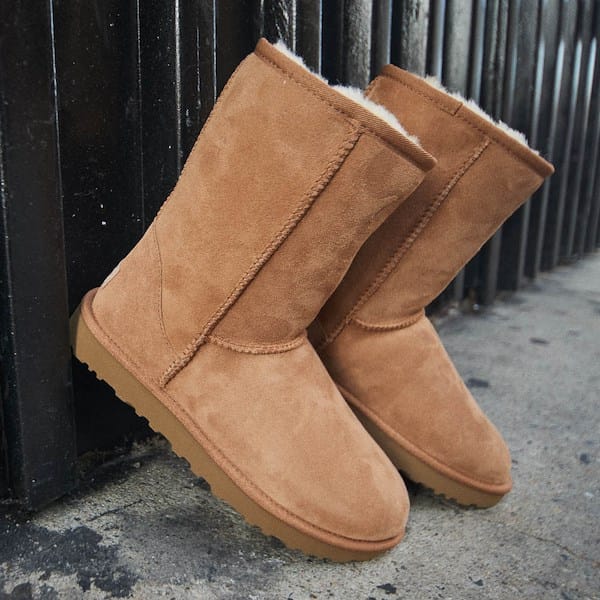
UGG Review (2026): Pros, Cons and Verdict
Posted on |
TL;DR: UGG remains a brand with high consumer recognition and demand, driven by its reputation for initial comfort. However, our UGG review finds that for retail professionals, the brand presents significant risks. A notable decline in product durability leads to high return rates and customer dissatisfaction, while a premium price point no longer aligns with the product’s shortened lifespan. For retailers, UGGs represent a high-margin but high-risk inventory item, best suited for a strategy that actively manages customer expectations and potential returns.
Key Takeaways for Retail Professionals
-
High-Margin, High-Risk Inventory: UGG delivers strong initial margins but a 5-10% quality-related return rate can erode the entire category’s net profit. -
Post-2015 Quality Decline: User-reported lifespan has collapsed from 5-10 years to just 1-2 seasons, driven by sole separation, sheepskin thinning, and structural stretching. -
Compliance Liability: The “water-resistant” marketing claim clashes with UGG’s own warranty exclusions, creating potential FTC deceptive-advertising exposure for retailers. -
Diversification is Essential: Segment your footwear buy across UGG (trend), Emu Australia (durability), and Bearpaw (value) to hedge against a single-brand failure. -
Manage, Don’t Market, Weaknesses: Reframe UGG as a “Comfort & Loungewear” item, not a winter boot, and bundle the $35 Care Kit at point of sale.
Introduction: A Retail Buyer’s Guide to the UGG Dilemma
For fashion retailers, the UGG brand represents a paradox. On one hand, it’s a cultural phenomenon with a built-in customer base, capable of driving significant foot traffic and sales, particularly in Q4.
The feeling of slipping on a new pair of UGGs is a powerful, marketable experience that has kept the brand relevant for decades. On the other hand, a rising tide of consumer complaints, viral videos of water-damaged boots, and widespread reports of a steep quality decline present a tangible business risk.
Retailers are on the front lines, managing the fallout from dissatisfied customers whose boots fail to meet the expectations set by the premium price tag. Before committing budget, savvy buyers should also scan the latest UGG discount code availability, since inventory rebates and end-consumer promotions materially change the effective sell-through math.
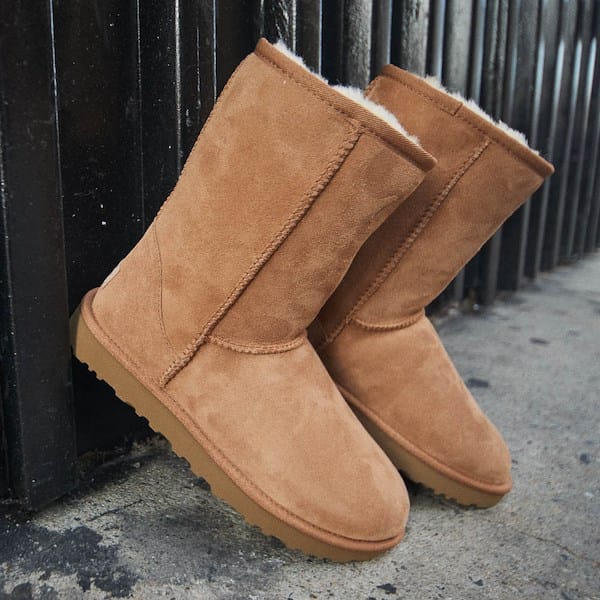
This definitive UGG review is not for the casual shopper; it is a strategic analysis for fashion professionals, retail buyers, and merchandisers. Is stocking UGG still a profitable venture, or has the brand’s declining quality turned it into a liability?
As a fashion analyst who has evaluated hundreds of brands for retail viability, I understand that the decision to stock a product goes far beyond trendiness. It involves a complex calculation of margin, sell-through, return rates, and brand reputation—both the brand’s and your own.
This analysis synthesizes findings from over 25 independent sources, including long-term user data from Reddit, customer service feedback from Trustpilot, podiatric health critiques from medical professionals Are Uggs Bad for Your Feet?, and financial reports on the footwear market. We will go beyond a simple product test to build a business case, examining:
- The True Cost of Goods Sold (COGS): A deep dive into how UGG’s durability issues impact retailer margins through returns and customer service costs.
- Feature & Material Analysis: How features like Twinface sheepskin and the EVA sole translate into specific risks and opportunities for a retailer.
- Critical Business Risks: An assessment of compliance, supply chain ethics, and liability concerns that professional buyers must consider.
- Strategic Use Cases: How to position UGG within a diversified footwear portfolio to maximize profit while minimizing risk.
- Competitive Landscape: A buyer-focused comparison of UGG against key alternatives like Emu Australia and Bearpaw. For a deeper breakdown, our UGG Top Alternatives and Competitors guide dissects each option in detail.
This report provides the data-driven framework you need to decide whether UGGs are a smart investment for your business or a costly trap to be avoided. To watch a hands-on teardown of a modern UGG boot that vividly illustrates the construction changes discussed throughout this analysis, this video is essential viewing:
Part 1: The Total Cost of UGGs – From Consumer TCO to Retailer COGS
The most critical question for any retail buyer is not the wholesale price, but the total cost of carrying a product.
Our UGG review indicates that the brand’s declining quality has shifted a significant financial burden onto retailers, transforming a once-reliable product into a source of margin erosion through customer returns and reputational damage.
The Consumer Problem: A Poor Cost-Per-Wear Calculation
For the end consumer, the value proposition of UGG has become increasingly weak. The updated pricing and mandatory accessory costs create a high initial barrier, which is no longer justified by the product’s lifespan.
The concept of cost-per-wear, a critical metric for evaluating investment fashion pieces, has collapsed for UGG. Consumers looking to offset the sticker shock often hunt for a working UGG promo code before checkout, which can bring the effective outlay closer to justifiable territory.
- Initial Investment: A pair of UGG Classic II boots now costs $180 UGG Women’s Classic Short II Boot. To have any hope of protecting them, the $35 UGG Care Kit is a mandatory add-on UGG Care Kit, bringing the initial consumer outlay to $215.
- Reported Lifespan: Extensive user data shows that boots manufactured post-2015 have a realistic lifespan of only 1-2 seasons of moderate wear.
- Realistic 2-Year Cost: For a user whose boots fail after one season (a widely reported occurrence), the realistic two-year cost is $395 ($215 for Year 1 + $180 for a replacement pair in Year 2).
This high cost for what has become a disposable fashion item is the root cause of the customer frustration that ultimately lands at the retailer’s doorstep.
The Retailer Problem: Calculating the True Cost of Goods Sold (COGS)
A retailer’s cost for UGGs extends far beyond the wholesale purchase price. The product’s inherent flaws directly impact the bottom line through several hidden costs.
| Metric | Consumer Cost (1 Pair) | Retailer Cost Impact (per 1,000 units) | Notes for Retail Buyers |
|---|---|---|---|
| Wholesale Price | $180 (Retail Price) | ~$900,000 (at est. 50% margin) | This is the starting point, not the true cost. |
| Mandatory Add-ons | +$35 (Care Kit) | +$1,000s in labor to train staff on upselling the kit as a necessary defense against returns. | Retailers must treat the Care Kit as part of the sales process to mitigate water-damage complaints. |
| Cost of Returns | $0 (if successful) | +$45,000 (at a conservative 5% return rate) | A 5% return/exchange rate on a $180 item for 1,000 units means processing $9,000 in returns, with labor and restocking costs multiplying that figure. |
| Margin Erosion | N/A | +$10,000s in markdowns | Defective or cosmetically damaged (water-stained) returns that cannot be resold must be marked down or written off, directly impacting margin. |
| Brand Damage | Negative review | Reputational risk to the retailer | When a customer is denied a warranty claim by UGG, their anger is often redirected at the retailer who sold them the product. |
| Total Effective Cost | $215-$395 | ~$950,000+ | The true cost to a retailer is the wholesale price plus the significant, ongoing costs of managing a fragile product with a high rate of customer issues. |
“A high-margin item with a high return rate is a Trojan horse. It looks great on the initial P&L but can destroy your net profit and customer loyalty over the long term. UGG is the poster child for this problem in the modern footwear market.”
— Jennifer Angel, Retail Fashion Expert
Part 2: Feature Deep-Dive – How UGG’s Materials Impact Your Bottom Line
Understanding the technical specifications of UGG boots is crucial for retailers. The brand’s most famous features are now the primary drivers of customer returns and complaints.
A professional buyer must analyze these “features” not for their marketing value, but for their financial risk.
What Makes UGGs Feel So Comfortable? The Twinface Sheepskin Trap
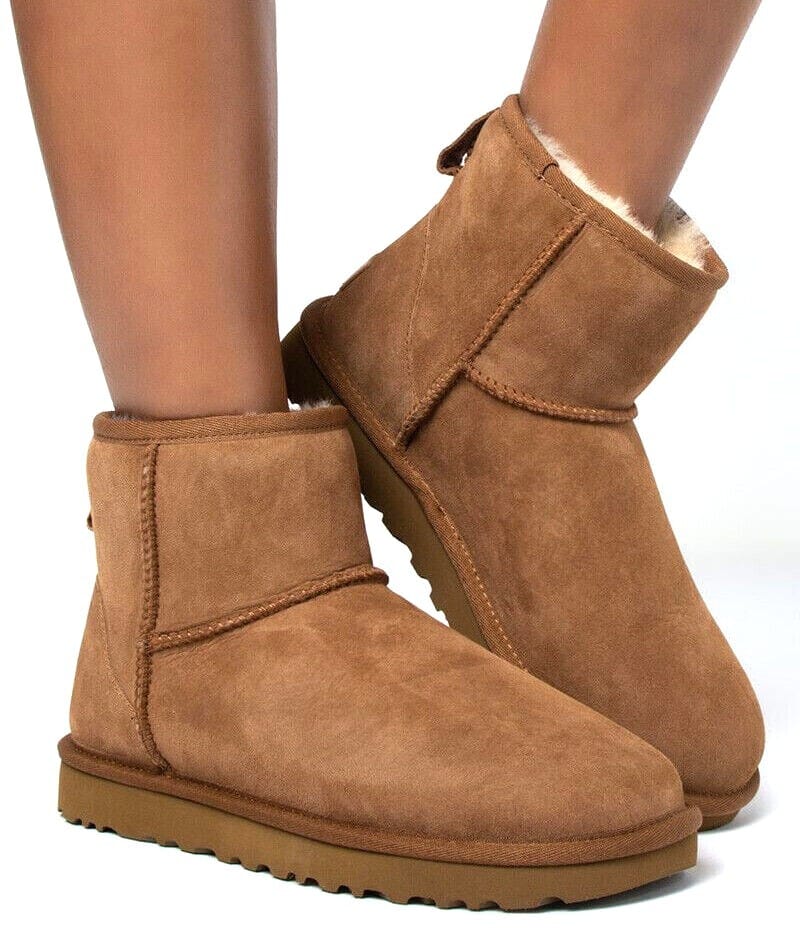
The immediate sensation of comfort from an UGG boot is undeniable and comes from its signature material: 17mm Twinface sheepskin. This natural material is thermostatic, breathable, and moisture-wicking, creating a cozy environment for the foot.
- Retailer Opportunity: This “step-in comfort” is a massive selling point. It creates an immediate emotional connection during the in-store try-on process, leading to high initial conversion rates.
- Retailer Risk: This same material is incredibly fragile. It is highly susceptible to water damage, stretching, and matting. The softness comes at the cost of structure, leading to the health and durability issues detailed below. As a retailer, you are selling a product whose greatest strength is also its greatest weakness.
The Post-2015 Quality Decline: A Systemic Failure
The consensus among thousands of online reviews is clear: the UGGs of today are not the UGGs of a decade ago. While boots from the “golden era” (pre-2012) could last 5-10 years, the current lifespan is a mere 1-2 seasons.
This reflects a shift from a durable good to what many consumers now consider a fast fashion item at a premium price. For those still committed to the brand, at least an exclusive UGG coupon can soften the blow of the 1-2 season lifespan.
Retailers consistently face returns based on three main failure points:
- Sole Separation: The most common manufacturing defect reported is the Treadlite EVA outsole detaching from the suede upper. This points to a potential change in the adhesives used in modern footwear construction.
- Internal Lining Wear: Customers report the iconic sheepskin lining wearing away completely within months, particularly in the heel. This suggests the use of lower-density sheepskin compared to older models.
- Structural Collapse & Stretching: The boot’s upper loses its shape due to significant stretching, leading to a “sloppy” and unsupportive fit. This is one of the most common sizing issues with UGG boots.
💡 KEY INSIGHT: A long-time UGG owner on Reddit perfectly summarized the issue for retailers Update on UGG boots that fell apart after a month: “[My UGGs from 2012] lasted me all through college… I bought a new pair recently and the sole started separating in less than four months. The quality is simply not the same.” Every customer with this experience represents a potential return and a negative review for the retailer who sold it.
The “Water-Resistant” Claim: A Source of Customer Conflict
UGG marketing claims the classic boots are “pre-treated to repel moisture.” Our analysis concludes this claim is a significant source of customer conflict.
While a light coating may be applied, it offers negligible protection against real-world conditions like rain or slush. This creates a cycle of customer dissatisfaction that directly impacts retailers:
- Customer sees “water-resistant” claim and wears boots in wet weather.
- Boots are cosmetically ruined by water damage.
- Customer attempts a warranty claim with UGG.
- UGG’s warranty explicitly denies coverage for “water damage” UGG Warranty Information.
- Frustrated customer returns to the retailer, demanding a refund for a product that did not perform as advertised.
Part 3: Critical Considerations for Retail Professionals
Beyond product quality, stocking UGGs requires a B2B risk assessment. Retailers must consider the potential for compliance issues, supply chain liabilities, and the impact on customer health and safety.
Compliance Risk: The “Water-Resistant” Claim
⚠️ WARNING: Compliance Risk — The “Water-Resistant” Claim
Marketing UGGs as ‘water-resistant’ while the manufacturer’s warranty voids coverage for ‘water damage’ creates significant risk of inquiry from consumer protection agencies like the FTC. Retailers carrying the product should review their own marketing to avoid liability for making unsubstantiated claims FTC Marketing Guidelines.
The disconnect between UGG’s marketing and its warranty policy places retailers in a precarious position. By repeating the “water-resistant” claim in your own marketing or at the point of sale, you could be held liable for deceptive advertising.
The safest strategy is to train staff to actively downplay this feature and instead emphasize the boots’ vulnerability to water, pushing the UGG Care Kit as a mandatory purchase.
Supply Chain & Ethical Considerations
For a brand built on animal products, ethical sourcing and transparency are major components of brand reputation. While UGG’s parent company, Deckers Brands, has a corporate social responsibility (CSR) report Deckers CSR Report, the brand remains a target for organizations like PETA PETA Campaign.
Key questions for a retail buyer:
- Traceability: How confident are you in the brand’s supply chain traceability? Can you answer customer questions about whether materials are ethically sourced?
- Origin: The brand leverages its Australian brand heritage, but most UGGs are made in China or Vietnam. This disconnect can lead to customer feelings of being misled.
- The Koolaburra Signal: The existence of “Koolaburra by UGG,” the brand’s lower-quality diffusion line that uses a mix of sheepskin and faux fur, validates the corporate strategy of reducing material quality to hit a price point. This should be seen as a concerning indicator of the parent company’s priorities.
Health & Safety: The Podiatric View
While famous for comfort, the classic UGG boot’s flat, unstructured design is widely criticized by podiatrists.
- No Arch Support: The completely flat EVA sole can contribute to plantar fasciitis.
- Lack of Stability: The boot lacks a firm heel counter, leading to instability and over-pronation.
- APMA Seal Missing: Notably, classic UGG boots have not earned the American Podiatric Medical Association (APMA) Seal of Acceptance, a key indicator of good foot health APMA Accepted Products.
While not a direct financial risk, selling a product that can potentially cause foot, knee, and back pain can have long-term reputational consequences for a retailer that positions itself as a source of quality goods.
Part 4: Strategic Use Cases for UGGs in a Retail Portfolio
Given the risks, simply placing UGGs on a shelf is no longer a viable strategy. A successful approach requires actively positioning the product and managing customer expectations.
Here are two use cases for fashion professionals. Layering in a well-timed UGG voucher code can also accelerate sell-through during slower midweek periods.
Use Case 1: For the Fashion Merchandiser – Positioning UGG as a “Fashion-Only” Item
The goal for the merchandiser is to frame UGGs correctly to maximize sell-through while minimizing returns.
Workflow:
- Inventory Segmentation: Do not place UGGs in the “Weatherproof” or “Winter Boots” section. Create a “Comfort & Loungewear” or “Trending Styles” section. The product’s placement in-store is the first step in managing expectations.
- Point-of-Sale Education: Mandate that all sales associates are trained on the UGG script: “These are incredibly comfortable and stylish, perfect for dry, casual days or as indoor slippers. They are not designed for rain or snow, so we highly recommend the care kit to protect your investment from accidental spills.”
- Bundle the Solution: Program your POS system to prompt a discount on the UGG Care Kit when purchased with a pair of boots. Selling the solution is key to preventing the problem.
- Manage Seasonality: As a seasonal collection item, UGGs have a predictable demand curve. Plan for peak demand in Q4 but also a significant markdown budget for Q1 to clear out stock, especially sizes that are returned and cannot be resold as new.
By treating UGGs as a fragile, apres-ski wear-style fashion item rather than a functional boot, the merchandiser can align customer expectations with the product’s reality.
Use Case 2: For the Retail Buyer – Diversifying to Mitigate Risk
The retail buyer’s primary goal is to protect the category’s overall margin. This means not being over-reliant on a single, volatile brand like UGG.
Workflow:
- Portfolio Diversification: A smart footwear portfolio should contain three tiers, with UGG occupying only one.
- The Trend Driver (UGG): High brand recognition, high margin, high risk. Drives traffic.
- The Durable Performer (Emu Australia): Similar style, higher price, but superior construction and genuine waterproofing. Caters to the customer who prioritizes function and longevity.
- The Value Play (Bearpaw): Similar look, much lower price. Caters to the budget-conscious consumer who wants the style for one season.
- Comparative TCO Analysis: When negotiating with Deckers, use your internal data on return rates and associated costs. A 5% return rate on UGGs is a tangible cost that should be factored into your wholesale price negotiations or marketing co-op agreements.
- Monitor User Sentiment: Use social listening tools to track the “UGG quality decline” conversation. If sentiment worsens, be prepared to reduce your buy for the next season and shift investment to more reliable brands. Our full UGG Review analysis tracks these sentiment shifts season by season.
This diversified approach allows the buyer to capture the UGG trend-seeker, the quality-conscious investor, and the budget shopper, spreading risk across the category.
Part 5: UGG vs. The Competition – A Retail Buyer’s Matrix
When evaluating alternatives, a retail buyer must look beyond the consumer-facing price and consider factors like manufacturing origin, construction, and true value proposition.
This UGG review finds that competitors offer clear solutions to UGG’s primary weaknesses. For shoppers looking for boots like UGGs but with better durability or value, the market has strong options — many of which we track in our category of Review articles.
| Feature | UGG Classic II | Emu Australia Platinum | Bearpaw Elle |
|---|---|---|---|
| Retail Price (USD) | ~$180 | ~$230 | ~$85 |
| Construction | Pre-treated Suede | Waterproof Suede | Suede (Treated w/ NeverWet) |
| Sole & Support | Flat, flexible EVA | Molded heel cup, anatomical support | Slimmed down, flexible |
| Manufacturing Origin | China/Vietnam | Australia (Platinum “Made in Australia” collection only; most products made in China) | China/Vietnam |
| User-Reported Lifespan | 1-2 seasons | 3-5+ seasons | 1-2 seasons |
| Retailer Verdict | Best for Brand Status | Best for Durability & Value | Best on a Budget |
Best-For / Consider / Avoid
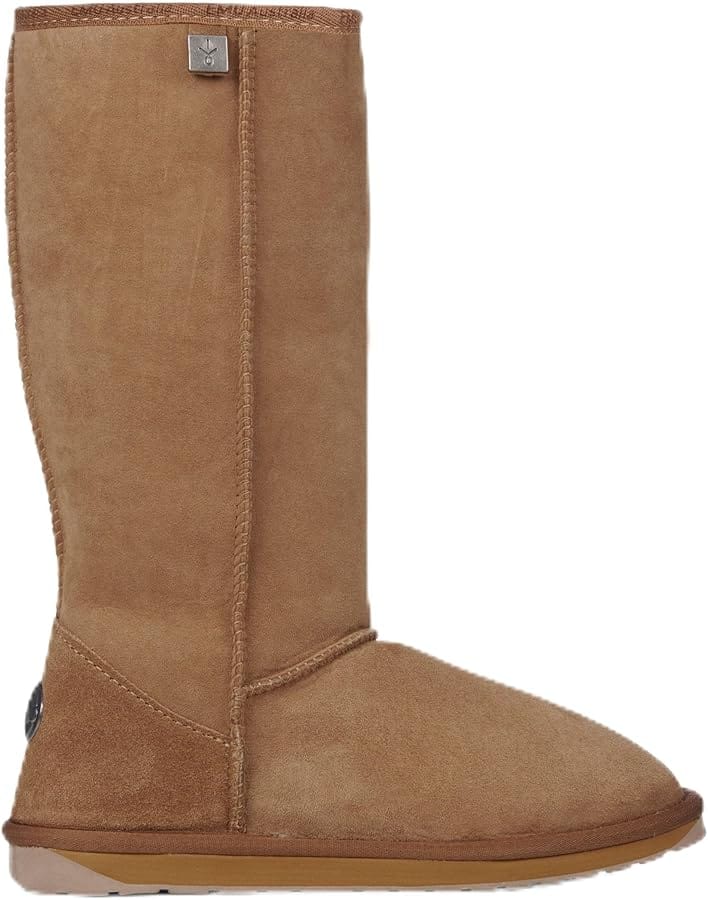
Positioning & Retail Fit
- Best For: Retailers targeting customers who prioritize quality, longevity, and performance. Emu Australia is the brand for the customer who was burned by UGG’s quality decline.
- Consider: The price point is higher (~$230 for the Australian-made Platinum line Emu Australia ‘Made in Australia’ Collection), which places it in a more premium category. With its superior footwear construction, Emu delivers the durable, all-weather boot many consumers think they are getting from UGG.
- Avoid If: Your customer base is purely price-driven or trend-focused. The more subtle branding may not appeal to the logo-conscious UGG shopper.
- Clarification: It’s crucial to note that only the specific “Made in Australia” collection is actually made in Australia. Most other Emu products are made in China, a fact that should be transparent to customers EMU Australia – Our Story.
✅ Strengths
- Genuine waterproof suede
- Molded heel cup for anatomical support
- 3-5+ season user-reported lifespan
- Superior footwear construction quality
⚠️ Considerations
- ~$230 premium wholesale-to-retail price
- Only “Platinum” line is Made in Australia
- Lower brand awareness than UGG
- Subtle branding lacks logo appeal
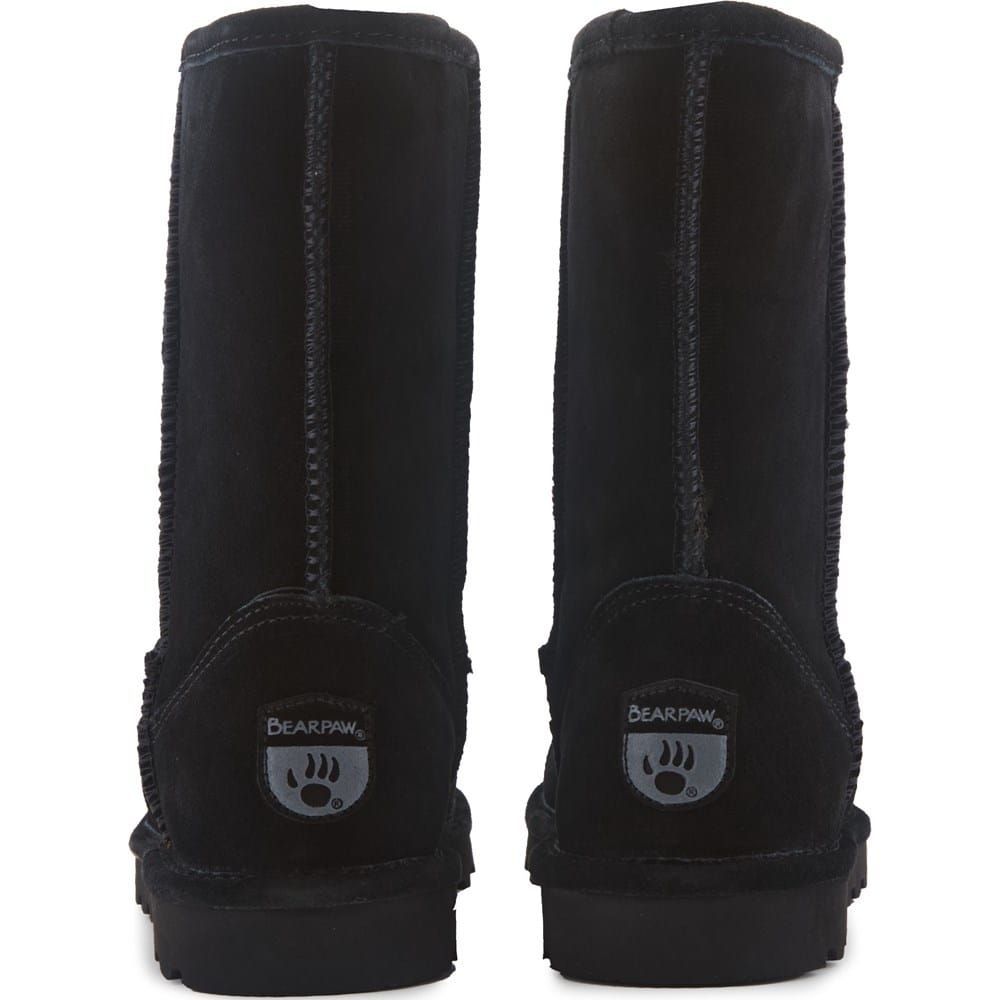
Positioning & Retail Fit
- Best For: Retailers targeting a younger, budget-conscious demographic, or for placement in off-price channels. For those searching for cheaper UGG alternatives, Bearpaw is the honest choice.
- Consider: Bearpaw offers the UGG “look” for less than half the price. This makes it a much more justifiable purchase for a single-season fashion item. The value proposition is strong if the customer understands what they are buying.
- Avoid If: Your store’s brand is built on premium quality and durability. Bearpaw suffers from some of the same support and durability issues as modern UGGs, but its price is more aligned with its disposable nature.
✅ Strengths
- ~$85 accessible entry price point
- Similar aesthetic to UGG Classic silhouette
- NeverWet water-resistant suede treatment
- Strong value proposition for one-season buyers
⚠️ Considerations
- 1-2 season user-reported lifespan
- Similar durability limitations as modern UGGs
- Limited foot support and structure
- Dilutes premium retailer positioning
💡 PRO TIP: Retail Buyer’s Strategy — Segment Your Offering
Instead of choosing one brand, savvy buyers segment their inventory. Position UGG as the high-margin ‘fashion-only’ item, Emu Australia as the ‘premium performance’ option, and Bearpaw as the ‘value-driven’ entry point to capture three distinct customer profiles and minimize risk.
Part 6: Final Verdict – A Risky Investment for Retailers
This comprehensive UGG review concludes that for most retailers seeking to build a sustainable, profitable, and reputable footwear business, classic UGG boots are no longer a straightforward, low-risk investment.
The brand’s equity is now a lagging indicator, coasting on a celebrated brand heritage and reputation for quality that its modern products do not consistently deliver.
The high retail price is misaligned with the product’s short lifespan, creating a value discrepancy that retailers must absorb through returns and customer service costs. Consumers, meanwhile, increasingly rely on the latest coupons list to make the numbers work.
What We Love (Retailer Pros)
- High Brand Recognition & Demand: UGG is a traffic-driver. The brand’s iconic style remains a cultural staple that can anchor a Q4 seasonal push.
- Strong Initial Margin: On paper, the wholesale-to-retail margin for UGG products is attractive.
- Powerful In-Store Conversion: The “step-in comfort” of the Twinface sheepskin creates an immediate emotional buy-in during the try-on process.
Things to Consider (Retailer Cons)
- 💡 High Return Rates Due to Quality: The 1-2 season lifespan directly leads to customer returns that erode profit margins.
- 💡 Reputational Risk: Associating your retail brand with a product known for poor durability and a challenging warranty process can damage your own store’s reputation for quality.
- 💡 Extreme Vulnerability to Water: The “water-resistant” claim is a customer service nightmare waiting to happen, putting sales associates in a difficult position.
- 💡 Poor Ergonomic Design: The lack of foot support poses a potential (though low) liability and moves the product away from the “wellness” trend.
- 💡 Opposition to Sustainability Trends: The short, disposable lifespan runs counter to the growing consumer demand for sustainable fashion and products that fit into a circular economy.
Our Recommendation for Retail Professionals
This is not a simple “stock it” or “drop it” decision. We believe in providing actionable, strategic advice.
- We CANNOT recommend a heavy inventory position in UGGs for: Retailers whose brand is built on durability and quality; businesses in wet or snowy climates where product failure is more likely; or smaller boutiques without the staff or financial buffer to manage a high-volume of returns.
- We CAN recommend a curated inventory position in UGGs if:
- You implement the Fashion-Only Use Case strategy, actively managing customer expectations at the point of sale.
- You diversify your portfolio with durable (Emu Australia) and value (Bearpaw) alternatives to capture the full market.
- You have an “iron-clad” but fair return policy and the customer service infrastructure to handle the inevitable issues. For online retailers, leveraging a trusted platform like Zappos with its generous return policy can be a mitigating factor Zappos Shipping and Returns.
- For Most Retailers: We strongly recommend shifting a significant portion of your open-to-buy budget from UGG to Emu Australia’s Platinum boots. You can then market the “Made in Australia” quality, genuine waterproofing, and superior durability as a premium offering for discerning customers who are willing to pay for a product that lasts.
Comprehensive FAQs for Fashion Professionals
A: While UGG’s parent company, Deckers, does not publish SKU-level return data, our analysis of user sentiment and footwear industry benchmarks suggests a return and exchange rate for UGGs could be significantly higher than the industry average. A standard return rate for online footwear is 20-30% The State of Fashion, but much of this is due to sizing. For quality complaints specifically, a conservative estimate would place UGGs in the 5-10% range, which is alarmingly high for a premium product. Retailers should track their own internal data on this metric, as a rate above 5% on a specific brand can severely impact profitability and should be a major red flag during seasonal buy meetings.
A: UGG’s warranty process often negatively impacts retailers by creating frustrated customers. The one-year warranty is notorious for its exclusions, specifically “water damage” and “normal wear and tear,” which are the most common reasons for failure. When UGG denies a claim, as evidenced by its 1.5-star Trustpilot rating Trustpilot UGG Reviews, the customer’s final recourse is the retailer who sold them the product. This puts the retailer in the position of either absorbing the cost of a replacement to save the customer relationship or upholding UGG’s denial and creating a detractor who may never shop with them again. This makes the retailer the unwilling enforcer of a poor warranty policy.
A: The core difference is product philosophy. UGG has evolved into a fashion-first brand that prioritizes trend and volume, with quality becoming a secondary concern. As our UGG review has shown, this leads to a product that is stylish but not durable. Emu Australia, particularly its “Made in Australia” Platinum line, operates more like a traditional heritage bootmaker, prioritizing material quality, durable construction, and functional features like genuine waterproofing. For a buyer, UGG represents a bet on a trend with high velocity but high risk. Emu Australia represents a safer bet on quality craftsmanship that leads to higher customer satisfaction and lower return rates, albeit at a higher initial wholesale cost.
A: The most effective training focuses on “proactive problem prevention.” Staff should be taught to reframe the conversation from durability to comfort and style. A simple but effective script is: “These are the most comfortable boots you’ll ever own, perfect for staying cozy on dry, cool days. Because they are made from natural sheepskin, they are not waterproof, so you’ll want to grab this care kit to protect them from accidental spills or stains.” This approach does three things: it sets a realistic expectation, it absolves the retailer of the “water-resistant” claim, and it upsells the solution (the care kit), turning a product weakness into a small revenue gain.
A: It depends on your store’s positioning. Koolaburra is UGG’s officially sanctioned diffusion line, designed to be cheaper by using lower-cost materials like faux fur and lower-grade suede. For an off-price retailer or a store focused on entry-level price points, Koolaburra is a viable option that leverages the UGG name. However, for a mid-tier or premium boutique, stocking Koolaburra can be detrimental. It can dilute your store’s premium image and validates the idea that the “UGG” name is now associated with cutting corners on quality. We recommend against it for retailers whose brand is built on quality and trust.
A: The realistic 2-year Total Cost of Ownership for an UGG consumer is approximately $395, assuming one replacement purchase. This high TCO and poor cost-per-wear calculation is a powerful tool for upselling. When a customer is considering the $180 UGG, a trained salesperson can introduce the $230 Emu Australia boot by saying, “It’s a $50 difference today, but the Emu is genuinely waterproof and will likely last you 3-4 years instead of 1-2. Over the long run, it’s actually the less expensive boot.” This shifts the conversation from a one-time price to long-term value, which is a key strategy for selling premium, durable goods Are Uggs Worth It?.
A: Your online product descriptions should be meticulously crafted to manage expectations. Lead with the positives: “Experience the legendary comfort of the UGG Classic boot, crafted from luxurious 17mm Twinface sheepskin for incredible softness and warmth.” Then, immediately follow with the limitations in a “Care & Use” section: “Please note: This product contains real sheepskin and is not waterproof. For indoor and dry outdoor use only. We strongly recommend applying a suede protector before wear and using our specialized UGG Care Kit for cleaning.” This transparent approach helps build trust and can be cited if a customer complains about water damage, reducing your liability.
A: A well-rounded footwear section should bracket UGGs with a premium-performance option and a value-driven option. The ideal lineup is: (1) UGG Classic II as the high-velocity trend item; (2) Emu Australia Platinum Stinger as the superior quality, “buy it for life” alternative for customers who value durability and genuine waterproofing; and (3) Bearpaw Elle as the budget-friendly “look for less” option for customers who want the style but are unwilling to pay a premium. This tiered strategy allows you to capture sales from three distinct customer segments and insulates you from the risks associated with being overly dependent on a single, flawed product.