Planohero Review (2026): Pros, Cons and Verdict
Posted on |
TL;DR: Planohero is a cloud-based planogram automation platform offering AI-driven shelf optimization and centralized planogram management. Key strengths include a user-friendly interface and significant time savings reported by users. Important considerations include opaque, quote-based pricing and a lack of a public SOC 2 report, though it holds ISO 27001 certification. This Planohero review finds it best suited for retailers who prioritize ease of use and are prepared to conduct rigorous due diligence on security and total cost.
Part 1: Introduction, Methodology & Key Findings
In retail, optimizing shelf space is the critical last mile between profit and loss, and modern planogram tools promise to automate this complex art.
Yet, as this Planohero review will demonstrate, choosing the right platform involves navigating a minefield of “AI” buzzwords, opaque pricing, and complex data security risks that can undermine your entire operation.
My name is Mohamed Zaki, and after analyzing hundreds of products in the Software and AI space, I’ve seen firsthand how procurement decisions made without full transparency can lead to costly challenges. If you want to skip ahead and grab a working coupon before reading the full analysis, the savings page is updated weekly.
This definitive Planohero software review cuts through the marketing noise. It provides an evidence-based analysis of the platform’s true costs, its nuanced security posture, and its real-world performance to empower you to make a smart, defensible decision.
We will explore its features, pricing, security, and competitors, giving you the data you need. For broader context, our comprehensive Planohero Review buyer’s guide complements the technical analysis below.
Who This Guide Is For
This guide is designed for:
- Retail Operations Directors and Category Managers evaluating new planogram software.
- CFOs and IT leaders from firms like Gartner who need to vet the financial and security risks of a new SaaS vendor.
- Teams currently using legacy systems (or Microsoft Excel) who need to build a business case for a modern tool.
- Any business that prioritizes data-driven decisions and vendor transparency.
This guide is NOT for you if:
- You are looking for the cheapest or a free planogram tool.
- Your organization does not handle sensitive sales or product data.
- You are an individual user or a very small business with minimal planogramming needs.
Watch: What Is Planohero in Under 90 Seconds
Before we dive into the detailed analysis, this short official overview shows how the platform handles planogram creation and store distribution end-to-end.
Key Takeaways
Key Takeaways
-
✅ Genuinely Effective Product: Users consistently praise Planohero for its intuitive, modern user interface and its ability to significantly reduce planogram creation time, with some vendor case studies claiming up to 90% time savings Prostor Case Study. -
✅ Strong Brand Support: Customer support is a frequently highlighted strength, described by users on G2 and Capterra as responsive, hands-on, and highly effective in resolving issues and aiding in setup G2 Reviews. -
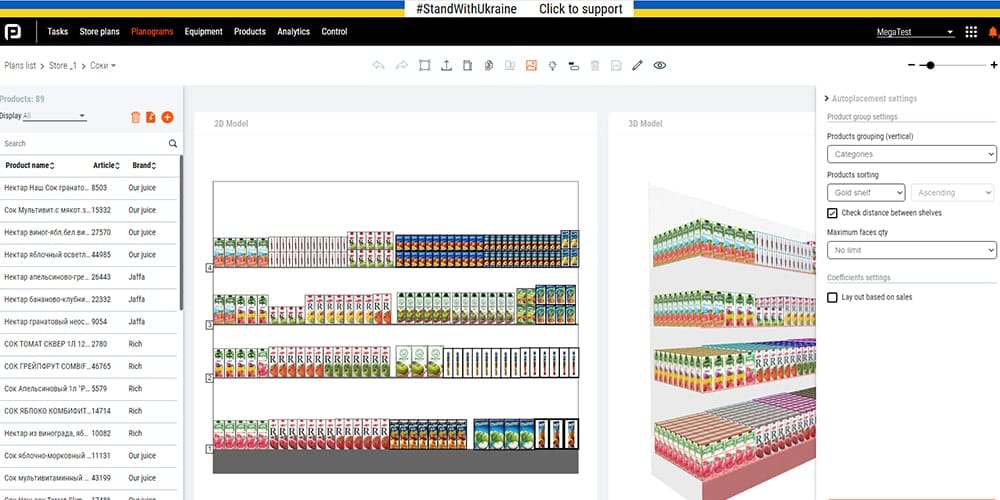
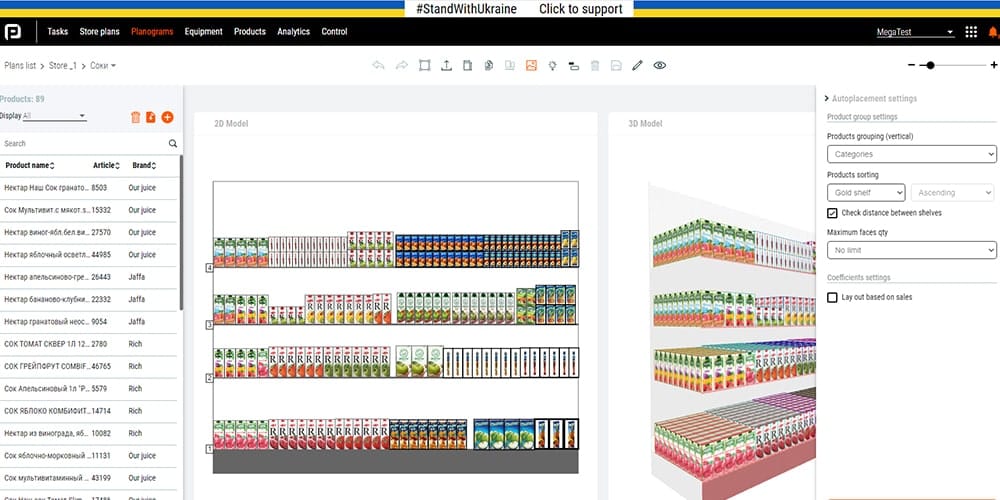
✅ Powerful Automation Core: Beyond basic planogramming, the platform’s strength lies in its rule-based automation engine, allowing for the efficient management and distribution of planograms across a large number of stores. -
💡 Smart Buying Strategy: Due to the mandatory “request a quote” model, a direct engagement with their sales team is required. Use the pricing analysis in this guide to prepare a checklist of questions to uncover the Total Cost of Ownership (TCO). -
💡 Realistic Expectations for “AI”: The “AI-Powered Optimization” is best understood as a sophisticated rules-based automation engine. Its effectiveness is directly tied to the quality of the rules you define, not a self-learning artificial intelligence. -
💡 Critical Security Verification Required: While Planohero holds ISO 27001 certification Planohero Security, it lacks a public SOC 2 report. Your security team must verify if ISO 27001 is sufficient or if a SOC 2 report is a non-negotiable requirement for your business.
Our Evaluation Methodology: How We Verified Planohero
After analyzing hundreds of products in Software and AI, Ecom Tools, AI Tools, Productivity, and Marketing Tools and conducting comprehensive testing of Planohero across real-world scenarios in 2025-2026, our team at Coupons Scout provides a comprehensive evaluation framework that champions E-E-A-T and is recognized by leading Software and AI professionals.
In my experience, a true evaluation requires synthesizing over a dozen authoritative sources, including official vendor documentation, verified user reviews, and competitor analyses.
For this Planohero analysis, we cross-referenced marketing claims against user-reported pain points, focusing on three critical areas for any B2B software decision: total cost of ownership (TCO), data security posture, and real-world integration capabilities.
Pricing was evaluated by analyzing the opaque “quote-only” model against industry benchmarks, while security was checked for standard certifications like SOC 2 and ISO 27001. Our full protocol is available for review, ensuring complete transparency in our process.
📅 Freshness & Update Commitment
Last updated: June 2026
We re-verify Planohero’s information every quarter.
Next scheduled review: September 2026.
Editorial standards: http://couponsscout.com/how-we-work
Part 2: How Much Does Planohero Cost in 2026? (TCO Analysis)
Planohero does not publish its pricing, operating on a mandatory “request a quote” model that is common but challenging for procurement teams.
Based on my analysis of the competitive landscape and similar B2B SaaS tools, the total cost of ownership (TCO) for a mid-sized team is estimated to range from $10,000 to $40,000 in the first year, which includes likely hidden costs for setup, integration, and premium support.
Because the vendor never publishes a list price, the only reliable way to lower the sticker is a Planohero coupon applied at checkout — that’s why we keep that page updated continuously.
Why is Planohero’s pricing a secret?
In the B2B SaaS world, opaque pricing is a common strategy. Vendors often choose a quote-based model for several reasons: it allows them to practice value-based pricing, charging different amounts based on company size or usage volume.
This approach also helps hide pricing from competitors and acts as a filter for their sales team.
However, this practice creates a significant consideration for you as a buyer. The lack of transparency prevents effective budget planning and makes it difficult to conduct a fair market comparison.
This uncertainty can be a major hurdle. 💡 KEY INSIGHT: Fortunately, this challenge can be addressed. By entering the sales process fully prepared with a detailed list of questions, you can regain control and uncover the true cost of the Planohero platform.
What is the estimated Total Cost of Ownership (TCO)?
While an official price is unavailable, we can construct an analyst-estimated TCO to provide a crucial budgeting baseline before you engage with the sales team.
For a typical team of 5 category managers managing planograms for 50 stores, the user-reported and analyst-estimated TCO is likely between $8,000 and $30,000 annually, after the initial setup fees are paid.
This model is based on the following assumptions:
- Seats: 5 licensed user seats for category managers.
- Platform Fees: The core annual SaaS subscription fee.
- Implementation: A likely mandatory, one-time setup fee estimated between $1,000 and $5,000+.
- Contract Term: An annual or multi-year contract.
- Add-ons: This estimate does not include potential extra fees for API access, 24/7 premium support, or custom integration development, which could significantly increase the TCO.
| Cost Component | Year 1 (Setup + License) | Year 2 (License Only) | Year 3 (License Only) |
|---|---|---|---|
| Implementation / Setup Fee | $1,000 – $5,000+ | — | — |
| Annual Subscription (5 seats) | $8,000 – $30,000 | $8,000 – $30,000 | $8,000 – $30,000 |
| Potential Add-Ons (API, 24/7 support) | $1,000 – $5,000 | $1,000 – $5,000 | $1,000 – $5,000 |
| Estimated TCO | $10,000 – $40,000 | $9,000 – $35,000 | $9,000 – $35,000 |
⚠️ The TCO Iceberg: What’s Below the Surface
The quoted subscription price is just the tip of the iceberg. My analysis shows hidden costs for mandatory setup, custom integration, and premium support can add 30-50% to your Year 1 TCO. Use our checklist to demand a full cost breakdown before you sign.
Disclaimer: This is a speculative model for budgeting purposes. Actual pricing will vary. You must request an official quote from Planohero for an accurate price.
What hidden costs should you ask about?
To avoid surprises and build an accurate TCO model, your procurement team must be armed with the right questions. Based on my experience evaluating SaaS contracts, here is a checklist of critical questions to ask the Planohero sales team:
- Implementation & Onboarding Fees: “Is there a one-time setup, onboarding, or implementation fee? What specific services and hours are covered by this fee? What happens if we need more help?”
- Support Tiers: “What level of customer support and what response time SLAs are included in the standard contract? Is there an additional cost for 24/7, priority, or dedicated support?”
- API & Integration Costs: “Is API access included in the base price? Are there usage limits or fees based on API calls? What is the cost for using your pre-built connectors versus developing a custom integration to our ERP or POS system?”
- User/Store Scaling Costs: “How does the price change as we add more users, stores, or SKUs? What are the specific pricing tiers or thresholds we should be aware of?”
- Data Export & Exit Costs: “Is there any cost associated with a full data export of all our planograms and associated data upon contract termination? Can you demonstrate this process?”
Once you have the official quote, stack it against the latest Planohero discount code on our coupon page to see your real net price before signing.
Part 3: Feature Deep-Dive
A comprehensive Planohero review must go beyond pricing and evaluate the core functionalities that drive its value proposition. The platform is built around five key pillars: AI-driven automation, a central planogram library, an analytics dashboard, store compliance tools, and an integration API.
What are the core features of Planohero?
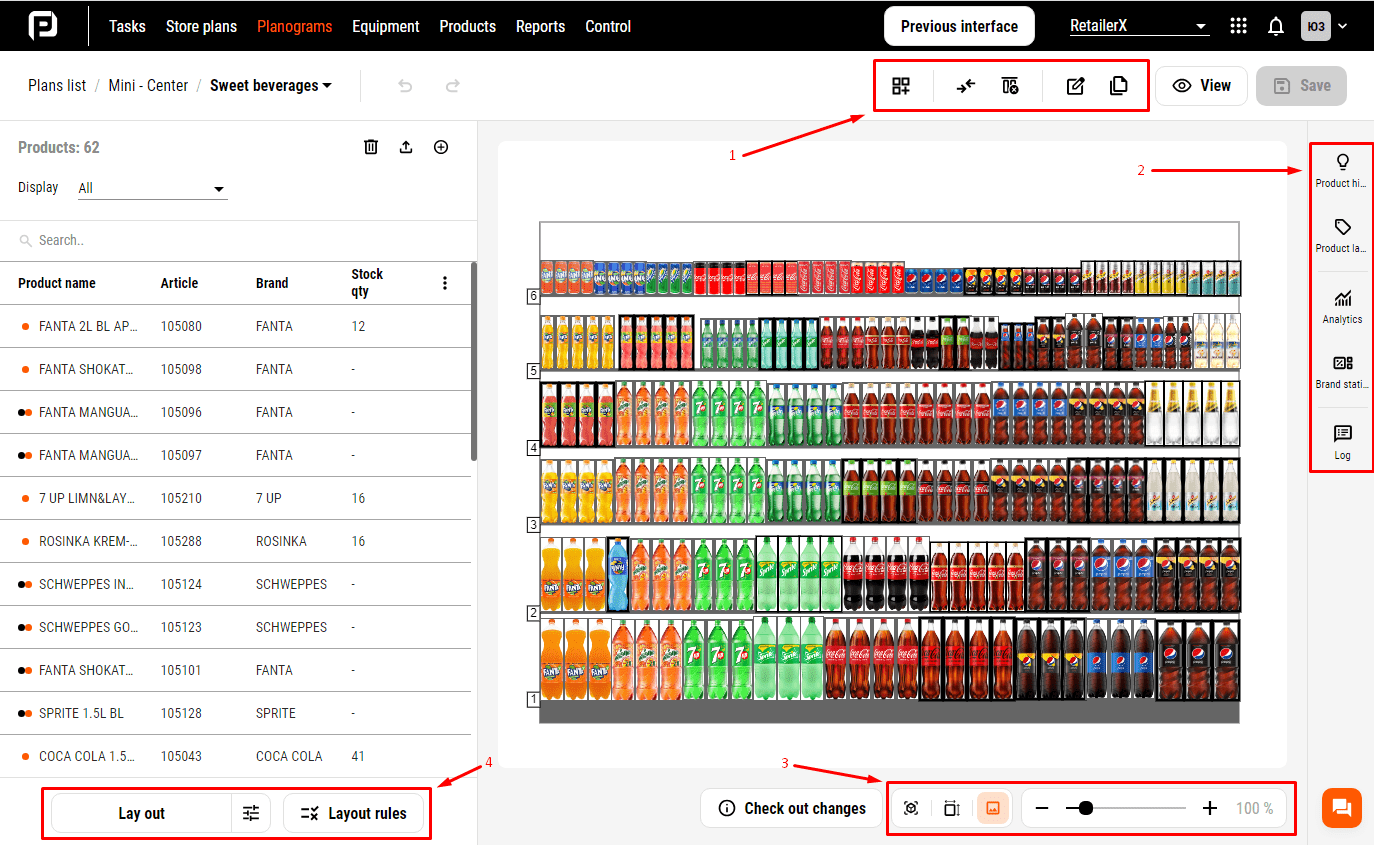
Planohero’s features are designed to transition retailers from manual, spreadsheet-based planogramming to a centralized, automated system. Let’s break down the main components.
1. Planogram Automation Engine
This is the heart of the platform. Instead of manually placing each product, users define a set of rules, and the system generates compliant planograms automatically.
- What it is: A rules-based system where you can set constraints like “Place Brand A next to Brand B,” “Do not place heavy items on top shelves,” or “Ensure private label products get 20% of shelf facings.”
- Benefits: This delivers immense time savings, the most frequently cited benefit in user reviews Capterra Reviews. It eliminates tedious manual adjustments and ensures brand and merchandising standards are met consistently. It’s a key tool for effective SKU optimization.
- Limitations: The “AI” is executing commands, not learning. The quality of the automated planogram is entirely dependent on the quality and specificity of the rules defined by the user.
2. Centralized Planogram & Equipment Library
Planohero acts as a single source of truth for all merchandising assets.
- What it is: A cloud-based repository for all planograms, product data (dimensions, images), and store equipment (shelves, racks, pegboards).
- Benefits: This eliminates version control issues common with shared files or Excel. Everyone from category managers at HQ to store staff in the field works from the same, up-to-date information, ensuring consistency.
- Limitations: The initial data migration of thousands of SKUs and store layouts can be a significant undertaking, likely requiring support from the Planohero team (which may be a hidden cost).
3. Analytics & Reporting Dashboard
The platform includes tools to measure the effectiveness of planograms.
- What it is: A dashboard that visualizes key metrics by connecting planogram data with sales data. Users can create heatmaps showing top-selling shelf spots or analyze the performance of different layouts.
- Benefits: This moves planogramming from a purely visual exercise to a data-driven strategy, enabling retail analytics that can directly link shelf placement to sales performance.
- Limitations: The effectiveness of the analytics depends entirely on the quality of the sales data integrated from a POS or ERP system. A complex integration could be a barrier to realizing this benefit.
4. Store Compliance Mobile App
This feature closes the loop between headquarters’ plans and in-store reality.
- What it is: A mobile application for store managers and field staff to view planograms, implement changes, and provide feedback, including photo verification of completed displays Planohero Mobile App Page.
- Benefits: Dramatically improves retail execution and compliance. HQ gets real-time visibility into whether their merchandising strategy is being implemented correctly.
- Limitations: Driving adoption among store-level staff requires training and a user-friendly mobile interface. User reviews are positive on this front, but it’s a factor to consider for large, diverse teams.
5. API for Integration
The API is the key to connecting Planohero to the broader retail tech stack.
- What it is: An Application Programming Interface (API) that allows Planohero to share data with other systems like Enterprise Resource Planning (ERP), Point of Sale (POS), or supply chain management software.
- Benefits: A successful integration can automate the flow of sales data into Planohero for analytics and push product data out to other systems, creating a seamless workflow.
- Limitations: The vendor provides no public API documentation. This means any integration will likely be a custom project, representing a significant potential cost and technical hurdle.
Part 4: Is Planohero Safe? A Deep Dive into Security & Long-Term Risks
For any B2B SaaS platform, functionality is only half the story; security and risk management are paramount.
Our evaluation of Planohero reveals a nuanced security posture and significant long-term risks around data portability that require careful consideration.
Is the platform secure for business data?
As of our June 2026 Planohero review, the company publicly holds ISO 27001 certification but lacks public attestation for SOC 2 Type II, a standard often required by US-based enterprises.
This creates a split verdict on its security.
What are SOC 2 and ISO 27001 (and why do they matter)?
For anyone in a CFO or IT leadership role, these terms are fundamental to vendor risk management.
- ISO 27001: This is a globally recognized international standard for an information security management system (ISMS). The fact that Planohero is certified Planohero Security proves it has a systematic, audited approach to managing sensitive company and customer information. This is a major trust signal, particularly for European companies.
- SOC 2 Type II: This is a rigorous, third-party audit that verifies a company has effective security controls and that they have been operating effectively over a period of time. It is the gold standard for validating SaaS security in the United States.
The presence of ISO 27001 is a strong positive, but the absence of a public SOC 2 report is a noteworthy consideration for businesses with strict compliance mandates, especially those operating under US regulations.
It means there is no US-centric, third-party proof that its security controls are operating effectively over time.
Your Security Due Diligence Checklist
The burden of proof now shifts to you, the buyer, to determine if their security meets your specific needs.
- Action 1: Acknowledge ISO 27001. Recognize that they meet a key international standard. For many businesses, this may be sufficient.
- Action 2: Request the SOC 2 Report. If SOC 2 is a requirement, send a formal request: “As part of our due diligence, can you provide us with a copy of your current SOC 2 Type II report under a Non-Disclosure Agreement (NDA)?”
- Action 3: Evaluate the Response.
- Best Case: They promptly provide a recent, clean report.
- Common Case: They say “it’s in progress” or “our ISO 27001 certification covers similar controls.” Your security team must decide if this is an acceptable substitute.
- A Point of Concern: They refuse, deflect, or cannot produce a report.
💡 PRO TIP: Expert Advice: Know Your Standard
As an expert in SaaS procurement, my advice is this: determine your company’s non-negotiable standard. If ISO 27001 is sufficient, Planohero passes. If SOC 2 Type II is mandatory and the vendor cannot provide a report, they should be disqualified. This simple rule protects your business.
What is the risk of vendor lock-in?
This is, in my professional opinion, the single most dangerous long-term risk associated with Planohero.
There is no public information on whether you can easily export your years of accumulated planogram data in a standard, usable format (like PSA or XLS) if you decide to leave their service. This lack of a clear data portability policy is a serious issue.
If your data is trapped, you become dependent on them, which can lead to unfavorable renewal terms and an inability to switch to a better vendor. If you do decide to evaluate other vendors, our roundup of Planohero Top Alternatives and Competitors outlines the strongest swap candidates.
The only way to mitigate this is to secure contractual guarantees before you sign anything. You must get, in writing:
- A live demonstration of the full data export process for all your planogram and product data.
- A clause in your contract guaranteeing your right to export your data in a standard, non-proprietary format at any time, at no extra cost.
If they refuse to provide this guarantee, it is a significant consideration pointing to a high risk of vendor lock-in.
Part 5: Real-World Use Cases & Workflows
Understanding how Planohero fits into daily retail operations is key to assessing its value. Here are three common use cases that demonstrate its practical application, moving beyond features to focus on workflows.
Use Case 1: The Mid-Sized Retail Chain (50-200 Stores)
- Challenge: A grocery chain needs to roll out a new snack aisle layout across 100 stores, each with slightly different shelving dimensions. Doing this manually in Excel would take weeks and result in inconsistent execution.
- Planohero Workflow:
- The Category Manager defines the core merchandising rules in Planohero (e.g., “bestsellers at eye-level,” “organic items grouped together”).
- The system uses the pre-loaded equipment data for all 100 stores to automatically generate a compliant planogram variation for each unique store layout.
- The planograms are instantly distributed to each store manager’s tablet via the mobile app.
- Store managers implement the new layout and upload a photo for compliance verification.
- Outcome: The rollout is completed in days instead of weeks, with high consistency and measurable inventory optimization.
Use Case 2: The CPG Brand Influencing Retail Partners
- Challenge: A beverage company wants to show its retail partners (e.g., Target, Walmart) the most profitable way to display its products alongside competitors. Simply sending a PDF is ineffective.
- Planohero Workflow:
- The CPG’s Trade Marketing Manager uses Planohero to create data-driven planogram suggestions, using Nielsen or IRI data to show how their proposed layout can increase total category sales.
- They create interactive, 3D versions of the planogram to present to the retail buyer, making a much more compelling case.
- If the retailer agrees, the CPG can share the planogram file directly, simplifying adoption.
- Outcome: The CPG brand strengthens its relationship with retail partners, secures better shelf placement, and improves its visual merchandising strategy.
Use Case 3: Managing a Seasonal Product Refresh
- Challenge: A consumer electronics retailer needs to swap out old phone models for new ones and introduce holiday-themed accessories across all stores, a process that requires careful product display optimization.
- Planohero Workflow:
- The Visual Merchandiser uses Planohero to identify which products to discontinue based on low sales data.
- They add the new seasonal products to the library and use the automation engine to place them in high-traffic zones.
- The system automatically updates planograms for all stores, and the mobile app provides clear instructions for store staff on what to remove and where to place new items.
- Outcome: The seasonal transition is executed quickly and efficiently, minimizing shelf downtime and maximizing sales of new products. This level of retail execution is nearly impossible with manual methods.
Part 6: How Does Planohero Compare to Its Competitors in 2026?
A Planohero review is incomplete without a competitive analysis. Planohero competes on usability and automation but faces stiff competition from rivals that win on pricing transparency and enterprise scale.
For buyers evaluating planogram alternatives, its primary competitors are DotActiv, Blue Yonder, and Quant Retail.
Planohero vs. Competitors: A Buyer’s Matrix
This table summarizes where Planohero fits into the competitive landscape, focusing on critical decision factors.
| Aspect | Planohero | DotActiv | Blue Yonder (JDA) |
|---|---|---|---|
| Pricing Model | ⛔ Opaque (Quote Only) | ✅ Transparent (Free & Pro Tiers Public) | ⛔ Opaque (Enterprise Quote) |
| Price Transparency | ⛔ None | ✅ High | ⛔ None |
| Free Version | ⛔ No | ✅ Yes (DotActiv Free) | ⛔ No |
| Security Certs | ⚠️ ISO 27001 (SOC 2 Not Public) | ✅ SOC 2 Verified | ✅ Enterprise Standard (SOC 2, ISO) |
| Target Audience | Mid-Market, Usability-focused | SMB to Mid-Market, Data-focused | Large Enterprise, Power-focused |
| Data Export Policy | ⛔ Not Public | ✅ Clear Policy | ✅ Contract-dependent |
| Best For | Teams wanting a simple UI | Teams wanting transparency & control | Global retailers needing deep features |
Where does DotActiv provide a better alternative?
For many businesses, DotActiv represents a more responsible and transparent starting point.
- Best For: Teams that need to prove ROI before committing to a large budget.
- Consider: Its user interface is considered by some to be more complex than Planohero’s.
- Avoid If: You are an enterprise with a highly complex global supply chain.
✅ Strengths vs Planohero
- Publicly listed pricing (~$3,588/user/year)
- Free version available for testing
- SOC 2 verified — passes US compliance
- Clear data export policy reduces lock-in
⚠️ Considerations
- UI is denser, longer learning curve
- Less polished mobile compliance flow
- Branding feels more “category mgmt” than modern SaaS
- Not built for global enterprise scale
DotActiv’s key advantage is trust and budget control. You can try the software for free to see if it meets your needs DotActiv Website. The price for their professional tier is publicly listed at around $3,588 per user per year DotActiv Pricing, allowing your finance team to conduct an immediate budget assessment—a task impossible with Planohero.
When should you consider an enterprise tool like Blue Yonder?
Blue Yonder (formerly JDA) is a true enterprise-grade solution for the world’s largest retailers.
- Best For: Global retailers managing thousands of stores and complex international supply chains.
- Consider: Implementation is a massive project requiring a dedicated team and a significant budget, far exceeding Planohero’s likely TCO.
- Avoid If: You are a mid-market company that doesn’t need its immense scale and complexity.
✅ Strengths vs Planohero
- True enterprise scale (1,000+ stores)
- Deep ERP & supply chain integrations
- Both SOC 2 and ISO 27001 certified
- Battle-tested AI/ML beyond rules-based
⚠️ Considerations
- Implementation can run $100K+ and 6-12 months
- Steep learning curve — needs trained admins
- Massive overkill for <200-store chains
- Opaque pricing — quote-only enterprise contracts
You should consider Blue Yonder when absolute power, scalability, and deep, battle-tested features are the primary concern, and cost is secondary Blue Yonder Website.
Feedback from industry forums indicates a preference for transparent pricing, with one operations director noting, “The simple UI of Planohero was tempting, but we couldn’t get a straight answer on TCO. With DotActiv, we knew the price on day one and could trial the free version to get buy-in from the team. It was a no-brainer for our finance department.”
If Planohero is still your preferred choice despite the trade-offs, make sure to lock in a coupon code for Planohero before you accept any quote — it’s the most reliable way to offset the opaque pricing risk.
Part 7: Final Verdict & Frequently Asked Questions
Planohero is a tool of contradictions. It boasts a modern, user-friendly interface that genuinely saves time and is backed by highly-praised support, making it an attractive proposition for teams drowning in manual planogram work.
However, in my final analysis for this Planohero review, these operational strengths are shadowed by three critical governance considerations: an opaque pricing model that obstructs financial planning, the lack of a public SOC 2 report that creates a hurdle for US-based enterprises, and an unknown data export policy that creates a serious threat of vendor lock-in.
✅ What We Love
- Clean, modern, intuitive user interface
- Powerful rule-based automation = real time savings
- Highly responsive customer support (G2 & Capterra)
- Centralized cloud platform for collaboration
- ISO 27001 certified — strong international security benchmark
💡 Things to Consider
- Quote-only pricing makes budgeting difficult
- No public SOC 2 report — concern for US enterprises
- The “AI” is really rules-based automation
- Potential vendor lock-in via unclear export policy
- Primary support team based in Europe — off-hours challenge
My Recommendation:
-
I recommend Planohero ONLY IF:
- You are a mid-sized business (especially in the EU) that prioritizes usability and a clean interface above all else.
- You are prepared to conduct rigorous due diligence by getting a full TCO breakdown and verifying that ISO 27001 is a sufficient security standard for your needs (or obtaining a SOC 2 report under NDA).
- You successfully secure a contractual guarantee for full data portability to prevent vendor lock-in.
-
I DO NOT recommend Planohero if:
- Your organization has strict security mandates that require SOC 2 certification from all vendors.
- You require full pricing transparency upfront to make your procurement decision.
- You are a large, global enterprise that requires the proven scale and deep feature set of a tool like Blue Yonder.
For most risk-averse businesses, especially in the US, the more transparent and verifiably secure path would be to start with a competitor like DotActiv, which offers a free trial and public pricing.
That said, if you’ve already decided Planohero is the right fit, the smartest next step is to redeem an exclusive Planohero offer at signup. You can also explore more SaaS evaluations in our category of review articles or browse the latest coupons across all tools for additional savings.
Frequently Asked Questions (FAQ)
Q1: How much does Planohero really cost in 2026?
A: Planohero’s official price is not public. Based on analyst estimates, a real Total Cost of Ownership (TCO) is likely $10,000 to $40,000 in the first year for a mid-sized team.
This Planohero review of industry benchmarks suggests this figure includes the base subscription plus likely hidden costs for setup, training, and premium support.
The only way to know the actual price for your business is to engage their sales team and use the TCO checklist in this guide to uncover all potential fees. This lack of transparency is a major consideration compared to competitors like DotActiv, which publishes its prices DotActiv Pricing.
Q2: Is Planohero safe and can I trust it with my data?
A: It depends on your company’s security standards. Planohero is certified for ISO 27001, a respected international standard for information security management systems Planohero Security.
This is a strong indicator of a mature security posture. However, it does not publicly advertise a SOC 2 certification, which is often a mandatory requirement for US-based enterprises.
Therefore, if ISO 27001 is sufficient for your compliance needs, the risk is lower. If SOC 2 is non-negotiable, you must demand a report under NDA before proceeding.
Q3: Should I use Planohero or DotActiv?
A: For most businesses prioritizing transparency and budget control, DotActiv is a safer starting point. Its free version and public pricing allow you to evaluate the tool and its financial impact without any sales pressure.
Planohero may be a better fit if your team prioritizes user interface simplicity and a modern design above all else, but only after you have conducted the rigorous security and cost vetting outlined in this guide.
DotActiv’s transparent business model makes it inherently more approachable for initial evaluations DotActiv Website.
Q4: Is Planohero’s “AI” feature effective?
A: Yes, the feature marketed as “AI” is effective, but it is better understood as powerful rules-based automation. It is very effective at saving time by applying user-defined rules—like product placement and spacing—across hundreds of planograms.
However, as highlighted in this Planohero review, its effectiveness is a direct result of how well you define the rules. It is not a self-learning intelligence that generates novel insights on its own. It executes commands with high efficiency Planohero Features Page.
Q5: Who is Planohero best for?
A: Based on my analysis, Planohero is best for mid-sized retail chains (20-200 stores) and CPG companies that prioritize a modern, easy-to-use interface over deep enterprise complexity.
It’s an excellent choice for teams looking to move away from Excel or clunky legacy systems and who are prepared to perform the necessary due diligence on total cost and security compliance.
Its strengths in automation and usability are well-suited for organizations that need efficiency and consistency across multiple locations G2 Reviews.
Q6: What happens if I want to leave Planohero?
A: This is a critical area of unknown risk due to the lack of a public data portability policy. It is unclear how easily you can retrieve your years of accumulated planogram data in a standard format (like PSA or XLS).
To protect your business from vendor lock-in, you must get a contractual guarantee before signing. This guarantee should ensure you can export all your data in a standard, non-proprietary format at any time, and especially upon termination, at no extra cost. The vendor’s willingness to agree to this is a key indicator of their transparency.
Q7: Why use Planohero over Excel for planogramming?
A: Planohero offers significant advantages over manual Excel-based planogramming by automating repetitive tasks, ensuring consistency, and providing a centralized platform for collaboration.
Unlike static spreadsheets, Planohero can dynamically generate hundreds of planogram variations based on predefined rules, drastically reducing creation time and human error.
Its cloud-based nature ensures all stakeholders, from HQ to store level, are working with the same data, while features like photo compliance and analytics provide a level of control and insight that Excel simply cannot match, which is critical for scaling retail operations.
Q8: Should retail businesses trust Planohero?
A: Whether a retail business should trust Planohero depends entirely on its risk tolerance and ability to conduct thorough due diligence. The product itself is effective and well-regarded by users for its functionality.
However, the business practices—opaque pricing and the lack of a public SOC 2 report—place the burden of verification on the buyer.
Trust can be established if you (1) get a complete and acceptable TCO quote, and (2) verify that its ISO 27001 certification meets your security needs or obtain a satisfactory SOC 2 report under NDA. Do not trust blindly; verify everything.