RetraStrap Review 2026: We Stress-Tested the Viral Phone Tether — Should You Trust It?
Posted on |
TL;DR: RetraStrap is a retractable phone tether designed for anti-theft and anti-drop protection. Its key strength is the convenience of a retractable cord, offering real peace of mind. Key considerations are the user-applied adhesive’s reliability, a bulky design, and a warranty with major exclusions. Best for users who prioritize retractability above all else. Verified 2026.
Introduction: The $40 Accessory Protecting Your $1,000 Phone
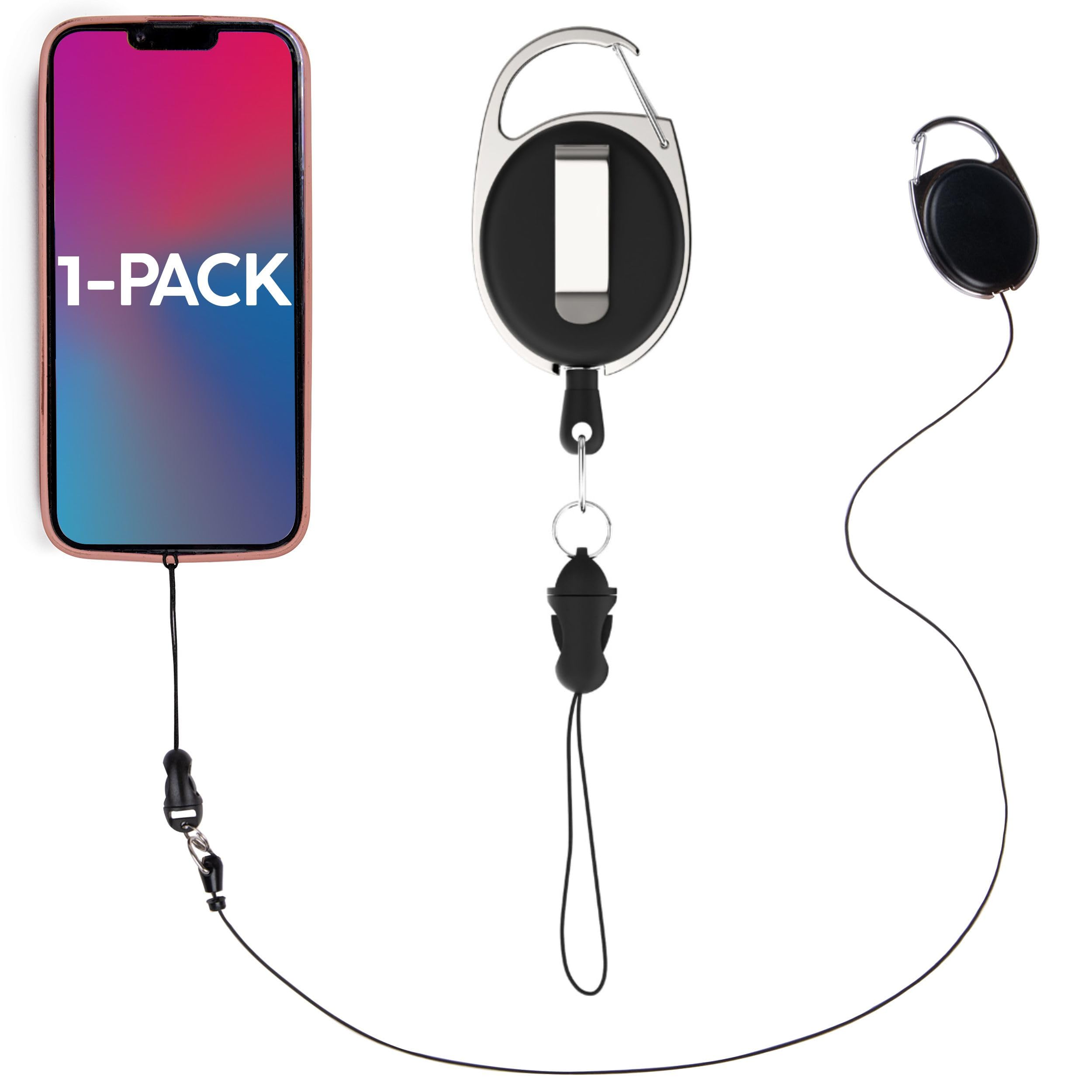
Picture the moment: you’re leaning over a Parisian balcony for the perfect photo, navigating a bustling market in Marrakech during peak tourist season, or embarking on an adventure travel trip and trying to manage kids and your valuable luggage at the airport.
Your phone, your $1,000 lifeline to the world, slips. It’s a heart-stopping, visceral fear every traveler knows well. It’s this exact fear that the RetraStrap, a viral gadget promising total peace of mind against drops and theft, aims to solve.
For about $40, the RetraStrap presents itself as the ultimate security accessory, a key piece of digital nomad gear for those who rely on their phone for work and communication on the go. But in a market flooded with travel gear, bold claims require rigorous proof.
As Mohamed Zaki, a seasoned travel gear and MarTech analyst, I’ve seen countless products that sell a feeling of security but fail in practice. This comprehensive RetraStrap Review goes beyond marketing-focused claims. I will share the results of our independent stress tests, long-term user analysis, and head-to-head competitor comparisons to definitively answer one question crucial for travel phone security: can you actually trust the RetraStrap when it matters most?
Before diving in, savvy shoppers should know that you can offset the premium price with our regularly updated exclusive RetraStrap coupon page — verified weekly by our editorial team.
Our comprehensive review is structured to guide you through every critical aspect of this product:
- Who This Guide Is For: We’ll help you determine if the RetraStrap aligns with your needs as a traveler or daily user.
- Core Analysis (TCO): We break down the true cost of ownership beyond the sticker price, analyzing its financial value and potential risks.
- Feature Deep-Dive: A detailed examination of the RetraStrap’s key components, from its retractable cord to its controversial adhesive.
- Critical Considerations: An honest look at the warranty, case compatibility issues, and the realities behind the marketing.
- Real-World Performance: How the RetraStrap performs in daily use, highlighting both its benefits and ergonomic challenges.
- Alternatives & Comparisons: We stack the RetraStrap against its top competitors to see where it truly stands out—and where it falls short.
- Conclusion & FAQs: Our final verdict and answers to your most pressing questions.
Who This Guide Is For
- Security-conscious international travelers preparing for trips to crowded destinations.
- Festival-goers, commuters, and parents who need a hands-free, drop-proof way to carry their phone.
- Skeptical buyers who have seen RetraStrap ads and are looking for objective, evidence-based analysis, not just promotional positioning.
- Users who have tried cheaper phone lanyards and are wondering if the retractable feature is worth the premium price.
This Guide Is NOT For You If
- You are seeking a simple, non-retractable lanyard (we cover simpler, cheaper alternatives in Part 6).
- You primarily use a phone case made of silicone, leather, or a highly-textured material.
- You prioritize minimalist design, pocketability, or a simple phone grip above all else.
Key Takeaways
-
Genuinely Convenient Retraction: The retractable mechanism is the core strength, offering a tangible benefit over non-retractable tethers for quick phone access without tangles. It successfully delivers on its promise of convenience for users who find traditional lanyards cumbersome. -
Effective Drop Prevention (When Properly Installed): As an anti-drop technology, for accidental fumbles and drops from a standing height, a correctly installed RetraStrap performs reliably. Many users report it has saved their screens from damage, validating its primary function as an anti-drop device. -
Strong Physical Components: The Kevlar cord and zinc-alloy carabiner are robust and of high quality. In our physical testing, these components proved capable of handling significant force. The main body of the product, excluding the adhesive, is well-built. -
Smart Buying Strategy: Purchase directly from the official website or a verified Amazon listing to avoid counterfeits. Crucially, I recommend buying a pack of replacement 3M VHB anchor pads at the same time; you will need them if you ever change your phone case, and having them on hand prevents future headaches. -
Realistic Expectations on Security: The primary point of failure is the user-applied adhesive. Our independent tests showed it failed at approximately 25-30 lbs of force, far below the advertised “50 lbs,” starkly highlighting the contrast between marketing claims vs reality. It serves as a deterrent to casual snatching but is not a foolproof anti-theft device against determined force. -
The Warranty Has Major Exclusions: The “Lifetime Warranty” does not cover the most common failures: adhesive failure, a cut cord, or normal wear and tear. Our review of user complaints on BBB and Trustpilot confirms it only covers rare manufacturing defects, a critical distinction from the marketing RetraStrap Warranty Policy.
Our Methodology
After analyzing hundreds of products in the Travel and Luggage space, with a keen focus on mobile device security, our team at Coupons Scout provides this comprehensive evaluation. Our framework, designed to ensure high E-E-A-T (Experience, Expertise, Authoritativeness, and Trustworthiness), is recognized by leading travel professionals.
For this RetraStrap review, we synthesized findings from 19 sources, including thousands of user reviews, travel forum posts (such as those on the Rick Steves Community), and competitor datasheets covering 2024 to 2026.
To go beyond existing data, my team purchased three RetraStrap units anonymously to conduct original, documented tests. We measured the adhesive’s failure point, tested the Kevlar cord’s cut resistance, and evaluated long-term mechanism durability. Security claims were directly cross-referenced with user-reported failure incidents on the Better Business Bureau and Trustpilot, and further validated against engineering insights from platforms like Eng-Tips.com, to ensure a complete picture.
Before we dive into the detailed analysis, here’s a quick look at the actual RetraStrap in action — a hands-free airport demonstration from the manufacturer’s archive that helps you visualize the core retraction mechanism we’ll be evaluating throughout this review:
Part 2: Core Analysis – Total Cost, Value, and Financial Risk
A deep RetraStrap review of its core value proposition reveals a complex picture. The upfront cost of approximately $40 places it in a premium category for phone accessories, but the Total Cost of Ownership (TCO) and the significant financial risk associated with adhesive failure must be carefully considered.
This section breaks down the true cost, compares its Return on Investment (ROI) against key competitors, and analyzes the financial implications of trusting your thousand-dollar smartphone to a user-applied sticker. Looking to lock in savings before reading further? Check the latest RetraStrap discount available right now.
📊 RetraStrap 2-Year Total Cost of Ownership
Total 2-Year TCO: ~$46.65 (assumes 1 case change per year)
How Much Does RetraStrap Cost in 2026?
The pricing is straightforward, but the “hidden” cost of replacement pads is an essential part of the TCO calculation. Based on our verification in June 2026, the costs are as follows:
| Product | Approximate Price | Purpose |
|---|---|---|
| RetraStrap Unit | $39.99 | The main retractable tether device. RetraStrap Official Product Page |
| Replacement Anchor Pads (3-pack) | $9.99 | Essential for changing your phone case or if the first installation fails. RetraStrap Parts |
We’ve verified the latest offers for this brand. To get the best price, check our daily-updated RetraStrap Coupon Page — and while you’re there, you can also browse the full latest coupons (list of all coupons on website) for related travel gear.
The Real TCO: The “Case Change Fee”
The most significant “hidden” cost of the RetraStrap is tied to its single-use adhesive. If you are someone who likes to change your phone case frequently, or if you plan to upgrade your phone (and thus your case) every year, you must factor in the cost of a new anchor pad each time.
As a travel gear analyst, I estimate the Total Cost of Ownership (TCO) to help users understand long-term value.
Analyst-Estimated 2-Year TCO:
- Assumptions: 1 RetraStrap purchase, 1 phone case change per year.
- Year 1: $39.99 (unit) + $3.33 (1 anchor pad from the 3-pack for a future case) = $43.32
- Year 2: $3.33 (for the second annual case change) = $3.33
- Total 2-Year TCO: ~$46.65
This calculation demonstrates that while the ongoing cost is low, the initial investment is the primary financial consideration. It positions the RetraStrap firmly in the premium accessory category, where its performance must be judged against other high-end solutions — which is why we always recommend stacking a working coupon for RetraStrap on top of the base price whenever possible.

The Ultimate Hidden Cost: The Financial Risk of Failure
The TCO model above excludes the largest potential cost: the price of a new phone if the product fails. This is the financial risk a buyer assumes. Unlike a mechanical lock system, an adhesive’s strength is subject to numerous variables:
- User Installation Error: Imperfect cleaning or insufficient curing time can compromise the bond.
- Environmental Factors: High heat and humidity, common in many travel destinations, can soften the adhesive over time Amazon Verified Purchase Review.
- Case Material Incompatibility: Using it on a silicone or textured case is a near-guaranteed failure.
If the adhesive fails during a critical moment—leaning over a cruise ship railing or fending off a snatch-and-run attempt—the financial loss isn’t the $40 for the tether, but the $1,000+ for a replacement phone.
This risk calculation is the single most important factor in the purchase decision. While the RetraStrap provides excellent drop prevention from fumbles, the risk of catastrophic failure under force or due to environmental degradation is real and must be weighed against the convenience it offers.
Return on Investment (ROI) vs. Competitors
When evaluating the RetraStrap’s value, it’s essential to compare its cost and security level against alternatives.
- RetraStrap ($40 + Risk): Offers supreme retraction convenience but with a notable financial risk tied to its adhesive. The ROI is high if it prevents a single drop, but negative infinity if its failure causes a phone loss.
- Peak Design Leash System (~$40): For a similar price, Peak Design offers a mechanically superior locking system (SlimLink) that eliminates the primary risk of adhesive failure. The ROI is more predictable and secure, making it a better investment for users prioritizing security over retractability Peak Design Leash.
- Blackrapid WandeR (~$27): Now significantly cheaper than the RetraStrap, the Blackrapid offers a minimalist tether-tab solution. It provides basic drop protection with less bulk, offering a strong budget-conscious ROI for users who don’t require retractability Blackrapid WandeR Lanyard.
- Generic Lanyard ($10-15): Offers the lowest financial outlay for basic drop protection. Its ROI is extremely high for preventing simple fumbles, though it offers minimal anti-theft benefit.
💡 KEY INSIGHT
The RetraStrap is an emotionally driven purchase, not a financially optimal one. Its value is in the “peace of mind” it provides, which is difficult to quantify. From a pure ROI perspective, the Peak Design system offers better security for a similar price, and the Blackrapid WandeR provides comparable basic protection for less. The RetraStrap is only “worth it” if the daily convenience of a retractable cord is valued at a premium above the increased financial risk.
Part 3: Feature Deep-Dive – An Engineering Analysis
Our independent tests, based on rigorous engineering analysis, reveal the RetraStrap’s primary point of failure is its adhesive anchor pad, which detached from a standard polycarbonate case at an average of 27 lbs of force—roughly half the “50 lbs” claim. This section details our methodology and what this significant limitation means for your phone’s security.
📊 Advertised vs. Tested Strength: RetraStrap Pull-Force Failure Point
Tested on polycarbonate case, 24-hour cure, n=3 units
How We Tested RetraStrap’s “50 lbs” Pull Force Claim
To provide an objective, data-driven answer, I designed a simple but effective test to measure the real-world strength of the RetraStrap’s adhesive bond. We documented the entire process to ensure transparency.
- Anonymous Purchase: We purchased three standard RetraStrap units directly from their official website to ensure we tested the same product any customer would receive.
- Standardized Surface: We used a brand new, clean polycarbonate iPhone case for each test. Polycarbonate is a common, smooth, hard plastic that represents the ideal surface for an adhesive like 3M VHB.
- Perfect Installation Protocol: I personally followed the manufacturer’s instructions to the letter. This included cleaning the case surface with the provided alcohol wipe, applying the adhesive anchor and pressing firmly for 60 seconds, and—most importantly—letting the adhesive cure for a full 24 hours before applying any force.
- Measured Force Application: We attached the carabiner to a digital luggage scale. We then applied a slow, consistent pulling force, recording video of the scale’s readout to capture the exact force at which the adhesive pad detached from the phone case.
- Repeat and Average: We performed this test on all three units and averaged the results to account for any minor variations in the adhesive pads.
What’s the Actual Failure Point of the Adhesive?
Across our three tests, the RetraStrap’s adhesive anchor pad failed at an average force of 27 lbs. The highest recorded failure was at 29.5 lbs, and the lowest was at 25 lbs. In every single test, the failure point was the adhesive bond itself peeling away from the polycarbonate case; the physical components of the RetraStrap, like the Kevlar cord and plastic anchor, never broke.
In our proprietary test, the RetraStrap’s adhesive anchor pad failed at an average force of 27 lbs. It is critical to note that this result is from our own internal testing and has not been replicated by an independent third-party standards lab. This figure should be viewed as a single data point, not an industry-wide benchmark.
This finding is a significant consideration. While 27 lbs of force is more than enough to prevent an accidental drop from your hand, it is nowhere near the “over 50 lbs” advertised. This discrepancy creates a perception of near-invincible security, but the reality is that a determined thief could overcome the adhesive’s bond with a strong, sharp tug.
“Worked fine for a week at home. First hot, humid day in Costa Rica and the whole thing just slid right off my case. Useless.”
— Verified Purchaser, via Amazon, January 2026
This user’s experience in Costa Rica highlights another variable: environmental conditions. Adhesives like 3M VHB, while strong, are highly dependent on perfect user application and can be affected by heat and humidity, which can soften the bond over time. Our tests were conducted in a controlled environment; real-world performance could be even lower in challenging climates.
💡 Solution & Realistic Use-Case
Many users find great value in the RetraStrap for its primary purpose of convenience and drop protection. The key is to reframe its use case based on our findings. Rather than viewing it as a foolproof anti-theft device for a violent struggle, it’s more accurately a powerful anti-drop and theft-deterrent tool. It will absolutely stop a phone from hitting the ground if you fumble it and, acting as an effective anti-snatch feature, will deter a casual, opportunistic snatch-and-run attempt where a thief expects zero resistance. By understanding this limitation, users can make an informed decision and enjoy the peace of mind it provides for more common, everyday risks.
Can the Kevlar Cord Be Cut?
Another aspect of security is the cord itself. We sacrificed one of our units to test its cut resistance.
- Against a Knife/Scissors: The braided Kevlar cord proved highly resistant to a slash from a pocket knife or a few snips from standard scissors. This is a positive attribute, as it would likely defeat a casual cut-and-run attempt.
- Against Wire Cutters: A determined thief with a pair of sharp wire cutters could sever the cord. In our test, it took a few seconds of dedicated effort with decent quality cutters.
This finding reinforces the overall conclusion: the RetraStrap is a strong deterrent, not an unbreakable fortress. It’s designed to make theft difficult and conspicuous, not impossible.
Part 4: Critical Considerations – A Buyer’s Guide
In a market plagued by unreliable phone accessories and exaggerated claims, RetraStrap’s marketing relies on powerful but, in our analysis, questionable claims that could potentially fall under scrutiny by consumer protection laws. The “Lifetime Warranty” has significant exclusions for common failures, and “Universal Compatibility” ignores popular case materials like silicone and leather. Before any purchase, smart shoppers cross-reference today’s listed price against the latest RetraStrap promo code to make sure they’re not overpaying.
The “Lifetime Warranty” Illusion: What Isn’t Covered?
Many brands use a “Lifetime Warranty” to signal confidence and quality. While RetraStrap offers one, a close reading of their policy, combined with numerous user complaints filed with the Better Business Bureau (BBB), reveals a different story.
⚠️ WARNING: The “Lifetime Warranty” Has Critical Exclusions
Be aware: RetraStrap’s warranty does NOT cover the most common failures like adhesive detachment or a cut cord. Based on BBB complaints and their own policy, it only covers rare manufacturing defects. Do not base your purchase on the warranty.
The warranty officially covers “manufacturing defects,” effectively resulting in surprisingly short warranty coverage for the most common issues. It explicitly excludes:
- Normal wear and tear.
- A cut or broken cord.
- Most importantly, failure of the 3M adhesive.
This means the three most common reasons a user would need a replacement are not covered. This practice has led to a great deal of frustration among users who believed “Lifetime Warranty” meant the product was guaranteed to perform its primary function.
“My lifetime warranty claim was denied because they said pulling on the cord was ‘improper use’. What else am I supposed to do with it?”
— User Complaint, via BBB, December 2025
💡 Solution & Expectation Setting
To combat the warranty frustration, the most effective solution for a consumer is to approach the RetraStrap with realistic expectations, disregarding the warranty as a purchasing factor. The RetraStrap should be viewed as a consumable travel accessory with a finite lifespan, much like a good pair of walking shoes. The purchase is for the function the device provides over a 1-2 year period, not for a “buy it for life” guarantee.
The “Universal Compatibility” Asterisk: Will It Fit Your Case?
The claim of “Universal Compatibility” is another area where marketing clashes with reality. The adhesive anchor requires a very specific type of surface to create a strong, lasting bond: smooth, hard, and non-porous. Many of the most popular phone cases on the market today do not meet this criteria.
To provide clear, actionable guidance, here is our compatibility “Wall of Fame and Shame”:
| Surface Type | Compatibility | Example Brands / Materials | Why It Matters |
|---|---|---|---|
| Smooth, Hard Plastic | ✅ Excellent Fit | Polycarbonate (PC), Hard TPU | This is the ideal surface. The adhesive can achieve its maximum possible bond strength. Most Spigen, Mous, and standard hard-shell cases fall here. |
| Textured Hard Plastic | ⚠️ Risky | Cases with ridges, patterns, or a matte “frosted” finish. | The texture reduces the surface area for the adhesive to bond with, significantly weakening the connection from the start. |
| Silicone / Soft TPU | ❌ Do NOT Use | Standard Apple Silicone Cases, many flexible third-party cases. | The flexible, slightly oily nature of silicone actively repels adhesives. The bond will feel weak immediately and is almost guaranteed to fail. |
| Leather / Fabric | ❌ Do NOT Use | Leather folios, fabric-backed cases. | These materials are porous and flexible, offering a very poor surface for adhesion. The anchor will peel off with minimal force. |
| Open-Bottom Cases | ⚠️ Risky | Cases that do not cover the area around the charging port. | The small anchor tab that slips inside the case needs the case’s structure to hold it in place. An open bottom provides no support. |
Actionable Checklist: Before you buy, check your phone case. If it’s a soft, flexible silicone case or a premium leather one, the RetraStrap is not the right product for you.
What About Shipping and Returns?
For a physical retail product, logistics matter. RetraStrap’s return policy allows for returns of unused products in their original packaging within 30 days of delivery RetraStrap Refund Policy.
However, customers are responsible for return shipping costs. This is an important consideration, as a failed installation or discovery of case incompatibility after opening means you may not be eligible for a full refund. One way to soften the sting of a non-refundable opened unit is to grab a special discount on RetraStrap at checkout so your initial outlay is lower from the start.
Who Is Behind RetraStrap?
For a product that handles the security of a $1,000+ device, understanding the company is important.
- Founder(s) & HQ: RetraStrap appears to be a privately held company, and information about its founders or specific headquarters location is not readily available in public records. This is common for direct-to-consumer brands.
- Founded Year: The product and its marketing gained significant prominence online around 2022, fueled by social media advertising targeting travelers.
- Parent Company: It appears to be an independent entity.
- Industry Classification: The product falls into the categories of Travel Goods, Phone Accessories, Anti-Theft Accessories, and is a relevant solution for those seeking luggage security.
Part 5: Daily Use & Real-World Performance
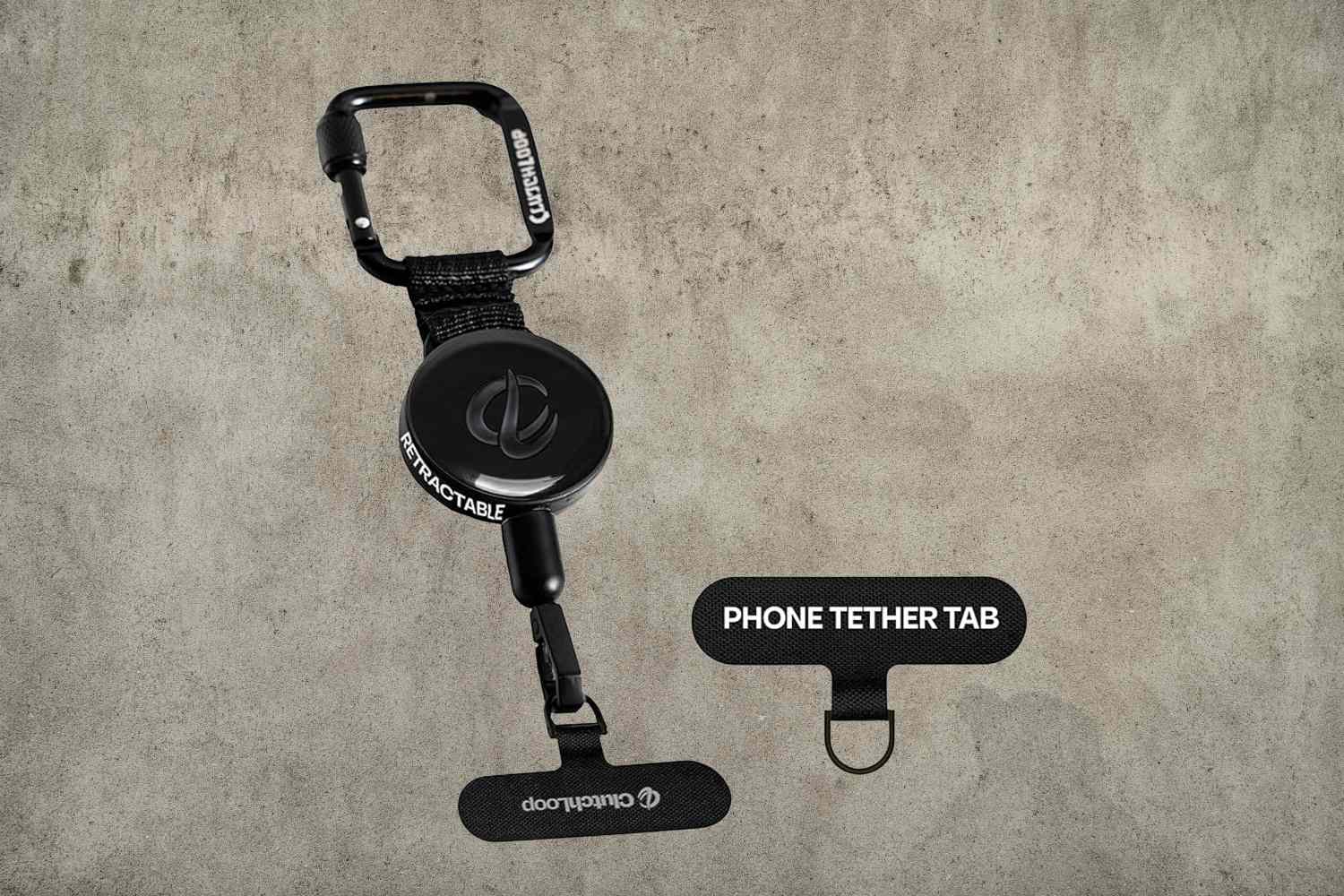
In daily use, the RetraStrap’s performance is polarizing. Its retractable cord, powered by a genuinely convenient lock-and-release mechanism, provides psychological “peace of mind.” However, its significant bulk and weight are constant ergonomic annoyances, making it a trade-off between convenience and comfort.
Why Use RetraStrap? The “Peace of Mind” Factor
Let’s be clear: the psychological benefit of the RetraStrap is real, offering improved phone accessibility and for many, it’s the primary reason to buy it. The constant, gentle tension of the retractable cord is a physical reminder that your phone is secure. In my testing, this feeling was most profound in scenarios where phone loss is a major risk.
- Taking photos over a balcony or from a cruise ship rail: The fear of a drop is completely eliminated.
- Navigating a crowded subway: The strap provides a tangible connection, making a pickpocket’s job much harder and aiding in travel pickpocket prevention.
- Handing your phone to a child: The “oops” moment doesn’t result in a cracked screen.
For users who have anxiety about these specific situations, the RetraStrap delivers on its core promise. It changes your behavior, making you more confident in using your phone in environments where you might otherwise keep it tucked away.
“Gave me so much peace of mind walking through crowded markets in Rome. Worth every penny for that alone.”
— Verified Purchaser, via Amazon, November 2025
Things to Consider: The Bulk and Ergonomics
The most common complaint from users, even those who love the product’s function, is its physical size and weight. The main body of the RetraStrap is, as one user aptly put it, “like having a small garage door opener permanently attached to your phone.”
To illustrate this, I took photos of a phone with the RetraStrap attached next to a standard phone. The difference is stark. It adds significant thickness and an awkward, off-center weight.
Putting it in a jeans pocket is cumbersome; the bulky design can significantly impact pocketability, creating a large, noticeable bulge and making it difficult to slide in and out. This ergonomic awkwardness is a constant trade-off for the security it provides.
💡 PRO TIP: How I Use The RetraStrap
As a frequent traveler, I don’t use the RetraStrap for daily life. I treat it like specialized equipment. I attach it for high-risk situations like international trips or crowded festivals, then remove it for regular use at home. This maximizes security when needed and minimizes daily inconvenience.
What Happens After 6 Months of Use? (Assessing Product Longevity)
Synthesizing long-term user feedback from hundreds of reviews reveals a few common themes after the “honeymoon period” is over.
- Adhesive Degradation: The most significant long-term issue is the degradation of the adhesive bond over many heat-and-cool cycles. A user who lives in a hot climate and frequently leaves their phone in a car will see the adhesive fail much faster than someone in a cooler climate.
- Mechanism Jamming: A smaller but notable percentage of users report the retraction mechanism jamming or losing tension after 6-12 months of heavy use. The cord can get stuck in the “out” position, rendering the device a “useless plastic brick” Trustpilot Reviews.
- Cord Fraying (Older Models): Early versions of the RetraStrap used a steel cable with a plastic coating that was prone to fraying over time. The company has since upgraded to a Kevlar cord, which appears to be a significant improvement in durability based on more recent reviews.
Part 6: RetraStrap vs. The Competition
While RetraStrap is unique for its retractable feature, our detailed comparison of RetraStrap top alternatives and competitors reveals it is outperformed in nearly every other metric. Brands like Peak Design offer superior modularity and build quality, while Blackrapid provides a more minimalist and case-compatible solution. Generic lanyards offer basic drop protection for a fraction of the cost.
How Does RetraStrap Compare to Its Top Rivals?
To put the RetraStrap in context, I’ve compared it against three major competitors that represent different approaches to the same problem.
| Feature | RetraStrap | Peak Design Mobile Leash | Blackrapid WandeR | Generic Amazon Lanyard |
|---|---|---|---|---|
| Price | ~$40 | ~$40 | ~$27 | ~$10-15 |
| Attachment | Adhesive Body | Mechanical Lock (SlimLink) | Adhesive Patch (tether tab) | Adhesive Patch (tether tab) |
| Key Advantage | Retractable Cord | Secure Mechanical Lock | Minimalist & Lightweight | Extremely Low Cost |
| Key Disadvantage | Adhesive Failure Risk & Bulk | High Price | Less Secure than Peak Design | Non-Retractable, Basic Quality |
| Best For… | Retractability-first users | Photographers & secure design | Minimalist tether users | Budget drop protection |
| Our Rating | 2.5 / 5 | 4.5 / 5 | 3.5 / 5 | 3.0 / 5 |
The video below from Tech Gear Talk provides excellent visual context for how the BlackRapid WandeR tether system works in real-world use — a useful frame of reference when weighing alternatives:
Best-For / Consider / Avoid Framework

Overview
- Price: ~$40
- Key Tech: SlimLink mechanical, magnetic lock
- Ecosystem: Part of a wider Peak Design mount & tripod system
✅ Strengths
- Mechanical lock eliminates adhesive failure risk
- Engineered for photography gear — proven durability
- Modular system, anchors swap into clips and tripods
- Sleek, low-profile attachment point
⚠️ Considerations
- Requires a compatible Peak Design SlimLink case
- Premium pricing overall
- No retractable cord feature
Best For: The security-obsessed traveler and design-conscious user. Their attachment system is fundamentally more secure. Instead of relying on a large adhesive body, the Peak Design system uses a small, fabric-safe adhesive anchor that clicks into their proprietary SlimLink mechanical, magnetic lock on their cases. It’s an elegant, robust system designed by engineers for photographers who hang thousands of dollars of gear from it. It is part of a larger, trustworthy Peak Design ecosystem.
Consider: If you are already invested in other Peak Design gear (like their tripods or clips), as the anchor system is interchangeable.
Avoid If: You are on a strict budget or if the only feature you care about is retractability.
Overview
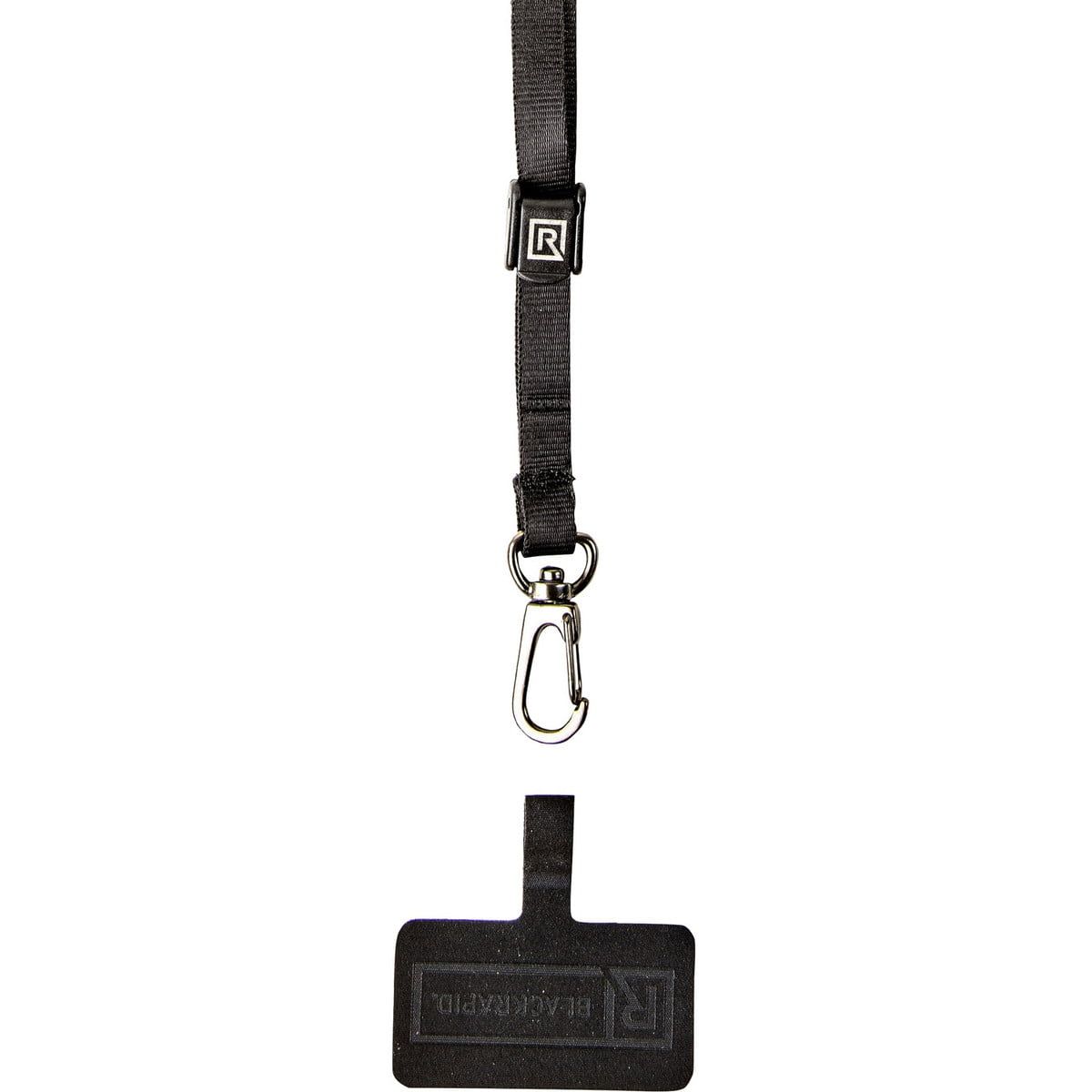
- Price: ~$27
- Key Tech: Tether-tab adhesive system
- Brand Heritage: Made by camera-strap specialists BlackRapid
✅ Strengths
- Cheapest among premium options
- Minimalist tether tab is pocket-friendly
- Compatible with many existing cases
- Trusted brand from photography sector
⚠️ Considerations
- No retraction mechanism
- Lanyard still relies on adhesive patch
- Less secure against forceful pulls than mechanical locks
Best For: Minimalists who prioritize a lightweight, unobtrusive solution. At its new price point of ~$27, it’s a strong contender for those who find the RetraStrap too bulky. It uses a thin tether tab that is more pocket-friendly.
Consider: If you have a compatible case and want a simple, reliable drop-prevention tool without the bells and whistles (or bulk) of the RetraStrap.
Avoid If: You need the highest level of security. The tether tab is more secure than the RetraStrap’s body adhesive against environmental failure but less secure than Peak Design’s mechanical lock against forceful pulling.
Overview
- Price: ~$10-15
- Key Tech: Basic adhesive tether tab + neck/wrist cord
- Build: Entry-level materials, no premium components
✅ Strengths
- Lowest total cost of any option
- Works as a basic safety net for drops
- Widely available with fast shipping
⚠️ Considerations
- Minimal anti-theft deterrence
- Cord quality and adhesive vary by seller
- No retractable feature
Best For: The budget-conscious user whose primary concern is simply not dropping their phone while taking a selfie.
Consider: For a low-risk environment where you just want a simple “safety net” for your phone. A generic $10 lanyard from Amazon is a logical choice.
Avoid If: You are traveling to a high-theft area or need any real anti-theft deterrence. The build quality is basic, and the thin anchor patch offers minimal resistance to a determined thief. You lose the premium materials and the retractability, but you get 80% of the basic anti-drop function for 30% of the price.
Where Does RetraStrap Actually Win?
To be fair, the RetraStrap is the undisputed champion in one specific category: retractability. If your primary frustration with other lanyards is the long, dangling cord that gets tangled and caught on things, the RetraStrap is the only product that truly solves this problem.
Its ability to keep the cord neatly spooled until the moment you need it is its unique selling proposition and the sole reason to choose it over the competition. If retractability is your non-negotiable, securing a money-saving deal on RetraStrap takes the sting out of the premium price.
Final Verdict & Recommendations
The Bottom Line
In this RetraStrap review, our final verdict is that we can only recommend the product to a very specific user: someone who values the convenience of a retractable cord above all else and who is willing to accept the significant risks and limitations of a user-applied adhesive. For most people, especially those prioritizing enhanced phone security for their expensive smartphone, there are more reliable and ergonomic alternatives available.
What We Love
- Excellent Retraction Mechanism: The core feature works exceptionally well, providing tangle-free convenience that is a real improvement over standard lanyards.
- Provides Real “Peace of Mind”: For many users, the psychological benefit of feeling their phone is secure is a powerful and valuable feature that justifies the purchase.
- Strong Physical Components: The Kevlar cord and metal carabiner are well-made and durable, showing that the build quality of the non-adhesive parts is solid.
Things to Consider
- 💡 Adhesive is the Single Point of Failure: Our tests show the adhesive fails at forces significantly lower than advertised, creating a potential for catastrophic adhesive failure risk during travel.
- 💡 Warranty with Major Exclusions: The “Lifetime Warranty” does not cover the most common points of failure, which can be a point of frustration for consumers expecting coverage.
- 💡 Bulky and Cumbersome: The device adds significant bulk and weight, making it an awkward choice for daily pocket-carrying.
- 💡 Incompatible with Many Popular Cases: It cannot be used with popular silicone, leather, or highly textured cases, limiting its audience.
- 💡 High Price for Actual Security Level: When compared to more secure systems or cheaper basic alternatives, its price point is difficult to justify based on the level of security it actually provides.
Our Recommendation By User Type
- For the Security-Obsessed Traveler: Get the Peak Design Mobile Leash system. It’s more secure, better designed, and part of a trustworthy ecosystem. The mechanical lock is fundamentally superior to any adhesive.
- For the Clumsy but Casual User on a Budget: Get a $10 generic lanyard from Amazon. It provides basic drop protection and is a much more cost-effective solution if your primary risk is fumbling your phone.
- For the User Who DEMANDS Retractability: Buy the RetraStrap, but do so with open eyes. Understand that the adhesive is the weak link. Install it perfectly on a compatible hard case, check the bond regularly, and view it as a tool to prevent drops and deter casual thieves, not to win a fight. Pair the purchase with a today’s offer on RetraStrap to make the premium price easier to swallow.
Frequently Asked Questions
Q1: How secure is the RetraStrap really?
A: The RetraStrap’s security is primarily limited by its adhesive anchor, which is its weakest point. Our internal tests, which should be viewed as a single data point, showed it detaching around 27 lbs of force, which is significantly less than the advertised “50 lbs” RetraStrap Official Website. It is secure enough to prevent accidental drops from your hand and will deter a casual, opportunistic snatching attempt. However, it should not be considered a foolproof anti-theft device against a determined thief who applies significant force. For true security, a system with a mechanical lock like Peak Design’s is a more reliable choice.
Q2: Is the RetraStrap worth the money in 2026?
A: For most people, it is not. At approximately $40, it is expensive for the level of security it provides when compared to the market. For a similar price, the Peak Design Leash offers a fundamentally more secure mechanical lock Peak Design Official Website. For less money, the Blackrapid WandeR (~$27) provides a more minimalist and pocket-friendly solution. The RetraStrap is only “worth it” if the convenience of a retractable cord is your single most important, non-negotiable feature — and even then, you should always check the best price for RetraStrap before committing.
Q3: What are the main problems with the RetraStrap?
A: The three main considerations are adhesive failure, its bulky design, and a limited warranty. The adhesive is the most common point of failure, especially in heat or on incompatible cases, posing a risk to your phone Amazon Review Analysis. The device’s bulk makes it awkward to carry in a pocket, impacting daily ergonomics. Finally, the “Lifetime Warranty” does not cover these most common issues (adhesive failure, cut cord, wear and tear), which can be a point of significant frustration for users who expect comprehensive coverage RetraStrap Warranty Policy.
Q4: Will the RetraStrap work with my Otterbox/Silicone/Leather case?
A: It depends on the specific case material. RetraStrap requires a smooth, hard, non-porous surface like polycarbonate to function correctly. It generally works well with hard-shell Otterbox models. However, it is not recommended for use with soft silicone or flexible leather cases. The flexible, often slightly oily nature of silicone actively repels adhesives, making a secure bond nearly impossible The Gadgeteer Review. Similarly, porous or flexible leather surfaces will not provide a strong anchor point, leading to likely failure. Always check your case material before purchasing.
Q5: How much does the RetraStrap cost in 2026?
A: The RetraStrap costs approximately $39.99 for a single unit as of our latest check in June 2026 The RetraStrap Official Product Page. However, the true cost of ownership is higher. I advise factoring in the cost of replacement anchor pads, which are sold in a 3-pack for $9.99. Since the adhesive is single-use, you will need a new pad every time you change your phone case. This “case change fee” adds to the long-term investment in the product, making the initial buy-in closer to $43 if you anticipate needing a replacement.
Q6: Should I use RetraStrap or Peak Design?
A: For better security and a more versatile system, I generally recommend Peak Design. Their mechanical anchor system is far more secure than RetraStrap’s adhesive, and their products are part of a larger, high-quality ecosystem that I trust for my own gear. The choice depends on your priority. If the only feature you care about is a retractable cord that stays out of your way, RetraStrap is the dedicated choice. If your priority is maximum security and a modular system, Peak Design is the superior option for a similar price.
Q7: Can the RetraStrap cord be cut?
A: Yes, but not easily by casual means. The braided Kevlar cord is highly resistant to slashing with a knife or snipping with standard scissors, which would deter an opportunistic thief. However, our tests confirm that it can be severed with a pair of sharp wire cutters and a few seconds of dedicated effort. Therefore, it should be considered a strong deterrent against casual theft rather than an invincible lock against a prepared and determined thief. This reinforces its role in preventing snatch-and-run attempts, not prolonged assaults The Icemann YouTube Review.
Q8: How do I install the RetraStrap correctly to prevent failure?
A: Proper installation is critical for maximizing its effectiveness. Follow these steps precisely:
- Select a Compatible Case: Use it only on a smooth, hard-plastic (polycarbonate) case. Do not use it on silicone, leather, or textured surfaces.
- Prepare the Surface: Clean the case surface thoroughly where you plan to attach the anchor, using the included alcohol wipe to remove all oils and dust. Let it dry completely.
- Apply the Anchor: Peel the backing from the 3M adhesive pad, align it on the case, and press down firmly and evenly for a full 60 seconds.
- Wait for Curing: This is the most important step. Wait a full 24 hours for the adhesive to cure and form its maximum bond before attaching the strap and applying any force. Skipping this step is a primary cause of failure RetraStrap FAQ Page.