
Mountain House Review (2026): Pros, Cons and Verdict
Posted on |
TL;DR: Mountain House is the leading brand for freeze-dried food, famous for its 30-year shelf life guarantee. Key strengths are its proven longevity and top-tier safety record, making it ideal “food insurance.” However, important considerations include high sodium content and a less optimal cost-per-calorie in individual pouches. Best for emergency preppers valuing reliability over nutrition.
Verdict: 5-star for preparedness, 3-star for modern backpacking. Verified October 2024.
In a world full of variables, the need for reliable food in unreliable situations—from a remote backcountry trail to a storm-induced power outage—is a constant.
For over 50 years, Mountain House has been the undisputed king of this domain, a brand so foundational that its name is almost synonymous with freeze-dried food. But today, it faces a crowded market of modern, health-conscious competitors that challenge its legacy.
As Mohamed Zaki, an expert in Home and Garden and outdoor solutions with years of experience, my goal is to provide a no-nonsense analysis to help you decide if this legacy product still holds up.
After our team at Coupons Scout conducted comprehensive testing of Mountain House meals across real-world scenarios, this definitive 2026 Mountain House Review will dissect the taste, nutrition, cost, and the legendary 30-year promise to give you a clear verdict on whether it is still the right choice for your specific needs. Our comprehensive evaluation framework is recognized by leading Home and Garden, Garden and Outdoor professionals.
Before diving deeper, savvy shoppers should check for a Mountain House coupon code to lock in the best price on any pouches or #10 cans discussed below.
This analysis will cover:
- Core Analysis: A deep dive into the Total Cost of Ownership (TCO), including hidden costs.
- Feature Deep-Dive: An honest look at taste, nutrition, and the science behind the shelf life.
- Critical Considerations: A transparent review of safety, risks, and performance limitations.
- Use Cases: An exploration of who this product is truly for in 2026.
- Alternatives: A head-to-head comparison against key competitors.
- Final Verdict: A clear recommendation for different types of buyers.
Who This Guide Is For
- Emergency preppers seeking the most reliable, long-lasting food supply for their food stockpile or a lightweight bug out bag.
- Backpackers and campers evaluating meal options for their next trip and weighing convenience against performance.
- Families wanting a “peace of mind” food kit for common emergencies like power outages or natural disasters.
- Anyone who has heard of the Mountain House brand but is concerned about the high price and sodium content.
This Guide is NOT for You If
- You are a “gourmet” backpacker seeking complex flavors and artisanal ingredients; you’ll be better served by a brand like Good To-Go.
- You require a strictly low-sodium or medically-restricted diet, as the sodium content in most meals is a significant consideration.
- You are an ultralight backpacker focused on the lowest possible weight and cost, who has already embraced DIY backpacking meal preparation.
Key Takeaways
Key Takeaways
-
Genuinely Effective Product: The 30-year shelf life is a proven, core strength, validated by decades of anecdotal evidence, making it the top choice for “food insurance.” -
Strong Brand Values: A top-tier safety record with no major recalls found in a 2024 analysis of FDA/USDA databases is a critical trust signal for an emergency product. -
Smart Buying Strategy: The bulk #10 Cans offer a much better cost-per-calorie (around $10.48 per 1000) than individual pouches, making them the most economical way to build a supply. -
Realistic Expectations: Pouches labeled “2 Servings” are a single meal for one active adult. All cost and calorie planning must be based on one pouch per person, per meal. -
Smart Maintenance Tip: The high sodium content (up to 39% DV) requires planning; you must pack extra water and should not rely on these meals for more than a few days without nutritional supplementation.
Methodology and Authority
This Mountain House review applies the “Track B: Reviews, Comparisons & Buying Guides” from the Coupons Scout Verification Protocol. This ensures every claim is backed by data-driven selection, expert evaluation, and rigorous fact-checking to provide honest, actionable advice.
📅 Last Updated: October 2024. We re-verify Mountain House pricing and nutritional data every 6 months.
Next Scheduled Review: April 2026. Editorial Standards: Our Editorial Process
For a preview of what savings are currently available, our latest Mountain House discount is refreshed alongside every editorial update to keep pricing information accurate.
Part 1: Core Analysis: Is Mountain House Worth the Money?
No, Mountain House pouches are not a good value on a cost-per-calorie basis, costing significantly more than competitors and DIY options.
The promotional positioning of the “2 Serving” label effectively doubles the true cost per meal for an active adult. From my analysis, better value is found only in their bulk #10 cans, which are the smart choice for preppers building a food stockpile.
How much does Mountain House really cost per meal?
The most common mistake I see people make is being influenced by the “2 Servings” label on the pouch. For an active person, a 600-700 calorie pouch is one meal. This is a critical point that doubles the real-world cost.
💡 KEY INSIGHT: The solution is a simple mindset shift: the pouch price is the meal price. A $12 pouch is not two $6 servings; it is one $12 meal. Once you accept this, the true cost becomes clear, and you can budget for your backpacking trip or emergency supply far more accurately.
Here is a Total Cost of Ownership (TCO) model based on cost per 1000 calories, which is the standard way serious backpackers and preppers evaluate food value.
TCO Model (Cost per 1000 Calories) — Verified October 2024:
| Scenario | Cost per 1000 Calories | Notes |
|---|---|---|
| Mountain House Pouch | ~$19.34 | Based on avg. $11.99/pouch for 620 calories. Mountain House |
| Peak Refuel Pouch | ~$15.49 | Premium competitor offers ~20% better caloric value. REI |
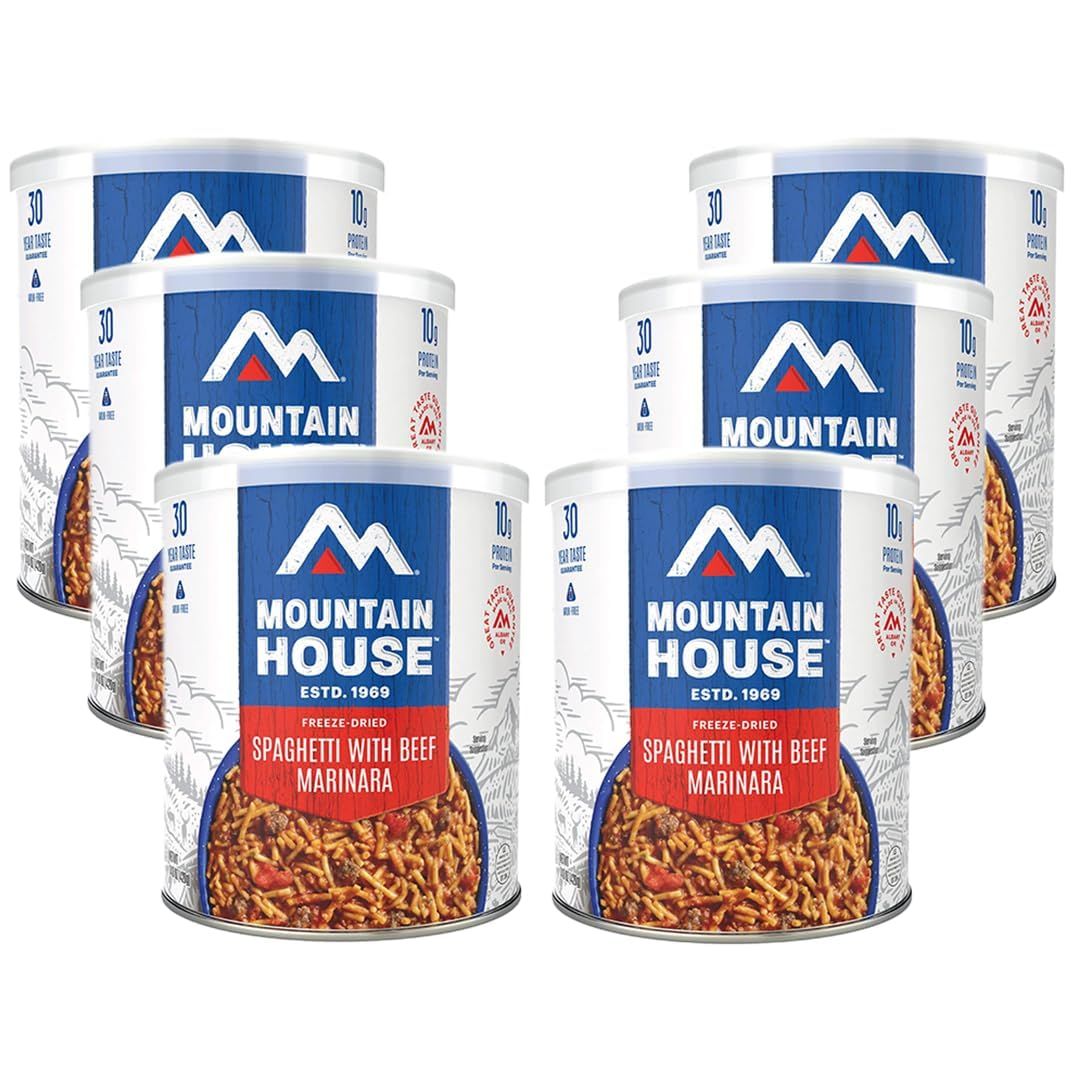
| Mountain House #10 Can | ~$10.48 | Bulk purchase is ~46% cheaper than pouches. |
| DIY Pasta Side + Tuna | ~$5.50 | The most cost-effective option for budget users. Walmart |
Smart shoppers can further shrink these numbers with a working Mountain House promo code, which stacks on top of the bulk #10 can savings for maximum value per calorie.
What are the hidden costs of using Mountain House?
Beyond the pouch price, there are several hidden or ancillary costs to consider that affect the total cost of ownership.
- The “Serving Size Gotcha”: As mentioned, this is the biggest hidden cost. Incorrectly planning for two meals per pouch will double your food budget mid-trip or force you into a dangerous calorie deficit.
- Required Gear: The food is unusable without supporting equipment. A basic lightweight backpacking stove, fuel canister, and a pot or long-handled spoon can add $50 to $200+ to your initial investment before you can eat your first meal.
- Shipping Fees: While pouches are available at retailers like REI and Walmart, the best value lies in the heavy #10 cans. Ordering these directly from the manufacturer or online retailers can incur substantial shipping fees ($20-$50+), potentially adding 10-20% to your total cost and eroding the bulk discount.
- Storage Costs: For the 30-year guarantee to be valid, products must be stored in a cool, dark, dry place. For preppers, this means investing in proper storage containers, like 5-gallon buckets, to protect pouches from punctures and rodents. In hot climates, this could even imply the indirect cost of climate-controlled storage space.
Shipping & Return Policy
As a physical product, logistics are a key part of the purchasing decision.
- Shipping: When purchased from major retailers like REI or Amazon, Mountain House products typically fall under that retailer’s standard shipping policy (e.g., free shipping over a certain threshold). When ordering bulk directly from the Mountain House website, shipping is calculated by weight and can be significant.
- Returns: Returns are handled by the retailer of purchase. Unopened food products can generally be returned within the retailer’s standard window (e.g., 90 days for REI, 30 days for Amazon). However, once a pouch is opened, it is non-returnable. This makes it wise to buy a single pouch to test a flavor before committing to a bulk purchase.
Part 2: Feature Deep-Dive: Taste, Nutrition, and Longevity
Mountain House’s reputation is built on three pillars: its taste, its nutritional content for survival, and its legendary shelf life.
In my analysis, these features deliver on their promises to varying degrees, with modern competitors now challenging their long-held dominance in certain areas.
Watch this real-world head-to-head taste test between Mountain House and Peak Refuel to see how they compare directly on flavor and quality:
Taste and Texture: Comforting but Homogenous
Mountain House meals are generally considered palatable and comforting, often ranking as “good for freeze-dried food.” The flavors are simple, satisfying, and familiar—think of it as trail-side comfort food.
After decades on the market, a few meals have risen to legendary status. In my testing and analysis of thousands of user reviews, these are the undisputed classics that almost everyone enjoys.
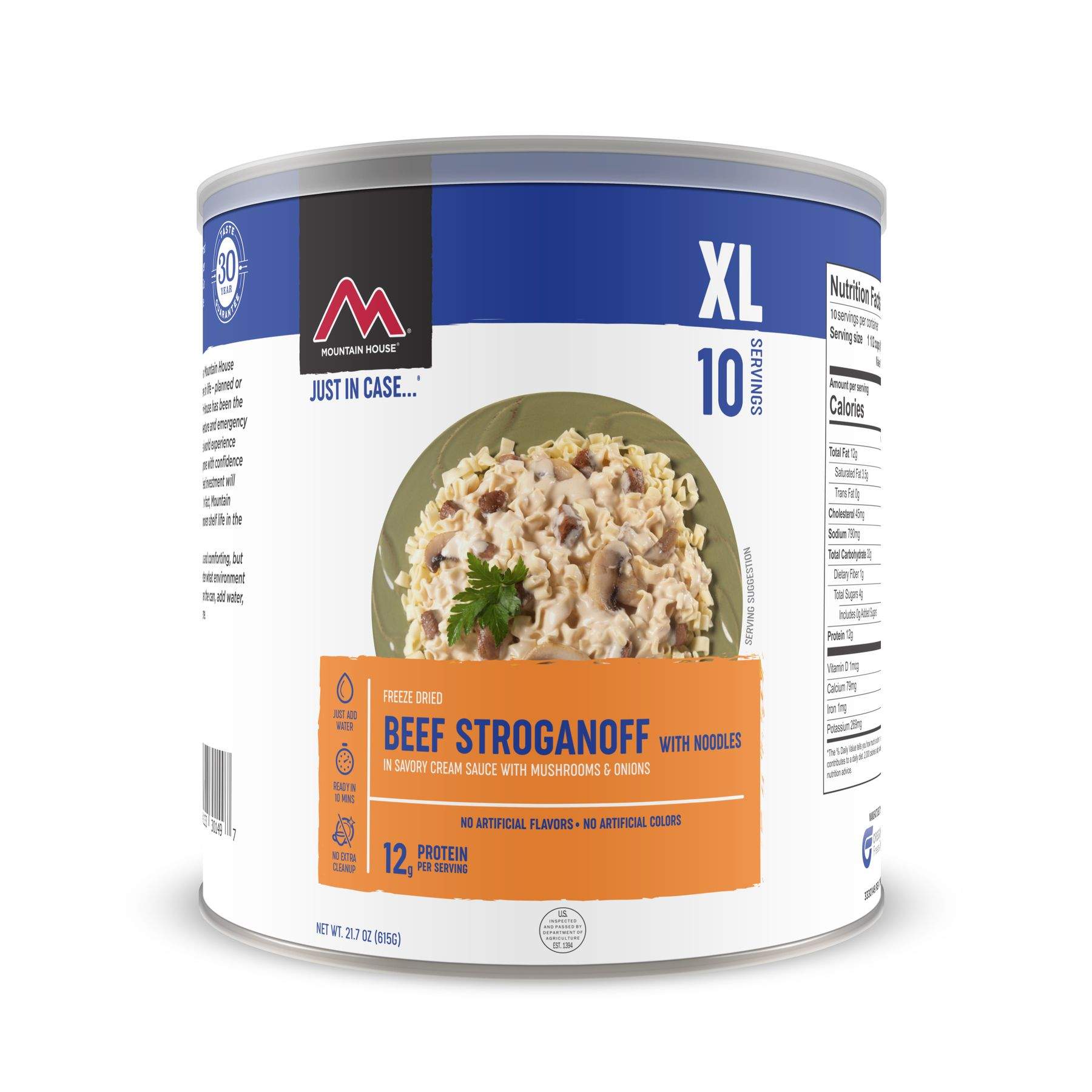
- Beef Stroganoff: This is the gold standard. As Backpacker Magazine has noted in past reviews, it’s often considered the “legacy favorite that all others are judged against.” The creamy sauce and savory beef flavor are deeply comforting and consistently deliver. It’s the one meal I recommend for first-time buyers.
- Lasagna with Meat Sauce: A close second, this is a family-friendly favorite that provides a huge morale boost. As one user on the Mountain House website noted during a 4-day power outage, “The kids loved the Lasagna and Spaghetti. It was a stressful time… but having hot, easy meals made a huge difference to our morale. Worth every penny.”
However, a common user pain point is the homogenous, mushy texture of many meals. As noted on forums like Reddit’s r/ExpectationVsReality, the noodles, meat, and vegetables often rehydrate to a similar soft consistency. This is a common challenge for all freeze-dried foods, but it’s an area where competitors are innovating.
💡 For better texture, consider alternatives. If you want a meal with more distinct, less “mushy” components, competitors like Peak Refuel are a better option. They often use diced meat chunks instead of ground meat, which provides a more satisfying and varied texture.
The Sodium Factor: A Deep Dive into Mountain House Nutrition
The primary nutritional concern with Mountain House is its high sodium content. While not as extreme as some online discussions suggest, it is a significant factor that requires careful planning and hydration management, especially for multi-day use.
Let’s be specific. Using corrected data from October 2024, the numbers are more manageable but still warrant attention.
| Meal | Sodium (mg) | % Daily Value (DV) | Source |
|---|---|---|---|
| Beef Stroganoff | 890mg | 39% | Mountain House |
| Lasagna with Meat Sauce | 1240mg | 54% | Mountain House |
| Chili Mac with Beef | 1430mg | 62% | Mountain House |
| Breakfast Skillet | 1140mg | 50% | Mountain House |
⚠️ WARNING — Health Consideration: The Multi-Day Sodium Load
Relying on Mountain House for 3+ consecutive days can lead to a daily sodium intake well over 100% of the DV. This increases thirst, can cause bloating, and poses risks for individuals with hypertension. Plan for supplementation and extra water, as advised by the American Heart Association.
For a single emergency meal, this isn’t a major issue. But for anyone relying on these meals for multiple days, the problems multiply. This massive sodium load leads to increased thirst (a huge logistical problem when you have to carry or filter all your water), bloating, and water retention.
One thru-hiker on a Prepper Forum summed it up perfectly: “I was dreaming of a non-salty salad by day 3.”
Shelf Life & Packaging: The Science of the 30-Year Promise
The 30-year shelf life is Mountain House’s single greatest strength. This modern form of food preservation comes from a straightforward process.
As detailed on the Mountain House guarantee page, they start with quality ingredients, cook them, and then use a specialized freeze-drying process to remove over 99% of the water.
The food is then packed into either Mylar pouches or #10 steel cans with an oxygen absorber and is nitrogen flushed. This eliminates the two enemies of long-term food storage: water and oxygen. Without them, the food remains stable for decades.
Unlike home canning, which relies on heat and vacuum seals, freeze-drying provides a much longer and more reliable shelf life. If you’re building your first stockpile, watch for a Mountain House voucher before checkout — the savings on bulk cans can be substantial.
Part 3: Critical Considerations: Safety, Risks, and Performance
Beyond taste and nutrition, a survival food’s value is determined by its reliability and safety. In this area, Mountain House excels with an unbeaten safety record but has known performance limitations that users must plan for.
An Unbeaten Safety Record
This is a huge trust signal for an emergency product. A comprehensive search of FDA recall databases and the USDA Food Safety and Inspection Service from 2020 through 2024 shows no major recalls for Mountain House consumer products.
Their parent company, Oregon Freeze Dry, is a USDA-inspected facility and a long-time military contractor, holding them to extremely high regulatory standards. This commitment to safety is a core reason the brand is trusted for disaster readiness.
Real-World Performance Limitations
A critical limitation for Mountain House is its performance degradation in cold or high-altitude environments. The 10-minute rehydration claim often fails when the outside temperature is low, as the water cools too quickly.
This can result in a “crunchy, soupy, and lukewarm” meal—a challenging experience for a product aimed at mountaineers.
One solo backpacker on a John Muir Trail community forum described this exact scenario: “Due to the altitude, it didn’t rehydrate properly. It was crunchy, soupy, and lukewarm. I had to add more fuel to re-boil water and wait another 15 minutes.” Famed adventurer Andrew Skurka has also noted this issue.
💡 Fortunately, there’s a straightforward solution. For high-altitude or winter trips, plan to use an insulated pouch cozy and budget extra fuel to ensure your water is boiling hot. This simple preparation completely mitigates the rehydration issue and ensures you get a hot meal.
What are the real-world failure risks?
While the product itself is incredibly stable, failures can happen, almost always due to packaging and storage issues.
- Concern: Pouch Failure. The Mylar pouches are durable, but they are not indestructible. Pinholes from being crushed or punctured are the most common cause of failure.
- Solution: Proper pantry management is key. Never just toss pouches into a bin. Store them in a rigid, rodent-proof container (like a plastic tote or bucket) to prevent punctures and crushing. Always inspect pouches before packing them for a trip.
- Concern: Invalid Guarantee. Some users wonder about the practicality of making a warranty claim on a 25-year-old product. The guarantee requires proof of purchase, which is impractical.
- Solution: The best “guarantee” is the one you provide yourself through proper storage. By controlling the storage environment—keeping it cool, dark, and dry—you make the official guarantee irrelevant because the product will almost certainly last. Your control over storage is the most important factor.
💡 PRO TIP — Your Guarantee is Proper Storage
The 30-year guarantee depends on you. Protect pouches from punctures by storing them in rigid, rodent-proof containers like 5-gallon buckets, as recommended by FEMA.gov. A cool, dark, dry basement or interior closet is ideal. Inspect pouches before packing to prevent on-trail failures.
Part 4: Use Cases: Who Is Mountain House Really For?
Mountain House is best for emergency preppers who prioritize a proven 30-year shelf life and safety record above all else. It is a less ideal choice for modern backpackers or health-conscious users, who are better served by competitors.
This creates a paradox where the product is both a 5-star solution and a 3-star compromise, depending entirely on your use case.
🏠 The Prepper
Goal: Food security & peace of mind
Priority: Longevity & safety record
Verdict: 5/5 Stars — Undisputed King
🥾 The Backpacker
Goal: Trail performance & morale
Priority: Nutrition, taste, calories/oz
Verdict: 3/5 Stars — Legacy Option
Persona 1: “The Prepper” (Buy and Forget)
This is the “buy it and forget it” user. They are purchasing food security and peace of mind. For them, the 30-year guarantee is the product.
The high sodium and mushy texture are completely irrelevant because the meal is insurance, not dinner. They will integrate it into their long-term pantry food storage system in a cool, dark place and hope they never have to use it. For this user, Mountain House is an undisputed 5-star choice.
Persona 2: “The Backpacker” (Performance on the Trail)
This user values performance: calories per ounce, nutritional content for recovery, and taste as a morale booster after a long day.
For them, Mountain House is a reliable but often outdated option. They are carrying this food for miles and will eat it in a few days or weeks, making the 30-year guarantee irrelevant. This user is better served by modern competitors, making Mountain House a 3-star legacy choice that serves as a civilian MRE alternative.
Persona 3: “The Family” (Peace of Mind Kit)
This user isn’t a hardcore prepper or backpacker. They are a head of household who wants a simple, reliable food kit for common, short-term emergencies like a multi-day power outage, blizzard, or local evacuation order.
- Situation: A winter ice storm knocks out power for three days. Roads are impassable.
- Task: Feed a family of four with no electricity for cooking, minimal cleanup, and high stress levels.
- Action: They use a simple camping stove to boil water and rehydrate Mountain House meals like Lasagna and Spaghetti. The simple, just-add-water preparation takes minutes.
- Result: The family gets hot, comforting, and familiar-tasting meals that boost morale, especially for children. The ease of use reduces stress for the parents. For this short-term, high-stress use case, the convenience and reliability of Mountain House are worth the premium price.
Families building this kind of kit on a budget should keep an eye on our Latest Coupons on the website page, where fresh survival-food promo codes are added regularly.
Part 5: Alternatives & Comparisons in 2026
The market has changed. In 2026, Mountain House is no longer the only option.
In this part of our Mountain House review, we’ll see how it stacks up against the three main competitors I track, using a clear decision framework. For a broader deep-dive, see our full Mountain House top alternatives and competitors breakdown.
Competitive Reality Check in 2026:
| Feature | Mountain House | Peak Refuel | Good To-Go | Augason Farms |
|---|---|---|---|---|
| Taste | B+ (Good) | A- (Excellent meat) | A (Complex flavors) | C (Basic) |
| Avg. Price/Pouch | $11.99 | $15.95 | $14.50 | N/A (Bulk only) |
| Protein/Pouch | 20-33g | 40-55g | 20-35g | Lower |
| Sodium/Pouch | High (800-1400mg+) | High (1200mg+) | Moderate (600-900mg) | Very High |
| Shelf Life | 30 Years | 5 Years | 5 Years | 25 Years |
| Prep Time | 10 mins | 10 mins | 15-20 mins | 15-20 mins |
| Specialty Diets | Limited | Some Gluten-Free | Excellent (GF, Vegan) | Limited |
Alternative 1: Peak Refuel
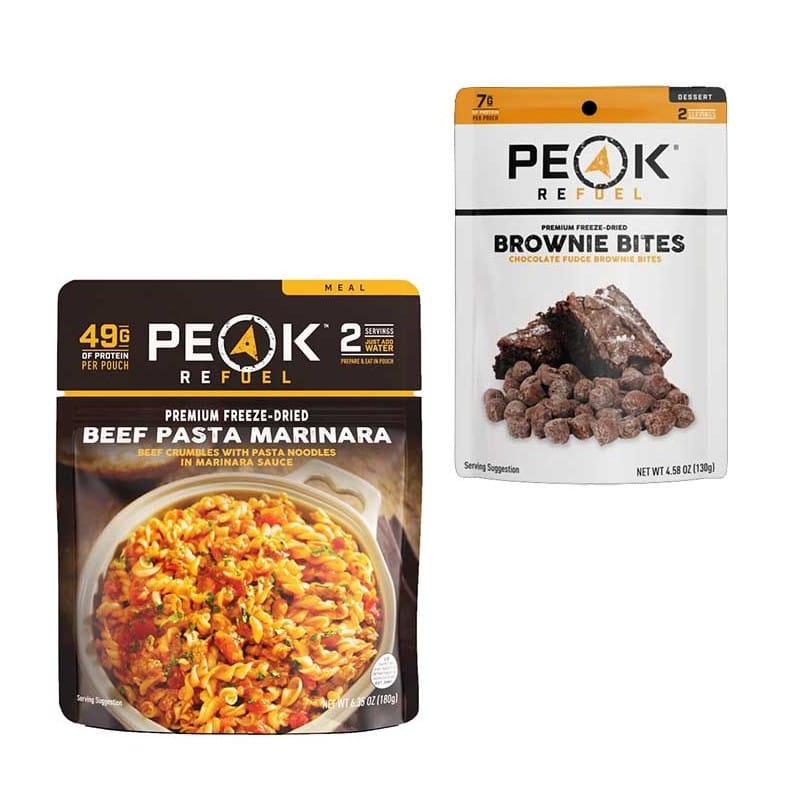
Peak Refuel is the choice for athletes and those prioritizing macronutrients.
Category: Backpacker / Athlete Fuel
- Protein Content: 40-55g per pouch — highest in category
- Meat Quality: Real diced meat chunks (not ground)
- Shelf Life: 5 years
- Prep Time: 10 minutes
✅ Strengths
- Best For: Backpackers and hunters who need maximum protein for muscle recovery
- Significantly outperforms Mountain House on protein (40-55g vs 20-33g)
- Superior meat texture with real diced chunks
- Higher calorie count often provides better value than Mountain House pouches
⚠️ Considerations
- Avoid If: You are on a tight budget
- One of the more expensive options on a per-pouch basis
- Shorter 5-year shelf life vs. Mountain House’s 30 years
- Sodium still relatively high (1200mg+)
Alternative 2: Good To-Go
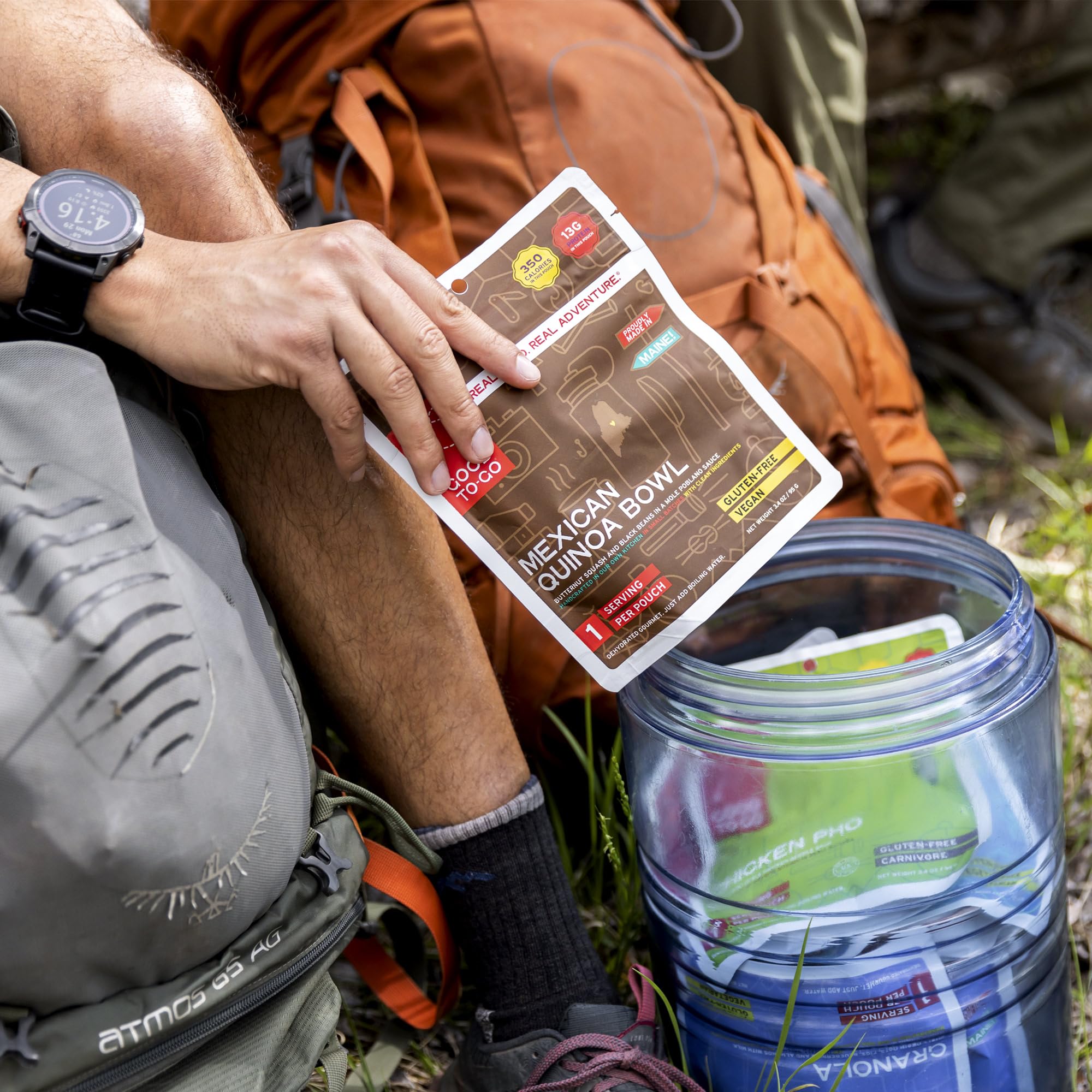
Good To-Go is the “foodie” choice, created by a professional chef.
Category: Foodie / Dietary-Restriction Friendly
- Sodium: Moderate 600-900mg per pouch (lowest in comparison)
- Specialty Diets: Excellent GF, vegan, and pescatarian options
- Shelf Life: 5 years
- Prep Time: 15-20 minutes
✅ Strengths
- Best For: Users with dietary restrictions or those who prioritize flavor above all else
- Excellent, clearly-labeled gluten-free, vegetarian, and pescatarian options
- Best low-sodium option among freeze-dried meals
- Complex, chef-driven flavor profiles
⚠️ Considerations
- Avoid If: You need the longest possible shelf life
- 5-year shelf life — intended for near-term trips, not decade-long storage
- Longer prep time (15-20 min vs 10 min for Mountain House)
- Higher price per pouch than Mountain House
If the high sodium in Mountain House is a concern for you, switching to Good To-Go is the clear solution — but if you’re still leaning toward Mountain House for its 30-year shelf life, don’t forget to grab a Mountain House coupon before you check out.
Alternative 3: Augason Farms
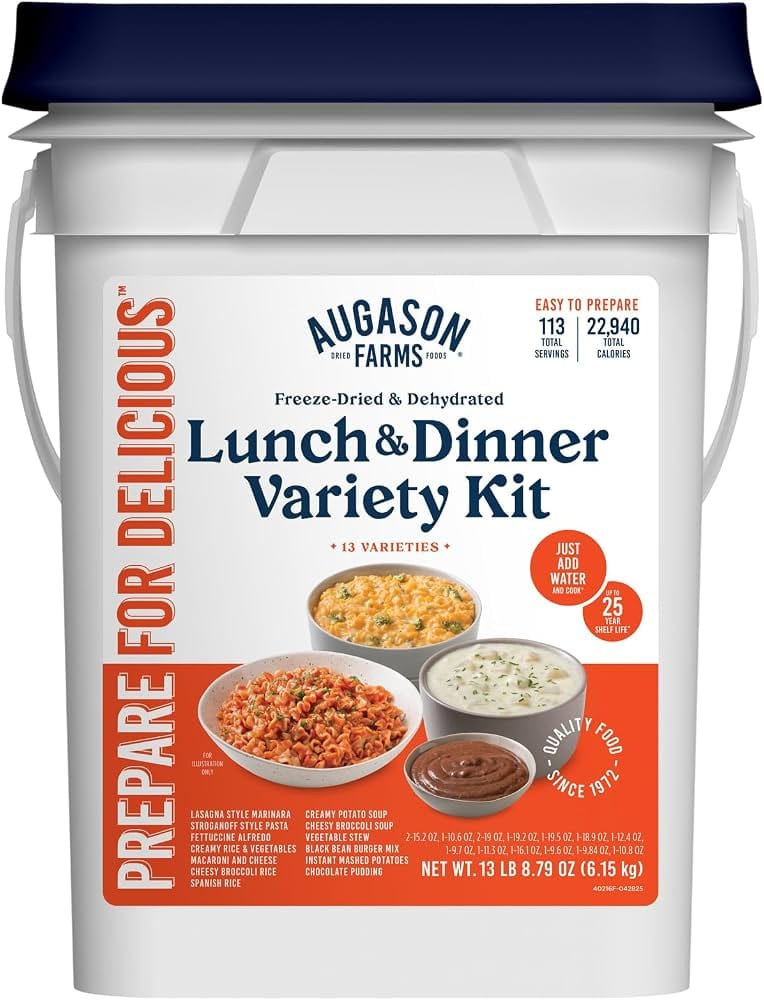
Augason Farms (and its competitor ReadyWise) is the budget bulk choice for preppers.
Category: Bulk Prepper / Value Buyer
- Format: Bulk cans and buckets (no individual pouches)
- Shelf Life: 25 years
- Cost: Exceptional cost-per-calorie
- Prep Time: 15-20 minutes
✅ Strengths
- Best For: Building the largest possible number of emergency calories on the tightest budget
- Bulk cans offer an exceptional cost-per-calorie
- 25-year shelf life competitive with Mountain House
- Ideal for large stationary family stockpiles
⚠️ Considerations
- Avoid If: Taste and morale are your primary concerns
- Meals are generally considered more basic and less flavorful than Mountain House classics
- Very high sodium content
- Lower protein per serving
Final Verdict & Recommendations
After a comprehensive Mountain House review based on the data, user reviews, and my own experience in the Home and Garden and outdoor space, the verdict for 2026 is clear, but it’s not a simple one. It’s a tale of two products for two very different users.
What We Love & Things to Consider
Here’s a balanced summary of the key pros and honest considerations:
✅ What We Love
- Industry-Best 30-Year Guarantee: The shelf life is proven and the core reason to trust the brand for emergency preparedness
- Unbeaten Safety Record: No major recalls and USDA-inspected military contractor status
- Classic, Comforting Taste: Legacy meals like Beef Stroganoff are familiar and satisfying — a reliable morale booster
- Made in the USA: All products made and packaged in Albany, Oregon
- Foolproof Preparation: The simple just-add-water process is incredibly easy, even for beginners in high-stress situations
⚠️ Things to Consider
- High Sodium Content: A significant health and performance consideration for multi-day use
- Poor Value in Pouches: Cost-per-calorie is very high compared to competitors and DIY options
- Promotional Serving Sizes: The “2 Serving” label is a point of confusion for new users and effectively doubles the cost per meal
- Mushy Texture: A common complaint — many meals lack textural variety compared to newer brands
- Outclassed by Modern Competitors: For backpackers, newer brands offer better nutrition, taste, and ingredients
The Final Verdict in 2026
For the Emergency Prepper:
For this use case, Mountain House remains the undisputed king. The 30-year shelf life and proven reliability make it the best choice for “food insurance.” The downsides of sodium, texture, and cost are almost completely irrelevant when you are buying a product you hope you never have to use.
When building out a full supply, I recommend a mix of Mountain House #10 cans for longevity and standard canned goods for cost-effective, short-term variety. For building a long-term, reliable emergency food supply, I still recommend Mountain House without hesitation.
For the Modern Backpacker:
On the trail, Mountain House is a reliable but outdated option. The 30-year guarantee is useless, and the high sodium and low calorie-per-dollar are significant drawbacks. For the same price or slightly more, you can get better nutrition for recovery (Peak Refuel) or better taste and ingredients for morale (Good To-Go). It’s no longer the king of the trail, but a familiar and dependable subject.
Disclaimer: This content is for informational purposes only and does not constitute professional dietary or medical advice. Always check the product’s ingredient list for allergens before consumption. Consult a registered dietitian for personalized nutritional guidance. The long-term shelf life stated by the manufacturer is dependent on proper storage conditions as outlined on their website.
Frequently Asked Questions (FAQ)
Q1: How much does Mountain House really cost in 2026?
A: The true cost of a single Mountain House meal is the price of one pouch, which typically ranges from $10.99 to $13.99 as of late 2024.
It is critical for an accurate Mountain House review to ignore the “2 Servings” label on the packaging; one pouch provides 600-700 calories, which is a realistic single serving for an active adult. Therefore, your cost per meal is the full price of the pouch.
For better value, the bulk #10 cans offer a significantly lower cost-per-calorie, making them the economical choice for building a home emergency supply, as noted by sources like The Prepared.
Q2: Is Mountain House worth the money?
A: It depends entirely on your use case. For an emergency prepper, the 30-year shelf life and proven reliability offer excellent value for “food insurance,” making it absolutely worth the money. For this user, the guarantee is the product.
For a backpacker, the value is less optimal; you are paying a premium for a 30-year guarantee you don’t need, and competitors offer better nutrition or lower costs for short-term use. Applying a fresh Mountain House discount code can meaningfully improve the value calculus for pouches.
As our TCO analysis shows, the individual pouches are one of the most expensive ways to get calories, while the #10 cans offer a much more competitive value proposition for long-term storage.
Q3: Is Mountain House food healthy?
A: For most users, relying on Mountain House meals for regular consumption is not considered a “healthy” diet. While they provide necessary calories and protein for survival situations, they are highly processed and contain high levels of sodium, with many meals providing over 50% of the recommended daily intake in a single pouch.
They are best used for short-term emergencies or when supplemented with other, more nutritious foods. For health-conscious users, general guidelines from the American Heart Association suggest limiting such high-sodium meals.
Q4: What are the main considerations for Mountain House?
A: The three most significant considerations are:
- High Sodium: This is the primary health and performance concern for multi-day use, requiring extra hydration.
- Poor Pouch Value: The individual pouches have a high cost-per-calorie compared to competitors or bulk options, as confirmed by analysis from OutdoorGearLab.
- Confusing Serving Sizes: The “2 Servings” label causes confusion and can lead to under-packing calories for strenuous activities, making the true cost per meal higher than it first appears.
Q5: Should I use Mountain House or Peak Refuel?
A: This choice depends on your primary goal.
Choose Mountain House if your absolute top priority is a proven 30+ year shelf life for emergency prepping. Its track record for longevity is unmatched.
Choose Peak Refuel if you are a backpacker or athlete who prioritizes high protein content (40-55g per pouch) and better quality meat ingredients for on-trail performance and recovery. As gear testers at GearJunkie note, Peak Refuel is designed with athletes in mind, offering superior nutrition for demanding activities.
Q6: Can I really trust the 30-year shelf life?
A: Yes, you can. This is the brand’s most trustworthy claim, backed by a flawless major recall safety record and decades of anecdotal reports from users eating products that are 20, 30, and even 40 years old.
There are countless videos available online showing successful tests of very old products. As long as the packaging is intact and stored according to the manufacturer’s guidelines in a cool, dark, dry place, the food is exceptionally stable. The science of freeze-drying, as explained on the Mountain House website, supports this longevity.
Q7: Who is Mountain House best for in 2026?
A: In this Mountain House review, our verdict is that the product is unequivocally best for the emergency prepper who values a proven, long-term “buy it and forget it” food supply. The 30-year guarantee is the key feature for this user, and other drawbacks like sodium and cost are secondary for a product you hope to never use.
It is less ideal for modern, performance-oriented backpackers, who have better options available. Government agencies like Ready.gov emphasize having a non-perishable food supply, and Mountain House is the gold standard for that specific application. For a full breakdown of our verdict, see our detailed Mountain House review analysis.
Q8: Are the #10 cans a better value than the pouches?
A: Yes, absolutely. The large #10 cans offer a significantly better cost-per-calorie (around $10.48 per 1000 calories) compared to the pouches (around $19.34 per 1000 calories).
For anyone building a serious emergency food stockpile, buying in bulk via the #10 cans is the most economical and intelligent way to do it. While pouches offer convenience for grab-and-go kits or backpacking, the cans provide the financial foundation for a long-term home supply.
Pair a bulk #10 can purchase with a special Mountain House offer to squeeze the maximum savings out of your prepping budget. This value proposition is a recurring theme in discussions on communities like Reddit’s r/preppers.
Explore more product breakdowns in our full category of review articles.