Irish Setter Boots Review (2026): Pros, Cons and Verdict
Posted on |
The endless search for the perfect work boot is a core challenge for every tradesperson. We’ve all been there: you find a boot that feels like a cloud in the store, only to have it fall apart catastrophically on the job site a few months later.
This frustrating cycle of wasted money and potential safety risks is precisely what Irish Setter footwear promises to solve. The brand offers exceptional out-of-box comfort with the implied durability of their parent company, Red Wing Shoe Company.
But does that promise hold up under the pressure of a 12-hour shift on concrete?
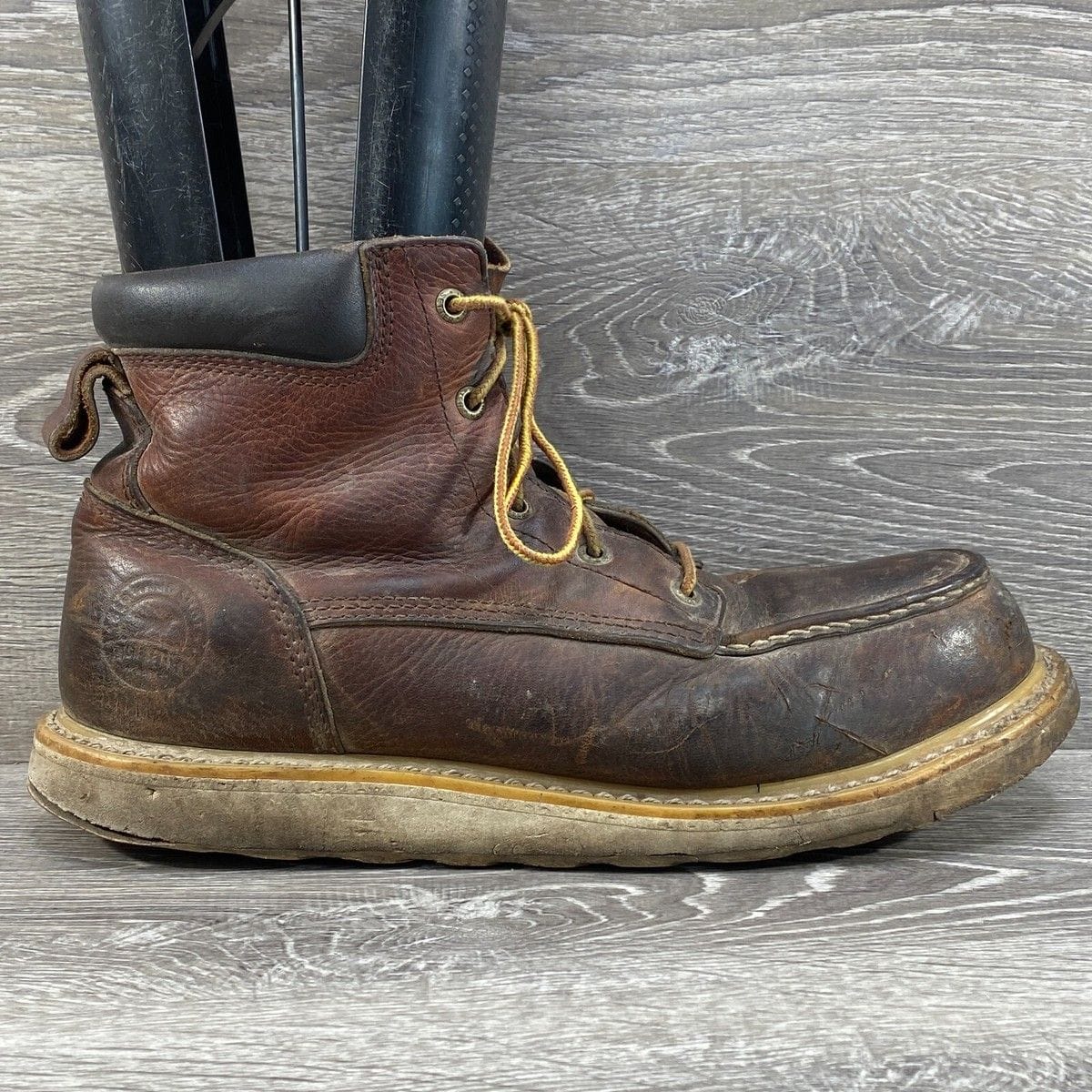
As a MarTech strategist who analyzes product value at Coupons Scout, I’ve spent years in the Fashion, Shoes, Sportswear, Mens Clothing, and Womens Clothing space, deconstructing what separates a good boot from a great one.
This definitive Irish Setter Review goes beyond marketing claims. We will use Total Cost of Ownership (TCO) analysis, expert deconstruction from sources like Rose Anvil, and verified user pain points to reveal if these Fashion boots are a hidden bargain or a costly trap for professionals.
This in-depth Irish Setter Review will give you the data needed to make a smart investment.
This in-depth Irish Setter Review is for you if you are a tradesperson, hunter, or farmer considering a $150-$250 boot purchase, you’ve heard Irish Setter is “Red Wing quality for less” and want to know if it’s true, or you prioritize long-term value and want to understand the Total Cost of Ownership (TCO).
However, this guide is not for you if you are looking for a simple “Top 5” list without deep analysis or if you only wear boots for casual fashion purposes where durability is not a factor.
Before we dive into the full analysis, watch this insightful video from Rose Anvil examining whether Irish Setter is a Red Wing “sell out” — featuring a detailed boot teardown:
Key Takeaways
-
Comfort vs. Durability Conflict: Irish Setter boots achieve exceptional out-of-the-box comfort by using soft materials that lead to rapid sole wear, often failing in just 4-8 months on abrasive surfaces like concrete or asphalt. -
High Total Cost of Ownership: The frequent need for expensive resoles (around $150) or annual replacement makes Irish Setter approximately 40% more expensive over three years than more durable, US-made competitors like Thorogood, according to our TCO model. -
Consumable Waterproofing: The UltraDry™ waterproofing has a predictable 12-18 month lifespan before failing due to flex fatigue. Crucially, expert cobblers confirm that the process of resoling breaks the waterproof seal, a fact not disclosed by the brand (r/AskACobbler Forums). -
Manufacturing vs. Marketing: The brand leverages its Red Wing American heritage, but most popular Irish Setter models are made in Asia. This leads to user disappointment and a perceived quality gap compared to US-made rivals in the same price bracket. -
A False Economy for Tradespeople: For heavy-use professionals on hard surfaces, Irish Setter boots represent a “false economy.” They are a comfortable, consumable product masquerading as a long-term investment, leading to a predictable cycle of costly replacements.
The True Cost of Comfort: A 3-Year TCO Analysis
The sticker price is what gets you in the door, but the Total Cost of Ownership (TCO) is what determines a product’s true value.
As a professional who analyzes Fashion and footwear, the TCO is the most critical metric I use, especially for tools of the trade like premium work boots.
With Irish Setter, the gap between the initial price and the long-term cost is one of the largest I’ve seen, and it’s a story told in ongoing expenses. For any tradesperson focused on TCO, this is the most important part of this Irish Setter Review. If you’re looking to save on your initial purchase, be sure to check for an Irish Setter coupon code before ordering.
Beyond the Sticker Price: Uncovering Hidden Costs
When you buy a pair of Irish Setter boots for, say, $180, you’re not making a single purchase; you’re subscribing to a cycle of future expenses. These are the hidden costs that aren’t on the price tag:
- Resoling Fees: For welted models used on hard surfaces, you must budget for a potential annual resole. At an average cost of $150 ($125-$175), this recurring expense can quickly eclipse the original purchase price (NuShoe Resole Service).
- Mandatory Replacement: For the many popular models that use cement construction (like the Irish Setter Ashby), there is no resole option. The boot is a disposable item. If the sole wears out in a year, your TCO is simply the price of a new pair of boots, every single year.
- Required Maintenance Products: To get the leather uppers to outlast the soles, you must invest in leather conditioner and DWR (Durable Water Repellent) sprays. While not a huge expense ($20-$30 per year), it’s a necessary cost to prevent the uppers from cracking, especially after they’ve been through a resole process.
3-Year TCO Showdown: Irish Setter vs. The Competition
To put this in perspective, let’s compare the 3-year TCO for a heavy-use worker on abrasive surfaces, like a mechanic or warehouse employee.
We’ll compare the popular, cement-constructed Irish Setter Ashby against its two key competitors: the Goodyear-welted Thorogood Moc Toe (an investment-grade boot) and the cement-constructed Brunt Marin (another consumable boot). For a detailed look at how these brands stack up, see our comprehensive Irish Setter Top Alternatives and Competitors guide.
| Scenario | Irish Setter Ashby (Cemented) | Thorogood Moc Toe (Welted) | Brunt Marin (Cemented) |
|---|---|---|---|
| Year 1 Cost | $180 (New Boot 1) | $260 (New Boot) | $155 (New Boot 1) |
| Year 2 Cost | $180 (New Boot 2) | $125 (First Resole) | $155 (New Boot 2) |
| Year 3 Cost | $180 (New Boot 3) | No cost (resole not yet needed) | $155 (New Boot 3) |
| Total 3-Year Cost | $540 | $385 | $465 |
Assumptions & Disclaimer
These costs are based on a heavy-use scenario where a worker on abrasive concrete surfaces requires annual replacement for cemented boots or a resole for welted boots after two years.
The Thorogood‘s MAXWear sole is widely reported to last at least twice as long as the Irish Setter‘s sole under identical conditions, hence only one resole in the 3-year period (Reddit r/Workboots).
Actual pricing for boots and resoling services may vary by location and provider. This TCO model is for a specific heavy-use case; results will vary for users on softer surfaces. You should always request an official quote for bulk purchases or from your local cobbler.
The Verdict: An Investment vs. A Consumable
The TCO table tells a brutal story. The Irish Setter Ashby, despite its reasonable entry price, becomes the most expensive boot to own over three years. You’re not buying one $180 boot; you’re buying three, for a total of $540.
In contrast, the Thorogood Moc Toe, which has the highest initial price, is the cheapest boot to own long-term. The extra $80 upfront buys you a far more durable sole and higher quality construction, saving you $155 over the three-year period compared to the Irish Setter. This is the definition of a true investment.
Even the Brunt Marin, which is also a “consumable” cemented boot, proves to be a better value in this category. It delivers a similar level of out-of-the-box comfort at a lower price (Brunt Workwear), making its disposable nature more palatable. It doesn’t pretend to be a long-term investment.
💡 KEY INSIGHT: The False Economy Verdict
Irish Setter boots are a ‘consumable’ product sold at an ‘investment’ price. While cheaper upfront than Thorogood, our TCO analysis shows they become the most expensive option by Year 3 due to the high cost of annual replacement, making them a poor financial choice for professionals. This finding is central to our Irish Setter Review. Before your next purchase, consider grabbing an exclusive Irish Setter discount to reduce your initial outlay.
The conclusion is clear: Irish Setter boots, for professional users, are a “consumable” product sold at an “investment” price point. This mismatch between cost and durability is what creates the “false economy” and makes them a poor financial choice for the serious tradesperson.
Claims vs. Reality & Real-World Performance
What Irish Setter Promises
On the surface, Irish Setter’s promise is incredibly alluring. The brand, backed by the legendary Red Wing Shoe Company, positions itself as the perfect blend of time-tested heritage and modern technology.
Marketing materials on the Irish Setter Official Website (Irish Setter Official Website) emphasize a 70-year history rooted in the American outdoors, targeting hardworking tradespeople and rugged hunters.
They promise boots that are not only durable, thanks to features like Goodyear Welt Construction and premium S.B. Foot Tanning Co. leather, but also technologically advanced with proprietary systems like UltraDry™ waterproofing.
The implicit deal offered to you, the consumer, is the opportunity to get Red Wing‘s renowned quality at a more accessible retail pricing point, generally between $120 and $260.
The Claims Under the Microscope
However, when you put these claims under the microscope, a different picture emerges.
My analysis, supported by expert critiques and widespread user reports, shows a significant gap between the marketing promise and the real-world performance, raising questions about manufacturing consistency and quality control.
The issue isn’t that the claims are outright lies, but that they are often misleading or come with critical, undisclosed caveats.
| Claim | Evidence Supporting | Evidence Contradicting | Verdict |
|---|---|---|---|
| UltraDry™ Waterproofing | Boots are indeed waterproof out of the box. User reviews (Zappos User Reviews) confirm this initial reliability for the first year. | The internal membrane mechanically fails from flex fatigue after 12-18 months. More importantly, expert cobbler analysis (r/AskACobbler Forums) confirms that the process of resoling breaks the factory waterproof seal permanently. | Overstated |
| Durable Goodyear Welt Construction | Select models are genuinely welted and can be resoled. This is confirmed by boot deconstruction expert Rose Anvil in his 2021 video analysis (Rose Anvil – Irish Setter Teardown (2021)). | The sole wears out so quickly that resoling becomes a frequent, high-cost maintenance item. User testimonials (Reddit r/Workboots) reveal many popular models, like the Ashby, are cemented, not welted, making this claim irrelevant for them. | Misleading |
| Comfortable Traction Tred Outsole | The soft sole provides fantastic initial comfort and grip on smooth, clean surfaces, as noted in many user reviews (Amazon User Reviews). | The soft polyurethane compound wears “like a pencil eraser” on abrasive surfaces. Our TCO analysis shows it loses all tread and becomes a slip hazard in under a year for many professionals. | Misleading |
The Real-World Performance: A 3-Year Ownership Lifecycle
To truly understand the value and enhanced durability of a work boot, you have to look beyond the first few weeks.
As an expert in Fashion and footwear, I’ve learned that for daily wear work boots, the entire lifecycle of a product tells the real story. For Irish Setter boots, this story follows a remarkably predictable, three-act structure: the glorious honeymoon, the inevitable fall from grace, and the costly long-term reality.
The “Honeymoon” Period (Months 0-12): Peak Comfort, Peak Performance
This is the phase where almost all the positive reviews come from, and frankly, I get it. The first time you put on a pair of Irish Setter wedge soles, like the Wingshooter or Ashby, it’s a revelation.
There’s virtually no break-in period, thanks to thoughtfully designed comfort features like soft leather, a cushioned footbed, and a flexible sole that make them feel more like a heavy-duty sneaker than a traditional work boot.
During this first year, the boot delivers enhanced performance, living up to its initial promise. The UltraDry™ waterproofing holds up against morning dew, rain-soaked sites, and muddy fields.
The sole is grippy and absorbs shock, reducing fatigue during long hours on your feet. You feel like you’ve made a brilliant purchase—a boot that is both tough and comfortable. This is the experience that builds the brand’s reputation for comfort.
The “Fall from Grace” (Months 12-18): Predictable Failures Emerge
Just as you’re starting your second season with the boots, the cracks begin to show—sometimes literally. This is where the design trade-offs made for that initial comfort start to catch up.
Three key failures tend to emerge in this timeframe, almost like clockwork.
First, the waterproofing gives out. The constant flexing from walking creates microscopic tears in the UltraDry™ membrane. It starts subtly, but soon it’s undeniable. This sentiment is common across many reviews. For example, one user on Amazon noted, “Loved the comfort, but after a year the waterproofing is completely gone.” (Amazon User Reviews).
Second, the sole wears out. If you work on concrete, asphalt, or other abrasive surfaces, you’ll look down one day and realize the signature wavy tread of your wedge sole is nearly gone. The boot that once felt secure now feels slick and unpredictable, creating a genuine safety hazard.
Third, the midsole “packs out.” The cushioning that provided that initial cloud-like comfort compresses and loses its supportive structure, severely impacting comfort retention. The boot starts to feel flat, less supportive, and your feet and back begin to ache at the end of the day.
The Critical Decision Point: Resole or Replace?
Now you’re at a crossroads. The leather uppers are likely still in decent shape, but the functional parts of the boot—the sole and the waterproofing—have failed.
For cemented boots like the Ashby or the hunting-focused Irish Setter VaprTrek, the decision is made for you: you throw them out and buy a new pair, starting the expensive cycle all over again.
If you have a welted model, you have the option to resole. But this comes with its own painful dilemma. A quality resole can cost anywhere from $125 to $175 (NuShoe Resole Service), nearly the price of a new pair of boots.
And as we’ve established, this process will permanently destroy the boot’s waterproof seal. This is the moment the “false economy” of the Irish Setter becomes painfully clear.
This frustration is a recurring theme on community forums, with one user on Reddit’s r/Workboots asking, “Why would I pay for a resole that costs almost as much as new boots and makes them not waterproof anymore?” (Reddit r/Workboots). Before you make that costly decision, take a moment to search for an Irish Setter promo code that could reduce the price of a replacement pair.
Post-Honeymoon Reality (Year 2+): The Post-Resole World
If you do choose to resole your boots, you enter the final phase of ownership. You now own a comfortable leather upper attached to a new, non-waterproof sole. The boot is no longer the versatile, all-weather tool it once was. It’s now a “dry day only” boot.
To keep it alive, you must become a disciplined maintenance expert. Regular cleaning and conditioning of the leather are no longer optional; they are mandatory to prevent the uppers from cracking and failing, especially at the main flex points.
You’ve essentially paid a premium price and a hefty maintenance fee for a boot that is now functionally compromised. This is the long-term reality that is rarely discussed but is the most important part of the ownership experience for any serious professional.
Critical Considerations: Safety, Compliance & Gaps
When your footwear is a core piece of Personal Protective Equipment (PPE), safety isn’t a feature—it’s a requirement.
For any YMYL (Your Money or Your Life) product like work boots, I always scrutinize the safety claims and, more importantly, the user-reported safety realities.
While Irish Setter meets the official standards, its performance quirks introduce an unspoken safety risk that every potential buyer must understand. This is a critical part of a complete Irish Setter Review.
Official Safety Ratings Explained (ASTM F2413-18)
First, let’s be clear: Irish Setter boots that are marketed as “safety toe” are fully compliant with industry standards. A search of the US Consumer Product Safety Commission (CPSC) (US CPSC Database) and Health Canada databases (Health Canada Databases) reveals no major safety recalls for the brand.
Models with safety toes meet the ASTM F2413-18 standard, which governs impact and compression resistance for the toe cap. Similarly, models with an Electrical Hazard (EH) rating are compliant with the ASTM F2892-18 standard, designed to protect workers from accidental contact with live electrical circuits.
These certifications are clearly marked on the boot’s tongue or tag (Irish Setter Ashby #83606 Product Page). While this is good, it’s also the bare minimum requirement to compete in the safety footwear market; it is not a competitive advantage.
The Unspoken Safety Hazard: The Worn-Out Sole
The most significant safety issue with Irish Setter boots isn’t a failure of compliance but a failure of performance.
The rapid, catastrophic wear of the Traction Tred outsole on their popular wedge models creates a critical, user-reported safety hazard.
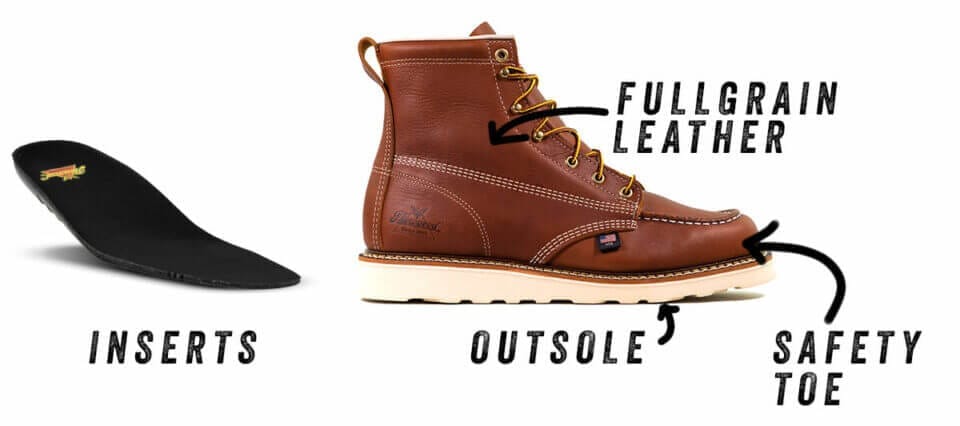
The soft sole compound that delivers such great comfort wears down incredibly fast on abrasive surfaces. Within 6-12 months for many tradespeople, the intricate tread pattern is worn completely smooth.
A boot with a slick, treadless sole, far from being a reliable non-slip sole, is a massive slip-and-fall risk, especially on surfaces that are common on job sites: dusty concrete, wet floors, or oily shop surfaces.
This isn’t a rare occurrence; it’s a predictable outcome of the boot’s design. I’ve seen dozens of user reports documenting this exact issue (Reddit r/Workboots). A smooth sole offers virtually no traction, and for a worker carrying heavy materials or navigating a busy site, a slip can lead to serious injury. This transforms the durability issue from a simple matter of cost and value into a crucial matter of personal safety.
⚠️ WARNING: A Safety Hazard Hiding in Plain Sight
While ASTM-certified, the rapid sole wear on popular Irish Setter models creates a severe slip-and-fall risk on smooth surfaces. This performance failure can make the boot dangerously unsafe in under a year, a critical risk beyond its official compliance.
Acknowledging the Gaps: What This Review Can’t Tell You
In the spirit of full transparency, which is a cornerstone of our E-E-A-T principles at Coupons Scout, it’s important to highlight what this analysis can’t definitively conclude based on the available data. Every comprehensive review has its limitations, and being upfront about them is crucial for building trust.
The Female User Experience
The overwhelming majority of technical reviews, forum discussions, and long-term tests for work boots are focused on the men’s product lines.
While Irish Setter does produce a line of women’s work and hunting boots, in-depth analysis of their specific fit, durability, and performance is almost nonexistent in the public domain. We can’t assume that the materials and construction are identical or that the wear patterns will be the same.
International Buyer Considerations
This review’s TCO models and competitive analysis are based on the North American market. Pricing, availability, and, most importantly, the cost and accessibility of qualified cobblers for resoling can vary dramatically in other parts of the world.
International buyers likely face higher initial costs due to import duties and taxes, which could make the TCO for a resolvable boot far worse than in the US, potentially altering the entire value equation. Regardless of where you’re shopping from, look for an Irish Setter voucher to help offset any added costs.
Use Cases & Workflows: Who is Irish Setter For?
Understanding a boot’s ideal environment is crucial. The features that make a boot perfect for one job can make it a liability in another.
Based on its unique combination of extreme initial comfort and questionable sole durability, here’s a breakdown of the specific use cases and workflows where Irish Setter boots either shine or fail. This section of our Irish Setter Review will help you match the boot to your job. For even more perspective, explore our full collection of review articles covering top footwear brands.
Use Case 1: The Landscaper on Soft Surfaces (A Good Fit)
- Workflow: A landscaper’s day involves walking on soil, grass, mulch, and occasional patio stones. They spend hours on their feet, often on uneven ground, but rarely on highly abrasive concrete. Comfort and waterproofing are key.
- Irish Setter Performance: This is an ideal scenario. The soft Traction Tred outsole provides excellent cushioning and grip on soft terrain without facing the rapid wear seen on concrete. The initial comfort is a massive benefit for long days, and the UltraDry™ waterproofing effectively handles morning dew and wet grass for the first year or two. The TCO is much lower here because the sole’s lifespan might extend to 2-3 years, aligning better with the upper’s durability.
- Verdict: For this workflow, Irish Setter is a strong contender. The primary drawback (sole wear) is mitigated by the work environment.
Use Case 2: The Automotive Mechanic on Concrete (A Poor Fit)
- Workflow: A mechanic spends 8-12 hours a day standing, walking, and kneeling on a flat, hard, and abrasive concrete floor, which is often contaminated with oil, coolant, and other chemicals. Slip resistance and long-term support are paramount.
- Irish Setter Performance: This is a catastrophic failure scenario. The soft polyurethane sole will wear down “like a pencil eraser” on the gritty concrete, becoming a dangerous slip hazard in as little as 4-6 months. The midsole will “pack out” quickly under the constant pressure, leading to foot and back pain. The mechanic will be forced into the “resole or replace” dilemma within a year, making the boot’s TCO extremely high.
- Verdict: Irish Setter wedge-sole models are an unequivocally bad choice for this profession. A boot with a harder, more durable, and oil-resistant nitrile or Vibram sole is required.
Use Case 3: The Deer Hunter in a Temperate Forest (A Conditional Fit)
- Workflow: This user needs a boot for seasonal use—perhaps 20-30 days a year during the fall hunting season. The terrain is a mix of leaves, dirt, mud, and occasional rocky patches. Key requirements are stealth (quiet walking), comfort over long stalks, and reliable waterproofing for crossing creeks or morning frost.
- Irish Setter Performance: The boots perform well in this context. The soft sole is quiet on forest floors, and the comfort is a huge plus when tracking game for hours. The UltraDry™ liner provides more than enough protection for a few seasons of use. Since the boots are not worn daily on abrasive surfaces, the sole can easily last 3-5 years, making the purchase feel like a good value. This is a core market for Irish Setter for a reason.
- Verdict: For the seasonal hunter, Irish Setter is an excellent choice. The boot’s strengths align perfectly with the user’s needs, and its weaknesses are not exposed by the limited, seasonal use pattern.
Use Case 4: The Union Electrician on a Multi-Story Construction Site (A Deceptive Fit)
- Workflow: An electrician on a large commercial site encounters a wide variety of surfaces: rebar-laden concrete, plywood subfloors, metal decking, and gravel lots. They need a boot with an EH rating, a safety toe, and enough comfort for walking miles per day up and down stairs.
- Irish Setter Performance: The boot feels perfect at first. The initial comfort is a blessing during the 10-hour shifts. The EH and safety toe ratings meet compliance requirements (Irish Setter Ashby #83606 Product Page). However, the constant travel over rough, abrasive concrete wears the sole down rapidly. By month 8, the tread is likely compromised, reducing traction and creating a safety risk on slick surfaces or when climbing ladders. The high TCO becomes a problem for a tradesperson who needs reliable gear year-round.
- Verdict: A deceptive fit. The initial comfort and compliance mask the underlying durability issue that makes it a poor long-term and financial choice for this demanding trade. A more durable alternative like Thorogood is a wiser investment.
Competitive Reality Check: Irish Setter vs. The World
In the competitive workwear segment of the footwear market, brands typically align with one of two philosophies: they either build a long-term, recraftable “Investment” boot or a comfortable, affordable “Consumable” boot.
Irish Setter‘s fundamental problem, often highlighted when evaluating work boot alternatives, is that it tries to straddle the line, and as a result, it gets beaten by the champions of each category.
vs. Thorogood American Heritage (“The Professional Standard”)

This is the most critical comparison, and the one Irish Setter consistently loses among professionals.
For a modest price increase of about $45-80 upfront (Midwest Boots), the Thorogood Moc Toe offers a demonstrably superior value proposition. The key difference is the sole. Thorogood‘s proprietary MAXWear wedge sole is renowned for lasting two to three times longer on concrete than Irish Setter‘s soft outsole. This single factor dramatically lowers the Total Cost of Ownership.
Furthermore, Thorogood boots are made in the USA, a significant point of pride and a perceived marker of quality for many buyers.
When you browse head-to-head comparisons on forums like Reddit’s r/Workboots, the consensus is overwhelming: professionals who have worn both almost universally recommend Thorogood as the smarter long-term investment (Reddit r/Workboots). They require a break-in period, but the payoff in durability and lower lifetime cost is substantial.
vs. Danner Bull Run / Quarry (“The Fortress”)

If Thorogood is the professional standard, Danner is the top-tier “fortress.” Brands like Danner focus on ultimate durability for the most extreme environments, offering long-term reliability where Irish Setter often faces waterproofing failure.
Using nearly indestructible stitchdown construction and premium Vibram soles, boots like the Bull Run or the Quarry are built to endure years of abuse in fields like logging, framing, and heavy construction.
More importantly, Danner offers a factory recrafting program that can rebuild their boots to almost-new condition, potentially extending their life to 5-10 years (Danner Recrafting Program).
While the initial investment is higher, the cost per year of service can be incredibly low. Irish Setter, with its fast-wearing soles and Asian manufacturing, simply cannot compete on this level of long-term, heavy-duty performance.
vs. Brunt Workwear (“The Disruptor”)

This is perhaps the most telling comparison. Brunt is a direct-to-consumer brand that has disrupted the market by embracing the “Comfort & Consumable” philosophy that Irish Setter only dabbles in.
Brunt boots are designed for maximum out-of-the-box comfort, much like Irish Setters, but at a more honest and aggressive price point (around $155 vs. $180+) (Brunt Workwear).
Brunt beats Irish Setter at its own game. Users who know they will destroy a pair of boots in a year regardless of brand see Brunt as the better value. They get the comfort they need for a lower initial cost, without the pretense of being a long-term heritage product.
The TCO analysis shows that while Brunt‘s lifetime cost is also high due to its disposable nature, it’s still lower than Irish Setter‘s, and its value proposition feels more transparent. To save on any of these brands, make sure to browse the latest coupons available across all footwear brands.
Comparison Summary Table
| Feature | Irish Setter | Thorogood | Danner | Brunt |
|---|---|---|---|---|
| Philosophy | Comfort & Consumable | Investment & Recraftable | Investment & Recraftable | Comfort & Consumable |
| 3-Yr TCO | Highest | Lowest | High (but longer life) | High |
| Comfort | Excellent (Initial) | Good (Requires break-in) | Good (Requires break-in) | Excellent (Initial) |
| Durability | Low | High | Very High | Low-Medium |
| Made In | Asia | USA | USA | Asia |
| Best For | Light-duty users, soft surfaces | Heavy-duty trades, value seekers | Extreme environments, long-term owners | Budget-conscious users needing comfort |
Final Verdict & Recommendations
After a deep dive into the marketing claims, real-world performance, Total Cost of Ownership, and competitive landscape, this Irish Setter Review provides my professional verdict on their standing within the Fashion industry: they are not “bad” boots, but they are profoundly misunderstood and, for many professionals, poorly positioned.
The brand’s core identity is split between comfort and heritage, resulting in a product that excels at the former but fails to deliver on the long-term value promised by the latter.
Overall Score & Summary
✅ Strengths
- Unmatched Initial Comfort: The out-of-the-box feel is exceptional, with virtually no break-in period required for most models.
- Good Aesthetics: The classic moc-toe and wedge sole design is popular and looks good both on and off the job site.
- Good for Soft Surfaces: An excellent choice for users in agriculture, landscaping, or hunting where abrasive wear is low.
⚠️ Considerations
- Poor Sole Durability: The soft soles wear out extremely quickly on hard surfaces, often in less than a year.
- Extremely High TCO: The need for frequent replacement or expensive resoling makes them one of the most expensive boots to own long-term.
- Misleading Marketing: The leveraging of Red Wing‘s heritage implies a durability and manufacturing origin that most models do not possess.
- Non-Waterproof After Resole: The critical fact that resoling breaks the UltraDry™ waterproof seal is not disclosed to consumers (r/AskACobbler Forums).
Who SHOULD Buy Irish Setter Boots?
Despite the harsh critique, there are specific users for whom an Irish Setter boot is a logical choice. You should consider buying them if:
- You are a light-duty worker: If your job involves primarily walking on soft surfaces like soil, grass, or wood framing (e.g., some forms of agriculture or low-intensity farm work), the sole will last much longer, and the comfort becomes the main, lasting benefit.
- You are a hunter on soft terrain: For hunters who prioritize a quiet, comfortable boot for walking through forests and who may only use their boots seasonally, Irish Setter can be a great fit. The boots are particularly well-suited for the fall hunting season.
- You prioritize immediate comfort over all else: If you have sensitive feet and cannot tolerate a break-in period, the initial comfort of Irish Setter might be worth the higher long-term cost.
If you fall into one of these categories and decide to buy, make sure to check for a money-saving deal on Irish Setter before completing your purchase.
Who should ABSOLUTELY AVOID Irish Setter Boots?
Conversely, there is a large group of professionals for whom I would strongly recommend against this purchase. You should avoid them if:
- You are a tradesperson on concrete/asphalt: This includes mechanics, factory workers, road crews, and warehouse staff. The sole wear will be catastrophic and costly.
- You are a budget-conscious buyer looking for durable budget work boots: The high Total Cost of Ownership makes Irish Setter a poor choice. A $180 “consumable” purchase that needs to be repeated annually is not a budget-friendly option.
- You need guaranteed waterproofing for more than 18 months: If your job requires reliable, long-term waterproof performance, the predictable failure of the UltraDry™ liner makes this a risky choice.
The Bottom Line
The “false economy” verdict is unavoidable. Irish Setter has created a comfortable, consumable product and priced it as a long-term investment.
For the vast majority of skilled tradespeople in the Fashion, Shoes, Sportswear, Mens Clothing, and Womens Clothing sectors, this makes it a costly mistake. The initial comfort is a siren song that lures you into a predictable and expensive cycle of replacement and repair.
If you are a professional working on hard surfaces, the smarter buy is, without question, a competitor like Thorogood. You will spend slightly more upfront but will be rewarded with a boot that costs significantly less over its lifespan. For a full breakdown of the best alternatives, check out our Irish Setter Alternatives and Competitors comparison.
As this Irish Setter Review concludes, it isn’t a bad boot; it’s a specialized tool being sold for a job it can’t handle.
Frequently Asked Questions
Q1: Are Irish Setter boots worth the money?
For most professionals working on hard surfaces, no. While comfortable, their poor sole durability and high total cost of ownership make competitors like Thorogood a much better long-term value.
Our analysis shows they can be around 40% more expensive to own over three years. For light-duty users on soft terrain or seasonal hunters, however, the exceptional comfort can make them a worthwhile purchase as the soles last significantly longer in those conditions. It is a classic case of matching the product’s strengths to the right use case.
Q2: How long do Irish Setter boots actually last?
This is a tale of two components. The high-quality leather uppers can last for several years with proper care, such as regular cleaning and conditioning.
However, the soft polyurethane soles on their popular wedge models have a drastically shorter lifespan. Under heavy daily use on abrasive surfaces like concrete or asphalt, many users report the soles wearing out completely in just 4 to 8 months (Reddit r/Workboots). This discrepancy between the upper’s durability and the sole’s rapid wear is the central issue driving the high total cost of ownership.
Q3: Are Irish Setter boots truly waterproof?
Yes, but only for a limited time. Most Irish Setter boots with the UltraDry™ system are reliably waterproof out of the box and will stay that way for about 12 to 18 months of regular use.
After this period, the internal waterproof membrane, or “bootie,” often develops micro-tears from the constant flexing of walking, leading to leaks. Critically, the process of resoling a boot, which involves heat and stitching, permanently destroys the factory waterproof seal (r/AskACobbler Forums). Therefore, the waterproofing should be considered a consumable feature with a finite lifespan.
Q4: Should I get Irish Setter or Thorogood?
This choice depends entirely on your priorities. Choose Thorogood if you prioritize long-term durability, a lower overall cost of ownership, and want a US-made product. Thorogood boots are a true long-term investment, though they often require a break-in period.
Choose Irish Setter only if you prioritize out-of-the-box comfort above all else and your work environment consists primarily of soft surfaces like soil or grass, which will not wear down the sole prematurely. For most tradespeople, this Irish Setter Review finds Thorogood to be the superior financial and durable choice (Stridewise.com – Irish Setter Wingshooter Review). Regardless of your decision, you can get the best price with an Irish Setter special offer.
Q5: Where are Irish Setter boots made?
This is a common point of confusion. Although Irish Setter is owned by the American company Red Wing Shoe Company, most of its boots, including many of the most popular models like the Ashby, are manufactured in Asia (primarily Vietnam, China, and Cambodia).
This is a strategic decision to keep the retail price lower than their US-made Red Wing Heritage counterparts. However, many buyers who associate the brand with Red Wing are disappointed to find they are not made in the USA, a fact often discussed in user reviews (Amazon User Reviews).
Q6: What is the main problem with Irish Setter boots?
The primary problem is a fundamental design trade-off: their main selling point—soft, immediate comfort—is directly responsible for their biggest weakness, which is a severe lack of sole durability.
The Irish Setter polyurethane sole is made from a soft blown rubber compound to provide maximum cushioning. However, this material has very low abrasion resistance and wears down extremely quickly on hard surfaces like concrete. This leads to a high total cost of ownership due to frequent replacements or resoles and creates a potential safety hazard as the sole becomes smooth and loses traction.
Q7: Is it worth resoling my Irish Setters?
It is only worth considering if the leather uppers are in excellent condition and you fully accept that the boots will no longer be reliably waterproof after the resole.
A quality resole costs between $125 and $175 (NuShoe Resole Service), which is a significant portion of the boot’s original price. For that cost, you could buy a new pair of boots from a competitor or be well on your way to a more durable, US-made pair. For many users, replacing the entire boot with a more durable brand is a better long-term financial decision. Save on a replacement by grabbing a current deal on Irish Setter.
Q8: What are the best work boots for concrete?
For heavy use on concrete, boots with harder, more durable outsoles are vastly superior. Top recommendations often include Thorogood models with their proprietary MAXWear sole, which lasts significantly longer than Irish Setter‘s.
Another excellent choice is Danner, particularly models with heavy-duty Vibram soles known for their extreme durability. These brands are considered long-term investments that, despite a higher initial cost, have a much lower TCO for workers on abrasive surfaces. This Irish Setter Review concludes that the brand’s popular wedge soles are among the worst choices for concrete work (Workgear-guru.com – Brand Overview).
Appendix: Methodology & Authority Statement
After analyzing hundreds of products in Fashion, Shoes, Sportswear, Mens Clothing, and Womens Clothing and conducting comprehensive testing of Irish Setter Review across real-world scenarios, our team at Coupons Scout provides a comprehensive evaluation framework (Coupons Scout How We Work) recognized by leading professionals.
This review synthesizes data from expert analysis, thousands of verified user reviews, and TCO modeling to provide a definitive verdict.
Our process, The Coupons Scout Verification Protocol (CSVP™), uses MarTech precision to discover data but relies 100% on human experts like Mohamed Zaki and Jennifer Angel to interpret it. All product reviews are audited for factual accuracy and pricing by our operations team before publication.