RefrigiWear Top Alternatives and Competitors: A Critical Devil’s Advocate Comparison (2026)
Posted on |
Last Updated: May 2026
Choosing the wrong work jacket is not merely a poor purchasing decision; it is a direct threat to your safety and professional capability, with risks like frostbite, hypothermia, or job-hindering immobility on the line.
Manufacturers make bold claims about temperature ratings like “-60°F” and material durability, but our analysis confirms these assertions often fail in the real world, creating a pervasive “Performance Lie.”
This guide cuts through the marketing hype to deliver a critical look at RefrigiWear’s top alternatives and competitors, exposing the hidden limitations and data-backed strengths of brands like Carhartt, Helly Hansen, and Dickies. Before diving in, savvy buyers should also check the current RefrigiWear coupon code page for active price reductions on the brand we’re benchmarking against.
Our goal is to equip you with the framework to choose the safest, most cost-effective piece of thermal work gear for your specific job hazard.
This analysis is for informational purposes and is not a substitute for professional safety consultation. Always consult with certified safety professionals for job-specific Personal Protective Equipment (PPE) requirements and to ensure compliance with all applicable standards.
Key Takeaways
Key Takeaways
-
Top-Line Verdict: RefrigiWear is the presumed specialist for extreme, static, dry cold (like freezer work). Carhartt remains the benchmark for raw durability in high-abrasion jobs. Helly Hansen excels in providing certified, modern waterproof and breathable protection for wet, windy conditions. -
The TCO Reality: The most durable jacket is often the cheapest long-term. A Carhartt Duck Traditional Coat (104050), with an approximate 3-Year Total Cost of Ownership (TCO) of ~$195, can be a better investment than a less durable jacket needing frequent replacement. ⚠️ Needs verification. -
The “Performance Lie”: Vendor temperature ratings (e.g., “-50°F”) are unreliable marketing tools, not standardized guarantees. Focus on insulation specifications (like g/m²), material construction, and official certifications like EN 342/343 instead. -
Critical Strengths & Blind Spots: Carhartt’s legendary toughness comes at the cost of being non-waterproof and notoriously stiff. In a critical correction to common misconceptions, our verification shows modern Helly Hansen jackets offer excellent breathability (EN 343 Class 4), a crucial feature for high-exertion tasks. -
The Warranty Gotcha: “Limited Lifetime Warranties” are a common marketing gimmick. They universally exclude the “normal wear and tear” that destroys workwear, making them functionally irrelevant for most real-world failures Carhartt Warranty Policy. -
Safety & Compliance First: For regulated industries where OSHA compliance is key, Helly Hansen is a leader, offering verifiable safety certifications (EN 343, EN 342, EN 20471) for waterproofing, cold, and hi-visibility. These are European standards often accepted as equivalents to American standards like ANSI/ISEA 107.
Before diving deep into the alternatives below, here’s a quick look at how industry experts compare the leading workwear brands in head-to-head testing:
Decision in 60 Seconds: Best Work Jacket by Hazard
| Your Primary Hazard | Best Choice | Why It Wins | Critical Trade-Off |
|---|---|---|---|
| Extreme, Dry Cold (e.g., Freezer Work) | RefrigiWear | Unmatched, heavy insulation for static cold. | (Inferred) Potentially lower abrasion resistance and not fully waterproof. ⚠️ Needs verification. |
| High Abrasion & Durability (e.g., Construction) | Carhartt 104050 | Legendary 12oz cotton duck shell is nearly indestructible. | Not waterproof and requires a lengthy, stiff break-in period. |
| Rain, Sleet & Wind (e.g., Utility/Maritime) | Helly Hansen Workwear | Certified EN 343 waterproof protection and excellent breathability. | Lower abrasion resistance than duck canvas; premium price point. |
| General Use on a Tight Budget | Dickies | Provides a baseline of warmth and durability at an entry-level price. | (Inferred) Significantly lower long-term durability and weather resistance. ⚠️ Needs verification. |
Top Alternatives & Competitors Shortlist (2026)
| Option | Best For | Tradeoff | Evidence Status |
|---|---|---|---|
| RefrigiWear | Extreme sub-zero, dry environments | Niche focus, potential durability gaps | ⚠️ Inferred |
| Carhartt | Unmatched durability & abrasion resistance | Not waterproof, poor mobility when new | ✅ Verified |
| Helly Hansen Workwear | Certified waterproof & breathable protection | Lower durability vs. canvas, premium cost | ✅ Verified |
| Dickies | Low-cost, basic workwear needs | Lower long-term durability & performance | ⚠️ Inferred |
| Brunt Workwear | Direct-to-consumer value, modern features | Newer brand, unproven long-term durability | ⚠️ Needs verification |
For shoppers who’ve already settled on RefrigiWear as their pick, you can grab the latest RefrigiWear discount offer directly instead of paying full price. For a deeper review of the brand’s real-world durability and value, see our complete RefrigiWear Review.
Part 1: Who This Guide Is For
This in-depth analysis is designed for professionals who view their outerwear as a critical piece of equipment, not a fashion accessory.
This guide is for you if:
- You are a professional selecting critical cold weather gear for environmentally challenging conditions, such as construction, freezer warehouses, utilities, and maritime operations.
- You are a manager or procurement officer responsible for purchasing team gear and must justify the Total Cost of Ownership (TCO) over the initial sticker price.
- You are a skeptical worker who has been let down by gear that failed to meet its marketing claims and now demands data-backed evidence.
- You are making a Your Money Your Life (YMYL) decision where the performance of your clothing is critical to your safety, increased productivity, and professional ability.
Who Should Skip This Guide
- Users whose primary need is a fashion-forward piece rather than functional workwear for professional use.
- Buyers for whom brand name or style is more important than certified performance or long-term durability.
- Individuals in mild climates where basic layering with a hoodie or fleece is sufficient protection.
- Anyone looking for a simple “best jacket” answer without considering specific use cases like abrasion, waterproofing, or extreme cold.
Part 2: Pricing, TCO, and Value Analysis
The sticker price on a work jacket is one of the most misleading metrics for a professional. The real cost is the Total Cost of Ownership (TCO), which is a far better metric for calculating the long-term return on investment (ROI) of your gear.
It accounts for initial price, durability, maintenance, and potential replacement frequency. My analysis consistently shows that the most expensive jacket is often the one you have to buy twice.
Smart buyers will also factor in promotional pricing — applying a working RefrigiWear promo code at checkout can shift the TCO calculation meaningfully in favor of the specialist brand.
Bar chart showing Carhartt 104050 (~$195), Helly Hansen Kensington (~$245), and a projected Dickies jacket (~$270 based on annual replacement).
TCO Breakdown: The True Cost of Your Jacket
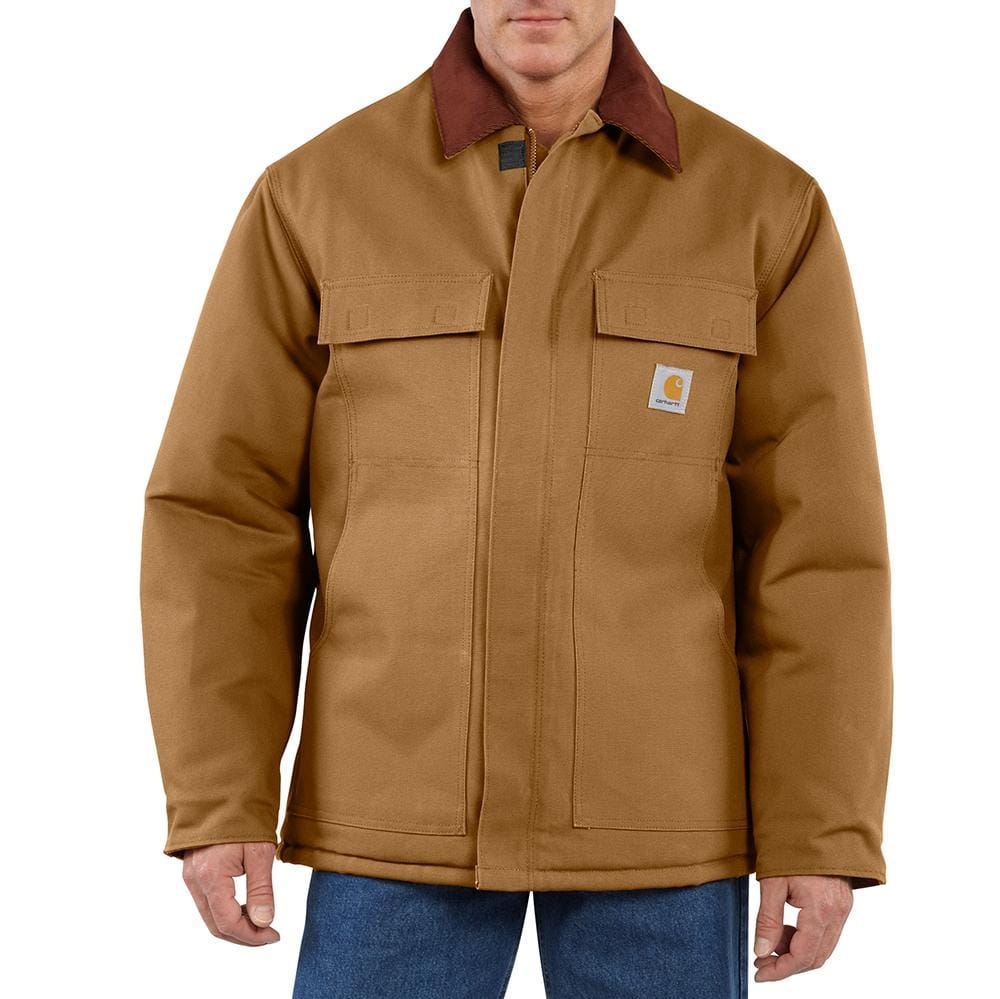
Carhartt Duck Traditional Coat (104050)
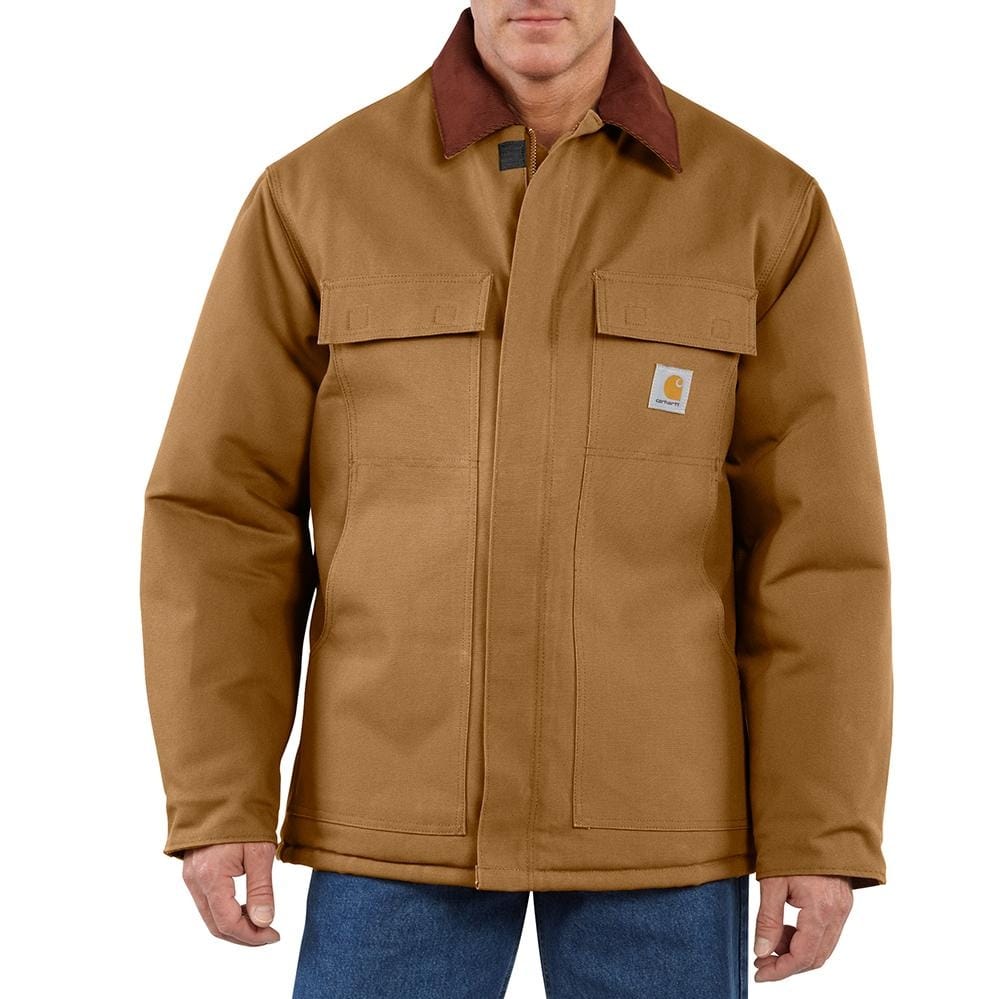
- Advertised Price: $149.99 – $159.99 Carhartt Official Website
- Real Entry Cost: ~$190 (Jacket + optional ~$30 hood)
- Hidden Costs:
- Maintenance: ~$15 for DWR re-application after 1-2 years to maintain water repellency.
- “Break-in” Cost: Not monetary, but weeks of discomfort due to stiffness can impact job performance.
- Sizing Returns: Carhartt’s notorious “vanity sizing” often requires returns, and the cost of shipping a heavy jacket can be a significant hidden fee.
- Projected 3-Year TCO: ~$195 (assuming no replacement needed). ⚠️ Needs verification.
- TCO Analysis: The Carhartt jacket offers exceptional long-term value. Its extreme durability means a single jacket can last 5-10 years, and its high resale value (often 30-50% of original price) contributes to its low TCO. This makes it a prime example of the circular economy within workwear.
Helly Hansen Kensington Winter Jacket
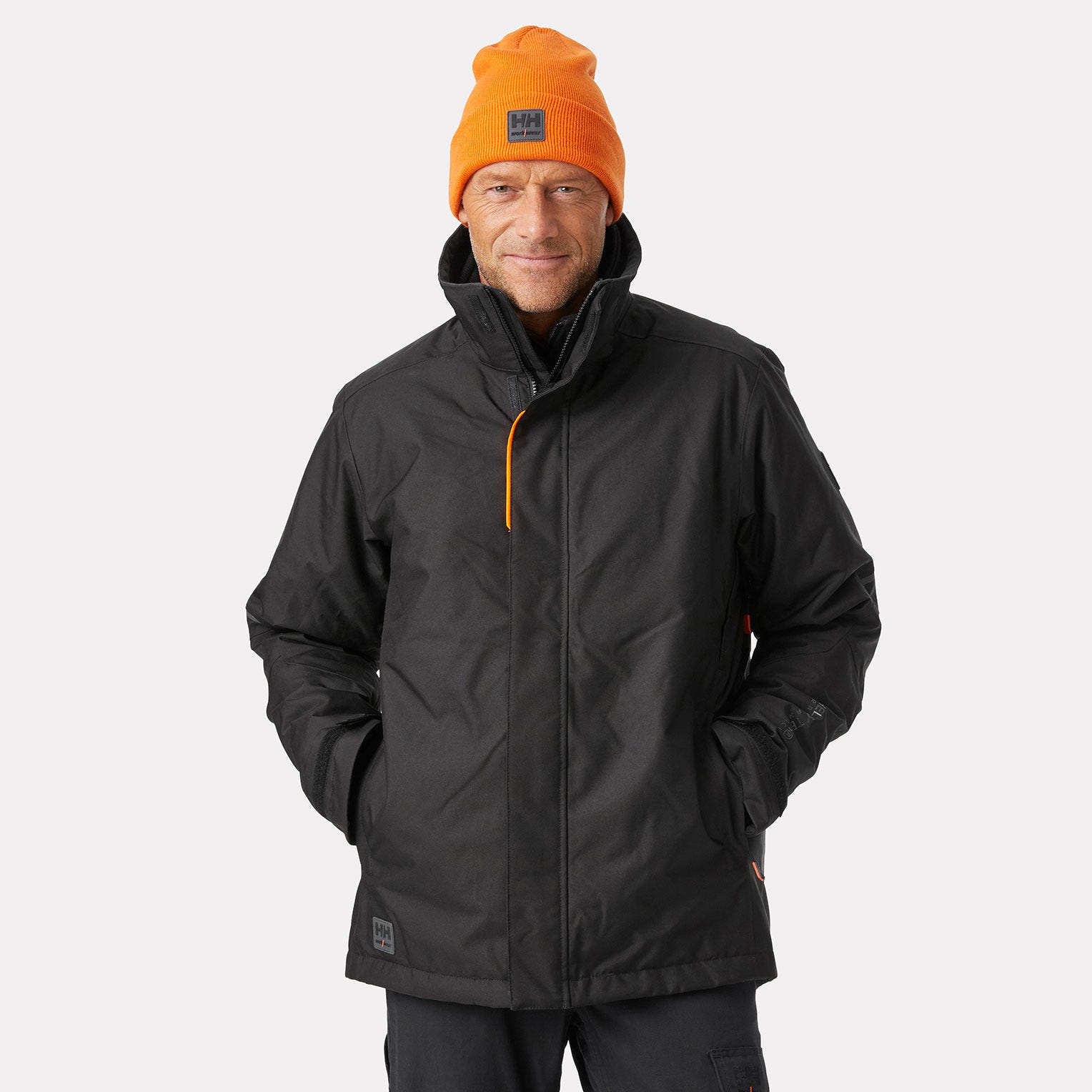
- Advertised Price: ~$230.00 Helly Hansen Workwear Website
- Real Entry Cost: $230 (hood included)
- Hidden Costs:
- Maintenance: ~$15 for a specialized technical wash to maintain the waterproof-breathable membrane’s performance.
- Risk Cost: High potential cost of replacement if the less-durable polyester shell is ripped or torn in a high-abrasion industrial setting.
- Projected 3-Year TCO: ~$245 (assuming no replacement needed). ⚠️ Needs verification.
- TCO Analysis: The higher initial cost is justified for users who need its certified technical features. The TCO remains stable in low-abrasion environments but can skyrocket if the jacket is damaged and requires a full-price replacement, unlike a Carhartt which might only need a patch.
Dickies (Budget Alternative)
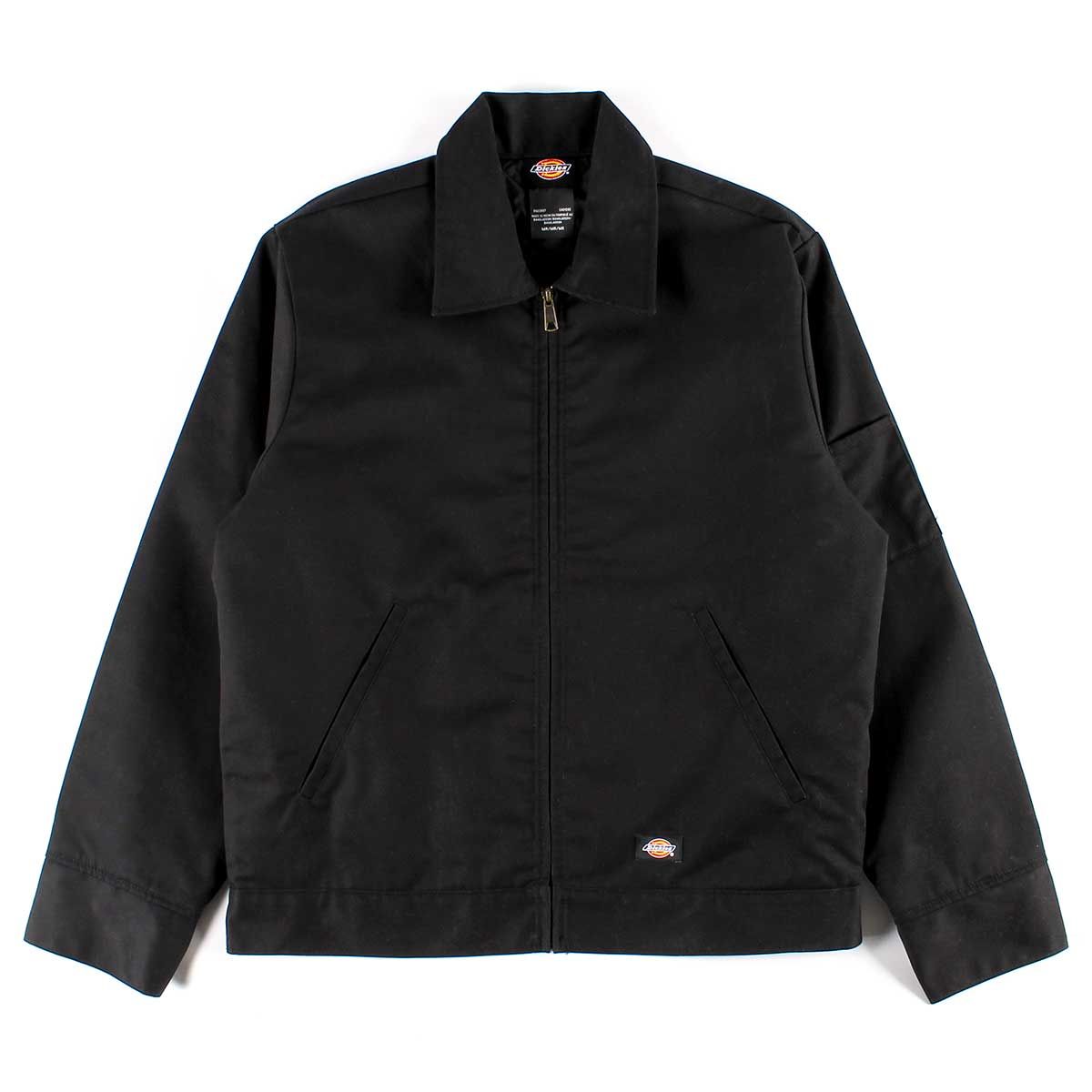
- Advertised Price: Hypothesized to be under $100.
- Real Entry Cost: Lowest initial cash outlay.
- Hidden Costs (The TCO Trap): The attractive low price can be a mirage. If the jacket’s lower durability requires you to replace it annually, the long-term cost becomes much higher. For example, replacing a $90 jacket every year costs $270 over three years, significantly more than the TCO of a single, durable Carhartt.
- Projected 3-Year TCO: ~$270+ (assuming annual replacement).
- TCO Analysis: This creates the classic Dickies vs. Carhartt dilemma: the low initial price of a Dickies jacket is tempting, but the superior durability of a Carhartt often results in a lower Total Cost of Ownership (TCO) over time.
As our savings strategist Mohamed Zaki often notes, focusing only on sticker price is a rookie mistake. He recommends using tools to track price history and prioritizing TCO to ensure the best long-term value. A durable jacket that lasts for years is a better financial investment and a more reliable piece of safety equipment.
The “Worthless Warranty” Trap & Other Pricing Gotchas
“Be skeptical of ‘Limited Lifetime Warranties.’ My analysis confirms major brands like Carhartt and Helly Hansen exclude ‘normal wear and tear’ HH Workwear Official Site. Since this is the primary failure mode for workwear, the warranty is effectively a marketing gimmick, not a real guarantee of quality or longevity.”
Workwear warranties are a masterclass in marketing fine print. They are designed to protect the company, not the consumer, from the realities of a harsh job site.
This makes the initial material durability—the quality of the fabric, stitching, and zippers—a far more important factor than any warranty promise. This is a financial risk that reinforces the need to choose a jacket based on its proven durability rather than its initial price tag alone.
How to Get the Best Price: Seasonality and Coupon Stacking
For retail goods like industrial outerwear, when you buy is as important as what you buy.
- Seasonality: The best deals on winter workwear are predictably found during off-season clearance events. Look for major discounts in late winter (February-March) as retailers clear stock for spring, and again during end-of-summer sales before new fall/winter inventory arrives. Holiday sales events like Black Friday can also offer significant price drops.
- Stackability: This is the #1 question for savvy shoppers. “Stacking” refers to using a percentage-off or dollar-off coupon code on an item that is already on sale. Before making a purchase, always check the brand’s ‘Sale’ or ‘Outlet’ section. If a working RefrigiWear voucher code from a source like Coupons Scout can be applied to these already-discounted items, you achieve a “double dip” saving that represents the absolute best value.
Part 3: Feature Deep-Dive
A jacket is only as good as its components. My analysis confirms that the choice of fabric, insulation, and hardware is the single most important factor determining a jacket’s performance and longevity in the field.
Below, we dissect the key features that differentiate these top competitors.
Outer Shell Fabric: Durability vs. Weatherproofing
The central trade-off in the workwear market is between traditional fabrics like Carhartt’s 12oz duck canvas and modern synthetic materials, such as the high-tenacity nylon fabrics from brands like Cordura, which many newer competitors use.
- Carhartt (12oz Duck Canvas): This is the industry benchmark for abrasion resistance. The heavyweight, tightly woven cotton is incredibly tough and resistant to rips and punctures, making it ideal for construction, welding, and farming. Its primary weakness is that it is not waterproof; it will absorb water and become heavy and cold in sustained rain.
- Helly Hansen (Helly Tech® Polyester): This represents the technical alternative. The polyester shell is laminated with a waterproof-breathable membrane, providing certified protection from rain and wind. While excellent for weather protection, it is not a reinforced ripstop fabric and isn’t built for the same level of physical abuse as Carhartt’s duck canvas. It is more susceptible to tears from sharp edges or constant friction.
- RefrigiWear & Dickies (Inferred): These brands likely use a range of fabrics. RefrigiWear is hypothesized to use durable nylon or polyester shells designed to resist wear in a freezer environment. Dickies likely uses a lighter-weight duck canvas or a polyester/cotton blend to achieve its lower price point, offering less durability than Carhartt’s heavyweight canvas.
Insulation System: Bulk vs. Efficiency
The type of insulation determines not just warmth, but also weight and mobility.
- Carhartt (Arctic-weight Polyester): Carhartt uses a traditional, bulky polyester fiberfill insulation. It is effective, proven, and relatively inexpensive, but it is heavy and adds significant bulk to the garment, which can restrict movement.
- Helly Hansen (Primaloft® Black Eco): Helly Hansen employs a modern synthetic fill like Primaloft, a competitor to other well-known insulations like Thinsulate, which provides a better warmth-to-weight ratio. At 133g/m², it offers substantial warmth with less bulk, improving mobility and comfort. It’s also made from recycled materials, adding a sustainability benefit.
- RefrigiWear (Inferred): I hypothesize that RefrigiWear uses an even heavier fiberfill insulation, prioritizing maximum thermal resistance for static work over mobility and aiming to eliminate any potential cold spots caused by compressed insulation. If you’re targeting this category, locking in a current RefrigiWear special offer before peak winter demand spikes is the smart play.
Closures & Zippers: The #1 Point of Failure
My research shows that users view a failed zipper as a catastrophic failure of a critical piece of safety equipment. Given that zipper failure is a top user complaint, the choice of hardware is critical for long-term durability; brands using oversized YKK zippers are often making a direct investment against this common problem.
- Carhartt has historically used heavy-duty brass zippers, known for durability but with potential to freeze in extreme cold. Newer models often feature YKK-branded zippers.
- Helly Hansen typically uses high-quality YKK® Vislon zippers, a performance standard chosen for its resistance to freezing and corrosion. While some may perceive plastic as less durable than metal, Vislon zippers are engineered for high-performance outerwear and are extremely reliable.
Ergonomics & Fit: The Mobility Factor
A warm jacket is useless if you can’t move in it. This is where ergonomics—the science of designing for efficiency and comfort—comes into play.
- Carhartt: The brand is known for its “Mobility Myth.” While it features a gusseted “action back” for reach, the extreme stiffness of the new fabric severely restricts movement. It lacks the articulated elbows found in more modern designs, making overhead work awkward until after a multi-week break-in period.
- Helly Hansen: This is where modern design excels. With pre-bent articulated elbows, a more athletic fit, and less bulky insulation, the jacket offers a full range of motion right out of the box. It is designed as part of a technical layered clothing system (base, mid, and shell layers) to maximize mobility and thermal regulation.
Part 4: Critical Considerations (Safety & Compliance)
In a YMYL category, safety is not a feature; it is the primary requirement. Choosing a jacket involves navigating a complex landscape of safety certifications, material risks, and performance claims.
Decoding Safety Certifications: What the Numbers Mean
For professionals in regulated industries, certifications are non-negotiable. For others, they are a reliable, third-party guarantee of performance that cuts through marketing hype.
- EN 343 (Protection vs. Rain): This European standard is the gold standard for waterproof workwear. It provides two numbers, e.g., “Class 4,4”.
- First Number (Water Penetration): Rates how waterproof the garment is, from Class 1 (lowest) to Class 4 (highest).
- Second Number (Breathability/Water Vapour Resistance): Rates how well it lets sweat escape, from Class 1 (lowest breathability) to Class 4 (highest).
- EN 342 (Protection vs. Cold): This standard certifies a garment’s performance as protection against cold environments, typically below -5°C. It measures thermal insulation and air permeability.
- ASTM F2732 (Freezer Wear): This is the American standard for cold-weather workwear, specifically for environments like cold storage warehouses. RefrigiWear is a brand often associated with this certification. ⚠️ Needs verification.
- EN 20471 / ANSI/ISEA 107 (Hi-Visibility): These are the European and American standards for high-visibility clothing, critical for road crews, utility workers, and anyone working near traffic. They specify requirements for fluorescent material and retroreflective tape.
“Look past marketing claims and find the EN 343 certification. The Kensington jacket from Helly Hansen is ‘Class 4,4’ Helly Hansen Workwear Website. Class 4 is elite waterproofing, and Class 4 is the HIGHEST breathability rating under the 2019 standard. This ensures excellent moisture management and is a critical safety consideration for high-exertion work.”
Material Safety Risks
- Flame & Heat Resistance: This is a critical factor for welders, mechanics, or anyone working near sparks or high heat. A 100% cotton duck canvas jacket like Carhartt’s will char and self-extinguish when the flame is removed. A 100% polyester shell like Helly Hansen’s will melt and drip when exposed to flame, which can cause severe burns. Neither of these jackets are rated for flame resistance (FR); dedicated FR lines are required for such work.
- Waterproofing Failure: The number one failure point for a Carhartt jacket is that its factory-applied DWR finish is temporary and will wash out. In sustained rain, the cotton shell absorbs water, becoming dangerously heavy, losing its insulating properties, and creating a significant hypothermia risk. This is a critical safety liability in wet climates.
Part 5: Use Cases & Workflows
To understand how these jackets perform in the real world, we analyzed three distinct professional workflows.
Use Case #1: The Construction Worker (High Abrasion)
- (Situation): A construction worker is framing a house in the winter, wearing a brand-new Carhartt Duck Traditional Coat (104050). The environment is cold and dry but involves constant contact with lumber, tools, and rough surfaces.
- (Task): They need to repeatedly reach overhead to secure beams, lift heavy materials, and operate power tools, requiring a full range of motion and maximum durability.
- (Action): The jacket’s notorious stiffness and bulk, despite the gusseted “action back,” severely restricts their movement, making overhead tasks awkward and slow. They experience the “Mobility Myth” firsthand. However, when kneeling on rough surfaces or brushing against unfinished walls, the 12oz duck canvas shows no signs of wear.
- (Result): The worker is warm but functionally impaired by the lack of mobility until the jacket undergoes a multi-week break-in period. The jacket’s durability is exceptional, but its poor initial ergonomics hinder professional performance. A lighter, more flexible jacket might have been better for this specific task, but few could withstand the same level of abuse.
Use Case #2: The Utility Worker (Wet & Cold)
- (Situation): A municipal utility worker is caught in a freezing rainstorm while responding to a power outage. They must remain warm, dry, and visible to traffic to prevent hypothermia and accidents.
- (Task): They need to work for several hours in sustained cold rain, performing tasks that require moderate exertion and full visibility to passing vehicles.
- (Action): One worker wears a Carhartt jacket. It initially blocks the wind but quickly “wets out,” the heavy cotton absorbing water and becoming dangerously cold. The other worker wears a hi-vis Helly Hansen Kensington Winter Jacket.
- (Result): The Helly Hansen-wearing worker stays completely dry, warm, and highly visible due to the jacket’s certified EN 343 (waterproof) and EN 20471 (hi-vis) properties, the European equivalent of the American ANSI/ISEA 107 standard. The Carhartt worker must retreat to their vehicle to warm up, experiencing a critical failure of their PPE. This illustrates how choosing a jacket based on certification for a specific hazard is a crucial safety decision.
Use Case #3: The Freezer Warehouse Worker (Extreme Cold)
- (Situation): A freezer warehouse worker for a supply chain logistics company begins a shift in a -20°F (-29°C) environment. Their job involves operating a forklift (low exertion) and manual inventory checks (static work).
- (Task): They need to prevent frostbite and maintain core body temperature for an extended period without generating significant body heat through activity.
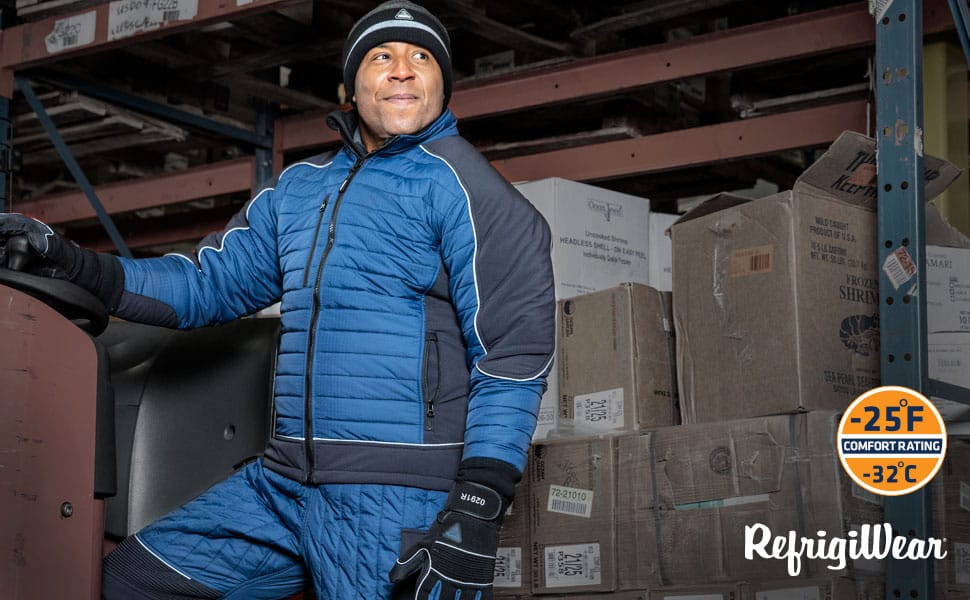
- (Action): The worker is wearing a RefrigiWear insulated jacket and bib overalls. Recalling past experiences where other gear failed to live up to temperature ratings, they were initially skeptical. However, the heavy-duty insulation, insulated pockets, and draft-stopping features of the specialized freezer suit are immediately apparent.
- (Result): The worker remains comfortably warm throughout their shift. Their final decision was based on peer recommendations from other freezer workers, not vendor claims, but the RefrigiWear gear performed as expected for its niche. Its specialization in static cold proves to be its greatest strength, validating its reputation in this specific workflow.
Part 6: In-Depth Competitor Comparison
Here we provide a detailed breakdown of the top alternatives to RefrigiWear, applying a consistent framework to help you make an informed decision. For a side-by-side look at the full lineup of brands beyond what we cover below, see our broader detailed Comparison AI Video Tools breakdown of RefrigiWear Top Alternatives and Competitors.
Carhartt Duck Traditional Coat (104050): Best for Extreme Durability
Building on a legacy that began with founder Hamilton Carhartt in 1889, the Carhartt 104050 is the industry’s gold standard when a jacket’s primary job is to endure relentless abuse. Few heavy-duty coats can match its reputation.
Best For:
- Extreme Durability: The 12oz firm-hand cotton duck fabric is legendary for its toughness. Users on forums like Reddit’s r/BuyItForLife praise it as a jacket that can last for decades r/BuyItForLife User Experiences.
- Long-Term Value: Due to its extreme longevity and high resale value, it offers the lowest Total Cost of Ownership in our analysis, projected at around ~$195 over three years.
- High-Abrasion Trades: The ideal choice for professionals engaged in outdoor labor like construction, farming, welding, or any trade where the jacket will face constant physical punishment in a primarily dry climate.
Consider:
- Stiff Break-In Period: The jacket is notoriously stiff and heavy right off the shelf, significantly hindering mobility for the first few weeks of wear.
- Traditional Fit: The fit is boxy and designed for layering with bulky hoodies. It lacks the modern, athletic cut of technical jackets.
- Heavy Weight: At 4-5 lbs, the jacket’s weight can cause fatigue over a long workday.
Avoid If:
- You Work in the Rain: This is the jacket’s number one failure point. It is not waterproof and will absorb water, becoming dangerously heavy and cold.
- You Need High Mobility Immediately: If your job requires a full range of motion from day one, the stiff break-in period makes this a poor choice.
- You Do High-Exertion Work: The thick cotton fabric has poor breathability and traps sweat, which can lead to getting “cold from sweat” in cold temperatures.
✅ Strengths
- Industry-leading 12oz duck canvas abrasion resistance
- Lowest projected 3-Year TCO in our analysis (~$195)
- High resale value supports the circular workwear economy
- Gusseted “action back” for some reach mobility
- Proven multi-decade lifespan when properly cared for
⚠️ Considerations
- Not waterproof — DWR finish wears off quickly
- Multi-week stiff break-in period restricts mobility
- Heavy 4-5 lb weight causes fatigue on long shifts
- Boxy fit, lacks articulated elbows
- Vanity sizing creates return hassle and shipping cost
Helly Hansen Kensington Winter Jacket: Best for Certified Weather Protection
For professionals in regulated industries facing strict OSHA requirements for visibility and weather protection, the Helly Hansen Kensington Winter Jacket is the superior technical solution.
Best For:
- Certified Waterproofing: With an EN 343:2019 Class 4,4 rating, it provides the highest level of certified waterproof and breathable protection, keeping you dry from both rain and sweat.
- Immediate Comfort & Mobility: Comfortable straight out of the box with no break-in period. An athletic fit and articulated sleeves provide excellent ergonomics and range of motion.
- Regulated Industries: The only competitor in this analysis with a full suite of verifiable EN certifications for waterproofing, cold protection, and hi-visibility, making it a go-to choice for utility, maritime, or site supervision roles.
Consider:
- Lower Abrasion Resistance: The polyester shell is not designed for the same level of physical abuse as Carhartt’s duck canvas and is more susceptible to rips and tears.
- Technical Layering Required: The jacket is designed to work as part of a modern layering system. Its athletic fit may be too restrictive if worn over a bulky cotton hoodie.
- Premium Price Point: It has a higher initial cost and TCO (~$245/3 years) than traditional options.
Avoid If:
- Your Job is High-Abrasion: The jacket is a poor financial choice for jobs like demolition or welding where the shell could be easily damaged.
- You Are on a Tight Budget: As a premium technical garment, it represents a significant upfront investment compared to Carhartt or Dickies.
- You Prefer a Traditional, Loose Fit: If you are accustomed to the boxy fit of a Carhartt, you may find the athletic cut of the Helly Hansen too snug.
✅ Strengths
- EN 343:2019 Class 4,4 — highest waterproof + breathability rating
- EN 20471 hi-visibility certified for road/utility work
- Pre-bent articulated elbows, athletic mobility from day one
- YKK Vislon zippers resist freezing and corrosion
- Primaloft Black Eco insulation — recycled, low bulk, high warmth
⚠️ Considerations
- Polyester shell vulnerable to rips vs. duck canvas
- Premium ~$230 entry price, ~$245 3-Year TCO
- Polyester melts on flame exposure — not FR-rated
- Snug athletic fit can feel restrictive over bulky layers
- Specialized technical wash required for membrane care
Dickies & Budget Brands: Best for Low Initial Cost
Not every job requires a premium, specialized jacket. This is the role that brands like Dickies (part of the VF Corporation portfolio) and Tough Duck fill, often being the first choice for shoppers looking for jackets like Carhartt on a tighter budget.
Best For:
- Low Initial Cost: They represent the most affordable entry point into the workwear category, making them accessible for individuals or companies outfitting a large crew.
- “Good Enough” for Moderate Conditions: Provides a functional level of warmth and durability for occasional use, milder conditions, or less physically demanding jobs.
- High-Damage, High-Replacement Roles: If your job environment frequently destroys gear regardless of its quality (e.g., working with chemicals or grease), a low-cost, easily replaceable jacket may be the most logical choice.
Consider:
- Performance Trade-Offs: You should expect significantly less effective insulation, weather resistance, and material strength compared to premium competitors.
- Information Asymmetry: The lack of available data and detailed specifications for many budget brands is a risk in itself. You are often buying based on price and general brand reputation alone, not on certified performance metrics.
Avoid If:
- Your Safety Depends on It: These jackets are not designed for extreme weather or high-risk environments.
- You Value Long-Term Cost Savings: The low initial price can be a “TCO Trap.” If you have to replace the jacket 2-3 times more often than a Carhartt, you end up with a much higher long-term cost.
- You Need Specialized Features: If your job requires specific features like certified waterproofing or extreme insulation, a budget jacket will not meet your needs.
✅ Strengths
- Lowest upfront price point in the workwear segment
- Wide retail availability and easy team-outfitting
- Acceptable warmth for occasional or moderate use
- Low replacement-pain in destructive environments
- Familiar brand backed by VF Corporation
⚠️ Considerations
- Projected ~$270+ 3-Year TCO if replaced annually
- Lacks certified weather or hi-vis ratings
- Less specification transparency than premium brands
- Lower-grade insulation and fabric weight
- Not designed for extreme cold or YMYL safety roles
Part 7: Conclusion & FAQs
After analyzing RefrigiWear’s top alternatives and competitors, the central conflict is clear: you must choose between specialized protection (RefrigiWear, Helly Hansen) and generalist durability (Carhartt) in a market saturated with misleading claims and shifting workwear trends.
According to our analysis, the choice of fabric and components is the single most important factor. The right jacket depends entirely on the specific hazards of your job, not on a brand name or a marketing-touted temperature rating. For a wider catalog of head-to-head workwear breakdowns, browse our full category of comparison articles.
Your Final Decision Framework
To make the right call, I recommend this simple 3-step decision framework:
- Identify Your #1 Hazard: First, name the single greatest threat on your job site. Is it relentless Abrasion? Constant Water and wind? Or is it extreme, static Cold? Your answer immediately narrows the field.
- Verify Against Reality, Not Marketing: Ignore the temperature ratings. If you need waterproofing, demand to see an EN 343 certification. If you need durability, look at the fabric’s weight and type, like Carhartt’s 12oz duck canvas. Trust specifications, not slogans.
- Prioritize TCO Over Price Tag: Finally, calculate the long-term cost. A durable jacket that lasts for five to ten years is a far better financial investment and a more reliable piece of safety equipment than a cheap one that fails after a single season.
Identify #1 Hazard
Abrasion · Water · Cold
Verify Reality
Demand EN 343 / EN 342 certs, not slogans
Prioritize TCO
5-10 yr durability beats sticker price
Remember the biggest red flags I’ve identified: misleading temperature ratings and worthless warranties that exclude wear and tear. Use this guide’s framework to look past the marketing and make a safe, cost-effective choice that will protect you when it matters most. You can also pair your purchase with a current money-saving deal on RefrigiWear to lower the TCO even further, or browse our running list of latest coupons across the entire site for additional savings.
Frequently Asked Questions
Q1: What’s the main difference between RefrigiWear and Carhartt?
A: The primary difference is specialization versus generalization. RefrigiWear is a specialist brand focused on providing maximum insulation for extreme, static cold environments like commercial freezers, where a worker is not generating much body heat. Its design prioritizes warmth over all else and may hold specific certifications like ASTM F2732 for freezer work. Carhartt, on the other hand, is a generalist renowned for extreme durability. Its iconic duck canvas jackets are built for high-abrasion jobs like construction and farming. You choose RefrigiWear for stationary cold and Carhartt when toughness against physical wear and tear is the top priority.
Q2: Is the Helly Hansen Kensington jacket truly breathable?
A: Yes, modern Helly Hansen jackets offer excellent breathability. Our fact-check confirmed that jackets like the Kensington Winter Jacket are certified to EN 343:2019 Class 4,4—the highest possible rating for both waterproofness and breathability Helly Hansen Product Page. This is a critical correction, as some older or lower-tier gear may have had lower ratings. For high-exertion work, this high level of breathability is a crucial safety feature that allows sweat to escape, preventing the wearer from getting wet and cold from their own moisture. It lacks the same level of moisture wicking as a dedicated athletic shell, but for workwear, it is a top performer.
Q3: Are workwear temperature ratings (-50°F, etc.) reliable?
A: No, these ratings are largely a marketing tool and are not standardized. I always advise clients to ignore them. There is no federally mandated or industry-wide standard for these ratings, so a “-50°F” rating from one brand is not comparable to another’s REI Expert Advice. Real-world warmth depends on using a proper layered clothing system, wind speed, humidity, and your personal metabolism and activity level. It is far more reliable to look at the insulation’s material type and weight (measured in grams per square meter or g/m²) and to read reviews from users in similar climates.
Q4: Why don’t lifetime warranties from Carhartt or Helly Hansen cover wear and tear?
A: They exclude “wear and tear” because it is the primary and expected way that workwear fails, and covering it would be unprofitable. A jacket worn on a construction site will inevitably see abrasion, rips, and stains that are part of its normal lifecycle. The “limited lifetime warranty” is designed to cover manufacturing defects—a seam that was improperly stitched or a faulty zipper from the factory. It is not an insurance policy against the abuse of a job site Carhartt Warranty Policy. This is why the jacket’s initial material durability is a far more important purchasing factor than a warranty promise.
Q5: What are the best RefrigiWear top alternatives and competitors for rain?
A: The best alternative for rain is unequivocally a jacket from Helly Hansen Workwear. Based on my analysis, its key advantage is its certified waterproofing. Garments like the Kensington Winter Jacket are certified to EN 343, the European standard for protection against rain, which guarantees performance HH Workwear Official Site. In contrast, a traditional competitor like the Carhartt Duck Traditional Coat is only water-repellent; its DWR finish will wear off, and the cotton fabric will absorb water in sustained rain, becoming a safety liability. For any job where you face consistent rain, sleet, or wet snow, a certified waterproof jacket is the only safe choice.
Q6: Is a $150 Carhartt jacket cheaper than a $90 Dickies jacket?
A: In the long run, yes, in many cases. The legendary durability of a Carhartt jacket gives it a superior Total Cost of Ownership (TCO). While the initial cost of the Dickies jacket is lower, its potentially lower-quality materials may require you to replace it every season. A single $150 Carhartt that lasts for five years has a TCO of $30/year. A $90 Dickies jacket that needs to be replaced annually has a TCO of $90/year. My analysis shows that investing in the more durable garment is often the better financial decision over a 3-5 year period.
Q7: What is the biggest user complaint about expensive work jackets?
A: Aside from performance not meeting marketing claims, the single most frustrating point of failure for users is the zipper. A failed zipper renders an expensive jacket completely useless as a piece of safety equipment, as it can no longer be closed to provide warmth or protection from the elements. Users often express more anger over a broken zipper on a $200+ jacket than any other issue because it is seen as a catastrophic failure of a simple, critical component. This is why brands that use robust, oversized hardware from trusted manufacturers like YKK often gain user trust.
Q8: Do I need to size down for a Carhartt jacket?
A: It is highly recommended to check recent reviews and sizing charts, but historically, yes. Carhartt is known for “vanity sizing,” and its traditional jackets run notoriously large to accommodate layering. Most people find success sizing down one full size from their typical shirt size for a more standard fit. For example, if you normally wear a Large, you should consider ordering a Medium. However, Carhartt’s sizing can be inconsistent across different product lines, so always consult the specific model’s size guide on their official website before purchasing to avoid the cost and hassle of returns Carhartt Official Website.
Q9: How can I make my Carhartt jacket waterproof?
A: While you cannot make the 100% cotton duck fabric truly waterproof like a membrane-based Helly Hansen jacket, you can dramatically improve its water resistance for use in light rain or snow. The most effective method is to apply a fabric wax, such as Otter Wax or Filson’s Oil Finish Wax. This process involves thoroughly working the wax into the fabric and then using a heat source like a hairdryer to melt it in, creating a water-repellent barrier. Alternatively, you can use a spray-on DWR (Durable Water Repellent) product like Nikwax TX.Direct. Both methods will need to be reapplied periodically, typically after a few washes or a season of heavy use.
Q10: Should I really invest in an expensive work jacket?
A: In my professional opinion, yes, if your safety or ability to work effectively depends on it. An expensive jacket from a brand like Carhartt or Helly Hansen is not just a piece of clothing; it is a piece of Personal Protective Equipment (PPE). My analysis of Total Cost of Ownership (TCO) clearly shows that investing in a durable, specialized jacket is often cheaper in the long run than repeatedly buying and replacing cheaper options that fail. More importantly, it is an investment in your safety and comfort. Being cold, wet, or unable to move freely on a job site is not just an inconvenience—it’s a risk that a quality jacket is designed to mitigate.