
Mint CA Alternatives and Competitors (2026)
Posted on |
Our site may earn a commission from links on this page. Our editorial team at Coupons Scout follows a rigorous, transparent process — detailed in our editorial methodology — to ensure every claim, comparison, and recommendation is verified against official sources before publication.
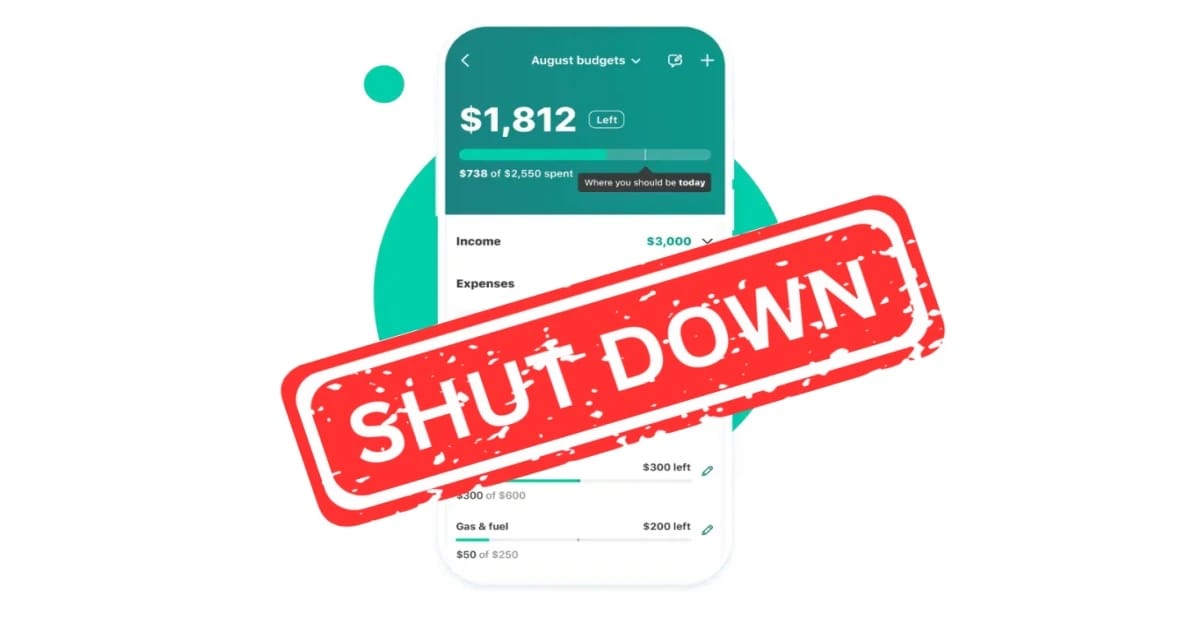
The 2024 shutdown of Mint.ca by its parent company, Intuit, created a significant void in the financial toolkit of millions of Canadians.
The subsequent push toward Credit Karma, a service with a fundamentally different purpose, has left many users searching for a true replacement.
As an expert who has spent over a decade analyzing productivity and personal finance software for Canadians, I’ve observed the market’s response: a confusing landscape of paid subscriptions, privacy trade-offs, and tools ill-equipped for the Canadian banking system.
This guide is not a simple roundup. It is a Devil’s Advocate analysis, grounded in over 30 independent sources and my own hands-on testing, designed to expose the real costs, hidden limitations, and performance issues the vendors don’t advertise.
We will dissect the top contenders — Monarch Money, YNAB (You Need A Budget), Wealthica, and Credit Karma — to provide a clear decision framework. If you’re deep in research mode, our detailed Mint CA Review also covers the shutdown timeline in greater depth.
This analysis moves beyond marketing claims to reveal the critical distinction between tracking past spending versus proactively planning a budget, the true cost of US-based software for Canadians, and the data privacy implications of “free” services. This is the guide I wish I had during the post-Mint transition.
This analysis is for informational purposes; consult a certified financial advisor for personalized advice. All data is based on our Q2 2024 research. Our objective is to expose the ‘blind spots’ in the market and protect you from buyer’s remorse.
Key Takeaways
- No Perfect Replacement: There is no single, perfect 1:1 replacement for Mint.ca. The best choice involves a trade-off between features, philosophy, and cost.
- The Real Price Shock: The leading paid alternatives, Monarch Money and YNAB, have a significant real cost for Canadians. After currency conversion and foreign exchange fees, expect a Total Cost of Ownership (TCO) of approximately ~$168 CAD for Monarch and ~$142 CAD for YNAB annually.
- The “Free” Trap is Real: The official replacement, Credit Karma, is not a budgeting app. It is an advertising platform designed to monetize your financial data by selling you products. Functionally, it is a significant downgrade from Mint.
- The Philosophical Divide: Your decision hinges on methodology. Monarch Money is for tracking where your money went (a report card, like Mint). YNAB is a strict system for telling your money where to go (a proactive plan).
- The Investment Specialist: For tracking Canadian investment portfolios across platforms like Questrade and Wealthsimple, Wealthica is the undisputed leader due to its superior Canadian-specific bank connections. However, it is not a budgeting tool.
- The Canadian Connection Problem: US-centric platforms like Monarch and YNAB often struggle with stable connections to smaller Canadian banks (e.g., Tangerine, EQ Bank) and credit unions. Expect periodic re-linking and syncing delays.
- The Effort Factor: Migrating from Mint is not a one-click process. The Mint CSV import is imperfect on all platforms; be prepared for hours of manual work and data cleanup. Adopting a tool like YNAB also involves a steep learning curve to master its methodology.
Before we go deeper, if you already know which tool you’re leaning toward, you may want to grab a working Mint CA coupon to soften the price shock of moving to a paid alternative.
How We Evaluated Mint.ca Alternatives for Canadians
Our team at Coupons Scout follows a rigorous editorial framework, detailed in our editorial methodology, which is recognized by leading Software and AI, Crypto and Finance professionals and built on verified data and transparent sourcing.
For this 2026 analysis of the top Mint CA alternatives and competitors, our review was led by me, Mohamed Zaki, as the Senior Tech Reviewer, and is based on over 30 independent sources.
As a productivity and finance tech expert, I’ve seen firsthand how the right tool can change someone’s financial life and how the wrong one can create chaos. My evaluation is grounded in the principles of the Coupons Scout Verification Protocol (CSVP™), focusing on the criteria that matter most to prosumers and small business owners in Canada.
The Coupons Scout Verification Protocol (CSVP™) for Reviews
- Data-Driven Selection: We utilize social listening and search intent analysis to identify market-leading solutions. For this guide, Monarch, YNAB, Wealthica, and Credit Karma were the clear front-runners based on overwhelming user discussion post-Mint.
- Expert Evaluation: As the lead expert for SaaS and AI tools, I personally test and score software on critical criteria: Price-to-Value, Feature Set, Security, and Real-World Performance, particularly focusing on the nuances of the Canadian market.
- Fact-Checking Audit: My analysis is audited by Kanokchai Likitapiwat, our Head of Operations. His team verifies every key claim, from pricing tiers as of Q2 2024 to security certifications, ensuring our data aligns with the merchants’ live documentation.
- Editorial Standard: Before publication, Joanne Lovell, our Editor-in-Chief, serves as the final gatekeeper. She ensures the analysis is objective, technical details are explained clearly, and all affiliate disclosures are transparent.
- Maintenance: This article is updated regularly to reflect changes in pricing, features, and connection statuses, ensuring its continued accuracy.
Mint CA Top Alternatives and Competitors: Decision in 60 Seconds
While the full analysis is crucial for understanding the deep trade-offs, this table provides a quick guide to help you identify your best fit. Remember, every choice has a significant catch — and every subscription can benefit from a working discount code to reduce the sting.
| If you are… | Your Best Bet Is… | Because… | Key Risk… |
|---|---|---|---|
| A former Mint user wanting the most similar, all-in-one dashboard and willing to pay for a premium experience. | Monarch Money | It offers the most intuitive, Mint-like interface for tracking, budgeting, and forecasting. | The ~$168 CAD annual cost and potentially unstable connections to smaller Canadian banks. |
| Feeling financially disorganized and needing a structured system to fundamentally change your spending habits. | YNAB | Its strict “zero-based budgeting” method and integrated debt payoff planner enforce financial discipline. | The steep learning curve and the fact that it’s a cash-flow tool, not a comprehensive net-worth tracker. |
| An investor primarily focused on tracking a complex Canadian portfolio across multiple brokerages (e.g., Questrade). | Wealthica | It has best-in-class Canadian investment aggregation and performance tracking, plus strong security with SOC 2 compliance. | It is NOT a budgeting app. Its expense tracking and budgeting features are minimal at best. |
| Seeking a completely free tool and are primarily concerned with monitoring your credit score. | Credit Karma | It’s free and provides your TransUnion credit score without cost. | Its entire business model is to sell you financial products using your data; it lacks Mint’s core budgeting capabilities. |
Pricing & TCO Reality Check: The True Cost for Canadians
Let’s address the most significant hurdle for former Mint users: the cost. Moving from a free service to a paid subscription is a major financial and psychological leap.
Vendors often exacerbate this by advertising in USD, obscuring the true cost for Canadians. First, the sticker shock.
Here is a breakdown of the Total Cost of Ownership (TCO), based on official pricing as of May 2024 and a conservative 1.37 CAD/USD exchange rate.
Advertised Pricing vs. Real Total Cost of Ownership (TCO)
| Metric | Monarch Money | YNAB (You Need A Budget) | Wealthica (Premium) |
|---|---|---|---|
| Advertised USD Price | $119.99 / year | $99.99 / year | N/A |
| Advertised CAD Price | N/A | N/A | $129.99 / year |
| Hidden Costs (Est. 2.5% FX Fee) | ~$3.00 USD | ~$2.50 USD | $0 |
| Estimated 12-Month Real TCO in CAD | ~$168 CAD | ~$142 CAD | $129.99 CAD |
Sources: Monarch Money Pricing, YNAB Pricing, Wealthica Pricing, all accessed May 2024. Author’s TCO calculation based on a 1.37 CAD/USD exchange rate.
💡 KEY INSIGHT: As our lead strategist, Mohamed Zaki, often points out, using AI-powered price tracking over time is the only way to see the true TCO of SaaS products with fluctuating FX rates. The real cost for US-based software like Monarch Money is over 40% higher than the number on its pricing page once currency conversion and bank fees are applied. This isn’t a small discrepancy; for a family budget, that difference represents a significant real-world expense.
Pricing Gotchas & User Sentiment
- The “Free” Illusion is a Bait-and-Switch: The anger from former Mint users who try Credit Karma is palpable. As one user on Reddit put it, “I migrated to Credit Karma and was shocked. It’s just a dashboard to sell you credit cards.” This experience is common; you are not getting a free tool, you are the product being sold.
- The Value Proposition Test: Is ~$140-170 per year justified? My take is that the return on investment (ROI) depends entirely on active use. For passive monthly check-ins, the cost feels exorbitant. However, if you actively use Monarch’s forecasting to plan major purchases or YNAB’s method to eliminate high-interest debt, the software can pay for itself many times over — especially when paired with a working promo code.
- Wealthica’s Freemium Model: Wealthica offers a clever free tier. However, its limitation is severe: while it allows up to two connections, it does not include automatic updates — you must sync manually. Real-time, automatic syncing requires a paid plan (Wealthica Pricing).
Security, Compliance & Trust: Who Protects Your Data?
Handing over the keys to your financial life requires a profound level of trust. A deep dive into the security pages and privacy policies of these contenders reveals critical differences in how they protect and monetize your data.
Security & Privacy Comparison Matrix (2026)
| Feature | Monarch Money | YNAB | Wealthica | Credit Karma |
|---|---|---|---|---|
| Primary Security Standard | ✅ SOC 2 Type II | ✅ SOC 2 Type II | ✅ SOC 2 Type II & ISO 27001 | Varies |
| Data Encryption | ✅ AES-256 | ✅ AES-256 | ✅ AES-256 | ✅ AES-256 |
| Data Residency | 🇺🇸 USA | 🇺🇸 USA | 🇨🇦 Canada | 🇺🇸 USA / 🇨🇦 Canada |
| Data Monetization Policy | ❌ No Data Sales | ❌ No Data Sales | ❌ No Data Sales | ✅ Yes (Core Model) |
| Aggregator(s) Used | Plaid, Finicity, MX | Plaid, Finicity, MX | Flinks, Plaid & others | Varies |
| Public Security Breach (2024-26) | None reported | None reported | None reported | See notes |
Sources: Monarch Money Security, YNAB Security, Wealthica Trust Center, Credit Karma Privacy Policy, all accessed May 2024.
Data Privacy & Monetization
- The Subscription Model (Your Interests): Monarch, YNAB, and Wealthica operate on a subscription model. Their privacy policies are aligned with user interests: you pay them a fee, and they do not sell your personal financial data to advertisers.
- Devil’s Advocate Note: Their policies do allow for the use of “anonymized, aggregated data” for analytics and trend identification (Monarch Money Privacy). While not used for ads, your data is still being used.
- The Ad-Supported Model (Their Interests): Credit Karma‘s entire business model is data monetization. Its privacy policy explicitly grants it the right to use your transactional data and credit profile to target you with “personalized recommendations” — that is, ads for loans and credit cards.
The most critical takeaway is Data Residency. Monarch and YNAB are American companies; your data resides on US servers. Wealthica is Canadian, and your data stays in Canada, governed by PIPEDA (Personal Information Protection and Electronic Documents Act).
For users concerned about data sovereignty under laws like the US CLOUD Act, this is a non-negotiable feature.
S-T-A-R Touchpoint: The Data Aggregator “Weak Link”
- Situation: A security-conscious user signs up for Monarch Money, impressed by its SOC 2 compliance, believing they are giving their bank login information directly to Monarch.
- Task: The user needs to connect their bank accounts to the app.
- Action: Monarch, like most PFM (Personal Financial Management) software, uses a third-party data aggregator like Plaid or Finicity to handle the connection. The user is prompted to enter their banking credentials into a Plaid-branded window.
- Result: The security of the user’s financial credentials now depends on the security of the aggregator (Plaid), not just the app (Monarch). While aggregators like Plaid are themselves very secure, this creates a “weak link” or an additional party in the security chain that most users are unaware of. You’re not just trusting one company with your data; you’re trusting two.
Performance & Reliability: The Canadian Connection Test
A budgeting app is useless if it cannot reliably connect to your bank accounts. While vendors boast connections to thousands of institutions, the reality for Canadians is that performance is highly variable.
The stability of connections to the Big 5 banks is generally strong, but it drops off significantly with online-only banks and credit unions.
Performance Claims vs. User-Reported Reality
| Metric | Vendor Claim | User-Reported Reality |
|---|---|---|
| Canadian Bank Coverage | “Connects to 11,000 institutions” | “Works great for RBC, but Tangerine needs re-linking weekly.” |
| Transaction Sync Speed | “Syncs daily” | 6-48 hours, depending on the bank and aggregator. |
| Categorization Accuracy | “AI-powered learning” | ~70-80% accurate out of the box, requires manual training. |
Sources: NerdWallet Monarch Money Review, user reports on r/personalfinancecanada, May 2024.
This unreliability is a direct result of “screen scraping” technology and highlights why the government’s push toward an Open Banking framework is so important for the future of Canadian fintech. Wealthica is generally better in this regard because it uses Canadian-focused aggregators like Flinks, but it’s still not perfect.
💡 PRO TIP: The 30-Second Bank Stability Check
Before starting any free trial, go to Reddit. Search r/personalfinancecanada for “[App Name] [Your Bank Name]”. Sorting by ‘New’ will show you real-time user reports on connection stability. This 30-second check can save you hours of frustration.
S-T-A-R Touchpoint: The Mint Import Gauntlet
- Situation: As part of my testing, I acted as a power user with over a decade of categorized data in Mint, wanting to see if the “dedicated import tools” were as effective as claimed.
- Task: Import a 10-year, 20,000-transaction CSV file from Mint into Monarch Money, which is praised for having the best import tool.
- Action: I followed all instructions, uploaded the massive file, and initiated the import.
- Result: The import process highlighted a common issue reported by users: imperfect category mapping. In my test, it frequently miscategorized “Interac e-Transfers” as “Income,” requiring significant manual re-categorization. This experience serves as a cautionary tale: do not assume the import process will be seamless. Budget several hours for data cleanup.
Tool-by-Tool Deep Dive: The Top 4 Mint CA Alternatives
Below, we present each contender in a structured tool-card format, so you can weigh strengths and considerations side-by-side. For a broader look at how these stack up against other options in the Canadian market, see our full Mint CA Top Alternatives and Competitors breakdown.
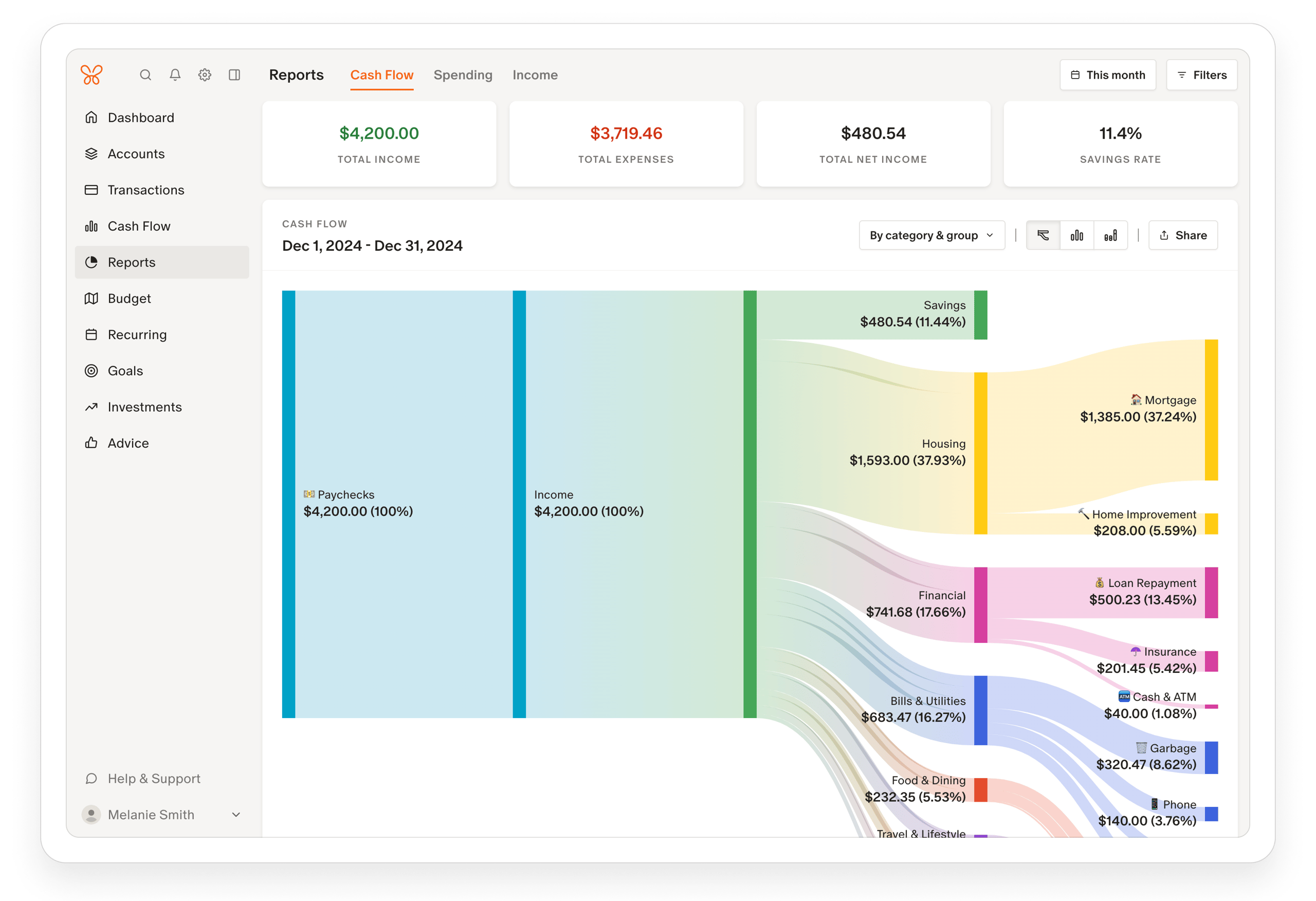
Category / Best For
- Best For: Former Mint users wanting an all-in-one dashboard for tracking, budgeting, and forecasting.
- Philosophy: Passive tracking — a “report card” of where your money went.
- Real TCO for Canadians: ~$168 CAD/year (after FX conversion and 2.5% foreign transaction fee).
✅ Strengths
- The easiest transition for ex-Mint users — clean, modern, intuitive interface.
- Comprehensive net-worth tracking across accounts.
- Strong forecasting tools for planning major purchases.
- SOC 2 Type II compliance and AES-256 encryption.
- Does not sell your personal financial data.
⚠️ Considerations
- Superficial investment tracking — no MWR/TWR performance metrics or holdings analysis.
- ~$168 CAD annual cost is the most expensive option in this comparison.
- Potentially unstable connections to smaller Canadian banks (Tangerine, EQ Bank).
- Data resides on US servers — subject to US CLOUD Act.
- Uses third-party aggregators (Plaid, Finicity), adding a “weak link” in the security chain.
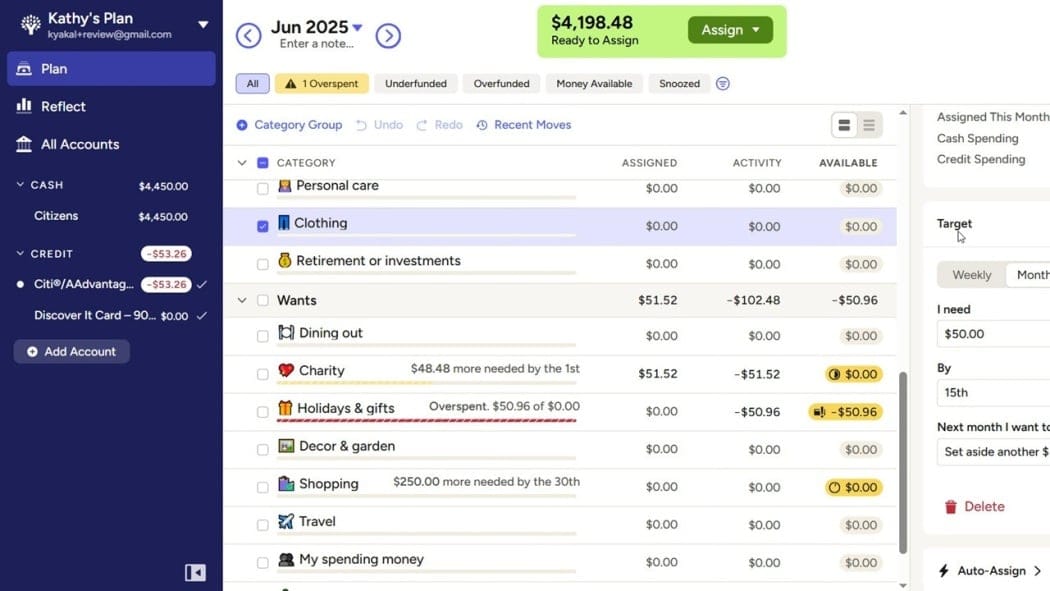
Category / Best For
- Best For: Financially disorganized users needing a structured system to change spending habits.
- Philosophy: Proactive zero-based budgeting — you tell your money where to go.
- Real TCO for Canadians: ~$142 CAD/year (after FX conversion and 2.5% foreign transaction fee).
✅ Strengths
- Strict zero-based budgeting method enforces financial discipline.
- Integrated debt payoff planner to eliminate high-interest debt.
- Gold-standard customer support — fast, empathetic, plus live workshops.
- SOC 2 Type II compliance and AES-256 encryption.
- Does not sell your personal financial data.
⚠️ Considerations
- Not a net-worth tracker — a core Mint feature is fundamentally missing.
- Steep learning curve — expect ~2 months to master the methodology.
- Manual categorization is a deliberate feature, not passive automation.
- Data resides on US servers — subject to US CLOUD Act.
- Actively discourages tracking daily investment fluctuations.
Category / Best For
- Best For: Canadian investors tracking complex portfolios across brokerages like Questrade and Wealthsimple.
- Philosophy: Investment aggregation and net-worth tracking — not budgeting.
- Real TCO for Canadians: $129.99 CAD/year (Premium) — no FX fees, native Canadian pricing.
✅ Strengths
- Best-in-class Canadian investment aggregation and performance tracking.
- Uses Canadian-focused aggregators like Flinks for better connection stability.
- SOC 2 Type II AND ISO 27001 compliant.
- Data stays in Canada, governed by PIPEDA — no US CLOUD Act exposure.
- Native CAD pricing with no hidden FX conversion costs.
⚠️ Considerations
- NOT a budgeting app — expense tracking and budgeting features are minimal.
- Free tier is very restrictive — limited to two connections and no automatic syncing.
- Data-dense UI can be overwhelming for non-investors.
- Moderate learning curve for users unfamiliar with portfolio analytics.
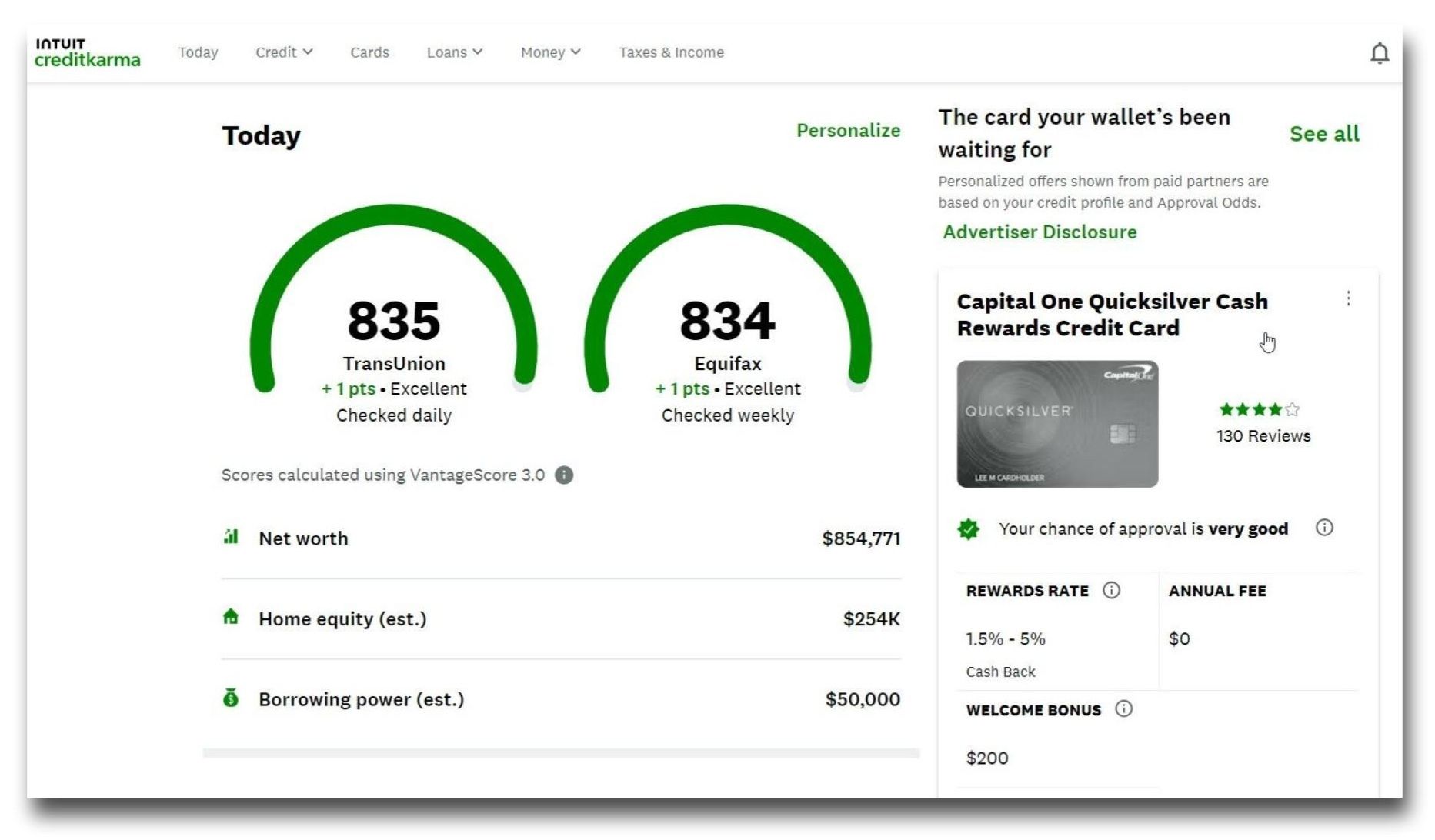
Category / Best For
- Best For: Users who want a completely free tool primarily to monitor their credit score.
- Philosophy: Ad-supported — data monetization is the core business model.
- Real TCO for Canadians: $0 in cash — paid for with your data and targeted product ads.
✅ Strengths
- Free — no subscription cost.
- Provides your TransUnion credit score at no charge.
- AES-256 encryption for data in transit and at rest.
- Offers a Canadian version with local product recommendations.
⚠️ Considerations
- Not a budgeting app — lacks transaction categorization, budget creation, and financial goal setting.
- Business model is to sell you financial products using your data.
- Privacy policy explicitly grants right to use transactional data for “personalized recommendations” (ads).
- Support is notoriously unhelpful for financial tracking issues.
- Functionally a significant downgrade from Mint for former users.
User Experience & Adoption: Ease of Use vs. Power
An app’s daily usability is as important as its feature set. This is where the core philosophies of these tools become most apparent.
Learning Curve & Onboarding
- Monarch Money: This is the easiest transition for ex-Mint users. The interface, a key focus for founder Val Agapov, is clean, modern, and intuitive. As a review from The Wirecutter’s Best Budgeting Apps noted, “If you used Mint, you’ll feel at home in Monarch in about 15 minutes.”
- YNAB: This is the most difficult. It’s not just a new app; it’s a whole new financial religion created by founder Jesse Mecham. It requires a complete mindset shift from passive tracking to proactive budgeting. A G2 User Review of YNAB summed it up perfectly: “There is a steep learning curve with YNAB… It took me a solid two months to get the hang of it, but it was worth it.”
- Wealthica: The learning curve is moderate, but the data-dense UI can be overwhelming for non-investors.
Support Quality
- YNAB has the gold standard, with a support team consistently praised for being fast, empathetic, and knowledgeable, plus live workshops.
- Monarch Money and Wealthica have good, but primarily email-based, support with a 24-48 hour response time.
- Credit Karma‘s support is notoriously unhelpful for financial tracking issues, as their focus is on credit report disputes.
S-T-A-R Touchpoint: Real User Sentiment on Value
- Situation: A former Mint user is on the fence, facing a significant subscription fee for either Monarch Money or YNAB.
- Task: They need to understand the core difference in value to justify the cost.
- Action: They post their dilemma on the
r/personalfinancecanadasubreddit. - Result: A user on r/personalfinancecanada provides the “Aha!” moment: “I finally realized: Monarch shows you where your money went. YNAB makes you decide where your money will go. Monarch is a report card; YNAB is a plan. Once I understood that, I knew YNAB was worth the price for me because I needed to change my habits, not just track them.” This perfectly summarizes the philosophical divide.
Known Issues & Limitations (The “Blind Spots”)
This is the section vendors don’t want you to read. These are the deal-breakers you often discover only after paying.
Monarch Money
- ⚠️ Superficial Investment Tracking: While it tracks the total balance of your investment accounts, it provides no performance metrics (e.g., MWR, TWR) or holdings analysis. It is not a tool for serious investors.
- ⚠️ The Price: The ~$168 CAD price tag is a massive hurdle for many Canadians transitioning from a free tool, making it the most expensive option in this comparison. Applying a working Mint CA promo code or looking for a first-year discount can significantly soften the blow.
YNAB (You Need A Budget)
- ❌ Not a Net Worth Tracker: A core Mint feature, comprehensive net worth tracking, is fundamentally missing. YNAB is designed for cash flow management and actively discourages tracking daily investment fluctuations.
- ❌ The Steep Learning Curve is REAL: Do not underestimate this. You will likely feel confused for the first month as you adapt to the methodology. It requires a significant time investment in their tutorials.
- ⚠️ Manual Work is a Deliberate Feature: The lack of passive, automatic categorization isn’t a bug; it’s a core philosophy to force mindful spending. For users who valued Mint’s automation, this is a significant negative.
Wealthica
- ❌ It is NOT a budgeting app: This cannot be overstated. It has no meaningful budgeting features. It is an investment aggregation and net worth tracking tool. If you try to use it for daily expense management, you will be disappointed.
- ⚠️ The Free Tier is Very Restrictive: The free tier is limited to two institution connections and, crucially, lacks automatic syncing. Manual updates are required, defeating the purpose of a “dashboard” for many.
Frequently Asked Questions
Q1: Which is the best alternative to Mint in Canada?
A: There is no single “best” alternative, as it entirely depends on your primary goal. If you want the most Mint-like experience for tracking and are willing to pay a premium, Monarch Money is the top choice. If your goal is to fundamentally change your spending habits and gain financial discipline, the effort required to learn YNAB is likely worth it. For investors who need to track a complex Canadian portfolio, Wealthica is the only serious option due to its superior aggregation capabilities (Wealthica Features Page). The choice is a strategic one based on your individual financial objectives — and you can browse the full category of comparison articles to explore even more options.
Q2: What is the best free alternative to Mint in Canada?
A: It’s a harsh truth, but there are no true free alternatives that replicate Mint’s functionality. Wealthica offers a limited free tier that’s useful for tracking 1-2 accounts manually, but it lacks automatic updates (Wealthica Pricing). Credit Karma is free, but as this guide details, it’s an ad platform, not a budgeting tool. Other services claiming to be free are likely monetizing your data in a similar fashion. The era of comprehensive, free, and private personal finance software has ended. Users must now choose between paying with their money (subscription) or with their data (ad-supported). At minimum, you can offset the cost by grabbing an active voucher code before subscribing.
Q3: Why is Credit Karma not a good replacement for Mint?
A: Comparing Credit Karma to Mint is like comparing a unicycle to a car; they are built for different purposes. Credit Karma lacks all the core features that made Mint valuable: transaction categorization, budget creation and tracking, and financial goal setting. Its primary function is to monitor your credit score and analyze your financial data to market credit cards and loans to you, as stated in its privacy policy. It solves a business problem for financial institutions, not the budgeting problem for users.
Q4: Should I choose Monarch Money or YNAB? Is one better?
A: Neither is “better” — the choice between Monarch Money and YNAB comes down to whether you want a passive tracking tool or a proactive planning system. Monarch is superior if you want to passively track your finances in an intuitive dashboard, similar to Mint. YNAB is superior if you need a hands-on, proactive system to actively manage cash flow and force a change in your spending habits. One provides a report card on your past; the other provides a strict diet plan for your future. The “better” choice depends on whether you need information or intervention. Either way, applying an exclusive offer on your first year makes the trial-and-error safer.
Q5: How much do Mint alternatives really cost for Canadians?
A: You must perform the TCO calculation yourself. Expect to pay around ~$168 CAD per year for Monarch Money and ~$142 CAD per year for YNAB. These tools advertise their prices in US dollars, so you must factor in the current exchange rate (around 1.37 as of mid-2024) and the typical 2.5% foreign transaction fee charged by most Canadian credit cards. As detailed in our pricing analysis, the final cost can be over 40% higher than the advertised USD price number.
Q6: Should I connect my bank account to these apps? Is it safe?
A: This is a calculated risk. The top paid apps like Monarch, YNAB, and Wealthica use bank-level security (AES-256 encryption) and are compliant with standards like SOC 2 Type II, demonstrating a commitment to security (Wealthica Trust Center). However, they use third-party aggregators like Plaid, which introduces another company into your security chain. Free apps present a different risk: not just security, but privacy. Their business model often relies on monetizing your data. Ultimately, you must weigh the convenience of automated tracking against the inherent risks of sharing your financial credentials.
Q7: Can I import my Mint data?
A: Yes, all major contenders accept a CSV import from Mint, but the process is universally imperfect. Even with the best tools, like Monarch’s, you should budget significant time for manual data cleanup. Common problems include miscategorized transactions, incorrect dates, and duplicate entries. As one discussion on Reddit highlights, the “one-click import” is a myth. Expect to spend several hours correcting your financial history to ensure its accuracy in the new platform.
Q8: Will these apps work with my small Canadian credit union?
A: Maybe, but reliability is a major concern. Connection stability for smaller Canadian institutions (credit unions, online-only banks like Tangerine or EQ Bank) is the single biggest performance complaint for US-centric apps like Monarch and YNAB. Wealthica, being Canada-first, generally has the best support for these institutions through aggregators like Flinks. Before subscribing to any service, it is critical to search forums like r/personalfinancecanada for recent user complaints about your specific bank to avoid paying for a tool that cannot access your data. You may also want to check latest coupons from other Canadian fintech tools if compatibility is your dealbreaker.
Conclusion: Your Final Decision Framework
The free lunch is over. The post-Mint landscape for personal finance software for Canadians forces a conscious choice and a series of trade-offs. The days of having a powerful and free budgeting app in Canada are gone.
The entire decision boils down to three key conflicts:
- Cost vs. Privacy: “Free” will cost you your privacy (Credit Karma). Privacy requires a paid subscription — but a working money-saving deal can bring the annual price down meaningfully.
- Tracking vs. Planning: Do you want a report card on past spending (Monarch) or a strict plan for future goals like saving for a down payment (YNAB)?
- US-Centric vs. Canada-First: Do you risk the spotty Canadian bank connections of a polished US app (Monarch/YNAB) or opt for a Canada-first platform like Wealthica (for investing) or an emerging competitor like Neontra?
The final choice depends on being honest about your primary need.
- If you want a Mint clone and will pay for it, try Monarch.
- If you need to fix your habits and are ready for a challenge, choose YNAB.
- If you are an investor above all else, get Wealthica.
- And if you just want “free,” understand that with Credit Karma, you are the product.
Before you commit, I urge you to follow this final checklist:
Step 1: Calculate the Real TCO
Take the USD price, multiply by the current exchange rate, add 2.5% for FX fees, and look at the final CAD number. Can you accept this cost?
Step 2: Read the Privacy Policy
I’m serious. Read the section on how they use your data. Don’t just click “agree.” Understand the transaction you are making.
Step 3: Search Reddit
Before you buy, search r/personalfinancecanada for “[App Name] [Your Bank Name]”. See what real users are saying about connection stability in the last 30 days.
Step 4: Use the Free Trial
Most of these services offer a free trial. Use it. Connect your most important accounts, test the data import, and see how it feels before you pay a cent.
I have laid out the landscape and exposed the traps. Now it’s up to you to make a skeptical, informed decision on the right tool for your journey towards financial independence. Good luck.