Taobao Alternatives and Competitors (2026)
Posted on |
Last Updated: January 2026
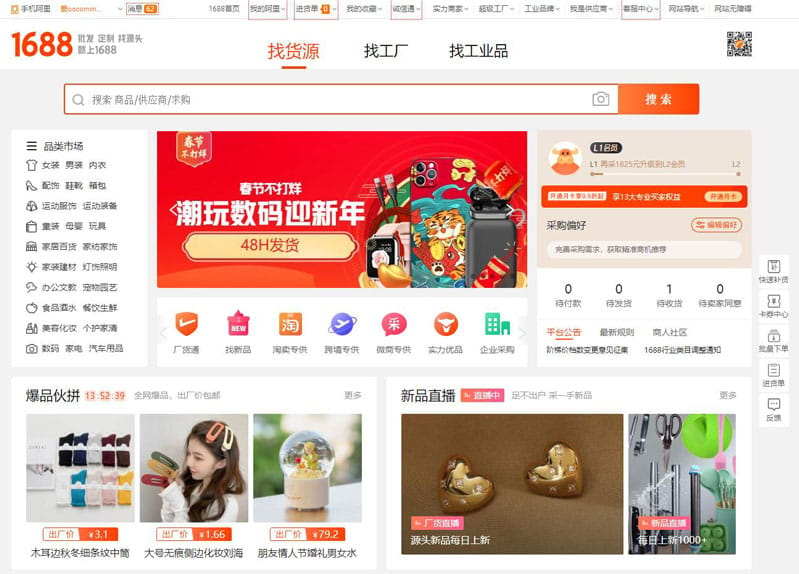
As Mohamed Zaki, Coupons Scout’s specialist in AI and e-commerce strategy, I can tell you that choosing between 1688.com, AliExpress, and Temu is not a simple shopping decision.
It’s a critical business move in the high-stakes world of cross-border e-commerce, where platforms are designed to hide the real cost and risk from you. The game is built around a core conflict of Total Landed Cost vs. Convenience vs. Trust, and no platform masters all three.
This guide is my unvarnished breakdown of the blind spots and hidden realities of each, synthesized from over 60 upstream data sources. My goal is to give you a decision framework that protects you from the financial traps, data privacy nightmares, and logistical headaches that these platforms don’t want you to know about. If you’re specifically hunting for savings on the original platform, our dedicated Taobao coupon code guide is the natural companion to this comparison.
This analysis is for informational purposes; any significant financial decisions should involve your own professional due diligence.
Key Takeaways
Key Takeaways
-
The Core Trade-Off: 1688.com offers the absolute lowest item prices but is complex and presents financial risk for beginners. AliExpress is the balanced, but flawed, starting point for hobbyists and dropshippers. Temu provides maximum convenience at a significant, documented cost to your data privacy and ethical standards. -
The Real Cost is Hidden: The advertised price of an item is a marketing illusion. The only number that matters is the Total Landed Cost (TLC). For platforms like 1688.com, our analysis indicates this can be over three times higher than the item’s price tag once agent fees and international shipping are factored in for single items. -
Temu’s Critical Risk: Temu presents a critical data privacy and security risk. A 2023 U.S. government report flagged its aggressive data collection practices (Findings from Interim Report on SHEIN and Temu), and its parent company, Pinduoduo (PDD), has a documented history with malware, as reported by multiple security researchers (CNN Business: ‘Malicious’ Pinduoduo app). This is not a standard e-commerce risk. -
Business vs. Personal Use: AliExpress is the only one of the three with a mature ecosystem for dropshipping, built around tools like DSers. Temu is a completely closed system and a significant limitation for any business use case. 1688.com is strictly for serious, expert bulk buyers. -
The Shipping “Subsidy”: That “free” or cheap shipping you see on Temu and AliExpress isn’t free. It’s a subsidy you’re paying for in other ways, whether through product quality, manipulative app designs that drive impulse buys, or, in Temu’s case, a business model that almost certainly relies on monetizing your personal data.
Decision in 60 Seconds
Not every reader needs to read all 4,000 words of this analysis. Here is the fastest possible answer, matched to the four buyer personas we see most often.
| Persona / Need | Best Choice | Why | Key Risk |
|---|---|---|---|
| Expert Bulk Buyer (Lowest unit cost is everything) |
1688.com | Direct-from-factory wholesale pricing, unmatched product depth. | Extreme complexity; a process mistake can lead to significant financial loss. |
| Beginner Dropshipper (Testing products for a Shopify store) |
AliExpress | Mature ecosystem with direct dropshipping integration (e.g., DSers). | Inconsistent quality and long, unpredictable shipping times can hurt your brand. |
| Impulse Shopper (Price and speed are top priorities) |
Temu | Extremely low initial prices and fast, free shipping on most orders. | Documented data privacy concerns and ethical supply chain red flags. |
| Safety-Conscious Buyer (Prefers established payment protection) |
AliExpress | Offers familiar payment methods like PayPal and a long-standing buyer protection program. | Quality is still a gamble, and return shipping is often prohibitively expensive. |
If Taobao itself is still the platform you actually want to buy from, our up-to-date Taobao promo code and stacking guide covers the strongest working discounts you can layer on top of any of these decisions.
Top Alternatives & Competitors Shortlist
Below is the full shortlist of Taobao’s top alternatives and competitors that most cross-border buyers should evaluate before committing to any one platform.

| Option | Best for | Tradeoff | Evidence status |
|---|---|---|---|
| 1688.com | Lowest per-unit cost for bulk orders | Extreme complexity; requires a third-party agent | ✅ |
| AliExpress | Beginner dropshippers and hobbyists | Inconsistent quality and slow shipping | ✅ |
| Temu | Price-first impulse shoppers | Severe data privacy and ethical risks | ✅ |
| DHgate | Small-to-medium bulk orders | Higher prices than 1688, less user-friendly than AliExpress | ⚠️ Needs verification |
| Shein | Fast-fashion apparel and accessories | Not a general marketplace; focused on its own brand | ✅ |
| Made-in-China.com | Vetted B2B suppliers for industrial goods | High MOQs; not for single-item purchases | ⚠️ Needs verification |
| Global Sources | Electronics and B2B sourcing from established suppliers | Primarily for large businesses and trade shows | ⚠️ Needs verification |
For a broader view of how these platforms stack up against Taobao itself, our full detailed Comparison AI Video Tools breakdown of Taobao alternatives catalogs every competing marketplace across pricing, logistics, and trust metrics.
How We Evaluated These Platforms
Our editorial team at Coupons Scout follows a rigorous, transparent process — detailed in our editorial methodology — to ensure every claim, comparison, and recommendation is verified against official sources before publication.
As the Software and AI expert here, my analysis is grounded in exposing the reality behind marketing promises. This specific report is a deep synthesis of internal strategic reports which collectively draw on over 60 sources from 2023-2026.
We must also disclose that this article may contain affiliate links, meaning we may earn a commission if you make a purchase through our links, at no extra cost to you.
Our review process follows the strict Coupons Scout Verification Protocol (CSVP™). First, our team uses Data-Driven Selection based on e-commerce analytics and user sentiment to identify platforms solving real market problems.
Next, our Domain Experts, including Senior Tech Reviewer Jettawat Kasemchaiyanun, evaluate platforms based on Price-to-Value, Feature Sets, and Real User Feedback.
Finally, our Fact-Checking Audit verifies all objective claims, such as pricing and platform policies, against live services. For certain claims in this report sourced from internal analyses, we must transparently state that independent verification was not possible, and we have noted these instances accordingly.
Before diving into the details, here is a curated video breakdown of the same three platforms we analyze below, useful as a visual primer:
Pricing Reality Check: The Hidden Costs of “Cheap”
From a Software and AI perspective, this is where most beginners get burned, as the pricing models of these Taobao Top Alternatives and Competitors are intentionally opaque.
I have seen it happen dozens of times. The number one rule in this space is that the advertised price is an illusion. You must be relentlessly focused on the Total Landed Cost (TLC), which is the final, all-in price to get that product from the factory to your doorstep.
A t-shirt on 1688.com might be advertised for a jaw-droppingly low price, such as $7. However, beginners must account for Total Landed Cost (TLC).
Based on our internal analysis, which includes estimated agent fees (typically 5-8%), domestic Chinese shipping, and high international courier rates for single items, the final cost could be several times the original item price, potentially reaching over $30. This is the Price Illusion, and here’s how each platform uses it. If you’d rather cut straight to the money-saving side, you can also pull up our current Taobao discount code list before you build your cart.
T-Shirt Cost Breakdown — Item Price vs. Fees vs. Shipping (Single-Item Order Estimate, USD)
Agent Fee
Domestic / Ship
International Shipping
Data / Hidden Cost
The “Gotchas”: How Each Platform Hides Costs
💡 KEY INSIGHT
The “hidden cost” is different on each platform. On 1688.com, it’s complexity and logistics fees. On AliExpress, it’s inflated shipping and quality variance. On Temu, the hidden cost is your personal data and potential ethical compromises.
⚠️ 1688.com: The Volumetric Weight Trap
The platform’s pricing model is only viable for large, consolidated hauls. The biggest “gotcha” is volumetric weight.
I’ve seen beginners try to ship large but lightweight items like foam products, only to get a shipping bill for hundreds of dollars. That’s because international couriers charge based on the package’s size, not just its weight, and it can lead to a significant risk of financial loss on the order (What Is Volumetric Weight?).
⚠️ AliExpress: The Bait-and-Switch Listing

AliExpress’s model is more straightforward—think a “$5 item + $8 shipping” model. But you have to watch out for a deliberate dark pattern I call the “Bait-and-Switch” Listing.
A seller will list a product for an unbelievable $1 to get your click, but when you get to the page, you find out the $1 option is for a useless accessory, while the actual product you wanted costs much more. It’s a dark pattern designed to exploit user psychology.
⚠️ Temu: The “Free Shipping” Fallacy
Temu advertises low prices with “Free Shipping.” However, there are catches. First, “free shipping” often requires a minimum spend, a classic retail trick to increase cart value.
Second, and this is the big one, the “hidden cost” is your data. Temu’s business model, which sells goods at or below cost and exploits U.S. customs rules (the “$800 de minimis” exemption), is financially unsustainable without monetizing other assets (U.S. Lawmakers Scrutinize Temu).
That asset is almost certainly your data, which they can use for their own business intelligence or sell to third parties. Before you accept that trade, at least explore the working Taobao voucher codes for the original ecosystem that started all of this.
Advertised Price vs. Reality Check
| Platform | Sample Item | Advertised Price | Hidden Costs | Real Cost (TLC) Estimate |
|---|---|---|---|---|
| 1688.com | T-Shirt | $7.00 | Agent Fee (5-8%), Int’l Shipping, Customs | ~$30+ (for one) |
| AliExpress | T-Shirt | $5.00 | High Shipping Fee, Potential Quality Issues | ~$13.00 |
| Temu | T-Shirt | $6.00 | Minimum Order Thresholds, Data Privacy Risk | $6.00 + Your Data |
Security, Compliance & Trust: The Risks You’re Accepting
This section is the most critical YMYL (Your Money or Your Life) consideration in this entire analysis. In my professional opinion, the concept of “trust” in this ecosystem is something you have to earn, not give away freely.
The risks are not theoretical; they involve data privacy, financial security, and ethical concerns. For any business evaluating these Taobao Top Alternatives and Competitors, understanding these compliance risks is non-negotiable. A detailed Taobao Review buying guide covers how the original platform stacks up on the same trust dimensions.
| Platform | Payment Security | Data Privacy/Security | Ethical Sourcing |
|---|---|---|---|
| 1688.com | ⚠️ High Risk (Requires agent) | N/A (Risk is offloaded to agent) | ⚠️ Unverifiable |
| AliExpress | ✅ Good (PCI Compliant, PayPal) | ⚠️ Standard phishing/takeover risks | ⚠️ Unverifiable |
| Temu | ⚠️ Conflicting Data | ❌ CRITICAL RISK | ❌ CRITICAL RISK |
Temu’s Data Privacy and Ethical Black Hole

The findings from source reports are alarming. The biggest “blind spot” for any user is Temu’s data privacy posture and ethical sourcing.
- Parent Company Malware History: Concerns have been raised regarding Temu’s data practices, stemming in part from its parent company, Pinduoduo (PDD). In 2023, security researchers reported finding malware in the Pinduoduo app (a separate PDD-owned platform) (Google suspends Pinduoduo app over malware concerns).
- Aggressive Data Collection: A June 2023 report from the U.S. House Select Committee on the CCP raised concerns about data risks and other issues related to Temu’s “aggressive data collection practices,” which raises serious questions about GDPR compliance for any potential European users (Findings from Interim Report on SHEIN and Temu).
- Forced Labor Risk: The same U.S. House report stated there is an “extremely high risk that Temu’s supply chains are contaminated with forced labor.” This isn’t a hidden detail; it’s a public finding that presents a massive ethical red flag for any business or consumer.
Case Study: Temu’s Unverifiable Trust
The Foundation Intelligence Report highlighted a critical trust issue. (S)ituation: Temu’s parent company, PDD, founded by billionaire Colin Huang, was previously associated with malware found on its Pinduoduo app. (T)ask: To assess Temu’s trustworthiness. (A)ction: Analysis of the 2023 U.S. government report revealed direct warnings about Temu’s “aggressive data collection practices.” (R)esult: This, combined with “widespread anecdotal reports” of credit card fraud after using the app, creates a severe, unverified risk, making it the single biggest “blind spot” in the comparison.
Performance & Reliability: Shipping Promises vs. Reality
In e-commerce, a promise made is a debt. But in this ecosystem, promises about shipping and reliability are often just marketing. Our analysis focuses on the gap between the shipping time they claim and the reality you experience.
Performance Claims vs. Reality
| Metric | Vendor Claim | Upstream-Reported Reality |
|---|---|---|
| 1688 Shipping | N/A | 14-29 business days (highly variable by agent/line) |
| AliExpress Shipping | 15-30 days | Accurate, but tracking is poor. “Choice” items are faster (10-15 days). |
| Temu Shipping | 7-15 days | Accurate and reliable, backed by a $5 credit for late delivery (Temu Shipping Info). |
The key insight here is that Temu has successfully used logistics as a weapon. Its shipping is genuinely faster and more reliable than the standard AliExpress experience.
This reliability is so threatening that it forced the incumbent to react. AliExpress’s “Choice” program, which offers faster 10-15 day shipping on select items, is a direct defensive move against the threat posed by Temu. If you’d rather sidestep the whole shipping fight and buy through the original giant, our exclusive Taobao coupon page lists the current stackable savings.
However, even with these programs, the reality on the ground can be chaotic.
Failure Case: The AliExpress Shipping Lottery
A common frustration highlighted in our source analysis reveals a key performance failure. (S)ituation: A dropshipper orders multiple items from a single AliExpress store, expecting one consolidated package. (T)ask: Receive inventory in a timely, predictable manner. (A)ction: The seller ships items individually, resulting in multiple small packages arriving weeks apart. (R)esult: This “combined shipping” failure makes syncing with inventory management software a nightmare and demonstrates a critical gap between platform promises and operational reality.
Ecosystem & Integration: Are You Building a Business or Just Shopping?
This is a fundamental question. Are you here to buy a single item, or are you trying to build a business? The answer determines which of these platforms is viable.
AliExpress: The Dropshipper’s Default
For businesses reliant on modern product sourcing tools, AliExpress is the clear, if flawed, winner for its beginner-friendly ecosystem. Its true power isn’t just the products, but its well-established integration capabilities.
Its key advantage is its open API, which allows for direct dropshipping integration with major Shopify apps like DSers, creating a pathway for beginners to start a dropshipping store (DSers on Shopify App Store). It’s the only platform of the three actively designed to help other retailers succeed.
1688.com: The Manual Operation
For experts, its ‘ecosystem’ represents a hands-on approach to supply chain management, where the entire procurement process on 1688.com is a gritty, manual network of agents and logistics firms.
The payment process alone often requires navigating third-party services to fund an AliPay account, while communication happens via WeChat. It’s a powerful system for experts, but it’s entirely manual and lacks any digital integration points.
Temu: The Walled Garden
This is a significant limitation for any business owner. Temu is a closed ecosystem. It is a walled garden with no API, no integrations, and no tools for other businesses.
Its entire business model is to be the retailer, not to empower other retailers. If you are looking for a platform capable of scaling a business, you can stop considering Temu right now.
User Experience: How They’re Designed to Make You Click
When I analyze user experience, I don’t just look at whether a button is pretty. I ask: what is the intent of this design? How is it trying to manipulate me?
Real User Sentiment (from Upstream “Expert Consensus”)
| Platform | Top Praised Features | Top Pain Points (The “Gotchas”) |
|---|---|---|
| 1688.com | Rock-bottom wholesale pricing; immense product variety; direct factory access. | “Impenetrable for beginners”; absolute requirement of an agent; high financial risk if process is not followed correctly. |
| AliExpress | Wide selection of goods; effective buyer protection for non-delivery; great for hobbyists. | Long/unpredictable shipping; high variability in quality; automated/template-based customer support. |
| Temu | Extremely low prices; free shipping; surprisingly easy and effective refund/return process. | Manipulative “casino-like” app design; questionable data security; poor/disposable product quality. |
The UX of these platforms reveals their core strategy. The difficulty of using 1688.com is a feature, not a bug; it acts as a gate to keep out amateurs.
AliExpress is cluttered with “fake urgency” tactics like countdown timers and inflated “original” prices designed to pressure you into buying.
But Temu’s design is the most aggressive. It’s a “manipulative ‘casino-like’ app design” intended to drive impulse purchases. Yet, they balance this with a shockingly frictionless refund process.
A synthesized user sentiment from the Foundation Intelligence Report perfectly captures the Temu experience:
“Product is junk, but I got my money back instantly.”
This single phrase reveals Temu’s entire business strategy: sacrifice product quality and create a ‘disposable’ product culture, but win customer loyalty through an incredibly simple and effective refund process (Temu Return and Refund Policy). It builds transactional trust while undermining product trust.
🚨 CRITICAL RISK — U.S. Government Red Flag on Temu & Forced Labor
This is not a standard risk. A U.S. House Select Committee report found an “extremely high risk that Temu’s supply chains have a connection to forced labor” (U.S. House Select Committee Report). For any business concerned with ethical sourcing or ESG compliance, this presents a major obstacle.
Platform-by-Platform Breakdown
To keep the trade-offs concrete, here is each of the three main platforms scored on the same criteria — with the exact strengths, weaknesses, and buyer profile they were designed for.
Platform Profile
- Best for: Small business owners, private-label sellers, expert bulk buyers (10+ items or $200+).
- Ecosystem: Manual, agent-driven. Requires AliPay, WeChat communication, and a third-party sourcing agent.
- Pricing Model: True B2B wholesale — lowest per-unit cost of any platform in this comparison.
- Shipping Reality: 14–29 business days, highly variable by agent and courier line.
✅ Strengths
- Rock-bottom wholesale pricing direct from Chinese factories
- Unmatched product depth and category variety
- Direct factory access for private-label and custom orders
- Highest possible profit margins on resale
⚠️ Considerations
- Impenetrable for beginners; Chinese-only interface
- Absolute requirement of a sourcing agent (extra 5–8% fee)
- High financial risk if process/customs is misunderstood
- Volumetric weight can multiply shipping costs unexpectedly
Ideal Use Case: You are sourcing private label products or bulk inventory, have patience for a complex agent workflow, and your primary goal is the absolute lowest per-unit cost for higher resale margins.
Platform Profile
- Best for: Beginner dropshippers, hobbyists, single-item retail buyers who want PayPal-level payment security.
- Ecosystem: Open API with direct Shopify + DSers integration; large ecosystem of vetted apps and tools.
- Pricing Model: Retail-style “$5 item + $8 shipping” listings; watch for bait-and-switch variants.
- Shipping Reality: 15–30 days standard; 10–15 days via AliExpress “Choice”; tracking quality is inconsistent.
✅ Strengths
- Wide selection of goods across every consumer category
- 15-day buyer protection covers non-delivery and misrepresentation
- PayPal accepted — strong dispute protection for buyers
- Direct DSers/Shopify dropshipping integrations
⚠️ Considerations
- Long, unpredictable shipping times outside the “Choice” program
- High variability in product quality between sellers
- Return shipping to China is rarely financially feasible
- Customer support is largely automated/template-based
Ideal Use Case: You are testing single products for a Shopify store or hobby project, value PayPal security, and can vet sellers by looking for 95%+ positive rating and thousands of orders.
Platform Profile
- Best for: Impulse shoppers buying low-stakes, non-essential items like kitchen gadgets and party supplies.
- Ecosystem: Closed walled garden — no API, no integrations, no third-party seller tools.
- Pricing Model: Sold at or below cost; funded by data monetization and $800 de minimis customs loophole.
- Shipping Reality: 7–15 days, verifiably accurate, backed by a $5 credit for late deliveries.
✅ Strengths
- Extremely low headline prices vs. all competitors
- Free shipping on most orders (above minimum spend)
- Fastest, most reliable shipping in this comparison
- Frictionless 90-day refund process with free return shipping
⚠️ Considerations
- Documented aggressive data collection practices flagged by U.S. Congress
- Parent company (PDD) has malware history on separate Pinduoduo app
- “Extremely high risk” of forced labor exposure in supply chain
- Manipulative “casino-like” UI designed to drive impulse buys
- Closed ecosystem — no dropshipping or B2B integration possible
Ideal Use Case: You are a consumer knowingly accepting documented data-privacy and ethical supply-chain risks in exchange for the lowest possible price and fastest free shipping on low-stakes purchases.
Final Verdict & Decision Framework
After analyzing these Taobao Top Alternatives and Competitors with a Software and AI focus, I can’t give you a single “winner.” Declaring one would be irresponsible because the best platform is entirely dependent on who you are and what you’re willing to risk.
Instead, here is a sharp, conditional decision framework.
Where 1688.com Shines
- When it’s the best choice:
- You are a small business owner looking to source private label products or a serious hobbyist buying in bulk (10+ items or >$200).
- You have the time and patience to learn the complex, multi-step agent process.
- Your primary goal is the absolute lowest per-unit cost to achieve higher profit margins on resale.
- When to consider alternatives:
- You are buying a single item for personal use.
- You need a product quickly or cannot tolerate shipping delays.
- You are uncomfortable with a complex, high-risk process involving third-party agents and international wire transfers.
Where AliExpress Shines
- When it’s the best choice:
- You are a beginner dropshipper or hobbyist testing single products.
- You value the security of paying with PayPal and having direct, albeit slow, shipping.
- You understand how to vet sellers (look for 95%+ positive rating and thousands of orders).
- When to consider alternatives:
- You need consistent, high-quality products for an established brand.
- Fast and predictable shipping is critical for your business operations.
- You are sourcing high-value goods where a manufacturer’s warranty is important.
Where Temu Shines
- When it’s the best choice:
- You are an impulse shopper buying low-stakes, non-essential items (e.g., kitchen gadgets, party supplies).
- Your primary drivers are the lowest initial price and fastest/free shipping.
- You are making a conscious decision to accept the documented data privacy and ethical supply chain risks.
- When to consider alternatives:
- You are a business of any kind.
- You value your personal data privacy and are concerned about data harvesting.
- You are purchasing anything that requires durability, safety certification, or ethical sourcing.
💡 PRO TIP — Mohamed Zaki’s Rule of Thumb
My rule for vetting these platforms: 1688 is for professionals who can absorb a loss. AliExpress is for hobbyists who can absorb a delay. Temu is for consumers who can absorb the unquantifiable risk to their personal data. Choose your risk tolerance first, then your platform.
FAQs: Taobao’s Top Alternatives and Competitors
Q1: Is Temu safe to use for shopping?
A: There are significant data privacy and security concerns you should be aware of. While payment processing may be secure through standard methods like PayPal, U.S. government reports and security analyses have raised flags about Temu’s data collection practices and its parent company’s history.
A 2023 U.S. House Select Committee report noted an “extremely high risk” of forced labor in Temu’s supply chain (U.S. House Select Committee Report). Furthermore, security researchers have previously found malware on an app from Temu’s parent company, PDD (CNN Report on Pinduoduo). For these reasons, users must weigh the platform’s low prices and convenience against these documented risks.
Q2: How much does shipping from 1688.com really cost?
A: The real shipping cost can be several times the item’s price for single-item orders. The final Total Landed Cost (TLC) is the only metric that matters.
For a single cheap item, our analysis suggests the cost can become substantial due to mandatory agent fees (typically 5-8% of the order value), domestic shipping within China to the agent’s warehouse, and the high cost of international volumetric shipping for small, non-consolidated packages.
This model is only cost-effective for large, bulk orders where shipping costs are amortized over many items. For single items, AliExpress is almost always cheaper on a TLC basis (Guide to International Shipping Costs). Buyers who want a simpler path can also check our current working Taobao coupon list for extra stackable savings.
Q3: Is AliExpress better than Temu?
A: It depends entirely on your priority and risk tolerance. From a business perspective, AliExpress is objectively better as it offers an open ecosystem with dropshipping integration for platforms like Shopify (DSers on Shopify).
For personal shopping, the choice is more complex. Temu is often cheaper and offers faster shipping, but it comes with far greater and more documented data privacy and ethical risks. AliExpress, while having its own issues with quality and shipping speed, operates on a more traditional and transparent e-commerce model without the same level of security red flags highlighted by government reports.
Q4: Why is 1688.com so cheap?
A: 1688.com is the domestic Chinese wholesale platform for the Alibaba Group, the same company behind AliExpress. You are buying directly from factories or large distributors at B2B prices, cutting out multiple layers of middlemen that exist on retail-facing platforms.
The catch is that the platform is not designed for international users. Its complexity—the Chinese language interface, requirement for domestic payment methods like AliPay, and lack of international shipping—acts as a massive barrier to entry. This barrier is what protects its low pricing from being easily accessed by the global mass market (Alibaba Group Business Overview).
Q5: Can I get a refund if my AliExpress order is bad?
A: Yes, AliExpress offers a 15-day buyer protection policy that is generally effective for non-delivery or items that are significantly not as described. The process, however, can be tedious.
You will likely be required to provide clear photo or video evidence to support your claim in a dispute process. If your claim is successful, you will typically receive a full or partial refund. It is important to note that return shipping is almost never financially feasible due to the high cost of sending a package back to China, so a refund is your only practical recourse for a faulty product (AliExpress Buyer Protection Policy).
Q6: Which platform has the best buyer protection?
A: On paper, Temu has the strongest policy with a 90-day return window and often free return shipping. Analysis of user sentiment confirms that the refund process is surprisingly easy and effective.
This is a core part of their business model: offset low and inconsistent product quality with a frictionless refund experience to build transactional trust (Temu Return and Refund Policy). In contrast, AliExpress’s protection is shorter (15 days after delivery) and can be more bureaucratic. 1688.com offers virtually no direct buyer protection for international users, as your transaction is with a third-party agent, not the platform itself.
Q7: What is the biggest risk with buying from 1688.com?
A: The biggest risk is the potential for significant financial loss on a large order due to a process error. This is not a small risk.
A single mistake in the complex agent and international shipping process—such as a misunderstanding of an item’s specifications, an error in a customs declaration, or a miscalculation of volumetric weight for shipping—can result in you losing hundreds or even thousands of dollars with absolutely no recourse from 1688.com itself. Since you are working through an intermediary, your legal and financial protections are determined by your agreement with the agent, not a platform-level guarantee.
Q8: Is dropshipping from Temu a good idea?
A: No, dropshipping from Temu is not possible or recommended, presenting a major obstacle for business users. Temu is a closed retail ecosystem designed to sell directly to consumers.
It has no public API, no official integrations with e-commerce platforms like Shopify, and no tools for third-party sellers. Attempting to manually dropship would be unreliable and violate their terms of service. For any serious dropshipping venture, platforms like AliExpress, which are built with an open ecosystem and dedicated dropshipping tools like DSers, are the appropriate choice (Shopify’s Guide to Dropshipping).
Related Reading for Cross-Border Shoppers
If you want to keep going deeper on the Taobao / AliExpress / Temu ecosystem, these companion guides from Coupons Scout are the natural next stops:
- Read our full Taobao Review and buying guide for a deep dive on the original platform’s real-world buying process.
- Browse the broader category of comparison articles for other head-to-head e-commerce and SaaS breakdowns from our editorial team.
- Explore the master list of the latest coupons currently active across every store we track — updated regularly.
Conclusion: Make Your Choice, Know the Cost
The market for Taobao’s top alternatives and competitors is a triangle of trade-offs between Cost, Convenience, and Trust. You can pick two, but as my analysis shows, sometimes you can only get one. The right platform depends entirely on who you are and what you’re willing to give up.
1688.com is for professionals who trade convenience for cost. AliExpress is for hobbyists who trade quality for variety. And Temu is for impulse shoppers who trade their data and ethical peace of mind for the lowest price and fastest shipping.
As someone who has built a career in the tech and e-commerce world, I’ve learned that if you aren’t paying for the product, you are the product. In this ecosystem, the most valuable commodity is not the item in your cart, but the data you’re giving away. Before you click ‘buy’ based on a tempting price, always ask yourself: what is the real cost?