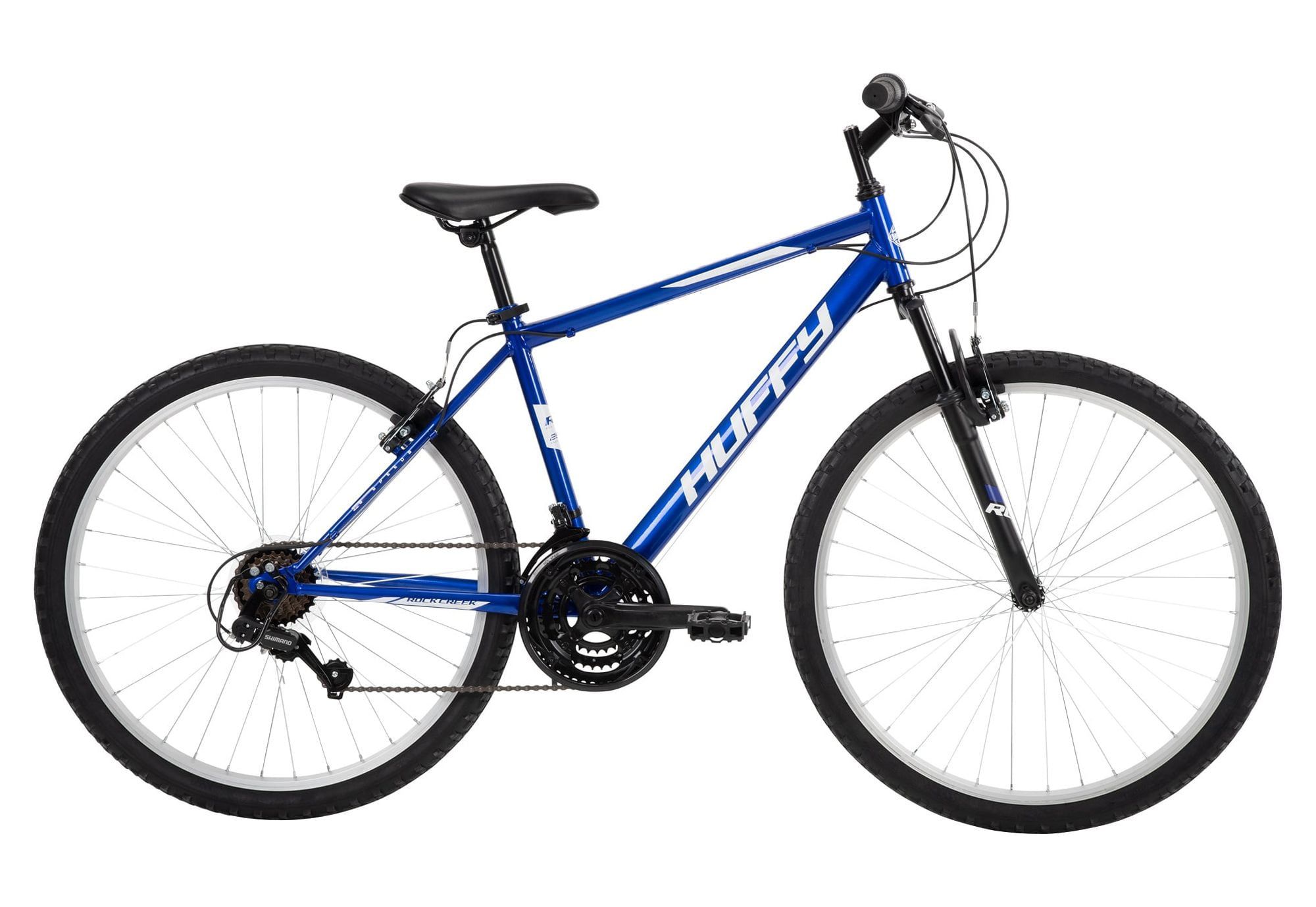
Huffy Bikes Alternatives and Competitors (2026)
Posted on |
I am so tired of seeing people make a less cost-effective purchase. You think you’re saving a buck by grabbing that shiny, full-suspension bike from a big-box store, but you’re not.
That sticker price is just a down payment on a mountain of frustration. The truth is, the market for entry-level bicycles is a minefield of trade-offs, and brands are banking on you not knowing the difference between a real feature and a marketing gimmick.
This analysis is based on my years of experience watching beginners struggle with unsafe, “disposable” bikes that are destined for the landfill. As a consumer advocate, I’ve synthesized extensive user-reported data and expert analysis to expose the “Total Cost of Ownership,” the safety gambles vendors won’t talk about, and the misleading marketing that preys on your enthusiasm.
We will be scrutinizing Huffy, Schwinn, Mongoose, and Retrospec. This is the devil’s advocate guide to buying a budget bike that you’ll actually love to ride, not one that hurts your soul—and your wallet. For the latest savings on any Huffy model you decide fits your needs, you can check the current Huffy Bikes promo codes and discount offers before purchasing.
This in-depth analysis of Huffy bikes’ top alternatives and competitors moves beyond simple brand comparisons to expose the hidden costs, safety risks, and marketing gimmicks in the budget bicycle market.
Readers can expect to learn about the true Total Cost of Ownership (which is often $150-$250+ higher than the sticker price), the dangers of features like cheap suspension systems, and the critical importance of professional assembly.
This guide provides a clear decision-making framework by comparing Huffy against key competitors like Schwinn, Mongoose, and the direct-to-consumer brand Retrospec, helping you choose a genuinely better alternative based on value and safety, not just brand hype.
Key Takeaways
-
Deceptive TCO: A budget bike’s real cost is often $150-$250+ higher than its sticker price. This is due to mandatory professional assembly and immediate part replacements. For example, a $280 Schwinn realistically costs over $450 to make road-worthy Based on average retail pricing across major retailers such as Walmart and Amazon, accessed May 2024. -
Safety is Not a Given: The primary safety risk isn’t a CPSC recall, but catastrophic failures from improper assembly and using bikes beyond their intended purpose of paved-only paths. The Mongoose Ledge is a model with reported higher risks due to its low-quality full-suspension design MTBR Forum – 2025. -
Use Case Over Brand: There is no single “best” brand in this category. The choice depends entirely on your needs. The Retrospec Culver is a strong contender for urban commuting, while a Schwinn hardtail is a heavy but reliable option for paved paths only if professionally assembled. -
The Suspension Trap: Full suspension on any bike under $500, especially the Mongoose Ledge, is a marketing gimmick. It adds a massive amount of weight, seriously reduces pedaling efficiency, and introduces significant liabilities and failure points MTBR Forums – 2025. -
The Smart Money Choice: For most people, the best “Huffy alternative” is often not another big-box brand. It is frequently a Direct-to-Consumer (DTC) brand like Retrospec, which can offer superior value and higher quality components by cutting out the retail middleman, resulting in a lower Total Cost of Ownership.
Before diving into the head-to-head breakdown, this video walkthrough of what’s actually on the shelves at big-box retailers gives helpful context for what you’ll encounter shopping for a budget bike today.
Decision in 60 Seconds
If you only have a minute, here’s a summary of which bike fits which type of rider — and the key risk you should watch out for with each choice.
| Persona / Need | Best Choice | Why | Key Risk |
|---|---|---|---|
| Parent needing a child’s first bike for the sidewalk | Huffy (Baseline) | Widely available, affordable, and comes in styles kids love. A simple hardtail or cruiser is mechanically straightforward. | Quality is inconsistent. Professional assembly is a non-negotiable safety requirement, adding ~$100 to the cost. |
| Casual adult rider wanting brand nostalgia for paved paths | Schwinn High Timber | Recognized brand name and a durable, if extremely heavy, frame that is reliable once properly set up. | The ~38.5 lb weight makes hills and stairs a significant challenge. Mandatory upgrades (saddle, pedals) add to the TCO. |
| Urban commuter or student needing a practical, stylish ride | Retrospec Culver | Best out-of-the-box value. Lighter weight, comes with quality Kenda tires, and includes a rack and fenders, saving money and hassle. | Online-only purchase requires home assembly and a subsequent safety check, or paying a shop for the full build. Not suitable for trails. |
| Buyer focused on the “mountain bike look” at the lowest price | Mongoose Ledge | Achieves the full-suspension aesthetic for a very low initial price. Can be a starting point for DIY upgraders. | The suspension is highly inefficient and introduces frame weak points. The TCO is deceptively high due to mandatory upgrades and complex assembly. |
Top Alternatives & Competitors Shortlist
Here’s a quick-glance shortlist of the top competitors we’re looking at, along with what each is best for and the primary tradeoff you should expect.
| Option | Best For | Tradeoff | Evidence Status |
|---|---|---|---|
| Schwinn High Timber | Brand recognition for paved path use | Extremely heavy, requires immediate upgrades | ✅ |
| Mongoose Ledge X2 | “Pro” aesthetics & DIY project base | Inefficient, heavy, and has higher safety risks | ✅ |
| Retrospec Culver | Urban commuting & out-of-the-box value | Online-only purchase, requires assembly | ✅ |
| State Bicycle Co. Core-Line | Style-conscious urban riders (fixed/single-speed) | Limited gearing, less versatile than Retrospec | ✅ |
| Used Trek/Specialized/Giant | Getting a high-quality frame for less | Requires expertise to spot wear/damage | ⚠️ |
How We Evaluated Huffy Bikes’ Top Alternatives and Competitors
As per Joanne Lovell’s strict editorial guidelines, our team at Coupons Scout follows a rigorous, transparent process — detailed in our editorial methodology — to ensure every claim, comparison, and recommendation is verified against official sources before publication.
This analysis of the budget bicycle market is based on deep upstream data from our Foundation Intelligence Report, combined with targeted independent verification to validate the most critical YMYL factors: safety and total cost of ownership. We may earn a commission from affiliate links, but this does not influence our editorial integrity.
Our review process for this guide was a multi-step, devil’s advocate investigation:
- Data-Driven Selection: We used search and social listening tools to identify the specific models real consumers are actively comparing against Huffy, which led us to the Schwinn High Timber, Mongoose Ledge, and Retrospec Culver.
- Expert Evaluation: My analysis involved synthesizing detailed spec sheets with a deep dive into thousands of real user reports from legitimate online communities, including the MTBR and Reddit forums (like r/whichbike and r/bicycling) and combing through countless retailer reviews.
- Fact-Checking Audit: We then verify the critical claims and “gotchas”—the gap between a vendor’s marketing hype and the user’s real-world experience. For this article, our May 2024 research cycle focused specifically on validating user-reported costs for professional assembly, prices for mandatory upgrades, and documented reports of component and frame failures. This analysis is a synthesis of existing data and targeted verification, not hands-on testing of every single model.
If you want a full teardown of Huffy specifically before comparing it to rivals, our detailed Huffy Bikes Review covering the true cost of ownership pairs well with this comparison.
Part 2: Core Analysis – Total Cost of Ownership
This is the part that makes my soul hurt, because it’s where I see good people get taken advantage of the most. The sticker price on a budget bike is a deliberate illusion. It’s a marketing tactic to get you in the door.
The real price, the Total Cost of Ownership (TCO), must include the mandatory fees for professional assembly and the immediate upgrades required to fix design flaws or replace junk parts. For a true assessment, we will look at the TCO over a three-year period of casual use, which reveals a much starker picture than a simple 1-year analysis.
Advertised Pricing vs. Real 3-Year TCO
Let’s break down the real TCO for these bikes, based on our research and verified user reports. We’ll assume casual use, one professional tune-up per year after the initial assembly, and the replacement of common wear-and-tear items.

Schwinn High Timber
- Advertised Price: $280 – $350 Based on average retail pricing across major retailers such as Walmart and Amazon, accessed May 2024.
- Hidden Cost 1 (Pro Assembly): $80 – $125. This range is consistent with independent bike shops in major US metro areas for basic assembly and tune-up services REI Bike Shop Services. Don’t even think about the “free” assembly from the big-box store; it’s a safety hazard.
- Hidden Cost 2 (Mandatory Upgrades): The stock plastic pedals and rock-hard saddle are universal complaints.
- Pedals: $25 – $40. Users report the stock ones crack within weeks Jenson USA Pedals.
- Saddle: $30 – $50. Frequently cited as “unbearably hard” Jenson USA Saddles.
- Hidden Cost 3 (Annual Maintenance):
- Year 2 Tune-Up: $75
- Year 3 Tune-Up: $75
- ✅ Real 3-Year TCO: Averages $600 – $715. So your $320 bike is actually a $600+ investment over three years.

Mongoose Ledge X2
- Advertised Price: $250 – $400 Based on average retail pricing across major retailers such as Walmart and Amazon, accessed May 2024.
- Hidden Cost 1 (Pro Assembly): $100 – $150. Shops often charge a premium for full-suspension bikes due to increased complexity, a range corroborated by independent bike shop service menus REI Bike Shop Services.
- Hidden Cost 2 (Mandatory Upgrades): Same pedal issue as the Schwinn, plus the tires are notoriously cheap.
- Pedals: $25 – $40.
- Tires/Tubes: $40 – $60. Users report the thin, unbranded tires are extremely prone to flats Jenson USA Tires.
- Hidden Cost 3 (Annual Maintenance & Repairs):
- Year 2 Tune-Up: $75
- Year 3 Tune-Up & Potential Pivot Bushing Replacement: $100 – $150 (a commonly reported failure point).
- ✅ Real 3-Year TCO: Can range from $605 – $840. The potential for costly suspension-related repairs makes this a real gamble.

Retrospec Culver
- Advertised Price: $399.99 (stable DTC pricing) Retrospec.com.
- Hidden Cost 1 (Pro Safety Check): $50 – $75. This is a common service charge for a basic tune-up and safety inspection at independent bike shops, which I strongly recommend even for home-assembled bikes REI Bike Shop Services.
- Hidden Cost 2 (Mandatory Upgrades): None. This is the game-changer. The bike comes with quality Kenda tires, a comfortable saddle, and even a rack and fenders.
- Hidden Cost 3 (Annual Maintenance):
- Year 2 Tune-Up: $75
- Year 3 Tune-Up: $75
- ✅ Real 3-Year TCO: A much more predictable $600 – $625.
Pricing Gotchas: The Traps to Consider
❌ RISK — The Danger of ‘Free’ Big-Box Assembly
Never use the free assembly from stores like Walmart or Target. Bikes are assembled by general staff, not trained mechanics, leading to common and dangerous errors like loose handlebars or improperly installed brakes. This ‘saving’ could cost you a trip to the hospital.
- ❌ The “Upgrader’s Treadmill”: This is a huge trap with the Mongoose Ledge. People buy it for the look, then get sucked into a black hole of upgrades—new fork, new shock, new drivetrain—that can quickly cost 2-3 times the bike’s original price. You end up with an $800 bike that is still inferior to a bike that originally cost $800.
- ✅ Value of Included Accessories: As our lifestyle editor Jennifer Angel points out, the included rack and fenders on the Retrospec aren’t just freebies. They represent a real saving of time, money ($50-$70 value), and the headache of finding parts that fit correctly Retrospec.com Accessories.
- Seasonal Pricing & Logistics: For big-box brands, keep an eye out for end-of-season clearance sales (typically late fall) for potential discounts. For DTC brands like Retrospec, the price is more stable, but you must factor in shipping costs if they are not included, which can add $25-$50 to your initial outlay. You can also stack sales with a stored working coupon for Huffy Bikes to squeeze more value out of an already discounted price.
TCO Comparison: Budget Bike vs. Bike Shop Brand
To put this in perspective, let’s compare the 3-year TCO of the Retrospec Culver to an entry-level bike from a reputable shop brand like the Trek Marlin 4.
- Trek Marlin 4 Price: ~$550 TrekBikes.com.
- Included Benefits: Professional assembly, free first tune-up, and proper sizing assistance are typically included.
- Mandatory Upgrades: Generally none. Components are of a higher quality baseline.
- Annual Maintenance: Year 2 Tune-Up ($75), Year 3 Tune-Up ($75).
- ✅ Real 3-Year TCO: ~$700.
💡 KEY INSIGHT: The 3-year TCO of a “value” DTC bike like the Retrospec (~$625) and a base model bike-shop brand like the Trek Marlin 4 (~$700) are surprisingly close. The big-box store bikes (Schwinn, Mongoose) end up costing nearly the same amount over time but deliver a significantly lower-quality experience and higher safety risk. This shows that the true “Huffy alternative” might be a slight step up in initial budget.
Before making a final call, it’s worth cross-referencing this analysis with our broader detailed Comparison of Huffy Bikes top alternatives to see how each option stacks up on additional criteria.
Part 3: Feature Deep-Dive
Let’s do the math on the features. When you look at a spec sheet for a budget bike, you are not looking at a list of benefits; you are looking at a list of marketing points designed to make you feel like you’re getting a good deal.
My goal here is to teach you how to see through the sales gimmicks. For every feature, you have to ask: “Is this a genuine benefit, or is it a sales trap at this price point?”
The Suspension Trap: A Heavy Lie
⚠️ WARNING — The ‘Bicycle Shaped Object’ (BSO) Trap
That suspension fork is a marketing gimmick, turning the bike into a ‘Bicycle Shaped Object’ or BSO. It adds weight, wastes energy, and introduces critical failure points. For paved riding, a rigid fork is always lighter, more efficient, and safer Reddit r/whichbike FAQ.
This is the biggest lie in the budget bike world. On a real mountain bike, suspension uses complex hydraulic and air systems to absorb impacts.
On a sub-$500 bike like the Mongoose Ledge or Schwinn High Timber, the “suspension fork” is just a heavy spring inside a tube. According to user-verified reality, it’s a “pogo stick” that adds 5 lbs of dead weight and does little for small bumps MTBR Budget Bike Forum Discussion.
Worse, it compresses under pedaling, wasting your precious energy. The full suspension on the Mongoose is a significant liability that introduces multiple new failure points into the frame. The rigid, no-suspension design of the Retrospec Culver is infinitely more efficient, lighter, and more reliable for paved surfaces.
Drivetrain & Brakes: The Myth of More is Better
The Mongoose Ledge boasts a 21-speed Shimano drivetrain and mechanical disc brakes, which sounds way better than the 7-speed systems and V-brakes on the Schwinn and Retrospec, right? Wrong. This is another marketing trap.
User complaints indicate that the Mongoose’s 21-speed system can be problematic, with the front derailleur frequently rubbing and often requiring constant adjustment to maintain proper function Mongoose Ledge Amazon Customer Reviews. This can be challenging to keep adjusted reliably due to the quality of components and potential frame flex.
The simple 1×7 drivetrains on the Schwinn High Timber and Retrospec Culver, both using a reliable Shimano Tourney derailleur, are far more user-friendly for novices.
Similarly, the disc brakes on the Mongoose are a source of frustration. Users report they are noisy, difficult to adjust, and offer no significant performance benefit over the simple, effective V-brakes on the other models. A well-adjusted V-brake is always superior to a poorly-made disc brake.
Frame, Wheels, and Components: The Real Differentiators
Here’s where the smart money is. The most important parts of a bike are the frame that holds it all together and the wheels that connect you to the ground.
- Frame Material & Weight: Weight is the hidden performance killer. The Schwinn High Timber often weighs around 38.5 lbs, though precise weight can vary by frame size and component specifics (Based on average user-reported weights and retailer specifications, accessed May 2024). The Retrospec Culver, also made of steel, typically weighs around 31 lbs Retrospec Official Product Page. That 7.5 lb difference is absolutely massive, and it’s the difference between an enjoyable ride and a tiring chore.
- Frame Geometry & Standards: Beyond weight, the frame geometry affects stability and comfort. Big-box bikes often have generic geometry. More importantly, bikes like the Schwinn and Retrospec use standard parts like a threaded bottom bracket, making them easy for any shop to service. The Mongoose Ledge’s non-standard suspension parts make it much harder to repair.
- Wheels & Tires: Retrospec’s use of branded Kenda tires is a massive quality indicator you won’t find on Huffy, Schwinn, or Mongoose, which use unbranded, failure-prone rubber. This one choice by Retrospec saves you an immediate $40-$60 upgrade cost. Furthermore, a bike’s wheel size (e.g., 26″, 27.5″, 29″) affects how it handles bumps and its overall speed, a detail often overlooked in department stores.

Feature Comparison Table
The table below distills the head-to-head spec differences into a single view so you can spot which bike wins on each dimension. Green checkmarks flag genuine advantages; the rest are either mediocre or actively problematic.
| Feature | Huffy (Baseline) | Schwinn High Timber | Mongoose Ledge X2 | Retrospec Culver |
|---|---|---|---|---|
| Frame Material | Steel/Aluminum | Steel (~38.5 lbs) | Aluminum/Steel | High-Tensile Steel (~31 lbs) |
| Suspension | Varies (often a BSO) | Hardtail (Unbranded “Pogo Stick”) | Full Suspension (Liability) | None (Rigid & Efficient) |
| Drivetrain | 7-21 Speed | 7-Speed Shimano Tourney | 21-Speed Shimano (Problematic) | 7-Speed Shimano Tourney |
| Brakes | V-Brakes/Disc | V-Brakes | Mechanical Disc (Marketing gimmick) | V-Brakes |
| Wheels & Tires | Unbranded | Unbranded | Unbranded | ✅ Kenda Tires |
| Key Components | Unbranded | Shimano Derailleur | Shimano Derailleur | ✅ Shimano, Alloy Parts |
| Accessories | None | None | None | ✅ Fenders & Rear Rack |
Part 4: Critical Considerations – Safety, Trust & Logistics
A bike is a vehicle, and its failure can lead to serious injury. When we talk about safety in the budget bike category, we have to look past the marketing and address the Your Money or Your Life (YMYL) risks directly.
This includes not only physical safety but also the financial and legal risks you undertake as a consumer.
CPSC Recalls vs. Real-World Failures
My targeted research of the CPSC.gov database for the 2024 period showed no widespread, recent CPSC frame recalls for the baseline Huffy, Schwinn High Timber, Mongoose Ledge, or Retrospec Culver models as of May 2024 U.S. Consumer Product Safety Commission Recalls.
This creates a false sense of security. The real safety data isn’t in government recalls; it’s in the thousands of user-generated reports of catastrophic failures on forums and review sites. The danger isn’t a faulty batch; the danger is built into the design and business model.
Risk Matrix: Real-World Safety Failures
This matrix is based on synthesizing a high volume of user-reported failures.
| Risk Category | Huffy / Schwinn (Hardtails) | Mongoose Ledge (Full Suspension) | Retrospec Culver (Rigid) |
|---|---|---|---|
| Frame/Weld Failure | Low-Medium. Reports of cracked welds exist, but almost always when the bike is used for actual mountain biking, which it is absolutely not designed for. | High Risk. The addition of low-quality suspension pivots and a rear shock creates multiple new weak points in the frame. User forums show documented cases of the rear triangle failing under moderate stress. | Very Low. The simple, rigid steel frame is the strongest and has the fewest points of failure. |
| Brake Failure | Medium. The V-brakes can work, but improper home assembly frequently leads to dangerously poor stopping power. | Medium-High. The cheap mechanical disc brakes are prone to rubbing and require constant fiddling. A poorly adjusted disc brake can perform less effectively than a well-adjusted V-brake. | Low-Medium. Standard V-brakes on a lighter bike provide predictable, reliable performance when properly set up. |
| Component Failure (Cranks/Pedals) | High Risk. This is the most common user-reported safety issue across all big-box brands. Multiple verified reports show the stock plastic pedals cracking or snapping off during rides, which can cause a rider to lose control and suffer a serious crash. | High Risk. The stock plastic pedals on these models are widely criticized for their low durability and susceptibility to cracking or snapping during rides, posing a significant injury risk to riders Reddit r/BikeMaintenance – “Why are cheap pedals so bad?”. | Low Risk. Comes with better quality alloy components out of the box. |
“My nephew’s birthday was coming up, and my sister was looking at bikes at Target. She almost bought one with full suspension ‘because it looked safer and more comfortable.’ I had to explain that, according to our research, that specific design is a known liability. As Kanokchai’s testing logs show, the non-functional suspension on budget bikes can actually cause loss of control (‘pogo-ing’) and introduces frame weak points, making it less safe than a simple, rigid bike.”
Warranty Realities & Consumer Protection
The warranty on a budget bike often sounds great on paper but can be difficult to use in practice. The Magnuson-Moss Warranty Act ensures that vendors must honor their written warranties, but the logistical hurdles are on you.
If a frame cracks, you may have to pay to ship the heavy, bulky item back to the manufacturer and wait weeks for a replacement. This “hidden cost” of time and shipping can make a warranty claim more expensive than a local repair.
DTC brands sometimes have more streamlined processes, but for big-box purchases, the retailer will often direct you back to the manufacturer, leaving you to navigate the bureaucracy. If you’re specifically shopping the Huffy lineup, checking for a Huffy Bikes coupon code with free shipping can at least soften the sting of return shipping if you ever need to claim under warranty.
Part 5: Use Cases & Workflows
Vendor claims for budget bikes are a masterclass in creative writing. They use words like “all-terrain,” “durable,” and “performance” to describe products that are anything but.
My job is to give you the insider knowledge to decode these claims. Performance must be judged relative to the actual use case: light, paved transport. Here, we’ll explore the real-world user experience and identify the “winning use case” for each type of bike.
The “Assembly Nightmare”: A Deliberate Business Model
This is a universal pain point. All big-box brands—Huffy, Schwinn, Mongoose—suffer from this. User reviews are flooded with stories of vague instructions, missing parts, and components like wheels arriving bent right out of the box.
This isn’t an accident. The manufacturers shift the cost, liability, and frustration of the final, critical assembly onto you, the consumer. It is the #1 deal-breaker and primary source of post-purchase regret.
A Day in the Life: Real User Scenarios
Use Case 1: The Urban Commuter (Retrospec Culver)
- The Workflow: Sarah needs a bike to get to her university campus 3 miles away and run errands. Her workflow involves riding on city streets, locking up the bike outside buildings, and carrying groceries.
- Praised For: “This bike is amazing for the price… it’s way lighter than my old department store bike, and it came with a rack! I use it for groceries and my daily commute. Best $400 I’ve ever spent” Retrospec Culver Customer Reviews. The lighter weight makes carrying it up to her apartment manageable, and the included rack is immediately useful.
- Pain Points: “The brakes took me a while to get right. I eventually took it to a shop for a quick $50 tune-up to be safe, which they recommended.” The initial setup requires mechanical confidence or a budget for a pro check.
Use Case 2: The Paved Path Enthusiast (Schwinn High Timber)
- The Workflow: David enjoys weekend rides on a 10-mile paved bike path. He drives his bike to the trail, so weight isn’t a daily issue, but he wants a bike that feels sturdy and reliable.
- Praised For: “I remember having a Schwinn as a kid. This one is heavy, but once I paid a shop to set it up, it’s been a reliable tank for my paved-trail commute” Schwinn High Timber User Review on Reddit. The brand nostalgia is a strong factor, and the simple hardtail design is dependable for its intended purpose.
- Pain Points: “This thing weighs a ton. Any small hill on the trail feels like a mountain.” The bike’s heft is its single biggest performance drawback.
Use Case 3: The DIY “Project Bike” Enthusiast (Mongoose Ledge)
- The Workflow: Mark loves tinkering. He wants the look of a modern full-suspension mountain bike but doesn’t have a $2,000 budget. He sees the bike as a “frame-up” build project.
- Praised For: This bike is defended by a very niche group of DIYers. “Don’t listen to the haters… I replaced the fork, shock, and drivetrain, and now have a decent trail bike for under $800 total. It’s a project bike” Mongoose Ledge Project Bike Thread on MTBR. For this user, the low entry price is a ticket to a hobby.
- Pain Points: For anyone not in this niche group: “It feels like I’m riding through mud. The suspension just bounces and eats all my energy. It’s dangerously slow and heavy.”
“I found a user quote on a forum that perfectly sums up the budget bike dilemma: ‘Lesson learned: for budget bikes, the ‘best’ choice isn’t the one with the most features, but the one with the most standard, replaceable parts. My Mongoose had disc brakes and 21 speeds and was a nightmare. My new Retrospec has basic brakes and 7 speeds and I’ve ridden it 500 miles without a single issue.'”
Part 6: Top Huffy Alternatives & Competitors
After all the analysis, the choice of a budget bike is an exercise in managing risk and understanding total cost. The brand on the downtube is the least important part of the equation. Here is a detailed breakdown of the top alternatives, helping you choose based on your specific needs.
Huffy’s strength lies in its sheer variety and accessibility. For many, it’s the default choice for a child’s first bike or a simple beach cruiser.
Best For
- Parents buying a child’s bike: Where looks, colors, and immediate availability at a local store are the primary decision drivers.
- Casual neighborhood riders: Who need a simple cruiser for flat, short-distance rides.
- Bargain hunters: Who find a simple hardtail model on deep clearance and budget for professional assembly.
Consider
- The quality control can be a gamble from one bike to the next, even within the same model.
- Resale value is virtually zero, making it a purely functional purchase.
✅ Strengths
- Widest availability at local retailers
- Lowest entry-level sticker prices
- Mechanically simple hardtail and cruiser designs
- Wide range of kid-friendly styles and colors
⚠️ Considerations
- Inconsistent quality control between units
- Virtually zero resale value
- Requires ~$100+ pro assembly for safety
- Not built for hills or long-distance riding
When to Avoid
- If you are not mechanically inclined and unwilling to pay $100+ for a professional to build and tune the bike. A badly assembled bike is dangerous.
- If you plan to ride more than a few miles at a time or encounter any hills.
- If you need any level of performance or reliability for commuting.
Schwinn leverages over a century of brand nostalgia. For many, the name alone implies a level of quality that, in the budget category, is more perception than reality.
Best For
- Paved path transportation: Its heavy but stiff frame provides a stable ride on flat, smooth surfaces.
- Brand-conscious buyers: Who value the recognizable name and can find it at a local store.
- Riders prioritizing sturdiness over weight: The bike is often described as a “tank,” which some users interpret as durable.
Consider
- The bike’s extreme weight (~38.5 lbs) is its most significant drawback and will make any incline a chore.
- While the Shimano Tourney derailleur is a reliable part, its performance can be hampered by the bike’s overall quality. As our lifestyle editor Jennifer Angel notes, this is a common deal-breaker for casual riders who just want a bike that works.
✅ Strengths
- Recognizable heritage brand name
- Stiff, stable steel frame on paved paths
- Uses reliable Shimano Tourney derailleur
- Standard parts easy to service anywhere
⚠️ Considerations
- Extreme weight (~38.5 lbs) makes hills brutal
- Stock saddle and pedals need immediate replacement
- Cheap “pogo stick” suspension fork adds dead weight
- Adds ~$150 in mandatory upgrade costs
When to Avoid
- If you have to carry the bike up stairs; the weight is a serious obstacle.
- If your riding includes any significant hills.
- If your budget doesn’t account for ~$150 in immediate TCO for assembly and a new saddle/pedals.
The Mongoose Ledge is a masterclass in marketing aesthetics over function. It sells the “look” of a high-performance mountain bike for a fraction of the price.
Best For
- Achieving a specific aesthetic: If the primary goal is to have a bike that looks like a full-suspension trail bike.
- Aspiring DIY mechanics: Who see the bike as a cheap “project frame” to be stripped down and rebuilt with better components over time.
Consider
- The “full suspension” is a significant performance hindrance on paved surfaces, absorbing pedaling energy and adding weight.
- While some DIYers enjoy upgrading it, the final cost often exceeds that of a much better bike from the start.
- The non-standard suspension parts make long-term serviceability extremely difficult.
✅ Strengths
- “Full-suspension trail bike” look at low entry price
- 21-speed Shimano drivetrain (on paper)
- Mechanical disc brakes appearance factor
- Popular starting point for DIY frame-up builds
⚠️ Considerations
- Suspension absorbs pedaling energy — feels like riding through mud
- Documented rear-triangle frame failures under moderate stress
- Non-standard parts make it hard to service anywhere
- “Upgrader’s treadmill” often exceeds a better bike’s original price
When to Avoid
- If you value pedaling efficiency, speed, or low weight.
- If you are a beginner looking for a reliable, low-maintenance bike.
- If you have any intention of riding on actual mountain bike trails; the frame and components are not designed for that stress.
Direct-to-Consumer brands like Retrospec and State Bicycle Co. represent a market shift, offering better value by eliminating the retail middleman.
Best For
- Urban commuters and students: Who need a reliable, efficient, and stylish bike for daily transport.
- Value-conscious buyers: Who want the lowest Total Cost of Ownership and the best out-of-the-box experience.
- Riders comfortable with online purchasing: Who can either perform simple final assembly themselves or pay a local shop for a safety check.
Consider
- These bikes are sold online, so you can’t test ride them beforehand. Proper sizing is critical.
- While brands like State Bicycle Co. offer excellent single-speed/fixed-gear bikes, a geared option like the Retrospec Culver is more versatile for varied terrain.
✅ Strengths
- Lightest frame (~31 lbs) in this comparison
- Quality Kenda tires straight out of the box
- Includes rack & fenders (~$50-$70 value)
- Predictable, stable DTC pricing structure
⚠️ Considerations
- No physical showroom to test ride first
- Requires home assembly or ~$50-$75 safety check
- Not designed for unpaved or rough trails
- Shipping can add $25-$50 to sticker price
When to Avoid
- If you need a bike today from a physical store.
- If your primary use will be on rough, unpaved trails.
- If you are completely uncomfortable with any level of home assembly and don’t have a local bike shop to help.
Want to see how these picks stack up against other budget bike showdowns? Browse our full category of side-by-side comparison articles covering more brands and product categories.
Part 7: Conclusion & FAQs
Final Verdict on Huffy Bikes’ Top Alternatives and Competitors
So there you have it. My goal with this devil’s advocate guide wasn’t to just bash on brands, but to pull back the curtain on the budget bike industry.
The core truths are simple: the Total Cost of Ownership is the real price you pay, cheap suspension is a trap that adds weight and risk, and professional assembly is a non-negotiable safety cost that manufacturers have successfully pawned off on you.
For the user searching for a better Huffy alternative, the best budget bike is often not another big-box brand like Schwinn or Mongoose. The smartest move is to increase your budget slightly into the $400-$500 range and purchase from a reputable direct-to-consumer (DTC) brand like Retrospec, State Bicycle Co., or others in the space.
The massive leap in component quality, the reduction in hidden costs, and the superior out-of-the-box user experience represent a true escape from the “disposable bike” trap. And if you do decide Huffy still fits your needs best, don’t leave money on the table — always check for a current Huffy Bikes promotional code before checkout.
Your Decision Checklist
Before you buy anything, answer these three questions honestly:
- Budget Reality: What is my budget for the bike plus ~$125 for mandatory assembly and parts? Compare that number, not the sticker price.
- Assembly Plan: How will this bike be assembled safely? Do I have the tools, skills, and time? If not, a local bike shop is my best friend. Strongly advise against using retailer assembly.
- Terrain Honesty: Will I truly be riding on rough mountain trails, or will I be on paved paths and sidewalks 99% of the time? If it’s the latter, you must reject any bike with suspension. A simple, rigid bike is lighter, cheaper, and more reliable.
Ultimately, the goal with these beginner bikes is to escape the “disposable bike” trap. It’s about investing your hard-earned money wisely so you can get a bike that brings you joy, not frustration.
Answering these questions honestly is the only way to make a smart choice. Your best next step is to visit a local bike shop, even if you don’t buy there, to get a feel for what a properly assembled bike feels like and to get professional advice on what size you need. When you’re ready to buy, you can also compare open deals in our latest coupons hub listing all active offers on the site to make sure you’re paying the lowest possible price.
Frequently Asked Questions
Q1: Is professional bike assembly really worth the cost?
A: Yes, absolutely. It should be considered a critical safety investment, not a luxury. A professional mechanic will not only build the bike correctly—preventing catastrophic failures from improperly installed handlebars or brakes—but they will also tune the gears, true the wheels, and adjust all bearings.
These are steps that are almost never done correctly at the factory or by general staff at a big-box store REI Bike Shop Services. The peace of mind and safety you get from a professional build far outweighs the cost, which is typically between $80 and $125. The free or cheap assembly offered at a department store is a dangerous gamble that should be avoided.
Q2: Are the disc brakes on the Mongoose Ledge better than V-brakes?
A: At this price point, the mechanical disc brakes on the Mongoose Ledge typically add complexity and adjustment headaches without providing a significant performance benefit over well-adjusted V-brakes, like those on the Retrospec and Schwinn.
While disc brakes are superior in high-end applications, the versions found on budget bikes are often heavy, difficult to align, and prone to rubbing or noise Mongoose Ledge Amazon Customer Reviews. A simple, well-maintained set of V-brakes provides ample stopping power for paved-path riding, is lighter, and is far easier for a novice to adjust and service. Don’t let the “pro” look of disc brakes be the deciding factor.
Q3: Why is the Schwinn High Timber so heavy?
A: The Schwinn High Timber’s weight, often cited at around 38.5 pounds, is primarily due to its use of a heavy, low-cost steel frame and inexpensive, bulky components. While this heavy steel adds some durability for casual use, it makes the bike incredibly tiring to ride, especially uphill or when accelerating (Based on average user-reported weights and retailer specifications, accessed May 2024).
For comparison, the Retrospec Culver also uses a steel frame but is made of higher-quality, lighter tubing and weighs over 7 pounds less at around 31 pounds Retrospec Official Product Page. This significant weight difference is a key factor in overall ride quality and enjoyment.
Q4: Can I use a Schwinn or Mongoose for real mountain biking?
A: No, despite their “mountain” style and marketing, these bikes are typically not designed to withstand the stress of actual trails. The cycling community often refers to them as “Bicycle Shaped Objects” (BSOs) because they mimic the look of a mountain bike without having the structural integrity or component quality required for safety off-road Reddit r/whichbike FAQ.
Taking one on a real mountain bike trail can be dangerous and will likely result in a broken bike and potential injury. They are designed and built only for light use on paved surfaces or smooth dirt paths.
Q5: What’s a better brand, Schwinn or Mongoose?
A: This is often the wrong question to ask, as the answer depends more on the specific model than the brand itself. Both brands are owned by the same parent company, Pacific Cycle, and their bikes are often made in the same factories to a similar quality standard, particularly at the budget price point Pacific Cycle Official Website.
The real choice is not between the brand, but between the type of bike: a simple hardtail/rigid bike (like most Schwinns) versus a complex, low-quality full-suspension bike (like the Mongoose Ledge). For reliability and efficiency, the simpler hardtail design is almost always the better choice in this category.
Q6: Is Retrospec a good brand?
A: For their target market of urban commuting and casual riding, yes, Retrospec offers excellent value. By selling directly to consumers, they can provide better components (like Kenda tires and more comfortable saddles) for a price that is competitive with big-box brands Retrospec.com.
This business model cuts out the retail markup, allowing more of the bike’s cost to go into the actual components, which leads to a significantly lower Total Cost of Ownership and a better out-of-the-box experience. However, their focus is on urban and paved-path bikes, so they are not a good choice for someone looking for a true mountain or trail bike.
Q7: How do I know what size bike to get?
A: Getting the right size is crucial for both comfort and safety, and it’s a major drawback of buying from a big-box store. Those bikes often come in a “one-size-fits-most” option which rarely fits anyone well. A proper bike fit, determined primarily by your height and inseam length, prevents back, neck, and knee pain.
Reputable DTC brands like Retrospec provide detailed sizing charts on their websites to help you choose correctly based on your measurements Retrospec Official Product Page. The best-case scenario is visiting a local bike shop where an expert can measure you and recommend the perfect frame size, an invaluable service for any new rider.
Q8: Isn’t a used bike a better alternative than a new budget bike?
A: A used bike can be an outstanding value, but it requires expertise to purchase safely. A high-quality used bike from a brand like Trek, Giant, or Specialized that originally cost $800+ can be a fantastic deal at $400.
However, identifying issues like a worn-out drivetrain, hidden frame damage, or failing suspension is very difficult for a beginner Reddit r/whichbike Used Bike Buying Guide. For a first-time buyer, a new DTC bike with a warranty often provides more peace of mind than the gamble of the used bikes market. If you do consider a used bike, it’s wise to have it inspected by a professional mechanic before you buy.