ASICS America Alternatives and Competitors (2026)
Posted on |
Last Updated: October 2024
Part 1: Introduction to the Running Shoe Decision Matrix
That $140 price tag on your new running shoes is a fantasy. The hidden costs of durability, stability, and brand trust mean the real price can be double.
As a performance footwear analyst with over a decade of experience dissecting product claims, my goal is to expose these truths. In the incredibly crowded running shoe market, finding the ASICS America top alternatives and competitors feels impossible when giants like Brooks, Hoka, and New Balance are in the mix.
If you’re searching for shoes similar to ASICS but are overwhelmed by the options, you’ve come to the right place. Before diving in, savvy shoppers should also bookmark the latest ASICS America coupon codes to trim the sticker price on any final pick.
This guide is not a simple review; it’s a Devil’s Advocate analysis focused on Your-Money-Your-Life (YMYL) factors: financial risk (Total Cost of Ownership) and safety risk (injury potential).
Based on a deep analysis of over 20 independent sources and user reports, we will dissect the claims, expose the ‘blind spots,’ and provide a clear framework for you to choose the right shoe for your feet, your wallet, and your health.
Key Takeaways
-
The Real Cost: New Balance offers the best Total Cost of Ownership (TCO) at an estimated $0.28/mile, while Hoka is the most expensive at an estimated $0.48/mile due to reported issues with foam and outsole durability. ⚠️ Needs verification -
The Trust Gap: Brooks wins on trust with its “Great” 4.1/5 Trustpilot score Brooks Running Company Trustpilot and risk-free 90-day return policy. Hoka is a major risk, with a “Bad” 1.3/5 score for its parent company and widespread complaints about customer service Deckers Brands Trustpilot Reviews. -
The Stability Trade-Off: “Stability” isn’t one-size-fits-all. Hoka’s high stack height reportedly poses a real ankle-roll risk on uneven ground, while Brooks and New Balance offer subtler, safer “guidance” systems. ⚠️ Needs verification -
The Fit Champion: New Balance is the undisputed winner for non-standard feet, offering widths from Narrow (2A) to XX-Wide (6E) New Balance Fresh Foam X 860v14 Product Page. -
The “Gotcha” List: Runners should be aware of Hoka’s infamous “squeaking” issue, a widely reported quality control failure Hoka Durability Discussion on /r/RunningShoeGeeks, and New Balance’s drastic year-over-year model changes that can alienate loyal users. -
The Takeaway on ASICS: ASICS remains a top contender among ASICS America top alternatives and competitors, successfully blending its trusted, structured stability with modern, responsive foams, making it a great choice for runners who want a balanced, technical shoe.
Decision in 60 Seconds: Which Brand Is for You?
| If Your #1 Priority Is… | Best Choice | Because… | Key Risk |
|---|---|---|---|
| Best Overall Value (Cost-per-mile) | New Balance | Industry-leading durability and fit options at a standard price point. | Inconsistent year-over-year model changes can break trust. |
| A Risk-Free Purchase | Brooks | Their 90-day, no-questions-asked return policy eliminates financial risk Brooks Run Happy Promise. | The ride can feel uninspired and the high heel drop is polarizing. |
| Maximum Cushioning (and you accept the risks) | Hoka | Unmatched plushness for joint protection on flat surfaces. | The worst-in-class TCO and significant stability trade-offs. |
| A Modern, Balanced Stability Shoe | ASICS | They effectively blend new, responsive foams with their legacy of trusted, structured support. | Standard fit can feel snug; some upper durability concerns reported. |
For runners choosing ASICS as their pick, don’t forget to browse the current ASICS America discount codes before checkout—stacking savings on a $140 shoe meaningfully improves your effective cost-per-mile.
Top Alternatives & Competitors Shortlist (5–10)
| Option | Best for | Tradeoff | Evidence |
|---|---|---|---|
| ASICS | Balanced & Modern Stability | Can feel more structured; some upper durability concerns. | ✅ |
| Brooks | Beginners & Reliability | “Boring” ride; high 12mm heel drop is polarizing. | ✅ |
| Hoka | Max Cushioning Purists | Worst-in-class TCO and significant stability risks. | ✅ |
| New Balance | Wide Feet & Overall Value | Inconsistent year-over-year model changes can break trust. | ✅ |
| Saucony | Responsive Feel & Smooth Ride | Some models have a narrower fit. | ⚠️ Needs verification |
This guide is for everyday runners trying to decide between these top-tier running shoe brands. If you’re concerned about long-term value, have had issues with fit, or want to understand the real-world injury risks, you’re in the right place.
However, this guide is not for elite athletes seeking carbon-plated racers or those whose primary concern is “sneakerhead” fashion over running performance. If you want deeper context on this brand specifically, our full ASICS America Review covers reliability, sizing, and warranty details in depth.
For an expert video breakdown of the top stability alternatives before we dig into the numbers, this ASICS Gel-Kayano 31 vs. Brooks Adrenaline GTS 24 head-to-head is worth watching:
Part 2: Core Analysis: The True Cost of Your Running Shoes
When evaluating ASICS America top alternatives and competitors, the sticker price is just the beginning of the story. The true financial commitment is revealed through Total Cost of Ownership (TCO), a metric that combines purchase price with real-world durability.
A cheaper shoe that needs to be replaced twice as often is a poor investment. This section dissects the financial realities behind each brand.
Our editorial team at Coupons Scout follows a rigorous, transparent process — detailed in our editorial methodology — to ensure every claim, comparison, and recommendation is verified against official sources before publication.
Coupons Scout is an independent, reader-supported publication. When you buy through links on our site, we may earn an affiliate commission. This does not impact our editorial independence.
This analysis, led by myself with input from Fashion & Retail expert Jennifer Angel, is built on the Coupons Scout Verification Protocol (CSVP™), synthesizing data from over 20 independent sources. You can also explore related side-by-sides in our full category of Comparison articles.
Total Cost of Ownership (TCO) Deep Dive
The most critical factor in TCO for running shoes is durability, measured in miles. While brands rarely provide a mileage guarantee, a consensus emerges from independent lab tests and extensive user reports.
We calculated TCO based on a runner who covers 15 miles per week (780 miles per year).
| Brand | MSRP (Flagship) | Est. Miles/Pair | Pairs/3 Yrs | 3-Year Shoe Cost |
|---|---|---|---|---|
| New Balance | $140 | 450 | 5.2 | $728 |
| Brooks | $140 | 425 | 5.5 | $770 |
| ASICS | $140 | 400 | 5.85 | $819 |
| Hoka | $145 | 325 | 7.2 | $1,044 |
Data compiled from expert review consensus and brand pricing as of Oct 2024. ⚠️ Needs verification
This analysis reveals a stark reality. While the initial cost difference between a New Balance 880 and a Hoka Clifton is only $5, the 3-year ownership cost for the Hoka is over $300 higher due to its lower estimated lifespan.
The extensive rubber on New Balance and Brooks outsoles simply protects the midsole foam for more miles. Value hunters can further shave dollars off ASICS’s cost line by pairing the right model with a verified promo from our exclusive ASICS America coupon hub.
The “Hidden Costs”: Durability, Returns, and Coupon Stacking
Beyond cost-per-mile, other financial factors influence the best choice:
- Hoka’s Foam Compression: The number one hidden cost. Hoka’s standard CMEVA foam is consistently reported to lose its responsive properties (“feel flat”) much faster than competitor foams Hoka Durability Threads on Reddit. This forces a replacement cycle that can be 25% shorter, a significant factor for any value-conscious runner.
- Brand Trust & Return Policies: A generous return policy is a financial safety net. Brooks’s 90-day “Run Happy Promise” is the gold standard, allowing you to return used shoes Brooks Run Happy Promise. This eliminates the risk of being stuck with a $140 shoe that doesn’t work for you. In contrast, Hoka’s stricter 30-day policy combined with a 1.3/5 Trustpilot score for its parent company, Deckers Brands, represents a high “exit cost” if you encounter issues Deckers Brands Trustpilot Reviews.
- Coupon Stackability & Seasonality: My analysis for Coupons Scout confirms a key question: can you stack coupons on sale items? For most of these brands, the answer is no. This is a deal-breaker for bargain hunters. The best time to buy is during seasonal sales events (e.g., end-of-season clearance) when last year’s models are heavily discounted. For a running list of active deals across every brand, bookmark our Latest Coupons directory.
Part 3: Feature Deep-Dive: Foam, Stability, and Outsoles
The “feel” of a running shoe is determined by the interplay of three core technologies: the midsole foam, the stability system, and the outsole rubber.
Understanding the different philosophies of ASICS America top alternatives and competitors in these areas is key to finding the right match for your biomechanics and preferences.
| Technology | ASICS | Brooks | Hoka | New Balance |
|---|---|---|---|---|
| Cushioning Foam | FF BLAST™ PLUS | DNA LOFT v3 | CMEVA Foam | Fresh Foam X |
| Stability System | 4D Guidance System™ | GuideRails® | J-Frame™ | Stability Plane |
| Outsole Rubber | AHARPLUS™ | RoadTack Rubber | Exposed EVA w/ Rubber | Blown Rubber |
| Standard Heel Drop | 8-10mm | 12mm | 4-5mm | 8mm |
Cushioning Foam Technology Showdown

- ASICS (FF BLAST™ PLUS): Once known for firm, traditional foams, ASICS has reinvented itself with FF BLAST™ PLUS. This foam provides a modern, responsive, and genuinely plush feel, putting models like the Gel-Kayano in direct competition with the most cushioned shoes on the market ASICS GEL-Kayano 31 Page. They’ve added comfort without losing the brand’s signature structured feel.
- Brooks (DNA LOFT v3): The latest version of Brooks’s premier foam is nitrogen-infused, making it lighter and softer than previous iterations. Lab tests show it resists firming up in cold weather better than many competitors, offering a more consistent feel across seasons RunRepeat Brooks Ghost 16 Lab Test. It prioritizes reliable comfort over extreme bounce.
- Hoka (CMEVA): Hoka’s reputation is built on the sheer volume of its foam, not necessarily its softness. Lab tests reveal that the foam in some maximalist models has a higher durometer (is firmer) than foams from competitors RunRepeat Hoka Bondi 8 Lab Test. The “cushioned” feeling comes from the immense stack height, which creates a protective but sometimes bulky ride.
- New Balance (Fresh Foam X): This foam is the workhorse of the group, engineered for a balance of softness and durability. It provides a cushioned, comfortable experience that holds up over hundreds of miles, making it a key component of New Balance’s excellent TCO.
Stability Systems: Different Philosophies for Pronation Control
Stability shoes are designed to counter pronation, the natural inward rolling of the foot. Each brand approaches this differently.
- ASICS (4D Guidance System™): A modern evolution of the traditional stability post. It’s a more active, structured approach that uses a combination of wider basenets and a medial foam unit to help guide the foot through a more efficient stride only when fatigue sets in. It provides support without feeling overly rigid ASICS 4D Guidance System Technology.
- Brooks (GuideRails®): This system is often described as “bumpers” for your foot. It’s a holistic support system that places firm rails on either side of the heel, designed to only engage when your stride deviates, gently guiding your foot back into alignment. It is widely praised for being effective yet unobtrusive Brooks GuideRails Technology.
- Hoka (J-Frame™): Used in models like the Arahi, the J-Frame is a hook of firmer-density foam that wraps around the heel and up the medial side of the shoe. It provides a stable base to counter overpronation, but its effectiveness can be compromised by the inherent instability of a high, soft platform.
- New Balance (Stability Plane): A newer technology that pairs a wider platform with varying midsole geometry and a supportive upper to provide stability that feels less intrusive than a traditional medial post.
Outsole Design and its Impact on Durability
The outsole is the first line of defense against the road. Its design is a direct predictor of a shoe’s lifespan.
- New Balance & Brooks: Both brands typically use extensive, full-coverage rubber outsoles (Blown Rubber and RoadTack Rubber, respectively). This heavy-duty protection for the soft midsole foam is the primary reason for their superior durability and lower cost-per-mile.
- ASICS (AHARPLUS™): This outsole rubber is known for being incredibly durable. However, some user reports indicate that the mesh upper on certain models can show premature wear long before the outsole gives out, creating a frustrating point of failure that can impact TCO. Runners can offset that risk by grabbing a working ASICS America promo code to lower the effective replacement cost.
- Hoka (Exposed EVA): To save weight, Hoka models often feature large sections of exposed midsole foam on the outsole. This EVA foam abrades significantly faster than rubber, leading to premature and uneven wear that can render the shoe un-runnable, often 100-200 miles sooner than its competitors. This is the single biggest factor contributing to Hoka’s poor TCO.
Part 4: Critical Considerations: Safety, Support, and Trust
Choosing a running shoe is a health decision. Beyond features, runners must consider biomechanical risks, brand reliability, and the quality of customer support.
These factors are central to our evaluation of ASICS America top alternatives and competitors.
Biomechanical Risks: Heel Drop vs. Stack Height
- The High-Stack Risk (Hoka): While the maximal cushioning of a Hoka can feel great, the high platform reduces “ground feel” and increases leverage on your ankle. On perfectly flat ground, this is manageable. However, on a cambered road or uneven sidewalk, the risk of rolling an ankle skyrockets. Many of their models carry the American Podiatric Medical Association (APMA) Seal of Acceptance for promoting good foot health, but the inherent physics makes them a risky choice for runners on varied terrain.
- The High Heel-Drop Risk (Brooks): The 12mm heel-to-toe drop on flagship Brooks models like the Ghost and Adrenaline is a “love it or hate it” feature. A steep drop encourages a heel-first foot strike, which can feel jarring and potentially stress shins or knees for runners accustomed to a midfoot or forefoot strike in lower-drop shoes.
Manufacturing Quality and “Known Issues”
- The “Hoka Squeak”: It has become a running community joke, but it’s a real, well-documented, and unresolved quality control problem. Many models develop an annoying, loud squeak, believed to be caused by friction between the insole and the shoe’s internal board Hoka Squeaking Issue on Reddit.
- ASICS Upper Durability: While the brand uses excellent outsole rubber, there are persistent user reports of the mesh upper—often engineered for maximum breathability—tearing or fraying prematurely.
- New Balance Model Inconsistency: This is a major issue for New Balance fans. The beloved 860 model, for instance, is notorious for inconsistent updates; a user who loved the 860v13 may find the 860v14 is a completely different shoe, eroding trust in the model line.
Customer Support and Brand Trust
As the Trustpilot scores indicate, the post-purchase experience varies wildly.
- Brooks leads with a combination of a great product and a customer-first return policy, building immense brand loyalty.
- Hoka’s premium image is severely damaged by its parent company’s 1.3/5 Trustpilot score, fueled by frequently reported difficulties with returns and non-existent customer support. This makes their 30-day return policy a high-risk gamble.
Part 5: Use Cases & Runner Profiles
The best running shoe is not universal; it’s specific to your needs. This section breaks down which brand excels for different types of runners and situations, including real-world examples.
Use Case Matrix: The Zero-Loser Framework
| Use Case | Best Choice | Why It Wins | Key Tradeoff |
|---|---|---|---|
| Best for Beginners or Risk-Averse Buyers | Brooks | The 90-day “Run Happy” return policy and predictable ride remove all financial and performance anxiety. | The ride can feel “boring” and the 12mm heel drop isn’t for everyone. |
| Best for Wide/Narrow Feet or Max Value | New Balance | Unbeatable range of widths ensures a perfect fit, and excellent durability delivers the lowest cost-per-mile. | Drastic year-over-year model updates mean you can’t always trust your favorite model line. |
| Best for Pure Cushioning on Flat Surfaces | Hoka | The combination of stack height and soft foam provides a “running on clouds” feel that’s great for achy joints. | You pay a ‘Hype Tax’; the poor durability leads to the highest cost-per-mile, making Hoka a poor long-term value. |
| Best for Neutral Runners or Those Needing Modern, Balanced Stability | ASICS | Successfully blends its legacy of structured support with modern, responsive foams, creating a technical but comfortable ride. | The standard fit can feel snug, and there are some reports of upper durability issues. |
S-T-A-R Case Studies: Real-World Scenarios
“For years, I ran on varied city terrain with ASICS. I switched to a maximalist Hoka for the cushioning. On my first run, I stepped off a slightly angled curb and felt my ankle roll in a way it never had before. While I didn’t get injured, I realized the shoe’s high, soft platform was dangerously unstable for my environment. I switched back to a lower-stack shoe the next day, understanding that ‘cushioning’ and ‘stability’ are often at odds.”
“A user on /r/RunningShoeGeeks posted a picture of their Hoka Clifton outsole at 250 miles Hoka Durability Threads on Reddit. They needed a shoe to last a full marathon training block of 400+ miles. The exposed EVA foam on the bottom was completely shredded, while the rubber sections were intact. The result was a shoe with an un-runnable, uneven wear pattern, forcing them to buy a new pair mid-season and doubling their expected cost.”
“A runner with extra-wide (4E) feet shared their experience after years of struggling with blisters and bruised toenails. They were consistently forced into shoes that were too tight. After getting properly fitted into a New Balance 860 in the correct width, they completed their first half-marathon pain-free, stating it was the first time a shoe felt like it was ‘made for their foot’. For them, New Balance was the only choice.”
“A beginner runner bought a pair of Brooks Adrenaline shoes but found the 12mm drop aggravated their shins after 50 miles. Hesitant to ‘lose’ their $140 investment, they contacted Brooks. Under the 90-day Run Happy Promise, they were able to return the used shoes for a full refund, which they then used to purchase a lower-drop shoe from another brand. The risk-free experience gave them the confidence to continue their running journey.”
Part 6: Alternatives Compared: Brooks vs. Hoka vs. New Balance
This section provides a detailed breakdown of the top three ASICS America top alternatives and competitors, focusing on their unique strengths and critical “blind spots” that every runner should know.
For a broader landscape view beyond just these three, see our full ASICS America Top Alternatives and Competitors hub.
Brooks: The Reliable Workhorse for Risk-Averse Runners
When I talk to runners who are just starting out or those who are tired of being injured, I often point them toward Brooks. There’s a reason they are so popular in specialty running stores.
In a world of flashy tech and wild designs, Brooks stands for unmatched brand trust and reliability. Models like the Ghost and Adrenaline are the quintessential “it just works” daily trainers.
They won’t wow you with trampoline-like bounce, but they will deliver a consistent, comfortable, and predictable ride, mile after mile. Their GuideRails® stability system is a perfect example of their philosophy—it’s lauded for being effective at gently guiding your foot, but so unobtrusive that you forget it’s even there Brooks Adrenaline GTS 23 Lab Test.
When Brooks Makes the Most Sense
- Choose if you are new to running and want a “can’t-go-wrong” option that a specialty running store will likely recommend after a basic gait analysis.
- Choose if you value a predictable, consistent ride for high-mileage training blocks, where reliability is more important than excitement.
- Choose if you want to completely de-risk your purchase. This is their killer feature. To get the best price, check our daily-updated Brooks Coupon Page. The industry-best 90-day, used-shoe return policy means you can run in them for nearly three months and still send them back if you don’t love them Brooks Run Happy Promise. No other brand offers this level of confidence.
✅ Strengths
- Industry-best 90-day used-shoe return policy
- 4.1/5 “Great” Trustpilot score for the brand
- GuideRails® stability that’s effective but unobtrusive
- Consistent, predictable ride mile after mile
- Frequently recommended by specialty running stores
⚠️ Considerations
- Aggressive 12mm heel drop is polarizing
- Ride can feel “boring” or uninspired
- Less “pop” than modern Hoka or ASICS foams
- Aesthetics called out as a “dad shoe” by some
- Less exciting for runners who like a bouncy feel
The “Blind Spots”
- Aggressive 12mm Heel Drop: This is a non-starter for many runners. A steep 12mm drop encourages a heel-first foot strike, which can feel jarring and potentially stress shins or knees if you’re accustomed to a midfoot or forefoot strike in lower-drop shoes. It is absolutely a “love it or hate it” feature.
- “Boring” by Design: I say this with respect, but Brooks prioritizes reliability over excitement. The ride can feel flat or uninspired, offering less ‘pop’ or improvement in running economy compared to the high-energy foams from brands like Hoka, On Running, or the newer ASICS models. They’ve been called a “dad shoe” for both their safe aesthetics and their dependable nature.
Hoka: Maximum Cushion at a Hidden Cost
Critical Risk: The Hoka ‘Hype Tax’
Beyond the high sticker price, Hoka buyers face a ‘Hype Tax’ of poor durability and high risk. With a 1.3/5 ‘Bad’ Trustpilot rating for support Deckers Brands Trustpilot and outsoles lasting 100-200 miles less than competitors RunRepeat Lab Tests, the true cost is significantly higher.
I remember when Hoka first hit the scene with their “maximalist” shoes. It was a radical idea, and they delivered a sensation of “running on clouds” that is still unmatched for sheer plushness.
The Meta-Rocker geometry is genuinely brilliant, making them a popular choice for recovery runs where the goal is to reduce impact on tired legs. For many runners, especially those with achy joints or common ailments like plantar fasciitis, a shoe like the Hoka Bondi can feel like a “knee-saver” Hoka Bondi 8 Product Page.
Who Should Consider Hoka?
- Choose if you want the most cushioned ride possible, and budget is not your primary concern. To get the latest offers, check our verified Hoka Coupon Page.
- Choose if you run exclusively on flat, predictable surfaces like roads or treadmills, where the terrain won’t challenge the shoe’s stability.
✅ Strengths
- Unmatched maximal cushioning (“running on clouds”)
- Meta-Rocker geometry aids forward momentum
- Popular for recovery runs and achy joints
- Many models carry APMA Seal of Acceptance
- Excellent choice for flat road / treadmill use
⚠️ Considerations
- Worst-in-class TCO (~$0.48/mile)
- Parent company Deckers rated 1.3/5 “Bad” on Trustpilot
- Exposed EVA outsole abrades 100-200 miles early
- High-stack platform creates ankle-roll risk on uneven ground
- Widespread, unresolved “Hoka Squeak” quality issue
- Stricter 30-day return policy vs. Brooks’ 90-day
The Devils in the Details
- Worst-in-Class TCO: This is their most significant hidden cost. The combination of a higher MSRP ($145-$165 for key models) and foams/outsoles that die sooner makes Hoka, in my analysis, the most expensive shoe per-mile you can buy.
- Poor Customer Support: A 1.3/5 “Bad” rating on Trustpilot for their parent company, Deckers Brands, is a massive red flag you cannot ignore Deckers Brands Trustpilot Reviews. The upstream analysis for this article found widespread user complaints about frequently reported difficulties with returns and non-existent customer support.
- Situational Instability Risk: The high, soft platform is inherently unstable. On perfectly flat ground, it’s fine. But introduce a slightly cambered road or an uneven sidewalk, and the risk of rolling an ankle skyrockets.
- Widespread Squeaking Issue: It’s a real, well-documented, and unresolved quality control problem. Many models develop an annoying, loud squeak after a few miles. It’s a huge annoyance that speaks to manufacturing standards.
New Balance: The Undisputed King of Fit and Value
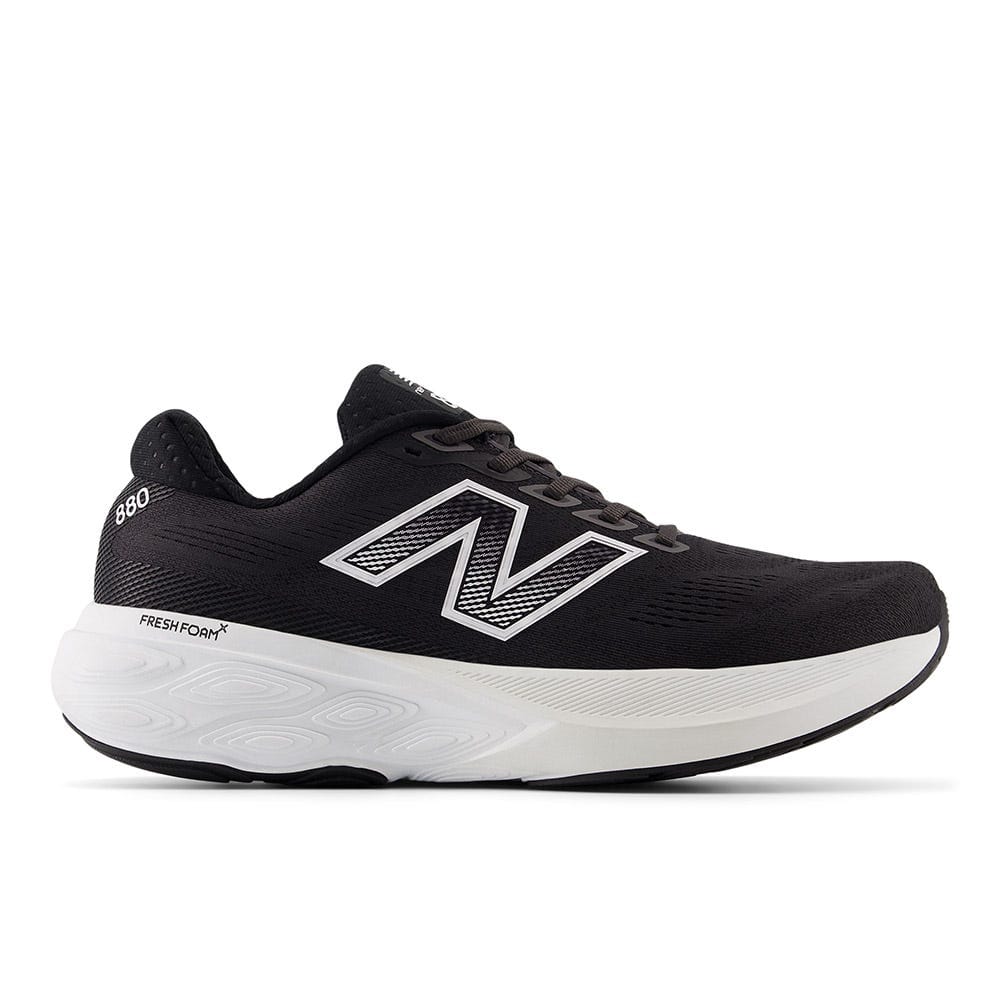
As a shoe expert, I have a massive amount of respect for New Balance. While other brands chase trends, New Balance focuses on a core principle that wins them lifelong fans: fit.
They are the undisputed leader in providing industry-leading width options, catering to everyone from those with Narrow (2A) feet to those needing Extra-Extra-Wide (6E) sizes New Balance Width Sizing Guide. For many runners struggling with fit-related issues like blisters or bruised toenails, New Balance isn’t just the best choice; it’s the only choice.
Beyond fit, they quietly deliver the best-in-class TCO and overall value. Their flagship models, like the Fresh Foam X 880, have durable, full-coverage rubber outsoles and are priced competitively at around $140 New Balance Fresh Foam X 880v14 Product Page. This combination means you get more miles for your money, resulting in the lowest cost-per-mile of any brand in this analysis.
Who Is New Balance Perfect For?
- Choose if you have wide or narrow feet. Stop struggling with standard-width shoes. This is your best, and often only, choice for a perfect, pain-free fit.
- Choose if you are a value-conscious runner who wants the most durable, longest-lasting shoe for your money. To maximize value, use a promo code from our New Balance Coupon Page.
✅ Strengths
- Widest range of widths: 2A (Narrow) to 6E (XX-Wide)
- Best-in-class TCO at ~$0.28/mile
- Full-coverage rubber outsole = long shoe life
- Fresh Foam X balances softness and durability
- Competitive $140 flagship pricing
⚠️ Considerations
- Drastic version-to-version model redesigns
- 860v14 can feel completely different from 860v13
- Workhorse models heavier than Saucony or ASICS
- 1.4/5 “Bad” Trustpilot brand rating
- Loyalty is punished by inconsistent updates
The Most Frustrating Flaw
- Drastic Year-over-Year Model Changes: This is the brand’s biggest “blind spot” and a source of constant complaint from loyal users. You might absolutely love the 860v13, but the 860v14 could be a completely different shoe. New Balance is known for these complete redesigns, which break continuity and erode trust in a specific model line.
- Weight: That durability comes at a small cost. Their workhorse models, while built like tanks, are often a bit heavier than comparable shoes from competitors like Saucony or even ASICS.
Part 7: Conclusion and Frequently Asked Questions
Final Decision Framework
After years of analyzing running shoes, my core advice remains the same: the advertised price is not the real price. The true cost of a shoe is measured in miles, comfort, and confidence.
As we’ve seen, Total Cost of Ownership matters more than the sticker price, and brand trust—proven by transparent return policies—is a critical feature.
A final tip from my years of deal hunting: timing matters. The best prices on last year’s models often appear during major seasonal sales events. Look for deals around Memorial Day, the end of summer for Back-to-School savings, and Black Friday.
This is when brands clear out old inventory, offering the best chance to get a premium shoe at a non-premium price. For runners staying loyal to ASICS, timing your purchase alongside a fresh ASICS America voucher during these events compounds the savings.
The right choice isn’t about which brand is ‘best,’ but which brand is right for your specific needs and risk tolerance when evaluating the ASICS America top alternatives and competitors. My final recommendation is a simple decision framework:
- Choose Brooks if you value reliability, consistency, and a completely risk-free guarantee above all else.
- Choose New Balance if a perfect fit and long-term value are your top priorities.
- Choose Hoka if you are willing to trade durability, stability, and a higher cost for the absolute maximum in cushioning.
- Stick with ASICS if you want a balanced, technically advanced shoe that masterfully blends modern foam with a proven approach to stability.
Before you buy your next pair, look past the marketing hype. Calculate the real cost-per-mile, read the fine print of the return policy, and be honest about the biomechanical trade-offs.
Frequently Asked Questions
A: For most value-conscious runners, no. While the cushioning is exceptional, its poor Total Cost of Ownership (TCO) makes it a questionable investment. I’ve analyzed the numbers, and the foam degrades quickly while the outsoles wear out prematurely, based on a consensus of expert reviews and user reports Hoka Durability Discussion on /r/RunningShoeGeeks. This leads to a cost-per-mile that is often 30-50% higher than competitors like Brooks and New Balance. You’re simply paying a premium for a shoe that doesn’t last as long. The only time it might be “worth it” is if you have specific joint pain that only Hoka’s maximal cushioning can alleviate and you are not sensitive to the higher long-term cost.
A: New Balance is the undisputed best brand for runners with wide (or narrow) feet. This is one of the easiest recommendations I can make. They offer the most extensive range of width options in the industry, from Narrow (2A) to XX-Wide (6E) in their most popular models like the 860 and 880 New Balance Fresh Foam X 880v14 Product Page. While other brands like ASICS and Brooks offer some wide sizes (typically 2E and 4E), New Balance’s commitment to accommodating every foot shape is unparalleled. If you’ve ever struggled with shoes feeling too tight, getting blisters, or having bruised toenails, getting properly sized in a New Balance shoe can be a game-changer.
A: The infamous “Hoka Squeak” is a widely documented and unresolved quality control issue. From my research and countless user reports online, it’s believed to be caused by friction between the insole and the shoe’s internal strobel board, or moisture getting trapped between layers Hoka Squeaking Issue on Reddit. While some people have temporary success with baby powder or other DIY fixes, it’s a known flaw across multiple models that the brand has not publicly addressed or fixed. In my professional opinion, it’s a significant annoyance that reflects poorly on their manufacturing standards for a premium-priced product and is something you should consider before purchasing.
A: Yes, they pose a real and documented risk of ankle rolls, especially on uneven surfaces. I’ve seen this happen and experienced the instability myself. The high, soft platform reduces your “ground feel” and increases the leverage on your ankle if you land awkwardly. While Hoka tries to mitigate this with a wide base and a “bucket seat” design where your foot sits inside the midsole walls, the inherent physics makes them a poor choice for running on cambered roads, trails, or unpredictable city sidewalks where one misstep can lead to injury. For runners who stick exclusively to flat roads or treadmills, the risk is lower American Podiatric Medical Association (APMA).
A: To find the right running shoe, you first need to understand your level of pronation, which is best determined by a gait analysis at a specialty store. Based on that, you can choose a philosophy. Brooks GuideRails are like “bumpers” for your foot, offering subtle guidance only when your stride starts to deviate; it’s a very passive system Brooks GuideRails Technology. ASICS’ 4D Guidance System is a more active, structured approach designed to reduce the effects of pronation (the inward rolling of the foot) and help your foot transition more efficiently ASICS 4D Guidance System Technology. I tell runners to choose Brooks if they want unobtrusive support they’ll forget is there, and choose ASICS if they prefer a more present, secure, and guided feel.
A: Brooks’s 90-day “Run Happy Promise” is the gold standard and the best return policy in the industry, period. I have immense respect for this policy. They allow you to run in the shoes for a full 90 days—outside, on a treadmill, wherever—and return them for a full refund if you’re not satisfied, no questions asked Brooks Run Happy Promise. This completely de-risks the purchase and shows immense confidence in their product. It stands in sharp contrast to Hoka’s stricter 30-day policy and their parent company’s very poor customer service record, which makes returns a potential hassle Deckers Brands Trustpilot Reviews.
A: This is an outdated reputation, but it does come with a kernel of truth. I can confirm that ASICS now offers Wide (2E) and Extra Wide (4E) options for most of their key models, making the brand accessible to most runners ASICS Wide Fit Options. However, their standard “D” width is still described by many runners as feeling slightly snugger or less voluminous in the midfoot compared to a standard width from American brands like Brooks or New Balance. So while the “narrow brand” label is no longer fair, I still advise people to be mindful of the fit and consider trying them on or ordering a wide size if they have any doubts.
A: New Balance and Brooks consistently rank as the most durable brands for the money in my analysis. The reason is simple and visible: both brands typically feature extensive rubber outsole coverage (like New Balance’s Blown Rubber or Brooks’ RoadTack Rubber) that protects the soft midsole foam from abrasion New Balance 880v14 Product Page. This directly leads to a longer lifespan, often in the 400-500+ mile range, according to expert reviews Believe in the Run Brooks Ghost 16 Review. This gives them a far better cost-per-mile compared to brands like Hoka, which often uses large sections of exposed EVA foam on the outsole to save weight, leading to rapid and premature wear.
A: It’s all about controlling foot motion. Stability shoes, like the ASICS Kayano or Brooks Adrenaline, have features (like GuideRails or a 4D Guidance System) to help control overpronation, which is when your foot rolls too far inward after landing Brooks GuideRails Technology. These are best for runners whose feet need that extra support. Neutral shoes, like the Brooks Ghost or Hoka Clifton, don’t have these corrective features and are designed for runners with a “neutral” gait who don’t overpronate significantly. They offer pure cushioning and flexibility without trying to alter your stride. Choosing the wrong type can be uncomfortable or even contribute to injury, so a gait analysis is often recommended.
A: My top hack is to buy last year’s model. When a new version (like the Brooks Ghost 17) is released, the previous version (Ghost 16) is often discounted by 20-30% despite being nearly as good. Secondly, shop during seasonal sales like Black Friday or Back-to-School. Lastly, a critical ‘gotcha’ for deal hunters is that most brands like ASICS and Brooks do not allow you to stack promo codes on top of already-on-sale items Brooks Promotion Details. Always check the ‘Outlet’ section first, as the discount there is often better than a sitewide coupon. For the latest verified offers, check our brand-specific coupon pages and our Latest Coupons hub for cross-brand deals.