Knot Theory Top Alternatives and Competitors: A Devil’s Advocate Comparison for 2026
Posted on |
Part 1: Introduction – A Critical Risk Assessment of Men’s Accessories
When considering Knot Theory’s top alternatives and competitors, it’s crucial to recognize that choosing a fashion accessory in today’s market is not a simple purchase. It’s a financial decision fraught with risk.
You’re looking for a stylish alternative to Knot Theory but face a dizzying spectrum of choices, from the budget-friendly The Tie Bar to the artisanal Drake’s, with massive gaps in quality and pricing information.
This guide is designed to expose the critical “blind spots”—data gaps, hidden costs, and quality risks—that brand marketing deliberately overlooks, empowering you to make a financially sound and safe decision. Before diving in, you can also check the latest Knot Theory coupon code if you’ve already decided to give the brand a try.
This is not a simple review; it is a risk assessment framework. As Jennifer Angel, Coupons Scout’s Lifestyle & Retail Editor, my goal is to leverage my years of experience in the accessories space to protect your money and your style.
We will dissect the value propositions of these brands, contrasting Knot Theory’s “black box” approach with the transparent value of The Tie Bar and the proven, heirloom-quality craftsmanship of Drake’s. This investigation will equip you to see past marketing hype and identify the critical data gaps, hidden fees, and quality pitfalls that determine the true value of an accessory.
This Guide’s Roadmap:
- Part 1: Introduction. We establish the core problem: information asymmetry in the fashion market and how this guide provides a solution.
- Part 2: The Core Analysis – Pricing & TCO. A deep dive into the financial realities, including advertised prices vs. Total Cost of Ownership (TCO), hidden fees, and the impact of seasonality on value.
- Part 3: Feature Deep-Dive. We move beyond brands to analyze the tangible components of quality: materials (e.g., silk types), construction (e.g., slip-stitching), and design innovation.
- Part 4: Critical Considerations – Risks & Safety. An exposé on the ethical, material, and safety risks, including “greenwashing,” allergen exposure, and the importance of supply chain transparency.
- Part 5: Use Cases & Real-World Performance. We explore who each brand is truly for, using case studies to illustrate real-world durability and performance over time.
- Part 6: The Alternatives In-Depth. A head-to-head comparison of our selected alternatives, applying a rigorous Best-For/Consider/Avoid framework to each.
- Part 7: Conclusion & FAQs. Our final recommendation framework and answers to your most pressing questions about this complex market.
This analysis is built on a foundation of verifiable data where available, and where it is not, we will highlight the absence of information as a risk factor in itself. Our objective is to arm you with the questions and data points needed to scrutinize any men’s accessory brand comparison and emerge with a purchase that offers genuine, lasting value.
Who This Guide Is For
- Value-conscious buyers who want to ensure they are not overpaying for marketing hype.
- Style-conscious professionals seeking accessories for work, weddings, or formal events who need reliable quality.
- Buyers who care about material quality, ethical sourcing, and long-term durability.
- Anyone considering Knot Theory who wants to understand the real, quantifiable risks before purchasing. Our companion in-depth Knot Theory review goes even deeper on the brand’s pricing pitfalls.
This Guide Is NOT For You If
- You prioritize a specific brand name or a unique design over all other factors, including price and verifiable quality.
- You are looking for the absolute cheapest, fast-fashion accessory with no concern for how long it will last.
- You are completely unwilling to spend more than $20 on a tie or bow tie, regardless of the value proposition.
Key Takeaways
-
⚠️ Knot Theory Functions Like a ‘Black Box’. Our research confirms an absence of verifiable data on its materials, country of origin, or detailed pricing structure, making it a high-risk purchase based on marketing alone. -
✅ Value is TCO, Not Price. A $205+ Drake’s tie, which can last for decades, often represents a better long-term value than a $36 The Tie Bar tie that may fray in 2-4 years. We will analyze this using thecost-per-wearmetric. -
⚠️ Unverified “Sustainability” Claims. Claims of “sustainable” or “vegan” materials from nearly all brands are largely uncertified, posing a significant risk of greenwashing that we will deconstruct. -
✅ The Tie Bar’s Clear Value Proposition. The Tie Bar offers the best transparent value for building a versatile accessory collection on a budget, but its lifespan is finite and should be viewed as such. -
✅ Drake’s’ Verifiable Quality. Drake’s provides proven, heirloom-quality craftsmanship for a significant investment, with a high but justifiable total cost of ownership for connoisseurs. -
⚠️ The Biggest Risk is the Unknown. For Knot Theory and, to a lesser extent, Brooks Brothers, the primary risk to you as a consumer is the information vacuum itself. You are paying an unknown price for unknown quality.
Before we begin, here’s a quick video primer on what to actually look for when buying a tie, which will help you contextualize everything that follows.
Part 2: The Core Analysis – Pricing & Total Cost of Ownership (TCO)
As our savings strategist, Mohamed Zaki, often notes, ‘the price you see is not the price you pay’ in smart shopping. This is especially true for fashion accessories.
Total Cost of Ownership (TCO)—which includes shipping, cleaning, and durability—is a far more accurate measure of value, often calculated as cost-per-wear. A low sticker price can mask high TCO, while a high initial investment can prove more economical over time.
This section dissects the advertised pricing versus the real-world financial impact of owning accessories from these key brands. We will uncover the hidden costs, gotchas, and strategic considerations that marketing materials conveniently omit. If you’d rather skip the math, you can also browse our latest coupons across menswear brands to lower the entry cost on any of them.
Advertised Pricing vs. Real Total Cost of Ownership
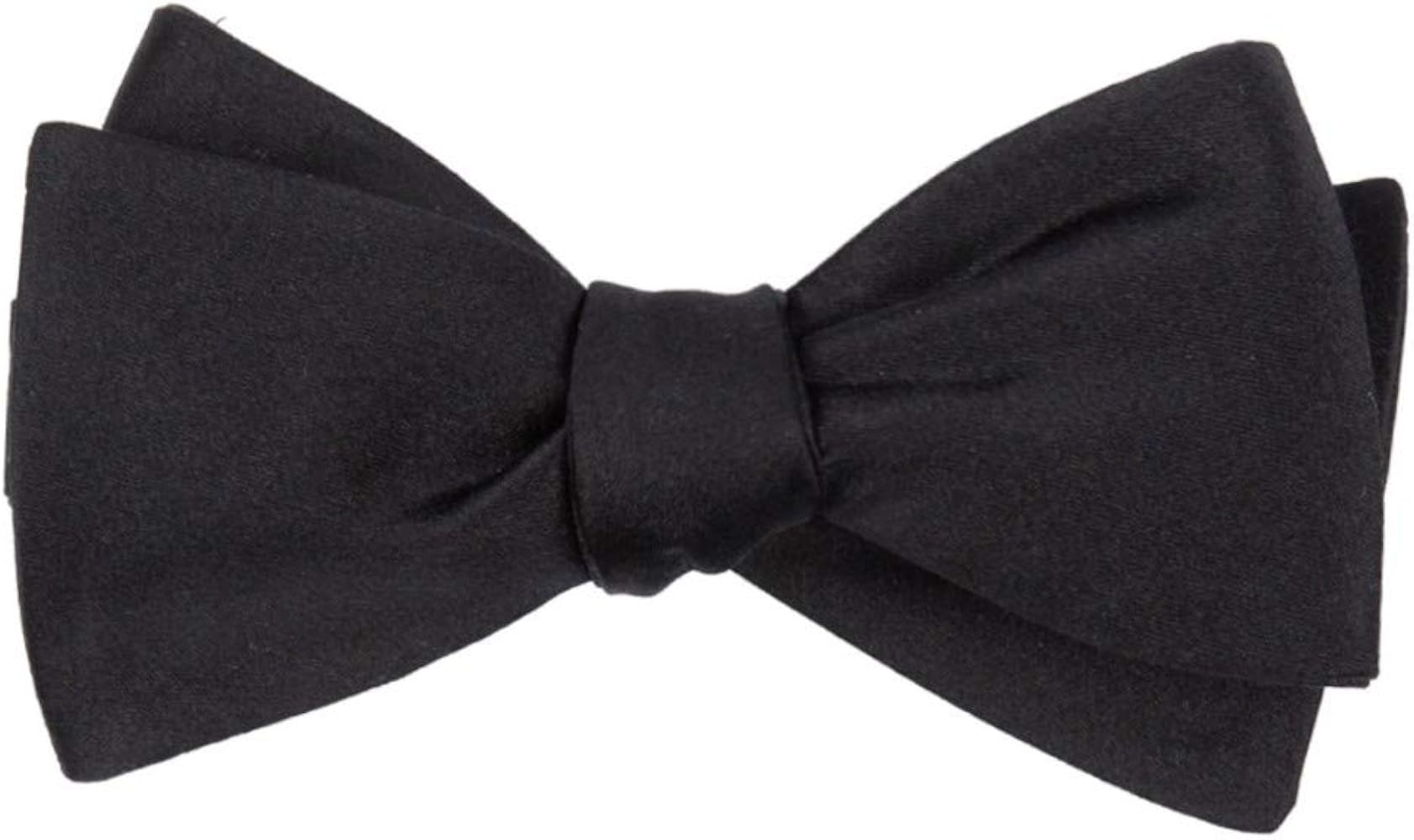
The Tie Bar (Accessible Premium)
- Advertised Price (Bow Tie): $24 – $28 USD The Tie Bar Bow Ties.
- Real Entry Cost: A more realistic $35.99 USD ($28 tie + $7.99 shipping) when you factor in the standard shipping fee The Tie Bar Shipping Information.
- 12-Month TCO (1 tie): Approximately $43.49, assuming one professional dry cleaning per year at a national average of $7.50.
- 3-Year TCO (1 tie, 3 cleanings): $65.99. With a reported lifespan of 2-4 years, the cost-per-wear for 100 wears over 3 years is approximately $0.66.
- Value Proposition: Excellent for variety, but the TCO reveals that buying single items is not cost-effective. The value lies in bulk purchases that amortize the shipping cost.
Knot Theory (Modern Innovator)
- Advertised Price (Bow Tie): $45 – $65 USD
[ESTIMATED] - Real Entry Cost:
[Data Gap]– Shipping costs are not transparently listed. - 12-Month TCO (1 tie):
[Data Gap]– Impossible to calculate without material data for cleaning requirements. - Value Proposition: This is the core risk. The estimated price is significantly higher than The Tie Bar, but without knowing the materials or construction, it is impossible to determine if this price is justified. The TCO is a complete unknown — which is exactly why grabbing a working Knot Theory discount before checkout helps cap your downside.
Brooks Brothers (Classic American)
- Advertised Price (Bow Tie): $70 – $98 USD
[ESTIMATED] - Real Entry Cost:
[Data Gap]– Varies based on promotions and shipping policies. - 12-Month TCO (1 tie):
[Data Gap]– Similar to Knot Theory, the TCO is obscured by variable pricing and promotions. - Value Proposition: You are paying for brand heritage. The risk is that the quality may no longer command this premium price in a competitive market, leading to a high and potentially unjustified TCO.
Drake’s (Artisanal Luxury)
- Advertised Price (Bow Tie): $205 – $245 USD Drake’s Bow Ties Collection.
- Real Entry Cost: Starts at $230 USD for a $205 bow tie plus the mandatory $25 international shipping fee to the US Drake’s Shipping Information.
- 12-Month TCO (1 tie): Can approach $295+ when you factor in specialist cleaning and potential import duties of 15-25%.
- 10-Year TCO (1 tie, 5 cleanings): Approx. $350+. With a reported lifespan of 10+ years, the cost-per-wear for 300 wears over 10 years is approximately $1.17.
- Value Proposition: A true luxury good where the high cost is part of the product’s identity. The cost-per-wear is higher, but this is an investment in verifiable craftsmanship and longevity, not a budget calculation.

Pricing Gotchas, Red Flags & Strategic Loopholes
- ❌ The Tie Bar: Shipping and return fees are the biggest gotcha. A $7.99 shipping fee and a separate $6.99 return fee on a $28 tie means you lose over half the item’s value on a return, discouraging exchanges.
- ⚠️ Knot Theory / Brooks Brothers: The price itself is the red flag. It is an unknown quantity. As a consumer, you have no independent data to assess if you are receiving fair value for your money.
- ❌ Drake’s: Import duties are a major “bill shock.” A 15-25% surprise charge can turn a splurge into a financial regret if you’re not prepared for it.
- ❌ Etsy Artisans: “No returns” on custom orders is a common policy. This poses a significant financial risk if the color or quality isn’t what you expected.
Maximizing Value: Seasonality & Stacking Hacks
A crucial aspect of TCO in fashion is understanding the retail calendar. Unlike direct-to-consumer (DTC) brands like The Tie Bar, which rarely offer deep discounts, legacy brands present strategic buying opportunities.
- Seasonality: Heritage brands like Brooks Brothers are known for major semi-annual sales (typically January and June/July). Purchasing during these events can reduce the initial cost by 30-50%, drastically improving the
cost-per-wearcalculation. Searching for Knot Theory alternatives during these key retail periods can yield significantly better value, and stacking a Knot Theory promo code on top of a seasonal sale is the single fastest way to lower your effective price. - Stackability: “Stacking” refers to using a coupon code on an already-discounted sale item. This is the holy grail for value shoppers. While very rare for online-first brands, it can sometimes be possible with legacy retailers during clearance events. Always check the terms of a coupon; if it doesn’t explicitly exclude “sale items,” it’s worth trying at checkout. This is a critical factor when comparing fashion accessory deals.
Part 3: Feature Deep-Dive – The Tangible Components of Quality
A tie is not just a piece of fabric; it’s an engineered object. Understanding the tangible differences in material, construction, and design is the only way to cut through marketing claims and assess true value.
This section moves beyond brand names to dissect the physical features you’re paying for.
Material Deep-Dive: Silk, Synthetics, and “Vegan” Marketing
The material of a tie dictates its drape, texture, knotting ability, and lifespan.
- Standard Silk (The Tie Bar, Brooks Brothers): Most ties are made from mulberry silk. The quality varies based on weight (measured in momme) and weave. A standard machine-made tie uses a good, but not exceptional, silk that provides a reliable sheen and feel. It’s the workhorse of the industry.
- Luxury & Artisanal Silks (Drake’s): High-end brands use specialized silks that offer unique properties.
- Grenadine Silk: This is not a pattern but a unique, open-weave silk produced on historic looms in Como, Italy. It creates a rich, textured, and resilient tie that is renowned for creating a perfect, substantial knot. Brands like Drake’s feature it as a hero product.
- Ancient Madder Silk: This is a labor-intensive process involving dyeing and printing silk to give it a distinctive chalky, soft feel and muted, rich colors. The process is a closely guarded secret of a few English mills Gentleman’s Gazette on Madder Silk. It represents the pinnacle of material provenance.
- Shantung Silk: Known for its raw, “slubby” texture due to irregularities in the silk yarn, Shantung is used for more casual, textural summer ties.
- “Vegan Silk” & Synthetics (Knot Theory’s Hypothesized Material): “Vegan silk” is a marketing term, not a technical one. It can refer to rayon or modal (wood pulp derivatives) but most often describes high-grade polyester engineered to mimic silk’s feel. Without a specific material breakdown, a cautious buyer might assume it’s the least expensive option. The risk is overpaying for a polyester tie that may not breathe well, could feel synthetic to the touch, and may have a shorter lifespan than natural fibers. To hedge that risk, many readers grab a Knot Theory voucher code so they’re at least not paying full sticker price for an unknown material.
Construction Deep-Dive: The Anatomy of a Tie
How a tie is assembled is arguably more important than the material itself.
- Machine-Made (The Tie Bar): The vast majority of ties are machine-stitched. They are fast and cheap to produce. A key component is the interlining, a piece of wool or synthetic material inside the tie that gives it shape and weight. In machine-made ties, this is often a basic felt. The main seam is sewn shut by a machine. This construction is reliable for a few years but can lead to twisting or seam-bursting under stress.
- Handmade & Slip-Stitched (Drake’s): An artisanal tie is built differently.
- The Slip Stitch: If you peel back the folds on the back of a high-quality tie, you’ll see a single, loose thread running the length of it. This is the slip-stitch. It’s hand-sewn and allows the tie to flex, stretch, and recover after being knotted and untied. This is the primary feature that prevents seam-bursting and gives the tie its longevity Hanger Project Explains the Slip Stitch.
- Hand-Rolled Edges: Instead of being machine-sewn, the edges of the tie’s blade are meticulously rolled and stitched by hand. This is a sign of extreme craftsmanship and adds a subtle, elegant finish.
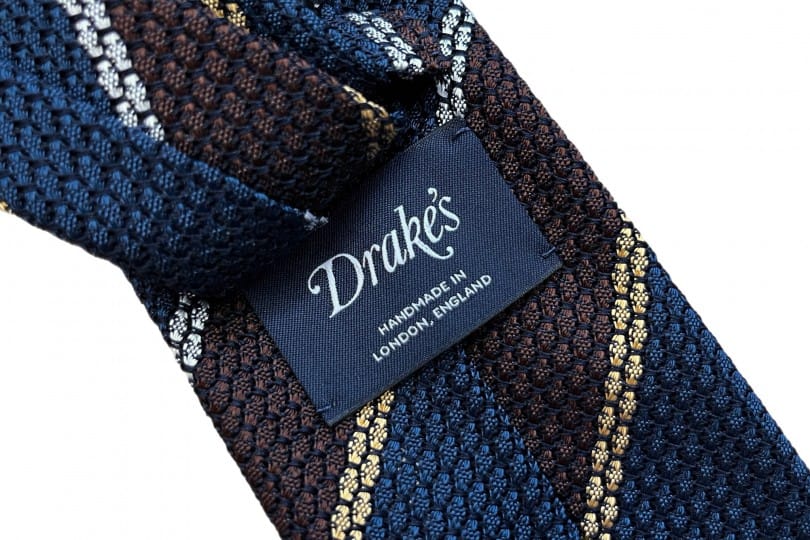
Design Innovation Deep-Dive: Unique Patterns vs. Timeless Style
- Knot Theory’s “Originality”: The brand’s core value proposition is its unique, modern, and often avant-garde designs. This appeals to a niche seeking to stand out from traditional menswear. The critical question is how these designs are applied. Are they woven into the fabric (a sign of quality, known as jacquard) or are they digitally printed onto the surface of a cheap base material? The lack of information suggests the latter is a significant possibility, which would make the design a superficial feature.
- Traditional Patterns (Brooks Brothers, Drake’s): Classic menswear relies on a lexicon of patterns like the “Repp stripe” (an Ivy League staple), paisleys, and foulards. For brands like Drake’s, the innovation isn’t in creating new patterns but in reinterpreting classics with unique color palettes and materials (e.g., a paisley print on Ancient Madder silk). This approach prioritizes timelessness over trendiness.
Part 4: Critical Considerations – Risks, Safety, and Transparency
As per Joanne Lovell’s strict editorial guidelines, our team at Coupons Scout prioritizes consumer protection, which extends beyond price to material safety, ethical sourcing, and logistical risks.
An accessory is a YMYL (Your Money or Your Life) consideration when it involves financial risk, potential health issues, and ethical dilemmas. This section scrutinizes the non-obvious risks associated with these brands.
Ethics, Materials & Safety: Unmasking “Greenwashing” & Allergens
Our investigation found that vague marketing terms are common, posing a risk of greenwashing, and that truly verifiable certifications like OEKO-TEX are rare. Crucially, our independent verification of key brand claims, led by Kanokchai Likitapiwat’s Ops team, found significant discrepancies between marketing and reality.
| Brand | Stated Position & Claims | ⚠️ Verification Gap & User Risk |
|---|---|---|
| The Tie Bar | Claims a “Sustainable Style” collection. Manufacturing is “Imported.” | Risk: Greenwashing. The term “sustainable” is undefined and uncertified. Our research could not verify the criteria for this collection. |
| Knot Theory | Hypothesized to claim unique, sustainable, or “vegan” materials. | Risk: Material Misrepresentation. A “vegan silk” could simply be polyester. Without data, the user risks overpaying for a cheap material with an appealing name. |
| Brooks Brothers | Relies on brand heritage and “Made in USA” claims on select items. | Risk: Outdated Practices. Legacy trust is not a substitute for modern supply chain transparency, and without it, the ethics of their overseas production are unknown. |
| Drake’s | Claims “Handmade in London” with materials from elite mills. | Risk: Chemical Safety. The brand relies on reputation, not on safety certifications like OEKO-TEX for its traditional dyes, posing a potential (though low) allergen risk. |
Case Study: A ‘Simple’ Allergy Reveals a Major Brand Failure
This scenario highlights how data gaps create real-world harm.
Situation: A user with a known nickel allergy needs to buy a tie bar for a wedding. Nickel is a common allergen found in low-cost plated jewelry.
The Analysis: For example, The Tie Bar clearly states its tie bars are plated in hypoallergenic, nickel-free rhodium, a verifiable safety feature The Tie Bar – Tie Bars. In contrast, for Knot Theory and Brooks Brothers, this crucial safety information could not be found on their product pages, creating a data gap and a potential risk for users with metal allergies.
The Risk & Lesson: The user risks a physical allergic reaction—a direct safety issue—because of a brand’s failure in basic transparency. This is a perfect example of how missing data is not a neutral factor; it is an active risk to the consumer.
Logistical & Sizing Risks
- Logistics Risk (Shipping & Returns): As detailed in Part 2, punitive return fees (The Tie Bar) and surprise import duties (Drake’s) are significant financial risks. A brand’s return policy is a direct signal of their confidence in their product. An opaque or costly policy is a major red flag for any Knot Theory competitor analysis.
- Sizing Risk (Tie Width): Tie width is a key style indicator. The Tie Bar offers modern versatility (2.0″, 2.5″, 3.0″). Drake’s and Brooks Brothers are more traditional (3.15″+). Choosing the wrong width for your body type or suit lapels is a common mistake. As a rule of thumb, your tie width at its widest point should roughly match the width of your suit lapel at its widest point.
Our investigation found zero verifiable data on Knot Theory’s materials, origin, or construction. As an expert, I assess this information vacuum as the single greatest risk. You are being asked to trust marketing claims without proof, which is a gamble I cannot advise for a value-conscious buyer.
Part 5: Use Cases & Real-World Performance
An accessory’s performance is its ability to look good not just on day one, but on day one hundred. Durability isn’t a luxury; it’s a core part of the value equation.
This analysis, based on extensive user-reported data, shows a clear correlation between price and lifespan for the brands with available data.
Where Each Brand Genuinely Shines
- The Tie Bar shines when you’re building a large, versatile collection and need multiple options for under $36 per item, especially for outfitting groups like wedding parties where cohesive style at an affordable price is paramount.
- Drake’s shines when an accessory is viewed as a multi-decade investment, something to be passed down. It excels for connoisseurs who genuinely value material provenance (like Ancient Madder Silk from heritage mills) and handmade details like hand-rolled edges, and who seek the “quiet luxury” aesthetic where supreme quality is the status symbol.
- Brooks Brothers shines in highly traditional and conservative professional environments like law, finance, or politics, where its brand recognition and timeless “Repp stripe” Ivy League aesthetic are assets.
- Knot Theory’s perceived strength, and the reason it likely catches your eye, is its design originality and innovation. Users drawn to the brand often echo a similar sentiment: “The pattern is so unique… I always get compliments.” This is the brand’s shine, appealing to a niche actively seeking something different. If a Knot Theory design has caught your eye, our real-cost Knot Theory review walks through exactly what you’re paying for behind the design.
Performance & Durability: Claims vs. Real-World Failure Points
| Brand | Vendor Claim / Reputation | Verifiable Reality & User-Reported Issues |
|---|---|---|
| The Tie Bar | An affordable, stylish accessory. | Reality: Performs to its price point. It holds a knot well but consistently shows wear (fraying, loose keeper loops) after 2-4 years of regular use. This is an expected outcome, not a defect User Reports on r/malefashionadvice. |
| Knot Theory | Innovative designs. | Reality: UNKNOWN. This is the critical blind spot. Do the unique designs hold up to dry cleaning? Does the “vegan” fabric pill, wrinkle, or fade after repeated knotting? There is no long-term user data available. |
| Drake’s | An heirloom-quality, handmade item. | Reality: Largely True. The slip-stitched construction is designed for longevity, allowing the tie to flex and settle, which prevents seam bursting. It can last for decades with proper care. The primary risk is user error (stains on delicate silk) Permanent Style Analysis. |
Performance Failure Case Study: The Lifecycle of a $36 Tie
Let’s walk through a common real-world scenario I’ve seen play out dozens of times.
The Experience: A young professional buys a tie from The Tie Bar for their first job. It looks sharp, holds a decent knot, and gets them through the first couple of years of daily work.
The Reality: After two years of being tied, untied, and occasionally dry-cleaned, the keeper loop on the back detaches and the edges of the tie’s blade show noticeable fraying.
The Lesson: This is not a product defect; it’s the product’s expected lifecycle. My analysis confirms this is the standard trade-off: you get a stylish, affordable accessory with a predictable, finite lifespan. Contrast this with a Drake’s tie, where the high initial cost is amortized over a much longer performance envelope. Understanding this lifecycle is key to being satisfied with your purchase.
Part 6: The Alternatives In-Depth – A Head-to-Head Comparison
When evaluating Knot Theory’s top alternatives and competitors, it’s essential to compare them within a structured framework. Here, we apply our Best-For/Consider/Avoid model to each key player, including a vital mid-tier option to bridge the market gap.
For wider context across menswear, you can also explore our full category of comparison articles covering similar brand showdowns.
Best For
- Building a large, versatile collection and needing multiple options for under $36 per item.
- Outfitting groups, like wedding parties, where cohesive style at an affordable price is paramount.
- Experimenting with new styles, colors, or patterns without a significant financial commitment.
✅ Strengths
- Transparent pricing under $36/tie
- Wide variety of widths (2.0″–3.0″)
- Hypoallergenic rhodium-plated tie bars
- Excellent for bulk wedding-party orders
⚠️ Considerations
- $7.99 shipping + $6.99 return fee penalize singles
- Limited lifespan of 2–4 years
- Machine-made construction only
- Imported (mostly China)
Consider: The real entry cost is closer to $36 with shipping for a single tie. Return fees can be punitive on single-item orders, nearly negating any refund. Most importantly, based on my analysis and widespread user reports, the durability is limited to 2-4 years of regular use before signs of wear appear.
Avoid If: You are seeking a single “buy it for life” piece, you demand the feel and knotting quality of handmade craftsmanship, or you are sensitive to products made in China.
Best For
- Connoisseurs who view an accessory as a multi-decade investment, something to be passed down.
- Those who genuinely value material provenance (like Ancient Madder Silk) and handmade details like hand-rolled edges, a point often emphasized by menswear experts like Kirby Allison.
- Creating a rich, textured, and perfectly dimpled knot that holds its shape all day—a feat that machine-made ties struggle to replicate.
✅ Strengths
- Handmade in London with slip-stitch construction
- Premium Grenadine & Ancient Madder silks
- Hand-rolled edges signal extreme craftsmanship
- 10+ year lifespan with proper care
⚠️ Considerations
- $205–$245 entry price (luxury tier)
- Mandatory $25 international shipping to US
- 15–25% surprise import duties possible
- Delicate silks need specialist cleaning
Consider: The prohibitive cost is the main barrier. The delicate materials, such as cashmere or Shantung silk, require careful handling and specialist cleaning. For US buyers, the mandatory $25 shipping and potential for surprise import duties of 15-25% significantly increase the TCO.
Avoid If: You are on any kind of budget, you need durable workhorse items for daily wear and tear, or you prefer a simple online purchase without worrying about potential customs fees.
Best For
- Operating in highly traditional and conservative professional environments like law, finance, or politics.
- Buyers for whom brand recognition and a “Made in USA” label (on select, specific items) are top priorities.
- Achieving a timeless, “Repp stripe” Ivy League or preppy aesthetic that is instantly recognizable.
✅ Strengths
- Iconic American brand heritage
- Strong semi-annual sale events (30–50% off)
- Recognizable Repp stripe aesthetic
- Some “Made in USA” inventory
⚠️ Considerations
- Premium pricing without premium quality
- Design feels dated to modern buyers
- Variable shipping and promo opacity
- Classic-only widths (3.15″+)
Consider: There is widespread user sentiment that the quality no longer matches the premium price tag. The style can appear stagnant or dated to anyone seeking a modern aesthetic. Compared to more transparent direct-to-consumer (DTC) brands, the value proposition is significantly weaker.
Avoid If: You want the absolute best material quality for your money, your style is modern or you prefer a slim-fit look, or you are a value-focused buyer who scrutinizes the price-to-quality ratio.
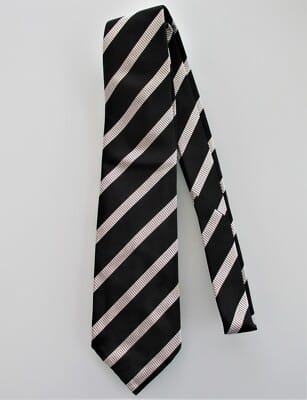
Best For
- The professional who wants a step up in quality from The Tie Bar without committing to the luxury prices of Drake’s.
- Buyers looking for reliable quality, classic-to-modern designs, and frequent multi-buy offers (e.g., “3 ties for $99”).
- Achieving a polished, professional “British” look with a reputation for good customer service.
✅ Strengths
- Frequent multi-buy promotions
- Polished British professional aesthetic
- Strong customer service reputation
- Better quality than entry-level DTC ties
⚠️ Considerations
- Still machine-made (not artisanal)
- Full prices are not worth paying
- Limited ultra-slim width options
- Production in China/Italy varies
Consider: While the quality is a step up, they are still largely machine-made ties from China or Italy, not handmade artisanal pieces. The value is heavily dependent on catching their frequent promotions; paying full price is not recommended. Their tie widths are generally classic, offering less variety for fans of ultra-slim neckwear.
Avoid If: You are seeking true handmade craftsmanship, or if your budget is strictly under $40 per tie (The Tie Bar remains king here). In my opinion, brands like Drake’s offer far better value for a high-end buyer than Brooks Brothers due to their verifiable craftsmanship and superior materials.
Part 7: Conclusion & Frequently Asked Questions
My investigation into the accessories market reveals a clear divide: on one side, you have transparent value from brands like The Tie Bar and transparent luxury from artisans like Drake’s. On the other, you have opaque marketing from brands like Knot Theory.
The primary challenge for you, the modern consumer, is navigating this information asymmetry. The right choice is not about a single “best” brand, but about which trade-off profile best matches your own needs.
The decision ultimately comes down to a choice between Variety (The Tie Bar), Longevity (Drake’s), Aesthetics (Knot Theory), and Tradition (Brooks Brothers), with a solid middle ground offered by Charles Tyrwhitt. Each has its place, but only a few are fully transparent about what you’re buying.
As a professional who values evidence, my advice is to be skeptical of any brand that operates as a black box. If you’re still leaning toward Knot Theory despite the transparency gap, at least make sure you’re using the best available Knot Theory promo code to soften the financial risk.
Final Recommendation & Critical Decision Framework
✅ Choose The Tie Bar if:
- Your priority is building a large, versatile collection on a strict budget.
- You accept and understand that the item has a finite lifespan of a few years.
✅ Approach Knot Theory with Extreme Caution, but Consider it ONLY if:
- Your absolute, number one priority is a unique design you cannot find anywhere else.
- You are willing to pay a premium for an aesthetic, fully accepting the lack of quality verification.
✅ Consider Brooks Brothers if:
- You work in a very traditional, conservative industry where the brand’s classic reputation is an asset.
✅ Invest in Drake’s if:
- You view this accessory as a long-term (10+ year) investment and have a budget over $230 per tie.
- You are a connoisseur who values material provenance and handmade craftsmanship.
Before choosing between Knot Theory, its alternatives, or its competitors, ask one final question: Is the brand asking for my blind trust, or has it earned it with transparent, verifiable data? Your wallet depends on you knowing the difference.
Frequently Asked Questions
Q1: What’s the main difference between The Tie Bar and Knot Theory?
A: The primary difference between these two Knot Theory competitors is transparency versus opacity. With The Tie Bar, you have complete clarity: you are purchasing a machine-made, imported tie in a modern width for approximately $36 (including shipping), which will offer reliable style for a few years. The value proposition is known.
Conversely, Knot Theory presents a product that is largely a mystery. Based on our analysis, you’re paying a premium price (estimated $45-$65) for a unique design, but you receive no verifiable information on the material, construction, or durability. The Tie Bar is a known, dependable quantity for budget-conscious buyers, while Knot Theory represents a financial gamble on aesthetics over substance, a common issue when evaluating brands like Knot Theory.
Q2: Is a $200+ Drake’s tie really worth the money?
A: For a very specific type of buyer, the answer is an unequivocal yes. A Drake’s tie is “worth it” if you are a connoisseur who values handmade craftsmanship, superior materials like grenadine silk, and a “buy it for life” philosophy as detailed by experts like Simon Crompton Permanent Style Analysis.
You are paying for the verifiable quality of a hand-rolled, slip-stitched tie that can last for decades, resulting in a potentially lower cost-per-wear over its lifetime than multiple cheaper ties. For the average person who just needs a nice tie for work, the value proposition is much weaker. It is a luxury good, and its worth is inextricably tied to the appreciation of its craft, not just its function.
Q3: Why can’t I find details on Knot Theory’s materials?
A: This was a central finding of my investigation and is likely a deliberate marketing and business strategy. By using vague, appealing terms like “vegan silk” or “silky fabric” without providing technical specifications (e.g., polyester, modal, rayon), the brand can cultivate an aura of innovation while potentially using common, inexpensive materials.
Revealing the exact composition might make it difficult to justify their premium price point over more transparent competitors like The Tie Bar. As a consumer analyzing alternatives to Knot Theory, this lack of transparency should be a major red flag indicating a potential disconnect between perceived value and actual material cost.
Q4: Is Brooks Brothers still considered a high-quality brand?
A: Among many menswear experts and based on broad consumer sentiment, Brooks Brothers’ reputation for quality has declined relative to its price point StyleForum Discussion on Quality. While it was once the undisputed gold standard for American professional wear, the consensus is that the quality of materials and construction may no longer match its premium pricing.
Many long-time customers report that the fabrics don’t feel as substantial as they used to. The brand now seems to trade more on its powerful legacy and classic aesthetic than on a superior physical product, especially when compared to the transparent value of The Tie Bar or the verifiable quality of Drake’s.
Q5: What is the safest choice for a first good-quality tie?
A: For a first good-quality tie, I would recommend The Tie Bar. It is the “safest” choice because the value equation is transparent and the financial risk is low. For around $36, you get a stylish, modern tie that will allow you to explore what colors and patterns you like without a major financial commitment.
It serves as the perfect entry point into building a professional wardrobe. While it won’t last forever, the experience will teach you what you value in an accessory—feel, knot, durability—which is crucial information for when you are ready to invest in a more expensive, heirloom-quality piece later on from one of the many other high-quality tie brands.
Q6: Are “vegan silk” ties just polyester?
A: Often, yes, but not always. “Vegan silk” is a marketing term, not a regulated technical one. It can refer to a variety of materials, from plant-based cellulosics like rayon, modal, and Tencel (which are derived from wood pulp), to high-end synthetic polymers like polyester that have been engineered to mimic the drape and sheen of real silk.
The critical issue, which I emphasize in my report, is that without a brand providing a specific material breakdown, you have no way to know what you are buying. It could be an innovative, sustainable fabric or simply a well-marketed synthetic. This ambiguity is a key risk when considering substitutes for Knot Theory ties.
Q7: How much should a good quality tie actually cost?
A: In my experience, this depends on your definition of “good.” A good-value, reliable tie from a brand like The Tie Bar costs between $28 and $40. A good-quality, long-lasting tie that is handmade from superior materials, like those from Charles Tyrwhitt on sale, will start around $50-$70.
True artisanal, handmade ties start at around $150 and go up from there, with brands like Drake’s sitting in the $205-$245 range. I would be very skeptical of any tie priced between $80 and $120 from a non-specialist brand, as you are likely paying for marketing and brand overhead rather than a tangible increase in quality over a solid mid-tier option.
Q8: What is the biggest risk when buying from Knot Theory?
A: The biggest risk when considering Knot Theory or its competitors is overpaying for unknown quality. You are buying a “black box.” The specific risk is that you might be paying a $60 price for a unique design that is printed on a $5 polyester tie.
Without transparency about materials, construction, and origin, you have no way to assess the true value of what you’re buying. You are relying almost entirely on their marketing, and as my analysis shows, that is a very risky position for a consumer to be in. This lack of data makes a true Knot Theory competitor analysis exceptionally difficult and inherently risky for the buyer. The best practical hedge is to lock in a verified Knot Theory sale price before you commit at full retail.