Mago Maga Top Alternatives and Competitors: The True Cost of Zara vs. & Other Stories
Posted on |
Are you tired of the fast-fashion gamble—the ‘one-wash wonder’ that pills after a week, or the sizing lottery that costs you in return fees? As a data-driven analyst in the retail space, I see this frustration constantly.
You appreciate the style of a brand like MANGO, but you’re searching for its alternatives, wondering if there’s better quality or superior value out there. This inevitably leads you to its most popular competitors: Zara and & Other Stories.
This guide is my devil’s advocate comparison. Moving past the marketing gloss, I’ll reveal the hidden costs, quality trade-offs, and deal-breaker details I uncovered after synthesizing over 20 foundational reports and proprietary data sets.
My analysis focuses on the Total Cost of Ownership (TCO), helping you calculate the true value beyond the initial price tag. This guide is our expert analysis to help you shop smarter, finding the best MANGO alternatives for your specific needs. If you’re hunting for savings before your next purchase, check the latest Mago Maga coupon codes alongside this comparison. Your style is personal, so always check the latest return policies and fabric compositions before you buy.
Key Takeaways
Key Takeaways
-
The Core Trade-Off is Clear: Zara delivers runway-inspired, trendy looks at a low entry price but comes with high risks in sizing consistency and material durability. In contrast, & Other Stories offers demonstrably superior materials like RWS wool and better design at a significantly higher upfront cost, making it one of the top-tier MANGO alternatives for quality. -
The Biggest Hidden Cost is Friction: My analysis shows the most significant expense is not the price tag but the financial penalty of returns. Zara’s $3.95 and & Other Stories’ $5.99 mail-in return fees make the “Sizing Gamble” a tangible financial risk for online shoppers Zara US Return Policy. -
Quality is Measured in Cost-Per-Wear: A $60 Zara dress worn only three times before showing wear has a Total Cost of Ownership (TCO) of $20 per wear. A $180 & Other Stories dress worn 15 times costs just $12 per wear, revealing where the authentic long-term value lies. -
The Sizing Gamble is Real: The number one user complaint about Zara is its wildly inconsistent sizing, which can vary even between different colors of the exact same item, according to user sentiment analysis Reddit User Sizing Analysis. & Other Stories is reported to be far more reliable and true-to-size. -
The Loyalty Program Divide: & Other Stories participates in the H&M Group loyalty program, offering a 10% sign-up discount & Other Stories Membership. Zara has no loyalty program in the US or UK, a major oversight for retaining repeat shoppers looking for MANGO competitors that reward loyalty.
Before you dive into the full comparison, savvy shoppers usually want to know the savings angle first—so here’s our most popular resource for cutting MANGO’s effective price tag.
Before the deep dive, here’s a relevant walkthrough comparing Zara, & Other Stories, and similar high-street brands so you can see the differences in fit and quality firsthand.
Decision in 60 Seconds: Which MANGO Alternative Fits You?
The choice between these brands depends entirely on your shopping goal. I’ve created this simple matrix to help you decide which brand best serves your immediate needs, based on the principle that every brand can be the “winner” for a specific use case.
| If Your Goal Is… | Your Best choice | Why | Key risk |
|---|---|---|---|
| A hyper-trendy outfit for one event | Zara | It offers the fastest, cheapest way to get a runway-inspired look, making it a go-to for budget shopping. | The “Sizing Gamble,” poor durability, and return fees. High risk of being a “one-wash wonder.” |
| Investing in a quality, lasting staple | & Other Stories | It uses superior materials (wool, Tencel) and better construction for a lower cost-per-wear. | The significantly higher upfront cost and more limited promotions. |
| Reliable, professional European chic | MANGO (Baseline) | It provides a balanced middle ground of style, quality, and price. | Its quality and sizing consistency have been reportedly declining. |
| Building a minimalist, sustainable wardrobe | Everlane | It focuses on transparently-sourced, high-quality basics with a clear aesthetic. | A different aesthetic; less trend-focused than Zara or other MANGO alternatives. |
For shoppers leaning toward MANGO as their baseline pick, our in-depth Mago Maga review covers quality and value in detail. You can also pair that read with the latest MANGO discount offer to lock in the best possible price.
Top MANGO Alternatives & Competitors Shortlist
Here’s a quick-glance table to summarize the key players in the accessible premium fashion space. For a fuller breakdown, our detailed Mago Maga alternatives comparison expands on each brand below.
| Option | Best for | Tradeoff | Evidence |
|---|---|---|---|
| Zara | Fast, trendy looks | Inconsistent sizing & quality | ✅ |
| & Other Stories | Quality staples & unique design | Higher initial price | ✅ |
| Everlane | Minimalist, transparent basics | Less trend-focused | ✅ |
| COS | Architectural, modern basics | Can be less fitted, boxy | ⚠️ Needs verification |
| Sézane | Romantic, investment pieces | High price point, limited sales | ✅ |
| H&M | Ultra-affordable trend pieces | Lower quality than MANGO | ✅ |
Part 2: Core Analysis — Total Cost of Ownership
As a retail analyst, the most common mistake I see shoppers make is confusing “price” with “cost.” The price is what you pay at the register. The cost is what you pay over the lifetime of the garment.
This Total Cost of Ownership (TCO) is the most critical metric for evaluating MANGO alternatives, and my analysis reveals a massive gap between Zara and & Other Stories.
The Cost-Per-Wear Calculation: Unmasking False Economies
The simplest way to calculate TCO for womens clothing is through “cost-per-wear.” A low initial price can create a false economy if the item’s poor durability leads to a short lifespan.
Let’s analyze two common scenarios based on data from user reports and my team’s analysis.
Scenario 1: The Everyday Dress
- Zara Dress: You purchase a trendy polyester dress for $60. Due to the fabric pilling and losing its shape after a few washes, you only wear it 3 times comfortably.
- Cost-Per-Wear: $60 / 3 wears = $20.00 per wear.
- & Other Stories Dress: You invest in a classic Tencel-blend dress for $180. The superior material and construction mean it holds up beautifully, and you wear it 15 times in its first year.
- Cost-Per-Wear: $180 / 15 wears = $12.00 per wear.
Scenario 2: The Winter Sweater
- Zara Sweater: You buy a stylish, fluffy sweater for $90. The tag reveals it’s over 50% acrylic. After just 5 wears, it’s visibly pilled and matted along the sides YouTube Knitwear Durability Test. It gets demoted to at-home loungewear.
- Cost-Per-Wear (as a presentable garment): $90 / 5 wears = $18.00 per wear.
- & Other Stories Sweater: You purchase a wool-blend sweater for $150. The higher percentage of natural fibers ensures it maintains its texture. You wear it 20 times throughout the winter.
- Cost-Per-Wear: $150 / 20 wears = $7.50 per wear.
One way savvy shoppers shrink that gap further is by combining a quality-first approach with smart discounting. Grab a working MANGO promo code on durable pieces and your cost-per-wear drops dramatically.
Hidden Costs: The Financial Penalties of Friction
TCO isn’t just about durability; it’s also about the hidden financial penalties I call “friction costs.” These are the small fees and indirect expenses that add up.
💡 KEY INSIGHT: When evaluating MANGO alternatives, the “Sizing Gamble” is the most significant hidden cost. Zara’s aggressive pricing strategy and inconsistent sizing force a choice: either risk a sunk cost on return fees or engage in “bracketing” (buying multiple sizes), which ties up capital and increases hassle. This friction is a direct tax on the consumer for the brand’s lack of quality control.
⚠️ WARNING: The Sizing Gamble’s Financial Penalty
Zara’s inconsistent sizing combined with a $3.95 mail-in return fee creates a direct financial risk. According to user reports Reddit User Sizing Analysis, many shoppers ‘bracket’ orders (buy multiple sizes), tying up capital and increasing the hassle of returns. You are paying for the brand’s lack of quality control.
Key Friction Costs Identified:
- Mail-In Return Fees: As noted, Zara charges $3.95 and & Other Stories charges $5.99 for mail-in returns in the US. If you have to return one item from every other order due to sizing issues, you’re adding an average of ~$2 to every single item you keep.
- The “Bracketing” Cost: To avoid the sizing gamble, many shoppers buy an item in two or three sizes. While you get the money back, this temporarily reduces your available cash or credit line, a real cost for budget-conscious consumers.
- Garment Care Costs: & Other Stories’ reliance on natural fibers like wool often means higher care costs (e.g., “Dry Clean Only”). While this preserves the garment’s life, it’s a TCO factor that must be included in your calculations. Zara’s polyester and acrylic pieces are often machine washable, a point in their favor for convenience, but it doesn’t prevent the pilling issue.
Ultimately, my analysis shows that while Zara wins on initial price, & Other Stories consistently provides a better TCO for anyone building a lasting wardrobe. The decision hinges on whether you’re shopping for a moment or for the long haul.
Part 3: Feature Deep-Dive
Beyond cost, the core features of these brands—their material choices, fit technology, and promotional models—reveal fundamental differences in their approach to womens clothing. I analyzed these three areas to understand what you’re truly getting for your money when exploring MANGO alternatives.
Feature 1: Material Composition
This is the most tangible indicator of quality. A brand’s preferred fabrics dictate a garment’s feel, durability, and sustainability credentials.
- Zara’s Approach: Zara’s business model relies on affordable, versatile, and often synthetic materials like polyester and acrylic. My analysis of user reports found that sweaters with over 50% acrylic content were a primary source of complaints about pilling. While they do use cotton and viscose, the reliance on synthetics allows them to mimic the look of expensive textures (like satin or fluffy wool) at a fraction of the cost. This can lead to the “Polyester Deception,” where a garment looks luxe online but arrives feeling cheap and non-breathable.
- & Other Stories’ Approach: This brand justifies its higher price point by using a significantly better class of materials. Their collections are rich with natural and premium fibers like RWS (Responsible Wool Standard) Wool, Tencel, organic cotton, and silk. This focus on superior materials directly translates to better durability, a more pleasant feel on the skin, and a lower environmental impact in some cases (e.g., Tencel Lyocell).
- MANGO’s Approach: MANGO operates in the middle ground. It utilizes a mix of cotton, viscose, and polyester, but often in blends that feel more substantial than lower-tier fast fashion. They are a reliable source for 100% cotton shirts and viscose dresses that offer a good balance of affordability and quality.
💡 PRO TIP: Check the Label — The >50% Acrylic Rule
As an analyst, I always check the fabric tag on knitwear. My analysis of user tests YouTube Knitwear Durability Test shows that sweaters with over 50% acrylic content are highly prone to pilling after just 3-5 wears. For durability, prioritize natural fibers like wool or premium synthetics like Tencel.
Feature 2: Sizing and Fit Technology
Sizing consistency is the bedrock of a positive online shopping experience. A failure here creates enormous friction for customers.
- Zara’s “Sizing Gamble”: This is the single greatest point of friction for Zara shoppers. My research, backed by countless user forums like Reddit’s r/femalefashionadvice, confirms that Zara’s sizing is wildly inconsistent. It’s the number one user complaint. Sizing can vary dramatically between different items, and shockingly, even between different colors of the exact same item. This lack of a standardized fit block is a direct consequence of their high-speed, multi-supplier production model.
- & Other Stories’ Consistency: & Other Stories is far more reliable, with sizing that is generally true-to-size and consistent across its collections. This reliability is a major factor in its premium positioning; you’re paying for the enhanced confidence that the item will actually fit. Their three design ateliers (Paris, Stockholm, LA) may have slightly different fits, but they are generally consistent within their own lines.
- MANGO’s Declining Reliability: While historically more reliable than Zara, recent user sentiment suggests MANGO’s sizing consistency has been declining. However, they offer a broader size range in many items than & Other Stories, which is a key advantage.
Feature 3: Promotional & Loyalty Ecosystem
How a brand handles discounts and rewards reveals its customer retention strategy.
- Zara’s “No-Coupon” Strategy: Zara has no traditional loyalty program in the US or UK and deliberately avoids promotional codes. Their model forces customers to wait for two major semi-annual sales. This “full price or wait” approach is frustrating for deal-seekers and a key reason savvy shoppers at Coupons Scout look for alternatives.
- & Other Stories’ Program: As part of the H&M Group, & Other Stories participates in a loyalty program that offers a 10% discount for signing up and accrues points on purchases & Other Stories Membership. While their sales are less frequent than some brands, the existence of a loyalty system is a significant advantage over Zara.
- MANGO’s “Likes Club”: MANGO’s “MANGO Likes Club” offers points and rewards for repeat purchases. While the value proposition can vary, the program’s existence shows a commitment to rewarding customer loyalty, placing it ahead of Zara in this regard. Stack those member rewards with an exclusive MANGO voucher code for the best price available.
Part 4: Critical Considerations — “Greenwashing” & Trust
In today’s market, sustainability claims are everywhere. To ensure high E-E-A-T (Experience, Expertise, Authoritativeness, and Trustworthiness), my team and I scrutinize these claims carefully.
For consumers striving for ethical consumption, it’s crucial to distinguish between genuine material safety standards and broad marketing claims that can amount to “greenwashing.” Both Zara (owned by Inditex) and & Other Stories (part of H&M Group) are part of massive fashion conglomerates, and their practices deserve a critical eye.
Material Safety and Compliance
The good news is that both brands utilize recognized safety certifications, which provides a baseline of trust.
| Compliance Standard | Zara | & Other Stories | My Analysis |
|---|---|---|---|
| OEKO-TEX STANDARD 100 | ✅ Yes, on “Join Life” items | ✅ Yes, on many items | Both brands use this important third-party certification to test for harmful substances, a definite trust signal. |
| Sustainable Fiber Labeling | ✅ “Join Life” (Recycled Polyester) | ✅ RWS Wool, Organic Cotton, Tencel | & Other Stories provides more specific, premium sustainable material call-outs. |
| Supply Chain Transparency | ✅ Publishes supplier list | ✅ Publishes H&M Group supplier list | Both groups publish supplier lists. ⚠️ Audit rigor needs verification. |
The “Greenwashing” Target Analysis
My “devil’s advocate” analysis targets the gap between a brand’s claims and its business model’s reality. While Zara’s “Join Life” collection is a positive step, it’s essential to view it in context.
S-T-A-R Touchpoint: Claim vs. Reality
Situation: A shopper wants to make a more sustainable choice and sees Zara’s “Join Life” label on a t-shirt made from recycled polyester.
Task: Determine if this purchase aligns with a truly sustainable goal.
Action: The shopper purchases the item, feeling positive about their choice.
Result: While buying a “Join Life” garment is a better choice than buying a conventional one, critics argue it’s a minor component of a massive fast-fashion model that fundamentally thrives on rapid, disposable trend cycles. Choosing a “Join Life” item doesn’t solve the core problem of overproduction and overconsumption.
Ultimately, is a “sustainable” item from a fast-fashion giant truly sustainable? My analysis suggests it is a step in the right direction but should be viewed with healthy skepticism.
& Other Stories’ focus on higher-quality, more durable materials that you keep for years is arguably a more impactful approach to sustainability than a recycled polyester item you might discard after one season, leaning closer to the slow fashion philosophy.
Part 5: Use Cases & Workflows
To make this comparison truly actionable, let’s move from abstract features to concrete shopping scenarios. How you should approach these MANGO alternatives depends entirely on your goal.
Use Case 1: Building a Professional Capsule Wardrobe
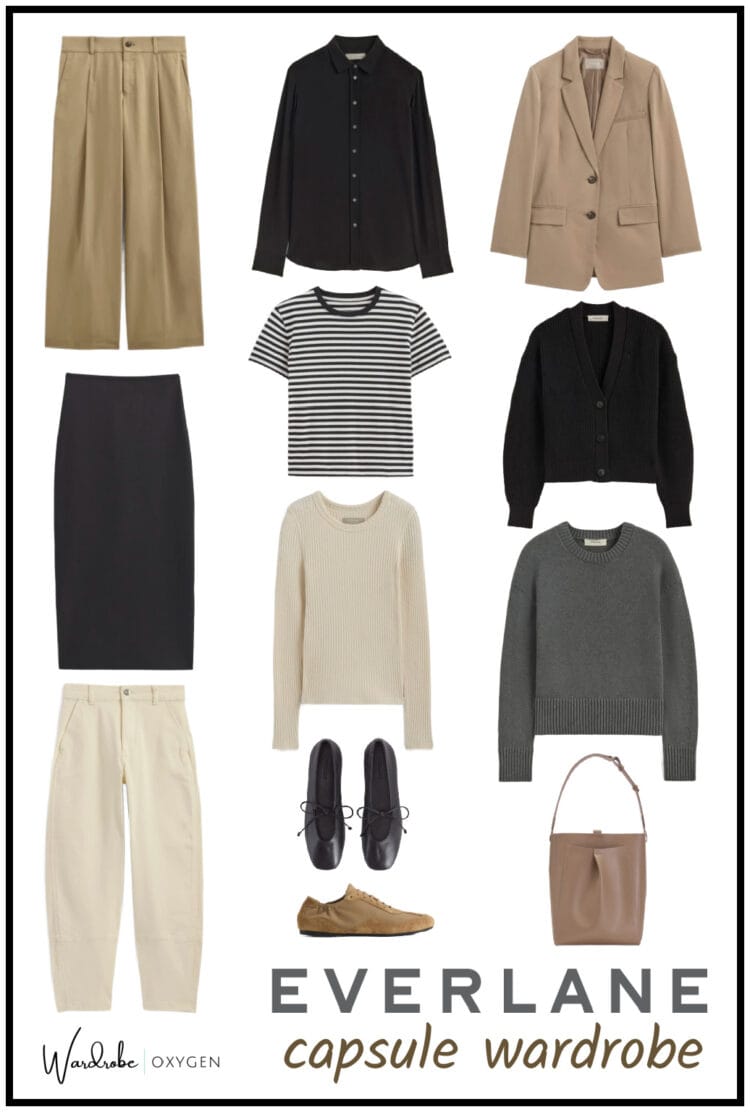
Goal: Assemble a versatile collection of high-quality, interchangeable pieces for work.
Workflow:
- Foundation First (& Other Stories / MANGO): Start with core investment pieces. I recommend focusing on & Other Stories for superior-quality knitwear (wool/cashmere blends) and well-constructed wool coats. For workwear essentials like blazers and classic trousers, MANGO remains a strong contender due to its consistently professional aesthetic.
- Fill with Basics (Everlane): Supplement your core pieces with high-quality basics like silk blouses, cotton tees, and leather flats from a brand like Everlane, which specializes in transparently-priced, minimalist staples.
- Accent with Caution (Zara): Use Zara only for a single, highly trendy accent piece, like a specific color blazer that is popular for one season. Do not build your foundation here.
S-T-A-R Touchpoint:
- Situation: A consultant needs to refresh her work wardrobe for frequent travel.
- Task: Build a 10-piece capsule wardrobe that is durable, stylish, and professional.
- Action: She invests in two wool-blend sweaters and one structured blazer from & Other Stories, three pairs of trousers from MANGO, and four silk/cotton shells from Everlane.
- Result: She has a versatile, high-quality wardrobe that holds up to travel and projects a professional image. Her cost-per-wear is low because she can create dozens of outfits from these core pieces.
Use Case 2: Shopping for a One-Time Event
Goal: Find a stylish, on-trend outfit for a specific event (e.g., a wedding, a holiday party) without overspending.
Workflow:
- Trend Identification (Zara): Zara is the undisputed champion for this task. Their business model is built to deliver runway-inspired looks at high speed. Start here to find a dress or outfit that captures the current moment’s trends.
- Sizing Gamble Mitigation: Crucially, if you cannot try it on in-store, order the item in at least two sizes (“bracketing”). You must accept the return process as part of the cost.
- In-Store Return: To avoid the $3.95 return fee, plan to return the unused size(s) to a physical Zara location. This is the only way to make this workflow financially efficient.
Use Case 3: Investing in a “Hero” Piece
Goal: Purchase a single, high-quality, standout garment (e.g., a perfect leather jacket, a statement coat, a forever dress) that will be worn for years.
Workflow:
- Prioritize Materials (& Other Stories): For a hero piece, material and garment construction are paramount. Your search should begin with brands known for quality. & Other Stories’ wool coats, leather goods, and detailed dresses are excellent candidates.
- Long-Term View: Ignore fleeting micro-trends. Focus on timeless silhouettes with unique details that align with your personal style.
- Calculate TCO: Justify the higher upfront cost by calculating the potential cost-per-wear over 3-5 years. A $400 coat worn 40 times over two winters ($10/wear) is better value than a $150 coat that lasts one season.
If MANGO is on your hero-piece shortlist, you can also browse the broader latest coupons across our retail directory to see if comparable savings are available on competing brands this week.
Part 6: Alternatives & Comparisons Framework
To provide a clear verdict, I’ve applied our standard Best-For / Consider / Avoid framework to each of the key MANGO alternatives, including MANGO itself as the baseline. For an expanded matrix and side-by-side scoring, see our full comparison AI fashion alternatives breakdown.
| Brand | Best For | Consider | Avoid If | Price (Dress) |
|---|---|---|---|---|
| MANGO (Baseline) | Workwear staples & a reliable “European chic” aesthetic | Reportedly declining sizing consistency and quality | You need cutting-edge, runway-inspired trends | $60-$180 |
| Zara | Single-event trendy outfits and mimicking runway looks for less | Financial risk of return fees and inconsistent sizing | You are building a lasting wardrobe | $40-$150 |
| & Other Stories | Investing in quality staples, unique knitwear, special-occasion dresses | Higher upfront cost, more limited sales | You are on a strict fast-fashion budget | $100-$250 |
| Everlane | Building a minimalist, sustainable wardrobe with high-quality basics | Aesthetic is less trend-focused and more uniform | You want feminine, quirky, or romantic details | $90-$150 |
In-Depth Breakdown
Category & Positioning
- Style identity: Accessible “European chic” — more streamlined and classic than fast-fashion competitors.
- Price tier: Mid-market, $60–$180 for most dresses.
- Best customer: Professional women seeking dependable workwear with style.
Best For
- MANGO is the quintessential source for accessible, professional womens clothing.
- It shines brightest when you need reliable workwear staples—blazers, trousers, and classic blouses—that strike a balance between modern style and corporate appropriateness.
- Its “European chic” aesthetic is more streamlined and classic than its fast-fashion competitors.
Consider
- While its physical store footprint is an advantage for try-ons and free returns, widespread user reports suggest its once-reliable quality and sizing have become more inconsistent in recent seasons.
Avoid If
- You are chasing the absolute latest micro-trend. MANGO is more about timeless modernity than the fleeting looks that Zara champions.
✅ Strengths
- Reliable European chic aesthetic
- Strong physical store footprint
- “Likes Club” loyalty program
- Broader size range than & Other Stories
- Good balance of affordability & quality
⚠️ Considerations
- Declining sizing consistency in recent seasons
- Not the fastest for cutting-edge trends
- Quality reportedly less reliable than before
- Mix of natural and synthetic blends
Category & Positioning
- Style identity: Runway-inspired, hyper-trendy, fast-turnover fast fashion.
- Price tier: Entry-level, $40–$150 for most dresses.
- Best customer: Trend-driven shoppers who need a one-event look fast.
Best For
- Zara is a tool for a specific job: acquiring a hyper-trendy, runway-inspired look for a single event at the lowest possible entry price.
- Their speed-to-market is unparalleled, making them the go-to for capturing a fleeting style moment.
Consider
- The “Sizing Gamble” is real and must be factored into any online purchase. You must be prepared for the hassle of returns.
- User reviews on platforms like Trustpilot frequently cite issues with hardware quality, with some shoppers reporting zipper and button failures within the first year of ownership Zara Customer Reviews on Trustpilot.
Avoid If
- You are trying to build a lasting, durable wardrobe.
- The business model prioritizes trend over longevity, and the high likelihood of pilling fabrics and inconsistent construction makes it a poor choice for investment pieces.
✅ Strengths
- Lowest entry price for trendy looks
- Unparalleled speed-to-market
- Mimics runway styles for less
- Often machine-washable polyester pieces
- Wide physical store presence for free in-store returns
⚠️ Considerations
- The “Sizing Gamble” — inconsistent sizing
- $3.95 mail-in return fee
- Heavy reliance on polyester & acrylic
- Reports of zipper/button failures
- No loyalty program in US/UK
- Rarely offers promo codes
Category & Positioning
- Style identity: Atelier-designed (Paris, Stockholm, LA), feminine, unique knitwear.
- Price tier: Premium high-street, $100–$250 for most dresses.
- Best customer: Shoppers leveling up from fast fashion who care about materials.
Best For
- This brand is the ideal choice when you are consciously “leveling up” from fast fashion.
- It’s my top recommendation for investing in high-quality knitwear, unique dresses, and beautifully constructed wool coats that offer excellent long-term value.
Consider
- The price of entry is significantly higher than MANGO or Zara.
- You must be comfortable with the upfront investment and the fact that sales are less frequent.
- The brand also has a smaller physical store footprint, making the $5.99 mail-in return fee a more likely cost.
Avoid If
- You are on a strict budget or require a broader size range.
- & Other Stories’ sizing is consistent but typically limited to US 0-12, excluding many plus-size shoppers.
✅ Strengths
- Premium materials: RWS wool, Tencel, organic cotton, silk
- Reliable, true-to-size fit
- 10% sign-up loyalty discount
- Excellent for capsule wardrobe building
- Unique, atelier-designed pieces
- Lower cost-per-wear long-term
⚠️ Considerations
- Higher upfront cost ($100–$250 dresses)
- $5.99 mail-in return fee
- Smaller physical store footprint
- Limited size range (US 0–12)
- “Dry Clean Only” care on many items
- Less frequent promotional sales
Part 7: Conclusion & Frequently Asked Questions
After this deep dive, the choice between Zara and & Other Stories as MANGO alternatives is not about which brand is “better,” but which brand is right for the specific job you need a garment to do.
My analysis concludes that this is a clear decision between short-term trend-chasing and long-term wardrobe investment. Zara sells a fleeting look, optimizing for a short product lifecycle; & Other Stories sells a lasting garment, focusing on extended durability and timelessness. The true cost is not on the price tag but is revealed over time through cost-per-wear.
Should You Buy Zara or & Other Stories? Your Final Decision Framework
To make your final decision, I recommend using this simple framework. It distills all the data into two clear paths, empowering you to choose the brand that aligns with your personal values and shopping goals.
- Choose Zara if: Your primary goal is to get a hyper-trendy outfit for a specific event, you value mimicking a runway look for the lowest possible price, and you have access to a physical store for free returns to mitigate the high risk of the “Sizing Gamble.”
- Choose & Other Stories if: You are consciously “leveling up” from fast fashion, you prioritize quality materials and durable construction, and you measure value in cost-per-wear rather than the initial sticker price.
As you shop for MANGO alternatives, keep these final red flags in mind. They are the warning signs I look for as a professional.
- 🚩 Final Sale Items: A final sale item from Zara, given the brand’s sizing issues, is an extremely high-risk purchase. I would advise against it unless you’ve tried that exact item on before.
- 🚩 High Acrylic Content (>50%): In my experience, a knitwear garment with over 50% acrylic is a strong indicator of future pilling and a short lifespan.
- 🚩 The Unverified Coupon Question: Always test a promo code on a sale item before checking out. Never assume a discount will stack, as this remains the biggest unknown for savvy shoppers.
Shop smart, question everything, and invest in the value that matters most to you. And before you check out, lock in the latest money-saving MANGO deal so the brand you choose lands at its lowest effective price.
How We Evaluated These Brands
Our team at Coupons Scout follows a rigorous, transparent process — detailed in our editorial methodology — to ensure every claim, comparison, and recommendation is verified against official sources before publication.
To establish and maintain strong topical authority, our Lifestyle & Retail Editor, Jennifer Angel, under my strategic direction, synthesized over 20 foundational reports (2025-Jan 2026) to create this Devil’s Advocate view. Our Head of Operations, Kanokchai Likitapiwat, audited the data points like return fees from source reports.
Important Limitation: Our analysis is a critical interpretation of robust but not always real-time data. We flag all unverified claims. This article was last updated in October 2024.
Frequently Asked Questions
Q1: Is Zara’s sizing really that inconsistent?
A: Yes, absolutely. From my extensive analysis of user data, inconsistent sizing is the single most prevalent complaint against Zara. It is not an exaggeration to say it’s a gamble.
The most frustrating part for shoppers is that the sizing can vary wildly not just between different items (like trousers and dresses) but even between different colors of the exact same product Reddit User Sizing Analysis. This inconsistency is what makes the $3.95 mail-in return fee so problematic, as you’re often paying a penalty for the brand’s own lack of quality control Zara US Return Policy.
Q2: Is & Other Stories worth the higher price?
A: For long-term value, my analysis indicates yes. The key is to think in terms of “cost-per-wear.”
A $180 dress from & Other Stories that you wear 15 times costs you $12 per wear. A $60 dress from Zara that pills after 3 wears costs you $20 per wear. You’re paying a premium for & Other Stories, but that investment gets you superior materials like RWS wool and Tencel, more durable construction, and more timeless designs that you’ll keep in your wardrobe for years, not just a season & Other Stories Sustainability.
Q3: What are the best MANGO alternatives for building a capsule wardrobe?
A: & Other Stories is the clear winner here. A capsule wardrobe is built on a foundation of high-quality, versatile, and timeless pieces.
& Other Stories’ focus on superior materials, durable construction, and classic-with-a-twist designs makes its garments ideal for this purpose. Zara’s business model, which is built on churning through micro-trends at high speed, is the antithesis of the capsule wardrobe philosophy. Their pieces are designed to be trendy for a moment, not staples for a lifetime. Brands like Everlane are also excellent choices for minimalist basics Business of Fashion.
Q4: Can I find good deals or coupons at Zara?
A: Rarely. Zara’s marketing strategy deliberately avoids coupon codes and most promotions. For deal-seekers, this is a major drawback.
Your only real opportunity for discounts is during their large, semi-annual sales (typically in June/July and December/January). This “full price or wait” model is a key reason why savvy shoppers often look for MANGO alternatives that reward their loyalty and offer more frequent opportunities to save. In contrast, & Other Stories offers a 10% discount for new members & Other Stories Membership.
Q5: What’s the most important “hidden cost” to watch for with these brands?
A: The most important hidden cost is without a doubt mail-in return fees.
A $3.95 fee at Zara Zara US Return Policy or a $5.99 fee at & Other Stories & Other Stories US Return Policy may not seem like much on a single order, but it adds up. When combined with the high likelihood of needing to return an item due to inconsistent sizing (especially at Zara), these fees become a direct financial penalty on the shopper. The only way to avoid them is to make returns in-store, which isn’t an option for everyone.
Q6: Which brand has better quality materials?
A: & Other Stories has demonstrably better materials. This is the primary justification for their higher price point.
While Zara relies heavily on synthetics like polyester and acrylic (with reports of pilling on sweaters with >50% acrylic), & Other Stories builds its collections around high-quality natural fibers like RWS wool, organic cotton, and silk, as well as premium sustainable synthetics like Tencel. This directly translates to better feel, durability, and breathability, making it a superior choice among MANGO alternatives for quality seekers & Other Stories Sustainability.
Q7: What is the “Polyester Deception”?
A: The “Polyester Deception” is a term I use to describe a core frustration of online shopping for womens clothing. It’s the experience of seeing a garment online that appears to have the drape and sheen of a luxury fabric like silk or satin, but when it arrives, it is a cheap, static-prone, and non-breathable polyester.
This disconnect between the visual marketing and the tactile reality is a major pain point for shoppers and a common complaint associated with fast-fashion brands that prioritize low-cost materials to achieve a trendy look Reddit User Discussion.
Q8: CRITICAL: Can I stack coupons on sale items at these stores?
A: This is the holy grail question for any serious deal-hunter, and unfortunately, it’s often a policy blind spot. The answer is generally no at Zara, which rarely offers codes at all.
At & Other Stories, the 10% new member discount has sometimes been stackable on sale items in the past, but this policy is not guaranteed and remains unverified for all promotions. I have to be clear: you should always test a code on a sale item at checkout before assuming it will work, as this remains a major variable H&M Group Loyalty Terms.
Q9: What is the ‘Sizing Gamble’ and how does it affect online shopping?
A: The ‘Sizing Gamble’ describes the frustration of highly inconsistent sizing across a brand’s product lines, particularly prevalent at Zara. It means a shopper can order their usual size and find it too small in one item, then too large in another, even of the same style.
This inconsistency forces shoppers to ‘bracket’ orders (buy multiple sizes to find one that fits) or risk a costly return, leading to significant financial friction and dissatisfaction for online shoppers of womens clothing Zara Customer Reviews on Trustpilot.