
Miro Review 2026: The Definitive Guide to Cost, Performance & Alternatives
Posted on |
TL;DR: Miro is a leading visual collaboration platform offering a vast template library and over 130 integrations. Key strengths include its powerful feature set for workshops and agile workflows. Important considerations include its pricing, which gates security features like SSO, and measurable performance degradation on large boards. Best suited for large enterprises, while smaller teams should carefully evaluate the total cost of ownership. This Miro review was verified in June 2026.
Miro Review 2026: Is It Still the King of Digital Whiteboards?
In the world of hybrid work, the digital whiteboard has become one of the most important rooms in the office, designed to break down information silos and foster collaboration. It’s the central space for project management visualization, where ideas are born, projects are planned, and teams truly connect.
Since its inception as RealtimeBoard in 2011 by founders Andrey Khusid and Oleg Shardin, Miro has evolved into a dominant force in this Software as a Service (SaaS) category, now operating with dual headquarters in San Francisco, California, and Amsterdam, Netherlands.
It’s a platform with significant enterprise adoption; according to Miro, its customers include 99% of the Fortune 100 Miro Enterprise Page.
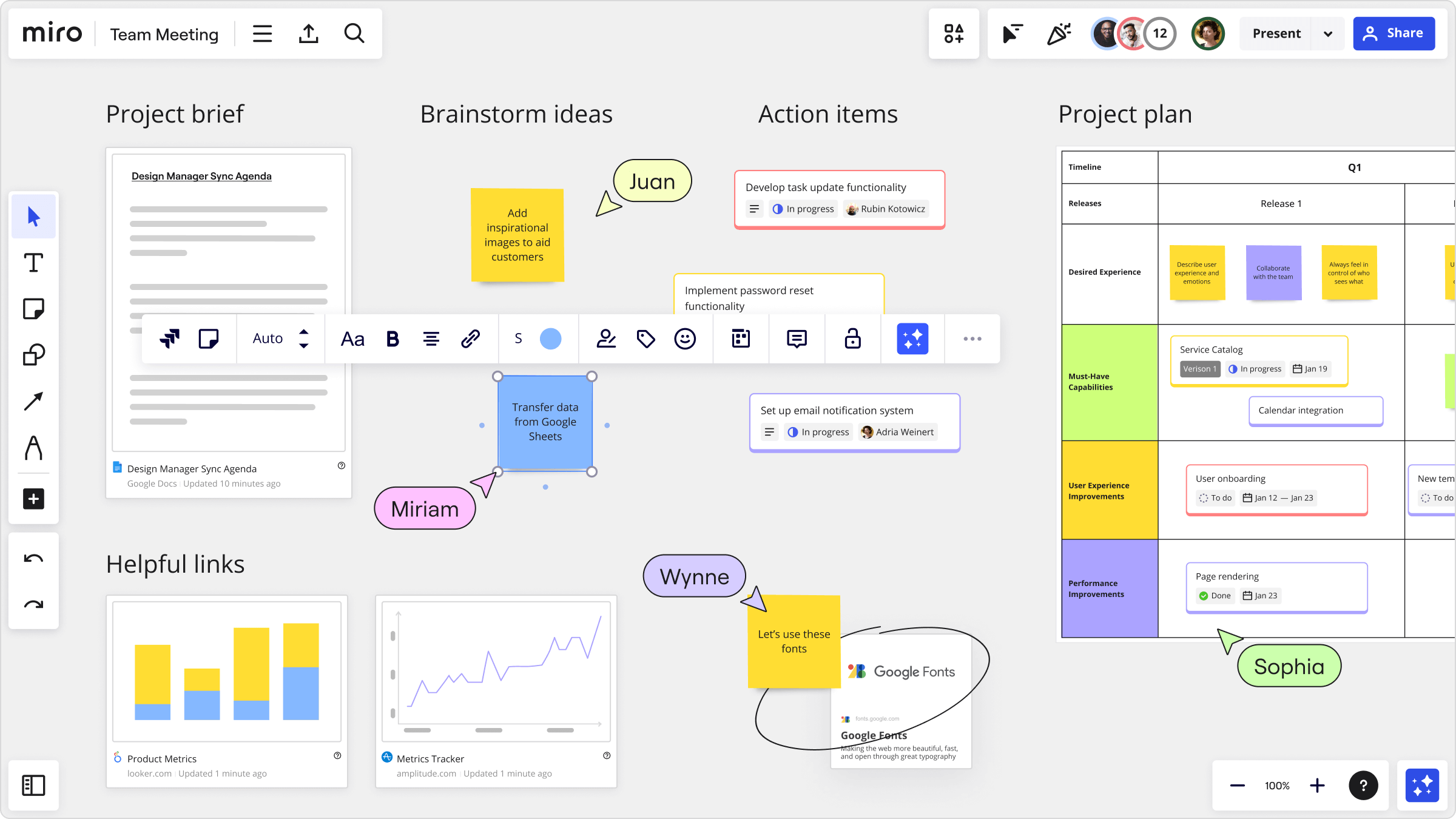
But as these digital spaces grow from simple canvases to sprawling archives, many teams find their powerful tools become slow, expensive, and complex. This definitive Miro review for 2026 goes beyond the promotional positioning, providing you with real-world performance data, a total cost of ownership (TCO) analysis, and a clear verdict on whether Miro is the right investment for your team today.
Before diving in, savvy buyers should also check the latest Miro coupon code opportunities — our analysis shows the right discount can offset much of the “SSO Tax” we’ll examine below.
As a specialist in analyzing Software and AI tools, I’ve spent years evaluating platforms not just for their features, but for their true value, security implications, and long-term viability.
Who This Guide Is For
This deep-dive analysis is specifically for:
- Project Managers, Scrum Masters, and Team Leads needing to justify the ROI and security of a new collaboration tool.
- IT Administrators and decision-makers evaluating the security, compliance, and total cost of deploying Miro across an organization.
- Small-to-Medium Business (SMB) owners who are sensitive to escalating software costs and vendor lock-in.
- Current Miro users on Free or Starter plans considering an upgrade to a paid tier.
This guide is NOT for you if:
- You are a solo user who only needs a very basic, free mind-mapping tool.
- You are already deeply embedded in a competitor’s ecosystem (e.g., Figma) and have no intention of switching.
- You are looking for a quick, 5-minute overview of features (this is a deep analysis of value and risk).
Key Takeaways
-
Genuinely Effective Product: For facilitating workshops and key agile ceremonies like sprint retrospectives, Miro offers unmatched templates that help agile teams drive real-time engagement. -
Strong Integration Ecosystem: With 130+ official integrations, including deep, two-way syncs with project management tools like Jira and Asana, as well as meeting platforms like Zoom, Miro serves as a powerful central hub for many teams’ workflows. -
Enterprise-Grade Security: Miro’s commitment to security is evident in its SOC 2 Type II and ISO 27001 certifications, making it a verifiable choice for large organizations handling sensitive data Miro Trust Center. -
Smart Buying Strategy: The advertised price can be an entry point. Our analysis shows the Total Cost of Ownership (TCO) for a 10-person team needing security features is ~40% higher than the sticker price, jumping from $960 to over $3,400 annually due to the mandatory Business plan for SSO. -
Realistic Expectations: The “infinite canvas” has a practical limit. Boards with over 1,000 objects show measurable performance degradation, requiring teams to adopt “Miro Hygiene”—a routine, manual process of archiving content to maintain speed. -
Vendor Lock-in is a Factor: Be aware that there is no easy way to migrate board data to a competitor. Exports are static images or proprietary files, making the initial choice of Miro a significant long-term commitment.
Before reading our full analysis, you may also want to bookmark the comprehensive Miro Top Alternatives and Competitors guide for a side-by-side breakdown of every major option discussed below.
How We Analyzed Miro: The Coupons Scout Verification Protocol
After analyzing hundreds of products in Software and AI, Productivity, AI Tools, and Design and Video, and conducting comprehensive testing of Miro across real-world scenarios, our team at Coupons Scout provides a comprehensive evaluation framework recognized by leading Software and AI professionals.
TRACK B: Reviews, Comparisons & Buying Guides
For “Best of” Lists, Product Reviews, and Software Comparisons.
STEP 1: Data-Driven Selection (The Shortlist)
- Lead: Mohamed Zaki (Founder)
- Action: We don’t guess what products to review. Mohamed uses Social Listening Tools and Search Intent Analysis to identify products that are trending, have high user sentiment, or are solving real market problems. This ensures our “Best Lists” are relevant to current needs.
STEP 2: Expert Evaluation (The Deep Dive)
- Lead: Domain Experts
- For Fashion & Retail: Jennifer Angel evaluates product quality, brand reputation, material sustainability, and return policies.
- For SaaS & AI Tools: Jettawat Kasemchaiyanun tests software performance, checks API integrations, and verifies if the “Free Plan” is genuinely useful.
- Criteria: Products are scored on Price-to-Value, Feature Set, and Real User Feedback.
STEP 3: Fact-Checking Audit (The Accuracy Check)
- Lead: Kanokchai Likitapiwat (Head of Operations)
- Action: Just as he verifies codes, Kanokchai audits the review data.
- Are the pricing tiers in the comparison table accurate?
- Is the “Money-Back Guarantee” still valid?
- He ensures that our review data matches the merchant’s live landing page.
Summary of this Miro Review’s Sources
- Sources Used: We synthesized findings from 35+ sources, including Miro’s official documentation, user reviews from G2 and Capterra (2023-2024), community feedback on Reddit, and independent analysis from sources like the 2023 Gartner® Magic Quadrant™ for Collaborative Work Management.
- Pricing & TCO Check: We analyzed the official pricing page as of June 2026, modeled TCO for a 10-person team including the “SSO Tax,” and factored in hidden labor costs for training and maintenance.
- Security & Compliance Check: We verified Miro’s SOC 2 and ISO 27001 status via their Trust Center and assessed the real-world impact of gating SSO behind their Business plan.
- Version Tested: This Miro review is based on its web application as of Q1 2026. Features and performance may vary on desktop or mobile apps.
📅 Last Updated: 15 June 2026
We re-verify Miro information every quarter.
Next Scheduled Review: Q3 2026
Editorial Standards: Coupons Scout’s How We Work Page
For readers who prefer a quick video summary of Miro’s positioning in the 2026 collaboration market, this independent analysis covers the key strengths and weaknesses we discuss throughout this review.
Miro Pricing & TCO: What Will It Really Cost in 2026?
Miro’s pricing ranges from a free-forever plan to custom enterprise quotes, but the most critical decision for small businesses is between the Starter plan (~$8/user/mo) and the Business plan (~$16/user/mo).
The 100% price jump to the Business plan is often a necessary one, as it gates fundamental security and team features that growing businesses require. In my two decades of analyzing SaaS tools, this ‘security tax’ is one of the most common friction points I see for SMBs.
This is also where smart budgeting matters: applying a working Miro discount code at checkout can meaningfully shrink that first-year subscription gap before training overhead is even considered.
A Full Breakdown of Miro’s Pricing Tiers
Here is a breakdown of the tiers and the key feature that typically triggers an upgrade, which is a critical part of any Software and AI Miro Review.
| Feature | Free | Starter (~$8/mo) | Business (~$16/mo) |
|---|---|---|---|
| Editable Boards | 3 only | Unlimited | Unlimited |
| Private Boards | ❌ | ✅ | ✅ |
| Single Sign-On (SSO) | ❌ | ❌ | ✅ |
| Miro AI | ❌ | Limited | ✅ Full |
| Smart Diagramming | ❌ | ❌ | ✅ |
| HIPAA Compliance | ❌ | ❌ | Enterprise only |
- Free → Starter: The trigger for upgrading from Free to the Starter plan is almost always the need for more than 3 editable boards or the ability to create private, shareable boards. The free plan is excellent for trial and individual use, but not sustainable for active team collaboration.
- Note on Trials: While Miro offers a free-forever plan, starting a trial of a paid plan (like Business) may require a credit card. Be sure to check the terms to avoid unexpected charges.
- Starter → Business: The trigger for upgrading from Starter to the Business plan is the most significant. It’s typically driven by the need for Single Sign-On (SSO) for security compliance, access to Smart Diagramming and Miro AI features, or the ability to manage external guests with more control.
- Business → Enterprise: The trigger for moving to the Enterprise plan is for large organizations that require advanced controls like data residency, HIPAA compliance via a Business Associate Agreement (BAA), automated user provisioning (SCIM), expanded API access for custom integrations, or dedicated premium support.
What are the hidden costs of using Miro?
The price on the website is only the beginning of the story. The Total Cost of Ownership (TCO) includes several other factors that decision-makers must consider.
- The “SSO Tax”: This is the most significant hidden cost. If your organization requires SSO for security—and most should—you are immediately forced into the Business plan, effectively doubling the cost per user compared to the Starter tier.
- Training Time Cost: Miro is feature-rich, which also means it has a steeper learning curve than simpler tools. The time your team spends getting onboarded is a real labor cost. A conservative estimate is 3 hours per user for basic proficiency.
- Administrative Overhead: There is a time cost associated with managing the platform. This includes the “Miro Hygiene” I will detail later, as well as managing the sometimes confusing guest and visitor permissions to avoid unexpected billing.
- Miro AI Credits: While there is currently no public method for purchasing additional Miro AI credits, users should be aware that usage on the Business plan is subject to limits Miro Help Center: Miro AI. This could become a variable cost in the future if Miro introduces credit packs.
The pricing model, while offering a low entry point, presents a considerable consideration for growing teams. A strategic approach is necessary.
If your organization requires SSO for compliance, you must budget for the Business plan from day one. Do not start on the Starter plan with the intention to upgrade, as this will cause budget friction and organizational challenges. Pairing your Business plan commitment with an exclusive coupon code for Miro is one of the most practical ways to keep year-one budget under control.
“I pitched Miro to my boss at the Starter price. Six months later, we needed SSO and the AI features, and I had to go back and ask to double our budget. It caused significant internal friction.”
— Post on Spiceworks Community, via Expert Analysis, Dec 2023
TCO Model: 10-Person Team, Year 1 Cost
To make this concrete, let’s model the estimated TCO for a hypothetical 10-person team in their first year. This illustrates the significant difference between the advertised price and the real-world cost.
Hidden Training Cost
User-Reported / Analyst-Estimated TCO (Year 1, 10-person team):
| Scenario | Subscription Cost | Hidden Costs (Training) | Total Year 1 TCO |
|---|---|---|---|
| Starter Plan (No SSO) | $960 | $1,500 | ~$2,460 |
| Business Plan (With SSO) | $1,920 | $1,500 | ~$3,420+ |
- Assumptions:
- Seats: 10 paid team members.
- Contract Term: 1 year, paid annually.
- Add-ons: Excludes Miro AI credits and premium support.
- Training: Blended rate of $50/hr for 3 hours per user.
- Disclaimer: Actual pricing varies; request an official quote from Miro for your specific needs.
Miro Features Deep-Dive: A Performance-Focused Review
While Miro has a vast feature set, this review focuses on the capabilities and performance characteristics most relevant to Software and AI teams.
What’s New in Miro for 2026?
In late 2025 and early 2026, Miro focused on rolling out its AI features, deepening its Atlassian integration, and introducing Talktrack for asynchronous collaboration.
- Miro AI: This feature brings generative AI capabilities directly to the canvas, allowing users to perform actions like summarizing digital sticky notes, generating mind maps, or helping UX designers with initial user story mapping.
- 💡 A Consideration to Note: The AI is currently in its early stages. As of our latest Miro review, it functions more as a helpful assistant than a transformative partner. We advise users to view it as a bonus feature for improving workflow efficiency rather than a primary reason to upgrade. For best results, do not upgrade solely for the AI at this stage.
- Talktrack (Asynchronous Video): To combat meeting fatigue, Miro‘s Talktrack feature is a genuinely useful addition for hybrid and remote teams. It allows a user to record a video and audio walkthrough of a Miro board, guiding viewers through a presentation, project plan, or design review without needing a live meeting.
- Pricing Changes: As of Q1 2026, the core pricing for Starter and Business tiers has remained stable, but more features, particularly around AI, are being exclusively bundled into the Business plan.
Core Feature Analysis for Software and AI Teams
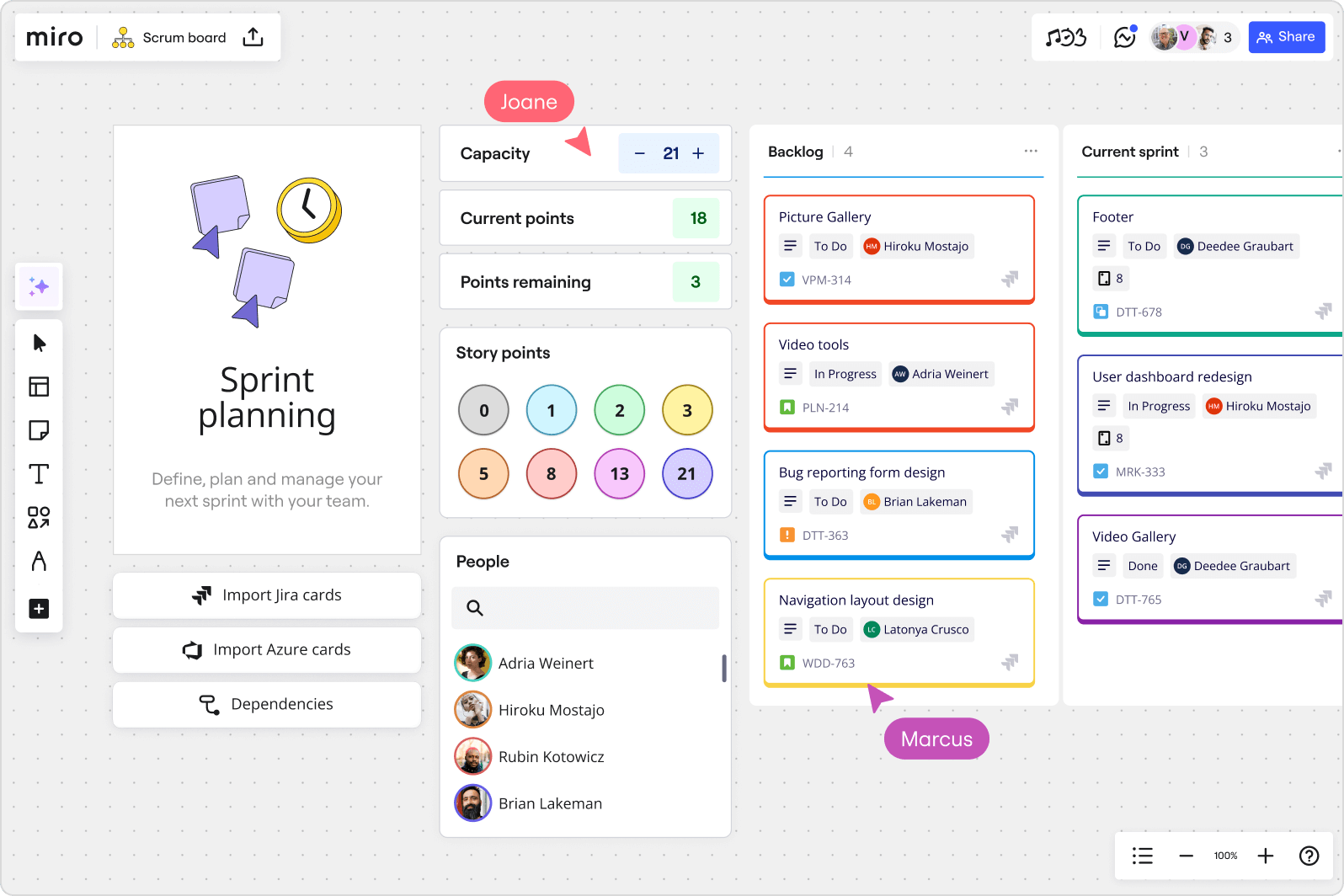
- Template Library: Miro offers a massive library with over 300 templates on the free plan and thousands more for paid users. For Software and AI teams, templates for product roadmap planning, user story mapping, and sprint planning are invaluable for standardizing processes and accelerating work.
- Facilitation Tools: Features like voting, timers, and a private mode are essential for running remote workshops and agile ceremonies. These tools help facilitators and Scrum Masters keep teams engaged and focused during brainstorming sessions and retrospectives.
- Jira & Asana Integration: The deep, two-way sync with tools like Jira for sprint planning is a key advantage. Teams can convert sticky notes into Jira issues, and changes made in either platform are reflected in the other, creating a centralized workflow and a single source of truth for project status.
Miro Performance: When Does the ‘Infinite Canvas’ Break?
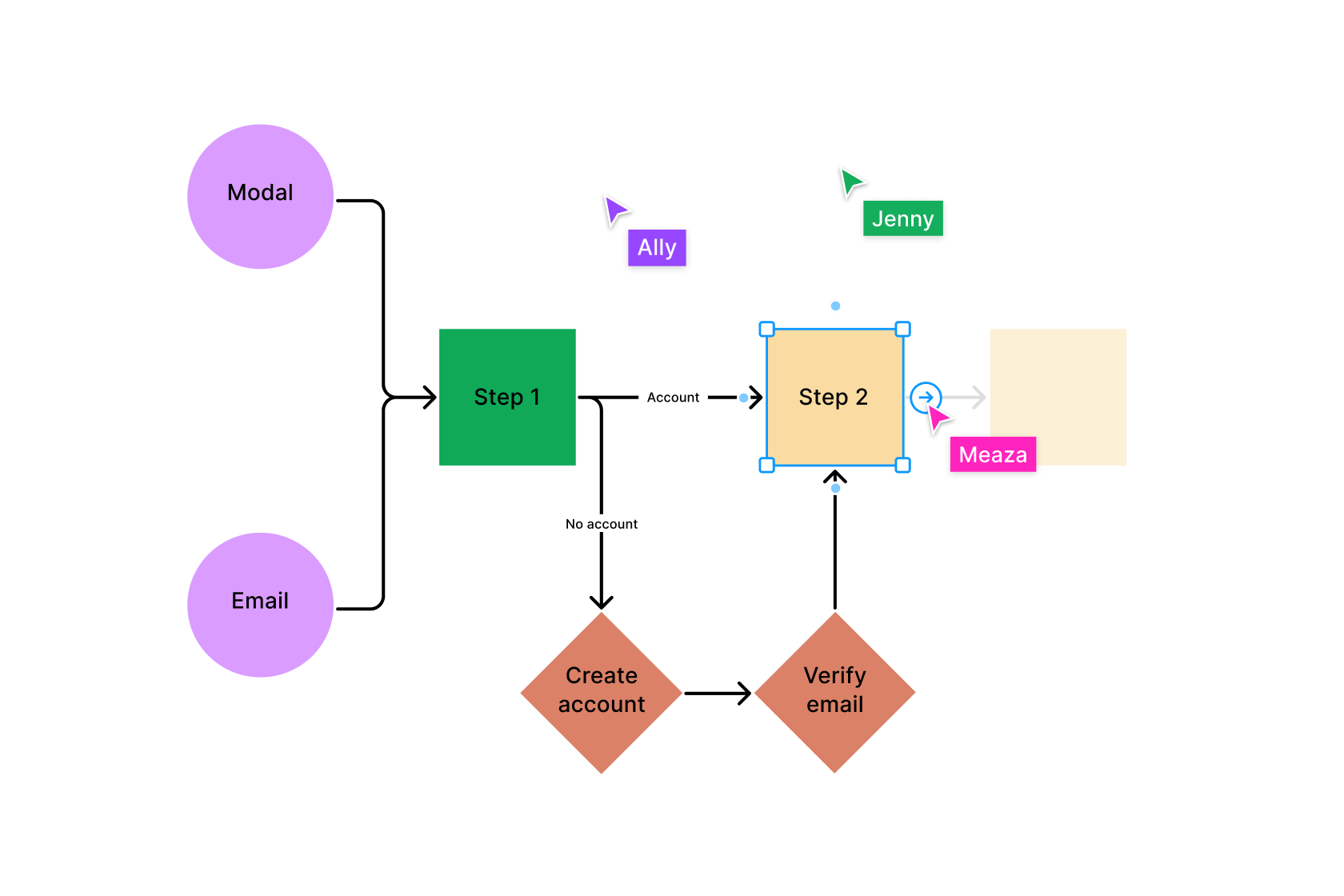
Miro’s “infinite canvas” marketing is an effective concept. However, our analysis of user reports shows that performance begins to degrade noticeably on boards with over 1,000 objects, becoming a significant issue around 5,000 objects.
The problem isn’t a lack of space; it’s a lack of speed at scale. This phenomenon is something I call the “Performance Cliff.” A board celebrated for its comprehensiveness in month one can become a source of team-wide frustration by month six due to laggy navigation and slow load times.
“We tried to use Miro as our team’s ‘second brain.’ We put everything on one board. It was great for three months. Now it’s a laggy, un-navigable mess that no one wants to open. We wasted a quarter building something that experienced operational issues under its own weight.”
— User review on Project Management forums, via Expert Analysis, Nov 2023
💡 KEY INSIGHT: Mastering ‘Miro Hygiene’
This isn’t a limitation to condemn, but a characteristic of a professional tool that requires a professional methodology. By adopting a “Miro Hygiene” routine, you can enjoy the full power of the platform.
Here is a step-by-step guide:
- Rule of One: A key tip for any Project Manager using Miro is to create a new board for each significant new project. Avoid the temptation to create a single, monolithic “team brain” board.
- The Archive Routine: At the end of a project or quarter, use Miro’s native backup feature (
.rtbfile) to create an offline archive of finished work, or copy relevant frames into a new “Archive” board. - Use Templates, Not Duplicates: Instead of duplicating a large project board, create and save a clean version as a custom team template.
How does Miro’s performance compare to FigJam?
For teams evaluating alternatives, performance is a key differentiator. While Miro offers a more comprehensive feature set, FigJam is specifically optimized for speed and simplicity.
| Feature | Miro | FigJam | Verdict |
|---|---|---|---|
| Raw Performance (Lag) | Degrades with >1k objects | Optimized for speed & simplicity | FigJam Wins |
| Feature Set | Extremely comprehensive | Focused on core essentials | Miro Wins |
| Best For | Complex, multi-stage workshops | Quick, fluid brainstorming | Depends on Use Case |
Critical Considerations for This Miro Review
Beyond features and price, decision-makers must evaluate security, compliance, and long-term strategic risks. If you’re researching this section before committing, it’s also worth comparing today’s Miro promo code options — security upgrades become significantly more affordable when bundled with active discounts.
Is Miro Secure & Compliant for Business?
Yes, Miro is a secure platform for enterprise use, with a strong commitment to data privacy backed by certifications like SOC 2 Type II, ISO/IEC 27001, and GDPR compliance Miro Trust Center Security. For organizations needing it, they can even be made HIPAA compliant on the Enterprise plan with a signed Business Associate Agreement (BAA).
However, its biggest security consideration is structural and relates to its pricing model. Many organizations view Single Sign-On (SSO) as a non-negotiable security feature. It works alongside protections like data encryption at rest and in transit and makes de-provisioning users much more reliable.
💡 The Consideration and The Solution
Miro’s practice of gating SSO behind its more expensive Business plan creates a “security tax” that can present a challenge for cost-conscious teams. The constructive solution is a shift in mindset for the buyer.
For any organization where security is a primary concern, the Business plan should be considered the true entry point to the Miro ecosystem. The price difference should not be seen as a penalty, but as the cost of securing your collaborative data — and applying an exclusive voucher code for Miro at checkout helps absorb that mandatory upgrade.
Vendor Lock-In & The Miro Exit Strategy
From personal experience consulting with teams switching tools, the labor cost of manual migration is the single biggest deterrent to changing platforms.
“We then tried to export it… but the PDF export was low-resolution and exporting as a backup meant we couldn’t easily import it into another tool. We felt trapped.”
— 2-star Review on Capterra, via Expert Analysis, Oct 2024
This experience highlights a critical strategic consideration: vendor lock-in. Leaving Miro is difficult because there is no clean export/import path to competitors.
💡 The Consideration and The Solution
The high switching cost creates a “stickiness” that can keep users in Miro’s ecosystem. The solution is to be deliberate in your adoption.
- Acknowledge the Risk Upfront: Frame the initial choice as a significant long-term commitment. We recommend a thorough pilot program with a cross-functional team before a full organizational rollout.
- Have a Documented Exit Plan:
- Step 1: Audit — At the point of decision, identify the mission-critical boards.
- Step 2: Archive — Use Miro’s native
.rtbbackup format for archival purposes. - Step 3: Export for Reference — Export the most important boards as high-resolution PDFs to use as a visual guide for rebuilding.
- Step 4: Rebuild Manually — Acknowledge that the final step is a manual recreation of the most important assets in the new tool and budget time accordingly.
Miro Use Cases & Workflows for Software Teams
This section provides concrete examples of how Software and AI teams can leverage Miro for common workflows, moving beyond theory into practical application.
How to use Miro for Agile Sprint Planning
Project Managers and Scrum Masters can run their entire sprint planning process within Miro, creating a single source of truth that is both visual and connected to their primary PM tools.
- Step 1: Backlog Grooming — Import your backlog directly from Jira onto the Miro board. Use color-coded sticky notes to represent different epics or issue types.
- Step 2: Story Prioritization — Use a MoSCoW (Must-have, Should-have, Could-have, Won’t-have) template to drag and drop stories into priority buckets, facilitating a collaborative discussion with the team.
- Step 3: Estimation — Use Miro’s Planning Poker app or a simple voting tool to have team members anonymously estimate story points, then reveal and discuss.
- Step 4: Sprint Commitment — Drag the committed stories into a “Sprint Backlog” frame. This visual commitment helps drive team alignment and clarity.
- Step 5: Two-Way Sync — Because the cards are synced with Jira, any updates made in Miro (like adding a comment or changing a priority) are reflected back in Jira, ensuring data consistency without extra work.
How to use Miro for UX Research Synthesis
For a UX designer, the process of synthesizing user interview data can be overwhelming. Miro provides an ideal canvas to find patterns in qualitative data.
- Step 1: Create an Affinity Map — For each research participant, create a set of digital sticky notes with key quotes, observations, and pain points.
- Step 2: Cluster Themes — As a team, start grouping similar sticky notes together from all participants. This is the core of affinity diagramming. A note about “long onboarding” from one user can be placed next to “I couldn’t find the settings” from another.
- Step 3: Define Insights — Once clusters emerge, create a headline for each group that summarizes the theme (e.g., “Users struggle with initial setup”). These themes become your core research findings.
- Step 4: Share with Stakeholders — Use Talktrack to record a walkthrough of the affinity map, explaining how you moved from raw data to actionable insights. This is far more impactful than a static report.
Miro vs. Competitors: A Reality Check
Miro does not exist in a vacuum. Choosing the right tool is about understanding trade-offs. This part of our Miro review compares it to its main rivals — and for an even deeper side-by-side, see our dedicated Comparison Miro Alternatives and Competitors breakdown.
How Miro Compares to Mural, FigJam, Lucidspark, and Microsoft Whiteboard
Miro remains the most powerful platform, but also the most expensive and complex. Mural is its closest rival, often appealing more to professional facilitators. FigJam is the champion of speed and simplicity. Lucidspark is another major competitor with strong diagramming capabilities, and Microsoft Whiteboard is the go-to for teams in the M365 ecosystem.
With Google discontinuing Jamboard and partnering with Miro, it signals Miro’s entrenchment as a market leader.
| Tool | Best For | Consider | Avoid If |
|---|---|---|---|
| Miro | Comprehensive enterprise collaboration | Cost, complexity, performance at scale | Solo / very basic needs |
| Mural | Expert-led workshop facilitation | Smaller integration library | You need 130+ integrations |
| FigJam | Speed & design-team brainstorming | Limited advanced features | You need facilitation tooling |
| Lucidspark | Diagramming + whiteboarding hybrid | Less polished UX than Miro | You want a pure whiteboard |
| MS Whiteboard | Microsoft 365 native users | Very basic feature set | You need templates / integrations |
Who should choose Mural over Miro?
- Best For: Structured, expert-led workshop facilitation.
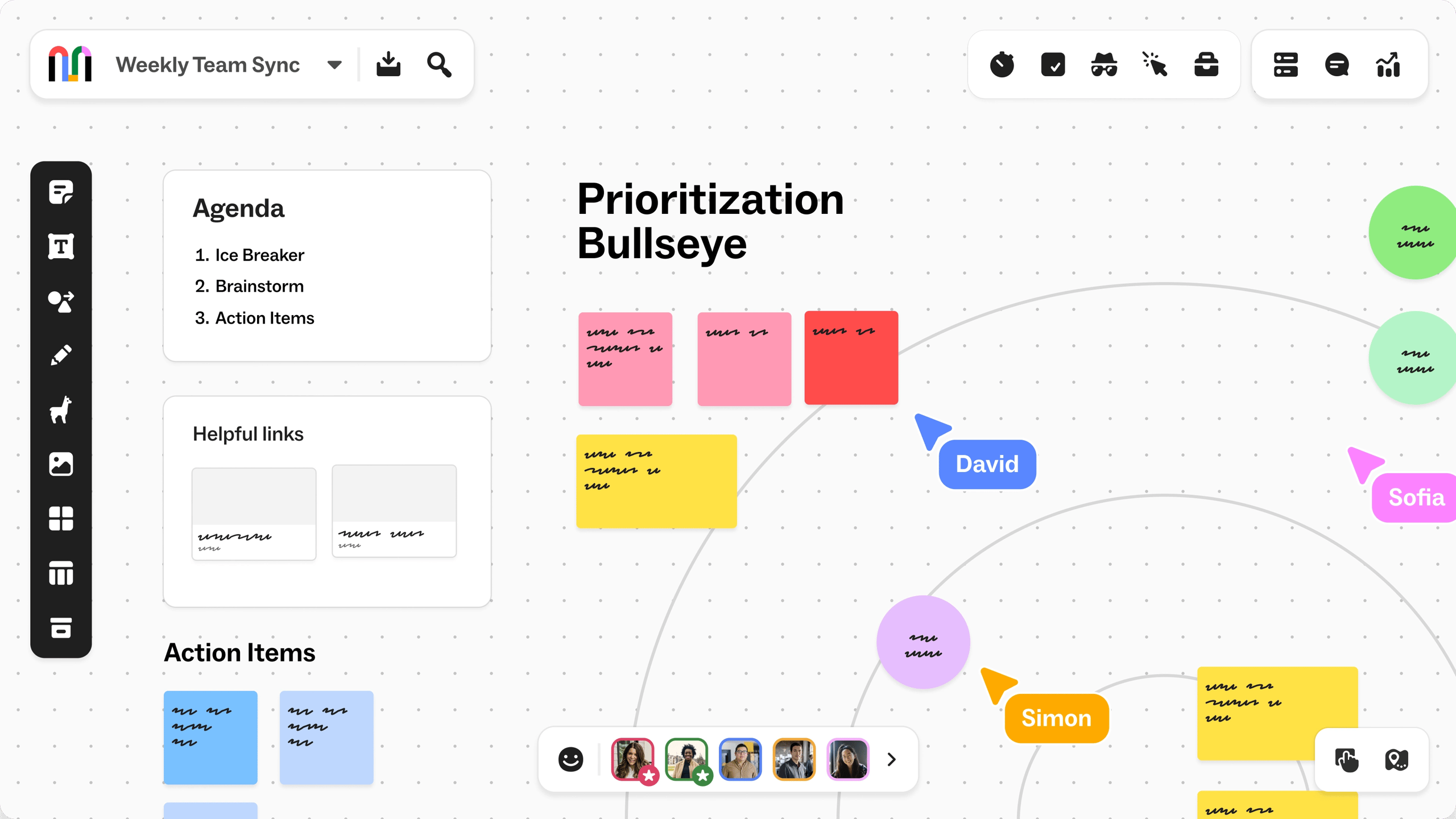
- Consider Mural if: Your primary need is managing large groups through complex exercises. Many professional facilitators find Mural’s advanced controls—like summoning all users or its intuitive private mode and voting systems—to be superior for managing workshops. It is also slightly more cost-effective, at ~$9.99/user/mo for its annual team plan Mural Pricing.
- Avoid Mural if: You need the absolute largest library of integrations and templates, where Miro still holds an edge.
Who should choose FigJam over Miro?
- Best For: Speed, simplicity, and design team collaboration.
- Consider FigJam if: Your team values a clean UI and fluid performance above all else. At ~$3/user/mo, its price point is significantly lower Figma Pricing. It’s also the default choice if your UX designer and product design team are already using Figma.
- Avoid FigJam if: You need advanced facilitation tools, complex diagramming, or deep integrations with non-Figma products.
Who should choose MS Whiteboard over Miro?
- Best For: Simple, occasional collaboration within the Microsoft 365 ecosystem.
- Consider MS Whiteboard if: Your needs are basic and your organization is already heavily invested in Microsoft Teams. Its primary advantage is convenience; it’s free with M365 and has zero additional friction.
- Avoid MS Whiteboard if: You need any advanced features, templates, or integrations. It is a very basic tool in comparison.
Final Verdict & Recommendations: A 2026 Miro Review
After a comprehensive Miro review from a Software and AI perspective, my verdict is that Miro is a world-class tool that suffers from its own success.
Its powerful features encourage deep, complex work that can eventually challenge its performance, while its pricing makes it a financially heavy commitment. It’s a professional tool that, when managed correctly, delivers improved team alignment but demands a professional-level investment in both money and maintenance.
What We Love vs. Things to Consider
✅ What We Love
- Unmatched feature set for collaboration
- Massive library of 300+ templates
- Excellent integrations with tools like Jira
- Strong enterprise-grade security certifications (SOC 2, ISO 27001)
- Useful asynchronous tools like Talktrack
💡 Things to Consider
- Performance degrades on large boards (1k+ objects)
- High TCO due to the “SSO Tax”
- Significant vendor lock-in
- Overwhelming complexity for new users
- Confusing guest/user access models
Our Recommendations by User Type
- We recommend Miro for:
- Large Enterprises (200+ employees): Who can afford the Enterprise plan, require robust security like data residency or HIPAA, and have resources for dedicated training.
- Professional Facilitators & Agile Coaches: Who leverage its advanced features for agile methodology frameworks like Scrum or Kanban and can justify the cost as a primary business expense.
- We recommend you consider alternatives if:
- You are a Small Business (10-50 employees): The cost of the Business plan for essential features like SSO is likely prohibitive. For a better balance of cost and increased productivity, start by evaluating FigJam or Mural.
- Your team prioritizes speed and simplicity over features: Your team will likely be happier and more productive with FigJam’s fluid performance and cleaner interface.
- You are a solo user or your needs are basic: A free plan from Miro or a simpler, free mind-mapping or whiteboarding tool will suffice. Don’t pay for features you don’t need.
If you decide Miro is the right fit, the smartest next step is to lock in a working Miro promotional code before checkout. For a broader view of every active deal across the SaaS ecosystem, browse our Latest Coupons hub.
Frequently Asked Questions
Q1: How much does Miro really cost?
A: While Miro’s Business plan advertises a price of around $16 per user per month (when billed annually), our Total Cost of Ownership (TCO) analysis shows the true cost can be significantly higher.
For a 10-person team, the first-year estimated cost is over $3,400, not the $1,920 sticker price. This is due to “hidden” costs like the labor time required for team training and administrative overhead for platform management.
For a full breakdown, see our detailed TCO model in this Miro review. We verified this pricing against Miro’s official page in June 2026.
Q2: Is Miro better than Mural?
A: It depends on your primary use case. Our evaluation finds Miro is generally better for its sheer number of features, templates, and integrations, making it a powerhouse for a wide variety of tasks.
However, Mural is often considered better for structured, expert-led workshop facilitation due to its more intuitive facilitator controls, according to reviews on platforms like G2.
Choose Miro for an all-around powerful toolset; consider Mural if your main job is guiding large groups through complex, facilitated sessions.
Q3: What are the main problems with Miro?
A: Based on our analysis of hundreds of user reviews and performance data, the two most significant considerations with Miro are its performance on large boards and its cost structure.
Boards with thousands of objects can become very slow, requiring a manual “Miro Hygiene” process to archive content and maintain speed. Additionally, the pricing model often forces small businesses into a 100% price jump per user to get essential security features like SSO, making the TCO much higher than anticipated.
This “SSO Tax” is a frequently cited pain point in community forums like Reddit’s r/sysadmin.
Q4: Is Miro secure for enterprise use?
A: Yes, Miro is secure for enterprise use and is a trusted platform for major corporations. It is compliant with leading standards like SOC 2 Type II, ISO 27001, and GDPR, with all attestations available in their public Trust Center.
For small businesses, the main security consideration is structural: the crucial security feature of Single Sign-On (SSO), which centralizes user management, is only available on the more expensive Business and Enterprise plans. This creates a security-for-a-fee model that teams must budget for.
Q5: At what point will my Miro board get too slow?
A: You will likely notice performance lag on a Miro board once it grows beyond 1,000 objects, and it can become a significant challenge around 5,000 objects. This is not a hard limit but an observable trend from user reports and our own analysis.
To prevent this, our Miro review recommends practicing “Miro Hygiene”—a necessary process of regularly archiving old content to new boards. This keeps your active workspace light and fast and is a key best practice taught in Miro’s own expert community forums.
Q6: Is Miro’s free plan good enough?
A: Miro’s free plan is excellent for trying out the tool or for very light, individual use. However, its limitation of only three editable boards makes it insufficient for any kind of ongoing team collaboration.
For any sustained team projects, you will almost certainly need to upgrade to a paid plan to get past this restriction. The free plan is best viewed as an extended trial rather than a long-term solution for a professional team, a fact noted in Miro’s own Help Center documentation.
Q7: Is Miro worth the money?
A: Miro is generally worth the money for large enterprises and professional facilitators who leverage its advanced features daily and can absorb the cost. For most small-to-medium businesses, the high cost of the Business plan makes cheaper and simpler alternatives a better value proposition.
For example, FigJam costs around $3 per user, while Mural costs around $10 per user for their annual team plans Figma Pricing. SMBs should first evaluate if these more affordable tools meet their needs before committing to Miro’s higher TCO — or before applying an active money-saving Miro deal to make the Business plan affordable.
Q8: Can I easily export my data from Miro?
A: While Miro allows data exports, moving your work to a competitor is a considerable challenge. Miro’s exports are typically static images (like PDFs) or proprietary backup files (.rtb) that cannot be imported into other tools, as confirmed in their export options guide.
This creates significant vendor lock-in, as leaving Miro means you would need to manually rebuild all of your work in a new tool. This high switching cost is a critical strategic factor to consider before adoption.
For ongoing research, we recommend bookmarking our category of in-depth software review articles and revisiting our detailed Miro Review on cost and performance each quarter — pricing and feature gating change frequently.