GEOMETRICAL Top Alternatives and Competitors: A Professional’s 2026 Investigation Guide
Posted on |
In the professional motion graphics world, new tools emerge constantly, with some generating buzz while remaining shrouded in a dangerous silence. One such tool, a hypothetical software we’ll call GEOMETRICAL, serves as the perfect case study for this guide.
As the founder of Coupons Scout, specializing in the real cost of technology, my team and I set out to verify its claims and found… nothing. This lack of data is not a research failure; it’s the most critical finding.
Choosing a new procedural animation tool is a high-stakes career decision. A mistake can lead to missed deadlines, budget overruns, and even legal complications.
This guide is not a simple list of the GEOMETRICAL top alternatives and competitors; it is a professional investigation framework. It will teach you the critical questions to ask to de-risk any new software, using the transparent and powerful competitor Cavalry as our professional benchmark.
This analysis is your blueprint for due diligence before you invest your time, money, and reputation into a software “black box.” Before diving in, you may also want to check our latest GEOMETRICAL coupon code to lock in the best price if you decide to proceed.
A Note on Our Methodology
To illustrate this investigation framework, we will use a hypothetical new tool called “GEOMETRICAL.” While this tool is fictional, the risks it represents—lack of pricing transparency, unknown developers, and unverified performance—are real and commonly found when evaluating emerging software.
This guide teaches you how to identify and navigate these red flags. For users who have already evaluated the tool and are ready to buy, our exclusive GEOMETRICAL discount can significantly reduce the financial risk of testing it.
Last Updated: October 2024

Key Takeaways
-
The GEOMETRICAL Black Box: Our investigation uses a hypothetical tool, GEOMETRICAL, to represent software with no independent, verifiable data on its pricing, stability, or developer, making it a high-risk investment for any professional workflow. -
Cavalry as the Professional Benchmark: In contrast, Cavalry stands as the transparent benchmark. Its Pro plan is priced at £216/year (approx. $270 USD as of late 2024) Cavalry Pricing, and it has publicly documented performance benchmarks. -
Top 3 Investigation Priorities: For any new tool, you must investigate three core risks: Total Cost of Ownership (TCO), Vendor Stability (The “Abandonware Trap”), and Performance Reality (Stability & Memory Leaks). -
The Hidden Cost of “Free” and “Cheap”: Be warned that Adobe After Effects’ true TCO can be over 3x its subscription cost due to essential plugins like those in Maxon One. Blender’s “free” price hides significant costs in paid add-ons, support, and training for professional use. -
Your Actionable Checklist: This guide provides a step-by-step checklist to de-risk your next software purchase, starting with verifying professional export formats (like ProRes 4444 with an alpha channel) and reading the End-User License Agreement (EULA).
Decision in 60 Seconds
| Persona / Need | Best Choice | Why | Key Risk |
|---|---|---|---|
| 2D Procedural Specialist | Cavalry | A dedicated, high-performance tool with transparent pricing and a non-destructive workflow built for complex 2D animation and data viz. | It is not a 3D tool and lacks traditional keyframing, which can be a hurdle for some artists. |
| Adobe Ecosystem Loyalist | Adobe After Effects | Unmatched integration with Photoshop, Illustrator, and Premiere Pro, making it the default for established Adobe-centric pipelines. | Clunky procedural workflow and high hidden TCO due to the need for expensive third-party plugins. |
| Live Performance Artist | TouchDesigner | The industry leader for real-time interactive installations, projection mapping, and live visuals with deep hardware integration. | High upfront cost for the Pro license and not optimized for traditional, pre-rendered animation pipelines. |
| Budget-Conscious 3D Generalist | Blender | A complete, powerful, and free 3D suite with rapidly evolving procedural capabilities via Geometry Nodes. | Has a very steep learning curve and requires significant time and paid add-ons to match a dedicated Mograph workflow. |
Top Alternatives & Competitors Shortlist
| Option | Best For | Tradeoff | Evidence Status |
|---|---|---|---|
| Cavalry | Dedicated 2D Procedural Animation | Not a 3D tool; workflow is purely procedural. | ✅ Verified |
| GEOMETRICAL (Hypothetical) | Exploring unique generative art | Extreme risk: Unknown features, price, and stability. | ❌ Fictional |
| Adobe After Effects | General Mograph within the Adobe Ecosystem | High TCO due to reliance on plugins for procedural work. | ✅ Verified |
| TouchDesigner | Real-time Interactive Installations | Not designed for standard animation export pipelines. | ✅ Verified |
| Blender | All-in-one 3D Production | Steep learning curve and not a dedicated Mograph tool. | ✅ Verified |
For a deeper dive into the tool itself, you can read our comprehensive in-depth GEOMETRICAL Review that exposes hidden costs and feature gaps before you commit.
Before we explore each alternative, here’s a high-quality discussion from School of Motion on how Cavalry is reshaping the procedural animation landscape — useful context for the entire framework:
Part 1: How We Conduct Our Research (And Why This Report is Different)
Our editorial team at Coupons Scout follows a rigorous, transparent process — detailed in our editorial methodology — to ensure every claim, comparison, and recommendation is verified against official sources before publication.
We believe that understanding the true cost and risk of software is paramount. This analysis is built on verified data, transparent sourcing, and my own experience as a SaaS and AI tool analyst. For this report, our standard process of independent verification was used to vet every real tool mentioned.
The central premise of this guide, however, pivoted to an “Investigation Framework” for a crucial reason: many emerging tools, like our hypothetical GEOMETRICAL, lack the public data needed for a standard review. In these cases, the lack of data is the story.
It signals a major risk that professionals must be equipped to assess. If you do decide to test the tool, our GEOMETRICAL promo code can offset some of that risk by reducing the upfront cost.
Therefore, my methodology for this guide is to:
- Establish a Benchmark: Use Cavalry as the real-world standard for transparency in pricing, performance, and vendor stability, based on verified, publicly available data.
- Create an Investigation Framework: Provide you, the professional, with the critical, unanswered questions—the same queries my team uses—that you must investigate before adopting any new, unproven tool.
- Apply the Framework to Competitors: Use this same critical lens to de-risk the industry giants—After Effects, TouchDesigner, and Blender—by uncovering their own hidden costs and workflow frictions.
This approach is the core of a Devil’s Advocate analysis. Under the editorial standard of Joanne Lovell, this report builds trust by being upfront about its structure and empowering you to become a better software investigator.
We may be compensated through affiliate links for the real products mentioned, but our analysis remains independent. You can also browse our latest coupons list of all coupons on the website to find verified savings across the design software industry.
Part 2: Core Analysis: Calculating the True Total Cost of Ownership (TCO)
As a savings-focused analyst, I always stress that the sticker price is just the beginning. The Total Cost of Ownership (TCO) reveals the real investment over time, including subscriptions, mandatory plugins, training, and support.
A tool that seems cheap can become incredibly expensive when you factor in what’s needed to make it functional for professional work. Let’s break down the 3-year TCO for our benchmark and its competitors.
Cavalry: The Transparent Benchmark
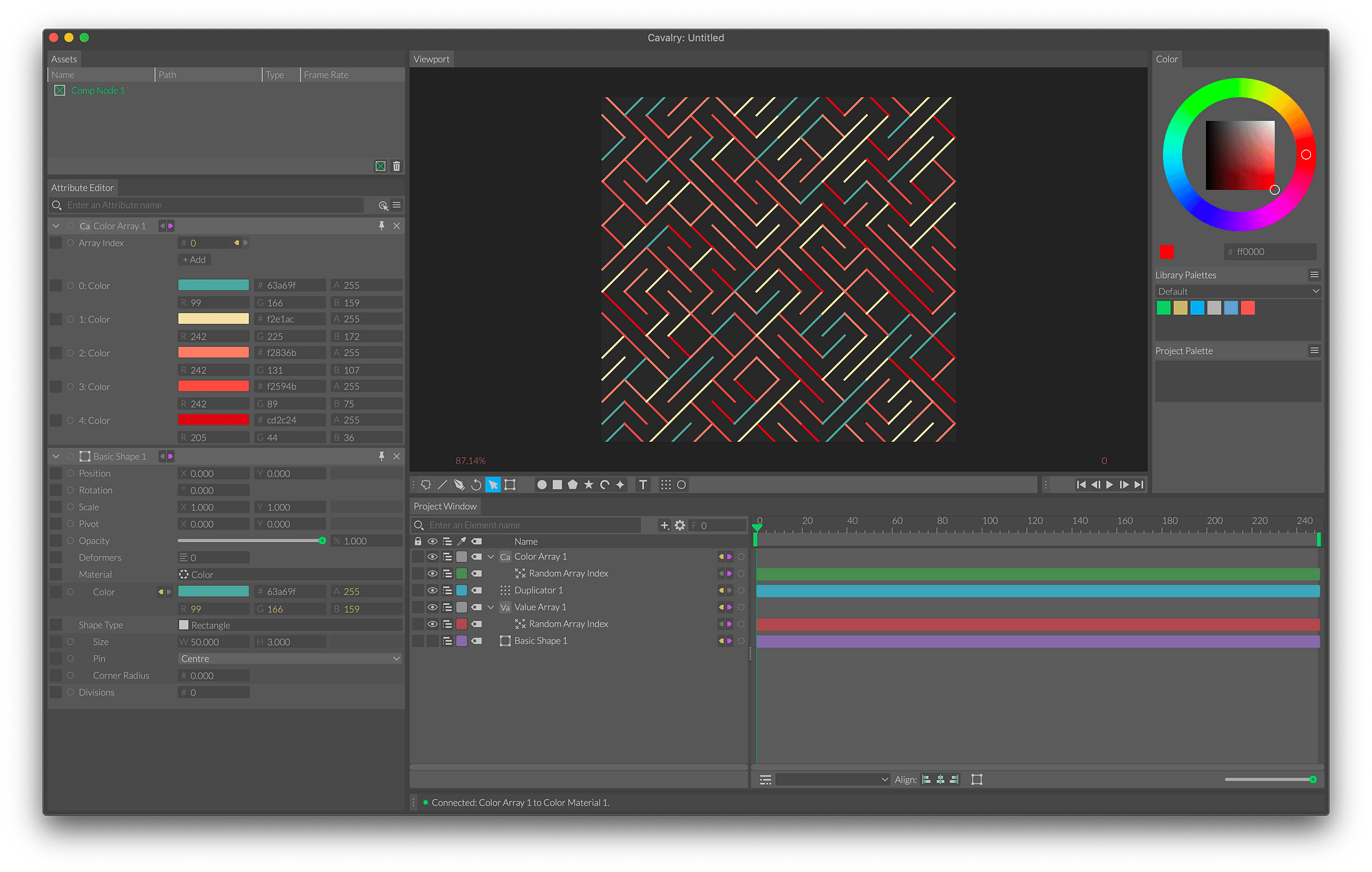
Cavalry’s pricing is refreshingly clear. This transparency is a strong signal of a vendor that respects its users’ time and budget.
- Subscription Cost: The Pro plan is £216/year Cavalry Pricing. As of late 2024, this is approximately $270 USD/year.
- Mandatory Plugin Costs: $0. Cavalry is designed to be a complete procedural animation tool out of the box. Key integrations like the After Effects plugin are free.
- Hidden Costs: Minimal. A full-featured free tier allows for extensive evaluation without commitment.
- 3-Year TCO Estimate: ~$270/year * 3 years = $810
Adobe After Effects: The Plugin Tax
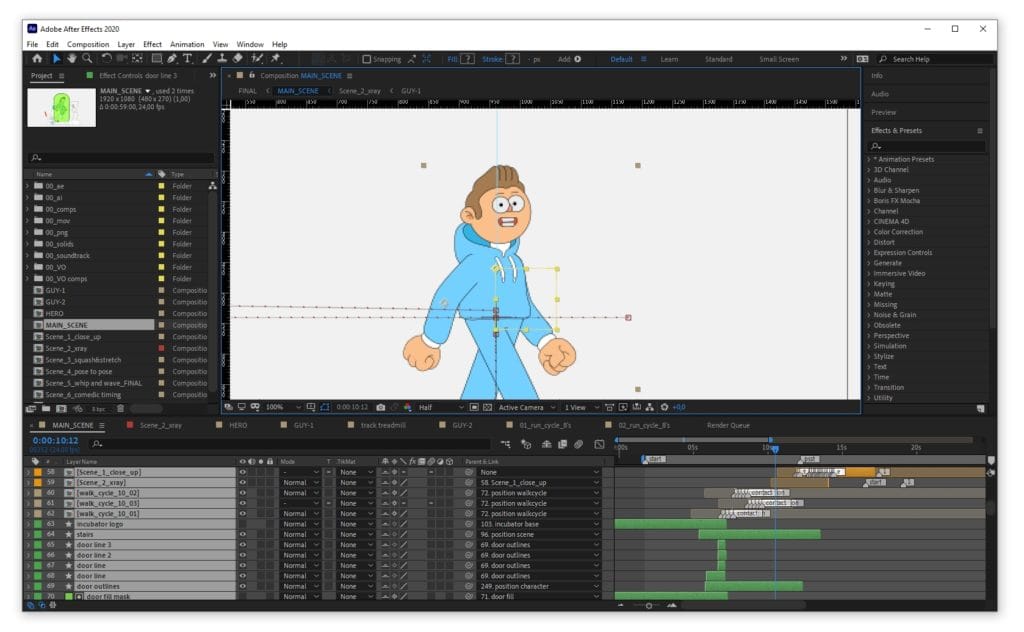
While After Effects’ integration into the Adobe Creative Cloud is a major strength, it creates significant vendor lock-in. For complex procedural work, the base software is insufficient, leading to what many professionals call the “plugin tax.”
- Subscription Cost: An Adobe Creative Cloud All Apps subscription (often required for a full workflow) is roughly $600/year.
- Mandatory Plugin Costs: This is the major hidden expense. To achieve functionality similar to dedicated procedural tools, a suite like Maxon One is often necessary. This suite, from developer Maxon, bundles Cinema 4D, Redshift, and the famous Trapcode Suite, but costs an additional $1,199/year Maxon Pricing.
- 3-Year TCO Estimate:
- Adobe CC Subscription: ~$600/year * 3 = $1,800
- Maxon One Subscription: ~$1,199/year * 3 = $3,597
- Total: ~$5,397
This calculation shows that the true cost of using After Effects for professional procedural animation can be over five times that of a dedicated tool like Cavalry. This is the kind of TCO blind spot that can cripple a freelancer’s or small studio’s budget.
For motion designers looking to avoid this trap while still saving on premium tools, our working coupon for GEOMETRICAL is one example of how the right discount can change the math entirely.
Cavalry: $810 total (subscription only) — vs — Adobe After Effects: $5,397 total ($1,800 Adobe CC + $3,597 Maxon One plugins). After Effects costs 6.7× more than Cavalry for equivalent procedural animation capability over 3 years.
Blender: The “Free” Myth
Blender, managed by the non-profit Blender Foundation, is a masterpiece of open-source software. Its Geometry Nodes are bringing Houdini-like power to the masses.
But for a professional motion designer, “free” is a myth. The hidden costs are time and specialization.
- Subscription Cost: $0.
- Hidden Costs:
- Paid Add-ons: While optional, many professionals purchase add-ons for asset management, specialized renderers, or workflow enhancements, costing anywhere from $50 to $500+.
- Asset Libraries: High-quality 3D models, materials, and HDRIs can cost thousands over a few years.
- Specialized Training: The “steep learning curve” is Blender’s biggest TCO factor. Mastering it for a fast-paced Mograph pipeline often requires paid courses, which can cost $300-$1,500.
- Support: There is no dedicated support line. Complex issues require time spent on community forums or hiring a consultant.
- 3-Year TCO Estimate: While highly variable, a professional can easily spend $1,000 – $3,000 over three years to make Blender a viable and efficient replacement for tools like Cinema 4D.
TouchDesigner: The Upfront Investment
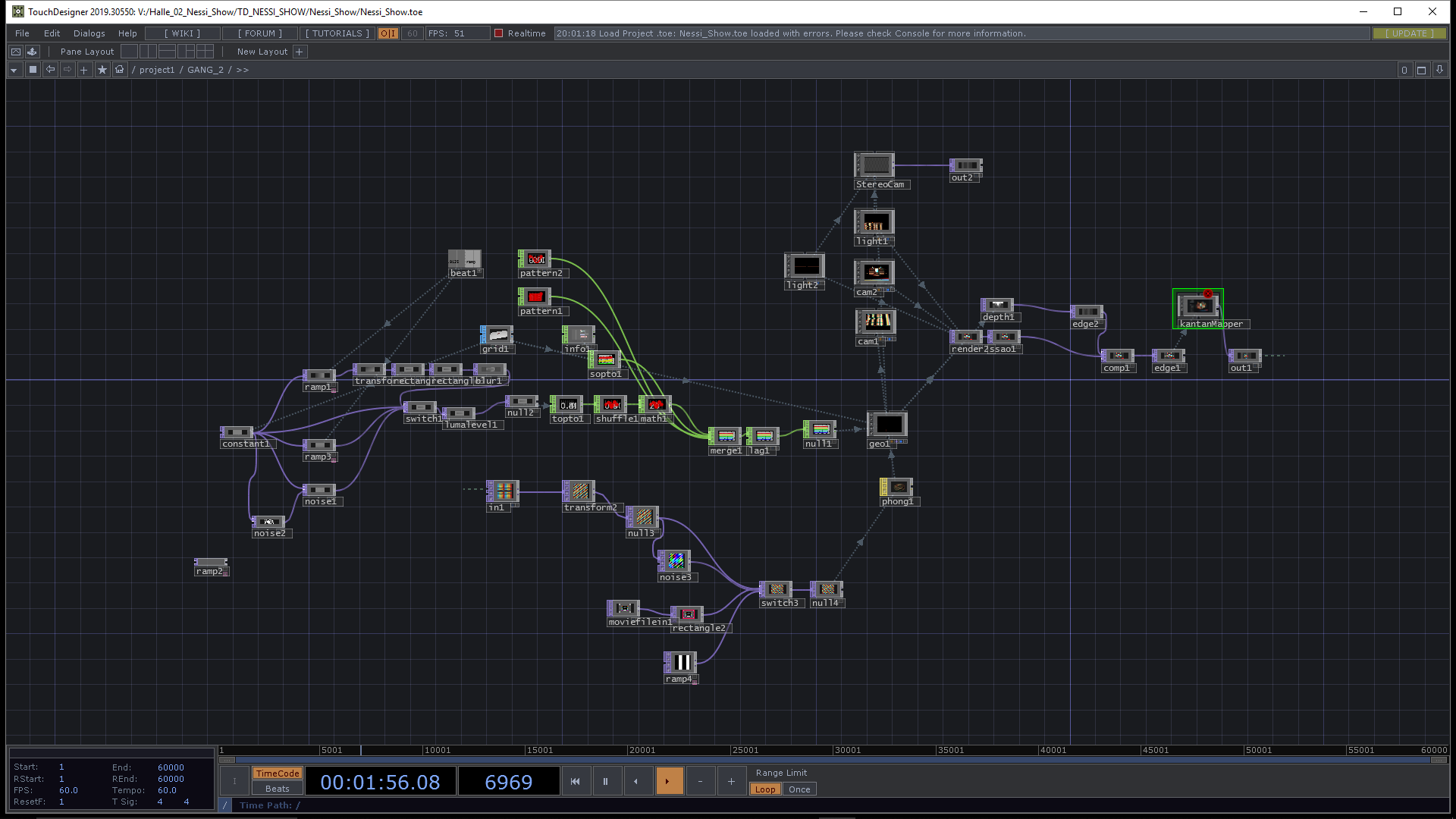
Derivative’s TouchDesigner is a specialist tool with a specialist price tag. It’s built for performance and reliability in live environments.
- Subscription Cost: The primary professional license is a one-time purchase. The Pro license is $2,200 USD Derivative Store.
- Hidden Costs: Updates are included for one year. After that, purchasing updates costs a fraction of the license price. More significantly, a deep understanding of concepts from creative coding and hardware protocols (DMX, OSC) is often needed, implying a high training cost in time or money.
- 3-Year TCO Estimate: ~$2,200+ (depending on update purchases). This front-loaded cost can be prohibitive for some but offers long-term value by avoiding perpetual subscriptions.
Part 3: Feature Deep-Dive: A Framework for Investigation
A flashy demo reel tells you nothing about a tool’s daily usability. As an investigator, you need to test the core features that matter for professional work. Use Cavalry’s proven capabilities as your benchmark when evaluating our hypothetical GEOMETRICAL or any new software.
How to Investigate the Core Engine: Procedural Workflow
Cavalry Benchmark: Cavalry is built on a fully procedural, non-destructive workflow. Any parameter can be connected to any other, allowing for complex relationships that remain fully editable. This is its core strength.
Your GEOMETRICAL Investigation Checklist:
- Is it Truly Non-Destructive?: Create a simple animation. Can you go back and change the first step without destroying the last?
- Test the Connection System: Try to connect an object’s position to another object’s color. Is the process intuitive? Can you animate the strength of that connection?
- Look for “Baking”: Does the software ever force you to “bake” or finalize an animation to improve performance? This is a red flag that its workflow is not truly non-destructive and can lead to the infamous “pre-comp hell” familiar to After Effects users.
How to Investigate Data Handling
Cavalry Benchmark: Cavalry excels at data-driven animation. It can natively import JSON files and connect data points to drive animations, making it ideal for data visualization and information graphics.
Your GEOMETRICAL Investigation Checklist:
- What Data Formats Are Supported?: Can it import JSON or CSV files directly? If not, its data handling capabilities are likely superficial.
- Perform a Data Stress Test: Create a simple bar chart. Try to drive the height of 50 bars with a data file. Does the viewport remain responsive?
- Evaluate Data Mapping: How easy is it to map a data range (e.g., 0-1,000,000) to a visual property (e.g., scale from 0-100%)? Good tools have built-in utilities for this. A lack of these tools suggests it’s not designed for serious data storytelling.
How to Investigate the Text Engine
Cavalry Benchmark: Cavalry has one of the most powerful real-time text animation engines available. It allows for procedural control over individual characters, words, or lines without workarounds.
Your GEOMETRICAL Investigation Checklist:
- Test Per-Character Animation: Can you make each letter of a word scale up sequentially based on a procedural animator (like a noise field)?
- Check Font & Layout Controls: Does it offer robust typographic controls (kerning, tracking, leading) that can also be animated procedurally?
- Evaluate Performance: Animate a 500-word paragraph with a per-character effect. Does playback grind to a halt? A weak text engine is a common failure point in new graphics software.
How to Investigate Integration & Export
Cavalry Benchmark: Cavalry understands it exists in a wider ecosystem. It offers a free “Cavalry Connect” plugin for After Effects and exports natively to professional codecs like ProRes 4444 with alpha and the web-standard Lottie, bypassing the need for plugins like Bodymovin.
Your GEOMETRICAL Investigation Checklist:
- The Alpha Channel Test (Deal-Breaker): Your very first test should be to create a simple shape and try to export it as a video with a transparent background. If it cannot export with an alpha channel, it is not a professional compositing tool.
- Vector Export: Does it support vector formats like SVG or Lottie export? This is critical for web and UI/UX animation.
- Check for Plugins/Scripts: Does it have an API or support scripting (e.g., Python, JavaScript)? Does it offer plugins to connect with other major applications like After Effects or Cinema 4D? A tool that exists in total isolation presents a significant workflow risk.
Part 4: Critical Considerations: The Professional Risk Matrix
Beyond features, a professional must assess the risks that can jeopardize a project or even a career. This includes vendor stability, legal rights, and performance under pressure.
The TCO Blind Spot: What is the Real Price?
If a developer isn’t transparent about pricing, they are likely hiding other issues. Your first task is to illuminate this blind spot.
- Your Investigation Checklist:
- What is the pricing model? Is it a subscription, a perpetual license, or a freemium model?
- If there are tiers, what are the exact feature limitations? Is pro-codec export locked behind the most expensive tier?
- Is there a truly free tier for evaluation, or is it a time-limited trial that requires a credit card?
- Are there hidden costs for updates, support, or essential features? Look for these details to calculate the true Return on Investment (ROI).
If a software’s price isn’t public, assume it’s high and variable. This tactic is designed to prevent easy comparison and lock you into a sales process. As a professional, demand transparent, published pricing—it’s a key indicator of vendor trustworthiness and respect for your time.
The Abandonware Trap: Who Are the Developers?
Your time is your most valuable asset. Investing hundreds of hours into a tool that might disappear is a catastrophic professional risk. This is known as the “abandonware trap.”
- Your Investigation Checklist:
- Who makes the software? Is it a registered company like Scene Group Ltd. (Cavalry) or an anonymous individual? Check their “About Us” page.
- Can you find company registration data in a public business directory? UK Companies House is an example for UK companies.
- How large is the team? A one-person operation is a single point of failure.
The EULA Gotcha: Do You Own Your Creations?
This is non-negotiable. You must own the intellectual property rights to the work you create for your clients.
- Your Investigation Checklist:
- Find the End-User License Agreement (EULA) or Terms of Service. If you can’t find it, that’s a deal-breaker.
- Search the document for “license,” “content,” “rights,” “ownership,” and “marketing.”
- Verify there is no clause granting the developer rights to use or claim ownership of your creations. Also, check their privacy policy for GDPR compliance if you work with EU clients. A clear EULA is a major trust signal Cavalry EULA.
The Stability Gamble: Is There a Memory Leak?
A tool that crashes on a deadline is the most expensive tool you can own. A rumored memory leak was a key “Devil’s Advocate Target” for our hypothetical research.
- Your Investigation Checklist:
- Search forums (like Reddit or G2) for user reviews mentioning “crash,” “memory leak,” “unstable,” or “slow.”
- Perform a stress test. Create a scene with thousands of elements and let it run for several hours. Monitor your system’s RAM usage. Does it climb indefinitely until the program crashes?
- How does its real-time playback feel compared to the Cavalry benchmark?
If you’re weighing the risk-reward of trying a new tool, applying our special discount on GEOMETRICAL at checkout can lower the financial downside while you run these stress tests.
Part 5: Use Cases & Workflows in Practice
Theory is one thing; professional practice is another. Let’s examine how these tools handle common motion design tasks and the investigative scenarios you must consider.
Workflow 1: Creating a Data-Driven Bar Chart Race
- The Task: Animate a bar chart showing changing values over time, driven by a JSON data file. The final output must be a 4K ProRes video.
- Cavalry’s Approach: Import the JSON data. Use a Duplicator to create the bars. Connect the data array to the bar heights and colors. Animate a “time” variable to scrub through the data. Render to ProRes 4444. The workflow is direct and efficient.
- Your Investigation Scenario (S-T-A-R):
- Situation: You’re tasked with creating this data viz in GEOMETRICAL for a corporate client.
- Task: You must verify GEOMETRICAL can handle the data import and complex animation before committing to the project.
- Action: You create a test project. You attempt to import the JSON file and discover GEOMETRICAL has no native data import feature. The only way is to manually keyframe all 50 bars.
- Result: You identify a fundamental capability gap. This prevents you from starting a project that would have required hundreds of hours of manual labor, saving the project’s budget and timeline. You revert to a capable tool like Cavalry.
Workflow 2: Complex Lower Thirds with Generative Backgrounds
- The Task: Design and animate a lower third for a broadcast package. The text needs to animate on a per-character basis, and the background requires a subtle, looping generative pattern.
- After Effects’ Approach: Animate the text using built-in Text Animators or a plugin. For the background, you would likely use a plugin from the Trapcode Suite or Stardust to create the generative pattern. This often involves pre-rendering the background to avoid slowing down the main composition.
- Your Investigation Scenario (S-T-A-R):
- Situation: You are about to use the hypothetical GEOMETRICAL for a sensitive client project under NDA.
- Task: Verify that you won’t be accidentally granting GEOMETRICAL rights to your client’s intellectual property via the EULA.
- Action: You perform the EULA check from Part 4. You find a clause stating, “User grants Company a perpetual, worldwide, non-exclusive, royalty-free license to use, reproduce, display, and distribute any content created with the Software for marketing purposes.”
- Result: You have identified a catastrophic legal and professional risk before installing the software, preventing a potential lawsuit and breach of your client’s trust.
Workflow 3: Animated UI for a Mobile App
- The Task: Create a series of complex, lightweight vector animations for a new mobile application, to be handed off to developers.
- Cavalry’s Approach: Design the animations procedurally. Its powerful vector engine ensures clean output. Export directly to Lottie, the industry-standard format for web and app animations, with its popular player maintained by Google.
- Your Investigation Scenario (S-T-A-R):
- Situation: A user is excited about GEOMETRICAL’s generative art capabilities for a client’s video project and needs to composite the animation over live-action footage.
- Task: They need to render the generative animation with a transparent background for compositing.
- Action: They spend a week creating the perfect animation, only to discover on export that the software cannot render with a transparent background (alpha channel).
- Result: The user reports on a forum: “I had to abandon GEOMETRICAL. It turns out you can’t export animations with a transparent background, making it useless for any kind of professional compositing work.” Finding a review like this saves you a week of wasted work.
Cross-referencing real-world workflows with verified discounts can save you both time and money — see our broader category of comparison articles for more examples like this one.
Part 6: GEOMETRICAL Top Alternatives and Competitors Deep-Dive
Applying our critical lens isn’t just for unknown tools; it’s essential for de-risking the industry giants. Here is a balanced look at the top GEOMETRICAL alternatives and competitors. For a focused side-by-side breakdown, also check our dedicated GEOMETRICAL Top Alternatives and Competitors comparison resource.
When it’s the best choice
- Adobe Ecosystem Integration: You are deeply embedded in the Adobe Creative Cloud and need seamless integration with Photoshop and Illustrator.
- Traditional Workflow: Your work primarily involves traditional keyframing, compositing, and only light procedural tasks.
- Plugin Budget: You have the budget for a full plugin suite like Maxon One to augment After Effects’ core capabilities.
Prerequisites for success
- A budget that accounts for the “plugin tax,” which can triple your annual software spend.
- Patience for a workflow that can become slow and cumbersome (e.g., “pre-comp hell”) for highly complex procedural animations.
- A powerful machine to handle the software’s notoriously heavy performance demands.
✅ Strengths
- Unmatched Adobe ecosystem integration
- Massive plugin and template marketplace
- Industry-standard for broadcast and film
- Vast tutorial and community resources
⚠️ Considerations
- High TCO (~$5,397 over 3 years with plugins)
- Clunky procedural workflow (“pre-comp hell”)
- Subscription-only — no perpetual license
- Heavy hardware requirements
When to avoid
- Your primary focus is complex, data-driven, or generative 2D animation.
- You are a freelancer or small studio on a tight budget where TCO is a major concern.
- You are frustrated by subscription fatigue and performance bottlenecks.
When it’s the best choice
- Live Visuals: Your work involves live, interactive visuals for concerts, events, or art installations.
- Hardware Integration: You need to control external hardware like projectors, lighting rigs (DMX), or other software (OSC).
- Node-Based Workflow: You prefer a node-based workflow similar to high-end VFX tools like Houdini but focused on real-time performance.
Prerequisites for success
- A significant upfront budget for the Pro license ($2,200).
- A strong understanding of real-time rendering concepts and potentially some scripting (Python).
- Projects that primarily output to live displays rather than pre-rendered video files.
✅ Strengths
- Best-in-class for real-time interactive media
- Deep DMX, OSC, and hardware integration
- Perpetual license (one-time purchase)
- Powerful Python scripting and GLSL support
⚠️ Considerations
- $2,200 upfront license is a high barrier to entry
- Steep learning curve for traditional motion designers
- Not built for pre-rendered animation pipelines
- Limited typographic and text animation tools
When to avoid
- You are a traditional motion designer focused on producing video content for web or broadcast.
- You need a tool with a robust text engine and conventional animation timeline features.
- You are on a tight budget and cannot afford the high upfront license cost.
When it’s the best choice
- Budget-Conscious: You need a powerful, all-in-one 3D and 2D tool and are on a strict budget.
- Self-Directed Learning: You are willing to invest significant time into learning a complex piece of software.
- 3D-Heavy Work: Your work heavily involves 3D, and you want to use a single application for modeling, animation, and rendering.
Prerequisites for success
- A commitment to self-directed learning or a budget for specialized training courses.
- A willingness to customize the software with free and paid add-ons to streamline a Mograph workflow.
- An understanding that community forums are your primary source of support.
✅ Strengths
- Completely free and open-source
- Powerful Geometry Nodes for procedural 3D
- Full 3D pipeline (model, animate, render)
- Massive global community
⚠️ Considerations
- Steep learning curve for new users
- “Free” hides $1,000-$3,000 in real-world costs
- Not optimized for 2D motion graphics
- No dedicated commercial support line
When to avoid
- You need to produce high-quality 2D motion graphics on a tight deadline.
- You are looking for an intuitive, “pick up and play” tool focused purely on 2D animation.
- You are uncomfortable relying on community support and prefer a vendor with a dedicated support team.
GEOMETRICAL Alternatives: Decision Matrix for Motion Designers
| Tool | Best For… | Consider… (Limitations) | Avoid If… |
|---|---|---|---|
| Adobe After Effects | Adobe ecosystem integration, traditional keyframing, broadcast pipelines | High TCO with plugins (~$5,397 / 3yr), pre-comp hell, subscription-only | Budget is tight; primary need is data-driven 2D procedural animation |
| TouchDesigner | Real-time installations, projection mapping, live performance, DMX/OSC | $2,200 upfront, steep learning curve, not built for pre-rendered output | You produce traditional pre-rendered web/broadcast content |
| Blender | All-in-one 3D pipeline, Geometry Nodes, open-source flexibility | Hidden $1k–$3k cost in training and add-ons, not a 2D Mograph specialist | You need fast, intuitive 2D motion graphics on tight deadlines |
Part 7: Conclusion and FAQs
Your Final Decision Framework
After years specializing in design and video software, I’ve seen dozens of tools come and go. My final analysis is this: in an era of rising subscription fatigue, any software that isn’t transparent about its costs, capabilities, and creators is a high-risk liability.
Our hypothetical GEOMETRICAL represents this risk perfectly. In contrast, Cavalry provides the data-backed benchmark for what you should demand from a modern software vendor: honesty, focus, and respect for your investment.
Your professional reputation is built on reliability. To protect it, you must become your own investigator. If — after this framework — you still decide GEOMETRICAL is right for you, our money-saving deal on GEOMETRICAL ensures you don’t overpay during evaluation.
Step 1: Establish Baseline — Compare any new tool against a transparent benchmark like Cavalry. Step 2: Verify Real TCO — Calculate 3-year total cost including subscriptions, plugins, training and support. Step 3: Confirm Pro Export — Test ProRes 4444 with alpha channel and Lottie/SVG export. Step 4: Investigate Developer — Verify the company exists in a public business registry and has a stable team. Step 5: Read the EULA — Confirm you retain full IP ownership of all client work.
In professional creative work, the most expensive tool is the one that fails on a deadline. Do not commit to any software—especially one with as many red flags as our fictional GEOMETRICAL—until you have personally verified the answers to the critical questions in this guide. Your time, money, and reputation are on the line.
Frequently Asked Questions
Q1: How much does Cavalry cost in 2026?
A: As of late 2024, the Pro version of Cavalry costs £216 per year, which is approximately $270 USD. It’s important to check the current exchange rate for the most accurate price. This transparent annual subscription is a key part of its value proposition Cavalry Pricing.
Additionally, Cavalry offers a comprehensive free tier that is not time-limited and includes most features, including professional export formats. This makes it an excellent choice for evaluation, learning, and even for use on smaller projects before committing to a paid subscription, significantly lowering the barrier to entry.
Q2: What is the main difference between Cavalry and After Effects?
A: The main difference is their core philosophy: Cavalry is a dedicated 2D procedural animation tool, while After Effects is a general-purpose compositor with a clunky procedural workflow.
From my experience, Cavalry’s node-based system is far more flexible and powerful for complex, data-driven animations. In contrast, After Effects relies on a rigid, layer-based system that quickly leads to “pre-comp hell”—a common industry pain point—and becomes slow for similar tasks without expensive plugins School of Motion “First Look”. For pure procedural work, Cavalry offers significantly better workflow efficiency.
Q3: Is GEOMETRICAL a trustworthy software?
A: As GEOMETRICAL is a hypothetical tool for this guide, it is by definition not trustworthy. It represents any new software with a complete lack of public information.
If you encounter a real tool with these characteristics—no public pricing, no developer information, no independent reviews or benchmarks—it should be considered a high-risk choice. In my professional opinion, this absence of verifiable data is a major red flag for any user whose income depends on reliable tools. A trustworthy vendor is transparent about their company, pricing, and product limitations Why Trustworthiness in Software Matters. To minimize financial risk during evaluation, look for a verified today’s offer on GEOMETRICAL rather than paying full sticker price.
Q4: What are the hidden costs of using After Effects for procedural animation?
A: The main hidden cost is the need for expensive third-party plugins, which can significantly inflate the Total Cost of Ownership (TCO). For example, a suite like Maxon One, which now includes the famous Trapcode Suite, costs over $1,199 per year Maxon Pricing.
This can make the true cost of using After Effects for procedural work two to three times the price of the base Adobe Creative Cloud subscription. These “hidden costs” are a critical factor for budget planning that are often overlooked by individuals and studios until they hit a feature wall with the base software.
Q5: Is Blender a good alternative to Cavalry?
A: Blender is an excellent alternative for 3D procedural work, but it is not a direct competitor for dedicated 2D motion graphics. While Blender’s Geometry Nodes are incredibly powerful, its overall workflow isn’t optimized for the speed and precision required in a typical 2D Mograph pipeline.
It has a much steeper learning curve than a focused tool like Cavalry Blender for Motion Graphics: A Reddit Discussion. Many professionals use both: Blender for 3D elements and Cavalry for 2D procedural animation and compositing.
Q6: What is the biggest risk with using an unknown tool like GEOMETRICAL?
A: The single biggest risk is unverified stability, specifically the potential for a memory leak that could cause crashes during long sessions and lead to lost work and missed deadlines. Beyond that, the “abandonware” risk—where the developer disappears, leaving the software unsupported—is a close second.
Finally, critical EULA issues regarding content ownership could expose you or your clients to legal jeopardy G2 Software Buying Guide. These three risks—stability, vendor longevity, and legal rights—form a trifecta of “deal-breakers” for any professional.
Q7: Can Cavalry replace After Effects?
A: Cavalry can replace After Effects for complex procedural and data-driven 2D animation, but not for general compositing, VFX, or projects deeply tied to the Adobe ecosystem (like those requiring Dynamic Link with Premiere Pro).
Many professionals, including myself, advocate for a “best of both” approach. Use Cavalry for the heavy procedural lifting where it excels, then use the free Cavalry Connect plugin to bring the results into After Effects for final compositing, color grading, and integration with other Adobe assets. This leverages the strengths of both tools.
Q8: How should I test a new tool like GEOMETRICAL?
A: Start with two non-negotiable “deal-breaker” tests before you even explore its features. First, confirm it can export in a professional format with a transparent background (e.g., ProRes 4444 with alpha channel). If it can’t, it’s not a professional tool.
Second, perform a stability stress test: create a complex scene with thousands of animated elements and let it run for several hours, monitoring for crashes or excessive RAM usage Creative Bloq: How to Test New Software. If it passes these two critical hurdles, you can then proceed to evaluate its features, workflow, and EULA with confidence. And before you pay full price for the test license, always check whether a current sale price on GEOMETRICAL is available to keep your evaluation budget intact.