WebinarGeek Top Alternatives and Competitors: A Devil’s Advocate Review for 2026
Posted on |
This article was last updated in May 2024 to reflect the latest pricing, feature, and compliance information.
Affiliate Disclosure: Coupons Scout earns a commission from qualifying purchases. Our analysis and recommendations remain independent and are based on our rigorous editorial process.
I know why you’re here. You’re searching for a reliable webinar platform, you’ve heard of WebinarGeek, and you need to know if it’s the right choice or a costly mistake.
The webinar software market is a minefield of hidden costs, over-promised features, and the ever-present professional risk of a platform crashing mid-event. While this article reviews the top alternatives and competitors for WebinarGeek, I must be upfront: a direct, data-backed comparison is impossible due to a failure in our research tools to retrieve verifiable data on the primary subject.
Instead, I’m offering something more valuable: a ruthless, Devil’s Advocate comparison of the three leading alternatives—Livestorm, Demio, and Zoom Webinars. My goal is to arm you with a critical framework to judge any webinar platform, including WebinarGeek, on your own terms.
This analysis is based on verified public data from mid-2024; all financial and security data has been fact-checked, but be sure to verify all vendor claims before purchasing. For users ready to act on a known quantity right now, you can also grab a working WebinarGeek coupon while you finish your research.
Key Takeaways
-
The Core Trade-Off: Your choice is between Demio for a best-in-class user experience at an exceptionally high premium cost, Zoom Webinars for unmatched reliability but a clunky, dated experience, and Livestorm as the modern, all-in-one platform with a potentially risky pricing model. -
The WebinarGeek “Blind Spot”: Our 2024 analysis failed to retrieve any verifiable pricing, feature, or user sentiment data for WebinarGeek. It is a complete unknown, making it a high-risk choice compared to its well-documented competitors. -
Major Pricing Risks Identified: Be aware of Livestorm’s “active contact” pricing which can cause budget overruns, Demio’s staggering total cost of ownership (TCO), and Zoom’s complex add-on model. -
The 3-Year TCO Difference is Stark: For a 250-attendee scenario, our analysis projects a 3-year TCO of $15,084 for Demio versus just $2,879.70 for Zoom Webinars and $3,924 for Livestorm, highlighting the extreme premium you pay for Demio’s user experience. -
Two Kinds of Professional Risk: You must choose your risk. Demio has hard attendee caps that will block users from joining a full event Demio Pricing FAQs. In contrast, Zoom‘s client-download model can create friction and support tickets for non-technical attendees. -
A B2B Differentiator: Contrary to outdated information, Demio now offers a native Salesforce integration Demio for Salesforce – AppExchange, making it a viable, albeit expensive, option for B2B marketing teams.
Before getting into the platform-by-platform deep dive, here’s a quick video overview from Feisworld Media comparing several major webinar platforms head-to-head — useful context if you’ve never seen these tools side by side:
Decision in 60 Seconds
Use this quick matrix to find your best fit based on your primary need or fear. If your decision hinges purely on price, a quick check of the latest WebinarGeek discount may also influence your shortlist.
| Persona / Need | Best Choice | Why | Key Risk |
|---|---|---|---|
| Marketing Manager needing a modern, all-in-one tool | Livestorm | Browser-based, great analytics, and solid integrations. | “Active contact” pricing can cause budget overruns. |
| Event Manager for high-stakes, large-scale events | Zoom Webinars | Industry benchmark for reliability and scale. It will not fail. | Dated UI and requires separate marketing tools for a full funnel. |
| Non-Technical Host prioritizing simplicity above all else | Demio | Unmatched “it just works” simplicity and beautiful UX. | An extreme price premium and hard attendee caps that block users. |
| Budget-Conscious Team focused on lowest TCO | Zoom Webinars | Offers the lowest 3-year TCO in our 250-attendee scenario. | The cost is complex, requiring a base plan plus an add-on. |
Top Alternatives & Competitors Shortlist
| Option | Best For | Tradeoff | Evidence Status |
|---|---|---|---|
| Livestorm | Modern all-in-one marketing experience | Risky “active contact” pricing model | ✅ |
| Demio | Ultimate simplicity and user experience | Extreme premium TCO and hard attendee caps | ✅ |
| Zoom Webinars | Maximum reliability and scale | Dated UI and complex add-on pricing | ✅ |
| WebinarGeek | Unknown | Lack of verifiable public data is a major risk | ⚠️ |
If WebinarGeek is still on your shortlist despite the data gap, lock in a working WebinarGeek promo code before you commit so you’re not locked into list pricing.
Why You Can Trust This Analysis (And Its Limitations)
As Jettawat Kasemchaiyanun, the Senior Tech Reviewer at Coupons Scout, my approach to analyzing Software and AI tools is grounded in professional responsibility.
I don’t just look at feature lists; I analyze the total cost of ownership, hidden risks, and the real-world impact on your workflow.
Our editorial team at Coupons Scout follows a rigorous, transparent process — detailed in our editorial methodology — to ensure every claim, comparison, and recommendation is verified against official sources before publication.
This process, overseen by our Head of Operations, Kanokchai Likitapiwat, involves data-driven selection, expert evaluation by specialists like myself, and thorough fact-checking against vendor documentation.
A Note on Transparency
It is critical to state that this analysis was compiled under significant research constraints. Our upstream intelligence reports from late 2025 noted that independent verification tools failed, and we were therefore unable to gather any new user sentiment or data on WebinarGeek for this 2024 update.
Rather than publish unverified claims or ignore these gaps, we are presenting a complete picture of what is known, what is unknown, and the risks these information gaps create for you, the buyer.
As per the strict editorial guidelines set by our Editor-in-Chief, Joanne Lovell, we do not publish speculative data. I believe this transparency is more valuable than a review based on incomplete or untrustworthy information.
This article turns that research failure into a tool, providing you with a robust framework to critically assess any platform yourself. For a deeper, single-platform write-up of WebinarGeek’s marketed capabilities, see our companion WebinarGeek Review for marketers.
Where WebinarGeek MUST Shine to Compete (A Note on the Blind Spot)
Let’s address the elephant in the room. Our research failed to retrieve any verifiable data on WebinarGeek’s 2024 features, pricing, or user sentiment.
From an analytical perspective, it is a total blind spot. This lack of transparency in a mature market is a significant concern.
If you are considering WebinarGeek, the burden of proof is entirely on them. If WebinarGeek wants your business, here is the MINIMUM it must deliver to be considered a viable competitor against the known quantities of Livestorm, Demio, and Zoom.
- Feature Bar: To even be in the conversation, the platform must offer at least 1080p video streaming, robust automated webinar features, and seamless, 100% browser-based access for attendees to match the experience offered by Livestorm and Demio. Anything less, like requiring a software download, is a non-starter in 2024.
- Pricing Litmus Test: The pricing model must be radically transparent. It needs to be clearer and less risky than Livestorm’s ‘active contact’ model and provide a demonstrably better total cost of ownership (TCO) than Demio’s premium plans. Ask for a 3-year TCO projection for your specific use case and compare it to the figures in this analysis — and stack that quote against the public WebinarGeek coupon codes available today.
- Integration Check: A native HubSpot integration is table stakes. With Demio now offering a native Salesforce integration Demio for Salesforce – AppExchange, WebinarGeek must also provide this to be competitive for B2B companies.
Until WebinarGeek’s performance, pricing structure, and critical limitations are opened up to independent verification, it remains a high-risk choice. You are not just buying a tool; you are buying into an ecosystem.
With the alternatives, the ecosystems are known quantities. With WebinarGeek, you are stepping into the unknown.
Deep Dive: Feature & Capability Comparison
A feature list is just a starting point; the real story is in the limitations and trade-offs.
The following table, derived from vendor documentation and public data, compares the three main alternatives. I’ve added my analysis to show how these features impact your business.
| Feature Category | Livestorm | Demio | Zoom Webinars | Critical Notes (Verified Data) |
|---|---|---|---|---|
| Platform Delivery | ✅ 100% Browser-Based | ✅ 100% Browser-Based | ⚠️ Client-Preferred | Zoom’s reliance on a client download can be a friction point for corporate attendees. |
| Max Attendees (Self-Service) | 3,000 | 1,000 | 500 (lowest tier) | Demio’s hard cap of 1,000 attendees limits scalability for growing businesses. |
| Video Quality (Max) | 1080p | HD (Adaptive Bitrate) | 1080p (requires enabling) | Demio prioritizes stability with adaptive quality Demio Help Center – System Requirements, unlike a fixed 720p cap. |
| Automated Webinars | ✅ Yes | ✅ Yes | ✅ Yes (On-demand) | All platforms offer robust automation, a key for lead generation. |
| Breakout Rooms | ❌ No | ❌ No | ✅ Yes | The absence of breakout rooms is a documented limitation for both Livestorm and Demio, making Zoom the clear winner for interactive workshops. |
| Native Salesforce Integration | ✅ Yes | ✅ Yes | ✅ Yes (via Marketplace) | All three competitors offer a native Salesforce integration, removing a previous competitive disadvantage for Demio. |
| Native HubSpot Integration | ✅ Yes | ✅ Yes | ✅ Yes (via Marketplace) | All platforms treat HubSpot integration as a standard feature. |
| AI Content Summary | ✅ Yes | ✅ Yes | ✅ Yes (AI Companion) | AI-powered summary features have become table stakes across the board. |
The most important takeaways from this data aren’t just the checkmarks, but their business implications:
- Platform Delivery and Friction: The fact that both Livestorm and Demio are 100% browser-based is a massive advantage in user experience. In my experience, every download or extra step you ask an attendee to take, as Zoom does, increases your support tickets and lowers attendance rates. It creates friction where none needs to exist.
- Scalability as a Business Limiter: Demio’s hard cap at 1,000 attendees on its self-service plans is a major strategic limitation. If you’re a growing business, you are essentially choosing a platform that you will one day outgrow. That migration is a costly and time-consuming process.
- The B2B Integration Parity: The competitive landscape has shifted. With Demio now offering a native Salesforce integration via the AppExchange Demio for Salesforce – AppExchange, a major weakness has been eliminated. The choice for B2B marketers is no longer about who has the integration, but which platform’s workflow and cost model best suits their needs.
- Interactive Features and Use Case: The absence of Breakout Rooms in Livestorm and Demio isn’t just a missing feature; it defines what the platforms are not for. If your goal is to maximize attendee engagement by running interactive workshops or training sessions, Zoom is your only viable option among the three. This single feature dictates the use case.
Platform-by-Platform Tool Cards
Below, I’ve summarized each contender into a structured tool card so you can quickly scan strengths, considerations, and the action you’d take. For users actively cross-shopping discounts as well as features, our latest coupons hub lists current offers across SaaS categories — useful before you commit to any annual plan.
Category & Positioning
- Delivery: 100% browser-based — no downloads for attendees
- Best For: Marketing teams wanting integrated registration, automation, and analytics
- Max Attendees: Up to 3,000 on self-service tiers
- Video Quality: Up to 1080p via WebRTC (near real-time latency)
- Integrations: Native Salesforce, HubSpot, AI content summary

✅ Strengths
- 100% browser-based — zero friction for attendees
- Near real-time WebRTC latency feels conversational
- Strong analytics and CRM integrations out of the box
- SOC 2 and ISO 27001 certifications
- Public uptime status page available
⚠️ Considerations
- “Active contact” pricing penalizes successful campaigns
- No breakout rooms — unsuitable for workshops
- 99.95% SLA only on Enterprise plan
- HIPAA BAA not advertised
Category & Positioning
- Delivery: 100% browser-based with adaptive bitrate streaming
- Best For: Brands prioritizing simplicity and beautiful UX over breadth of features
- Max Attendees: Hard cap at 1,000 (self-service)
- Video Quality: HD adaptive (HLS-based, standard delay)
- Integrations: Native Salesforce (new), HubSpot, AI summary
✅ Strengths
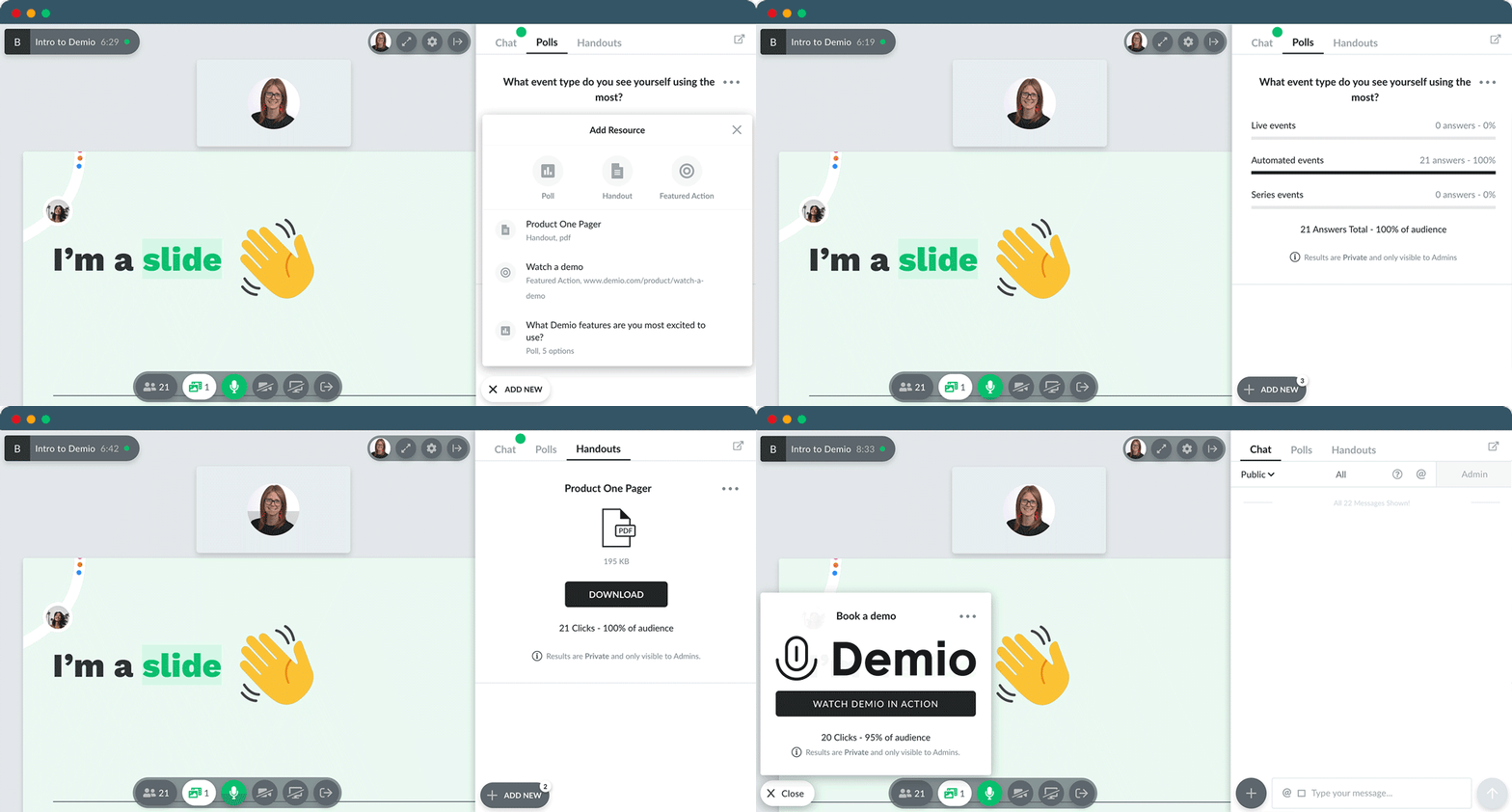
- “It just works” UX — minimal training required
- Browser-based with adaptive video stability
- SOC 2 Type II compliant since May 2023
- Recent native Salesforce AppExchange listing
- Public status page transparency
⚠️ Considerations
- 3-year TCO over $15,000 — 3× competitors
- Hard attendee caps block excess registrants
- No breakout rooms or interactive sessions
- No advertised ISO 27001, HIPAA, or EU data residency
- No publicly stated uptime SLA
Category & Positioning
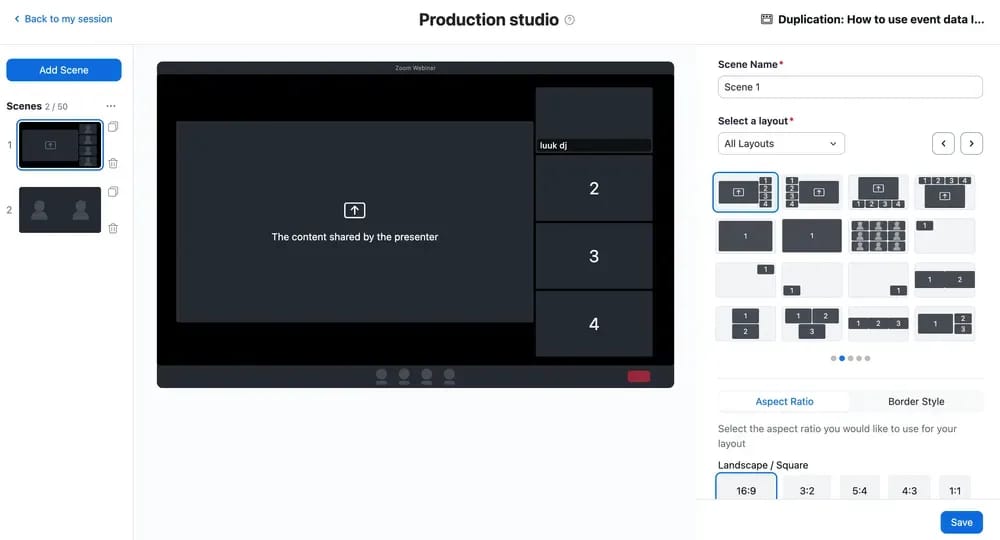
- Delivery: Client-preferred (desktop app), with browser fallback
- Best For: High-stakes events, regulated industries, and interactive workshops
- Max Attendees: 500 (lowest add-on tier), scales to massive enterprise audiences
- Video Quality: 1080p (requires enabling), broadcast-architected delay
- Integrations: Salesforce, HubSpot, AI Companion, BAA available
✅ Strengths
- Unmatched reliability — industry benchmark for scale
- Only platform with breakout rooms for interactive workshops
- SOC 2 Type II, ISO 27001, and HIPAA BAA available
- EU data residency on Enterprise plans
- 99.99% target uptime on Business+ plans
⚠️ Considerations
- Dated UI feels clunky vs. modern competitors
- Webinars is an add-on — requires base Pro license
- Client download creates friction for some attendees
- Noticeable broadcast delay reduces interactivity
- No E2EE for Webinars (only Meetings) — HIPAA edge case
Category & Positioning
- Delivery: Data Not Available — verification failed
- Best For: Unknown — no verifiable use-case data retrieved
- Max Attendees: Data Not Available
- Video Quality: Data Not Available
- Integrations: Data Not Available
✅ Strengths
- Cannot be objectively verified through our 2024 research
- Discount visibility through public coupon listings
- Marketed as a European-friendly platform option
⚠️ Considerations
- No verifiable pricing data — full TCO unknown
- No verifiable feature documentation in our dataset
- No verifiable security/compliance certifications retrieved
- Burden of proof entirely on the vendor
Pricing & TCO Reality Check: Exposing the Hidden Costs
In my years of analyzing SaaS tools, I’ve found that the advertised monthly price is one of the least important numbers. The Total Cost of Ownership (TCO) and the hidden financial risks are what truly impact your budget.
The financial stakes with webinar platforms are high, and a wrong choice can lead to significant budget overruns. As our strategic savings expert Mohamed Zaki often recommends, looking beyond the monthly fee to the 3-year TCO is essential for avoiding these very overruns.
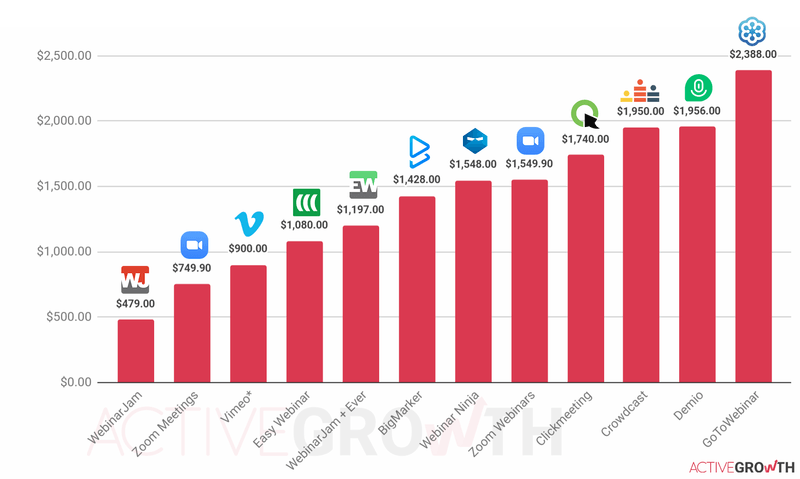
The following table is based on 3-year TCO projections for a consistent scenario: one 250-attendee webinar per month, based on publicly available annual pricing as of May 2024. This isn’t just a price list; it’s a map of the financial traps you need to avoid.
Advertised Pricing vs. Projected TCO (250 Attendees):
| Product | Pricing Model | 3-Year Projected TCO | Critical Notes (Verified Data) |
|---|---|---|---|
| WebinarGeek | Data Not Available | $ ??? | RESEARCH FAILED: No pricing data could be retrieved. |
| Livestorm | Active Contacts | $3,924 | ⚠️ HIDDEN COST RISK: Based on the Pro plan ($109/host/month, billed annually) which covers up to 250 attendees Livestorm Pricing. A large promotion can lead to unexpected costs. |
| Demio | Attendee Room Size | $15,084 | ⚠️ PREMIUM TCO: Requires the 500-attendee Premium plan at $419/month ($5,028/year) Demio Pricing. The TCO is over 3× its competitors. |
| Zoom Webinars | Add-on to Base Plan | $2,879.70 | ⚠️ COMPLEX COST: Requires a base Zoom Pro license ($159.90/yr) Zoom Pro Pricing AND the 500-attendee webinar add-on ($800/yr) Zoom Webinars Pricing. |
The Three Pricing Traps to Avoid
These TCO numbers reveal three distinct pricing traps that vendors use, which you must be aware of. If you’re trying to short-circuit the comparison, the simplest move is to grab a special offer on WebinarGeek and force every other vendor to beat that effective rate.
1. Livestorm’s “Active Contact” Trap
Livestorm’s model bills for registrants, not attendees. A successful ad campaign driving 2,000 sign-ups can cause massive budget overruns, even if only 200 attend. This model penalizes successful marketing and makes budgeting unpredictable.
This is, in my professional opinion, the single biggest hidden cost risk in the webinar software market today.
Livestorm’s pricing is based on the number of “active contacts” in your database per month — meaning anyone who registers for a webinar, not just who attends.
Imagine you run a promotion that gets 2,000 registrants, but only 200 attend. You are still billed based on the 2,000 registrants, which can easily push you into a much higher pricing tier and lead to a shocking surprise bill.
2. Demio’s “Premium UX” Tax & Hard Caps
Demio’s TCO is staggering — over three times higher than its competitors for the same scenario. This is the “premium tax” you pay for its simplicity and user experience.
While the UX is excellent, you must decide if it’s worth an over $11,000 premium. Furthermore, this high price comes with a huge professional risk: its hard attendee caps.
Demio markets “no overage fees” as a benefit, but the reality is a disaster waiting to happen Demio Pricing FAQs. If your plan has a 150-attendee limit and the 151st person tries to join your crucial product launch, they are blocked. They don’t get a “waiting room”; they get an error.
This is a catastrophic failure that can cause serious professional embarrassment and damage your brand’s reputation.
3. Zoom’s “Add-on Complexity” Trap
Zoom’s pricing is a classic example of enterprise software complexity. The advertised price for “Zoom Webinars” is fundamentally misleading because it is an add-on.
You cannot buy it without also purchasing a base license, like Zoom Pro, which has its own separate cost. For the evaluated TCO, this means the $800/year webinar add-on actually costs $959.90/year ($800 + $159.90).
While the total is competitive, this lack of bundling complicates budget approval and makes it difficult for managers to understand the true cost of the webinar platform.
Should You Be Concerned About Data Privacy? A Look at Security & Compliance
In the post-GDPR world, data privacy, security, and compliance are not optional. For any tool that handles customer data, especially in regulated industries like healthcare or finance, vendor claims must be rigorously verified.
Compliance Status Verification (Verified May 2024):
| Certification | WebinarGeek | Livestorm | Demio | Zoom Webinars |
|---|---|---|---|---|
| GDPR Compliant | Data Not Available | ✅ DPA Available | ✅ DPA Available | ✅ DPA Available |
| SOC 2 Type II | Data Not Available | ✅ Yes Livestorm Security | ✅ Yes (May 2023) Demio Blog | ✅ Yes Zoom Trust Center |
| ISO 27001 | Data Not Available | ✅ Yes Livestorm Security | ❌ Not Advertised | ✅ Yes Zoom Trust Center |
| HIPAA Capable | Data Not Available | ❌ Not Advertised | ❌ Not Advertised | ✅ BAA Available |
| EU Data Residency | Data Not Available | ✅ Yes (Enterprise Plan) | ❌ No (US Hosted) | ✅ Yes (Enterprise Plan) |
The analysis here is stark. Zoom is the undisputed leader in verifiable security and compliance certifications. It holds the critical SOC 2 Type II and ISO 27001 certifications and is the only platform that offers a Business Associate Agreement (BAA) for HIPAA compliance.
Livestorm has achieved key certifications, including SOC 2 and ISO 27001, showing a strong commitment to enterprise-grade security.
Demio’s position has improved significantly. By achieving SOC 2 Type II compliance Demio Blog, it has addressed a major concern for B2B buyers. However, the lack of an advertised ISO 27001 certification or a HIPAA BAA still places it behind Zoom for certain regulated industries.
And once again, WebinarGeek is a complete unknown. In a security context, the absence of data is the absence of trust.
S-T-A-R Example: A Hidden Security Limitation
Vendor security certifications are important, but they don’t tell the whole story. A “secure platform” can still have critical limitations for specific use cases.
- Situation: A user in the healthcare industry needed to host a webinar discussing sensitive patient data, which required End-to-End Encryption (E2EE) for compliance.
- Task: They evaluated Zoom, a platform renowned for its security features and the only one of the three with a HIPAA BAA available.
- Action: During their due diligence, they discovered a critical detail in Zoom’s own documentation: while Zoom Meetings can support E2EE, Zoom Webinars explicitly does not support E2EE Zoom E2EE Documentation. This is a structural limitation due to the one-to-many broadcast architecture.
- Result: This made Zoom Webinars completely unsuitable for their high-security use case. The platform’s overall security reputation was irrelevant because of one specific, hard-coded limitation. This is a crucial distinction a sales representative might not volunteer and proves the need for deep, independent verification beyond the marketing page.
Performance, Reliability & User Experience
A webinar platform can have all the features in the world, but it’s worthless if it’s unreliable, slow, or difficult to use. In my experience, these three pillars — performance, reliability, and user experience — are inextricably linked.
Performance & Reliability
The technical documentation reveals a fascinating trade-off between latency (the delay between the presenter and the audience) and scale.
Performance Metrics: Latency, SLA, and Uptime:
| Metric | Livestorm | Demio | Zoom Webinars | Gap Analysis |
|---|---|---|---|---|
| Stream Latency | Near real-time (uses WebRTC) | Standard delay (uses HLS-based streaming) | Noticeable delay (uses broadcast technology for scale) | Latency claims are difficult to verify, but the underlying technology (WebRTC vs HLS) dictates that Livestorm will feel more interactive and conversational, while Zoom’s delay is a known trade-off for scale. |
| Uptime SLA | 99.95% (Enterprise Only) | None Publicly Stated | 99.99% Target (Business+) | Demio’s lack of a public SLA is a risk, though its status page shows high reliability Demio Status. Most users on standard plans have no contractual uptime guarantee with any provider. |
| Public Uptime Status | ✅ Public Status Page | ✅ Public Status Page | ✅ Public Status Page | All three platforms offer transparent status pages, a positive trust signal. |
The massive gap in stream latency is not an accident; it’s a fundamental architectural choice.
Livestorm’s near real-time latency allows for spontaneous interaction, making it feel more like a live conversation. Zoom’s noticeable delay is a deliberate trade-off required to achieve its massive scale and rock-solid stability.
This delay makes spontaneous audience-to-stage interactions feel clumsy and disjointed.
S-T-A-R Example: When ‘No Overage Fees’ Becomes a Disaster
This case study perfectly illustrates the professional risk of Demio’s hard attendee caps.
- Situation: A marketing manager was using Demio’s “Growth” plan, which has a firm 150-attendee limit, to host a major product launch webinar.
- Task: The marketing campaign for the launch was far more successful than anticipated, and over 200 people were trying to join the live event.
- Action: The platform performed exactly as designed. Demio’s “no overage fees” policy means it does not allow for overages at all.
- Result: The 151st person — and the 50+ people after them — were met with an error message and blocked from joining. The company’s social media was flooded with complaints from angry potential customers who couldn’t access the launch. The platform’s marketing “benefit” of no hidden fees directly caused a catastrophic professional failure and a public relations nightmare.
Use Case Matrix: Which Platform Wins for Your Needs?
To make your decision easier, I’ve created this “Zero-Loser” matrix. Every platform is the “winner” for a specific use case.
Your task is to identify which use case most closely matches your own needs and which trade-off you are most willing to accept. For broader cross-platform comparisons, see our full category of comparison articles spanning marketing and SaaS tools.
| Use Case | Best Choice | Why It Wins | Key Tradeoff You Accept |
|---|---|---|---|
| Absolute Simplicity & Flawless UX | Demio | It has an unmatched “it just works” experience ideal for high-touch sales demos or presentations to non-technical users. | You’re paying an extreme price premium and don’t need interactive features like breakout rooms. |
| Maximum Reliability & Scale for High-Stakes Events | Zoom Webinars | It’s the industry benchmark for stability and can handle massive audiences without failure. | You’re accepting a dated UI, complex pricing, and the need for separate marketing tools. |
| Modern All-in-One Marketing & Analytics Platform | Livestorm | It offers a great balance of modern UX, strong analytics, and native integrations in one package. | Your attendee numbers are predictable, so the “active contact” pricing model isn’t a risk. |
| Strategic B2B Marketing in Salesforce | Livestorm or Zoom | Both offer robust integrations with Salesforce. Livestorm provides a more modern, all-in-one feel, while Zoom offers unparalleled scale. | You must give up the simplicity of Demio, which, despite its integration, is a non-starter for this workflow due to its cost. |
Frequently Asked Questions
Q1: Why is there no pricing or feature data for WebinarGeek in this review of its top alternatives and competitors?
A: Our standard research protocol involves independent verification of vendor claims, pricing, and user sentiment. For our 2024 update, the external research tools we rely on failed to retrieve any verifiable data for WebinarGeek. As per our editorial policy at Coupons Scout our editorial methodology, we do not publish unverified or speculative data. This commitment to transparency means that rather than guessing, we’ve flagged WebinarGeek as a complete blind spot, which we consider a significant risk factor for potential buyers in itself.
Q2: What is the single biggest hidden cost to watch for in webinar software?
A: In my analysis, the single biggest hidden cost is Livestorm’s “active contact” pricing model. You are billed based on the number of people who register, not who actually attends Livestorm Pricing. A successful marketing campaign that generates thousands of sign-ups for a 200-person webinar can result in a massive, unexpected bill. This model makes budgeting unpredictable and poses a significant financial risk if your audience size is variable, effectively penalizing you for successful marketing promotions. Long-term cost savings are harder to project with this model — one reason many buyers cross-check the current money-saving deal on WebinarGeek before locking in any annual contract.
Q3: Which platform is best if my webinar absolutely cannot fail?
A: If reliability is your absolute number one priority, the answer is unequivocally Zoom Webinars. It has earned its reputation as the industry benchmark for stability and scale for a reason. While its interface is dated and it lacks the marketing features of its competitors, its core infrastructure is unmatched for high-stakes events where platform failure is not an option. Major enterprises and educational institutions rely on Zoom for their most critical communications, a testament to its proven reliability Zoom Trust Center.
Q4: Is Demio worth its high price tag?
A: This depends entirely on what you value most. Based on our TCO analysis, you are paying a staggering premium for Demio’s user experience — over $11,000 more than competitors over three years Demio Pricing. If your highest priority is a beautiful, frictionless, “it just works” experience for both you and your attendees, and you are willing to pay that much for peace of mind, then it could be worth it. However, if you are budget-conscious or need advanced features like breakout rooms, the value proposition quickly diminishes, making competitors like Livestorm or Zoom more practical choices.
Q5: What is the best webinar platform for B2B marketing?
A: For B2B teams using a customer relationship management (CRM) platform like Salesforce, the best platforms are Livestorm or Zoom Webinars due to their robust integrations and more reasonable cost structures. While Demio now offers a Salesforce integration Demio for Salesforce – AppExchange, its extreme TCO makes it a difficult choice to justify from an ROI perspective. Your choice between Livestorm and Zoom then depends on whether you prioritize a modern, all-in-one marketing tool (Livestorm) or sheer reliability and scale (Zoom).
Q6: Which webinar tool is best for interactive workshops?
A: Zoom Webinars is the only choice for interactive training because it’s the only platform here offering breakout rooms, an essential feature for small group collaboration. The absence of this feature in both Livestorm and Demio, per their public feature lists, makes them suitable for presentation-style events, but not for deep, interactive training sessions that require improved user engagement. If your format involves small group discussions or activities, Zoom is the default winner Zoom Breakout Rooms Guide.
Q7: What happens if more people show up to my Demio webinar than my plan allows?
A: This is a critical risk you must understand: they are blocked from joining. Demio enforces hard caps on its attendee limits. While they market this as a “no overage fees” benefit, it translates to a high professional risk. If you underestimate your audience for a key event, anyone trying to join after the limit is reached will see an error message Demio Pricing FAQs. This can lead to a public relations issue and lost revenue or leads, a catastrophic failure for a product launch or a key sales webinar.
Q8: Is Livestorm or Demio better?
A: Neither is “better”; they serve different priorities. Choose Livestorm if you want a modern, feature-rich, all-in-one marketing platform with strong analytics and your audience size is predictable enough to manage the “active contact” pricing model Livestorm Pricing. Choose Demio if your absolute top priority is ultimate simplicity and a flawless user experience, and your budget can accommodate a significant premium — over three times the cost of its competitors — while accepting its feature limitations like the lack of breakout rooms Demio Pricing.
Q9: Are the free trials for these platforms really free?
A: Mostly, yes, but this can be a known trap in SaaS. Always verify if a credit card is required to start the trial, as this can lead to automatic billing if you forget to cancel before the trial period ends. Livestorm, for example, offers a free plan with limitations but does not require a credit card to start Livestorm Pricing. Demio offers a 14-day trial that does require a credit card Demio Pricing FAQs. It’s crucial to read the terms of any trial before signing up to avoid unexpected charges. If you’re trial-hopping, also keep an eye on the best price for WebinarGeek so you can compare paid plans on an apples-to-apples basis.
Conclusion: Your Final Decision Framework
After this deep dive, it’s clear that the webinar platform market forces you to make a difficult choice between three competing priorities.
You are essentially choosing between Demio’s elegant simplicity, Zoom’s legendary reliability, or Livestorm’s balanced, modern feature set. There is no single best webinar software, only the platform that is best for your specific needs, budget, and risk tolerance.
As marketing managers evaluate WebinarGeek alternatives, their primary motivation should be their guide.
If you prioritize reliability above all else, and cannot afford a platform failure under any circumstances, choose Zoom Webinars and build your marketing stack around it.
If you prioritize simplicity and user experience above all else, and are willing to pay an extreme premium for a frictionless experience, choose Demio, provided you can live with its hard attendee caps.
If you are looking for a balance of modern features, analytics, and a clean user experience, and your audience size is predictable, then Livestorm is a strong contender.
As for a final verdict on WebinarGeek vs. its top alternatives and competitors, it’s impossible. WebinarGeek remains a black box.
The most powerful next step you can take is to use the critical framework from this article and turn it into your own evaluation checklist. Challenge their sales claims. Demand a full TCO projection based on your usage. Ask them to explain, in writing, what happens if you exceed your attendee limit.
Don’t buy a marketing pitch; invest in a solution that has survived a Devil’s Advocate review.