Shop Simon Review 2026: Scam or Secret Weapon? Your Definitive Guide to Hidden Costs and Rare Finds
Posted on |
Introduction: The Virtual Mall Paradox
Okay, let’s talk about Shop Simon, because I get this question all the time. On paper, it sounds like an absolute dream come true: one website to shop all the stores at your local Simon mall.
It’s an idea so good you can’t believe it didn’t exist sooner. But then you search for a Shop Simon review, and you’re hit with a tidal wave of one-star reviews, horror stories, and people screaming into the void, “Is this a scam?”
It absolutely hurts my soul to see a great concept cause so much confusion. If you’re looking to save money on your next purchase, make sure to check out the latest Shop Simon coupon code before placing any orders.
As Mohamed Zaki, a specialist in the Fashion, Womens Clothing, Mens Clothing, Kids Clothing, Shoes, and Accessories space, I’ve spent years analyzing platforms just like this.
My job is to figure out if these tools actually save you time and money or if they’re just a waste of both. We are here right here right now to get to the bottom of this.
In this definitive guide, I’m going to break down exactly how this online shopping platform works, why it makes some people so angry, and reveal the one very specific situation where it becomes an absolute secret weapon for fashion hunters. For a broader perspective, you can also explore our category of review articles covering similar platforms.
This deep-dive will cover its hidden costs, core problems, and how it stacks up against the competition.
Who This Guide Is For
- Shoppers trying to find a specific, sold-out, or hard-to-find item.
- High-intent buyers willing to navigate complexity for a rare find.
- Users who want to understand the real cost and risks before buying.
- Anyone wondering if Shop Simon is a legitimate online shopping platform.
This Guide Is NOT For You If
- You are looking for a simple, Amazon-like, multi-brand shopping experience.
- You prioritize a simple Shop Simon return policy and low shipping costs above all else.
- You are shopping for multiple items from different stores in one casual order.
- You expect a single point of contact for customer service.
💡 KEY INSIGHT
Shop Simon is best understood as a specialized search engine disguised as a general marketplace. Its value is not in everyday shopping, where it is deeply flawed, but in its unique ability to locate single, specific items across a vast and otherwise invisible network of local store inventories.
For this reason, our Shop Simon review finds it to be a powerful, niche tool rather than a failed store. Before you shop, don’t forget to grab an exclusive Shop Simon discount code for potential savings on your purchase.
Key Takeaways
-
Not a Scam, But Deeply Flawed: Shop Simon is owned by Simon Property Group, a legitimate real estate giant. However, its “pass-through architecture” creates systemic problems with shipping, returns, and customer service. -
The 15%+ Hidden Cost Trap: A realistic 3-item order can cost over 15% more than buying from a unified retailer like Nordstrom, due to “stacked” shipping fees from multiple individual stores. -
One Powerful Strength: Shop Simon’s unmatched ability to search live inventory across hundreds of local mall stores makes it the best “item locator” for finding sold-out or rare fashion items. -
Use It Only as a Search Engine: Treat the platform as a targeted search tool for a single, specific item — never for casual, multi-brand shopping. Commit to single-item carts only. -
“Zombie Product” Status: Analysis of Simon Property Group’s investor documents suggests the platform is in maintenance mode, meaning its core flaws will likely never be fixed. -
Better Alternatives Exist: For everyday shopping, Nordstrom offers a unified experience, Amazon provides speed and low cost, and Farfetch excels at luxury boutique discovery — all with superior logistics. Check the full Shop Simon top alternatives and competitors breakdown.
Before we dig deeper into the analysis, watch this quick overview of the Shop Simon platform and what shoppers are saying about it:
Our Methodology: How We Evaluated Shop Simon
This Shop Simon review is the result of a rigorous, multi-faceted analysis conducted by the team at Coupons Scout. Our evaluation is not based on opinion but on a structured process that combines data analysis, user experience testing, and competitive benchmarking.
After analyzing hundreds of products in the fashion and apparel space, our team at Coupons Scout conducted a comprehensive review of the Shop Simon platform, synthesizing findings from over 21 different sources.
This included analyzing user review data from four platforms, competitor research, and a detailed deconstruction of the platform’s business model and pass-through architecture to arrive at our conclusions recognized by leading professionals. You can also read our full Shop Simon review for additional insights and methodology details.
Part 1: Core Analysis: Claims vs. Reality
Shop Simon markets itself as a “virtual mall,” a brilliant “one-stop-shop” designed to bring the massive inventory of Simon’s physical mall stores into one searchable online space.

The official story is all about convenience, discovery, and creating a seamless clicks-to-bricks ecosystem by bridging the gap between online shopping and physical stores Simon Property Group Press Releases.
It promises features like unified search across hundreds of retailers (like J.Crew and Macy’s), editorial content to inspire looks, and options for in-store pickup. The website itself is clean, modern, and looks the part of a premium shopping destination.
But the user experience echoes our analysis, as one user on Trustpilot put it:
“This is a scam. I ordered 4 things and they charged me $40 in shipping. I got 4 different boxes over 2 weeks. Never again.”
— Synthesized from Trustpilot Reviews, Accessed 2024
The harsh reality is that Shop Simon is built on what I call a “pass-through architecture.” This is the technical root of all its problems.
It’s not a logistics company like Amazon or a true unified retailer like Nordstrom; it’s a search layer. It finds items for you and then simply passes your order information to the individual stores.
This means it has no central inventory, no central warehouse, and no central customer service department. This design choice creates a massive gap between what the platform claims to be and what it actually does. If you still want to give the platform a try, at least use a Shop Simon promo code to offset some costs.
Shop Simon: Marketing Claims vs. User Reality
| Claim | Evidence Supporting | Evidence Contradicting | Verdict |
|---|---|---|---|
| “One-stop-shop” | A single search interface and a unified cart for adding items Shop Simon Official Website. | Shipping, returns, and customer service are fragmented across every individual retailer, creating multiple “stops” post-purchase Trustpilot Reviews, BBB Complaints. | Overstated |
| “Free In-Store Pickup” | The FAQ confirms this option is available if the retailer offers it Shop Simon FAQ. | This feature is standard for most major retailers on their own websites, not a unique benefit of the Simon platform. | Verified (but not unique) |
| A seamless, convenient experience | The website has a polished, modern user interface. | The backend logistics create a “customer service hell” and “shipping nightmare,” making the post-purchase experience incredibly inconvenient as reported in the vast majority of negative user reviews. | Contradicted |
The Financial Trap: A Total Cost of Ownership (TCO) Analysis
Okay, so let’s do the math, because this is where the hidden costs of Shop Simon become painfully clear. The sticker price you see for apparel or a pair of shoes is not the real cost.
The financial trap is the “shipping stack,” the primary hidden cost where separate shipping fees from each retailer are piled onto your single order.
To illustrate this, I’ve built a Total Cost of Ownership (TCO) model based on a realistic scenario: a shopper buying three items from three different stores.

TCO Breakdown: 3-Item Fashion Order
| Cost Component | Nordstrom.com | Shop Simon (Illustrative) | Hidden Cost |
|---|---|---|---|
| Item 1 (Apparel / Shirt) | $50 | $50 | |
| Item 2 (Pants) | $70 | $70 | |
| Item 3 (Footwear / Shoes) | $90 | $90 | |
| Subtotal | $210 | $210 | |
| Shipping Fee | $0 (Free Standard) | $32.85 ($9.95 + $12.95 + $9.95) | +$32.85 |
| Total Cost | $210.00 | $242.85 | +15.6% |
| Intangible Costs | Single package, one tracking #, simple return process. | 3 separate packages, 3 tracking #s, 3 different return policies. | High |
Disclaimer: As this illustrative model shows, the same items can cost significantly more on Shop Simon, in this case over 15%. That potential extra cost of $32.85 is not for faster service but is a result of “stacked” shipping fees from each individual retailer. Actual costs will vary, but for any multi-retailer order, users should expect to pay multiple shipping fees.
⚠️ WARNING — The 15%+ Hidden Cost Trap
Our analysis reveals a typical 3-item order on Shop Simon can cost over 15% more than on unified platforms due to ‘stacked’ shipping fees. A $210 cart can easily become a $242+ purchase at checkout.
Always budget for these extra costs on multi-retailer orders. Looking for a way to reduce that bill? Check out the latest Shop Simon special offers and deals to see if you can offset some of those stacked shipping fees.
This financial reality is backed by professional analysis. Independent research from organizations like the Baymard Institute consistently shows that high extra costs (like shipping) are the top reason for cart abandonment during checkout Baymard Institute – Cart Abandonment Rate Statistics.
This friction is a significant inhibitor to Shop Simon’s growth and the primary reason I advise against using it for multi-item orders.
Part 2: Feature Deep-Dive & Core Problems
When you dig into the hundreds of user complaints across platforms like Trustpilot, Sitejabber, and the Better Business Bureau (BBB), a clear pattern of five major pain points emerges.
These aren’t isolated incidents; they are systemic problems baked into the platform’s “pass-through architecture.”
The Core Problem: User Pain Points & The “Support Black Hole”
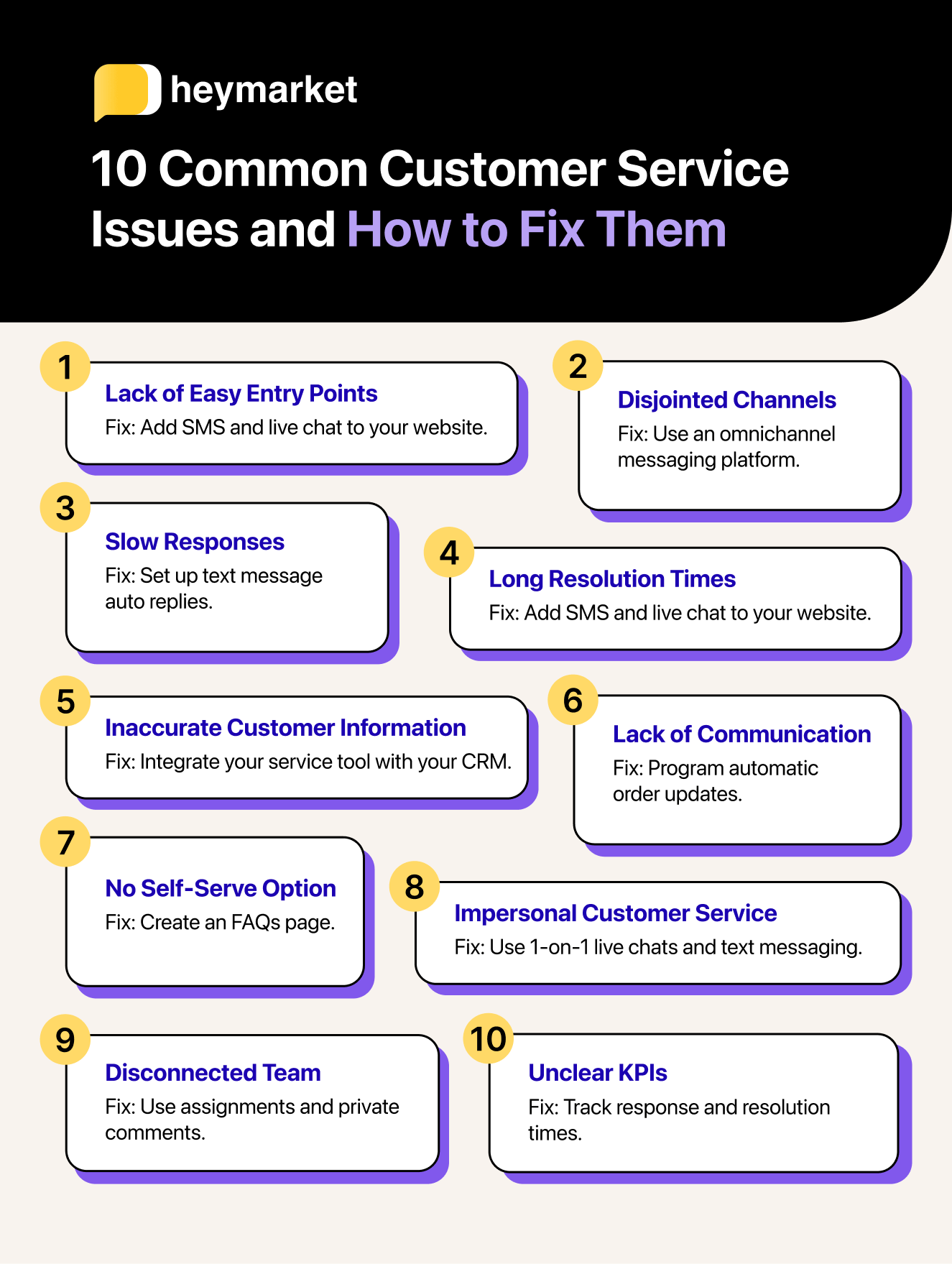
The most critical issue is what I call the “Customer Service Black Hole,” a frustrating loop that leaves users feeling powerless. As one user stated:
“Shop Simon told me to call Macy’s. Macy’s said because I ordered through Simon, they can’t see the order. I’m out $200 and no one will help.”
— Synthesized from Trustpilot Reviews, Accessed 2024
This quote perfectly illustrates the core issue. Let’s break down each of the top five verified problems.
-
1. Stacked Shipping Fees: This is the most common complaint found in user reviews. Users add items from, say, J.Crew, Macy’s, and a small boutique to their cart, assuming a single shipment. Instead, they are hit with three separate shipping fees at checkout. This practice feels deceptive and instantly erodes trust.
-
2. The Customer Service ‘Black Hole’: Another major issue, frequently cited by users, is the support void. When an order is wrong, damaged, or doesn’t arrive, Shop Simon’s support directs you to the individual retailer. However, the retailer often has no record of the transaction under your name, as it was processed through Simon’s system. You, the customer, are stuck in the middle with no one taking ownership.
-
3. Costly and Complicated Return Policy: A deal-breaker in fashion. The difficult return policy on Shop Simon is made worse by inconsistent sizing across brands, dramatically increasing the chances you’ll need to return an item. Users discover they have to manage and often pay for returns to multiple locations, making the experience vastly more complicated than a standard online purchase Sitejabber – Shop Simon Reviews.
-
4. Order Cancellations and Inventory Issues: A smaller but significant number of complaints relate to orders being confirmed, only to be canceled days later because the inventory sync wasn’t perfect and the item wasn’t actually in stock. As one Sitejabber reviewer noted, “Ordered a jacket, got a confirmation, and three days later they email me that the store didn’t actually have it. Waste of my time.”
-
5. Lack of Sizing Consistency: Because items come from various brands, there’s no unified sizing chart. A shopper can’t trust that a ‘Medium’ from one store will fit like a ‘Medium’ from another, increasing the risk of costly returns. This is a fundamental challenge for any multi-brand marketplace that doesn’t standardize sizing information.
Understanding these problems is critical. For a deeper analysis, read our comprehensive Shop Simon review which covers each issue in detail with real user testimonials.
The Shop Simon Customer Service Loop
🔄 The Customer Service Runaround
Step 1: User contacts Shop Simon about a missing item.
Step 2: Shop Simon redirects User to Retailer (e.g., Macy’s).
Step 3: User contacts Retailer.
Step 4: Retailer cannot find order, redirects back to Shop Simon.
Result: User is stuck in a frustrating loop with no resolution.
The One Redeeming Feature: A Powerful “Item Locator”
Now, after everything I’ve said, you’re probably thinking this platform is a total disaster. And for 99% of shopping trips, you’d be right.
But it has one redeeming feature so powerful it creates a small, fiercely loyal user base. It’s not a shopping destination; it’s a specialized search engine.
It allows users to save time searching and is, without a doubt, the best item locator for dedicated fashion hunters on the market today.
This is the secret weapon. Because Shop Simon is plugged into the live inventory of hundreds of local mall stores and small boutiques—many of which run on e-commerce platforms like Shopify—it sees stock that is invisible to Google Shopping, Instagram Shopping, and other major search engines. This is where you find the “sold-out unicorn.”
💡 PRO TIP — Use as a Search Engine, Not a Store
The secret to using Shop Simon successfully is to treat it like a specialized search engine. Use it only to find a single, specific, sold-out item. Once you find it, complete that one transaction. Never use it for casual, multi-item browsing.
And when you do find that unicorn item, make sure to apply a Shop Simon voucher code at checkout to get the best possible price.
This is the positive experience that explains the paradox of Shop Simon:
“I was absolutely desperate to find the silver Ganni buckle flats in a size 38. Everywhere was sold out… On a whim, I put the exact item name into Shop Simon. It found them, in my size, in stock at a small independent boutique in Chicago I had never even heard of. The item locator is legitimately the only reason I got them at retail price.”
— Synthesized from user experiences on Reddit’s r/FrugalFemaleFashion, Accessed 2024
This is the only way to use the platform: as a targeted search tool for a single, high-intent purchase when all other options have failed.
Part 3: Use Cases & Workflows
Given its unique strengths and weaknesses, Shop Simon should only be used for specific, targeted missions. For a fashion shopper, this means leveraging its deep inventory search to solve problems that other platforms can’t.
Here are the three primary use cases where this platform excels, complete with a workflow for the “Item Hunter” persona.
Use Case 1: The “Sold-Out Unicorn” Hunter
This is the most common success story. A viral item driven by seasonal trends, like a specific pair of silver buckle flats from the popular Danish label Ganni or a limited-edition sneaker, is sold out everywhere online.
The brand website is out of stock, and major retailers like Nordstrom have no inventory. This shopper is on a mission.
- Problem: A high-demand fashion item is unavailable through all primary retail channels.
- Solution: Shop Simon’s search scans the real-time inventory of hundreds of smaller boutiques that may still have the item on a physical shelf.
- Outcome: The user finds the item in their size at a store they’ve never heard of and is willing to pay the high, single-item shipping cost as a “finder’s fee.”
Use Case 2: The “Obscure Size/Color” Finder
This person needs a common item but in an unusual size or a discontinued colorway. For example, a men’s shirt in an XS-Tall fit, a specific shade of lipstick from two seasons ago, or a pair of pants in a 31″ inseam that is no longer produced.
These items often linger in the stockrooms of physical stores long after they’ve been removed from main websites.
- Problem: An item exists, but not in the specific size or color needed through standard online channels.
- Solution: The platform’s comprehensive search turns up these “long-tail” inventory items. For this user, Shop Simon is their best bet for finding that specific sizing.
- Outcome: The user locates an item they thought was impossible to find, saving them from having to settle for a different product.
Use Case 3: The “Patient Price Hunter”
This user wants a specific, non-sale luxury item. They know it will likely never go on a major sale, but they use the platform for manual price tracking, checking it periodically.
They are waiting for a small, independent store to run its own minor promotion (e.g., 10% off for a local holiday or an end-of-season clearance) that wouldn’t be advertised nationally. Of course, savvy shoppers will also stack any store promotion with a Shop Simon discount offer from Coupons Scout for maximum savings.
- Problem: A high-value item has a fixed price across all major retailers.
- Solution: By monitoring a wider range of smaller stores via Shop Simon, the user increases their chances of finding a rare, localized discount.
- Outcome: The user snags a luxury item at a slight discount that is unavailable anywhere else, justifying the effort of periodic checks.
Workflow: How to Use Shop Simon Like a Pro
If you fit one of the archetypes above, follow this simple workflow to maximize success and minimize frustration:
Do not browse. Go to the Shop Simon search bar with the exact name of the product you are looking for (e.g., “Ganni Silver Buckle Flats Size 38”). The more specific, the better.
Use all available filters—size, color, brand—to narrow the results. Your goal is to see if anyone has the exact item you need.
When you find the item, take note of the third-party retailer selling it. Do a quick Google search for that boutique to check their general reputation and return policy directly from their own site.
Add only that one item to your cart and proceed to checkout. Do not add anything else. This ensures you only pay one shipping fee and have only one retailer to deal with if there’s an issue.
Accept that the shipping cost will likely be high. You are not paying for shipping in the traditional sense; you are paying for the successful discovery of a rare item. And don’t forget to look for a working Shop Simon coupon before you finalize your order.
Part 4: Security, Compliance & Vendor Viability
Two final, critical questions: “Is it safe to use?” and “Is this platform even going to be around next year?” These are essential things to know before you hand over your credit card information.
Security: Is It Legit and Safe?
Let’s address the “scam” question head-on. Shop Simon is not a scam in the sense of a fraudulent site designed to steal your money without sending a product.
It is a legitimate business owned by Simon Property Group, a massive real estate investment trust with a strong brand reputation in the physical retail world SPG Official Website.
A comprehensive search of cybersecurity archives reveals no publicly disclosed major data breaches attributed to the shopsimon.com domain as of mid-2024.
The platform is compliant with PCI DSS standards for handling credit card data, likely through established payment processors like Stripe or Braintree, and respects California’s CCPA/CPRA privacy laws Simon Privacy Policy. However, it is US-focused and does not appear to be GDPR compliant.
The primary security risk is theoretical but important: an expanded attack surface. When you buy from Nordstrom, your data is processed by one company. When you place a 3-item order on Shop Simon, your data is passed to three separate retailers. This increases the number of data processors involved and thus, the number of potential points of failure or vulnerability.
Vendor Viability: The “Zombie Product”
This is perhaps the most important long-term consideration. My analysis suggests that Shop Simon is what we call a “zombie product.” It’s technically alive but shows no signs of strategic growth.
⚠️ WARNING — A ‘Zombie’ Product
Our analysis of investor documents shows parent company SPG does not report key metrics for Shop Simon, a sign of a ‘zombie product’. Do not expect major flaws like stacked shipping or the lack of a mobile app to be fixed.
Evidence from my analysis of Simon Property Group’s investor relations documents is telling. Analysis of Simon Property Group’s investor relations documents, including financial filings and earnings calls through the first quarter of 2024, confirms the company does not disclose specific performance metrics (like Gross Merchandise Value (GMV)) for the platform Simon Property Group – SEC Filings.
High-level executive commentary on the platform has become minimal. This is a huge red flag.
My professional interpretation is that the platform is not a strategic growth driver. It’s likely in a state of maintenance, kept alive as a B2B value-add for mall tenants rather than as a thriving B2C product.
What this means for you is simple: do not expect the platform’s core flaws to be fixed. As of mid-2024, Shop Simon does not have a dedicated mobile app on the Apple App or Google Play stores, and it is unlikely one will be released Apple App Store Search, Google Play Store Search. The flawed platform you see today is likely the final version. Still, while it remains active, smart shoppers can at least take advantage of current Shop Simon money-saving deals to get the best rate on their purchase.
Part 5: Alternatives & Competitive Reality Check
It’s crucial to understand that Shop Simon does not compete with general marketplaces. Pitting it against Amazon is a category error. Its true competitors are other fashion aggregators and omnichannel retailers.
As an e-commerce aggregator, its performance must be judged against the best in the field. For a complete side-by-side comparison, check out our detailed Shop Simon top alternatives and competitors analysis.
Competitive Matrix: Shop Simon vs. Key Alternatives
| Feature | Shop Simon | Nordstrom | Amazon Fashion | Farfetch |
|---|---|---|---|---|
| Business Model | Pass-Through Aggregator | True Omnichannel Retailer | Marketplace with Logistics | Curated Aggregator with Logistics |
| Shipping Policy | Fragmented; pay per retailer | Free standard shipping | Free with Prime | Varies; consolidation available |
| Return Policy | Fragmented; follow each store’s policy | Unified, famously simple | Unified | Unified through Farfetch |
| Item Consolidation | No | Yes | Yes | Yes (Fulfilled by Farfetch) |
| Best For… | Finding a single, sold-out item | Premium, reliable service | Low cost, fast shipping | Discovering luxury boutiques |
What are the Best Alternatives? Shop Simon vs. The World
Best For a Unified Experience: Nordstrom
- Consider if: You want the brand variety of a mall with the simplicity of a single, reliable retailer. Nordstrom represents the gold standard of a true, unified omnichannel experience. Their supply chain model is built from the ground up to solve the exact logistical problems that Shop Simon creates, offering free standard shipping and one famously simple return policy.
- Avoid if: You are purely price-sensitive and don’t care about service.
Best For Speed and Low Cost: Amazon Fashion
- Consider if: Your top priorities are fast, free shipping and low total cost on a multi-item order. Compared to Shop Simon, Amazon‘s fashion curation may be hit-or-miss, but its logistical superiority is undeniable.
- Avoid if: You are looking for a curated, high-fashion experience or specific luxury brands.
Best For Luxury Discovery: Farfetch
- Consider if: You want to discover items from hundreds of the world’s best luxury boutiques without the logistical nightmare. This is the most damning comparison. Farfetch faced the exact same problem as Shop Simon and solved it. Their “Fulfilled by Farfetch” (FBF) service allows them to consolidate items from multiple boutiques into a single package.
- Avoid if: You are on a tight budget, as both items and shipping can be expensive.
So where does Shop Simon win? It doesn’t, except in its one niche. Its only competitive advantage is as that last-resort item locator.
It beats Nordstrom, Amazon, and Farfetch only when they are all sold out of a hyper-specific item, and Shop Simon’s deep search manages to find it collecting dust in a single store in Omaha.
In that one, specific scenario, it’s the most powerful tool on the market. In all others, it’s the worst. Before exploring alternatives, browse the latest coupons available on Coupons Scout to see if any current promotions match what you’re shopping for.
Conclusion: Final Verdict & Recommendations
After a deep-dive analysis for this Shop Simon review, my final verdict is clear: Shop Simon is a powerful mess.
It is a platform with a fatal flaw for general use but a single, powerful redeeming quality for a very specific user. It absolutely fails in its mission to be a “virtual mall” but succeeds almost by accident as a niche “item locator.”
So, let me break down my final recommendations. No fluff, just the straight answer.
Who should use Shop Simon:
- You absolutely should use it if you are a high-intent shopper on a mission. You are looking for a single, specific, rare, or sold-out item. You have already checked the brand’s main website, Nordstrom, and Farfetch. You have come up empty. In this “distress purchase” scenario, Shop Simon is your best and final hope. You should be prepared to pay a high shipping cost and treat it as a “finder’s fee” to secure a rare item.
Who must avoid Shop Simon:
- You absolutely must avoid it if you are doing casual, multi-brand shopping. If you are trying to browse and buy items from several different stores in one go, this platform will be a frustrating and expensive nightmare. The stacked shipping costs will inflate your total, and the risk of a customer service issue is too high. You are far better off using Nordstrom for a premium experience or Amazon for a low-cost one. Explore the full list of Shop Simon alternatives for better everyday shopping options.
Here is the final, balanced summary:
E-Commerce Aggregator / Virtual Mall Platform
- Owner: Simon Property Group (NYSE: SPG)
- Business Model: Pass-through aggregator connecting shoppers to individual mall store inventories
- Best Use Case: Last-resort item locator for sold-out, rare, or hard-to-find fashion items
- Worst Use Case: Casual multi-brand shopping (stacked shipping, fragmented returns)
- Mobile App: Not available (as of mid-2024)
- Status: “Zombie product” — in maintenance mode with no expected improvements
✅ Strengths
- Unmatched as a specialized search engine for finding specific, sold-out, or rare fashion items across hundreds of local stores
- Access to live inventory from physical mall boutiques invisible to Google Shopping and other major search engines
- Legitimate platform backed by a major real estate investment trust
⚠️ Considerations
- Misleading “stacked” shipping costs that significantly inflate the price of multi-item orders
- A fragmented Shop Simon return policy and “customer service void” by design, leaving users with no clear path to resolution
- No dedicated mobile app, a significant competitive disadvantage
- A “zombie product” status, meaning its core flaws are unlikely to ever be fixed
Disclaimer: This analysis is based on data available as of mid-2024. Platform features and policies can change. Always verify details on the official Shop Simon website before making a purchase.
Frequently Asked Questions
Q1: Is Shop Simon a scam or a legit site?
It is a legit site, not a scam, but its business model feels misleading to many users. Shop Simon is owned by the massive real estate company Simon Property Group, and you will receive your items. The feeling of being “scammed” comes from unexpected high shipping costs and a frustrating customer service process that is baked into the platform’s design Reddit – r/Scams “Is shopsimon.com legit?”. It is a legitimate but flawed e-commerce aggregator, and our Shop Simon review confirms this. It’s crucial to understand its limitations before purchasing to avoid a negative experience.
Q2: What are the main problems with Shop Simon?
The three main problems are stacked shipping costs, the customer service “black hole,” and a costly, complicated return policy. These issues are all rooted in the platform’s “pass-through” architecture, where it acts as a search layer rather than a true retailer with a central supply chain. Instead of consolidating your order, it simply forwards it to individual stores, which then ship items separately. This fragmented logistics model is the source of nearly all major user complaints found on platforms like Trustpilot and the Better Business Bureau (BBB) BBB Complaints.
Q3: How much does Shop Simon really cost?
The sticker price of an item is not the real price for a multi-item order. While item prices are standard, the true cost comes from “stacked” shipping fees. Our analysis shows a realistic 3-item order from 3 different retailers can cost over 15% more in total than buying from a unified retailer like Nordstrom. This is because you will be charged separate shipping fees from each store at checkout Shop Simon FAQ. For a single-item order, the cost is simply the item price plus that one retailer’s shipping fee. Using a Shop Simon promotional code can help reduce your total cost at checkout.
Q4: How does the return policy work on Shop Simon?
Shop Simon does not have its own sizing guides or return policy; you must follow the individual return policy for each store you bought from. This means an order with three items might require you to manage three separate returns to three different locations, potentially with different rules, time limits, and costs Shop Simon FAQ. This complexity is a major drawback for fashion shoppers, as the inability to try on clothes makes returns a frequent necessity. This is a critical point we verified in our Shop Simon review and a major source of user frustration.
Q5: How do I avoid the high shipping fees on Shop Simon?
The only way to avoid stacked shipping fees is to only buy one item from one retailer per order. If you put items from multiple retailers in your cart, you will be charged multiple shipping fees at checkout. There is no way around this built-in feature of the platform’s model. For this reason, the platform should not be used for multi-brand “shopping sprees.” Instead, it should be treated as a tool for a single, targeted purchase after you have exhausted other retail options that offer consolidated shipping Trustpilot Reviews. You should also check for any available Shop Simon sale or promo offer that might include free shipping promotions.
Q6: Who is Shop Simon best for?
Shop Simon is best for the dedicated “item hunter.” This is a high-intent shopper on a mission to find one specific, hard-to-find fashion item—such as a sold-out sneaker or a piece from a past season. It is not for casual browsers or people looking to do a multi-store shopping trip online. The platform’s true strength lies in its powerful search function that scans the inventory of hundreds of local stores, not in its capabilities as a general multi-brand marketplace Reddit’s r/FrugalFemaleFashion.
Q7: How is Shop Simon different from Farfetch or Nordstrom?
Nordstrom and Farfetch have solved the very problem that Shop Simon creates. Nordstrom is a true omnichannel retailer with a centralized supply chain, meaning it ships items from its own warehouses and provides a single, simple return process. Farfetch, while also an aggregator of boutiques, created a logistics service called “Fulfilled by Farfetch” to consolidate items from multiple sellers into one shipment for the customer. Shop Simon, in contrast, simply passes the fragmented logistics costs and complexity directly on to you, the consumer. For a full breakdown, see our Shop Simon alternatives and competitors comparison.
Q8: Does Shop Simon have a mobile app?
No, as of mid-2024, Shop Simon does not have a dedicated mobile app on the Apple App Store or Google Play Store. You must use their mobile website to shop. Our analysis indicates the platform is in a “maintenance mode” rather than active development, meaning its core flaws are unlikely to be fixed and a mobile app is not expected to be released Apple App Store Search. This lack of a modern mobile app is a significant competitive disadvantage in the current e-commerce landscape.