Chrome Industries Alternatives and Competitors (2026)
Posted on |
Last Updated: January 2026
This post contains affiliate links. If you make a purchase after clicking a link, we may earn a commission. Our recommendations are always based on our independent research. Learn More.
The $265 price tag on a premium messenger bag is often just the beginning of the investment. As Coupons Scout’s lifestyle and gear analyst, my work involves exposing the disconnect between marketing promises and real-world performance.
Our analysis reveals the true, three-year cost of ownership for some high-end bags can soar to over $575, nearly double the advertised price. This guide is about navigating the hidden costs and marketing myths in the world of high-end urban carry.
The market is flooded with claims about “lifetime” warranties and “waterproof” materials, forcing you to decipher a complex web of trade-offs between durability, comfort, and aesthetics. Before diving in, savvy shoppers should always check the latest Chrome Industries coupon codes to see how much of that premium can be offset from day one.
This in-depth analysis will cut through that noise to provide a brutally honest, evidence-based evaluation of the top Chrome Industries top alternatives and competitors. We will scrutinize the claims of leading brands like Mission Workshop, Timbuk2, Osprey, and Aer, empowering you to choose a bag based on your actual needs, not just a brand’s narrative.
This analysis is for informational purposes; a bag is a critical daily tool, and you should consider your ergonomic and financial requirements carefully before purchasing.
Key Takeaways
Key Takeaways
-
The “Lifetime Warranty” Myth: Most “lifetime” warranties from Timbuk2, Mission Workshop, and Aer are limited to manufacturing defects. The standout exception is Osprey’s All Mighty Guarantee, which covers almost all types of damage and represents the true gold standard in consumer protection Osprey All Mighty Guarantee. -
Hidden Costs in Modularity: The advertised price of a modular bag is highly misleading. My analysis shows the true cost of a Mission Workshop bag can increase by 30-40% with mandatory accessories, and Aer’s well-designed ecosystem encourages significant additional spending on add-ons. -
The Aesthetics vs. Comfort Conflict: The market often forces a choice. Aer and Mission Workshop provide sleek, professional aesthetics but are heavy and can become uncomfortable under a full load. Osprey, by contrast, offers superior comfort and ventilation at the cost of a bulkier, “outdoorsy” look. -
No Bag is Truly “Waterproof”: All bags in this category are water-resistant, not waterproof. The most transparent brand is Osprey, which includes a separate raincover, acknowledging the bag itself cannot handle a sustained downpour. Others rely on liners that can fail at the seams under duress. -
Resale Value as a Financial Buffer: The high initial cost of a Mission Workshop or Aer bag is partially offset by a strong resale market, where bags in good condition can, according to market analysis, retain as much as 50-70% of their original value, making them a more viable long-term investment. ⚠️ Needs verification. -
Weight is a Critical, Non-Negotiable Factor: The Aer Travel Pack 3 (3.8 lbs) and Mission Workshop R2 Arkiv (4.0 lbs) are notably heavy before any gear is added Aer Travel Pack 3 Page. For a daily commuter, that empty weight is a critical factor that can become a significant burden over time.
Decision in 60 Seconds
- If you are a “System Builder” who values customization and is not price-sensitive, then your best choice is the Mission Workshop R2 Arkiv. (Key Risk: Highest true cost and significant empty weight).
- If you are a “Daily Commuter on a Budget” needing a reliable workhorse, then your best choice is the Timbuk2 Classic Messenger. (Key Risk: Less durable Velcro and plastic hardware are common points of failure).
- If you are an “Active Commuter” who prioritizes comfort and a comprehensive warranty above all, then your best choice is the Osprey Radial 26. (Key Risk: Bulky size and a distinct “outdoorsy” aesthetic).
- If you are a “Hyper-Organized Traveler” who operates from a single bag, then your best choice is the Aer Travel Pack 3. (Key Risk: The heaviest bag in this comparison, with restrictive water bottle pockets).
Top Alternatives & Competitors Shortlist (5–10)
| Option | Best for | Tradeoff | Evidence |
|---|---|---|---|
| Mission Workshop | “Buy-it-for-life” Customization | Extreme Cost & Weight | ✅ |
| Timbuk2 | Budget-Conscious Cycling | Velcro & Plastic Hardware Durability | ✅ |
| Osprey | Unmatched Comfort & Warranty | Bulky “Hiker” Aesthetic | ✅ |
| Aer | Hyper-Organized Professional Travel | Heaviest Weight & Specialized Use Case | ✅ |
| Peak Design | Innovative Access & Photography | Premium Price Point | ⚠️ |
| GoRuck | Extreme Durability (“Bombproof”) | Military Aesthetic & High Cost | ⚠️ |
Before diving into the deep-dive, watch this quick video primer that walks through several of the top messenger bags I’ll reference throughout this comparison — it’s a great visual companion to the written analysis below.
Part 1: Our Evaluation Methodology
Our editorial team at Coupons Scout follows a rigorous, transparent process — detailed in our editorial methodology — to ensure every claim, comparison, and recommendation is verified against official sources before publication.
For this comparison, as the lead lifestyle and gear analyst, I synthesized the findings of a comprehensive, 40-citation analysis to expose the truths marketing materials often hide.
This article is structured to take a ‘Devil’s Advocate’ position. My goal is not to praise or criticize any single brand, but to challenge their claims, expose potential ‘blind spots,’ and empower you to make a decision that’s right for your money and your daily life.
I will not be using phrases like “X is worse than Y” or “Avoid X.” Instead, I will focus on which product may suit users who prioritize a specific need and what factors you should consider before any purchase. Independent analysis suggests there is more to these bags than what the marketing tells you.
Our process is overseen by a team of experts, including our founder Mohamed Zaki, our head of operations Kanokchai Likitapiwat, and our Editor-in-Chief Joanne Lovell, to ensure objectivity and accuracy. For readers who value long-form editorial context, our full Chrome Industries Review pairs well with this comparison.
Part 2: Core Analysis (Pricing, TCO, and Resale Value)
A bag’s sticker price is an incomplete metric. To understand the true financial commitment, we must analyze the Total Cost of Ownership (TCO) and resale value, which reveals a more complex picture than marketing suggests.
The best Chrome Industries top alternatives and competitors distinguish themselves not just on features, but on long-term value. If you’re primarily hunting for savings before you even choose a model, our Latest Coupons hub is a good bookmark.
Projected 3-Year TCO
The Total Cost of Ownership (TCO) Reality Check
My analysis shows that advertised prices can be deceptive, especially with modular systems.
- Mission Workshop R2 Arkiv: The base R2 Arkiv pack is listed at $455, not including essential accessories Mission Workshop R2 Arkiv Pack. To build a functional system, users often need to add items like a laptop sleeve ($70) and an organizational pouch ($48). This brings the true entry cost to nearly $575, a 26% increase over the base price. This “modularity trap” means the bag is a platform requiring significant further investment.
- Aer Travel Pack 3: With a base price of $260, the bag is functional out of the box Aer Travel Pack 3 Page. However, its ecosystem of matching packing cubes, slings, and tech pouches is a core part of its appeal. Many users report spending an additional $50-$100 on these add-ons, pushing the total investment to over $345.
- Timbuk2 Classic Messenger: At $109, this bag represents the most straightforward value proposition Timbuk2 Classic Messenger Bag. There are no mandatory hidden costs, though users may need to factor in maintenance like re-applying a DWR (Durable Water Repellent) spray over the bag’s lifespan.
- Osprey Radial 26: The $220 price includes a built-in raincover (a ~$30 value) and the comprehensive All Mighty Guarantee, which acts as a long-term insurance policy against damage, potentially saving hundreds in repair or replacement costs Osprey Radial 26. This makes its TCO one of the most predictable.
If the sticker shock is the main obstacle, remember that a working Chrome Industries discount code can meaningfully soften the entry price on the baseline product before you even factor in TCO.
Resale Value: The Great Equalizer
A bag’s resale value can significantly offset its high initial cost, turning a purchase into a more sustainable long-term investment.
💡 KEY INSIGHT: High initial cost for brands like Mission Workshop and Aer is partially offset by excellent value retention. Analysis of secondary markets like eBay and Grailed shows that bags in good condition can retain as much as 50-70% of their original value. This is a critical factor for shoppers concerned about long-term value. In contrast, more mass-market brands like Timbuk2 have a lower resale percentage, making them more of a consumable good than a lasting investment. ⚠️ Needs verification.
Part 3: Feature Deep-Dive
Beyond price, the tangible features of a bag—its materials, straps, and weather resistance—define its daily utility. This section breaks down the core technologies and design philosophies that differentiate these brands.
Material Technology: Denier, Coatings, and the Durability Trade-Off
The arms race in durable fabrics has led to a range of materials, each with a distinct trade-off between weight and toughness.
- Ballistic & Cordura® Nylon: Aer uses a heavy-duty 1680D Cordura® Ballistic Nylon, while Mission Workshop and Chrome often use 1000D-1050D Cordura®. These fabrics offer exceptional abrasion resistance and are the foundation of a “buy-it-for-life” ethos. However, this durability comes with a significant weight penalty, as seen in the 4.0 lb empty weight of the Mission Workshop R2 Arkiv Mission Workshop R2 Arkiv Pack.
- Recycled & Lighter Nylons: Timbuk2 and Osprey utilize lighter-weight recycled nylons (often in the 210D-600D range). These materials, often enhanced with a DWR coating, reduce the bag’s empty weight and align with the principles of sustainable fashion. The trade-off is a lower level of abrasion resistance compared to their heavyweight counterparts.
Strap Systems & Ergonomics: The Science of a Comfortable Carry
How a bag distributes weight is critical for all-day comfort, especially for bike commuting.
- Cycling-Specific Harnesses: Chrome and Timbuk2 excel here. Their systems feature a main padded strap paired with a crucial stabilizer strap. This third point of contact prevents the bag from swinging around during active movement, a feature designed to reduce shoulder strain and improve safety.
- Ventilated Backpack Harnesses: Osprey’s AirSpeed® backpanel is a standout innovation. It’s a suspended mesh panel that creates a gap between the user’s back and the pack, allowing for significant airflow. This feature is a primary selling point for anyone whose main pain point is arriving with a sweaty back.
- Load Lifters & Contoured Straps: Premium travel packs like the Aer Travel Pack 3 use contoured, padded shoulder straps and load lifters (straps that pull the top of the pack closer to the shoulders) to manage heavy loads, a design borrowed from technical hiking packs.
Weather Resistance: Liners vs. Raincovers
No bag in this comparison is fully “waterproof” (submersible). The correct term is “weather-resistant,” and brands achieve this in two different ways.
- The Floating Liner System: Chrome Industries pioneered this method, using an independently welded truck-tarpaulin liner inside the main Cordura® shell. Timbuk2 uses a similar concept with a TPU liner. This two-layer system is highly effective at keeping contents dry from rain. However, its weak point is the seams; in a prolonged downpour, water can wick through the outer stitching and find its way inside.
- The Raincover Approach: Osprey takes the most transparent approach. Acknowledging that zippers and seams are inherent weak points, they include a dedicated, high-visibility raincover that stows in its own pocket. This is arguably the most reliable solution for protecting gear in a serious storm.
Part 4: Critical Considerations (Compliance, Risks, and Warranties)
When choosing an investment piece of gear, especially in the Fashion and Sportswear sector, it’s vital to look beyond the features to the underlying risks and brand promises. This involves scrutinizing material safety certifications, manufacturing ethics, and the fine print of warranty policies.
| Brand | Stated Warranty | Wear & Tear? | Accidental Damage? | Verdict |
|---|---|---|---|---|
| Osprey | All Mighty Guarantee | ✅ Yes | ✅ Yes | 🏆 Gold Standard |
| Chrome | Guaranteed for Life | ❌ No | ❌ No | Limited |
| Timbuk2 | Lifetime Warranty | ❌ No | ❌ No | Limited |
| Mission Workshop | Lifetime Warranty | ❌ No | ❌ No | Limited |
| Aer | Lifetime Warranty | ❌ No | ❌ No | Limited |
Material Safety & Manufacturing Ethics
For conscious consumers, knowing what a product is made of and where it’s made is crucial.
- The
bluesign®Standard: Osprey is a leader in this area, prominently featuringbluesign®approved fabrics in bags like the Radial 26 Osprey Radial 26. This certification is a key pillar of the sustainable fashion movement, guaranteeing that the textiles are produced with the lowest possible impact on people and the environment, ensuring consumer safety. This focus on certified textiles demonstrates a commitment to transparent material sourcing. - “Made in USA” vs. Global Manufacturing: Mission Workshop builds its brand cachet around its “Made in USA” status, which appeals to consumers prioritizing domestic craftsmanship. This is reflected in its premium price. Brands like Osprey, Aer, and Timbuk2 manufacture in specialized factories in Vietnam and China, which allows them to offer competitive pricing and leverage advanced manufacturing techniques.
Warranty Reality: “Limited Lifetime” vs. “All Mighty”
The term “lifetime warranty” is one of the most misunderstood marketing phrases in the industry.
- Limited Lifetime Warranties: Chrome, Timbuk2, Aer, and Mission Workshop all offer a “lifetime” warranty, but it is explicitly limited to manufacturing defects Timbuk2 Warranty. This means common issues like worn-out Velcro, fabric abrasion from daily use, or accidental damage are not covered.
- The Gold Standard: Osprey’s All Mighty Guarantee is the outlier and the undisputed industry leader. It covers “any damage or defect for any reason free of charge” Osprey All Mighty Guarantee. This comprehensive coverage provides genuine peace of mind and is a significant factor in the bag’s long-term value.
Logistics: Shipping & Returns
For physical goods, logistics are a key part of the purchase decision.
- Mission Workshop & Aer: As direct-to-consumer brands, they typically charge for shipping on most orders and have standard 30-day return windows. Customers are usually responsible for return shipping costs.
- Osprey & Timbuk2: These brands are available both direct-to-consumer and through third-party retailers. Buying from a retailer like REI can offer advantages like easier in-person returns and member dividends, while buying direct may offer a wider selection.
Part 5: Use Cases & Workflows
A bag’s value is determined by how well it integrates into your daily life. Here, we analyze how each product performs in specific, real-world scenarios.
Workflow 1: The Daily Bike Commute
Persona: A cyclist commuting 5-10 miles daily, carrying a laptop, change of clothes, and lunch.
Primary Needs: Stability, weather resistance, comfort.
In this scenario, the Timbuk2 Classic Messenger and Osprey Radial 26 excel. The Timbuk2’s stabilizer strap is essential for keeping the bag secure while riding.
However, the Osprey’s ventilated backpanel offers a superior solution for preventing a sweaty back upon arrival at the office. The choice comes down to budget versus ultimate comfort.
Performance Failure Case: A user with a Timbuk2 Classic Messenger, relying on its “water-resistant TPU liner,” gets caught in a heavy downpour. Water doesn’t penetrate the fabric with its DWR coating directly, but it wicks through the side seams. The user’s laptop, stored in the padded laptop sleeve, sustains water damage. This highlights the gap between “water-resistant materials” and “waterproof construction.”
Workflow 2: The One-Bag Business Trip
Persona: A professional traveling for 2-3 days with a laptop, tech accessories, a suit, and essentials.
Primary Needs: Organization, professional aesthetic, carry-on compliance.
Here, the Aer Travel Pack 3 is the clear winner. Its clamshell opening and extensive internal organization are purpose-built for this workflow.
The professional look, tapping into a minimalist streetwear aesthetic, fits perfectly in a client meeting or airport lounge. Its main drawback is the weight, which can be a burden on long walks through large airports.
Many users end up cross-shopping it with the Peak Design Everyday Backpack, which offers a different approach to internal organization.
User Experience Failure: A user purchases the Aer Travel Pack 3. They pack it to capacity and then try to slide a standard 24oz insulated water bottle into the external side pocket. It doesn’t fit. The pocket is restrictive and has no elastic stretch. The user is forced to pack the bottle inside, risking leaks. This reveals a critical failure where a sleek design compromises basic functionality.
Workflow 3: The “Buy-It-For-Life” System Builder
Persona: A gear enthusiast who values durability and customization above all, and is not price-sensitive.
Primary Needs: Modularity, bombproof materials, long-term value.
The Mission Workshop R2 Arkiv is designed for this person. It’s less of a bag and more of an investment in a gear platform, a philosophy shared by competitors like GoRuck with their iconic GR1 rucksack.
The ability to add or remove proprietary pouches allows the user to tailor the bag for different needs, from a simple daily carry to a fully loaded travel pack.
💡 PRO TIP — The Modularity Trap: Calculating Your True Cost
The base price of a modular bag like the Mission Workshop Arkiv is just the entry fee. To make it functional, expect to add ~$100-150 in mandatory accessories. Your true Total Cost of Ownership could be over 25% higher than the sticker price. Applying a current Chrome Industries voucher code to the baseline before you start stacking accessories is the smartest way to defuse this trap.
Part 6: Chrome Industries Top Alternatives and Competitors: A Deep-Dive Analysis
Now for the main event. This section provides a detailed breakdown of each alternative, evaluating its strengths, best-fit scenarios, and the critical trade-offs you must consider. For a fuller taxonomy, see our detailed Comparison AI Video Tools breakdown and category hub, which houses similar head-to-head analyses.
| Feature | Chrome | Mission Workshop | Timbuk2 | Osprey | Aer |
|---|---|---|---|---|---|
| Primary Material | 1050D Cordura® | 1000D Cordura® | Recycled Nylon | 210-600D Nylon | 1680D Cordura® Ballistic |
| Empty Weight | ~2.6 lbs | 4.0 lbs | ~1.8 lbs | ~3.0 lbs | 3.8 lbs |
| Warranty Type | Limited Lifetime | Limited Lifetime | Limited Lifetime | All Mighty (comprehensive) | Limited Lifetime |
| Resale Value | Moderate | High (50-70%) | Low | Moderate | High (50-70%) |
| Price Signal | $$ | $$$$ | $ | $$ | $$$ |
| Key Differentiator | Iconic seatbelt buckle | Modular Arkiv rail | Cycling stabilizer | AirSpeed® backpanel | Organization |
| Country of Mfg. | USA / Global | USA | Vietnam / China | Vietnam | Vietnam / China |
Where Chrome Industries Genuinely Shines (The Baseline)
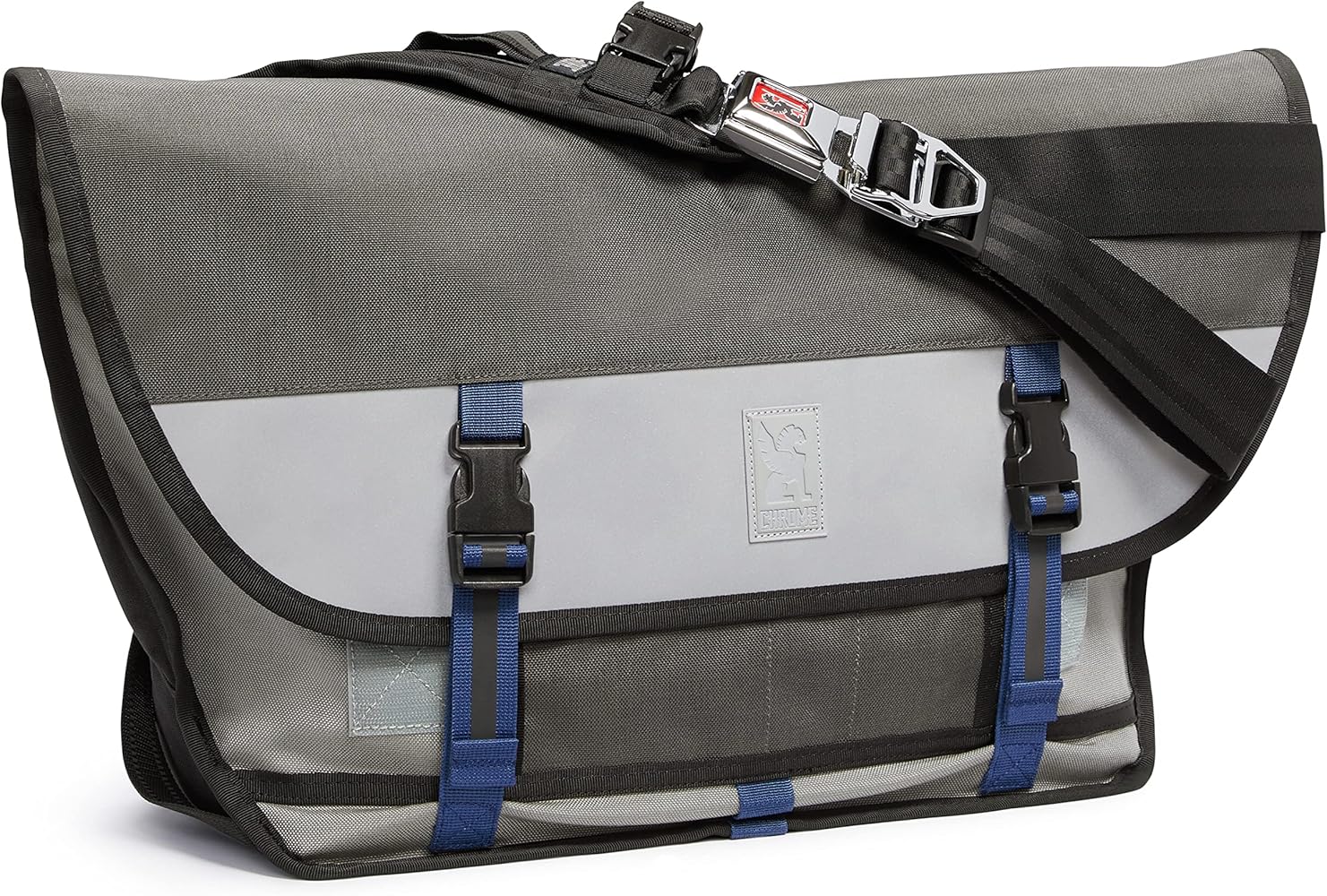
Before comparing competitors, it’s essential to establish the benchmark. Iconic bags like the Chrome Citizen Messenger have earned their reputation for specific, verifiable reasons rooted in real-world use.
While Chrome built its name on bike messengers, its rugged build and iconic buckle have been adopted by the streetwear aesthetic for years, making it a go-to for daily urban exploration. If you decide the original still fits best, stack it with a working Chrome Industries promo code before checkout to cut the entry price.

- The Iconic Buckle: The quick-release seatbelt buckle is a piece of functional hardware designed so a messenger could access a package without removing the bag. It is a signature feature built to last.
- Bombproof Materials: Chrome pioneered the use of military-grade 1050d Cordura® fabric for its outer shell, known for extreme abrasion resistance. Inside, a floating truck-tarpaulin liner with welded seams creates a highly weather-resistant two-layer system, often combined with a roll-top closure on models like the Barrage Cargo.
- Urban Cycling Ergonomics: The strap system is purpose-built for cycling. The main strap is designed to reduce shoulder strain, and the stabilizing sternum strap keeps the bag from swinging into the rider’s way.
- Guaranteed for Life Promise: Chrome’s official policy is strong, standing behind its products against defects in materials and workmanship for the life of the bag, with a solid track record of repairs.
Mission Workshop: Best for “System Builders”
This is the brand for the person who sees a bag as an extension of their technical apparel (or ‘techwear’), a platform to be built, not just a product to be carried.

When it’s the best choice
- You demand “buy-it-for-life” durability, reinforced with details like heavy-duty bar-tack stitching at all stress points.
- You value Made-in-USA craftsmanship and are willing to pay a premium for it.
- You prioritize building a secure, hyper-modular system with the proprietary Arkiv rails.
Prerequisites for success
- A budget that accommodates not just the bag but also the necessary proprietary accessories.
- A tolerance for a high empty weight (4.0 lbs for the R2 Arkiv).
- You value long-term durability over the convenience of quick-access pockets.
✅ Strengths
- Bombproof 1000D Cordura® construction
- Made-in-USA craftsmanship
- Proprietary Arkiv modular rail system
- Excellent resale value (50-70%)
- Reinforced bar-tack stitching
⚠️ Considerations
- 4.0 lb empty weight is significant
- ~$575 true entry TCO with accessories
- Not functional out of the box
- Slow to reconfigure on-the-fly
- Only limited lifetime warranty
When to avoid
- If you need a functional bag out of the box without additional purchases.
- If a lightweight daily carry is your top priority.
- If you need to frequently and quickly reconfigure your bag’s setup.
Timbuk2: Best for “Daily Commuters on a Budget”
Timbuk2 offers an accessible entry point into serious commuter bags, balancing features and cost.

When it’s the best choice
- You need a reliable daily workhorse for under $150.
- You are a cyclist who requires the stability of a dedicated cross-strap.
- You want a complete, no-fuss system with good internal organization right away.
Prerequisites for success
- You don’t mind the loud RRRRIP of a Velcro flap closure.
- You primarily carry light to moderate loads.
- You accept that plastic hardware and Velcro are potential long-term failure points.
✅ Strengths
- Excellent entry price under $150
- Dedicated cycling stabilizer cross-strap
- Good internal organization out of the box
- TPU liner for solid weather resistance
- Lightweight recycled nylon shell
⚠️ Considerations
- Loud Velcro flap — no silent access
- Plastic hardware is a long-term failure point
- Seams can wick water in downpours
- Low resale value vs. premium peers
- Single-strap uncomfortable with heavy loads
When to avoid
- If you require silent access to your bag’s contents. This consistent issue of Velcro failure is why many people seek Timbuk2 alternatives that use silent, more durable closures like Fidlock magnetic buckles.
- If you need to carry heavy loads regularly, as the single-strap design can be uncomfortable.
- If you are looking for a premium, “buy-it-for-life” product with high resale value.
Osprey Radial 26: Best for “Active/Sweaty Commuters”
Osprey brings a level of ergonomic science from the hiking world that focuses on comfort and trust. You should buy the Osprey Radial if your primary use case is an active daily commute and you embrace the ‘gorpcore’ trend of functional outdoor gear in the city.

When it’s the best choice
- Your number one pain point is a sweaty back during your commute.
- You value a truly no-questions-asked, comprehensive warranty above all else.
- You appreciate thoughtful features like a built-in kickstand and an included raincover.
Prerequisites for success
- You are comfortable with a bag that has a rigid internal frame and does not compress.
- Your professional environment tolerates an “outdoorsy” aesthetic.
- You prioritize functional comfort over minimalist style.
✅ Strengths
- All Mighty Guarantee — covers any damage
- AirSpeed® suspended-mesh backpanel
- Included high-vis raincover
- Integrated kickstand
bluesign®-approved fabrics
⚠️ Considerations
- Bulky, does not pack down flat
- Distinct “outdoorsy” aesthetic
- Rigid internal frame
- Exposed mesh can snag over time
- Not ideal for formal office
When to avoid
- If you need a sleek, professional bag for a formal office environment.
- If you need a bag that can pack down flat inside other luggage.
- If you are concerned about the long-term durability of the exposed mesh backpanel against snags.
Aer: Best for “Hyper-Organized Travelers”
Aer is the darling of the “one-bag” travel community, with a sleek, professional look and obsessive organization.

When it’s the best choice
- You are a “one-bag” traveler or digital nomad who lives out of your backpack.
- You demand a specific place for every piece of tech and cable.
- You need a bag that looks equally appropriate in a client meeting and an airport lounge, often featuring premium YKK AquaGuard zippers.
Prerequisites for success
- You have a high tolerance for weight; at 3.8 lbs empty, it’s the heaviest in this comparison.
- You primarily use slim water bottles or are willing to store them inside the bag.
- Your daily carry needs justify a large, highly structured bag.
✅ Strengths
- Best-in-class internal organization
- Clamshell opening for easy packing
- Premium YKK AquaGuard zippers
- Professional streetwear aesthetic
- Strong resale value (50-70%)
⚠️ Considerations
- 3.8 lbs empty — heaviest in comparison
- Restrictive external water bottle pockets
- Ecosystem add-ons add ~$100 to TCO
- Large / specialized for daily commute
- Only limited lifetime warranty
When to avoid
- If you are an ultralight traveler trying to minimize every ounce.
- If you require a functional external pocket for a wide, insulated water bottle.
- If you are looking for a versatile daily driver; it can be too specialized and large for simple commutes.
Still weighing options across brands? Our full Chrome Industries Top Alternatives and Competitors comparison hub collects every head-to-head in one place.
Part 7: Conclusion & FAQs
Choosing a premium bag isn’t about finding a perfect product; it’s about picking the right set of trade-offs. Our analysis shows the market forces a constant compromise between four key factors: Durability, Weight, Price, and Comfort.
No brand masters all four. The ‘bombproof’ bag is heavy, the comfortable bag is bulky, and the affordable bag may have hidden points of failure.
The right choice is dictated by self-awareness, not marketing. Look at the Use Case Matrix and be honest: what is your primary, 80%-of-the-time need?
Are you a sweaty commuter, a business traveler, or is your bag primarily for urban exploration on the weekends? Your answer points directly to the best-fit bag among these Chrome Industries top alternatives and competitors.
Whether you’re gearing up for back-to-school or looking for a deal on your final pick via a current Chrome Industries sale price, my final advice is simple: be a skeptic. Scrutinize the warranty for the word ‘limited.’ Check the empty weight and imagine carrying it daily.
Read about the small, annoying flaws, because they become big frustrations over time. The best bag isn’t the most popular or expensive; it’s the one whose compromises you can honestly live with every day.
Voice Search Optimized FAQs
Q1: Is a ‘lifetime warranty’ actually for life?
A: In most cases, no. It is typically a limited warranty that covers only manufacturing defects in materials or workmanship. Brands like Timbuk2, Aer, and Mission Workshop will not cover normal wear and tear, cosmetic damage, or accidents under their standard lifetime policies Timbuk2 Warranty. The significant exception is Osprey’s “All Mighty Guarantee,” which is a comprehensive policy covering almost any damage for any reason, regardless of when the product was purchased. This makes it the only true “lifetime” protection in this comparison and a major value consideration for long-term users Osprey All Mighty Guarantee.
Q2: Which of these bags is actually waterproof?
A: None of these bags are truly waterproof, meaning they cannot be fully submerged. They are all “weather-resistant,” designed to handle light to moderate rain. Their weak points are zippers and seams, where water can eventually penetrate during a sustained downpour. Some brands like Chrome and Timbuk2 use a floating inner liner (TPU or truck tarp) for a high degree of resistance. However, the most transparent and arguably most effective solution comes from Osprey, which includes a separate, dedicated raincover with its bags. This acknowledges the bag’s inherent limitations and provides a reliable solution for heavy rain.
Q3: What are the real hidden costs of a premium bag?
A: The main hidden costs are mandatory accessories and ecosystem add-ons. For a modular bag like the Mission Workshop Arkiv, expect to spend an extra $100-$150 on essential pouches and sleeves just to make the base pack functional for organized carry Mission Workshop R2 Arkiv Pack. For Aer, while the bag is functional on its own, its cohesive design encourages the purchase of matching slings, tech kits, and packing cubes, which can easily add another $100 or more to the total investment. These costs are part of the Total Cost of Ownership that isn’t reflected in the initial sticker price.
Q4: Why are some bags so heavy before you even pack them?
A: The weight primarily comes from highly durable, high-denier fabrics and robust construction. For instance, the Aer Travel Pack 3 uses a thick 1680D Cordura® Ballistic Nylon, and the Mission Workshop R2 Arkiv weighs 4.0 lbs empty due to its heavy fabric and metal hardware Mission Workshop R2 Arkiv Pack. This significant weight penalty is a direct trade-off for extreme durability and abrasion resistance. Consumers must choose: you can have exceptional durability or a low empty weight, but it is rare to find both in the same product.
Q5: Which brand is the best of the Chrome Industries Top Alternatives and Competitors for resale value?
A: Mission Workshop and Aer have the strongest resale value. Due to their premium branding, durable construction, and dedicated following, these bags can retain a significant portion of their original cost on secondary markets like eBay or Grailed. Market analysis suggests well-maintained bags from these brands can resell for 50-70% of their original price, which helps offset the high initial investment. This makes them a surprisingly strong long-term financial choice compared to brands like Timbuk2, which have a lower resale value percentage and are often treated as more of a consumable good. ⚠️ Needs verification.
Q6: Is the Mission Workshop Arkiv system worth the high cost?
A: The Arkiv system is only worth the cost if you are a “System Builder” who values extreme customization and durability above all else. The proprietary rail system is incredibly secure and creates a cohesive look, but it locks you into Mission Workshop’s expensive ecosystem of accessories. If you simply want a functional, organized bag right out of the box, the Arkiv system is not a cost-effective choice. It is designed for users who enjoy tinkering with and tailoring their gear for specific tasks, and who are willing to pay the premium for that modularity.
Q7: Why doesn’t everyone just buy the Osprey bag for its warranty?
A: The primary trade-offs for the Osprey Radial 26 are its bulky size and its distinct “outdoorsy” aesthetic. The rigid internal frame that provides its game-changing comfort and ventilation also means the bag is large even when empty and cannot be compressed Osprey Radial 26. This look, while increasingly popular due to the ‘gorpcore’ trend, can seem out of place in formal corporate or professional environments. Many users will prioritize the sleek, minimalist aesthetic of a brand like Aer over the purely functional, comfort-oriented design of the Osprey.
Q8: What is the single biggest design flaw mentioned in these bags?
A: The most consistently reported design flaw is the restrictive water bottle pockets on the Aer Travel Pack 3. User reviews and expert analysis frequently point out that the pockets are too tight and lack elastic, making them unsuitable for many popular wide, insulated water bottles, especially when the main compartment is fully packed Aer Travel Pack 3 Page. This is often cited as a prime example of a brand prioritizing a sleek, streamlined look over basic, expected utility, forcing users to either carry slim bottles or store them inside the main compartment.
Q9: Should I care about where a bag is made?
A: Whether to care about a bag’s country of origin depends on your personal priorities. For some consumers, a “Made-in-USA” label from a brand like Mission Workshop signifies superior craftsmanship, ethical labor practices, and support for the domestic economy, but it almost always comes with a premium price. Brands that manufacture in specialized facilities in Vietnam or China, such as Osprey and Aer, can leverage advanced factory capabilities and economies of scale to offer competitive pricing while maintaining high standards of quality control. The decision involves balancing factors of cost, perceived quality, and personal values regarding global versus domestic production.