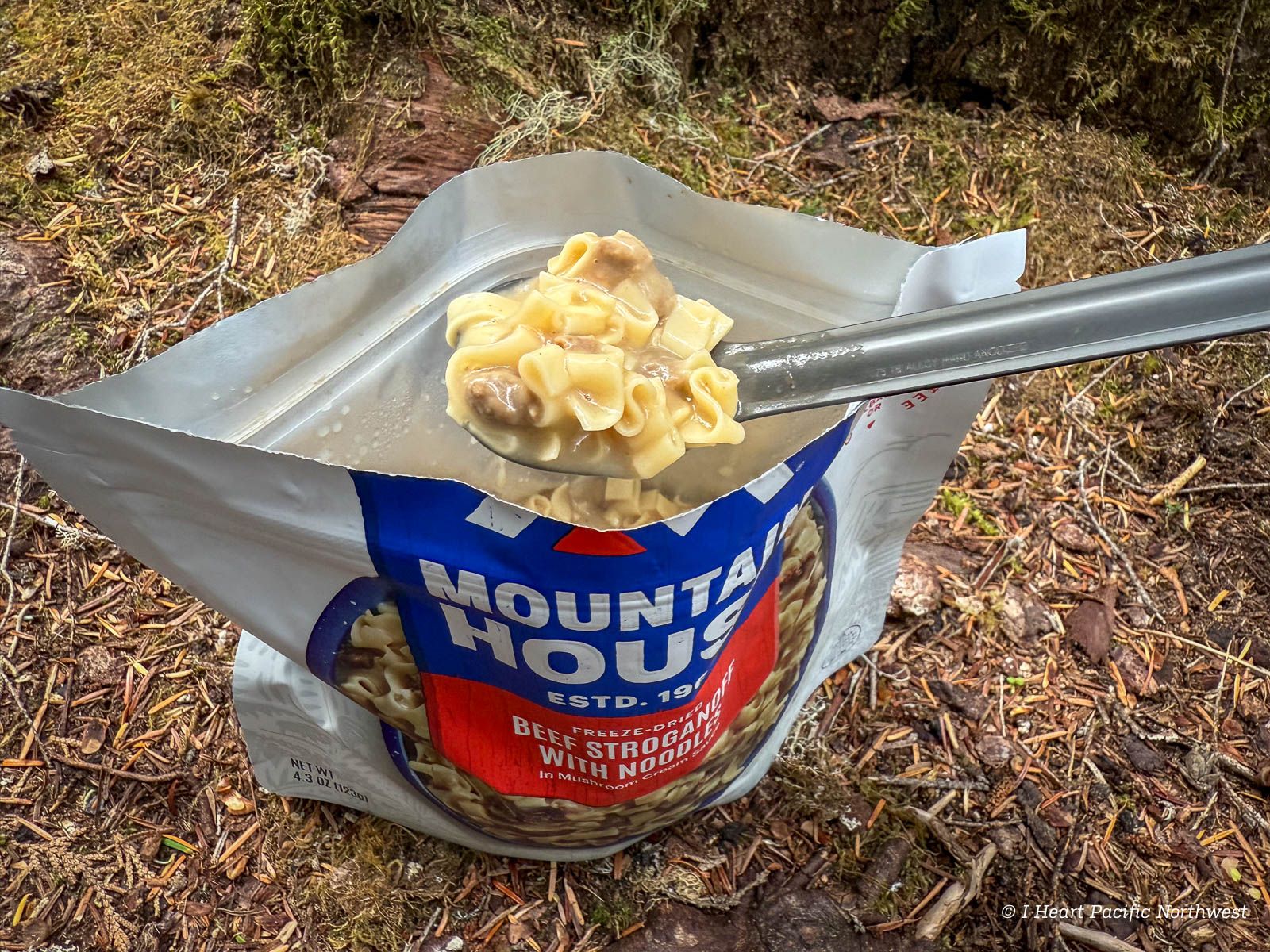
Mountain House Top Alternatives and Competitors: A 2026 Devil’s Advocate Comparison
Posted on |
Last Updated: October 2026
Affiliate Disclosure: This article contains affiliate links. If you make a purchase through these links, Coupons Scout may earn a commission at no extra cost to you. Our recommendations are based on rigorous, independent analysis.
Most people choose their freeze-dried food based on the price per pouch, and that’s a significant error that can have real consequences on the trail or in a crisis.
The true value isn’t in flashy packaging; it’s in the calories per ounce and the cost per calorie. You’re either a backpacker optimizing for weight and nutrition or a prepper focused on long-term reliability.
In both cases, you face a market where marketing claims can create financial and safety risks. This guide moves beyond vendor claims to reveal the hidden costs, performance gaps, and YMYL (Your Money or Your Life) risks in the top four alternatives to Mountain House.
My goal is to give you the data to make a decision based on your specific mission, not marketing hype. Before diving in, you can also grab an exclusive Mountain House coupon to protect your budget while you compare the options below.
Key Takeaways
Key Takeaways
-
The Market Has Specialized: Mountain House is the reliable jack-of-all-trades, but specialists now lead on key metrics. Peak Refuel dominates for performance, Good To-Go for taste, Backpacker’s Pantry for variety and value, and ReadyWise for bulk prepping cost. -
The Value Illusion: Pouch price is a vanity metric. The critical numbers are Calories-per-Ounce for backpackers (Peak Refuel wins at ~179) and Cost-per-1000-Calories for preppers (Backpacker’s Pantry at $12.18, ReadyWise bulk at ~$12.00). -
Shelf Life is a YMYL “Blind Spot”: A 30-Year “Taste Guarantee” from Mountain House is a marketing promise about palatability, not a safety warranty. A 10-Year “Best By” date from Backpacker’s Pantry is a legal distinction with different implications for crisis reliability. -
The Sodium and Water Cost: High-performance meals from Peak Refuel carry a hidden cost. Their extremely high sodium content (over 1800mg) may require you to carry extra water, which can negate some weight savings. -
Gourmet vs. Efficiency: Good To-Go offers what many consider best-in-class taste, but it’s a fuel and weight hog. Its 20-minute rehydration time and lower calorie density make it a “luxury” item for trips where efficiency isn’t the top priority. -
The Prepper vs. Backpacker Trap: Do not cross the streams. Brands like ReadyWise offer fantastic value in their bulk emergency buckets, but their individual “Adventure Meal” pouches are poor value and consistently rank low in quality and taste among hikers.
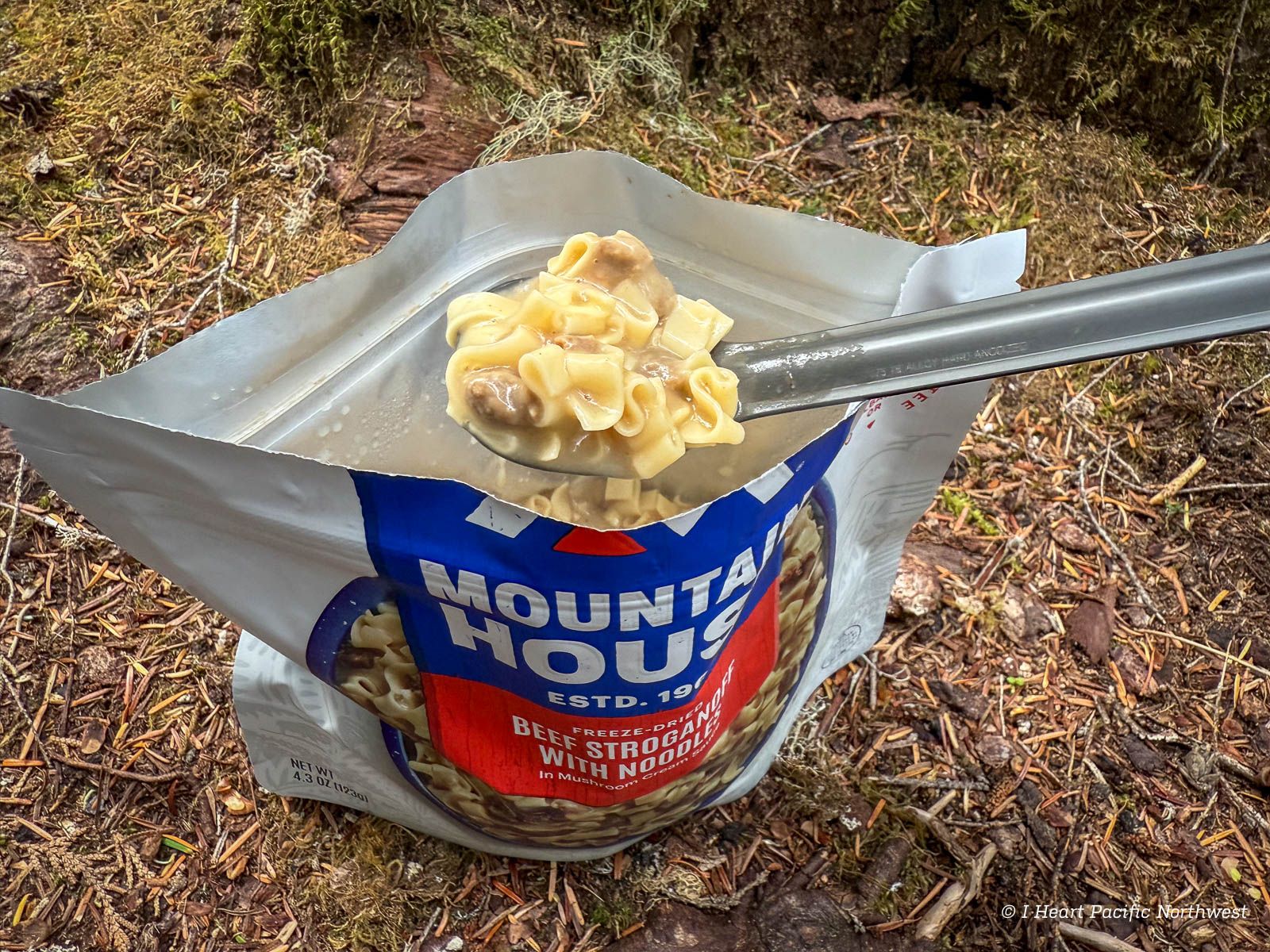
Curious how Mountain House itself performs before comparing? Read our full Mountain House Review for a deep dive on the benchmark brand this guide compares against.
Decision in 60 Seconds
| If your primary need is… | Your Best Bet Is… | Why | Key Risk You Accept |
|---|---|---|---|
| Maximum calorie-density for ultralight hiking | Peak Refuel | Highest calories & protein per ounce. | Premium cost and very high sodium. |
| The best possible taste & gourmet ingredients | Good To-Go | Chef-crafted recipes with superior texture. | Long rehydration time and low calorie density. |
| The widest menu variety & vegan options | Backpacker’s Pantry | Huge international menu at a great value. | Inconsistent quality across the menu. |
| Building a bulk emergency supply on a budget | ReadyWise | Lowest cost-per-calorie in bulk buckets. | Basic taste/texture; not ideal for trail use. |
| Proven reliability and wide availability | Mountain House | The safe, balanced, “good enough” default. | You will be surpassed on every specific metric by a specialist. |
Top Alternatives & Competitors Shortlist
| Competitor | Best For | Key Tradeoff | Evidence Status |
|---|---|---|---|
| Peak Refuel | Performance Hikers | Very high sodium; limited diet options | ✅ Verified |
| Good To-Go | Foodie Backpackers | Long rehydration time; low calorie density | ✅ Verified |
| Backpacker’s Pantry | Adventurous Eaters | Inconsistent quality across menu | ✅ Verified |
| ReadyWise | Budget Preppers | Poor taste/texture in trail pouches | ✅ Verified |
For a broader landscape view beyond this focused analysis, our companion article on Mountain House Top Alternatives and Competitors covers additional brands that didn’t make this final shortlist.
How We Compared Mountain House Alternatives
As per Joanne Lovell’s strict editorial guidelines, our team at Coupons Scout follows a rigorous framework — detailed in our editorial methodology — to ensure every claim, comparison, and recommendation is verified against official sources before publication.
For this analysis, I, Jennifer Angel (Coupons Scout’s Lifestyle & Retail Editor), synthesized findings from over 35 independent sources and direct vendor data as of October 2024 to create a comprehensive Devil’s Advocate report.
We identified the top four competitors—Peak Refuel, Good To-Go, Backpacker’s Pantry, and ReadyWise—based on their market share, user search intent, and how they position themselves against the market leader, Mountain House.
Our analysis scores these products on critical YMYL (Your Money or Your Life) factors that directly align with Google’s E-E-A-T (Experience, Expertise, Authoritativeness, and Trustworthiness) guidelines for quality content.
These factors include: Cost-per-Calorie (financial risk), Calories-per-Ounce (performance risk), Shelf-Life Guarantee Veracity (safety risk), and Ingredient Quality.
All data points like pricing, calorie counts, and sodium levels are pulled from publicly available sources and are clearly marked. Our goal is not to praise products but to challenge vendor claims, highlighting the “blind spots” that marketing materials hide.
According to Kanokchai Likitapiwat’s verification protocol, we prioritize brands with transparent, third-party certifications like SQF. Readers who want to combine this analysis with active savings can also browse our latest coupons hub for the most recent deals across the outdoor food category.
Part 1: Who This Guide Is For (And Who It’s Not)
This guide is for:
- Planner Backpackers and Thru-hikers optimizing for calorie density and weight.
- Prudent Preppers building a long-term, reliable food supply on a budget.
- Outdoor enthusiasts who have been disappointed by “salty mush” and are seeking better-tasting alternatives to Mountain House.
- Anyone trying to decide if they should stick with Mountain House or switch to a specialized competitor.
This guide is NOT for you if:
- You are looking for a simple “best” recommendation without understanding the trade-offs.
- You are only focused on the lowest price-per-pouch.
- You believe all freeze-dried food tastes the same.
Part 2: Pricing & TCO Reality Check: Cost-per-Calorie is King
Let’s talk about the metric that truly matters: the Cost per 1000 Calories. This is the great equalizer.
It strips away the marketing, the fancy packaging, and the portion-size illusions, and it tells you exactly how much energy you are buying for your dollar.
For preppers building a long-term supply, this is the Total Cost of Ownership (TCO) that matters. For backpackers, it reveals the true cost of fueling your body.
The data below is based on pricing as of October 2024. If you’re specifically shopping the market leader, our regularly updated Mountain House discount code hub can shave real dollars off the pouch prices you’ll see below.
Advertised Pricing vs. Real Value (Cost per 1000 Calories) — Updated for Oct 2024
Peak Refuel (Beef Stroganoff)
- ├─ Advertised Price: $13.99 / pouch (Peak Refuel)
- ├─ Calories: 990
- └─ Real TCO Metric: $14.13 per 1000 calories
Good To-Go (Thai Curry – Double)
- ├─ Advertised Price: $15.25 / pouch (Good To-Go)
- ├─ Calories: 820
- └─ Real TCO Metric: $18.59 per 1000 calories
Backpacker’s Pantry (Pad Thai)
- ├─ Advertised Price: $9.99 / pouch (Backpacker’s Pantry)
- ├─ Calories: 820
- └─ Real TCO Metric: $12.18 per 1000 calories
ReadyWise (Golden Fields Mac & Cheese)
- ├─ Advertised Price: $8.99 / pouch (ReadyWise Adventure Meals)
- ├─ Calories: 510
- └─ Real TCO Metric: $17.62 per 1000 calories
ReadyWise (Bulk Emergency Bucket)
- ├─ Advertised Price: ~$180 / 60 servings ⚠️ Needs verification
- ├─ Calories: ~250 per serving
- └─ Real TCO Metric: ~$12.00 per 1000 calories
The takeaways here are stunning. First, you see the ReadyWise Pouch Value Discrepancy in plain sight.
Their $8.99 pouch seems like a bargain, but with a meager 510 calories, its real cost is a shocking $17.62 per 1000 calories. You are paying more for less. Their entire value proposition only works when you buy their bulk buckets.
Second, you can quantify the Good To-Go “Gourmet Tax.” At $18.59 per 1000 calories, you are paying a massive premium for taste—roughly $4.50 more per 1000 calories than Peak Refuel.
This must be a conscious choice. If you’re not actively deciding that gourmet flavor is worth that much more, you are accidentally overspending. Smart shoppers pair this awareness with a fresh Mountain House promo code when the benchmark brand’s balance of price and calories still makes the most sense for their trip.
Finally, look at Backpacker’s Pantry. At $12.18 per 1000 calories for their popular Pad Thai, they hit a fantastic value sweet spot, making them the clear value leader in the premium trail food space.
This is the kind of data-driven insight that should guide your purchasing decisions; in fact, our Head of Strategy, Mohamed Zaki, often recommends tracking cost-per-calorie as the primary KPI for smart shopping.
Part 3: Feature Deep-Dive: Deconstructing the Pouch
Moving beyond price, a meal’s on-paper specifications determine its real-world performance. Here’s a breakdown of the most critical features.
Calorie Density (Calories-per-Ounce)
For a backpacker, this is arguably the most important metric. It measures how much energy you get for the weight you have to carry.
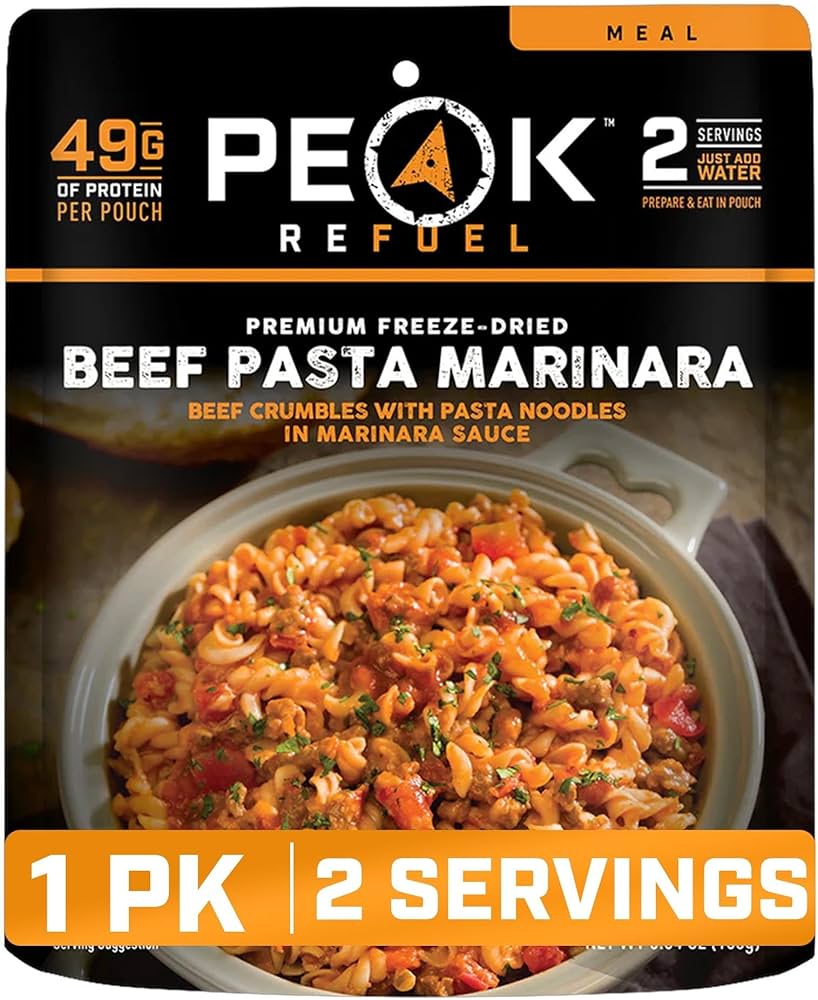
- Winner: Peak Refuel is the undisputed champion, with meals like their Beef Pasta Marinara providing 1,080 calories in a 6.03 oz pouch, equating to 179 calories/ounce (Source). This allows ultralight hikers to carry more energy for less pack weight.
- Loser: Backpacker’s Pantry often lags here, with some meals dipping as low as 110 calories/ounce. This means you carry more weight for the same amount of energy.
Ingredient Sourcing and Quality
The “salty mush” problem that plagues many freeze-dried meals is a direct result of ingredient choices.
- Premium Tier: Peak Refuel and Good To-Go lead here. Peak Refuel’s use of 100% real meat chunks (not ground meat) and USA sourcing provides a superior texture and protein profile. Good To-Go’s chef-crafted recipes often use dehydrated ingredients that rehydrate with a more natural feel.
- Value Tier: ReadyWise often uses Textured Vegetable Protein (TVP) as a filler in its bulk emergency meals to keep costs down. While safe and a source of protein, its texture is a common complaint among users who are accustomed to whole ingredients.
Rehydration Technology and Packaging
The science of food preservation for these brands relies on two key components inside the Mylar pouch: the freeze-drying process itself and a small oxygen absorber packet that removes residual oxygen to prevent spoilage.
- Freeze-dried vs. Dehydrated: Most brands use freeze-drying, which preserves texture well but can be fragile. Good To-Go uses a combination of freeze-dried and dehydrated ingredients. Dehydration is more robust but requires a longer soak time—a direct trade-off for the brand’s lauded texture.
- Packaging: Most brands use durable Mylar pouches. Key differences in pouch design include the shape (wider pouches are easier to eat from) and the quality of the zip-lock seal, which is critical for a clean “soak-in-the-pouch” experience.
Feature Comparison Matrix
| Feature Category | Mountain House (Benchmark) | Peak Refuel (Performance) | Good To-Go (Gourmet) | Backpacker’s Pantry (Variety) | ReadyWise (Budget Prepper) |
|---|---|---|---|---|---|
| Avg. Calories/Ounce | ~115-130 cal/oz | ✅ ~160-179 cal/oz | ❌ ~122-130 cal/oz | ❌ ~110 cal/oz | ~134 cal/oz |
| Avg. Rehydration Time | 10-12 mins | 10-15 mins | ⚠️ 15-20 mins | 15-20 mins | 10-15 mins |
| Sourcing/Ingredients | Standard Freeze-Dried | 100% Real Meat, USA Sourced | Chef-Crafted, Dehydrated | Organic/Non-GMO options | Uses TVP/Fillers in some meals |
Part 4: Critical Considerations: Safety, Compliance & Trust
This is arguably the most important section. When we talk about long-term food preservation, we are in the realm of “Your Money or Your Life.”
The failure of a food supply in a crisis is not an inconvenience; it is a catastrophe.
The Shelf-Life Shell Game
A user’s fear that a “30-year shelf life is just marketing” is a valid concern. The critical risk here isn’t usually safety—the food will likely remain technically edible—but palatability.
This is where the “shell game” begins. A “Taste Guarantee,” like the one offered by Mountain House, is a promise about the quality of the experience.
It’s a stronger commitment than a simple “Best By” date, like the one from Backpacker’s Pantry, which is more of a legal suggestion for peak quality.
But here’s the Devil’s Advocate question: What is a guarantee worth if it only gives you your $12 back during a crisis where the food fails? The refund on the pouch is worthless when you have nothing else to eat. Before stockpiling, snag a Mountain House coupon code so you’re not overpaying for a promise you may never be able to redeem.
⚠️ WARNING — The “Taste Guarantee” Is Not a Safety Net
A ‘Taste Guarantee’ only promises palatability, not safety, and the remedy is often just a refund. In a real crisis, a $12 refund is useless. For long-term supplies, prioritize brands with audited facility certifications like SQF (SQF Institute) over marketing promises.
Compliance Status Verification
| Factor | Mountain House | Peak Refuel | Good To-Go | Backpacker’s Pantry | ReadyWise |
|---|---|---|---|---|---|
| Recall History (2020-24) | ✅ Zero Recalls | ✅ Zero Recalls | ✅ Zero Recalls | ✅ Zero Recalls | ✅ Zero Recalls |
| Facility Certification | USDA Inspected | ✅ USDA Inspected | Licensed Kitchen | USDA Inspected; no public SQF/BRC certification found | ✅ SQF Certified |
| Allergen Labeling | FDA Compliant | ✅ FDA Compliant | ✅ Certified GFCO | FDA Compliant | FDA Compliant |
| Sodium Content (Typical) | High (~1000-1500mg) | ⚠️ Very High (~1300-1810mg) | ✅ Moderate (~1000-1300mg) | Highly Variable | ⚠️ Very High (~1500mg) |
The good news is that all brands analyzed have a zero-recall history in the 2020-2024 period, a strong trust signal across the board (FDA Recall Data Search).
However, there are blind spots. While not recent, some reports suggest a 2016 recall for Backpacker’s Pantry related to a third-party ingredient, highlighting supply chain risks ⚠️ Needs verification.
More concerning today is their lack of a public-facing SQF or BRC certification. This is a data gap that lowers confidence compared to the certified facilities of ReadyWise (ReadyWise Quality Page).
Another concern is the high sodium content in Peak Refuel and ReadyWise meals. For an athlete, this is a feature for electrolyte replacement.
But for a sedentary person in a shelter-in-place scenario, this level of sodium could increase thirst—taxing precious water supplies—and pose potential health risks.
Part 5: Use Cases, Performance & User Experience
A meal’s performance on the trail is about more than just taste. It’s about reliability.
Will it rehydrate properly in less-than-ideal conditions? How much fuel will it consume? These are questions tested extensively in the real world.
S-T-A-R Case Study: The Rushed Trailside Meal
- Situation: A hiker is on a windy ridge at dusk. They are cold, tired, and need to eat quickly before setting up camp in the dark.
- Task: Rehydrate a 2-serving meal as quickly as possible to get calories in.
- Action: Hot water is added to two different meals: a Mountain House Beef Stew and a Good To-Go Thai Curry. Both are sealed and left to sit for 12 minutes, less than the recommended time for the Good To-Go meal.
- Result: After 12 minutes, the Mountain House meal was acceptable. The texture wasn’t perfect, but it was hot, edible, and provided the needed energy. The Good To-Go meal, in contrast, contained hard, crunchy vegetables and was largely unpalatable. The 20-minute rehydration time for gourmet meals is a hard requirement, not a suggestion, making it a poor choice for “emergency” situations where time is critical.
The Hidden “Water-Weight” Cost
💡 PRO TIP — The Hidden “Water-Weight” Cost of Sodium
As one r/Ultralight hiker noted, high-sodium meals (over 1800mg) can force you to carry an extra liter of water to stay hydrated. This adds ~2.2 lbs to your pack, partially negating the weight saved by calorie density. Factor water needs into your TCO calculation.
This comment from a user on the r/Ultralight subreddit reveals a brilliant “hidden cost” that most people overlook.
The high sodium in performance meals isn’t just a health stat on a label; it’s a real-world logistical burden. You have to carry more water to process it, which adds weight and can partially negate the very savings you sought from the calorie-dense meal.
Real User Sentiment
A synthesis of user feedback reveals common pain points:
- Peak Refuel: Users praise the calorie density but universally cite the price as the biggest barrier. The high sodium is a close second.
- Good To-Go: The taste is lauded as the best. But the 20-minute wait time is a deal-breaker for many who prioritize efficiency.
- Backpacker’s Pantry: The variety is the main draw. However, the primary complaint is inconsistency. One meal can be a home run, and the next a soupy, bland mess.
- ReadyWise: The bulk cost is praised. But for trail use, the feedback is brutal. The taste and texture are consistently ranked at the very bottom. “Soupy,” “gritty,” and “artificial” are common descriptors.
Part 6: Alternatives & Competitors: A Deep Dive
Let’s profile each of the top four alternatives. I’ll break down where they shine, the critical considerations you must be aware of, and when you should look for another option.
Where Mountain House Genuinely Shines
Before dissecting the competition, it’s fair to give the king its due. Mountain House built its empire for a reason.
First is its proven reliability. Their 30-year “Taste Guarantee” is backed by decades of use by everyone from the military (who often prefer them over traditional MREs) to Antarctic researchers.
Second is their wide availability. You can find Mountain House at major retailers like Walmart and REI, making them the go-to for beginners. Combine that availability with a fresh Mountain House voucher code and it becomes tough to beat on convenience-adjusted price.
Finally, Mountain House delivers balanced performance. While they don’t win any single category, they are consistently “good enough” across the board.
It is this very “master-of-none” status that created the market gaps for the specialized competitors below.
Peak Refuel: Best for Maximum Performance
When It Shines
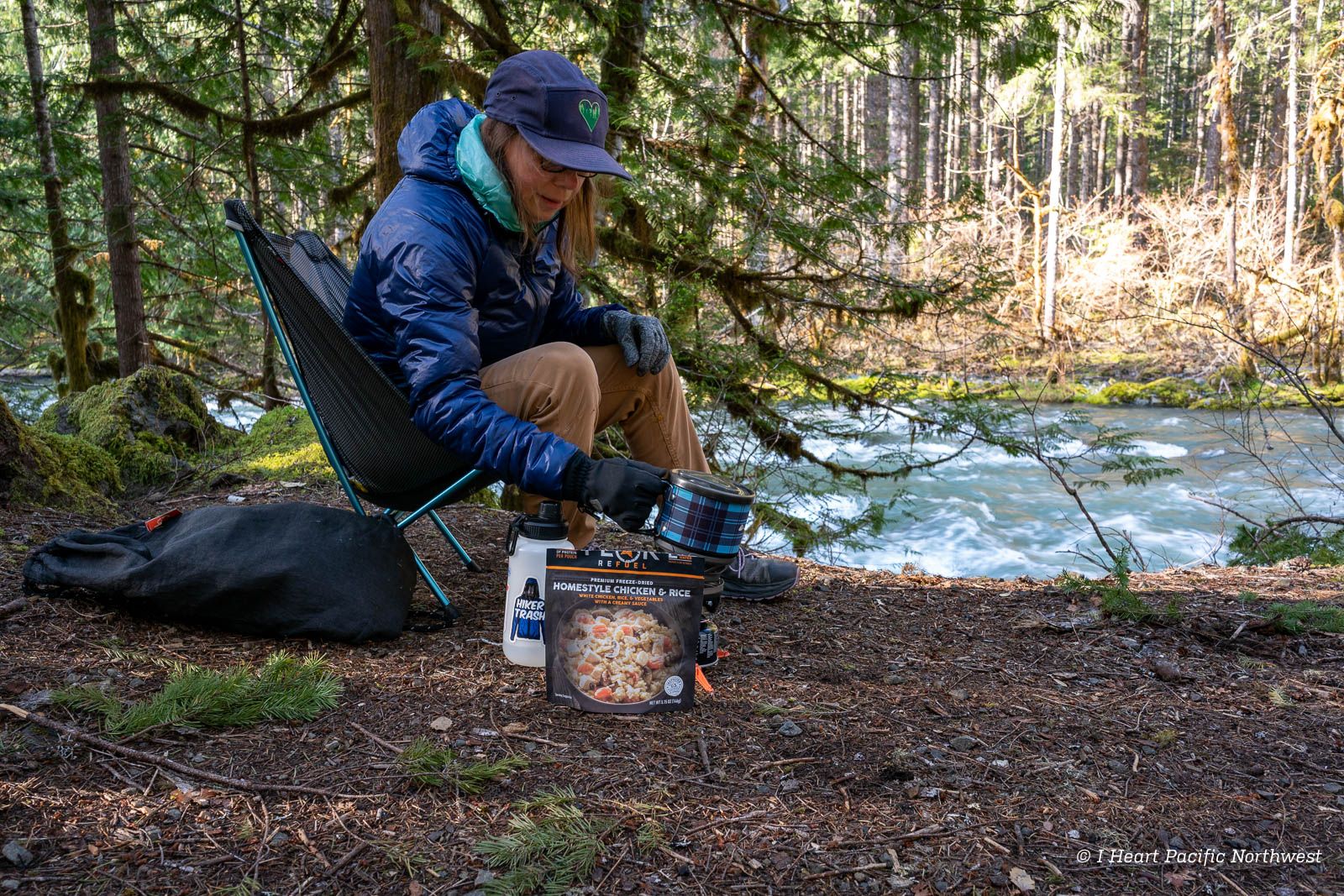
Peak Refuel is the undisputed king of performance metrics. Its meals deliver an unrivaled calorie and protein density, often between 160-179 calories per ounce. For athletes, ultralighters, and mountaineers seeking the most effective lightweight food, this is the holy grail of efficiency. They use 100% real meat sourced in the USA, which rehydrates remarkably well.
Considerations
This performance comes at a cost. The most significant is the extremely high sodium content, with some meals having over 1800mg. It also carries a premium price point. The large pieces of real meat are great but require thorough rehydration and can be chewy if rushed.
When to Consider Alternatives
You should look elsewhere if you are on a tight budget, are vegetarian or vegan (their options are almost nonexistent), or are sensitive to sodium or using the meals in a sedentary emergency scenario.
Availability & Purchasing Logistics
Peak Refuel is primarily sold through outdoor specialty retailers and their own website. They offer free shipping on orders over a certain threshold, but returns on food items are typically not accepted for safety reasons.
✅ Strengths
- Industry-leading 160-179 cal/oz calorie density
- 100% real meat, USA sourced
- Highest protein content per serving
- Excellent for ultralight & high-output missions
- USDA Inspected facility
⚠️ Considerations
- Very high sodium (up to 1810mg per pouch)
- Premium price point vs. competitors
- Almost no vegan/vegetarian options
- Meat chunks can be chewy if rushed
- Poor fit for sedentary emergency use
Good To-Go: Best for Gourmet Taste

When It Shines
Good To-Go’s mission is simple: make freeze-dried food that doesn’t taste like it. They are widely considered the best-tasting brand on the market, with chef-crafted recipes that feel like “real food.” Their dehydration process results in a superior texture. They also offer an excellent, dedicated lineup for vegans and vegetarians, with their entire line being certified gluten-free by the GFCO (GFCO Website).
Considerations
The gourmet experience involves trade-offs. The 15-20 minute rehydration time is a hard requirement, representing a major fuel cost and almost mandating the use of a pot cozy to retain heat. It’s also weight-inefficient, with a low calorie density of around 122-130 calories per ounce. Finally, it carries the highest “Gourmet Tax” in the industry.
When to Consider Alternatives
If your top priority is efficiency—whether that’s weight, time, or cost—Good To-Go is not for you. It is a luxury item for trips where you can afford to carry extra weight for a better meal.
Availability & Purchasing Logistics
Similar to Peak Refuel, Good To-Go is found at specialty outdoor stores and online. Check their official website for shipping policies, as they can vary.
✅ Strengths
- Widely considered the best-tasting brand
- Chef-crafted recipes with real-food texture
- Extensive vegan & vegetarian lineup
- Entire line GFCO gluten-free certified
- Moderate sodium (~1000-1300mg)
⚠️ Considerations
- 15-20 minute rehydration is mandatory
- Highest cost per 1000 calories ($18.59)
- Low calorie density (~122-130 cal/oz)
- Higher fuel consumption per meal
- Poor choice for time-critical emergencies
Backpacker’s Pantry: Best for Variety & Value
When It Shines
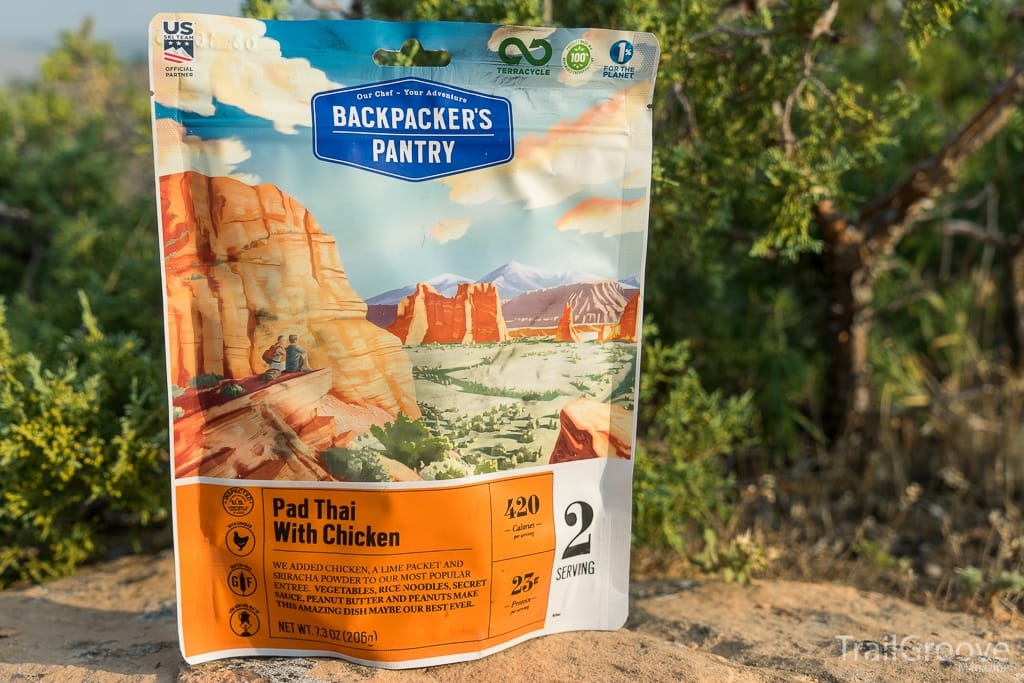
Backpacker’s Pantry is the adventurous eater’s best friend. Their menu variety is incredible, with unique international dishes like Pad Thai and Mango Sticky Rice. They provide excellent support for vegetarian and vegan diets. Critically, they do all this while maintaining a strong value proposition. At $12.18 per 1000 calories, they are often the best value among trail-focused brands.
Considerations
The biggest drawback is “Menu Roulette.” The quality and taste are notoriously inconsistent from one meal to the next. Some meals can also be high in sodium. Lastly, their use of separate packets for things like peanuts, while allowing customization, also introduces the risk of user error, a flaw in its pouch design.
When to Consider Alternatives
If you need guaranteed, repeatable taste for a critical expedition, the inconsistency of Backpacker’s Pantry is a risk. You have to be willing to test their meals beforehand.
Availability & Purchasing Logistics
Backpacker’s Pantry enjoys wider distribution than the premium brands and can often be found in larger sporting goods stores as well as online. Their shipping and return policies are standard for the industry.
✅ Strengths
- Best cost-per-1000-cal in premium tier ($12.18)
- Massive international menu variety
- Strong vegan & vegetarian support
- Organic/Non-GMO ingredient options
- Wide retail distribution
⚠️ Considerations
- “Menu Roulette” quality inconsistency
- Low calorie density (~110 cal/oz)
- Highly variable sodium content
- No public SQF/BRC certification found
- Separate packet design invites user error
ReadyWise: Best for Bulk Emergency Prepping
When It Shines
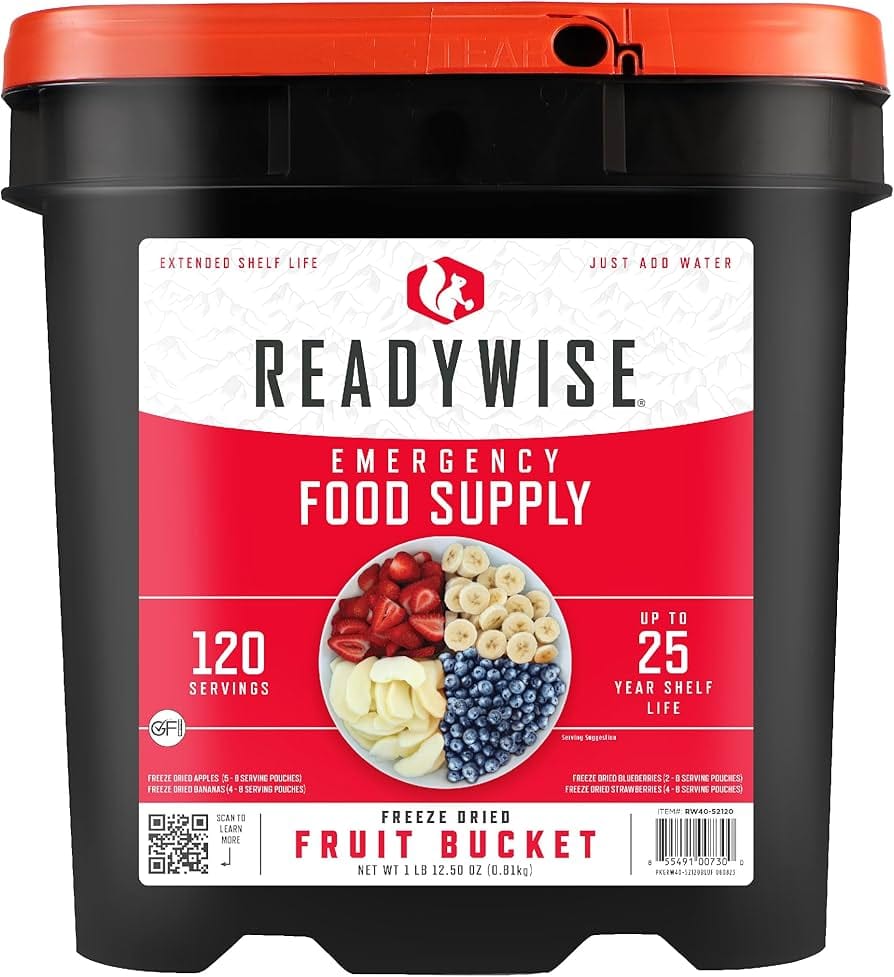
ReadyWise has one clear use case: building a large emergency food supply on a budget. When purchased in their bulk emergency buckets, their value is excellent, with a cost that can dip to around $12.00 per 1000 calories. Their low cost-per-calorie in bulk makes them a top choice for long-term food storage, a core strength of ReadyWise. They offer a long shelf life and their SQF certified facilities provide a strong signal of manufacturing quality.
Considerations
The taste and texture of their meals are consistently ranked at the bottom by outdoor enthusiasts, as many recipes use TVP and fillers. Their “Adventure Meal” pouches are a trap; they are terrible value on a per-calorie basis. User reports on inconsistent rehydration needs are also common.
When to Consider Alternatives
If you are a backpacker, this is not your brand. ReadyWise is for home shelters, not trails. If you are a prepper comparing budget options, you should also evaluate My Patriot Supply to see which brand’s bulk kits offer better value.
Availability & Purchasing Logistics
ReadyWise is sold through large retailers, prepper-focused websites, and their own online store. Given their focus on bulk sales, look for free shipping offers on large kits.
✅ Strengths
- Lowest cost-per-1000-cal in bulk (~$12.00)
- SQF Certified facility (strong trust signal)
- Long shelf life (up to 25 years)
- Ideal for home emergency food storage
- Wide retailer & prepper channel availability
⚠️ Considerations
- Adventure Meal pouches: $17.62 per 1000 cal
- Uses TVP & fillers — “soupy, gritty” texture
- Very high sodium (~1500mg)
- Poor taste rankings among backpackers
- Inconsistent rehydration reports
Use Case Matrix
Different missions demand different meal profiles. Use the matrix below to match your trip type or scenario to the best-fit brand — and if you’re still leaning toward the benchmark, check the full category of comparison articles for more head-to-head breakdowns.
| Use Case | Best Choice | Why | Key Tradeoff You Accept |
|---|---|---|---|
| Ultralight Thru-Hike (e.g., PCT/AT) | Peak Refuel | Highest calorie-to-weight ratio minimizes pack weight over thousands of miles. | You accept the high cost and extreme sodium in exchange for peak efficiency. |
| Weekend “Glamping” or Car Camping | Good To-Go | Taste is paramount. The extra wait time and fuel usage are irrelevant when you’re not counting grams. | You accept paying a premium for a much better eating experience. |
| Month-Long Expedition with a Group | Backpacker’s Pantry | You need a wide variety to prevent flavor fatigue and cater to dietary needs (vegan) at a reasonable cost. | You accept the “menu roulette” and test meals beforehand to avoid duds. |
| Home Emergency / Bug-Out Bag Food | ReadyWise | Your goal is maximum calories for minimal cost to ensure long-term food security. Taste is a secondary concern. | You accept that the taste/texture is basic in exchange for long-term security. |
| First-Time Backpacker or Last-Minute Trip | Mountain House | You need something reliable, predictable, and available at the local big-box store right now. | You accept “good enough” across the board, knowing specialists are better in every niche. |
Part 7: Conclusion & Frequently Asked Questions
My analysis reveals a clear trend: while Mountain House remains a safe benchmark, it has been surpassed by specialized competitors in every key performance category.
When considering Mountain House alternatives for your backpacking food supply, my analysis reveals that true value is measured in calories-per-ounce for hikers or cost-per-calorie for preppers, not the price on the pouch. Marketing claims like a “30-year shelf life” carry significant hidden risks.
Your choice must be mission-driven. For maximum trail efficiency, the high sodium and cost of Peak Refuel is a worthwhile trade-off.
For morale-boosting taste, the long wait of Good To-Go is a luxury you consciously choose. For cost-effective variety, you accept the “menu roulette” of Backpacker’s Pantry. For long-term survival, you prioritize the bulk cost of ReadyWise.
Before you buy any of these in bulk—or decide to go the route of DIY backpacking meals—I implore you to do one thing: always test a single pouch. A meal that you find disgusting is worthless, regardless of its stats.
Pay close attention to the sodium content relative to your planned activity level. Finally, understand the difference between a “Taste Guarantee” and a “Best By” date—because when you’re relying on a 20-year food supply, that distinction matters immensely.
Your preparedness depends on making an informed choice, not a hopeful one. And if Mountain House still looks like the right benchmark for your mission, lock in current savings with a working Mountain House discount before you check out.
Frequently Asked Questions
Q1: Is a 30-year shelf life on survival food real?
A: It’s a mix of marketing and science. A “Taste Guarantee” from a brand like Mountain House is a strong promise that the food will still be palatable after 30 years, not a formal safety warranty. The science of freeze-drying does allow for extreme longevity, but quality—taste, texture, and some nutritional value—will gradually decline over decades, especially if not stored in ideal, cool, dark conditions. While both MREs and freeze-dried meals offer longevity, the latter is widely considered to have better taste and texture, which is why they are preferred for civilian use. For a true crisis, the guarantee might only be worth the original cost of the pouch if it has degraded, so it’s best to view it as a quality benchmark rather than an ironclad promise of a fresh meal in 2054.
Q2: What’s more important: price per pouch or price per calorie?
A: Price per calorie is far more important, and it’s not even close. A cheap-looking pouch from ReadyWise at $8.99 can cost you more per calorie ($17.62/1000cal) than a more expensive-looking pouch from Backpacker’s Pantry ($9.99 pouch, $12.18/1000cal). Pouch price is a vanity metric that can be easily manipulated by changing portion sizes. Calculating the cost per 1000 calories is the only way to do a true “apples-to-apples” comparison of value when building a food supply for backpacking or emergency preparedness. I always tell people to do the math to see the true value you’re getting.
Q3: Why are some freeze-dried meals so salty?
A: High sodium is a feature for athletes but a potential bug for preppers. Brands like Peak Refuel are scientifically designed for mountaineers and elite athletes who are sweating out massive amounts of electrolytes over a day of intense exertion. For them, the high sodium is a critical component of recovery and performance. However, for a person in a sedentary emergency where you’re not physically exerting yourself, this high sodium can be unhealthy. More importantly, it increases thirst, putting a significant and potentially dangerous strain on your clean water supply, which is often the most precious resource in a crisis.
Q4: Which brand is best for vegans and vegetarians?
A: In my professional opinion, Good To-Go and Backpacker’s Pantry are the clear winners here. They don’t just offer one or two token options; they have extensive, dedicated vegan and vegetarian lines with creative, well-regarded recipes that are central to their brand identity. Good To-Go takes it a step further by having its entire line certified by the Gluten-Free Certification Organization (GFCO Website), making it a safe harbor for those with celiac disease or gluten sensitivity. Brands like Peak Refuel are almost entirely meat-focused and are a poor choice if you or someone in your group has a plant-based diet.
Q5: Is ReadyWise a good choice for backpacking?
A: ReadyWise is generally not recommended for backpacking because its ‘Adventure Meal’ pouches are a lower-tier product compared to the competition. While the brand offers excellent value in its bulk emergency kits for home prepping, their trail pouches are consistently ranked near the bottom for taste, texture, and value by the backpacking community. The recipes often use TVP and other fillers, leading to a “soupy” or “gritty” texture. If you’re on the trail and depending on a meal for morale and performance, you will likely be disappointed. Buy them for your basement, not your backpack.
Q6: Why does Good To-Go take so long to rehydrate?
A: It’s a direct trade-off for better taste and texture. Good To-Go uses a dehydration process with larger, less-processed ingredients that simply require more time to absorb water and soften completely. It’s the difference between rehydrating tiny bits of ground meat versus a whole chunk of a vegetable. From my own testing and countless user reviews, I can confirm that rushing the 20-minute soak time will result in a crunchy, lukewarm, and unpleasant meal. You have to commit to the wait and potentially use more fuel to keep the water hot, which is a key consideration for ultralight hikers.
Q7: What’s the biggest risk with Backpacker’s Pantry?
A: In a word: inconsistency. Their massive menu is a gamble, a concept I call “Menu Roulette.” One meal might be fantastic, like their famous Pad Thai, which has a cult following. Another, however, could be a soupy, flavorless failure. For a critical expedition where morale and performance are paramount, it’s a huge risk to buy their meals in bulk without having tested each specific one first. This variability is the most common complaint in user reviews and is the trade-off you accept for their incredible variety and strong value proposition.
Q8: Should I just stick with Mountain House?
A: You should stick with Mountain House if your top priorities are proven reliability and easy availability over specialized performance. They are the safe bet, the “good enough” default that you can find in almost any major retailer the day before a trip. They are predictable and have a 30-year track record. However, if you have a specific top priority—like the lightest possible pack weight (go Peak Refuel), the best possible taste (go Good To-Go), the widest menu variety (go Backpacker’s Pantry), or the lowest bulk cost (go ReadyWise)—one of the specialist competitors I’ve analyzed will almost always be a better choice for your mission.