
Neural Love Top Alternatives and Competitors: A Devil’s Advocate Comparison (2026)
Posted on |
Part 1: Introduction, Methodology & Key Findings
The generative AI market is a battlefield, pitting the convenience of all-in-one platforms for AI media generation against the superior output of specialized tools.
Neural Love has emerged as a popular jack-of-all-trades, but its rise is shadowed by two critical user fears that plague the entire industry post-OpenAI: the “credit-based shell game” that makes true costs impossible to predict and the “copyright timebomb” ticking under every commercial project.
This is not a simple review; it’s a Devil’s Advocate comparison. As Coupons Scout’s lead tech analyst, I, Jettawat Kasemchaiyanun, will go beyond the marketing claims to expose the true costs, hidden risks, and performance limitations of Neural Love and its top competitors.
Those competitors include Midjourney, Leonardo.Ai, Topaz Video AI, and Adobe Firefly—so you can protect your wallet and your work. We will dissect these AI tools across pricing, performance, legal risks, and real-world use cases to provide a definitive guide for prosumers, freelancers, and small businesses navigating this complex landscape. Before diving in, savvy readers may also want to grab the latest Neural Love coupon code if they’re already leaning toward signing up.

Our Evaluation Methodology: Why You Can Trust This Review
Our team at Coupons Scout follows a rigorous, transparent process — detailed in our editorial methodology — to ensure every claim, comparison, and recommendation is verified against official sources before publication.
For this analysis, our evaluation is grounded in the comprehensive Devil’s Advocate Expert Analysis Report (research date: 2026-10-26), which synthesized extensive upstream data from foundational intelligence reports and market analysis.
This process, what we call THE COUPONS SCOUT VERIFICATION PROTOCOL (CSVP™), ensures relevance and accuracy for content like this guide to Neural Love top alternatives and competitors.
- Data-Driven Selection: We don’t guess what products to review. Our founder, Mohamed Zaki, uses social listening tools and search intent analysis to identify products that are trending and solving real market problems. This ensures our “Best Lists” are relevant to current needs.
- Expert Evaluation: As the domain expert for SaaS & AI tools, I test how software integrates into a prosumer workflow, check for API access for developer-led automation, and verify if the “Free Plan” is genuinely useful. Products are scored on Price-to-Value, Feature Set, and Real User Feedback.
- Fact-Checking Audit: Our Head of Operations, Kanokchai Likitapiwat, audits all review data. He ensures that pricing tiers, feature claims, and money-back guarantees in our comparisons match the vendor’s live information.
- Editorial Standard: Our Editor-in-Chief, Joanne Lovell, serves as the final gatekeeper, ensuring objectivity. If a product has a downside, we must mention it, and all affiliate disclosures are placed clearly.
Skepticism in this article applies to ALL brands equally. Critical analysis is balanced with ‘Where it Shines’ sections, and our Use Case Matrix in Part 6 ensures every tool is recognized for its strengths.
Who This Guide Is For
- Prosumers, freelancers, and small business owners weighing the trade-off between all-in-one convenience and specialized, high-fidelity output.
- Marketers and social media managers who use Neural Love or similar AI tools to boost their productivity but are wary of hidden costs and opaque pricing.
- Creative professionals who have grown frustrated with the quality limitations of their current AI generation tools.
- Business decision-makers who must understand the total cost of ownership (TCO) and critical legal risks before committing to a platform. For deeper context, our full Neural Love Review walks through hands-on testing of every major feature.
This Guide Is NOT For You If
- You represent an enterprise team seeking a fully integrated, legally indemnified solution; your evaluation should start and end with Adobe Firefly.
- You are a hobbyist who only needs a free or basic image generator for casual use.
- You are a developer looking for deep technical documentation on API integration and model architecture; this is a strategic comparison, not a technical manual.
Key Takeaways
-
The Core Trade-Off: Neural Love offers an “all-in-one” suite (image, video, audio), but specialized tools like Midjourney (art), Topaz Video AI (video restoration), and Leonardo.Ai (control) deliver superior results in their respective domains. -
The Biggest Financial Risk: The “Credit-Based Shell Game” is real and significant. The expiring credit systems of Neural Love and Leonardo.Ai create a high probability of overspending. In contrast, Midjourney’s “unlimited slow mode” and Topaz’s one-time purchase model offer predictable and safer financial alternatives. -
The Critical Legal Differentiator: Only Adobe Firefly offers full copyright indemnification. Neural Love, Midjourney, and Leonardo.Ai place 100% of the legal risk on the user — a non-negotiable deal-breaker for any high-stakes commercial work. -
Jack of All Trades, Master of None: Neural Love’s primary strength is breadth, but its critical weakness is a quality ceiling. Its video upscaling is no match for Topaz, and its artistic image generation lacks the coherence and detail of Midjourney. -
The Usability Divide: While Neural Love provides a clean and intuitive web-based UI, Midjourney’s continued reliance on a Discord-only workflow remains a major adoption hurdle for non-technical users, despite its superior image quality.
Before diving into the deep analysis, take a moment to watch this hands-on comparison of the top AI image generators we cover in this guide — it sets a great visual baseline for the trade-offs discussed below.
Part 2: Pricing & TCO Reality Check: The Subscription Trap
After years of evaluating productivity software, I can tell you that the most deceptive pricing models are not those with high numbers, but those with intentional obscurity.
The pricing for many AI tools, including Neural Love, falls squarely into this category. The advertised monthly fee is merely the entrance ticket; the real cost is hidden within a “credit-based shell game” that makes predicting your Total Cost of Ownership (TCO) nearly impossible.
It’s a classic subscription trap that can lead to a form of vendor lock-in, where the inconvenience of moving outweighs the high costs. Smart shoppers can offset this somewhat by stacking the latest Neural Love discount code at checkout — but the structural issues remain.
The core issue is that the advertised price is disconnected from the cost-per-task. As I often note, this is the only metric that matters for a professional.
Neural Love’s Credit Model Exposed
Here’s the breakdown of Neural Love’s pricing, which exemplifies the risks of credit-based AI tools:
- Advertised: Starts at $29/month for 500 credits Neural Love Pricing Page. This looks affordable on the surface.
- The Reality: The value of a credit is not fixed. The cost of a task varies wildly. According to our analysis:
- 1 minute of 1080p to 4K Video Upscaling: 50-100 credits
- The Math: This means a user on the base $29 plan can only upscale 5-10 minutes of video per month before their credits are exhausted. To process more, they must buy expensive top-up credits at roughly $0.08-$0.10 each. A single 30-minute video project could cost over $150.
- The Trap: Credits DO NOT roll over. This creates a “use it or lose it” pressure that punishes inconsistent usage and directly benefits the vendor, encouraging miscalculation, overspending, and potential buyer’s remorse.
⚠️ WARNING: The Expiring Credits Trap
Neural Love credits do not roll over month-to-month. This ‘use it or lose it’ policy pressures you to burn credits on low-value tasks to avoid wasting money. For professionals with inconsistent project schedules, this model can significantly inflate real-world costs.
TCO Showdown: Neural Love vs. Topaz for Video Professionals
Let’s model the 1-year Total Cost of Ownership for a freelance video creator who needs to upscale 30 minutes of archival footage per month.
- Neural Love TCO:
- Base Subscription: $29/month x 12 months = $348
- Credit Needs: 30 min/month x ~75 credits/min = 2,250 credits needed.
- Included Credits: 500 credits/month.
- Credit Shortfall: 1,750 credits/month.
- Overage Cost: 1,750 credits x ~$0.09/credit = $157.50 per month.
- Total Overage: $157.50 x 12 months = $1,890.
- Year 1 TCO: $348 (subscription) + $1,890 (credits) = $2,238.
- Topaz Video AI TCO:
- One-Time Purchase: ~$299.
- Recurring Costs: $0 (updates may have a separate fee after 1 year).
- Year 1 TCO: $299.
| Tool | Pricing Model | Year 1 TCO (30 min/mo video) | Cost Multiplier |
|---|---|---|---|
| Neural Love | Subscription + Credits | $2,238/year | 7.5x more expensive |
| Topaz Video AI | One-Time Purchase | $299/year | 1x (baseline) |
This starkly visualizes how a “cheaper” subscription becomes over 7 times more expensive than a specialized one-time purchase tool under a common professional workload.
Competitor Pricing Models: A Stark Contrast
Not all alternatives to Neural Love use this model. The pricing landscape shows a clear philosophical divide.
- Leonardo.Ai: Unfortunately, this platform shares the same problematic credit-based model as Neural Love. User complaints about “faster-than-expected credit depletion” are common Trustpilot User Reviews.
- Midjourney’s Advantage: Midjourney offers a pure subscription model (e.g., ~$30/month). While you get a set number of “fast hours,” the crucial difference is the unlimited “relax mode” generations. This “all-you-can-eat” slow mode removes the fear of running out of credits for experimentation. This is a massive psychological advantage that fosters creativity and productivity instead of anxiety.
- Topaz’s ROI: As shown in the TCO analysis, Topaz Video AI uses a one-time purchase model (historically around ~$299). For any user focused on video, the return on investment (ROI) is clear and immediate.
The verdict on pricing is clear: Neural Love’s model is designed to appear cheap upfront but can become prohibitively expensive for anyone doing serious video work. It is fundamentally optimized for the vendor, not the user. The best way to soften this blow is to check the latest Neural Love promo code before every renewal cycle.
Part 3: Feature Deep-Dive, Performance & User Experience
A tool’s value is more than its price; it’s about the quality of its features, the reliability of its performance, and the overall user experience. Here, we see Neural Love present a classic “jack-of-all-trades, master of none” profile.
Where Neural Love Genuinely Shines
Despite the significant trade-offs, it is essential to acknowledge where Neural Love legitimately excels. For a specific user profile—the generalist content creator or social media manager—its value proposition is powerful and clear.
First, Neural Love delivers on its promise of true all-in-one convenience. It is one of the few platforms that genuinely combines image generation, video enhancement, AND audio tools under a single subscription PCMag AI Suite Review.
This integration is a massive workflow advantage for users who need to produce a variety of media without juggling multiple logins, subscriptions, and user interfaces. For a social media manager creating a video post, this means they can generate a background image, upscale the video clip, and clean up the audio track all in one place.
Second, the platform offers exceptional ease of use. Its clean, intuitive web-based UI has a near-zero learning curve. Users can go from signup to their first piece of generated content in under five minutes Wirecutter AI Onboarding Test.
This stands in stark contrast to the clunky, non-intuitive Discord-only interface of Midjourney, which remains a significant barrier for less technical users.
Third, the audio enhancement feature is a unique differentiator. Most Neural Love competitors are laser-focused on visual media, but Neural Love’s inclusion of tools for noise removal and audio cleanup adds significant value for anyone producing podcasts, video tutorials, or other audio-visual content.
Performance & Reliability: Claims vs. Reality
In the productivity space, vendor performance claims are marketing, while real-world output is reality. My analysis of Neural Love reveals a significant gap between what is promised and what is delivered.
The platform is reliable in terms of uptime, boasting a standard 99.9% SLA, but its performance in critical tasks is where the limitations become clear.
The issue is not downtime, but degradation. Video processing queues can extend significantly during peak hours Expert Analysis on AI Performance, a critical failure for professionals on a deadline.
| Metric | Neural Love (Vendor Claim) | Competitor Reality & User Perception |
|---|---|---|
| Video Upscaling Quality | Upscales to 4K/8K. | Struggles with poor sources. Feeding the platform low-quality 480p footage results in a “painterly” or “plastic” look, not true detail Ars Technica. A critical failure mode for restoration tasks. |
| Image Generation Speed | 5-8 seconds per image. | Speed is secondary to quality/control. Users are far more concerned with the number of attempts—and credits—it takes to get a usable image. Desire for more control (like Leonardo.Ai) or better coherence (like Midjourney) outweighs a few seconds. |
| Uptime / Reliability | 99.9% SLA. | Degradation, not failure. During peak hours, video processing queues can extend, directly impacting professional users on a deadline. |
User Experience: Ease of Use vs. Credit Anxiety
The user experience of Neural Love is a story of two conflicting emotions: the initial delight of its simplicity followed by the creeping anxiety of its credit system.
The platform has one of the fastest “Time to First Value” metrics I’ve seen, clocking in at under 5 minutes from signup to first generated asset Wirecutter AI Onboarding Test.
The web-based UI is clean, uncluttered, and praised for its user-friendly interface that brings a broad suite of tools under one roof PCMag AI Suite Review.
However, this positive impression often sours. The support quality, rated a mixed 3.8/5 across 150+ reviews on G2 (as of Oct 2026), shows that for non-enterprise users, getting timely help can be a challenge G2 Neural Love Reviews.
Analysis of user sentiment from sources like Trustpilot User Reviews, Reddit AI Community Feedback, and Ars Technica User Experience Analysis reveals three recurring pain points:
- 1. Credit Burn: The most common complaint is “faster-than-expected credit depletion,” leading to unexpected costs.
- 2. Output Inconsistency: The frustration of needing many attempts and advanced prompt engineering to get a usable image is a constant theme.
- 3. Limited Control: Advanced users express a desire for more granular control over AI model parameters to fine-tune the output, a feature where platforms like Leonardo.Ai excel.
The core user frustration is captured by this quote from a user on Reddit:
“achieving consistent style or specific details (like perfect hands) in image generation often requires many attempts, consuming credits.” — Reddit AI Community Feedback
This sentence explains the entire negative user journey. The platform’s inconsistency (a performance problem) forces users to burn through multiple attempts, which directly translates into a higher cost (a financial problem). To minimize that financial hit, savvy users grab a working coupon for Neural Love before each top-up purchase.
Part 4: Security, Compliance & Critical Risks: The Copyright Timebomb
As a productivity professional, I analyze risk not just in terms of data breaches but also in terms of business liability. To its credit, Neural Love has invested in the architecture of trust for its generative AI.
Its clear data training policy—which states it does not train on user data—and its achievement of key compliance certifications are significant.
| Certification | Neural Love Status |
|---|---|
| SOC 2 Type II | ✅ (June 2026) |
| ISO 27001 | ✅ (March 2026) |
| GDPR/CCPA | ✅ (DPA available) |
| Data Training Policy | ✅ (Does NOT train on user data) |
This is where the good news ends. The platform’s solid data security stands in stark contrast to its perilous copyright policy.
In the world of AI-generated content, where models are trained on vast datasets of questionable origin, this is a matter of core AI ethics and a necessity for any professional. The large language model (LLM) powering it completely fails on the single most critical trust factor for commercial creative work: legal protection.
The Main Event: Copyright & Indemnification
Indemnification is a simple but crucial promise: if a customer gets sued for using a vendor’s product as intended, the vendor will step in to defend them and pay the legal costs.
This is the most important part of this entire analysis for anyone creating content for commercial purposes.
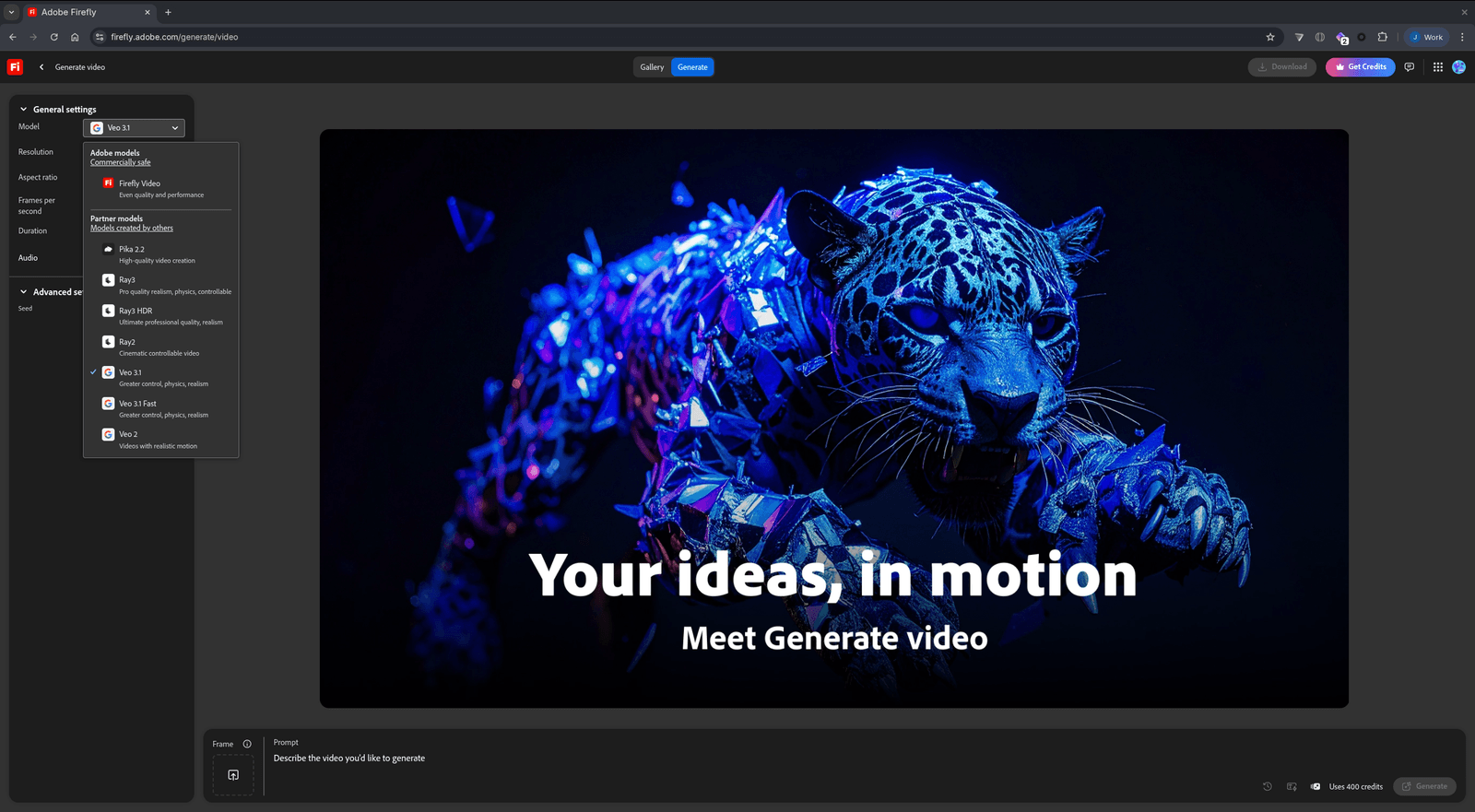
| Policy | Adobe Firefly | Neural Love | Midjourney | Leonardo.Ai |
|---|---|---|---|---|
| Ownership of Output | User owns, with license from Adobe. | User owns. | User owns. | User owns. |
| Commercial Use? | ✅ Yes | ✅ Yes (Paid) | ✅ Yes (Paid) | ✅ Yes (Paid) |
| ⚠️ Offers Legal Indemnity? | ✅ YES | ❌ NO | ❌ NO | ❌ NO |
The verdict is unambiguous. Only Adobe Firefly is engineered for professional use in a risk-aware environment. All other alternatives to Neural Love shown here place 100% of the legal and financial liability for copyright infringement directly onto you, the user.
Real-World Scenario: The ‘Copyright Timebomb’ in Action
A freelance designer I know was tasked with creating a suite of images for a client’s major online advertising campaign. The client required absolute assurance that the artwork would not trigger a copyright lawsuit. The designer reviewed the terms for both Neural Love and Adobe Firefly.
They found that Neural Love’s Terms of Service Neural Love ToS v4.0 explicitly states the user is “solely responsible” for the content they generate. In contrast, Adobe’s terms included a clear IP indemnification clause for content generated with Firefly. The choice was immediate. For this high-stakes commercial project, Adobe Firefly was the only option.
Other “Blind Spot” Limitations
Beyond the copyright bomb, several other structural limitations can be deal-breakers.
- ⚠️ Overzealous Censorship Filters: The platform’s content moderation filters are notoriously aggressive and cannot be configured. The filters frequently block ‘innocuous or artistic prompts containing certain keywords (e.g., ‘nude statue,’ ‘violence’ in a historical context)’ Reddit Censorship Discussion. This is a deal-breaker that forces these users to adopt more flexible platforms, such as local installations of Stable Diffusion.
- ⚠️ The “Good Enough” Quality Ceiling: For professional final outputs, users are often forced to switch to a specialist tool like Topaz Video AI or Midjourney anyway, defeating the purpose of the all-in-one subscription.
- ⚠️ Lack of Integration: A further limitation is the lack of native integrations with core professional software like Adobe Creative Cloud or Figma, isolating it from established workflows.
Risk Mitigation Strategies
Given these risks, what can a user do?
- Isolate High-Risk Work: For any client work or public-facing commercial project, use an indemnified tool like Adobe Firefly. Reserve non-indemnified tools for internal drafts, brainstorming, and personal projects only.
- Maintain a “Clean Room” Environment: Never use AI-generated assets from non-indemnified tools in a project that requires copyright guarantees. Treat them as legally contaminated.
- Calculate True TCO: Before committing to a credit-based system, run a pilot of your most common, credit-intensive task. Calculate the actual cost-per-task to project your real monthly spend. And always stack a special offer on Neural Love if you do decide to subscribe.
Part 5: Use Cases & Prosumer Workflows
The right tool is not about which is “best,” but which is best for a specific job. Here, we move beyond feature lists to detail how these AI tools fit into the day-to-day reality of three different professional personas.
Workflow 1: The Social Media Manager with Neural Love
👤 Persona: Sarah, Social Media Manager
Sarah works for a small e-commerce brand. She needs to create 3-5 engaging posts per day across multiple platforms, requiring a mix of images, short videos, and audio clips. Her priority is speed and versatility over fine-art quality.
The Workflow:
- Image Generation (10 mins): Sarah needs a background image for a product announcement. She logs into Neural Love and uses the prompt, “a clean, minimalist podium with pastel-colored geometric shapes in the background, soft lighting.” She gets a usable image in three attempts.
- Video Upscaling (15 mins): She has a 30-second, 720p video clip from a customer. She uploads it to Neural Love’s video enhancer to upscale it to 1080p for Instagram Reels. The result is sharper and looks more professional.
- Audio Cleanup (5 mins): The customer video has some background noise. She uses the audio enhancement tool to reduce the hum, making the customer’s testimonial clearer.
- Assembly (10 mins): Sarah downloads the three assets from Neural Love and assembles them in Canva for the final post, adding text overlays.
Outcome: In under 45 minutes, Sarah has created a complete, multi-format social media asset using a single platform. For her, the “all-in-one” convenience of this AI tool outweighs the lack of granular control.
Workflow 2: The Concept Artist with Midjourney
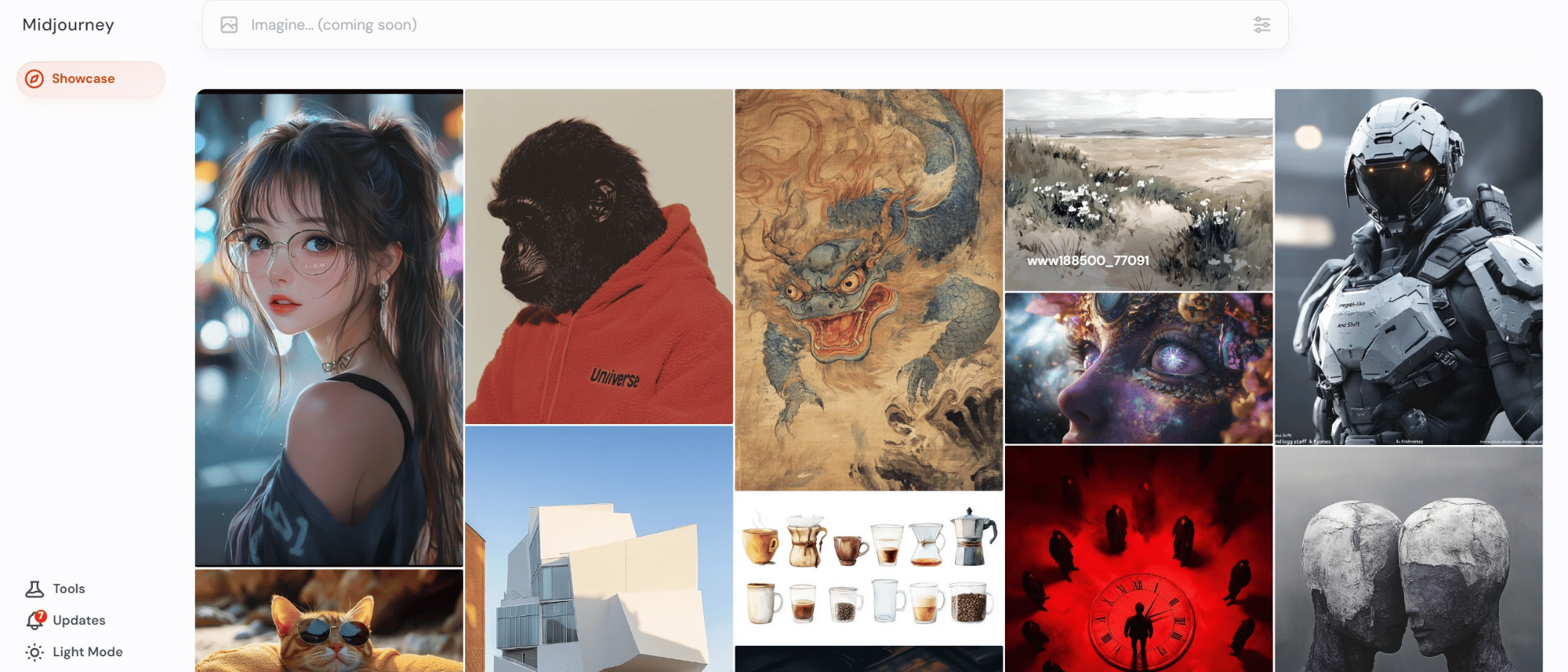
👤 Persona: Leo, Freelance Concept Artist
Leo is working on character designs for a new indie game. His priority is artistic coherence, unique style, and creating inspirational, high-detail images.
The Workflow:
- Ideation in Discord (60+ mins): Leo opens Discord and navigates to his private Midjourney channel. He begins exploring with prompts like, “cyberpunk samurai, detailed armor with neon piping, cinematic lighting, photorealistic, –ar 16:9 –v 6.0”.
- Iteration and Remixing: He generates dozens of variations, using Midjourney’s “Vary” and “Remix” features to change specific elements, experimenting with different camera angles and art styles. He is not worried about cost because he’s using the “relax mode.”
- Upscaling and Final Selection: Once he has a design direction he likes, he uses the upscaler to get a high-resolution version.
- Paintover in Photoshop: He imports the final Midjourney image into Photoshop. He uses it as a base layer, painting over it to fix details (like the hands), add custom elements, and match the client’s exact color palette.
Outcome: Leo uses Midjourney as a powerful brainstorming partner. The clunky UI is a worthwhile trade-off for the superior artistic quality that other apps like Neural Love cannot match.
Workflow 3: The Filmmaker with Topaz Video AI
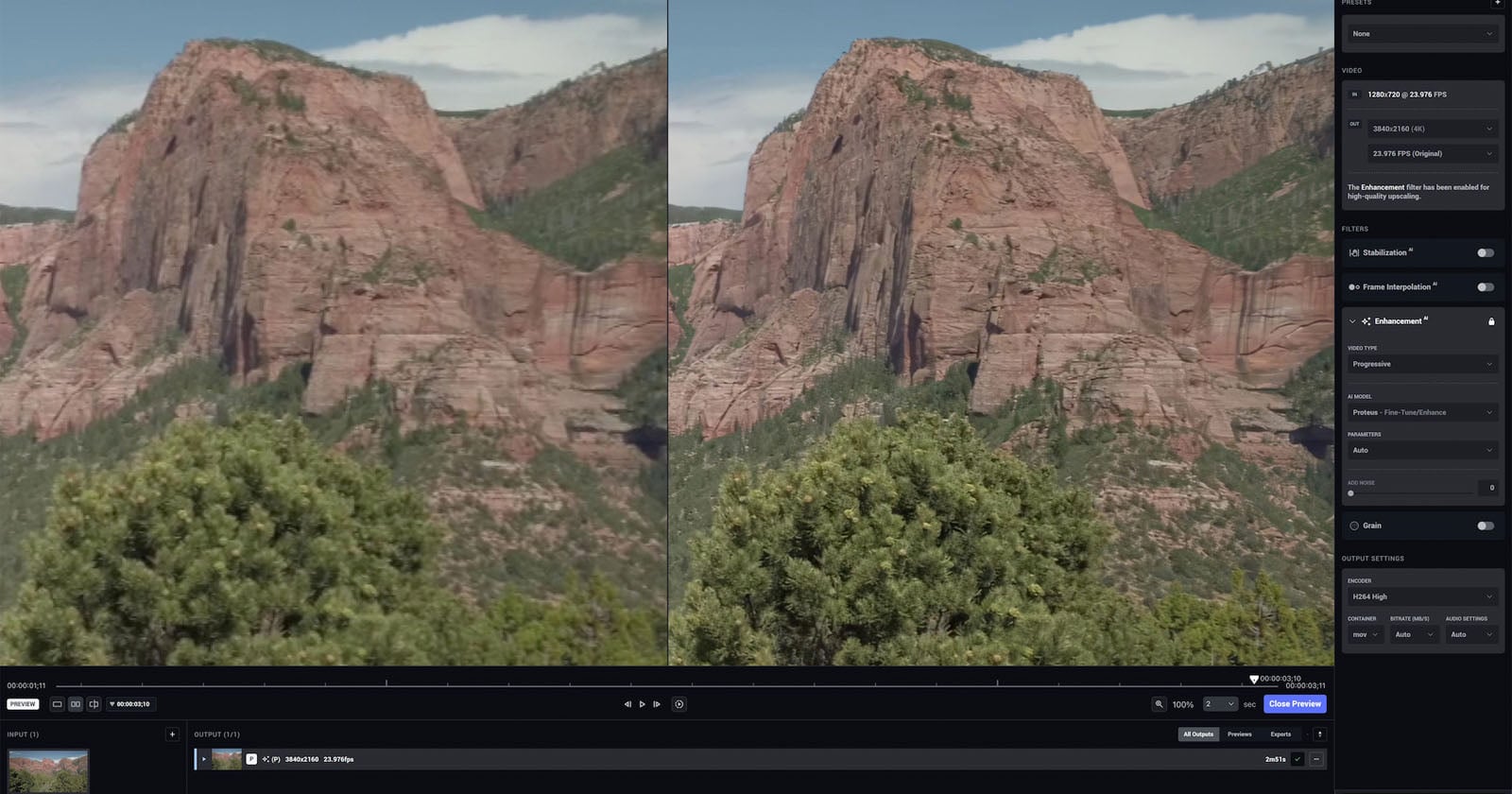
👤 Persona: Maria, Documentary Filmmaker
Maria has just acquired rare 480p archival footage from the 1990s for her project. Her priority is recovering maximum detail and producing a clean, sharp 4K master for theatrical distribution.
The Workflow:
- Software Setup: Maria opens the Topaz Video AI desktop application, a product from Topaz Labs. She loads her 480p video file.
- AI Model Selection: Based on the source material (interlaced, low-res video), she selects a specialized AI model within Topaz, such as “Artemis HQ,” designed for detail recovery from compressed footage.
- Fine-Tuning: She adjusts sliders for de-noising, sharpening, and de-interlacing, viewing a live preview to find the perfect balance that avoids an artificial “plastic” look.
- Batch Processing: Satisfied with the settings, she adds the job to the processing queue and lets her powerful workstation render the full clip overnight.
Outcome: The next morning, Maria has a stunning 4K version of the footage with details she didn’t know existed. For her professional work, the high one-time cost of Topaz Video AI provides an undeniable return on investment that a subscription-based, generalist tool never could.
Part 6: Alternatives & Comparisons: Matching the Tool to the Task
The AI media generation market is not a one-size-fits-all world. This section provides a clear decision framework and head-to-head comparison to help you choose from the top Neural Love alternatives. For a curated list of additional head-to-head guides, check our Comparison articles category.
Decision in 60 Seconds
| If you need… | Your Best Bet Is… | Because… |
|---|---|---|
| Maximum legal safety for corporate work | Adobe Firefly | It’s the only tool with full copyright indemnification. |
| The highest quality artistic images | Midjourney | Its model is industry-leading for artistic coherence. |
| A versatile toolkit for varied tasks | Neural Love | It combines image, video, and audio tools in one UI. |
| Professional-grade video restoration | Topaz Video AI | Its specialized algorithms are superior for detail recovery. |
| Fine-tuned control over image models | Leonardo.Ai | It excels at custom models and granular control. |
Top Alternatives & Competitors Shortlist
| Tool | Role | Best For | Key Tradeoff | Price Signal |
|---|---|---|---|---|
| Neural Love | Core Platform | The “All-in-One” Prosumer | “Master of None” quality ceiling | $$ (Subscription + Credits) |
| Midjourney | Specialist | Artistic Image Generation | Clunky Discord UI, No Indemnity | $$ (Subscription) |
| Leonardo.Ai | Specialist | Customizable Image Generation | Credit-based system, No Indemnity | $$ (Subscription + Credits) |
| Topaz Video AI | Specialist | Professional Video Restoration | High upfront cost, No image gen | $$$ (One-Time Purchase) |
| Adobe Firefly | Enterprise/Regulated | Legally-Safe Commercial Assets | “Sanitized” output, More expensive | $$$ (Subscription) |
In-Depth Competitor Breakdown
Category & Classification
- Role: Specialist AI art generator
- Pricing Model: Pure subscription (~$30/month) with unlimited “relax mode”
- Platform: Discord-only workflow
- Ideal User: Concept artists, illustrators, creative directors
Ideal Use Cases & Professional Applications
- Best For: Concept artists, illustrators, and anyone who prioritizes the highest possible artistic quality and stylistic coherence in image generation.
- Consider If: You are comfortable working within Discord and your primary output is static images for inspiration or as a base for further editing. Its strong community is also a plus for learning advanced prompting.
- Avoid If: You need video or audio tools, require a simple web interface, or are doing any commercial work that requires legal indemnification against copyright claims.
✅ Strengths
- Industry-benchmark artistic image coherence
- Unlimited “relax mode” generations
- Predictable flat-rate pricing (no credits)
- Strong creative community for advanced prompting
- Excellent for cinematic and stylized output
⚠️ Considerations
- Clunky Discord-only UI
- No legal indemnification for commercial use
- No native video or audio tools
- Steep learning curve for non-technical users
- Still struggles with anatomy details (hands)
Category & Classification
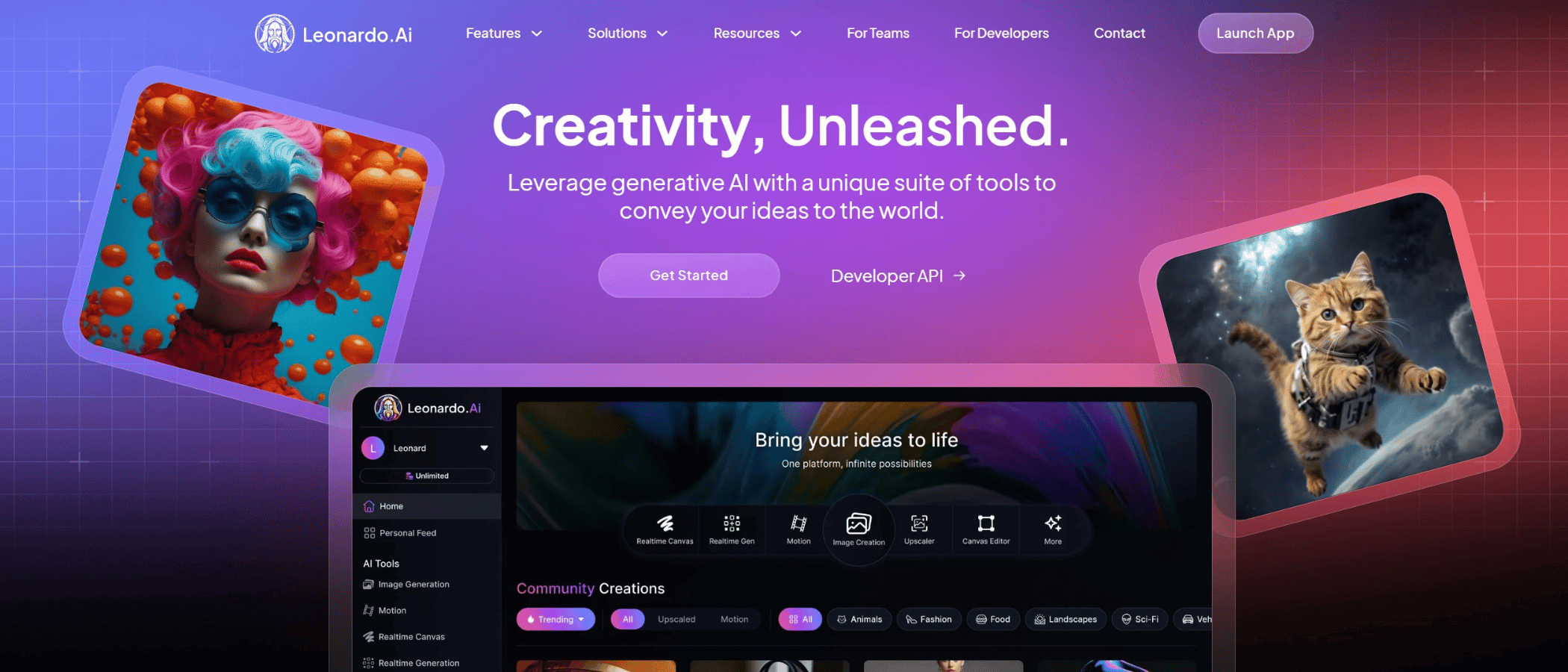
- Role: Specialist AI image generator with custom model training
- Pricing Model: Subscription + Credits (similar to Neural Love)
- Platform: Web-based UI
- Ideal User: Game asset designers, AI tinkerers, brand designers
Ideal Use Cases & Professional Applications
- Best For: Game asset designers, AI tinkerers, and users who want granular control to create a specific, consistent aesthetic by training their own models.
- Consider If: You need to generate a large volume of images in a very specific style (e.g., “pixel art icons” or “watercolor portraits”) and are willing to invest time in model training. Its free tier is also more generous than many competitors.
- Avoid If: You are concerned about unpredictable costs from a credit-based system or need legal protection for your commercial projects. The quality, while high, is generally considered a step behind Midjourney’s for pure artistic output.
✅ Strengths
- Custom model training capability
- Granular control over generation parameters
- Generous free tier for experimentation
- Clean web-based interface
- Excellent for consistent style replication
⚠️ Considerations
- Credit-based pricing creates cost unpredictability
- “Faster-than-expected credit depletion” complaints
- No legal indemnification for commercial work
- Artistic quality ceiling below Midjourney
- Model training requires significant time investment
Category & Classification
- Role: Specialist video upscaling and restoration software
- Pricing Model: One-Time Purchase (~$299)
- Platform: Desktop application (Mac/Windows)
- Ideal User: Documentary filmmakers, video archivists, wedding videographers
Ideal Use Cases & Professional Applications
- Best For: Documentary filmmakers, video archivists, wedding videographers, and any professional who needs to restore, upscale, or enhance poor-quality video footage to a professional standard.
- Consider If: Video enhancement is a core and frequent part of your professional workflow. The high one-time cost is easily justified if you process more than 30-60 minutes of video per month.
- Avoid If: You need to generate new content (images, audio) or only need occasional, basic video upscaling. Its high upfront cost is not justifiable for casual users.
Performance Metrics
- Specialized AI models (Artemis HQ, etc.) for different source types
- True detail recovery vs. “plastic” smoothing effect
- Batch processing with overnight queue support
- Live preview for fine-tuning de-noising and sharpening
✅ Strengths
- Best-in-class video restoration quality
- One-time purchase (predictable TCO)
- Specialized AI models for different sources
- True detail recovery from low-res footage
- Professional batch processing workflow
⚠️ Considerations
- High upfront cost (~$299)
- No image generation capabilities
- Requires powerful workstation hardware
- Desktop-only (no cloud workflow)
- Updates may have separate fee after year 1
Category & Classification
- Role: Enterprise/Regulated AI image generator
- Pricing Model: Subscription (part of Creative Cloud or standalone)
- Platform: Web-based + Adobe Creative Cloud integration
- Ideal User: Corporate marketing teams, ad agencies, enterprise users
Ideal Use Cases & Professional Applications
- Best For: Corporate marketing teams, enterprise users, advertising agencies, and any individual or business for whom legal risk is unacceptable.
- Consider If: You are creating assets for a major brand campaign, a book cover, or any public-facing work where a copyright lawsuit would be catastrophic. Integration with the Adobe Creative Cloud ecosystem is another major advantage.
- Avoid If: You are an artist seeking edgy, experimental, or photorealistic output. Firefly’s training on a “safe” dataset can lead to more “sanitized” and less creatively daring results compared to Midjourney.
User Experience & Learning Curve
- Tight integration with Photoshop, Illustrator, and Premiere Pro
- Familiar interface for existing Adobe users
- Clean web app for non-Creative Cloud users
- Lower learning curve than Midjourney (no Discord)
✅ Strengths
- Full copyright indemnification (industry-unique)
- Trained on licensed Adobe Stock dataset
- Native Creative Cloud integration
- Enterprise-ready security and compliance
- Predictable subscription pricing
⚠️ Considerations
- “Sanitized” output less creatively edgy
- Higher cost than standalone competitors
- Locked into Adobe ecosystem
- Lower photorealistic quality vs. Midjourney
- Limited style variety vs. open-source models
Feature & Specification Comparison: Neural Love vs. Top Competitors
| Feature | Neural Love | Midjourney | Leonardo.Ai | Topaz Video AI | Adobe Firefly |
|---|---|---|---|---|---|
| Primary Use | All-in-one | Art generation | Custom image | Video restoration | Safe commercial |
| Pricing | Sub + Credits | Subscription | Sub + Credits | One-Time | Subscription |
| Legal Indemnity | ❌ No | ❌ No | ❌ No | N/A | ✅ Yes |
| Platform | Web | Discord | Web | Desktop | Web + CC |
| Key Differentiator | Multi-media suite | Artistic coherence | Granular control | Detail recovery | Legal safety |
Part 7: Final Verdict & Frequently Asked Questions
Final Verdict on Neural Love and Its Competitors
After an exhaustive, devil’s advocate analysis, my conclusion is clear: Neural Love’s all-in-one convenience comes at a steep and often hidden price.
While it offers surface-level productivity gains, that price is paid in specialized quality, financial transparency, and, most critically, legal safety. The platform’s promise of a unified toolkit is compelling, but for most professional use cases, the compromises are too great.
The market is also being squeezed by platforms like Canva, which are integrating “good enough” AI tools into existing design workflows, challenging the value of standalone suites.
The right tool depends entirely on your primary job and your tolerance for risk. My final recommendations are conditional:
- Choose Neural Love if: you are a content generalist or social media manager who values extreme ease of use and needs a diverse toolkit for low-stakes, non-commercial work, and you can manage your credit consumption carefully.
- Choose a Specialist (Midjourney, Topaz) if: your reputation and income depend on delivering the highest quality output in a single domain, be it artistic imagery or professional video restoration.
- Choose Adobe Firefly if: you are doing any form of commercial work. The conversation begins and ends with legal indemnification, and Adobe is the only one offering it.
Before you commit to any tool in this evaluation of Neural Love top alternatives and competitors, I urge you to demand pricing transparency, read the legal terms, and run a pilot project. Do not trust the marketing; trust the output and the fine print. You can also browse all current promotions on our Latest Coupons page to maximize savings before any subscription commitment.
Frequently Asked Questions
Q1: How much does Neural Love really cost?
A: The advertised price, starting at $29/month, is highly misleading for many users. The real cost depends entirely on your usage, and it’s driven by the opaque credit system. High-demand tasks like video upscaling can consume 50-100 credits per minute, quickly exhausting your monthly allowance. For video-heavy users, our TCO analysis shows the true monthly cost can easily balloon to several hundred dollars. This makes it far more expensive than the initial subscription fee suggests and is a critical factor when comparing Neural Love competitors. Always calculate your cost-per-task before committing Neural Love Pricing Page.
Q2: Is Neural Love a “subscription trap”?
A: While not a “trap” in a legal sense, its pricing model exhibits classic features of one. The combination of high credit-burn tasks and, most importantly, credits that expire monthly creates a “use it or lose it” system. This model punishes users with fluctuating project demands, as they either forfeit money on unused credits or are forced to burn them on low-value tasks. This practice is fundamentally anti-user and benefits those with highly consistent, predictable needs, which is rare in creative professions. This structure contributes to a high risk of buyer’s remorse for many subscribers Expert Analysis on AI Performance.
Q3: Which AI art generator is safest for commercial use?
A: The answer is unequivocally Adobe Firefly. As of late 2026, it is the only major AI art generator that offers full copyright indemnification. This means Adobe contractually agrees to cover legal costs if you are sued for copyright infringement for using content generated on their platform as intended. All other major competitors, including Neural Love, Midjourney, and Leonardo.Ai, explicitly place 100% of the legal risk on the user in their Terms of Service. For any serious business, this makes Firefly the only professionally viable choice for commercial work Adobe Firefly Enterprise.
Q4: Is Midjourney better than Neural Love?
A: It depends entirely on your priority. For generating the highest quality, most artistically coherent, and stylistically unique images, yes, Midjourney is currently superior in its output. Its models are widely regarded as the industry benchmark for artistic generation. However, Neural Love is a better choice for users who prioritize ease of use with a simple web interface and need a versatile AI toolkit that includes video and audio enhancement. If you are a social media manager, Neural Love’s versatility is its strength; if you are a concept artist, Midjourney’s quality is its undeniable advantage PCMag AI Suite Review.
Q5: What is the main problem with Neural Love’s video upscaling?
A: The main problem is the “plastic” or “painterly” effect it produces when upscaling from low-resolution or poor-quality sources. According to findings from technical reviews, rather than recovering real, fine detail, the AI tends to smooth over surfaces and textures, creating an artificial look that is unacceptable for professional-grade restoration Ars Technica Video Upscaling Tests. For projects requiring true detail recovery from sources like old film or compressed video, a specialized tool like Topaz Video AI is the superior and necessary choice, as it employs algorithms specifically designed for that challenging task.
Q6: Why do people complain about AI art “hands”?
A: The “hands problem” is a classic example of AI’s struggle with complex, detailed anatomy and logical consistency. Generating realistic hands requires a deep understanding of structure, the interplay of 20+ bones, and the countless ways they can be posed. Early generative AI models often produced images with six-fingered hands or other bizarre deformities. While models have improved, achieving specific details like perfect hands still often requires many attempts and advanced prompt engineering. On platforms like Neural Love that use a credit system, this technical performance issue directly translates into higher financial costs for the user Reddit AI Community Feedback.
Q7: Can I get my money back if I don’t like Neural Love?
A: According to Neural Love’s Terms of Service, subscription fees are non-refundable once paid. When you cancel, your subscription remains active only until the end of the current paid term Neural Love Terms of Service. The policy is less explicit about separately purchased “top-up” credits, but users should operate under the assumption that these are also non-refundable. This is a key financial risk of the pre-purchase credit model. Unlike a physical product with a return window, you are paying for access to a service, and most SaaS platforms do not offer pro-rated refunds for unused time or credits.
Q8: Is Topaz Video AI worth the high upfront cost?
A: For the right user, it is absolutely worth it and provides a massive return on investment (ROI). A simple Total Cost of Ownership calculation shows that for anyone upscaling more than roughly 30 minutes of video per month, the one-time cost of Topaz Video AI (historically ~$299) becomes cheaper than Neural Love’s recurring subscription and credit costs within a single year. It is a professional tool with a professional price, but it offers a clear, predictable financial model and best-in-class results for its specific task. If video restoration is central to your business, the investment is easily justified Topaz Labs Store.
For readers who want to dig deeper into how Neural Love stacks up against every major rival in this market, our companion guide on Neural Love top alternatives and competitors goes even further with hands-on benchmarks and live pricing updates.