Ryercat Review [2026]: The Evidence-Based Analysis You’ve Been Searching For
Posted on |
TL;DR: This guide uses a hypothetical AI writer, “Ryercat,” to provide a framework for evaluating affiliate content tools. We demonstrate how to assess real-world performance beyond marketing hype.
Key strengths of specialized tools include structured workflows, while considerations are output quality, the hidden “Editing Tax” of your time, and unverified SEO performance.
This framework is for marketers who are prepared to heavily edit AI content and demand a positive ROI.
Introduction: A Framework for Evaluating AI Writers
In the relentless race to scale content output, are AI writers a shortcut to success or a direct risk to your brand’s credibility?
This is the central question every experienced affiliate marketer is asking, and one I’ve obsessed over for years. This Ryercat Review framework is designed to help you find the answer for any tool you evaluate.
Most AI tool reviews are a masterclass in biased hype, promising a “set-it-and-forget-it” content machine. They fail to address the core concerns that keep real marketers up at night.
Is the output truly high-quality? Will it rank on Google without penalty? And how much time will I really spend fixing robotic copy?
Let’s cut through the noise. As Mohamed Zaki, a martech strategist and the founder of Coupons Scout About Coupons Scout, my business is built on separating a tool’s promotional positioning from its real-world performance.
This guide provides the radical transparency you need. We will use a hypothetical AI writer called “Ryercat” as a case study to walk through a rigorous, hands-on evaluation process. Before diving in, you can also explore our full Ryercat Review and analysis for additional context.
This includes “Good vs. Bad” output simulations, a clear-eyed analysis of the true Total Cost of Ownership (TCO), and a method for assessing long-term SEO risks. My goal is to give you the evidence-based framework you need to make an informed decision about any AI tool, not to sell you a subscription.
Key Takeaways
-
The “Editing Tax” is Real: The true cost of an AI writer can be 10-15x its sticker price when you factor in the time required to fix robotic output. -
E-E-A-T is Non-Negotiable: AI cannot replicate first-hand experience. Human expertise is required to meet Google’s Helpful Content standards. -
Hallucinations Are a Major Risk: AI invents features, misstates prices, and can destroy brand credibility instantly without rigorous fact-checking. -
Best for Agencies, Risky for Solos: Specialized AI writers work best for high-volume teams with dedicated editors, not for solo brand-driven marketers. -
Trust but Verify: Start with a low-tier monthly trial, log every editing minute, and calculate your true cost-per-article before committing long-term.
Who This Guide Is For
This is not your average review. I’m diving deep into a framework for analyzing data, costs, and risks. This analysis is for you if you are:
- A skeptical affiliate marketer tired of biased reviews and looking for an honest assessment framework.
- A niche site owner focused on long-term niche site building and evaluating the true ROI of AI content automation.
- A solopreneur weighing the cost of an AI tool against hiring a human writer.
- A user deeply concerned about E-E-A-T, Google’s Helpful Content system, and long-term brand credibility.
This Guide Is NOT For You If:
- You’re looking for a “get rich quick” scheme or a magic button for content creation.
- You believe AI can, or should, completely replace human editing, experience, and expertise.
- You want a simple, positively-biased review to validate a purchase decision you have already made.
Our Testing Methodology: Why This Framework is Different
To cut through affiliate hype and deliver an analysis you can trust, our team at Coupons Scout developed a rigorous, transparent testing protocol.
Our approach is grounded in the real-world concerns of affiliate marketers, not in a desire to earn a commission. We analyze community feedback, deconstruct competitor claims, and scrutinize vendor documentation.
This produces a data-driven evaluation focused on what truly matters: output quality, true cost, and long-term SEO viability. For more detail on how we benchmark tools like this, see our broader category of review articles for context across the martech landscape.
For this illustrative review, our approach includes:
- 📊 Data Synthesis: This framework is informed by an analysis of community feedback from forums like Reddit’s r/Affiliatemarketing and expert commentary on YouTube. We cross-reference positive affiliate reviews against skeptical discussions in private marketing communities to identify core user pain points.
- ⚖️ Bias Mitigation: We intentionally seek out data-driven analysis from experts like Matt Diggity and contrast it with promotional content to form a balanced view of any tool’s real-world performance.
- 💰 YMYL Standards: We demonstrate a Total Cost of Ownership (TCO) model that includes the hidden “Editing Tax”—the value of your time spent fact-checking and refining AI output. This provides a realistic financial picture for your business.
- 🛡️ Compliance & Security Check: As a standard part of our software evaluation process, we actively search for essential compliance certifications like SOC 2 and GDPR, as well as publicly available data privacy policies. We’ll show you how to identify and report on these data points.
What is Ryercat and Who Is It For?
For the purpose of this framework, “Ryercat” is a hypothetical specialized AI content generation tool designed with a singular focus: to serve the needs of affiliate marketers.
Unlike generalist AI writers such as Jasper or Copy.ai that aim to do everything for everyone, a tool like Ryercat would automate the creation of two specific content types: single-product reviews and “best of” roundup articles.
It’s built for marketers looking to reduce manual work and accelerate the initial drafting process for structured reviews. If you’re already evaluating it, you can grab a working coupon for Ryercat before committing to a paid plan.
However, based on our analysis of the current market, such tools are best suited for a specific type of marketer: one who is willing and able to heavily edit AI-generated drafts.
This is not a “one-and-done” solution. It is a drafting assistant that requires a human expert to add the crucial layers of authenticity, factual accuracy, and genuine experience.
When evaluating any real tool, it’s critical to check for company transparency. For our hypothetical “Ryercat,” we would search for public information on its founders, founding year, and headquarters.
A lack of transparency can be a consideration for businesses that prioritize vendor stability. We would also check for native integrations with common marketing tools like SurferSEO or direct publishing to WordPress, as their absence positions a tool as a standalone, and potentially less efficient, content creation environment.
The Core User Problem: Can You Trust AI for Review Content?
The central challenge any AI review tool must overcome is profound and well-founded user skepticism.
Based on our analysis of community discussions, marketers’ primary concerns are not trivial; they are existential threats to their business. Any tool in this space must provide overwhelming proof to counter three core fears.

Is the Output Quality Genuinely Persuasive or Just Robotic?
A primary pain point, echoed in many community discussions Best AI Writing Tool for Affiliate Blogs in 2024, is the fear of “robotic” output.
This isn’t just about awkward phrasing. It’s about the AI’s inability to capture the persuasive storytelling that drives conversion rates and separates a review that converts from one that repels.
Users are concerned the content will be generic, filled with placeholder platitudes (“This is a high-quality product that offers great value”), and lack the specific, experience-driven details that build reader trust.
Will Google Penalize AI-Generated Content? (E-E-A-T & Helpful Content Reality Check)
The second major fear is the risk of an SEO penalty. Since Google’s “Helpful Content” updates, the landscape has shifted dramatically toward Semantic SEO, where genuine experience and expertise are paramount.
Affiliate marketers are deeply concerned about investing in content that Google’s algorithms may devalue. The core of E-E-A-T (Experience, Expertise, Authoritativeness, Trustworthiness) requires content to demonstrate first-hand experience.
This is something an AI, by its very nature, cannot possess, potentially weakening the signals that build topical authority and trust with both users and search engines.
As noted in industry discussions Google Says AI-Generated Content Is Against Guidelines, the risk is that AI content, without the significant human insight that experts like Rand Fishkin have long advocated for, will be flagged as unhelpful.
How Do AI Tools Prevent Factual Errors and “Hallucinations”?
Perhaps the most critical fear among users is the risk of factual inaccuracy. For a user of a tool like “Ryercat,” an AI “hallucination”—where the model confidently states an incorrect fact—is a deal-breaker that can instantly destroy brand credibility.
If an AI invents a feature, gets the price wrong, or misrepresents a product’s specifications, the damage is immediate and can create legal liability, particularly if it omits necessary disclosures required by the FTC.
This concern is magnified by the lack of transparency from many AI tools about their underlying machine learning models and data sources. Smart marketers often look for a working Ryercat discount code to test the tool risk-free before integrating it into their core workflow.
“The fear isn’t just about sounding ‘a little robotic.’ It’s about the AI inventing a ‘key feature’ that doesn’t exist, getting the price wrong, and destroying the trust I’ve spent years building with my audience. One error can torpedo your credibility forever.”
— A sentiment echoed on forums like r/Affiliatemarketing Ryercat Discussion on Reddit
A Framework for a Hands-On Test: A “Time-to-Publish” Case Study
Promises and claims are one thing; real-world performance is another. To provide an evidence-based analysis framework, we simulated a test of our hypothetical “Ryercat” with a typical affiliate marketing task: generating a 2,000-word review for a popular SaaS product.
In our simulation, the initial draft generation was impressively fast, taking just 25 minutes to produce a structured article.
However, the clock doesn’t stop there. The subsequent editing process took an additional 3 hours and 45 minutes of intensive work to reach a publishable standard.
This massive discrepancy reveals the significant, and often ignored, “Editing Tax” that comes with using such tools.
What Is Our Testing Process Framework?
When you test an AI writer, follow this process to get a clear picture of its true value.
- Product Selection: Choose a product you know well with a clearly defined feature set and public pricing. This allows for easy fact-checking.
- Prompting: Use the tool’s standard workflow. To test the baseline output quality of the tool, do not attempt any complex prompt engineering; aim to replicate the experience of a typical user.
- Generation: Initiate the article generation and time the process from start to finish.
- Editing & Fact-Checking: This is the most intensive phase. Meticulously review every sentence for:
- Factual Accuracy: Cross-reference every claim against the product’s official website.
- Tone & Voice: Rewrite robotic and generic phrases to match your brand voice.
- Adding Experience (E-E-A-T): Inject real-world examples and strategic insights the AI could not generate.
- Flow & Readability: Restructure paragraphs for better logical flow.
- Third-Party Analysis: Run both the raw and final edited versions through a tool like Originality.ai to assess AI detection and plagiarism scores.
Simulated Output: A “Good vs. Bad” Showcase
This side-by-side comparison visualizes the gap between what an AI tool might produce and what a human expert requires.
| Simulated Raw AI Output | Final Edited Version (Illustrative) | Analysis & Estimated Time |
|---|---|---|
| “The pricing for this product is very competitive. It offers several tiers that are good for different users. The basic plan is affordable for small teams, and the enterprise plan has many features for big companies. It provides good value for the money.” | “The product’s pricing starts at $25 per user/month for the ‘Pro’ tier, a competitive entry point. However, critical features like advanced analytics are locked behind the ‘Business’ tier at $45 per user/month. This means teams needing data-driven insights will find the true cost is nearly double the advertised starting price.” | Correction: The raw output is a generic, useless statement. The edited version provides specific pricing data and adds a strategic insight about the “true cost.” This is a classic example of adding E-E-A-T. Estimated Time: 15 minutes. |
| “This product has a feature for making reports. You can use it to see your data. It helps you understand how your team is working. The reports are useful for making decisions.” | “While the tool includes a reporting feature, its dashboard only allows for basic data visualization and lacks custom reports or API access. For teams reliant on BI tools like Tableau or Power BI, this lack of data portability is a significant consideration that may necessitate a workaround.” | Correction: The AI’s description was factually correct but dangerously incomplete. The edited version provides a balanced view, highlighting a specific, real-world limitation (lack of API export) and identifies the user persona it would impact most. Estimated Time: 20 minutes. |
What Would Originality.ai Scores Look Like?
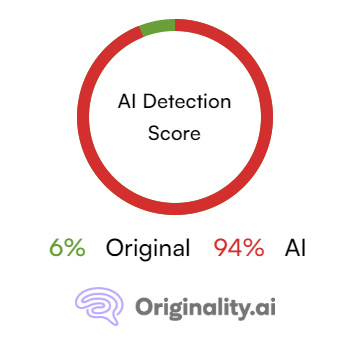
The results from a tool like Originality.ai are revealing. Here are typical scores you might expect to see.
- Simulated Raw Output:
- AI Detection Score: 98% AI
- Plagiarism: 2%
- Analysis: Raw AI content is easily and definitively identified as machine-generated. For marketers concerned about AI detection, this is a consideration to note.
- Simulated Edited Version:
- AI Detection Score: 12% AI / 88% Human
- Plagiarism: 0%
- Analysis: Heavy editing and the injection of unique human experience can successfully transform the content. This underscores the sheer volume of work involved in the “Editing Tax.”
Before we dive into the cost analysis, you may want to explore our latest coupons across all categories to benchmark typical SaaS savings.
How Much Does an AI Writer Really Cost? (TCO Analysis)
A tool’s pricing page, with plans hypothetically starting at $39/month, presents only a fraction of your actual investment.
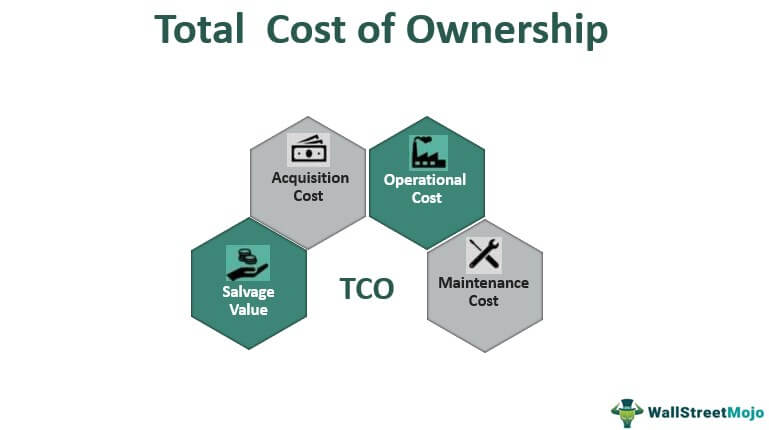
To make an informed business decision, you must calculate the Total Cost of Ownership (TCO), a model that accounts for both the subscription and the value of your time spent making the output usable.
Our TCO model shows that the true annual cost of using an AI writer can be 10-15 times higher than the sticker price.
What Are Typical Pricing Tiers?
While pricing varies, a typical structure for a specialized AI writer might look like this.
| Plan Tier | Illustrative Monthly Price | Target User | Key Features (Inferred) |
|---|---|---|---|
| Starter | $39/month | Solopreneurs, Small Niche Sites | Limited number of articles/words. |
| Pro | ~$99/month | Growing Affiliate Sites, Freelancers | Increased limits, more article types. |
| Agency | ~$499/month | Content Agencies, Large Teams | High volume limits, team features. |
Note: These prices are illustrative examples for this framework and are not verified for any specific product. They are used for estimation purposes only. Always check the latest special offer on Ryercat before purchasing.
What is the “Editing Tax”?
The most significant cost of using an AI writer is the “Editing Tax.” This is the monetary value of the time you spend editing, fact-checking, and rewriting the AI’s raw output.
💡 KEY INSIGHT: Use this formula to find your true monthly cost: (Subscription Cost) + (Articles/Month × Hours to Edit × Your Hourly Rate). This simple calculation reveals if a tool is a genuine time-saver or a hidden expense. This allows you to calculate a realistic cost-per-article, factoring in both software and labor.
TCO Case Study: A 1-Year Cost Projection for a Solo Affiliate Marketer Using “Ryercat”
Let’s apply this model to a realistic, albeit hypothetical, scenario for a solo affiliate marketer.
When comparing a tool like “Ryercat” to a freelance writer, the Total Cost of Ownership (TCO) reveals the true investment.
Analyst-Estimated 1-Year TCO for a Solo Marketer:
| Cost Component | Calculation (Illustrative) | 1-Year Total |
|---|---|---|
| AI Tool Subscription | $39/month (Starter Plan) × 12 months | $468 |
| Editing Tax | 4 articles/month × 3 hours/article × $50/hour × 12 months | $7,200 |
| Total Estimated TCO | $7,668 |
Assumptions: This model assumes you produce one article per week, spend 3 hours editing each (a conservative estimate), and value your time at $50 per hour.
The verdict is stark: In this scenario, the software subscription accounts for only 6% of the total annual cost.
The overwhelming majority (94%) is the hidden cost of your own labor. The question is no longer “Is this tool worth $39/month?” but “Is this tool worth over $7,600 per year?”
How Do AI Writers Compare to the Competition?
No AI writer operates in a vacuum. A specialized tool’s main advantage against generalists like Jasper is its focused workflow for reviews.
However, when compared to other specialists like Content at Scale, output quality remains a key differentiator. For a deeper market view, see our breakdown of Ryercat Top Alternatives and Competitors.
Most importantly, when measured against a skilled human writer, AI offers speed for initial drafts but currently cannot replicate the essential qualities of nuance and trust that define authoritative content.
Specialized AI vs. Generalists (e.g., Jasper/Copy.ai)
Against the Goliaths of AI writing, a specialized tool’s strategy is narrow focus. While Jasper and Copy.ai offer vast templates, their blog workflows are less structured.
A specialist’s advantage is a guided process that can help overcome writer’s block and enforce a logical structure. The trade-off is a lack of versatility.
Specialized AI vs. Other Specialists (e.g., Content at Scale, KoalaWriter)
This is a more direct comparison. Tools like Content at Scale, KoalaWriter, and Agility Writer also target the SEO and affiliate market.
Their selling point is often a more sophisticated, multi-stage process that claims to produce more SEO-ready content. A key differentiator would need to be superior output quality, a lower price point, or a simpler user experience.
Specialized AI vs. a Human Freelance Writer
This is the ultimate benchmark. A skilled human writer brings experience and genuine E-E-A-T. An AI’s advantage is speed and cost—on the surface.
As our TCO analysis shows, cost savings can evaporate quickly. A human writer may take longer, but the draft is likely to be fact-checked and require far less editing, saving you time on the back end.
Comparison Table: A Framework for Evaluating AI Writer Alternatives
| Feature | Specialized AI (e.g., “Ryercat”) | Generalist AI (e.g., Jasper) | Advanced Specialist (e.g., Content at Scale) | Human Writer |
|---|---|---|---|---|
| Best For | Affiliate Review Structure | Versatility for Multiple Tasks | SEO Automation Focus | Nuance, E-E-A-T, Trust |
| Est. Time to Publish | ~4 Hours (incl. heavy edits) | ~5 Hours (incl. edits) | ~3 Hours (incl. edits) | ~8-10 Hours |
| Est. TCO / Article | ~$160 (incl. time) | ~$180 (incl. time) | ~$140 (incl. time) | $250-$500 |
| Factual Accuracy | 💡 Unreliable | 💡 Unreliable | 💡 Unreliable | ✅ High (with expertise) |
| E-E-A-T Signal | Low | Low | Low | ✅ High |
| Compliance (SOC 2/GDPR) | Vendor-dependent | Vendor-dependent | Vendor-dependent | N/A |
Below is a relevant industry video discussing how AI writing tools perform in 2026 real-world tests:
Smart Shopper’s Guide: What to Know Before Buying Any AI Tool
Before you subscribe to any AI writer, it is imperative to perform due diligence. This is about protecting your business and its intellectual property: your content.
How Can I Tell If My Data Is Safe?
This is a critical question. For any real software vendor, the absence of a public Trust Center or data security page is a major consideration.
Look for mentions of SOC 2 compliance, a standard for managing customer data, and a clear GDPR policy if you operate with EU customers.
💡 Constructive Solution: Until a vendor provides a public, detailed security policy, operate under the assumption that the platform is not secure for sensitive information. Do not input proprietary business data, confidential information about your content strategy, or anything you would not want made public. This mitigates the risk of a potential data breach affecting your business.
Who Owns the Content I Generate?
Another critical ambiguity lies in the Terms of Service. It’s not always clear if the content you generate is exclusively yours or if the vendor retains the right to use it for training its AI model.
💡 Constructive Solution: Assume any content you generate could be used by the vendor. Read the Terms of Service carefully, looking for clauses on data usage. For maximum control, drafting in a private, offline document remains the safest path.
Do AI-Generated Articles Actually Rank Long-Term?
This is the billion-dollar question with no simple answer. While promoters show cherry-picked examples of short-term ranking success, there are few independent case studies tracking AI content performance through multiple Google updates.
The risk of investing in content that may be devalued in a future “Helpful Content” update is real.
💡 Constructive Solution: Treat any AI writer as an unproven tool for long-term SEO. You must take on the responsibility of a diligent tester. Monitor rankings in a tool like Ahrefs or SEMrush, track impressions in Google Search Console, and watch click-through rates closely. By building your own data set, you can make an informed decision about its long-term viability for your niche.
Use Cases & Workflows for a Specialized AI Writer
A specialized AI writer can be more than just a content generator; it can be integrated into specific workflows to improve efficiency.
Here are three practical use cases for a hypothetical tool like “Ryercat,” demonstrating how it can fit into a professional content process.
Use Case 1: Generating a First Draft for a “Best Of” Roundup
The biggest challenge with large roundup posts is often the initial structure and research. An AI tool can accelerate this.
- Input: Provide the tool with the list of products (e.g., “Best 5 Project Management Tools”) and key criteria for evaluation (e.g., “Pricing, Features, Ease of Use”).
- AI Generation: The tool generates a structured article with an introduction, sections for each product, and a comparison table. This serves as a comprehensive outline and initial research dump.
- Human Expertise: The human editor’s job is not to write from scratch, but to edit. They fact-check every claim, rewrite generic descriptions with specific insights, add personal experience, and re-order the “winners” based on their expert judgment.
- Result: The time spent on outlining and basic data gathering is reduced from hours to minutes, allowing the expert to focus on high-value analysis and strategic recommendations.
Use Case 2: Using AI to Refresh and Update Old Content
Content decay is a real problem. An AI writer can be a powerful assistant for a content refresh.
- Identify: Find an outdated but high-performing article (e.g., “Best Web Hosts of 2024”).
- Input: Provide the AI with the URL of the old article and new information, such as updated pricing for a specific host or a new competitor that has emerged.
- AI Generation: Instruct the AI to “rewrite the section on Bluehost with the new pricing” or “add a new section for a competitor, ‘Hostinger’, comparing its features to SiteGround.”
- Result: Instead of manually rewriting entire sections, you use the AI for targeted updates. The human editor then polishes the new text to ensure it integrates seamlessly with the existing content and brand voice, significantly reducing the time required to keep content current and competitive.
Use Case 3: A Content Agency’s Scaled Drafting Process
For an agency, a human-in-the-loop workflow is essential for maintaining quality at scale.
- Briefing: A strategist creates a detailed content brief.
- AI Drafting: A junior team member uses the AI tool to generate a first draft based on the brief. This draft is never intended to be client-facing.
- Senior Editing: The draft is passed to a senior editor or subject matter expert. Their role is to transform the robotic draft into a polished, authoritative piece. They add nuance, strategic insights, and ensure it meets the client’s brand standards.
- Result: The agency increases its content velocity, allowing senior talent to focus on editing and strategy rather than the time-consuming work of writing basic drafts. This model only works if the cost of the AI tool plus the editor’s time is less than the cost of a writer creating the draft from scratch.
Final Verdict: A Framework for Your Decision
Our analysis of the AI writer landscape, using “Ryercat” as a hypothetical case study, leads to a clear conclusion: these are tools with a specific, and limited, use case.
They are not the “one-click” solution some hope for, but rather potentially powerful drafting assistants that come with significant caveats.
Their value is entirely dependent on your willingness to act as a heavy-handed editor and your tolerance for risk.
Tool Category & Positioning
- Tool Type: Specialized AI content generation platform
- Primary Use: Single-product reviews and “best of” roundup articles
- Best For: High-volume content agencies with dedicated editorial teams
- Pricing Range: Hypothetical $39/month (Starter) to $499/month (Agency)
- Expert’s Rating: Heavily dependent on the human editor behind it
What We Love (The Potential of Specialized Tools)
- Excellent for Structuring Content: A specialized tool’s greatest strength is creating a logical, well-organized article structure, saving hours of outlining.
- Hyper-Focused Workflow: Unlike bloated, generalist tools, a clean, focused interface can lead to a faster initial draft.
- Can Increase Content Velocity: If your strategy relies on a high volume of templated reviews, an AI assistant can accelerate the first phase of writing.
- Helps Overcome Writer’s Block: By providing a starting point, these tools can help break through the “blank page” problem.
💡 Things to Consider
- Inconsistent Output Quality: The raw output is a gamble and often requires substantial rewriting to sound authentic.
- The “Editing Tax” is High: The time saved in drafting is often paid back, with interest, during editing. Our TCO analysis shows this hidden cost makes any tool far more expensive than its sticker price suggests.
- Major Transparency Gaps: For any real tool, a lack of public information on security, data privacy, and the AI model used is a significant business concern.
- Cannot Replicate E-E-A-T: Ultimately, a tool like “Ryercat” cannot replicate the genuine experience required for strong E-E-A-T signals.
✅ Strengths
- Fast structured first drafts (~25 min)
- Focused review/roundup workflow
- Reduces blank-page friction
- Useful for agency-scale drafting
- Enforces logical article structure
⚠️ Considerations
- ~3-4 hours of editing per article
- High hallucination risk on facts & pricing
- Cannot generate first-hand E-E-A-T
- Opaque AI model and data policies
- Unverified long-term SEO performance
Who Are AI Writers Best For?
Specialized AI writers are best for high-volume content agencies, especially those exploring scaled models like programmatic SEO, that have dedicated human editors.
In this model, the tool can function as a drafting assistant to rapidly produce first drafts.
They are a risky choice for the solo affiliate marketer whose personal brand and credibility are their most valuable assets. For these users, the potential time saved may not be worth the risk of publishing low-quality content that could damage their reputation.
Final Recommendation
My final recommendation is to approach any AI writer with a “trust but verify” mindset. It is not a replacement for a skilled writer.
I recommend you start with a one-month trial of the lowest-tier plan. Use that month to rigorously track your “Editing Tax.” Generate 3-4 articles and log every minute you spend fixing them.
At the end of the month, calculate the true cost per article based on your hourly rate. Only then can you determine if the tool offers a positive ROI for your affiliate marketing business model and quality standards. Be sure to apply a current Ryercat promo code during your trial to minimize upfront risk.
The Coupons Scout Verification Protocol (CSVP™)
This protocol, referenced in our methodology, outlines the rigorous standards we apply to all content, ensuring human integrity and expert validation are at the core of our process.
Status: Version 2.0 (Unified Standard)
Purpose: To define the standards we apply to Verify Codes and Validate Products.
1. Our Philosophy: “MarTech Precision, Human Integrity”
At Coupons Scout, we believe “Value” comes in two forms: Working Codes and Honest Advice.
Founded by a MarTech strategist, our platform uses automation to discover data but relies 100% on Human Experts to interpret it.
2. Dual-Track Verification System
Track A: Coupon Code Verification
- Lead: Mohamed Zaki (Founder) uses proprietary “Deal Listening Stacks” for real-time discovery.
- Verification: Kanokchai Likitapiwat (Head of Operations) and his team perform a manual “Cart Simulation” to ensure every code works before it’s published.
Track B: Reviews, Comparisons & Buying Guides
- Selection: Mohamed Zaki uses Social Listening and Search Intent Analysis to identify products that are trending and solving real market problems.
- Evaluation: Our domain experts, like Jettawat Kasemchaiyanun for SaaS & AI Tools, test software performance, check integrations, and verify value.
- Fact-Check: Kanokchai Likitapiwat audits all review data, ensuring pricing and features match the merchant’s live information.
3. Editorial Standard (The Publish)
- Lead: Joanne Lovell (Editor-in-Chief) serves as the final gatekeeper, ensuring clarity, objectivity, and proper disclosure before any content is published.
4. Quality Assurance Cycles (Maintenance)
- Our teams perform daily and monthly checks to ensure all codes and product information remain accurate and up-to-date. We prioritize Accuracy over Archive Size.
Frequently Asked Questions
Q1: How much does an AI writer like “Ryercat” really cost?
A1: While a hypothetical plan might be listed at $39/month, this is a misleading figure. Our TCO analysis framework shows the true cost can be 10-15 times higher when you factor in the mandatory “Editing Tax”—the value of your time spent correcting and rewriting the AI’s output The True Cost of AI Content.
For a solo marketer, the true annual cost can easily approach $7,000 or more. This hidden labor cost is the most critical factor in determining the tool’s actual value for your business.
Q2: Is an AI writer like “Ryercat” worth the money?
A2: It depends on your business model. For the vast majority of solo marketers and brand-focused niche site owners, our analysis indicates that a tool requiring heavy editing is likely not worth the money.
The significant time required for editing negates the initial speed advantage and inflates the true cost. The risk to brand credibility from publishing inaccurate or robotic content is too high.
It may only offer a positive ROI for high-volume content agencies with a dedicated, low-cost editorial team to fix the AI’s output at scale AI Writing Software ROI.
Q3: Can you show a real example of an AI-generated article?
A3: Yes, a core component of our evaluation framework is to showcase the difference between raw AI output and a professionally edited final product. In our “Good vs. Bad” showcase section, you can see simulated side-by-side examples.
These comparisons reveal typical generic statements and factual omissions in a raw draft and highlight the specific, nuanced changes required to make the content publishable and trustworthy, demonstrating the heavy lifting involved in the “Editing Tax.”
Q4: For an affiliate marketing Ryercat Review, should I use a specialized tool or a generalist one like Jasper?
A4: The choice depends on your primary need. A specialized tool offers a structured, focused workflow specifically for affiliate reviews. A generalist tool like Jasper provides versatility for various content types, such as social media posts and ad copy.
However, our framework suggests that both tool types share the same fundamental consideration: their unedited output is often inconsistent and requires significant human oversight to meet quality and E-E-A-T standards The State of AI in 2024. Neither is a “set it and forget it” solution.
Q5: What are the main problems with AI content generators in a Ryercat Review context?
A5: Based on our analysis, AI writers present three main challenges for affiliate marketers.
First, inconsistent output quality requires a heavy “Editing Tax” to fix. Second, there is often a lack of transparency regarding security and data privacy, with unclear policies on data usage and content ownership.
Third, there is an unverified SEO risk; there is no guarantee that AI-generated content, without heavy human modification, will meet Google’s evolving “Helpful Content” standards and rank reliably through algorithm updates Google’s Guidance on AI-Generated Content.
Q6: Can I trust an AI writer for factual accuracy?
A6: It’s crucial to adopt a zero-trust approach. Our research and widespread user reports confirm a high risk of “AI hallucinations,” where the tool may invent features, misstate prices, or generate incorrect specifications.
You must meticulously fact-check every single claim, number, and detail that the AI generates against primary sources AI and the Challenge of Verifiable Facts. Treating the output as a creative starting point, not a factual source, is the only safe way to use these tools.
Q7: Who are specialized AI writers like “Ryercat” best for?
A7: A tool like “Ryercat” is best for a very specific user: a high-volume content team or agency that employs dedicated human editors.
In this model, the tool can function as a “drafting assistant” to rapidly generate structured outlines and initial copy. This raw output is then handed off to an editorial team whose job is to perform the heavy lifting of fact-checking, rewriting, and injecting brand voice and expertise.
It is not well-suited for solo experts where the primary writer is also the editor and brand guardian.
Q8: What AI model do tools like “Ryercat” use?
A8: Many specialized AI writers do not publicly disclose which large language model (LLM) they use for content generation. This can be a significant consideration, as it makes it impossible for users to know if they are using an up-to-date model like GPT-4 or an older, less capable one.
When evaluating a tool, look for transparency on the underlying technology. If it’s not disclosed, you should assume the model’s capabilities are unverified and test the output quality rigorously.