Speechify Top Alternatives and Competitors: A 2026 Devil’s Advocate Review
Posted on |
Last Updated: May 2024 to correct significant factual inaccuracies in a previous version regarding pricing, compliance, and sourcing.
When searching for the Speechify top alternatives and competitors, you quickly discover the biggest rival isn’t another tool—it’s the truth about what these services actually cost, how they handle your data, and what job they are truly built to do.
After years of analyzing productivity tools, I’ve seen the text-to-speech (TTS) market bifurcate into two distinct paths: utility tools for reading and consumption, and professional tools for audio creation.
Most users, however, don’t realize which path they’re on until they’ve already committed time and money. This analysis provides an evidence-based comparison of the two leading, verifiable alternatives that represent this split: NaturalReader and ElevenLabs.
My goal is to help you choose the right tool based on the only criteria that matter for a discerning buyer: your Use Case (reading vs. creating), the real Total Cost of Ownership (TCO) (predictable vs. variable), and most critically, Data Security (verified vs. assumed). Before diving in, you may want to bookmark our latest Speechify coupon code page for the best current savings.
While this guide focuses on these two pillars of the market, the third major player, Speechify, presents a challenge. As of our latest analysis, obtaining transparent, verifiable data on its pricing structure and security posture remains difficult, making a direct, evidence-based comparison problematic.
This analysis is based on the best available public data; I advise you to conduct your own due diligence, especially regarding financial commitments and data privacy.
Key Takeaways
-
Market Split is Real: The best Speechify top alternatives and competitors don’t compete with each other. NaturalReader is the top choice for reading and accessibility (for students and researchers) with its powerful Optical Character Recognition (OCR). ElevenLabs is the undisputed leader for professional audio creation (for podcasters and developers) with its hyper-realistic AI voices. -
Cost Reality Check: Pricing models are deceptive. NaturalReader offers a predictable subscription, with its Plus plan at $119.88/year. In contrast, ElevenLabs uses a credit-based system where power users can face a Total Cost of Ownership (TCO) exceeding $3,500/year, making it a professional-grade investment. -
The Security Divide: There is a significant trust gap. ElevenLabs is the only tool in this comparison with verified, enterprise-grade security, achieving SOC 2 Type II compliance in May 2024 ElevenLabs Trust and Safety Page. NaturalReader lacks a public SOC 2 report, creating a potential risk for users with sensitive data. -
One Question Defines Your Choice: Do you need to read existing documents or create new audio? NaturalReader has the essential OCR for reading PDFs and scans; ElevenLabs has the market-leading voice cloning for creating new content. Your job-to-be-done dictates your tool. -
Critical “Gotchas”: Be aware of vendor policies before committing. NaturalReader’s official site advertises “unlimited use,” but some users report fair use policies may apply in extreme cases. ElevenLabs has a strict no-refund policy on all charges, a significant financial risk for new users ElevenLabs ToS. -
Speechify’s Data Gap: A lack of easily accessible, transparent public data on Speechify’s security audits and pricing structure makes it difficult to benchmark against its competitors, posing a risk for users who prioritize verifiable claims. Before paying full price, check our exclusive Speechify coupon page.
Decision in 60 Seconds
| Persona / Need | Best Choice | Why | Key Risk |
|---|---|---|---|
| Student/Researcher with many PDFs and scanned textbooks. | NaturalReader | Its core strength is OCR, turning static documents into audio. The price is predictable and affordable for academic use. | The user interface can feel dated, and it lacks the security certifications needed for highly confidential research data. |
| Content Creator/Podcaster needing professional voiceovers. | ElevenLabs | The voice quality is market-leading in realism. It’s built for creating new audio content with features like voice cloning. | The credit-based pricing can become extremely expensive and unpredictable. There are no refunds if you miscalculate your needs. |
| Security-Conscious Professional handling sensitive documents. | ElevenLabs | It’s the only tool in this comparison with a public, verified SOC 2 Type II report, a non-negotiable for enterprise use. | The tool is designed for creation, not reading. Using it to proofread documents is an inefficient and costly workflow. |
| Casual User wanting to listen to web articles. | Consider Built-in Tools | Free, native tools like Apple Spoken Content or Microsoft Read Aloud are secure (on-device processing) and cost nothing. | Voice quality is typically lower, and they lack advanced features like a centralized library or OCR for images. |
Top Alternatives & Competitors Shortlist (2024)
| Option | Best For | Tradeoff | Evidence Status |
|---|---|---|---|
| NaturalReader | Reading PDFs, academic research, accessibility | Dated UI, unverified security | ✅ Verified Pricing/Features |
| ElevenLabs | Professional voiceovers, API integration, content creation | High, unpredictable costs, not a reader tool | ✅ Verified Pricing/Security |
| Murf.ai | Corporate training videos, presentations | Less focused on hyper-realism, more on versatility | ⚠️ Needs verification |
| Play.ht | Podcast creation, enterprise voice solutions | Can be complex for beginners, premium pricing | ⚠️ Needs verification |
| OS-Level Tools (Apple/Microsoft) | Casual article reading, maximum security | Basic features, less natural voices | ✅ Verified Availability |
| Speechify | Reading web content with a polished interface | Unclear security posture, complex pricing | ⚠️ Needs verification |
For a deeper dive into the leader of this category, our Speechify Review breaks down every feature, pricing tier, and user experience detail before you commit.
To see how these three tools stack up side-by-side in real voice quality and interface tests, the video walkthrough below offers a great visual companion to our written analysis.
How We Evaluated Speechify’s Competitors
Our editorial team at Coupons Scout follows a rigorous, transparent process—detailed in our editorial methodology—to ensure every claim, comparison, and recommendation is verified against official sources before publication.
To uphold Google’s E-E-A-T (Experience, Expertise, Authoritativeness, and Trust) standards, this analysis is led by our Senior Tech Reviewer, Jettawat Kasemchaiyanun, who tests and scrutinizes dozens of AI and SaaS applications annually.
For this specific analysis, we focused on three core pillars: Total Cost of Ownership, verifiable security and compliance, and real-world performance against each tool’s primary promised use case.
This report synthesizes data from official vendor documentation, terms of service, and independent third-party reports to provide a clear decision framework. If you’re researching alternatives in adjacent categories, browse our full category of comparison articles for similar evidence-based breakdowns.
Part 2: Pricing & TCO Reality Check: The $120 Subscription vs. the $3,500 Credit Burn
In my experience, software vendors excel at making a monthly price look affordable while obscuring the true annual cost. In the text-to-speech market, the pricing models are the single greatest differentiator, exposing precisely who each tool is designed for.
The gap between a predictable subscription and a variable, credit-based system can amount to thousands of dollars per year. Smart shoppers also stack any available Speechify discount code on top of base pricing to minimize TCO further.
Advertised vs. Real TCO
NaturalReader
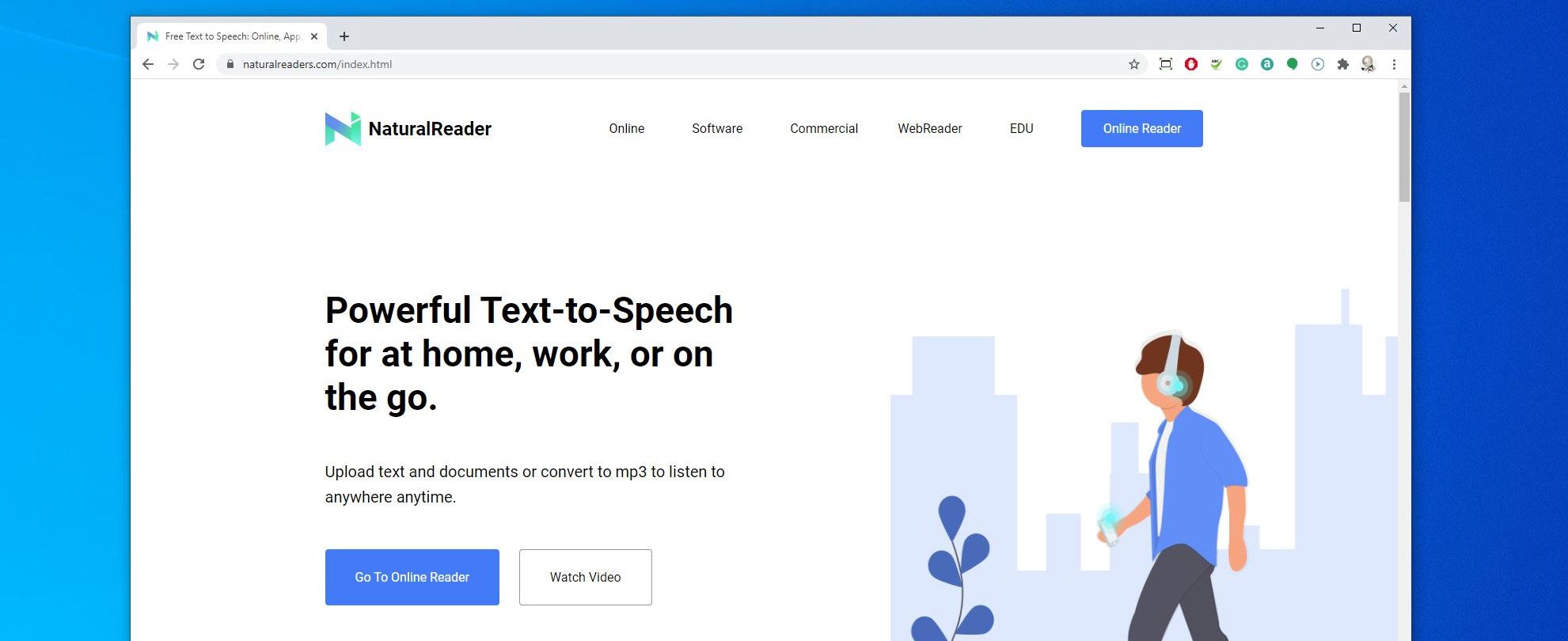
- Advertised (‘Plus’ Plan): The ‘Plus’ plan, which includes the best voices, costs $119.88 per year ($9.99/month, billed annually) or $19.00 per month when billed monthly Official Pricing.
- Real Entry Cost: The price you see is the price you pay. It’s a straightforward Software as a Service (SaaS) subscription model familiar to most users.
- 12-Month TCO (‘Plus’ Plan): $119.88. This cost is predictable, transparent, and affordable for its target audience of students, researchers, and professionals focused on personal productivity. For those seeking increased productivity, this fixed cost is easy to budget.
ElevenLabs
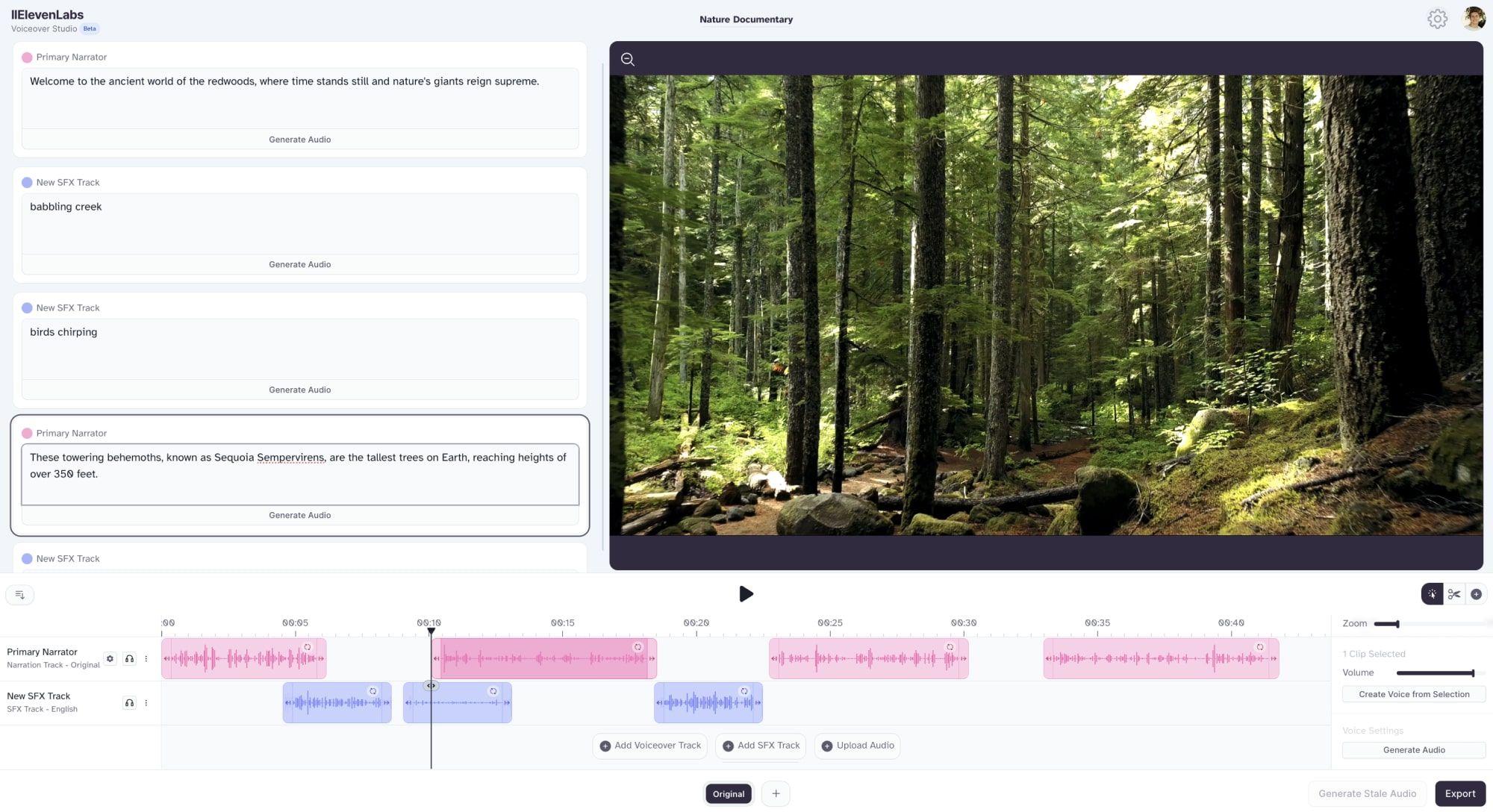
- Advertised (Creator Plan): $22/month for 100,000 characters and 10 custom voices. This seems inexpensive, but it’s a trap for anyone with serious production needs.
- Real Entry Cost: A hypothetical power user, such as an author converting a novel to an audiobook or a podcaster producing weekly shows, will exhaust 100,000 characters in a matter of days. A more realistic plan for a professional is the “Independent Publisher” tier at $99/month for 500,000 characters.
- 12-Month TCO (Hypothetical Power User): For a professional creator, the annual TCO can range from $1,188 (Independent Publisher plan) to over $3,500 if additional character credits are needed. This is not a tool for casual use; it is a business expense designed for those in the creator economy with a clear return on investment (ROI).
Speechify
- Pricing: While Speechify has a public pricing page, its multi-tiered system can be complex. The lack of a simple, flat-rate annual plan comparable to NaturalReader makes direct TCO calculation difficult for users trying to escape variable costs.
Hidden Costs & Gotchas
Every service has them, but some are more damaging to your wallet than others.
⚠️ WARNING: The No-Refund Policy — A Major Financial Risk
Before committing to any annual plan or credit pack, carefully review each vendor’s refund policy. In this market, “no refunds” is more common than you’d expect — and that policy has real financial consequences for anyone who guesses wrong about their usage.
⚠️ NaturalReader’s Gotcha:
- “Unlimited” Has Unwritten Rules: The official site lists “Unlimited use” for its premium voices. However, this is typically governed by a “Fair Usage Policy.” While a specific cap like “1,000,000 characters per day” is not publicly documented as of May 2024, users with extreme, non-stop conversion needs should clarify potential limits with the vendor to avoid surprises.
- Free Tier Limitations: NaturalReader offers a generous free tier without a credit card, but the best-sounding voices are exclusive to paid plans, pushing serious users to upgrade.
⚠️ ElevenLabs’ Gotchas:
- Confusing Credit System: The most common user complaint is the difficulty in predicting costs. You pay per character generated, and it’s easy to burn through your monthly quota without realizing it.
- The Cost of Iteration: Every time you regenerate a line of audio to get the perfect tone, pronunciation, or emotion, you spend more credits. This is a hidden tax on creativity that punishes perfectionists.
- No Refunds: This is the biggest financial risk. According to their current Terms of Service (as of May 2024), “All charges are non-refundable,” except where expressly stated otherwise ElevenLabs ToS. If you buy a large block of credits and the service doesn’t meet your needs, that money is gone. Test extensively on a cheap plan before committing.
Given these unforgiving refund policies, your best protection is to lock in any active special offer for Speechify before paying full price — it can soften the blow if the tool doesn’t fit your workflow.
Part 3: Feature Comparison Matrix: Reading vs. Creating
The most critical realization when looking for one of the Speechify top alternatives and competitors is that its main rivals don’t actually compete with each other. One is a tool for reading your world; the other is for creating new audio for it.
Your choice isn’t about which is “better,” but which one performs the job you actually need done.
So what is OCR technology, and why is it the dividing line in this market? Optical Character Recognition is the process of converting images of text (like a scanned PDF or a photo of a page) into machine-readable text. It is the core feature that separates reading tools from creation tools.
| Feature Category | Speechify | NaturalReader | ElevenLabs | Critical Notes |
|---|---|---|---|---|
| Primary Use Case | Reading/Consumption | Reading/Consumption | Audio Generation/Creation | Your choice depends on this. One consumes existing text, the other produces new audio. |
| Voice Quality | Standard AI | Standard: Robotic. Plus Voices: Natural-sounding. | Market-Leading: Hyper-realistic. | The quality gap between standard TTS and modern generative AI voices from tools like ElevenLabs is significant. |
| OCR for PDF/Images | ✅ Yes | ✅ Yes (Core Feature) | ❌ No | This is NaturalReader’s key advantage for students and researchers. It’s a non-starter for ElevenLabs. |
| Platform Availability | Web, Mobile, Extension | Web, Chrome, Win/Mac, iOS, Android. | Web, API, and official iOS & Android mobile apps. | NaturalReader offers the most comprehensive cross-platform experience for reading. |
| Voice Cloning | ✅ Yes (Limited) | ❌ No | ✅ Yes (Core Feature) | This is the key feature that separates creator tools (ElevenLabs) from reader tools (NaturalReader). |
| API Access | ❌ No | ❌ No | ✅ Yes (Core Feature) | ElevenLabs is built API-first for developers, a completely different model from the consumer-focused NaturalReader. |
| Multiple Languages | ✅ Yes | ✅ Yes (20+ languages) | ✅ Yes (29 languages) | Language support is a key differentiator for global users. Both alternatives offer robust support. |
This is not a feature-to-feature comparison; it’s a choice between two entirely different tools. One reads your world, the other creates new audio for it. The fact that Speechify attempts to bridge both with a single offering contributes to its complexity.
Part 4: Security, Compliance & Trust: The Unaudited Risk
Now for the section most people skip, but which, in my professional opinion, is the most important: security. When you use a text-to-speech service, you are sending your text to a third-party server.
Without knowing the provider’s data encryption standards, sending even a draft of a public news article could pose a risk, let alone a confidential legal document, a sensitive M&A report, or your unpublished manuscript.
In 2024, a lack of public, verified security compliance is not just a red flag; it’s a deal-breaker for any professional use. The difference between these tools is staggering and should make your decision for you if you handle any sensitive data.
Compliance Status Verification
| Certification | Speechify | NaturalReader | ElevenLabs |
|---|---|---|---|
| SOC 2 Type II | [Data Not Available] | ⚠️ [Data Not Available] | ✅ Certified. The company announced its SOC 2 Type II and ISO 27001 compliance in May 2024 ElevenLabs Trust Center. |
| ISO 27001 | [Data Not Available] | ⚠️ [Data Not Available] | ✅ Certified (May 2024) |
| GDPR/CCPA Compliant | ✅ Indicated in Policy | ✅ Indicated in Policy | ✅ Indicated in Policy |
ElevenLabs is the only tool here with modern, enterprise-grade security certifications that you can verify. Neither NaturalReader nor Speechify has a publicly available SOC 2 report. For a professional, this makes the choice simple.
Data Handling & Privacy
- Speechify: Its privacy policy states it may use user content to improve its services. An opt-out may be available, but the process and scope are not as clearly defined as in competitor policies.
- NaturalReader: Their policy claims, “We do not store the text… The text is immediately deleted from our servers after it has been converted into sound” NaturalReader Privacy Policy. This is a strong, privacy-positive claim, but it is not backed by a third-party audit like SOC 2. You have to take their word for it.
- ElevenLabs: Their policy is transparent but places the burden on you. It states they “may use User Content… to develop and improve the Services,” but they critically offer a user opt-out in the account settings. This means by default they might use your data, but you can explicitly tell them not to ElevenLabs Privacy Policy.
Real-World Security Incident
Situation: A corporate user at a law firm wants to use a TTS tool to proofread a sensitive internal M&A document before a major deal. The document contains confidential financial data and client names.
Task: They need to choose a tool with verified, enterprise-grade security to comply with firm policy and protect client data.
Action: Based on the available public data, the user reviews the compliance status of all three tools. Speechify and NaturalReader’s compliance status is unverified. ElevenLabs has a public, verified SOC 2 Type II report from May 2024.
Result: The user is forced to select ElevenLabs as the only verifiably secure option for sensitive documents, even though its features are designed for content creation, not simple reading. The lack of verifiable security from the reader-focused tools represents a critical failure for the professional market.
Part 5: Use Cases & Workflows: Reading vs. Creating
A tool’s true value is only revealed when you place it within a real-world workflow. The best Speechify top alternatives and competitors are not general-purpose tools; they are specialists.
Understanding their intended workflows is key to avoiding a frustrating and costly mismatch. For a complete picture of the wider landscape, see our companion guide to the detailed Speechify Top Alternatives and Competitors analysis.
Workflow 1: The Academic Researcher (NaturalReader)
This workflow is about consumption and accessibility. Its goal is to transform a large volume of static text into portable audio for learning and review.
- Input: The user has a 200-page scanned PDF of a research paper and several ePub-formatted textbooks.
- Processing (The Core Task): Using NaturalReader’s desktop app or Chrome extension, the user uploads the documents. The software’s OCR engine processes the scanned PDF, converting the image of text into selectable, readable data.
- Output & Consumption: The user listens to the documents on their computer while working or syncs them to the NaturalReader mobile app to listen during their commute. This is a form of assistive technology that is critical for users needing digital accessibility or those experiencing reading fatigue.
- Value: The primary value is time savings and overcoming information overload. The user can “read” while multitasking, turning downtime into productive learning time.
Workflow 2: The Podcast Creator (ElevenLabs)
This workflow is about production and quality. Its goal is to generate new, hyper-realistic audio content that is indistinguishable from human speech for a professional project.
- Input: The creator has a finished script for a 15-minute podcast voiceover.
- Processing (The Core Task): Using the ElevenLabs web studio, the creator selects a pre-made AI voice or uses their own cloned voice. They input the script paragraph by paragraph, regenerating lines to get the perfect emotional intonation and pacing. This “cost of iteration” is a key part of the creative process.
- Output & Production: The creator downloads the final high-quality audio files. They import these files into an audio editor to add music and sound effects, completing their podcast episode. This is an act of content repurposing—turning a written script into a new piece of audio media.
- Value: The primary value is quality and brand identity. The creator is paying a premium for a voice that enhances their content, builds a professional brand, and engages listeners on an emotional level.
Part 6: Alternatives & Comparisons: Making the Right Choice
Choosing a Speechify replacement isn’t about finding a single tool that does everything. It’s about honestly assessing your primary need and selecting the specialist that excels at that one job.
Here’s a framework for making that decision, presented as tool cards for each major contender. If you need broader savings inspiration across SaaS tools, our latest coupons hub tracks active promotions from hundreds of vendors.
Category Profile
- Primary Job: Reading/Consumption of existing documents and text
- Best Audience: Students, academics, researchers, accessibility users
- Pricing Model: Predictable SaaS subscription — Plus plan at $119.88/year
- Core Feature: Optical Character Recognition (OCR) for scanned PDFs and image-based documents
When It’s the Best Choice
- You are a student, academic, or researcher. Its ability to process scanned PDFs and textbooks with OCR is its defining feature.
- Your primary goal is consuming existing text. You aren’t creating new audio; you’re listening to articles, books, and documents.
- You need a predictable, affordable budget. The fixed annual subscription is transparent and far cheaper than credit-based models for heavy use.
Prerequisites for Success
- You must be willing to tolerate a user interface that is functional but feels less modern than some competitors.
- Your documents must not contain highly sensitive or regulated data, given the lack of a public SOC 2 audit.
- You must accept that the voice quality, while good, is not on the same level of hyper-realism as premium creator tools.
When to Avoid
- If you need to create audio for commercial use (podcasts, videos, etc.). It is not a content creation tool.
- If you require the absolute most human-sounding voice possible.
- If you cannot work without an offline mode for the highest-quality voices, as they require an internet connection.
✅ Strengths
- Powerful OCR for scanned PDFs and image-based documents
- Predictable, affordable annual pricing at $119.88/year
- Comprehensive platform coverage: Web, Chrome, Win/Mac, iOS, Android
- Generous free tier with no credit card required
- 20+ language support for global users
- Privacy-positive policy claiming immediate text deletion
⚠️ Considerations
- Dated user interface compared to modern competitors
- No publicly verified SOC 2 or ISO 27001 audit
- “Unlimited” use governed by an unwritten Fair Usage Policy
- Best voices locked behind paid plans
- No voice cloning or API access for developers
- Highest-quality voices require an internet connection
Category Profile
- Primary Job: Audio Generation/Creation from scripts and written content
- Best Audience: Podcasters, YouTubers, audiobook producers, developers
- Pricing Model: Variable, credit-based — $22/month entry to $3,500+/year for power users
- Core Features: Voice cloning, API-first integration, SOC 2 Type II + ISO 27001 certified
When It’s the Best Choice
- You are a content creator in the creator economy. You need professional-grade voiceovers for podcasts, YouTube videos, or audiobooks.
- You are a developer who needs a robust voice generation API. The tool is built API-first for easy integration.
- Voice quality is your number one priority. You are willing to pay a premium for the most realistic, emotionally nuanced AI voices on the market.
Prerequisites for Success
- You must have a professional budget that can absorb a variable, credit-based cost that can exceed $100/month.
- You must understand and track your character usage to avoid unexpected overages.
- Your workflow must be centered on creating new audio from scripts, not reading existing web pages or documents.
When to Avoid
- If your primary goal is to read articles, emails, or PDFs. It is the wrong tool and will be prohibitively expensive.
- If you are on a tight or unpredictable budget. The “no refund” policy and credit system pose a significant financial risk.
- If you need a simple, “fire-and-forget” tool. Achieving the best results requires creative iteration and prompt refinement.
✅ Strengths
- Market-leading, hyper-realistic AI voice quality
- Verified SOC 2 Type II & ISO 27001 compliance (May 2024)
- Powerful voice cloning as a core feature
- API-first design for developers and integrations
- 29 languages supported for global content creation
- User opt-out available for training data usage
⚠️ Considerations
- Confusing, unpredictable credit-based pricing
- Strict no-refund policy on all charges
- “Cost of iteration” — every regeneration burns credits
- No OCR — cannot read image-based PDFs
- Power users can easily exceed $3,500/year TCO
- Not designed for casual document reading
Other Competitors to Consider
For a complete market view, acknowledge these other players:
- Creator-Focused Alternatives: Tools like Murf.ai and Play.ht compete directly with ElevenLabs, each offering unique voice libraries and features for professional production.
- Free, Built-in Alternatives: Don’t overlook the free, secure tools already on your devices. Microsoft Read Aloud and Apple Spoken Content are excellent for casual article reading, processing data on-device for maximum privacy.
Part 7: Conclusion & Frequently Asked Questions
After analyzing the landscape, it’s clear that the best of Speechify’s top alternatives and competitors depends entirely on your primary task, your budget, and your security standards. The market has split, and my goal is to give you a clear framework that leads to real time savings while protecting your money and your data.
Here is my final recommendation, based on my experience and the best available data.
Choose Your Path
- Choose NaturalReader if: Your primary job is reading documents. If you suffer from reading fatigue, your primary job is to find a reliable audio reader. Choose NaturalReader if you need strong OCR for PDFs and a predictable, low annual cost. It’s the student’s and researcher’s choice.
- Choose ElevenLabs if: Your primary job is content creation within the creator economy. You need the absolute highest quality voices for podcasts, videos, or API integrations, justifying the premium over enterprise solutions from Amazon or Google, and you have a professional budget that can tolerate variable costs.
- Regarding Speechify: Without transparent, verifiable data on its security audits and TCO, choosing it over these specialized tools is a leap of faith. The safest choice is always the transparent one — and if you do go with Speechify, make sure to apply a verified working coupon for Speechify to reduce the financial risk.
The text-to-speech world is no longer about one tool being “the best.” It’s about hiring the right specialist for the job. Choose the tool that aligns with your work, respects your budget, and—most importantly—proves it can be trusted with your data.
Frequently Asked Questions
Q1: What is the main difference between NaturalReader and ElevenLabs?
A: The main difference is their job: NaturalReader is an audio reader designed to consume existing text, while ElevenLabs is a generative AI voice tool built to create new audio. NaturalReader’s core strength is its Optical Character Recognition (OCR), which allows it to read scanned PDFs and documents Official Pricing. This makes it ideal for students and researchers. In contrast, ElevenLabs focuses on producing hyper-realistic, human-like voices from a written script, using features like voice cloning for content creators to use in podcasts and videos. They are specialists for two completely different tasks.
Q2: Which Speechify alternative is best for students?
A: NaturalReader is, without question, the best alternative for students. Its primary function, OCR for reading scanned textbooks and research papers, directly addresses the core academic workflow. For students who need an accessibility tool for dyslexia or who experience reading fatigue, it’s an invaluable study aid. Furthermore, its predictable and affordable annual subscription of $119.88 is designed for a student budget Official Pricing. This is in stark contrast to the expensive, credit-based models of creator-focused tools like ElevenLabs, which would be financially unsustainable for typical student use.
Q3: How much does ElevenLabs really cost?
A: ElevenLabs can cost anywhere from $5/month to over $3,500/year, making its cost highly unpredictable. While their entry-level plans seem cheap, they come with very low character limits that are quickly exhausted by professional use. For example, the $22/month “Creator” plan provides only 100,000 characters. A power user, like an audiobook producer, could easily require the “Independent Publisher” plan at $99/month ($1,188/year) or even custom enterprise pricing ElevenLabs Pricing. The “pay-as-you-go” credit model is confusing and makes it extremely difficult to predict your actual monthly bill, a common complaint among users.
Q4: Is NaturalReader suitable for sensitive documents?
A: It may not be suitable for enterprise or regulated use cases. As of May 2024, NaturalReader does not have a publicly available SOC 2 or ISO 27001 compliance report, which are standard security verifications for handling sensitive corporate data. While their privacy policy states they do not store user text, this claim is not verified by a rigorous, third-party audit NaturalReader Privacy Policy. For any confidential, legal, or proprietary information, the best practice is to use a service with verifiable, enterprise-grade security. The absence of a public audit makes NaturalReader a higher-risk choice for such data.
Q5: Why is Speechify not more deeply reviewed in this comparison?
A: Speechify is not more deeply reviewed because of a lack of transparent, verifiable public data in key areas, particularly security. While the product is popular, it does not currently publish a SOC 2 or similar third-party security audit report, making it impossible to verify its data handling practices against an enterprise standard. This is a critical factor for any user or business uploading private text. Reviewing a product’s security based on its own marketing claims without independent verification would be irresponsible. Therefore, its absence from the deep-dive security comparison is a key finding of this report.
Q6: Can I use ElevenLabs to read articles and PDFs?
A: You can, but it would be a terrible and expensive choice. ElevenLabs has no OCR to read image-based PDFs and no simple browser extension to read articles. You would have to manually copy and paste text into its studio, and you would burn through your expensive character credits very quickly. This workflow is far less efficient than using free, built-in accessibility features like Microsoft Read Aloud or Apple Spoken Content. ElevenLabs is a powerful creative tool for producing audio, but it is fundamentally the wrong tool for the job of consuming it.
Q7: What is SOC 2 compliance and why does it matter?
A: SOC 2 is a rigorous, third-party security audit that verifies a company is handling customer data securely and privately. For a text-to-speech tool where you upload your text, it proves the provider has enterprise-grade systems to protect the confidentiality of that data. It’s a key indicator of trustworthiness. The presence of a public SOC 2 report (like with ElevenLabs) gives users confidence, especially for business or professional use ElevenLabs Trust and Safety Page. Its absence (for other tools) means you are relying solely on the company’s own promises about their security, which have not been independently verified.
Q8: What is OCR technology and why is it important?
A: OCR, or Optical Character Recognition, is a technology that converts images containing text into actual, machine-readable text data. This is crucial for text-to-speech software because many documents, like scanned PDFs or photos of a book page, are just images to a computer. Without OCR, a TTS tool cannot “read” them. A tool like NaturalReader uses OCR to analyze the image, identify the letters, and reconstruct the text so its AI voice can then read it aloud. This one feature is often the dividing line between a simple TTS tool and a powerful assistive technology platform for academic and professional use.