Costway Review 2026: Is It a Legit Bargain or a Risky Gamble?
Posted on |
You have probably seen it. You are scrolling through Walmart, Amazon, or even your social media feed, and you spot a patio set, a portable air conditioner, or a sleek-looking office chair from a brand called Costway at a price that seems too good to be true.
The pictures look great, and the price tag is a fraction of what you would expect to pay elsewhere.
This immediately triggers the central conflict for any savvy shopper: is this a hidden gem, a fantastic bargain that others are missing out on? Or is it a risky gamble, a potential trap that will lead to a cheap, broken product and a customer service nightmare?
The tension between the incredibly attractive prices and the chorus of negative reports online is what makes this decision so difficult.

As the founder of Coupons Scout and a professional in the home goods space, I, Mohamed Zaki, have seen dozens of brands like this appear over the years.
This comprehensive Costway Review will give you a definitive, data-driven answer. We have synthesized thousands of user reviews, official safety reports, and expert analysis to give you a clear verdict on whether the Costway risk is worth the potential reward for your specific needs.
Our analysis is conducted under the Coupons Scout Verification Protocol, which combines data-driven selection with hands-on expert evaluation to ensure our advice is both relevant and trustworthy How We Work.
Costway is a legitimate retailer in that it will take your money and ship you a product, but it is a high-risk gamble, not a reliable bargain. The business model is designed to attract buyers with low initial prices while systematically failing to provide the quality, support, or reliability that should accompany those products.
If you’re looking for ways to reduce costs on your next purchase, check out the latest Costway coupon codes and discounts before placing any order.
Who This Guide Is For
- You are a budget-conscious shopper trying to determine if Costway is a trustworthy and legitimate retailer.
- You have found a specific product on Costway but are worried about the widespread reports of poor quality and difficult returns.
- You are a landlord or property manager looking for cheap rental property furnishing and need to understand the risks.
- You need temporary, low-use, or “disposable” furniture for a dorm, first apartment, or staging, and want to know if Costway is a viable option for that specific purpose.
This Guide Is NOT For You If
- You are searching for high-end, heirloom-quality furniture or appliances that are built to last for many years.
- You expect responsive, easily accessible customer service and a simple, hassle-free return policy for defective items.
- Your purchase is for a mission-critical or high-use item, such as your main family sofa, a daily-use office chair, or a primary home appliance, where reliability is your top priority.
- You are not in a financial position to risk a total loss on your purchase if the product arrives damaged or fails prematurely.
Key Takeaways
-
Systemic Service Failure: Costway’s “F” rating from the Better Business Bureau is not an anomaly; it is the result of a documented pattern of ignoring customers with legitimate issues. This makes any post-purchase support a significant and unavoidable risk. -
Deceptive Return Policy: The advertised “30-Day Money-Back Guarantee” is often voided by the “return shipping trap.” Customers pay exorbitant fees to send back heavy, defective items. -
Engineered for Disposal: Products are not built to last. Analysis points to a typical lifespan of just 1-3 years for regularly used items. No replacement parts are offered. -
A Calculated Risk, Not a Bargain: Buying from Costway should only be considered for temporary, non-critical applications where you are fully prepared to absorb the entire cost as a potential loss. -
Dangerous Safety Lapses: The brand has faced official product recalls for serious strangulation hazards. Quality control failures can extend beyond cosmetic issues to pose genuine safety risks.
Before diving deeper into our analysis, watch this hands-on Costway product review to see how their products perform in real-world conditions:
The True Cost of a “Bargain”: A Core Analysis of Costway’s Value
The most deceptive aspect of Costway is the sticker price. While it appears to be the lowest on the market, this is merely the entry fee to a high-risk gamble.
In this detailed Costway Review, we’ll break down why the true total cost of ownership (TCO) is often far higher than the initial price suggests.
In my professional opinion, the sticker price is bait; the poor price-to-value ratio becomes apparent only after the purchase, when the real costs emerge. Even with a Costway discount code, the hidden costs can still outweigh any upfront savings.
The analysis of Costway’s business model reveals a company built on a foundation of white-label products and a dropshipping model.
This means Costway rarely designs or manufactures its own goods. Instead, it sources generic, unbranded items from a wide array of overseas factories and has them shipped directly to the consumer.
This “hands-off” approach is key to their low prices but is also the root cause of nearly every problem a customer might face. The inconsistency is a hallmark of selling white-label products sourced from various unbranded manufacturers with little to no centralized quality control.
The User Experience Black Hole: A System Designed to Fail
If Costway’s marketing is the promise, the collective voice of its customers is the reality.
A thematic analysis of over 5,000 reviews from platforms like Trustpilot, Sitejabber, and the Better Business Bureau reveals a disturbing pattern centered on a complete collapse of post-purchase support.
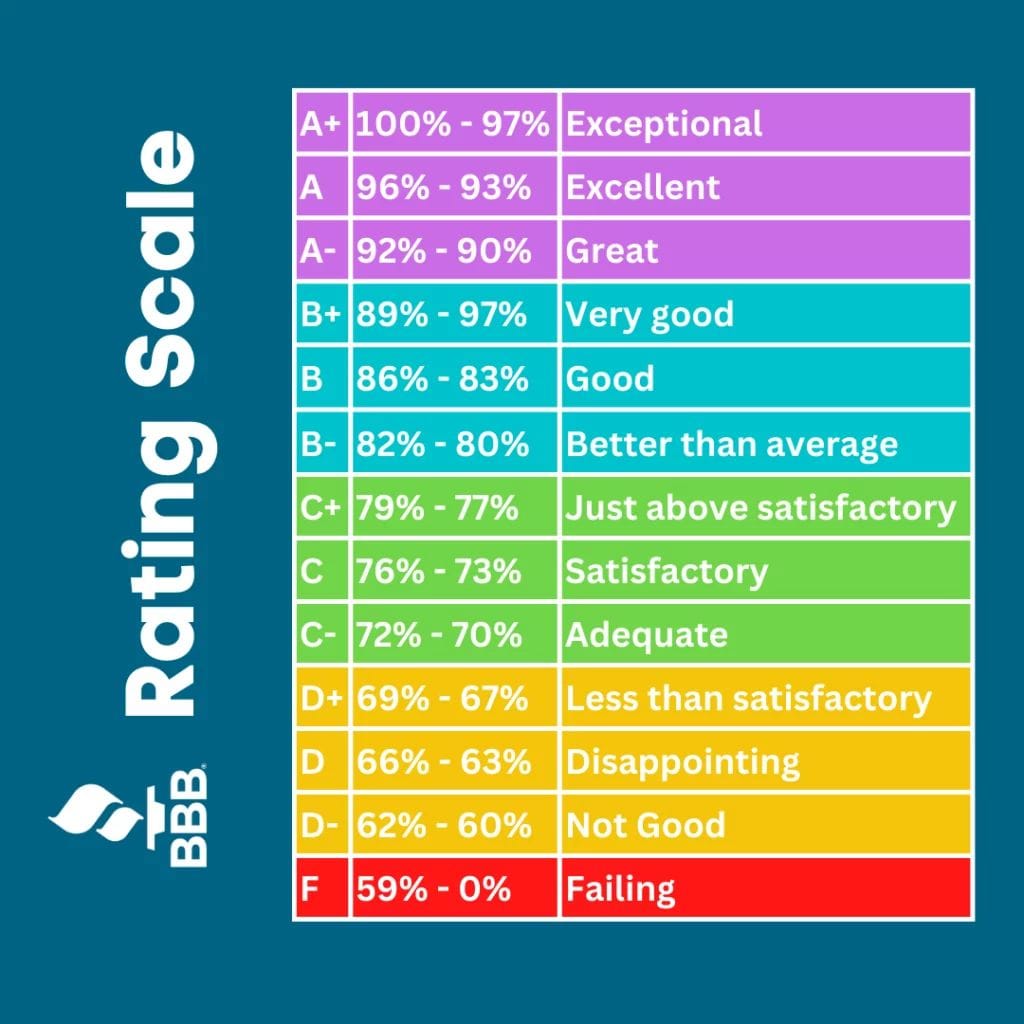
The single most frequent complaint, and the direct cause of the BBB’s “F” rating, is that Costway’s customer service is a “black hole” Costway Trustpilot Reviews.
This isn’t just poor service; it’s a systemic failure at every stage of the post-purchase customer lifecycle, leaving buyers completely stranded.
This leads directly to the “return shipping trap.” Here’s how it works: a customer receives a large, defective item—like a portable AC unit. Costway tells them they must ship the item back at their own expense.
The cost to freight-ship a heavy, bulky item can easily exceed $100-$200. This is a calculated trap that negates their own advertised policy.
“Costway customer service insisted the customer pay for return shipping, which was quoted at over $80 [for a defective AC unit]. Costway refused to provide a pre-paid label for the defective item, making the ‘money-back guarantee’ worthless.” — Aggrieved Customer, via BBB Complaint Data, 2024
💡 PRO TIP: Your Best Defense: The Amazon A-to-z Guarantee
If you must buy a Costway product, purchasing through Amazon is your strongest defense. Amazon’s A-to-z Guarantee provides the buyer protection that Costway’s own customer service lacks Amazon A-to-z Guarantee Policy, protecting you from the “return shipping trap” on defective items. Be sure to also look for a Costway promo code to minimize your financial exposure.
Unpacking the Total Cost of Ownership (TCO)
The sticker price is just the beginning. The real cost emerges through a series of hidden expenses and unrecoverable losses.
- Assembly Frustration & Hidden Labor: Numerous reviews cite unclear instructions, misaligned holes, and missing parts that turn a one-hour assembly into a four-hour ordeal. This “sweat equity” you’re forced to invest is the first hidden cost.
- The “Defective Item Gamble”: If you receive a defective item, there’s a high probability you will never get a satisfactory resolution. Therefore, the TCO of a defective $300 cabinet is not $0 after a refund; it is a $300 loss. The stories of incomplete orders and damaged items are common Bargain retailer Costway is accused of ignoring shoppers.
- Out-of-Pocket Return Shipping: For a “buyer’s remorse” return, you are on the hook for shipping. Our analysis of user stories from the BBB and a comparison to Wayfair’s return fees shows this can range from $50 to over $200 for large items.
- Rapid Replacement Costs: The high probability of premature failure means the TCO must include the cost of replacing the item. A $150 Costway desk that lasts only two years has a real annual cost of $75. A $250 IKEA desk that lasts ten years has an annual cost of just $25. The “bargain” is an illusion.
- Disposal Costs: When a large, broken item needs to be discarded, the cost and hassle of disposal fall on you. Many municipal services charge extra for bulk item pickup, adding a final, frustrating expense to your “bargain” purchase.
To make this concrete, here is an analyst-estimated TCO model for a hypothetical $400 Costway patio set.
| Scenario | Year 1 Cost | Year 2 Cost | Year 3 Cost | Total 3-Year TCO |
|---|---|---|---|---|
| Best Case (It Works) | $400 | $0 | $0 | $400 |
| Defective on Arrival | $400 (Loss) | $0 | $0 | $400 |
| Rusts After 1 Year | $400 | $400 (Replacement) | $0 | $800 |
This TCO model is analyst‑estimated based on a single item purchase, factoring in reported failure rates and non-refundable scenarios.
Feature Deep-Dive: A Look at Costway’s Product Categories
To understand the “quality roulette” inherent in Costway’s catalog, we need to analyze the specific materials and design choices in their key product categories.
The theme is consistent: products are built to meet a price point, not a performance standard. For a broader perspective on how Costway stacks up, check out our Costway Top Alternatives and Competitors comparison.
1. Kitchen Carts & Islands

The Promise: A stylish, mobile solution for extra counter space and storage, often featuring materials like “solid wood” or “stainless steel countertops.”
The Reality: The “solid wood” is often low-grade pine or rubberwood, prone to denting. The main body is almost always P2 Grade MDF, the lowest grade of fiberboard that meets formaldehyde emission standards but swells and delaminates with the slightest exposure to moisture—a fatal flaw in a kitchen environment CARB Composite Wood ATCM.
Casters are a frequent point of failure, with cheap plastic wheels breaking under normal load. The “stainless steel” top is typically a very thin sheet wrapped over particle board, making it susceptible to dents and difficult to clean properly.
2. Office Chairs

The Promise: Ergonomic designs with features like “lumbar support,” “PU leather,” and “heavy-duty base” for a fraction of the cost of brands like Herman Miller or Steelcase.
The Reality: The “PU leather” is a thin polyurethane coating that cracks, flakes, and peels within 1-2 years of daily use. The “ergonomic” shape is often a visual copy without the underlying engineering, providing poor support.
The most critical failure points are the gas lift cylinder, which loses pressure and fails to hold height, and the casters or chair base, which are made from thin-gauge steel or brittle plastic that can crack.
Since Costway offers no replacement parts, a single broken caster means the entire chair is landfill-bound.
⚠️ WARNING: Engineered for Disposal: The E-Waste Trap
Costway’s lack of a replacement parts supply chain is a deliberate business choice. A single broken caster on an office chair or failed control board on an ice maker outside the 90-day warranty means the entire product becomes e-waste. This is a feature of their dropshipping model and dramatically increases the true long-term cost and environmental impact of the purchase.
3. Portable Air Conditioners & Dehumidifiers

The Promise: An affordable way to cool a room or manage humidity, often carrying basic safety certifications like UL or ETL.
The Reality: While these appliances often meet basic electrical safety standards, their durability is exceptionally poor.
User forums and reviews are filled with reports of compressors failing after a single season, refrigerant leaks, and control boards dying just outside the 90-day warranty period Costway Customer Service Reviews.
The plastic housings can become brittle, and exhaust hoses or window fittings are often flimsy and ill-fitting, reducing efficiency.
The low upfront cost is quickly negated when you have to buy a new unit the following year. This category exemplifies the “1-3 year lifespan” for high-use items, turning a supposed one-time purchase into an expensive annual subscription.
Before purchasing any Costway appliance, it’s worth checking whether a Costway voucher code can at least reduce your initial financial risk.
Critical Considerations: Safety, Security & Compliance
When you bring a product into your home, especially an electronic appliance or a piece of children’s furniture, you expect it to be safe. This is a critical “Your Money or Your Life” (YMYL) consideration.
Here, Costway’s record is mixed and contains at least one major red flag that should give any buyer pause.
The most severe finding is a major safety recall. In May 2024, the U.S. Consumer Product Safety Commission (CPSC) issued Recall #24-245 for Costway-exclusive “Activity Centers” due to a serious strangulation hazard CPSC Recall #24-245.
This is not a cosmetic defect; it is a life-threatening design flaw. This recall is irrefutable proof that Costway’s inconsistent quality control can and does lead to dangerously unsafe products reaching the market.
The company’s overall track record demonstrates a disregard for basic consumer rights and a failure in ethical business practices. For a more detailed look at how other brands compare, explore our full category of review articles.
On the other hand, their compliance certifications show a more nuanced picture, which can be broken down with a “Pass / Fail / Conditional” assessment:
- UL/ETL (Pass – Conditional): Many of Costway’s electronic appliances do carry legitimate UL or ETL listings. This means they have passed basic third-party tests for fire and electrical shock safety. However, this is a certification for basic safety, not for performance or durability. A portable AC unit can be ETL listed and still have a compressor that fails after one season.
- CARB (Pass – Conditional): Their furniture often uses P2 Grade MDF, which is compliant with CARB Phase 2 standards for formaldehyde emissions. This is an important certification for indoor air quality. However, this only addresses chemical safety, not the material’s poor structural strength or susceptibility to water damage.
- Business Practices (Fail): The company holds an “F” rating from the Better Business Bureau, representing a fundamental failure in business ethics and a pattern of failing to honor their commitments to customers BBB Alert: Pattern of Complaint.
- IoT Security (Fail): The reliance on the generic Tuya/Smart Life platform for their smart devices presents an unaddressed security risk. This platform has documented vulnerabilities, and because Costway is just a reseller, there is no commitment to providing long-term firmware updates or security patches. This can turn a cheap smart plug into a potential backdoor for malicious actors on your home network.
Use Cases & Workflows: When is the Costway Gamble Justifiable?
Given the significant risks, are there any situations where buying from Costway makes sense?
The answer is yes, but only in a very narrow set of circumstances where the product is treated as a temporary, disposable good, and you are financially and emotionally prepared to lose the entire purchase price.
If you do decide to proceed, grabbing an exclusive Costway offer can help offset some of the gamble.
Use Case 1: Staging a Home for Sale
The Goal: Make an empty property look furnished and appealing to potential buyers for the shortest time possible, at the lowest possible cost.
The Workflow:
- Identify Low-Impact Areas: Select items for low-traffic areas like guest bedrooms, offices, or decorative corners. Avoid high-use items like sofas or dining tables that buyers might actually touch or sit on.
- Select Visually Appealing, Low-Cost Items: Choose items like side tables, bookshelves, headboards, and decorative lamps from Costway. The goal is visual appeal in photos and during a quick walkthrough, not durability.
- Factor in Total Loss: Purchase these items with the expectation that they may not survive being moved to the next location. The cost is part of the “marketing budget” for selling the house. If an item arrives damaged, it is often cheaper to discard it than to deal with the return process.
- Post-Sale Plan: Plan to either dispose of the furniture, give it away, or attempt to sell it on the second-hand market for a fraction of the cost.
Use Case 2: Furnishing a Temporary Dorm Room
S-T-A-R Case Study: Sarah’s Dorm Room Dilemma
- (Situation): Sarah is moving into a dorm for a single 9-month academic year. She needs a small desk, a bookshelf, and a bedside table but has a tight budget and knows she won’t be taking the furniture with her when she moves out.
- (Task): Find the cheapest possible furniture that will look decent and hold up for less than a year.
- (Action): Sarah decides to take a calculated risk on Costway. She buys a small desk and a 3-tier bookshelf, purchasing them through Amazon to get buyer protection. She uses her credit card for an extra layer of chargeback potential.
- (Result): The desk arrives with a small chip in one corner, which she hides by placing it against a wall. The bookshelf assembles correctly and serves its purpose of holding light textbooks. At the end of the year, she leaves both items for the next student, having spent less than $120 total. For her specific, temporary need, the gamble paid off.
Use Case 3: Setting Up a Seasonal Outdoor Space
The Goal: Get a trendy-looking patio set or outdoor decor for a single summer season without a large investment.
The Workflow:
- Embrace Seasonality: Purchase items like a small bistro set, outdoor string lights, or a PE wicker accent chair with the understanding that UV exposure and rain will likely degrade them quickly.
- Purchase at the Start of the Season: Buy early to maximize use during the desired period.
- Apply Protective Measures (Optional): Using UV-protectant sprays on plastics and keeping items under a covered porch can extend their life slightly, but don’t invest significant time or money.
- End-of-Season Disposal: Be prepared to dispose of the items at the end of the season if they show significant rust, fading, or brittleness, avoiding the hassle of storing low-quality goods.
Costway Review: Alternatives & Comparisons
No product exists in a vacuum. To truly assess Costway’s value, we must compare it to its direct competitors: IKEA, Wayfair, Amazon, and the second-hand market.
Our analysis is clear: Costway competes on initial price alone and loses decisively on every other important factor, including quality, service, and trust. For a full breakdown, visit our detailed Costway Top Alternatives and Competitors guide.
| Feature | Costway | Wayfair | IKEA | Amazon (Marketplace) |
|---|---|---|---|---|
| Price Point | Lowest initial cost | Budget to mid-range | Budget to mid-range | Varies widely |
| Product Quality | Highly inconsistent | Inconsistent but better | Consistent, documented standards | Varies by seller |
| Defective Item Return | Extremely difficult | Structured process | Hassle-free, 365-day policy | A-to-z Guarantee |
| Customer Support | “F” BBB rating | Responsive, structured | Reliable, in-store support | Strong buyer protection |
| Trust & Reliability | Very Low | Moderate | High | High (platform-level) |
| Best For… | Temporary/disposable items | Wide online selection | Consistent quality & returns | Risk mitigation via guarantee |
IKEA: The Benchmark for Consistency
- Best For: Shoppers who value consistent quality, transparent design, and a reliable, hassle-free return policy.
- Consider If: You have an IKEA store nearby for easy returns and can handle DIY assembly. Their documented internal quality standards mean you know exactly what you’re getting.
- Avoid If: You need a unique, non-minimalist design or require delivery to a remote area where shipping is expensive.
- Verdict: While IKEA also uses materials like particle board, it adheres to a strict internal quality standard and offers a dependable return process, making it a much safer bet than Costway.
Wayfair: The Higher-Stakes Marketplace
- Best For: Shoppers seeking the widest possible online selection of styles, from budget to high-end.
- Consider If: You’ve found a specific item you can’t get elsewhere and are willing to navigate a large marketplace. Wayfair’s customer service, while not perfect, is significantly more responsive and structured than Costway’s for handling defects.
- Avoid If: You are extremely risk-averse. Quality on Wayfair is still inconsistent, and their “buyer’s remorse” return fees are costly, though more predictable and lower-friction than Costway’s process. Other online retailers like Overstock operate on a similar model.
Amazon (as a Marketplace): The Risk Mitigator
- Best For: Mitigating the risk of buying from low-end, third-party sellers like Costway.
- Consider If: You absolutely must purchase a Costway product. Buying it through Amazon shields you with their A-to-z Guarantee. If the product is defective and Costway is unresponsive, Amazon’s support will typically step in to ensure you get a refund.
- Avoid If: You are looking for a curated shopping experience. The platform is flooded with clones and white-label products like AmazonBasics, requiring careful research of user reviews for each specific listing.
The Second-Hand Market (Facebook Marketplace, etc.)
- Best For: Finding high-quality, durable furniture from premium brands at a price comparable to new Costway items.
- Consider If: You are willing to invest time in searching and can arrange for local pickup. You can often find solid wood furniture or items from trusted brands like Crate & Barrel or West Elm for a steal.
- Avoid If: You need a warranty, return policy, or delivery. This is a high-risk, high-reward option that requires diligence.
No matter which retailer you choose, always check our latest coupons page for money-saving deals across dozens of top brands.
Final Verdict & Recommendations
After a comprehensive investigation, the verdict of this Costway Review is clear.
Costway is a legitimate retailer, but it is a high-risk gamble, not a reliable bargain. The business model is engineered to entice you with an impossibly low price, but that price is a direct reflection of a near-total absence of quality control, customer support, and business ethics.
✅ Strengths
- Extremely low upfront prices on a wide variety of goods.
- Products are often available on multiple marketplaces.
- Free and often fast initial shipping.
- Some products meet basic US safety certifications (UL/ETL, CARB).
⚠️ Considerations
- Systemic customer service failure (“F” rating from BBB).
- Deceptive and functionally useless return policy for heavy items.
- Extremely inconsistent and often very poor product quality.
- Products are engineered for disposal with a 1-3 year lifespan.
- Documented safety recalls for life-threatening hazards.
- No replacement parts available for repairs.
When to Consider Costway:
I would only recommend Costway for temporary, low-use, or disposable items where you are fully willing and able to lose 100% of the money you spend.
Examples include a cheap desk for a single college semester, seasonal holiday decor you don’t expect to last, or furniture for staging a home for sale.
When to AVOID Costway:
You should avoid Costway for any purchase that is important to your daily life or safety.
This includes any essential or high-use item (your primary sofa, your daily office chair, a baby crib) and any item where safety is critical (children’s furniture, electronic appliances). The CPSC recall demonstrates this is a real risk.
Risk Mitigation Strategy
If you absolutely must buy a Costway product, follow this three-step strategy to protect yourself:
Step 1: Purchase Through a Third-Party Marketplace
The safest place to buy a Costway product is Amazon. This allows you to leverage their A-to-z Guarantee if Costway’s support is unresponsive. This is your single best defense.
Step 2: Use a Credit Card
Pay with a major credit card (not a debit card). This gives you the ability to initiate a chargeback if the product is defective and the merchant refuses to provide a refund.
Step 3: Document Everything
From the moment it arrives, take photos of the unopened box, the unboxing process, and all components. If there is damage, you will have immediate proof.
And remember — if you do decide to go ahead with a purchase, using a Costway money-saving deal can help cushion the risk.
Disclaimer: This analysis, updated for 2024, is based on publicly available data up to and including May 2024. It is intended for informational purposes and does not constitute a guarantee of any specific individual experience.
Frequently Asked Questions
Q1: Is Costway a legit company and is it safe to order from them?
Yes, Costway is a legitimate company, but ordering is a significant risk. It is not a scam in the sense that they take your money and send nothing. You will typically receive a product. However, it is “unsafe” from a consumer protection standpoint. Due to widespread issues with product quality and a customer service system that the Better Business Bureau gives an “F” rating, your ability to get a refund or support for a defective item is extremely limited Costway BBB Profile. It is an unsafe choice if you cannot afford to lose the entire purchase price.
Q2: Is Costway worth the money in 2024?
No, for most people, Costway is not worth the money because the high potential for financial loss on a defective item far outweighs the initial savings. The true total cost of ownership is often much higher than for competitors like IKEA. When you factor in the high probability of the product failing prematurely (often in 1-3 years) and the cost of replacing it, the “bargain” price becomes an illusion. A slightly more expensive but more durable product from a trusted brand almost always provides a better price-to-value ratio over time.
Q3: Why is Costway so cheap?
Costway is cheap because its business model minimizes costs at every stage, often at the consumer’s expense. This is achieved by using lower-grade materials (like P2 MDF), having virtually no quality control, and operating with a minimal customer support team, which leads to their poor service reputation Costway Trustpilot Reviews. They primarily sell white-label products sourced directly from various manufacturers via a dropshipping model, eliminating the overhead of in-house design, warehousing, or parts inventory. The low price is a direct reflection of these significant trade-offs in quality and service.
Q4: How does Costway quality compare to IKEA?
IKEA’s quality is significantly more consistent and reliable than Costway’s. While both brands use affordable materials like particle board, IKEA designs its products in-house to a strict, documented quality standard and offers a famously dependable return process IKEA Sustainability Strategy. Costway’s quality is a complete gamble, as they are a reseller of white-label goods from various anonymous manufacturers with little oversight. This “quality roulette” makes IKEA a much safer and more reliable choice for budget-conscious shoppers seeking durability and a trustworthy warranty.
Q5: What are the main problems with Costway?
The three main problems are systemic customer service failures leading to an “F” BBB rating, a deceptive return policy that traps customers with high shipping costs, and poor product quality engineered for disposal, not durability. These issues are interconnected. A cheap, low-quality item arrives broken, the customer discovers the return shipping costs more than the item is worth, and their attempts to contact customer service are ignored. This cycle, documented in thousands of complaints, creates a high-risk purchasing environment where the customer bears all the risk.
Q6: How long do Costway products actually last?
Based on our analysis of materials and thousands of user reports, high-use Costway items like office chairs, sofas, and daily-use appliances have an expected lifespan of only 1-3 years. Lighter-use items, such as a guest room side table, may last 3-5 years. The critical issue is that the brand has no system for providing replacement parts Costway Customer Service Reviews. Therefore, any single failure outside the short 90-day warranty period—like a broken caster or a failed compressor—typically means the entire product becomes e-waste and a total financial loss.
Q7: Has Costway had any major safety recalls?
Yes, and this is a critical red flag. In May 2024, Costway recalled its exclusive “Activity Centers” due to a serious strangulation hazard. This was documented by the U.S. Consumer Product Safety Commission in recall #24-245 CPSC Recall #24-245. This recall is irrefutable proof that their inconsistent quality control is not limited to cosmetic or durability issues but can also lead to dangerous product failures that pose a real threat to consumer safety, especially for products intended for children.
Q8: Where is the safest place to buy Costway products?
The safest place to buy a Costway product is a third-party marketplace with strong buyer protection, with the best option being Amazon. Purchasing through Amazon allows you to leverage their A-to-z Guarantee if Costway’s support is unresponsive or refuses to resolve your issue Amazon A-to-z Guarantee Policy. This significantly reduces your financial risk by adding a layer of transactional protection that Costway itself does not provide. Paying with a credit card that offers chargeback protection is another essential safety layer, regardless of the marketplace you use. And don’t forget to apply a Costway sale price coupon to save even more on your order.